Hassan Rouhani and Recep Tayyip Erdoğan, photo by Mohammad Hassanzadeh via Wikimedia Commons
BESA Center Perspectives No. 1,321, October 25, 2019
EXECUTIVE SUMMARY: Though it prompted angry reactions from senior officials in Tehran, the Turkish attack on Syrian Kurdistan offers both pros and cons for the Islamic Republic – and the potential positives likely outweigh the negatives.
Turkey’s military offensive against the Kurds in northeastern Syria prompted recriminations from the Islamic Republic, but the Iranian regime understands that it could ultimately redound to its benefit.
Ever since the outbreak of the Syrian Civil War in March 2011, Iran and Turkey have been on opposing sides, with Tehran (and Moscow) playing a critical role in the survival of the Assad regime and Ankara urging its ouster and supporting the anti-regime rebellion.
Unsurprisingly, President Trump’s announcement that US troops would be evacuated from northern Syria was welcomed in Tehran, which had considered the presence of US troops on Syrian soil a flagrant violation of Syrian sovereignty. However, Erdoğan’s decision to invade Kurdish territory in Syria led his Iranian counterpart, Rouhani, to condemn it on the grounds that it would increase regional instability.
Notwithstanding that criticism, Tehran does not want to risk its relationship with Ankara, which allows it to circumvent US sanctions and constitutes an essential channel for the supply of Iranian gas to major European countries.
Parallel to the Turkish invasion, Iran launched a large-scale military exercise near its border with Turkey codenamed “One Target One Bullet.” Combining infantry and armor units with antiterrorism special units, the exercise conveyed a dual message. It signaled Tehran’s military prowess to the Turkish army on the one hand, and on the other, it communicated to Iranian citizens of Kurdish descent in western Azerbaijan that they would be ill-advised to pour oil on the fire.
Despite Iran’s attempts to calm the Iranian Kurdish minority (estimated at about eight million), large-scale protests against Turkish institutions broke out throughout Iran. The protests carried a message of ethnic unity under the slogan “Rojava You Are Not Alone” (Rojava is the nickname of Syrian Kurdistan).
As expected, Rouhani’s calls did not persuade Ankara to reconsider. On October 9, the Turkish army launched a large-scale attack on northern Syrian cities causing casualties and displacing Kurds. In the absence of US defenses, the Kurds signed an agreement with the Syrian Army on October 13 according to which the army would deploy along the Syrian-Turkish border to support them.
On October 17, a meeting between Erdoğan and US VP Mike Pence produced an agreement to implement a 120-hour ceasefire that allowed Kurdish forces to withdraw 32 miles from the Turkish border. (Despite the ceasefire, the fighting did not stop entirely and clashes continue to be recorded, even at the time of writing.) The October 17 agreement was succinctly reported in the Iranian media.
Iranian policymakers wish to expand Tehran’s “strategic depth” – i.e., areas outside Iran’s borders but under its control – and the Turkish invasion challenged this policy to an extent.
For one thing, it violated Syria’s territorial sovereignty and damaged Assad’s personal prestige, which are viewed by Tehran as unacceptable. For another, there are quite a few Salafist-jihadist groups on the ground alongside the Turkish army, such as Hay’at Tahrir ash-Sham, Jaish al-Islam, Suqour al-Sham, and others. These militias, some of which originated in al-Qaeda, perceive Shiite Islam as a heresy and its practitioners as worthy of persecution.
As far as Iran’s security establishment is concerned, the deployment of Salafist militias operating under a Turkish umbrella is intolerable. The Sunni-Shiite rift lies deep in the Iranian collective consciousness. Not long ago, ISIS’s ascendancy posed a significant challenge to Iranian policymakers who understood the potential threat it posed to Shiite Islam in general and Iran in particular. Deployment of Sunni militias could similarly limit Iranian maneuverability in northern Syria.
Another consideration for Iran is the ethnic-national dimension. The Kurdish minority’s national aspirations pose significant challenges to all four countries that contain large Kurdish populations. The precedent of Kurdish autonomous territory in Syria is unacceptable to the Iranian establishment, which remembers the uprising that led to the establishment of the “Republic of Mahabad” in January 1946.
Furthermore, the idea of a “greater Kurdistan,” and feelings of national affinity among the Kurds (despite their splits and tribal loyalties), are feared in Tehran. The Iranian leadership cannot abide unrest that might result in ethnic riots. It therefore views the demonstrations erupting across Iranian cities in protest against the Turkish aggression with great concern.
With all that said, the Turkish offensive could advance Iranian interests. With Turkish formations on the ground in northeastern Syria, an Iranian presence in that area could be viewed as legitimate. Despite the tactical coordination that exists among Iran, Russia, and Turkey, Ankara’s desire to expand its “security zone” in northern Syria could help Iran achieve the land corridor it has been trying to establish for years – from Iran’s northwestern border, through Iraqi and Syrian territory, all the way to the Mediterranean.
Ironically, the fact that Iran is perceived in the Arab world as a protective shield for the Syrian president gives it a handy pretext for strengthening its hegemony and expanding its activities in Syria. This suggests that the defense agreement between the Kurds and the Assad regime, enabling the deployment of Syrian military forces in Syrian Kurdistan, will whet Iran’s appetite and prompt the Revolutionary Guards and their subordinate militias to consolidate their presence in northern Syria, with Assad’s approval. As has happened before, Iranian troops will be disguised by Syrian army uniforms.
The Iranian regime has high hopes that the international community will turn its eyes to the Turkish aggression. A global focus on Ankara’s actions will divert attention from Tehran’s attempt to expand its strategic depth, as did the world’s attention to the problem of fighting ISIS.
Iran has proved itself highly adept at seizing opportunities that have appeared as a result of the collapse of regimes across the region. It did so after the invasion of Iraq (2003) and the collapse of Saddam Hussein’s regime, as well as during the Syrian and Yemeni civil wars. Iran is likely to make extensive use of the Turkish incursion into northern Syria to expand its hold on the region, with the aim of threatening Israel’s border.
Tehran’s condemnations of the Turkish invasion thus look like mere lip service, as the revolutionary regime may well benefit from the new situation created by the US withdrawal. For while the Turkish offensive creates challenges to the Iranian leadership, which is heavily invested in stabilizing Assad’s rule, it also creates potential benefits to Iran’s interests in Syria.
For Israel, by contrast, this is a zero-sum game, because the promotion of Iranian interests is an inherent threat. Israel should prepare itself for challenges to come.
Dr. Doron Itzchakov is a Senior Research Associate at the Begin-Sadat Center for Strategic Studies and author of the book: Iran-Israel 1948-1963: Bilateral Relations at a Crossroads in a Changing Geopolitical Environment.
(Ph.D. Tel Aviv University) Specializes in the history and politics of modern Iran, Iran-Israel relations, Iranian foreign policy. Email: [email protected]
Until recently, it was possible to believe that there was a middle way, or to be in denial that a decisive moment would come. That’s no longer the case.
Boris Johnson said, “I’d rather be dead in a ditch” than seek an extension.
Illustration by Javier Jaén
When does uncertainty become the worst condition of all? This fall, more than three years after Britain voted to leave the European Union, no one was sure what form Brexit would take, what kind of relationship we would have with our nearest neighbors, or whether the whole thing could still be called off. Theresa May, the first Conservative Prime Minister with the job of taking the United Kingdom out of the E.U., had been forced to step down at the end of July. The second, Boris Johnson, did not seem trustworthy. There was a departure time—11 p.m. on October 31st—which the government tried very hard to convince people was real. On September 1st, it launched a hundred-million-pound public-information campaign called “Get Ready for Brexit.” TV spots showed sparkling European vacation destinations and advised viewers to check their travel insurance. There was a six-second video on Snapchat. Signs flashed on highways in the rain, telling truck drivers, “Freight to EU, Papers May Change.”
But everyone knew that Brexit was unlikely to happen by Halloween. May had spent two years negotiating an exit deal with the other twenty-seven members of the E.U., only to fail to get it approved by Parliament. Johnson, a flamboyant Brexiteer, wanted to rip up May’s agreement, but there didn’t seem to be time to start over. He insisted that Britain would leave, regardless of how talks went with Brussels. “No ifs or buts,” Johnson said, outside No. 10 Downing Street. The gulf between what the government said was going to happen and what seemed possible, let alone sensible, grew wider by the day. You could scroll through an article on your phone, full of the reasons that Brexit would not occur on October 31st, and be interrupted by an ad from the government telling you to get ready.
The ructions in Westminster took on historic proportions. Johnson lost his first seven votes as Prime Minister. In one, rebel Conservative Members of Parliament joined the opposition to pass a law aimed at preventing Johnson from taking Britain out of the E.U. without a deal. Johnson asked the Queen to shut down Parliament; the Supreme Court opened it up again. He called for a general election; the Labour Party, led by Jeremy Corbyn, refused to agree to one unless Brexit was delayed. The pound fell. Death threats multiplied. Politicians quoted poetry. A third of British adults said that Brexit had affected their mental health. A man in a clown outfit stood outside the gates of Parliament shouting, “Save our bendy bananas!”
Within weeks of the Brexit deadline, three very different outcomes were still possible. Johnson could somehow defy the odds and replace May’s deal with a more extreme form of Brexit, and get it approved by Parliament. He could seek to disobey the law and take Britain out of the E.U. without a deal. Or he would have to ask for an extension and hold an election, and the whole sorry story would continue. Newspapers published very complicated graphics, indicating all the branching futures. Foreigners marvelled at the mess. One European ambassador described the situation to me as an “intoxicating self-blockade.”
Elements of the Brexit crisis have been there since the beginning. The referendum on Britain’s membership in the European Union was a momentous act of direct democracy in a country that has been governed by Parliament for more than three hundred years. Seventy-four per cent of M.P.s, along with the Bank of England, the Confederation of British Industry, David Beckham, Stephen Hawking, and J. K. Rowling—“the establishment,” “the machine,” in the words of Leavers—opposed Brexit. The referendum did not specify what Brexit would look like. The constitution stretched and strained. The government struggled to cope. May’s attempts to contain the opposing forces in the country—the political imperative to leave and the frightening economic consequences of doing so—did not work. She ended up losing her majority in Parliament and crafting a compromise with the E.U., which satisfied nobody.
Since taking office, Johnson has sought to channel the nationalist impulses that brought about the Brexit vote. Unlike May, who quietly campaigned for Remain, Johnson headlined pro-Brexit rallies and spoke of looking forward to Britain’s “Independence Day.” He talks winningly about the country’s future outside the deadening regulations and pooled sovereignty of the E.U. “The people who bet against Britain are going to lose their shirts,” he has said.
But Johnson’s political career has been marked by lies and evasions. “He is genuinely a bad person. Not an unlikable person but a bad person, as in he has no morals, no principles and beliefs,” a former close colleague told me. “He would be whatever Prime Minister was necessary to maximize the chances of gaining and then maintaining power.” Between 2008 and 2016, Johnson was a liberal mayor of London. During his campaign, earlier this year, to become the leader of the Conservative Party, he veered between promises to leave the E.U. on October 31st, “do or die,” and strange, chummy disquisitions on his hobby of making model buses and painting the passengers inside.
It is hard to know how much he makes up as he goes along. Two days before Johnson took office, he hired as his senior adviser Dominic Cummings, the former campaign director of Vote Leave, the main pro-Brexit organization in 2016. Cummings had almost total control over the messaging of Vote Leave, which became notorious for its brazenness and its success with digital targeting. “Dom is obsessed with propaganda,” a former Vote Leave staffer told me. “He will build an army that is programmed to think like him.”
This fall, Johnson’s high-risk approach to Brexit has been defined by martial imagery and language that summons memories of the Second World War. He said that attempts to block his plans amounted to “collaboration” with Brussels. He described the law passed by Parliament to stop Britain from leaving the E.U. without a deal as the “Surrender Bill,” and expelled twenty-one Conservative M.P.s who voted for it from the Party. On September 5th, Johnson answered questions about Brexit in front of an unsettling backdrop of black-uniformed police officers. When asked whether he would, if necessary, request an extension to the Brexit talks, he replied, “I’d rather be dead in a ditch.”
“If it doesn’t make me scream, I get rid of it.”Cartoon by Kendra Allenby
The government amplified its preparations for a no-deal Brexit, collectively known as Operation Yellowhammer. Opposition M.P.s forced the release of an internal report warning of interruptions to the supply of fresh food, fuel, and medicine, as well as potential job losses, nursing-home closures, and clashes between fishing boats at sea. “Protests and counter-protests will take place across the UK,” the report cautioned. The poor would suffer the most. The “Get Ready for Brexit” ads rolled on. “I’ve never experienced politics like it,” Dominic Grieve, one of the purged Conservative M.P.s, told me. “It’s a complete departure from U.K. norms, and I’m afraid it will leave a trail of damage.”
The fury infected all sides. “We are now irreconcilably split for a generation,” Roland Rudd, the chairman of the People’s Vote campaign, which advocates for a new referendum, told me. “I don’t pretend that reversing this madness is going to bring us together. Honestly, it won’t.”
Until Johnson came to power, it had been possible to believe that there was a middle way on Brexit, or to be in denial that a decisive moment would ever come. That was no longer the case. A year before the referendum, Cummings wrote a blog post outlining what the Leave campaign might look like. He quoted Otto von Bismarck: “If revolution there is to be, better to undertake it than undergo it.”
In December, 2015, about one per cent of British people believed that Britain’s membership in the European Union was the most important issue facing the country. This summer, a poll of members of the Conservative Party—whose hundred and sixty thousand voters elected Johnson as the Party’s leader by a huge margin—showed that sixty-one per cent would accept significant damage to the British economy in order to get out of the E.U. Fifty-four per cent were willing to see the Conservative Party destroyed. “It is a complete mystery how something that was not a high-priority issue can become in three years your defining political identity,” the M.P. Rory Stewart told me. During the spring, Stewart, who served as a minister under Johnson in the Foreign Office, stood as a moderate candidate in the Conservative-leadership contest. Three months later, he was among those thrown out of the Party. “It is peculiar. It is fascinating,” Stewart said. “We are all sitting in the center with nothing.”
Each fall, Britain’s political parties hold conferences—jamborees to raise money, rally the faithful, and grab a few days of media attention. At the end of September, the Conservative Party gathered for four days in Manchester, in a convention center that used to be one of the city’s main railway stations. Above the entrance, next to the old station clock, a large blue banner read “Get Brexit Done.”
In a darkened auditorium, members of Johnson’s government took turns giving speeches on a low stage, and taking questions from fellow-Conservatives through an app. Matt Hancock, who is in charge of the National Health Service, announced a new hospital-building program. Hancock wore a sharp suit and spoke without notes, in short, uncomplicated sentences. He described visiting a cramped hospital in the city the previous day, parts of which dated from the nineteenth century, when it served as a workhouse. “Know this,” Hancock told the conference. “We won’t just fix the roof. We’re going to build you a whole new hospital.”
One of the principal arguments for leaving the E.U. is that it will liberate Britain from the bloc’s amazing array of rules. Since Brexit was dreamed up by the right wing of the Conservative Party, it is generally assumed that part of the goal is to become a low-tax, small-state competitor to mainland Europe—a nirvana sometimes referred to as “Singapore-on-Thames.” But this is in conflict with the aspirations of the millions of people who voted for Brexit in the hope of better public services and a more responsive government. While in office, Johnson has made no attempt to align these contradictory desires. He has promised to hire twenty thousand new police officers and maintain a dramatic increase in spending on the N.H.S., while enacting tax cuts for higher earners.
A former senior civil servant told me, “I think the Johnson strategy is basically to say, ‘I get it. And I’m not a kind of Thatcherite.’ But then to couple that with a very hard-line Brexit position.” He continued, “It might work. But, economically, by the mid-twenty-twenties, we’re going to be in a lot of trouble.” The independent Institute for Fiscal Studies forecasts that, under Johnson, government borrowing will be double the amount previously estimated, and that public spending will rise at its fastest rate in a decade. In Manchester, Hancock described Labour’s “Corbynistas” as “hellbent on destroying everything that’s made this country great.” According to the I.F.S., Johnson’s spending as Prime Minister is roughly in line with Corbyn’s most recent electoral promises.
The hot events in Manchester were held by the Brexiteers. During May’s tenure, a group of some eighty Conservative M.P.s, known as the European Research Group, teamed up with the Northern Irish Democratic Unionist Party to repeatedly scuttle her Brexit proposals. The current chair of the E.R.G. is Steve Baker, a born-again Christian and a former engineer, who has spoken of his wish to “tear Parliament down and bulldoze the rubble into the river,” for its behavior since the referendum. Baker’s predecessor in the job was Jacob Rees-Mogg, a tall, preternaturally posh former backbencher who is now the Leader of the House of Commons. In early September, footage of Rees-Mogg, lounging in the House of Commons as if he were at a Roman bath, had gone viral. He was unavoidable in Manchester: recording an episode of “The Moggcast,” signing T-shirts at the souvenir shop, looming above cocktail parties.
One afternoon, I went to see Baker and Rees-Mogg speak at an event organized by the Free Market Conservatives. A banner featured a quote from Epictetus, the Greek Stoic philosopher: “Is freedom anything else than the right to live as we wish?” Baker and Rees-Mogg were appearing with Andrea Jenkyns, another member of the E.R.G., who, like Baker, was one of twenty-eight so-called Spartans who voted against every form of May’s Brexit agreement. Winning over the Spartans, as well as the Democratic Unionist Party, would be essential to passing any deal with the E.U. that Johnson proposed. The room was packed.
The crowd had come for Rees-Mogg. He arrived ten minutes late, to great applause, wearing a dark double-breasted suit. Even to a British person, Rees-Mogg is a figure out of time. His voice, a plangent, plummy thing, is like an artificial-intelligence simulacrum of how the upper classes spoke in Edwardian England. “Do you remember what all the panjandrums had to say?” Rees-Mogg asked, recalling the dire warnings ahead of the Brexit vote. “Plague of frogs. Death of the firstborn. Economic recession. Merely if we had the temerity to vote to leave. Against that pressure, against the I.M.F., against the O.E.C.D., against all the other sets of incomprehensible initials, we revolted. We said, ‘We will not be told what to do by acronyms. We are not having an acronymocracy.’ ”
One of the riddles of English nationalism, as personified by Rees-Mogg and Johnson, is how seriously to take it. (Rees-Mogg has six children; the sixth is called Sixtus.) “A lot of this stuff sounds like it is sort of pantomime, this right-wing stuff in Britain,” Stewart told me. “Because the tone in which they do it is all a bit Gilbert and Sullivan.” Like other unlikely populist figures, Rees-Mogg operates within an ironic shimmer, knowing what people have come to hear. His descriptions of the perfidy of the British élite have the ring of an insider. “We found ourselves up against the British establishment at its least attractive,” he said. “People who pretend to do one thing and do another.”
At the end, Rees-Mogg took a question about the Brexit Party—which was set up by Nigel Farage, in January, to campaign for an immediate departure from the E.U.—and the threat it posed to the Conservative Party at the next election. (Rees-Mogg’s sister Annunziata was elected to the European Parliament for the Brexit Party in May.) Rees-Mogg replied that everything rested on delivering Brexit on October 31st. “If we do, we win,” he said. “If we don’t, we lose.”
For years, Rees-Mogg was a marginal figure in Parliament. In 2012, he suggested that the county of Somerset should have its own time zone. Before he joined Johnson’s administration, this summer, he had voted against the governments of May and David Cameron a hundred and twenty-seven times. After his event, I went to a meeting organized by the Conservative Group for Europe, one of the last remaining Europhile factions within the Party. It featured mainstream Conservative M.P.s—all former ministers—who had been ejected from the Party. The meeting was in a conference room at a hotel next to the convention center. I arrived a few minutes before it was due to start, at 7 p.m., and ended up sitting next to Peter Hebden and Simon Wrenn, two Conservative elected officials from Hertfordshire, just north of London.
It was the end of a long day. They had thought that there might be free food. Hebden, a former policeman, held an empty wineglass in his lap. The men joked about having voted for the Brexit Party in the European elections. “You wouldn’t be able to admit it if you had done it yourself, could you?” Wrenn said. “No,” Hebden said. “I couldn’t possibly admit it.” They were relaxed about a no-deal Brexit. “It’s what people politely refer to as a rebalancing of the economy,” Wrenn said. “That is, a load of people getting fucked over, isn’t it?”
The Party rebels—Alistair Burt, a former Foreign Office minister; David Gauke, a former Justice Secretary; and Grieve, a former Attorney General—sat at a table at the front. The room had a low ceiling and spotlights, and the men were hemmed in by microphones and reporters. Grieve explained that they had voted with the opposition parties in Parliament to stop Johnson from taking the country out of the E.U. without an agreement because it would disproportionately affect the poor and the elderly. “We are all absolutely united that precipitating a no-deal departure is unacceptable,” Grieve said.
“There! Now all you need is some sympathetic lighting.”Cartoon by William Haefeli
“No, we’re not,” Hebden heckled. “Are we?”
Grieve pressed on. Over the weekend, the right-wing Mail on Sunday had reported that the government was investigating him and the other rebel M.P.s for “foreign collusion,” alleging that they had received funding and legal assistance from European sources. Johnson described the situation as “very interesting.” (A Downing Street official later admitted that there was no investigation.) “What are we, as Conservatives, to make of this behavior?” Grieve asked his former Party colleagues. “It really goes to the heart of what we are.”
Gauke, a former member of the E.R.G., spoke toward the end. He described the rapid evolution of the Conservatives under Johnson. Faced with the impasse in Westminster, the Party was widely reported to be preparing for an election campaign, in which the Tories would pivot to sweep up working-class Brexit supporters who have traditionally voted for Labour or for Farage’s populist parties. “We are going to be dragged in a particular direction,” Gauke said. “It means the Conservative Party becomes much more aggressive, much more confrontational, much more divisive. We are no longer the party of Churchill; we are more the party of Trump.” Next to me, Hebden booed loudly. At the end of the meeting, Grieve checked his phone to see what kind of abuse he was receiving on social media. “I don’t know where it is from,” he said of one message, smiling. “Hopefully not from somebody in the room.” He read it out: “You are a foul traitor.”
Why was it so difficult to agree on a Brexit deal? The word that defined Theresa May’s struggles—and that became a metaphor, a pretext, a synecdoche for everything that was impossible—was “backstop.” Early in Britain’s negotiations with the E.U., which began in June, 2017, the bloc insisted on setting a default relationship—a backstop—in the unlikely event that trade talks failed. For the island of Great Britain, the options were clear enough. For the island of Ireland, the problem was close to metaphysical.
Until the late nineties, the border between Northern Ireland and the Republic of Ireland, which has almost three hundred crossing points, was a frontier guarded by soldiers in watchtowers. In 1998, the Good Friday Agreement, which largely ended the Troubles, gave citizens of Northern Ireland the right to identify as Irish, British, or both. It also committed the two governments to an ambitious program of coöperation, which was made simpler because they were both members of the E.U. Now, twenty years later, when you call for an ambulance near the border, it can come from either side. Fifty-six per cent of voters in Northern Ireland opposed Brexit.
In February, 2018, the European Commission suggested a “Northern Ireland-only backstop,” in which the six counties of Northern Ireland would stay inside the main E.U. structures until a new permanent relationship could be established. The proposal called for regulatory checks on either side of the Irish Sea—creating an internal border, more or less, which, May said, “no U.K. Prime Minister could ever agree to.” In response, she proposed a “U.K.-wide backstop,” in which the whole country would retain some European regulations, plus additional ones for Northern Ireland, until the negotiators figured out what to replace them with.
May’s backstop was her undoing. Everyone found a reason to hate it. E.U. officials described it as a “swimming pool” of rules, in which Britain would be partially submerged and Northern Ireland would be in the deep end. For Remainers, the arrangement captured the pointlessness of Brexit. The country would continue to obey E.U. laws, but without having a say in their formulation. For Brexiteers, May’s backstop seemed to reveal the real intentions of European officials and the British deep state: to never let the country leave at all. “That deal was so bad,” Baker, the chairman of the E.R.G., told me. “It was like exiting into a prison from which you can glimpse your freedom but never taste it.”
Johnson came to power promising to scrap the backstop. On August 21st, Angela Merkel, the German Chancellor, offered him thirty days to solve the conundrum. Johnson described it as a “blistering timetable” and then seemed to ignore it.
During the hiatus, it wasn’t clear that the British government wanted a deal at all. In early September, Cummings was quoted in the British media describing the negotiations as a “complete sham,” designed to run down time. (Cummings denied saying this.) Two weeks later, Johnson’s Brexit Secretary, Stephen Barclay, flew to Madrid and gave a speech warning darkly about how British imports of Spanish sherry and Manchego cheese might be affected. “We risk being trapped in a zero-sum game, which will lead to zero outcomes,” he said. In the talks, British negotiators announced that, in any future trade deal, they no longer wanted to keep the U.K.’s social and environmental rules in step with the E.U.’s—indicating a more radical departure than May’s government ever envisaged. E.U. officials bristled. “The U.K. is not Singapore,” one senior official told me. “This vision will rapidly hit reality.”
The atmosphere was bad. But everybody knew that Johnson was a flexible character, who might be willing to do anything to get out of a jam. “There is that paradox,” the senior official said. “The problem is that nobody really knows the motive of the strategy of Johnson.”
The Prime Minister made his pitch to replace the backstop on the last day of the Conservative Party conference. Extra seats had been set up in the auditorium. Party members waved Union Jacks. The lights dimmed and the words “Get Brexit Done” were projected onto five screens. The crowd chanted, “Boris! Boris!” Johnson entered to the opening chords of “Baba O’Riley,” by the Who. He is thickset. His hair, an astral blond, is swept forward in a short bowl and maintained in a permanent state of semi-mussedness. He cannot resist a buzzy phrase. Onstage, he described Brexit Britain as “a world-class athlete with a pebble in our shoe.” He said, “If Parliament were a laptop, then the screen would be showing, I’m afraid, the pizza wheel of doom.”
Johnson stretched and swung his arms to get himself going. He pumped his knees under the lectern. He wriggled his fingers to enliven some talk about high-speed Internet cables, which he described as “super-informative vermicelli.” He muttered, “It’s true, it’s true,” when people laughed or clapped. He said only a few lines about his new plan for Northern Ireland. “This is a compromise by the U.K.,” he said. “And I hope very much that our friends understand that and compromise in their turn.” Then he asked the Party faithful about a no-deal exit: “Are we ready for it?” The hall cheered. “Yes, we are,” Johnson affirmed.
The details of his proposal were published a few hours later. It was a dizzying scheme—even by the technical standards of the Brexit talks—with ad-hoc customs checks away from the border and other checks on goods crossing the Irish Sea. Instead of a hard border, there would be two “half borders.” The whole instrument would rely on the support of the Northern Ireland Assembly, the territory’s fractious parliament, which had not sat for almost three years, owing to a scandal caused by subsidies for wood-pellet-burning boilers. E.U. officials whom I spoke to were politely nonplussed. “What we have on the table is a kind of mixtum, a composite of various elements,” the European ambassador said. “That is maybe the particular challenge of this proposal.” Given Johnson’s rhetoric, no one was sure that the idea was even serious. “Are we being gaslighted by the British government?” an E.U. diplomat asked me.
For almost a week, the offer hung in the air. Writing in the Belfast Telegraph, Jonathan Powell, who was Tony Blair’s chief negotiator in Northern Ireland, concluded that Johnson’s proposal would “undermine the basis on which the Good Friday Agreement was built.” Irish officials had a similar response. “We have taken down barriers,” one said. “Why would we put up a new one?” The problem of Northern Ireland occupied the heart of the Brexit crisis because it asked, in the starkest terms, what kind of new relationships were really going to be feasible with Britain’s closest neighbors—given the constraints of trade, geography, and bloodshed. It also contained the biggest risk of going wrong. In a no-deal scenario, both sides agreed, a hard border would be inevitable, and violence would likely return. “That’s where we are,” the former senior civil servant said. “That’s the bugger of the situation.”
At moments, the talks seemed certain to collapse. On October 7th, a senior government official—widely believed to be Cummings—sent a long text message to The Spectator, Johnson’s former outlet, blaming opposition M.P.s for their attempted “sabotage” of the Prime Minister’s efforts to make a new deal. “They’ve probably succeeded,” the official wrote. “History is full of such ironies and tragedies.” The next morning, Johnson spoke to Merkel from Downing Street. Within minutes, an anonymous source leaked an account of the call to the British media; the German Chancellor was alleged to have demanded that Northern Ireland stay permanently in the E.U.’s customs union. “It means a deal is essentially impossible, not just now but ever,” the source said.
I arrived in Westminster a few hours later. Climate protesters had blocked streets around Parliament Square, making it still and desolate. I met Nigel Dodds, the Parliamentary leader of the Democratic Unionist Party, in his office, next to the House of Commons. We sat by a brown-tiled fireplace, under a large portrait of Winston Churchill. The D.U.P. is one of the most hard-line pro-unionist parties in Northern Irish politics. It opposed the Good Friday Agreement, for the concessions that it made to Irish nationalists, and was the only party in the territory to campaign for Brexit. Since 2017, the ten M.P.s of the D.U.P. have been nominal allies of the Conservatives in Parliament, but they broke with May and worked closely with the E.R.G. to defeat her deal.
“You were talking to Terry Gross in your sleep again.”Cartoon by Luke Kruger-Howard
Dodds was much happier to have Johnson in office. Before he became Prime Minister, Johnson had courted the D.U.P. “He’s been very, very clear on the fact that the breakup of the United Kingdom is not a price that he’s prepared to pay,” Dodds told me. The Party approved of Johnson’s plan, but Dodds worried about the intransigence of the Irish government and the E.U. I asked him if he trusted Johnson to stand by the D.U.P. as the crisis intensified. “I’m asked this question a lot,” Dodds replied. “ ‘Do you trust Johnson?’ All I can say is, I can only trust ourselves. I can only trust myself.”
Johnson abandoned the D.U.P. two days later. On October 10th, he met Leo Varadkar, the Irish Taoiseach, at Thornton Manor, a mock-Elizabethan country pile near Liverpool. They were photographed, deep in conversation, walking in the gardens. Varadkar came away smiling. The two leaders spoke of “a pathway to a possible deal.” The pathway required secrecy and diplomatic legerdemain. For several days, no one knew quite what Johnson had conceded. Then the shape of the compromise emerged: to keep the border open, the E.U. would allow Northern Ireland to leave its customs union—a symbolic win for Johnson—and, in return, the territory would abide by many E.U. regulations, with the U.K. enforcing any resulting customs checks on the British side of the Irish Sea. “Northern Ireland would de jure be in the U.K.’s customs territory but de facto in the European Union’s,” an E.U. diplomat told the Guardian. The arrangement would require approval, every four years, from the Northern Ireland Assembly.
The draft deal bore a heavy resemblance to the European Commission’s initial version of the backstop, which May had rejected as unthinkable. In Brussels, officials quipped that the backstop had become a “frontstop.” On the morning of October 17th, Dodds and Arlene Foster, the D.U.P. leader, accused Johnson of caving in to the E.U. In simultaneous tweets with Jean-Claude Juncker, the president of the European Commission, Johnson announced the deal anyway. He boarded a Royal Air Force jet in East London and flew to a European Council meeting in Brussels. Leaders arriving at the meeting allowed themselves a moment of elation. “It’s still the early afternoon—I’m an optimist,” Arturs Krišjānis Kariņš, the Prime Minister of Latvia, said. Emmanuel Macron, of France, said that Europe could now move to a “nouvelle phase.”
In the adrenaline of making a deal, it was easy to look past the effects that a more radical, Johnson-led Brexit was likely to have. Economic assessments of the most recent proposals suggested that the U.K.’s per-capita G.D.P. could be as much as seven per cent lower, in a decade, than if the country stayed in the E.U. Companies in Britain’s aerospace, automotive, chemical, food, and pharmaceutical sectors warned of the damage of straying too far from the bloc’s rules. That evening, in the belly of the monumental Justus Lipsius building, the E.U. leaders gave a press conference that felt like a wake. “It’s a little bit like an old friend that’s going on a journey or an adventure,” Varadkar, the Taoiseach, said. “We really hope it works out for them.” In London, the Brexiteers celebrated. “It is a really good, exciting deal,” Rees-Mogg said. He compared Johnson’s agreement to Tournedos Rossini—a dish of filet mignon, foie gras, truffles, and gravy.
Brexit is an uncanny political process because it is an inversion of the way that things were supposed to go. The world was becoming only more connected; money and people flowed. Europe was leading the experiment. And then a population said no. In 2016, Remainers tended to make economic arguments for staying in the E.U., while Leavers spoke about sovereignty and the health of the nation. In truth, it was a matter of instinct for both sides: were you prepared to go on sharing your agency with international forces of unimaginable scale, or did you believe that an old country could somehow reassert itself and claw out its own domain? The question was more philosophical than real. Being a member of the E.U. cost less than two per cent of Britain’s national budget. Most of us did not care. But, once the question was asked, it became fundamental, and the prelude to every future question. Choosing Brexit meant that we would diverge. We would diverge from Europe, and we would diverge from one another.
Two days after Johnson made his deal, he brought it to Parliament for a yes-or-no vote. The House of Commons sat on a Saturday for the first time since the outbreak of the Falklands War. Johnson rose to his feet just after 9:30 a.m. His hands were still. He found a sober tone that often eludes him. “If we have been half-hearted Europeans, it follows logically that with part of our hearts—with half our hearts—we feel something else,” he said. “A sense of love and respect for European culture and civilization, of which we are a part.” His deal, he continued, represented a chance to “unite the warring instincts in us all.”
It was probably Johnson’s finest speech as Prime Minister. It didn’t count for much. In the afternoon, opposition M.P.s, along with many of the Conservatives purged from the Party the previous month, refused to approve Johnson’s deal until the underlying legislation necessary for Brexit had passed. That night, the Prime Minister was forced to send a letter to Donald Tusk, the president of the European Council, requesting another extension. He didn’t want to be dead in a ditch, after all. In a cover note, Johnson blamed M.P.s for failing to “inject momentum” into the process and said that he still believed it was possible for Britain to leave on October 31st.
With nine days to go, he tried a final time. The government attempted to force through the entire Withdrawal Agreement Bill, now required for Britain to leave the E.U.—a hundred and ten pages of legal text, and more than three hundred pages of explanatory notes and memorandums—in thirty-six hours of debate. The law is a monster: a latticework of E.U. rules and U.K. legislation, along with provisions governing Britain’s exit fees of thirty-three billion pounds; the rights of the three and a half million E.U. citizens who live in the U.K.; and the new, contentious arrangements for Northern Ireland. I went to the House of Commons to watch. For six hours, opposition M.P.s expressed their fears about workers’ rights and environmental standards. They pointed out that Parliament had been given more time to debate a bill on the use of wild animals in circuses. Ministers were shaky on the details. Nobody pretended that the population would be better off. D.U.P. members were furious. “What I don’t take is a Prime Minister who thinks I can’t read,” Sammy Wilson, the Party’s Brexit spokesperson, told the chamber. The debate ended in a Pyrrhic victory for Johnson. At 7 p.m., M.P.s voted for the law to move forward—the first time that Parliament had indicated its support for any form of Brexit—fifty-two to forty-eight per cent, the same ratio by which the country split in 2016. Fifteen minutes later, they voted against the government’s plan to legislate at such speed.
Johnson sat on the front benches, in the middle of it all. He crossed his arms and hugged himself. He nodded his head up and down and side to side. He raised his legs and banged his heels against the carpet. “How welcome it is—even joyful—that, for the first time in this long saga, this House has accepted its responsibilities, come together, and embraced a deal,” he said. But the way ahead was still blocked. “We will pause this legislation,” Johnson said. He would wait for Europe’s leaders to agree to a further delay. He would ask for a general election, and he would probably win.
In the space of a few weeks this fall—in “the compression,” as Baker, of the E.R.G., called it—Johnson made startling political progress. The glue loosened. People diverged. Britain’s constitutional fabric suffered, too, in ways it is too early to understand. But, in the process, Johnson clarified to a great extent what Brexit is going to look like and feel like. The shape of the future is now visible. The uncertainty has receded. The worst is most likely yet to come. ♦
Bashibazouks (“corrupted heads” in Turkish) first appeared in the Ottoman army at the end of the 18th century and fought in Egypt against Napoleon’s army. These irregular mercenary soldiers, often made up of homeless beggars and thugs, were notorious for their lack of discipline, plundering and brutality. During the Crimean War (1853-1856) the allied generals made futile attempts to discipline them. The bashibazouks’ excesses during the Russian-Ottoman war of 1877-78 finally forced the Istanbul government to abandon using them.
More than two centuries after their Ottoman ancestors had used bashibazouks, the Turks found their Arab reincarnation in Syria.
Turkey’s principal armed allies in the Syrian war theater, the Free Syrian Army (FSA), which recently reflagged itself as the Syrian National Army (SNA), is a grouping of various factions of jihadists posing as a “liberation force.”
…
The bashibazouk spirit of the Ottoman army seems to have been revived.
According to an October 15, 2019 report, Turkey’s extremist proxies “vowed to kill ‘pigs’ and ‘infidels,’ paraded their Kurdish captives in front of cameras and, in one graphic video, fired several rounds into a man lying on the side of a highway with his hands bound behind his back.” Trained and funded by Turkey since 2016 and with a reputation for violence and looting, the SNA fighters resemble very much the Ottoman bashibazouks.
During Turkey’s most recent, ongoing, military incursion into Syria, launched on October 9, SNA militias captured a major highway that runs across northern Syria. According to Associated Press:
The Syrian Observatory for Human Rights, a Britain-based war monitor, said the Turkey-backed fighters shot and killed six civilians along the road, including Hevreen Khalaf, a woman who led a Kurdish political party.
In a video circulated online, fighters can be seen rushing toward a bullet-ridden armored vehicle, saying they have captured a “pig.” A woman’s faint voice can be heard from within, saying she is the head of a political party. The video indicates Khalaf was captured alive and later died or was killed…
Another video posted online showed the Syrian fighters screaming “God is greatest!” [“Allahu Akbar!”] as they fired several rounds into a bound prisoner who resembled one of the captured men in the previous video…
“The main problem with these forces is their criminality,” said Elizabeth Tsurkov, a fellow at the U.S.-based Foreign Policy Research Institute who has interviewed dozens of the fighters and said they appear to be driven by a desire for power and money rather than by any specific ideology.
“Hatred of Kurds, a sense of Arab chauvinism, complete intolerance for any dissent, and just a desire to make a profit is what’s driving most of the abuses,” she said.
SNA’s Turkish brothers-in-arms do not depict a more angelic picture either. According to Fox News:
A member of U.S. Special Forces serving alongside the Kurdish-led Syrian Democratic Forces (SDF) in Syria told Fox News on Wednesday they were witnessing Turkish atrocities on the frontlines.
“I am ashamed for the first time in my career,” said the distraught soldier, who has been involved in the training of indigenous forces on multiple continents.
Free Syrian Army (FSA) fighters, now under Turkish management, recently reflagged themselves as the Syrian National Army (SNA).
That gloomy testimony came at a time when Amnesty International compiled evidence of war crimes committed by Turkish forces and Turkish-backed Syrian armed groups during the offensive.
Amnesty International reports, based on witness testimony between October 12-16, “how Turkish forces have displayed a disregard for civilian life, including through summary killings and unlawful attacks that have killed and injured civilians.” It continues:
“The information provides damning evidence of indiscriminate attacks in residential areas – including attacks on a home, a bakery and a school – carried out by Turkey and allied Syrian armed groups.”
The bashibazouk spirit in the Turkish army seems to have revived centuries after it first emerged in the Ottoman army. With one difference, though: The Ottoman bashibazouks were merely bandits disguised as soldiers. The Turkish ones are “jihadist” bandits disguised as soldiers.
Burak Bekdil, recently fired from Turkey’s leading Hürriyet newspaper after 29 years, is a fellow at the Middle East Forum.
A Kurdish boy burned in air strikes by Turkey in Syria was transferred through the Kurdistan region in northern Iraq to France. The United States meanwhile has done nothing for up to 300,000 people driven from their homes in the wake of US President Donald Trump’s October 6 decision to withdraw from parts of Syria. Trump claimed on Wednesday that the “Kurds are safe” in Syria, ignoring the hundreds of thousands who had to flee their homes.
After five years of involvement in Syria, in which the US supported the creation of the Syrian Democratic Forces (SDF) and the training of 100,000 of its members, the US has walked away from parts of northeast Syria and opened the airspace on October 6, exposing its SDF partners to being bombed and otherwise attacked. Turkish-backed jihadist groups have mutilated bodies, executed prisoners and dragged and shot to death a well-known female politician, all while US forces quietly withdrew over the last two weeks.
“Kurds are safe” in Syria, US President Donald Trump tweeted on October 23.
US Secretary of State Mike Pompeo and Vice President Mike Pence helped negotiate a pause in Turkey’s attacks on October 17. Russia and Turkey signed an agreement on October 22 that appeared to end the fighting. By that time, some 300,000 people had been forced from their homes, with hundreds injured and killed. 80,000 of those displaced are children according to UNICEF, with 2,000 of those entering northern Iraq. More than 7,000 people fled to the Kurdistan region of northern Iraq.
Despite the massive suffering unleashed by Turkey’s invasion, Washington has done nothing for the hundreds of thousands who were displaced, people who fled areas where the US had observation points and patrols as recently as October 6. Pompeo’s statements, posted on the State Department’s website under Syria, don’t mention the refugees or the displaced people. He only says that the US had fulfilled its commitments to work alongside the SDF and that the US had “completely fulfilled” its anti-ISIS campaign in Syria.
Trump administration officials have avoided mentioning the word “refugees.”
US Special Representative for Syria Engagement James Jeffrey didn’t even mention the words refugees, children or civilians in a discussion with the press on October 17. Forced to respond to questions by US senators on October 22, he preferred to obfuscate any obligations the US might have to people in eastern Syria. This is in stark contrast to decades of US foreign policy under former presidents such as George H.W. Bush, Bill Clinton and others, who have cared about humanitarian issues and have sought to aid refugees, especially in countries in which there was US involvement such as in the Balkans in the 1990s.
The US Consulate in Erbil in northern Iraq apparently has not released any statements about the refugees. While the Kurdistan Regional Government (KRG) has worked hard to host and provide for the refugees, it appears that France and other countries have stepped up to help the victims of America’s foreign policy in Syria, particularly the victims of America’s NATO ally Turkey, whose proxies and bombs injured numerous civilians.
Masoud Barzani, president of the Kurdistan Democratic Party, helped get one injured boy treatment in France, and the KRG’s anti-terrorism helicopter helped transport him from Dohuk to Erbil. Barzani thanked the French president and also met with representatives from the EU, France and UK.
The funeral of Syrian Kurdish politician Hevrin Khalaf, who was dragged from her car and executed by Turkish-backed militia last week.
Washington appears to have no interest in helping anyone in or fleeing Syria as its policies crumble and its soldiers are withdrawn. It is significant for other countries in the region, which now see a Washington leadership that no longer discusses human rights or ethnic cleansing, or even pays lip service to aiding refugees or displaced people.
There is ample evidence of the needs of civilians in Syria. Newsweek published a photo essay of children harmed by the Turkish invasion, resulting from US actions effectively opening that door on October 6. “Where is my leg?” Cries one little girl in Qamishli, who was injured. Her house was shelled indiscriminately by Ankara; her brother was killed.
There have been no US reports on the civilians injured and killed, despite the fact that the America had forces in the area for several days after October 6. Not every American in eastern Syria was willing to accept the silence of their government as civilians were killed and bombed. One American soldier, forced to withdraw, set on the path of the Kurdish forces as he drove away, a silent protest in the face of orders to do nothing to help, protect or even document the harm done to civilians that had been living peacefully until their lives were thrown into the unknown on October 6.
The White House seems unable to come to terms with the human toll of its Syria withdrawal.
Now Russian and Syrian regime flags are flying from bases that the US left behind – and Kurdish civilians who once looked to the American flag for hope, peace and security, now look to Russia to guarantee a stop to Turkey’s offensive. It is too late for some. One Kurdish female fighter caught by Turkey-backed jihadists had her lifeless body desecrated as they filmed themselves shouting “God is great” and dancing over her dead body.
While US members of Congress are deeply concerned about the decision that led to this, the administration still seems unwilling to come to terms with the human toll that has been taken in eastern Syria.
Seth Frantzman, a writing fellow at the Middle East Forum, is the author of After ISIS: America, Iran and the Struggle for the Middle East (2019), op-ed editor of The Jerusalem Post, and founder of the Middle East Center for Reporting and Analysis.
Excerpt of article originally published under the title “Trump Needs a ‘Balfour Moment’.”
President Trump’s unforced error by redeploying troops in Syria undermines what otherwise might become an impressive legacy in foreign policy, but it’s not game over. The president could bounce back, and shock the world, by following the example set by the late British Foreign Secretary Arthur Balfour, who on Nov. 2, 1917, altered the course of history in just 67 words. By announcing his government’s support for a Jewish homeland, Balfour set in motion a slow process leading to the birth of modern Israel.
President Trump could do the same for the Kurds.
Understandably, support for a Kurdish state would be met with widespread opposition. With the exception of Israel, every country opposes Kurdish independence. But President Trump’s policies impacting the Jewish State demonstrate a willingness to resist popular opinion and do what’s right in the Middle East.
Balfour paved the way for the birth of a Jewish state. Trump should do the same for the Kurds.
Going against the judgment of European counterparts, the president withdrew from an Iran Deal that breathed life into an Iranian economy squeezed by sanctions and kept Israel in a well-funded Hezbollah’s crosshairs. Further, President Trump not only moved the U.S. embassy in Israel to Jerusalem, acknowledging the city as Israel’s capital, but also recognized Israeli sovereignty over the Golan Heights.
For the Kurds, the president could make an equally bold move. A short communique affirming the Kurdish right to sovereign self-determination would go a long way.
While such an announcement would break the status quo and cause uproar in the four states largely containing the contiguous Kurdish population, the president could keep things vague and take no position on how the borders should be drawn. After all, Lord Balfour did not provide a map or define borders. Without naming which countries might lose land, the president could contain pushback. He could even one-up Balfour in brevity and make the announcement in 280 characters or less.
Supporting Kurdish statehood could help restore the moral standing the United States has lost.
Supporting Kurdish statehood could both help restore the moral standing the United States lost and protect it when attacked for other foreign policy positions. For example, recognizing the need for a Kurdish state and taking modest exploratory steps would shield the president from future criticism over delayed efforts in working toward a Palestinian State. After all, sovereign self-determination for nearly 30 million Kurds should take precedence over that of, at most, 5 million Palestinians.
There also would be strategic benefits. A “Balfour declaration” for the Kurds would put Turkey on notice that the United States will respond to its hostility. From President Recep Tayyip Erdoğan’s bodyguards beating up protestors on U.S. soil in 2017 to purchasing military equipment from Russia, Turkey does things unimaginable for other NATO members. The United States must do something unimaginable back. Tyrants such as Erdoğan understand tit-for-tat.
…
By following the example set by Lord Balfour, President Trump could restore America’s position in the Middle East as moral actor, rebuild relations with an important population, and balance an emerging adversary.
Matthew Mainen is a Washington-resident fellow at the Middle East Forum and graduate of Stanford Law School. Follow him on Twitter.
The Nuclear Notebook is researched and written by Hans M. Kristensen, director of the Nuclear Information Project with the Federation of American Scientists, and Matt Korda, a research associate with the project. The Nuclear Notebook column has been published in the Bulletin of the Atomic Scientists since 1987. This issue examines the status of US missile defense, a key driver of the global nuclear arms race. According to the latest Missile Defense Review, the United States will continue to enhance its four primary missile defense systems – one for homeland defense and three for regional defense – without “any limitation or constraint.” Doing so is likely to be destabilizing, as potential adversaries will attempt to build offensive systems to offset the United States’ defensive systems. This dynamic is currently on display with Russia and China, both of which are developing missiles that are specifically designed to counter US missile defenses.
Missile defense systems can have a significant effect on nuclear weapons postures, the strategy for their potential use, and crisis stability and international security. The defenses don’t even have to work very well; the uncertainty that they might work, or could become more capable in the future, are enough to trigger the effect. Advocates argue that missile defenses don’t threaten anyone and can help deter adversaries, but those adversaries are unlikely to simply give up; they are more likely to be stimulated to try to beat the defenses to ensure their own deterrent forces remain effective and credible. This dynamic is clear from many cases during the Cold War and remains evident today.
On balance, it is difficult to see what real national security benefits the United States has achieved from decades of missile defense research and development. While defense of a forward base of a limited size may be possible, the promise of a credible defense of the homeland remains doubtful. Instead of assured security, missile defenses have helped to harden adversarial perceptions of US intentions and fueled development of more capable offensive capabilities directed against the United States and its allies.
In response to actual or suspected missile defense capabilities, the nuclear-armed states undertook substantial modernization programs during the Cold War. When the Soviet Union built missile defense systems around Moscow and Leningrad (now St. Petersburg), the United States responded by creating a designated nuclear strike plan with over 100 intercontinental ballistic missiles (ICBMs) and submarine-launched ballistic missiles (SLBMs) to be able to defeat the defenses (Kristensen, McKinzie, and Norris 2004Kristensen, H. M., M. McKinzie, and R. S. Norris. 2004, March. “The Protection Paradox.” Bulletin of the Atomic Scientists 60 (2): 68–77. doi:10.1080/00963402.2004.11460771.[Taylor & Francis Online], [Web of Science ®], [Google Scholar]). This inclination to try to overwhelm the defenses helped stimulate development of missiles with multiple reentry vehicles and later independently targetable reentry vehicles (MIRVs). These technological advances led to a massive nuclear weapons buildup in the 1970s and 1980s.
The ABM treaty
In recognition of the effect that missile defense can have on strategic stability and the buildup of offensive forces, the United States and the Soviet Union signed the Anti-Ballistic Missile (ABM) Treaty in 1972, thus limiting each country’s ability to deploy missile defenses on their territory. The logic governing the treaty suggested that if either country could manage to deploy effective missile defenses, strategic stability could be immediately disrupted by the “ragged second strike” problem – the prospect that one country could wipe out most of the other country’s nuclear forces in a first strike, and rely on robust missile defenses to mop up the few remaining missiles launched in retaliation. However, if the two superpowers remained mutually vulnerable to each other’s nuclear forces, then they would be deterred from launching a first strike. Therefore, the absence of effective missile defenses was critical in maintaining strategic stability between the United States and the Soviet Union.
The ABM Treaty specifically limited each side to one regional ABM site of 100 ground-based missile interceptors, to protect either the capital or an ICBM field. The Soviet Union chose to protect Moscow; the United States chose to protect an ICBM base near Grand Forks, North Dakota. Moscow’s ABM defenses are still operational today; however, the Grand Forks interceptor site was shut down within months of activation due to financial constraints and its presumed ineffectiveness. The treaty’s other key provisions also prohibited either country from developing sea-, air-, space-, or mobile land-based ABM systems; upgrading non-ABM systems to have ABM capabilities; and deploying ballistic missile early-warning radars or ABM systems anywhere other than on US or Soviet territory (Kimball and Reif 2012Kimball, D. and K. Reif. 2012. “The Anti-Ballistic Missile Treaty at a Glance.” Arms Control Association, August.https://www.armscontrol.org/factsheets/abmtreaty[Google Scholar]).
These prohibitions are no longer in force, because the United States withdrew from the ABM Treaty in 2002. At the time, President George W. Bush claimed the treaty was no longer relevant to US-Russia relations in the post–Cold War era and that the treaty prevented the United States from developing missile defenses against “rogue” states such as North Korea and Iran that might not be deterred by US nuclear forces.
At the time, both Russia and China warned that if the defenses became too capable, they would be forced to take countermeasures to ensure the effectiveness of their deterrent. The head of the Russian armed forces warned that the US decision “will alter the nature of the international strategic balance in freeing the hands of a series of countries to restart an arms buildup” (Neilan 2001Neilan, T.2001. “Bush Pulls Out of ABM Treaty; Putin Calls Move a Mistake.” The New York Times, December13.https://www.nytimes.com/2001/12/13/international/bush-pulls-out-of-abm-treaty-putin-calls-move-a-mistake.html[Google Scholar]). To reassure Russia and China, the Bush administration, and subsequently also the Obama administration, insisted US missile defense systems were not intended to defeat Russian and Chinese missiles but only to protect against attacks from “rogue” states with limited missile capabilities.
Russia never believed the US reassurances. Nor did China accept them. Both started and expanded development of capabilities that would be able to defeat the US missile defenses if necessary. In a speech in March 2018, Russian president Vladimir Putin unveiled a series of exotic new strategic weapons that he claimed were specifically designed to overcome US missile defenses. Putin emphasized that the ABM Treaty had been the cornerstone of US-Russian strategic stability, but at the time “nobody wanted to listen to us. So listen now” (Putin 2018Putin, V.2018. “Presidential Address to the Federal Assembly.” President of Russia, March1.http://en.kremlin.ru/events/president/news/56957[Google Scholar]). To this day, Putin maintains that the renewed arms race began “when the US withdrew from the ABM Treaty” (TASS 2018TASS. 2018. “Putin Says Arms Race between US, Russia Followed Washington’s Withdrawal from ABM Treaty.” TASS, March1.https://tass.com/politics/992402[Google Scholar]).
Russia is also upgrading the missile defenses around Moscow. The refurbished system, known as A-235, will include enhanced short-range interceptors. Russian S-300 and S-400 air-defense systems reportedly have a limited capability against shorter-range ballistic missiles, and the longer-range S-500 in development is rumored to have a capability to intercept ICBM warheads during reentry – although such rumors must be viewed with caution (TASS 2019TASS. 2019. “Some Defense Capabilities against Hypersonic Weapons Available in Russia Today – Expert.” May14.https://tass.com/defense/1058135[Google Scholar]; RIA Novosti 2017RIA Novosti. 2017. “Russia’s New S-500 SAM to Have 100-km anti-ICBM Ceiling – Report.” April24.https://ria.ru/20170424/1492949121.html?in=t[Google Scholar]).
China, for its part, has reacted to the US missile defense systems by developing MIRVs for its ICBMs. The large silo-based DF-5 has been retrofitted to carry MIRVs, and the new road-mobile DF-41 is also capable of carrying MIRVs. This capability is intended to ensure that China’s limited ICBM force is capable of penetrating the US national missile defense system. Likewise, several new medium- and intermediate-range missile systems are equipped with a maneuverable reentry vehicle (DF-26) or a glide vehicle (DF-17), partly to overcome regional missile defenses.
The Trump administration
The Trump administration’s Missile Defense Review appeared to continue the policy of the previous administrations to limit the role of missile defenses against “rogue” states: “US missile defense capabilities will be sized to provide continuing effective protection of the US homeland against rogue states’ offensive missile threats.” For the larger and more sophisticated ballistic missile capabilities of Russia and China, the “United States relies on nuclear deterrence” (US Department of Defense 2019aUS Department of Defense. 2019a. “2019 Missile Defense Review.” Office of the Secretary of Defense, January17.https://media.defense.gov/2019/Jan/17/2002080666/-1/-1/1/2019-MISSILE-DEFENSE-REVIEW.PDF[Google Scholar], IX).11. For a review of the Missile Defense Review, see Grego (2019Grego, L.2019. “Assessing the 2019 Missile Defense Review.” Arms Control Today, March.https://www.armscontrol.org/act/2019-03/features/assessing-2019-missile-defense-review[Google Scholar]).View all notes
But President Donald Trump immediately created doubts about this by describing an unlimited missile defense strategy directed against any missile from anywhere. In his official remarks at the Pentagon, Trump said the goal of the Missile Defense Review was to “ensure that we can detect and destroy any missile launched against the United States – anywhere, anytime, anyplace.” This would require adjusting the posture to “defend against any missile strikes, including cruise and hypersonic missiles.” Since North Korea and Iran are not developing hypersonic missiles, this was seen as a tacit reference to Russia and China. Trump seemed to remove any doubt when he declared the United States “will terminate any missile launches from hostile powers, or even from powers that make a mistake. It won’t happen. Regardless of the missile type or the geographic origins of the attack, we will ensure that enemy missiles find no sanctuary on Earth or in the skies above” (The White House 2019The White House. 2019. “Remarks by President Trump and Vice President Pence Announcing the Missile Defense Review.” January17.https://www.whitehouse.gov/briefings-statements/remarks-president-trump-vice-president-pence-announcing-missile-defense-review/[Google Scholar]).
Today, the United States has deployed a suite of once-prohibited ABM systems across the globe (see Figure 1) and is in the midst of a robust modernization process for these systems (see Figure 2). Both US official statements and Russian and Chinese reactions assume the systems work as intended. However, there are strong indications that some parts are much less capable than advertised.22. For a critique of the capability of the homeland missile defense system, see Grego (2016Grego, L.2016. “Shielded from Oversight.” Union of Concerned Scientists.https://www.ucsusa.org/sites/default/files/attach/2016/07/Shielded-from-Oversight-full-report.pdf[Google Scholar]).View all notes Moreover, even the best missile defenses can be relatively easily fooled by countermeasures or overwhelmed. The following sections provide a quick overview of the management, capabilities, and status of the various missile defense programs.
The Missile Defense Agency (formerly the Ballistic Missile Defense Organization) is responsible for research and development of US missile defense systems. The MDA’s mission is “to develop and deploy a layered Missile Defense System to defend the United States, its deployed forces, allies, and friends from hypersonic and ballistic missile attacks of all ranges and in all phases of flight” (Missile Defense Agency 2019cMissile Defense Agency. 2019c. “Our Mission.” US Department of Defense.https://www.mda.mil/about/mission.html[Google Scholar]).
Despite the fact that the MDA has received about $142 billion in funding from 2002 to 2017 (Government Accountability Office 2019Government Accountability Office. 2019. “Delivery Delays Provide Opportunity for Increased Testing to Better Understand Capability.” GAO-19-387, June.https://www.gao.gov/assets/700/699546.pdf[Google Scholar], 1), the agency has been notoriously plagued by a variety of technical, quality control, and cultural issues. The MDA has been criticized by other elements of the US government, including the Government Accountability Office (GAO) and the Defense Department Inspector General, for prioritizing “schedule-driven milestones, rather than pursuing a knowledge-based approach” (Government Accountability Office 2019Government Accountability Office. 2019. “Delivery Delays Provide Opportunity for Increased Testing to Better Understand Capability.” GAO-19-387, June.https://www.gao.gov/assets/700/699546.pdf[Google Scholar], 26).
Particularly with regards to Ground-based Midcourse Defense (GMD), this approach has resulted in systems being deemed operational before being fully tested, thus failing to address outstanding technical defects. For example, a 2014 Defense Department Inspector General report discovered 48 “nonconformances” within the Exoatmospheric Kill Vehicle – the intercept component of the Ground-based Midcourse Defense – that constituted violations of aerospace standards. Twenty-two of these violations were considered “major,” meaning “a nonfulfillment of a requirement that is likely to result in the failure of the quality management system or reduce its ability to ensure controlled processes or compliant products/services” (US Department of Defense 2014US Department of Defense. 2014. “Exoatmospheric Kill Vehicle Quality Assurance and Reliability Assessment – Part A.” Inspector General Report No. DODIG-2014-111, September8.https://media.defense.gov/2014/Sep/08/2001713396/-1/-1/1/DODIG-2014-111.pdf[Google Scholar], 9–10). This likely explains why the GAO assessed that same system – which has cost approximately $67 billion thus far (Reif 2019aReif, K.2019a. “Current U.S. Missile Defense Programs at a Glance.” Arms Control Association, August.https://www.armscontrol.org/factsheets/usmissiledefense[Google Scholar]) – to have achieved “less than 50 percent operational realism” (Government Accountability Office 2019Government Accountability Office. 2019. “Delivery Delays Provide Opportunity for Increased Testing to Better Understand Capability.” GAO-19-387, June.https://www.gao.gov/assets/700/699546.pdf[Google Scholar], 59). In the same 2019 report, the GAO noted that the “MDA did not meet its planned goals,” noting that the MDA only completed 64–70 percent of its planned deliveries and tests for fiscal year 2018 because of “failures, cancellations, and delays” (Government Accountability Office 2019Government Accountability Office. 2019. “Delivery Delays Provide Opportunity for Increased Testing to Better Understand Capability.” GAO-19-387, June.https://www.gao.gov/assets/700/699546.pdf[Google Scholar], I).
Perhaps the best summation of the MDA’s inefficiency and wastefulness can be attributed to the GAO, which somewhat passive-aggressively stated in a recent report: “Our prior work has shown that stabilizing system design before making major production commitments and relying on knowledge rather than deadlines to make acquisition decisions at key milestones are best practices of successful product developers” (Government Accountability Office 2019Government Accountability Office. 2019. “Delivery Delays Provide Opportunity for Increased Testing to Better Understand Capability.” GAO-19-387, June.https://www.gao.gov/assets/700/699546.pdf[Google Scholar], 52).
In March 2018, the MDA suddenly decided to classify information about pending missile defense flight tests, their objectives, and their timing. However, beyond citing “the need to safeguard critical defense information,” the decision to classify this previously public information has not been adequately explained (Aftergood 2018Aftergood, S.2018. “DOD Classifies Missile Defense Flight Test Plans.” Federation of American Scientists, March5.https://fas.org/blogs/secrecy/2018/03/mda-flight-tests/[Google Scholar]). In July 2018, Congress rejected and overrode the MDA’s decision, adding a new provision to the fiscal year 2019 National Defense Authorization Act that required “that MDA make the quarter and fiscal year of execution of planned flight tests unclassified” (NDAA 2019“Sec. 1681: Improvements to Acquisition Processes of Missile Defense Agency.” John S. McCain National Defense Authorization Act for Fiscal Year 2019.https://fas.org/sgp/news/2018/07/ndaa-1681.html[Google Scholar], Sec. 1681).
Homeland missile defense
The US homeland missile defense system is known as Ground-based Midcourse Defense, which is designed to intercept strategic ballistic missile warheads while they are traveling in their midcourse phase of flight. The system consists of a multistage ground-based missile interceptor equipped with an exoatmospheric kill vehicle. GMD relies on “hit-to-kill” technology; after separating from its booster, the kill vehicle seeks out its target in space and destroys it through direct collision.
There are currently 44 ground-based interceptors deployed on American soil: 40 at Fort Greely, Alaska, and four at Vandenberg Air Force Base, California. The Pentagon is also building a new missile field at Fort Greely and intends to add 20 more interceptors to the site by 2023 (US Department of Defense 2019aUS Department of Defense. 2019a. “2019 Missile Defense Review.” Office of the Secretary of Defense, January17.https://media.defense.gov/2019/Jan/17/2002080666/-1/-1/1/2019-MISSILE-DEFENSE-REVIEW.PDF[Google Scholar], 43). Since 2012, select Republican members of the House Armed Services Committee have strongly advocated for the construction of a third interceptor site on the East Coast (Stefanik 2018Stefanik, E.2018. “Rep. Elise Stefanik: The East Coast Needs a Missile Defense Post.” The Washington Examiner, January25.https://www.washingtonexaminer.com/rep-elise-stefanik-the-east-coast-needs-a-missile-defense-post[Google Scholar]), although the commanders of the Missile Defense Agency and the Joint Functional Component Command for Integrated Missile Defense have stated that “there is no validated military requirement” to do so (US Department of Defense 2013US Department of Defense. 2013. “Memo to the Chairman of the Senate Armed Services Committee.” Missile Defense Agency and Joint Forces Component Command for Integrated Missile Defense, June10.http://mediad.publicbroadcasting.net/p/vpr/files/201309/vpr-levin-response-missile.pdf[Google Scholar]). In June 2019, Undersecretary of Defense for Research and Engineering Michael D. Griffin suggested in a House Armed Services Committee memo that Fort Drum, New York, would be the preferred site because it “provides the best operational coverage,” despite it also being “the most expensive option with the most environmental challenges.” He was careful to note, however, that “since the Department’s 2019 Missile Defense Review determined there is no operational requirement for an East Coast [interceptor site], the Department has no intent to develop one” (US Department of Defense 2019bUS Department of Defense. 2019b. “Memo to the Chairman of the Committee on Armed Services.” Undersecretary of Defense for Research and Engineering. June26.https://www.scribd.com/document/414658558/HASC-Memo-Third-CONUS-Interceptor-Site#from_embed[Google Scholar]).
The GMD system relies on an extensive network of ground- and space-based sensors and radars, including launch detection satellites like Space-Based Infrared Sensors (SBIRS); the COBRA DANE radar at Shemya, Alaska; recently-upgraded early warning radars in California, the United Kingdom, and Greenland; forward-based X-band radars in Japan; Aegis Ballistic Missile Defense destroyers; and a sea-based X-band radar in the Pacific Ocean (US Department of Defense 2019aUS Department of Defense. 2019a. “2019 Missile Defense Review.” Office of the Secretary of Defense, January17.https://media.defense.gov/2019/Jan/17/2002080666/-1/-1/1/2019-MISSILE-DEFENSE-REVIEW.PDF[Google Scholar], 42). Additionally, Lockheed Martin’s construction of a new long-range discrimination radar began in September 2018, and is scheduled for deployment at Clear Air Force Station in Alaska in 2020 (Larter 2018Larter, D.2018. “Here’s the Latest on Lockheed’s Massive Long-range Anti-ballistic Missile Radar.” C4ISRnet, December8.https://www.c4isrnet.com/land/2018/12/09/heres-the-latest-on-lockheeds-massive-long-range-anti-ballistic-missile-radar/[Google Scholar]). Meanwhile, as part of the Upgraded Early Warning Radar modernization program, the PAVE PAWS33. PAVE PAWS stands for Precision Acquisition Vehicle Entry Phased Array Warning System.View all notes radars at Clear, Alaska and Cape Cod, Massachusetts, will be upgraded by 2023 (Keller 2018Keller, J.2018. “Northrop Grumman to Upgrade U.S. Early Warning Military Radar to Help Prevent Ballistic Missile Attack.” Military & Aerospace Electronics, June4.https://www.militaryaerospace.com/computers/article/16726683/northrop-grumman-to-upgrade-us-early-warning-military-radar-to-help-prevent-ballistic-missile-attack[Google Scholar]). The 2019 Missile Defense Review additionally notes that two new missile defense radars will be constructed in Hawaii and “in the Pacific region” by 2023 and 2025, respectively (US Department of Defense 2019aUS Department of Defense. 2019a. “2019 Missile Defense Review.” Office of the Secretary of Defense, January17.https://media.defense.gov/2019/Jan/17/2002080666/-1/-1/1/2019-MISSILE-DEFENSE-REVIEW.PDF[Google Scholar], 43–44). All of these sensors are highly vulnerable to interception.
Although Boeing, the prime contractor for GMD, describes the system as a “shield” (BoeingBoeing. “Ground-Based Midcourse Defense.”https://www.boeing.com/defense/missile-defense/ground-based-midcourse/index.page[Google Scholar]), its test record reveals that it is more likely to function as a sieve. Nearly half (20 out of 44) of the currently deployed GMD interceptors are fitted with the Capability Enhancement (CE)-I kill vehicle, which has only succeeded in two of its four interceptor tests (the most recent of which took place in 2008). Similarly, over a third of the interceptors (16 out of 44) are fitted with the CE-II kill vehicle, which also has a 50 percent testing record (Government Accountability Office 2019Government Accountability Office. 2019. “Delivery Delays Provide Opportunity for Increased Testing to Better Understand Capability.” GAO-19-387, June.https://www.gao.gov/assets/700/699546.pdf[Google Scholar], 57). What’s more, according to the former head of the MDA, Admiral James Syring, these tests take place “in a controlled, scripted environment” (Syring 2013Syring, J.2013. “Testimony to Subcommittee of the Committee on Appropriations.” July17.https://www.govinfo.gov/content/pkg/CHRG-113shrg39104550/html/CHRG-113shrg39104550.htm[Google Scholar]). Given these facts and figures, it seems highly unlikely that GMD would perform as advertised when faced with unexpected threats, decoys, and penetration aids, or multiple targets.
Decoys will pose significant challenges for the GMD system. In an exoatmospheric vacuum, heavy things and light things move the same way; therefore, differentiating decoys from reentry vehicles in space is incredibly difficult. This physics challenge is compounded by the fact that their lack of combat use means that the United States has little visibility into what other countries’ decoys look like. The enormous cost of each interceptor is also a significant factor. Utilizing a shoot-look-shoot firing doctrine may help limit the number of interceptors necessary to shoot down a single missile; however, in 2012 a National Research Council report suggested that “this approach is not adequately exploited in current US midcourse defense systems (such as GMD)” (National Research Council 2012National Research Council. 2012. Making Sense of Ballistic Missile Defense: An Assessment of Concepts and Systems for U.S. Boost-Phase Missile Defense in Comparison to Other Alternatives. Washington, DC: National Academies Press.https://www.nap.edu/catalog/13189/making-sense-of-ballistic-missile-defense-an-assessment-of-concepts[Google Scholar], 103), with recent tests indicating that the MDA is instead experimenting with “double-tap” salvo launches, in which two interceptors are fired, and if the first makes a successful intercept, the second will target the “next most lethal object” (Panda 2019Panda, A.2019. “Missile Defense Milestone: US Carries Out Successful ‘salvo’ Interception of ICBM Target.” The Diplomat, March26.https://thediplomat.com/2019/03/missile-defense-milestone-us-carries-out-successful-salvo-interception-of-icbm-target/[Google Scholar]).
The MDA intended to replace the unreliable CE-Is as soon as possible by expediting the Redesigned Kill Vehicle program, which was scheduled for deployment between fiscal years 2023 and 2026. However, the GAO’s 2019 report to Congress on the state of US missile defense suggests that this program was accelerated too quickly because of “advancements in the North Korea missile threat.” As a result, “the program accepted too much risk,” causing significant technical delays and wasting an additional $600 million before eventually being canceled on May 24th (Government Accountability Office 2019Government Accountability Office. 2019. “Delivery Delays Provide Opportunity for Increased Testing to Better Understand Capability.” GAO-19-387, June.https://www.gao.gov/assets/700/699546.pdf[Google Scholar], 60). The cancellation of the Redesigned Kill Vehicle leaves the GMD program a mess. GMD interceptors only have an initial service life of 20 years, which the 20 currently-deployed CE-Is will reach in the mid-2020s. With nothing scheduled to replace them, the GMD program could lose nearly half of its deployed interceptor arsenal in just over five years.
The US missile defense complex also includes several systems designed to defend against regional missile attacks. Many of these systems are mobile and can be surged to crisis zones in short periods of time. Some are also interoperable with other countries’ military assets, and can therefore be used for combined operations.
Terminal High Altitude Area Defense (THAAD)
The THAAD system is the only US missile defense system designed to intercept short-, medium-, and intermediate-range targets both inside and outside the atmosphere, during their terminal phase of flight. Similar to GMD, THAAD uses hit-to-kill technology. A typical THAAD battery has four primary components: 48 single-stage, solid fuel interceptors with separating kill vehicles (typically eight interceptors per launcher); six M1075 truck-mounted launchers; an AN/TPY-2 X-Band radar to track missiles up to 1,000 kilometers away; and a Tactical Fire Control and Communications unit that links the whole system together and networks it with external command and control nodes (Missile Defense Agency 2019bMissile Defense Agency. 2019b. “Terminal High Altitude Area Defense (THAAD).” US Department of Defense.https://www.mda.mil/system/thaad.html[Google Scholar]).
At the time of writing, the US Army owns seven THAAD batteries, many of which have been deployed abroad. There are long-term THAAD deployments in Guam and South Korea, the latter causing considerable regional controversy. Claiming that THAAD’s AN/TPY-2 radar could penetrate deep into Chinese territory, China launched a social and economic coercion campaign against South Korean businesses, with Chinese tourism to South Korea plummeting to new lows in 2017, costing the South Korean economy $6.5 billion in lost revenue (Kim and Blanchard 2017Kim, C. and B. Blanchard. 2017. “China, South Korea Agree to Mend Ties after THAAD Standoff.” Reuters, October30.https://www.reuters.com/article/us-northkorea-missiles/china-south-korea-agree-to-mend-ties-after-thaad-standoff-idUSKBN1D003G[Google Scholar]). The bitter dispute was characterized by China successfully flexing its soft-power muscles, even going so far as to task state-sanctioned teenage Chinese rappers to write viral, anti-THAAD rap songs (CD Rev 2017Rev, C. D.2017. “Chinese Rappers Say ‘no’ to THAAD.” Youtube, May3.https://www.youtube.com/watch?v=9p0nQdvHOOo[Google Scholar]). In order to resolve the dispute, President Moon Jae-in promised Beijing to abide by the “Three Nos”: no new US missile defenses, no South Korean integration into a regional US missile defense system, and no trilateral military alliance with the United States and Japan, an extraordinary concession by a key US ally (Panda 2017Panda, A.2017. “China and South Korea: Examining the Resolution of the THAAD Impasse.” The Diplomat, November13.https://thediplomat.com/2017/11/china-and-south-korea-examining-the-resolution-of-the-thaad-impasse/[Google Scholar]). Many South Koreans were also angered by THAAD’s rapid deployment in 2016, and near-constant protests at the THAAD site’s entrance since then have forced the US military to use helicopters to transport supplies to and from the site (Choi, Chung, and Kim 2018Choi, H., J. Chung, and C. Kim. 2018. “South Korean Protesters Denounce U.S. Anti-missile System Ahead of North-South Summit.” Reuters, April23.https://www.reuters.com/article/us-northkorea-missiles-thaad/south-korean-protesters-denounce-u-s-anti-missile-system-ahead-of-north-south-summit-idUSKBN1HU101[Google Scholar]).
THAAD’s relatively small footprint makes it particularly suitable for rapid and temporary deployments. In March 2019, US European Command deployed a THAAD battery to Israel for three weeks (Smith 2019Smith, A.2019. “USEUCOM Concludes THAAD Deployment to Israel.” Defense Visual Information Distribution Service, March31.https://www.dvidshub.net/news/316319/useucom-concludes-thaad-deployment-israel[Google Scholar]), and from May to August 2019, the Army briefly deployed a THAAD battery to Romania while the nearby Aegis Ashore complex was undergoing a three-month upgrade (NATO 2019NATO. 2019. “Aegis Ashore Missile Defence System in Romania Undergoes Scheduled Update.” April11.https://www.nato.int/cps/en/natohq/news_165671.htm[Google Scholar]).
Additionally, the United Arab Emirates – THAAD’s first foreign customer – has purchased and deployed two THAAD batteries as part of an estimated $1.135 billion contract that included 48 interceptors, nine launchers, two radars, and THAAD operator/maintainer courses at Fort Bliss, Texas (the first 81-student Emirati cohort graduated in late 2015, the second cohort graduated in May 2016) (Biggers 2017Biggers, C.2017. “UAE THAAD Site Reaches Milestone.” Bellingcat, January30.https://www.bellingcat.com/news/mena/2017/01/30/uae-thaad-site-reaches-milestone/[Google Scholar]). Saudi Arabia has also purchased 360 interceptors, 44 launchers, seven AN/TPY-2 radars, and 16 Tactical Fire Control and Communications units for $15 billion, with the contract expected to be completed in April 2026 (Cone 2019Cone, A.2019. “Lockheed Awarded $2.5B To Start Work on THAAD Systems for Saudis.” UPI, April2.https://www.upi.com/Defense-News/2019/04/02/Lockheed-awarded-25B-to-start-work-on-THAAD-systems-for-Saudis/6451554206716/[Google Scholar]).
Over the coming years, the Army intends to make THAAD increasingly interoperable with the Patriot missile defense system. In theory, this would allow the shorter-range Patriot system to utilize THAAD’s long-range AN/TPY-2 radar for its own targeting purposes, thus vastly increasing its battlespace. According to Lockheed Martin, the key contractor for the integration, upon completion of the upgrade, the Army will also be able to launch the newly-developed PAC-3 Missile Segment Enhancement interceptors from a THAAD battery (Judson 2018Judson, J.2018. “So Patriot and THAAD Will Talk. What Does that Really Mean?” Defense News, October10.https://www.defensenews.com/digital-show-dailies/ausa/2018/10/10/so-patriot-and-thaad-will-talk-what-does-that-really-mean/[Google Scholar]). Lockheed is also developing an extended-range THAAD interceptor to intercept targets at three times the range of the current system; however, this is being developed at Lockheed’s own initiative, as the US government has not yet purchased the system (Freedberg 2017Freedberg, S., Jr.2017. “Lockheed Studies Sea-Launched Patriot PAC-3 & New 6-Foot Missile.” Breaking Defense, August9.https://breakingdefense.com/2017/08/lockheed-studies-sea-launched-patriot-new-6-foot-missile/[Google Scholar]).
Aegis
The Aegis missile defense system is designed to intercept short-, medium-, and intermediate-range missiles during their midcourse and terminal phases of flight. It can be deployed both on land as an “Aegis Ashore” system, or at sea on Aegis ships – either Ticonderoga (CG-47) class cruisers or Arleigh Burke (DDG-51) class destroyers. Today, there are 38 operational Aegis ballistic missile defense–capable ships (five cruisers and 33 destroyers); however, 22 more destroyers are scheduled to be operational by fiscal year 2023 (US Department of Defense 2019aUS Department of Defense. 2019a. “2019 Missile Defense Review.” Office of the Secretary of Defense, January17.https://media.defense.gov/2019/Jan/17/2002080666/-1/-1/1/2019-MISSILE-DEFENSE-REVIEW.PDF[Google Scholar], 54). An Aegis ship is considered ballistic missile defense–capable if it is armed with ballistic missile defense interceptor missiles, and if its Aegis combat software has been modified to a particular variant – either the 3.6.X variant, the 4.0.3 variant, the 4.1 variant (also known as the Aegis Baseline 5.4 variant), the 5.0 Capability Upgrade variant (also known as the Baseline 9.1 variant), the 5.1 variant (also known as the Baseline 9.2 variant), or the 6.X variant (also known as the Baseline 10 variant) – that allows it to launch those missiles (Congressional Research Service 2019Congressional Research Service. 2019. “Navy Aegis Ballistic Missile Defense (BMD) Program: Background and Issues for Congress.” RL33745, July24.https://fas.org/sgp/crs/weapons/RL33745.pdf[Google Scholar], 4).
The Aegis ballistic missile defense system uses three families of interceptor missiles: Raytheon’s Standard Missile-2 (SM-2) Block IV, the SM-6, and the SM-3. Both the SM-2 and SM-6 interceptors are designed for terminal intercept in the atmosphere, while the SM-3 is designed for exoatmospheric midcourse intercept.
The SM-2 was originally designed to intercept aircraft and anti-ship cruise missiles, but 75 of these were modified to create the SM-2 Block IV, which can intercept at higher altitudes using a blast fragmentation warhead, thus offering a terminal intercept capability against ballistic missiles (US Department of Defense 1999US Department of Defense. 1999. “Standard Missile-2 (SM-2).” Director, Operational Test and Evaluation.https://www.dote.osd.mil/pub/reports/FY1999/pdf/navy/99sm2.pdf[Google Scholar]). The SM-2 Block IV has a perfect test record of four successes out of four attempts, with the most recent test in 2015 (Missile Defense Agency 2019aMissile Defense Agency. 2019a. “Ballistic Missile Defense Intercept Flight Test Record.” April.https://www.mda.mil/global/documents/pdf/testrecord.pdf[Google Scholar]).
The SM-6 is the successor to the SM-2 and uses components of various other missiles, including the airframe of the SM-2 Block IV and the seeker from an AMRAAM air-to-air missile. The future variant of the SM-6 – the Block IB, which is scheduled for completion in 2024 – will replace the SM-2 airframe with a new one that includes a larger, 21-inch diameter rocket motor (similar to the SM-3 Block IIA), which should significantly increase its range and speed (Rogoway 2019Rogoway, T.2019. “Navy To Supersize Its Ultra Versatile SM-6 Missile For Even Longer Range And Higher Speed.” The Drive, March20.https://www.thedrive.com/the-war-zone/27068/navy-to-supersize-its-ultra-versatile-sm-6-missile-for-even-longer-range-and-higher-speed[Google Scholar]). The SM-6 also possesses an anti-ship capability, demonstrated through a 2016 test that successfully struck a target on the ocean’s surface (Freedberg 2016Freedberg, S., Jr. 2016. “Anti-Aircraft Missile Sinks Ship: Navy SM-6.” Breaking Defense, March7.https://breakingdefense.com/2016/03/anti-aircraft-missile-sinks-ship-navy-sm-6/[Google Scholar]). The SM-6 has a perfect test record of three successes out of three attempts, with the most recent test in 2017 (Missile Defense Agency 2019aMissile Defense Agency. 2019a. “Ballistic Missile Defense Intercept Flight Test Record.” April.https://www.mda.mil/global/documents/pdf/testrecord.pdf[Google Scholar]). In August 2019, the Navy nearly doubled its SM-6 procurement objective to 2,331 missiles – a clear indication of the SM-6’s critical role for the Navy the coming decades (Shelbourne 2019Shelbourne, M.2019. “Navy’s SM-6 Cost up $2.8 Billion as Service Again Expands Procurement.” Inside Defense, August6.https://insidedefense.com/daily-news/navys-sm-6-cost-28-billion-service-again-expands-procurement[Google Scholar]).
Unlike the other interceptors in the Standard Missile family, the SM-3 uses hit-to-kill technology and is designed to intercept targets outside the atmosphere, during their midcourse phase of flight. The two current widely deployed versions of the SM-3 are the three-stage Block IA and Block IB. The Block IB has an improved seeker, signal processor, and throttleable divert and attitude control system, allowing it to adjust its course in mid-flight (Congressional Research Service 2019Congressional Research Service. 2019. “Navy Aegis Ballistic Missile Defense (BMD) Program: Background and Issues for Congress.” RL33745, July24.https://fas.org/sgp/crs/weapons/RL33745.pdf[Google Scholar], 5). Full production of the Block IB was originally scheduled for the end of fiscal year 2012; however, the program has been plagued by technical issues, resulting in two test failures in 2016. Only after the Block IB completed a successful intercept in October 2017 was it given the green light for full production. In January 2018, however, additional technical issues with the throttleable divert and attitude control system were discovered, which further delayed production (Government Accountability Office 2019Government Accountability Office. 2019. “Delivery Delays Provide Opportunity for Increased Testing to Better Understand Capability.” GAO-19-387, June.https://www.gao.gov/assets/700/699546.pdf[Google Scholar], 40–43). As a result, the program delivered only 12 of 36 planned SM-3 Block IB interceptors in fiscal year 2018 (Congressional Research Service 2019Congressional Research Service. 2019. “Navy Aegis Ballistic Missile Defense (BMD) Program: Background and Issues for Congress.” RL33745, July24.https://fas.org/sgp/crs/weapons/RL33745.pdf[Google Scholar], 10). The MDA is apparently seeking to procure 204 SM-3 Block IB interceptors through 2023; however, the contract has not yet been finalized (Government Accountability Office 2019Government Accountability Office. 2019. “Delivery Delays Provide Opportunity for Increased Testing to Better Understand Capability.” GAO-19-387, June.https://www.gao.gov/assets/700/699546.pdf[Google Scholar], 40–43).
The incoming Block IIA – developed in collaboration with Japan – has a 21-inch diameter airframe along its entire length (the Block IA and IB have 21-inch diameter boosters but are 13.5-inches in diameter along the rest of the airframe) (Congressional Research Service 2019Congressional Research Service. 2019. “Navy Aegis Ballistic Missile Defense (BMD) Program: Background and Issues for Congress.” RL33745, July24.https://fas.org/sgp/crs/weapons/RL33745.pdf[Google Scholar], 5). This larger airframe, in conjunction with a faster burnout time, will increase the SM-3’s range and speed (the Block IIA travels at 4.5 kilometers per second, compared to the Block IA and IB’s 3 kilometers per second) (Butt and Postal 2011Butt, Y., and T. Postol. 2011. “Upsetting the Reset: The Technical Basis of Russian Concern Over us Missile Defense.” Federation of American Scientists, Special Report No. 1.https://fas.org/pubs/_docs/2011%20Missile%20Defense%20Report.pdf[Google Scholar]) and will facilitate the SM-3’s new mission of shooting down rudimentary ICBMs – a capability that the Missile Defense Agency will possibly test in 2020, as per the 2019 Missile Defense Review (US Department of Defense 2019aUS Department of Defense. 2019a. “2019 Missile Defense Review.” Office of the Secretary of Defense, January17.https://media.defense.gov/2019/Jan/17/2002080666/-1/-1/1/2019-MISSILE-DEFENSE-REVIEW.PDF[Google Scholar], 55). At the time of writing, the SM-3’s test record was 34 successful intercepts in 43 attempts, including tests conducted using Aegis Ashore and Japanese Aegis ships (Congressional Research Service 2019Congressional Research Service. 2019. “Navy Aegis Ballistic Missile Defense (BMD) Program: Background and Issues for Congress.” RL33745, July24.https://fas.org/sgp/crs/weapons/RL33745.pdf[Google Scholar], 22–23). However, in January 2018, the SM-3 Block IIA failed an important intercept test (FTM-29) when the missile’s third-stage motor failed to ignite because of a faulty arm-fire device and the incorrect programming of the motor’s ignition sequence. After those technical issues were resolved, several high-level stakeholders – such as the Deputy Assistant Secretary of Defense for Developmental Test and Evaluation, Joint Functional Component Command Integrated Missile Defense, and Office of the Director, Operational Test and Evaluation – all lobbied for a complete re-do of FTM-29 to ensure that the interceptor would function as designed. The Missile Defense Agency opted instead for a scaled-back version of the test in order to keep the Block IIA program on schedule. This test was successfully conducted in October 2018 (Government Accountability Office 2019Government Accountability Office. 2019. “Delivery Delays Provide Opportunity for Increased Testing to Better Understand Capability.” GAO-19-387, June.https://www.gao.gov/assets/700/699546.pdf[Google Scholar], 44–48). In August 2019, the US State Department approved the sale of up to 73 SM-3 Block IIA interceptors to Japan, on top of the 13 Block IIA and 64 Block IB interceptors already approved last year, amid rising tensions on the Korean Peninsula (The Defense Post 2019The Defense Post. 2019. “$3.3 Billion Sale to Japan of 73 SM-3 Ballistic Missile Interceptors Approved.” August28.https://thedefensepost.com/2019/08/28/us-japan-sm-3-ballistic-missile-interceptors/[Google Scholar]).
Phases I and II of the European Phased Adaptive Approach – an Obama-era plan for defending Europe from Iranian missile threats – have been completed, resulting in the forward-basing of four Aegis ballistic missile defense destroyers in Rota, Spain, the fielding of an AN/TPY-2 radar at Kürecik, Turkey, the establishment of a ballistic missile defense command center at Ramstein Air Base in Germany, and the establishment of an Aegis Ashore site at Deveselu, Romania.
Phase III – the establishment of an Aegis Ashore site at Redzikowo, Poland, and arming it with 24 SM-3 Block IIA missiles – has been pushed back and is now scheduled to be completed by May 2020. The construction of the Aegis Ashore site has been riddled with delays; the GAO’s 2019 annual report noted that the construction team “has failed to meet schedule milestones from the start of the contract,” and that “the contractor’s performance is still particularly poor in the areas of construction management, identification, procurement, timely delivery of important materials, and timely hiring of staff with appropriate skills.” According to the Missile Defense Agency, these delays will require a budget increase of at least $90 million (Government Accountability Office 2019Government Accountability Office. 2019. “Delivery Delays Provide Opportunity for Increased Testing to Better Understand Capability.” GAO-19-387, June.https://www.gao.gov/assets/700/699546.pdf[Google Scholar], 38–39).
In March 2013, the Obama administration canceled a planned fourth phase of the European Phased Adaptive Approach, which would have introduced the SM-3 Block IIB to the Aegis program. The Block IIB was expected to travel at an improved velocity of 5–5.5 kilometers per second, which would have facilitated its mission of intercepting ICBMs in the early stages of flight, before the deployment of penetration aids or multiple warheads (Defense Science Board 2011Defense Science Board. 2011. “Science and Technology Issues of Early Intercept Ballistic Missile Defense Feasibility.” Under Secretary of Defense for Acquisition and Sustainment, September.https://www.acq.osd.mil/dsb/reports/2010s/ADA552472.pdf[Google Scholar], 9). However, the program was canceled because, in the words of a Defense Science Board Task Force, it would “require Herculean effort and is not realistically achievable, even under the most optimistic set of deployment, sensor capability, and missile technology assumptions” (Defense Science Board 2011Defense Science Board. 2011. “Science and Technology Issues of Early Intercept Ballistic Missile Defense Feasibility.” Under Secretary of Defense for Acquisition and Sustainment, September.https://www.acq.osd.mil/dsb/reports/2010s/ADA552472.pdf[Google Scholar], 33).
The SM-2, SM-3, SM-6, and other missiles – including the Tomahawk – can all be launched from Aegis ships using the Mk-41 Vertical Launching System. The Mk-41 VLS is a modular design that allows for some variation in missile configuration. The missiles are loaded into canisters (occasionally multiple missiles to a single canister), which are in turn loaded into the individual VLS cells. These cells are then organized into eight-cell “modules” (two rows of four), which share common exhaust systems.
Given that the Mk-41 system is also capable of launching Tomahawks, Russia has suggested that the Aegis Ashore deployments could have violated the Intermediate-Range Nuclear Forces (INF) Treaty when it still existed, which prohibited the deployment of ground-based missiles with ranges of 500 to 5,500 kilometers. However, the United States has continuously stated that the Mk-41 launchers deployed in Europe lack the “software, fire control hardware, support equipment, and other infrastructure needed” to launch Tomahawks. “Although it utilizes some of the same structural components as the sea-based Mk-41 Vertical Launch System installed on ships, the Aegis Ashore vertical launching system is NOT the same launcher as the sea-based MK-41 Vertical Launch System” (US Department of State 2017US Department of State. 2017. “INF Treaty: Refuting Russian Allegations of U.S. Noncompliance with the INF Treaty.” Fact sheet, December8.https://www.acq.osd.mil/tc/inf/INF-refuting-Russian.htm[Google Scholar]). Additionally, Article VII, paragraph 7 of the INF Treaty states that in order for a launcher to be considered in violation of the treaty, it must actually conduct a ground launch of a prohibited missile (US Department of State 1987US Department of State. 1987. “Treaty Between The United States Of America And The Union Of Soviet Socialist Republics On The Elimination Of Their Intermediate-Range And Shorter-Range Missiles (INF Treaty).” December8.https://2009-2017.state.gov/t/avc/trty/102360.htm[Google Scholar]). Since this never happened while the INF Treaty was in force, the Mk-41 Vertical Launch System launchers were not technically in violation.
This being said, the SM-3 Block IIA is likely to have a detrimental effect on arms control. In February 2019, James Miller, a former undersecretary of defense for policy during the Obama administration, said that “to bring the SM-3 IIA missile into the national defense architecture…means that China and Russia must expect the United States by 2025–2030 to have many hundreds of available interceptors for national missile defense. We should expect the Chinese nuclear arsenal to grow substantially and Russia to resist reductions below the 2010 New Strategic Arms Reduction Treaty – and to prepare seriously to break out” (Reif 2019bReif, K.2019b. “Trump Seeks Missile Defense Buildup.” Arms Control Association, March.https://www.armscontrol.org/act/2019-03/news/trump-seeks-missile-defense-buildup.[Google Scholar]).
Patriot Advanced Capability-3 (PAC-3)
The PAC-3 is a single-stage, solid-propellant, hit-to-kill air and missile defense system designed to intercept short- and medium-range ballistic missiles during their terminal phase of flight. Because it intercepts at lower altitudes than THAAD – the other US terminal ballistic missile defense system – it is also able to shoot down aircraft.
A typical mobile Patriot battery consists of an AN/MPQ-53/65 phased array radar set, an AN/MSQ-104 Engagement Control Station, an EPP-III Diesel-Electric Power Plant, an OE-349 Antenna Mast Group, and an M901 Launching Station containing 16 interceptors, arranged into four “quad-packs” of four missiles. The United States currently owns and operates 60 Patriot batteries (US Department of Defense 2019aUS Department of Defense. 2019a. “2019 Missile Defense Review.” Office of the Secretary of Defense, January17.https://media.defense.gov/2019/Jan/17/2002080666/-1/-1/1/2019-MISSILE-DEFENSE-REVIEW.PDF[Google Scholar], 51).
The newly-developed PAC-3 Missile Segment Enhancement (MSE) includes a larger fins, upgraded actuators and thermal batteries, and a larger solid-propellant rocket motor, which increases the missile’s range. A PAC-3 launcher can accommodate 12 individual MSEs, or a combination of six MSEs and eight PAC-3s (two “quad-packs”) (Lockheed Martin 2015Martin, L.2015. “PAC-3 Missile Segment Enhancement.”https://www.lockheedmartin.com/content/dam/lockheed-martin/mfc/pc/pac3-mse/mfc-pac-3-mse-pc.pdf[Google Scholar]).
Of all the US missile defense systems, Patriot has seen the most combat use by far, having been used extensively during the 1991 and 2001 Iraq wars. However, its intercept record during those conflicts was abysmal. During the 1991 Gulf War, it was publicly reported that Patriot successfully intercepted 45 out of 47 Scuds; however, it was later discovered that the Patriot software designated a successful intercept whenever the interceptor detonated in the vicinity of the Scud, regardless of whether the missile was actually destroyed (Bin, Hill, and Jones 1998Bin, A., R. Hill, and A. Jones. 1998. Desert Storm: A Forgotten War. Connecticut: Greenwood Publishing Group.https://books.google.com/books/about/Desert_Storm.html?id=KgD1VyCgGAYC[Google Scholar], 101). As a result, the Pentagon later downgraded the near-perfect intercept rate to 50 percent success, and the Congressional Research Service additionally noted that if Pentagon had applied their assessment methodology consistently, the intercept rate would in reality be much lower (Hildreth 1992Hildreth, S.1992. “Evaluation of U.S. Army Assessment of Patriot Antitactical Missile Effectiveness in the War against Iraq.” Memo for House Government Operations Subcommittee on Legislation and National Security, April7.https://apps.dtic.mil/dtic/tr/fulltext/u2/a344634.pdf[Google Scholar]). A later House Committee on Government Investigations report suggested that “there is little evidence to prove that the Patriot hit more than a few Scud missiles launched by Iraq during the Gulf War, and there are some doubts about even these engagements” (House Committee on Government Operations 1992House Committee on Government Operations. 1992. “Performance of the Patriot Missile in the Gulf War.” Report 102-1086, April7.http://www.turnerhome.org/jct/patriot.html[Google Scholar], 179–188). Although Patriot is celebrated for its perfect success record during the 2003 Iraq War, the exact numbers remain classified; as such, these prior inconsistencies with both performance and assessment methodology – in addition to its failure to intercept rudimentary Houthi missiles in 2018 – raise concerns over the accuracy of this claimed success record (Lewis 2018Lewis, J.2018. “Patriot Missiles are Made in America and Fail Everywhere.” Foreign Policy, March28.https://foreignpolicy.com/2018/03/28/patriot-missiles-are-made-in-america-and-fail-everywhere/[Google Scholar]).
Patriot has been – and continues to be – exported and deployed across the globe, to Bahrain, Germany, Greece, Israel, Japan, Kuwait, the Netherlands, Poland, Qatar, Romania, Saudi Arabia, South Korea, Spain, Sweden, Taiwan, and the United Arab Emirates (Werber 2019Werber, C.2019. “All the Countries that Raytheon Now Supplies with Its Patriot Missile-defense System.” Quartz, January31.https://qz.com/1539125/all-the-countries-that-raytheon-now-supplies-with-its-patriot-missile-defense-system/[Google Scholar]).
2019 Missile Defense Review
The Trump administration’s 2019 Missile Defense Review suggests that “[m]issile defenses provide US leaders a position of strength from which to engage potential adversaries diplomatically in peacetime or crises” (US Department of Defense 2019aUS Department of Defense. 2019a. “2019 Missile Defense Review.” Office of the Secretary of Defense, January17.https://media.defense.gov/2019/Jan/17/2002080666/-1/-1/1/2019-MISSILE-DEFENSE-REVIEW.PDF[Google Scholar], 28). This description suggests that missile defenses are not purely defensive systems, but offensive enablers that empower their owner to engage in more aggressive behavior.
An oft-repeated claim in the Missile Defense Review is that “missile defenses are stabilizing,” as they offer “the ability to prevent or limit damage from an adversary offensive missile strike” (US Department of Defense 2019aUS Department of Defense. 2019a. “2019 Missile Defense Review.” Office of the Secretary of Defense, January17.https://media.defense.gov/2019/Jan/17/2002080666/-1/-1/1/2019-MISSILE-DEFENSE-REVIEW.PDF[Google Scholar], 29). However, this argument is a misinterpretation of basic deterrence theory, which states that damage limitation can actually destabilize the arms race, because countries will attempt to build offensive systems to offset their adversary’s defensive systems. This dynamic is currently on display with Russia and China, both of which are hard at work developing capabilities that are specifically designed to counter US missile defenses.
The Trump administration’s Missile Defense Review has significantly worsened this security dilemma. By specifically referencing Russia’s and China’s evolving missile arsenal – and declaring that the United States will seek to detect and destroy “any type of target,” “anywhere, anytime, anyplace,” either “before or after launch” (The White House 2017) – the United States can no longer claim that “[e]nhanced missile defense is not intended to undermine strategic stability or disrupt longstanding strategic relationships with Russia or China,” as is written in the 2017 National Security Strategy (President of the United States 2017President of the United States. 2017. “National Security Strategy of the United States of America.” December.https://www.whitehouse.gov/wp-content/uploads/2017/12/NSS-Final-12-18-2017-0905.pdf[Google Scholar], 8).
The Missile Defense Review also notes that the United States “will not accept any limitation or constraint on the development or deployment of missile defense capabilities needed to protect the homeland against rogue missile threats” (US Department of Defense 2019aUS Department of Defense. 2019a. “2019 Missile Defense Review.” Office of the Secretary of Defense, January17.https://media.defense.gov/2019/Jan/17/2002080666/-1/-1/1/2019-MISSILE-DEFENSE-REVIEW.PDF[Google Scholar], 31). This statement diverges somewhat from previous administrations, which emphasized that the missile defense system was designed to specifically defend against select adversaries, and not to undermine strategic nuclear deterrence. And it is precisely what drives Russian and Chinese countermeasures, which are based on the assumptions that unconstrained and technologically advanced US missile defenses will eventually be capable of disrupting their strategic retaliatory capability and could be used to strengthen an offensive US war-fighting posture.
To support this new “no-limits” policy on US missile defense, the Missile Defense Review directs the Missile Defense Agency to consider developing and fielding a variety of new capabilities for detecting and intercepting missiles either immediately before or after an adversarial missile launch. This includes developing a defensive layer of space-based sensors (and potentially interceptors), a new or modified interceptor for the F-35 fighter-jet, and lasers mounted on drones, all of which would theoretically be used to attempt boost-phase intercept, despite the fact that the National Academy of Sciences clearly states that “boost-phase missile defense – whether kinetic or directed energy, and whether based on land, sea, air, or in space – is not practical or feasible” (National Research Council 2012National Research Council. 2012. Making Sense of Ballistic Missile Defense: An Assessment of Concepts and Systems for U.S. Boost-Phase Missile Defense in Comparison to Other Alternatives. Washington, DC: National Academies Press.https://www.nap.edu/catalog/13189/making-sense-of-ballistic-missile-defense-an-assessment-of-concepts[Google Scholar], 65).
This point has been driven home by the Pentagon’s recent decision to indefinitely postpone all work on neutral particle beams, only six months after they declared their intention to test one by 2023. In September 2019, Undersecretary of Defense for Research and Engineering Michael Griffin acknowledged that the technology is “just not near-term enough” (Tucker 2019Tucker, P.2019. “Pentagon Shelves Neutral Particle Beam Research.” Defense One, September4.https://www.defenseone.com/technology/2019/09/pentagon-shelves-neutral-particle-beam-research/159643/[Google Scholar]).
Disclosure statement
This research was carried out with grants from the John D. and Katherine T. MacArthur Foundation, the New Land Foundation, the Ploughshares Fund, and the Prospect Hill Foundation.
Defense Science Board. 2011. “Science and Technology Issues of Early Intercept Ballistic Missile Defense Feasibility.” Under Secretary of Defense for Acquisition and Sustainment, September. https://www.acq.osd.mil/dsb/reports/2010s/ADA552472.pdf
Government Accountability Office. 2019. “Delivery Delays Provide Opportunity for Increased Testing to Better Understand Capability.” GAO-19-387, June. https://www.gao.gov/assets/700/699546.pdf
Hildreth, S.1992. “Evaluation of U.S. Army Assessment of Patriot Antitactical Missile Effectiveness in the War against Iraq.” Memo for House Government Operations Subcommittee on Legislation and National Security, April7. https://apps.dtic.mil/dtic/tr/fulltext/u2/a344634.pdf
House Committee on Government Operations. 1992. “Performance of the Patriot Missile in the Gulf War.” Report 102-1086, April7. http://www.turnerhome.org/jct/patriot.html
Kristensen, H. M., M. McKinzie, and R. S. Norris. 2004, March. “The Protection Paradox.” Bulletin of the Atomic Scientists 60 (2): 68–77. doi:10.1080/00963402.2004.11460771.
“Sec. 1681: Improvements to Acquisition Processes of Missile Defense Agency.” John S. McCain National Defense Authorization Act for Fiscal Year 2019. https://fas.org/sgp/news/2018/07/ndaa-1681.html
US Department of State. 1987. “Treaty Between The United States Of America And The Union Of Soviet Socialist Republics On The Elimination Of Their Intermediate-Range And Shorter-Range Missiles (INF Treaty).” December8. https://2009-2017.state.gov/t/avc/trty/102360.htm
Matt Korda is a research associate for the Nuclear Information Project at the Federation of American Scientists, where he coauthors the Nuclear Notebook with Hans Kristensen. Previously, he worked for the Arms Control, Disarmament, and WMD Non-Proliferation Centre at NATO headquarters in Brussels. He received his MA in International Peace and Security from the Department of War Studies at King’s College London, where he subsequently worked as a Research Assistant on nuclear deterrence and strategic stability. Matt’s research interests and recent publications focus on nuclear deterrence, missile proliferation, gender mainstreaming, and alliance management, with regional concentrations on Russia and the Korean Peninsula. He is a 2018 alumnus of IGCC’s Public Policy and Nuclear Threats Boot Camp, a 2019 alumnus of the Wilson Center’s Nuclear History Boot Camp, and a 2019 CSIS Nuclear Scholar.
Hans M. Kristensen
Hans M. Kristensen is the director of the Nuclear Information Project with the Federation of American Scientists in Washington, DC. His work focuses on researching and writing about the status of nuclear weapons and the policies that direct them. Kristensen is a coauthor of the world nuclear forces overview in the SIPRI Yearbook (Oxford University Press) and a frequent adviser to the news media on nuclear weapons policy and operations. He has coauthored the Nuclear Notebook since 2001. Inquiries should be directed to FAS, 1112 16th Street NW, Suite 400, Washington, DC, 20036 USA; +1 (202) 546–3300.
Qatar defended Turkish President Recep Tayyip Erdogan’s assault on northern Syria last week, becoming the first country to publicly voice support for Turkey’s intervention. Qatar’s support clarifies the extent to which its agenda is at odds with U.S interests and values, while aligning every more closely with those of America’s adversaries.
Qatari Foreign Minister Mohammed bin Abdulrahman al-Thani claimed that Turkey’s assault stems from “an imminent threat” to the country’s security, adding that Turkey is simply attempting to move that “threat away from its borders.” The minister also blamed Washington, insisting Turkey “couldn’t reach any solution with the U.S., they couldn’t handle this threat until it became explosive for them.”
However, Turkish and U.S. forces were already conducting joint patrols in the border region pursuant to an agreement between Washington and Ankara. While Turkey has spent decades fighting the insurgents of the Kurdistan Workers Party (PKK), neither Ankara nor Doha has presented any evidence of active support for the insurgency from across the Syrian border.
U.S. cooperation with Syrian Kurdish forces against the Islamic State has been a persistent cause of tension with Erdogan, because the Syrian Kurdish People’s Protection Units (YPG) are an outgrowth of the PKK, which the U.S. designates as a Foreign Terrorist Organization. Yet in the absence of credible indications that the YPG support the PKK insurgency, there is no grounds for describing the threat as either imminent of explosive.
Qatar’s unabashed support for Turkey is unsurprising, given the rapid clip at which Qatari-Turkish ties have grown since the Saudi- and Emirati-led blockade of Qatar began in 2017. Trade between Qatar and Turkey spiked by 54 percent in 2018 to hit $2 billion; when Turkey suffered a severe currency crisis in August 2018, Qatar came to its rescue with a $15 billion package. Turkey also set up its first-ever overseas military base in Qatar in 2015, and even fast-tracked legislation to deploy additional troops when the blockade hit.
Hamas also defended Turkey’s incursion, reflecting the depth of its ties to both Doha and Ankara. The Palestinian terror group alleged that Ankara has the right to defend itself and eradicate the threat it faces on its border. Both Qatar and Turkey have hosted Hamas members and turn a blind eye to the group’s efforts to fundraise on their soil.
Qatar’s backing for Turkey is only the latest sign of divergence between the U.S. and Qatar, even though Qatar hosts U.S. Central Command at al-Udeid Air Base, the nerve center for the military’s anti-Islamic State operations.
Deeping relations between Doha and Ankara will not bode well for Washington. The Turkish-Qatari axis will promote Hamas and other extremist groups throughout the region, and push policies that will further wreak havoc in an already volatile part of the world. Both countries pick and choose how they align with U.S. interests, and often undermine Washington’s policies in the Middle East. Thus, neither country deserves to be named a U.S. ally. The sooner Washington sees this, the better it will be for our security and regional interests.
Varsha Koduvayur is a senior research analyst at the Foundation for Defense of Democracies (FDD), where she focuses on the Gulf. Follow her on Twitter @varshakoduvayur. Follow FDD on Twitter @FDD. FDD is a Washington, DC-based, nonpartisan research institute focusing on national security and foreign policy.
Since the end of WWII, every other president understood that U.S. power and wealth can only be sustained by assuming great responsibility.
Donald Trump has been telling us since the first day of his presidency that the American president should no longer be the leader of the free world and that he personally has no interest in the job. This month, he made good on his words by unleashing chaos in northern Syria.
Trump’s actions empowered American adversaries ranging from the Islamic State militant group to Iran, Russia, Turkey and the regime of Syrian leader Bashar al-Assad and abandoned the local Syrian forces, especially Kurdish ones, who fought side by side with U.S. troops against ISIS. In defending his decision, Trump insisted America has nothing at stake in Syria and can let others handle an Islamic State insurgency.
This ingratitude not only will do lasting damage to America’s reputation as a trustworthy ally, it also rejects the importance of American foreign goals more than seven decades in the making: containing an expansionist Russia; supporting allies, particularly those most likely to embrace democracy and human rights; and orienting U.S. policy away from the pre-WWII fiction that Americans at home will be safe from threats abroad — whether China, Iran or ISIS — if the U.S. would only retreat from the world.
Even one of the president’s staunchest political allies, Senate Majority Leader Mitch McConnell, felt moved to personally rebuke Trump on this count Tuesday by introducing a resolution calling on him to rescind his order to leave Syria because of how deeply it contravenes the American political inheritance that both parties have nurtured until now.
“If we Americans care at all about the post-World War II international system that has sustained an unprecedented era of peace, prosperity and technological development, we must recognize that we are its indispensable nation,” he noted ahead of introducing the resolution, which coincided with the end of a cease-fire whose expiration will likely result in more Kurds being killed. “The most important thing the Senate can do right now is speak clearly and reaffirm the core principles that unite most of us, Republicans and Democrats, about the proper role for America in Syria, the Middle East and the world.”
Despite the businessman-in-chief’s assertion that this role provides the United States with little benefit and a lot of human and economic costs, the reality is the opposite. In fact, the burdens America assumes by providing this global leadership generate a tremendous return on investment. Since the end of WWII, presidents right, left and center have understood that U.S. power and wealth can only be sustained by assuming great responsibility. As a consequence, under America’s watch, there has been no third catastrophic war, economic well-being has surged at home and abroad, and liberal democracy has spread— albeit unevenly — to places where it was once unthinkable.
There is also a case against U.S. global leadership, of course. As a superpower, America has periodically entangled itself in costly wars that have proven deeply divisive, from Korea and Vietnam to the second war with Iraq and, increasingly, the 18-year war in Afghanistan. Trump rails against “endless wars,” and sees China and Iran as taking advantage of these conflicts to undermine American power (though he has a puzzling blind spot for Vladimir Putin’s Russia).
Trump also believes the foreign policy establishment is addicted to bad deals. And, of course, some deals are bad; the Iran nuclear accord — with all its sunset clauses, allowances for Tehran to continue development of advanced centrifuges and ballistic missiles, verification inadequacies, massive sanctions relief and utter disinterest in the clerical regime’s regional expansion — was a bad deal.
But Trump sees only bad deals. He does not grasp the long-term value of the treaties responsible for both the establishment of NATO and the U.S. alliances with Japan and South Korea. American leadership depends in no small part on such sustained alliances and agreements, which signal to potential aggressors that they will face concerted opposition if they provoke a conflict. While certain allies should, as Trump demands, absolutely contribute more to the common defense, he continually fails to recognize their sacrifices, such as the loss of hundreds of NATO troops in Afghanistan.
And Trump has an equally simplistic view of U.S. military power. He insists he only wants to fight to win, then brings troops home despite military advisers constantly reminding him that victories unravel if some troops don’t stay in the field to preserve stability. Trump also seems oblivious to the role that U.S. troops play in deterring conflict, which is greatly preferable to fighting.
The result is that this president diverges from all of his predecessors since 1945 — routinely insulting allies, praising dictators and demonstrating little concern for human rights. He and his defenders seem to take pride in his combative “realism,” a school of thought in foreign policy that treats spreading American values as mostly a hindrance to the pursuit of national interests. But even President Richard Nixon and his aide Henry Kissinger, the most “realist” of American statesmen, were never this dismissive of allies, democracy and other American values. That is because they understood that our values can also serve our interests by showing our allies and partners that our success benefits them, too.
Before Trump, “realist” presidents — Nixon and George H. W. Bush come to mind — were cautious and deliberative, working through a consultative national security process. Neither would have been tweeters. They placed a premium on pursuing order and stability through an extensive network of alliances. Bush 1 brought together 38 other countries behind the American effort to expel Saddam Hussein from Kuwait. Such an effort would be inconceivable for Trump.
To his credit, Trump had until now avoided major debacles, such as President George W. Bush’s mismanagement of post-war Iraq or President Barack Obama’s reckless withdrawal from the country in 2011 after Bush’s “surge” of troops had stabilized the country. Yet Obama’s refusal of responsibility foreshadowed the mistakes of his successor. While focusing on Trump on Tuesday, McConnell also remarked on how “Libya and Syria both testify to the bloody results of the Obama administration’s ‘leading from behind.’” Obama was the one, after all, who inked the nuclear deal with Iran.
Somehow, Trump managed to avoid disaster for almost three years, even as he acted impulsively, ignored his advisers, proved credulous toward foreign strongmen and showed his ingratitude toward allies. But in the case of Syria, there were immediate and violent ramifications to Trump’s improvised withdrawal of U.S. troops, giving Turkey an effective green light to invade: Kurdish fighters died and tens of thousands of civilians fled; hundreds of jailed ISIS militants escaped; and one of the few remaining sources of resistance to the Russian- and Iranian-backed Syrian government evaporated.
Trump’s response to the bipartisan backlash on Syria over these predictable results has been to double down on his rejection of American intervention. He tweeted that U.S. troops were coming home because ISIS had been defeated (even though it remains a potent threat) and “we are 7,000 miles away” — an odd statement for someone who went to Lower Manhattan just days after Sept. 11.
In the first half of the 20th century, there were several great powers but no dominant one. A rough balance of power between the leading countries held until aggressive dictatorships tested its limits in the years before World Wars I and II. No single country was willing or able to prevent the onset of these twin catastrophes that almost gutted European civilization.
Will the free world fare better this time around in the absence of American leadership? When Trump leaves office, in two years or six, U.S. foreign policy may revert to its post-WWII norm. Or Republicans and Democrats may decide that America no longer has an appetite for leadership and it should continue with an isolationist stance. If so, the future may begin to look like the pre-1945 past with daunting speed.
Η 28η Οκτωβρίου 1940 υπήρξε η τελευταία αναλαμπή του ελληνισμού. Ξεπέρασε τις διαφορές του, ενεργοποίησε τις υπαρκτές δυνάμεις του και απέτρεψε την κατοχή του τόπου του, υπερασπίζοντας την ελευθερία του. Η ελευθερία είναι το αρχέγονο ζητούμενο για τον άνθρωπο. Όλα τα άλλα είναι συστήματα οργάνωσης της ζωής του.
Πριν περάσει η δεκαετία ο αλληλοσπαραγμός έφτασε στο γνωστό αποκορύφωμά του και συνεχίζεται ως σήμερα. Χαμηλότερης έντασης αλλά το ίδιο ουσιαστικός. Μια κοινωνία που δεν μπορεί να ομονοήσει στα αυτονόητα είναι αδύνατον να προκόψει.
Ιδεολογικές φαντασιώσεις που κυριάρχησαν επειδή είχαν ένα συναισθηματικό περιτύλιγμα κατέρρευσαν, ευτυχώς. Αλλά νέες φοβίες, δικαιολογημένες ή αδικαιολόγητες οδηγούν την ελληνική κοινωνία σε μια αμυντική και εσωστρεφή στάση. Πρόβλημα υπάρχει αλλά το θα μας πάρουν τη χώρα, θα αλλοιώσουν τον πολιτισμό μας είναι υπερβολή. Τα λένε αυτά άνθρωποι που, κατά τα άλλα, ομνύουν στο μεγαλείο, και τη δυναμική, ενός αρχαιοελληνικού πολιτισμού του οποίου αισθάνονται φορείς. Είναι η μέγιστη προσβολή αυτού του πολιτισμού τον οποίο από αρχαιοτάτων χρόνων κατακτητές και κατακτημένοι όχι μόνο δεν αλλοίωσαν αλλά επεδίωξαν να αφομοιώσουν. Αλλά, αν εξαιρέσουμε όσα ενεγράφησαν στο υποσυνείδητό μας από τον πολιτισμό αυτό και καθορίζουν τη συμπεριφορά μας, πουθενά δεν βιώνεται. Αντιθέτως, μόνοι μας τον εξαλείφουμε με τη μέριμνα, πολλές φορές, και της Πολιτείας. Αλλά, αυτό είναι άλλο κεφάλαιο.
Την ίδια εποχή που μεσουρανούσε ο ελληνικός πολιτισμός, ανατολικότερα ήκμαζε και ο Περσικός. Προϊόντος του χρόνου η Περσία κατελήφθη στρατιωτικά από το Ισλάμ αλλά του επιβλήθηκε πολιτισμικά. Ο Περσικός ή Ιρανικός ισλαμισμός πόρρω απέχει από τον Αραβικό όχι, μόνο, λόγω της διαφοράς σιισμού και σουνιτισμού.
Οι Πέρσες αναζητούσαν, μονίμως, στην ιστορική τους διαδρομή, τους δεσμούς συνέχειας με την αρχαία αυτοκρατορία τους (όχι, μόνο των Σασανιδών αλλά, ακόμη, και των Αχαιμενιδών) ώστε να διατηρήσουν τη δική τους ιδιαίτερη ταυτότητα, κάτι που δεν μπόρεσαν να κάνουν άλλοι λαοί που κατακτήθηκαν από τους Άραβες.
Η ταυτότητα δεν εξαλείφεται και αυτό ας το έχουν υπόψη οι κάθε λογής αποδομητές που αισθάνονται πολίτες του κόσμου. Μόνο στα ρομπότ θα καταφέρουν να επιβάλλουν αυτήν την αντίληψη, αν τα καταφέρουν και εκεί.
Την ίδια περίοδο που ο ελληνικός κόσμος ήταν οργανωμένος στις πόλεις-κράτη λόγω ιδιαιτεροτήτων που αναλύουν πειστικά οι ιστορικοί, οι Πέρσες είχαν μια μεγάλη αυτοκρατορία. Καλά δομημένη και οργανωμένη στις σατραπείες. Ένα είδος ομοσπονδίας της εποχής που λειτούργησε αποτελεσματικά.
Ο Αλέξανδρος αφού ένωσε τις ελληνικές πόλεις -κράτη (εν μέρει τα βρήκε έτοιμα και από τον πατέρα του), κυριάρχησε στον τότε γνωστό κόσμο. Η Ελληνική αυτοκρατορία που σχεδίαζε θα είχε ως πρότυπο την Περσική. Στόχος του ήταν να επιτύχει έναν συγκερασμό των Ελλήνων με τους Πέρσες ώστε να προκύψει μια νέα ενοποιημένη παγκόσμια τάξη. Το ιδεώδες του δεν ήταν να καταστρέψει την Περσική Αυτοκρατορία, παρά το γεγονός ότι οι Έλληνες ήταν ορκισμένοι εχθροί των Περσών, αλλά να την αναγεννήσει με ελληνιστικά χαρακτηριστικά.
Ο Ηρόδοτος που ασχολήθηκε πολύ μαζί τους έγραψε ότι «διδάσκουν τα παιδιά τους από τα πέντε ως τα 20 χρόνια τρία μονάχα πράγματα: να ιππεύουν, να τοξεύουν και να λένε την αλήθεια». Ανδρεία, δηλαδή, και αρετή. Όπως και οι αρχαίοι Έλληνες.
Έτσι δημιουργούνται κράτη και αυτοκρατορίες. Όχι με φοβίες.
Ένας εκμαυλισμός ψυχής, σώματος και πνεύματος κυριαρχεί σήμερα στην ελληνική κοινωνία. Οι μετριότητες των άκρων έχουν επιβληθεί και οι υπόλοιποι, καθεύδουν στο σαλόνι τους. Όλοι μας έχουμε γίνει τιμητές αναπαράγοντας ένα πρότυπο αξιών που θέλει κάποιους άλλους είτε να εργάζονται, είτε να πολεμούν για εμάς. Για να μας φέρουν έτοιμο αυτό που ο καθένας έχουμε στο νού μας, το οποίο έχει διαμορφωθεί από φοβίες γενικώς. Είτε προς τον ισχυρότερο, είτε προς τον ασθενέστερο.
Η δυναμική του ’40 άντεξε ως τη δικτατορία του 67, παρά τις θανατηφόρες συγκρούσεις.
Εκείνο που ακολούθησε και χαρακτήρισε τη μεταπολίτευση ήταν η έναρξη μια εποχής ευμάρειας σε συνδυασμό με φοβικά σύνδρομα. Εθνικά και κοινωνικά. Σύνδρομα που άρχισε να αναπαράγει ο ανατολικός γείτονας που φρόντισε νωρίς να υπενθυμίσει την επιθετική παρουσία του αλλά και οι ρίζες ενός καθεστώτος που μόλις κατέρρευσε. Ενέγραψε, όμως, στο υποσυνείδητο του Έλληνα τη διαχρονική παρουσία του.
Αντί να αποβάλλει τις αντιδημοκρατικές αυτές ρίζες με γνώση και σύνεση η ελληνική κοινωνία προτίμησε τον εύκολο δρόμο των ρεβανσιστικών επιλογών που δεν μπορούσαν να εκδηλωθούν ευθέως αλλά κυριάρχησαν σε επι μέρους χώρους. Μια κακή απομίμηση δημοκρατικών θεσμών, από το συνδικαλισμό ως το κοινοβούλιο αναπαρήγαγε τη νεοελληνική φαντασίωση περί κάποιου που θα μας σώσει.
‘Ισως, ευλόγως, αφού το κυρίαρχο αφήγημα ήταν ο μαρμαρωμένος Βασιλιάς που θα σηκωθεί και θα καταλάβει την Πόλη. Όχι, εμείς, αναζητώντας τους τόπους όπου μεγαλούργησε ο πολιτισμός μας αλλά κάποιος άλλος. Κάποια μεταφυσική παρουσία.
Αυτόν τον κάποιο άλλο περιμένουμε ως σήμερα.
Είχε τη μορφή ενός αντισυστημικού τύπου που απογοήτευσε. Ενός ξανθού γένους που ερωτοτροπεί με τον εχθρό. Ενός παραδοσιακού «συμμάχου» που παρότι στο παρελθόν μας «πούλησε» (Κύπρος) αναζητούμε, ακόμη, την προστασία του έστω και αν σήμερα, «πουλά» τους συμμάχους του με εντυπωσιακή ευκολία.
Αλλά, όλοι και όλα μας λένε: φροντίστε μόνοι την ύπαρξή σας.
Αντ αυτού, αρεσκόμεθα στην εκτόνωση στα γήπεδα ή τα κοινωνικά δίκτυα. Στις εύκολες αλληλοκατηγορίες και στην κατασκευή πραγματικών ή φανταστικών εχθρών.
Εδώ είμαστε. Γιορτάζουμε σήμερα, την τελευταία αναλαμπή της ιστορικής μας συνέχειας.
Αρκεί αυτό; Ή να αρχίσουμε να προβληματιζόμαστε πως θα αναγεννήσουμε έναν πολιτισμό που άφησε το στίγμα του στην ανθρωπότητα. Αλλά, προσοχή. Θέλει αρετή και ανδρεία. Υπάρχει;
In what may well have been the shortest duration of sanctions in modern history, President Trump on Oct. 23 lifted all of the sanctions he had imposed on Turkey just nine days earlier for “escalating violence, endangering innocent civilians, and destabilizing the region” with its military incursion into northeast Syria.
In his statement, Trump referred to Turkish President Recep Tayyip Erdoğan as “a man I’ve gotten to know very well, and a man who loves his country.” Trump then added, “In his mind, he’s doing the right thing for his country.” And now, Trump says, the two men “may be meeting in the very near future.”
The media have rightly been focused on Turkey’s incursion in northeast Syria, with reports of ISIS jailbreaks and war crimes committed by Ankara’s Islamist proxies. But for those watching, Erdoğan’s rogue behavior is not new. His government has facilitated Iran and Venezuela’s sanctions-evasion schemes while openly supporting terrorist groups such as Hamas and the al Qaeda-linked Jabhat al-Nusra.
Despite his tough talk about NATO allies that undermine American interests (yes, Turkey is a NATO ally), Trump is inexplicably inclined to give the Erdoğan government a free pass. At nearly every step along the way of his presidency, he has elected to appease the Turkish leader when he could have come down on him in ways Americans now expect from their tough-talking president. Baffled lawmakers want to know why.
During the Senate Foreign Relations Committee’s hearing on Tuesday, Sen. Tom Udall of New Mexico reminded his colleagues that “Erdoğan has threatened the president’s financial interests in Istanbul before” and asked U.S. Special Representative for Syria Engagement Jim Jeffrey, “Does it concern you that the president of the United States has an active business interest in Turkey at the same time that our nation, including you, are engaged in very high-stakes, tense diplomatic engagement, and the president of Turkey has already threatened that business interest at least once that we know of?”
Trump’s Turkey exposure was so conspicuous that even his ardent supporters raised the issue before the 2016 elections. In a radio interview in December 2015, Steve Bannon asked Trump how he would respond to his critics “when they say, ‘Hey, look, this guy’s got vested business ventures all over the world. How do I know he’s going to stand up to Turkey?’” Trump did not shy away from admitting his Turkey exposure: “I have a little conflict of interest because I have a major, major building in Istanbul, and it’s a tremendously successful job.”
Whether Trump’s investments are a factor in his crafting of Turkey policy is something we may never know. But what is clear is that in a number of unpleasant episodes, the Turks lurk.
Let’s start with Trump’s first national security adviser, Michael Flynn. Five months after Flynn joined the Trump campaign as an adviser on national security issues, a Dutch company with close ties to the Turkish government signed him to a contract worth $600,000. Flynn then met with two Turkish government officials in Manhattan to allegedly discuss the rendition of Fethullah Gulen, Erdoğan’s former-ally-turned-nemesis based in the U.S., in return for millions of dollars.
On Election Day, Flynn published a piece in the Hill calling upon Washington “to see the world from Turkey’s perspective.” The piece now has an editor’s note stating that Flynn neither disclosed his work for the Turkish government nor the fact that the Dutch company “reviewed the draft before it was submitted to The Hill.” Flynn has since admitted to violating foreign lobbying laws.
Mehmet Ali Yalcindag, one of Trump’s key Turkish interlocutors, attended the president-elect’s victory celebration in New York City. Yalcindag is the son-in-law of the developer behind the Trump Towers in Istanbul, which has been a valuable source of royalties. During a November 2016 call with Erdoğan, Trump referred to Yalcindag as a “close friend.” According to Turkish media, Yalcindag was elected as president of the quasi-state Turkish-American Business Council in January 2018 thanks to his “close ties” with Trump. Yalcindag’s predecessor as council president was the owner of the Dutch company that hired Flynn in 2016, who was no longer able to travel to the U.S. because of an indictment against him for operating as an illegal agent of the government of Turkey.
For the last three years, Turkey has also shown great interest in Trump’s U.S. hotels. So far, there have been four Turkish government-related events at the Trump Hotel. According to Citizens for Responsibility and Ethics in Washington, “Turkish officials have made 14 visits to Trump properties, more than any other country.”
Turkey has also gained clout with the Trump administration by contracting with Ballard Partners, a highly influential government relations firm run by Trump’s top Florida fundraiser Brian Ballard, whose bundled contributions to the Trump Victory PAC reached almost $300,000 last quarter. Ballard partners made roughly $2 million representing the Turkish government and second-largest public lender Halkbank.
Halkbank was indicted by the Department of Justice for a range of financial crimes on Oct. 15, the day after Trump imposed his short-lived sanctions on Turkey for invading Syria. The bank had been the key financial institution in the 2012-2015 “Gas-for-Gold” scheme. This was the largest sanctions evasion operation in modern history, whereby Turkey moved gold and cash to Iran at the height of U.S. efforts to thwart Iran’s nuclear ambitions, with high-level figures in Turkey pocketing some of the proceeds along the way.
At the center of the scheme was an Iranian-Turkish businessman named Reza Zarrab. The FBI arrested him in 2016 when he inexplicably decided to take his family on a Disney World vacation. The Turkish government was outraged over his arrest and likely feared that its top money launderer might share what he knew with U.S. authorities. It was at this point that Rudy Giuliani, after meeting with Erdoğan, was reportedly retained by Zarrab. Giuliani’s firm, Greenberg Traurig LLP, served as a registered agent of the Turkish government.
Reports recently published in Bloomberg now allege that at Giuliani’s urging in the second half of 2017, Trump asked then-Secretary of State Rex Tillerson to press the Justice Department to drop its case against Zarrab. Giuliani also reportedly also urged Trump to extradite Gulen — the same cleric that Flynn sought to extradite.
Zarrab eventually became a witness for the prosecution, and Giuliani no longer played a role in the Halkbank drama. But the Trump administration, for two years, failed to pursue the indictment against Halkbank, even as the Turkish government refused to negotiate its penalty with U.S. authorities — an unprecedented move by a foreign bank that has violated American sanctions laws. It was only after the Turkish invasion of Syria that the case proceeded.
In the meantime, Trump continued to give Erdoğan a free pass on a range of other malign activities, such as its crucial support for Hamas. Turkey has also purchased the Russian S400 air defense system. Turkey is a jurisdiction of illicit finance for groups such as al Qaeda and ISIS. And the government continues to erode democratic institutions. The Trump administration has elected not to impose sanctions for any of this, let alone call out the Erdoğan government. Instead, Trump continues to publicly call Erdoğan a “friend.”
This leniency toward Turkey is highly inconsistent with Trump’s other foreign policies. This is a president who has prioritized sanctions on Iran but for two years refused to indict the most egregious Iran sanctions evaders in Turkey. Trump has hammered NATO allies that fail to pull their weight but continues to allow Turkey to challenge American policy on a wide range of key issues. It is fair to ask whether his business dealings play any role, not to mention his tendency to surround himself with associates who have their own business relationships with Ankara. But there are no clear answers.
The one thing we do know: Trump keeps giving this rogue NATO member a free pass.
Jonathan Schanzer, a former terrorism finance analyst at the U.S. Department of the Treasury, is senior vice president at Foundation for Defense of Democracies, where Aykan Erdemir, a former Turkish lawmaker, is a senior fellow. Follow them on twitter @jschanzer and @aykan_erdemir.
Key Takeaway: Turkey will not enhance its security through its invasion and occupation of Northeast Syria. The Turkish military lacks the operational reach and tolerance for military casualties required to fill the gap left by Syrian Kurdish-led forces. An assortment of militants will rush into the vacuum, posing both near- and long-term threats to the former protector of NATO’s southern flank. Turkey’s presence in Syria will not eliminate the threat of Kurdish-backed terrorism inside Turkey.
Turkey has limited the extent of its most recent invasion of Syrian territory to mitigate its lack of operational reach. The Russian-Turkish agreement achieved on October 22 calls for Syrian Kurdish fighters to move over 20 miles from the Turkish border.[1] However, joint Russian-Turkish patrols will only operate around six miles from the border.[2] Turkey accepted this deal with Russia precisely because Turkey does not have the operational reach to do it alone.
Neither Russia nor Turkey has pledged sufficient professional military forces to fill the security gap their agreement has created. Both states appear reluctant to deploy large military formations. Russia prioritizes safeguarding its military bases in Syria’s coastal provinces along the Eastern Mediterranean. Turkey may have to secure its Kurdish-populated Southeastern provinces against local unrest.[3] Russia may have to deploy more military police to Syria or shift currently deployed forces away from the Syrian coast to execute this operation in the east.
Turkish President Recep Tayyip Erdogan is using unreliable proxy forces in Syria because his ambitions exceed his current capacity, especially regarding logistics. Erdogan relies on brutal Syrian Opposition forces with extremist ties to avoid Turkish military casualties, especially after Erdogan’s extensive military purges. [4] A key Turkish proxy, Ahrar al-Sharqiyah, filmed summary executions of bound Kurdish captives and assassinated female Kurdish politician Hevrin Khalaf on October 12.[5] Ahrar al-Sharqiyah began as part of the Salafi-jihadist group, Ahrar al-Sham, and has previously allied with al Qaeda’s Syrian affiliate Jabhat al-Nusra (now Hay’at Tahrir al Sham).[6] Turkey’s reliance on extremist proxies for short-term convenience risks longer-term consequences, especially with proxies that routinely reflag and switch sides.
The casualties Erdogan seeks to avoid are inevitable. Kurdish fighters beyond the People’s Protection Units (YPG) will oppose Turkey’s most recent invasion, just as they are doing in Afrin.[7] Russian-Turkish joint patrols will become improvised explosive device (IED) magnets. Syrian President Bashar al-Assad has pledged support to any group that joins the counter-occupation effort.[8] Turkey will have difficulty defending itself amidst complex battlefield dynamics. All sides will take casualties.
A multi-sided war will unfold in Eastern Syria. Kurdish forces will withdraw from Turkish range to survive and regroup. Turkish-backed proxies will pursue the fleeing Kurds. ISIS militants will return to lost territory.[9] Russian mercenaries and Iranian proxies may move to seize oil resources. Stability will not spontaneously emerge in this security vacuum. Turkey’s “Operation Peace Spring” will make Northeast Syria anything but safe.
The following Syria Situation Report (SITREP) Map summarizes significant developments in the war in Syria during the period October 10 – 22, 2019. Key SITREP events include Turkish advances and subsequent negotiated agreements, new pro-Bashar al-Assad regime deployments in Northern Syria, and the escape of ISIS-linked individuals from a camp in Northern Syria.



 Free Syrian Army (FSA) fighters, now under Turkish management, recently reflagged themselves as the Syrian National Army (SNA).

 “Kurds are safe” in Syria, US President Donald Trump
 The funeral of Syrian Kurdish politician Hevrin Khalaf, who was dragged from her car and executed by Turkish-backed militia last week.

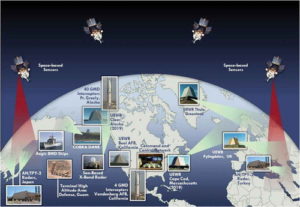 tandfonline.com


 Varsha Koduvayur Senior Research Analyst

 του ΠΑΝΤΕΛΗ ΣΑΒΒΙΔΗ

 October 24, 2019 | Washington Examiner
 Friday, October 25, 2019
