Αρχική Blog Σελίδα 2582

Governments Abroad Are Shaping Our Foreign Policy in Broad Daylight

0

The Nation

Countries like Saudi Arabia and Qatar have been influencing Washington through lobbyists, think tanks, journalists, and academia—and it’s all perfectly legal.

EDITOR’S NOTE: This article originally appeared at TomDispatch.com. To stay on top of important articles like these, sign up to receive the latest updates from TomDispatch.

Foreign influence in America is the topic du jour. From the impeachment inquiry into President Trump’s request that a foreign power investigate a political opponent to the indictment of associates of his personal attorney, Rudy Giuliani, for illegally funneling foreign money into US elections, the nation has been transfixed by news of illegal foreign influence in the political process. While such efforts to subvert American elections garner headlines, there remains a treasure trove of perfectly legal ways foreign powers are subverting American democracy. And they’re not waiting for election day—they’re doing it every single day of the year.

“LEGISLATION IS PREPARED BY LOBBYISTS ALL THE TIME”

Foreign powers have a remarkably direct way of making sure their voices are heard in Washington: Let their lobbyists script what various members of Congress say. That may sound wild, but it’s actually commonplace. Lee Fang of the Intercept reported a typical example of this recently. He discovered that, on November 13, 2017, Representative Ed Royce (R-CA), then chairman of the House Foreign Affairs Committee, read verbatim into the congressional record a set of talking points given to his office by lobbyists working for the Saudi government. As Representative Ro Khanna (D-CA) and a bipartisan group of lawmakers debated invoking the War Powers Act to end US support for the war in Yemen, Ari Fridman, a lobbyist working for Hogan Lovells, itself representing Saudi Arabia, distributed Saudi talking points to Royce and others. In a C-SPAN video from the debate on the floor, Royce can be seen parroting these very talking points, word for word.


This might seem like an extraordinary success for any lobbyist of a foreign power, but it’s actually quite common. A report by the Project On Government Oversight (POGO), co-authored by Ben Freeman, for instance, documented multiple examples of foreign agents writing speeches, even legislation, for members of Congress. Most notably, their investigation unearthed documents showing a foreign agent had provided track-change edits on a proposed bill to a staffer working for Senator Daniel Inouye (D-HI). When the legislation was finally introduced by the senator, it included the exact language the lobbyist had suggested. Asked about this, that agent responded, “It’s not unusual for us to comment back and forth” with congressional staff about legislation. He added, “Proposed legislation is prepared by lobbyists all the time.”

In our post–Citizens United world where, thanks to that 2010 Supreme Court decision, money is considered speech when it comes to campaign finance, agents working on behalf of foreign governments regularly “speak” with their pocketbooks. The Foreign Influence Transparency Initiative at the Center for International Policy (CIP), where we work, has repeatedly reported on how agents of foreign governments make campaign contributions to the congressional representatives they’re contacting on behalf of foreign powers.

Sometimes they even make such donations on the very day they meet with the member of Congress. In investigating the Saudi lobby in 2018, we found at least five instances when lawmakers received campaign contributions on the day they or their staff spent time with someone working for the Saudis. Firms representing Saudi Arabia gave this way to Senator Jim Inhofe (R-OK), Senator Robert Menendez (D-NJ), Senator Tina Smith (D-MN), Senator Ben Cardin (D-MD), and Representative Mike Conaway (R-TX). Even more striking are contacts (and contributions) made just prior to important votes on Capitol Hill. Senator Bill Nelson (D-FL), for instance, received a total of $3,000 from Brownstein Hyatt Farber Schreck, a firm representing the Saudis, in the four days before a March 20th, 2018, vote on a War Powers Resolution introduced to end US support for the Saudi-led coalition in Yemen. (One of those contributions came on the day of the vote.) Nelson, who has since lost his Senate seat, ended up voting against the Yemen resolution in line with Saudi interests.

While foreign nationals are prohibited from making campaign contributions—exactly what presidential lawyer and former New York mayor Rudy Giuliani’s Ukrainian associates are accused of orchestrating—nothing prohibits citizens working on their behalf from such donations. Some would argue that gestures of this sort look remarkably like bribery, but they are perfectly legal, according to the Foreign Agents Registration Act (FARA), as long as any contributions an agent reports are “from your own funds and on your own behalf.”

BUYING THINK-TANK THINKING

Foreign powers have ample ability, through their lobbyists, to directly influence congressional legislation. They also have at least three indirect, perfectly legal avenues for trying to shift US foreign policy in their favor: think tanks, the media, and academia.

As CIP’s recent report on the influence of the United Arab Emirates (UAE) in America documented, lobbyists hired by foreign powers often work directly with influential think tanks to shape the narrative about the countries they represent. They meet with think-tank experts, provide them with talking points, offer research assistance, and sometimes even give them all-expense-paid trips to the country in question.

Such talking points are disseminated to think-tank pundits in part to influence what they’ll write or say. Their work, in turn, is often shared by various congressional offices. This process is effectively talking-point laundering. A foreign power’s message is communicated to sympathetic think-tank experts who then echo the talking points in their work, speeches, or even testimony before Congress without having to disclose their connections to that country.

For example, as our UAE report documented, Michael Knights, a senior fellow at the Washington Institute for Near East Policy, has an extremely close relationship with lobbyists working on behalf of the UAE and his public comments often echo their talking points. An article Knights wrote on June 14, 2018, on the UAE’s move to “liberate” the Yemeni port of Hodeidah, deeply embroiled in the Saudi-UAE war in that embattled land, closely mirrored an article disseminated by Hagir Elawad & Associates, a firm working on behalf of that country. It, in turn, had been written by Anwar Gargash, the current UAE minister of state for foreign affairs.

FARA filings show as well that Knights has a very close relationship with Richard Mintz, managing director of the Harbour Group, which also represents the UAE in Washington. He reportedly coordinated with Knights on four separate trips to visit UAE forces in Yemen. Afterward, Knights would write a distinctly uncritical analysis about UAE operations in Yemen, never, for instance, mentioning the targeted-assassination program that UAE officials oversaw there or the fact that those same forces gave US-supplied weapons to al-Qaeda and other militant groups in that country. He also dismissed accusations of war crimes by UAE forces as just the work of “local proxies.”

While registered foreign agents legally have to declare anything they distribute on behalf of a foreign power, there is no such requirement for think-tank experts. In fact, such institutions don’t even have to disclose that they receive funding from foreign powers. Under current law it’s perfectly legal for scholars whose work is funded by a foreign government to craft an article with that government’s registered foreign agents without disclosing any of their ties.

This can become particularly problematic when such experts testify before Congress without disclosing their potential conflicts of interest. The House of Representatives requires witnesses to fully reveal foreign funding before testifying, but in many instances, such experts don’t disclose the money their institutions receive from foreign governments. A POGO report found that the existing House rule relating to testimonial transparency is remarkably weak, allowing many witnesses to adopt a particularly narrow interpretation of the “issues related” to their testimony. In the process, they simply don’t disclose their foreign ties.

Experts from the Atlantic Council, which received at least $2,585,000 in foreign funding in 2018, for example, failed to disclose this funding when appearing before Congress. Perhaps most notably, two Atlantic Council experts who testified on “reforming the National Security Council” and “defeating terrorism in Syria” didn’t reveal the more than $1 million dollars the Atlantic Council received from the United Arab Emirates embassy in Washington, even though the UAE undoubtedly had an interest in each of those issues.

SHAPING THE MEDIA NARRATIVE

Media outlets are another prime target of foreign influence operations. Some governments, of course, run their own media outlets in America and many of these are required to register under the Foreign Agents Registration Act. China’s CCTV and Russia’s RT, which was deemed “the Kremlin’s principal international propaganda outlet” in the Director of National Intelligence’s report on Russian interference in the 2016 election, are obvious examples. And, of course, foreign powers continue to engage in a number of illegal Twitter and Facebook activities meant to influence domestic politics, as well as American views of their own countries. In early November, for example, two former Twitter employees were charged with spying for Saudi Arabia and accessing the private information of the Kingdom’s critics in the United States.

Generally ignored, however, are the ways in which foreign powers often engage in legal media manipulation that neither they, nor such outlets, are required to tell viewers or listeners about. One of the most common tactics is simply to work closely with reporters covering issues of importance to them. No surprise then that the Center for International Policy’s investigations have consistently found journalists among the top targets of registered foreign agents. In some cases it’s fairly easy to see how this influence gets converted into extremely positive spin on their behalf.

Take, for example, OZY, which brands itself as “news for the disruptive.” Its reporters were contacted repeatedly by UAE agents in late 2017 and early 2018 regarding “story ideas” and to arrange interviews. This courtship culminated in two extraordinarily flattering OZY pieces, one describing Dubai’s “Museum of the Future” and the other portraying Dubai as “one of the world’s new fashion capitals,” ignoring the fact that you can face up to three years in prison, especially if you’re a woman, for dressing inappropriately there.

FOREIGN INFLUENCE IN THE IVORY TOWER

While foreign influence in Washington has consistently made front-page headlines, it’s arguably just as pervasive at American universities. Chinese influence has, for instance, garnered considerable attention in recent years. That country’s Confucius Institutes, ostensibly language and cultural centers at American colleges paid for by the Chinese government, have been the focus of eye-opening congressional investigations on the role foreign governments can play on campus. As a Senate investigation reported in early 2019, “Confucius Institute funding comes with strings that can compromise academic freedom,” allowing the Chinese government to play censor at academic conferences on US soil and even censor course materials critical of China.

Chinese influence on campus has garnered headlines, but that country is just one of more than 100 that have funneled $9-plus billion in foreign money to US college campuses in the past five years, according to the Department of Education—and China isn’t even the biggest player among them. That honor, believe it or not, goes to little (but wealthy) Qatar, which has given more than $1.3 billion to American universities since 2014, nearly three times as much as the Chinese. Its officials, in turn, have gone to great lengths to ensure that the strings attached to such funding aren’t known to the public. They even sued the state of Texas to prevent Texas A&M, one of its top grantees, from having to disclose the details of its relationship with Qatar.

While at least two dozen universities are severing ties with Confucius Institutes, schools have been far more reluctant to cut ties with other authoritarian governments. After the brutal murder of Jamal Khashoggi at the Saudi consulate in Istanbul, Turkey, for example, universities and think tanks faced considerable pressure to sever ties with Saudi Arabia, but few did. Since 2014, the Massachusetts Institute of Technology (MIT), one of the most prestigious universities in the country, has received the most money from the Saudis—at least $77 million, according to Department of Education records.

Following outrage after Khashoggi’s brutal murder, MIT began a reassessment of its financial ties with the Kingdom. However, in February, when that assessment was finished—and outrage over Khashoggi’s murder was no longer front-page news—a letter sent to the school’s students and teachers concluded that the faculty should be able to “continue their current engagements with colleagues, students, and public and private research sponsors in Saudi Arabia…as long as these projects remain consistent with MIT policies and procedures and US laws and regulations.”

Saudi influence on campus can be even more direct than funding. In at least one case, a registered foreign agent working on behalf of that country was a professor on a college campus. According to a report by Brian McGlinchey, an expert on Saudi influence in America, in 2018 Bill Smullen, former chief of staff to Secretary of State Colin Powell, was more recently a registered agent working on behalf of Saudi Arabia while serving as director of the Maxwell School of National Security Studies at Syracuse University. FARA filings show that Smullen was paid to provide “public relations support” for the Saudis, while serving as the head of that prestigious national-security program. When asked if the Saudi money might lead him to show them in a more favorable light at Syracuse, Smullen quickly dismissed the idea, saying, “I don’t think there is any conflict of interest.”

EXPANDING THE SPOTLIGHT TO PERFECTLY LEGAL FOREIGN INFLUENCE

The scrutiny placed on malign actors like Rudy Giuliani’s associates and their alleged dealings with Ukrainian elites to compromise an American election is certainly warranted. We live in a world in which the ability of foreign powers to undermine American democracy (as this country once undermined democracies elsewhere) remains a genuine threat. Seldom, however, does anyone even think about the influence operations of foreign powers—operations that are perfectly legal and don’t garner headlines.

The American political system, which has always been vulnerable to outside influence, is arguably more susceptible to foreign meddling now than it has been in decades—and most of it is perfectly legal. From woefully inadequate disclosures regarding conflicts of interest by witnesses testifying before Congress to foreign agents filling campaign coffers and literally writing our laws, as well as influencing think tanks, media outlets, and universities, there remain a host of legal ways for foreign powers to try to bend our policies and thinking to their will. While it’s imperative that we be vigilant in rooting out illegal foreign influence, if American democracy is to remain “of the people, by the people, and for the people,” a bright light should be directed onto all forms of influence that seek to undermine it.

Ben FreemanBen Freeman, a TomDispatch regular is the director of the Foreign Influence Transparency Initiative at the Center for International Policy (CIP) and co-chair of its Sustainable Defense Task Force.

Εκτιμήσεις για τη συνάντηση του Ερντογάν με τον Τράμπ

2

Του Δημήτρη Τσαϊλά*

Πέμπτη 14 Νοεμβρίου 2019, 00:03

Αυτό που εκτιμάται ότι ζήτησε ο Ερντογάν στη συνάντηση με τον Τράμπ είναι η ανάπτυξη μιας διεθνούς δύναμης στη θεωρούμενη ασφαλή ζώνη στη βόρεια Συρία, η οποία ήταν και η πρόταση της Γερμανίας. Μια σταθεροποιητική δύναμη που θα διαμορφωθεί υπό την ηγεσία της Γερμανίας με τη συμβολή των χωρών του ΝΑΤΟ.

Αυτό σημαίνει άνοιγμα μιας ομπρέλας του ΝΑΤΟ στην αυτόνομη περιοχή των Κούρδων. Η τουρκική επιχείρηση «πηγή Ειρήνης» θα ζητήσει μάλλον ο Ερντογάν να συνεχίσει την παροχή διεθνούς ασφάλειας με βάση το ΝΑΤΟ για να εξασφαλίσει την παράδοση της περιοχής στην επιρροή της Τουρκίας. Βέβαια, για να επιτύχει αυτό το έργο ο Ερντογάν θα αποδεχθεί με κάποιον τρόπο και την απομάκρυνση των S400!!!

Εκείνο που δεν ξέραμε μέχρι τώρα, ήταν ότι ο Πρόεδρος Τράμπ είναι διατεθειμένος να προωθήσει αυτή την πολιτική υπέρ των προσωπικών του συμφερόντων, σύμφωνα με όσα του καταμαρτυρούν οι πρώην συνεργάτες του. Τα συμφέροντα αυτά εξακολουθούν να είναι συγκεκαλυμμένα, αλλά ο Τράμπ έδωσε εξετάσεις στις επιθυμίες του Ερντογάν και αγνόησε τα σημαντικά συμφέροντα ασφαλείας των ΗΠΑ, ιδίως για την προστασία των Κούρδων στη Συρία και τη συνέχιση της αξιοποίησής τους για την καταπολέμηση κάθε αναβίωσης του Ισλαμικού Κράτους. Όπως και με την Ουκρανία, το Κογκρέσο είναι ως επί το πλείστον ενωμένο προς την αντίθετη κατεύθυνση. Επιθυμούν την επιβολή των κυρώσεων για την Τουρκία.

Τι θα μπορούσε να δώσει ο Τράμπ στον Ερντογάν αυτή τη φορά; Ο Τούρκος Πρόεδρος θέλει πολλά περισσότερα εκτός από την έκδοση του αντιπάλου του, Fethullah Gulen, του 78χρονου κατοίκου της Πενσυλβανίας, τον οποίο ο Ερντογάν κατηγορεί ότι σχεδίασε την απόπειρα του πραξικοπήματος το 2016. Θέλει επίσης να αποφύγει τις κυρώσεις και να πείσει τον Τράμπ να επιστρέψει η Τουρκία στο πρόγραμμα των F35. Όποιος στοιχηματίσει υπέρ του Ερντογάν μάλλον θα κερδίσει, αφού εκτιμάται ότι θα ικανοποιήσει κάποιες ή όλες του τις επιθυμίες, χωρίς σαφή ανταλλάγματα. Αυτό άλλωστε είναι το γενικό πλάνο που επιδεικνύει ο Trump όταν συναλλάσσεται με ισχυρούς ηγέτες τους οποίους θαυμάζει και μπορεί να υπάρχουν και άλλα ακόμη άγνωστα επιχειρηματικά ή οικονομικά συμφέροντα.

Φυσικά οι Αμερικανοί πρόεδροι συχνά λαμβάνουν αποφάσεις για την εξωτερική πολιτική με βάση τα εσωτερικά πολιτικά συμφέροντα. Δεν υπάρχει τίποτα νέο σε αυτό. Ωστόσο, ο Πρόεδρος Τράμπ είναι πιο ξεκάθαρος. Τίποτα άλλο δεν φαίνεται να έχει σημασία και δεν τον περιορίζει από την απαίτηση για εδραίωση της προεδρίας του, ακόμη και αν παρανομεί. Η “κατάχρηση εξουσίας” είναι σχεδόν πολύ καλή ετικέτα για αυτή τη συμπεριφορά του.
Τα τελικά ερωτήματα που διαμορφώνονται είναι:

Θα αποδεχτεί η Ρωσία αυτή τη διαδικασία; Θα επιτρέψει η Ρωσία στη Δύση να ξανα-εγκαταστήσει στη Συρία τον έλεγχο; Ποιά ανταπόκριση των συμμάχων θα επαναφέρει την Τουρκία στη Δύση;

* Ο Υποναύαρχος ε.α. ΠΝ Δημήτρης Τσαϊλάς είναι Senior recercher of Strategy International και Member of Institude for National and International Security.

liberal.gr

Ανάλυση: Η κακή εικόνα Ερντογάν στην Αμερική

0
  ΑΘΑΝΑΣΙΟΣ ΕΛΛΙΣ 
¨Καθημερινή”

Με αφορμή την επίσκεψη του Ταγίπ Ερντογάν στην Ουάσιγκτον, πολιτικοί και αναλυτές εστιάζουν στις ευθείες επιθέσεις του Τούρκου προέδρου κατά της Αμερικής και της Ευρώπης, και σε γεωπολιτικό επίπεδο στην προκλητική συμπεριφορά και αναθεωρητική πολιτική του στην Ανατολική Μεσόγειο και τη Μέση Ανατολή με αποκορύφωμα την στρατιωτική εισβολή στη βόρεια Συρία.

Στο πλαίσιο αυτό έρχονται στο προσκήνιο ζητήματα όπως ο αποκλεισμός της Τουρκίας απο την προμήθεια αμερικανικών μαχητικών F-35 – λόγω της απόφασης του Ερντογάν να αγοράσει το ρωσικό αντιπυραυλικό σύστημα S-400 – και κατ’ επέκταση η προοπτική επιβολής οικονομικών κυρώσεων από τις ΗΠΑ.

Μπορεί ο Ντόναλντ Τραμπ να αφιερώνει σήμερα σχεδόν τέσσερις ώρες στον Ταγίπ Ερντογάν, με στόχο να αποκαταστήσει τη σχέση μαζί του – με το βλέμμα στραμμένο στις εμπορικές συναλλαγές – ωστόσο η εικόνα του Τούρκου προέδρου στην αμερικανική κοινή γνώμη έχει επιδεινωθεί δραματικά και σήμερα είναι κάκιστη.

Την προηγούμενη φορά που ο Ερντογάν επισκέφθηκε τον Λευκό Οίκο, πριν δυο χρόνια, οι σωματοφύλακές του είχαν επιτεθεί σε Κούρδους που διαδήλωναν ειρηνικά εναντίον του έξω από την τουρκική πρεσβεία στην Ουάσιγκτον.

Οπως ήταν φυσικό, τα έκτροπα και η απαράδεκτη συμπεριφορά των Τούρκων αξιωματούχων είχαν αναδειχθεί από τα μέσα ενημέρωσης. Είχε καταδικαστεί ομόφωνα από το Κογκρέσο και είχε προκαλέσει εντονότατες αντιδράσεις από σημαντικούς νομοθέτες, με πιο ηχηρή αυτή του σημαντικού γερουσιαστή και υποψηφίου των Ρεπουμπλικάνων για την προεδρία το 2008, Τζον Μακέιν, που έφυγε από τη ζωή πριν ένα χρόνο.

Οι Αμερικανοί δημοσιογράφοι δεν μένουν ανεπηρέαστοι ούτε από τη χρήση αντιδημοκρατικών μέσων από τον Ερντογάν στο εσωτερικό της Τουρκίας για την υλοποίηση των αποφάσεών του, την καταπάτηση των ανθρωπίνων δικαιωμάτων, τους διωγμούς και τις φυλακίσεις Τούρκων συναδέλφων τους.

Αναδεικνύουν στα ρεπορτάζ και τα σχόλιά τους τον αυταρχισμό του καθεστώτος, ενημερώνοντας την αμερικανική κοινή γνώμη – σε σημαντικό βαθμό και τη διεθνή – για το τι συμβαίνει στο εσωτερικό της Τουρκίας.

Ανάλογο πνεύμα διαπερνά όλο και περισσότερες αναλύσεις και εκθέσεις δεξαμενών σκέψεων που ασκούν δριμεία κριτική κατά της πολιτικής του Ερντογάν, τόσο στο εσωτερικό όσο και στο εξωτερικό με πιο πρόσφατο παράδειγμα τις στρατιωτικές επιχειρήσεις κατά των Κούρδων.

Παράλληλα, είναι σαφές ότι ο αντισημιτισμός του Ερντογάν έχει αποξενώσει, και στην πορεία εξοργίσει, την πολιτικά και οικονομικά ισχυρή αμερικανοεβραϊκή κοινότητα.

Η εικόνα του δεν είναι καλή ούτε στην πολυπληθή χριστιανική κοινότητα όλων των δογμάτων που αποτελεί και την πλειονότητα του αμερικανικού λαού, αλλά ούτε και στους μουσουλμάνους της Αμερικής.

Ο αυταρχισμός του Ερντογάν και η αντιαμερικανική ρητορική του έχουν πλήξει – ανεπανόρθωτα – όχι μόνο την προσωπική του εικόνα, αλλά και της χώρας του. Τα γκρίζα σύννεφα δεν θα διαλυθούν εύκολα, ούτε όταν ο απρόβλεπτος ηγεμόνας δεν θα βρίσκεται πλέον στο προσκήνιο.

Η ισοπεδωτική παντοκρατορία του επι σχεδόν δυο δεκαετίες, έχει επιφέρει μια μεταστροφή στον τρόπο που η μεγάλη πλειονότητα της τουρκικής κοινωνίας βλέπει την Αμερική και τη Δύση γενικότερα.

Το αποδεικνύει η σχεδόν πλήρης ταύτιση του λαού, ακόμη και αντιπολιτευόμενων πολιτικών και κομμάτων, με την εισβολή στη Συρία και τα φαινόμενα λατρείας στο πρόσωπο του Ερντογάν, οι στρατιωτικοί χαιρετισμοί μαθητών, αθλητών, κ.α. που ακολούθησαν.

Ο,τι και αν θα συμβαίνει περιστασιακά σε επίπεδο ηγεσιών, τη σχέση θα διαπερνά μια αμοιβαία καχυποψία.

Η βαθιά δυσφορία που επικρατεί πλέον στην Αμερική για τον Ερντογάν επιβεβαιώνει όχι μόνο ο πολλαπλασιασμός των προσωπικοτήτων και των οργανώσεων που τον επικρίνουν ή καταγγέλλουν την Τουρκία, αλλά και η όλο και πιο αυστηρή ρητορική που χρησιμοποιούν.

Είναι χαρακτηριστική η δήλωση της δημοκρατικής γερουσιαστού, Τζιν Σαχίν, η οποία αναφερόμενη στη σημερινή επίσκεψη Ερντογάν στην Ουάσιγκτον, τόνισε ότι αυτή «δεν είναι η κατάλληλη στιγμή ή τοποθεσία να προσφέρουμε φιλοξενία και να ανταλλάσσουμε καλοσύνες με έναν δικτάτορα».

Αυτά για τον ηγέτη μιας χώρας η οποία, προς το παρόν, είναι σύμμαχος των ΗΠΑ στο ΝΑΤΟ.

“Καθημερινή”

Trump team is adopting a pipeline plan to wean Europe off Russian fuel

0

mcclatchydc.com

BUREAU OF ENERGY RESOURCES

President Donald Trump’s top national security aides believe the roadmap to Middle East peace has been traced on a physical map they have hanging in the White House marked by power plants, gas terminals and ambitious pipeline projects.

According to three senior administration officials, that map – declassified and obtained by McClatchy – has motivated members of the National Security Council to prioritize the formation of a gas forum in the Eastern Mediterranean that would simultaneously boost and entangle the economies of several countries that have been at odds for decades.

Fascination with regional energy resources has formed the basis of an organizing principle for policymaking among key members of Trump’s inner circle, who similarly view oil and gas needs as critical to their strategies toward Russia and the European Union, according to White House and Defense Department sources.

It is a rare instance of continuity between the Trump and Obama administrations. The map was first created by State Department cartographers and energy diplomats working at the direction of former Vice President Joe Biden, according to its architect, Amos Hochstein, former special envoy and coordinator for international energy affairs.

National Coverage. Local Perspectives.

Impact2020 is your destination for curated election coverage, focusing on local topics influencing critical states like Florida, Texas, California and the Carolinas. Offer includes one-year digital subscription for $50; renewed at $124.99 annually unless you tell us to cancel.

“It took us a long time to create,” Hochstein told McClatchy. “There’s complete continuity, and it is thanks to the vision and leadership of Vice President Biden.”

CROSS-GOVERNMENT COOPERATION

The Trump administration is supporting two bipartisan congressional efforts that track with its approach: One bill that “promotes security and energy partnerships in the Eastern Mediterranean,” introduced on a bipartisan basis in both houses in May, and another threatening to sanction European firms supporting the construction of Nord Stream 2 pipelines into Germany, predominantly funded by Russia’s state-owned Gazprom.

Secretary of Energy Rick Perry briefed President Donald Trump two weeks ago in the Oval Office on the Russian pipeline effort, which circumvents Ukraine by running through the maritime territory of Baltic states that are entirely reliant on Russian fuel.

The administration has grown increasingly vocal in its opposition to the Nord Stream 2 project.

“If Germany persists in building the Nord Stream 2 pipeline, as President Trump said, it could turn Germany’s economy into literally a captive of Russia,” Vice President Mike Pence said in April at a NATO anniversary event in Washington.

VP Pence urges Germany to end dependence on Russian oil

Vice President Mike Pence, speaking at a NATO event in Washington, D.C. on April 3, 2019, said that if Germany persists in building the Nord Stream 2 pipeline, it could turn Germany’s economy into a “captive of Russia.” 

Perry says the president will support the Senate’s sanctions legislation introduced in early May. And as the administration seeks to thwart the Russian effort north of Europe, it is also working to facilitate an Egyptian-led initiative to its south that could produce a potent regional gas market.

White House officials told McClatchy in April they had requested a formal observer role at future meetings of the Eastern Mediterranean Gas Forum – comprised of Jordan, Italy, Greece, Cyprus, Israel and the Palestinian Authority – offering to help flesh out the structure of the forum with U.S. expertise.

On this front, the administration enjoys support from unlikely allies. Eliot Engel, the Democratic chairman of the House Foreign Affairs Committee, met last week with the Cypriot president and said the Mediterranean gas forum project was a strategic opportunity for the U.S. to stymie Russian influence efforts over local energy resources. “I think that [Russian President Vladimir] Putin and Russia can’t and should not be able to control the situation,” Engel stated.

And in late April, Bob Menendez, a Democratic senator from New Jersey serving as ranking member of the Senate Foreign Relations Committee, praised the Trump administration for its efforts while touting a bipartisan bill he recently authored with Republican Senator Marc Rubio of Florida.

The legislation “sends a clear message from the Senate to the region and the world,” Menendez stated in Athens: “The Eastern Mediterranean is a region of central importance to our country. And it must therefore figure more prominently in how we allocate diplomatic energy, engagement and resources.”

Democratic aides in the House and Senate acknowledge that energy strategy represents a rare area of agreement across the aisle.

“There is definitely bipartisan cooperation on both of these energy fronts,” said one Democratic congressional source, who made note of several recent congressional visits to the region, or CODELs, that have focused on the energy strategy. “To the extent that the [National Security Council] is informing the State Department, they have been very engaged with Congress on this.”

Two Florida congressmen, Democratic Rep. Ted Deutch and Republican Rep. Gus M. Bilirakis, introduced a bill last week following Menendez and Rubio’s Senate effort that would boost the White House strategy. Countering Russia’s creeping influence over energy resources in the region “could certainly be an implication” of the bill, said a second Democratic congressional source.

State Department Acting Assistant Secretary David Satterfield traveled to Beirut last Tuesday, hoping to broker a settlement to a maritime border dispute between Lebanon and Israel, both of which lay claim to offshore territory with promising new gas fields. A State Department official told McClatchy that a resolution there could “unleash” private sector investment into the project.

“There’s a lot riding on that portion of this,” the official stated. “If that maritime border could be resolved, a lot more energy companies would be all-in on exploration. It opens up a great deal of opportunity.”

AN ENERGY STRATEGY YEARS IN THE MAKING

The attention of prominent NSC officials – including Perry, National Security Adviser John Bolton, Senior Director for Strategic Assessments Victoria Coates and Secretary of State Mike Pompeo – has once again elevated a strategy housed at an obscure office at the State Department to the interagency level. That office, called the Bureau of Energy Resources, has been working since the Obama era to wean Europe off of Russian fuel and build “an integrated energy market to catalyze regional cooperation and bolster energy security,” according to its website.

The map outlines oil and gas finds off the coasts of Cyprus, Egypt, Israel and Lebanon over the course of the last decade, and draws between them potential pathways for export that could ultimately facilitate the sale of regional gas to the E.U.

enr_wh_map.jpg
BUREAU OF ENERGY RESOURCES

“I’m never surprised when an administration chooses to see that its predecessors did something right,” Hochstein said. “It’s a glaringly obvious policy choice that supports U.S. and regional interests. There isn’t much downside. But it does require attention to detail, and over two years there’s been an attempt to reinvent the wheel that has wasted time.”

Hochstein, who worked closely with Biden throughout his tenure in government, said that the map was personally presented to Turkish President Tayyip Erdogan during the 2015-2017 Cyprus peace process and laid the groundwork for rapprochement between Turkey and Israel after the Gaza flotilla crisis. “The Lebanese have it, the Israelis have it, the Cypriots have it – this was a huge focus,” he said.

One senior Trump administration official working on an effort to jumpstart Israeli-Palestinian talks would not say whether energy cooperation is a feature of the administration’s peace plan. But the emerging Eastern Mediterranean Gas Forum, based in Cairo, is the only outlet that has brought Israel and the Palestinian Authority around joint cooperation agreements in recent years. “Anything that gets the Israelis and Palestinians to agree on seven points is pretty important,” another official noted.

And as the administration’s effort to form a “Middle East Strategic Alliance,” or MESA, to counter Iran sputters over reluctance among key allies, national security officials are turning to the gas forum as their primary strategic tool to advance U.S. interests regionwide.

In March, Pompeo attended a signing ceremony in Tel Aviv among Greek, Israeli and Cypriot officials for an agreement to advance a $7 billion pipeline that would facilitate the export of local gas to Europe. National security officials tell McClatchy it was an intentional signal of U.S. support for the project, although they continue to express skepticism over the feasibility and cost of laying pipe so deep beneath the sea.

“We basically support the concept of a pipeline – it’s very appealing. The question is whether its economically viable,” one official stated. “If the pipeline makes the gas too expensive on the European market right now, obviously that should be considered.”

‘WHERE ELSE COULD EUROPE GET ITS ENERGY?’

Their emergent vision – of connecting once-rival governments through an energy grid, and of using that practical alliance to enrich the region, diversify European imports and weaken Moscow – is as close to a strategic doctrine as any yet to emerge from the Trump administration.

And yet there is a strategic paradox inherent to that vision, according to Simon Henderson, director of the Bernstein Program on Gulf and Energy Policy at The Washington Institute for Near East Policy.

“The idea that East Mediterranean energy could impact on the European energy balance in such a way as to dent Russian market share is a fantasy – Europe’s thirst for gas is so huge, and Russia’s ability to provide that gas is so great, that it’s a wild dream to even hope we can achieve it given the limited reserves discovered thus far,” Henderson said. “Hoping you can find gas is not the same as finding gas.”

Over two-thirds of European gas is imported from outside of the bloc, roughly half of which comes from Russia, according to the European Commission and Gazprom, amounting to nearly 200 billion cubic meters delivered in 2017.

Energy diplomats from both the Trump and Obama administrations have placed hope in promising data that indicates enough gas exists there to quench the whole of Europe. But estimates of how much fossil fuel resides underneath the outer shores of the Eastern Mediterranean are based off of sophisticated, yet imprecise, seismic modeling.

“Where else could Europe get its energy?” Henderson continued. “If I was being completely non-political on this, I would say Iran.”

Profile Image of Michael Wilner
Michael Wilner joined McClatchy as its White House correspondent in 2019. He previously served as Washington bureau chief for The Jerusalem Post, where he led coverage of the Iran nuclear talks, the Syrian refugee crisis and the 2016 US presidential campaign. Wilner holds degrees from Claremont McKenna College and Columbia University and is a native of New York City.

Enes Kanter: Here’s what Trump should say to Erdogan at the White House

0

WASHINGTON POST

By Enes Kanter

November 13, 2019 at 1:05 p.m. EST

Enes Kanter is a center for the Boston Celtics of the National Basketball Association.

When President Trump meets his Turkish counterpart at the White House on Wednesday, he should make clear that U.S. support is not unconditional. The alliance is becoming increasingly difficult to defend when President Recep Tayyip Erdogan has placed so many strains on it.

Ankara’s foreign policy, including the attacks on America’s Kurdish allies with Turkey’s recent incursion into northern Syria and Erdogan’s increasing closeness with Russia, is one source of friction. Another source, which receives less publicity, is Erdogan’s dismal human rights record. I will leave the foreign-policy aspect to others; my aim is to draw attention to Erdogan’s mistreatment of his own people. I want to urge Trump to press Erdogan to stop cracking down on his political opposition and end his authoritarian abuses of Turkish citizens.

Turkey’s most outspoken journalists and activists are languishing in prisons, media companies are either being shut down or cowed into submission, teachers are being jailed, civil society organizations are threatened and social media is heavily censored. The attacks on dissent are so arbitrary that anyone who offers even a mild criticism might see the inside of a prison cell.

Before Erdogan turned increasingly authoritarian following an attempted coup in 2016, Turkey might not have been a stable, consolidated democracy, but at least it had a lively news media, a somewhat independent judiciary and vibrant civil society. Ankara’s negotiations over membership in the European Union and its close ties with the United States had ensured that fundamental rights and freedoms of people were reasonably well respected.

It is conceivable that someday Turkey could return to that state, but it won’t happen unless free nations call attention to Erdogan’s awful human rights record.

I know personally of how dangerous the regime is, and of how hard making it change will be. I came to the United States when I was 17, and I rarely traveled back to Turkey. But I have watched with alarm as Erdogan embraced dictatorship, and I have been outspoken in criticizing the regime. The intolerance of dissent Erdogan shows at home is also applied overseas: The Turkish government issued an arrest warrant for me, filed an Interpol “red notice” demanding that other countries detain me, threatened my family and arrested my father. I don’t communicate with relatives in Turkey because I fear that a single message could be used as evidence of “terrorist activity.”

I have been threatened and harassed on the street in Boston, where I play basketball for the Celtics, by goons who I assume were Turkish agents.

Basketball is my passion, but I’m thankful that it also provides me with a platform that can make my life more meaningful by allowing me to speak out in support of those suffering in Turkey. The response from people in the United States and around the world has been so inspiring that this week I’ve started an online petition called “You Are My Hope,” with the goal of obtaining 1 million signatures to raise awareness of the human rights abuses in my home country.

When the goal is reached, I intend to send the petition to human rights groups, to Congress, to any organization that might be able to be able to bring pressure to bear on the Erdogan regime. And, of course, I’ll send it to the White House.

Trump welcomes Turkey’s Erdogan to White House, offers thanks for tentative cease-fire in northern Syria

By

David Nakamura and

Karen DeYoung

November 13, 2019 at 1:33 p.m. EST

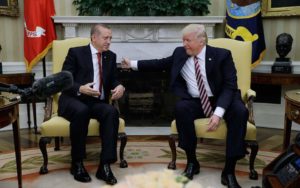
President Trump offered thanks to Turkish President Recep Tayyip Erdogan on Wednesday for a tentative cease-fire in northern Syria that “is holding very well,” as the two leaders met at the White House for bilateral meetings.

Erdogan’s visit comes amid smoldering tensions over Turkey’s offensive into Syria after Trump agreed to withdraw U.S. troops from the region last month, a move that has engendered bipartisan criticism on Capitol Hill.

But Trump rebuffed lawmakers who had called on him to cancel the invitation, saying the Turkish leader has lived up to an Oct. 17 agreement negotiated with Vice President Pence to suspend Turkey’s incursion into Syria and create a long-coveted buffer zone far beyond the nation’s borders. Turkey’s military operations have displaced an estimated 100,000 people in northern Syria from their homes, according to the United Nations.

“I want to thank the president for the job they’ve done,” Trump told reporters after welcoming Erdogan to the Oval Office. He added that the Syrian Kurds, longtime partners with the United States in fighting the Islamic State in the region, “seem very satisfied” with the cease-fire deal.

“The president and I are very good friends. We have been for a long time — almost from Day 1,” Trump said. “I understand the problems that they’ve had — including many people from Turkey being killed, in the area that we’re talking about. And he has to do something about that also. It’s not a one-way street.”

The bilateral meeting came as House Democrats staged their first public hearing in the impeachment probe over Trump’s conduct in a phone call with the leader of Ukraine over the summer. In the Oval Office, the president said he was not watching the hearings, which he called a “witch hunt” and a “hoax.”

“There’s nothing there,” Trump said.

The two leaders were expected to discuss the security situation in the region, as well as efforts to put relations on a better track after Turkey purchased a sophisticated Russian missile-defense system, the S-400. U.S. law mandates sanctions for such purchases from an “adversary,” and the administration has already cut Turkey’s participation in the international consortium building the new F-35 fighter jet.

Senior administration officials said that an offer to circumvent those punishments and also implement a new $100 billion trade deal — both of which Trump offered Erdogan in a failed effort to prevent the Turkish military operation in Syria — were still possible if Turkey complies with the cease-fire agreement, and the situation in northeastern Syria stabilizes.

“We think we can bring trade up very quickly,” Trump said. Erdogan, in brief remarks through an interpreter, thanked Trump but did not offer details of his goals of the meeting, citing a joint news conference with the two leaders later in the day.

Also Wednesday, a bipartisan group of senators who have been critical of Erdogan is expected to meet with him at the White House at Trump’s request, an effort by the president to try to bridge the mistrust between the two sides — but one that has the potential to backfire.

Among those expected to attend are Sens. Ted Cruz (Texas), Joni Ernst (Iowa), Rick Scott (Fla.), Lindsey O. Graham (S.C.), and James E. Risch (Idaho), the chairman of the Senate Foreign Relations Committee. Senate Armed Services Committee Chairman James Inhofe (R-Okla.) was also invited but unable to attend.

Scott and Ernst said in advance of the meeting that they planned to confront Erdogan on its purchase of the S-400 missile systems.

Although Trump has held off on additional economic sanctions on Turkey after the cease-fire agreement, an overwhelming House majority voted last month to impose sanctions on Erdogan’s regime for its assault on Syria. A bipartisan Senate group has introduced a similar bill.

Sen. Chris Van Hollen (D-Md.), who was among the group, called Erdogan’s visit to the White House “absolutely shameful.”

Trump reiterated his belief that the United States was long overdue to reduce its military presence in the Middle East, calling the fighting between Turkey and Syrian Kurds a long-standing dispute “between these countries and other countries we’re involved with 7,000 miles away.”

Seung Min Kim contributed to this story.


Βολιβία: Τα έξι “εγκλήματα” του προέδρου Μοράλες

0

slpress.gr

Βαγγέλης Γεωργίου

Βολιβία: Τα έξι


Ας μην μιλήσουμε με πολιτειακούς/πολιτικούς όρους. Ίσως τις ώρες αυτές, οι εξελίξεις στη Βολιβία είναι τέτοιες που απαιτούν λίγες… ώρες ακόμα να κάτσει με μεγαλύτερη ασφάλεια η “μπίλια” της κριτικής δημοσιογραφικής ανάλυσης. Ας δούμε όμως ποια ήταν τα έργα και ημέραι του “φυγά” προέδρου της Βολιβίας, Έβο Μοράλες. Άραγε αυτός ο αριστερός “δικτάτορας” τι κακό έκανε στους βολιβιανούς; Σύμφωνα με τα στοιχεία της Παγκόσμιας Τράπεζας και της Έκθεσης για την Παγκόσμια Ευτυχία (OHE), ο πρώτος Ινδιάνος πρόεδρος της Βολιβίας έκανε μάλλον καλή δουλειά από το 2006 μέχρι το 2019 που κυβέρνησε.

Πρώτον, η Βολιβία ανάμεσα σε 132 χώρες κατατάσσεται σε αυτές (46) που είδαν τα ποσοστά της ευτυχίας των πολιτών να αυξάνονται πολύ σημαντικά από το 2005 στο 2018, όπως αναφέρει η Έκθεση Ευτυχίας του ΟΗΕ του 2019. Την ίδια στιγμή μέλος του “πυρήνα” της ΕΕ, η Ελλάδα, ευρισκόμενη στην 126η θέση, κάνει παρέα με χώρες όπως η Συρία και η Βενεζουέλα στην πτώση του ποσοστού της ευτυχίας των πολιτών.

Δεύτερον, το κατά κεφαλήν ΑΕΠ (ακαθάριστο εθνικό προϊόν) εκτοξεύτηκε από 11.452 δολάρια το 2006 στα 40.288 το 2018(από πάνω διάγραμμα). Η Βολιβία έφτασε να έχει ετήσια ανάπτυξη 6,8% το 2013 και έπεσε στο 4,2% το 2018 σε μεγάλο βαθμό εξαιτίας του λιγότερο ευνοϊκού διεθνούς κλίματος, δηλαδή ένας παράγοντας που δεν συνδέεται με την πολιτική Μοράλες. Σύμφωνα με την Έκθεση του 2018 (ΟΗΕ) για την ανθρώπινη ανάπτυξη, η Βολιβία βελτίωσε τη θέση της.

Τρίτον, όπως φαίνεται από τα στοιχεία (κάτω), ο Μοράλες δεν κατάφερε τα πρώτα χρόνια της διακυβέρνησής του να ανακόψει το ισχυρό κύμα σχολικής διαρροής στο δημοτικό. Πρόκειται όμως για ένα φαινόμενο που άρχισε να πλήττει την πρωτοβάθμια εκπαίδευση της χώρας από το 2000 και συνεχίστηκε.

Ωστόσο, από το 2014, η κυβέρνηση κατάφερε να βάλει ένα φρένο και στη συνέχεια να αυξήσει τις εγγραφές μαθητών. Επίσης, επί ημερών Μοράλες, το ποσοστό των εγγράμματων αυξήθηκε σύμφωνα με τα στοιχεία της UNESCO, ειδικά σε άτομα άνω των 65 ετών. Από 90,7 που ήταν το 2007 ο αλφαβητισμός στους ενήλικες έφτασε μέχρι και το 94,4 το 2014, σύμφωνα με την Παγκόσμια Τράπεζα.

Τέταρτον, τα ποσοστά της φτώχειας που κληρονόμησε ο Μοράλες ήταν πραγματικά εξοντωτικά. Το 2006, η Βολιβία ήταν μια χώρα με το 60% να ζει κάτω από τα όρια της φτώχειας. Το 2018, το ποσοστό αυτό όμως κατακρημνίστηκε στο 34,6. Υπάρχει φυσικά δουλειά να γίνει, αλλά μιλάμε για τη Βολιβία(κάτω). Οι εισοδηματικές διαφορές μειώθηκαν σημαντικά από 0,60 σε 0,47.

Πέμπτον, στο ισοζύγιο τρεχουσών συναλλαγών ο Μοράλες δεν τα πήγε και τόσο καλά. Όπως βλέπουμε παρακάτω είναι αρνητικό, αλλά χρειάζεται να δούμε την όλη εικόνα. Η Βολιβία για 40 περίπου χρόνια, 1960-2000 ζούσε μονίμως με αρνητικό ισοζύγιο με κάποια όμως θετικά διαλείμματα.

Η εικόνα άρχισε να βελτιώνεται θεαματικά από το 2000 ώσπου μετά το 2008 πήρε την κάτω βόλτα, αγγίζοντας ένα ιστορικό χαμηλό, χειρότερο από εκείνο του 1998. Παρόλα αυτά, ο Μοράλες φάνηκε μετά το 2018 να βελτιώνει κάπως την κατάσταση, αλλά όχι εντυπωσιακά. Ωστόσο, το εμπορικό ισοζύγιο έχει μια καλύτερη εικόνα(κάτω διάγραμμα). Να σημειωθεί ότι οι κυβερνήσεις Μοράλες κατάφεραν να πετύχουν ρεκόρ στις εξαγωγές προϊόντων και υπηρεσιών τα τελευταία 60 χρόνια της οικονομική ζωής της χώρας.

Έκτον, η ανεργία διατηρήθηκε σε ιδιαίτερα χαμηλά επίπεδα (3,5% το 2018), αν και ελάχιστα αυξημένη συγκριτικά με το 2006.

Αυτά ήταν έξι από τα “εγκλήματα” του Έβο Μοράλες. Αν δούμε

συνέχεια στο slpress.gr

Τι μπορούν να κάνουν η Ελλάδα και η Κύπρος όταν ο Τραμπ έχει συμφέροντα στην Τουρκία;

0
epaselect epa07991637 US President Donald J. Trump speaks at a meeting of the Economic Club of New York at a hotel in New York, New York, USA, 12 November 2019. President Trump is on a multi-day visit to New York and will be attending private fundraisers in the city later today before returning to Washington DC this evening. EPA/JUSTIN LANE

Του ΜΙΧΑΛΗ ΙΓΝΑΤΙΟΥ Hellas Journal

Ο πρόεδρος των ΗΠΑ Ντόναλντ Τραμπ στην ομιλία του στη Νέα Υόρκη. EPA, JUSTIN LANE

NOVEMBER 13, 2019

Το ερώτημα που θέτουμε στον τίτλο αυτού του κειμένου είναι αμείλικτο. Και αποδεικνύει βασικά ότι όσες προσπάθειες και να κάνει η Ομογένεια θα βρίσκεται πάντα μπροστά σε ένα τοίχο: τον ίδιο τον Πρόεδρο των Ηνωμένων Πολιτειών Ντόναλντ Τραμπ. Εκτός εάν επικρατήσει το Κογκρέσο και του επιβάλει να σεβαστεί τους αμερικανικούς νόμους. Κάτι που θα έλεγα πως είναι πιθανό πια…

Από αυτή την ιστοσελίδα (ΕΔΩ) και από το κυριακάτικο ΕΘΝΟΣ αποκαλύψαμε ότι ο γαμπρός του κ. Τραμπ, ο πολύς Τζάρεντ Κούσνερ, είναι ο άνθρωπος πίσω από τη συμφωνία του Αμερικανού προέδρου με τον Τούρκο ομόλογό του, Ταγίπ Ερντογάν. Μία συμφωνία ανάρμοστη και ανήθικη.

Ο κ. Τραμπ προστατεύει τον Τούρκο πρόεδρο και δικαιολογεί όλες τις αντιαμερικανικές πράξεις του. Ακόμα και τη στρατηγική του συμμαχία με τη Ρωσία. Η εφημερίδα New York Times, αποκάλυψε χθες ότι τρεις γαμπροί κρατούν το κλειδί της σχέσης των δύο Προέδρων. Μπορεί να ευθύνονται, έγραψε, για το πώς ο Ντόναλντ Τραμπ και ο Ταγίπ Ερντογάν δεν άφησαν τις πολιτικές εντάσεις μεταξύ των δύο χωρών να μετατραπούν σε παρατεταμένες κρίσεις. Το αποκαλυπτικό δημοσίευμα δίνει τις απαντήσεις για την ανάρμοστη σχέση του κ. Τραμπ με τον ισλαμιστή Πρόεδρο της Τουρκίας.

Δεν είχαμε την παραμικρή αμφιβολία. Λαμβάναμε αυτές τις πληροφορίες εδώ και καιρό και δεν μπορούσαμε να τις πιστέψουμε. Πως είναι δυνατόν, λέγαμε, ο Αμερικανός Πλανητάρχης να βλέπει τα δικά του προσωπικά συμφέροντα και όχι τα στρατηγικά συμφέροντα των Ηνωμένων Πολιτειών. Και όμως… Ο πρώην σύμβουλος Εθνικής Ασφάλειας του Λευκού Οίκου, ο Τζον Μπόλτον, μίλησε τις προάλλες στο Μαϊάμι της Φλόριντα σε ένα σημαντικό ακροατήριο της Morgan Stanley και έκανε με τη σειρά του μία φοβερή αποκάλυψη.

Γράψαμε σε αυτή την ιστοσελίδα: Ο Τζον Μπόλτον κατηγόρησε την κόρη και τον γαμπρό του προέδρου Ντόναλντ Τράμπ κατά τη διάρκεια ιδιωτικής ομιλίας την περασμένη εβδομάδα, στο Μαϊάμι.  Υποστήριξε ότι η προσέγγιση του πρώην αφεντικού του και της αμερικανικής πολιτικής για την Τουρκία γίνεται με προσωπικά ή οικονομικά συμφέροντα, σύμφωνα με πολλούς ανθρώπους που ήταν παρόντες σε αυτή την ιδιωτική ομιλία, μετέδωσε το τηλεοπτικό δίκτυο NBC News.

Είπε ότι ήταν πιο απογοητευμένος με τον Τραμπ για το χειρισμό του στα θέματα που αφορούν την Τουρκία. Σημειώνοντας την ευρεία δικομματική υποστήριξη στο Κογκρέσο για τις κυρώσεις εναντίον της Τουρκίας μετά την αγορά από τον Ερντογάν του ρωσικού συστήματος S-400, o Μπόλτον δήλωσε ότι η αντίσταση του Τράμπ προς την κίνηση ήταν παράλογη.

Ο Μπόλτον δήλωσε ότι πιστεύει ότι υπάρχει μια προσωπική ή επιχειρηματική σχέση που υπαγορεύει τη θέση του κ. Τραμπ για την Τουρκία, επειδή κανένας από τους συμβούλους του δεν είναι ευθυγραμμισμένος μαζί του για το θέμα.

Η Ομογένεια της Αμερικής, μέσω της οργάνωσης HALC, έδωσε μία μεγάλη μάχη, γνωρίζοντας ότι έχει απέναντι της την οικογένεια του Αμερικανού προέδρου. Χρησιμοποίησε όλα τα νόμιμα μέσα και πέτυχε μία μεγάλη νίκη: Να σταματήσει η συμμετοχή της Τουρκίας στο πρόγραμμα παραγωγής των μαχητικών F-35. Δεν έχει ξαναγίνει η Αμερική να αναγκάζεται να δηλώνει επίσημα την ακύρωση της συμμετοχής μίας χώρας-μέλους του ΝΑΤΟ στην παραγωγή ενός οπλικού συστήματος.

Η προσπάθεια συνεχίστηκε για την επιβολή των κυρώσεων. Η συντριπτική πλειοψηφία των βουλευτών και των γερουσιαστών υποστήριξαν την Ομογένεια. Αλλά όλοι, ομογενείς και Αμερικανοί νομοθέτες βρέθηκαν μπροστά στην οικογένεια του κ. Τραμπ.

Ο Αμερικανός πρόεδρος ανέβαλε την απόφαση για τις κυρώσεις. Αλλά για πόσο καιρό θα μπορεί να το κάνει; Παραβιάζει πλέον τους αμερικανικούς νόμους. Στο Κογκρέσο επικρατεί οργή. Και για τον Ερντογάν, που έχει βάψει τα χέρια του με το αίμα των Κούρδων, αλλά και για τον κ. Τραμπ. Είμαστε ενώπιον μεγάλων εξελίξεων. Αυτό οσμιζόμαστε…

Σήμερα ο Αμερικανός πρόεδρος θα προσπαθήσει να δώσει και άλλα δώρα στον Ερντογάν. Θέλει να τον πείσει να μην ενεργοποιήσει τους S-400 και ως αντάλλαγμα να του παραχωρήσει το σύστημα Patriot και να τον συμπεριλάβει ξανά στο πρόγραμμα κατασκευής των F-35.

Το βράδυ της Τετάρτης, μετά την αναχώρηση του κ. Ερντογάν από την Ουάσιγκτον θα γνωρίζουμε το αποτέλεσμα των συνομιλιών τους. Νομοθέτες και των δύο κομμάτων είναι έτοιμοι για τη μεγάλη σύγκρουση με τον Ερντογάν. Ουδείς του έχει εμπιστοσύνη. Αλλά και ο κ. Τραμπ πρέπει να δώσει απαντήσεις για την ανάρμοστη επιχειρηματική του σχέση με την Τουρκία.

Ευτυχώς στην Αμερική ακόμα είναι ισχυρή η Δημοκρατία… Βεβαίως, δεν γνωρίζουμε αν θα συνεχίσει να είναι στην περίπτωση που επανεκλεγεί ο Ντόναλντ Τραμπ…

Πηγή: Τι μπορούν να κάνουν η Ελλάδα και η Κύπρος όταν ο Τραμπ έχει συμφέροντα στην Τουρκία; https://hellasjournal.com/2019/11/ti-mporoyn-na-kanoyn-i-ellada-kai-i-kypros-otan-o-tramp-echei-symferonta-stin-toyrkia/

Attentats de Paris : François Hollande raconte la nuit meurtrière du 13 novembre 2015

0

ENTRETIEN. L’ancien président François Hollande restitue les souvenirs très précis qu’il garde des attentats du 13 novembre 2015 contre le Stade de France, les terrasses parisiennes et le Bataclan.

Όταν η Αλβανία απαγόρευσε τις θρησκείες και έγινε η μοναδική αθεϊστική χώρα στα παγκόσμια χρονικά

0

Το διάταγμα 4336 – 13/11/1967 του Χότζα, που έκλεισε τις εκκλησίες και ξύρισε τους ιερείς.

​Κατά το έτος 1967, οι αντιθρησκευτικές πρωτοβουλίες του Κόμματος Εργασίας Αλβανίας κορυφώνονται με υποστήριξη κυρίως από τις επιτροπές και τις οργανώσεις του Κόμματος.

  1. Σε σχετικά σύντομο χρονικό διάστημα δόθηκε το οριστικό χτύπημα σε όλες τις θρησκευτικές εστίες της χώρας. Ωστόσο, εξαιρέθηκαν μερικά κτίσματα ιστορικής και αρχιτεκτονικής αξίας. Λουκέτο μπήκε σε 2035 θρησκευτικά ιδρύματα (740 τζαμιά, 608 ορθόδοξες εκκλησίες και μοναστήρια, 157 ρωμαιοκαθολικές εκκλησίες και μοναστήρια και 530 τεκέδες).
  2. Απαλλοτριώθηκε όλη η κινητή και ακίνητη περιουσία που τους είχε απομείνει. Το Κράτος ελαφρύνθηκε οικονομικά καθώς σταμάτησε να χορηγεί το ήδη μειωμένο βοήθημα που χορηγούσε στις θρησκευτικές κοινότητες αλλά και την μισθοδοσία των κληρικών.
  3. Ξεκίνησαν να τονίζουν, πως η θρησκεία ήταν αβάσιμος μύθος και πως δεν υπήρχε θεός, καθώς μετά από τόσες κατεδαφίσεις και ανακατασκευές θρησκευτικών κτιρίων δεν μπόρεσε να προστατέψει τίποτα.

Όσο η θρησκεία ήταν σε πλήρη καταστολή, το Κράτος σχεδίαζε τα επόμενα βήματα του. Ο Χότζα και το επιτελείο του γνώριζαν πολύ καλά πως το κλείσιμο των χώρων λατρείας και ο διασυρμός των κληρικών δεν εξασφάλιζαν την πλήρη νίκη κατά της θρησκείας. Η χρόνια επαφή του αλβανικού λαού με τις θρησκείες του και η απόκτηση κοινών σημείων αναφοράς στην καθημερινότητα του μαζί τους, δεν μπορούσε να σβήσει τόσο απλά μέσα σε λίγους μήνες αθεϊστικής προπαγάνδας.

Με το υπ’ αρ. 4337 13/11/67 διάταγμα του πρεζίντιουμ του Λαϊκού Κοινοβουλίου της Αλβανίας, ακυρώθηκαν πλήρως και ανακαλέστηκαν όλες οι προηγούμενες αποφάσεις και το νομικό πλαίσιο, που αφορούσε την προστασία των θρησκευτικών κοινοτήτων. Αρχικά ακυρώθηκαν τα ίδια τα καταστατικά λειτουργίας των θρησκευτικών κοινοτήτων που είχαν επικυρωθεί το 1950. Η Αλβανία ορίστηκε ως η πρώτη και η μοναδική αθεϊστική χώρα στα παγκόσμια χρονικά. Απαγορεύτηκε πλέον η άσκηση θρησκευτικών καθηκόντων και λειτουργιών με πολύ αυστηρές ποινές. Όλα τα παραπάνω διαδραματίστηκαν στην Αλβανία του 1967 όπου το ισχύον Σύνταγμα της χώρας, αναγνώριζε απόλυτη ελευθερία θρησκευτικής συνειδήσεως.

Πρώτες οι δύο ισλαμικές κοινότητες αποφάσισαν να αποστείλουν μια εγκύκλιο, με την οποία ζητούσαν απ’ όλους τους κληρικούς τους να βγάλουν τις θρησκευτικές ενδυμασίες τους. Στις 15 Νοεμβρίου αποφάσισαν από κοινού για ακόμη μια φορά οι ηγεσίες της Ορθόδοξης Εκκλησίας, της Έδρας των Μπεκτασήδων και της Μουσουλμανικής Κοινότητας, να παραχωρούσαν εθελοντικά όλους τους ναούς και τους χώρους λατρείας στην νεολαία, ώστε να τα αξιοποιούσε όπως εκείνη νόμιζε καλύτερα. Επιπλέον, υπέβαλλαν δημόσια την παραίτηση τους, με μια επιστολή προς το υπουργικό συμβούλιο της χώρας προτείνοντας και την κατάργηση των κοινοτήτων.

Τα αλβανικά μέσα ενημέρωσης και το Κόμμα Εργασίας Αλβανίας, προσπάθησαν να προπαγανδίσουν σε έσχατο σημείο την εκβιαστική παραχώρηση των περιουσιακών στοιχείων των κοινοτήτων και την παραίτηση τους, ως μια πράξη μεταμέλειας και πατριωτισμού, κάτι που φυσικά δεν πέρασε στην συνείδηση του κόσμου. Τον Δεκέμβριο του 1967, μετά από προσωπική εντολή του Χότζα παύονταν και διασκορπίζονταν όλα τα θρησκευτικά συμβούλια και οι επιτροπές της χώρας. Η θρησκεία πλέον στην Λαϊκή Δημοκρατία της Αλβανίας δεν υπήρχε. Τεράστιες προσπάθειες ξεκίνησαν ώστε να μην παρέμενε ζωντανό τίποτα που να μαρτυρούσε την ύπαρξη της.

Με την οριστική κατάργηση της θρησκείας καταργήθηκε όπως ήταν φυσικό και το επάγγελμα του ιερέα. Το χοτζικό κράτος εξασφάλισε δουλειά σε όλους εκείνους τους ιερείς που δεν είχαν συμπληρώσει το κατάλληλο όριο συνταξιοδότησης και που είχαν επιδείξει μια σχετικά καλή και αδιάφορη συμπεριφορά στις κρατικές μεταρρυθμίσεις. Στους υπόλοιπους εναπομείναντες δεν χρειάστηκε εύρεση εργασίας καθώς ήταν ένας πολύ μικρός αριθμός, που σταδιακά στους πρώτους μήνες βρέθηκε κάποια κατηγορία, είτε για να εξοριστούν σε κέντρα καταναγκαστικής εργασίας, είτε να φυλακιστούν.

Να σημειωθεί όμως, πως και οι αντιδράσεις των κληρικών ήταν ποικίλες και διαφορετικές. Μια μερίδα δεν αντέδρασε καθόλου και δέχθηκε παθητικά τις μεταρρυθμίσεις, ένα μικρό μέρος ενώθηκε με τις καθεστωτικές δυνάμεις και βοήθησε στην αντιθρησκευτική εκστρατεία και φυσικά ένα μέρος που αντέδρασε και προσπάθησε να εμποδίσει την καταστροφή, με κάθε δυνατό μέσο και τιμωρήθηκε παραδειγματικά. Εξυπακούεται πως οι αντιδραστικοί και οι αντιφρονούντες τιμωρήθηκαν με διαφορετικούς τρόπους από τις κρατικές υπηρεσίες και τις δυνάμεις καταστολής. Δεκάδες κληρικοί όλων των θρησκειών ξυρίστηκαν δημόσια από τους ερυθρούς φρουρούς του Κόμματος Εργασίας Αλβανίας, που αντέγραφαν την πολιτιστική επανάσταση του Μάο Τσε Τουνγκ, ενώ άλλοι διασύρθηκαν, ταπεινώθηκαν και βασανίστηκαν. Την εκδικητική συμπεριφορά απέναντι στους κληρικούς μαρτυρούν οι συνθήκες παραδειγματικής τιμωρίας τους. Για παράδειγμα, κατά την μεταφορά τους προς τα κέντρα έκτισης της ποινής τους, το όχημα που τους μετέφερε, εσκεμμένα πήγαινε αργά για να τους διασύρει παραδειγματικά σε όλη την κοινωνία. Ο κόσμος υποχρεωνόταν να σχηματίσει ουρές γύρω από τους κεντρικούς δρόμους, μερικοί κοιτούσαν σαστισμένοι γεμάτοι λύπη, χωρίς να μπορούν να κάνουν κάτι και μερικοί άλλοι, κυρίως φανατισμένοι οπαδοί του Χότζα, βροντοφώναζαν προσβολές και συνέχιζαν τους εξευτελισμούς.

Αλέξανδρος Οικονομίδης
Κομμουνιστικό καθεστώς και θρησκεία
Η θρησκευτική πολιτική στην Λαϊκή Σοσιαλιστική Δημοκρατία της Αλβανίας (1945-1991)
Πηγή: Himara.gr | Ειδήσεις απ’ την Βόρειο Ήπειρο

How America Ends

0

The Atlantic

A tectonic demographic shift is under way. Can the country hold together?

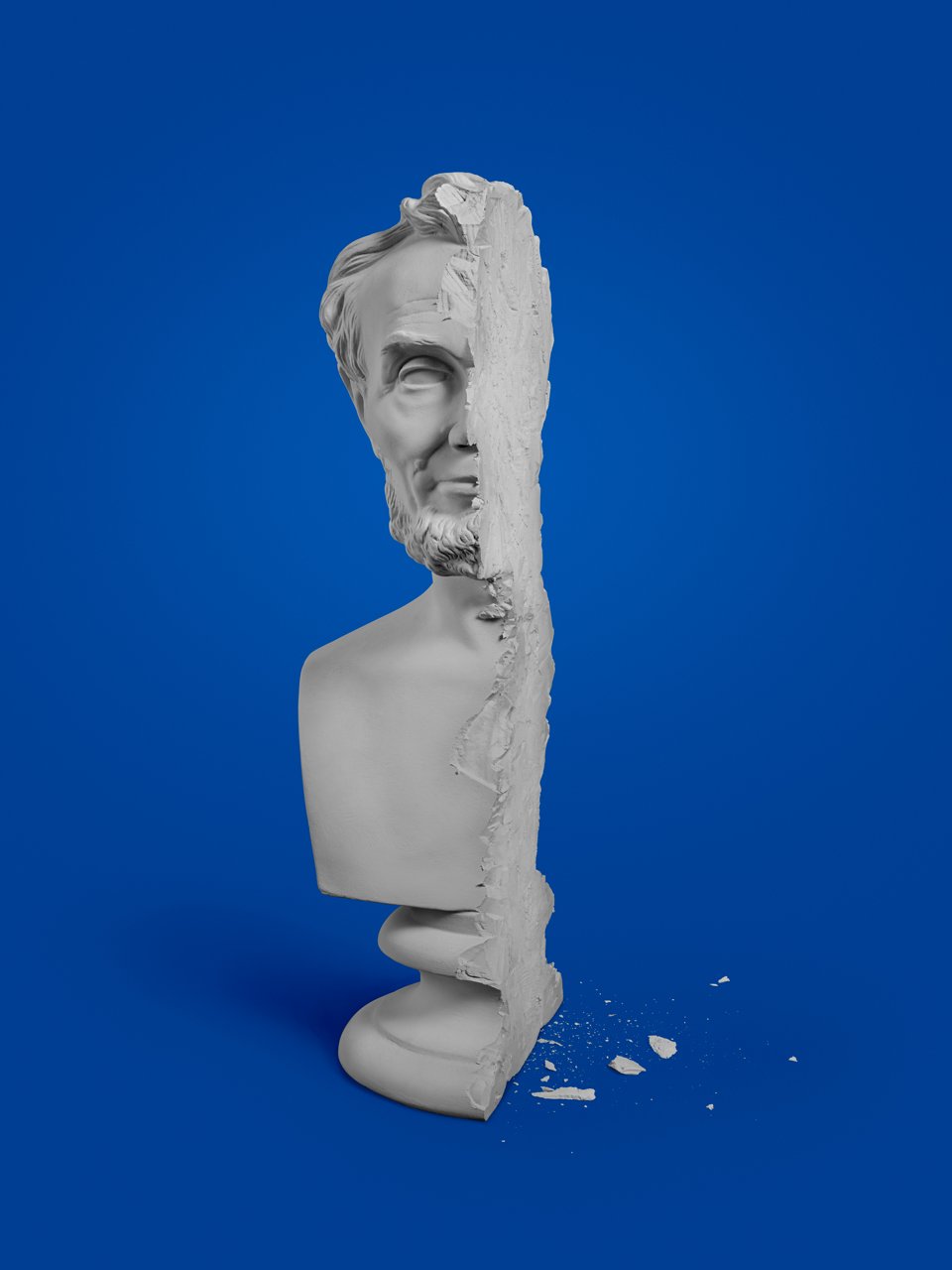
Photograph: Sam Kaplan; prop styling: Brian Byrne

Democracy depends on the consent of the losers. For most of the 20th century, parties and candidates in the United States have competed in elections with the understanding that electoral defeats are neither permanent nor intolerable. The losers could accept the result, adjust their ideas and coalitions, and move on to fight in the next election. Ideas and policies would be contested, sometimes viciously, but however heated the rhetoric got, defeat was not generally equated with political annihilation. The stakes could feel high, but rarely existential. In recent years, however, beginning before the election of Donald Trump and accelerating since, that has changed.

“Our radical Democrat opponents are driven by hatred, prejudice, and rage,” Trump told the crowd at his reelection kickoff event in Orlando in June. “They want to destroy you and they want to destroy our country as we know it.” This is the core of the president’s pitch to his supporters: He is all that stands between them and the abyss.

In October, with the specter of impeachment looming, he fumed on Twitter, “What is taking place is not an impeachment, it is a COUP, intended to take away the Power of the People, their VOTE, their Freedoms, their Second Amendment, Religion, Military, Border Wall, and their God-given rights as a Citizen of The United States of America!” For good measure, he also quoted a supporter’s dark prediction that impeachment “will cause a Civil War like fracture in this Nation from which our Country will never heal.”

Trump’s apocalyptic rhetoric matches the tenor of the times. The body politic is more fractious than at any time in recent memory. Over the past 25 years, both red and blue areas have become more deeply hued, with Democrats clustering in cities and suburbs and Republicans filling in rural areas and exurbs. In Congress, where the two caucuses once overlapped ideologically, the dividing aisle has turned into a chasm.

As partisans have drifted apart geographically and ideologically, they’ve become more hostile toward each other. In 1960, less than 5 percent of Democrats and Republicans said they’d be unhappy if their children married someone from the other party; today, 35 percent of Republicans and 45 percent of Democrats would be, according to a recent Public Religion Research Institute/Atlantic poll—far higher than the percentages that object to marriages crossing the boundaries of race and religion. As hostility rises, Americans’ trust in political institutions, and in one another, is declining. A study released by the Pew Research Center in July found that only about half of respondents believed their fellow citizens would accept election results no matter who won. At the fringes, distrust has become centrifugal: Right-wing activists in Texas and left-wing activists in California have revived talk of secession.

Outright political violence remains considerably rarer than in other periods of partisan divide, including the late 1960s. But overheated rhetoric has helped radicalize some individuals. Cesar Sayoc, who was arrested for targeting multiple prominent Democrats with pipe bombs, was an avid Fox News watcher; in court filings, his lawyers said he took inspiration from Trump’s white-supremacist rhetoric. “It is impossible,” they wrote, “to separate the political climate and [Sayoc’s] mental illness.” James Hodgkinson, who shot at Republican lawmakers (and badly wounded Representative Steve Scalise) at a baseball practice, was a member of the Facebook groups Terminate the Republican Party and The Road to Hell Is Paved With Republicans. In other instances, political protests have turned violent, most notably in Charlottesville, Virginia, where a Unite the Right rally led to the murder of a young woman. In Portland, Oregon, and elsewhere, the left-wing “antifa” movement has clashed with police. The violence of extremist groups provides ammunition to ideologues seeking to stoke fear of the other side.

But the biggest driver might be demographic change. The United States is undergoing a transition perhaps no rich and stable democracy has ever experienced: Its historically dominant group is on its way to becoming a political minority—and its minority groups are asserting their co-equal rights and interests. If there are precedents for such a transition, they lie here in the United States, where white Englishmen initially predominated, and the boundaries of the dominant group have been under negotiation ever since. Yet those precedents are hardly comforting. Many of these renegotiations sparked political conflict or open violence, and few were as profound as the one now under way.

Within the living memory of most Americans, a majority of the country’s residents were white Christians. That is no longer the case, and voters are not insensate to the change—nearly a third of conservatives say they face “a lot” of discrimination for their beliefs, as do more than half of white evangelicals. But more epochal than the change that has already happened is the change that is yet to come: Sometime in the next quarter century or so, depending on immigration rates and the vagaries of ethnic and racial identification, nonwhites will become a majority in the U.S. For some Americans, that change will be cause for celebration; for others, it may pass unnoticed. But the transition is already producing a sharp political backlash, exploited and exacerbated by the president. In 2016, white working-class voters who said that discrimination against whites is a serious problem, or who said they felt like strangers in their own country, were almost twice as likely to vote for Trump as those who did not. Two-thirds of Trump voters agreed that “the 2016 election represented the last chance to stop America’s decline.” In Trump, they’d found a defender.

In 2002, the political scientist Ruy Teixeira and the journalist John Judis published a book, The Emerging Democratic Majority, which argued that demographic changes—the browning of America, along with the movement of more women, professionals, and young people into the Democratic fold—would soon usher in a “new progressive era” that would relegate Republicans to permanent minority political status. The book argued, somewhat triumphally, that the new emerging majority was inexorable and inevitable. After Barack Obama’s reelection, in 2012, Teixeira doubled down on the argument in The Atlantic, writing, “The Democratic majority could be here to stay.” Two years later, after the Democrats got thumped in the 2014 midterms, Judis partially recanted, saying that the emerging Democratic majority had turned out to be a mirage and that growing support for the GOP among the white working class would give the Republicans a long-term advantage. The 2016 election seemed to confirm this.

But now many conservatives, surveying demographic trends, have concluded that Teixeira wasn’t wrong—merely premature. They can see the GOP’s sinking fortunes among younger voters, and feel the culture turning against them, condemning them today for views that were commonplace only yesterday. They are losing faith that they can win elections in the future. With this comes dark possibilities.

The Republican Party has treated Trump’s tenure more as an interregnum than a revival, a brief respite that can be used to slow its decline. Instead of simply contesting elections, the GOP has redoubled its efforts to narrow the electorate and raise the odds that it can win legislative majorities with a minority of votes. In the first five years after conservative justices on the Supreme Court gutted a key provision of the Voting Rights Act in 2013, 39 percent of the counties that the law had previously restrained reduced their number of polling places. And while gerrymandering is a bipartisan sin, over the past decade Republicans have indulged in it more heavily. In Wisconsin last year, Democrats won 53 percent of the votes cast in state legislative races, but just 36 percent of the seats. In Pennsylvania, Republicans tried to impeach the state Supreme Court justices who had struck down a GOP attempt to gerrymander congressional districts in that state. The Trump White House has tried to suppress counts of immigrants for the 2020 census, to reduce their voting power. All political parties maneuver for advantage, but only a party that has concluded it cannot win the votes of large swaths of the public will seek to deter them from casting those votes at all.

But sometimes, that process of realignment breaks down. Instead of reaching out and inviting new allies into its coalition, the political right hardens, turning against the democratic processes it fears will subsume it. A conservatism defined by ideas can hold its own against progressivism, winning converts to its principles and evolving with each generation. A conservatism defined by identity reduces the complex calculus of politics to a simple arithmetic question—and at some point, the numbers no longer add up.

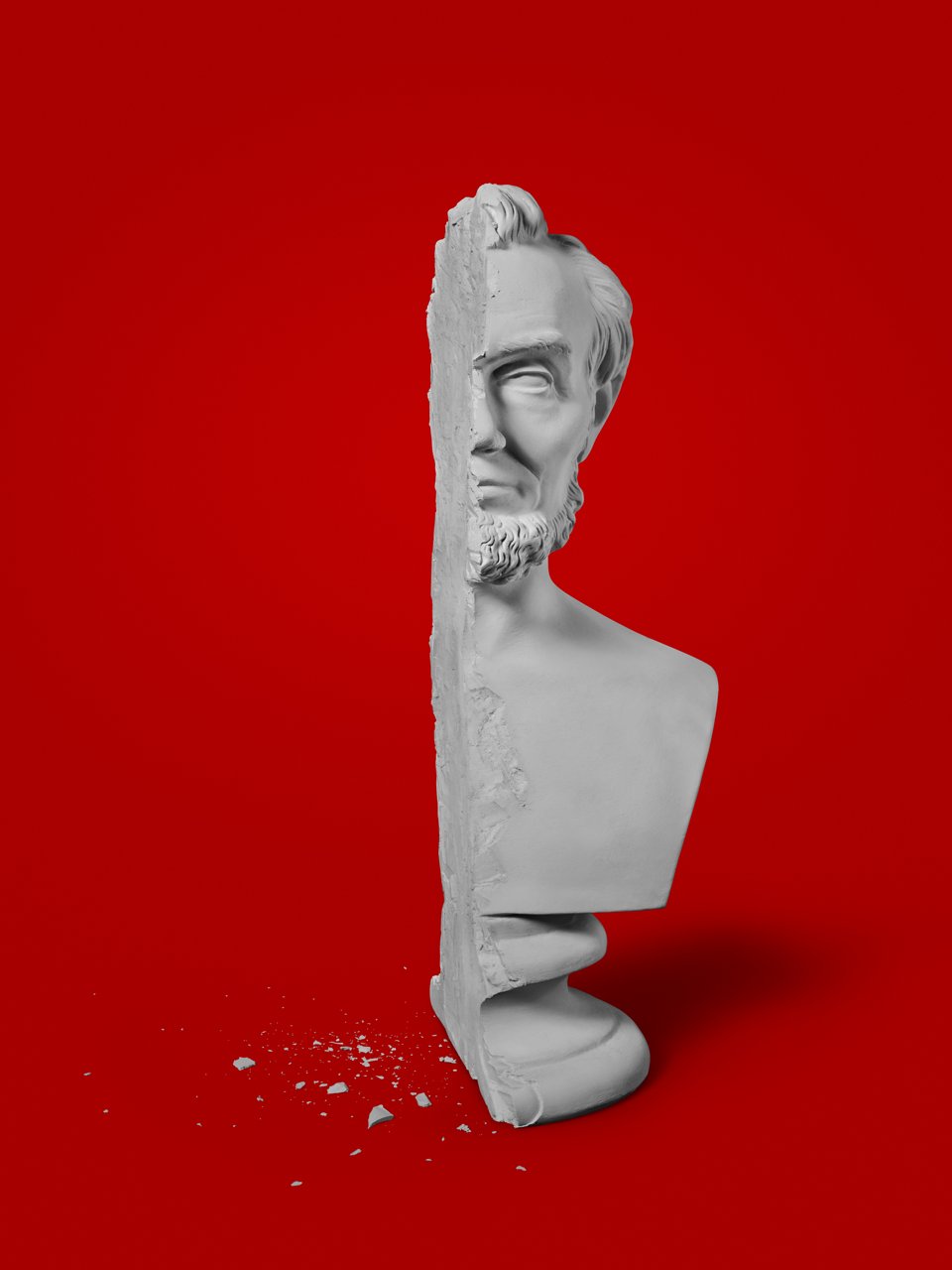
Photograph: Sam Kaplan; prop styling: Brian Byrne
Trump has led his party to this dead end, and it may well cost him his chance for reelection, presuming he is not removed through impeachment. But the president’s defeat would likely only deepen the despair that fueled his rise, confirming his supporters’ fear that the demographic tide has turned against them. That fear is the single greatest threat facing American democracy, the force that is already battering down precedents, leveling norms, and demolishing guardrails. When a group that has traditionally exercised power comes to believe that its eclipse is inevitable, and that the destruction of all it holds dear will follow, it will fight to preserve what it has—whatever the cost.

We should be careful about overstating the dangers. It is not 1860 again in the United States—it is not even 1850. But numerous examples from American history—most notably the antebellum South—offer a cautionary tale about how quickly a robust democracy can weaken when a large section of the population becomes convinced that it cannot continue to win elections, and also that it cannot afford to lose them.

The collapse of the mainstream Republican Party in the face of Trumpism is at once a product of highly particular circumstances and a disturbing echo of other events. In his recent study of the emergence of democracy in Western Europe, the political scientist Daniel Ziblatt zeroes in on a decisive factor distinguishing the states that achieved democratic stability from those that fell prey to authoritarian impulses: The key variable was not the strength or character of the political left, or of the forces pushing for greater democratization, so much as the viability of the center-right. A strong center-right party could wall off more extreme right-wing movements, shutting out the radicals who attacked the political system itself.

The left is by no means immune to authoritarian impulses; some of the worst excesses of the 20th century were carried out by totalitarian left-wing regimes. But right-wing parties are typically composed of people who have enjoyed power and status within a society. They might include disproportionate numbers of leaders—business magnates, military officers, judges, governors—upon whose loyalty and support the government depends. If groups that traditionally have enjoyed privileged positions see a future for themselves in a more democratic society, Ziblatt finds, they will accede to it. But if “conservative forces believe that electoral politics will permanently exclude them from government, they are more likely to reject democracy outright.”

Ziblatt points to Germany in the 1930s, the most catastrophic collapse of a democracy in the 20th century, as evidence that the fate of democracy lies in the hands of conservatives. Where the center-right flourishes, it can defend the interests of its adherents, starving more radical movements of support. In Germany, where center-right parties faltered, “not their strength, but rather their weakness” became the driving force behind democracy’s collapse.

Of course, the most catastrophic collapse of a democracy in the 19th century took place right here in the United States, sparked by the anxieties of white voters who feared the decline of their own power within a diversifying nation.

The slaveholding South exercised disproportionate political power in the early republic. America’s first dozen presidents—excepting only those named Adams—were slaveholders. Twelve of the first 16 secretaries of state came from slave states. The South initially dominated Congress as well, buoyed by its ability to count three-fifths of the enslaved persons held as property for the purposes of apportionment.

Politics in the early republic was factious and fractious, dominated by crosscutting interests. But as Northern states formally abandoned slavery, and then embraced westward expansion, tensions rose between the states that exalted free labor and the ones whose fortunes were directly tied to slave labor, bringing sectional conflict to the fore. By the mid-19th century, demographics were clearly on the side of the free states, where the population was rapidly expanding. Immigrants surged across the Atlantic, finding jobs in Northern factories and settling on midwestern farms. By the outbreak of the Civil War, the foreign-born would form 19 percent of the population of the Northern states, but just 4 percent of the Southern population.

The new dynamic was first felt in the House of Representatives, the most democratic institution of American government—and the Southern response was a concerted effort to remove the topic of slavery from debate. In 1836, Southern congressmen and their allies imposed a gag rule on the House, barring consideration of petitions that so much as mentioned slavery, which would stand for nine years. As the historian Joanne Freeman shows in her recent book, The Field of Blood: Violence in Congress and the Road to Civil War, slave-state representatives in Washington also turned to bullying, brandishing weapons, challenging those who dared disparage the peculiar institution to duels, or simply attacking them on the House floor with fists or canes. In 1845, an antislavery speech delivered by Ohio’s Joshua Giddings so upset Louisiana’s John Dawson that he cocked his pistol and announced that he intended to kill his fellow congressman. In a scene more Sergio Leone than Frank Capra, other representatives—at least four of them with guns of their own—rushed to either side, in a tense standoff. By the late 1850s, the threat of violence was so pervasive that members regularly entered the House armed.

But the South and its conciliating allies overreached. A center-right consensus, drawing Southern plantation owners together with Northern businessmen, had long kept the Union intact. As demographics turned against the South, though, its politicians began to abandon hope of convincing their Northern neighbors of the moral justice of their position, or of the pragmatic case for compromise. Instead of reposing faith in electoral democracy to protect their way of life, they used the coercive power of the federal government to compel the North to support the institution of slavery, insisting that anyone providing sanctuary to slaves, even in free states, be punished: The Fugitive Slave Act of 1850 required Northern law-enforcement officials to arrest those who escaped from Southern plantations, and imposed penalties on citizens who gave them shelter.

The persecution complex of the South succeeded where decades of abolitionist activism had failed, producing the very hostility to slavery that Southerners feared. The sight of armed marshals ripping apart families and marching their neighbors back to slavery roused many Northerners from their moral torpor. The push-and-pull of democratic politics had produced setbacks for the South over the previous decades, but the South’s abandonment of electoral democracy in favor of countermajoritarian politics would prove catastrophic to its cause.

Today, a republican party that appeals primarily to white Christian voters is fighting a losing battle. The Electoral College, Supreme Court, and Senate may delay defeat for a time, but they cannot postpone it forever.

The GOP’s efforts to cling to power by coercion instead of persuasion have illuminated the perils of defining a political party in a pluralistic democracy around a common heritage, rather than around values or ideals. Consider Trump’s push to slow the pace of immigration, which has backfired spectacularly, turning public opinion against his restrictionist stance. Before Trump announced his presidential bid, in 2015, less than a quarter of Americans thought legal immigration should be increased; today, more than a third feel that way. Whatever the merits of Trump’s particular immigration proposals, he has made them less likely to be enacted.

For a populist, Trump is remarkably unpopular. But no one should take comfort from that fact. The more he radicalizes his opponents against his agenda, the more he gives his own supporters to fear. The excesses of the left bind his supporters more tightly to him, even as the excesses of the right make it harder for the Republican Party to command majority support, validating the fear that the party is passing into eclipse, in a vicious cycle.

Photograph: Sam Kaplan; prop styling: Brian Byrne
The right, and the country, can come back from this. Our history is rife with influential groups that, after discarding their commitment to democratic principles in an attempt to retain their grasp on power, lost their fight and then discovered they could thrive in the political order they had so feared. The Federalists passed the Alien and Sedition Acts, criminalizing criticism of their administration; Redemption-era Democrats stripped black voters of the franchise; and Progressive Republicans wrested municipal governance away from immigrant voters. Each rejected popular democracy out of fear that it would lose at the polls, and terror at what might then result. And in each case democracy eventually prevailed, without tragic effect on the losers. The American system works more often than it doesn’t.

The years around the First World War offer another example. A flood of immigrants, particularly from Eastern and Southern Europe, left many white Protestants feeling threatened. In rapid succession, the nation instituted Prohibition, in part to regulate the social habits of these new populations; staged the Palmer Raids, which rounded up thousands of political radicals and deported hundreds; saw the revival of the Ku Klux Klan as a national organization with millions of members, including tens of thousands who marched openly through Washington, D.C.; and passed new immigration laws, slamming shut the doors to the United States.

Whether the American political system today can endure without fracturing further, Daniel Ziblatt’s research suggests, may depend on the choices the center-right now makes. If the center-right decides to accept some electoral defeats and then seeks to gain adherents via argumentation and attraction—and, crucially, eschews making racial heritage its organizing principle—then the GOP can remain vibrant. Its fissures will heal and its prospects will improve, as did those of the Democratic Party in the 1920s, after Wilson. Democracy will be maintained. But if the center-right, surveying demographic upheaval and finding the prospect of electoral losses intolerable, casts its lot with Trumpism and a far right rooted in ethno-nationalism, then it is doomed to an ever smaller proportion of voters, and risks revisiting the ugliest chapters of our history.

But it wasn’t just the pragmatists within the GOP who felt this panic. In the most influential declaration of right-wing support for Trumpism, the conservative writer Michael Anton declared in the Claremont Review of Books that “2016 is the Flight 93 election: charge the cockpit or you die.” His cry of despair offered a bleak echo of the RNC’s demographic analysis. “If you haven’t noticed, our side has been losing consistently since 1988,” he wrote, averring that “the deck is stacked overwhelmingly against us.” He blamed “the ceaseless importation of Third World foreigners,” which had placed Democrats “on the cusp of a permanent victory that will forever obviate [their] need to pretend to respect democratic and constitutional niceties.”

Anton and some 63 million other Americans charged the cockpit. The standard-bearers of the Republican Party were vanquished by a candidate who had never spent a day in public office, and who oozed disdain for democratic processes. Instead of reaching out to a diversifying electorate, Donald Trump doubled down on core Republican constituencies, promising to protect them from a culture and a polity that, he said, were turning against them.

When Trump’s presidency comes to its end, the Republican Party will confront the same choice it faced before his rise, only even more urgently. In 2013, the party’s leaders saw the path that lay before them clearly, and urged Republicans to reach out to voters of diverse backgrounds whose own values matched the “ideals, philosophy and principles” of the GOP. Trumpism deprioritizes conservative ideas and principles in favor of ethno-nationalism.

By accepting these immigrants, and inviting them to subscribe to the country’s founding ideals, American elites avoided displacement. The country’s dominant culture has continually redefined itself, enlarging its boundaries to retain a majority of a changing population. When the United States came into being, most Americans were white, Protestant, and English. But the ineradicable difference between a Welshman and a Scot soon became all but undetectable. Whiteness itself proved elastic, first excluding Jews and Italians and Irish, and then stretching to encompass them. Established Churches gave way to a variety of Protestant sects, and the proliferation of other faiths made “Christian” a coherent category; that broadened, too, into the Judeo-Christian tradition. If America’s white Christian majority is gone, then some new majority is already emerging to take its place—some new, more capacious way of understanding what it is to belong to the American mainstream.

Even today, large numbers of conservatives retain the courage of their convictions, believing they can win new adherents to their cause. They have not despaired of prevailing at the polls and they are not prepared to abandon moral suasion in favor of coercion; they are fighting to recover their party from a president whose success was built on convincing voters that the country is slipping away from them.

The stakes in this battle on the right are much higher than the next election. If Republican voters can’t be convinced that democratic elections will continue to offer them a viable path to victory, that they can thrive within a diversifying nation, and that even in defeat their basic rights will be protected, then Trumpism will extend long after Trump leaves office—and our democracy will suffer for it.

YONI APPELBAUM is a senior editor at The Atlantic, where he oversees the Ideas section.

Trump offers trade deal, sanctions workaround to Erdogan for better U.S.-Turkey relations

0

THE WASHINGTON POST

By

Karen DeYoung,

Missy Ryan and

Kareem Fahim

November 12, 2019 at 7:08 p.m. EST

President Trump has offered Turkish President Recep Tayyip Erdogan, due to visit the White House on Wednesday, a package of inducements for better U.S.-Turkey relations that is virtually identical to those the administration proposed last month in a failed effort to stop Turkey’s invasion of Syria.

In a new letter to Erdogan last week, Trump told the Turkish president that a $100 billion trade deal, and a workaround to avoid U.S. sanctions over Turkey’s purchase of Russia’s S-400 missile defense system, are still possible, senior administration officials sthe meeting aid.

The offer is likely to infuriate at least some of the overwhelming House majority that voted last month to impose sanctions on Turkey over its assault into Syria, and a bipartisan group of senators who introduced a similar bill.

“It’s absolutely shameful that President Trump has invited President Erdogan to the White House after Erdogan attacked our Syrian Kurdish allies,” and forces under Turkish command “have committed what this administration itself describes as war crimes,” said Sen. Chris Van Hollen (D-Md.), who sponsored the Senate bill along with seven other Democrats and eight Republicans.

Trump has long shown affinity for the Turkish leader, calling him “a friend,” and “a tough guy who deserves respect.” Erdogan’s White House visit was also part of the package Trump offered in an Oct. 6 phone call with the Turkish leader.

In Turkey’s president, Trump seems to have found a soul mate

“We took [the offer] off the table, obviously, when the Turks went in” to Syria, one senior official said. “Once we got the cease-fire, of sorts, we decided to put the package, including the visit, back on the table.”

In exchange for Trump’s revived offer, Erdogan would continue what the administration has said is its adherence to an Oct. 17 cease-fire agreement, negotiated with Vice President Pence a week after the invasion began, that limited the Turkish incursion. Turkey, a NATO ally, would also continue to actively support U.S. goals of preventing a resurgence of the Islamic State in Syria and establishing a stable and representative Syrian government.

“The second thing is they resolve the S-400 thing to our satisfaction,” said the senior official, one of several who spoke on the condition of anonymity about internal policy deliberations. Delivery of the Russian system earlier this year triggered a U.S. decision to cut Turkey from the manufacture and purchase of F-35 aircraft, and mandated sanctions under the 2017 Countering America’s Adversaries Through Sanctions Act (CAATSA), aimed at those who purchase Russian defense equipment.

Trump has delayed imposing those sanctions, despite the insistence by senior administration officials earlier this year that mere delivery of the equipment — which the United States and NATO have said would compromise the stealth capabilities of the new generation F-35 combat jet — would be unacceptable. Delivery began in July.

Now, the administration’s red line is that the S-400s “do not become operational” in a way that would allow them “access to our F-35 communications and defenses,” said the senior official.

One solution under discussion is that Turkey submit to monitoring to ensure it did not unpack and deploy the delivered system. It could then be readmitted to the F-35 program.

Another senior administration official declined to address specifics of the U.S. package but said that “this visit is an opportunity for full and frank engagement with President Erdogan to address the challenges facing the United States-Turkey relationship. The achievement of any bilateral trade goal first requires concrete progress toward resolving major issues, such as Turkey’s purchase of Russia’s S-400.”

The London-based Middle East Eye, which first reported Trump’s new letter to Erdogan, said he also warned that failure to reach agreement on the Russian system could make CAATSA sanctions inevitable. A deal, however, could also assuage the zeal of some senators to punish Turkey for the invasion itself. Van Hollen said his main co-sponsor on the Senate bill, Sen. Lindsey O. Graham (R-S.C.), was still committed to pushing it forward. Graham, whose office did not respond to a request for comment, has said he would consider dropping the invasion-related sanctions legislation if Turkish forces withdrew from northern Syria.

Turkey’s offensive, launched Oct. 9 after Trump ordered U.S. forces in Syria to pull back from the border and suggested that the Syrian Kurds do the same, did not result in the bloodbath that many had feared. But it has not provided the kind of stability Erdogan’s government had promised, amid ongoing clashes and persistent reports of civilian suffering.

More than a month into the operation, more than 100,000 people in northern Syria remain displaced from their homes, according to the United Nations.

“There are fears that the displaced are not getting access to food, to clean water or to medical supplies,” Margaret Huang, the executive director of Amnesty International, said in a conference call with journalists Tuesday.

A Turkish proxy force, the rebel Syrian National Army, has become a lightning rod for criticism, with its fighters accused of widespread abuses, including summary executions, beatings, kidnappings and looting in areas under Turkey’s control.

Footage captured by U.S. surveillance aircraft over northern Syria has documented several incidents that military officials say may constitute war crimes on the part of Turkish-backed forces there, a U.S. official said.

The U.S. military also is tracking other possible abuses that have been reported by activists or leaders from the Syrian Democratic Forces (SDF), the Kurdish-led group that U.S. Special Operations troops have worked closely with in Syria for four years in the fight against the Islamic State.

Existence of the videos was first reported by the Wall Street Journal.

The American repositioning has allowed Russian and Syrian government forces to enter areas that they had been shut out of for years, strengthening the position of Syrian President Bashar al-Assad in his quest to reclaim all Syrian territory.

But Turkey’s proxy force has also fought with Syria’s national army, in occasionally deadly skirmishes that have threatened a Russian-Turkish agreement intended to calm northern Syria while at the same time dividing the territory into spheres of influence.

Weeks of turbulence have put Ankara on the defensive. Erdogan, who said last month that any abuses by Turkish-allied Syrian rebels would be investigated, has taken to defending them of late, saying this month that the rebels are “defending their land there, hand in hand, arm in arm, shoulder to shoulder with my soldiers.”

His government has also bristled at criticism, including from European states, that Turkey’s offensive was likely to strengthen the Islamic State because it weakened the U.S.-Kurdish alliance and distracted Kurdish fighters who were guarding prisons holding Islamic State militants. To prove Turkey’s credentials as a determined partner in the anti-Islamic State coalition, the authorities have conducted sweeps against the group across Turkey in recent weeks and announced the capture of hundreds of members in Syrian territory under its control.

Ankara has also sought to force Western states to take back captured militants, despite strong resistance, especially in Europe. On Monday, Turkey began deporting suspected Islamic State members who are detained in Turkey, including nationals of the United States, Denmark and Germany. More Europeans, including French and Irish citizens, would be sent home in the coming days, Turkey’s Interior Ministry said.

On Tuesday, Erdogan threatened to open the floodgates.

“You should review the attitude you are exhibiting against Turkey, the country that has this many [Islamic State] members found in its prisons, and at the same time that has taken control of the areas where they are found on the Syrian side,” he said, addressing the European Union shortly before departing to the United States.

Fahim reported from Istanbul.


Turkish Oil Drilling in Cyprus’ EEZ Threatens to Destabilize the Eastern Mediterranean

0

President Donald J. Trump participates in a bilateral meeting with President of the Republic of Turkey Recep Tayyip Erdogan at the G20 Japan Summit Saturday, June 29, 2019, in Osaka, Japan. (Photo: White House)

Illegal oil drilling, Russian influence, and an entente of unlikely powers in the Eastern Mediterranean leave the U.S. with many questions.

“We have already drilled two wells in waters to the east and west of the island of Cyprus, and the [ship] Yavuz will be drilling our third well. Such activities will continue with determination,” Turkish Energy Minister Fatih Donmez recently said at the Turkey Energy Summit.

Current drilling by Turkish President Recep Tayyip Erdoğan’s government has provoked a wide array of actors in the Eastern Mediterranean including Israel and Egypt, both U.S. allies. Illegal Turkish drilling vessels in Cyprus’ Exclusive Economic Zone (EEZ) are even accompanied by military vessels. The activity has many in Nicosia and abroad worried as international oil companies have major stakes in the region since the discoveries of hydrocarbons off of the Cypriot coast several years ago.

Why is the Eastern Mediterranean so vital to the world economy? The U.S. Geological Survey believes 122 trillion cubic feet of gas is in the area, however, the exact potential for gargantuan wealth to be found is yet to be confirmed. The area contains a vast amount of potential energy for Europe, which is heavily reliant on imported gas. This is especially true for the EU’s dependence on imported gas from Russia, the world’s second-largest exporter with a roughly 18.6% share of global production. European energy needs are extremely crucial for the global economy, and, of course, the President of the United States, as he is using the message of U.S. economic growth and record-level fossil fuel production as a foundation for his 2020 campaign.

Meanwhile, since the discovery of hydrocarbon reserves in the Eastern Mediterranean, states that once held no close ties with one another are now actively working together to maintain regional security. For the past decade, Greece, Cyprus, and Israel engaged in trilateral talks on energy cooperation for electricity and oil (catching the attention of communities at home, an inspiration for the creation of a “Hellenic-Israeli Alliance” in the U.S. Congress). Gas pipelines are currently under development and will reach into Europe via the Greek mainland.

The “Energy Triad” made progress with neighboring Egypt as well. In fact, Israel has begun exporting gas to Egypt as obstacles impeding cooperation are removed while Cyprus announced a strengthening of ties with Egypt through economy and tourism. Egyptian President Abdel Fattah Al-Sisi also seeks to strengthen and modernize Egypt’s navy in response to the threat posed by Turkey in the region to protect the country’s growing Mediterranean and Red Sea oil and natural gas interests.

“Countries that were once not talking are now coming together”, said Georgios Lakkotrypis, Cypriot Minister of Energy and Commerce in a recent interview. Talks between the four have brought Italy, Jordan, and even the Palestinian Authority to the table.

The restructuring of alliances to hedge against Turkey is similar to the unofficial anti-China coalition forming in the South China Sea, as powers are converging against Beijing—so are Mediterranean powers against Ankara. Yet Moscow has emerged as another major player in the Mediterranean. Russian President Vladimir Putin has not only been instrumental in the aid of Syrian President Bashir Al Assad’s government but also recently sold the S-400 missile system to America’s NATO ally, Turkey. Congress then barred Turkey from acquiring the American F-35 fighter as punishment—further straining Turkey’s relations with the West and undermining its reliability as an ardent partner in the Middle East.

Meanwhile, since the Greek-led 1974 coup d’état in Cyprus and subsequent Turkish invasion, the island has been divided, with Turkish forces illegally occupying the north while the internationally recognized government of Cyprus controls the south. With no military except for a small defense force, outfitted with small patrol boats and anti-tank weapons from the former Soviet Union and Yugoslavia, the Cypriot government is essentially defenseless. But Russian influence in the region is further complicated by Cyprus’ decision to actively hold Russian money, leading to skepticism regarding the inclusion of Cyprus into the American sphere. However, a recent U.S. Congressional delegation announced that the Cypriot government is working to terminate the laundering boogeyman head-on.

What are the options for President Trump with an increasingly aggressive Turkey and a resurgent Russia in the region—as an entente of economic and military cooperation forms in the Eastern Mediterranean?

John Gay, Executive Director of the John Quincy Adams Society, a nonpartisan Washington, D.C. based organization whose stated aim is to steer foreign policy conversation in direction of “More strategy. Less war”, takes the issue of Turkish self-interest back to the President’s administration:

“Trump has rightly pointed out that many U.S. allies do not do much to defend themselves, instead preferring to rely on the United States to defend them. The best way out of this is for those allies to become more capable of defending themselves. This has a twofold benefit for the United States: first, they do more (or all) of the fighting; second, they have a stronger interest in their own survival and well-being than we do, so they can make more credible commitments and threats against those that endanger them than we can make on their behalf. That’s especially true with a state like Cyprus since we don’t have a formal alliance commitment to them. If we believe a strong, independent Cyprus offers benefits to U.S. security, letting them buy our weapons is a way to get that on the cheap.”

The first option for the President is to make arms and modern radar systems available for Cypriot purchase to improve the country’s defensive capabilities, including but not limited to: short- and medium-range artillery, guided anti-tank missiles, and surface-to-air missile technology. At present, Cyprus remains barred from purchasing weapons from the U.S. A bipartisan bill to lift the Cyprus arms prohibition, co-sponsored by U.S. Senators Bob Menendez (D-NJ) and Marco Rubio (R-FL), failed to make it out of the Senate.

However, within the new National Defense Authorization Act for Fiscal Year 2020, Section 1270I, the prohibition can be lifted so long as one major obstacle is overcome: Russia (See: Section 1270I, e, 1, a and b). For Cyprus to receive arms from the U.S., it must first cooperate with Washington to counter Russian money laundering in Cypriot banks and terminate any refueling of Russian naval vessels that frequent the island on Eastern Mediterranean patrols.

The President may waive these requirements for one year if he chooses (See: Section 1270I e, 2). Arming Cyprus could be an effective way to apply pressure to a NATO ally pursuing objectives contrary to the interests of the United States.

Another option for President Trump is to reduce, block, or obfuscate Turkey’s role in NATO. Erdoğan values its membership in NATO, but Turkey’s membership is only one means to arm and defend itself (as the case was made when they purchased weapons from Russia). President Emmanuel Macron of France has already vehemently condemned Ankara’s actions in the Cypriot EEZ and recently dispatched French naval forces to deter further Turkish actions in the area.

While European Council President Donald Tusk recently affirmed that “the European Union stands united behind the Republic of Cyprus and expects Turkey to respect sovereign rights of the member states,” the situation is further complicated by Erdoğan’s cooperation in certain areas, such as participating in the Defeat ISIS Coalition. “Turkey opened its military bases to the United States and Coalition partners in July 2015. Since that time, Incirlik Air Base has been critical in the effort to degrade and ultimately destroy ISIS in Syria and Iraq,” the U.S. State Department said earlier this year.

However, taking action against Ankara may backfire, Turkey could pivot even further towards Moscow and Tehran. The three have already met to discuss the future of Syria without the consultation of the United States. Estranging Turkey from NATO cooperation could ultimately backfire as the U.S. could lose an ally for its future Eurasian interests.

The final, most immediate, and detrimental action against Turkey is economic sanctions—a move that may further exacerbate the state of Western-Turkish relations. Turkey is very dependent on foreign investor influence, especially Germany. Trade between the EU and Turkey is valued at approximately $220 billion. U.S. trade with Turkey is worth some $24 billion. While European and American political parties may be easy to jump to economic retaliatory means, they must also remember Erdoğan’s trump card.

The Turkish president has publicly stated that if Western powers take action against him, he will retaliate by sending over 3.6 million Syrian refugees to Europe. The Turkish economy has already felt a considerable impact with the recent devaluation of the Lira and, theoretically could save a significant amount of money by sending refugees to Europe if hit by further economic hardship (although Europe, and possibly the U.S., would almost certainly retaliate to impose further economic costs on Turkey).

President Trump must make a decision along with the support of lawmakers and the Pentagon that will uphold international law and standards on illegal economic activities by entities of one state in the EEZ of another sovereign state. Turkey’s illegal oil drilling shows no signs of abating in a region vital to the global economy and crucial to U.S. geopolitical interests.

Global Security Review