Αρχική Blog Σελίδα 2569

Τι, πραγματικά αποφασίστηκε στο Ελσίνκι; Ήταν μια καθολική επιτυχία;

5

Ο κ. Κ. Σημίτης εξήρε, τις τελευταίες ημέρες, την απόφαση της Συνόδου Κορυφής του Ελσίνκι το Δεκέμβριο του 1999. Το ίδιο έκανε και ο κ. Γ. Παπανδρέου, χθες. Ο πρώτος ήταν πρωθυπουργός και ο δεύτερος υπουργός εξωτερικών.

Τι, πραγματικά αποφασίστηκε και ποια η βαρύτητά τους;

Το “Ελσίνκι”, όπως καθιερώθηκε να ονομάζεται χάριν συντομίας περιέλαβε στο εξαιρετικό βιβλίο του για τις ελληνοτουρκικές σχέσεις το οποίο διδάσκεται σε πανεπιστήμια, ο καθηγητής Διεθνούς Δικαίου του Πάντειου Πανεπιστήμιου Άγγελος Συρίγος.

Επιλέξαμε ορισμένα διαφωτιστικά αποσπάσματα.

Σε αγκύλες, σχόλια των “Ανιχνεύσεων”.

ΕΛΣΙΝΚΙ 10,11 Δεκεμβρίου 1999

Λίγο πριν το Ευρωπαϊκό Συμβούλιο στο Ελσίνκι η Ελλάδα είχε δύο στόχους:

-Η Κύπρος θα έπρεπε να μπορεί να ενταχθεί στην Ε.Ε. μαζί με τις άλλες υποψήφιες χώρες χωρίς να είναι απαραίτητη η επίτευξη λύσεως στο Κυπριακό.

-Οι όροι εντάξεως θα έπρεπε να φαίνονται ίδιοι για την Τουρκία και τις άλλες χώρες.

Στις 10 και 11 Δεκεμβρίου έγινε το Ευρωπαϊκό Συμβούλιο στο Ελσίνκι.

Η ελληνική πλευρά, διαβλέποντας υπαρκτό τον κίνδυνο να μη γίνουν δεκτές οι θέσεις της, απείλησε ότι δεν θα δεχόταν την ένταξη των υπολοίπων κρατών της Κεντρικής Ευρώπης και της Μάλτας  που ήσαν ήδη υποψήφια.

Στο σημείο 12 των Συμπερασμάτων αναφερόταν ρητώς ότι η «Τουρκία είναι υποψήφιο κράτος που προορίζεται να προσχωρήσει στην Ένωση με βάση τα ίδια κριτήρια τα οποία ισχύουν για τα λοιπά υποψήφια κράτη»

Τρία ήταν τα σημεία που ενδιέφεραν την ελληνική πλευρά στο τελικό κείμενο.

Η Κύπρος, το Αιγαίο και ο «χάρτης διαδρομής» για την Τουρκία.

Το Ελσίνκι για την Κύπρο

«9…(β) Το Ευρωπαϊκό Συμβούλιο τονίζει ότι η πολιτική επίλυση του προβλήματος θα διευκόλυνε την προσχώρηση της Κύπρου στην Ευρωπαϊκή Ένωση.

Εάν μέχρι την ολοκλήρωση των διαπραγματεύσεων προσχώρησης δεν έχει επιτευχθεί λύση, η απόφαση του Συμβουλίου όσον αφορά την προσχώρηση θα ληφθεί χωρίς το ανωτέρω να αποτελεί προϋπόθεση.

Εν προκειμένω, το Συμβούλιο θα λάβει υπόψη όλα τα σχετικά στοιχεία».

ΠΑΡΑΤΗΡΗΣΕΙΣ

-Μεγάλη επιτυχία της ελληνικής πλευράς.

-Κάποιες πλευρές μέσα στην Ε.Ε. επιθυμούσαν να κρατήσουν ένα διαπραγματευτικό όπλο πριν την τελική ένταξη της Κύπρου.

Τη σημασία αυτής της προτάσεως παρ΄ολίγον να διαπιστώσει η ελληνική πλευρά στη Χάγη το 2003, κατά τις συζητήσεις επι του Σχεδίου Ανάν.

Το Ελσίνκι για το Αιγαίο.

«4…13 υποψήφια κράτη… συμμετέχουν στη διαδικασία προσχώρησης επι ίσοις όροις… το Ευρωπαϊκό Συμβούλιο τονίζει την αρχή της ειρηνικής επίλυσης των διαφορών σύμφωνα με το Χάρτη των Ηνωμένων Εθνών και παροτρύνει τα υποψήφια κράτη να καταβάλλουν κάθε προσπάθεια για την επίλυση κάθε εκκρεμούς συνοριακής διαφοράς και άλλων συναφών θεμάτων [to resolve any outstanding border disputes and other related issues].

Άλλως, θα πρέπει να φέρουν τη διαφορά ενώπιον του Διεθνούς Δικαστηρίου εντός ευλόγου χρονικού διαστήματος.

Το αργότερο στα τέλη του 2004 το Ευρωπαϊκό Συμβούλιο θα επανεξετάσει την κατάσταση ως προς κάθε εκκρεμή  διαφορά, ιδίως, όσον αφορά τις επιπτώσεις στην ενταξιακή διαδικασία προκειμένου να προαγάγει την επίλυσή τους μέσω του Διεθνούς Δικαστηρίου».

ΠΑΡΑΤΗΡΗΣΕΙΣ

Η παράγραφος 4 αφορούσε γενικώς στη διαδικασία προσχωρήσεως όλων των υποψηφίων κρατών. Δεν περιοριζόταν αποκλειστικώς στην Τουρκία.  Η ανάγνωση της παραγράφου, όμως, φωτογράφιζε κυρίως το Αιγαίο.

Κατ αντιδιαστολήν προς την Κύπρο τα συμπεράσματα του συμβουλίου για το Αιγαίο ήσαν προβληματικά.

Το πρώτο πρόβλημα, ο όρος «κάθε εκκρεμής συνοριακή διαφορά και άλλα συναφή θέματα».

Ήταν προφανές ότι δεν αναφερόταν σε ένα μόνο θέμα (υφαλοκρηπίδα). Υποχώρηση.

Δεύτερον ο όρος «άλλα συναφή θέματα» επέτρεπε στην Τουρκία να απαιτήσει να συζητηθεί ακόμη και το θέμα της αποστρατικοποίησης των ανατολικών νησιών του Αιγαίου. Η ελληνική πλευρά δεν θα δεχόταν μια τέτοια συζήτηση. Η εμφιλοχώρηση, όμως, της ΕΕ ως άτυπου επιδιαιτητή της διαδικασίας μπορούσε να δημιουργήσει προβλήματα, εάν η Τουρκία στο τέλος έθετε και αυτό το ζήτημα ενώπιον του Ευρωπαϊκού Συμβουλίου.  Αν και υπήρχε η ελληνική δήλωση εξαιρέσεως της αρμοδιότητας του Διεθνούς Δικαστηρίου από το 1994 για την αποστρατιωτικοποίηση των νησιών, τίποτε δεν θα εμπόδιζε την Τουρκία να αναδείξει το θέμα  έστω για να καταδείξει την δήθεν ελληνική κακοπιστία.

Τρίτον τα πράγματα θα ήσαν διαφορετικά εάν η διατύπωση του κειμένου στην αγγλική γλώσσα, αντί του όρου «border dispute”, περιελάμβανε τον όρο “boundary dispute”

Εν αντιθέσει προς τον όρο “border” στον οποίο υπάγεται κάθε τύπος συνόρου (χερσαίο, θαλάσσιο, ή εναέριο), ο όρος «boundary» (που μεταφράζεται ως όριο) είναι συνήθως συνδεδεμένος στο διεθνές δίκαιο με τις θαλάσσιες οριοθετήσεις  (αν και όχι αποκλειστικώς). Με την υιοθέτηση αυτού του όρου θα ήταν πιο δύσκολο γα την Τουρκία να ισχυριστεί ότι είχαν περιληφθεί και οι «γκρίζες ζώνες» στα προς διευθέτηση θέματα.

Τέταρτον, η δικαστική επίλυση θα ερχόταν μόνο αφού τα ενδιαφερόμενα μέρη θα είχαν καταβάλλει κάθε προσπάθεια για να διευθετήσουν τα ίδια τις διαφορές τους. Αυτό στην πράξη σήμαινε ότι γινόταν δεκτή η πάγια τουρκική θέση για διάλογο. Λόγω της διατυπώσεως ο διάλογος θα διεξαγόταν εφ ολης της ύλης.

Πέμπτον, όπως επιθυμούσε η ελληνική πλευρά, υπήρχε ένα χρονικό σημείο πέραν του οποίου δεν θα μπορούσαν να συνεχιστούν οι διαπραγματεύσεις. Ήταν η Σύνοδος του Ευρωπαϊκού Συμβουλίου τον Δεκέμβριο του 2004. Το Ευρωπαϊκό Συμβούλιο, όμως, δεν μπορεί να υποκαταστήσει τα ενδιαφερόμενα κράτη ως προς την προσφυγή στο Διεθνές Δικαστήριο. Θα χρειαζόταν η υπογραφή συνυποσχετικού. Κατά συνέπεια η προσφυγή στο δικαστήριο δεν ήταν απαραιτήτως μονόδρομος. Η Ελλάδα ήλπιζε ότι η Τουρκία θα αποδεχόταν την υπογραφή συνυποσχετικού.

Το κείμενο του Ελσίνκι δεν ήταν διεθνής συνθήκη. Ήταν ένα πολιτικό κείμενο το οποίο μπορούσε να αλλάξει αν άλλαζαν οι ισορροπίες.      

ΟΙ ΑΛΛΑΓΕΣ ΠΟΥ ΕΠΕΦΕΡΕ Η ΕΛΛΗΝΙΚΗ ΠΛΕΥΡΑ ΓΙΑ ΝΑ ΑΡΧΙΣΟΥΝ ΕΝΤΑΞΙΑΚΕΣ ΣΥΝΟΜΙΛΙΕΣ ΤΗΣ ΤΟΥΡΚΙΑΣ

Το Δεκέμβριο του 2004 η ελληνική πλευρά επέλεξε να μην απομακρυνθεί ιδιαιτέρως από το κείμενο του Ελσίνκι. Δεν συμφωνούσε, όμως, με κάποιες από τις πρόνοιές του.

Επικεντρώθηκε στην αλλαγή ορισμένων όρων στο τελικό κείμενο. Οι πιο σημαντικές αλλαγές ήσαν:

-Το Διεθνές Δικαστήριο δεν μπορούσε , πλέον, να επιληφθεί κάθε «εκκρεμούς διαφοράς» που θα παρέμενε ανεπίλυτη. Τα ανεπίλυτα θέματα θα παραπέμπονταν στο Διεθνές Δικαστήριο μόνον «εφ όσον απαιτείται».

–Απομακρύνθηκε η άμεση εμπλοκή του Ευρωπαϊκού Συμβουλίου από την παραπομπή θεμάτων στο Διεθνές Δικαστήριο. Το Συμβούλιο θα παρακολουθούσε γενικώς την πρόοδο επιλύσεως των ελληνοτουρκικών διαφορών «εφ όσον απαιτείται».

–Παρέμεινε ο όρος «εκκρεμής συνοριακή διαφορά» αλλά απαλείφθηκαν τα «άλλα συναφή θέματα» που υπήρχαν στο κείμενο του 1999. Απομακρύνθηκε, έτσι, το ενδεχόμενο να εγείρει η Τουρκία θέματα όπως το καθεστώς αποστρατιωτικοποιήσεως των νησιών του Αιγαίου.

-Προστέθηκε ο όρος «σχέσεις καλής γειτονίας», που επέτρεπε στην ελληνική πλευρά να θέτει ενώπιον της ΕΕ την καθημερινή συμπεριφορά της Τουρκίας.

-Υπήρξε εξαίρεση ως προς την τελική καθιέρωση της ελεύθερης κυκλοφορίας των προσώπων. Αυτή η πρόβλεψη έδινε τη δυνατότητα στην ελληνική πλευρά να εξαιρέσει μονίμως περιοχές όπως η Θράκη ή τα νησιά του Αιγαίου από την ελεύθερη κυκλοφορία τούρκων υπηκόων.

Δεν υπήρχε ρητή αναφορά για την αναγνώριση της Κύπρου από την Τουρκία αλλά είχε περιληφθεί στο κείμενο η υποχρέωση της Τουρκίας για επέκταση του καθεστώτος  τελωνειακής ενώσεως και στην Κύπρο.

Η Τουρκία παριστάνει τη Κίνα της Μεσογείου – Η αντίφαση της Ουάσινγκτον

1

slpress.gr

Καρυώτης Θόδωρος

Η Τουρκία παριστάνει την Κίνα της Μεσογείου, αλλά οι Αμερικανοί τα βάζουν μόνο με τους Κινέζους, Θεόδωρος Καρυώτης

Οι τελευταίες δραματικές εξελίξεις στην Ανατολική Μεσόγειο ανησυχούν ιδιαίτερα την Αθήνα, αλλά η κυβέρνηση του Κυριάκου Μητσοτάκη ψάχνει ακόμα να βρει τον σωστό βηματισμό της. Η πρωτοβουλία των κινήσεων συνεχίζει, όπως πάντα, να βρίσκεται στην πλευρά της Τουρκίας και αυτό πρέπει να αλλάξει το ταχύτερο δυνατόν. Η Ελλάδα πρέπει, τάχιστα, να αναπτύξει πρωτοβουλίες που θα εξουδετερώσουν την ασφυκτική πίεση που δέχεται από την Τουρκία. Οι πρωτοβουλίες αυτές είναι η άμεση ανακήρυξη ΑΟΖ και οριοθετήσεις ΑΟΖ με τρία από τα έξι παράκτια κράτη που έχουμε θαλάσσια σύνορα. Δηλαδή την Αίγυπτο, την Ιταλία και την Κύπρο. Πρέπει, επίσης, να αντιληφθούμε ότι η Τουρκία παίζει ένα επικίνδυνο παιχνίδι παριστάνοντας την Κίνα της Μεσογείου.

Είναι, έτσι χρήσιμο να αντιπαραβάλουμε εδώ το παράδειγμα της Κίνας, που φαίνεται να ακολουθεί η Τουρκία και να αναλύσουμε γιατί αυτό είναι πολύ επικίνδυνο για τα εθνικά μας συμφέροντα. Οι παρακάτω χάρτες των δυο κρατών θα μας δώσουν μια καλύτερη εικόνα των παράνομων απαιτήσεών τους και τις παραβιάσεις των ΑΟΖ των γειτονικών κρατών τους.

Ο παράνομος χάρτης της Κίνας στη Σινική Θάλασσα.

Ακόμα και κάποιος που δεν γνωρίζει πως οριοθετείται η ΑΟΖ ενός κράτους, βάσει UNCLOS, εύκολα αντιλαμβάνεται ότι η Κίνα με την χάραξη αυτής της διακεκομμένης κόκκινης γραμμής παραβιάζει ταυτόχρονα τις ΑΟΖ πέντε κρατών! Της Μαλαισίας, του Βιετνάμ, του Μπρουνέι, των Φιλιππίνων και της Ινδονησίας. Από την πλευρά της, η Τουρκία έχει παραβιάσει τις ΑΟΖ τριών κρατών, της Ελλάδας, της Κύπρου και της Αιγύπτου, όπως δείχνει ο παρακάτω χάρτης της “Γαλάζιας Πατρίδας”.

Η Κίνα δεν θα σταματήσει να διεκδικεί πάνω από το 80% της Θάλασσας της Νότιας Κίνας (Νότια Σινική Θάλασσα), δηλαδή περίπου 3,5 εκατ. τετραγωνικά χιλιόμετρα, επικαλούμενη την έννοια του «ιστορικού δικαιώματος» και αγνοώντας τα δικαιώματα του Βιετνάμ, της Ινδονησίας, της Μαλαισίας, του Μπρουνέι και των Φιλιππίνων. Η Τουρκία δεν διεκδικεί 3,5 εκατ. τετραγωνικά χιλιόμετρα στην Μεσόγειο, αλλά μια θαλάσσια έκταση 462.000 τετραγωνικών χιλιομέτρων, όπως έχει δηλώσει ο Τούρκος υπουργός Άμυνας Χουλουσί Ακάρ.

Η παράνομος χάρτης της Τουρκίας.

Αυτή είναι η τελευταία δήλωση του Χουλουσί Ακάρ: «Το ευκολότερο που μπορεί να γίνει στο θέμα αυτό είναι η δίκαιη διανομή κάθε πόρου και πλούτου που βρίσκεται στο Αιγαίο, την Ανατολική Μεσόγειο και την Κύπρο. Αν δεν συμβεί αυτό δεν θα επιτρέψουμε μια αντίθετη απόφαση. Δεν μπορεί να επιβιώσει καμία απόφαση η οποία δεν συμπεριλαμβάνει την Τουρκία και αυτό πρέπει να το γνωρίζουν όλοι. Η Κύπρος είναι δική μας υπόθεση και δεν τίθεται θέμα να υποχωρήσουμε».

Παρόμοιες εκφράσεις χρησιμοποιούν και οι Κινέζοι προς τους Φιλιππινέζους και τους Βιετναμέζους, όταν ήδη έχουν οικειοποιηθεί ένα μεγάλο μερίδιο της ΑΟΖ τους.
Αξίζει όμως εδώ να επισημάνουμε και τον αντιφατικό ρόλο των Ηνωμένων Πολιτειών. Οι Αμερικανοί καταγγέλλουν σφοδρά την παράνομη ΑΟΖ της Κίνας αλλά σφυρίζουν αδιάφορα για την παράνομη ΑΟΖ της Τουρκίας στην Μεσόγειο.

Πρόσφατα όμως , διαφαίνεται ότι ακόμα και για τους Αμερικανούς οι Τούρκοι υπερέβησαν τα εσκεμμένα στην Ανατολική Μεσόγειο και έχουν αντιτεθεί στην οριοθέτηση ΑΟΖ μεταξύ Τουρκίας και Λιβύης. Οι κινήσεις της Ουάσιγκτον, και εννοούμε State Department και Υπουργείο Άμυνας και όχι τον Λευκό Οίκο, δείχνουν ότι έχουν κουραστεί με την ελληνοτουρκική κρίση και επιθυμούν να λυθεί το ταχύτερο δυνατόν.

Η στάση, πάντως, των Ηνωμένων Πολιτειών παραμένει η ίδια για 35 χρόνια. Οι Αμερικανοί πιστεύουν ότι ο μόνος τρόπος επίλυσης αυτής της μόνιμης τριβής μεταξύ των δύο συμμάχων τους στο ΝΑΤΟ είναι να μοιραστούν τον πλούτο των θαλασσών τους. Έχουν πειστεί ότι είναι πολύ άδικο (unfair) να μη διαθέτει θάλασσα ένα κράτος με μια τεράστια ακτογραμμή, που ξεκινάει από τον Έβρο και φτάνει στην Συρία.

Όπως έχω ξαναγράψει, το σχέδιο των Αμερικανών είναι η συνεκμετάλλευση ή καλύτερα η συνδιαχείριση του πλούτου της θάλασσας της Ανατολικής Μεσογείου. Δηλαδή να υπάρχει συνδιαχείριση του πλούτου των ελληνικών και κυπριακών θαλασσών παρότι η Τουρκία δεν διαθέτει υδρογονάνθρακες στην δική της θάλασσα! Μόνο οι Κινέζοι έχουν εφεύρει παρόμοιο κόλπο επιχειρώντας να μοιραστούν τις ΑΟΖ των Φιλιππίνων και του Βιετνάμ, αλλά οι ΗΠΑ αντιτίθενται σε αυτό το σχέδιο, ενώ το προτείνουν ως θετικό για την Ελλάδα και την Τουρκία! Είμαι σίγουρος ότι καμία ελληνική κυβέρνηση δεν θα αποδεχτεί αυτή την παράλογη ιδέα.

Η απόφαση της Χάγης σε βάρος της Κίνας

Για να κατανοήσουμε τις μελλοντικές εξελίξεις στις ελληνοτουρκικές σχέσεις πρέπει να ανατρέξουμε τρία χρόνια πίσω, την Τρίτη 12 Ιουλίου 2016, όταν το Μόνιμο Διαιτητικό Δικαστήριο της Χάγης, εξέδωσε την απόφασή του για την αντιδικία μεταξύ της Κίνας και των Φιλιππίνων στη Θάλασσα της Νότιας Κίνας. Το Δικαστήριο αποφάσισε ότι η διακεκομμένη γραμμή της Κίνας (όπως δείχνει η κόκκινη γραμμή του παραπάνω χάρτη) είναι παράνομη και αυθαίρετη, ότι τα ιστορικά δικαιώματα που προβάλλει η Κίνα δεν έχουν καμία ισχύ με βάση το διεθνές δίκαιο και ότι τα νησιά Spratly δεν αποτελούν νησιά, όπως αυτά ορίζονται από τη Σύμβαση του ΟΗΕ για το Δίκαιο της Θάλασσας (UNCLOS).

Ο κύριος λόγος, βέβαια, για αυτή την διένεξη των έξι κρατών δεν είναι τίποτε άλλο από την διαμάχη για τον πλούτο της ΑΟΖ σε υδρογονάνθρακες. Οι Κινέζοι όχι μόνο υπέγραψαν και επικύρωσαν την UNCLOS αλλά και ανακήρυξαν ΑΟΖ γιατί είχαν αντιληφθεί, αρκετά νωρίς, τον τεράστιο ορυκτό πλούτο στη Θάλασσα της Νότιας Κίνας και αποφάσισαν να αυξήσουν παράνομα την ΑΟΖ τους για να αποκτήσουν ένα μεγαλύτερο ποσοστό υδρογονανθράκων στην περιοχή.

Κάτι παρόμοιο επιδιώκει και η Τουρκία, χωρίς βέβαια να επικυρώσει την UNCLOS και να ανακηρύξει ΑΟΖ. Είναι ξεκάθαρο πλέον ότι οι Τούρκοι βαδίζουν στα ίχνη των Κινέζων από τη στιγμή που συνειδητοποίησαν ότι υπάρχει και στην Ανατολική Μεσόγειο ένας μεγάλος πλούτος υδρογονανθράκων, που όμως δεν τους ανήκει. Την πλειοψηφία αυτού του θαλάσσιου πλούτου προσπαθεί να κλέψει η Κίνα από τα άλλα πέντε κράτη. Κάτι παρόμοιο προσπαθεί να πράξει και η Τουρκία στην Ανατολική Μεσόγειο, χωρίς βέβαια ο θαλάσσιος πλούτος της Μεσογείου να προσεγγίζει αυτόν της Σινικής Θάλασσας.

Η Κίνα πεισματικά αρνείται

Η κυβέρνηση της Κίνας, όπως αναμενόταν, ανακοίνωσε μετά την αρνητική για το Πεκίνο απόφαση ότι δεν την αναγνωρίζει αφού είχε δηλώσει από την αρχή της εκδίκασης της υπόθεσης ότι «ούτε θα την αποδεχτεί ούτε θα την αναγνωρίσει». Υποψιάζομαι ότι η Τουρκία σκέφτεται να ενεργήσει παρόμοια, εάν η ελληνοτουρκική διαφορά παραπεμφθεί κάποτε στη Χάγη. Ο μόνος τρόπος να συμφωνήσουν οι Τούρκοι μαζί μας είναι αν πάρουν περισσότερη θάλασσα από αυτήν, που θα τους προσέφερε η Χάγη. Ο μόνος τρόπος να γλυτώσουμε είναι οι Αμερικανοί να μη μπορούν πλέον να ανεχθούν τον “έρωτα” του προέδρου Τραμπ με τον Ερντογάν.

Ο Ευάγγελος Βενιζέλος, σε ένα πολύ σημαντικό άρθρο του, στην εφημερίδα Καθημερνή της Κυριακής 8 Δεκεμβρίου 2019, εξηγεί με αριστουργηματικό τρόπο το επόμενο βήμα, που πρέπει να λάβει η ελληνική κυβέρνηση αναφέροντας:

«Η κοινή εθνική θέση της μεταπολιτευτικής περιόδου ήταν, κατά τη διατύπωση και του Κωνσταντίνου Καραμανλή και του Ανδρέα Παπανδρέου, ότι η Ελλάδα αναγνωρίζει την ύπαρξη μίας διαφοράς με την Τουρκία, την οριοθέτηση της υφαλοκρηπίδας στο Αιγαίο μέσω προσφυγής στο Διεθνές Δικαστήριο της Χάγης. Με τα σημερινά δεδομένα και ακριβέστερα θα λέγαμε ότι η Ελλάδα αναγνωρίζει την ύπαρξη μίας διαφοράς με την Τουρκία, την οριοθέτηση της υφαλοκρηπίδας και της Αποκλειστικής Οικονομικής Ζώνης στο Αιγαίο και την Ανατ. Μεσόγειο μέσω προσφυγής στο Διεθνές Δικαστήριο της Χάγης. Η προσφυγή στη Διεθνή Δικαιοσύνη έχει βεβαίως νόημα μόνο όταν το κράτος που την επιδιώκει είναι έτοιμο να αποδεχθεί την απόφαση και να αξιώσει τον σεβασμό της».

Δυσμενές το περιβάλλον για Ελλάδα

Είναι δύσκολο και ίσως παράτολμο να επιχειρήσει κάποιος να προβλέψει τι είδους απόφαση θα λάβει το Διεθνές Δικαστήριο της Χάγης, σε περίπτωση που τελικά παραπεμφθεί σ’ αυτό η ελληνοτουρκική διαφορά για την υφαλοκρηπίδα και την ΑΟΖ του Αιγαίου Αρχιπελάγους και της Ανατολικής Μεσογείου. Μελετώντας όμως τις προηγούμενες αποφάσεις του Διεθνούς Δικαστηρίου σε παρεμφερείς διαφορές, μπορούμε να εικάσουμε ότι το Δικαστήριο θα χρησιμοποιήσει σ’ αυτή την περίπτωση την αρχή της “ίσης απόστασης-ειδικών περιστάσεων” αντί μόνο της αρχής της ίσης απόστασης (μέσης γραμμής).

Το κύριο πρόβλημα που θα αντιμετωπίσει η Ελλάδα στο Διεθνές Δικαστήριο της Χάγης είναι αυτό του Καστελόριζου και της Στρογγύλης, διότι το Δικαστήριο, σε περιπτώσεις που ένα νησάκι βρίσκεται μπροστά σ’ ένα τεράστιο ηπειρωτικό όγκο ενός άλλου κράτους, ποτέ δεν δίνει “πλήρη επήρεια” σε αυτό το νησάκι. Εάν συμβεί κάτι τέτοιο τότε η Ελλάδα δεν θα έχει θαλάσσια σύνορα με την Κύπρο. Γι’ αυτό το λόγο η απραξία των κυβερνήσεων της Ελλάδας τα τελευταία 30 χρόνια να μην ανακηρύξουν ΑΟΖ και να προχωρήσουν σε οριοθέτηση ΑΟΖ με την Αίγυπτο και την Κύπρο αποτελεί ένα τεράστιο σφάλμα.

Παρά το γεγονός ότι το θέμα της Χάγης έχει διαιρέσει τους Έλληνες ειδικούς σε νικητές και ηττημένους, προσωπικά δεν πιστεύω ότι αυτό είναι η ουσία του θέματος. Το Δικαστήριο εκδίδει “αποφάσεις” που όλα τα κράτη οφείλουν να αποδέχονται, ανεξάρτητα, εάν έχασαν ή κέρδισαν. Στη τελευταία του απόφαση για την οριοθέτηση της ΑΟΖ ανάμεσα στην Ρουμανία και στην Ουκρανία, έχασε η Ουκρανία πού είχε παρόμοιες με τις ελληνικές θέσεις και κέρδισε η Ρουμανία που είχε “τουρκικές θέσεις”.

Σημασία έχει ότι μια απόφαση της Χάγης θα θέσει τέρμα στην ελληνοτουρκική διένεξη, η Ελλάδα δεν θα κινδυνεύει από τον τουρκικό επεκτατισμό, θα είναι ελεύθερη να κάνει γεωτρήσεις για πετρέλαιο και φυσικό αέριο, θα μπορεί να αξιοποιήσει στο έπακρον την αλιευτική της δυνατότητα και να χρησιμοποιήσει τον εναέριο χώρο της ΑΟΖ για αιολική ενέργεια.

Άδικη πιθανή απόφαση της Χάγης

Ορισμένοι αναλυτές πιστεύουν ότι όσοι προτείνουν προσφυγή στη Χάγη είναι σχεδόν “προδότες”. Αλλά με αυτό το σκεπτικό προδότες θα χαρακτηρίζονταν ο Κωνσταντίνος Καραμανλής και ο Ανδρέας Παπανδρέου, που επέμεναν ότι η διένεξή μας με την Τουρκία έπρεπε να παραπεμφθεί στη Χάγη. Παραπομπή βέβαια στην Χάγη δεν επιθυμεί η Τουρκία, όχι μόνο επειδή προβλέπεται να χάσει, αλλά επειδή δεν επιδιώκει λύση στην ελληνοτουρκική διένεξη με βάση το διεθνές δίκαιο.

Πιστεύει έκδηλα ότι αυτή η διένεξη είναι χρήσιμη και συμφέρουσα για τα δικά της σχέδια στην περιοχή, τα οποία επιδιώκει να «λύσει» όχι με βάση τους κανόνες του Διεθνούς Δικαίου αλλά με προσφυγή σε πολιτικά και στρατιωτικά μέσα πίεσης, όπως ακριβώς πράττει και η Κίνα.

Τέλος, μπορούμε να συμπεράνουμε, ότι αν η ελληνοτουρκική διαφορά οδηγηθεί τελικά στο Διεθνές Δικαστήριο, η απόφαση θα είναι μάλλον άδικη για την Ελλάδα. Φαίνεται ότι ένα κράτος χρειάζεται μόνο να καταθέσει ότι τα νησιά δεν δικαιούνται οποιασδήποτε ζώνης και το άλλο κράτος ότι τα νησιά έχουν πλήρη δικαιώματα, για να τους δοθούν τα μισά δικαιώματα από το Δικαστήριο. Αυτό αποτελεί την εφαρμογή της μεθόδου του Σολομώντος, ώστε εάν ένα κράτος δημιουργήσει ένα θέμα, τότε θα πετύχει την μείωση της περιοχής της υφαλοκρηπίδας/ΑΟΖ, που δικαιούται το παράκτιο κράτος (βλ. J.G. Collier “The regime of the islands and the modern law of the sea”).

Έτσι γίνεται σαφές τι ακριβώς μπορεί να συμβεί, εάν η ελληνοτουρκική διαφορά καταλήξει στο Διεθνές Δικαστήριο Δικαιοσύνης της Χάγης. Βέβαια, αυτό που δεν έχει υποπέσει στην αντίληψή μας είναι το γεγονός ότι η Τουρκία δεν θα αποδεχτεί την απόφαση της Χάγης, ανεξάρτητα πόσο ενδεχομένως θετική θα είναι για τα συμφέροντά της, διότι την συμφέρει να διαιωνίζεται η ελληνοτουρκική διένεξη.

Ολόκληρη η φιλοσοφία του νεοθωμανικού κράτους βασίζεται στην ύπαρξη ενός μόνιμου εχθρού στα δυτικά του και έτσι θα ακολουθήσει την γραμμή που ακολουθεί και η Κίνα μη συμμορφούμενη με την απόφαση της Χάγης. Αυτό, αναμφίβολα θα είναι μια εξωφρενική ενέργεια, διότι η Κίνα αγνοεί την απόφαση της Χάγης, επειδή υπέστη μια βαριά ήττα, ενώ η Τουρκία δεν θα εφαρμόσει μία απόφαση που, πιθανώς, θα είναι ευνοϊκή γι’ αυτήν.

Για να μη βρεθούμε προ εκπλήξεων

Η Κίνα αυξάνει τη ναυτική της δύναμη για να μπορεί να «κλέβει», πιο εύκολα, τις ΑΟΖ των γειτόνων της και οι Τούρκοι παρακολουθούν προσεκτικά αυτές τις κινεζικές κινήσεις και για αυτό τον λόγο έχουν και αυτοί αρχίσει να ενισχύουν την ναυτική τους δύναμη. Οι εξελίξεις στον Ειρηνικό Ωκεανό φαίνονται πολύ μακρινές για την ελληνική κυβέρνηση, αλλά ο Σουλτάνος όχι μόνο τις παρακολουθεί προσεκτικά, αλλά προσπαθεί να μιμηθεί τον κινεζικό γίγαντα. Αυτή η προοπτική πρέπει να μας ανησυχεί ιδιαίτερα, για να μη βρεθούμε προ δυσάρεστων για τα εθνικά συμφέροντα εκπλήξεων.

Έτσι είναι πολύ επίκαιρη η ανάλυση του Ευάγγελου Βενιζέλου στην Καθημερινή:

Συνέχεια στο  slpress.gr

ANALYSIS – Strategic, legal aspects of Turkey-Libya deal

0

Mesut Hakki Casin*

Turkey ‘checkmates’ in Mediterranean Sea chess by taking legal and economic initiative in region with game changing Libya deal, which will change energy geopolitics in East Med.

Advancements in drilling technology over the past quarter-century bred maritime boundary disputes in the Eastern Mediterranean due to the rising demand for hydrocarbon resources. Contrary to territorial waters, establishing continental shelf limits and exclusive economic zones (EEZs) within overlapping maritime zones has been particularly problematic in the region.

Technically speaking, “maritime zone notifications” are unilateral declarations of contiguous zones, EEZ boundaries or coastal state territorial zones — within maritime zones unconnected to other neighboring states. In contrast, “maritime boundary delimitations” correspond to the restrictions put in place via an agreement to determine relevant boundaries between states, in case of overlapping maritime zones or multiple claims to the area.

There are no such thorough agreements between the coastal states in the Eastern Mediterranean. Greek Cypriot administration of Southern Cyprus considers itself the sole authority on the island, while Greece, Libya, Egypt, Syria, Lebanon and Israel all declared EEZs in the Eastern Mediterranean region. But it is important to note that the EEZ agreements, between the EU and the U.S.-supported Greek-Cypriot duo and the coastal states, have no legitimacy due to the unlawful nature of the Eastern Mediterranean Gas Forum — which disregards the rights of Turkey and the Turkish Republic of Northern Cyprus (TRNC), protected by international law.

The natural gas reserves in the region are estimated to be around 122 trillion cubic meters in total. In addition to the natural gas production in Israel and Egypt, the drilling activities in Cyprus significantly raised the status of the island for outsider states while simultaneously posing a question of regional strategic security. The Turkey-Libya deal herein resulted in the collapse of, the quite unlawful, political strategies.

Competition among great powers in region, risks of military conflict escalation 

Rising energy demand in the EU raises Brussels’ political and economic interests in the region. The EU also supports the unjustified EEZ claims of Southern Cyprus and Greece. On the other hand, the political impotence caused by the Syrian civil war and the Arab Spring, as well as the newly formed blocs among countries with the current competition of global powers, have triggered an arms race and rise of tensions in the region rather than allowing for economic cooperation. Israel, Greece and Southern Cyprus are taking steps towards collaboration in economy, energy, defense and foreign policy issues. Saudi Arabia is officially a part of Southern Cyprus-Greece-Egypt bloc — formed by the U.S. and Israel in the Eastern Mediterranean — against Turkey. The Saudi regime, for the first time in history, sent a minister-level diplomat to Southern Cyprus, giving a signal of “unity against Turkey”.

Considering the possible contribution of the discovery of energy resources within these maritime zones on these nations’ economies and geopolitical positions, the option of “gunboat diplomacy” seems to remain in the forefront, rather than respecting international law in the Eastern Mediterranean. The U.S. and EU’s efforts in balancing Russia’s access to the Mediterranean Sea and the improvements in China’s relations with the Mediterranean countries via the “Modern Silk Road Project”, put further pressure on the Cyprus Island. The Mediterranean Region is getting sucked into the center of an “undeclared war” as the U.S. and EU conduct more drills with the Gulf States and the Israel-Greece-Southern Cyprus trio to balance Russia, China and Iran. In other words, the rivalry to establish dominance in the region is turning into a Cold-War like conflict among the countries.

John McCarrick, deputy assistant secretary of the U.S. Department of State’s Energy Resources Bureau, said in an interview on Nov. 29 that the U.S. is against the pipeline projects “TurkStream” and “Nord Stream II”, which are planning to transfer natural gas from Russia to Turkey and Germany — through Turkey and the Baltic Sea. Turkey purchased the S-400 Russian missile system after Washington allowed Greece, but not Turkey, to get access to the Patriot missiles. While Greece happens to have Russian S-300 missiles in its inventories, it was surprising for many that Turkey, a NATO member, purchased Russian missile systems. Adopting a punitive approach towards Turkey, the U.S. agreed to lift a 32-year-long arms embargo on Southern Cyprus. Also, U.S. Secretary of State Mike Pompeo said Turkey’s activities of drilling for gas in the Eastern Mediterranean was “unacceptable”. Greek Prime Minister Kyriakos Mitsotakis called on Washington to exercise authority to solve the problem. In the meantime, the EU supported the unlawful attempts of Southern Cyprus to sub-divide the region and conduct drillings via various companies and partners. Tensions rose as the Greek Cypriot leader Nicos Anastasiades reported Turkey, which started drillings in the Cyprus Island, to the UN, while the U.S. and EU supported the gas pipeline agreements among Southern Cyprus and some European countries and Israel against Turkey. Turkey, on the other hand, chose to go its way, conducting drillings in the region under the protection of its naval forces, after not getting much support from either the EU or U.S.

Legal background of Turkey-Libya deal

The Turkey-Libya Maritime Boundary Delimitation Agreement was signed by Turkish President Recep Tayyip Erdogan and Chairman of the Presidential Council of Libya Fayiz es-Serrac on Nov. 27. The agreement is approved by the Grand National Assembly of Turkey and the UN will be informed of the agreement following the approval of Libya. Turkey, with the Libya deal, took a game-changing initiative that will historically have a major impact on the energy geopolitics of the Eastern Mediterranean. The hypothesis that Turkey could not have an agreement with the other states in the region is also proven wrong, and besides, doors to new agreements with Egypt, Lebanon and Israel are now open with the Libya deal. This also reaffirmed Turkey’s strong position in the game and proved that in legal and practical terms, it is not possible to ignore Turkey’s existence in the region.

The maritime boundary delimitation issue in the Eastern Mediterranean has unique factors that need consideration as the boundaries are set. The UN Convention on the Law of the Sea (UNCLOS) proposes a fair and lawful distribution of maritime resources and delimitation of maritime zone boundaries. While the geographic conditions of the region lie at the core of the EEZ disputes within the Eastern Mediterranean, it is particularly the policies carried of the nations which have conflicts with the fundamental principles of the Convention, such as the principles of “justice”, “non-encroachment” and “equitable geographical distribution”. The international legal regime of EEZs were arranged in Articles 55-57 of Part V of the 1982 UNCLOS. According to Article 57 of the Convention: “The exclusive economic zone shall not extend beyond 200 nautical miles from the baselines from which the breadth of the territorial sea is measured.” Due to the distance between the countries being less than 400 nautical miles in the region, the EEZ boundaries can only be determined via agreements concluded between multiple states, and besides, islands can’t have complete control over EEZs, therefore they can’t declare sovereignty. The International Court of Justice indicated that the delimitations will be made according to common law, respecting the “justice” principles and taking into account all “related situations”, with an “agreement”.

Greece acknowledges as a single coastline, its territories within the area between the Crete Region and the Meyisti island. Turkey, on the other hand, argues that continental shelves and EEZ boundaries must be determined between the mainland states Libya, Egypt and Turkey, primarily. Southern Cyprus’ claim of mainland status in the Mediterranean Sea and the agreements built on that assumption are not valid according to international law. Also, according to the Vienna Convention on the Law of Treaties, Southern Cyprus can’t ignore the equal rights of Northern Cyprus and unilaterally make decisions on behalf of the Turkish people living on the island. Turkey and TRNC made objections to the agreements, reporting that the agreement made between Cyprus and Egypt is violating the continental shelf boundaries of Turkey and that Southern Cyprus is seriously violating the TRNC’s equality rights and that these violations are against the principle of just distribution. This is because the coastal geography and structure play a very important role in the delimitation of maritime zones. It’s, more often than not, the deciding factor, and it’s built on two basic principles; “The Principal of the Domination of the Land over the Sea” and “the coastal state shall establish this domination via its coasts”. This fundamental principle has been highlighted in all related judicial decisions (Malta-Libya case, Aegean Sea Continental Shelf case, Guinea-Bissau case).

The strategic significance of the Turkey-Libya deal

The deal’s primary contribution was that it guaranteed the re-drawing of the EEZ and continental shelf zone boundaries within the Eastern Mediterranean, as it is the second maritime boundary delimitation agreement — following the agreement concluded with the TRNC — signed in the Eastern Mediterranean with a riparian state, while Greece’s agreements with Egypt and Southern Cyprus have lost their legitimacy for the most part.

As summarized above, according to the “non-encroachment” principle, it would be against the law to grant to Greece only the maritime zones that are near the shores of Turkey (whose coasts are the longest in magnitude in the Eastern Mediterranean). Turkey scored a historic victory with the Libya deal, penetrating through the so-called EEZ line, which was seriously violating the rights of the TRNC and the 533 nautical mile-long Anatolian coast in the Eastern Mediterranean, in the Western direction. The third critical achievement was the establishment of Libya as a Turkish maritime neighbor, and vice-versa, via the principle of the “creation of diagonal lines”, due to the tilted geographical position of Turkey on the world map. This situation will allow Turkey (and not Greece) to conclude similar agreements with Egypt and Israel in the future.

Greek Prime Minister Mitsotakis is hoping to gain the support of the White House in his US visit and strengthen his hand on the Egypt-Greece EEZ boundary delimitation agreement. The EU asserted that it will stand by the Greece-Cyprus duo regarding the current issue and invited Turkey to act in correspondence with the European Neighborhood Policy, and highlighted that the agreement text should be published. Southern Cyprus, on the other hand, announced that it’s preparing an appeal to the International Court of Justice. But according to Article 59 of the UNCLOS, “the conflict should be resolved based on equity and in the light of all the relevant circumstances, taking into account the respective importance of the interests involved to the parties as well as to the international community as a whole.” in cases of conflicting interests among states. Secretary-General of NATO Jens Stoltenberg, on his way to the 2019 NATO summit in London, responded a question on Turkey’s drilling activities in the Eastern Mediterranean. “Both Greece and Turkey are valued allies and both contribute to our shared security. There are some disagreements and I welcome that there are bilateral contacts are trying to address these differences,” Stoltenberg said, adding that NATO is not a part of these bilateral talks. He also said that one of the reasons NATO has succeeded is that it does not participate “in all the difficult issues” of the region. This is an indication that the Greeks are spinning their wheels if anything.

In conclusion, Turkey is holding the magic key to a brand new chapter in the Mediterranean region, and we can expect that Turkey will continue the process peacefully and in line with the UNCLOS spirit, starting the dialogue which will enable the fair distribution of resources in the region among all states.

*The writer is a fellow academic at Faculty of Law in Yeditepe University in Istanbul.

* Translated by Can Atalay

Η ρωσική στρατηγική απέναντι στο τουρκικό στρατό, οι φαντασιοπληξίες των Αμερικανών, και οι φόβοι Ελλήνων και Κύπριων – Ο πόλεμος των μεσογειακών χαρτών 

0
by John Helmer, Moscow, Dances with Bears, Μετάφραση Wan Wert

Στο μεγάλο παιχνίδι, του ποιος θα πουλήσει φυσικό αέριο στην Ευρώπη, και στο αμερικανικό παιχνίδι να εμποδιστεί η Ρωσία να το πράξει , η Τουρκία έχει πλέον δηλώσει την συμμετοχή της στην έκβαση αυτή , απλώνοντας ένα φράγμα από έγγραφα κατά μήκος της Μεσογείου από τις τουρκικές ακτές έως τις ακτές της Λιβύης, και ετοιμάζοντας να μεταφέρει τις ένοπλες δυνάμεις στη περιοχή για να το επιβάλει. Είναι και μπλόφα και τόλμη.

Το μνημόνιο υπεγράφη στη Κωνσταντινούπολη στις 27 Νοεμβρίου μεταξύ της Τουρκικής Κυβέρνησης και της Κυβέρνησης Εθνικής Συμφιλίωσης (GNA), μια από τις πλευρές του εμφυλίου πολέμου στη Λιβύη. Διαβάστε εδώ το μνημόνιο κατανόησης τους και το νέο τουρκικό χάρτη της Μεσογείου.

Ο Πρόεδρος της Τουρκίας Ρετζέπ Ταγίπ Ερντογάν συνέχισε αυτή την εβδομάδα με δυο πρόσθετες δηλώσεις . Τη Δευτέρα είπε: “Οι Ελληνοκύπριοι, η Αίγυπτος, η Ελλάδα και το Ισραήλ δεν μπορούν να δημιουργήσουν μια γραμμή μεταφοράς φυσικού αερίου χωρίς τη συγκατάθεση της Τουρκίας.” Έπειτα την Τρίτη: “Εάν η Λιβύη επρόκειτο να υποβάλει αίτημα, θα στέλναμε επαρκή αριθμό στρατευμάτων. Μετά την υπογραφή της συμφωνίας ασφαλείας, δεν υπάρχει εμπόδιο”.

Δεν πειράζει που αυτή τη στιγμή το GNA χάνει τον πόλεμο στη Λιβύη. Η τουρκική μπλόφα δεν θα λειτουργήσει εναντίον της Ρωσίας, η οποία στηρίζει τον ισχυρότερο αντίπαλο του GNA, τον Εθνικό Στρατό της Λιβύης (LNA). Ούτε η Τουρκία εναντιώνεται στη Ρωσία. Αμφότεροι έχουν κοινό συμφέρον να διαφυλάξουν τον νέο αγωγό εξαγωγής αερίου, τον TurkStream, στη νότια Ευρώπη μέσω της Τουρκίας, και να νικήσουν τον ανταγωνισμό.

Η τουρκική πρόκληση απευθύνεται προς τις ΗΠΑ, την Ελλάδα, την Κύπρο και την Αίγυπτο, προκαλώντας τες να δοκιμάσουν με το δικό τους ναυτικό και αεροπορία να εκδιώξουν τους Τούρκους πίσω στα χερσαία σύνορά τους, να επιχειρήσουν έρευνες για φυσικό αέριο στον βυθό της περιοχής και να αναπτύξουν αγωγούς παραβιάζοντας το σύνορο πέρα του οποίου ,οι Τούρκοι στοχεύουν να τους σταματήσουν. Προς το παρόν, ο Ερντογάν υπολογίζει ότι οι Αμερικανοί, οι Έλληνες, οι Κύπριοι και οι Αιγύπτιοι δεν θα τολμήσουν να χτυπήσουν. Μέχρι στιγμής έχει δίκιο.

Πέρα από γενικότητες, η ρωσική στρατηγική στη Μεσόγειο δεν συζητείται ανοιχτά στα ρωσικά μέσα ενημέρωσης ούτε από τις χρηματοδοτούμενες από το κράτος ομάδες προβληματισμού. Σε περίπτωση πολέμου και κυρώσεων από τις “ΗΠΑ, πράγμα που είναι αναπόφευκτο – η Τουρκία είναι σύμμαχος της Ρωσίας εναντίον των κυρώσεων, επομένως η συμμετοχή της σε μια διαμάχη εναντίον των Ρώσων στη Συρία και τη Λιβύη είναι ένα ιδιαίτερα ευαίσθητο θέμα για το Κρεμλίνο.

Ο Αραβικός και Αμερικανικός Τύπος είναι πιο ελεύθεροι να σχολιάσουν την Ρωσική στρατιωτική εμπλοκή στη Λιβύη, συμπεριλαμβανομένων τεχνικών, στρατευμάτων ειδικών δυνάμεων, όπλων, πληροφοριών και ηλεκτρονικών όπλων μάχης. Οι Ρώσοι υπεύθυνοι χάραξης πολιτικής στη Λιβύη, οι οποίοι μιλούν στα ΜΜΕ, είναι ο Mikhail Bogdanov, αναπληρωτής υπουργός Εξωτερικών για τη Μέση Ανατολή και τη Βόρεια Αφρική και Ο Lev Dengov, επικεφαλής της ρωσικής ομάδας επαφής για την ενδολιβυκή διένεξη . Ο Αντιναύαρχος Ιγκόρ Κοστιούκοφ, επικεφαλής της Κύριας Διεύθυνσης Πληροφοριών (GRU) του Γενικού Επιτελείου από τον περασμένο Δεκέμβρη, διευθύνει τις μυστικές υπηρεσίες και τις τακτικές επιχειρήσεις. Ο συντονισμός των πολιτικών και στρατιωτικών επιχειρήσεων έχει δοκιμαστεί εδώ και πολλά χρόνια από το Γενικό Επιτελείο, το Υπουργείο Εξωτερικών και το Συμβούλιο Ασφαλείας στα σύνορα της Συρίας και της Ουκρανίας. Ο Kostyukov ήταν επικεφαλής της στρατιωτικής υπηρεσίας πληροφοριών στη Συρία για κάποιο διάστημα. Έχει τιμωρηθεί δύο φορές από τις “ΗΠΑ για ισχυρισμούς περί κυβερνο-επιχειρήσεων στις εκλογές των “ΗΠΑ.

Left to right: Mikhail Bogdanov; Lev Dengov; Igor Kostyukov.

Ο πρόεδρος Βλαντίμιρ Πούτιν παραδέχθηκε ότι συζητά για τη Λιβύη με τον Πρόεδρο Ερντογάν εδώ και αρκετούς μήνες, ξεκινώντας από τον Αύγουστο. Ο Ερντογάν θα επιχειρήσει να αμφισβητήσει τη Ρωσική στήριξη στον LNA και τον διοικητή του Χαλιφά Χαφτάρ τον επόμενο μήνα, οπότε και θα εγκαινιάσουν με τον Πούτιν τον αγωγό TurkStream. “Ελπίζω ότι οι Ρώσοι δεν θα αφήσουν τον Χαφτάρ να δημιουργήσει μια άλλη Συρία”, δήλωσε ο Ερντογάν αυτή την εβδομάδα. Ο Ερντογάν επικοινώνησε ξανά χθες τηλεφωνικά με τον Πούτιν για να συζητήσει για τη Συρία και τη Λιβύη .

“Οι πρόεδροι εξέφρασαν την ανησυχία τους για τις ένοπλες συγκρούσεις γύρω από την Τρίπολη”, αναφέρει το ανακοινωθέν του Κρεμλίνου. “Η άμεση κατάπαυση του πυρός και η επανάληψη των ενδολιβυκών ειρηνευτικών συνομιλιών θα συμβάλουν στην εξομάλυνση της κατάστασης”.

Τον Απρίλιο του 2008 ο τότε πρωθυπουργός Πούτιν συναντήθηκε με τον Λίβυο ηγέτη Μουαμάρ αλ-Καντάφι στη Λιβύη. Στη συνέχεια, ο Καντάφι επισκέφθηκε τη Μόσχα και συναντήθηκε με τον Πρόεδρο Ντιμίτρι Μεντβέντεφ το Νοέμβριο του ίδιου έτους. Τα ρωσικά συναισθήματα για τον Καντάφι έγιναν πιο θετικά μετά τη δολοφονία του στις 20 Οκτωβρίου 2011, από ό, τι ήταν κατά τα πενήντα χρόνια της εξουσίας του, ειδικά κατά τη διάρκεια της Κυβέρνησης Γιέλτσιν. Αξιωματούχοι του Κρεμλίνου δεν εκτίμησαν ποτέ την απρόβλεπτη ικανότητα και το χιούμορ του Καντάφι. Ο Έλληνας πρωθυπουργός Ανδρέας Παπανδρέου απόλαυσε και τα δύο. Η στρατιωτική εκστρατεία του ΝΑΤΟ κατά της Λιβύης που οδήγησε στον θάνατο του Καντάφι συνέπεσε επίσης με την απογοήτευση της Ρωσίας για την ανετοιμότητα της Λιβύης να επενδύσει σε επιχειρήσεις αλουμινίου της Ρωσικής Oleg Deripaska· για λεπτομέρειες, διαβάστε αυτό.

Τον Οκτώβριο, σε μια συνέντευξη στα αραβικά μέσα ενημέρωσης, ο Πούτιν ήταν κατηγορηματικός καταδικάζοντας τις επιχειρήσεις των ΗΠΑ και του ΝΑΤΟ στη Λιβύη, συμπεριλαμβανομένης της δολοφονίας του Καντάφι, χαρακτηρίζοντας τα ως “κόλπο”: “Όσο για τη Λιβύη, εξακολουθεί να επικρατεί το χάος που προκλήθηκε από τις στρατιωτικές επιχειρήσεις”, δήλωσε ο Πούτιν. “Αλλά σε αυτή την περίπτωση, οι Δυτικοί εταίροι έπαιξαν ένα κόλπο στις πλάτες μας, χρησιμοποιώντας τη τοπική διάλεκτο (δεν ξέρω πώς θα μεταφραστεί αυτό). Η Ρωσία ψήφισε υπέρ του αντίστοιχου ψηφίσματος του Συμβουλίου Ασφαλείας. Τι έλεγε εν ολίγοις αυτό το ψήφισμα, αν το διαβάσετε προσεκτικά; Το ψήφισμα απαγόρευε στον Καντάφι να χρησιμοποιεί την αεροπορία του κατά των ανταρτών. Αλλά δεν έλεγε τίποτα για αεροπορικές επίθεσης σε λιβυκό έδαφος. Αλλά αυτό ήταν που πραγματικά συνέβη.”

“Έτσι, βασικά, αυτό που συνέβη εκεί, έγινε παρακάμπτοντας το Συμβούλιο Ασφαλείας του ΟΗΕ. Και όλοι γνωρίζουμε τι συνέβη στη συνέχεια. Επικρατεί ακόμα χάος και σύγχυση, μια ροή μεταναστών πέρασε από τη Λιβύη στην Ευρώπη. Ο Καντάφι πάντα προειδοποιούσε γι’ αυτό, είπε ότι σταμάτησε τους Αφρικανούς μετανάστες από το να πάνε στην Ευρώπη. Μόλις αυτό το “τείχος” εξαφανίστηκε, άρχισαν να χύνονται στην Ευρώπη. Και τώρα οι Ευρωπαίοι παθαίνουν αυτό για το οποίο είχαν προειδοποιηθεί. Αλλά αυτό δεν είναι καν το βασικό ζήτημα. Το πιο σημαντικό, είναι η αποσταθεροποίηση ολόκληρης της περιοχής της Μέσης Ανατολής”.

Στις 6 Δεκεμβρίου στη Ρώμη με τον Ιταλό ομόλογό του, ο υπουργός Εξωτερικών Σεργκέι Λάβροφ ρωτήθηκε πώς βλέπει “τη συνθήκη μεταξύ Τουρκίας και Λιβύης για τα θαλάσσια σύνορα και την εφοδιαστική γραμμή, συμπεριλαμβανομένων των στρατιωτικών προμηθειών”. Έκανε τη διάκριση μεταξύ της τουρκικής μπλόφας στα χαρτιά και της στρατιωτικής κλιμάκωσης στην περιοχή. Αλλά δεν ανέφερε την Τουρκία. “Η κατάσταση στη Λιβύη είναι πολύ δύσκολη καθώς υπάρχουν πάρα πολλές ομάδες που εμπλέκονται εκεί, και υπάρχουν πάρα πολλές ερωτήσεις για το ποιος είναι ο πιο νόμιμος. Έχουμε την απόφαση του Συμβουλίου Ασφαλείας του ΟΗΕ, η οποία, όπως είπα, πρέπει να τηρηθεί. Σε αυτό το πλαίσιο, για παράδειγμα, το νόμιμα αναγνωρισμένο κοινοβούλιο της Λιβύης στο Τομπρούκ εξέφρασε την διαφωνία του για υπογεγραμμένο έγγραφο που αναφέρατε. Οι γείτονες της Λιβύης εξέφρασαν επίσης ανησυχία. Δεν μπορούμε παρά να το εξετάσουμε αυτό. Φυσικά, κάθε μέτρο που λαμβάνεται επιτόπου και στα χαρτιά θα πρέπει να λαμβάνει υπόψη την εξαιρετικά ευαίσθητη φύση της κατάστασης και να συμβάλλει με τον καλύτερο δυνατό τρόπο στη διασφάλιση ότι όλοι όσοι εμπλέκονται στην κρίση της Λιβύης θα ενεργούν από κοινού, θα κάθονται σε ένα τραπέζι. Αυτό περιλαμβάνει και την Αφρικανική Ένωση, η οποία έχει παραμεριστεί αδικαιολόγητα σε ό, τι αφορά τις εξελίξεις στη Λιβύη”.

Ένα ελληνικό ρεπορτάζ του Θεόδωρου Καρυώτη αυτό το μήνα δημοσίευσε μια σειρά τουρκικών χαρτών, ξεκινώντας από τη δεκαετία του 1970 και απεικονίζοντας τη σταδιακή επέκταση των τουρκικών διεκδικήσεων σε μια αποκλειστική οικονομική ζώνη (ΑΟΖ) δυτικά και νότια στα χωρικά ύδατα των ελληνικών νησιών του Αιγαίου και της Μεσογείου.

Erdogan publicised this map of Mavi Vatan (“Blue Homeland”) during a speech at the National Defence University in Istanbul:  For more details, read this.

Οι ισχυρισμοί της Τουρκίας είναι “κωμικοί”, έγραψε ο Καρυώτης, “καθώς σύμφωνα με τη θέση της ότι τα νησιά δεν έχουν ΑΟΖ/ηπειρωτική υφαλοκρηπίδα, οι Τούρκοι θα πρέπει να ενημερώσουν τον πρόεδρο Τραμπ ότι η Τουρκία δεν αναγνωρίζει την ΑΟΖ της Χαβάης, την ΑΟΖ των Αμερικανικών νησιών στην Αλάσκα που συνορεύουν με την Ρωσία, και των ΗΠΑ με την Κούβα και τις Μπαχάμες. Τέλος, ας μην ξεχνάμε ότι, για τον Ταγίπ Ερντογάν, νησιά όπως η Ιρλανδία, το Ηνωμένο Βασίλειο, η Σικελία, η Γροιλανδία, η Αυστραλία κ.ο.κ., δεν έχουν ΑΟΖ!”

Όχι τόσο κωμικά, σύμφωνα με μια δήλωση που εξέδωσε χθες ο Γενικός Γραμματέας του ΟΗΕ, Antonio Guterres. Μέσω εκπροσώπου, διακήρυξε στάση ουδετερότητας προς την Άγκυρα: “Η γραμματεία [του ΟΗΕ] δεν θα λάβει θέση ούτε θα σχολιάσει θέματα που αφορούν την κυριαρχία, τα κυριαρχικά δικαιώματα ή τη δικαιοδοσία των κρατών μελών για τους θαλάσσιους χώρους τους”.

Έκθεση στα ελληνικά του Μάριου Ευριβιάδη, πρώην Κύπριου διπλωμάτη, προεδρικού σύμβουλου και πλέον πανεπιστημιακού καθηγητή, επικρίνει την παθητικότητα αυτή εν όψει της “χαρτογραφικής προπαγάνδας” της Τουρκίας, όπως την αποκαλεί. Η Τουρκία έχει σχετικά μικρή ακτογραμμή, επισημαίνει ο Ευριβιάδης, κατατάσσοντας 20η στο διεθνές τραπέζι. Έτσι, η Τουρκία έχει σχετικά μικρότερη απαίτηση για αποκλειστική οικονομική ζώνη (ΑΟΖ) — σημαντικά λιγότερο από την Ελλάδα, η ακτογραμμή της οποίας είναι η μεγαλύτερη ακτογραμμή της Μεσογείου, σχεδόν διπλάσια από την Τουρκία. 13.726 χιλιόμετρα σε σύγκριση με 7.200.

Source:  https://www.worldatlas.com/

Αλλά αυτό είναι στα χαρτιά, όχι στη πράξη , τονίζει ο Ευριβιάδης. Επικρίνει δριμύτατα την αποτυχία μιας διαδοχής ελληνικών κυβερνήσεων, στο να αμφισβητήσουν τους τουρκικούς ισχυρισμούς. “Με μισή αλήθεια, οι Τούρκοι εποφθαλμιούν τη μισή Ελλάδα – τα ελληνικά νησιά. Και οι μισές αλήθειες είναι πολύ χειρότερες από τα ψέματα. Είναι ο βασικός και κρίσιμος παράγοντας της προπαγάνδας… Οι Τούρκοι δεν αναφέρονται ποτέ στην “ακτογραμμή” τους στη Μεσόγειο. Λένε πάντα ότι έχουν τη μεγαλύτερη “ηπειρωτική ακτογραμμή” της Μεσογείου, δηλώνοντας, κατά συνέπεια, ότι “δικαιούνται” το “μερίδιο του λέοντος” της ΑΟΖ της Μεσογείου, προς ζημία της γειτονικής Ελλάδας και της Κύπρου. Με αυτό το ανατολίτικο “αστείο” οι Τούρκοι προσπαθούν να ακυρώσουν τη μισή Ελλάδα… Η ελληνική εδαφική κυριαρχία στα ελληνικά νησιά, αναφέρουν οι Τούρκοι, δεν υπάρχει… Δεν έχουν υφαλοκρηπίδα. Δεν έχουν ΑΟΖ. Δεν έχουν τίποτα. Η Ρόδος, η Κάρπαθος, η Κάσος, το Καστελόριζο κ.ο.κ. Και τώρα [μετά τον χάρτη Τουρκίας-Λιβύης], μαθαίνουμε, ούτε καν η Κρήτη. Για τους Τούρκους, τα ελληνικά νησιά δεν υπάρχουν”.

Ο Ευριβιάδης είναι επικριτικός για την αποτυχία της Ελλάδος να αποκρούσει τους ισχυρισμούς της Τουρκίας στα χαρτιά όσο και στρατιωτικά “Ειδικά για το ζήτημα των θαλάσσιων συνόρων και της ΑΟΖ, η Αθήνα κυνηγά την ουρά της εδώ και δεκαετίες με την πεποίθηση ότι η τουρκική επιθετικότητα θα εξατμιστεί ως δια μαγείας”. Για το ότι δεν συμβαίνει αυτό, κατηγορεί τις ΗΠΑ, την κυβέρνηση Ομπάμα, καθώς και την Κυβέρνηση Τραμπ, για την υποστήριξη των Τούρκων και για τη στρατηγική των ΗΠΑ εν γένει έναντι της Ρωσίας.

Ο Ευριβιάδης δημοσιεύει πρόσφατο χάρτη του Γραφείου Ενεργειακών Πόρων του υπουργείου Εξωτερικών, με τίτλο “Επιλεγμένη Ενεργειακή Υποδομή στην Ανατολική Μεσόγειο”. Αυτός έχει αποχαρακτηριστεί κατόπιν αιτήματος της αμερικανικής εφημερίδας Freedom of Information.

Text source:  https://amp.mcclatchydc.com/ Source of map: https://assets.documentcloud.org/

Σύμφωνα με την αξιολόγηση του Ευριβιάδη, “όλοι οι αγωγοί ενέργειας οδηγούν στην Τουρκία. Καθώς υπάρχει ο χάρτης της ΑΟΖ της Κύπρου, αυτή εμφανίζεται μεν στον αμερικανικό χάρτη, αλλά τα γραφικά του φιλοτουρκικού χάρτη την επικαλύπτουν λόγω των τουρκικών αξιώσεων. Επίσης, επειδή δεν υπάρχει χάρτης με τις ελληνικές αξιώσεις, ολόκληρη η περιοχή παρουσιάζεται ως τουρκική. Σήμερα, οι Αμερικανοί έχουν αποδεχθεί προς το σκοπό αυτό τους τουρκικούς ισχυρισμούς… Στη Λιβύη, ο επόμενος επίσημος αμερικανικός χάρτης θα περιλαμβάνει και τις τουρκικές αξιώσεις”.

Αξιωματούχοι των ΗΠΑ κάνουν σαφές ότι αυτός ο χάρτης έχει συνταχθεί για να καταδείξει τη στρατηγική τους απέναντι στις ενεργειακές εξαγωγές της Ρωσίας. “Η αντιμετώπιση της υφέρπουσας επιρροής της Ρωσίας στους ενεργειακούς πόρους στην περιοχή, αναφέρουν οι αξιωματούχοι, “θα μπορούσε σίγουρα να έχει ως συνέπεια”, με την ενθάρρυνση των ΗΠΑ, την επίλυση των διαφωνιών σχετικά με τη θαλάσσια οριοθέτηση υπέρ των παραδοσιακών συμμάχων των ΗΠΑ, των Ισραηλινών και των Τούρκων. “Ο χάρτης σκιαγραφεί τα πετρελαϊκά πεδία και φυσικού αερίου Κύπρου, Αιγύπτου, Ισραήλ και Λιβάνου κατά τη διάρκεια της τελευταίας δεκαετίας, και χαράσσει μεταξύ τους πιθανές οδούς για εξαγωγή, οι οποίες θα μπορούσαν τελικά να διευκολύνουν την πώληση περιφερειακού αερίου στην ΕΕ. “Είναι μια κατάφωρα προφανής επιλογή πολιτικής που υποστηρίζει τα συμφέροντα των ΗΠΑ και των περιφερειών. Δεν υπάρχουν πολλά μειονεκτήματα. Αλλά απαιτεί προσοχή στη λεπτομέρεια, και για πάνω από δύο χρόνια έγινε μια προσπάθεια επανεφεύρεσης του τροχού που έχει σπαταλήσει χρόνο”, ανέφερε σε εφημερίδα ο Amos Hochstein, συντονιστής του Στέιτ Ντιπάρτμεντ για διεθνείς ενεργειακές υποθέσεις στην κυβέρνηση Ομπάμα.

Αυτή η στρατηγική είναι ευσεβείς πόθοι, σύμφωνα με τον Simon Henderson (δεξιά), πρώην δημοσιογράφο των Financial Times και τώρα μέλος ενός ισραηλινού θινκ τανκ στην Ουάσιγκτον. “Η ιδέα ότι η ενέργεια της Ανατολικής Μεσογείου θα μπορούσε να έχει αντίκτυπο στην ευρωπαϊκή ενεργειακή ισορροπία με τέτοιο τρόπο ώστε να μειωθεί το μερίδιο της ρωσικής αγοράς είναι φαντασίωση – η δίψα της Ευρώπης για φυσικό αέριο είναι τόσο τεράστια, και η ικανότητα της Ρωσίας να παρέχει το φυσικό αέριο είναι τόσο μεγάλη, που είναι ένα άγριο όνειρο να την επιτύχουμε ακόμη και δεδομένων των περιορισμένων αποθεμάτων που έχουν ανακαλυφθεί μέχρι στιγμής. Το να ελπίζεις ότι μπορείς να βρεις αέριο δεν είναι το ίδιο με το να βρίσκεις αέριο”.

Φαντασίωση ή όχι, η ρωσική δημόσια τάξη διατηρεί ίσες αποστάσεις απ όλες τις λιβυκές φατρίες, εκτός από τους ισλαμιστές. Ο Σαράιτζ του GNA, για παράδειγμα, συμμετείχε επίσημα στις συναντήσεις Ρωσίας-Αφρικής στο Σότσι τον Οκτώβριο. Ο Πούτιν είπε στον Sarraj κατά τη συνάντησή τους: “Σας ευχόμαστε”, του είπε ο Πούτιν, “ταχεία αποκατάσταση της ειρήνης, του νόμου και της τάξης, είμαι βέβαιος ότι η επιθυμία για συμφωνία μεταξύ όλων των αντιμαχόμενων μερών θα πρέπει να οδηγήσει στην αποκατάσταση της λιβυκής κρατικής υπόστασης. Θα συμβάλουμε όλοι σε μια τέτοια διαδικασία”.

Left: Sarraj with Putin in Sochi, October 24.   Right: Sarraj with Erdogan in Istanbul, December 13.

Ταυτόχρονα, πολύ μεγαλύτερο από το ρωσικό ενδιαφέρον για την Λιβύη, είναι το ρωσικό συμφέρον για άμυνα εναντίον των αμερικανικών σχεδίων στην ανατολική Μεσόγειο. Ο Ερντογάν εξυπηρετεί αυτό το σκοπό.

infognomonpolitics.gr

 

Το σίγουρο Brexit και το αβέβαιο μέλλον της Μεγάλης Βρετανίας

2

Στον δρόμο για την έξοδο από την ΕΕ βαδίζει η χώρα, μετά τη σαρωτική νίκη των Τόρις. Γιατί ο Τζόνσον μπορεί να κέρδισε το Brexit αλλά διακινδυνεύει την ενότητα της χώρας. Οι κρίσιμες μετατοπίσεις στην εκλογική βάση.

Θέλετε τα καλά ή τα κακά νέα; Τα καλά νέα είναι ότι τα τρία χρόνια πολιτικής παράλυσης τελείωσαν. Το μονοπάτι για το Brexit είναι, για καλό ή κακό, επιτέλους ανοικτό.

Το Ηνωμένο Βασίλειο γύρισε την πλάτη του στον σκληροπυρηνικό σοσιαλισμό και η χώρα επιτέλους θα έχει μια σταθερή κυβέρνηση με λειτουργούσα πλειοψηφία. Το αποτέλεσμα είναι ένας τεράστιος προσωπικός θρίαμβος για τον Μπόρις Τζόνσον.

Τα όχι τόσο καλά νέα είναι ότι η χώρα θα ανακαλύψει ότι χρειάζεται περισσότερα από μια ψήφο στις εκλογές για «να πραγματοποιήσουμε το Brexit». Ο Μπόρις Τζόνσον θα είναι απελευθερωμένος στο επόμενο στάδιο των διαπραγματεύσεων με την ΕΕ. Και η τεράστια εθνικιστική εκτίναξη στη Σκωτία θα μπορούσε να προοιωνίζεται ένα ακόμα δημοψήφισμα ανεξαρτησίας. Ακόμα και εν μέσω του ενθουσιασμού για τον θρίαμβο, οι Συντηρητικοί μπορεί να φοβούνται ότι ενώ εξασφάλισαν το Brexit, μπορεί να έχασαν τη Μεγάλη Βρετανία.

Το Brexit είναι τώρα μια πραγματικότητα. Δεν θα υπάρξει δεύτερο δημοψήφισμα. Το σλόγκαν του κου Τζόνσον «να πραγματοποιήσουμε το Brexit» υπήρξε παραπλανητικό όσον αφορά τον υπαινιγμό ότι το δύσκολο μέρος ολοκληρώθηκε, αλλά το αποτέλεσμα πράγματι τελειώνει τη συζήτηση αναφορικά με το εάν θα συμβεί.

Σε κάθε περίπτωση, παρά τις ελπίδες στους κύκλους των Τόρις ότι η εξασφάλιση του Brexit επιτρέπει στην πολιτική να επιστρέψει στην κανονικότητα, τα επόμενα χρόνια θα κυριαρχήσει το επόμενο στάδιο της αποχώρησης του Ηνωμένου Βασιλείου και η μάχη να κρατηθεί η Σκωτία στην Ενωση.

Για σήμερα, όμως, ο κος Τζόνσον μπορεί να απολαύσει το ότι ένα τολμηρό στοίχημα απέδωσε. Η στρατηγική του είχε ως αποτέλεσμα το κόμμα του να κερδίσει τις περισσότερες έδρες από την εποχή της Μάργκαρετ Θάτσερ το 1987. Η ομάδα του «Leave», που συγκεντρώθηκε γύρω του, διεξήγαγε μια πειθαρχημένη και ωμά αποτελεσματική καμπάνια. Δούλεψε τόσο καλά, που εξασφάλισε έδρες στον Βορρά και στο κέντρο της χώρας τις οποίες κρατούσαν οι Εργατικοί από τη δεκαετία του 1930. Το τίμημα πληρώθηκε σε κάστρα των φιλελεύθερων υπέρμαχων της παραμονής στην ΕΕ, κυρίως στο Λονδίνο και στη Σκωτία.

Οι εχθροί του διασκορπίστηκαν. Απέναντι σε μια αδύναμη, διχασμένη και ανίκανη κυβέρνηση, ο Τζέρεμι Κόρμπιν οδήγησε τους Εργατικούς στο χειρότερο αποτέλεσμα από τη δεκαετία του 1930. Είναι ένα καταδικαστικό αποτέλεσμα για την ηγεσία του.

Οι Εργατικοί συνεθλίβησαν από δύο ογκόλιθους. Ο ένας ήταν η προσπάθεια να παίξουν και με τις δύο πλευρές για το Brexit. Ο δεύτερος ήταν ο χαρακτήρας του ηγέτη τους και το σκληρά αριστερό σχέδιο. Οι φόβοι του κου Κόρμπιν ότι η ευθυγράμμιση με τον σκοπό του «remain» θα του κόστιζε τη στήριξη σε περιφέρειες που υποστηρίζουν την έξοδο, επιβεβαιώθηκε.

Εξίσου σημαντικό, όμως, ήταν ότι πολλοί από τους παραδοσιακούς ψηφοφόρους των Εργατικών δεν τον πίστεψαν ως αυριανό πρωθυπουργό. Είναι μια ντροπιαστική προδοσία για όλους όσοι χρειάζονταν μια κυβέρνηση Εργατικών, αλλά εγκαταλείφθηκαν για ιδεολογίες οι οποίες έβαλαν την πολιτική αγνότητα πάνω από τον απλό ψηφοφόρο που χρειάζονταν αυτές οι ιδεολογίες να είναι εκλόγιμες. Είναι σωστό τα στελέχη που ασπάζονται τις ιδέες του Κόρμπιν να στερηθούν τον έλεγχο, αλλά δεν θα παραιτηθούν τόσο εύκολα, κατηγορώντας για την ήττα το Brexit, τους οπαδούς του Μπλερ και τα μέσα ενημέρωσης.

Οι ελπίδες που είχαν οι Φιλελεύθεροι Δημοκράτες ότι θα καβαλήσουν το κύμα του «remain» τσακίστηκαν από μια φτωχή προεκλογική εκστρατεία και μια πίεση από την παράδοση. Μια εφιαλτική νύχτα ολοκληρώθηκε από την απώλεια της έδρας της ηγέτιδάς τους Τζο Σουίνσον σε μια σκληρά οριακή αναμέτρηση. Μόνο στη Σκωτία, οι οπαδοί του «remain» κέρδισαν και αυτό θα τροφοδοτήσει την επερχόμενη απειλή ανεξαρτησίας και σειρά αιτημάτων.

Για το Brexit, ο κος Τζόνσον θα προχωρήσει με το νομοσχέδιο αποχώρησης για να προλάβει την προθεσμία της 31ης Ιανουαρίου. Μπορεί να είναι λιγότερο πιεσμένος από κάποια τάση στο κόμμα του, αλλά δεν υπάρχει λόγος να περιμένουμε ότι θα χαλαρώσει τη στάση του ή θα υπαναχωρήσει από την επιμονή του ότι δεν θα παρατείνει την προθεσμία για να εξασφαλίσει μια εμπορική συμφωνία.

Γνωρίζει, ωστόσο, ότι αντιμετωπίζει μια σκληρή χρονιά, στην οποία θα προσπαθήσει να διαπραγματευτεί το μελλοντικό εμπορικό στάτους της Μεγάλης Βρετανίας. Οι αγορές καλωσορίζουν την πολιτική σταθερότητα και την αποφυγή μιας κυβέρνησης Κόρμπιν, αλλά η οικονομία θα χτυπηθεί από το Brexit.

Η πλειοψηφία των Συντηρητικών στη Βουλή θα δώσει στον Μπόρις Τζόνσον ζωτικό χώρο στην εγχώρια πολιτική σκηνή. Θα οδηγήσει επίσης σε σημαντική αύξηση των δαπανών για υποδομές. Εχει επανειλημμένα πει ότι θα κυβερνήσει ως ένας Τόρις μιας ενιαίας χώρας, αυτό, όμως, δεν σημαίνει μητροπολιτικό κοινωνικό φιλελευθερισμό. Οι Τόρις έχουν αποκτήσει ένα νέο εκλογικό σώμα και πολλά από τα κέρδη τους είναι σε φτωχότερες περιφέρειες, οι οποίες εξαρτώνται περισσότερο από τις δημόσιες υπηρεσίες και είναι περισσότερο συντηρητικές.

Το Brexit επέτρεψε στους Τόρις να επανασυνδεθούν με τη χαμηλότερη μεσαία τάξη και τους εργαζόμενους των «μπλε κολάρων», και η πολιτική τους θα αντανακλά αυτή τη στροφή. Ο κος Τζόνσον θα πρέπει να τιμήσει τη δέσμευσή του να βάλει τέλος στη λιτότητα. Οι Τόρις που θέλουν χαμηλότερους φόρους και μικρότερες δημόσιες δαπάνες θα πρέπει να προσαρμοστούν στη νέα πολιτική τους βάση.

Κι όμως, παρά την επιτυχία, ο κος Τζόνσον θα πρέπει να ξέρει ότι η κυβέρνησή του θα καθοριστεί από δυνάμεις πέρα από τον έλεγχό του, τις διαπραγματεύσεις με την ΕΕ για το εμπόριο και την καμπάνια για την ανεξαρτησία της Σκωτίας. Αυτή η δεύτερη μάχη δεν έχει προκαθορισμένο αποτέλεσμα αλλά, αν πρόκειται να ηγηθεί μιας επιτυχημένης ενωμένης κυβέρνησης, ο κος Τζόνσον θα χρειαστεί μια σοβαρή στρατηγική για να κερδίσει.

Αυτές ήταν πράγματι καθοριστικές εκλογές για τη Μεγάλη Βρετανία. Σηματοδοτούν το τέλος του έθνους ως χώρας μέλους της ΕΕ. Η πρόκληση που αντιμετωπίζουν οι Τόρις είναι να σταματήσουν τον σκωτσέζικο εθνικισμό από το να μετατρέψει αυτές τις εκλογές σε αρχή για το τέλος της χώρας.

© The Financial Times Limited 2019. All rights reserved.
FT and Financial Times are trademarks of the Financial Times Ltd.
Not to be redistributed, copied or modified in any way.
Euro2day.gr is solely responsible for providing this translation and the Financial Times Limited does not accept any liability for the accuracy or quality of the translation

Britain’s Conservatives Set for Big Majority

0


The snap election was called to end the political deadlock over Brexit and it appears that Johnson’s election bet paid off: the results give him the major victory needed to push his Brexit deal through Parliament. But it’s not necessarily smooth sailing ahead for the United Kingdom after Johnson fulfills his pledge to “get Brexit done.”Prime Minister Boris Johnson’s Conservative party has won a large majority in the House of Commons, taking 364 seats out of 650 with only one constituency remaining to declare its results—a gain of nearly 50 seats since 2017 and the party’s biggest majority since the era of Margaret Thatcher. The Labour Party won just 203 seats, losing nearly 60 since its strong showing two years ago.

Scotland and Westminster are on a collision course. In Scotland, the Scottish National Party won 48 out of 59 seats, taking seven of the 13 seats won by the Conservatives in 2017. Scotland voted overwhelmingly to remain in the European Union in the 2016 Brexit referendum and the SNP leader, Nicola Sturgeon, has vowed to hold a second independence vote if Johnson seeks to drag Scotland out of the EU against its will. “Boris Johnson has a mandate to take England out of the EU but he must accept that I have a mandate to give Scotland a choice for an alternative future,” Sturgeon declared after the results came in. Johnson has indicated he won’t allow a second independence referendum, which could provoke a crisis for the union.

What went wrong for Labour? Labour has historically performed well in the old industrial and mining towns of northern England, the Midlands, and parts of Wales. On Thursday, Corbyn’s party was trounced as Tories broke through Labour’s so-called red wall in constituencies that in most cases voted heavily in 2016 to leave the EU. Tories won in long-held Labour seats such as Bishop Auckland, Bolsover, Redcar, and Workington—transforming the map of British politics and overturning longstanding pockets of reliable Labour support. In Burnley, it was the first Tory win in over a century.

Will Corbyn step down? The opposition Labour party, led by Jeremy Corbyn, had campaigned on a more radical platform and a pledge to support a second referendum on Brexit. That is now off the table, and Corbyn has vowed not to lead the party in the next election campaign, though he has not yet formally resigned as leader. The simmering civil war between moderates and far-left Corbyn supporters has burst into the open with shouting and recriminations hurled on morning TV shows and in newspaper columns, blaming Corbyn for the party’s disastrous showing. The Guardian has already profiled his potential successors.

Is the Irish border problem solved? For the past two years, the Irish border has been a major sticking point in Brexit negotiations, largely because Theresa May’s government relied on the votes of 10 Democratic Unionist Party members of Parliament to maintain its narrow majority.  Although the Northern Irish party was initially supportive of Johnson, the DUP was unhappy with Johnson’s renegotiated Brexit deal, seeing it as a threat because it will lead to customs checks between Northern Ireland and Britain in order to avoid them on the North’s border with the Republic of Ireland. On Thursday, the DUP lost two of its 10 seats. With a commanding majority in Parliament, Johnson no longer needs the DUP and can afford to ignore its demands.

What happened to the Liberal Democrats? Over the past year, as anti-Brexit MPs defected from the Conservatives and anti-Corbyn MPs left Labour, the centrist pro-EU Liberal Democrats appeared poised to gain. The party had a disappointing election night, winning a few seats near London and other progressive enclaves but losing elsewhere, including the seat of party leader Jo Swinson who lost by 149 votes to the SNP, prompting her to resign. The failure of pro-EU candidates to build alliances through tactical voting is one reason for the party’s failure.

In several seats, including Foreign Minister Dominic Raab’s, Lib Dem candidates could have won if there had been no Labour challenger; likewise, in some close races, like London’s Chingford and Woodford Green, Tories triumphed because Lib Dems deprived Labour of a few thousand key votes.

What does this mean for Brexit? The deadline for Britain to leave the European Union was extended to Jan. 31 before the election. With a large Conservative majority, Johnson will be able to pass his deal and then enter a transition period to renegotiate Britain’s relationship, including striking a trade agreement with the European Union—something Johnson has promised to do by the end of 2020. This will not be as easy as it sounds, argues Anand Menon in FP.

foreignpolicy.com, 

Post-Putin Uncertainty Means a Jittery Russian Elite and Brittle Regime

0
1.11.2019
The Peasants’ Revolt." Miniature from Jean Froissart’s Chroniques. France, 15th century. Source: Bibliothèque nationale de France/gallica.bnf.fr  
Amid the uncertainty over what will happen when Putin steps down in 2024, everyone is striving to claim exclusive functions that could later be required by Putin during the implementation of his plan for the transition of power.

In some ways, it seems strange to talk of a political crisis: the Moscow protests have been stamped out and amounted to nothing, pro-regime candidates won in nearly all the regional elections, and political life in Russia appears to be returning to normal.

This lull, however, is deceptive. Outwardly, the regime still looks stable and robust, but on the inside, smoldering crises are building up. What’s happening now bears no resemblance to the crisis of 2011–2012, though both periods have in common an unexpected wave of protests, a fall in approval ratings, and harsh prison sentences for individual protesters. But the Russian authorities function differently now compared to how they did in 2012, meaning that similar events have very different consequences.

The main difference between the recent protests and those of 2011–2012 is in the authorities’ logic. In December 2011, it was evident from the Kremlin’s initial reaction to the protests that the leadership understood the need to make concessions. The presidential administration drew up a reform package almost straight away that included the return of gubernatorial elections and steps to relax the legislation on political parties.

Back then, the Kremlin made use of the services of intermediary arbitrators tasked with building a dialogue between the authorities and angry Muscovites. Former Finance Minister Alexei Kudrin took to the stage of a protest on Prospekt Sakharova, while the billionaire businessman Mikhail Prokhorov ran in the 2012 presidential election. The authorities understood that there were grievances in society, and that something had to be done about them.

The subsequent repressions and wave of conservatism only ensued after the presidential election, following a clear drop in protest activity. The authorities’ approval ratings recovered, and within the Kremlin, it was decided that the winter protests were a one-off flare-up. The Bolotnaya case, in which dozens of people were jailed following an unruly protest on Moscow’s Bolotnaya Square in May 2012, emerged out of the remnants of the protest movement, and was likely the result of the authorities’ desire to affirm their victory in the standoff of recent months.

The situation today is very different. For the authorities, this summer’s protests were not so much a domestic issue as an external event, in keeping with the prevailing geopolitical logic. The Kremlin doesn’t recognize the Moscow protests as a self-contained political problem, but sees them as part of the external battle being waged against Russia, in which everything is done to stymie the geopolitical ambition of the Russian state. Under this logic, the activity of the real opposition (as opposed to the in-system opposition parties) is just another obstacle to the successful advancement of President Vladimir Putin’s agenda, which is positioned as the only legitimate agenda for the state and society.

This explains the entirely different thinking behind the behavior of the political establishment, which understands perfectly that for career success, it’s best not to rock the boat with initiatives that don’t fit in with the reference points given by the president. The authorities are increasingly focused on attending to the priorities of the head of state (priorities that are often inferred rather than named), for the sake of which they forfeit any sensitivity to social and domestic political processes.

Under this logic, there is no confrontation between the authorities and liberals, and as far as the authorities are concerned, there is nothing to discuss, which means no compromises can be made. The release of the imprisoned journalist Ivan Golunov following a huge public outcry, and the latest adjustments to sentences for protesters are not gestures made to placate an incensed public, but simply the regime correcting itself, learning to juggle police batons more carefully, and thinking through repressive measures more carefully before enacting them. It is essentially a reaction to the local excesses of the security services, who, having met no resistance inside the system, have really run wild.

One of the main reasons for the current encroachment of the siloviki is the internal shakeup of 2016, when domestic policy masters were replaced with mere administrators whose task is to serve, not to build. This left the siloviki as the only players left in domestic policy.

If back in the winter of 2011–2012, the idea of moderate liberalization was at least rhetorically acceptable to the authorities, now, liberalism is de facto anathema. Liberal ideas are not just unfashionable, they are perceived as hostile. Liberalism has definitively become the ideology of Russia’s geopolitical enemies.

This has led to another key difference in today’s situation: there is no place now for mediation by moderate liberals. The authorities see no grounds for talks, since the source of the destabilization has been declared to be external forces, with the help of internal agents. The in-system liberals, pushed out to the periphery and deprived of even the informal right to a political voice, have given way to technocrats who are doomed to play the role of the only counterbalance to the siloviki.

The recent reshuffle in the Human Rights Council is further evidence of this: the regime barely even needs any democratic trimmings anymore. The council is losing its function as an interface for dialogue between the authorities and progressive circles of society.

This process of eradicating liberalism is leading to other consequences too. Unlike in 2011–2012, when the elite began to divide into those who had a certain degree of sympathy for the protest movement, and conservatives who had none, what we are seeing right now is the powerful consolidation of political power. Everything is mobilizing to fight against outside interference.

If seven years ago, the main question for those inside the system was how not to get caught between the protests and the Kremlin, now everyone is competing for the role of the top defender of the regime’s stability. Liberal rhetoric, meanwhile, is becoming the preserve of the non-system opposition.

The third and final key difference in the current situation is the impending transition of power. In 2012, the newly returned conservative elite was unpacking its suitcases after four unpleasant years of Dmitry Medvedev and his presidency marked by flirting with liberalism. Now the ruling class is sitting on its suitcases with no idea what its medium-term prospects may be.

Amid the uncertainty, everyone is seeking to invest in the future distribution of power prerogatives now, by broadening as far as possible their contribution to the functioning of the system. The bigger a player’s share portfolio, the more rights they will receive in the process of deciding the corporation’s fate.

This is what is behind the overheated political services market: everyone is striving to claim exclusive functions for themselves that could later be required by Putin during the implementation of his plan for 2024, when he is obliged by the constitution to step down. The Moscow protests have created new opportunities for those who seek to be at the top of the wave during the period in which the regime’s fate will be decided.

The uncertainty is making the elites nervous. And unlike in 2012, when everything was returning to a familiar path, right now, the jitters are only going to grow, which will exacerbate fears of any unpredictable events. People can talk as much as they like about external interference, and even believe it, but the main reason for the authorities’ harsh reaction to the protests was that they couldn’t understand what they were really dealing with. And how could they, when no one knows what tomorrow will bring?

The stakes are far higher, and the circle of shareholders remains narrow, which means any external attempts to influence events will be firmly rebuffed—above all, liberal protest.

All this is leading to the state’s growing isolation from society, and, consequently, to the authorities’ unwillingness to rule using methods other than force. The current construction of the regime looks as solid and sturdy as ever, but this solidity translates into a lack of flexibility and resistance to change, which is itself becoming a structural risk to the future of the system.


Ο νέος σφετερισμός εξουσίας του Σουλτάνου είναι η Μεσόγειος μέχρι τις ακτές της Λιβύης – Ποιος ο ρόλος των ρωσικών S-400;

0

infognomonpolitics.gr

by John Helmer, Moscow – Μετάφραση Wan Wert

«Σας το είχαμε πει». Να μια άλλη περίπτωση, που ενώ το Ρωσικό Γενικό Επιτελείο, προειδοποιούσε το Κρεμλίνο ότι εξοπλίζοντας τον Τούρκο ηγέτη Ρετζέπ Ταγίπ Ερντογάν θα έθετε σε κίνδυνο στρατηγικά Ρωσικά συμφέροντα, η Τουρκία υπέγραψε σχέδιο για επέκταση της ΑΟΖ της προς τα νότια της Μεσογείου προς τις ακτές της Λιβύης.

Η σύμμαχος των τούρκων στην Λιβύη, η Κυβέρνηση Εθνικής Συμφιλίωσης (GNA) με επικεφαλής τον Φαγέζ Αλ-Σαράτζ, προμηθεύεται επίσης τουρκικά όπλα, οχήματα, τηλεκατευθυνόμενα αεροσκάφη και πυρομαχικά. Παρά ταύτα, η GNA δεν ελέγχει μεγάλο μέρος της ακτογραμμής και ακόμη λιγότερο της ενδοχώρας της Λιβύης. Κόντρα στο GNA, ο ρωσικός στρατός, το υπουργείο Εξωτερικών και το Κρεμλίνο υποστηρίζουν την αντίπαλη λιβυκή παράταξη, τον Λιβυκό Εθνικό Στρατό υπό την ηγεσία του Khalifa Haftar. Αυτό δεν είναι νέο. Αυτή τη στιγμή, ο Χαφτάρ ελέγχει πολύ μεγαλύτερο μέρος της Λιβύης, συμπεριλαμβανομένης της ακτογραμμής, παρά ο Αλ-Σαράτζ.

Το νέο πρόβλημα της Ρωσίας είναι ότι η τουρκική ανάπτυξη του πυραυλικού συστήματος S-400 μπορεί να χρησιμοποιηθεί για την επιβολή της νέας εδαφικής αξιώσεως της Τουρκίας. Αυτό απειλεί άμεσα την Κύπρο, την Ελλάδα και την Αίγυπτο. Οι δύο πρώτες ζήτησαν και υπέγραψαν συμφωνίες για να γίνουν προτεκτοράτα των ΗΠΑ. Η τρίτη είναι σε αναζήτηση προστασίας τόσο από τις «ΗΠΑ όσο και από τη Ρωσία, ένα παιχνίδι το οποίο τα καθεστώτα του Καΐρου παίζουν ανεπιτυχώς από την εποχή του Gamal Abdel Nasser. Ο λόγος για τη στρατηγική αποτυχία της Αιγύπτου είναι ότι βρίσκεται αντιμέτωπη με το Ισραήλ, έναν εχθρό που δεν μοιάζει με τους Τούρκους. Το Ισραήλ πυροβολεί πρώτα, οι Τούρκοι μπλοφάρουν.

Από το θάνατο του Yevgeny Primakov, του τελευταίου πολίτη στη Μόσχα που καλούσε δημόσια την ρωσική στρατηγική ,να διακρίνει μεταξύ αντιπάλων που πολεμούν και αντιπάλων που μπλοφάρουν, κανείς ως τώρα δεν τολμά να αναμετρηθεί με την τουρκική μπλόφα. Στο πιο κοντινό σημείο αυτής της διάκρισης που έφτασε το Υπουργείο Εξωτερικών της Ρωσίας ήταν η ανακοίνωση στις 28 Νοεμβρίου από την Maria Zakharova, εκπρόσωπο του υπουργείου Εξωτερικών. Ανέφερε ότι οι Τούρκοι αλλάζουν τις θέσεις τους « κάθε ώρα. Αυτό που θα προβλημάτιζε τη Ρωσία σχετικά με την εφαρμογή των συμφωνιών που υπέγραψε η Τουρκία ή αυτό που θα προβλημάτιζε την Τουρκία αναφορικά με τη σχέση της με την Ρωσία, θα μπορούσε να αλλάξει εντός μερικών ωρών ».

Η τελευταία τουρκική μπλόφα ξεκίνησε σε συνάντηση στη Κωνσταντινούπολη στις 27 Νοεμβρίου μεταξύ του Προέδρου Ερντογάν και του αλ-Σαράτζ, στον οποίο οι Τούρκοι έχουν δώσει τον τίτλο «Πρόεδρο του Προεδρικού Συμβουλίου της Κυβέρνησης της Εθνικής Συμφιλισίωσης-Κράτους της Λιβύης». Ο τουρκικός χάρτης της περιοχής που ελέγχεται από το GNA του al-Sarraj απεικονίζεται με μπλε χρώμα σε αυτό το χάρτη. Όπως φαίνεται, ελέγχει λιγότερο από τη μισή ακτογραμμή της Λιβύης.

Πηγή: Χάρτης που δείχνει τη διάταξη των λιβυκών δυνάμεων, με τη Κρήτη και τη Κύπρο στο βορρά, την Αίγυπτο στα ανατολικά. Turkish Radio and Television Corporation (TRT), Απρίλιος 2019: https://www.youtube.com/

Στις 27 Νοεμβρίου, υπογράφηκε ένα μνημόνιο από τον τούρκο εκπρόσωπο, τον υπουργό Εξωτερικών Μεβλούτ Τσαβουσόγλου, και τον Μοχάμεντ Σιγιάλα, Λίβυο υπουργό Εξωτερικών του GNA. Το έγγραφο έχει τίτλο «Μνημόνιο Κατανόησης». Δεν πρόκειται για νομική συνθήκη. Πρόκειται για δήλωση πρόθεσης. Η διατύπωση του κειμένου το αναγνωρίζει αυτό στο προοίμιο, στο οποίο οι Τούρκοι και οι Λίβυοι λένε ότι συμφωνούν σε μια «οριοθέτηση των αντίστοιχων περιοχών τους στη Μεσόγειο, στην οποία τα μέρη ασκούν κυριαρχία, κυρίαρχα δικαιώματα ή/και δικαιοδοσία σύμφωνα με τους ισχύοντες κανόνες του διεθνούς δικαίου λαμβάνοντας υπόψη όλες τις σχετικές περιστάσεις».

Η πιο σχετική περίσταση είναι ότι το GNA επί του παρόντος δεν ασκεί κυριαρχία εντός της Λιβύης, πόσο μάλλον υπεράκτιο, λόγω του συνεχιζόμενου εμφυλίου πολέμου.

Πηγή: Nordic Monitor, εκδοτική , εναντίον του Ερντογάν με έδρα τη Σουηδία, που δημοσιεύει τακτικά απόρρητα έγγραφα της τουρκικής κυβέρνησης. Αυτό εμφανίστηκε στις 5 Δεκεμβρίου. Η αυθεντικότητά του δεν αμφισβητήθηκε.

Τα δύο πρώτα άρθρα του Μνημονίου προσδιορίζουν τις συντεταγμένες χάρτη που περιλαμβάνουν τις επεκτάσεις της Τουρκικής Αποκλειστικής Οικονομικής Ζώνης (ΑΟΖ) στο σημείο Α του χάρτη που αποτελεί μέρος του Μνημονίου και της απαίτησης του GNA στο σημείο Β. Στο διεθνές δίκαιο από το 1982, μια ΑΟΖ «περιλαμβάνει μια περιοχή που εκτείνεται είτε από την ακτή, είτε σε ομοσπονδιακά συστήματα από τα όρια των κρατών που την απαρτίζουν (3 έως 12 ναυτικά μίλια, στις περισσότερες περιπτώσεις) έως 200 ναυτικά μίλια (370 χιλιόμετρα) στα ανοικτά των ακτών. Εντός της περιοχής αυτής, τα έθνη διεκδικούν και ασκούν κυρίαρχα δικαιώματα και αποκλειστική αρμοδιότητα διαχείρισης αλιείας για όλα τα ψάρια και όλους τους αλιευτικούς πόρους της Ηπειρωτικής Υφαλοκρηπίδας».

Η βασική φράση είναι «αξιώσεις και άσκηση κυρίαρχων δικαιωμάτων». Αυτό είναι μια νομικούρα για στρατιωτική επέμβαση . Το GNA δεν μπορεί . Οι Τούρκοι ισχυρίζονται πως μπορούν . Αυτή είναι η μπλόφα τους.

Πηγή: https://www.nordicmonitor.com/

Μια απεικόνιση από ένα χάρτη του Μνημονίου που παραδόθηκε στην ελληνική κυβέρνηση δείχνει πώς οι συντεταγμένες που καθορίστηκαν στις 27 Νοεμβρίου έκοψαν τον βυθό σε δύο μεγάλα τμήματα, χρωματιστό σκούρο καφέ για τις τουρκικές αξιώσεις , ανοιχτό καφέ για το GNA. Τα σημεία Α και Β της δημοσίευσης του χάρτη στο Nordic Monitor αντιστοιχούν στα σημεία ΣΤ και Ε του ακόλουθου χάρτη, το οποίο απεικονίζει επίσης τις επεκτάσεις της ΑΟΖ στην Ελλάδα, την Κύπρο και τα άλλα παράκτια κράτη – την Αίγυπτο, τη Συρία, το Λίβανο και το Ισραήλ.

Η σκούρα μπλε σκιασμένη περιοχή αντιπροσωπεύει την «Mavi Vatan», μια τουρκική στρατιωτική ιδέα που σημαίνει «Γαλάζια Πατρίδα». Είναι μια προσπάθεια του τουρκικού ναυτικού και του Ερντογάν να προβάλει την τουρκική στρατιωτική δύναμη στην Κύπρο και την Ελλάδα. Για συζήτηση των σχεδίων άμυνας έναντι του Μοβί Βατάν στην Κύπρο, διαβάστε αυτό.

Τον Μάρτιο του 1987, η Ελλάδα υπό τον Πρωθυπουργό Ανδρέα Παπανδρέου, απείλησε με πόλεμο λόγω της τουρκικής απόπειρας γεώτρησης πετρελαίου και φυσικού αερίου εντός της ελληνικής ΑΟΖ· Η τουρκική προσπάθεια είχε τη στήριξη των ΗΠΑ την εποχή εκείνη. Και οι δύο αναγκάστηκαν να υποχωρήσουν. Δεν υπήρξαν θύματα στη θάλασσα, αν και ο τότε Τούρκος πρωθυπουργός Τουργκούτ Οζάλ υπέστη καρδιακή προσβολή και έπρεπε να μεταφερθεί σε νοσοκομείο των ΗΠΑ. Καμία ελληνική κυβέρνηση δεν έχει επαναλάβει αυτή τη στρατιωτική επιλογή.

Υπό τον πρώην πρωθυπουργό Αλεξέι Τσίπρα, η ελληνική στρατηγική αντικατέστησε την άμυνα του κράτους με αυτήν του στρατιωτικού προτεκτοράτου των ΗΠΑ. Ο νυν Πρωθυπουργός Κυριάκος Μητσοτάκης δήλωσε μετά την συνάντηση του με τον Ερντογάν στη σύνοδο του ΝΑΤΟ στις 4 Δεκεμβρίου: «Έθεσα όλα τα ζητήματα που σχετίζονται με τις τελευταίες τουρκικές ενέργειες. Οι διαφωνίες και των δύο πλευρών καταγράφηκαν. Ωστόσο, οι δυο πλευρές συμφώνησαν να συνεχίσουν τις συζητήσεις για μέτρα οικοδόμησης εμπιστοσύνης».
Η μόνη σιγουριά που δημιούργησε η δήλωση του Μητσοτάκη ήταν αυτή του Ερντογάν.

Η Κύπρος υπό τον Πρόεδρο Νίκο Αναστασιάδη συμφώνησε και αυτή να γίνει προτεκτοράτο των ΗΠΑ, αγνοώντας τις απογοητευτικές εκτιμήσεις Κύπριων και Ελλήνων στρατιωτικών εμπειρογνωμόνων και πρώην αξιωματούχων. Οι απόψεις τους σχετικά με την ικανότητα της Κύπρου να υπερασπιστεί τον εαυτό της, και οι προσπάθειες της κυπριακής κυβέρνησης να στείλει έγγραφα που υπερασπίζονται την επικράτειά της σε διεθνείς οργανισμούς, μπορούν να διαβαστούν εδώ και εδώ.

Η ρωσική πολιτική και η ρωσική στρατηγική δεν είναι το ίδιο πράγμα. Υπάρχουν διαφορές στην αξιολόγηση των τουρκικών προθέσεων και ικανοτήτων μεταξύ του Ρωσικού Γενικού Επιτελείου, του υπουργείου Εξωτερικών και του Κρεμλίνου. Καθώς το χάσμα μεταξύ τους έχει διευρυνθεί, η Stavka (Υπουργείο Άμυνας, Γενικό Επιτελείο) έχει περιορίσει την δημοσιότητα των απόψεών της. Η οξύτητα αυτής της απόκλισης προέκυψε μετά τη δημοσίευση από τη Nordic Monitor εγγράφων της τουρκικής κυβέρνησης που διέρρευσαν πριν από λίγες ημέρες, στις 26 Νοεμβρίου. Αυτά δείχνουν ότι ο Ερντογάν γνώριζε εκ των προτέρων, και είχε εγκρίνει, την κατάρριψη του ρωσικού αεροσκάφους Su-24 πάνω από τη Συρία στις 24 Νοεμβρίου 2015. Ο πιλότος διασώθηκε. Ο συγκυβερνήτης του όμως και ένας Ρώσος στρατιώτης της ομάδας διάσωσης σκοτώθηκαν στο έδαφος από στρατεύματα με την υποστήριξη της Τουρκίας.

Για λεπτομέρειες σχετικά με το τι συνέβη, διαβάστε αυτό. Για τα έγγραφα του Ερντογάν που διέρρευσαν, διαβάστε στο Nordic Monitor.

Ασυνήθιστα, το Κρεμλίνο αποκρίθηκε με το να υπερασπιστεί τους Τούρκους. Ο Dmitry Peskov, εκπρόσωπος του προέδρου Vladimir Putin, ανακοίνωσε μέσω του κρατικού πρακτορείου ειδήσεων Tass: «Η Μόσχα κατέληξε στην άποψη ότι ο Τούρκος πρόεδρος Ρετζέπ Ταγίπ Ερντογάν δεν έδωσε εντολές για επίθεση στο ρωσικό μαχητικό τζετ Σουχόι SU-24 στη Συρία το 2015, ανέφερε ο Εκπρόσωπος Τύπου του Κρεμλίνου Ντιμίτρι Πέσκοφ σε δημοσιογράφους. «Αποδεχθήκαμε τις δηλώσεις της Τουρκίας, συμπεριλαμβανομένων των δημόσιων, ότι άλλοι διέταξαν την κατάρριψη του ρωσικού αεροπλάνου». Για περισσότερο για τις σχέσεις του Πέσκοφ με τον Ερντογάν, διαβάσετε εδώ

Ο πρόεδρος Ερντογάν χαιρετά τον Πεσκόφ στην Άγκυρα, 3 Απριλίου 2008. Στα δεξιά του Πεσκόφ, ο Γιούρι Ουσακόφ, Σύμβουλος Εξωτερικών Υποθέσεων του Κρεμλίνου. Δίπλα του ο Υπουργός Εξωτερικών Λαβρόφ. Πηγή

Στις 27 Νοεμβρίου, η εκπρόσωπος του υπουργείου Εξωτερικών, Μαρία Ζαχάροβα, υπερασπίστηκε τις τουρκικές παραβιάσεις της τελευταίας συμφωνίας Πούτιν-Ερντογάν για τη βόρεια Συρία, υποστηρίζοντας ότι οι Τούρκοι αλλάζουν γνώμη και θέσεις » ανάλογα με την ώρα «. Ποιος δεν τηρεί τις συμφωνίες του Σότσι, η Τουρκία, η Ρωσία ή οι Κούρδοι;, ρώτησε ένας δημοσιογράφος. Η Ζαχάροβα απάντησε: «Πρώτον, η κατάσταση εκεί αλλάζει ώρα με την ώρα. Το τι θα μπορούσε να εγείρει ερωτήματα στη Ρωσία σχετικά με την εφαρμογή των συμφωνιών που υπέγραψε η Τουρκία ή τι θα μπορούσε να εγείρει ερωτήματα στην Τουρκία αναφορικά με τη Ρωσία, αυτό μπορεί να αλλάξει εντός μερικών ωρών».

Ο υπουργός Εξωτερικών Σεργκέι Λάβροφ απέφυγε προσεκτικά την κριτική για το λιβυκό μνημόνιο του Ερντογάν κατά τη διάρκεια συναντήσεων στη Ρώμη στις 6 Δεκεμβρίου. Σε ένα φόρουμ υπουργών Εξωτερικών της Μεσογείου, το πιο κοντινό στον οποίο αναφέρθηκε για το Μνημόνιο Συνεργασίας ήταν η ακόλουθη παρατήρηση: » Γενικά, πιστεύουμε ακράδαντα ότι τα συμφέροντα τόσο του Βορρά όσο και του Νότου της Μεσογείου δεν αντιμετωπίζονται από παιχνίδια μηδενικού αθροίσματος, αλλά από κοινές προσπάθειες για εξουδετέρωση κοινών προκλήσεων και απειλών «.

Σε συνέντευξη Τύπου, μετά τη συνάντηση του με τον Ιταλό υπουργό Εξωτερικών (δεξιά) την ίδια ημέρα, ο Λάβροφ ρωτήθηκε από δημοσιογράφο πώς βλέπει «τη συνθήκη μεταξύ Τουρκίας και Λιβύης για τα θαλάσσια σύνορα και την εφοδιαστική γραμμή, συμπεριλαμβανομένων των στρατιωτικών προμηθειών;». Απάντησε: » Η κατάσταση στη Λιβύη είναι πολύ δύσκολη καθώς υπάρχουν πάρα πολλές ομάδες που εμπλέκονται εκεί, και υπάρχουν πάρα πολλές ερωτήσεις για το ποιος είναι ο πιο νόμιμος. Έχουμε την απόφαση του Συμβουλίου Ασφαλείας του ΟΗΕ, η οποία, όπως είπα, πρέπει να τηρηθεί. Σε αυτό το πλαίσιο, για παράδειγμα, το νόμιμα αναγνωρισμένο κοινοβούλιο της Λιβύης στο Τομπρούκ εξέφρασε την διαφωνία του με το υπογεγραμμένο έγγραφο που αναφέρατε. Οι γείτονες της Λιβύης εξέφρασαν επίσης ανησυχία. Δεν μπορούμε παρά να το εξετάσουμε αυτό. Φυσικά, κάθε μέτρο που λαμβάνεται επιτόπου και στα χαρτιά θα πρέπει να λαμβάνει υπόψη την εξαιρετικά ευαίσθητη φύση της κατάστασης και να συμβάλλει με τον καλύτερο δυνατό τρόπο στη διασφάλιση ότι όλοι όσοι εμπλέκονται στην κρίση της Λιβύης θα ενεργούν από κοινού, θα κάθονται σε ένα τραπέζι. Αυτό περιλαμβάνει και την Αφρικανική Ένωση, η οποία έχει παραμεριστεί αδικαιολόγητα σε ό, τι αφορά την υπόθεση της Λιβύης».

Η απόσταση 370 χιλιομέτρων προς τα νότια της ΑΟΖ Τουρκίας-Λιβύης βρίσκεται εντός του εύρους του νέου πυραυλικού συστήματος S-400 που έχει προμηθεύσει η Ρωσία στον Ερντογάν, αν και οι πλήρεις παραδόσεις που έχουν συμφωνηθεί δεν έχουν ακόμα εκπληρωθεί. Το ρωσικό ρεπορτάζ την περασμένη εβδομάδα για τις τουρκικές δοκιμασίες του S-400 μπορεί να ακολουθηθεί σε αυτή την αγγλική μετάφραση. Σημειώστε ότι δεν έχουν αναφερθεί λεπτομέρειες για το εύρος ανίχνευσης και παρακολούθησης για την τουρκική επιχείρηση του S-400. Επίσης, μέχρι να ολοκληρωθούν όλες οι παραδόσεις, η ακριβής θέση των συστοιχιών των κινητών αυτών πυραύλων δεν είναι γνωστή .

Αυτό που είναι ήδη σαφές είναι ότι το εύρος του S-400 μπορεί να επεκταθεί ως τις ακτές της Λιβύης εάν ο Ερντογάν αποφασίσει να αναπτύξει το S-400 στο νοτιοδυτικό σημείο των τουρκικών ακτών όπως σχεδιάζεται στο χάρτη του ΜοΕ, και εάν ο Ερντογάν και το GNA συμφωνήσουν να γίνει η Λιβυκή ΑΟΖ τουρκικό στρατιωτικό προτεκτοράτο .

Για το άρθρο του Ιουλίου σχετικά μ αυτήν την πιθανότητα, πολύ πριν από τις διαπραγματεύσεις για το Μνημόνιο Συμφωνίας, διαβάστε αυτό. Για περισσότερες λεπτομέρειες σχετικά με το στρατηγικό εύρος του Τουρκικού S-400 κατά της Ελλάδας, της Κύπρου και επίσης της Ιταλίας, κάντε κλικ για να διαβάσετε.

Πηγή: http://johnhelmer.net/ Αυτός ο τουρκικός χάρτης δείχνει μέγιστο εύρος ανίχνευσης για τους S-400 τα 600 km. Αν αναπτυχθεί στη νότια ακτή της Τουρκίας κοντά στην Αττάλεια, η σειρά S-400 μπορεί να προβάλλεται καλά στην ΑΟΖ της Λιβύης.

Αυτή τη βδομάδα στη Μόσχα ρωτήθηκαν επτά εξέχοντες Ρώσοι εμπειρογνώμονες για την στρατιωτική στρατηγική στη Μεσόγειο, εάν πιστεύουν ότι η ρωσική πολιτική υποστηρίζει το τουρκικό Μνημόνιο της Λιβύης και την ανάπτυξη των τουρκικών S-400 για την προώθηση των τουρκικών ναυτικών αξιώσεων στην ανατολική Μεσόγειο. Δεν απάντησαν .

infognomonpolitics.gr

Γιατί οι ΗΠΑ «θύμωσαν» με τον Ερντογάν;

0

Του Νίκου Μελέτη  Παρασκευή 13 Δεκεμβρίου 2019, 00:02 liberal.gr
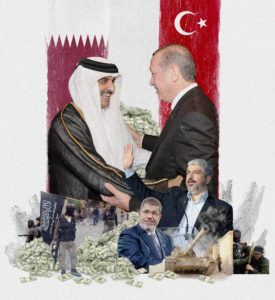
Διπλό χτύπημα μέσα σε λίγες ώρες δέχθηκε η Τουρκία καθώς ΕΕ και ΗΠΑ κηρύσσουν άκυρο το Μνημόνιο που υπέγραψε ο Τ. Ερντογαν με τον πρωθυπουργό της Τρίπολης Φ. Σαράζ, και οι δυο προετοιμάζουν το έδαφος για κυρώσεις εις βάρος της Τουρκίας, ενώ με μια βαρυσήμαντη παρέμβασή της η Ουάσιγκτον απορρίπτει την τουρκική θέση ότι τα νησιά δεν έχουν θαλάσσιες ζώνες. Μια θέση που αποτελεί την βάση των αυθαίρετων ερμηνειών του Διεθνούς Δικαίου και τον κορμό των διεκδικήσεων της εις βάρος της Ελλάδας και της Κύπρου, σε Αιγαίο και Μεσόγειο.

Η ξεκάθαρη και δημόσια αυτή τοποθέτηση των ΗΠΑ έρχεται μάλιστα την ώρα που τα αμερικανικά νομοθετικά Σώματα, δείχνουν την οργή τους εναντίον του Τ. Ερντογάν αποφασίζοντας την προώθηση απόφασης για επιβολή κυρώσεων λόγω των S-400 και εγκρίνοντας ψήφισμα για την αναγνώριση της Γενοκτονίας των Αρμενίων.

Η δημόσια τοποθέτηση των ΗΠΑ που προκάλεσε έκπληξη, καθώς έγινε σε μια τυπική συνάντηση στελεχών του Στέιτ Ντιπάρτμεντ που επισκέπτονται την Αθηνα, με δημοσιογράφους, με τον πρεσβευτή Τ. Πάιατ να παίρνει τον λόγο και να δηλώνει ότι οι ΗΠΑ μελέτησαν τη νομική θέση του Μνημονίου Τουρκίας – Λιβύης και «έχουν διαφορετική νομική θέση από την Τουρκία σε σχέση με τα νησιά και την Σύμβαση γα το Δίκαιο της Θάλασσας, καθώς βάσει του εθιμικού διεθνούς Δικαίου τα νησιά πρέπει να αντιμετωπίζονται όπως οι ηπειρωτικές ακτές». Είναι η πρώτη φορά που με τόσο ξεκάθαρο τρόπο οι ΗΠΑ (που όπως και η Τουρκία δεν είναι συμβαλλόμενα μέρη της Σύμβασης για το Δίκαιο της Θάλασσας» παίρνουν θέση σε αυτό το λεπτό ζήτημα που αποτελεί το σημαντικότερο όπλο της Ελλάδας έναντι των τουρκικών παράλογων διεκδικήσεων που θεωρούν ότι κανένα νησί ανεξαρτήτως μεγέθους δεν έχει επήρεια πέραν των χωρικών υδάτων του (δηλαδή, στην περίπτωση των ελληνικών νησιών τα 6 ν.μ.).

Η δήλωση την οποία δημοσιοποίησε ο κ. Πάιατ είναι επίσημη θέση του Στέιτ Ντιπαρτμεντ και δεν είναι άσχετη φυσικά και με τη στρατηγική των ΗΠΑ στη Νοτιοανατολική Ασία και στη Σινική Θάλασσα, αλλά σε κάθε περίπτωση αποτελεί ένα ισχυρό πλήγμα στην πολιτική της Άγκυρας. Θα μπορούσε ίσως να ήταν καλύτερη η διατύπωση της καθώς το Δίκαιο της Θάλασσας δεν αναφέρεται σε κατοικημένα νησιά αλλά σε όλα τα νησιά, ακόμη και βράχους, εκτός εκείνων «οι οποίοι δεν μπορούν να συντηρήσουν ανθρώπινη διαβίωση ή δική τους οικονομική ζωή, οι οποίοι δεν θα έχουν αποκλειστική οικονομική ζώνη ή υφαλοκρηπίδα» (άρθρο 121 παρ. 3).

Στην «εξαφάνιση» της επήρειας των νησιών στηρίζεται η Τουρκία για να αμφισβητήσει την κυπριακή ΑΟΖ στέλνοντας τέσσερα πλοία της για παράνομες έρευνες και γεωτρήσεις, με την θεωρία αυτή διεκδικεί όλη την ελληνική και κυπριακή υφαλοκρηπίδα στην Ανατολική Μεσόγειο, βάσει αυτής της θεωρίας ανακάλυψε ότι έχει σύνορα με την Λιβύη και επίσης με αυτή την αυθαίρετη και παράνομη προσέγγιση διεκδικεί τη διχοτόμηση του Αιγαίου με την οριοθέτηση της υφαλοκρηπίδας στο μέσο της απόστασης των δυο ηπειρωτικών ακτών, με την πλήρη διαγραφή των νησιών.

Η αμερικανική τοποθέτηση είναι ένα εργαλείο το οποίο θα αποδειχθεί πολύ χρήσιμο για την Ελλάδα τόσο στην προσπάθεια της για ακύρωση και εξουδετέρωση της Συμφωνίας Τουρκίας-Λιβύης όσο και για πιθανή μελλοντική διαπραγμάτευση για τις οριοθετήσεις στο Αιγαίο και στην Μεσόγειο. Και ίσως και πιο πριν εάν η Τουρκία επιχειρήσει με βάση την θεωρία της περί μη επήρειας των νησιών να επιχειρήσει να επιβάλει τετελεσμένα εις βάρος της Ελλάδας σε περιοχές που καταφανώς ανήκουν σε θαλάσσιες ζώνες νησιών όπως η Ρόδος, η Κάρπαθος, η Κρήτη κ.ά.

Η δημόσια, απρόσμενη αυτή παρέμβαση από την Ουάσιγκτον ήρθε την στιγμή που την Τετάρτη η Επιτροπή Εξωτερικών Σχέσεων της Γερουσίας ενέκρινε νομοσχέδιο που προνοεί κυρώσεις εις βάρος της Τουρκίας για τη στρατιωτική της επίθεση στη βόρεια Συρία και την αγορά της του ρωσικού συστήματος αεράμυνας S-400, με ψήφους μάλιστα 18-4 σε ένα Σώμα που ελέγχεται από τους Ρεπουμπλικάνους και χθες ήταν η σειρά της ολομέλειας της Γερουσίας να εγκρίνει και μάλιστα ομόφωνα ψήφισμα για την αναγνώριση της Γενοκτονίας των Αρμενίων.

Το ψήφισμα είχε μπλοκαριστεί, κατά την επίσκεψη Ερντογάν στην Ουάσιγκτον, από γερουσιαστές φίλους του κ. Τραμπ, αλλά πλέον φαίνεται ότι και οι γερουσιαστές αυτοί αισθάνονται ότι έχουν υποστεί εμπαιγμό τόσο από τον πρόεδρο Τραμπ αλλά κυρίως από την Άγκυρα και τον Ερντογάν. Εξάλλου σημαντικοί γερουσιαστές που μέχρι τώρα μπλόκαραν τις αποφάσεις αυτές είχαν συναντηθεί στον Λευκό Οίκο με τον πρόεδρο Ερντογάν παρουσία του Ντ. Τραμπ και φαίνεται ότι είχαν αποκομίσει την εντύπωση ότι με την επιστροφή του στην Τουρκία ο κ. Ερντογάν θα έβρισκε τρόπο να «θάψει» την υπόθεση των S400. Αντ’ αυτού είδαν τον κ. Ερντογάν να δηλώνει ότι οι ρωσικοί πύραυλοι θα ενεργοποιηθούν κανονικά ,ότι πιθανότατα θα αγοράσει και δεύτερη παρτίδα S400 και ότι συζητά με την Μόσχα και την αγορά μαχητικών σε αντικατάσταση των F35.

Όλα αυτά «τούμπαραν» τους συσχετισμούς στην Ουάσιγκτον όπου υπάρχει ένα εξαιρετικά βαρύ κλίμα για την Τουρκία το οποίο δεν θα είναι εύκολο ούτε στον κ. Τραμπ για να το ανατρέψει.

«Οι ενέργειες της Τουρκίας τα τελευταία χρόνια έχουν ξεπεράσει τα όρια. Αυτό το νομοσχέδιο καθιστά σαφές στην Τουρκία ότι η στάση της στη Συρία είναι απαράδεκτη και η αγορά των S-400 είναι μη βιώσιμη», ανέφερε σε tweet του ο Δημοκρατικός γερουσιαστής Μπομπ Μενέντεζ πρωτεργάτης και της απόφασης για τις κυρώσεις και για την Γενοκτονία των Αρμενίων. Ο ρεπουμπλικάνος γερουσιαστής Ραντ Πολ εξήγησε την αρνητική στάση του για τις κυρώσεις όχι επί της ουσίας αλλά επειδή όπως είπε θα δυσκολέψουν τους χειρισμούς του κ. Τραμπ με τον Ερντογάν για τους πυραύλους και την Συρία.

Αλλά ο πρόεδρος της επιτροπής, επίσης ρεπουμπλικάνος, Τζιμ Ρις δήλωσε ότι «αυτή είναι η ώρα η Γερουσία να συνασπιστεί και να αδράξει αυτή την ευκαιρία για να αλλάξει τη στάση της Τουρκίας» και ότι «αυτό δεν είναι ένας μικρός καβγάς ,αλλα είναι μια στροφή της Τουρκίας, σε μια εντελώς διαφορετική κατεύθυνση από αυτή που είχε στο παρελθόν. Μας κοροϊδεύουν …» ήταν η οργισμένη διαπίστωση του σημαντικού Αμερικανού γερουσιαστή.

Την ίδια ώρα και η ΕΕ έστελνε ξεκάθαρο μήνυμα στην Τουρκία κηρύσσοντας άκυρο και χωρίς νομικά αποτελέσματα το Μνημόνιο Τουρκίας -Λιβύης, εκφράζοντας αλληλεγγύη στην Ελλάδα και στην Κύπρο, σε μια κίνηση πολιτικής σημασίας, ενόσω παραμένει ανοικτή η διαδικασία για προώθηση επιβολής κυρώσεων λόγω της «εισβολής» στην κυπριακή ΑΟΖ και η οποία μπορεί να διευρυνθεί εφόσον υπάρξουν αντίστοιχες παραβιάσεις και στην ελληνική υφαλοκρηπίδα.

liberal.gr

Brothers in Arms

0
DEFENCE OF DEMOCRACIES
December 11, 2019 | Report
The Consolidation of the Turkey-Qatar Axis

Introduction

On June 5, 2017, Saudi Arabia, Bahrain, Egypt, and the United Arab Emirates (UAE) severed diplomatic ties with Qatar, enacting a land, sea, and air blockade. Qatar’s neighbors charged the country with supporting terrorists, collaborating with Iran, and sowing the seeds of chaos around the Middle East. The sudden move closed Qatar’s only road link to foreign markets, through which it received nearly 40 percent of its food requirements. Qatari residents panicked, picking clean supermarket shelves.1 But the panic subsided less than 48 hours later, as Turkey began sending cargo planes with food and other goods.2

Turkey’s assistance was not simply a humanitarian gesture. Rather, it was the most visible sign of Ankara and Doha’s strategic convergence. This was also evident when Qatar was one of the few actors, alongside Hamas and Pakistan, that supported Turkey’s cross-border operation into northeast Syria in October 2019.3

Diplomatic relations between the emirate of Qatar and the Republic of Turkey go back almost 50 years but picked up steam only after the Islamist-rooted Justice and Development Party (AKP) came to power in Ankara in 2002.4 During the first decade of AKP rule, the two countries held more than 70 high-level bilateral meetings.5 Qatar remains the most popular destination for Turkish diplomatic missions. Turkish President Recep Tayyip Erdogan alone made seven visits as prime minister and made it a priority to visit Doha upon assuming the presidency in 2014.6

Turkey and Qatar are fully brothers in arms. Both states share an affinity for Islamism that shapes their regional engagement. Fueled by shared ideological commitments, Turkish-Qatari cooperation extends into a variety of sectors, including defense, banking, media, and energy, and is likely to increase as their partnership deepens.

The Turkish-Qatari axis represents a challenge for the United States and its partners because Ankara and Doha pursue not only legitimate forms of cooperation but also joint ventures in illicit finance, support for Islamist insurgents abroad, promotion of extremist ideologies, and harboring terrorists associated with Hamas and al-Qaeda. These actions are especially disconcerting because both Turkey and Qatar are also important partners of the United States. Turkey, a NATO member for over 60 years, hosts the Incirlik airbase, home to the U.S. Air Force 39th Air Base Wing and American theater nuclear weapons.7 Qatar’s Al-Udeid Air Base, meanwhile, is the forward headquarters of U.S. Central Command, which oversees U.S. military operations throughout the Middle East.8

Washington has failed to hold these two countries to account over the years. The United States should have long ago explored alternative sites for the U.S. military facilities hosted by Qatar and Turkey. Such a study is still needed. For now, however, the United States should be prepared to welcome Turkey and Qatar back into the fold if they turn back decisively from their reckless path. But a combination of inducements and disincentives is needed if this is to happen.

Illustration by Daniel Ackerman/FDD

Champions of Islamism

In recent years, the Sunni Middle East has cleaved into two competing axes, pitting the Turkish-Qatari combine against a Saudi-Emirati axis. Across the region, from Iraq to Libya, these opposing blocs are now contesting each other’s influence.

Islamism is the glue that holds together the Turkish-Qatari axis. Erdogan’s Islamist-rooted AKP has a long history with the Muslim Brotherhood, which the Turkish leader began to embrace openly after securing a sizeable majority in Turkey’s 2007 elections. Within Qatar, the Muslim Brotherhood – known in Arabic as al-Ikhwan al-Muslimin or simply the Ikhwan – has no room to operate, yet Doha energetically promotes the organization’s ideology and interests abroad. Meanwhile, both Saudi Arabia and the UAE have designated the Brotherhood as a terrorist organization in light of the threat it poses to them both at home and abroad.

Following its 2007 electoral victory, Erdogan’s party began co-opting the Brotherhood to cultivate influence throughout the region. Ankara established ties with Hamas, the Palestinian branch of the Muslim Brotherhood, which the United States designated as a terrorist group in 1997. Erdogan himself enjoys a close relationship with Hamas leader Khaled Meshal.9 Turkey also cheered the election of Mohammed Morsi, the Muslim Brotherhood’s candidate in Egypt’s 2012 presidential race. Turkey then pursued a flurry of diplomacy with the Morsi government, negotiating 24 different agreements on trade and other issues.10 Erdogan has also funded mosques and religious education centers in numerous countries, including Albania, Ghana, Kyrgyzstan, and even the United States,11 in an effort to promulgate political Islam and expand his influence.12

At home, Erdogan has supported Islamist social engineering of the Turkish state and society. He has sidelined secular civil servants, expanded compulsory religious education and state-run preacher schools to “raise a pious generation,” and even hiked the price of alcoholic drinks by more than 600 percent.13 Seeking to institutionalize sectarian hegemony, he has taken over and weaponized Turkey’s media to blare Islamist propaganda and attack the pro-secular opposition, while scapegoating Turkey’s religious minorities.14

Qatar, for its part, is officially a Wahhabi state, practicing the same form of Islam as Saudi Arabia. The ruling al-Thani family claims descent from Muhammad Ibn Abd al-Wahhab, the creed’s founder.15 Likewise, the emirate’s Grand Mosque is named after Abd al-Wahhab,16 and Qatari state textbooks are notably Wahhabi in the doctrine that they teach.17 Yet Qatar does not have an active domestic Islamist movement, because the state has co-opted Islamist currents and directed them outward.18

Qatar’s brand of Wahhabism is infused with a Brotherhood-style philosophy of political activism, yet the al-Thani ensure it poses no challenge to their absolute authority. Thus, the Brotherhood’s chapter in Qatar voluntarily disbanded in 1999.19 Doha’s massive hydrocarbon wealth provides cradle-to-grave benefits for its 300,000-odd citizens, thereby preventing Islamist movements in Qatar from building their traditional influence as an opposition force by providing social services, as the Brotherhood does elsewhere. Over time, Qatar and the Brotherhood “came to develop a mutually beneficial relationship so long as the Ikhwan in Qatar were, inevitably, outward facing,” notes scholar David Roberts.20

Riyadh and Abu Dhabi, on the other hand, have long viewed the Brotherhood and other Islamist movements in the region as existential threats. These governments’ fears stem from their desire to preserve absolute control over religious affairs and domestic politics while maintaining a firewall between the two. Indeed, the Brotherhood’s admixture of Islam and politics has proven dangerous to autocratic regimes around the region, as was recently demonstrated during the Arab Spring.21

The UAE has sought to dissolve its Brotherhood branch, al-Islah, since 1994.22 Saudi Arabia, meanwhile, faced a strong internal challenge in the 1990s and 2000s from clerics affiliated with the Sahwa (“awakening”) movement, which mixed the kingdom’s Salafi Islamist teachings with the Brotherhood’s political activism. Starting in 2003, Riyadh also faced a domestic insurgency led by al-Qaeda, which heightened its perception of the Islamist threat.23 It was this crisis that ultimately prompted Saudi Arabia to cease funding Palestinian terrorist groups and to begin questioning its own practice of financing extremism abroad through its widespread Wahhabi networks.

In 2011 and 2012, Riyadh and Abu Dhabi deeply feared that the Brotherhood’s success at the ballot box in Egypt and Tunisia would spark a revival of Islamist opposition within their borders.24 In both cases, Qatari broadcaster Al-Jazeera provided extensive and highly favorable coverage to Brotherhood factions.25 Similar propaganda has been ubiquitous not only in Turkey’s pro-government media but also in Egyptian Muslim Brotherhood outlets broadcasting from Istanbul.26

In March 2014, Saudi Arabia, Bahrain, and the UAE withdrew their ambassadors from Doha, sparking a diplomatic crisis among the states of the Gulf Cooperation Council (GCC).27 Saudi Arabia designated the Brotherhood as a terrorist group soon thereafter, and the UAE followed suit that November.28 The three countries claimed that Qatar had violated a November 2013 pledge to the GCC, in which Doha promised not to support “the Muslim Brotherhood, as well as outside groups in Yemen and Saudi Arabia that pose a threat to security and stability of Gulf Cooperation Council countries.” Doha also committed, they said, to “preventing Al Jazeera from being used as a platform for groups or figures challenging the Egyptian government.”29

In September 2014, Qatar’s neighbors forced Doha to expel seven leading Muslim Brotherhood ideologues and officials. Every single one of those seven moved, at least temporarily, to Turkey.30 The list included Secretary General of the Egyptian Muslim Brotherhood Mahmoud Hussein, as well as Brotherhood members Amr Darrag, Hamza Zoubaa, Gamal Abd el-Sattar, Essam Telima, Ashraf Badr, and Wagdy Ghoneim.31 Ghoneim, an extremist preacher, issued a video statement immediately after arriving in Turkey that condemned the “crusader” air campaign against the Islamic State, referring to the U.S.-led Global Coalition to Defeat ISIS.32 Only after he described the president of Tunisia – a country with which Turkey has close ties – as an “infidel” did Ankara take steps to discourage Ghoneim’s incitement.33

Those tensions erupted once again during the run-up to the blockade of 2017. Egypt, along with Saudi Arabia, the UAE, and Bahrain – known as the Arab, or anti-Qatar, quartet – severed relations with Qatar, fuming over Qatar’s support for the Muslim Brotherhood and extremist groups and usage of Al-Jazeera as a mouthpiece for those groups. The Qataris have remained defiant, continuing to back the Brotherhood, Hamas, and other Islamist groups that the other Gulf states seek to counter. Turkey has kept the embers of the conflict glowing by allowing the Muslim Brotherhood to operate freely from its soil, including Muslim Brotherhood television stations that spew hatred and even incite violence toward the Egyptian regime.

Ankara further stoked this conflict following the murder of Jamal Khashoggi by Saudi agents. For weeks, the Turkish government leaked a steady stream of damaging information to the Turkish and international press, weaponizing Khashoggi’s gruesome death to score geopolitical points against Saudi Arabia.34 All the while, at public events, Erdogan continues to flash the four finger salute of the Muslim Brotherhood, a sign made in memory of the Rabaa massacre, which saw the Egyptian army kill more than 800 pro-Brotherhood protestors.35

This intra-Sunni conflict adds another layer of complexity to a region already grappling with the Sunni-Shia sectarian divide. Both axes now seek to project their power and influence while diminishing that of their rivals across North Africa, the Levant, the Persian Gulf, and even the Horn of Africa. The stability of regional states could become collateral damage in this battle for primacy.

Libya

Libya was one of the first battlefields where the rivalry between the Turkish-Qatari and Saudi-Emirati axes began to play out.36 Qatar and Turkey support western Libya’s mostly Islamist-aligned militias, while the UAE, Saudi Arabia, and Egypt back eastern Libya’s Khalifa Haftar, a septuagenarian warlord who leads the self-styled Libyan National Army (LNA), which contests the authority of the country’s internationally recognized government in Tripoli. Both axes’ involvement has exacerbated the conflict and undermined UN-led multilateral efforts to stitch the country back together.

When the rebellion against Muammar Gaddafi began in 2011, Qatar became the first Arab country to formally recognize Libya’s rebels and sent fighter jets to aid in the NATO-led intervention.37 Doha even sent hundreds of Qatari troops to support the rebels. Qatar’s chief of staff, Major General Hamad bin Ali al-Attiyah, admitted that Qatari troops were “in every region” of Libya and “supervised the rebels’ plans.”38 Qatari advisors, moreover, were reported to have trained Libyan fighters in both western and eastern Libya. In August 2011, as Libyans surged towards Gaddafi’s Bab al-Aziziya compound in Tripoli, Qatari special forces were present on the front line.

Qatar’s generosity to the 2011 revolution was so great that Libyans flew the Qatari flag alongside the Libyan flag on October 23, 2011, when they proclaimed the liberation of Benghazi.39 Libyans even changed the name of Algeria Square in Tripoli to Qatar Square.40

When civil war broke out in 2014, Qatar and Turkey both supported the Islamist-led, Tripoli-based General National Congress. They also maintained close links with the now-defunct Libya Dawn coalition, a grouping of pro-Islamist militias led by the Muslim Brotherhood41 that attacked Tripoli International Airport and seized large parts of the capital in 2014.42 According to a UN panel of experts, Turkish companies delivered weapons to the Libya Dawn coalition.43 The UN panel also accused Qatar of sending arms and cash to Islamist militants since the beginning of the crisis in 2011. A March 2013 UN report concluded that Qatar sent arms to anti-Gaddafi forces in 2011 and 2012, in violation of a UN arms embargo.44

According to the LNA, Turkey has provided “direct military support” to Islamist militias operating in western Libya. The secretary general of the LNA claimed to have witnesses and satellite pictures proving that Turkey provides weapons, ammunition, vehicles, and even Turkish combatants in the area of Misrata.45 In 2017, a spokesperson for the LNA said, “[A] number of Qatari aircraft are regularly landing in Libya … to support terrorist groups.”46 In May 2019, one month after Haftar began his assault on Tripoli, a shipment of Turkish armored vehicles and armed drones arrived in the Libyan capital.47 According to The Wall Street Journal, Turkey sold $350 million worth of equipment to its allied militias in Tripoli in the wake of Haftar’s assault.48 Turkish officials claim that the arms sales do not violate the UN arms embargo on Libya and were conducted under a 2012 bilateral defense agreement. In July, LNA troops claimed to have taken down a Turkish-made drone near Tripoli.49

Neither Turkey nor Qatar has been able to exert the same level of influence on any major Libyan actor that Egypt and the UAE have on the LNA.50 Haftar’s forces have enjoyed increasing support from France and Italy and, most recently, received an offer from the Saudis to fund the general’s siege of western Libya.51 Increasingly, Russia, too, is directly backing Haftar’s campaign after years of providing background support for the warlord, even sending mercenaries, including snipers, to aid Haftar’s forces.52 This complicated mix of foreign actors pursuing disparate interests only exacerbates the country’s instability.

Somalia

The Horn of Africa is the latest arena of Turkish-Qatari cooperation. Like Libya, the region’s troubles have worsened because of the clash between the Turkish-Qatari and Saudi-Emirati axes, with the UAE and Qatar leading the battle for influence in the region. Unsurprisingly, Qatar’s moves in the Horn are complemented by Turkey. Both countries seek to revive the Muslim Brotherhood in East Africa and retain Somalia as an asset.

Qatar’s activity in Somalia stretches back to 2012, when it funded Hassan Sheikh Mohamud’s successful presidential bid, according to a UN report.53 Hassan Sheikh came from the Damul Jadiid faction of al-Islah, the Muslim Brotherhood’s Somali branch. Damul Jadiid, meaning “new blood,” devoted its efforts to spreading Islamism and received support from both Turkey and Qatar.54

But Qatar soon lost patience with its client, coming to see Hassan Sheikh’s government as corrupt and weak, like its predecessors.55 In the 2017 election, Qatar allegedly gave Mohamed Abdullahi Mohamed, known as Farmajo, a last-minute financial boost that propelled him to victory.56 Farmajo allegedly has connections to the al-Qaeda-affiliated terrorist group al-Shabaab through Fahad Yasin, an ex-Al-Jazeera journalist who purportedly couriered Qatari money to Somalia during the 2012 elections and ran Farmajo’s 2017 campaign.57 Yasin became one of Farmajo’s early cabinet appointments, named as chief of staff – a move which added to perception that the Farmajo administration was tied to Doha.58 In August 2018, Farmajo promoted Yasin to deputy director of Somalia’s National Intelligence Security Agency.59

While it supports Somalia’s government, Qatar is among al-Shabaab’s main foreign backers, according to a 2017 interview in Germany’s Der Spiegel with an al-Shabaab commander-turned-informant. He claimed Qatari sheikhs brought $20 million to Somalia in 2016 to line the pockets of his al-Shabaab bosses, who used the funds both for personal expenditures and to pay fighters and buy weapons.60

In July 2019, The New York Times disclosed an audio recording of a phone call between Qatar’s ambassador to Somalia and a businessman close to the Qatari emir in which the latter, Khalifa Kayed al-Muhanadi, suggests that Qatar is sponsoring terror attacks in Somalia to further its interests. Commenting on a car bombing at the port of Bosaso in northern Somalia, Muhanadi claimed, “we know who are [sic] behind” the attack, which was “intended to make Dubai people run away,” referring to the UAE’s business interests in Somalia. An Emirati company called P&O Ports manages the Bosaso port. “[L]et them kick out the Emiratis,” Muhanadi added, “and I will bring the contract here to Doha.”61

According to a former senior advisor to the previous president of Somalia, Qatari charities –including Qatar Charity, Eid Charity, and the RAF Foundation – work with people whom the Somali government suspects are tied to al-Shabaab. The advisor further claimed that these charities operate in areas controlled by militants or with a heavy militant presence. This adds to the evidence that Qatar cooperates with Somali militants.62 Saudi Arabia, the UAE, Egypt, and Bahrain placed these charities on a blacklist in June 2017, claiming they funded al-Qaeda.63

Doha has heavily invested in Somalia since Farmajo rose to power in February 2017. Farmajo visited Doha in May of that year, with Emir Tamim bin Hamad al-Thani promising budgetary support for the federal government.64 When the blockade began in June 2017, Farmajo officially kept Somalia neutral, reportedly turning down an $80 million offer from an unnamed Gulf minister to side with the Saudis and Emiratis – although the semi-autonomous regions of Galmudug, Puntland, and Hirshabelle did cut ties with Qatar, a result of successful UAE and Saudi leverage.65 In November 2017, Qatar agreed to provide $200 million to fund the construction of two highways linking Mogadishu to Somalia’s northern and southern regions as well as the restoration of several federal government buildings in the capital.66

In May 2018, a Qatari official told Reuters that Doha had given $385 million in infrastructure, education, and humanitarian assistance to Farmajo’s government.67 In December 2018, Qatar and Somalia signed eight memoranda of understanding covering such diverse fields as maritime transport, taxation, investments, trade and technical cooperation, and ports, among others.68 In January 2019, Qatar donated 68 armored vehicles to Somalia, stating that it would bolster Somali efforts to combat Islamist insurgents.69

Ankara has also stepped up its engagement with Somalia in recent years. In fact, Turkey is Somalia’s largest foreign investor.70 Ankara’s largest overseas military base and school is in Mogadishu, opened in September 2017 at a cost of $50 million. Turkish interest in the country dates back to 2011, when Erdogan coordinated relief efforts for the crippling famine that struck Somalia that year. At a time when the West was ignoring Somalia, Erdogan led a delegation of senior cabinet officials, journalists, leaders of nongovernmental organizations (NGOs), and others on an official visit to the country during Ramadan – the implicit message being that Turkey would not abandon fellow Muslims.71 In doing so, Erdogan became the first non-African leader to visit Somalia in two decades.72

Since 2011, Turkey has pumped in more than $1 billion of aid to the country, including by building schools and hospitals.73 Albayrak Holding, a Turkish conglomerate known for its ownership of various pro-Erdogan media outlets,74 received a 20-year contract in 2014 to operate the Mogadishu port, while Turkish company Favori runs Mogadishu’s international airport.75 Turkish Airlines is the sole international carrier flying to Somalia.76 In 2016, Turkey opened its largest embassy in the world in Mogadishu.77 Turkish-Somali trade has blossomed, skyrocketing from a paltry $5.1 million in 2010 to $123 million by 2016. In early 2018, the two governments inked a bilateral trade deal, building on previous pacts that covered energy, electricity, education, and fisheries, among other sectors.78

Hamas

The cases of Libya and Somalia are not anomalies. Qatar and Turkey have both inserted themselves into the Palestinian-Israeli conflict as patrons of the Palestinian terrorist group Hamas, a splinter faction of the Brotherhood. For Turkey and Qatar, two patrons of the Muslim Brotherhood and self-styled champions of Islamist causes, support for Hamas comes naturally. In fact, Qatar has directly funded Hamas for years, having given the group more than $1.1 billion between 2012 and 2018.79 Qatar’s funding continues to this day, with Doha budgeting around $330 million in aid payments since 2018 to families living in the Hamas-controlled Gaza Strip. Qatar insists that none of its largesse goes to Hamas directly.80

Turkey and Qatar have both welcomed Hamas members on their soil.81 In Turkey’s case, this practice stretches back at least a decade. While living in Turkey, Saleh al-Arouri, commander of Hamas’ military wing in the West Bank, reportedly planned the kidnapping and murder of three Israeli teenagers in June 2014.82 Arouri had initially lived in Syria after Israel released him from prison in 2010, but he traveled to Turkey when Hamas publicly opposed Syria’s slaughter of Sunnis in the civil war.83 After he had operated out of Turkey for five years, American and Israeli pressure on Ankara forced him to relocate to Qatar.84 Arouri reportedly moved to Lebanon two years later, after the onset of the 2017 blockade, due to pressure by the other Gulf states.

During the 2014 Israel-Hamas conflict, Qatar and Turkey negotiated on behalf of Hamas, pushing for a one-sided ceasefire that would have benefitted Hamas by relaxing Israel’s blockade of Gaza and connecting Hamas to the global economy, at the cost of ignoring Israel’s legitimate security concerns.85 They almost got what they wanted, helping to draft a ceasefire plan presented to Israel by then-Secretary of State John Kerry. Kerry’s plan acknowledged Hamas’ position in Gaza, pledged billions of dollars to the group, and made no demands on Hamas to dismantle its rockets, heavy weapons, or tunnels.86

GCC pressure has since influenced other cases of Qatar sheltering Hamas figures. At the end of 2014, pressure from the GCC forced Qatar to take a harder line against Hamas for several weeks, before the death of Saudi Arabia’s King Abdullah derailed that effort.87 During that brief interval, the chief of Hamas’s Politburo, Khaled Meshal, who had taken up residence in Doha after Hamas exited Damascus in 2012, was briefly forced to relocate, making his way to Turkey instead.88 But Meshal returned to Doha in 2015 and was spotted next to radical preacher Yousef al-Qaradawi at prayers in September 2017.89 Meshal is under U.S. sanctions for financing terrorism as well as for “supervising assassination operations, bombings, and the killing of Israeli settlers.”90

Qatar also briefly detained two Hamas officials in response to GCC pressure.91 But soon after, reports indicated that one of the two men, Zahir Jabareen, a senior official with financial as well as military duties, relocated from Qatar to Turkey.92 News reports suggest Jabareen assumed the role of Arouri’s Istanbul-based deputy, overseeing a bureau that “serves as the military wing’s recruiting station for Palestinian students, where they receive training in terrorist activity” less than half an hour outside the city.93

According to the U.S. Treasury Department, which designated Jabareen along with several other Turkey-based Hamas supporters in September 2019, Jabareen headed Hamas’ “Finance Office” and created a “financial network in Turkey” that enables Hamas to “raise, invest, and launder money prior to transferring it to Gaza and the West Bank.”94 Jabareen – who, according to Treasury, has a Qatari passport – is also the main contact between Hamas and Iran’s Islamic Revolutionary Guard Corps.95

The sanctions Treasury announced in September also targeted Redin Exchange, a Turkey-based company identified as a “key part of the infrastructure used to transfer money to Hamas.”96 Since 2017, Redin has transferred millions to Hamas’ military wing, the Izz al-Din al-Qassam Brigades. Treasury also designated the company’s CEO and deputy CEO, both Iraqi nationals based in Istanbul. Redin’s deputy CEO, Ismael Tash, has maintained contact since 2017 with a money-transfer channel overseen by Treasury-designated Hamas financier Muhammad Sarur.97

Mahir Salah, a top Hamas official under U.S. sanctions for channeling tens of millions of dollars for Iran, reportedly controlled Hamas’s finances throughout the Gulf and has continued to visit Turkey.98 Maher Ubeid, a Hamas politburo member reportedly responsible for laundering tens of millions of dollars through Turkey, has also been spotted in Doha.99

Both Qatar and Turkey were embroiled in a terror finance scandal involving the Union of the Good, a charitable network that the U.S. government sanctioned in 2008 as a fundraising front for Hamas.100 Members of the network included Turkey’s Humanitarian Relief Foundation (IHH) and three Qatari charities.101

The Union’s chair is Yousef al-Qaradawi, an exiled Egyptian Muslim Brotherhood cleric who enjoys safe haven in Qatar and serves as the spiritual guide of Hamas. On a visit to Gaza in 2013, Qaradawi stated, “[W]e should seek to liberate Palestine, all of Palestine, inch by inch,” a position consistent with Hamas’ denial of Israel’s right to exist. Hamas’s then Prime Minister Ismail Haniyeh greeted the aging cleric, who also said, “[O]ur wish should be that we carry out Jihad to the death,” calling upon Palestinians, Arabs, and Muslims to unite and overthrow Israel.102

Qaradawi became a global personality by hosting religious programming on Al-Jazeera for many years. On his show, Qaradawi incited violence against Americans, arguing at the outbreak of the Iraq war in 2003 that “fighting American civilians in Iraq is a duty for all Muslims.”103 He also sanctioned suicide bombings against Israeli civilians during the Second Intifada.104 Qatar has shielded its guest from Egyptian efforts to try him for alleged crimes, including Cairo’s issuance of an Interpol Red Notice for Qaradawi on charges of “incitement and assistance to commit intentional murder.”105

Qaradawi reportedly bragged that the only reason he was not himself sanctioned by the United States was his political backing from Qatar’s emir at the time.106 In 2009, the U.S. Treasury Department urged Qatar’s leadership to ensure Qaradawi was removed from the sharia supervisory board of Qatar Islamic Bank, one of Qatar’s most important banks, arguing that his “public support for Hamas … poses a risk both to the bank and to the Qatari financial sector as a whole.”107 Qaradawi is now under sanctions by Qatar’s Gulf rivals.108

Though residing in Doha, Qaradawi has hosted several events in Turkey over the years through another organization he heads, the International Union for Muslim Scholars. When Erdogan criticized the aforementioned Interpol notice calling for Qaradawi’s arrest, Qaradawi returned the favor by headlining a three-day “Thanks Turkey” festival held by his organization in Istanbul, at which he called Erdogan “the Sultan” and a defender of Islam and the Quran.109 At that event, Qaradawi handed an award to Turkey’s deputy prime minister to pass on to Erdogan, who had welcomed him for a meeting earlier in the week.110

Iraq

In 2014, the United States imposed sanctions on two Jordanian nationals with Qatari ID cards, brothers Ashraf and Abdulmalik Abdulsalam, for funding al-Qaeda in Iraq (AQI).111 Abdulamalik was also known as Umar al-Qatari, or “the Wolf of al-Qaeda.”112 He was captured by Lebanese authorities carrying tens of thousands of dollars intended for the terrorist group.113 According to a local press report, his work for al-Qaeda also allegedly included providing 200,000 Qatari riyals and 18,000 euros to contacts in Antakya, Turkey, for transfer to Syria, along with night-vision goggles, communications equipment, weapons, and ammunition. The U.S. government subsequently concurred that he “gave thousands of dollars and material support to a Syria-based al-Qaida associate intended for … operatives” of Jabhat al-Nusra,114 also known as al-Nusra Front – a UN-designated terrorist group that then served as al-Qaeda’s local branch in Syria.115

Abdulmalik Abdulsalam allegedly transferred $4 million through a Jordanian bank to his father, a jihadist leader also known as Abu Abdulaziz al-Qatari.116 The group Abu Abdulaziz founded, Jund al-Aqsa, was sanctioned by the United States and United Kingdom as an al-Qaeda splinter group.117 According to his supporters, Abu Abdulaziz is a former leader of AQI who left the fight “to work from Qatar in supporting the mujahideen materially and logistically.”118

There is also the case of Abdulrahman al-Nu’aymi. In 2013, the United States sanctioned Nu’aymi, a Qatari national, accusing him of providing millions of dollars to al-Qaeda over more than a decade – including, at one point, more than two million dollars a month to AQI.119 The United Nations also sanctioned Nu’aymi for his ties to al-Qaeda.120 At the time of Nu’aymi’s U.S. designation, the press first made contact with him not in Doha but in Istanbul, although he quickly returned to Qatar, where he convened a press conference.121

Qatar briefly arrested Nu’aymi in July 2017 following the onset of the Saudi-led blockade, before releasing him in February 2018.122 He remains free. In April 2018, Qatari Prime Minister Abdullah bin Nasser bin Khalifa al Thani attended the wedding of Nu’aymi’s son, where the prime minister posed for a picture with the terror financier.123 In May 2019, Qatar’s highest court overturned Nu’aymi’s inclusion on Qatar’s terrorism list.124

Nu’aymi also chaired the Global Anti-Aggression Coalition, a group that held conferences on Turkish soil and voiced support for terrorists in places such as Gaza and Iraq.125 He was also a founding member of Eid Charity, a Qatari charity that reportedly works with figures the Somali government believes are associated with al-Shabaab.126

Institutions and officials of the Qatari and Turkish governments have also regularly hosted the late Harith al-Dhari and his son Muthanna al-Dhari, both of whom the United States and United Nations designated for funding AQI.127

Harith al-Dhari, leader of the extremist Association of Muslim Scholars in Iraq, was a prominent speaker at events hosted by the Global Anti-Aggression Coalition, the Islamist group chaired by Nu’aymi. The Iraqi government in 2006 issued an arrest warrant for Harith.128 Yet he was often hosted in Qatar and met Qatar’s then Emir Hamad bin Khalifa al-Thani. In 2008, Emir Hamad met with Harith just a month after Washington designated the latter as a sponsor of AQI.129 Qatar’s rulers even welcomed Harith as an honored guest when Emir Hamad inaugurated the state’s new Grand Mosque in 2011.130

Harith al-Dhari lived in exile in Jordan but ultimately died in Turkey in 2015.131 After his death, now-former Emir Hamad, who had ceded power to his son in 2013, visited Jordan to relay his condolences and was videotaped exchanging hugs and kisses with Muthanna al-Dhari.132

Muthanna al-Dhari has been under U.S. sanctions since 2010 for allegedly providing more than $1 million to AQI.133 Qatar, however, did not designate him as part of the terrorism list it published in 2018.134 Though Muthanna is under a UN travel ban, Qatar has repeatedly let him into the country, including for in-studio appearances on Al-Jazeera to rail against the U.S.-led coalition fighting the Islamic State.135 In May 2017, the president of Turkey’s Directorate of Religious Affairs (Diyanet), Mehmet Gormez, met with Muthanna in Ankara. Gormez said he knew him intimately and expressed appreciation for his work in Iraq.136

Syria

Of all the places where Turkey and Qatar support extremists, the two have done the most damage in Syria. Since the beginning of the civil war that erupted in 2011, Qatar and Turkey have worked to establish joint patronage of Sunni opposition groups bent on toppling the regime of Bashar al-Assad.137 Qatar has provided arms and financing to his opponents, while Turkey has assisted with training and logistics. By early 2012, Qatar was reportedly flying arms to Turkey, where the Turkish intelligence services helped deliver them across the border. The Qataris reportedly relied on Turkish intelligence and exiled Muslim Brotherhood members to identify recipients.138

Underpinning Turkish support is the AKP’s ideology, which holds that secular Middle Eastern regimes should be replaced by governments that more accurately represent the region’s “Muslim majorities.” Yet Turkish priorities shifted in response to the rise of Syrian Kurdish autonomy, which Ankara sees as a threat to Turkey’s efforts to contain its own separatist Kurdish insurgency.139 Following the advances made by U.S.-backed Kurdish forces in Syria, Turkey has recalibrated its policy: While Ankara continues to support an array of extremist militias fighting Assad, it is now focused primarily on preventing the establishment of a Kurdish statelet along the Turkish-Syrian border.

Qatar, meanwhile, threw its weight behind Syrian Islamist groups as part of its broader Arab Spring policy of supporting popular uprisings that could enable “friendly Muslim Brotherhood-aligned governments,” as Christopher Phillips notes, to take control, thus boosting Qatar’s regional influence.140 This policy initially put Qatar at odds with Saudi Arabia, which at the war’s onset supported only the Free Syrian Army (FSA) and secular groups. Yet Saudi Arabia shifted its policy after Iran increased its involvement in Syria. As Yehuda Blanga points out, Riyadh then “became willing to support Salafi groups and cooperate with Qatar.”141

In Turkey in 2011, Syrian army dissenters founded the FSA, a loose network of brigades fighting the Assad regime. Since 2011, the group’s leadership has been based in Turkey, where the government has allowed the FSA access to supply lines running into Syria.142 Some FSA groups received training from Turkey as well.143 Factions within the FSA work with hardline extremists, including al-Qaeda-linked jihadists and Ahrar al-Sham.144 Jihadist groups also have opportunistically partnered with FSA factions to fight rival extremist outfits.145

In 2012, Turkey set up a “nerve center” in Adana, roughly 60 miles from the Syrian border, through which Ankara and Doha funneled weapons and communications assistance.146 Between 2012 and 2013, Qatar sent more military cargo planes to Turkey to arm Syrian rebels than did any other country involved, according to reporting by The New York Times.147 In 2016, Qatar doubled down on its support for the rebels, vowing to keep arming them even if the United States pulled its support.148

Some FSA elements participated in the Turkey-led Euphrates Shield offensive against the Islamic State and Kurdish groups in northern Syria.149 During the operation, which began in August 2016, groups within the FSA received direction from Turkey and pivoted from fighting Assad’s forces to attacks against the Kurds and the Islamic State.150

In May 2018, Turkey created the “National Liberation Front,” composed of nearly 10 FSA factions along with Ahrar al-Sham and Harakat Nour al-Din al-Zenki, another extremist militia. Turkey also sought the participation of Jabhat al-Nusra – which by 2016 had rebranded as Jabhat Fateh al-Sham before merging with several other jihadist groups to form Hay’at Tahrir al-Sham (HTS) in 2017151 – but the group refused to join. Turkey’s efforts to consolidate these rebel groups stemmed largely from its desire to exercise “stronger command and control.”152

Turkey’s state intelligence agency (MIT), meanwhile, seems to have a regular relationship with the al-Qaeda-aligned Jabhat al-Nusra,153 even after Ankara reluctantly designated al-Nusra as a terrorist group in 2014.154 According to testimony from Turkish gendarmes, rocket parts, ammunition, and semi-finished mortar shells were carried in trucks accompanied by MIT officials to parts of Syria controlled by Nusra in 2013 and 2014.155 Weapons and money sent to less extreme Islamists have also made their way to al-Nusra and other extremist groups. Qatar and Turkey likely turned a blind eye to these diversions because these groups were generally more effective against the Assad regime.156

In March 2015, a number of Sunni Islamist militias including al-Nusra, Ahrar al-Sham, and the Muslim Brotherhood affiliate Sham Legion began joint operations against the Syrian regime, under the name of Jaish al-Fatah (Army of Conquest).157 Al-Nusra reportedly led the coalition.158 The emir of Qatar reportedly brokered the formation of Jaish al-Fatah with Ankara’s encouragement.159 The umbrella organization took control of Idlib province in March 2015 and began receiving funding from Qatar, Turkey, and Saudi Arabia.160

In August 2016, two rebels told the Financial Times that Qatar and Saudi Arabia were consistently delivering cash and supplies to Aleppo via trucks routed through Turkey, to support a military offensive against the regime by al-Nusra (which by that point had rebranded as Jabhat Fatah al-Sham).161

Ankara and Doha also supported al-Nusra by granting impunity to individuals and charities in Turkey and Qatar that raised funds for the group. In 2014, then-Undersecretary of Treasury for Terrorism and Financial Intelligence David Cohen called Qatar a “permissive jurisdiction” for terror financiers who raised funds for al-Nusra and the Islamic State, among others.162 Cohen’s successor, Adam Szubin, said Qatar lacked “the necessary political will” to crack down on terror financing.163

Kuwaiti preacher Hajjaj al-Ajmi provides a case in point. Ajmi is under sanctions by the United States, United Nations, Bahrain, Saudi Arabia, and the UAE on charges of funding al-Qaeda in Syria.164 He was accused of directing his followers to donate money through the Turkey-based Kuveyt Turk Participation Bank, although his U.S. district court case was ultimately dismissed for jurisdictional and standing issues.165 He reportedly called for arming Syrian jihadists while on a trip to Qatar sponsored by the Qatari government. When the United States designated Ajmi in 2014, he was reportedly on another trip to Qatar.166

In 2015, the United States and United Nations placed two Qatari nationals, Sa’d bin Sa’d al-Ka’bi and ‘Abd al-Latif bin Abdullah al-Kawari, under terror finance sanctions; the anti-Qatar quartet followed suit in sanctioning them in 2017.167 Ka’bi and Kawari served as leaders of a Qatar-based fundraising campaign for Syrian humanitarian relief called Madad Ahl al-Sham (MAS), which reportedly also raised funds to arm Syrian fighters. In a Twitter message that MAS itself retweeted, al-Nusra endorsed the MAS campaign in 2013 as “one of the preferred conduits for donations intended for the group,” according to The Washington Post.168 According to the U.S. Treasury Department, Ka’bi “set up donation campaigns in Qatar to aid with fundraising in response to a request from [an al-Nusra] associate for money to purchase both weapons and food.”169

MAS reportedly worked under the umbrella of a quasi-governmental Qatari institution to send donations via Turkish and Jordanian territory.170 A video posted by a Turkish charity in 2014 appeared to promote its work “in cooperation with the [MAS] campaign” in Turkish territory.171

A wide array of publications have also accused Doha of indirectly financing al-Nusra through ransoms.172 Turkish columnist Yusuf Kanli wrote in October 2013 that Qatar helped negotiate the release of two Turkish pilots who were flown home from Lebanon on a Qatar Airways plane in exchange for nine Shi’ite pilgrims held by al-Nusra in Syria. Kanli alleged that Qatar paid a $150 million ransom to al-Nusra as part of the exchange.173

A Lebanese security official said that “the $150 million figure seemed high” but acknowledged that “the deal did include money paid by Qatar.”174 Qatar’s then Foreign Minister Khalid al-Attiya personally negotiated the deal with the Syrian rebels.

In 2014, press reports alleged that Qatar had paid millions of dollars in ransoms to al-Nusra for the release of Syrian nuns, the U.S. journalist Peter Theo Padnos, and 45 Fijian peacekeepers.175 The emirate reportedly also played an important role in hostage talks with al-Nusra that resulted in the December 2015 release from Lebanon of some of al-Qaeda’s most important prisoners.176 One of the prisoners, the ex-wife of Islamic State leader Abu Bakr al-Baghdadi, said she would be going to Turkey as part of the deal, despite having helped finance terrorists.177 Another concession granted to al-Nusra as part of the deal permitted the extremist group to send its wounded to Turkey for medical treatment, according to Al-Jazeera.178

In May 2016, al-Nusra released Spanish reporters Angel Sastre, Antonio Pampliega, and Jose Manuel Lopez after 10 months of captivity.179 The Spanish government thanked Ankara and Doha for their role in the release, which was reportedly brokered after six meetings in Turkey and Qatar.180 According to the pro-regime Turkish daily Yeni Şafak, the deal entailed a ransom of $3.7 million per reporter as well as an unspecified amount of “humanitarian aid” on the Syrian side of the Turkish border.181

In April 2017, Qatar may have paid the largest ransom in history – nearly $1 billion – to secure the release of Qatari royal family members kidnapped in Iraq while on a hunting trip. Nearly $400 million of the total reportedly went to Kataib Hezbollah, an Iran-backed Shiite militia in Iraq.182 According to the Financial Times, nearly $120 million to $140 million of the $1 billion total went to HTS, with an additional $80 million going to Ahrar al-Sham.183

Until 2017, Ahrar al-Sham was one of the closest allies of al-Nusra in Syria.184 Authorities stopped short of labeling the former group as al-Qaeda, however, thanks in part to a re-branding campaign on the part of Turkey and Qatar.

Turkey began sending arms and money to the group in 2015.185 Turkish and Qatari NGOs have also reportedly backed Ahrar al-Sham via their joint aid for the Syrian Islamic Front (SIF), a Salafist umbrella organization Ahrar al-Sham dominated. SIF reportedly received money and humanitarian goods from Qatar’s largest NGO, Qatar Charity, as well as from Turkey’s IHH, allowing SIF to increase its legitimacy through the provision of public services.186 IHH and Qatar Charity have very close ties, and in December 2015, the two organizations signed a partnership agreement in Syria.187

Ahrar al-Sham and HTS turned against each other in July 2017, demonstrating the limits of Turkish and Qatari influence, despite their long-standing patronage. Ahrar al-Sham and HTS battled each other for supremacy in Syria’s last rebel-held province, Idlib.188 HTS prevailed. Fighting briefly reignited in January 2018 but ended with another HTS victory.189 Following the escalation, Ankara maintained support for Ahrar al-Sham against HTS in Idlib, until the former merged with the Nour al-Din al-Zenki Movement in February 2018 to form the Syrian Liberation Front.190

The Islamic State

In the summer of 2014, the Islamic State kidnapped 49 employees of the Turkish consulate in Mosul, including 46 Turks and three Iraqis. According to the Turkish daily Taraf, 180 Islamic State members in Turkish prisons or hospitals were traded by Ankara in exchange for the Mosul hostages, despite a U.S. request not to do so.191 Turkey, for example, detained thousands of suspected Islamic State backers in 2015 and 2016 but did not file even a single terror finance prosecution in either year.192

Likewise, Qatar did not file a single prosecution for terror finance until 2015.193 Qatar finally issued a terror blacklist in 2018 as a result of pressure from the United States and its allies in the GCC. However, the Qataris omitted the Islamic State’s main branch in Syria and Iraq, among others.194

When Turkey launched a long-threatened offensive into northeast Syria on October 9, 2019, it sparked fears of an Islamic State resurgence in the area. Warnings ensued that by attacking the Syrian Democratic Forces (SDF), Washington’s key partner in the war against the Islamic State, Ankara could allow thousands of captured jihadists to break free.195 SDF forces had been guarding more than 10,000 Islamic State fighters and their families in make-shift prisons in northeast Syria, but Turkey’s intervention pushed Kurdish forces farther back from the Turkish-Syrian border, resulting in the escape of more than 800 Islamic State detainees.196 Turkey, the Trump administration claims, has vowed to contain Islamic State prisoners in the area, but it remains unclear whether Ankara will fulfill that promise given the blind eye it has turned to jihadists in the past.197

Military Cooperation

With their interests and values aligned, the Turkish-Qatari partnership entered a new phase in December 2014 with the signing of a comprehensive military agreement.198 The deal, which came into effect the day after Turkey’s national elections on June 7, 2015, allowed Turkish troops back into Qatar on the centennial of their departure from the peninsula at the close of the Ottoman era.199 The agreement paved the way for Turkey to set up a military base – its first anywhere overseas – in Qatar in April 2016 and for Turkish and Qatari forces to conduct joint military exercises.200 Turkish officials stated that the base would help the two countries confront “common enemies.”201

Turkey and Qatar have an asymmetric security arrangement; the former, after all, has nearly three times the number of military personnel as the latter has citizens.202 Qatar, therefore, is the primary beneficiary of the budding partnership, using Turkish troops as a deterrent against regional threats.203

The Tariq bin Ziyad base in southern Doha has a total capacity of 3,000 troops. Turkey initially deployed a force of 130 to the base, falling to 94 as of June 2017.204 After the Gulf blockade began, the Turkish government not only rejected a call from the Arab quartet to shut down its military base in Qatar – one of the 13 formal demands they made205 – but fast-tracked legislation within two days to deploy additional troops.206

On July 31, 2017, a Turkish frigate carrying 214 sailors arrived in Hamad Port for two days of naval exercises with the Qatari navy.207 The exercise, codenamed “Rapid Response,” included “combat maritime maneuvers.”208 A Turkish force consisting of 30 armored vehicles and 250 soldiers also held joint military exercises with Qatar’s armed forces to prepare for the defense of “vital economic, strategic and infrastructure facilities.”209 Qatar’s Al-Jazeera claimed that Turkey sent additional troops in December 2017 and plans to increase its total deployment to 3,000 personnel.210

Military ties continue to expand. In March 2018, Qatar and Turkey held joint military exercises dubbed “Lion’s Den,” which included drills to “fight against psychological warfare and to activate the role of the press.”211 In April 2019, Qatar and Turkey kicked off a week-long joint air drill in Doha.212

Another landmark in Turkish-Qatari defense cooperation was Erdogan’s decision in December 2018 to give the Turkish-Qatari vehicle producer BMC the right to operate Turkey’s national tank factory for 25 years, a move that generated controversy in Ankara. The Qatari government owns 49.9 percent of BMC.213 The factory, worth $20 billion, will produce Turkey’s new Altay tanks, which led opposition politicians to question whether it is in Turkey’s security interests to let a foreign-backed firm participate in a major Turkish defense project.214

Meanwhile, Ankara and Doha are also developing defense links with Russia. Both Turkey and Qatar are in the process of procuring the Russian S-400 air defense system, which violates U.S. restrictions. Turkey received its first S-400 battery in July 2019 and its second in September 2019.215 In response, the United States removed Turkey from the F-35 Joint Strike Fighter program, while Treasury Secretary Steven Mnuchin said Washington is “looking at” sanctioning Turkey for its S-400 purchase.216 Qatar is also in talks with Russia for the acquisition of the S-400 system,217 a situation Washington says it is monitoring.218

Qatar’s Economic Support for Erdogan

The economic relationship between Ankara and Doha is the mirror image of their military cooperation. Financially, Turkey is the endangered beneficiary, whereas Qatar plays the role of provider. Qatar’s foreign direct investment in Turkey between 2005 and 2018 stands at $1.6 billion, making it the 18th largest investor in the country.219 While Qatari inflows represent less than one percent of Turkey’s cumulative foreign direct investment, Doha’s strategic targeting of the finance, media, and defense sectors make it an indispensable partner for Erdogan.220

These investments have also created a safety net for the Turkish government after its support for the Muslim Brotherhood in the Middle East led to Turkey’s isolation and the loss of economic allies.221 Furthermore, since Turkey has a high current account deficit, Qatari injections of foreign currency are a lifeline for its balance of payments.222

In August 2018, when Turkey suffered its worst currency crisis in decades, Qatar provided Ankara an economic lifeline of $15 billion to prop up the Turkish lira and aid the Turkish economy.223 The aid package included a mix of economic projects, currency deposits, and investments, plus a $3 billion currency swap to shore up the lira.224 Qatar’s investment – a sum equal to $420,000 per Qatari family – actually exceeded Turkey’s total inflow of foreign direct investment in 2017.225 As of early 2019, Turkish Deputy Finance Minister Osman Dincbas said “a portion of the $15 billion” had been delivered, without clarifying further.226

But Qatar’s financial dealings with Turkey have not all been philanthropic. Doha has shown interest in investing in Turkey’s financial sector since 2012, when Qatar National Bank – the emirate’s biggest lender – made a failed bid to acquire Denizbank. 227 In 2013, the Commercial Bank of Qatar228 became the first Qatari lender to enter the Turkish banking sector after becoming the primary shareholder of Alternatifbank.229

The following year, Qatar Islamic Bank sought to acquire a stake in Turkey’s Islamic lender Bank Asya,230 which was under pressure to sell off its assets after a power struggle between then-Prime Minister Erdogan and his former ally-turned-arch-nemesis, the U.S.-based cleric Fethullah Gulen.231 The Turkish government seized the bank in May 2015 and shuttered it in July 2016.232

Qatar National Bank ultimately succeeded in buying Finansbank, Turkey’s fifth-largest privately owned bank by assets.233 The purchase provided relief for Turkish markets as foreign investors withdrew some $1.5 billion from Turkish stocks and bonds in the aftermath of the snap elections in November of that year.234

Turkey’s sovereign wealth fund, which Erdogan created to shield the country’s publicly owned companies from public audits,235 could be the next major Qatari acquisition in Turkey. In June 2017, the Turkish government claimed that Qatar provided $600 million to Turkey through the sovereign wealth fund,236 although the fund’s chairman later denied it.237 In September 2017, Erdogan dismissed the chairman, which led to speculation that the reshuffle stemmed from his failure to acquire the promised funds from Qatar.238

Media and Communications

To further their mutual interests, Qatari firms have formed partnerships with or invested in media firms with close ties to Erdogan and his family. Transactions have often involved the purchase of media properties that fell under state control because of indebtedness. At times, the failure of Qatari investors to account for Erdogan’s interests has undermined their projects.

SABAH-ATV

In 2008 an obscure Qatari company paid $1.1 billion to acquire Sabah-ATV, Turkey’s second largest media group. Qatar accomplished the acquisition by working with a firm tied to Erdogan.239 At the time, both Berat Albayrak, Erdogan’s son-in-law and Turkey’s current minister of Treasury and Finance, and his brother, Serhat Albayrak, were senior executives at Calik Holding, which partnered with Qatar’s Lusail International Media Group to acquire Sabah-ATV.240

AL-JAZEERA TURK 

Al-Jazeera first attempted to enter the Turkish market through a partnership with TVNET, a broadcaster owned by Berat Albayrak. The Qatari network withdrew from the TVNET deal in 2011, reportedly due to tensions with the Turkish government.241 That same year, Al-Jazeera tried to acquire CINE 5, a private station with national reach that had been seized by a government fund under Erdogan’s control, but a Turkish court annulled the sale.242

Despite failing to acquire a broadcast license, Al-Jazeera Turk reportedly had 100 employees in 2013, at an estimated expense of $2 million monthly (although it reportedly fired more than two dozen the next year for supporting anti-government protests).243 In 2015, the president of Al-Jazeera Turk resigned amid rumors that the network had abandoned plans for a television channel.244 Shortly thereafter, the network’s news coordinator also resigned, announcing that Al-Jazeera Turk would be downsizing significantly.245 Qatar reportedly spent more than $100 million to set up Al-Jazeera Turk, a channel that never launched.246 Its online platform stopped publishing in May 2017.247

The ultimate cause of Al-Jazeera’s failure remains difficult to assess. In 2013, Turkish media claimed that Foreign Minister Ahmet Davutoglu wanted the channel to start operations immediately, but Erdogan feared the network would favor Davutoglu.248 One journalist claimed Al-Jazeera met opposition because of its unwillingness to use the word “terrorist” to describe militants of the Kurdistan Workers’ Party, known as the PKK.249

Al-Jazeera more recently attracted Erdogan’s ire with its coverage in Al-Jazeera English of Turkey’s October 2019 operation into Syria.250 In an uncharacteristically vocal rebuke of Qatar, the editorial board of the Erdogan-mouthpiece Daily Sabah called on Al-Jazeera “to weed out all individuals seeking to poison [the Turkish-Qatari] alliance behind the smokescreen of independent journalism.”251

DIGITURK

In 2015, Qatar’s beIN Group, formerly known as Al-Jazeera Sport, acquired Turkey’s largest satellite television provider, Digiturk, which at the time had 3.5 million subscribers and was under state ownership because of outstanding debt.252

The $1.4 billion deal became a highly controversial subject in Turkey due to a lack of transparency.253 Opposition members of the parliament criticized the government for keeping the purchase price a secret and for bypassing domestic buyers.

As of 2019, there are reports that beIN’s investment in Digiturk has become a liability.254 Given Turkey’s economic downturn and the government censorship of broadcasters, Digiturk’s subscriber base fell to 2.4 million, and the company suffered a similar downturn in advertising revenues. As a result, the satellite television provider is considering defaulting on the $1.5 billion it pledged to pay over the next three years for the right to broadcast Turkish soccer league games.

Energy

Turkey is dependent on foreign energy, and gas-rich Doha has been a friend to Ankara in both foul weather and fair. In 2014, amid worries that Turkey’s highly industrialized Marmara region was too dependent on Russian gas, Ankara signed a deal to import 1.2 million tons of liquefied natural gas (LNG) from Qatar.255

When Ankara’s relations with Moscow soured after Turkey shot down a Russian warplane in November 2015,256 Qatar offered additional LNG shipments to help mitigate a potential energy cut-off by Moscow.257 Turkey’s limited LNG storage and gasification capacity reportedly was insufficient for the amount of Qatari gas it would need.258 Still, the episode demonstrated Qatar’s readiness to support Erdogan. The following month, Erdogan and Qatari Emir Tamim signed an agreement in Doha to expand Turkey’s imports of Qatari natural gas.259 The deal also established visa-free travel between the two countries.260

Energy ties have continued to expand. During a 2016 trip to Doha, Erdogan hinted at possible investment in LNG storage projects in Turkey with Qatar.261 In February 2017, Qatari Energy Minister Mohammed Saleh al-Sada said that Qatar was ready to ship Turkey’s requested amount of LNG on demand with no restriction on quantities.262 In September 2017, state-run Qatargas signed an agreement with Turkey’s state-owned Botas to deliver 1.5 million tons of LNG per year for three years.263 The following September, Turkey’s Ministry of Trade announced a deal for the comprehensive liberalization of trade in goods and services between Qatar and Turkey, thereby aiming to secure a cheaper supply of natural gas and refined oil products.264

Turkey has also been looking to develop its renewable energy portfolio through partnerships with Qatar. In March 2016, Qatar Solar Technologies signed a cooperation agreement with Turkey’s state-owned Electricity Generation Company to develop Turkey’s solar industry. The agreement came alongside memoranda of understanding between Qatar Solar Technologies and the Turkish energy companies Bendis Enerji and Fernas Group.265

Qatari firms have also been financing alternative energy development in Turkey. In 2016, Qatari investment group QInvest announced it would partially finance a Turkish private equity firm’s acquisition of an operational 81-megawatt hydro-electric power plant in Turkey. QInvest provided $30 million for the acquisition.266

Policy Recommendations

Few recognize the extent to which the Turkey-Qatar alliance has enabled terror financiers to operate in not one but both jurisdictions. As with providing joint safe havens, Turkey’s and Qatar’s willful negligence on terror finance allows these financiers to act with impunity, by providing them a back-up base from which to operate should either Qatar or Turkey face pressure.

Qatar and Turkey have each hosted Islamist radicals that espouse an anti-American worldview and advocate armed conflict, extremist policies, or both. Moreover, the two have often collaborated in this regard; when either Ankara or Doha has come under foreign pressure to expel these radicals from its territory, the other has welcomed the expellees. This trend is particularly glaring in the cases of both the Muslim Brotherhood and Hamas.

The combined Turkish-Qatari effort to bolster Islamist ideology, terror finance, and radical networks requires a concerted response by the United States to compel Ankara and Doha to curb their malign conduct. Washington should pursue a multipronged approach that involves its transatlantic allies and regional partners in pressuring both states to abandon the behavior that jeopardizes their long-term military cooperation with the United States.

  • The U.S. Treasury Department should continue to sanction Turkey- and Qatar-based individuals and entities involved in terror and illicit finance. The U.S. government should urge both countries to take legal and administrative measures necessary to address the problem. The president should pressure the Turkish president and the Qatari emir to end their practice of allowing impunity for known terror financiers, crack down on funding to terrorists that flows through their borders, and develop more robust domestic blacklists and enforcement methods.
  • Washington should condition future high-level bilateral dialogue with Qatar on concrete and verifiable steps taken on terror finance. The United States should limit cabinet-level dialogue with Qatar until it takes steps to address Washington’s terror and illicit finance concerns.
  • The U.S. government should urge Turkey and Qatar to cease propping up Islamist proxies in the Middle East and North Africa to the detriment of Western attempts to advance regional stability. If Ankara and Doha show no changes in their policies, the U.S. government should identify and designate Turkish and Qatari officials involved in sending funds or arms to Islamist proxies. This should include branches of the Muslim Brotherhood, as appropriate.
  • The United States and its transatlantic allies should coordinate efforts to push back against hate-speech and incitement in the Turkish and Qatari state-owned and pro-government media. A good place to start would be to require Turkish and Qatari state-owned media to register as foreign agents, and to conduct public awareness campaigns to expose these governments’ funding for their media outlets. Washington and its allies should also join forces in supporting independent media outlets that allow the Turkish and Qatari publics to access critical news coverage.
  • Washington should explore basing alternatives to U.S. bases in Turkey and Qatar to curb the ability of these two governments to use these bases as bargaining chips vis-à-vis the United States. The U.S. Department of Defense should begin studying basing options in other Gulf countries, with the goal of either downsizing or eradicating the U.S. military’s presence at Al-Udeid and Incirlik.
  • While Turkey has already started receiving the Russian-made S-400 air defense system, Qatar is in the process of procuring it. The United States should use incentives and disincentives, including invoking the Countering America’s Adversaries Through Sanctions Act, which directs the president to levy sanctions on buyers of Russian defense equipment. President Trump should not hesitate to use these sanctions to discourage Qatar’s purchase and Turkey’s activation of the S-400 batteries and to encourage the procurement of military equipment made by NATO countries.
  • The United States should support efforts to resolve the Gulf rift, but not on terms that would enable Qatar’s dangerous conduct to continue. Any resolution must include a compromise from Qatar on its support for extremism, backing for the Muslim Brotherhood, and other major areas of contention. The U.S. should not support any efforts that will not require concessions from Qatar on the aforementioned areas. Welcoming Qatar back into the Gulf, without a real change from Doha on its policy priorities, will be a temporary fix, at best.

Of course, if Turkey and Qatar change their behavior, then Washington should welcome them back into its fold. The United States should be prepared to offer inducements to Doha and Ankara if they exhibit good will and cease their malign activities.

  • Reinstate Turkey into the F-35 program and offer the F-35 capability to Qatar. Both countries stand to reap the benefits of having the most advanced fighter aircraft in the world – if they turn the page on their anti-American behavior.
  • Establish Al-Udeid as a permanent base. Qatar would stand to benefit even more from the U.S. security umbrella if the American presence at Al-Udeid were made permanent. The Pentagon can label Al-Udeid as a permanent overseas establishment if Qatar proves it has stopped working against U.S. interests.
  • Support U.S. defense projects that involve joint production with, and technology transfer to, Turkey and Qatar.

The greatest benefit Ankara and Doha would reap by changing their malign policies would be burnishing their global image as permissive jurisdictions for illicit and terrorism finance. This would ameliorate their investment climate and help remedy their public diplomacy deficit. The United States should provide a roadmap for how to arrive there.

Brothers in Arms

Notes

  1. David Harding, “Panicked Qatar shoppers stock up as Gulf rift bites,” Yahoo News, June 5, 2017. (https://www.yahoo.com/news/panicked-qatar-shoppers-stock-gulf-rift-bites-164944336.html)
  2. “Turkey and Qatar: Behind the strategic alliance,” Al-Jazeera (Qatar), August 16, 2018. (https://www.aljazeera.com/news/2017/10/turkey-qatar-strategic-alliance-171024133518768.html)
  3. Varsha Koduvayur, “Qatar Extends Support for Turkey’s Assault in Northern Syria,” Foundation for Defense of Democracies, October 25, 2019. (https://www.fdd.org/analysis/2019/10/25/qatar-extends-support-for-turkeys-assault-in-northern-syria)
  4. “Turkey and Qatar prove to be true friends, says Erdoğan,” Hürriyet Daily News (Turkey), November 27, 2018. (http://www.hurriyetdailynews.com/turkey-and-qatar-prove-to-be-true-friends-says-erdogan-139210)
  5. Turkish Ministry of Foreign Affairs, Directorate General of Middle East Affairs, “Bursa Milletvekili Doç. Dr. Aykan Erdemir Tarafından Yönetilen 7/17258 Esas Numaralı Soru Önergesinin Yanıtı (Response to Parliamentary Question Submitted by Bursa Deputy Dr. Aykan Erdemir Numbered 7/17258),” June 18, 2013. (http://www2.tbmm.gov.tr/d24/7/7-17258sgc.pdf)

U.S. Senate Approves Bill to Impose Sanctions on Turkey

0

To become law, the bill would have to go through the House, which passed its own Turkish sanctions bill in October, and be signed by Trump

A U.S. Senate committee backed legislation on Wednesday to impose sanctions on Turkey after its offensive in Syria and purchase of a Russian S-400 missile system, the latest move in the chamber to push Republican President Donald Trump to take a harder line against Ankara.

The Republican-led Senate Foreign Relations Committee voted by 18-4 to send the “Promoting American National Security and Preventing the Resurgence of ISIS Act of 2019” for a vote in the full Senate.

“Now’s the time for the Senate to come together and take this opportunity to change Turkey‘s behavior,” said Senator Jim Risch, the panel’s Republican chairman, a lead sponsor of the bill with Senator Bob Menendez, the panel’s top Democrat.

Another Republican, Senator Rand Paul, opposed the act. He said it would weaken the president’s power and could make it more difficult to negotiate with Turkish President Tayyip Erdogan on matters such as the NATO ally’s purchase of the missile system and fighting in Syria.

Other senators strongly disagreed. Many lawmakers, Trump’s fellow Republicans as well as Democrats, are angry about Turkey’s S-400 purchase, which they see as a threat to NATO defenses.

They also criticized Trump’s decision to withdraw U.S. troops from northern Syria, which cleared the way for Turkey’s offensive in the area against Kurdish militias, who until recently were fighting alongside American forces against Islamic State militants.

“This is not some minor dustup with this country. This is a drift by this country, Turkey, to go in an entirely different direction than what they have in the past,” Risch said.

“They’ve thumbed their nose at us, and they’ve thumbed their nose at their other NATO allies,” he said.

The Turkish Foreign Ministry described the latest initiatives in Congress as “a new manifestation of disrespect for our sovereign decisions regarding our national security.”

“These initiatives do not have any function other than to harm Turkish-U.S. relations,” it said in a statement overnight, calling on Congress to act with common sense.

Turkey, which has not wavered from its plans to buy the Russian system despite Erdogan’s recent visit to the White House, earlier vowed to retaliate against any U.S. sanctions over its purchase of the S-400 and said they would not affect its use of the Russian systems.

“It is understood that members of (the U.S.) Congress have shut their eyes and ears to the truth,” Turkish presidential spokesman Ibrahim Kalin said.

To become law, the legislation would have to pass the House of Representatives, which passed its own Turkish sanctions bill by an overwhelming 403-16 vote in October and be signed by Trump.

https://www.haaretz.com

Τέσσερα νέα, κρίσιμα, μηνύματα:

1
Υπάρχουν τέσσερα νέα, κρίσιμα, μηνύματα:
 
-Για το πρώτο σας προϊδέασα απο προχθές. Το καθεστώς Σάρατζ στην Τρίπολη καταρρέει και όλοι το εγκαταλείπουν. Ακόμη και η Ιταλία, απο τους βασικούς υποστηρικτές του.
-Δεύτερον η συνέντευξη του Ρώσου πρέσβη που χαρακτήρισε την Ελλάδα αξιόπιστο εταίρο στη Δύση και τόνισε πως θερμό επεισόδιο Ελλάδας- Τουρκίας αποκλείεται. Το μήνυμα πάει στον Ερντογάν.
-Τρίτον η δήλωση Γκουτιέρες που μίλησε για ειδικές περιστάσεις στο Αιγαίο και κάλεσε Ελλάδα και Τουρκία σε συνεχή διάλογο. Απολύτως η Τουρκική θέση. Υποψιάζομαι ότι πίσω απο τη δήλωση βρίσκεται καταρρέουσα υπερδύναμη.
-Τέταρτον η αρμόδια επιτροπή της αμερικανικής Γερουσίας ψήφισε να επιβληθούν κυρώσεις στην Τουρκία για τουςS-400. Για να επιβληθούν, όμως, χρειάζεται απόφαση της ολομέλειας της Γερουσίας και έγκριση απο τον Τράμπ. Μάλλον, πρόκειται για πιέσεις στην Άγκυρα παρά για απόφαση.
Αξίζει να περιμένουμε να δούμε πως θα εξελιχθεί το τρίγωνο Άγκυρας, Μόσχας, Ουάσιγκτον.
Με δύο λόγια οι εξελίξεις δεν είναι αρνητικές αλλά ούτε θετικές σε ό,τι αφορά τη δήλωση Γκουτιέρες.