Αρχική Blog Σελίδα 2560

A Post-Brexit Europe in a New Decade

0

“Get Brexit done” was the slogan that UK Prime Minister Boris Johnson and his Conservative party pitched during a short election campaign.

Yes, he won what he wanted: a parliamentary majority. His interlocutors in Brussels and the other EU member states are relieved. Brexit was becoming a distraction for a European Union grappling with several fundamental issues: from enlargement, Russia, and China to the miserable state of transatlantic relations and the assault on multilateral institutions.

Judy Dempsey
Dempsey is a nonresident senior fellow at Carnegie Europe and editor in chief of Strategic Europe.

Dealing with them will either force the bloc into acting strategically or it will disaggregate, with individual member states such as Hungary and Poland setting their own national agendas.

The latter is bad news if the EU is to deal with the ineluctable insidious rise of China and Russia’s constant meddling in Europe’s democratic institutions. That is why much depends on France and Germany getting their relationship back on track.

As it is, French President Emmanuel Macron and German Chancellor Angela Merkel do not see eye-to-eye over three issues: enlargement, Russia, and security.

Germany supports further enlargement. France wants the EU’s internal questions to be settled first. These are about how to further politically and economically integrate the bloc.

The new European Commission President Ursula von der Leyen supports the idea of bringing in the countries of the Western Balkans. This is not going to happen tomorrow. But at least this part of Europe does have a perspective, provided EU countries take seriously the role China and Russia are playing in the region.

Whether it be through investing in the infrastructure or using social media and other propaganda tools, these countries are vulnerable. The region’s very high unemployment rate and corruption are well-known to EU leaders. The longer the delay in tackling these problems, the longer outside players are provided ample opportunity to sow unrest and foster nationalist agendas. This is not good for EU stability.

Enlargement aside, France and Germany are at odds over Russia.

Macron’s hope of resetting relations with the Kremlin plays into the hands of a regime that has long sought to have a security architecture stretching from Lisbon to Vladivostok. That would decouple Europe from NATO.

Merkel is standing firm. Russia invaded and annexed Crimea in 2014 and is waging a proxy war in parts of eastern Ukraine. The Minsk accords, forged by Merkel and the leaders of Russia, Ukraine, and France in early 2015, were, among other things, supposed to provide a timetable for Russia to withdraw its proxy forces from the Donbas region and give Ukraine access to its border. Russia has done neither.

A recent prisoner swap was aimed at creating confidence-building measures between both sides. That’s not enough for Ukraine’s President Volodymyr Zelenskiy to sell to his public.

The point is that there is a simmering war on the EU’s border. So when EU leaders speak and preach about the bloc being a peace project, it just needs to look at how peace does not exist in its big eastern neighbor.

This is why Britain leaves a hole in the bloc. Even though it was not involved in the Minsk process, London has taken a consistently tough line on Russia, particularly after the chemical attack in March 2018, where ex-Russian spy Sergei Skripal and his daughter Yulia were poisoned with Novichok in the Wiltshire city of Salisbury. Also, it supported further EU enlargement—partly because it believed in it and partly because it would make deeper EU integration more difficult.

Britain also provided that necessary part of the Berlin-London-Paris triangle when it came to supporting more economic competition but also supporting Berlin’s views of taking the EU’s Central and Eastern European members seriously.

In that sense, Brexit does leave a gap. It shifts the center of gravity in Europe toward Berlin—not toward Paris, which some argue—precisely because of how the geographical and geostrategic locations of the UK and Germany currently influence each other.

This brings up the question of Europe’s ability to be a security player in a post-Brexit world.

For all the discussions about the strategic autonomy that Macron supports, Europe is not going to achieve this. Not only because it is dependent on the American security guarantee. Also because the EU is built on a “method,” a process. And by nature, processes are risk-averse.

The consensus-based dialogue process that formed the intellectual corner stone of the original European Coal and Steel Community and was formulated by French economist Jean Monnet was crucial for building trust and peace across Western Europe. But processes by their definition are tedious, with decisions in most cases based on the lowest common denominator.

Given the slow unraveling of the post-1945 era, which was underpinned by a massive American political and economic commitment to Europe and to the establishment of multilateral institutions, depending on the EU’s old processes to deal with today’s major geostrategic shifts is questionable.

Maybe Brexit is the beginning of the end of the process-driven EU that has been steered by France and Germany. If so, Paris and Berlin better have options for dealing with the next decade and the ebbing of the post-1945 era.

Greetings, dear readers! This is the last Strategic Europe blog post of 2019. It has been another extraordinary and unpredictable year in the EU and across the globe. We wish all our friends and colleagues, readers and authors a very happy Christmas and a peaceful New Year. We look forward to welcoming you back on Tuesday, January 7.

Carnegie Europe

JUDY DEMPSEY

Lebanon’s Sa‘d al-Hariri is facing a growing credibility problem that may prove to be fatal politically.

0

These are not good times for Lebanon’s caretaker prime minister, Sa‘d al-Hariri. In late October he resigned amid street demonstrations against the political class. His unstated intention was to be renamed prime minister of a cabinet he could better control, but the plan collapsed in mid-December when Hassan Diab was tasked with forming a government. Today, Hariri has lost the financial leverage he once enjoyed as well as the support of his political allies and regional backers, and even of many within his own Sunni community.

It’s never wise to write off a Lebanese politician. Some have come back from failure and ignominy to successfully revive their ambitions. Look at President Michel Aoun. However, Hariri would have major hurdles to clear even if Diab failed to form a government and the caretaker prime minister were asked to have a go himself. In tracing Hariri’s decline, three major political errors he made stand out.

The first is Hariri’s departure from Lebanon in 2011 and his absence from the country for over five years. His exit took place not long after his government was brought down by Hezbollah and its allies in January of that year. During his long period away, Hariri’s patronage networks decayed, a situation exacerbated by the financial problems faced by his Saudi Oger contracting company in Saudi Arabia, which had served as his cash cow. For months and even years, many of his Lebanese employees or associates, particularly in his social aid network and media outlets, received no salaries or other payments, and the situation has little improved since.

The collapse of Saudi Oger in July 2017 was a major blow to Hariri. Once one of the largest contracting companies in Saudi Arabia, Saudi Oger had been the jewel in the crown of the late Rafik al-Hariri, Sa‘d’s father. Through a combination of factors, including mismanagement and the Saudi authorities’ failure to reimburse debts owed to the company, Saudi Oger began having difficulties paying employees by late 2015. The crisis soon extended to Hariri’s Lebanese institutions. All this suggested that he had failed to give due priority to preserving the real source of his power—his financial capacities.

Hariri’s disastrous five years away from Lebanon led to his second major error. In attempting to organize a political comeback in 2016, he allied himself with Michel Aoun and his son in law Gebran Bassil, and by extension with Hezbollah. The quid pro quo was a simple one: Hariri would support Aoun’s bid to become president, in exchange for which Aoun and Hezbollah would approve his return to office as prime minister. To persuade his Saudi backers that the deal was worth making, Hariri reportedly assured them that the opening to Aoun would draw the soon-to-be president away from Hezbollah.

What happened was very different. It was immediately apparent to Aoun and Hezbollah that Hariri was without leverage. He was the one who needed them—both to return to office and revive his patronage networks—not them who needed him. This meant that Hariri was much more liable to make concessions to preserve his newborn partnership with the Aounists and Hezbollah than they were. Indeed, Hariri went along with the outrageous demands made by Bassil during the government-formation process, in which Bassil insisted on naming a lion’s share of Christian ministers. By doing so, however, Hariri also angered his traditional Christian ally, the Lebanese Forces Party, which had greatly strengthened its relations with the Saudi regime in the months prior to that.

Very quickly, Hariri looked less like a partner of the Aounists than a façade for the Aounist-Hezbollah alliance, one who bestowed a measure of Sunni legitimacy on the government. This cost Hariri Sunni communal support, adding to the discontent caused by the fact that Hariri’s institutions had still not paid or compensated their many employees who were Sunnis. At the same time, Hariri’s reputation was further damaged by an ambient sense that he had returned to Lebanon to exploit the country’s financial and patronage networks. The ultimate expression of the cynicism toward his motives (and that of others) was the protests of 2019 against the political leadership.

Hariri’s third strategic mistake was that he allowed his relationship with the Saudis to deteriorate to the point where they no longer viewed him as their main representative in Lebanon. This culminated with his apparent sequestration in the kingdom in November 2017, which let to global indignation at the way a sitting prime minister had been humiliated. However, there was a more pernicious outcome from that episode, namely that something had been broken between Hariri and the Saudis. While both sides have preserved a public front of unity, the reality is that Saudi Arabia and the Gulf countries no longer appear to trust Hariri, which has damaged him within his own community. If Hariri is not backed by the region’s leading Sunni power, many Sunnis wonder, what is his value as a communal leader?

The repercussions of this may have been the principal reason why Hariri opted not to form a government in December. His excuse was that the Lebanese Forces would not endorse him in parliamentary consultations to name a prime minister. This would have denied Hariri vital Christian support (as the Aounists had already made clear that they would not back him). That was the official story at least. However, it is more likely that Hariri regarded the Lebanese Forces’ attitude as the result of a Saudi request, or a grasp of Saudi desires. Ignoring it would have further impaired his ties with Riyadh.

When he inherited the political mantle of his father in 2005, Sa‘d al-Hariri had it all: Saudi sponsorship, wealth, and a Sunni community desperately looking for a new leader after the assassination of Rafik al-Hariri. He gradually bought his siblings’ shares in Saudi Oger, gaining the financial means to advance his political agenda. Now, fifteen years later, little is left. Many Lebanese perceive Hariri as being part of the problem of a political class that has lost touch with the population. While functioning in a system dominated by Hezbollah was never going to be easy, Hariri further undermined his situation by making unforced errors that may prove to be fatal politically.

Carnegie

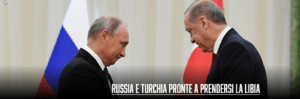
Russia e Turchia pronte a prendersi la Libia

0

Gli aerei che dovevano accompagnare i ministri degli esteri europei a Tripoli, hanno preso un’altra direzione: nessuna missione, nessun volo verso la Libia, nessun incontro con gli attori più impegnati sul fronte. E quell’operazione diplomatica messa in piedi dal vecchio continente, con l’Italia a fare da testa di ponte, si è trasformata in un incontro tra colleghi europei a Bruxelles. In compenso, ad Istanbul stanno proseguendo i preparativi per il bilaterale tanto atteso tra Putin ed Erdogan. Il leader del Cremlino ed il presidente turco, si vedranno sulle rive del Bosforo per parlare di tanti argomenti posti all’ordine del giorno. Tra tutti, per l’appunto, il dossier libico.

Perché il vertice tra Putin ed Erdogan è così importante

Ad Istanbul, nella giornata di mercoledì, verrà tagliato il nastro alla parte di competenza turca del TurkStream. Si tratta del gasdotto grazie al quale la Russia potrà portare il proprio metano e le proprie risorse nel Mediterraneo ed in Europa, evitando di dipendere dalle infrastrutture che attraversano l’Ucraina. Una vera e propria boccata d’ossigeno per Mosca, che adesso potrà usare un condotto alternativo per entrare nel mercato degli idrocarburi europei e gestire quindi con una relativa maggior calma il dossier ucraino. Dall’altro lato, anche Erdogan potrà celebrare un proprio successo: Ankara si appresta infatti a diventare hub energetico grazie al nuovo gasdotto i cui tubi sono stati già impiantati all’interno del territorio anatolico.

Dunque, ad essere celebrata ad Istanbul non sarà soltanto la fine dei lavori di un’infrastruttura strategica, ma anche la prima parziale concreta attuazione della visione “euroasiatica” ben presente soprattutto nella mente del leader del Cremlino. E nell’ambito della festa per il completamento del tratto turco del TurkStream, gli sguardi di Putin ed Erdogan non potranno non andare alle ultime vicende politiche inerenti i due dossier più caldi in cui i rispettivi paesi sono attualmente coinvolti: ossia quello siriano e quello libico. Il presidente turco potrà, in particolare, esibire l’accordo con il governo libico stanziato a Tripoli grazie al quale Ankara ha potuto iniziare ad inviare le proprie truppe nel paese nordafricano. Un elemento contrattuale importante al cospetto di un Putin che, dal canto suo, è forte del sostegno dato ufficiosamente (tramite i contractors della Wagner) a Khalifa Haftar. Tra i due dunque, si discuterà di Libia e di come poter giungere ad un primo accordo tra le parti. Ed è soprattutto questo aspetto che darà al bilaterale un’importanza fondamentale. Un peso di gran lunga maggiore a tutte le varie mosse messe in campo dall’Italia e dall’Europa in questi mesi.

L’intreccio tra il dossier libico e quello siriano

Russia e Turchia appaiono sempre più vicine, seppur non alleate. Tra Mosca ed Ankara, dopo le tensioni intercorse nella prima parte dello scorso decennio, è nata dal 2016 un’intesa figlia di numerose convergenze nelle rispettive politiche portate avanti negli ultimi anni. Di recente ad esempio, è stato proprio un incontro tra Putin ed Erdogan a Sochi a suggellare il cessate il fuoco nel nord della Siria. Qui il Cremlino è impegnato nel forte sostegno dato al presidente Bashar Al Assad, decisivo per il recupero di gran parte del territorio siriano da parte dell’esercito. Ankara invece, dopo aver rinunciato all’aspettativa di un regime change a Damasco, ha usato le milizie islamiste addestrate negli anni precedenti in funzione anti curda.

Si è quindi creato un vero e proprio “intreccio” tra i due paesi in ordine al dossier libico ed a quello siriano. La Russia è prima sostenitrice del governo siriano, con la Turchia impegnata nel sostegno di alcune milizie anti Assad tenute a bada per usarle contro i curdi. Ankara invece è prima sostenitrice del governo libico, con Mosca invece impegnata nel sostegno ufficioso ad Haftar. Ecco dunque perché ci si aspetta, nel vertice tra Putin ed Erdogan, una serie di scambi e concessioni reciproche riguardanti la Libia e la Siria. In particolare, il Cremlino potrebbe concedere maggior spazio all’iniziativa turca a Tripoli, in cambio di un accordo che riguardi la provincia siriana di Idlib, sotto il controllo di molte sigle jihadiste vicine ad Ankara e che sia Mosca che Damasco vorrebbero veder rientrare al più presto tra le mani dell’esercito siriano. In definitiva dunque, mercoledì da Istanbul potrebbero uscire alcune delle più importanti novità riguardanti le due guerre più delicate in corso nell’area mediorientale – mediterranea.

Libia, vertice straordinario a Bruxelles. Di Maio: “Non esiste soluzione militare”. Serraj cerca di riprendere Sirte

0
La Republica
Luigi Di Maio al vertice dei ministri degli Esteri a Bruxelles (ansa)

Ieri l’esercito nazionale libico (Lna) del generale Haftar aveva preso il controllo di Sirte. Le truppe fedeli al generale controllavano venti accessi alla parte orientale di Sirte e il terzo distretto in ordine di grandezza della città

TRIPOLI – Le milizie di Misurata e le forze del Governo di accordo nazionale libico (Gna) del premier di Tripoli, Fayez al Serraj, hanno lanciato una offensiva per cercare di riprendere le posizioni perse a vantaggio del generale Khalifa Haftar a Sirte.

Secondo l’inviato russo di Interfax in Libia, Lev Dengov, “le forze del governo di Al Serraj di Tripoli hanno ripreso il controllo della città”. “Le forze del governo di accordo nazionale hanno arrestato decine di combattenti, sequestrato 20 mezzi di artiglieria e ucciso 50 persone tra quelle che combattevano a fianco dell’esercito di Haftar”, ha dichiarato. Tuttavia le ostilità continuano ed è possibile che la situazione “possa cambiare”, ha precisato Dengov.

Le forze di Haftar, dopo aver espugnato Sirte, hanno assunto il controllo del porto e dell’aeroporto. Le truppe fedeli al generale controllavano venti accessi alla parte orientale di Sirte e il terzo distretto in ordine di grandezza della città situata circa 400 chilometri a est della capitale e fondamentale per la strategia di conquista del Paese dell’uomo forte della Cirenaica. Secondo quanto riferito da fonti militari vicine al Gna, le truppe fedeli ad Al Serraj sono riuscite ad avanzare lungo l’asse sud-est e a catturare diversi miliziani nemici.

Di Maio al vertice straordinario a Bruxelles

Il ministro degli esteri Luigi Di Maio ha raggiunto Bruxelles per un vertice straordinario con i colleghi di di Francia, Germania, Gran Bretagna e con Jospe Borrel, alto rappresentante per le politiche Ue. “La situazione sul terreno in Libia è molto delicata, ma questo non significa che l’Ue debba restare immobile. Ne ho parlato ieri sera a Roma con Borrell, con il quale abbiamo affrontato anche il dossier iraniano”, ha scritto prima che iniziasse il summit.

“Continuiamo tutti a ritenere che non esista alcuna soluzione militare e ne discuteremo oggi in sede europea”, sottolinea il ministro spiegando che “come Italia abbiamo peraltro ottenuto che al Consiglio Affari Esteri di venerdì si parli, oltre che di Iran, anche di Libia, che per noi è la priorità. L’Ue, questa volta, dimostri di saper fare l’Ue”. Al termine Di Maio volerà a Istanbul per incontrare il suo omologo turco Cavusoglu. Ankara sostiene, anche militarmente, il governo del premier di Tripoli Serraj.

Il presidente del Parlamento Europeo David Sassoli ha confermato che “si sta lavorando per trovare una mediazione e un’iniziativa europea su fronte Libia. Dobbiamo sostenere e avere fiducia in queste ore nell’azione dell’alto rappresentante Ue per gli affari esteri Josep Borrell, nell’interesse della popolazione libica”.

La Repubblica

Fehim Taştekin: Το σχέδιο Ερντογάν για τη Λιβύη δεν πάει καλά – Θα πέσει βαριά κεραμίδα στο κεφάλι της Τουρκίας

0
Τη στιγμή που η περιοχή μας οδηγείται σε ένα νέο χάος, μετά τη δολοφονία του Κασίμ Σουλεϊμάνι , η λιβυκή περιπέτεια της Άγκυρας εξελίσσεται σε μικρότερο μέγεθος από ό,τι αρχικά ισχυρίστηκε. Ο Ερντογάν, ο οποίος δεν μπόρεσε να πάρει αυτό που ήθελε από την Τυνησία και την Αλγερία, φαίνεται ότι έχει διαπιστώσει ότι δεν είναι δυνατόν να αναπτύξει η Τουρκία τους 3.000 στρατιώτες που είχε αρχικά σχεδιαστεί, σε ένα εχθρικό περιβάλλον.  Σύμφωνα με τον εκπρόσωπο του ΑΚΡ, Ömer Çelik, τα στελέχη που στέλνουν οι τουρκικές ένοπλες δυνάμεις και οι τζιχαντιστές που αποστέλλονται εκεί από τη Συρία, θα χρησιμοποιηθούν για την εκπαίδευση των δυνάμεων Σαράζ.

Η κυβέρνηση του ΑΚΡ, η οποία θεωρεί τον εαυτό της ως υπερδύναμη, έχει καταλάβει το τελευταίο διάστημα ότι η πραγματικότητα δεν επαληθεύει τις προσδοκίες της, όμως επειδή νοιώθει εκτεθειμένη και στριμωγμένη στο εσωτερικό, φαίνεται ότι δεν είναι διατεθειμένη να εγκαταλείψει την περιπέτεια στη Λιβύη. Στη διεθνή απομόνωση της Τουρκίας, έρχεται να προστεθεί η ένταση ΗΠΑ-Ιράν, που θα μπορούσε να ανοίξει νέο χώρο για τους Κούρδους και την προοπτική του πραγματικού διαμελισμού του Ιράκ.

Η Συρία και η Ρωσία κινούνται προς την κατεύθυνση του ελέγχου των κρίσιμων αυτοκινητοδρόμων, καταλαμβάνοντας τη μια μετά την άλλη τις περιοχές της Περιφέρειας Ιντλίμπ. Δεν έχει απομείνει πλέον καμία δυνατότητα και επιλογή στην Άγκυρα από την αποστολή σκληρών μηνυμάτων στη Μόσχα. Και το χειρότερο, οι μονάδες των Τουρκικών Ενόπλων Δυνάμεων (ΤΕΔ) που βρίσκονται στα παρατηρητήρια της Περιφέρειας Ιντλίμπ, έχουν εγκλωβιστεί από το στρατό της Συρίας και περιφρουρούνται από τη ρωσική στρατιωτική αστυνομία. Η εικόνα είναι σκοτεινή, και ακόμα πιο σκοτεινή είναι για μια κυβέρνηση που δίνει περισσότερο βάρος στην ισχύ απ’ ότι στη διπλωματία.

“Οι υπηρεσίες των ΗΠΑ ασχολούνται εδώ και 40 χρόνια με το Ιράν. Δηλαδή έχουν πλήρη γνώση για τα πάντα που αφορούν το θέμα που λέγεται Ιράν. Ο Kasim Suleimani ήταν επίσης στη μαύρη λίστα της προηγούμενης κυβέρνησης των ΗΠΑ, αλλά κανείς δεν είχε επιχειρήσει τη δολοφονία του, που μπορεί να πυροδοτήσει τον πόλεμο. Όσον αφορά τον Τραμπ, μπορείτε να αντιληφθείτε το μέγεθος της άγνοιάς του, από το γεγονός ότι όταν άκουσε πριν από τέσσερα χρόνια για πρώτη φορά το όνομα του Suleimani, νόμισε ότι πρόκειται για τους Κούρδους. Εκτός κι αν αυτό είναι ενδεικτικό της απεριόριστης αλαζονεία του.

Ή αν είναι ενδεικτικό της πίστης του στην αποτρεπτική ισχύ των ενόπλων δυνάμεων των ΗΠΑ, τον οποίο υπερηφανεύεται ότι θα εκσυγχρονίσει, ξοδεύοντας 2 τρισεκατομμύρια δολάρια. Επίσης, μπορείτε να αποδώσετε την πράξη του στη δύναμη χειραγώγησης της ομάδας των γερακιών που τον περιβάλλουν. Μάλιστα, εκείνοι που έχουν αντιληφθεί το πού μπορεί να φθάσει η ένταση που προκάλεσε η δολοφονία, έχουν κινητοποιηθεί στο Κογκρέσο, για να περιοριστούν οι αρμοδιότητες του Τραμπ να αποφασίσει πολεμικές ενέργειες. Όμως, δεν πρέπει να ξεχνάμε την εχθρότητα του Κογκρέσου έναντι του Ιράν.

Υπάρχουν δύο σενάρια που θα ενεργοποιηθούν αν οι ΗΠΑ εκδιωχθούν από το Ιράκ

Ανεξαρτήτως των αντιποίνων που θα επιχειρήσει αμέσως το Ιράν μετά τη δολοφονία, η Τεχεράνη είναι πιθανό να ακολουθήσει μια στρατηγική που θα καταστήσει τη Μέση Ανατολή ένα μη ασφαλές μέρος για τις Ηνωμένες Πολιτείες. Ο ιρανικός ρεαλισμός μπορεί να τεθεί σε ισχύ. Τη στιγμή που οι Ηνωμένες Πολιτείες σχεδίαζαν τον περιορισμό της επιρροής του Ιράν στη Μέση Ανατολή, το Ιράν θα εργαστεί τώρα για να δημιουργήσει συνθήκες που θα υποχρεώσουν τις αμερικανικές δυνάμεις να αποσυρθούν από τη Συρία και το Ιράκ.

Η έγκριση από το Κοινοβούλιο του Ιράκ νομοσχεδίου για την εκδίωξη των αμερικανικών δυνάμεων, είναι η πρώτη εξέλιξη που ενισχύει τη θέση του Ιράν. Αλλά αυτή η απόφαση έχει κάποια όρια. Η ενεργοποίηση ενός μηχανισμού για την εκδίωξη των αμερικανικών δυνάμεων, μπορεί να έχει συνέπειες που το Ιράν δεν θέλει.

Οι Σουνίτες και οι Κούρδοι μποϊκοτάρισαν την ψηφοφορία στη βουλή του Ιράκ. Όταν λένε στις ΗΠΑ να φύγουν, αυτό σημαίνει ότι μπορεί να ξαναέλθει στο τραπέζι το σενάριο διαμελισμού του Ιράκ. Αυτό είναι κάτι που δεν θέλει το Ιράν. Πρέπει δε να σημειωθεί ότι σε αυτό το σημείο το Ιράκ έχει έλθει αρκετές φορές και κάθε φορά, μετά από συγκαλυμμένη συναίνεση μεταξύ του Ιράν και των ΗΠΑ, αυτό αποτρεπόταν, μετά από συμφωνία για σύμπραξη σουνιτών, σιιτών και Κούρδων.

Όταν λένε στις δυνάμεις των ΗΠΑ να φύγουν, αυτό θα οδηγήσει στην απόσυρση αμερικανικών δυνάμεων και στην εγκατάστασή τους στο Κουρδιστάν. Αυτό θα οδηγήσει στη δημιουργία συνθηκών ανάλογων με εκείνες του 1991. Το 2003 (μετά την ανατροπή του Σαντάμ Χουσεΐν, σ.τ.μ.), οι Κούρδοι επέστρεψαν στη Βαγδάτη και διαδραμάτισαν πρωταρχικό ρόλο στη σύνταξη του ιρακινού συντάγματος. η αποκοπή τους από τη Βαγδάτη φέρνει ξανά το σενάριο της ανεξαρτησίας του Κουρδιστάν. Το Ιράν θεωρεί επικίνδυνη μια τέτοια εξέλιξη, διότι θα επηρεάσει και την περιοχή του Κουρδιστάν που βρίσκεται στο έδαφός του.

Το σχέδιο της Τουρκίας για τη Λιβύη δεν πάει καλά και η κεραμίδα θα πέσει βαριά στο κεφάλι της Τουρκίας

Μετά την έγκριση του ψηφίσματος στην τουρκική βουλή για την αποστολή στρατευμάτων στη Λιβύη, δόθηκε η εντύπωση ότι η Τουρκία κάνει ένα βήμα πίσω στο θέμα αυτό. Λέγεται ότι θα σταλούν μόνο τμήματα για εκπαίδευση και οργάνωση των μονάδων του στρατού του Σαράζ. Επίσης θα σταλούν τμήματα της υπηρεσίας πληροφοριών. Μα αυτά τα στοιχεία υπάρχουν ήδη στη Λιβύη εδώ και πολλά χρόνια. Μάλλον θεωρούν ότι νομιμοποιούν την ύπαρξή τους με το ψήφισμα αυτό.

Όσον αφορά την απευθείας αποστολή στρατευμάτων, ο Ερντογάν βολιδοσκόπησε  τη Ρωσία, τις ΗΠΑ και τις γειτονικές χώρες της Λιβύης και το αποτέλεσμα ήταν απογοητευτικό. Κανείς δεν θέλει στρατιωτική επέμβαση της Τουρκίας. Ο κίνδυνος να εισέλθει η Τουρκία στον πόλεμο χωρίς να πάρει ένα πράσινο φως από κάποιον, αυξάνεται. Το αίτημα του Ερντογάν για μια γραμμή εφοδιασμού και μια στρατιωτική βάση δεν έγινε δεκτό από την Τυνησία, στην οποία έτρεφε πολλές ελπίδες. Η Αλγερία έκλεισε επίσης την πόρτα. Έτσι για τώρα, προσπαθούν να προχωρήσουν μπροστά με προσωπικό της υπηρεσίας πληροφοριών και εμπειρογνώμονες στρατιωτικούς.

Υπάρχει επίσης η αποστολή δυνάμεων πολιτοφυλακής από τη Συρία. Ο Ερντογάν δεν κρύβει τις προθέσεις του. Αλλά αυτό το σχέδιο δημιουργεί πρόβλημα και χωρίζει σε δύο μέτωπα την αντιπολίτευσης της Συρίας. Όσοι έλαβαν όπλα κατά της κυβέρνησης Άσαντ, λένε “Τι δουλειά έχουμε εμείς στη Λιβύη;” Φυσικά, είναι δυνατό να συγκεντρωθούν χρήματα και να βρεθούν μισθοφόροι. Με αυτόν τον τρόπο μπορούν να στρατολογήσουν μαχητές από όλο τον κόσμο. Ωστόσο, αυτό θα δημιουργήσει τεράστια προβλήματα στην Τουρκία.

Μετάφραση: Σάββας Καλεντερίδης

Πηγή: Ahvalnews/infognomonpolitics.gr

ΚΩΝΣΤΑΝΤΙΝΟΣ ΛΟΥΚΟΠΟΥΛΟΣ: Η «εξολόθρευση» Σολειμανί και οι πιθανότητες πολέμου!

0
liberal.gr

Του Κωνσταντίνου Λουκόπουλου*

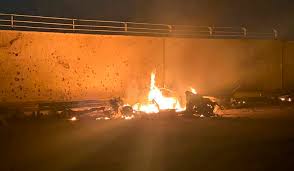
Για τις συνθήκες, τα αίτια και την σημαντικότητα της εξολόθρευσης του Διοικητού της Δύναμης των Φρουρών της Ισλαμικής Επανάστασης (Islamic Revolutionary Guard Corps-IRGC) Στρατηγού Κασέμ Σολειμανί), ενός «Celebrity» της Μέσης Ανατολής», από τους Αμερικανούς στην αγδάτη και για το ποιος ήταν αυτός, έχουν γραφτεί τόσα πολλά και δεν έχουμε να προσθέσουμε κάτι άλλο στο άρθρο αυτό.

Το μόνο που θα ήθελα να θίξω, που στην Ελλάδα δεν τονίστηκε είναι ότι ο Σολειμανί δεν ήταν ένας επικίνδυνος πονοκέφαλος μόνον για τις ΗΠΑ και τους Συμμάχους τους στην περιοχή, Ισραήλ και Σαουδική Αραβία, αλλά ήταν και για κάποια κέντρα εξουσίας μέσα στην ίδια την Τεχεράνη καθόσον είχε αποκτήσει τεράστια δύναμη και είχε πλήρως αυτονομηθεί.

Το σοβαρό όμως ερώτημα που τίθεται πλέον είναι αν αυτή η δραματική κλιμάκωση μπορεί να ελεγχθεί και να μην καταλήξει σε γενικευμένη πολεμική σύρραξη, τόσο από τις ΗΠΑ και τους Συμμάχους τους στην περιοχή της Μέσης Ανατολής όσο και από το Ιράν και τους … «εταίρους και πληρεξούσιους» του, που είναι απλωμένοι από τον Λίβανο μέχρι και το Ιράκ ενώ υπάρχουν επικίνδυνοι θύλακες και στην «από εκεί μεριά» στο Αφγανιστάν.

Πέρα από την ρητορική των απειλών για αιματηρά αντίποινα από πλευράς Ιράν και … «φίλων» από την μία πλευρά και της διακηρυκτικής αποτροπής από πλευράς ΗΠΑ από την άλλη, οι πρώτες εκτιμήσεις που έχουμε στο τετραήμερο που ακολούθησε την θανατηφόρα εξουδετέρωση του Σολειμανί και των συντρόφων του, καταλήγουν στο συμπέρασμα ότι δεν επίκειται γενική πολεμική αναμέτρηση.

Παρενθετικά κρίνεται σκόπιμο να αναφέρουμε ότι μαζί με τον Ιρανό Στρατηγό Σολειμανί, φονεύθηκε από την αμερικανική προσβολή και ο Αρχηγός της ελεγχόμενης από την Τεχεράνη Ιρακινής παραστρατιωτικής οργάνωσης Κατάιμπ Χεζμπολάχ Αμπού Μαχντί αλ Μουχάντις. Επιπροσθέτως σύμφωνα με ανεπιβεβαίωτες ακόμα πληροφορίες φονεύθηκε εκεί και ο Υπαρχηγός της Λιβανέζικης Χεζμπολάχ Ναίμ Κασέμ. Κάτι που καταδεικνύει τις κοινές δράσεις των πληρεξουσίων της Τεχεράνης στην περιοχή.

Καμία πλευρά όμως δεν επιθυμεί έναν γενικευμένο πόλεμο από τον οποίο θα δημιουργηθεί ένα χάος με σχεδόν αδύνατη την πολιτική εξόδου. Θα μπορούσε να ρωτήσει κάποιος «μα καλά το Ιράν δεν θα ανταποδώσει» το αμερικανικό κτύπημα το οποίο δεν ήταν μόνο συμβολικό εναντίον μίας Ιρανικής εμβληματικής προσωπικότητας αλλά και ουσιαστικό! Και βέβαια θα ανταποδώσει σε βαθμό «τόσο…. όσο»! Και φυσικά μετά και οι ΗΠΑ θα ανταποδώσουν το οποιοδήποτε ….ανταποδοτικό κτύπημα.

Το καθεστώς της Τεχεράνης με όλα τα υφιστάμενα παρακλάδια εξουσίας ξέρει ότι αν πάει σε γενικευμένο πόλεμο με τις ΗΠΑ διακινδυνεύει την συνέχιση της ύπαρξης του και αυτό που θεωρεί Ισλαμική Επανάσταση. ασίζεται σε ασύμμετρες δυνατότητες αποτροπής και φυσικά στους πληρεξούσιες που έχει αναπτύξει στην περιοχή. Οι όποιες συγκρίσεις σε αριθμούς διαφόρων οπλικών συστημάτων, όπως άρματα, πυροβόλα, αεροσκάφη είναι παιδαριώδεις.

Η γενική εκτίμηση είναι ότι η Τεχεράνη δεν θα βιαστεί να προβεί σε αντίποινα. Και αν και όταν αυτά πραγματοποιηθούν εκτιμάται ότι θα είναι τόσα και τέτοια που να μην οδηγούν σε ολοκληρωτικό πόλεμο χωρίς να εξαλείφεται όμως και ο κίνδυνος ενός κακού υπολογισμού. Για τον λόγο αυτό πιστεύεται ότι μάλλον αυτά θα επικεντρωθούν μέσα στο Ιράκ κάτι που άλλωστε γίνεται εδώ και αρκετούς μήνες με τις Ιρανικές παραστρατιωτικές ομάδες με ταυτόχρονη αύξηση της πολιτικής πίεσης για να εξαναγκάσει την αποχώρηση των Αμερικανικών Στρατευμάτων.

Δεν μπορούμε βέβαια να αποκλείσουμε την πιθανότητα να προχωρήσει σε αντίποινα η Λιβανέζικη Χεζμπολάχ είτε προσβάλλοντας Αμερικανικούς στόχους στον Λίβανο είτε με εκτόξευση ρουκετών κατά του Ισραήλ! Αυτό όμως σημαίνει ότι θα εμπλακεί σε έναν ολοκληρωτικό πόλεμο με το Ισραήλ διακινδυνεύοντας την καταστροφή της όντας εξασθενημένη μετά τις πολυετείς επιχειρήσεις στην Συρία και θα το σκεφτεί σοβαρά.

Πυραυλικές και άλλες επιθέσεις που αποσκοπούν στην ενεργειακή-οικονομική αναταραχή παραμένουν στις επιλογές της Τεχεράνης μετά τις επιτυχείς προσβολές στις Σαουδαραβικές εγκαταστάσεις τον περασμένο Σεπτέμβριο. Εδώ επικεντρώνεται και η ανησυχία της χώρας μας καθόσον σημαντική άνοδος στην τιμή του αργού πετρελαίου υπονομεύει την προσπάθεια οικονομικής ανάταξης. Αυτό όμως που είναι βέβαια είναι ότι το Ιράν θα συνεχίσει τις διαδικασίες εμπλουτισμού ουρανίου για να ξεπεράσει το 19% κάτι που θα καταστεί σε επόμενο στάδιο εφικτή την κατασκευή πυρηνικών κεφαλών.

Οι ΗΠΑ με την εξολόθρευση του Σολειμανί έκαναν μία σωστή κίνηση σε τακτικό επίπεδο και πέτυχαν μία αδιαμφισβήτητη νίκη όπως επεσήμανε ο γνωστός πρώην Ανώτατος Διοικητής Συμμαχικών Δυνάμεων Ευρώπης (SACEUR) Ναύαρχος ε.α. Σταυρίδης. Επίσης μπορεί να έθεσαν την βάση για να αποτρέψουν περαιτέρω Ιρανικές δραστηριότητες κατά τον Στρατηγό ε.α. Πετράουες πρώην Διοικητή Αμερικανικών Δυνάμεων στο Ιράκ και στο Αφγανιστάν και πρώην Διευθυντής της CIA. Και οι δύο τους, όπως και κάποιοι άλλοι έγκυροι Αμερικανοί αναλυτές δεν διαβλέπουν επί του παρόντος μία συνεκτική Στρατηγική μετά τις συνεχείς διαχρονικές παλινωδίες της Αμερικανικής πολιτικής στην περιοχή.

Το γεγονός ότι δεν υπάρχει εσωτερική συναίνεση και πρωτίστως νομιμοποίηση για οποιαδήποτε στρατιωτική κλιμάκωση της Διοίκησης Τραμπ συνιστά ακόμα έναν ανασταλτικό παράγοντα αποφυγής γενικευμένης σύγκρουσης. Και αυτό έρχεται να προστεθεί στην αδυναμία συγκρότησης ενός «Συνασπισμού Προθύμων» με τοπικούς Συμμάχους και στην απουσία διαύλων συνεργασίας με Δυτικούς Συμμάχους αλλά και με Κίνα και Ρωσία. Ο ίδιος ο Πρόεδρος Τραμπ, ο οποίος εναγωνίως αναζητεί όλα αυτά τα χρόνια μία διπλωματική επιτυχία, το τελευταίο που θα ήθελε, θα ήταν να χαρακτηριστεί «Πρόεδρος Πολέμου», κάτι που υποδηλώθηκε και από τις δηλώσεις που έκανε μετά την Αμερικανική ενέργεια.

Μία τακτική ενέργεια, όπως αυτή με την οποία σκοτώθηκε ο Σολειμανί και «οι συν αυτώ» δεν επιλύει το πρόβλημα αστάθειας στην περιοχή αλλά θα ήταν και αστείο να ισχυριστεί κάποιος ότι ανατρέπει τις ισορροπίες γιατί απλούστατα δεν υπάρχουν. Πόσο χειρότερη μπορεί να γίνει η κατάσταση στην Συρία, στην Υεμένη ή ακόμα στον Λίβανο και με το Ιράν να υλοποιεί χωρίς πλέον κανέναν φραγμό τις πυρηνικές του φιλοδοξίες με την Συμφωνία JCPOA να είναι κλινικά νεκρή εδώ και καιρό..

Συμπερασματικά θα έλεγα στους συμπατριώτες μας που αναμένουν έναν μεγάλο γενικευμένο πόλεμο στην Μέση Ανατολή, ότι μάλλον θα περιμένουν πολύ! Κατά πάσα πιθανότητα θα έχουμε περαιτέρω κλιμάκωση της κρίσης με ανταποδοτικές ενέργειες που όμως θα είναι τέτοιες που δεν θα οδηγούν σε γενικευμένη σύρραξη. Και έναν τέτοιον πόλεμο όπως προαναφέρθηκε δεν το επιθυμεί καμία πλευρά για τους δικούς της λόγους. Το μεγάλο πρόβλημα είναι ότι δεν υπάρχουν διπλωματικοί δίαυλοι για να ελπίζουμε έστω και μεταγενέστερα σε προσέγγιση των δύο πλευρών μέσα από ένα διπλωματικό μονοπάτι. Η υφιστάμενη κατάσταση «μη ειρήνης και μη πολέμου» όπως την έχει χαρακτηρίση και ο Ανώτατος Θρησκευτικός Ηγέτης του Ιράν Αλή Χαμενέι θα συνεχιστεί.

*Ο Αντιστράτηγος ε.α. Κωνσταντίνος Λουκόπουλος είναι επικεφαλής στο «Παρατηρητήριο Liberal»

liberal.gr

Ένταση στη Μέση Ανατολή. Tι θα κάνει η Ευρώπη;

0

Corriere della Sera

Angelo Panebianco

Ένα πράγμα είναι η Realpolitik, ένα διαφορετικό πράγμα είναι οι “εκλεκτικές συγγένειες”.   Και αφού οι πραγματικοί στόχοι του Τράμπ διευκρινιστούν, θα πρέπει να πάρουμε θέση.

Είναι μία από εκείνες τις στιγμές, που συμβαίνουν στην ιστορία πιο συχνά από ό, τι θέλουμε, όπου όλα μοιάζουν να εξελίσσονται σε αργή κίνηση, όλοι φαίνονται ακίνητοι, με κομμένη την ανάσα.

Ο κόσμος περιμένει τα επόμενα στάδια κλιμάκωσης της σύγκρουσης μεταξύ των Ηνωμένων Πολιτειών και του Ιράν (που ήδη υπάρχει πολύ πριν από τη δολοφονία του Κασέμ Σολεϊμάνι) και αναρωτιέται για τις πιθανές επιπτώσεις. Εν τω μεταξύ, μπορούν να γίνουν κάποιες αισιόδοξες παρατηρήσεις σχετικά με πράγματα που μας απασχολούν στενά. Σχετικά με την Αμερική και την Ευρώπη. Για την Αμερική, μπορεί κανείς να αναρωτηθεί πώς η επιλογή του Τράμπ να επιφέρει ένα τόσο μεγάλο πλήγμα, τόσο καταστροφικό, για τον εχθρό, το Ιράν, θα μπορούσε να επηρεάσει, αφενός, τις επερχόμενες προεδρικές εκλογές και, αφετέρου, τις εξελίξεις της στρατηγικής. Αμερικανικής στρατηγικής στη Μέση Ανατολή.

Σε πρώτο επίπεδο η αίσθηση είναι ότι ο Τράμπ, ο οποίος ήδη ξεκίνησε ευνοϊκά γι αυτόν, αύξησε το πλεονέκτημά του έναντι των δημοκρατικών αντιπάλων του. Οι τελευταίοι, επιλέγοντας να καταδικάσουν τη δολοφονία του Σολεϊμάνι, κέρδισαν σίγουρα τις ριζοσπαστικές  (στην Ευρώπη λέγεται “αριστερά”) συνιστώσες του εκλογικού τους σώματος, αλλά, εύλογα, δεν έλαβαν μεγάλη συναίνεση στο εκλογικό σώμα του Κέντρου αναποφάσιστο μεταξύ Δημοκρατικών και Ρεπουμπλικανών. Εάν ο δημοκρατικός πολιτικός άξονας -όπως υποδηλώνει αυτή η ιστορία- θα βρεθεί πολύ μακριά στα αριστερά, οΤράμπ πιθανότατα θα κερδίσει με τα χέρια κάτω. Αυτή δεν είναι μια καλή προοπτική για τον δυτικό κόσμο, ειδικά για την Ευρώπη. Η επανεκλογή του Τράμπ θα διευρύνει περαιτέρω την πολιτική απόσταση μεταξύ των δύο πλευρών του Ατλαντικού.

Στο δεύτερο επίπεδο – η αμερικανική στρατηγική στη Μέση Ανατολή – θα είναι θέμα κατανόησης εάν η δράση του  Τράμπ (όπως μας έχει συνηθίσει από καιρό) είναι μόνο ένα χελιδόνι που δεν φέρνει την άνοιξη, μόνο μια κίνηση για να χτυπήσει έναν άνθρωπο που αντιπροσώπευε μια επικείμενη απειλή για τη ζωή των στρατιωτών και των συμφερόντων της Αμερικής, ή αν είναι ένα σημείο καμπής, ένα τέτοιο μήνυμα: η Αμερική επέστρεψε με όλη τη δύναμή της στη Μέση Ανατολή, δεν είναι πλέον πρόθυμη να αφήσει Ιρανικές ηγεμονικές ενέργειες, στον ρωσικό νεοϊμπεριαλισμό ή στην τουρκική νεο-οθωμανική νοσταλγία.

Εάν αυτή η δεύτερη πιθανότητα είναι αλήθεια (αλλά με τον Τράμπ δεν υπάρχει τίποτα βέβαιο) τότε θα ακολουθούσαν πολλές συνέπειες. Επίσης για την Ευρώπη. Με την επιδείνωση της σύγκρουσης- μεταξύ του Ιράν, της ηγετικής χώρας του σιιτικού μουσουλμανικού κόσμου, υποστηριζόμενου από τους Ρώσους- και των Ηνωμένων Πολιτειών, η Ευρώπη δύσκολα θα μπορέσει να κάνει το “ψάρι στο βαρέλι” για μεγάλο χρονικό διάστημα, όπως αυτήν τη στιγμή επέλεξε να κάνει. Οι συγκρούσεις, σταδιακά γίνονται πιο οξείες, δημιουργούν πόλωση: αν υποθέσουμε ότι δεν παίρνει τη θέση καμιάς πλευράς θα δεχθεί χτυπήματα απο όλες τις πλευρές, θα μπορούσε να καταλήξει σαν τους Μήλιους οι οποίοι επειδή επέλεξαν να μην πάρουν μέρος στον πόλεμο (του 5ου αιώνα π.Χ.) μεταξύ σπαρτιατών και αθηναίων, σφαγιάστηκαν από τους Αθηναίους.

Ας το πούμε πραγματικά ότι η αμερικανική δύναμη είναι εκ νέου στο πεδίο της μάχης στην υπηρεσία μιας γενικότερης στρατηγικής που στοχεύει να περιορίσει τις φιλοδοξίες και τις ορέξεις που έχουν αναπτυχθεί στην περιοχή λόγω του κενού που έχει αφήσει για πολύν καιρό. Θα ήταν μια επιστροφή στα παλιά: στενή συμμαχία με ένα μέρος του σουνιτικού μουσουλμανικού κόσμου και μετωπική αντιπαράθεση στο Ιράν και το σιιτικό Ισλάμ. Μια αποστασιοποίηση όχι μόνο από την πολιτική του Ομπάμα (πυρηνική συμφωνία με το Ιράν), αλλά και του Τζορτζ Μπους του νεώτερου. Εισβάλλοντας στο Ιράκ το 2003, εξαλείφοντας τον έλεγχο της σουνιτικής μειονότητας έναντι της σιιτικής πλειοψηφίας, ο Μπους έκανε μια χάρη στους Ιρανούς, ώθησε το Ιράκ στην περσική επιρροή.

Ο Τράμπ είναι αντίθετος σε όλα αυτά. Δεδομένης της πολυπλοκότητας του κόσμου της Μέσης Ανατολής (όπου για οτιδήποτε κινδυνεύετε να κάνετε λάθη) μπορεί να μην έχετε άδικο. Ούτε ο Μπους ούτε ο Ομπάμα κατάφεραν να περιορίσουν τη σουνιτική τρομοκρατία (από την Αλ Κάιντα στο Ισλαμικό Κράτος). Ίσως οι ηγέτες των Σουνιτών συμμάχων της Αμερικής θα μπορούσαν να το πετύχουν. Ακόμα και στην περίπτωση αυτή, παραμένει ανοικτό για τις Ηνωμένες Πολιτείες το πρόβλημα του τι να κάνουν με την ασάφεια του τούρκου σουνίτη Ερντογάν. Πριν απο όλα, όμως, πρέπει να κατανοήσουμε εάν η ενέργεια του Τράμπ   δεν ήταν μια πρόχειρη διαχείριση (όπως υπέθεσε ο Paul Berman στη χθεσινή Corriere).

Εάν η Αμερική έχει πραγματικά επιστρέψει στη Μέση Ανατολή, οι Ευρωπαίοι θα πρέπει να κάνουν καλά τους υπολογισμούς τους. Θα ήταν μια ρεαλιστική επιλογή στην περίπτωση αυτή να πάρουν μια ουδέτερη θέση (που είναι ο πειρασμός πολλών Ευρωπαίων); Ή μήπως θα έπρεπε να ήταν μαζί με τους Ρώσους εναντίον των Αμερικανών (ο πειρασμός των άλλων); Δεν υπάρχει καμία αμφιβολία ότι θα γινόμαστε μάρτυρες μιας τεράστιας κινητοποίησης στην Ευρώπη όλων εκείνων που αγαπούν να κάνουν κοινωνία με σκορπιούς, μαύρες χήρες και κροταλίες, για τους οποίους ο μόνος αληθινός «κακοποιός» που περιπλανιέται στη Μέση Ανατολή (μαζί με το Ισραήλ , φυσικά) είναι ο αμερικανός Τράμπ.

Όπως συμβαίνει πάντα, διακυβεύονται τόσο τα συμφέροντα όσο και οι αξίες. Όσον αφορά τα συμφέροντα, αν και αναγνωρίζουμε πόσο κουραστικό και απογοητευτικό είναι για τους Ευρωπαίους να έχουν να κάνουν με τον Τράμπ, οι εναλλακτικές, (για παράδειγμα, η επικρατούσα ρωσική επιρροή στη Μέση Ανατολή) θα ήταν για εμάς πλεονέκτημα; Δείτε τι συνέβη στη Λιβύη. Η αμερικανική απουσία έθεσε εκτός παιχνιδιού τους Ευρωπαίους (πρώτα τους Ιταλούς): το μέλλον της χώρας βρίσκεται στα χέρια των Ρώσων και των Τούρκων. Για να μην αναφέρουμε ότι η εντατικοποίηση της σύγκρουσης Ηνωμένων Πολιτειών-Ιράν, με τους Ευρωπαίους να διστάζουν, να διαιρούνται και ίσως να στέλνουν εχθρικά μηνύματα στην Αμερική, ίσως να δώσει στο ΝΑΤΟ ένα οριστικό πλήγμα. Η Ευρώπη θα παραμείνει ανυπεράσπιστη.

Σε επίπεδο αξιών, θα ήταν πραγματικά καλύτερο για τους Ευρωπαίους να διακόψουν, εντελώς, αυτό που είναι, ένας ασθενής δεσμός με τις Ηνωμένες Πολιτείες; Δεν φαίνεται η Ευρώπη, με τις συνταγματικές της αρχές, τις ελευθερίες της και τον τρόπο ζωής της, να έχει μεγαλύτερη συγγένεια με τη Ρωσία παρά με την Αμερική, με το Ιράν παρά με το Ισραήλ. Ένα πράγμα είναι η realpolitik (η οποία υποχρεώνει, για παράδειγμα, να ασχοληθεί με τους Σαουδάραβες). Ένα διαφορετικό, πολύ διαφορετικό πράγμα είναι οι “εκλεκτικές συγγένειες”. Δεν χρειάζεται πολύ γνώση για να καταλάβουμε με ποιούς οι ευρωπαίοι έχουν τη μεγαλύτερη συγγένεια.

Το κείμενο στα Ιταλικά απο την Corriere della Sera: ΕΔΩ

Μετάφραση από την Corriere della Sera: Παντελής Σαββίδης

Who the Winners Are from America’s Destruction of Iraq and War Against Iran

0

MIDDLE EAST moderndiplomacy.eu

Eric Zuesse

Published on 

Americans are unfortunately severely reluctant to disbelieve the lies that normally spew forth from the U.S. Government about foreign countries and especially about foreign countries that it invades or wants to invade. Consider, for examples, the lies that were told against Iraq when Saddam Hussein ruled it, or about Libya when Muammar Gaddafi ruled it, or about Iran right now. But Americans widely believe their Government’s lies, nonetheless.

On Friday, January 3rd, the Republican Fox ‘News’ channel headlined “Rose McGowan, John Cusack bash killing of Iran’s Soleimani, slam Trump”, and reported the two actors’ opposition to the Republican U.S. President Trump’s violation of Iraqi sovereignty that day, and to his assassination at the Bagdad airport of Iran’s #2 leader, General Qasem Soleman, as well as Trump’s murders there of some Iraqis, and of some other Iranians.

To judge from the “Best” (most-liked) reader-comments at that ‘news’-report, Trump will have at least that Republican audience behind him regarding this action by him, though what he did there could spark World War III, and though the beneficiaries of his Republican predecessor George W. Bush’s 20 March 2003 invasion of Iraq haven’t been ordinary people such as those thousands of Republican commenters are, but instead have been, and are, billionaires from around the world who invested in the privatization of Iraq’s oil, which resulted from that invasion. For a far-right audience such as that — people who cannot distinguish between nationalism and patriotism, and who know only nationalism — the most-liked comment was “Rose [McGowan], you do realize that in Iran, if you had worn that dress made of nothing but chains, you would have been stoned to death? Congratulations on being the new Jane Fonda.” That person, “JanWub1,” didn’t think, at all, about the U.S. Government’s lies that had persuaded the American public to boost their approval of George W. Bush from 57% immediately before the invasion to 71% immediately after his lie-based international war-crime in invading Iraq, and that person and everyone who clicked “Like” on it had obviously learned nothing from that historical example, nor did the individual commenter even so much as just mention the possibility of Trump’s having sparked WW III on that occasion, but instead “JanWub1” personalized the issue to that commenter’s contempt and hatred of an actress who had opposed that 2003 international war-crime against Iraq by the USA, and transferred that hatred against her onto the present two thespians, who oppose this President’s illegal invasion and murders.

So: how do we know who actually benefitted from that international war-crime — the invasion and military occupation of Iraq?

Back on 15 April 2013, a rare entirely honest CNN news-report about Iraq was published online, from the independent journalist Antonia Juhasz, who headlined “Why the war in Iraq was fought for Big Oil”. She wrote that:

In 2000, Big Oil, including Exxon, Chevron, BP and Shell, spent more money to get fellow oilmen Bush and Cheney into office than they had spent on any previous election. Just over a week into Bush’s first term, their efforts paid off when the National Energy Policy Development Group, chaired by Cheney, was formed, bringing the administration and the oil companies together to plot our collective energy future. In March, the task force reviewed lists and maps outlining Iraq’s entire oil productive capacity.

Planning for a military invasion was soon under way. Bush’s first Treasury secretary, Paul O’Neill, said in 2004, “Already by February (2001), the talk was mostly about logistics. Not the why (to invade Iraq), but the how and how quickly.”

In its final report in May 2001 (PDF), the task force argued that Middle Eastern countries should be urged “to open up areas of their energy sectors to foreign investment.” This is precisely what has been achieved in Iraq. …

Juhasz made clear that all of the bombs and the corpses were done for investors in large international oil companies — not only for U.S. companies, but for the benefit of mega-oil investors from all countries. Apparently, George W. Bush was a libertarian, who believed in the gospel of economic competition as being what the world needs more of — and not just more of American oil. She noted:

The new contracts lack the security a new legal structure would grant, and Iraqi lawmakers have argued that they run contrary to existing law, which requires government control, operation and ownership of Iraq’s oil sector.

But the contracts do achieve the key goal of the Cheney energy task force: all but privatizing the Iraqi oil sector and opening it to private foreign companies.

They also provide exceptionally long contract terms and high ownership stakes and eliminate requirements that Iraq’s oil stay in Iraq, that companies invest earnings in the local economy, or hire a majority of local workers.

Iraq’s oil production has increased by more than 40% in the past five years to 3 million barrels of oil a day (still below the 1979 high of 3.5 million set by Iraq’s state-owned companies), but a full 80% of this is being exported out of the country. …

The oil and gas sectors today account directly for less than 2% of total employment, as foreign companies rely instead on imported labor.

In just the last few weeks, more than 1,000 people have protested at ExxonMobil and Russia Lukoil’s super-giant West Qurna oil field, demanding jobs and payment for private land that has been lost or damaged by oil operations. The Iraqi military was called in to respond.

The Iraqi government serve as gendarmes for foreign oil companies, and for foreign oil workers. The profits, and the jobs, go abroad. The destruction of Iraq was done for those oil companies — it was done for the investors who own them.

Saddam Hussein was killed for refusing to cooperate with this type of plan for his country.

On 1 January 2020, 24 international oil giants were extracting and selling Iraq’s oil, and only ExxonMobil was American-based. Five years earlier, back on 20 March 2015, 28 were, and 6 of them were American: Chevron, ExxonMobil, Heritage, Hunt, Marathon, and Occidental. Perhaps Iraq’s Government, during the past five years, has been increasingly trying to free itself from the grip of the U.S. regime, and maybe that’s the reason why five of the six U.S. firms that were in Iraq in 2015 have left.

Also on January 1st of 2020, Abbas Kadhim, of the nonprofit NATO public relations arm the Atlantic Council, headlined “New low in US-Iraq relations: What’s next for 2020”, and he opened by saying that, “In early 2019, I predicted that US forces would remain in Iraq this past year despite calls in parliament to pass a law mandating their withdrawal. My prediction was right. My prediction for 2020 is that no US forces will remain in Iraq by the end of the year. As someone who firmly believes in the importance of robust US-Iraq ties and works hard to help both sides improve and strengthen the relationship, I am saddened at this recent deterioration and am concerned about the future.”

Donald Trump had tweeted just the day before, on December 31st, “Iran killed an American contractor, wounding many. We strongly responded, and always will. Now Iran is orchestrating an attack on the U.S. Embassy in Iraq. They will be held fully responsible. In addition, we expect Iraq to use its forces to protect the Embassy, and so notified!”

Later on, that day, he tweeted, “Iran will be held fully responsible for lives lost, or damage incurred, at any of our facilities. They will pay a very BIG PRICE! This is not a Warning, it is a Threat.”

Whether or not Iran had had anything to do with the attacks which had precipitated Trump’s “Threat” against Iran isn’t known, any more than it was known, when we invaded Iraq on 20 March 2003, whether or not there were any WMDs in Iraq after the U.N. had destroyed all of them in 1998. Everything that George W. Bush and Dick Cheney and Condoleezza Rice, etc., had said about that were lies, which the U.S. ‘news’-media refused to expose as being  lies from the Government. Donald Trump is just as much a liar as they were, and as Barack Obama was; so, when Trump followed through on his “Threat” against Iran, inside Iraq, on January 3rd, one can’t reasonably assume that it would be any more justifiable than our invasion of Iraq was, or than our conquest of Ukraine by means of a bloody coup in 2014 was, or than our participation in the destruction of Libya in 2011 was, or than our destruction of Syria is, or than our assistance to the Sauds’ destruction of Yemen is, or than our destruction of Bolivia for its lithium is.

All of that has been simply fascism, American-style. America’s Republicans apparently like it, but perhaps America’s Democrats won’t like it in this instance (since its from a Republican), and maybe even the independents won’t. (However, the reader-comments at Zero Hedge, a non-mainstream, independent libertarian news-site, are unconcerned with the sheer psychopathy and enormous danger of Trump’s murders in Iraq on January 3rd, and are concerned almost only with whether or not what he did will be of benefit to Americans; so, perhaps independents will turn out to be largely favorable toward what Trump did here. Also: viewer-comments at a January 3rd youtube “Pakistan: Soleimani killing sparks outrage among Shia community” were rabidly hostile against the demonstrators, like a typical comment there, “feel American power, infidels,” is. This is today’s supremacist America. It’s not just the Republican Trump’s “Make America Great Again”; it is also the Democrat Obama’s “The United States is and remains the one indispensable nation.” Pakistan, Iran, Iraq, etc. — all other nations than the U.S. — are “dispensable,” according to Americans in both Parties. Hello, Hitler, here?)

Trump has started off the U.S. Presidential s‘election’ year of 2020 with a bang, and he’s well-supported by America’s Republican billionaires, but it’s still doubtful whether he will get anything like the 14% boost in approval-rating that Bush did by raping Iraq for global oil-investors, on 20 March 2003. Time will quickly tell. However, already on January 3rd, the leader of Democrats in the U.S. Senate, Charles Schumer, said on the Senate floor, that “No one should shed a tear over his [Soleimani’s] death.” (Schumer objected only that he had not received “any advance notification or consultation” about the assassination and murders.) Some of the Democratic Presidential candidates have refused to condemn Trump’s action. Everyone will be looking at the polling-numbers. And those will reflect the result of what America’s billionaires’ (or “the mainstream”) ‘news’-media present about this matter, to their respective publics. It is conceivable that Trump could achieve bipartisan support for entirely needlessly starting WW III. This could be the way that today’s Americans are.

Later in the day of January 3rd, Reuters headlined a news-report that, if true, is historically significant about all of this matter, “Inside the plot by Iran’s Soleimani to attack U.S. forces in Iraq”. Written by “Reuters staff,” it opened:

In mid-October, Iranian Major-General Qassem Soleimani met with his Iraqi Shi’ite militia allies at a villa on the banks of the Tigris River, looking across at the U.S. embassy complex in Baghdad.

The Revolutionary Guards commander instructed his top ally in Iraq, Abu Mahdi al-Muhandis, and other powerful militia leaders to step up attacks on U.S. targets in the country using sophisticated new weapons provided by Iran, two militia commanders and two security sources briefed on the gathering told Reuters.

The strategy session, which has not been previously reported, came as mass protests against Iran’s growing influence in Iraq were gaining momentum, putting the Islamic Republic in an unwelcome spotlight. Soleimani’s plans to attack U.S. forces aimed to provoke a military response that would redirect that rising anger toward the United States, according to the sources briefed on the gathering, Iraqi Shi’ite politicians and government officials close to Iraqi Prime Minister Adel Abdul Mahdi.

Soleimani’s efforts ended up provoking the U.S. attack on Friday that killed him and Muhandis, marking a major escalation of tensions between the United States and Iran. …

Obviously, if  that report is true, then Trump had cause to do on January 3rd what he did. Even his having not given anyone in Congress advance-notice about it would have been justifiable as this action’s being an emergency opportunity and in accord with his Commander-in-Chief powers to do in order to protect the Embassy. It wouldn’t justify the psychopathically pro-U.S.-regime reader-comments earlier that day on January 3rd about what Trump had done, because all of recent American history is full of lies by the U.S. Government in order to ‘justify’ its invasions against countries that neither threatened nor perpetrated invasion of the United States. However, if that Reuters report is true, then what Trump had done on January 3rd was done as an authentic U.S. national-security matter, in response to what Soleimani and his colleagues were doing. This isn’t necessarily to say that what Soleimani and his colleagues were doing there would have been unjustified. The United States, ever since its 1953 coup against Iran, has been an oppressive foreign power — Iran’s enemy — and the U.S., since at least its 2003 invasion against Iraq, is also Iraq’s enemy. Neither Iran nor Iraq ever endangered the national security of the United States. All of the aggressions have instead been by the United States. However, if  this Reuters report is true, then the appropriate response by the Governments of U.S., Iraq, and Iran, would be as follows:

Trump would announce that he is herewith cancelling sanctions against Iran and restoring U.S. participation in the Iran nuclear agreement, the Joint Comprehensive Plan of Action, which in 2015 was signed by China, France, Russia, United Kingdom, United States, Germany, and then the entire European Union. Iran would then announce that it is willing to discuss with all of the signatories to that agreement, if a majority of them wish to do so, international negotiations regarding possible changes (amendments) to be made to that agreement. The United States would then offer, separately, and on a strictly bi-lateral U.S.-Iran basis, to negotiate with Iran a settlement to all outstanding issues between the two nations, so that they may proceed forward with normal diplomatic relations, on a peaceful instead of mutually hostile, foundation.

Trump also would announce that he is seeking negotiations with Iraq about a total withdrawal from Iraq and closure of the U.S. Embassy there, to be replaced by a far smaller U.S. Embassy.

Trump would initiate this as a package-deal confidentially offered by him to Khamenei — all steps of it — in advance of any carrying-out of the steps, and initiated by him soon enough to ward off any retaliatory action by Iran, so as to avoid further escalation of the hostilities, which otherwise would likely escalate to a widespread and possibly global war. In other words, this direct communication between the two should already have been sought by Trump. (If the Reuters article is true, this should have been planned by him at the very moment he started seeking an opportunity to assassinate Soleimani.)

I do not expect Trump to do any of that, not even the first step, and not even the offer to Khamenei; and Iran is in no position to make the first step, in any case (since the U.S. had started the mutual hostilities between the two nations in 1953). However (assuming the gtruthfulness of the Reuters article), if Trump does, at least make the offer and then do the first step (ending sanctions), then I think that he will easily win re-election, regardless of whom the Democratic nominee will be. If he can re-establish friendly relations with Iran, then that will be a diplomatic achievement of historic proportions, the best and most important in decades. No one would then be able to deny it. He would, in fact, then deserve to win the Nobel Peace Prize (which Obama never deserved to win, though he did win it). But I don’t expect any of that to happen, because it would be exactly contrary to the way that any recent U.S. President has behaved, and because many in power in the United States would be furious against him if he did do it.

Furthermore, the Reuters report might be a lie, like so many other U.S.-and-allied ‘news’-reports are.

In any case, however: The answer to the headline-question “Who the Winners Are from America’s Destruction of Iraq and War Against Iran” is: the owners of U.S.-and-allied international oil and gas corporations. They were served when the U.S. regime in 1953 overthrew Iran’s democratically elected progressive Government and installed the brutal Shah to end Iran’s democracy and to control the country, and when he then privatized the National Iranian Oil company and cut American-and-allied aristocrats in on the profits from sales of Iranian oil. The founding members of that privatization in 1954 were British Petroleum (40%), Royal Dutch Shell 14% (Shell now), French Compagnie Française des Pétroles (CFP) 6% (Total now), Gulf Oil 8% (Now Chevron), and the four American partners of Aramco 32% (8% each). And they were served, yet again, when George W. Bush did the same to Iraq by means of an outright invasion (instead of like Eisenhower’s 1953 method, coup) in 2003.

America’s international oil (and other international extractions) corporations — and not only America’s ‘defense’ contractors — need to be nationalized, so that these ceaseless “regime-change wars” by the U.S. regime will be able to cease. Otherwise, the world will self-destruct by war, if not subsequently by global burnout (which is likely only over a much longer time-frame).


Putin’s Federal Assembly Address

0

Published    on January 6, 2020

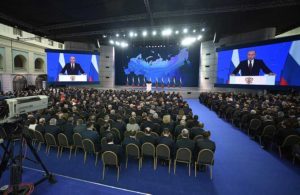
Every year, Russian President Vladimir Putin addresses the Federal Assembly, which is a combined gathering of all members from the Federation Council (Senate), State Duma (House of Representatives) deputies, members of the Government, leaders of the Constitutional Court and Supreme Court, governors from all the regions in the Russian Federation.

As always expected, Putin’s address primarily focuses on current achievements, outlines future domestic social and economic development plans and strategies, offers insight into key foreign policy objectives and brings out the challenges and some possible steps in resolving both internal and external setbacks.

According to official reports, Vladimir Putin will hold the next federal meeting on January 15, 2020, to review performance and set new targets. While awaiting his next address, it’s important to look back at a summary of his pledges and promises made on February 20, when the ceremony last took place in Gostiny Dvor, about 100 metres away from the Kremlin, central Moscow.

The objectives, among others, have been designed to raise development infrastructure and to bring about a new quality of life for all generations. “Departing from the targets that were outlined would be unacceptable. It is true that these are challenging objectives. That said, lowering the requirements for specific targets or watering them down is not an option. It is our duty to keep pushing ahead and gaining momentum, results must be visible in each region in the Russian Federation,” Putin said at the gathering last year. Here are few selected from his speech at the Federal Assembly:

*Russia has entered an extremely challenging period in terms of demography. Nevertheless, the country has to return again to natural population growth by late 2023 – early 2024. Preserving the family, childbirth, procreation and respect for the elderly have always served as a powerful moral framework for Russia. Strengthening family values and commitment, this task has to be shared by the state, civil society, religious organisations, political parties and the media.

*Starting January 1, 2020, Putin proposed raising the bar to two subsistence wages per family member. This is what people have requested and these requests come directly into the Executive Office. This measure will increase the number of families entitled to additional benefits by almost 50 percent. Some 70 percent of families with one or two children will be able to benefit from help from the Government.

*The tax burden on families needs to be relieved. The approach should be very simple: the more children there are, the lower the tax. The income of Russian families must increase.An additional measure of support for families with a child who needs special care.

*Considering the sustainability and stability of the macroeconomic situation in the country and the growth of the state’s revenues, it possible to introduce another measure of support for families having a third and subsequent children to pay for morgage. Importantly, proposed backdating morgage payment starting January 1, 2019, recalculating it and allocating relevant sums from budget.

*Moving on, when construction companies build social facilities and transfer them to the state or munipalities, they have to pay profit tax and VAT. The need to relieve construction companies of this burden (including our innovations in the construction sector). This will serve as an impetus for the comprehensive development of cities and townships, ensuring that families have all facilities near their homes: clinics, schools and sports facilities. By doing this, it enables parents to work, study, live happily and enjoy parenthood.

*Solving demographic problems, increasing life expectancy and reducing mortality rates are directly related to eradicating poverty. In 2000, there were more than 40 million people living below the poverty line. Now there are about 19 million, but this is still too many, too many. However, there was a time when their number dropped to 15 million, and now it has grown a little again. The government must, certainly, focus on combating poverty.

*The state helps people find jobs and improve their skills. The state provides financial resources to families to run a household farm or to start a small business. It is estimated that more than 9 million people will be able to benefit from these support measures over a five-year period.

*Pension. Starting 2019, adjustments of pensions and monthly payments should by all means be above the subsistence rate of pensioners that is established every year. In other words, the state should first bring pensions to the subsistence level and only after that make adjustments in pensions and monthly payments. Payments, for the first months of 2019, must be recalculated and people should be paid the money due to them that they have not received.

*The next important subject is healthcare. The current state seems to be improving, and medical treatment is becoming more accessible. Nevertheless, many people are not satisfied. The medical treatment should become accessible for everyone by the end of 2020 in all populated areas across Russia. For information, an additional 1,590 outpatient clinics and paramedic stations are to be built or renovated in 2019–2020.

*Improving IT penetration in healthcare will make it more accessible. Online links between medical institutions, pharmacies, doctors and patients must be streamlined over the next three years.

*Primary care is understaffed. Putin proposed a programme for fighting cancer and leukaemia. This is about providing timely, effective and accessible treatment, using advanced technologies that are effective in most cases and enable people to overcome this dangerous disease. Next, over the next few years we must create a number of new areas combining healthcare with social services.

*In 2019, the regions began adopting a new system of solid municipal waste management. The people have increasingly high demands on environmental safety issues. Perhaps, the most painful topic is municipal waste.need to build a civilised and safe system of waste treatment, recycling and disposal. It is necessary to restore order in this area, to get rid of shady businesses that do not bear any responsibility and only get super-profits dumping trash at random sites. It is necessary to introduce stricter environmental requirements when it comes to utility services and energy and transport enterprises.

*Education. The share of schools with modern study conditions has increased. The number of students from small towns and remote areas studying at the best Moscow and regional universities is increasing. Nevertheless, regions where poorly equipped schools still exist the government the government has to support the regions that lack their own resources.

*The content of educational programmes must also change. The national standards and programmes must reflect the priorities of the country’s science and technology development, while the federal lists of recommended textbooks must include the best of the best books. Expanding assistance to local cultural initiatives, that is, projects dealing with local history, crafts and the preservation of the historical heritage of Russian peoples.

*More than 70 million people work in manufacturing, agriculture, the services or are small business owners. The state of Russia’s economy has a direct bearing on their income, wellbeing and confidence in the future. The primary tool for achieving steady wage increases is to promote quality employment and free enterprise, qualified, well-paid jobs in all regions, including both traditional and new sectors. This is the only way to overcome poverty and ensure steady and perceptible increases in income. By 2021, Russia’s economic growth rate must exceed 3 percent and stay above the global average afterwards. This objective should not be discarded.

*In order to achieve high growth rates, it is also necessary to resolve systemic problems in the economy. Putin highlighted four priorities here. The first one is faster growth in labour productivity, primarily based on new technologies and digitalisation; the development of competitive industries and, as a result, an increase in non-primary exports by more than 50 percent in six years.

The second one is to improve the business climate and the quality of national jurisdiction, so that no one moves their operations to other jurisdictions, to ensure that everything is reliable and runs like clockwork. Growth in investment should increase by 6–7 percent in 2020. Achieving this level will be one of the key criteria for evaluating the Government’s work.

The third priority is removing infrastructural constraints for economic development and for unlocking the potential of our regions. And the fourth is training modern personnel, of course, and creating powerful scientific and technological foundations.

*A colossal guaranteed demand for industrial and high-tech products is formed in Russia. The Government and the regions are faced with historical opportunities for a qualitative growth of Russian business, mechanical engineering and machine-tool making, microelectronics, IT-industry, and other industries. And of course, now is the time for more daring initiatives, for creating businesses and production companies, for promoting new products and services. The entire Russian legislation must be geared up to reflect the new technological reality. These laws must not restrict the development of innovative and promising industries but push this development forward.

*The most crucial indicator of a business’s efficiency and competitiveness lies in expanding export and entering external markets. The success of agricultural industry is, of course, a good example of such development. Agricultural export increased by 19.4 percent in 2018 reaching $25.8 billion. In 2024, it must reach $45 billion. Russia must have the entire range of its own advanced agricultural technology, which must be available not only to large but also to small farms. This is literally a matter of national security and successful competition in the growing food markets.

*Infrastructure upgrades need to be accelerated using state-of-the-art technology. This is essential for enhancing a country’s connectivity, and especially for Russia, the world’s largest country with its vast territory. This is essential for strengthening statehood, unleashing the country’s potential and driving national economic growth.

In 2019, the railway section of the Crimean Bridge becomes a powerful impetus. As said, trains will begin using the Crimean Bridge in 2019, creating a powerful development driver for Crimea and Sevastopol. In addition to this, the expressway linking Moscow and St Petersburg expected to be completed, creating new business opportunities and jobs for people living in Novgorod, Tver, Leningrad and Moscow regions.

More than 60 airports will benefit from upgrades over the next six years, including international airports in Khabarovsk, Yuzhno-Sakhalinsk and Petropavlovsk-Kamchatsky. In 2025, the capacity of the Baikal-Amur Mainline and Trans-Siberian Railway will grow 1.5 times, reaching 210 million tonnes, which is very important for the development of Siberia and Russia’s Far East.

Putin reiterated that key indicators related to social and economic development and quality of life in all Russia’s Far Eastern regions are expected to exceed the national average. This is a national cause, and a major priority of collective efforts to promote Eastern Siberia and the Far East as strategic territories. All agencies have to constantly keep this in mind.

*Next, to adopt a master plan for developing the infrastructure of a digital economy, including telecommunications networks, as well as data storage and processing capacities. The task for the next few years is to provide universal access to high-speed internet and start using 5G communications networks. To achieve a revolution in communications, navigation and systems for remote sensing of the Earth. Russia has unique technology for this, but such tasks require a fundamental upgrade of the entire space industry. Putin instructed Roscosmos and the Moscow Government to establish a National Space Centre.

*For Russian Youth. Passion for a future career and creativity is formed at a young age. In the next three years, thanks to the development of children’s technology parks, quantoriums and education centres for computer skills, natural sciences and the humanities, around one million new spots in extracurricular education programmes will be created. All children must have access.

Relying on the WorldSkills movement experience, Russia will accelerate the modernisation of secondary vocational education, which includes installing modern equipment at more than 2,000 shops in colleges and technical schools by 2022. The Sirius educational centre in Sochi is becoming a true constellation. The plan was for centres supporting gifted children, based on its model, to open in all regions by 2024.

*The Kremlin believes in the importance of promoting closer cooperation within the Union State of Russia and Belarus, including close foreign policy and economic coordination. Together with integration partners within the Eurasian Economic Union, it continues creating common markets and outreach efforts. This includes implementing the decisions to coordinate the activities of the EAEU with China’s Belt and Road initiative on the way to a greater Eurasian partnership.

*Russia also hopes that the European Union and the major European countries will finally take actual steps to put political and economic relations with Russia back on track. People in these countries are looking forward to cooperation with Russia, which includes corporations, as well as small and medium-sized enterprises, and European businesses.

*Russia has been and will be a sovereign and independent state. Building relations with Russia means working together to find solutions to the most complex matters instead of trying to impose solutions. Thus, Russia’s foreign policy priorities include strengthening trust, countering global threats, promoting cooperation in the economy and trade, education, culture, science and technology, as well as facilitating people-to-people contacts. These tenets underpin the work within the United Nations, the Commonwealth of Independent States, as well as within the Group of 20, BRICS and the Shanghai Cooperation Organisation.

In this context, Putin emphasised the need for sustainable long-term development. Russia has ambitious goals, is approaching solutions in a systematic and consistent way, building a model of socio-economic development that will ensure the best conditions for the Russian people, and through combined efforts to provide befitting answers to the challenges of a rapidly changing world.

Trump Admin Bars Top Iranian Diplomat From Entering U.S.

0

Huffpost

Iranian Foreign Minister Mohammad Javad Zarif had requested a visa to come to address the United Nations Security Council.

The Trump administration blocked Iranian Foreign Minister Mohammad Javad Zarif, Iran’s top diplomat, from entering the United States, Foreign Policy first reported Monday.

The diplomat planned to come to the U.S. to address the United Nations Security Council in a meeting on Jan. 9, when he was expected to speak on the assassination of Iranian commander Qassem Soleimani by the U.S.

Reuters also confirmed the visa denial, citing an unnamed American official.

Unnamed diplomatic sources who told Foreign Policy about this move by the Trump administration also said it violates a 1947 agreement with the U.N. that the U.S. allow foreign officials into the country for U.N. affairs.

A Trump administration official called U.N. Secretary-General António Guterres on Monday to tell him Zarif would not be allowed in, a source told Foreign Policy. At the time, the Iranian government was still waiting for a response on the visa that Zarif had requested weeks ago.

HuffPost reached out to the White House for comment but did not immediately receive a response. The U.N. Secretary-General’s office did not comment.

The Iranian mission to the U.N. told HuffPost that, as of late Monday, it had not yet received “any official word” from the U.S. or U.N. on Zarif’s visa.

On Thursday, President Donald Trump dramatically escalated tensions with Iran by authorizing an airstrike in Iraq that killed Soleimani, who had led Iran’s elite Quds Force within the Islamic Revolutionary Guard. Experts have said that this act of aggression, killing one of the most powerful players in the region, could destabilize the Middle East.

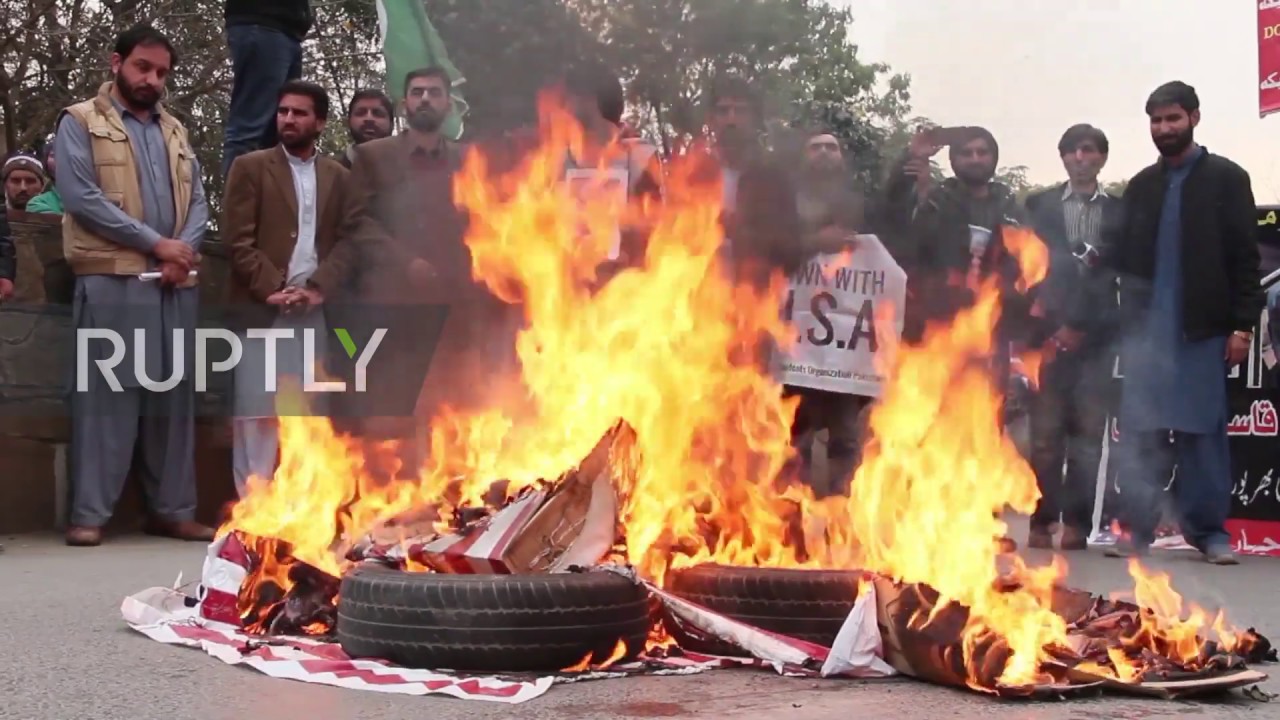
Trump on Saturday said the U.S. had selected 52 important sites in Iran that it was willing to strike, including cultural landmarks, warning Iran not to retaliate for the killing. (Under international law, purposely destroying a nation’s cultural sites could be considered a war crime.) Iran, for its part, has vowed to respond to the assassination in a “crushing and powerful manner” and said Sunday it would end all remaining commitments to limit nuclear fuel production as part of the Iran nuclear deal.

This story has been updated with a response from the Iranian mission to the U.N.

Ιράν και Ηνωμένες Πολιτείες. Τι θα γίνει από δω και πέρα;

0

Του George Friedman “Geopolitical Future”.

Για να κατανοήσουμε την τρέχουσα αντιπαράθεση μεταξύ Ιράν και Ηνωμένων Πολιτειών, θα μπορούσαμε να ξεκινήσουμε με τους πολέμους Περσίας-Βαβυλωνίας. Εναλλακτικά, θα μπορούσαμε να ξεκινήσουμε με την απόφαση των Ηνωμένων Πολιτειών να αποσύρουν τις δυνάμεις των ΗΠΑ από το Ιράκ μετά την εκλογή του Μπαράκ Ομπάμα.

Η εισβολή των ΗΠΑ στο Ιράκ το 2003 έγινε χωρίς αντίδραση από το Ιράν και, μάλιστα, με συγκεκαλυμμένη υποστήριξη. Το Ιράκ και το Ιράν διεξήγαγαν έναν σκληρό πόλεμο κατά τη διάρκεια της δεκαετίας του 1980, με αποτέλεσμα περίπου 1 εκατομμύριο θύματα, ο οποίος κόστισε, συνολικά, 5 δισεκατομμύρια δολάρια.

Λίγο αργότερα, το Ιράκ θα υπερεκτιμούσε τη θέση του εισβάλλοντας στο Κουβέιτ, οδηγώντας στον πρώτο πόλεμο του Κόλπου. Στο Ιράν, ο έλεγχος του Ιράκ από τους Σουνίτες –έναν μειονοτικό πληθυσμό και, το λιγότερο, έναν θρησκευτικό αντίπαλο – ήταν μια υπαρξιακή απειλή. Ως εκ τούτου, η Τεχεράνη ικανοποιήθηκε απο την πτώση του Σαντάμ Χουσεΐν, δεδομένου ότι η απουσία του θα δημιουργούσε μια ευκαιρία για να κυριαρχήσει όποια κυβέρνηση και αν ερχόταν στη συνέχεια.

Ο πόλεμος εξελίχθηκε διαφορετικά. Οι Η.Π.Α. εμπόδισαν τις σιιτικές φιλοδοξίες, πολέμησαν τους Σουνίτες και κατέληξαν σε ένα σταυροδρόμι μεταξύ των δύο. Ο Ομπάμα όταν ανέλαβε καθήκοντα δεσμεύτηκε να τον σταματήσει, σχεδιάζοντας να αποσύρει τα περισσότερα, αλλά όχι όλα, στρατεύματα των Η.Π.Α. και οικοδομώντας έναν ιρακινό στρατό αποτελούμενο από Σουνίτες και Σιίτες που θα ήταν φιλικός προς τις Ηνωμένες Πολιτείες. (Εντούτοις, το Ιράν αντιτάχθηκε στην προοπτική αυτή). Αλλά τότε ήρθε το Ισλαμικό Κράτος, το οποίο ανάγκασε την Ουάσινγκτον να διατηρήσει στρατεύματα στο Ιράκ και προκάλεσε την παρέμβαση του Ιράν για να μην επιτρέψει στη σουνιτική εξουσία να κρατηθεί στη Βαγδάτη. Οι ΗΠΑ και το Ιράν συχνά συνεργάστηκαν μεταξύ τους στις μάχες που ακολούθησαν.

Ωστόσο, ήταν πάντα προσεκτικοί μεταξύ τους, ως επι το πλείστον, λόγω των προσδοκιών του Ιράν να αναπτύξει πρόγραμμα πυρηνικών όπλων. Η επιδίωξη της Τεχεράνης να αποκτήσει πυρηνικά όπλα οδήγησε σε επιβολή μαζικών κυρώσεων και σε μια ευρέως διακηρυγμένη διαδικτυακή επίθεση των ΗΠΑ και του Ισραήλ στον πυρηνικό εμπλουτισμό του Ιράν, που υποτίθεται ότι ανέβαλε δραματικά την εξέλιξη του προγράμματος.

Αυτό άνοιξε εκ νέου τη δυνατότητα διατήρησης στρατευμάτων στη χώρα, μόλις ο Ντόναλντ Τράμπ ανέλαβε καθήκοντα.

Ο Τράμπ δήλωσε ότι ήθελε να μειώσει τη στρατιωτική παρουσία των ΗΠΑ στη Μέση Ανατολή, αλλά, επίσης, ενθάρρυνε την αλλαγή καθεστώτος στο Ιράν. Αυτή η προφανής αντίφαση είχε να κάνει με τη λογική μιας αμερικανικής απόσυρσης.

Για το Ιράν, ο άμεσος έλεγχος ή, τουλάχιστον, η εξουδετέρωση του Ιράκ αποτελεί γεωπολιτική επιταγή, αλλά η Τεχεράνη δεν μπορεί να αντέξει άλλο πόλεμο. Μετά τον πόλεμο κατά του Ισλαμικού Κράτους, η απόσυρση, σε πολύ μικρό αριθμό, στρατιωτικών δυνάμεων των ΗΠΑ έφερνε το Ιράν σε εξαιρετικά ισχυρή θέση. Ταυτόχρονα, το Ιράν διατήρησε αρκετές φιλο-ιρανικές ομάδες στο Λίβανο, τη Συρία, την Υεμένη και το Ιράκ και υποστήριξε το καθεστώς Άσσαντ ακόμη και πριν από τη ρωσική παρέμβαση.

Με άλλα λόγια, το Ιράν είχε χρησιμοποιήσει τις δραστηριότητές του σε διάφορες χώρες, σε συνδυασμό με την απόσυρση των αμερικανικών στρατευμάτων, για να δημιουργήσει μια τεράστια σφαίρα επιρροής, κοινώς γνωστή ως «σιιτική ημισέληνος», που εκτείνεται από το Ιράν μέχρι τη Μεσόγειο και σε όλη τη διαδρομή προς την Αραβική Θάλασσα. Αυτή η στρατηγική προωθήθηκε από μια  ελίτ ιρανών στρατηγών, όπως ο Κασέμ Σολεϊμάνι .

Το Ιράν είχε προχωρήσει από το να αμυνθεί μόνο του απέναντι στο Ιράκ στο να αναδειχθεί ως η κύρια δύναμη στη Μέση Ανατολή.

ΚΛΙΜΑΚΩΣΗ ΜΕ ΤΙΣ ΗΠΑ

Η αμερικανική αντίληψη για το Ιράν διαμορφώθηκε σε μεγάλο βαθμό στην εποχή μετά το 1979, με την κατάληψη της πρεσβείας των ΗΠΑ στην Τεχεράνη και τον βομβαρδισμό ναυτικής βάσης στη Βηρυτό. Ενώ είναι αλήθεια ότι το Ιράν είναι υπεύθυνο και για τις δύο πράξεις, είναι επίσης αλήθεια ότι το Ιράν συμπεριφέρεται πιο ρεαλιστικά  από ό, τι μερικές φορές παρουσιάζεται.

Συνεργάζεται με τις ΗΠΑ όταν χρειάζεται και ενεργεί εχθρικά όταν κρίνει. Αυτό είναι αρκετά φυσιολογική συμπεριφορά, αλλά δημιουργεί σύγχυση μέσω της οποίας η Ουάσιγκτον πρέπει να πλοηγηθεί.

Έτσι, όταν ήρθε η ώρα να στραφεί προς την Τεχεράνη μετά την ήττα του Ισλαμικού Κράτους, η Ουάσιγκτον είχε δύο στρατηγικές.

Η πρώτη ήταν να υποστηρίξει έναν συνασπισμό κρατών για να υπονομεύσει την αυξανόμενη ιρανική σφαίρα επιρροής. Τα βασικά μέλη αυτού του περίεργου συνασπισμού ήταν το Ισραήλ, η Σαουδική Αραβία και τα Ηνωμένα Αραβικά Εμιράτα. Το Ισραήλ επικεντρώθηκε στην επίθεση στην ιρανική παρουσία στη Συρία (και ενδεχομένως στο Λίβανο). Οι Σαουδάραβες και τα Ηνωμένα Αραβικά Εμιράτα πολεμούσαν τους ιρανούς πληρεξούσιους στην Υεμένη, όπου ξέσπασε μια μάχη μεταξύ των σουνιτών της χώρας, οι οποίοι είχαν εξουδετερωθεί σε μεγάλο βαθμό μετά την πτώση του Σαντάμ, και των σιιτών. Η διαχείριση αυτής της μάχης ανάγκασε τους Αμερικανούς στρατιώτες και το προσωπικό πληροφοριών να παραμείνουν στη χώρα.

Η δεύτερη ήταν να αυξηθούν οι οικονομικές κυρώσεις στο Ιράν, όχι εξαιτίας των πυρηνικών ή των πυραυλικών προγραμμάτων, αλλά για να υπενθυμιστεί στο Ιράν ο κίνδυνος από την οικοδόμηση της σφαίρας επιρροής του. Οι κυρώσεις έβλαψαν σοβαρά την ιρανική οικονομία, ξέσπασαν διαμαρτυρίες, έγιναν συλλήψεις και δόθηκαν  αμνηστίες που συνδέονται συνήθως με την οικονομική πίεση. Η κυβέρνηση στην Τεχεράνη δεν απειλήθηκε υπαρξιακά απο τις κυρώσεις, αλλά αυτές ήταν αρκετές για να πλήξουν την οικονομία, να πυροδοτήσουν εσωτερικές αναταραχές και έτσι να προκαλέσουν μιαν απάντηση. Υπήρξαν ταραχές στον Λίβανο και το Ιράκ, που απειλούσαν την ιρανική κοινωνικοπολιτική επιρροή. Με άλλα λόγια, τα κέρδη που είχε το Ιράν κινδύνευαν να αντιστραφούν, ενώ η ίδια η ιρανική οικονομία εξασθενούσε.

Το Ιράν χρειάστηκε αντίπαλο. Ο στόχος ήταν να αποδειχθεί η αδυναμία των Ηνωμένων Πολιτειών ως εγγυητριών της περιφερειακής σταθερότητας και της ικανότητας των Ιρανών να επιβάλλουν μια εναλλακτική οικονομία και, στη χειρότερη περίπτωση να προκαλέσουν μια παρέμβαση των ΗΠΑ. Το τελευταίο θα ήταν μια παρέμβαση με ανεπαρκή ισχύ που θα μπορούσε να εδραιώσει τη θέση της κυβέρνησης, παρέχοντας σε έναν κατά τα άλλα δυσαρεστημένο πληθυσμό και τις πολιτοφυλακές που υποστηρίζονται από το Ιράν, έναν λόγο που θα τους ενώνει.

Η πρώτη απόπειρα έγινε στον Περσικό Κόλπο, όπου οι Ιρανοί κατέλαβαν διάφορα δεξαμενόπλοια. Η ελπίδα ήταν ότι οι αυξανόμενες τιμές του πετρελαίου και η πίεση στις ΗΠΑ από τους καταναλωτές πετρελαίου θα σταματούσαν τις εχθρικές επιχειρήσεις εναντίον του Ιράν. Ήταν μια τακτική χαμηλού κινδύνου και ανταμοιβής που τελικά απέτυχε να επιτύχει τους στόχους της, ειδικά αφού οι Η.Π.Α. αρνήθηκαν να ξεκινήσουν μια αεροπορική επίθεση εναντίον του Ιράν ως απάντηση και υποστήριξαν έμμεσα την κατάληψη, απο το Ηνωμένο Βασίλειο, του ιρανικού δεξαμενόπλοιου στις ακτές του Γιβραλτάρ.

Η δεύτερη απόπειρα ήταν η κλιμάκωση του ίδιου θέματος: η επίθεση σε μια Σαουδική πετρελαϊκή εγκατάσταση απο τους μαχητές της Υεμένης Χούτι. Σχεδιάστηκε επίσης για να ενισχύσει τις τιμές του πετρελαίου και να ενθαρρύνει τους Σαουδάραβες να επανεξετάσουν τη σχέση τους με τον συνασπισμό που υποστηρίζεται από τις ΗΠΑ. Για άλλη μια φορά, η επίθεση δεν επέτυχε τον τελικό στόχο του Ιράν.

Το Ιράν βρισκόταν σε μια όλο και πιο επισφαλή κατάσταση. Οι εγχώριες αναταραχές, λόγω κυρώσεων, συνεχίζονται. Η σφαίρα επιρροής του βρισκόταν σε πίεση σε κάθε μέτωπο, ιδιαίτερα στον Λίβανο και το Ιράκ, όπου τα αντι-ιρανικά αισθήματα αυξάνονταν.

ΟΙ ΠΙΕΣΕΙΣ ΑΠΟΚΟΡΥΦΩΘΗΚΑΝ

Η επιδείνωση της θέσης του Ιράν ανάγκασε την κυβέρνηση να εξετάσει πιο ισχυρές ενέργειες, ιδίως στο Ιράκ. Η απάντησή της, όπως πολλές φορές πριν, ήταν η δύναμη Κούντς, μια δύναμη ελίτ της ιρανικής Ισλαμικής Επαναστατικής Φρουράς, την οποία καθοδηγούσε ποιός άλλος, ο Σολεϊμάνι. Όπως οι ειδικές επιχειρήσεις των ΗΠΑ, ‘ετσι και αυτοί, ειδικεύονται στην εκπαίδευση και τη συντήρηση συμμαχικών δυνάμεων στο εξωτερικό, συμπεριλαμβανομένης, στην περίπτωση του Ιράν, της Χεζμπολάχ και των Λαϊκών Δυνάμεων Κινητοποίησης στο Ιράκ.

Όταν βάσεις των ΗΠΑ δέχθηκαν επίθεση η υπόθεση που έγινε ήταν ότι αυτές σχεδιάστηκαν και ίσως διεξήχθησαν από πολιτοφυλακές που υποστήριζε η Κούντς, όπως το PMF και το Kataib Hezbollah. Καθώς οι Η.Π.Α. γνώριζαν, πριν ή μετά τις επιθέσεις, ότι ο Σουλεϊμάνι ήταν στο Ιράκ μετά από ένα ταξίδι στη Συρία, ήταν προφανές ότι σημαντικές επιχειρήσεις σχεδιάστηκαν εναντίον του διπλωματικού και στρατιωτικού προσωπικού τους  στο Ιράκ, το Λίβανο και τη Συρία. Η σύλληψη του Σολεϊμάνι θα ήταν καταστροφική για το Ιράν. Ως εκ τούτου, οι Αμερικανοί διαπίστωσαν, από την παρουσία του, οτι οι Ιρανοί βρίσκονται με την πλάτη στον τοίχο. Το Ιράν αναλάμβανε μεγάλο ρίσκο δεδομένου ότι γνώριζε τις επιχειρησιακές του δυνατότητες. Αυτό σήμαινε ότι οι Ιρανοί αποφάσισαν να κλιμακώσουν πέρα από τις συνηθισμένες επιθέσεις.
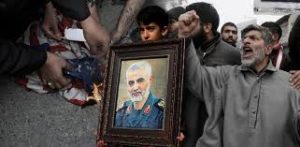
Η ειδικότητα της Δύναμης Κούντς ήταν η επίθεση σε ειδικές  εγκαταστάσεις για να υπονομεύσει τη στρατιωτική ικανότητα ή την ικανότητα πληροφοριών του αντιπάλου ή να επιτύχει ψυχολογικούς και πολιτικούς στόχους. Σε κάθε περίπτωση, βλέποντάς τον κοντά στο αεροδρόμιο της Βαγδάτης, πιθανώς αναφέρθηκε στις αμερικανικές μυστικές υπηρεσίες όχι μόνο ότι ήταν εκεί διότι η κατάσταση ήταν δύσκολη αλλά ότι ήταν εκεί για να διορθώσει την ανισορροπία της ιρανικής ισχύος στο Λεβάντε. Με άλλα λόγια, ότι συνεργαζόταν με τον Ιρακινό ομόλογό του για να πραγματοποιήσει σημαντικές επιχειρήσεις. Απο αυτό προκύπτει ότι οι Η.Π.Α. δεν ήθελαν να γίνουν αυτές οι επιχειρήσεις, ό, τι κι αν γινόταν, και ότι η δολοφονία του ήταν στρατιωτική αναγκαιότητα.

Όλα αυτά πρέπει να ενταχθούν στο στρατηγικό πλαίσιο. Οι Η.Π.Α. δεν επιθυμούν να δραστηριοποιηθούν εκτενώς στην περιοχή. Η Ουάσινγκτον εξαρτάται από τις κυρώσεις και τους πληρεξουσίους. Το Ιράν εξακολουθεί να επιθυμεί να διατηρήσει τη σφαίρα επιρροής του στη Μεσόγειο, αλλά πρωτίστως, ακόμη μεγαλύτερη προτεραιότητα είναι η εξουδετέρωση του Ιράκ και η σταθεροποίηση του ίδιου του Ιράν. Το Ιράν δεν έχει την πολυτέλεια να επιτρέψει στο Ιράκ να γίνει προπύργιο αντι-Ιρανικών δυνάμεων, ούτε μπορεί να διεξάγει συμβατικό πόλεμο εναντίον των ΗΠΑ, του Ισραήλ, της Σαουδικής Αραβίας και των ΗΑΕ. Ως εκ τούτου, το Ιράν πρέπει να χρησιμοποιήσει αυτό που γνωρίζει τόσο αποτελεσματικά από το παρελθόν: ειδικές και συγκεκαλυμμένες επιχειρήσεις. Συνεπώς, το Ιράν θα αφιερώσει χρόνο για να ανταποκριθεί σ αυτό. Προκύπτει, επίσης, ότι οι Η.Π.Α. και οι σύμμαχοί τους, έχοντας αγοράσει χρόνο σκοτώνοντας τον επικεφαλής της Δύναμης Κούντς, πρέπει να τον χρησιμοποιήσουν αποτελεσματικά.

Ιρανικές και αμερικανικές στρατηγικές μετά τη δολοφονία Σολεϊμανί.

Το Ιράν εξέφρασε την οργή του για τη δολοφονία του Κασέμ Σολεϊμανί, επικεφαλής της δύναμης Κούντς, και ανακοίνωσε την επανέναρξη του πυρηνικού προγράμματος εμπλουτισμού, αλλά ελάχιστα, στην κατεύθυνση των αντιποίνων, έχουν, πραγματικά, συμβεί.
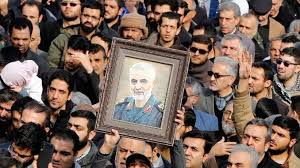
Για τις Ηνωμένες Πολιτείες, ο στόχος της δολοφονίας του Σολεϊμάνι ήταν να σπάσει η ιρανική σφαίρα επιρροής. Η μέθοδος για να γίνει αυτό ήταν εν μέρει πολιτική και εν μέρει στρατιωτική.

Πολιτικά, προσπάθησαν να επηρεάσουν ορισμένες ομάδες με χαλαρότερους δεσμούς με το Ιράν. Στρατιωτικά, έχουν επιδιώξει να χρησιμοποιήσουν την αεροπορική ισχύ για να καταστρέψουν τις βασικές εγκαταστάσεις. Η αεροπορική εκστρατεία είναι πιθανό να συνεχιστεί στο Ιράκ, καθώς το Ισραήλ επιτίθεται στη Συρία. Οι Η.Π.Α. είναι πιθανόν απροετοίμαστες να ενεργήσουν στον Λίβανο, αλλά μπορούν να συνεχίσουν να υποστηρίζουν τις Σαουδαραβικές δυνάμεις και τις δυνάμεις των Εμιράτων στην Υεμένη.

Με άλλα λόγια, οι Η.Π.Α. βρισκόταν στη διαδικασία να ξεκινήσουν την επίθεσή τους εναντίον του Ιράν, και πρέπει να περάσει πολύς χρόνος για να επιτευχθούν οι επιθυμητοί στόχοι.

Η δολοφονία του Σολεϊμάνι είναι ένα βήμα, όχι το τέλος.

Για το Ιράν, η δολοφονία ανοίγει την πόρτα σε πολιτικούς ελιγμούς σε μια εποχή που χρειάζεται λίγο χώρο.

Πολλοί σύμμαχοι των ΗΠΑ, ορισμένοι που συμμετείχαν στις πυρηνικές συνομιλίες που προκάλεσαν κυρώσεις, έχουν καταδικάσει την αμερικανική δράση. Η επανάληψη του πυρηνικού προγράμματος έχει σχεδιαστεί για να δημιουργήσει περαιτέρω αντίθεση στη δράση των ΗΠΑ, δεδομένου ότι οι Η.Π.Α. θα κατηγορηθούν για την επανεκκίνηση.

Ο στόχος του Ιράν είναι να δημιουργήσει ένα χάσμα μεταξύ των ΗΠΑ και χωρών όπως η Γερμανία και η Γαλλία και να το χρησιμοποιήσει για να απομονώσει τις ΗΠΑ και να δημιουργήσει ένα κενό που θα μπορούσε να οδηγήσει στην κατάρρευση των κυρώσεων. Μια τρομοκρατική ενέργεια κατά πολιτικών στόχων περιορίζει αυτήν τη στρατηγική.

Το κρίσιμο θα είναι αν η αντι-Ιρανική συμμαχία θα διατηρηθεί και εάν οι κυρώσεις μπορούν να διευθετηθούν με αυτόν τον τρόπο. Εάν μπορούν, οι Η.Π.Α. πρέπει να επανεξετάσουν τις ενέργειές τους, επειδή η οικονομική απομόνωση του Ιράν είναι το κλειδί για τη στρατηγική τους.
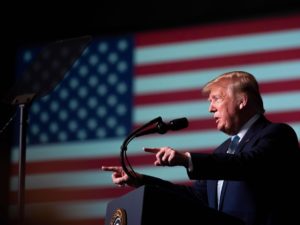
Τώρα λοιπόν η μάχη επιστρέφει σε χώρες που συμμετέχουν στο πρόγραμμα επιβολής κυρώσεων, ιδιαίτερα στις μεγαλύτερες ευρωπαϊκές. Η απειλή βίας είναι εκεί, αλλά προς το παρόν οι Ιρανοί θα χρησιμοποιήσουν το γεγονός αυτό ως μοχλό για τον τερματισμό των κυρώσεων.

Μετάφραση: Παντελής Σαββίδης.

Tensione in Medio Oriente: che cosa farà l’Europa?

0

Corriere della Sera

Il presidente americano Donald Trump (Afp)

Èuno di quei momenti, che capitano nella storia più frequentemente di quanto vorremmo, in cui tutto sembra svolgersi al rallentatore, tutti sembrano immobili, con il fiato sospeso. Il mondo attende le prossime fasi dell’escalation nel conflitto (già in atto da molto prima dell’uccisione di Qassem Soleimani) fra Stati Uniti e Iran e si interroga sui possibili effetti. Nell’attesa si può forse fare qualche osservazione, sperabilmente sensata, su cose che ci riguardano da vicino. A proposito dell’America e dell’Europa. Per quanto riguarda l’America ci si può chiedere come la scelta di Trump di infliggere un colpo di quella portata, così devastante, al nemico iraniano possa influenzare, da un lato, le imminenti elezioni presidenziali e, dall’altro, gli sviluppi della strategia americana in Medio Oriente.

Sul primo piano, la sensazione è che Trump, che partiva comunque già favorito, abbia accresciuto il proprio vantaggio rispetto ai rivali democratici. Questi ultimi, scegliendo di condannare l’uccisione di Soleimani hanno certamente ottenuto il plauso delle componenti radicali (in Europa si direbbero «di sinistra») del loro elettorato ma, plausibilmente, non hanno raccolto molti consensi nell’elettorato più centrista, indeciso fra democratici e repubblicani. Se l’asse politico democratico – come questa vicenda fa supporre – sarà troppo spostato a sinistra, Trump, presumibilmente, vincerà a mani basse. Questa non è una bella prospettiva per il mondo occidentale, per l’Europa in particolare. Una rielezione di Trump allargherebbe ancor di più la distanza politica fra le due sponde dell’Atlantico.

Sul secondo piano – la strategia americana in Medio Oriente – si tratterà di capire se l’azione di Trump (come ci ha da tempo abituato) è solo una rondine che non fa primavera, soltanto una mossa per colpire un uomo che rappresentava un’incombente minaccia per le vite dei soldati e gli interessi dell’America, oppure se è un punto di svolta, un messaggio di questo tenore: l’America è tornata con tutta la sua potenza in Medio Oriente, non è più disposta a lasciare campo libero ai progetti egemonici iraniani, al neo-imperialismo russo o alle nostalgie neo-ottomane turche. Se fosse vera questa seconda eventualità (ma con Trump non c’è niente di sicuro) allora ne discenderebbero molte conseguenze. Anche per l’Europa. Con l’aggravamento del conflitto fra l’Iran, Paese-guida del mondo musulmano sciita, spalleggiato dai russi, e gli Stati Uniti, l’Europa difficilmente potrà fare ancora a lungo il «pesce in barile», come al momento ha scelto di fare. I conflitti, man mano che si acutizzano, generano polarizzazione: se pretendi di non schierarti, prenderai colpi da tutte le parti, potresti fare la fine dei Melii, che per avere scelto di non schierarsi nella guerra (del quinto secolo avanti Cristo) fra spartani e ateniesi vennero massacrati dagli ateniesi.

Poniamo che davvero la potenza americana sia di nuovo in campo al servizio di una più generale strategia tesa a arginare le ambizioni e gli appetiti cresciuti nella regione a causa del vuoto che essa ha lasciato a lungo. Si tratterebbe di un ritorno all’antico: alleanza stretta con una parte del mondo musulmano sunnita e opposizione frontale all’Iran e all’islam sciita. Una presa di distanza non solo dalla politica di Obama (accordo nucleare con l’Iran) ma anche di George Bush Jr. Invadendo l’Iraq nel 2003, eliminando il controllo della minoranza sunnita sulla maggioranza sciita, Bush fece di fatto un favore agli iraniani, spinse l’Iraq nell’area di influenza persiana.

Trump è il contrario di tutto questo. Tenuto conto della complessità del mondo mediorientale (dove qualunque cosa fai rischi di commettere sbagli clamorosi) potrebbe non avere torto. Né Bush né Obama riuscirono a frenare il terrorismo sunnita (da Al-Qaida allo Stato islamico). Forse potrebbero riuscirci potenze sunnite alleate dell’America. Anche in tal caso, comunque, resterebbe aperto per gli Stati Uniti il problema del che fare con le ambiguità del sunnita turco Erdogan. Prima di tutto, però, si tratta di capire se quello di Trump non sia stato un gesto estemporaneo (come ipotizza Paul Berman sul Corriere di ieri).

Se l’America è davvero tornata in Medio Oriente, gli europei dovrebbero fare bene i loro conti. Sarebbe un’opzione realistica in tal caso assumere una posizione neutrale (che è la tentazione di molti europei)? Oppure, lo sarebbe schierarsi con i russi contro gli americani (la tentazione di altri)? Non c’è dubbio che assisteremmo a una vasta mobilitazione in Europa di tutti quelli che amano fare comunella con scorpioni, vedove nere e serpenti a sonagli, per i quali l’unico vero «cattivo» che si aggiri in Medio Oriente (insieme ad Israele, si capisce) è l’americano Trump.

Come sempre accade ci sono in gioco sia interessi che valori. Sul piano degli interessi, pur riconoscendo quanto sia faticoso e frustrante per gli europei avere a che fare con Trump, le alternative (per esempio una predominante influenza russa in Medio Oriente) sarebbero per noi un vantaggio? Si veda cosa è successo in Libia. L’assenza americana ha messo fuori gioco gli europei (italiani in primo luogo): il futuro del Paese è nelle mani dei russi e dei turchi. Senza contare che un’acutizzazione del conflitto Stati Uniti-Iran, con gli europei che tentennano, si dividono e magari inviano messaggi ostili all’America, darebbe forse la botta definitiva alla Nato. L’Europa resterebbe senza difese.

Sul piano dei valori, davvero potrebbe convenire agli europei spezzare del tutto quello che ormai è un debole legame con gli Stati Uniti? Non pare proprio che l’Europa, con i suoi principi costituzionali, con le sue libertà, con il suo stile di vita, abbia più affinità con la Russia che con l’America, con l’Iran che con Israele. Una cosa è la realpolitik (che obbliga, per esempio, a trattare con i sauditi). Una cosa diversa, molto diversa, sono le «affinità elettive». Non occorre una grande perspicacia per capire con chi abbiano più affinità gli europei.

5 gennaio 2020, 20:09 – modifica il 5 gennaio 2020 | 20:10