Αρχική Blog Σελίδα 2559

What if Australia Were Its Own Planet?

0

The Nation

As the world’s leading coal exporter, Australia is burning down its own house.

This piece is published in The Nation as part of Covering Climate Now, a journalistic collaboration of 400 news outlets around the world to strengthen coverage of the climate story.

One way to think about the devastating fires in Australia—and perhaps to grasp more clearly how climate change plays out across the globe—is to imagine that the southern continent was, in fact, a planet all its own.

In a small sense that’s how it actually feels, since you can’t get to Australia from much of the world without a long journey. And Australians are self-sufficient in many ways, growing plenty of food in a nation well-endowed with soil, sun, and water, though that’s becoming more difficult now because of climate change–fueled, gripping drought. Australia also has its own complement of flora and fauna found nowhere else on earth—not just koalas and kangaroos but also quolls and wombats and sugar gliders.

For a long time, its isolation served Australia well—the “lucky country,” it styled itself. It was even a little sheltered by its isolation from fears of nuclear war, as those old enough to remember the classic movie On the Beach will recall.

But now Australia is suffering, harshly, the early effects of climate change. It turns out that its unique physical features are remarkably susceptible to the global warming that’s now in its early stages. The Great Barrier Reef has been damaged by several bouts of severe bleaching from hot ocean water. The enormous kelp forests that ringed Australia’s southern coasts have been all but wiped out. And now fire has come in a way it never has before.

As the earth gets hotter, droughts grow deeper and more prolonged. We’ve seen this in California (whose climate is close enough to Australia’s that millions of highly flammable eucalyptus trees thrive in the Golden State as well), and now we see it in the Australian states of Victoria and New South Wales, where record temperatures and record aridity have set the stage for firestorms so intense that they generate their own weather. Last weekend the town of Penrith west of Sydney was the hottest spot on earth, with the mercury near 120 degrees Fahrenheit and a relative humidity in the single digits. This is a precise recipe for an inferno, one that will be repeated across the globe in similar terrain.

Australia is also a microcosm in its economy and attitudes. Most of the early victims of climate change—low-lying Pacific islands or far northern indigenous communities—had done little, if anything, to cause the problem. But Australia is different. Its citizens vie with Canadians and Americans to emit the most carbon per capita in the world. And far more damagingly, Australia exports more coal than any nation on earth. Yet the majority of Australians have chosen not to do much about that. In their last national election, they gave power to one Scott Morrison, who made his bones as a political figure when, in 2017, he carried a lump of coal into Parliament to pass around to his mates. “Don’t be scared of it,” he said. “Don’t be afraid.”

In other words, if Australia really were a planet it would be quickly, all by itself, destroying its climate. It can’t blame the destruction on others; in any moral calculation, Australia has done this to itself. Which is not to say individual Australians themselves are to blame. As elsewhere, the fossil fuel industry has done all it can to manipulate political systems: The election that brought Morrison to power saw one coal baron spend more money on campaign ads than the country’s major political parties combined. (The same coal baron, Clive Palmer, is also building a full-size working replica of the Titanic, if you like metaphor overload). And of course, the Australian political discussion is poisoned by its native son Rupert Murdoch, who owns most of the country’s newspapers and uses them to—well, you’ve seen Fox News.

Fortunately, everyday Australians are rising up to say enough is enough. Young people are protesting at record levels, volunteer firefighters are showing immense heroism, and impacted communities are demonstrating incredible altruism in the face of disaster. Citizens in fire-ravaged towns refused to shake hands with Morrison when he, just back from a Hawaiian vacation, had the gumption to belatedly tour the ashes.

But the test of true change will be what Australia’s politicians do about the massive new fossil fuel proposals before them, such as the massive Adani coal mine (one of the biggest new coal mines on earth), the potential opening of the Great Australian Bight to offshore oil drilling, and the calls to frack enormous amounts of gas in the Northern Territory. So far, the omens are not good—Morrison has said he’s thinking instead of legislation that will make it illegal for activists to pressure banks to stop lending to fossil fuel development.

Australia is a microcosm of the world in another way too. Having savagely repressed its indigenous population, its government steadfastly ignores those people’s expertise in managing fire on the landscape. Whether that indigenous knowledge can cope with a climate that is changing as abrupt as ours remains an open question, but undertaking a real dialogue with the only people who’ve managed long-term occupation of the continent seems like a sound idea.

The idea of Australia as a planet of its own only goes so far, of course—even if it stopped exporting coal tomorrow and resolved to power its own economy with abundant wind and sun, Australia’s temperature would continue to rise. The country cannot, by itself, solve global warming. But if the shock of these hideous firestorms is what’s required to decisively change Australia’s politics, technology, and relations with the continent’s original inhabitants, that example would demonstrate to the rest of the world that real change is not impossible. Imagine an Australia that stopped building new coal mines and started installing more giant solar farms and batteries; imagine an Australia where people retreated enough to give the natural world the margin it clearly requires.

What we’re going to see, over the next year or two, is whether modern societies are capable of responding to this kind of horror with the speed and courage that science demands. Planet Australia may be the best experiment we ever get.

Η Τουρκία δεν μπορεί να κερδίσει από τον πόλεμο στη Λιβύη

0

euro2day.gr/stratfor

Η στρατιωτική ενίσχυση της Τρίπολης και γιατί δεν δείχνει αρκετή για να εξασφαλίσει την επικράτηση της GNA. Οι ισχυρές συμμαχίες του Χάφταρ, τα υποδεέστερα τουρκικά όπλα και ο «άγνωστος x» της Μόσχας. Πώς γύρισε μπούμερανγκ η «συμφωνία» για την ΑΟΖ.

Πιεσμένη από ένα στρατό που προελαύνει, η Κυβέρνηση Εθνικής Ενότητας της Λιβύης (GNA) αναζήτησε σωσίβιο στην άλλη άκρη της Μεσογείου, στην Αγκυρα, η οποία σχεδιάζει να στείλει ειδικές δυνάμεις, drones και άλλη βοήθεια στην Τρίπολη. Ενώ, όμως, η στρατιωτική υποστήριξη της Τουρκίας θα βοηθήσει την GNA να παραμείνει ζωντανή στη Τρίπολη, έχοντας κατά νου να αποτελέσει τμήμα του πολιτικού συστήματος της επόμενης ημέρας στη Λιβύη, είναι απίθανο να αλλάξει την κατάσταση σε βαθμό που θα σταματήσει πλήρως την επίθεση κατά της πόλης που έχει εξαπολύσει ο Εθνικός Στρατός της Λιβύης (LNA). Πόσο μάλλον που οι ξένοι υποστηρικτές του Χαλιφά Χάφταρ πιθανότατα θα αντιδράσουν αυξάνοντας τη στήριξη προς τον στρατηγό, κάτι που σημαίνει ότι, μακροπρόθεσμα, η εμπλοκή της Αγκυρας στη Λιβύη έχει υψηλό κίνδυνο να την οδηγήσει σε ένα επικίνδυνο μη αναστρέψιμο μονοπάτι (mission creep).

Ο Χάφταρ παίζει μακροπρόθεσμα

Όταν ο Χάφταρ ξεκίνησε την επίθεση κατά της Τρίπολης τον Απρίλιο του 2019, είχε στόχο να επιτεθεί στην GNA πριν οι αντίπαλες δυνάμεις καταφέρουν να κινητοποιήσουν τις άμυνές τους. Επιπλέον, ήλπιζε ότι οι πολιτοφυλακές την βορειοδυτική περιοχή της Τριπολιτάνια θα διασπαστούν και κάποιοι εξ αυτών, όπως οι σαλαφιστές Madkhali θα τον ακολουθήσουν στην επίθεση κατά της GNA και άλλων ομάδων.

Τα σχέδια του στρατηγού γρήγορα στράβωσαν, καθώς οι αντίπαλοί του κινητοποιήθηκαν γρήγορα και με μεγαλύτερο συντονισμό απ’ όσο περίμενε (κάποιοι σαλαφιστές Madkhali στη Σύρτη, ωστόσο, πράγματι βοήθησαν τον LNA να καταλάβει την πόλη στις 6 Ιανουαρίου).

Πριν την επίθεση του LNA, η στήριξη της Τουρκίας προς την GNA ήταν μέτρια. Καθώς, όμως, η κίνηση του Χάφταρ κέρδιζε μομέντουμ και οι δυτικοί υποστηρικτές αρνήθηκαν να προσφέρουν σημαντική στρατιωτική και πολιτική στήριξη στην διεθνώς αναγνωρισμένη κυβέρνηση, η Αγκυρα παρενέβη το Μάιο του 2019 με περισσότερη εκπαίδευση και εξοπλισμό, περιλαμβανομένων τουρκικής κατασκευής drones Bayraktar TB2 και οχημάτων Kirpi 4×4 MRAP.

Η άφιξή τους όχι μόνο στήριξε τις δυνάμεις που αντιστέκονται στον Χάφταρ αρκετά ώστε να σταματήσουν την προέλασή του, αλλά αποδείχθηκε αρκετή για την επανακατάληψη της Γκαριάν τον Ιούνιο του 2019, η οποία υπήρξε εφαλτήριο της επίθεσης κατά της Τρίπολης.

Ο Χάφταρ και οι υποστηρικτές του αποφάσισαν να μην υποκύψουν στην μεγαλύτερη εμπλοκή της Τουρκίας, καθώς το πάγωμα ή η πλήρης εγκατάλειψη της επίθεσης κατά της Τρίπολης δημιουργούσε τον κίνδυνο ανατροπής της συμμαχίας. Χώρες όπως τα Ηνωμένα Αραβικά Εμιράτα και η Αίγυπτος έχουν επενδύσει στον Χάφταρ επί χρόνια και αισθάνονται ότι δεν έχουν επιλογή από το να συνεχίσουν να τον στηρίζουν.

Αντιδρώντας στην κίνηση της Αγκυρας, το Αμπου Ντάμπι και το Κάιρο αύξησαν την στήριξη μεταφέροντας περισσότερους πόρους, προσφέροντας περισσότερη αεροπορική υποστήριξη και στέλνοντας περισσότερα όπλα, περιλαμβανομένων αντιαεροπορικών συστημάτων Pantsir και drones Wing Loong II, μια κίνηση που, εν μέρει, είχε ως αποτέλεσμα η σύρραξη στη Λιβύη να μετατραπεί στο πρώτο πεδίο όπου γίνεται μάχη «αντιπροσώπων» με drones.

Εν τω μεταξύ ο επικεφαλής του LNA προσέλαβε περισσότερους Σουδανούς μισθοφόρους για να προστατεύσει τις υποδομές του, απελευθερώνοντας άλλες δυνάμεις. Επωφελήθηκε επίσης από την ρωσική Wagner Group, η οποία ανέπτυξε μισθοφόρους στο μέτωπο της Τρίπολης τον Σεπτέμβριο του 2019.

Ο πολλαπλασιασμός της στήριξης προς τον Χάφταρ έδωσε στις δυνάμεις του ποιοτικό πλεονέκτημα. Οι μισθοφόροι της Wagner, για παράδειγμα, είναι καλά οπλισμένοι και εξοπλισμένοι, ενώ το στρατιωτικό υλικό που έλαβε έχει πολύ περισσότερες δυνατότητες από αυτό που απέκτησε η GNA από την Τουρκία.

Το μη επανδρωμένο Wing Loong II, για παράδειγμα, μπορεί να μεταφέρει οκτώ φορές περισσότερο βάρος όπλων από το Bayraktar TB2. Επιπλέον με την εμβέλειά του καλύπτει όλη την Λιβύη, σε αντίθεση με το τουρκικό drone, το οποίο ίσα που καλύπτει σημεία στη Δυτική Λιβύη. Εν τέλει, τα drones Wing Loong II, όπως και οι έξοδοι που φέρονται να γίνονται από αεροσκάφη της Αιγύπτου και των Εμιράτων, έχουν επιτρέψει στον Χάφταρ και τους συμμάχους του να σφυροκοπήσουν τις χερσαίες δυνάμεις στην Τρίπολη και την Μισράτα και να χτυπήσουν στρατηγικούς στόχους όπως το αεροδρόμιο Μίτιγκα της Τρίπολης και την σχολή πολέμου στην Μισράτα.

Ως μέρος της συμφωνίας του Νοεμβρίου του 2019 μεταξύ της GNA και της Τουρκίας, η οποία επικυρώθηκε από το κοινοβούλιο της τελευταίας στις 2 Ιανουαρίου, η Αγκυρα συμφώνησε να στείλει περισσότερο εξοπλισμό, περιλαμβανομένων drones και τεθωρακισμένων οχημάτων, καθώς και να εκπαιδεύσει μια επίλεκτη λιβυκή δύναμη η οποία θα μπορεί να αναπτυχθεί γρήγορα σε διάφορες περιοχές.

Η Τουρκία, ωστόσο, είναι απίθανο να στείλει μεγάλο απόσπασμα Τούρκων στρατιωτών στη χώρα, προτιμώντας την ανάπτυξη ενός αγήματος ειδικών δυνάμεων. Επιπλέον, θα μπορούσε να αναπτύξει χειριστές και τεχνικούς για τα συστήματα που μεταφέρει στη Λιβύη.

Τέτοιες κινήσεις θα κάνουν τον Χάφταρ επιφυλακτικό στο να συνεχίσει τις συχνές αεροπορικές επιδρομές σε περιοχές που θα είναι παρόντες Τούρκοι στρατιώτες, καθώς η Αγκυρα είναι σχεδόν βέβαιο ότι θα εκδικούνταν τον θάνατο στρατιωτών της από τον LNA. Το ίδιο, φυσικά, ισχύει και για τους Ρώσους μισθοφόρους, η οποία θα πρέπει να υπολογίσουν το ρίσκο σημαντικών επιθέσεων στο μέτωπο αν Τούρκοι σύμβουλοι και ειδικές δυνάμεις της Αγκυρας είναι την περιοχή.

Η πιο ενδιαφέρουσα προοπτική ίσως είναι η πιθανή ανάπτυξη Σύρων ανταρτών που υποστηρίζονται από την Αγκυρα. Αρκετές αναφορές δείχνουν ότι η Τουρκία εξετάζει την αποστολή σύρων ανταρτών στην Τρίπολη, περιλαμβανομένων μελών της μεραρχίας Sultan Murad, της ταξιαρχίας Suqour al-Sham και της Faylaq al-Sham. Κάποιες από αυτές τις ομάδες, όπως η τελευταία, έχουν δεσμούς με τη χώρα οι οποίες πάνε πίσω στο 2012, όταν Λίβυοι πολιτοφύλακες τους προσέφεραν όπλα και μαχητές. Αν επαληθευτεί, η ανάπτυξη συριακών ομάδων αντί Τούρκων στρατιωτών θα δώσει στην Αγκυρα μια επιπρόσθετη ασφάλεια από την καυτή πρώτη γραμμή, την οποία εξασφάλισε το Κρεμλίνο με την χρήση Ρώσων μισθοφόρων.

Τα όρια της βοήθειας από την Αγκυρα

Ενώ όμως η στήριξη της Τουρκίας θα επιτρέψει στην GNA να αντισταθεί στην επίθεση του Χάφταρ κατά της Τρίπολης, δεν θα είναι αρκετή για να κερδίσει τον πόλεμο.

Η συμφωνία που υπέγραψαν οι δυο πλευρές αποδείχθηκε γκάφα σε όρους εντυπώσεων. Ακόμα και πριν τη συμφωνία για την ανάπτυξη στρατού, η ευρωπαϊκή στήριξη για την GNA μειώθηκε κατακόρυφα αφότου η εγκατεστημένη στην Τρίπολη κυβέρνηση και η Τουρκία φαινομενικά καθόρισαν ναυτικά σύνορα μεταξύ τους, εξοργίζοντας κράτη όπως η Ελλάδα, η Κύπρος και η Αίγυπτος, με την πρώτη μάλιστα να εγκαταλείπει τη στάση ουδετερότητας στην σύγκρουση στη Λιβύη υπέρ του Χάφταρ.

Επιπλέον, η χρήση Σύρων ανταρτών, πολλοί εκ των οποίων είναι ύποπτοι ή έχουν απροκάλυπτα συνδέσεις με τζιχαντιστικές ομάδες, όπως επίσης και το πολυταραχο παρελθόν τους σε ότι αφορά τα ανθρώπινα δικαιώματα, είναι ένα μεγάλο όπλο προπαγάνδας για τον LNA και τους υποστηρικτές του, όπως τα Ηνωμένα Αραβικά Εμιράτα που υποστηρίζουν ότι η Τρίπολη έχει κατακλυστεί από τρομοκράτες και εγκληματίες.

Επιπλέον, η Αγκυρα έχει λίγες επιλογές προκειμένου να αυξήσει δραματικά τις αεροπορικές δυνατότητες του συμμάχου της μέσω απλά της μεταφοράς συστημάτων. Η αμυντική της βιομηχανία, αν και μεγάλη, δεν έχει αναπτύξει συστήματα τα οποία μπορούν να ανταγωνιστούν τα Wing Loong II ή τα Pantsir.

Θα μπορούσε να διεξάγει επιχειρήσεις από τουρκικό έδαφος μέσω F-16 τα οποία θα ανεφοδιαστούν ενώ πετούν προς τη Λιβύη αλλά με μια τέτοια κίνηση θα περιπλέξει ακόμα περισσότερο τη συμμετοχή της στην σύγκρουση στη Λιβύη ενώ παράλληλα θα δημιουργηθεί ο κίνδυνος να μπει άμεσης αντιπαράθεσης με τα Ηνωμένα Αραβικά Εμιράτα.

Ως αποτέλεσμα, ο Χάφταρ θα διατηρήσει πιθανότατα την αεροπορική υπεροχή στη Λιβύη. Και ακόμα και αν η επίθεση κατά της Τρίπολης συνεχίσει να παρακωλύεται από την τουρκική στήριξη, μπορεί να συνεχίσει να παίζει το μακροπρόθεσμο παιχνίδι.

Όπως έχουν τα πράγματα, το Αμπου Ντάμπι και το Κάιρο ήδη πολλαπλασίασαν τη στήριξη στον Χάφταρ μια φορά στο παρελθόν, το 2019, ως αντίδραση στην υποστήριξη που προσέφερε η Αγκυρα στην GNA. Δεδομένων των ευρύτερων περιφερειακών ανταγωνισμών μεταξύ Τουρκίας και χωρών, όπως τα Ηνωμένα Αραβικά Εμιράτα και η Αίγυπτος, οι τελευταίες πιθανότατα θα αντιδράσουν άλλη μια φορά με τον ίδιο τρόπο.

Ένα ανοικτό ερώτημα είναι η αντίδραση της Ρωσίας, η οποία θα μπορούσε να επιλέξει να αυξήσει ή να μειώσει την στήριξη στον LNA. Με την Τουρκία να προσπαθεί να εξασφαλίσει ότι ο GNA θα διατηρήσει υψηλό βαθμό επιρροής στο πολιτικό σύστημα της χώρας, Αγκυρα και Μόσχα θα μπορούσαν να επαναλάβουν τον διάλογο που είχαν για τη Συρία στη Λιβύη, ανοίγοντας δυνητικά το δρόμο για την αποχώρηση της Wagner από την πρώτη γραμμή.

Ενώ, όμως, τέτοιες εξελίξεις, μαζί με τις άλλες προσπάθειες της Τουρκίας να στηρίξει την GNA, σημαίνουν πιθανότατα ότι η μεγαλύτερη πόλη της χώρας δεν θα πέσει σύντομα στα χέρια του στρατηγού, δεν αρκούν για να εξασφαλίσουν τη νίκη στον πόλεμο που κρατά εννέα χρόνια.

Και καθώς η σύγκρουση σέρνεται, η Αγκυρα θα συναντήσει δυσκολίες στο να αποσυρθεί από μια περιπέτεια της Βόρειας Αφρικής.

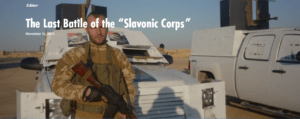
The Last Battle of the “Slavonic Corps”

0

November 16, 2013
Russian mercenaries, working for the Slavonic Corps, fighting in Syria | VK 

A Syrian rebel group claims that it has ambushed and killed a group of Russian mercenaries who may have been working for a Chinese security contractor. The jihadist fighters from an Al Qaeda affiliate “Islamic State of Iraq and al Sham (ISIS)” claim to have killed the mercenaries in a battle near Homs. At least one of the mercenaries, however, has been videotaped alive and well, and living back in Russia.

The large and well-respected St. Petersburg newspaper, Fontanka, has published an article, translation by The Interpreter, entitled “St. Petersburg Sends Contractors to Syria.” It details the investigation that uncovered the existence of Russian mercenaries defending sensitive installations important to the Assad government in Syria. The contractors appear to have been recruited in St. Petersburg by a company based in Hong Kong.

We also know that the mercenaries appear to have been operating in As-Sukhnah, east of Palmyra, on the road between Deir Ez Zor and Homs. Jihadists have long wanted to capture the town, and nearby Palmyra, because securing this road would link their forces from the east to the west. The Assad regime, on the other hand, has had difficulty sparing the resources to defend the position, as it is far away from the major cities which are heavily embattled. According to the initial investigation by Fontanka, the mission of the mercenaries was to secure key regime assets, away from the front lines, in order for Assad forces to concentrate on removing “bandits” in other areas. However, it appears that the oil fields that the Russians were supposed to be guarding were in rebel control, and the team was really tasked with getting them back.

The following translation is an update from Fontanka. It says that one of the key players in the military contracting company is a reservist officer  in the Russian Federal Security Service (FSB), lieutenant colonel Vyacheslav Kalashnikov.  The FSB, therefore, were aware on some level that the Moran Security Group was sending Russian mercenaries to Syria to fight for Assad. However, the mercenary group was shut down and several mercenaries were arrested upon their return to Russia. A major Russian contractor says that this was not an FSB mission, but a mission designed to look like an FSB mission. The insinuation is that a pro-rebel group hired the Russians in order to lead them into a trap, kill them, and show their bodies on television.

All of the pictures on the original Fontanka article were also posted in the one we already translated. Instead, these pictures of the Russian mercenaries were posted on a Russian social network (except the one that states it was from Fontanka). – Ed.


For the first time in the history of Russia, the FSB has made arrests for the exotic criminal charge of mercenary activities. Having attempted to form a two thousand strong “Slavonic Corps” on Syrian soil, the executives of a private military company from St. Petersburg have wound up in the cells at Lefortovo. The rank and file soldiers of fortune having been telling Fontanka about their first and last battle. Unhappy at the loss of their commanders; they now have no one to ask for remuneration for their unpaid service in the war.

We’ve known for a while about Russian citizens who travel to Syria to fight against Bashar al-Assad because of their religious beliefs. And we found out that Russian mercenaries can fight on the side of the incumbent government when, in October 2013, the opposition distributed documents on the internet alleging that they had killed a resident of the Krasnoyarsk region, Alexei Malyuta, in a skirmish near the city of Homs. Having ascertained that our fellow citizens really did go to Syria for armed service with the St. Petersburg-based company Slavonic Corps Limited, Fontanka made inquiries about the number of our countrymen who participated in the venture. It turned out that more than ten people had left the banks of the Neva to seek their fortune and wages under a hail of Arab bullets. Some of them agreed to an interview. Asking to remain anonymous: “There’s no point in that. We’re not seeking the limelight, well, that, and the FSB took our signatures. But we will not be silent, so that others do not fall like we did. We made it back, we were simply lucky.”

How to go to war

Safehouses, code words, and other tradecraft are not needed. Since the spring of 2013, adverts for the ‘Slavonic Corps,’ recruiting former soldiers with combat experience to work on long trips abroad, have been appearing at relevant sites all across Russia. Many responded. Not all retired paratroopers and special forces soldiers or laid off SOBR and OMON officers have found their feet in civilian life. To some, five days a week in an office is normal, but to others, it’s sheer hell. And not everyone who knows how to handle a machine gun or sniper rifle with skill has the talents of a businessman. The homeland got boring, the turbulent 90s were over, and commanding access gates in private security was humiliating and poorly paid. Former riot cops and officers of the interior troops, acting as bodyguards, were interested in the offer to earn 5,000 US dollars a month for the protection of certain “energy facilities.” That’s nothing out of the ordinary, almost everyone served in the North Caucasus and Tajikstan, and has had the arduous experience of “solving problems” with unsettling people involved in crime. $20,000 for disability and $40,000 for death: that’s acceptable.

After a phone call they met in the street with the head of Moran Security Group, Vyacheslav Kalashnikov, a lieutenant colonel in the FSB reserves, who introduced himself as a general, and explained the conditions. Then, at an interview with a recruiting specialist in the Baltic Shooting Centre on Alexander Blok Street, Building 5, forms were filled and passports ordered.

Then came an invitation to Moscow in September 2013. This time the candidates were spoken to in the premises of Moran Security Group on Potapovsky Lane, Building 5. They were told that they would have to go to Syria with a company called the ‘Slavonic Corps.’ They were warned to be at the ready. No sooner than they had returned to St. Petersburg, they received a call: “It is urgent that you come to Moscow. It’s time to fly off on a business trip. Bring only your passport, don’t wear or bring anything military, enemy surveillance doesn’t take naps!”

A contract with a phantom

Contracts with Hong Kong’s Slavonic Corps Limited were literally signed on knees on the platform at Leningrad railway station: “Come on come on, time is running out.” Of around twenty candidates who arrived, three, having seen Hong Kong in the fineprint, turned around and set off for home instead of Syria. The rest took their chances. They were bribed with the promise to pay 4,000 dollars every coming month, and a solemn vow to transfer the first tranche in the next few days. Moreover, the men were unaccustomed to paperwork, and had all the more faith in the contract as they did not believe they would find anyone who would want to cheat them.

Then there was a flight to Beirut in Lebanon and a journey by car to Damascus. From the Syrian border they were accompanied by local guardsmen. After a stay in a local guesthouse they flew to a military base in Latakia.

A tank for a security guard

“A large field between Lattakia and Tartous, surrounded by barbed wire. That is where our battalion and the Syrian reservists were stationed. It used to be a racecourse. We were housed in the former stables. By October there were 267 people from the ‘Slavonic Corps’, split into two companies. One company was made up of Kuban Cossacks, the other had people from all over Russia; there were 10 or 12 men from Petersburg. The bosses said that the numbers of the corps in Syria was expected to reach up to 2,000 men.”

In addition to assault rifles, the battalion received machine guns and grenade launchers. They had anti-aircraft guns, 1939 models. The mortars were from 1943. Crews were formed for the four T-72 tanks and some BMP (infantry fighting vehicles). The question of how appropriate the weapons were, for the task of protecting “facilities,” came up quickly, even from the most gullible, and was addressed.

“Did you come to fight or to guard? Whoever guards is on eternal kitchen patrol.” Those were the words of the commander’s reply. The manager of the project was Vadim Gusev, known to many as the deputy director of Moran Security Group.

Who we are fighting for

This was never understood. “When they spoke to us in Russia, they explained that we were going on a contract with the Syrian government, they convinced us that everything was legal and in order. Like, our government and the FSB were on board and involved in the project. When we arrived there, it turned out that we were sent as gladiators, under a contract with some Syrian or other, who may or may not have a relationship with the government… That meant that we were the private army of a local kingpin. But there was no turning back. As they said, a return ticket costs money, and we’ll work it off, whether we like it or not.” As they told the Slavonic Corps troops, the job came down to maintaining control over the centre of the oil industry, in the town of Deir ez-Zor. In order to be in control of it, we had to reach it. More than 500 kilometres across territory occupied by government troops, by the opposition or by completely unknown forces.

The campaign of the ‘Slavonic Corps’

The first and only combat operation of the ‘Slavonic Corps’ went badly from the very beginning. According to one of our interviewees, who had to join a BMP crew, the 1979 production vehicles provided to them were complete trash, and they did not succeed in bringing them up to battle-worthiness. The fully prepared T-72s turned out to have been replaced, by the Syrians, with rusty, unfit-for-battle T-62s, which likewise had to be abandoned. They set out to campaign on October 15, on Hyundai buses and JMC jeeps lined with homemade armour. They stuck on portraits of Bashar al-Assad and Syrian flags, and drove off.

main03_800


Maybe they could have just made it, but along the way the valiant and unpredictable Syrian Air Force interfered. The helicopter pilot, who either wanted to take a closer look at the convoy, or scare them with a simulated attack, managed to find the power lines, amidst the endless sky out in the middle of the desert, tangled in them, and fell onto the column. One of the ‘legionnaires’ was left with a minor injury, and another, with a bent assault rifle. The mutilated chopper pilot had to be dragged to a military airfield in Homs, the pace was lost.

An alien war

main06_800


Two days were spent at the airport for some reason. On the 18th, at the alarm, they boarded their vehicles. It seemed that in the neighbouring town of Sukhnah, opposition rebels had attacked Syrian militias and we had to help out the militias.. After about three or four hours, they finally closed in, somewhere along the road, amidst some burning town, they came under fire. They spread out and took up defensive positions. The Cossack company headed off to the left and got bogged down, they had got into a fight with someone who was not a supporter of Bashar al-Assad. They fired mortars, but they didn’t manage to nail the opposing column. A government SPG (self-propelled gun) approached, giving fire support. Assad’s aircraft bombed the enemy. The militants, who, according to various sources, numbered between 2,000 and 6,000, proved to be tenacious and, by all accounts, began to surround the battalion and put them in a vice. The ‘Slavonic Corps’, not wanting to die in vain for the ideals of the Syrian state, jumped into their vehicles and began to retreat. It’s most probable that during this retreat, Alexei Malyuta’s bag was lost and fell into the hands of the regime’s opponents.

It could be regarded as a great success that, out of the whole corps, a total of six people were wounded, two of them seriously. It should be pointed out that all of the wounded were removed from the battlefield and returned home with all the others. “We were saved by a sandstorm, we were enveloped by it on our retreat, but it hid us from the local mujahedeen. There was so much sand that you couldn’t see anything. But thanks to that, we are alive.”

The end of the mission

The return journey to Homs, and then to the base at Lattakia, was grim. The Syrians’ attitude towards the Russian legionnaires had changed markedly. They recalled a loud argument at the airport between Vadim Gusev and the Syrian ‘employer’ of the ‘Slavonic Corps’: it was clear that they had different views on the subsequent plan. Everybody heard their yells, including mentions of dollars, and more specifically, of 4 million dollars, that would have to be worked off. Nevertheless, the battalion returned to Lattakia. While in September, the Syrians practically welcomed them with flowers, they now looked on them, if not as enemies, then certainly not as heroes. They watched frostily. Shortly, they began to disarm; the corps had to surrender their heavy weapons. They would not part with their assault rifles until the end. They say that a Russian in Syria without an assault rifle is of no use to anyone.

Welcomed with honour

Despite the fact that, according to the contract, the assignment was supposed to last five months, in the last days of October the personnel were loaded onto two chartered planes and sent to Moscow. They were not expecting such a reception to be awaiting their arrival at Vnuknovo. As they disembarked the aircraft one by one, each fell into the hands of FSB officers. There was a quick inspection, the removal of SIM cards and any other media, and a brief questioning as witnesses. Then followed the removal of their passports, non-disclosure forms, and tickets home. Vadim Gusev, who had flown in business class and left the plane first, remained in the hands of the investigators.

As they explained at the Moran Security Group, he and another employee of the company, Evgeny Sidorov, who was responsible for human resources, were arrested in a criminal case brought by the FSB’s metropolitan command under the never-before applied Article 359 of the Criminal Code – mercenary activities.

There is no money and there never will be

The caveat is that the 4,000 dollars, which should have been paid to each ‘security specialist’ of the ‘Slavonic Corps’ at the beginning of the second month of the assignment failed to reach almost anyone. And now, in different corners of Russia, there are around 200 very angry men who are determined to get their money back. But Gusev and Sidorov, are in Lefortovo, and they can’t be made accountable. Sergei Kramskoy, whose signature is on the contracts, has never been seen by any of the legionnaires. The Petersburgers say that they met with the managers of the Moran Security Group, Vyacheslav Kalashnikov and Boris Chikin, who recruited them for work in Syria. They have allegedly explained that this is not their business, that they have no relationship with the Slavonic Corps, and that here is no money and there never will be.

In the words of the professional: This is a crazy scheme

After asking Vyacheslav Kalashnikov several times to speak on the subject of Syria, and having received no answer, Fontanka turned to the head of Russia’s largest private military company, the “RSB Group,” for comment. Oleg Krinitsyn is certain: the Syrian story of the Slavonic Corps was a crazy scheme from the start.

“The widely advertised campaign to recruit mercenaries for Syria initially sounded like a stunt, a kind of PR campaign. Later on, people believed it and were drawn to their dream – to make money. But not all of them understood that this money was dirty, and possibly bloody. Before sending people to a country where there is active fighting, where there is a virtual ‘layer cake’ of the Syrian Army, the opposition fighters, al-Qaeda, al-Nusra etc, it’s essential to prepare them, as well as to understand how to get them out of there. Among those guys, photographed against a backdrop of Syrian equipment, festooned with weapons, I noticed a few of our former employees, who had been dismissed because of their poor moral character. I saw guys with criminal records amongst them. This once again confirms that the aim of the recruiters was not to attract high quality professionals, but just to plug a ‘hole’ with cannon fodder, and fast. And the boys were sent on contracts that resembled contracts for suicide missions. Right away, people signed a contract that included a will to bury their remains in their homeland, or if that proved impossible, in the nation where they died, and then be reburied in Russia. Dreadful.

Fontanka

Fontanka


“And it must be remembered, that no one has repealed the article on ‘mercenary activities.’ Armed men from an offshore company, the ‘Slavcorps,’ without any security license or official authorization for weapons, went off to defend something — some hazy objective — from uncertain threats in a foreign country in a time of strife. The soldiers used heavy weaponry, old military equipment, sniper rifles, Kalashnikovs. There was a uniform provided. One of an American design, another was reminiscent of that of the Syrian Army special forces. What was the security purpose of such mimicry? The answer is obvious: they would use the Russian guys face down. And then TV would never have Malyuta, the farmer from Krasnodar who, while swearing cheerfully, cracks a rotten branch over the head of another merry colleague in Syria. Instead of that, there would have been images of the bloody bodies of Slavs killed in Syrian Army uniform. In principle, that ought to provoke even more aggressive action from the Americans and British in arming and supporting the Syrian rebels.

“The contract wasn’t drawn up with a government body, but with some Syrian oligarch, supposedly with Assad’s consent. They set off to protect the oil fields, but when they arrived it turned out that they needed to recapture those fields. And when our boys had the good sense not to get involved in the carnage, they simply and unabashedly “passed them over” to the militants, and they tried to encircle and annihilate a group of Russians with mortars and small arms. This isn’t our war, it isn’t our country, this was purely mercenary. But the people who went there are not to blame, they didn’t fully comprehend that they were not falling into some beautiful fairy tale, but to a place where a fighter survives for an average of 2 to 3 weeks. They were sent like lambs to the slaughter. You need to understand that we are Russians; we’re aliens in that country. The local fighters (on either side) would have “given them up” right away. That is basically what happened.

“I do not exclude the possibility that someone from the management of Moran Security Group, and the affiliation of that company with the Slavonic Corps is quite clear, could take this gamble to plug the financial hole left after the seizure of their ship the Myre Seadiver in Nigeria. But a military officer, understanding life and death, would never send his people there.

“In the RSB Group we have received offers to work in Syria more than once, and from different sides (Free Syrian Army or just obscure businessmen,) and have been offered serious money, but we will not go. When the RSB Group is offered a contract with the government, then we will work, but we will only work on a formal contract with a government body. We are prepared to professionally and legally secure any installation, seaport, airport, television and radio station, right up to the Russian embassy.”

The FSB

A duty officer gave an immediate response to a reporter’s question about Syria and the ‘Slavonic Corps’: “The FSB public relations centre has no such information available.”

Denis Korotkov, Fontanka.ru

P.S.

The battle at Sukhnah, the view from the opposition

The mujahedeen of the Islamic State of Iraq and Sham conducted a successful operation in the Homs area. Assault units attacked a group of infidels in the village of Sukhnah. In the course of the successful attack one major checkpoint was capture. Another two checkpoints were surrounded. The fighting continued and the Mujahedeen managed to eliminate more than a hundred Assad supporters and Shiites. Among the defeated were Russian mercenaries.

The battle of Sukhnah, the view from a Damascus official

In Homs the particularly fierce fighting between the Syrian Army and gangs of rebels in the area of al-Sukhnah carried on, where for several days the terrorist armed groups were trying to take over military installations. On October 17 they were able to make headway by attracting multiple groups of bandits, including arrivals from Raqqa. But by the 20th the rebels had been pushed back. Three Jaysh al-Islam terrorist hideouts in the vicinity of al-Sukhnah were struck by military aircraft. As a result, more than 25 militants were killed. On October 20, army units managed to eliminate many terrorists during the fighting. This included two commanders from the Chechen republic and Egypt, going by the nicknames of Abu Hamza al-Sheshan and Abu Musaab al-Masri, and a Saudi citizen, one of Bin Laden’s personal friends, Dzhafina Omar al-Uteybi.

Ποιοι βολεύονται από το θάνατο του Στρατηγού Κασίμ Σουλεϊμανί και ποιοι ωφελούνται;

1

Δημοσιεύθηκε στο Freepen.gr

του Δημήτρη Τσαϊλά*

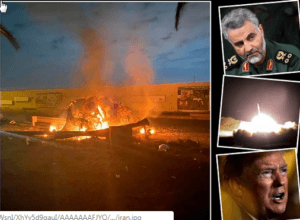
Εκείνοι που περιμένουν ότι το κτύπημα των ΗΠΑ στο Ιράν, που είχε σκοπό τη δολοφονία του Στρατηγού Κασίμ Σουλεϊμανί, θα δημιουργήσει το ισοδύναμο αποτέλεσμα του πυροβολισμού του αρχιδούκα Φραγκίσκου-Φερδινάνδου της Αυστρίας το 1914 από τον Σέρβο Γκαβρίλο Πρίντσιπ, εναντίον του σε μια γέφυρα στο Σεράγεβο, δηλαδή της δημιουργίας ενός συμμετρικού παγκόσμιου πολέμου, εξακολουθούν να βλέπουν τον κόσμο με παλιά γυαλιά που τους δημιουργούν αμβλυωπία (Η αμβλυωπία είναι μια πάθηση στην οποία το μάτι χάνει την ικανότητα να εντοπίζει τις λεπτομέρειες σε μια εικόνα). Στο παρελθόν, όταν ένα κράτος σκότωνε τον στρατηγό άλλου κράτους, ο πόλεμος ήταν πλέον αναπόφευκτος και δεδομένος αμοιβαία. Ωστόσο σήμερα, ούτε οι ΗΠΑ ούτε το Ιράν κήρυξαν πόλεμο. Ο πόλεμος, πρέπει να γνωρίζουμε ότι δεν είναι πλέον τρισδιάστατος (ξηρά, θάλασσα και αέρας), ο σημερινός πόλεμος έχει πέντε διαστάσεις προσθέτοντας στο τρισδιάστατο, τις νέες διαστάσεις όπως του διαστήματος και του κυβερνοπολέμου.

Είναι σαν να ερμηνεύουμε τα γεγονότα του 2020 με την οπτική γωνία του 1914 και να θεωρούμε ότι δεν βρισκόμαστε στην εποχή των υπολογιστών. Ο κόσμος έχει αλλάξει τόσο πολύ που πρέπει να είμαστε σκεπτικοί για το τι συμβαίνει. Για παράδειγμα, μέχρι πριν από 30 με 40 χρόνια, ήταν δυνατό να προβλεφθεί ποιο κράτος θα αντιδρούσε σε ένα διεθνές πρόβλημα χωρίς να πέσουμε σε κανένα σφάλμα. Επειδή οι ιδεολογίες ήταν ξεκάθαρες, όλα ήταν συμμετρικά. Η σημερινή παγκόσμια τάξη προσφέρει ένα ασύμμετρο περιβάλλον.

Σύμφωνα με τα όσα είδαμε μέχρι τώρα ο Στρατηγός Κασίμ Σουλεϊμανί  χτυπήθηκε με πύραυλο μαζί με άλλους αξιωματούχους λίγο μετά την αποβίβαση του από το αεροπλάνο, οπότε το Ντρόουν με τους πυραύλους έπρεπε να βρισκόταν στον αέρα πριν την προσγείωση του αεροσκάφους που μετέφερε τον Στρατηγό. Εν ολίγοις, όσοι διαχειριζόταν την επιχείρηση γνώριζαν πολύ καλά τι ώρα θα ήταν ο Στρατηγός στο αεροδρόμιο, με ποιο όχημα θα μετακινούταν, με ποιούς θα ήταν μαζί. Επιπλέον, οι άνθρωποι που σκοτώθηκαν μαζί με τον Σουλεϊμανί δεν πρέπει να αγνοούνται. Συνοπτικά, ο στόχος ήταν πολύ καλά επιλεγμένος από τις ΗΠΑ. Ο συγχρονισμός ήταν τέλειος και φαίνεται να χτυπήσανε με ακρίβεια χιλιοστού. Είχανε λάβει τόσο καλή πληροφόρηση. Δηλαδή, αφού μπορούσαν να φτάσουν τόσο κοντά στον Σουλεϊμανί, ήταν δυνατό να χτυπήσουν το στόχο και με μια σφαίρα. Εντύπωση κάνει πως το άτομο που έκανε αυτήν την επιχείρηση μίλια μακριά και πίεσε το κουμπί, πείρε τέτοιο μεγάλο ρίσκο να αναλάβει την ευθύνη για την ολοκλήρωση της αποστολής με πυραύλους. Εάν το σκεφτείτε, θα πρέπει να είχαν αποκλείσει την όποια επιχείρηση εξαπάτησης, καθώς οι Ιρανοί μπορεί να είχαν τοποθετήσει στη θέση του Σουλεϊμανί και ένα δόλωμα με σκοπό να προκαλέσουν διεθνή κρίση. Με λίγα λόγια, ήταν τόσο σίγουροι για όλα πριν πατήσουν το κουμπί.

Τώρα να δούμε και τα αντίποινα των Ιρανών. Πως είναι τόσο σίγουροι, οι Αμερικανοί ότι το Ιράν δεν θα κλείσει το Στενό του Ορμούζ. Αυτό θα έχει ως αποτέλεσμα τα κράτη του Κόλπου, που είναι από τους καλύτερους πελάτες της βιομηχανίας όπλων των ΗΠΑ, να υποστούν μειώσεις της τάξεως του 25% των παγκόσμιων πωλήσεων πετρελαίου και οι τιμές του πετρελαίου να διπλασιαστούν. Αυτό πιθανότατα θα ωφελήσει περισσότερο τη Ρωσία η οποία είναι αντίπαλος των ΗΠΑ. Υπάρχει  κάποια πιθανότητα που ο αμερικανικός μηχανισμός λήψης αποφάσεων δεν το έχει προβλέψει, δεν πιστεύω να νομίζει κανείς ότι μπορεί να γίνει ένα τέτοιο λάθος.

Τώρα σας καλώ να σκέφτεται τις ιδέες που είναι κατάλληλες σε ένα ασύμμετρο κόσμο. Για παράδειγμα,

  1. Οι ΗΠΑ και το Ιράν το συμφώνησαν μαζί;
  2. Μία από τις δύο πλευρές έπαιξε ένα παιχνίδι win-win;
  3. Ήταν ο θάνατος του Σουλεϊμάνι επιδιωκόμενος και για τις δύο πλευρές;

Κοιτάζοντας το αποτέλεσμα του κτυπήματος στο Ιράν. Ο Τράμπ κέρδισε επειδή η διαδικασία απομάκρυνσής του φαίνεται να τίθεται στο ράφι, ακόμη αποκτά και προβάδισμα για να εκλεγεί πιθανά και δεύτερη φορά. Η διοίκηση της Τεχεράνης έχει ενώσει τους ιρανούς στους δρόμους ενάντια στον εχθρό. Έναν εχθρό τον οποίο δεν έχει καταφέρει να ελέγξει για μήνες. Ο Στρατηγός Σουλεϊμανί έκανε το τελευταίο του καθήκον πεσόν εν’ ώρα καθήκοντος. Τέλος οι πωλήσεις όπλων και πετρελαίων δεν φαίνεται να είναι κακές.

Πόσο αληθινό είναι αυτό το σενάριο; Αυτή η δυνατότητα πρέπει να ληφθεί υπόψη όταν υπάρχει μεγάλος αριθμός εξωπραγματικών περιπτώσεων στην ιστορία. Αναμφίβολα, το Ιράν θα απαντούσε. Όμως και αυτό θα μπορούσε να περιλαμβάνεται επίσης στη συμφωνία.

Κλείνοντας αυτή την ανάλυση που παραδέχομαι ότι περιλαμβάνει θεωρεία συνομοσιολογίας, ας εξετάσουμε πως κυριαρχούν τα οικονομικά οφέλη, ειδικά οι προμηθευτές όπλων, πετρελαίου και φυσικού αερίου. Για μια εταιρεία που αγόρασε το βαρέλι πετρελαίου πριν από 10 χρόνια με προσδοκία τα 120$, θα προσπαθήσει να αυξήσει την τιμή του πετρελαίου. Εν ολίγοις, τα οικονομικά λόμπι χρειάζονται περισσότερες συγκρούσεις και περισσότερο αίμα για να κάνουν περισσότερα χρήματα. Με άλλα λόγια, είναι επιθυμητή από αυτούς που έχουν οικονομικά συμφέροντα, η ύπαρξη μιας πολυμερούς βιώσιμης εντολής σύγκρουσης από ένα κράτος.

Εάν κάποιο κράτος, επένδυσε δισεκατομμύρια δολάρια σε αμυντικά προγράμματα και ανάπτυξαν ένα οπλικό σύστημα, πρέπει να δημιουργήσει μια αγορά για να πουλήσει αυτό το όπλο. Βλέπε F-35, S-400. Βρίσκοντας την αγορά, πρέπει να βρεθεί και ο πελάτης ή ακόμα και οι δυνάμεις που θα έρθουν σε σύγκρουση. Για αυτό, δημιουργούνται εταιρείες που σχηματίζουν οικονομικές νοοτροπίες, σχηματίζουν στρατεύματα και στη συνέχεια τα κράτη προσλαμβάνουν αυτούς τους στρατούς και επιχειρούν ο ένας εναντίον του άλλου. Ένα μικρό παράδειγμα είναι η Συρία και η Λιβύη στις μέρες μας.

*Ο Υποναύαρχος ε.α. ΠΝ Δημήτρης Τσαϊλάς είναι Senior researcher of Strategy International και Member of Institute for National and International Security.

Δημοσιεύθηκε στο Freepen.gr


NST Leader: Troubled waters

0
It is true that China is a claimant to the South China Sea. So are Malaysia, Brunei, Vietnam and the Philippines. REUTERS

INTERNATIONAL law is there for a reason. To ensure that there is law and order among a comity of nations. What’s more if the countries are signatories to the United Nations Convention on the Law of the Sea (UNCLOS) 1982. One country cannot, arbitrarily, claim the whole of the sea because it has a certain nomenclature.

If this is so — and UNCLOS is very clear that it is not so — then every body of water that bears a certain country’s name will belong to that country.

“Ridiculous” was the response of Malaysia’s foreign minister, Datuk Saifuddin Abdullah, to the Chinese claim.

Well put minister, we say. Just because a nation’s trawler illegally fished in the sea before, it doesn’t mean the sea belongs to it.

It is true that China is a claimant to the South China Sea. So are Malaysia, Brunei, Vietnam and the Philippines.

According to Associate Professor Mohd Hazmi Mohd Rusli from the Faculty of Syariah and Law, Universiti Sains Islam Malaysia, the UNCLOS is clear. Under Article 3 of UNCLOS, a coastal state — Malaysia is one — may claim up to 12 nautical miles (about 22km) of territorial sea from the baseline of the coastal state.

It has sovereignty over this body of water, including the seabed. Beyond this, the coastal state has sovereign rights up to 200 nautical miles (about 370km) of what is called the exclusive economic zone or EEZ.

The EEZ, however, doesn’t include the seabed otherwise termed the continental shelf. A coastal state can claim up to 200 nautical miles of the continental shelf from its baseline.

Notwithstanding this, China is claiming almost the whole of the South China Sea through what it calls a “nine-dash line”.

A vague claim based on a Chinese-drawn map of 1940 laying claim to islands once under Japanese occupation. And it is doing it aggressively too. China has also placed troops on several islands.

Little wonder, the Philippines took its dispute with China to arbitration in 2016. The arbitrators ruled in favour of the Philippines, stating that China’s nine-dash lines are not valid under international law.

China, which was not a party to the 2016 arbitration, has denounced the ruling. What’s worse, it is continuing to assert its claim. And aggressively, too. The most recent being a Chinese coastguard vessel’s incursion into Indonesian waters at the Natunas.

Is China pursuing what People’s Liberation Army’s Major General Zhang Zhaozhong once described as a South China Sea “cabbage strategy” — one that wraps the entire marine area with vessels and warships and what have you in concentric circles like the vegetable does its leaves? Hazmi suggests a strategy to blunt this China game plan.

Aseanmember countries with claims to the South China Sea must not accede to bilateral negotiations with China.

One is never as strong as four. Having acknowledged the overlapping claims between them, the Asean four — Malaysia, Brunei, Vietnam and the Philippines — should meet China as one. Thus can the South China Sea be made less troubling.

NST

Ανάλυση: Ο Μητσοτάκης τα είπε, ο Τραμπ άκουσε;

4

“Καθημερινή”

ΑΘΑΝΑΣΙΟΣ ΕΛΛΙΣ

Ο Έλληνας πρωθυπουργός κατέθεσε στη διάρκεια της συνάντησης με τον Αμερικανό πρόεδρο τις ελληνικές ανησυχίες για τη συμπεριφορά της Τουρκίας στην Ανατολική Μεσόγειο, τόσο δημόσια όσο και κατά τη συνάντηση των δύο αντιπροσωπειών, αλλά δεν βρήκε την ανταπόκριση που επεδίωκε.

Η εξέλιξη δεν εκπλήσσει. Είναι γνωστή η «ιδιαίτερη σχέση» του Ντόναλντ Τραμπ με τον Ταγίπ Ερντογάν τη συμπεριφορά του οποίου ο Αμερικανός πρόεδρος όχι μόνο αποδέχεται, αλλά ενίοτε δείχνει να θαυμάζει.

Κατά τη διάρκεια των κοινών δηλώσεων στο Οβάλ Γραφείο, ο πρωθυπουργός προσπάθησε επανειλημμένα να προβάλει τις ελληνικές θέσεις, παρενέβη άμεσα όπου μπορούσε, αλλά η απόπειρα εξασφάλισης μιας δημόσιας αμερικανικής στήριξης σε σχέση με την τουρκική παραβατικότητα, προσέκρουσε στις προσωπικές προτιμήσεις του κ. Τραμπ.

Η απροθυμία του προέδρου των ΗΠΑ να επικρίνει την Τουρκία περιορίζει τις πιθανότητες ηχηρής αμερικανικής παρέμβασης στο προεδρικό επίπεδο υπέρ της Ελλάδας στη γεωπολιτική εξίσωση της Ανατολικής Μεσογείου.

Υπό αυτό το πρίσμα η συνάντηση στον Λευκό Οίκο δεν απέδωσε τα προσδοκώμενα. Ωστόσο, πρόσφερε την ευκαιρία μιας προσωπικής επαφής με τον ηγέτη της υπερδύναμης, αλλά και τη δυνατότητα προβολής των ελληνικών ανησυχιών στον μηχανισμό επεξεργασίας και χάραξης πολιτικής του Λευκού Οίκου.

Αμερικανός αξιωματούχος μίλησε μετά τη συνάντηση για εξαιρετική προσωπική σχέση των δυο ηγετών, για κοινή προσέγγιση σε όλα σχεδόν τα ζητήματα – προφανώς όχι σε κάποια πολύ σημαντικά για την Αθήνα – αναγνώρισε τη μετεξέλιξη της Ελλάδας σε ενεργειακό κόμβο, και καλωσόρισε την πρόθεση της χώρας μας να προμηθευτεί αμερικανικό εξοπλισμό.

Από την άλλη, στο Κογκρέσο, υπάρχει μια διακομματική και ένθερμη στήριξη της Ελλάδας (και της Κύπρου), λόγω και της στενής και σταθερής συνεργασίας με το Ισραήλ. Εδώ και αρκετό καιρό το αμερικανικό κατεστημένο – Συμβούλιο Εθνικής Ασφαλείας, Στέιτ Ντιπάρτμεντ, Πεντάγωνο, όπως και δεξαμενές σκέψεις – βλέπει την Ελλάδα με άλλο μάτι, και ο Κυριάκος Μητσοτάκης ενίσχυσε αυτή τη θετική εικόνα.

Ταυτόχρονα, στα αμερικανικά κέντρα εξουσίας αναπτύσσεται έντονη δυσφορία για τη συμπεριφορά της Αγκυρας, συμπεριλαμβανομένης της συμφωνίας με τη Λιβύη. Ωστόσο, παραμένουν συγκρατημένοι καθώς δεν θέλουν να δουν μια χώρα του μεγέθους και της νευραλγικής γεωγραφικής θέσης της Τουρκίας να απομακρύνεται από τη Δύση και να εξελίσσεται σε νέο Πακιστάν.

Το κύριο συμπέρασμα από το διπλωματικό σκέλος της επίσκεψης: παρά την ανησυχία που εκφράζει το Στέιτ Ντιπάρτμεντ για τις κινήσεις της Τουρκίας, τόσο στη Λιβύη όσο και στην κυπριακή ΑΟΖ, και τη δριμεία κριτική που ασκεί και τις κυρώσεις που ψηφίζει το Κογκρέσο, ο πρόεδρος Τραμπ παραμένει ένας ισχυρός πόλος στήριξης του Ταγίπ Ερντογάν, και αυτή είναι μια παράμετρος που οφείλει να λάβει υπόψη της η Αθήνα καθώς χαράσσει τα σχέδιά της για την «επόμενη ημέρα».

Τέλος, η νηφάλια αποτίμηση του σκηνικού δεν δικαιολογεί τον χαρακτηρισμό της συνάντησης από την αξιωματική αντιπολίτευση ως «πρωτοφανές φιάσκο».  Ο κ. Τραμπ δεν αγνόησε τον κ. Μητσοτάκη προσωπικά. Αγνόησε τις ενστάσεις της Ελλάδας κατά της Τουρκίας.

Η εικόνα ίσως να μην ήταν η καλύτερη, αλλά σε ό,τι αφορά την ουσία, η κριτική είναι υπερβολική και εσφαλμένη, ειδικά στη συγκεκριμένη χρονική συγκυρία της κρίσης με το Ιράν. Οσοι γνωρίζουν τι συμβαίνει πάντα σε αυτές τις περιπτώσεις, κατανοούν ότι είναι άτοπο να επικρίνεται ο κ. Μητσοτάκης ότι μετέτρεψε την Ελλάδα σε «κομπάρσο των εξελίξεων», επειδή, όπως αναμενόταν, ο Αμερικανός πρόεδρος δεχόταν καταιγισμό ερωτήσεων από τους ανταποκριτές του Λευκού Οίκου για το Ιράν ή τη διαδικασία καθαίρεσής του, και απαντούσε σε αυτές.

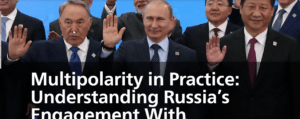
Multipolarity in Practice: Understanding Russia’s Engagement With Regional Institutions

0

Carnegie

Source: Getty
Summary:  Over the past two decades, and especially since Russia’s invasion of Ukraine in 2014, the Kremlin has intensified its engagement with international institutions.

SUMMARY

Over the past two decades, and especially since Russia’s invasion of Ukraine in 2014, the Kremlin has intensified its engagement with international institutions. This paper evaluates the drivers of this involvement, Russian views of three of these organizations, and Moscow’s success in achieving its objectives. It reaches the following principal conclusions:

  • Moscow’s approach to multilateralism was first articulated by former Russian prime minister Yevgeny Primakov in the late 1990s. Russia’s engagement with multilateral institutions is guided by his long-standing vision of Russian foreign policy to shift the international system away from a U.S.-dominated unipolar order to a multipolar one. In this new configuration, Russia would serve as a key pole dominating the Eurasian landmass.
  • Primakov’s vision was prompted by the realization that Russia could not compete toe-to-toe with the United States or its allies in the international arena. Over the past five years, his views received a further shot in the arm from two developments: the punitive U.S. and Western response to Russia’s invasion of Ukraine and U.S. President Donald Trump’s spurning of multilateralism in favor of more unilateral and nationalist policies and less global engagement.
  • Yet Moscow believes the Eurasian Economic Union (EAEU), the Shanghai Cooperation Organization (SCO), and to a lesser extent the BRICS group (Brazil, Russia, India, China and South Africa) afford it opportunities to
    • shore up its clout amid shifting global power dynamics,
    • push back against Western influence in Eurasia,
    • manage relations in a more competitive landscape,
    • highlight the importance of the United Nations as the legitimate arbiter of international laws and norms and counter what it perceives as repeated Western efforts to skirt those norms,
    • thwart Western efforts to isolate Russia diplomatically and through sanctions,
    • project Russian power and influence, and
    • bolster its international standing.
  • The influence of these institutions, however, should not be overstated. For Russia, their importance is more symbolic than substantive. With China’s increasing economic and political power in global affairs, they also allow Russia to manage its relationship with a rising China, particularly in Russia’s own backyard.
  • But these successes come at a price. These organizations were created to advance cooperation among their members in dealing with regional problems and challenges that are also of concern to Moscow. Russia’s behavior toward multilateral institutions is driven primarily by how they advance Russian national interests rather than broader organizational purposes and priorities. This attitude has been one important factor that has undermined the capacity of these groups to achieve their objectives. As a result, regional problems are festering, and Russia is neither serving its own interests nor those of its neighbors or other member states.

INTRODUCTION

Russia’s engagement with multilateral institutions is guided by a long-standing vision of Russian foreign policy that seeks to shift the international system away from a U.S.-dominated unipolar order. Russia wants to use these organizations to realize a new world order in which power and decisionmaking move from the Euro-Atlantic space toward emerging non-Western powers, to establish Russia as a key pole in the emerging multipolar system with the ability to dominate the Eurasian landmass, and to project Russian power and bolster its international standing.

Since Russia’s invasion of Ukraine in 2014 and its interference in U.S. and European domestic electoral and political processes, the Kremlin has intensified its engagement with these organizations, particularly those that exclude Western states. Moscow seeks to counteract Western efforts to isolate Russia diplomatically and punish it with sanctions for its transgressions. Many observers tend to conflate this burst of multilateral activism with an expansion of Russia’s geopolitical influence.

Paul Stronski
Paul Stronski is a senior fellow in Carnegie’s Russia and Eurasia Program, where his research focuses on the relationship between Russia and neighboring countries in Central Asia and the South Caucasus.

However, Moscow’s reach has generally exceeded its grasp: in reality, the success of these efforts in advancing Moscow’s geopolitical goals has been a mixed bag.

This paper evaluates the benefits and costs of Russia’s deeper engagement with multilateral organizations. The first section briefly summarizes key drivers of this engagement. The following sections look at Russian views of the Eurasian Economic Union (EAEU); the Shanghai Cooperation Organization (SCO); and the group comprised of Brazil, Russia, India, China, and South Africa (the BRICS). The paper also examines the interplay between Russian views toward these international bodies and the goals, interests, and agendas of other members. This dynamic affects not only Russia’s ability to accomplish its objectives in these bodies, but also the capacity of these institutions to achieve their mission.

WHERE IS MOSCOW COMING FROM?

Moscow’s approach to multilateralism is not new and dates back to the Primakov doctrine, as articulated by former Russian prime minister Yevgeny Primakov in the late 1990s. Yet, since the invasion of Ukraine in 2014, Russia has deepened its engagement with multilateral institutions, especially those focused on the Eurasian landmass where Russia once held sway. Through its participation in these institutions, Moscow has demonstrated that Western efforts to isolate Russia have failed. Substantive follow-through on summits held by these organizations is often lacking, as is the commitment to accept binding obligations that these regional organizations may impose.

Moscow’s push toward multilateralism coalesced about two decades ago, prompted by the realization that Russia could not compete toe-to-toe on its own with the United States or its allies in the international arena. Now, when U.S. President Donald Trump’s administration is spurning multilateralism, Russia sees opportunities to use multilateral formats to punch above its weight globally and has stepped up its outreach to regional multilateral organizations. Aware that it still struggles to present itself as a peer competitor to the United States, Moscow actively pushes multilateral initiatives and partnerships, taking advantage of Washington’s current global disengagement.

Russian conceptions of multilateralism, however, are different from those in the West. In fact, there is no clear Russian translation for the English word “multilateralism.” For Americans and Europeans, multilateralism implies sacrificing privilege and elements of state sovereignty for the common good of the international system. For Westerners, multilateral institutions are the primary vehicle through which international law is made and enforced. Russians, including foreign policy specialists, see many of those very institutions as dominated by the West, often excluding Russia or its interests, and favoring Western countries in the rules that the institutions dictate.

The Russian approach to multilateral engagement is geared primarily to shoring up Russian sovereignty and Russia’s privileged role in the world as a great power. Russia’s preferred multilateral institutions are those where member states treat each other equally and pledge neither to impinge on each other’s sovereignty nor bind each other in ways that are detrimental to member state interests. Russia, therefore, favors international organizations that make decisions on a consensual basis, as opposed to institutions with supranational powers that can impose obligations on its members.1

Russia’s preferred multilateral forum remains the United Nations (UN), where it holds a veto in the Security Council, has equal institutional clout with the United States, and can exert global influence on key issues.2 The UN is a place where Russia can showcase great power status and where no other state can impose obligations on it without its consent, given its veto power. Yet Moscow sees smaller multilateral institutions, particularly those it has helped create like the EAEU, the SCO, and the BRICS group, as key vehicles to shore up its influence amid shifts in the global order and the underlying distribution of power. Moscow uses these organizations to highlight the importance of the UN as the legitimate arbiter of international laws and norms and to counter what it perceives as repeated efforts by the West to skirt those very norms through democracy promotion efforts, which Moscow sees as a violation of state sovereignty. Moscow uses those principles and claims of Western double standards to cultivate partners within regional multilateral institutions.

THE EURASIAN ECONOMIC UNION: MORE THAN THE SUM OF ITS PARTS

The EAEU is Moscow’s most recent attempt to create a regional integration organization to shore up Russian political and economic interests in its immediate neighborhood and beyond. It is arguably its most successful effort to date in the former Soviet space. The EAEU has created a functioning customs union with increasingly harmonized policies on tariffs, labor mobility, and technical regulations. This success will have long-term impacts on the ability of other international organizations and private companies to do business in or trade with EAEU member states.

Richard Sokolsky
Richard Sokolsky is a nonresident senior fellow in Carnegie’s Russia and Eurasia Program. His work focuses on U.S. policy toward Russia in the wake of the Ukraine crisis.

Yet Moscow’s goals for the organization are far broader than merely investment or trade. The EAEU is also a key tool from the standpoint of Russian security interests, since it is geographically focused on Russia’s immediate periphery—the territory that former president Dmitry Medvedev described as a sphere of “privileged interests.”3 Nothing illustrates the territory’s importance to the Kremlin more than the fact that Russia went to war over it twice—in Georgia in 2008, following that country’s overtures to the North Atlantic Treaty Organization (NATO), and in Ukraine in 2014, after the Ukrainian Euromaidan revolution topped a Russian-friendly autocrat and led to a new government eager to sign an association agreement and free trade agreement (FTA) with the EU, which Moscow feared could be a precursor to the country’s eventual NATO membership.

Thus, the Kremlin uses the EAEU to check the encroachment of outside powers into its immediate neighborhood, which effectively gives the EAEU a geopolitical agenda. Senior Russian leaders are most visibly concerned about Western integration schemes and promotion of democracy, specifically through the European Union’s Eastern Partnership. The EAEU provides the region’s authoritarians alternatives to Western integration schemes that promote good governance, human rights, and democratic norms. Russian leaders are also eager, albeit more quietly, to shore up Russian influence in the region as China’s economic and political power grows in Central Asia and the Caucasus.

Moreover, the Kremlin wants to enhance its global clout by leading a group of relatively friendly neighboring states. Moscow’s leading position in the EAEU—it accounts for almost 90 percent of the body’s gross domestic product (GDP)—gives it enormous economic clout within the group and enables Russia to present itself as the preeminent power in Eurasia. In 2012, then U.S. secretary of state Hillary Clinton criticized Moscow’s decisive role in the EAEU as a Russian effort to “re-Sovietize” the Eurasian landmass.4 But Moscow’s goals are broader than that—the Kremlin hopes that Russia’s ability to lead an emerging multilateral economic organization will enable it to enjoy a bigger impact on the global governance and trade system, where its current footprint is quite small.

This is particularly true with Moscow’s push for the EAEU to create free trade agreements with countries outside the region, such as Vietnam, Iran, and most recently Singapore and Serbia (see table 1). Such moves enable Moscow to claim that it is a proponent of global free trade at a time when U.S. protectionism is threatening the international trading system.5 Moscow also envisions greater coordination between the EAEU and other multilateral regional organizations, including the SCO, the Association for Southeast Asian Nations (ASEAN), and the African Union. It sees these organizations as potential partners with a common agenda of diluting U.S. power and promoting multipolarity.6 Moscow is in the driver’s seat for creating such engagements and serves as the main negotiator for the union when it comes to pushing FTAs and cooperation agreements with other regional organizations.7

TABLE 1: THE EURASIAN ECONOMIC UNION’S FREE TRADE AGREEMENTS
Country Signature Entry Into Force
Moldova October 18, 2011 January 1, 2013
Tajikistan October 18, 2011 March 19, 2016
Ukraine October 18, 2011 September 20, 2012*
Uzbekistan October 18, 2011 January 9, 2014
Vietnam May 29, 2015 October 5, 2016
China May 17, 2018 October 25, 2019
Iran May 17, 2018 To be determined
Singapore October 1, 2019 To be determined
Serbia October 25, 2019 To be determined
Egypt Negotiations in process Not applicable
Israel Negotiations in process Not applicable
India Negotiations in process Not applicable
* Russia suspended the agreement with Ukraine on January 1, 2016. Source: EAEU Legal Portal, https://docs.eaeunion.org/.

Finally, the Kremlin wants to enhance regional connections and solidify neighboring state dependencies on Russia, effectively limiting neighboring countries’ ability to align too closely with outside powers. High-level pressure on Armenia, which is highly dependent on Russia for security, energy, and economic assistance, to abandon its own association agreement negotiations with the European Union in 2013 is a clear example of Moscow’s willingness to try to limit the sovereign decisionmaking of its neighbors through the EAEU. Similarly, Moscow’s implied threats to limit Kyrgyzstani citizens’ access to Russian labor markets if their country rejected membership in the EAEU, for example, similarly pushed Kyrgyzstan closer to Russia and into the EAEU at a time when Chinese economic penetration of Central Asia was expanding rapidly.

ASSEMBLING THE BUILDING BLOCKS

The EAEU was initially the brainchild of former Kazakhstani president Nursultan Nazarbayev in 1994 as post-Soviet chaos wreaked havoc across the region. Russian President Vladimir Putin took ownership of the idea in 2011–2012, when he made Eurasian integration, and the EAEU in particular, a central platform of his election campaign and third presidential term. Putin’s decision to push the EAEU quickly changed the prevailing Russian attitude toward former Soviet neighbors that were seeking closer ties with Western political and economic structures. For years, the Kremlin had made clear that it opposed increased security ties between Eurasian states and NATO. But Moscow generally did not block European efforts to promote economic and political engagement, including good governance initiatives elsewhere in the region.

Putin’s embrace of the EAEU put Russia and the West on a collision course over Armenian and Ukrainian efforts to negotiate association agreements and deep and comprehensive free trading agreements with the European Union. Russia continues to use a mixture of coercion and economic enticements to encourage its neighbors to join and current members to remain in the organization. In the wake of Russian aggression, Ukraine remains resolutely opposed to joining the EAEU, while Uzbekistan has shown little interest in it. These countries’ refusal to become EAEU members hampers its ability to become a truly broad-based regional organization and denies the EAEU symbolic membership of the two most populous and strategically important non-Russian states on the Eurasian landmass.

For Ukraine, membership in the EAEU is obviously out of the question. However, Moscow has been courting Tashkent under new President Shavkat Mirziyoyev, who urgently needs foreign investment to jump-start his country’s economy. The desire to show that the EAEU is expanding helps explain Russian Federation Council Chairwoman Valentina Matviyenko’s premature announcement in October 2019 that Uzbekistan had entered into EAEU negotiations. The Uzbek government clarified a few days later that it was only weighing the potential pros and cons of joining the body.8 That said, Mirziyoyev’s Uzbekistan has received limited traction in enticing European or U.S. attention thus far and has not yet shown a full commitment to creating a competitive investor climate. For these reasons, eventual EAEU membership for Tashkent cannot be excluded.

The EAEU builds on multiple Russian integration efforts in the post-Soviet space over two-plus decades (see figure 1).9 In addition to the general frameworks of the Commonwealth of Independent States (CIS) and the Collective Security Treaty Organization (CSTO), other Moscow-inspired integration efforts in the economic sphere include a push for the Customs Union Agreement (1995), followed by the Treaty on Increased Integration in the Economic and Humanitarian Fields (1996), the Treaty on the Customs Union and the Single Economic Space (1999), and the Eurasian Economic Community (2000). The Eurasian Customs Union was established in 2010, and the Eurasian Economic Space and CIS Free Trade Area were formed in 2012. Promoting a Russian-dominated trading zone in Eurasia to facilitate free movement of goods has been a long-term goal dating back to the 1990s with each of these agreements or entities serving as building blocks for today’s EAEU.

The final push to transform the Eurasian Customs Union into the EAEU occurred in November 2011, when the presidents of Belarus, Kazakhstan, and Russia signed an agreement announcing a target date of 2015 for the establishment of the Eurasian Economic Union. They followed that initial agreement with the Treaty on the Eurasian Economic Union, also known as the Astana Treaty, a 200-page agreement signed on May 29, 2014. With final negotiations occurring right after Russia’s annexation of Crimea and amid collapsing ties with the West, Moscow was eager to highlight that it was not isolated; it pushed hard to conclude the Astana Treaty. The treaty came into force on January 1, 2015, with Armenia and Kyrgyzstan acceding the same year.

The geopolitical drivers of Russia’s pursuit of the EAEU are reflected in the minimal economic benefits for Russia from increasing trade through preferential agreements with cash-strapped Armenia, Belarus, or Kyrgyzstan (Kazakhstan, whose dominant trading partners include the EU and China, has a more diversified set of economic and political partners than the other member states). With the exception of Belarus, Russia’s commercial engagement with its EAEU partners remains miniscule relative to that with China or the European Union. Kazakhstan, Kyrgyzstan, and Armenia account for 3.4 percent, 0.40 percent, and 0.33 percent of Russia’s exports. This is small potatoes relative to Russia’s sales to China (11 percent), the Netherlands (8.1 percent), and Germany (5.8 percent).10 Russia had initially pushed a more ambitious political framework for the EAEU, including a common passport and currency, a collective parliament, a common border force, and a common economic foreign policy. Such moves were rebuffed by Belarus and Kazakhstan.11

The EAEU has been hobbled by disagreements and mistrust between member states, as well as Moscow’s own reluctance to give up some of its sovereign decisionmaking over trade and economic policy to supranational EAEU political bodies. Keen to shore up their own sovereignty and aware that their populations no longer look to Moscow as a major global center, other member states see the EAEU as a means of containing Russia with the help of a rules-based organization. Even though Russia comprises the bulk of the EAEU’s total GDP, the treaty only gives it 20 percent of the body’s voting power. This was an important concession to other member states, made during the treaty’s negotiations, when Moscow needed a diplomatic win.12

Consensus within the EAEU, as in the customs union before it, can be hard to reach. Four EAEU members refused to follow Russia’s lead in imposing countersanctions on Western food products in 2014. Despite agreements on the free movement of goods, labor, and capital throughout the EAEU, Russia restored border controls with Belarus in 2017 during a gas dispute between the two countries as Minsk sought to improve ties with Europe and the United States.13 Kazakhstan slowed cross-border trade traffic with Kyrgyzstan in 2017 during political tensions between the two countries.14 Kyrgyz migrant workers in Russia face widespread discrimination even though they are entitled to full legal protections as citizens of an EAEU member state.15

Member states have benefited unevenly from Russian bilateral incentives to join the EAEU. Belarus reportedly earned upward of $2 billion in loan and energy concessions from Russia as enticements for joining.16 Armenia risked losing free supplies of Russian arms and discounted gas prices if it did not join the body. These preferential deals highlighted how member states’ EAEU accession decisions were the result of bilateral deals with Moscow rather than acceptance of general rules laid out in the Astana Treaty.17 Moscow’s continued threats to withdraw some of those incentives whenever relations with other member states get tense undercut the idea of a broad-based, rules-driven economic union and highlight its limitations as a special project directed from Moscow.18

Yet the accomplishments of the EAEU should not be overlooked. Since 2015, the EAEU has established a single market of roughly 180 million people with a combined GDP of around $5 trillion that builds on the existing framework of the Eurasian Customs Union and Economic Space.19 Most important for the Kremlin, however, is that the EAEU has demonstrated that Moscow can establish itself at the center of a regional multilateral organization and boost its claim to being a pole in a multipolar world. The symbolism of the EAEU is as important to Moscow as the actual integrative processes that are undoubtedly taking place, even if at a relatively slow pace.

Moscow is likely to continue to push the EAEU as an important pole and seek opportunities to expand its ties to non-Eurasian countries and multilateral organizations.

RUSSIAN PUBLIC OPINION ON THE EAEU

According to a January 2019 Russian Public Opinion Research Center survey on the Eurasian Economic Union, 76 percent of Russians held positive attitudes toward the organization. Although 39 percent of respondents believed the EAEU should be a completely new integration project in both form and principle, almost a third (28 percent) saw the bloc as a project to restore the USSR in a new format, albeit with continued political independence of the member states. Finally, 51 percent indicated the EAEU’s purpose is to improve trade and economic cooperation between its member states, while 24 percent believed the organization’s purpose is to counter the influence of the United States and the West.

IS THE EAEU AN ORGANIZATION AGAINST FREE TRADE?

The EAEU’s mission is not intended to facilitate member states’ integration into global economic frameworks that promote free trade and drive the global economy. On the contrary, it prevents members’ independent free trade initiatives, locks them into a Russia-dominated trading arrangement, and obligates members to pursue trade arrangements with other countries through the Russia-dominated trading bloc. This is generally done via FTAs or outreach by EAEU officials to other regional economic groupings, such as ASEAN or the African Union. Such arrangements clearly serve Russia’s geopolitical goal of consolidating its hold on its neighbors and expanding a web of relationships beyond its immediate periphery. In pursuing these opportunities, Moscow does not miss many chances to capitalize on U.S. policy failures. The EAEU signed FTAs with Vietnam and Singapore after the Trump administration abandoned the Trans-Pacific Partnership. The October 2019 signing of a new FTA with Serbia came shortly after French President Emmanuel Macron vetoed the opening of talks on EU accession with North Macedonia and Albania.

The EAEU’s goal is to create an integrated, protected regional economic space. The ability to secure dedicated markets for member states’ exports and to protect EAEU producers from foreign competitors is one of the bloc’s attractions for member states. Armenia, Belarus, and Kyrgyzstan, with their uncompetitive industries, benefit from EAEU membership. Belarusian machine-building producers, for example, have preferential access to the Russian market through the EAEU, as do Armenian foodstuffs and alcohol, which make up a key part of that country’s exports to other EAEU states.20 Free labor movement throughout the EAEU facilitates the flow of remittances to Armenia and Kyrgyzstan, the poorest member states.

EAEU membership may provide certain economic advantages but it also makes the poorer member states more dependent on Russia, enhancing its influence over those countries. Russia’s hold on EAEU member states is reinforced by pervasive corruption, oligarchic monopolies in key sectors, and poor governance throughout EAEU member states. Taken together, this state of affairs renders these states unattractive to outside investors. In light of existing U.S.-EU sanctions on Russia, these EAEU features create powerful obstacles to technological innovation, job creation, and the modernization of EAEU economies.

This is hardly lost on some EAEU member states’ publics and elites who have grown wary about Russia’s hold on the organization and its heavy-handed policy moves in Eurasia. Kazakhstan, the second-most important economy in the EAEU, has repeatedly flouted Russia’s preference for using the EAEU to negotiate with China’s Belt and Road Initiative (BRI) and the EU. Instead, Kazakhstan has negotiated bilateral trade and investment deals directly with Beijing and Brussels.21 Other EAEU states have similarly pursued bilateral frameworks with China, the EU, Japan, and the United States. There appears to be little interest in Eurasia in deeper integration with Russia or with the Russian-dominated supranational organization. Instead, EAEU member states would prefer to use the bloc as a tool that helps them manage their complicated relationship with Russia.

SCO: CHOOSING SYMBOLISM OVER SUBSTANCE

Since its creation in 2001, the Shanghai Cooperation Organization has not lived up to its potential, even though it counts some of the biggest economies and most powerful countries among its members and is the world’s largest regional organization.22 As its champions never tire of pointing out, it comprises 43 percent of the world population and 25 percent of global GDP, and it covers about 80 percent of the Eurasian landmass. But size should not be conflated with effectiveness or influence.23 In fact, the organization’s record of accomplishment is meager. Its ability to promote regional cooperation has been hamstrung by mistrust between member states and an imbalance in economic power between China and Russia, its principal founding members. The SCO’s importance is due largely to its utility to both Beijing and Moscow (and now perhaps India) as a mechanism for managing their competing interests in Central Asia. It also has value as a platform for Central Asian member states to balance against their far more powerful neighbors to the north and east.

COOPERATION ON DOMESTIC SECURITY

The SCO is often referred to as the club for autocrats due to the powerful dictatorships that dominate it. There is an element of truth in that moniker. SCO members have embraced the principle of noninterference in the internal affairs of other states to shield themselves from external criticism of their domestic political practices and failure to live up to international human rights norms. Yet Russia and China adhere to the principle of noninterference primarily on a rhetorical basis. In reality, both have long histories of meddling in and violating sovereignty of neighboring states, as does Uzbekistan.24 SCO members routinely rely on that principle to push back at Western and local civil society efforts to promote human rights, democratic norms, and accountable governance in the region.25

The SCO’s broad goal of fighting the “three evils” of extremism, terrorism, and separatism, the glue that holds the organization together, was first articulated at the June 2001 Shanghai meeting and has been a theme for the organization ever since.26 It not only enables SCO member states to legitimize and find diplomatic backing for internal repression and their frequent domestic clampdowns against opposition groups, civil society activists, and ethnic or religious minorities.27 These stated priorities also provide ample leeway to target opponents throughout the organization’s territory, including the ability to prosecute opponents in exile and extradite them from other SCO member states. Moreover, the convention invokes the principles of the UN Charter to help cloak the organization’s founding document with international legitimacy, identifying all three as equal threats to state security, public order, and the safety of citizens. It commits member states to share information about extremist threats, coordinate training to combat extremism, and make requests of one another to act against organizations or individuals an SCO state suspects of participating in illicit activities. Subsequent SCO declarations and agreements have simply added to this list (see table 2).

TABLE 2: OVERVIEW OF MAJOR SCO AGREEMENTS
Agreement Date Main purpose
SCO Declaration June 15, 2001 Formational declaration
SCO Charter June 7, 2002 Fundamental statutory document
Tashkent Declaration July 17, 2004 Focus on security and economic issues, RATS
Fifth Anniversary Declaration June 15, 2006 Cultural cooperation
Bishkek Declaration August 16, 2007 Energy and security threats
Ufa Declaration July 9, 2015 Admission of India and Pakistan
Source: Shanghai Cooperation Organization

As new surveillance technologies have developed over the last decade, member states have moved beyond simple information exchanges to sharing best practices on monitoring information space. Fears are growing in Central Asia that these technologies could also help enhance the spread of digital surveillance and control of public spaces.28 The SCO is increasingly providing governing political elites across the region with tools to consolidate domestic control. The group, for example, shares a common watch list of alleged extremists, although there is no clear human rights oversight, unified criteria, or checks on who is getting labeled as an extremist. As Human Rights Watch has documented, the SCO has helped Beijing secure backing from member states for its policies in the Xinjiang Uighur Autonomous Region. Human Rights Watch lists all SCO countries, except India, as countries of concern where Uighur asylum seekers from China are subjected to pressure from Beijing, including threats of being deported back to China.29

Nonetheless, the SCO has had only limited success in strengthening domestic security despite the greater convergence of interests of its members. The group’s Regional Anti-Terrorism Structure (RATS), based in Tashkent, Uzbekistan, claims to have played a useful role in coordinating security service efforts to combat the “three evils,” preventing numerous terrorist attacks, and arresting hundreds of terror suspects,30 although reliable data to back up these claims is not available. RATS primarily serves as a platform for member states to share intelligence and best practices on combating all forms of extremism. It has made very little progress in developing joint capacity at the regional level to combat terrorist threats or in addressing other factors that contribute to extremism in the region.31 RATS has done little to build counterterrorism capacity where it is most needed in the poorest Central Asian states of Tajikistan and Kyrgyzstan—and whatever limited capacity has been built is generally done by Russia or China on a bilateral basis, rather than via the RATS structure. Furthermore, while information sharing is an important component of RATS, regional governments routinely exaggerate the internal terrorist threats they face from indigenous Islamic groups to justify repressive domestic policies.

LIMITED SCO REGIONAL INTEGRATION AND ECONOMIC COOPERATION

There were high hopes for the SCO when it was first launched in 2001. The new organization was expected to develop and implement an ambitious regional security cooperation agenda—a goal that grew in importance after the September 11, 2001, attacks focused greater international attention to terrorism. The SCO was also expected to bring about greater regional cohesion to Central Asia, which at the time suffered from a number of rivalries that stood in the way of effective economic, diplomatic, and security cooperation. At the time, China supported regional integration in the hope that it would create new opportunities for Chinese investment in Central Asia, which in turn would promote security on its Western border, enhance its political influence, and create new economic and trade opportunities.32

These hopes turned out to be premature at best. China’s ambitious plans for transforming the SCO into a cohesive bloc driving regional economic integration through closer ties to China have repeatedly been met with resistance from Russia, which has relied on the institutions it dominates—the EAEU and CSTO—to counter the SCO’s influence and preserve its influence in Central Asia.33 Russia has also tried to dilute Beijing’s power within the SCO by advocating the organization’s expansion into South Asia.34

The SCO’s experience with joint military cooperation mirrors the limited success of its antiterrorism efforts. The organization has conducted several combined exercises and joint military operations, but most of these have been primarily of political and symbolic value. (The one exception was the Xiamen 2015 exercise, which facilitated sharing of best practices in technical surveillance of domestic populations, under the cover of curbing extremism on the internet.35) More importantly, unlike exercises conducted by other security organizations (for example, NATO), SCO exercises are not intended to achieve any significant level of military integration at either the strategic or tactical level, interoperability in weapons and equipment, or harmonization of command, control, and communications procedures and doctrine.

Mounting any kind of multinational SCO-led military operation to address an urgent security crisis in the region will, therefore, continue to present a daunting political, operational, and logistical challenge. During the Kyrgyz unrest in 2010, for example, all the SCO managed to do was issue an anodyne statement, calling for “peace, security, and political stability” and largely replicating the CSTO’s nonresponse to the crisis. The SCO’s principle of nonintervention appeared to take precedence over the urgency to act, as did the reluctance of Beijing and Moscow to get involved. Other states and organizations played a much larger role in trying to end the political crisis.

Neighboring Kazakhstan, for example, which at the time served as chairman-in-office of the Organization for Security and Cooperation in Europe, was far more influential in mediating the crisis and facilitating the departure of disgraced former Kyrgyz president Kurmanbek Bakiyev.

THE CLASH OF A RISING TITAN AND A WANING POWER

Russia and China are in the driver’s seat on the SCO but have divergent visions for the organization. Both countries share a common interest in building the organization’s capacity to counter the spread of Islamic fundamentalism in the region, conduct effective antiterrorist operations against potential Islamic extremist groups, and foster greater regional stability. At the same time, however, their geopolitical interests pull the SCO in different directions.

The core problem afflicting the SCO is differences between Russia and China over how the organization should evolve.36 From the institution’s inception, Moscow has conceived of the SCO in narrow security terms—less a partnership than a tool of Russia’s larger geopolitical strategy to maintain domination over the region and prevent encroachment by outside powers (initially NATO and the United States) into Central Asia through the formation of another anti-Western organization. As the imbalance between Chinese and Russian economic power widened over the past decade, Moscow has clung ever more tenaciously to its security-first outlook. As the weaker partner in its relationship with China, Russia begrudgingly can do little about the reality of significant Chinese economic penetration of Central Asia. Nonetheless, Moscow hopes that its successful push to include India and Pakistan in the organization will help bind China to work multilaterally (vice unilaterally) in the broader region and hopefully refocus the SCO’s attention on Afghanistan-related security issues, where instability remains a clear threat to all member states’ interests.37

China’s approach to the SCO, by contrast, is driven largely by energy, commercial, and domestic security considerations. Beijing clearly worries that instability and Muslim unrest on its borders with Central Asian countries could spill over to fuel Islamic separatist movements in China’s Xinjiang region. Yet China also has begun to show well-founded doubts about Moscow’s ability to act as the security manager in an area where the Chinese have invested billions of dollars and that they see as a bulwark against Afghanistan-style instability seeping into western China.

Beijing has not attempted to supplant Russia as the predominant regional security manager. However, with the expected drawdown of U.S. troops from Afghanistan and with Russia’s military stretched thin between operations in eastern Ukraine and Syria and the standoff with NATO, Beijing knows it may not be able to rely on others to secure Central Asia should the regional security environment deteriorate. Beijing’s recent decision to station troops on the Afghan-Tajik border and its enhanced bilateral security training programs for individual Central Asian states appear to be hedged against growing instability in the broader region, where it has significant investments, concerns over the West’s withdrawal from Afghanistan, and questions about both Russia and the SCO’s inability to play a decisive security role.38

China sees economic development as the key to mitigating instability and does not share Russia’s enthusiasm for transforming the SCO into a formal anti-Western alliance, preferring instead to give the SCO a greater economic dimension and to use it as a tool to promote Chinese soft power in the region.39 The Central Asian states are similarly keen to prevent the SCO from becoming an anti-Western bloc and increasingly aware that they need the West to counterbalance their powerful neighbors. They too want an economic agenda. Beijing, therefore, continues to support greater investments in the economic future of the region primarily through BRI but also through the SCO. The Central Asian states are receptive to these Chinese overtures.

Having upended its relationship with the West over Ukraine and increasingly heavily invested in its partnership with China, Russia has little choice but to acquiesce to China’s growing economic presence in Central Asia. However, within the SCO it will likely push back against China’s attempts to expand its security role in the region. Moscow’s drive to expand the organization to include India and Pakistan can be seen as a hedge against China gaining the upper hand in Central Asia. As one analyst of the region has observed, “China blocked Russian efforts to convert the organization into a military alliance, and Russia is now blocking Chinese efforts to convert the organization into a trade bloc.”40 Furthermore, the expansion of the SCO has inherently complicated the group’s decisionmaking and information-sharing.

The SCO now coexists with other regional organizations or initiatives—China’s BRI and Asian Infrastructure Investment Bank (AIIB) and Russia’s CSTO and EAEU. Russia prefers to use fora where it is the strongest member to promote power-sharing with the more influential and economically potent China. For its part, China has repeatedly pledged support for the EAEU and expressed willingness to link it with the BRI. However, it also has demonstrated a clear preference for working through institutions it dominates—the BRI and AIIB—rather than share power with Russia.

Three SCO members—China, India, and Russia—are also members of the informal BRICS group whose purpose is to give greater voice to rising economies on major global issues. Therefore, the SCO is just one of several multilateral fora Russia uses to promote its agenda of multipolarity, with the Kremlin’s degree of interest in a given organization fluctuating depending on its overall foreign policy objectives. For example, Moscow’s 2009 decision to hold a joint BRICS-SCO summit was driven by a desire to demonstrate to the world that it was not isolated in the wake of its 2008 war with Georgia. The convening of another joint BRICS-SCO summit in 2015 provided a similar illustration that Russia was not isolated internationally after the 2014 invasion of Ukraine. Another joint BRICS-SCO summit reportedly is in the works for 2020, since Russia is scheduled to host both groups and its relationship with the West remains tense.41

WITHER THE SCO?

The story of the SCO to date is one of overpromising and underdelivering. But despite the failure to deliver on past commitments, it continues to hatch ambitious yet unrealistic plans for regional development of energy resources, infrastructure, and economic integration. The 2015 Ufa Declaration on the SCO Development Strategy through 2025 is only the most recent example of what Carnegie scholar Alexander Gabuev has described as an organization in search of a mission without any mechanisms to deliver tangible results.42 The declaration calls for preserving the central role of the UN Security Council in the system of international peace and security maintenance; strictly observing the provisions of the Treaty on the Non-Proliferation of Nuclear Weapons; preventing the militarization of outer space; and stepping up the fight against terrorism, extremism, and trafficking. It was a grab-bag agenda at best, and the initiatives unveiled at Ufa have confronted the same obstacles that have sunk the SCO’s more grandiose goals: that is, lack of cohesion or unity of purpose among the organization’s four Central Asian members and divergent Russian and Chinese views on the purpose and identity of the SCO and how it should evolve.

The SCO faces serious structural challenges as an organization. All SCO members value their independence, sovereignty, and flexibility, which are difficult to reconcile with binding collective security obligations. Neither Russia nor China wants to see the emergence of a powerful SCO out of fear that it could be turned against one of them. Given the disparity in financial and economic clout between Moscow and Beijing, Russia has been reticent to back Chinese regional economic initiatives through the SCO, including Beijing’s push for an SCO Development Bank or SCO free trade initiative.43 Both countries prefer symbolism to substance and both prefer to rely on other institutional vehicles to advance their goals, thereby weakening the SCO.

The organization is hardly on the cusp of creating, as one analyst noted, “the most dramatic geostrategic transformation of the world order in a generation.”44 Indeed, it is hard to imagine the SCO being able to deliver on its original goals—countering terrorism, separatism, and extremism through multilateral cooperation—let alone the expanded agenda of regional economic integration across the Eurasian continent, unless Russia and China reconcile their significant differences. Until that happens, the organization is likely to continue to muddle along, occasionally achieving largely symbolic successes in joint military planning and operations, combating terrorism, preventing narcotics trafficking, and containing the spillover of instability and crime from Afghanistan.

All that said, the SCO will likely endure because it serves other purposes besides enabling regional cooperation. It will remain, for example, a useful geopolitical platform for China and Russia to balance each other against the United States. Its existence as an international organization from which Europe and the United States are excluded will continue to cause some concern in Brussels and Washington. It will continue to provide diplomatic and institutional cover for member states to crack down on internal domestic opposition in the guise of fighting jihadist terrorism or separatism. Nonetheless, the SCO seems headed to join the ranks of other regional (and subregional) organizations—the Organization of American States, the Arab League, the African Union, and ASEAN, to name a few—that have achieved only limited success in solving regional problems through multilateral cooperation. It will neither catalyze the Sino-Russian alliance nor have a transformative impact on the region’s security and prosperity.

The SCO may, however, prove useful to foster greater regional cooperation in confronting transnational problems on those rare occasions when the interests of its members align and circumstances in the region are propitious for joint endeavors. This may prove to be the case with Afghanistan, where strengthening border security, preventing fighters from crossing borders, and combating illicit drugs and arms trafficking are all interests shared by Uzbekistan, Tajikistan, and China. Boosters of the SCO pin their hopes for its future on the addition of India and Pakistan in 2017 and possible membership down the road of Turkey and Iran.

Yet, growing the SCO presents both challenges and opportunities. Adding India and Pakistan may give the SCO a foothold in shaping developments in South Asia, managing the threats to regional security and stability that could accompany a comprehensive peace settlement with the Taliban, and providing a forum for India and Pakistan to join in whatever common approaches SCO members can agree upon in tackling these problems. However, the hostile Indian-Pakistani relationship is just as likely to complicate military and counterterrorism cooperation and intelligence sharing and makes it far more difficult to reach decisions by consensus. Finally, some observers have argued that a strong and cohesive SCO could evolve into another Russian-led, anti-Western military alliance.45 This is a fanciful scenario as long as Russia and China remain wary of each other’s intentions in the region and Beijing maintains its adamant opposition to turning the SCO into a military organization.

BRICS: A USEFUL SYMBOL, BUT NOT MUCH MORE

The “BRICS” term was first coined in 2001 in a Goldman Sachs report entitled “Building Better Global Economic BRICs.”46 Consisting of Brazil, Russia, India, China, and (since 2010) South Africa, expectations were raised whether these then-dynamic, non-Western economies were positioned to refashion the global order by 2050.47 In the wake of the 2008 global financial crisis, Western policymakers have grown increasingly concerned about the prospect of an economic and political power shift away from the West and toward these new actors.

Global economic governance seemed ripe for a change in the early 2000s. At that point, the BRICS accounted for some 40 percent of the world’s population, 30 percent of its land, and roughly 15 percent of global GDP.48 This helped bolster the case that emerging economies should have a greater voice in global policymaking and that the G7 group of leading economies, which did not and still does not include any of these developing economies, was ill-equipped to make effective global policies for the twenty-first century. Such concepts held particular appeal for Moscow.

Moscow initially hoped that the BRICS, alongside the G20, would form the basis of a new post- U.S. international system, which by the middle of the twenty-first century would be less centered on the Euro-Atlantic community, its economy, and its values.49 Over time, BRICS heads of state have expanded their area of focus beyond financial issues to address a range of non-economic topics such as health, food security, the environment, humanitarian issues, and emerging technologies, as well as defending state sovereignty from external interference.50 Yet such moves are largely aspirational, at best. There are few concrete indications that BRICS leaders are taking on a greater role in global governance or in responding to international crises. Rather, the growing hodge-podge of agenda items has made it difficult for the group to develop concrete programs to address any of the issues it aspires to tackle.

So far, the BRICS has failed to emerge as a major actor on the world stage when it comes to a wide array of global and regional challenges.51 Gatherings of BRICS members have become commonplace at think tank convenings, business councils, parliamentary forums, environmental meetings, and ministerial-level engagements.52 Yet concrete policy proposals have been much slower in coming.

For Russia and some other BRICS states, the organization retains considerable symbolic importance. Yet it lacks the substantive influence of the G20 or G7, let alone a shared agenda underpinned by common interests other than presenting an alternative to the West or rhetorical calls for the rebalancing of global power away from Europe and the United States.

Over the past decade, the BRICS has made little progress in setting up parallel institutions to the World Bank and International Monetary Fund (IMF). In 2013, it announced an agreement to set up a New Development Bank. The 2014 decision to create BRICS Contingency Reserve Arrangements to provide support and lending during financial crises was portrayed by Putin as a potential alternative to IMF-led rescues. But the resources allocated to this effort have been dismissed as mere “chicken feed” by analysts at the Council on Foreign Relations.53

CONCLUSION

This paper is not about the EAEU, SCO, or BRICS as individual entities, but rather Moscow’s engagement with them and whether Moscow has been able to leverage its membership in these groups to enhance its regional—and ultimately global—power and influence. For Russia, the importance of these organizations is more symbolic than substantive. They help the Kremlin to highlight, both at home and abroad, that Moscow retains international standing, that it has the diplomatic means to counter the expansion of Western influence around its periphery and U.S. and European efforts to isolate Russia, and that Russia is a global, not just a Eurasian or regional, power. Engaging in these international organizations and groups also helps Moscow push back at Western efforts to isolate Russia diplomatically following a long series of transgressions. Russia may be isolated from the Euro-Atlantic community, but these organizations help show that Moscow is not isolated from the rest of the world.

Yet in the face of China’s growing prominence in economic and political terms, there are few indications that these organizations are helping Russia manage its relationship with a rising China. That is particularly the case in Russia’s own backyard, where the disparity between the two countries’ economic influence is increasingly evident. While Russia has long held grand hopes of advancing its larger security and geopolitical agenda through international organizations, these efforts have been stymied by the objections and conflicting interests of the member states—some of whom do not share Moscow’s agenda of transforming the EAEU, SCO, or BRICS into an anti-Western club. This includes China, India, and many countries of Central Asia. Within the BRICS, Brazil has made no secret of its desire for warmer relations with the Trump administration under President Jair Bolsonaro. Indeed, a top Brazilian diplomat publicly criticized Russia’s backing of Nicolás Maduro’s regime in Venezuela during the 2019 BRICS foreign minister meeting.54

Looked at together, these three institutions constitute uneasy and at times artificial partnerships. Mistrust of Russian power, a desire to balance against it among some of Moscow’s neighbors, and Moscow’s habit of overreaching (be it in Ukraine, Venezuela, or South Africa), have muted support for all three organizations among their members and their publics. As a result, these organizations have made only a minor contribution, at best, to the Kremlin’s paramount goals of expanding Russia’s geopolitical reach and its emergence as a major pillar in an emerging multipolar world.

NOTES

1 The authors thanks Maxim Samorukov of the Carnegie Moscow Center for his insights on divergent Russian and Western conceptions of multilateralism.

2 Philip Remler, “Russia and the United Nations: Law, Sovereignty, and Legitimacy,” Carnegie Endowment for International Peace, forthcoming.

3 Andrew Kramer, “Russia Claims Its Sphere of Influence in the World,” New York Times, August 31, 2008, https://www.nytimes.com/2008/09/01/world/europe/01russia.html.

4 Charles Clover, “Clinton Vows to Thwart New Soviet Union,” Financial Times, December 6, 2012, https://www.ft.com/content/a5b15b14-3fcf-11e2-9f71-00144feabdc0.

5 Adrian Lim, “New Eurasian Economic Union-Singapore FTA Can Be Pathfinder for ASEAN Trade Deal: PM Lee Hsien Loong,” Straits Times, September 29, 2019, https://www.straitstimes.com/politics/new-eurasian-economic-union- singapore-fta-can-be-pathfinder-for-asean-trade-deal-pm-lee.

6 Rilka Dragneva, “The Eurasian Economic Union: Putin’s Geopolitical Project,” Foreign Policy Research Institute, October 2018, https://www.fpri.org/article/2018/10/the-eurasian-economic-union-putins-geopolitical-project/.

7 “Towards the Great Ocean – 5: From the Turn to the East to Greater Eurasia,” Valdai Discussion Club Report, September 2017, http://valdaiclub.com/files/15300/.

8 “Putin Charms Uzbekistan With Big Deals, Huge Delegation,” Eurasianet, October 22, 2018,

 https://eurasianet.org/putin-charms-uzbekistan-with-big-deals-huge-delegation; and Umida Hashidova, “Not So Fast: Will Uzbekistan Join the Eurasian Economic Union,” Diplomat, October 7, 2019, https://thediplomat.com/2019/10/not-so-fast-will-uzbekistan-join-the-eurasian-economic-union/.

9 See Bobo Lo, Russia and the New World Disorder (London: Chatham House, 2015).

10 “Where Does Russia Export To?,” Observatory of Economic Complexity, https://oec.world/en/visualize/tree_map/hs92/export/rus/show/all/2017/.

11 Daniyar Mukhtarov, “Single Hydrocarbons Market of Eurasian Economic Union to Be Created by 2025,” Trend, May 24, 2019, https://en.trend.az/business/energy/2277110.html; and Paul Stronski and Annie Himes, “Russia’s Game in the Balkans,” Carnegie Endowment for International Peace, February 6, 2019, https://carnegieendowment.org/2019/02/06/russia-s-game-in-balkans-pub-78235.

12 Evgeny Vinokurov, “Eurasian Economic Union: Current State and Preliminary Results,” Russian Journal of Economics 3, no. 1 (March 2017): 57.

13 Maxim Mahovsky and Andrew Osborn, “Belarus Says Suspects Russia Trying to Restore Post-Soviet Border,” Reuters, February 2, 2017, https://www.reuters.com/article/us-russia-belarus/belarus-says-suspects-russia-trying-to-restore-post- soviet-border-idUSKBN15H20W.

14 “As Trucks Idle on the Border, Kyrgyzstan Lashes Out at Kazakhstan Over Delays,” Radio Free Europe/Radio Liberty, April 30, 2019, https://www.rferl.org/a/kyrgyzstan-trucks-border-kazakhstan-delays-ees/29858576.html.

15 Kanat Altynbayev, “Kyrgyz Migrants Seeking Better Life in Russia Face Injustice, Prejudice,” Central Asia News, October 10, 2018, http://central.asia-news.com/en_GB/articles/cnmi_ca/features/2018/10/02/feature-01.

16 Neil MacFarquhar, “Putin Signs Economic Alliance With Presidents of Kazakhstan and Belarus,” New York Times, May 29, 2014, https://www.nytimes.com/2014/05/30/world/europe/putin-signs-economic-alliance-with-presidents-of-kazakhstan- and-belarus.html.

17 Rilka Dragneva, “The Eurasian Economic Union: Putin’s Geopolitical Project.”

18 Ibid.

19 “World Economic Outlook Database, October 2018,” International Monetary Fund, https://www.imf.org/external/pubs/ft/weo/2018/02/weodata/weorept.aspx?pr.x=53&pr.y=14&sy=2018&ey=2023& scsm=1&ssd=1&sort=country&ds=.&br=1&c=911%2C913%2C922%2C916%2C917&s=PPPGDP&grp=0&a=.

20 “Foreign Trade Operations of the Eurasian Economic Union Member Countries: Trends and Potential Growth Areas,” Eurasian Development Bank Special Report, February 15, 2018, https://eabr.org/en/analytics/special- reports/foreign-trade-operations-of-the-eurasian-economic-union-member-countries-trends-and-potential-growth/.

21 Andrew Korybko, “Towards Russia-China Economic Integration: Interpreting Putin’s Speech at the 2019 Beijing BRI Forum,” Global Research, April 27, 2019, https://www.globalresearch.ca/president-putins-speech-2019-bri- forum/5675801; and Amanda Lee, “Can Kazakhstan’s China-Back Financial Hub Boost Belt and Road Funding,” South China Morning Post, October 6, 2019, https://www.scmp.com/economy/global-economy/article/3031744/can-kazakhstans-china-backed-financial-hub-boost-belt-and.

22 For more positive assessments of the SCO’s accomplishments and prospects for success, see: Linda Maduz, “Flexibility by Design: The Shanghai Cooperation Organization and the Future of Eurasian Cooperation,” Center for Security Studies, May 2018; and Rick Rowden, “The Rise and Rise of the Shanghai Cooperation Organization,” Sheffield Political Economy Research Institute, April 2018.

23 Angela Stent, Putin’s World: Russia Against the West and With the Rest (New York: Hachette, 2019), 225.

24 Alexander Cooley, “League of Authoritarian Gentlemen,” Foreign Policy, January 30, 2013, https://foreignpolicy.com/2013/01/30/the-league-of-authoritarian-gentlemen/.

25 “SCO Secretary General Issues Statement on HKSAR,” Xinhua, http://www.xinhuanet.com/english/2019- 09/23/c_138415890.htm, September 23, 2019.

26 “SCO Cooperation to Combat the Three Evils,” China Internet Information Center, September 22, 2006, http://www.china.org.cn/english/2006/Sep/181910.htm.

27 “Shanghai Convention on Combatting Terrorism, Separatism and Extremism,” Refworld, https://www.refworld.org/pdfid/49f5d9f92.pdf.

28 Bradley Jardine, “China’s Surveillance State Has Eyes on Central Asia,” Foreign Policy, November 15, 2019, https://foreignpolicy.com/2019/11/15/huawei-xinjiang-kazakhstan-uzbekistan-china-surveillance-state-eyes-central- asia/?fbclid=IwAR3XFXPdtyEcl_C4Fw9nGvK7G-mxJGdpfOOvPchX85N-Q77omTvDCDlbbNM; and Chris Rickelton, “Kazakhstan Embraces Facial Recognition, Civil Society Recoils,” Eurasianet, October 17, 2019, https://eurasianet.org/kazakhstan-embraces-facial-recognition-civil-society-recoils.

29 “Eradicating Ideological Viruses, China’s Campaign of Repression against Xinjiang’s Muslims,” Human Rights Watch, September 9, 2019, https://www.hrw.org/report/2018/09/09/eradicating-ideological-viruses/chinas-campaign- repression-against-xinjiangs; and Reid Standish, “Our Government Doesn’t Want to Spoil Relations With China,” Atlantic, September 3, 2019, https://www.theatlantic.com/international/archive/2019/09/china-xinjiang-uighur- kazakhstan/597106/.

30 “Fight Against Three Evil Forces Remains Main Task of SCO,” Xinhua, July 11, 2917, http://www.xinhuanet.com/english/2017-07/11/c_136435641.htm.

31 Rashid Alimov, “The Role of the Shanghai Cooperation Organization in Counteracting Threats to Peace and Security,” UN Chronicle 54, no. 3 (October 2017), https://unchronicle.un.org/article/role-shanghai-cooperation-organization-counteracting-threats-peace-and-security.

32 Alexander Cooley, Great Games, Local Rulers (Oxford, UK: Oxford University Press, 2014).

33 Rilka Dragneva and Kataryna Wolczuk, “The Eurasian Economic Union, Deals, Rules, and the Exercise of Power,” Chatham House, May 2017, https://www.chathamhouse.org/sites/default/files/publications/research/2017-05-02-eurasian- economic-union-dragneva-wolczuk.pdf.

34 Alexander Gabuev, “Bigger, Not Better: Russia Makes the SCO a Useless Club,” Carnegie Moscow Center, June 23, 2017, https://carnegie.ru/commentary/71350.

35 “Competent Authorities of SCO Member States Holds ‘Xiamen-2015’ Joint Command Post Exercises on Countering the Use of Internet for Terrorism, Separatism and Extremist Activities,” RATS SCO, video, http://ecrats.org/en/media/video/5137#.

36 Marc Lanteigne, “Russia, China, and the Shanghai Cooperation Organization: Diverging Security Interests and the ‘Crimea Effect,’” Center for Defence and Security Studies at Massey University, 2018.

37 Alexander Gabuev, Paul Haenle, C. Raja Mohan, and Dmitri Trenin, “Shanghai Cooperation Organization at a Crossroads: Views from Moscow, Beijing, and New Delhi,” Carnegie Moscow Center, June 9, 2017, https://carnegie.ru/commentary/71205.

38 Stephen Blank, “China’s Military Base in Tajikistan, What Does it Mean?,” Caucasus Central Asia Analyst, April 28, 2019, https://www.cacianalyst.org/publications/analytical-articles/item/13569-chinas-military-base-in-tajikistan-what-does-it- mean?.html.

39 Marc Lanteigne, “Russia, China, and the Shanghai Cooperation Organization.”

40 Stephen Blank, “Making Sense of the Shanghai Cooperation Organization,” Georgetown Journal of International Affairs 14, no. 2 (2013).

41 “Next SCO Summit Will Be Held in Russia in 2020,” Kabar, June 14, 2019, https://kabar.kg/eng/news/next-sco- summit-will-be-held-in-russia-in-2020/; and “Russia to Host BRICS Summit,” TASS, June 28, 2019, https://tass.com/world/1066010.

42 Galiya Ibragimova, “What Are the Implications of India’s and Pakistan’s Accession to the SCO,” Russia Direct, July 13, 2015, https://russia-direct.org/debates/what-are-implications-indias-and-pakistans-accession-sco.

43 Gabuev, “Bigger, Not Better.”

44 Rowden, “The Rise and Rise of the Shanghai Cooperation Organization.”

45 “Anti-Western Alliance in Asia,” Deutsche Welle, https://www.dw.com/en/anti-western-alliance-in-asia/a-17914677, September 9, 2014.

46 Jim O’Neill, “Building a Better Global Economic BRICs,” Goldman Sachs Global Economic Paper No. 66, November 30, 2001, https://www.goldmansachs.com/insights/archive/archive-pdfs/build-better-brics.pdf.

47 Suzanne Nossel, “The World’s Rising Powers Have Fallen,” Foreign Policy, July 6, 2016, https://foreignpolicy.com/2016/07/06/brics-brazil-india-russia-china-south-africa-economics-recession/.

48 Hongmei Li and Leslie L Marsh, “Building the BRICS, Media, Nation Branding and Global Citizenship,” International Journal of Communication 10 (2016): 2974.

49 Marcos Degaut, “Do the BRICS Still Matter?,” Center for Strategic and International Studies, October 2015, https://www.csis.org/analysis/do-brics-still-matter.

50 “Declaration of 4th BRICS Communication Ministers Meeting,” Government of South Africa, September 5, 2018, https://www.gov.za/speeches/declaration-4th-brics-communication-ministers-meeting-adopted-ministers- communications-15.

51 Rama Lakshmi, “BRICS Summit: Emerging Economies Condemn Military Threats Against Iran, Syria,” Washington Post, March 29, 2019, https://www.washingtonpost.com/world/asia_pacific/brics-summit-emerging-economies-condemn- military-threats-against-iran-syria/2012/03/29/gIQA48JuiS_story.html.

52 Alyssa Ayers, “How the BRICS Got Here,” Council on Foreign Relations, August 31, 2017, https://www.cfr.org/expert-brief/how-brics- got-here.

53 Benn Steil and Dinah Walker, “Is the BRICS Contingent Reserve Arrangement a Substitute for the IMF?,” Council on Foreign Relations, August 6, 2014, https://www.cfr.org/blog/brics-contingent-reserve-arrangement-substitute-imf.

54 “Brazil Tells Russia, Other BRICS Nations to Hear Venezuelans Cry for Freedom,” Radio Free Europe/Radio Liberty, July 27, 2019, https://www.rferl.org/a/brazil-tells-russia-other-brics-nations-to-hear-venezuelans-cry-for-freedom-/30078262.html; and David Nakamura, “How Brazil’s Nationalist Leader Built a Bond With Trump and Won His Support in Amazon Fires Dispute,” Washington Post, August 3, 2019, https://www.washingtonpost.com/politics/how-brazils-nationalist-leader-built-a-bond- with-trump-and-won-his-support-in-amazon-fires-dispute/2019/08/30/b2ef676c-cb32-11e9-a4f3- c081a126de70_story.html.


Ο Sa’d al-Hariri του Λιβάνου αντιμετωπίζει ένα αυξανόμενο πρόβλημα αξιοπιστίας που μπορεί να αποβεί θανάσιμο πολιτικά.

0

MICHAEL YOUNG Carnegie

Αυτές δεν είναι καλές εποχές για τον προσωρινό πρωθυπουργό του Λιβάνου, Σαντ αλ-Χαρίρι. Στα τέλη Οκτωβρίου, παραιτήθηκε εν μέσω διαδηλώσεων ενάντια στην πολιτική τάξη. Η αόριστη πρόθεσή του ήταν να μετονομαστεί σε πρωθυπουργό ενός υπουργικού συμβουλίου που θα μπορούσε να ελέγξει καλύτερα, αλλά το σχέδιο κατέρρευσε στα μέσα Δεκεμβρίου όταν ανατέθηκε ο σχηματισμός κυβέρνησης στον Χασάν Νταμπ. Σήμερα, ο Χαρίρι έχει χάσει την οικονομική υποστήριξη που απολάμβανε κάποτε, καθώς και την υποστήριξη των πολιτικών συμμάχων και περιφερειακών υποστηρικτών του, και ακόμη και πολλών στο πλαίσιο της δικής του κοινότητας, των Σουνιτών.

Ποτέ δεν είναι σοφό να διαγράφει κανείς  έναν Λιβανέζο πολιτικό. Ορισμένοι επέστρεψαν μετά από μια αποτυχία τους και την αγανάκτηση που προκάλεσαν για να αναβιώσουν επιτυχώς τις φιλοδοξίες τους. Κοιτάξτε τον Πρόεδρο Μισέλ Αούν. Ωστόσο, ο Χαρίρι θα έχει μεγάλα εμπόδια για να ξεκαθαρίσει, ακόμη και αν ο Νταμπ απέτυχε να σχηματίσει κυβέρνηση και ζητήθηκε απο τον προσωρινό πρωθυπουργό να παραμείνει ο ίδιος. Ανιχνεύοντας την παρακμή του Χαρίρι τρία είναι τα μεγάλα πολιτικά λάθη που έκανε.

Το πρώτο είναι η αναχώρηση του Χαρίρι από το Λίβανο το 2011 και η απουσία του από τη χώρα για πάνω από πέντε χρόνια. Η έξοδος του έλαβε χώρα λίγο μετά την κατάρρευση της κυβέρνησής του από τη Χεζμπολάχ και τους συμμάχους της τον Ιανουάριο εκείνου του έτους. Κατά τη διάρκεια της μακρόχρονης απομάκρυνσής του, τα δίκτυα υποστήριξης του Χαρίρι κατέρρευσαν, η κατάσταση επιδεινώθηκε από τα οικονομικά προβλήματα που αντιμετώπισε η εταιρεία του Saudi Oger στην Σαουδική Αραβία, η οποία είχε χρησιμεύσει ως χρυσορυχείο. Για μήνες ή και χρόνια, πολλοί από τους Λιβανέζους εργαζόμενους ή συνεργάτες του, ιδίως στο δίκτυο κοινωνικής βοήθειας και τα μέσα μαζικής ενημέρωσης, δεν έλαβαν μισθούς ή άλλες πληρωμές και η κατάσταση έχει βελτιωθεί ελάχιστα από τότε.

Η κατάρρευση της Saudi Oger τον Ιούλιο του 2017 ήταν ένα μεγάλο πλήγμα για τον Χάριρι. Μόλις μία από τις μεγαλύτερες εταιρείες συμβολαίου στη Σαουδική Αραβία, η Saudi Oger αποτέλεσε το κόσμημα στο στέμμα του πατέρα του Ραφίκ αλ Χαρίρι, του πατέρα του Σάντ. Μέσα από ένα συνδυασμό παραγόντων, συμπεριλαμβανομένης της κακής διαχείρισης και της αποτυχίας της Σαουδικής κυβέρνησης να αποπληρώσει τα χρέη της στην εταιρεία, η Saudi Oger άρχισε να δυσκολεύεται να πληρώσει τους μισθωτούς στα τέλη του 2015. Η κρίση επεκτάθηκε σύντομα στα λιβανικά ιδρύματα του Χαρίρι. Όλα αυτά υποδηλώνουν ότι δεν κατάφερε να δώσει τη δέουσα προτεραιότητα στη διατήρηση της πραγματικής πηγής της εξουσίας του – στις οικονομικές του δυνατότητες.

Η καταστροφική πενταετία του Χαρίρι μακριά από το Λίβανο οδήγησε στο δεύτερο μεγάλο λάθος του. Προσπαθώντας να οργανώσει μια πολιτική επιστροφή το 2016, συμμάχησε με τον Μισέλ Αούν και τον γαμπρό του Τζεμπράν Μπασίλ, και κατ ‘επέκταση με τη Χεζμπολάχ. Το quid pro quo (αντάλλαγμα) ήταν απλό: ο Χαρίρι θα υποστήριζε την προσπάθεια του Αούν να γίνει πρόεδρος και σε αντάλλαγμα ο Αούν και η Χεζμπολάχ θα ενέκριναν την επιστροφή του στο αξίωμα του πρωθυπουργού. Για να πείσει τους υποστηρικτές του στη Σαουδική Αραβία ότι η συμφωνία αξίζει να γίνει, ο Χαρίρι τους διαβεβαίωσε ότι το άνοιγμα στον Αούν θα τον προσήλκυε να γίνει σύντομα πρόεδρος μακριά απο τη Χεζμπολάχ.

Αυτό που συνέβη ήταν πολύ διαφορετικό. Ήταν αμέσως φανερό στον Αούν και στη Χεζμπολάχ ότι ο Χαρίρι ήταν χωρίς υποστήριξη. Ήταν αυτός που χρειάστηκε τον Αούν και την Χεζμπολάχ – και οι δύο για να επιστρέψουν στη θέση τους και να αναβιώσουν τα δίκτυα υποστήριξης – όχι εκείνοι που τον χρειάζονταν. Αυτό σήμαινε ότι ο Χαρίρι ήταν πολύ πιο ευάλωτος για να κάνει παραχωρήσεις και να διατηρήσει τη νεογέννητη σύμπραξή του με τους Αουνιστές και τη Χεζμπολάχ από ό, τι ήταν αυτοί. Πράγματι, ο Χαρίρι υποστήριξε τα εξωφρενικά αιτήματα του Μπασίλ κατά τη διάρκεια του σχηματισμού κυβέρνησης, όπου ο Μπασίλ επέμενε να πάρει τη μερίδα του λέοντος από τους χριστιανούς υπουργούς. Με τον τρόπο αυτό, όμως, ο Χαρίρι εξόργισε, επίσης, τους  παραδοσιακούς χριστιανούς συμμάχους του, τις «Λιβανικές Δυνάμεις», οι οποίες είχαν ενισχύσει τις σχέσεις τους με το σαουδαραβικό καθεστώς τους μήνες που προηγήθηκαν.

Πολύ γρήγορα, ο Χαρίρι φαινόταν λιγότερο ως συνεργάτης των Αουνιστών απο ό,τι μια πρόσοψη για τη συμμαχία Αουνιστών- Χεζμπολάχ, που έδωσε ένα μέτρο σουνιτικής νομιμότητας στην κυβέρνηση. Αυτό κόστισε στον Χαρίρι την υποστήριξη της σουνιτικής κοινότητας, που προστέθηκε στη δυσαρέσκεια που προκάλεσε το γεγονός ότι τα ιδρύματα του Χαρίρι δεν είχαν ακόμη καταβάλει ή αποζημιώσει πολλούς εργαζόμενους που ήταν σουνίτες. Την ίδια στιγμή, η φήμη του Χαρίρι υπέστη περαιτέρω βλάβη από την αίσθηση του περιβάλλοντος ότι επέστρεψε στο Λίβανο για να εκμεταλλευτεί τα οικονομικά κέντρα και να πατρονάρει τα δίκτυα. Η απόλυτη έκφραση του κυνισμού προς τα κίνητρά του (και των άλλων) ήταν οι διαμαρτυρίες του 2019 εναντίον της πολιτικής ηγεσίας.

Το τρίτο στρατηγικό λάθος του Χαρίρι ήταν ότι επέτρεψε να χειροτερέψει η σχέση του με τους Σαουδάραβες σε σημείο που δεν τον θεωρούσαν πλέον ως τον κύριο εκπρόσωπό τους στο Λίβανο. Αυτό κορυφώθηκε με την εμφανή απομόνωσή του στο Βασίλειο τον Νοέμβριο του 2017, που προκάλεσε την παγκόσμια αγανάκτηση με τον τρόπο που ένας εν ενεργεία πρωθυπουργός είχε ταπεινωθεί. Ωστόσο, υπήρξε μια πιο ολέθρια έκβαση από αυτό το επεισόδιο, δηλαδή ότι κάτι είχε σπάσει μεταξύ του Χαρίρι και των Σαουδαράβων. Ενώ και οι δύο πλευρές διατήρησαν ,δημόσια ένα μέτωπο ενότητας, η πραγματικότητα είναι ότι η Σαουδική Αραβία και οι χώρες του Κόλπου δεν φαίνεται πλέον να εμπιστεύονται τον Χαρίρι, κάτι το οποίο τον έχει καταστρέψει μέσα στην κοινότητά του. Αν ο Χαρίρι δεν υποστηρίζεται από την ηγετική σουνιτική δύναμη της περιοχής, πολλοί Σουνίτες αναρωτιούνται, ποια είναι η αξία του ως κοινοτικού ηγέτη;

Οι επιπτώσεις αυτού του γεγονότος, ίσως, ήταν ο κύριος λόγος για τον οποίο ο Χαρίρι επέλεξε να μην συγκροτήσει κυβέρνηση τον Δεκέμβριο. Η δικαιολογία του ήταν ότι οι «Λιβανικές Δυνάμεις» δεν θα τον υποστήριζαν στις κοινοβουλευτικές διαβουλεύσεις για να γίνει πρωθυπουργός. Αυτό θα σήμαινε ότι ο Χαρίρι θα στερούνταν της ζωτικής χριστιανικής υποστήριξης (όπως οι Αουνιστές είχαν ήδη καταστήσει σαφές ότι δεν θα τον υποστήριζαν). Αυτή ήταν η επίσημη ιστορία τουλάχιστον. Ωστόσο, είναι πιο πιθανό ο Χαρίρι να θεωρεί τη στάση των «Λιβανικών Δυνάμεων» ως αποτέλεσμα μιας Σαουδαραβικής έκκλησης ή μιας κατανόησης των Σαουδαραβικών επιθυμιών. Η αγνόηση αυτού θα είχε επιδεινώσει περαιτέρω τους δεσμούς του με το Ριάντ.

Όταν κληρονόμησε τον πολιτικό μανδύα του πατέρα του, το 2005, ο Σάντ Χαρίρι τα είχε όλα: την χορηγία της Σαουδικής Αραβίας, πλούτο, και μια σουνιτική κοινότητα που αναζητούσε απεγνωσμένα έναν νέο ηγέτη μετά τη δολοφονία του Ραφίκ αλ Χαρίρι. Σταδιακά αγόρασε τα μερίδια των αδελφών του στην Saudi Oger, κερδίζοντας τα οικονομικά μέσα για να προωθήσει την πολιτική του ατζέντα. Τώρα, δεκαπέντε χρόνια μετά, λίγα έχουν μείνει. Πολλοί Λιβανέζοι αντιλαμβάνονται τον Χαρίρι ως μέρος του προβλήματος μιας πολιτικής τάξης που έχει χάσει την επαφή με τον πληθυσμό. Ενώ λειτουργούσε σε ένα σύστημα που κυριαρχούσε η Χεζμπολάχ δεν θα ήταν ποτέ εύκολο, ο Χαρίρι να υπονόμευε περαιτέρω την θέση του κάνοντας όχι αναγκαία λάθη που μπορεί να αποβούν πολιτικά  μοιραία.

Μετάφραση: Παντελής Σαββίδης

Γιατί δεν θα γενικευτεί ο πόλεμος στη Μ. Ανατολή.

1

Το Ιράν βρίσκεται σε πόλεμο απο το 1980 όταν άρχισε τις εχθροπραξίες με το Ιράκ.
Αύξησε την επιρροή του στη Μέση Ανατολή και αυτός ήταν ο λόγος της απερίσκεπτης αμερικανικής ενέργειας κατά του Κασέμ Σουλειμάνι. Να περιορίσει, δολοφονώντας τον πρωταγωνιστή των εξελίξεων, την δύναμη και επιρροή της Τεχεράνης.
Το Ιράν δεν αντέχει άλλο πόλεμο. Η ηγεσία του θα αφήσει τους Φρουρούς της Επανάστασης να εκτονώσουν τη δυσαρέσκεια και την θλίψη τους απο τη δολοφονία του ηγέτη τους αλλά η αντιπαράθεση με τις ΗΠΑ δεν θα γενικευτεί ουτε θα τραβήξει πολύ χρονικά.
Το Ιράν θα εκμεταλλευτεί τη δολοφονία του Σουλεϊμανί:
-Για να βγεί απο την απομόνωση.
-Για να διατηρήσει την επιρροή του στη Μέση Ανατολή.
-Για να προωθήσει το πυρηνικό του πρόγραμμα.
Όλα αυτά δεν μπορεί να τα πετύχει με μια συνεχή στρατιωτική αντιπαράθεση. Και, μάλιστα, με τις ΗΠΑ.
Έχει μέτωπα ανοικτά και στο εσωτερικό και στο εξωτερικό (αμφισβήτηση των καθεστώτων που υποστηρίζει σε Ιράκ και Λίβανο).
Γι αυτό μην δίνετε βάση σε σενάρια περί γενικευμένου πολέμου.
Παρακολουθήστε, επίσης, σήμερα, τη συνάντηση Πούτιν- Ερντογάν κατά τα εγκαίνια του turkish stream.
Να δούμε σε τι θα συμφωνήσουν.

Η Ρωσία και η Τουρκία έτοιμες να πάρουν τη Λιβύη.

0

Mauro Indelicato  

Τα αεροσκάφη που έπρεπε να συνοδεύσουν τους Ευρωπαίους υπουργούς Εξωτερικών στην Τρίπολη πήραν άλλη κατεύθυνση: καμία αποστολή, καμία πτήση στη Λιβύη, καμία συνάντηση με τους πιο αφοσιωμένους ηθοποιούς στο μέτωπο. Και αυτή η διπλωματική πράξη που δημιουργήθηκε από την γηραιά ήπειρο, με την Ιταλία να λειτουργεί ως προγεφύρωμα, μετατράπηκε σε συνάντηση μεταξύ Ευρωπαίων συναδέλφων στις Βρυξέλλες. Από την άλλη πλευρά, η προετοιμασία για την πολυαναμενόμενη διμερή συνάντηση μεταξύ Πούτιν και Ερντογάν συνεχίζεται στην Κωνσταντινούπολη. Ο ηγέτης του Κρεμλίνου και ο Τούρκος πρόεδρος θα συναντηθούν στις όχθες του Βοσπόρου για να μιλήσουν για πολλά θέματα της ημερήσιας διάταξης. Μεταξύ άλλων, ακριβώς, ο φάκελος της Λιβύης.

Γιατί η συνάντηση Πούτιν- Ερντογάν είναι ενδιαφέρουσα.

Στην Κωνσταντινούπολη, την Τετάρτη, θα κοπεί η κορδέλα στο τουρκικό τμήμα του TurkStream. Αυτός είναι ο αγωγός φυσικού αερίου χάρη στον οποίο η Ρωσία θα είναι σε θέση να μεταφέρει το μεθάνιο και τους πόρους της στη Μεσόγειο και την Ευρώπη, αποφεύγοντας την εξάρτηση από τις υποδομές που διέρχονται από την Ουκρανία.

Μια πραγματική ανάσα φρέσκου αέρα για τη Μόσχα, η οποία μπορεί πλέον να χρησιμοποιήσει έναν εναλλακτικό αγωγό για να εισέλθει στην ευρωπαϊκή αγορά υδρογονανθράκων και επομένως να διαχειριστεί τον ουκρανικό φάκελο με σχετική ηρεμία. Από την άλλη πλευρά, ο Ερντογάν θα μπορέσει επίσης να γιορτάσει τη δική του επιτυχία: η Άγκυρα προετοιμάζεται να καταστεί ενεργειακός κόμβος χάρη στον νέο αγωγό φυσικού αερίου, του οποίου οι σωλήνες έχουν ήδη τοποθετηθεί εντός της περιοχής της Ανατολίας.

Ως εκ τούτου, δεν θα είναι μόνο το τέλος του έργου μιας στρατηγικής υποδομής που θα γιορταστεί στην Κωνσταντινούπολη, αλλά και η πρώτη, μερική, συγκεκριμένη υλοποίηση του «ευρασιατικού» οράματος που υπάρχει κυρίως στο μυαλό του αρχηγού του Κρεμλίνου. Και ως μέρος του εορτασμού για την ολοκλήρωση του τουρκικού τμήματος του TurkStream, οι ματιές του Πούτιν και του Ερντογάν δεν μπορούν να παραβλέψουν τα τελευταία πολιτικά γεγονότα που αφορούν τους δύο πιο καυτούς φακέλους στους οποίους συμμετέχουν σήμερα οι αντίστοιχες χώρες: τόσο εκείνον της Συρίας όσο και εκείνον της Λιβύης.

Ο Τούρκος πρόεδρος θα είναι σε θέση, ειδικότερα, να παρουσιάσει τη συμφωνία με την κυβέρνηση της Λιβύης στην Τρίπολη, χάρη στην οποία η Άγκυρα μπόρεσε να ξεκινήσει να στέλνει τα στρατεύματά της στη χώρα της Βόρειας Αφρικής. Ένα σημαντικό συμβατικό στοιχείο παρουσία ενός Πούτιν, ο οποίος από την πλευρά του υποστηρίζει ισχυρά ανεπίσημα (μέσω των μισθοφόρων της Wagner) τον Χαλίφα Χαφτάρ. Ως εκ τούτου, οι δύο θα συζητήσουν για τη Λιβύη και πώς θα επιτευχθεί μια πρώτη συμφωνία μεταξύ των μερών. Και πάνω απ ‘όλα αυτή η πτυχή θα δώσει στη διμερή θεμελιώδη σημασία. Μια πολύ μεγαλύτερη βαρύτητα απο όλες τις κινήσεις που έθεσαν σε εφαρμογή η Ιταλία και η Ευρώπη τους τελευταίους μήνες.

Η αλληλοεπικάλυψη των φακέλων της Λιβύης και της Συρίας

Η Ρωσία και η Τουρκία φαίνονται όλο και πιο κοντά, αν και δεν είναι σύμμαχοι. Μεταξύ της Μόσχας και της Άγκυρας, μετά τις εντάσεις που σημειώθηκαν κατά το πρώτο μέρος της τελευταίας δεκαετίας, δημιουργήθηκε μια κατανόηση από το 2016, κόρη πολλών συγκλίσεων στις αντίστοιχες πολιτικές που εφαρμόστηκαν τα τελευταία χρόνια.

Για παράδειγμα, πρόσφατα ήταν μια συνάντηση μεταξύ του Πούτιν και του Ερντογάν στο Σότσι που σφράγισε την κατάπαυση του πυρός στη βόρεια Συρία. Εδώ το Κρεμλίνο έχει δεσμευτεί για την ισχυρή υποστήριξη που δόθηκε στον Πρόεδρο Μπασάρ Αλ Ασάντ, αποφασιστική για την ανάκτηση του μεγαλύτερου μέρους της συριακής επικράτειας από το στρατό.

Αντ ‘αυτού, η Άγκυρα, αφού παραιτήθηκε από την προσδοκία ενός καθεστώτος αλλαγής στη Δαμασκό, χρησιμοποίησε ισλαμιστικές πολιτοφυλακές, που εκπαιδεύτηκαν τα προηγούμενα χρόνια, σε αντι-Κουρδικές επιχειρήσεις.

Ως εκ τούτου, δημιουργήθηκε μια πραγματική «αλληλοσύνδεση» μεταξύ των δύο χωρών όσον αφορά τους φακέλους της Λιβύης και της Συρίας. Η Ρωσία είναι ο πρώτος υποστηρικτής της συριακής κυβέρνησης, με την Τουρκία να ασχολείται με την υποστήριξη ορισμένων πολιτοφυλακών κατά του Assad, οι οποίες κρατιούνται στο κόλπο για να τις χρησιμοποιήσουν εναντίον των Κούρδων.

Η Άγκυρα είναι ο πρώτος υποστηρικτής της κυβέρνησης της Λιβύης, με τη Μόσχα να ασκεί ανεπίσημη στήριξη στον Χαφτάρ. Αυτός είναι ο λόγος για τον οποίο, κατά τη σύνοδο κορυφής μεταξύ Πούτιν και Ερντογάν, αναμένεται μια σειρά αμοιβαίων ανταλλαγών και παραχωρήσεων όσον αφορά τη Λιβύη και τη Συρία.

Συγκεκριμένα, το Κρεμλίνο θα μπορούσε να δώσει περισσότερο χώρο στην τουρκική πρωτοβουλία στην Τρίπολη, σε αντάλλαγμα συμφωνίας σχετικά με τη Συριακή επαρχία Idlib, η οποία βρίσκεται υπό τον έλεγχο πολλών τζιχαντιστικών ακρωνύμων που τοποθετούνται κοντά στην Άγκυρα και ότι τόσο η Μόσχα όσο και η Δαμασκός θα ήθελαν να επιστρέψει, σύντομα, στα χέρια του συριακού στρατού. Τελικά, λοιπόν, μερικές από τις σημαντικότερες ειδήσεις σχετικά με τους δύο πιο ευαίσθητους πολέμους που συμβαίνουν στην περιοχή της Μέσης Ανατολής – Μεσογείου θα μπορούσαν να βγουν την Τετάρτη από την Κωνσταντινούπολη.

Μετάφραση: Παντελής Σαββίδης

Πολ Κρεγκ Ρόμπερτς: Αυτη είναι η στιγμή του Πουτιν

0
Πολ Κρεγκ Ρόμπερτς*    –  Μετάφραση Wan Wert
Δημοσιεύτηκε στον ρωσικό Τύπο το πρωί της Δευτέρας, 6 Ιανουαρίου 2020.Ο Βλαντιμίρ Πούτιν είναι ένας από τους πιο εντυπωσιακούς ηγέτες στην παγκόσμια σκηνή. Επέζησε και αναδείχθηκε από μια Ρωσία που είχε διαφθαρεί από την Ουάσιγκτον και το Ισραήλ κατά τη διάρκεια των ετών Γιέλτσιν και επανέφερε τη Ρωσία στο προσκήνιο ως παγκόσμια δύναμη. Αντιμετώπισε επιτυχώς την αμερικανο/ισραηλινή επίθεση κατά της Νότιας Οσετίας και κατά της Ουκρανίας, ενσωματώνοντας ξανά κατόπιν αιτήματος της Κριμαίας τη ρωσική επαρχία στη Μητέρα Ρωσία. Έχει ανεχτεί ατελείωτες προσβολές και προκλήσεις από την Ουάσιγκτον και την αυτοκρατορία της χωρίς να ανταποκριθεί ανάλογα . Είναι από θέση ισχύος διαλλακτικός και ειρηνευτής.

Γνωρίζει ότι η αμερικανική αυτοκρατορία που βασίζεται στην αλαζονεία και τα ψέματα αποτυγχάνει οικονομικά, κοινωνικά, πολιτικά και στρατιωτικά. Κατανοεί ότι ο πόλεμος δεν εξυπηρετεί το ρωσικό συμφέρον.

Η δολοφονία του Qasem Soleimani, μεγάλου Ιρανού ηγέτη, πράγματι, ενός από τους σπάνιους ηγέτες στην παγκόσμια ιστορία, έχει θολώσει την εικόνα της ηγεσίας του Τραμπ και έχει στρέψει το φως της δημοσιότητας στον Πούτιν. Η σκηνή είναι έτοιμη να υποδεχθεί τον Πούτιν και τη Ρωσία στην ηγεσία του κόσμου.

Η δολοφονία του Σολειμάνι από την Ουάσινγκτον αποτελεί εγκληματική πράξη η οποία ενδέχεται να ξεκινήσει τον τρίτο Παγκόσμιο Πόλεμο ,όπως η δολοφονία του Αυστριακού Αρχιδούκα στην Σερβία ξεκίνησε τον πρώτο Παγκόσμιο Πόλεμο . Μόνο ο Πούτιν και η Ρωσία με τη βοήθεια της Κίνας μπορούν να σταματήσουν τον πόλεμο που έχει ξεκινήσει η Ουάσιγκτον.

Ο Πούτιν κατάλαβε ότι η επιδιωκόμενη αποσταθεροποίηση της Συρίας από την Ουάσιγκτον και το Ισραήλ στόχευε τη Ρωσία. Χωρίς προειδοποίηση, η Ρωσία παρενέβη, νίκησε τις χρηματοδοτούμενες ένοπλες δυνάμεις των αντιπροσώπων της Ουάσινγκτον και αποκατέστησε τη σταθερότητα στη Συρία.

Ηττημένοι, η Ουάσιγκτον και το Ισραήλ αποφάσισαν να παρακάμψουν τη Συρία και να μεταφέρουν την επίθεση κατά της Ρωσίας απευθείας στο Ιράν. Η αποσταθεροποίηση του Ιράν εξυπηρετεί τόσο την Ουάσιγκτον όσο και το Ισραήλ. Για το Ισραήλ, η εκμηδένιση του Ιράν θα το οδηγούσε να σταματήσει να υποστηρίζει τη Χεζμπολάχ, την πολιτοφυλακή του Λιβάνου που νίκησε δύο φορές τον στρατό του Ισραήλ και εμπόδισε την κατοχή του Ισραήλ στο νότιο Λίβανο. Για την Ουάσιγκτον,η κατάρρευση του Ιράν θα επιτρέψει στους τζιχαντιστές της CIA να προξενήσουν αστάθεια στη Ρωσική Ομοσπονδία.

Έκτος κι αν ο Πούτιν υποκύψει στην αμερικανική και ισραηλινή βούληση, δεν έχει άλλη επιλογή από το να εμποδίσει οποιαδήποτε επίθεση της Ουάσιγκτον και του Ισραήλ εναντίον του Ιράν.

Ο ευκολότερος και καθαρότερος τρόπος για να το κάνει αυτό είναι να ανακοινώσει ότι το Ιράν τελεί υπό την προστασία της Ρωσίας. Αυτή η προστασία θα πρέπει να επισημοποιηθεί σε μια συνθήκη αμοιβαίας άμυνας μεταξύ της Ρωσίας, της Κίνας και του Ιράν, με την Ινδία και την Τουρκία ίσως ως μέλη. Αυτό είναι δύσκολο για τον Πούτιν , επειδή ανίκανοι ιστορικοί έχουν πείσει τον Πούτιν ότι οι συμμαχίες είναι η αιτία κάθε πολέμου. Μια τέτοια συμμαχία όμως θα εμπόδιζε τον πόλεμο. Ούτε καν ο παράλογος εγκληματίας Νετανιάχου και οι τρελαμένοι Αμερικανοί νεοσυντηρητικοί δεν θα κήρυσαν πόλεμο , ακόμη και αν ήταν τελείως μεθυσμένοι ή απατημένοι, πόλεμο κατά του Ιράν, της Ρωσίας, της Κίνας ιδίως αν συμπεριλαμβάνονταν στη συμμαχία η Ινδία και η Τουρκία. Θα σήμαινε τον θάνατο της Αμερικής, του Ισραήλ και οποιασδήποτε άλλης ευρωπαϊκής χώρας που θα ήταν αρκετά ηλίθια για να συμμετάσχει.

Εάν ο Πούτιν δεν είναι σε θέση να απελευθερωθεί από την επιρροή των ανίκανων ιστορικών, οι οποίοι στην πραγματικότητα δεν υπηρετούν τα ρώσικα, συμφέροντα, αλλά αυτά της Ουάσιγκτον έχει άλλες επιλογές. Μπορεί να καθησυχάσει το Ιράν παρέχοντας του, τα καλύτερα ρωσικά συστήματα αεράμυνας με ρωσικά πληρώματα για να εκπαιδεύσει τους Ιρανούς και η παρουσία τους θα χρησιμεύσει ως προειδοποίηση στην Ουάσιγκτον και το Ισραήλ ότι η επίθεση κατά των ρωσικών δυνάμεων αποτελεί επίθεση κατά της Ρωσίας.

Όταν γίνει αυτό , ο Πούτιν μπορεί τότε, όχι μόνο να προσφέρει, αλλά να απαιτήσει την διαμεσολάβηση του . Αυτός είναι ο ρόλος του Πούτιν, καθώς δεν υπάρχει άλλη τέτοια δύναμη με επιρροή και αντικειμενικότητα για να αναλάβει την διαμεσολάβηση.

Η δουλειά του Πούτιν δεν είναι τόσο να σώσει το Ιράν όσο να βγάλει τον Τραμπ από έναν χαμένο πόλεμο που θα τον κατέστρεφε . Ο Πούτιν θα μπορούσε να ορίσει την ανταμοιβή του . Για παράδειγμα, η τιμή του Πούτιν μπορεί να είναι η αναβίωση της συνθήκης INF/START, η αντιβαλλιστική συνθήκη, η απομάκρυνση του ΝΑΤΟ από τα ρωσικά σύνορα. Στην πραγματικότητα, ο Πούτιν βρίσκεται σε θέση να απαιτήσει ό,τι θελήσει .

Ιρανικοί πύραυλοι μπορούν να βυθίσουν οποιαδήποτε Αμερικανικά σκάφη οπουδήποτε κοντά στο Ιράν. Κινέζικοι πύραυλοι μπορούν να βυθίσουν οποιονδήποτε Αμερικανικό στόλο οπουδήποτε κοντά στην Κίνα. Οι Ρώσικοι πύραυλοι μπορούν να βυθίσουν Αμερικανικούς στόλους οπουδήποτε στον κόσμο. Η ικανότητα της Ουάσιγκτον να ασκήσει εξουσία στη Μέση Ανατολή είναι μηδενική ιδίως τώρα που όλοι, Σιίτες και Σουνίτες καθώς και οι πρώην σύμμαχοι της Ουάσιγκτον όπως το ISIS, μισούν τους Αμερικανούς με πάθος. Το Υπουργείο Εξωτερικών αναγκάστηκε να διατάξει την απόσυρσης των Αμερικανικών δυνάμεων από τη Μέση Ανατολή. Πώς μπορεί η Ουάσινγκτον να θεωρηθεί ως δύναμη στη Μέση Ανατολή όταν κανένας Αμερικανός δεν είναι ασφαλής εκεί;

Φυσικά, η Ουάσιγκτον είναι ηλίθια μες στην αλαζονεία της, και ο Πούτιν, η Κίνα και το Ιράν πρέπει να το λάβουν αυτό υπόψη. Μια ηλίθια κυβέρνηση είναι ικανή να καταστρέψει όχι μόνο τον εαυτό της αλλά και άλλους.

Υπάρχουν λοιπόν κίνδυνοι για τον Πούτιν. Αλλά υπάρχουν επίσης κίνδυνοι για τον Πούτιν αν δεν αναλάβει την ευθύνη. Εάν η Ουάσιγκτον και το Ισραήλ επιτεθούν στο Ιράν, η Ρωσία ούτως ή άλλως θα εμπλακεί σε πόλεμο ιδίως σε ένα σενάριο στο οποίο το Ισραήλ θα προσπαθήσει να προκαλέσει πόλεμο από κάποιο ψευδές γεγονός σημαίας, όπως να βυθίσει το ίδιο ένα αμερικανικό πολεμικό πλοίο και να κατηγορήσει έπειτα το Ιράν,. Καλύτερα η πρωτοβουλία να βρίσκεται στα χέρια του Πούτιν. Και καλύτερα για τον κόσμο και τη ζωή στη Γη να είναι η Ρωσία επικεφαλής.

Ο Πούτιν πρέπει να πάρει από το Ισραήλ τον έλεγχο της ιρανικής κατάστασης.

6 Ιανουαρίου 2020

Πολ Κρεγκ Ρόμπερτς –   Μετάφραση Wan Wert

Επί του παρόντος, εναπόκειται στο Ισραήλ να αποφασίσει εάν θα προκύψει ή όχι ένας πόλεμος μεταξύ των “ΗΠΑ και του Ιράν. Το Ισραήλ θέλει πάρα πολύ αυτόν τον πόλεμο ως μέσο για να φέρει χάος στο Ιράν και την Συρία , αφήνοντας έτσι τη Χεζμπολάχ απομονωμένη και απροετοίμαστη. Τότε το Ισραήλ θα κατορθώσει να καταλάβει τον νότιο Λίβανο.

Οι Αμερικανοί νεοσυντηρητικοί θέλουν να οδηγήσουν το Ιράν στο χάος, διότι τότε αυτό το χάος θα μπορούσε να εξαχθεί στις μουσουλμανικές περιοχές της Ρωσικής Ομοσπονδίας με σκοπό να προκληθεί επαρκής εσωτερική αναταραχή ώστε να μην μπορεί η Ρωσία να περιορίσει την μονομέρεια των “ΗΠΑ.

Το Ισραήλ και οι Νεοσυντηρητικοί έφεραν τον Τραμπ εκεί που τον θέλουν. Η εξωφρενική και απερίσκεπτη δολοφονία του Qasem Soleimani από τον Τραμπ προκάλεσε σοβαρές ιρανικές απειλές κατά των ΗΠΑ στις οποίες ο Τραμπ απάντησε με απειλές. Αν και υπάρχουν κάποιες ενδείξεις ότι ο Τραμπ έχει συνειδητοποιήσει το λάθος του και προσπαθεί να ηρεμήσει την κατάσταση, αυτήν την ηρεμία δεν την θέλουν ούτε το Ισραήλ ούτε οι νεοσυντηρητικοί.

Δημοσκοπήσεις του αμερικανικού κοινού δείχνουν ότι η αντι-ιρανική προπαγάνδα έχει επιτύχει. Το μόνο που χρειάζεται να κάνει το Ισραήλ ή οι νεοσυντηρητικοί, οι οποίοι βρίσκονται σε καλή θέση, είναι να επιχειρήσουν μια ψεύτικη επίθεση με σημαία σε κάποια αμερικανική οντότητα, στρατιωτική βάση, προσωπικό ή πλοίο και στην συνέχεια να κατηγορήσουν το Ιράν. Ο αμερικανικός Τύπος όπως και το μεγαλύτερο μέρος της εκλογικής περιφέρειας του Τραμπ θα απαιτήσει ιρανικό αίμα, Δεδομένου ότι ο Τραμπ έχει ήδη δεσμευτεί για μια απάντηση, θα πρέπει να την τηρήσει.

Όλοι οι πόλεμοι έχουν άγνωστες και ακούσιες συνέπειες. Ως αποτέλεσμα της επιφυλακτικότητας του Πούτιν, το Ιράν στερείται επαρκούς αεροπορικής άμυνας για να αποτρέψει τους βομβαρδισμούς εναντίον της χώρας του . Η Ουάσιγκτον θα στείλει τζιχαντιστές αντί για τους δικούς της στρατιώτες, και η αποστολή των τζιχαντιστών θα είναι να μεταφέρουν την αναταραχή στη Ρωσία.

Αν φαινόταν ότι το Ιράν κυριαρχούσε στη σύγκρουση με τις “ΗΠΑ, ο Τραμπ θα γλύτωνε μόνο αν έκανε χρήση πυρηνικών εναντίον του Ιράν. Πράγματι, ορισμένοι από την αμερικανική δεξιά ζητούν ήδη να εκτοξευθεί ένας τέτοιος πύραυλος εναντίον του Ιράν.

Αντί να εικάζω για τις όποιες συνέπειες,αναρωτιέμαι , “γιατί να το διακινδυνεύσουμε;”

Μια αμυντική συμμαχία μεταξύ της Ρωσίας, του Ιράν και της Κίνας, και άλλων χωρών που θα έτειναν να προσχωρήσουν, θα έδενε τα χέρια του Ισραήλ και θα εμπόδιζε το ξέσπασμα του πολέμου. Ούτε ο Τραμπ ούτε ο Νατανιάχου θα πάνε σε πόλεμο με τη Ρωσία, την Κίνα και το Ιράν.

Ο λόγος για τον οποίο η επιθετικότητα των ΗΠΑ και του Ισραήλ συνεχίζεται αμείωτη είναι ότι δεν έχει σχηματιστεί αμυντική συμμαχία εναντίον τους.

Καθώς η επίθεση κατά του Ιράν αποτελεί επίθεση κατά της Ρωσίας, ο σχηματισμός αμυντικής συμμαχίας είναι ένας τρόπος για την πρόληψη της επίθεσης και ίσως ο μόνος τρόπος. Μια συμμαχία θα ήταν απλώς μια επισημοποίηση της σιωπηρής, de facto συμμαχίας που υπάρχει ήδη. Στην πραγματικότητα, θα μείωνε την απειλή κατά του Ιράν και της Ρωσίας και είναι ο ασφαλέστερος τρόπος σταθεροποίησης της επικίνδυνης κατάστασης.

*Ο Πολ Κρεγκ Ρόμπερτς είναι πρώην υφυπουργός των Ηνωμένων Πολιτειών και πρώην συντάκτης της εφημερίδας Wall Street Journal. Έχει συγγράψει περισσότερα από 20 επιστημονικά άρθρα και 12 βιβλία, με το τελευταίο του βιβλίο να έχει τίτλο «Η Νεοφιλελεύθερη Απειλή στην Παγκόσμια Τάξη: Ο Επικίνδυνος Πόλεμος της Ουάσιγκτον για Ηγεμονία».

Οι προκλήσεις της τουρκικής στρατιωτικής πρωτοβουλίας στη Λιβύη

0

Ιανουάριος 6, 2020. 22:57

Από το Radio France Internationale

Από τότε που το τουρκικό κοινοβούλιο έδωσε το πράσινο φως, ο Πρόεδρος Ρετζέπ Ταγίπ Ερντογάν αναπτύσσει τις δυνάμεις του ενάντια στον στρατηγό Χάφταρ, ο οποίος προσπαθεί να καταλάβει την Τρίπολη.

Η τουρκική πρωτοβουλία εγείρει πολλά ερωτήματα, όπως αποκαλύπτει ο Χασνί Αμπίντι, διευθυντής του Κέντρου Μελετών και Έρευνας στον Αραβικό και Μεσογειακό Κόσμο στη Γενεύη.

Πώς εξηγείτε, Χασνί Αμπίντι, αυτήν την τουρκική στρατιωτική πρωτοβουλία στη Λιβύη;

Υπάρχουν τρεις λόγοι για αυτήν την πρωτοβουλία.

Ο πρώτος είναι η σημαντική σχέση μεταξύ του Προέδρου της Τουρκίας, Ρετζέπ Ταγίπ Ερντογάν, τόσο  προσωπικά με τον Φαγιέζ αλ-Σάρατζ, Πρόεδρο του Προεδρικού Συμβουλίου της Λιβύης, όσο και με την κυβέρνηση της Τρίπολης, που επικεφαλής της είναι ο Σάρατζ, αναγνωρισμένης από τη διεθνή κοινότητα.

Το δεύτερο στοιχείο είναι ότι η υποστήριξη της Τουρκίας στην μετα-Καντάφι Λιβύη είναι παλιά.

Ξεκίνησε κατά τη διάρκεια των Δυτικών επιχειρήσεων εναντίον του καθεστώτος του Μουαμάρ Καντάφι (ο οποίος ήταν στην εξουσία από το 1969 έως το 2011), όπου η Τουρκία επέλεξε να υποστηρίξει μαζικά την πόλη Μισράτα και τις ένοπλες πολιτοφυλακές της.

Οι Τούρκοι αξιοποίησαν  το ότι η πόλη Μισράτα είχε σημαντική και εύκολη προσέγγιση, τόσο με το λιμάνι, όσο και το αεροδρόμιο της, επίσης, το ότι η πολιτοφυλακή της πόλης αυτής, θεωρήθηκε ως η πιο σημαντική, η καλύτερη ένοπλη και η πιο δομημένη.

Το τρίτο στοιχείο, το οποίο είναι πολύ πιθανόν  να είναι η αιτία για αυτόν τον τουρκικό ελιγμό στη Λιβύη, είναι οι συνδέσεις μεταξύ της Αιγύπτου, του Ισραήλ, της Ελλάδας και της Κύπρου σε αυτό που ονομάζεται «φόρουμ φυσικού αερίου στη Μέση Ανατολή».

Η Τουρκία συνειδητοποίησε ότι ήταν εκτός του παιχνιδιού για πρώτη φορά σε έναν σημαντικό και στρατηγικό τομέα.

Προφανώς, ο μόνος τρόπος για να είναι παρούσα και να μην αποκλειστεί από την περιοχή της ανατολικής Μεσογείου, γιατί υπάρχει ένα σημαντικό οικονομικό ζήτημα – δεδομένου ότι πρόκειται για τον αγωγό φυσικού αερίου που προορίζεται για την Ευρώπη – ενέτεινε τις προσπάθειες να δώσει την παρουσία της σε αυτή την περιοχή.

Για το λόγο αυτό, δεν υπήρχε καλύτερος στρατηγικός σχεδιασμός από τη Λιβύη. Αυτός είναι ο λόγος για τον οποίο η τουρκική κυβέρνηση έχει φροντίσει να «επικυρώσει» δύο συμφωνίες με τη χώρα αυτή που είναι αμφισβητήσιμες.

Πώς αντιλαμβανόμαστε αυτήν την τουρκική προσέγγιση με την κυβέρνηση της Τρίπολης έναντι άλλων παραγόντων της περιοχής;

Η σημαντική σχέση της Τουρκίας με την κυβέρνηση της Τρίπολης – ή ας πούμε με το πολιτικό κόμμα που βρίσκεται κοντά στην Μουσουλμανική Αδελφότητα,  αν και δεν είναι αποκλειστικά η Μουσουλμανική Αδελφότητα στην Τρίπολη – ενοχλεί πολλές χώρες.

Ωστόσο, οι θέσεις της Αιγύπτου με τον πρόεδρο Σίσσι, των Ηνωμένων Αραβικών Εμιράτων και της Σαουδικής Αραβίας με την άφιξη του Μοχάμεντ Μπιν Σαλμάν προκάλεσαν την πολιτική και στρατιωτική ανησυχία της Τουρκίας.

Αν και διπλωματικά απομονωμένη, η Τουρκία αντιμετωπίζει στη Λιβύη μια ανατολική συμμαχία, η οποία συγκεντρώνεται γύρω από τον στρατάρχη Χαλίφα Χαφτάρ, που είναι τα Ηνωμένα Αραβικά Εμιράτα, η  Αίγυπτος, η Σαουδική Αραβία, η Ελλάδα, καθώς και δυνάμεις (προς έκπληξη) από το Σουδάν που θεωρούνται συμμαχικές της Τουρκίας, και της Ρωσίας.

Επιπλέον, νομίζω ότι ο πρόεδρος Ερντογάν, ο οποίος διαμορφώνει προσωπικά την τουρκική εξωτερική πολιτική, είναι κάπως ενοχλημένος από τη θέση της Γαλλίας.

Αισθάνεται, επίσης,  κάποια απογοήτευση έναντι των δυτικών χωρών που ενώ υποστηρίζουν την αναγνωρισμένη από τον ΟΗΕ κυβέρνηση εθνικής συμφωνίας της Τρίπολης,  όπως η Ιταλία, έχουν εξαιρετικές σχέσεις με τον στρατάρχη Χαφτάρ.

Όλα αυτά προκάλεσαν τη στρατιωτική απόφασή του και ως εκ τούτου μπορούμε να συμπεράνουμε ότι η Τουρκία δεν ήθελε να μείνει εκτός του νέου παιχνιδιού που παίζεται σήμερα στη Λιβύη με έναν πρωτοφανή πολλαπλασιασμό των περιφερειακών παικτών.

Εάν η Τουρκία αναλάβει στρατιωτική δράση στη Λιβύη, έχει τα μέσα να αλλάξει την κατάσταση;

Ο στόχος της Τουρκίας είναι να παγώσει τις ενέργειες του Χαλίφα Χαφτάρ. Θέλει να τον εμποδίσει να καταλάβει την πόλη της Τρίπολης και να χάσει όλα όσα κέρδισε μέχρι σήμερα.

Από την άλλη πλευρά, η νίκη του Χαφτάρ είναι πολύ δύσκολη, διότι θα απαιτούσε μια πολύ σημαντική στρατιωτική δύναμη.

Συνεπώς, βρισκόμαστε σε κατάσταση αδιεξόδου, όπου καμία στρατιωτική δύναμη δεν μπορεί να υπερισχύσει του άλλου.

Το πλεονέκτημα του Σάρατζ είναι ότι αναγνωρίζεται από τη διεθνή κοινότητα και το πλεονέκτημα του στρατάρχη Χαφτάρ είναι ότι θεωρείται ισχυρός άντρας που μπορεί να κρατήσει τη θέση του.

Αλλά το ερώτημα που τίθεται είναι τι θα μπορούσε να συμβεί στη συνέχεια.

Ποια θα μπορούσε να είναι η λύση; Ποια μπορεί να είναι η εναλλακτική λύση αφού πραγματοποιείται, για παράδειγμα, ένας πόλεμος εναντίον των πολιτοφυλακών;

Και πάνω απ’ όλα ποιες είναι οι συνέπειες μιας μεγάλης στρατιωτικής επίθεσης σε μια πυκνοκατοικημένη πρωτεύουσα, με τόσο μεγάλο αριθμό ένοπλων ομάδων, καθώς είναι πολλαπλά εξοπλισμένες.

Είναι το στοιχείο του φόβου ορισμένων κρατών που έχουν καλύτερη γνώση της Λιβύης, όπως η Αλγερία και η Τυνησία.

Radio France Internationale

—

N.N.

—

The Hellenic Information Team


 © Βαλκανικό Περισκόπιο -Γιῶργος  Ἐχέδωρος