Αρχική Blog Σελίδα 2518

Oι πέντε λόγοι για τους οποίους η κρίση του κορονοϊού θα προκαλέσει ευρείες αλλαγές

0

του Simon Tilford (*)

 27 Μαρτίου 2020, 13:48:09 

Οι δυτικές κυβερνήσεις άργησαν να αξιολογήσουν τους κινδύνους του κορονοϊού. Κι αυτό επειδή θεωρούσαν ότι ήταν μια επανάληψη της επιδημίας του SARS που δεν θα έβγαινε από τα σύνορα της ανατολικής Ασίας. Ακόμη κι όταν φάνηκε το μέγεθος της κρίσης στην Ιταλία, μεγάλες τράπεζες επενδύσεων προέβλεπαν μια μικρή ύφεση στην Ευρώπη και τις ΗΠΑ, την οποία θα ακολουθούσε γρήγορα μια οικονομική ανάκαμψη.

Όλα αυτά έχουν τώρα αλλάξει. Είναι σαφές ότι η Ευρώπη και οι ΗΠΑ βρίσκονται αντιμέτωπες με μια πρωτοφανή ύφεση. Οι εκτιμήσεις ποικίλλουν, αλλά οι οικονομίες εύκολα μπορεί να σημειώσουν κάμψη κατά 20% μεταξύ Απριλίου και Ιουνίου. Και είναι αβέβαιο πότε θα αρχίσει η ανάκαμψη και πόσο ισχυρή θα είναι. Αυτό έχει οδηγήσει σε μια τεράστια δημοσιονομική απάντηση, με πρωτοφανή μέτρα στήριξης για εταιρείες και νοικοκυριά και επιθετικές κινήσεις από κεντρικές τράπεζες.

Για ορισμένους, το μέγεθος της κρίσης και ο κεντρικός χαρακτήρας του κράτους στην καταπολέμησή της καθιστούν αδύνατη την επιστροφή στο στάτους κβο των τελευταίων 40 ετών που χαρακτηρίζεται από μικρό κράτος και ελεύθερη αγορά. H κρίση, λένε, δείχνει ότι οι κανόνες αλλάζουν και ότι πράγματα που θεωρούνταν αδύνατα προηγουμένως γίνονται πολύ γρήγορα πραγματικότητα. Αλλοι, πάλι, φοβούνται ότι τα μέτρα που λαμβάνουν οι κυβερνήσεις για τη στήριξη των νοικοκυριών μπορεί να ενθαρρύνουν τους ανθρώπους να μη δουλεύουν.

Θα οδηγήσει η κρίση σε έναν άλλο τρόπο σκέψης, αποδεικνύοντας ότι το κράτος όχι μόνο δεν εμποδίζει την οικονομική ευελιξία, αλλά αντιθέτως την εγγυάται; Η θα επαναλάβουμε τα λάθη της χρηματοπιστωτικής κρίσης, όπου οι κυβερνήσεις απέτυχαν να αντλήσουν τα αναγκαία διδάγματα; Πολλά θα εξαρτηθούν από το βάθος της κρίσης και την ταχύτητα της ανάκαμψης. Υπάρχουν όμως αρκετοί λόγοι να πιστεύει κανείς ότι αυτή τη φορά τα πράγματα θα εκτυλιχθούν διαφορετικά.

Ο πρώτος λόγος για τον οποίο η αλλαγή αυτή τη φορά μοιάζει αναπόφευκτη είναι η ίδια η χρηματοπιστωτική κρίση του 2008-2009. Η διάσωση του χρηματοπιστωτικού τομέα και η επιστροφή στη λιτότητα μετά την παρέλευση της κρίσης οδήγησαν στη διάβρωση της εμπιστοσύνης προς τις ελίτ και στην άνοδο των λαϊκιστικών δυνάμεων. Η μαζική κρατική υποστήριξη προς τις επιχειρήσεις και στη συνέχεια η επιστροφή σε μια πολιτική με επίκεντρο τις επιχειρήσεις θα ήταν πολιτικά επικίνδυνη αυτή τη φορά. Και όσο περισσότερο χρειάζεται κρατική υποστήριξη ο ιδιωτικός τομέας, τόσο πιο δύσκολο θα είναι για τους νεοφιλελεύθερους και τον χρηματοπιστωτικό τομέα να υποστηρίξουν την επιστροφή στο «business as usual».

Ο δεύτερος λόγος είναι ότι η οικονομική ανάκαμψη θα είναι πιθανότατα λιγότερο γρήγορη απ΄όσο ελπίζουν πολλοί. Είναι απίθανο οι οικονομίες να τεθούν σε προσωρινό κώμα και στη συνέχεια να επιστρέψουν σε πλήρη άνθηση χωρίς να έχει σημειωθεί μια μόνιμη ζημιά. Οι οικονομίες θα χρειαστούν κρατική στήριξη για μεγάλο ακόμη διάστημα.

Είναι αλήθεια ότι πολλές από τις στρατηγικές που ακολουθούνται αυτή τη στιγμή από ευρωπαϊκές χώρες – όπως οι επιδοτήσεις των μισθών – έχουν χρησιμοποιηθεί και στο παρελθόν και η οικονομική ορθοδοξία έχει επιστρέψει. Η έκταση όμως των μέτρων που λαμβάνονται τώρα είναι πολύ μεγαλύτερη σε σχέση με το παρελθόν. Οι κυβερνήσεις είναι πιθανό να αποκτήσουν τον έλεγχο σημαντικών ποσοστών του ιδιωτικού τομέα, είτε με εθνικοποιήσεις είτε με απευθείας συμμετοχή στο κεφάλαιο των επιχειρήσεων.

Ο τρίτος λόγος είναι ότι οι χώρες με ενεργό κρατικό τομέα και ολοκληρωμένο κοινωνικό κράτος είναι πιθανό να τα καταφέρουν καλύτερα από τις άλλες. Αν, για παράδειγμα, η ευρωζώνη κατορθώσει να αποτρέψει μια κρίση χρέους στην Ιταλία (ένα μεγάλο «αν», ομολογουμένως), η Ευρώπη θα πάει καλύτερα από τις Ηνωμένες Πολιτείες, όπου η κυβέρνηση Τραμπ θα συναντήσει αντιδράσεις αν δεν στηρίξει τα νοικοκυριά.

Ο τέταρτος λόγος είναι ότι οι κυβερνήσεις δεν μπορούν να διακινδυνεύσουν επανάληψη αυτής της κρίσης: το οικονομικό και πολιτικό κόστος θα είναι τεράστιο. Αυτό σημαίνει ότι πρέπει να οικοδομηθεί μια οικονομική ανθεκτικότητα στους κινδύνους. Καλύτερη προετοιμασία για τις ίδιες τις πανδημίες, αλλά και μέτρα για τη μείωση του συστημικού κινδύνου.

Ο τελευταίος λόγος που τα πράγματα είναι αυτή τη φορά διαφορετικά είναι ότι αλλάζει αναπόφευκτα η ισορροπία μεταξύ παγκοσμιοποίησης και εθνικής αυτονομίας. Οι κυβερνήσεις θα αναγκαστούν να δώσουν μεγαλύτερη έμφαση στην εθνική αυτάρκεια, ιδιαίτερα σε ό,τι αφορά την υγεία και τη διατροφή, κάτι που σημαίνει εθνική ιδιοκτησία και έλεγχο αυτών των τομέων. Οι πρόσφατες κινήσεις πολλών ευρωπαϊκών κυβερνήσεων να εμποδίσουν την εξαγορά επιχειρήσεων από ξένους ομίλους θα πολλαπλασιαστούν και θα καταστεί αναγκαία η μεταρρύθμιση των ευρωπαϊκών κανόνων ανταγωνισμού. Οι κυβερνήσεις της ευρωζώνης θα αγωνιστούν επίσης να διατηρήσουν τη μεγαλύτερη δημοσιονομική ελευθερία που απέκτησαν στη διάρκεια της κρίσης.

Η αλλαγή μοιάζει αναπόφευκτη. Το ερώτημα είναι αν θα είναι καλοήθης ή κακοήθης. Εχει έτσι ιδιαίτερη σημασία να κινητοποιηθούν οι προοδευτικές και μετριοπαθείς συντηρητικές δυνάμεις για να προωθήσουν αλλαγές που θα ενισχύσουν την οικονομική και κοινωνική σταθερότητα. Σε αντίθετη περίπτωση, αυτοί που θα βγουν κερδισμένοι θα είναι οι λαϊκιστές.

(*) Ο Σάιμoν Τίλφορντ είναι διευθυντής του Forum New Economy, ενός ερευνητικού ινστιτούτου που εδρεύει στο Βερολίνο

(Πηγή: The Prospect)

ΑΠΕ-ΜΠΕ

«Η αναστρεψιμότητα των διαπραγματεύσεων ένταξης της Αλβανίας και Βόρειας Μακεδονίας στην Ε.Ε.»

0

Του Αλκη Καλλιαντζίδη, Οικονομολόγου, [email protected]  www.kalkis.eu

Πολλά αρνητικά σχόλια είχαν γραφτεί στις χώρες τις Ευρωπαϊκής Ένωσης (ΕΕ), περιλαμβανομένης και της Ελλάδας, για το βέτο του Μακρόν κι άλλων δυο χωρών ενάντια στην έναρξη των ενταξιακών διαπραγματεύσεων, αναφορικά με τις υποψήφιες για ένταξη γειτονικές χώρες της Βόρειας Μακεδονίας και της Αλβανίας οι οποίες, όχι μόνο δεν τρέφουν και τα φιλικότερα αισθήματα απέναντί μας, αλλά παίζουν συχνά και το ιμπεριαλιστικό χαρτί του Ερντογάν σε βάρος μας.

Τι απαίτησε τότε σχηματικά, κι έγινε αποδεκτό, το Παρίσι για να αλλάξει στάση επί του θέματος αυτού ; Να αλλάξει ο τρόπος διεξαγωγής των κοινοτικών διαπραγματεύσεων με τις υποψήφιες για ένταξη χώρες γενικά, εισάγοντας την αρχή της «αναστρεψιμότητας των διαπραγματεύσεων», σε περίπτωση που οι υποψήφιες χώρες αθετήσουν τις υποσχέσεις για μεταρρυθμίσεις που έδωσαν. Αυτό που απαίτησε τότε η Γαλλία, κι εμείς εκφράσαμε επισήμως τη δυσαρέσκειά μας για το βέτο, ήταν και είναι πάρα πολύ χρήσιμο για τα καλώς νοούμενα ελληνικά συμφέροντα, διότι έχουμε να κάνουμε με βαλκάνιους. Μήπως ξεχάσαμε την θυμόσοφη ρήση «εδώ είναι Βαλκάνια», δηλαδή ό,τι προσυμφωνείται, δεν τηρείται και υποχρεωτικά! Έτσι με την αρχή της «αναστρεψιμότητας των διαπραγματεύσεων», νομίζω ότι η Ελλάδα κατοχυρώνεται έναντι των όποιων πιθανών αθετήσεων των υπεσχημένων, αναφορικά με τα ελληνικά συμφέροντα, όπως π.χ. τα δικαιώματα των Ελλήνων στην Αλβανία ή την πιστή τήρηση της συμφωνίας των Πρεσπών.

Ας δούμε όμως τι γράφει το σχετικό ρεπορτάζ του Γάλλου ανταποκριτή Jean-Pierre Stroobants από τις Βρυξέλλες στις 26-3-2020 στον ηλεκτρονικό Le Monde, με τον εύγλωττο τίτλο : «Βόρεια Μακεδονία και Αλβανία: η μακρινή προοπτική ένταξης στην Ευρωπαϊκή Ένωση» (Macédoine du Nord et Albanie : la perspective, lointaine, de l’adhésion à l’Union européenne). «Μετά τη συνεύρεση των αρχηγών κρατών και κυβερνήσεων, επανήλθε στο προσκήνιο  η διαδικασία διεύρυνσης η οποία θα εξαρτηθεί από τις «αναστρέψιμες» διαπραγματεύσεις, όπως το απαιτούσε το Παρίσι».

Τα συμπεράσματα, τα σχετικά με το θέμα, των αρχηγών κρατών και κυβερνήσεων της Ευρώπης, που συνευρέθηκαν με τηλεδιάσκεψη την Πέμπτη 26 Μαρτίου 2020, περιλαμβάνονται μέσα σε δύο γραμμές, αλλά έχουν δώσει ελπίδες στα Σκόπια και στα Τίρανα. «Μετά από μεγάλους δισταγμούς  κι ένα μπλοκάρισμα, που ενορχηστρώθηκε από το Παρίσι κυρίως, το περασμένο  φθινόπωρο, οι 27  συμφώνησαν για την έναρξη των ενταξιακών διαπραγματεύσεων με τη Βόρεια Μακεδονία και – υπό περισσότερες προϋποθέσεις – με την Αλβανία».

Ένα «ισχυρό μήνυμα», θεωρεί ότι στάλθηκε ο Ούγγρος Επίτροπος αρμόδιος για τη διεύρυνση, ο Oliver Varhelyi, ο οποίος εργάστηκε γρήγορα για την ανίχνευση αυτής της προοπτικής, ενώ αναθεώρησε μια διαδικασία που επικρίθηκε από τη Γαλλία, αλλά και από τη Γερμανία και τις Κάτω Χώρες. Οι διαπραγματεύσεις θα πρέπει στο μέλλον να είναι περισσότερο δομημένες, πιο «πολιτικές» (δηλαδή λιγότερο γραφειοκρατικές) και κυρίως «αναστρέψιμες», όπως απαιτεί το Παρίσι : «η μη συμμόρφωση με τις δεσμεύσεις που έχει αναλάβει μια υποψήφια χώρα θα τιμωρείται». Ένας τρόπος για την επιτάχυνση των μεταρρυθμίσεων, με την υπόσχεση ότι θα επιταχυνθούν και οι συζητήσεις. Οι 2 άλλοι υποψήφιοι, το Μαυροβούνιο και η Σερβία, ξεκίνησαν μια διαδικασία ένταξης το 2012 και το 2014 αντίστοιχα, η οποία δεν έχει ακόμη ολοκληρωθεί.

Πριν από ένα σχέδιο οικονομικής στήριξης και επενδύσεων που θα μπορούσε να παρουσιαστεί τον Μάιο του 2020, αν τουλάχιστον είναι εφικτή η διεξαγωγή προγραμματισμένης συνόδου κορυφής στο Ζάγκρεμπ, η Βόρεια Μακεδονία και η Αλβανία, καθώς και οι γείτονές τους στα Δυτικά Βαλκάνια, ελπίζουν ότι οι Ευρωπαίοι θα τους παράσχουν τα μέσα για την αποτελεσματική καταπολέμηση της πανδημίας Covid-19. Οι χώρες αυτές έχουν μεγάλη ανάγκη από γιατρούς και μέχρι στιγμής δεν έχουν λάβει παρά μόνο μια υπόσχεση  βοήθειας ύψους 30 εκατομμυρίων ευρώ. «Η απόφαση να ξεκινήσουν οι συνομιλίες δεν θα βαρύνουν έντονα ενόψει της έλλειψης σαφούς δέσμευσης της ΕΕ προς εμάς», δήλωσε μια αλβανική πηγή, αναφέρει το ίδιο πάντα ρεπορτάζ.

«Κάναμε ένα βήμα»

Είναι σαφές, εν πάση περιπτώσει, ότι ακόμη και αν έχει επανέλθει στο προσκήνιο, η διαδικασία διεύρυνσης φαίνεται μακρά και ελάχιστα ενθουσιώδης. «Έχουμε κάνει ένα βήμα, αλλά γνωρίζουμε επίσης το περιεχόμενο των απόψεών μας», δήλωσε ένας διπλωμάτης. Στη Γαλλία, η Marine Le Pen καταδίκασε την «μυστική» απόσυρση του γαλλικού βέτο, ενώ η ομάδα των Ρεπουμπλικάνων (LR) στο Ευρωπαϊκό Κοινοβούλιο μίλησε για τη «λυπηρή άρνηση» του Προέδρου της Δημοκρατίας, του Emmanuel Macron, και για το «ψευδές πρόσχημα» μιας αναθεώρησης των μεθόδων διαπραγμάτευσης.

Εν πάση περιπτώσει, αυτή η διαπραγμάτευση δεν θα ξεκινήσει παρά μόνο μετά από μια διακυβερνητική διάσκεψη. Η οποία, κατ ‘αρχήν, δεν θα διοργανωθεί πριν οι ενδιαφερόμενες χώρες προβούν σε μια σειρά μεταρρυθμίσεων. Για την Αλβανία, ο κατάλογος των καθηκόντων είναι μακρύς : ενίσχυση της καταπολέμησης της διαφθοράς και του οργανωμένου εγκλήματος, εκλογική μεταρρύθμιση της χρηματοδότησης των κομμάτων και των εκλογικών εκστρατειών, ανεξαρτησία της δικαστικής εξουσίας, κ.λπ., κλπ. Ο πρωθυπουργός της Αλβανίας, Έντι Ράμα, διαβεβαίωσε ότι αυτός ο στόχος θα επιτευχθεί, όχι για να προσχωρήσουμε στην Ένωση, αλλά «γιατί το χρωστάμε στα παιδιά μας».

Στα Σκόπια, όπου η άρνηση να ξεκινήσουν οι διαπραγματεύσεις το 2019 είχε γίνει πολύ άσχημα δεκτή, ανοίγοντας το δρόμο στους εθνικιστές και στη διεξαγωγή πρόωρων εκλογών (προγραμματισμένες αρχικά για τον Απρίλιο του 2020 και στη συνέχεια αναβλήθηκαν), οι εξελίξεις αυτές προκάλεσαν μικρό ενθουσιασμό. Ο πρωθυπουργό της Βόρειας Μακεδονίας, ο Oliver Spasovski, δήλωσε απλά : «Η Ευρωπαϊκή Ένωση  έχει διορθώσει το στρατηγικό σφάλμα της», εννοώντας το να βάλει αρχικά βέτο.


Η πραγματική πρόκληση απέναντι στο θνησιγενές γερμανικό οικοδόμημα που βαλτώνει σε αδιέξοδα, ανισομέρειες, θεσμικές και πολιτικές τερατογενέσεις

0

του Κ. ΚΥΡΙΑΚΟΠΟΥΛΟΥ

Πριν πανηγυρίσουμε ξέφρενα για το “βέτο” της Ιταλίας κύριοι, θα πρέπει να περιμένουμε έως ότου αυτός ο κύκλος να ολοκληρωθεί, αφού ακόμη βρισκόμαστε στον προθάλαμο της πρώτης πράξης, και ο διάδρομος για όσα πρόκειται να ακολουθήσουν παραμένει σκοτεινός…

Η Γερμανία δεν παραιτήθηκε από τις διαχρονικές επιδιώξεις της, που είναι η διατήρηση μιας υποτελούς σχέσης έναντι και σε βάρος των “συμμάχων” της με την ίδια επικυρίαρχο σε αυτό το νοσηρό οικοδόμημα, και η λοιπή Ευρώπη δεν έχει αποδείξει διαχρονικά πως διαθέτει ηγέτες αποφασισμένους να διαχειριστούν την αξιοπρεπή εθνική τους χειραφέτηση, έναντι των Γερμανικών ηγεμονικών επιδιώξεων.

Προφανώς το αίτημα για την έκδοση του ομολόγου της «ΚΟΡΩΝΑΣ», δεν συνιστά επαναστατική ανατροπή της καθεστηκυίας τάξης στο Ευρωενωσιακό γίγνεσθαι. Είναι απλώς μια ελαφρά διαφοροποιημένη προσέγγιση από την παραδοσιακή αναπαραγωγή της αδιέξοδης και νοσηρής σχέσης που ορίζεται με το γνωστό τρίγωνο: Δανεισμός – Υπερχρέωση – Δημοσιονομικός στραγγαλισμός. Παρ’ όλα αυτά η Γερμανία «κατ’ αρχήν» ΔΕΝ το επέτρεψε.

Αυτό βεβαίως δεν προδιαγράφει και την τελική της τοποθέτηση, και προφανώς ουδείς μπορεί να αποκλείσει την εκδήλωση κάποιας μεγαλόκαρδης «τρίπλας» που θα εξασφαλίσει άλλοθι στους δουλοπρεπείς. Το πρόβλημα ωστόσο παραμένει…

Και είναι πρόβλημα κορεσμού του θνησιγενούς οικοδομήματος, με αδιέξοδα, ανισομέρειες και πολλές μικρές και μεγάλες πολιτικές και θεσμικές τερατογενέσεις. Και όπως αντιλαμβάνεται ο καθένας, σε ένα τέτοιο περιβάλλον μόνο οι νοσηρά αυτοκτονικοί μπορούν να συνεχίζουν να αποδέχονται την προοπτική της συμβίωσής τους.

Σε κάθε περίπτωση, όποια και αν θα είναι η λύση που θα δρομολογηθεί, το Βερολίνο φρόντισε να καταστήσει σαφές στους πάντες, πως η παντοκρατορία της ΕΚΤ δεν αμφισβητείται, και αυτό σημαίνει πως δεν θα επιτραπεί σε κανέναν από τους προθύμους να εγκαταλείψει το όχημα της αδιέξοδης και καταστροφικής κρατικής υπερχρέωσης με εργαλείο ισχύος την πολιτική των ομολόγων.

Επομένως, οι εθνικές κυβερνήσεις οφείλουν να πάρουν τις αποφάσεις τους. Και οι δρόμοι που έχουν μπροστά τους δεν είναι πολλοί.

  • Όσοι επιλέξουν να παραμείνουν πιστοί στην λογική του Γερμανικού ρεφενέ, αυτό που υπάρχει μπροστά είναι μονάχα ο απόλυτος γεωπολιτικός και οικονομικός Καιάδας…
  • Αυτοί που θα επιλέξουν να σηκώσουν το γάντι της στρατηγικής επιβίωσης των χωρών τους, θα πρέπει να ασχοληθούν σοβαρά με την διπλή πρόκληση που ενσαρκώνεται στην «μετά ιόν» εποχή…

Είναι η πρόκληση που σχετίζεται με την ανάγκη του επιθετικού στρατηγικού ανασχεδιασμού των εθνικών οικονομιών, η οποία πηγαίνει αντάμα με την ανάγκη της πραγματικής εθνικής χειραφέτησης στη βάση της οποίας οφείλουν να διαχειριστούν τις κρίσιμες γεωπολιτικές προκλήσεις της επόμενης μέρας.

Είναι φανερό πως η χώρα μας, ακριβώς επειδή βρίσκεται στην διακεκαυμένη ζώνη μιας δυναμικής γεωστρατηγικής νεοπλασίας, έχει την ιστορική υποχρέωση να πρωταγωνιστήσει σε αυτήν την ανατροπή, σε διαφορετική περίπτωση θα ιφιγενοποιηθεί από τις ίδιες τις εξελίξεις.

Η Σουηδία ακολουθεί μια δική της στρατηγική απέναντι στον κορονοϊό

0

της Anne-Françoise Hivert (*)

26 Μαρτίου 2020, 12:41:31

Nα πάς τα παιδιά στο σχολείο ή να τα κρατήσεις σπίτι; Στην υπόλοιπη Ευρώπη, και σε μεγάλο μέρος του πλανήτη, αυτό το ερώτημα δεν τίθεται πλέον: όλη η οικογένεια είναι κλεισμένη στο σπίτι.

Στη Σουηδία, όπου έχουν χάσει τη ζωή τους 42 άνθρωποι από τον κορωνοϊό, δεν συμβαίνει πάντα κάτι τέτοιο. Μπορεί οι μαθητές λυκείου και οι φοιτητές να κάνουν από τις 18 Μαρτίου μαθήματα εξ αποστάσεως, όμως οι παιδικοί σταθμοί, τα σχολεία και τα κολλέγια μένουν ανοιχτά μέχρι νεωτέρας.

Για πολλούς, δεν υπάρχει δίλημμα. «Αν τα παιδιά είναι υγιή, πρέπει να πηγαίνουν στο σχολείο. Είναι πολύ σημαντικό», λέει μια Σουηδέζα, μητέρα δύο παιδιών. Στην πραγματικότητα ακολουθεί τις συστάσεις της Υπηρεσίας Δημόσιας Υγείας της χώρας της, σύμφωνα με τις οποίες «το να κρατάς στο σπίτι τα παιδιά σου αν είναι υγιή δεν αποτελεί αποτελεσματικό μέτρο για να μην εξαπλωθεί ο ιός» και το «να κλείσεις τα σχολεία έχει σοβαρές συνέπειες για την κοινωνία».

Την ίδια άποψη έχει κι αυτή η μητέρα, γιατρός, έγκυος στον έβδομο μήνα, που τα τρία της παιδιά εξακολουθούν να πηγαίνουν στο σχολείο: «Πιστεύω ότι η Σουηδία έλαβε τη σωστή απόφαση», λέει. Ο σύζυγός της, λοιμωξιολόγος στο πανεπιστημιακό νοσοκομείο του Λουντ, είναι σύμφωνος. Γονείς που κρατούσαν αρχικά τα παιδιά τους στο σπίτι περιμένοντας το γενικό κλείσιμο των σχολείων έχουν αρχίσει να τα στέλνουν πάλι στις τάξεις.

Εκτός από την πρακτική πλευρά, για όσους συνεχίζουν να δουλεύουν, το να πηγαίνεις τα παιδιά σου στο σχολείο έχει στη Σουηδία μια διάσταση ότι είσαι καλός πολίτης. Το να μην το κάνεις, το να παραβιάσεις δηλαδή τις συστάσεις των ειδικών, σημαίνει ότι παραδόθηκες στον πανικό και δεν εμπιστεύεσαι τις αρχές, που είναι το θεμέλιο του σουηδικού κοινωνικού κράτους.

Πολλοί ξένοι που ζουν στη Σουηδία αισθάνονται ότι βρίσκονται σε ένα παράλληλο σύμπαν. Σαν να μην είχαν καταλάβει οι Σουηδοί τι πραγματικά συμβαίνει και να εξακολουθούν να εφαρμόζουν μια ξεπερασμένη στρατηγική.

Στη χώρα αυτή απαγορεύονται μόνο οι συγκεντρώσεις άνω των 500 ατόμων και οι επισκέψεις σε οίκους ευγηρίας. Τα υπόλοιπα βρίσκονται σε επίπεδο συστάσεων: να πλένεις τα χέρια σου, να μη βγαίνεις από το σπίτι σου με συμπτώματα ανάλογα της γρίπης, να μην έχεις κοινωνικές επαφές αν είσαι άνω των 70 ετών ή ανήκεις σε ευπαθή ομάδα.

Τα χιονοδρομικά κέντρα παραμένουν ανοιχτά, έστω κι αν οι βραδιές afterski έχουν σταματήσει από την περασμένη Κυριακή. Τα καφέ και τα εστιατόρια είναι επίσης ανοιχτά. Τη Δευτέρα το πρωί, τα λεωφορεία στη Στοκχόλμη ήταν γεμάτα, ως αποτέλεσμα μιας μεγάλης αντίφασης. Από τη μια πλευρά, οι κάτοικοι της Στοκχόλμης καλούνται να δουλέψουν από το σπίτι, κάτι που οδήγησε την εταιρεία τοπικών μεταφορών να μειώσει τον αριθμό των δρομολογίων.

Από την άλλη, ακούγεται όλο και περισσότερο το επιχείρημα ότι οι συνέπειες του φαρμάκου δεν πρέπει να είναι χειρότερες από εκείνες της επιδημίας. Κι έτσι, οι κάτοικοι της Στοκχόλμης επιστρέφουν στη δουλειά τους, ενώ πολλαπλασιάζονται και οι συστάσεις για κατανάλωση ώστε να ενισχυθεί η τοπική οικονομία.

Την Κυριακή το βράδυ, 2,3 εκατομμύρια Σουηδοί άκουσαν το διάγγελμα του πρωθυπουργού Στέφαν Λέβεν, που τους είπε ότι πολλοί θα χάσουν αγαπημένα τους πρόσωπα, απέφυγε όμως να ανακοινώσει νέα μέτρα, αρκούμενος να επικαλεστεί την ατομική ευθύνη.

Το διάγγελμα αυτό εισπράχθηκε θετικά τόσο από τους σχολιαστές όσο και από τα πολιτικά κόμματα. Αυτό δεν εμπόδισε πολλούς επιστήμονες να κρούσουν τον κώδωνα του κινδύνου, επισημαίνοντας ότι η Σουηδία παίζει ρώσικη ρουλέτα και κάνει ένα παράλογο πείραμα.

Τίποτα όμως δεν κλονίζει την εμπιστοσύνη των Σουηδών, που πιστεύουν ότι οι τοπικές ιδιαιτερότητες λειτουργούν υπέρ τους. Το γεγονός, ας πούμε, ότι η χώρα τους είναι αραιοκατοικημένη (22 κάτοικοι ανά τετραγωνικό χιλιόμετρο). Η έμφυτη αίσθηση της κοινωνικής απόστασης. Ο ατομισμός, που έρχεται σε αντίθεση με τη συγκατοίκηση πολλών γενιών σε άλλες χώρες. Και μια εμπιστοσύνη προς τις αρχές, που μεταφράζεται όταν υπάρχει ανάγκη σε πειθαρχία.

Πολλά μέσα ενημέρωσης υπενθυμίζουν βέβαια τις τελευταίες ημέρες ότι η Σουηδία, που υπερηφανεύεται ότι δεν έχει γνωρίσει πόλεμο εδώ και 200 χρόνια, δεν έχει ιδιαίτερη εμπειρία στη διαχείριση κρίσεων. Ένα παράδειγμα είναι το τσουνάμι στη νοτιοανατολική Ασία τα Χριστούγεννα του 2004: χρειάστηκε να περάσουν πολλές ημέρες για να στείλει η Σουηδία βοήθεια στους δεκάδες χιλιάδες πολίτες της που βρίσκονταν στον τόπο της καταστροφής.

Η Αν-Φρανσουάζ Ιβέρ είναι ανταποκρίτρια της Monde στη Στοκχόλμη

(Πηγή: Le Monde)

ΑΠΕ-ΜΠΕ

Η κρίση του κορονοϊού επιταχύνει την 4η Βιομηχανική Επανάσταση. Τι αλλάζει.

4

του Δημήτρη Λακασά*

(Γ’μέρος)

Διαβάστε εδώ το Α! Μέρος

Διαβάστε εδώ το Β! Μέρος.

COVID-19 Δημιουργική καταστροφή και 4η βιομηχανική επανάσταση

Νέα φάση. Εφαρμογή industry 4.                 

Όπως είπε και ο Αλέξης Κάρελ ‘’Οι δύσκολες συνθήκες στη ζωή είναι απαραίτητες για να βγει ότι καλύτερο από την προσωπικότητα του ανθρώπου’’  Λίγες δεκαετίες πριν την πρώτη βιομηχανική επανάσταση και κατά την διάρκεια της μεγάλης πανούκλας’’  o Ισαακ Νεύτων (1643 – 1727)  υποχρεωτικά έπρεπε να δουλέψει από το σπίτι και ανακάλυψε τη βαρύτητα. Εδώ λοιπόν κρύβεται η ευκαιρία. Πλείστα άλλα παραδείγματα αποδεικνύουν ότι οι βαριές δυσκολίες και οι έντονες κρίσεις είναι αυτές που οδηγούν στη ριζοσπαστική καινοτομία (radical innovation)  ενώ στις ήρεμες περιόδους της ανθρωπότητας αυτό το οποίο συμβαίνει από πλευράς καινοτομίας είναι απλά η προοδευτική καινοτομία (incremental innovation). Συνεπώς αυτή την περίοδο συντρέχουν όλοι οι λόγοι για ριζοσπαστική καινοτομία η οποία μπορεί να οδηγήσει σε νέα φάση της ανθρωπότητας και αυτή είναι η ευκαιρία.  Αυτό το διάστημα παρατηρούμε τον λεγόμενο τριπλό έλικα (triple helix) επιχειρήσεις, ακαδημαϊκά και ερευνητικά ιδρύματα να συνεργάζονται με ένα κοινό σκοπό δηλαδή την δημιουργία του εμβολίου για τον COVID-19 και την εφεύρεση του φαρμάκου.

Για να γίνουμε περισσότερο πρακτικοί θα δημιουργήσουμε  ένα υποθετικό απευκταίο σενάριο, το οποίο  θα το ονομάσουμε COVID-40  (με χρονικό ορίζοντα το 2040). Έπειτα, θα αναλύσουμε κάποιες από τις τεχνολογίες της τέταρτης βιομηχανικής επανάστασης (industry 4.0) και θα προσπαθήσουμε να τις τοποθετήσουμε, σε φάση εφαρμογής με ορίζοντα το 2040. Έτσι, θα εξετάσουμε πώς η τεχνολογία θα σταθεί αρωγός της ανθρωπότητας σε μία πιθανή παρόμοια κρίση.

Ας το επιχειρήσουμε λοιπόν:

Οι κύριες τεχνολογίες που απαρτίζουν την τέταρτη βιομηχανική επανάσταση  είναι ρομποτική, drones, blockchain, επαυξημένη πραγματικότητα (ΑR), εικονική πραγματικότητα (VR), τεχνητή νοημοσύνη,  προηγμένα υλικά,gig economy,  κβαντικοί υπολογιστές,  τρισδιάστατοι εκτυπωτές (3D printing) ,Ιντερνετ των πραγμάτων (ΙΟΤ),   Ψηφιακή υγεία,βιοτεχνολογία, νανοτεχνολογία, γονιδιωματική, Νευρωτεχνολογία, Νευρωνικά δίκτυα

Ας δούμε πρακτικά πως μπορούν να χρησιμοποιηθούν κάποια από αυτά στο υποθετικό σενάριο που δημιουργήσαμε σχετικά με τον COVI-40

Ρομποτική. Ουσιαστικά μιλάμε για την μερική αντικατάσταση του ανθρώπου από μηχανή προκειμένου να μην εκτεθεί σε κίνδυνο η υγεία του ανθρώπου και να εφαρμοστεί μία λειτουργία υψηλής ακριβείας.  Ο COVID-40 θα μπορεί να καταπολεμηθεί ευκολότερα όταν ρομπότ εξέταζαν τους ασθενείς στα νοσοκομεία ώστε να αποφεύγεται η συχνή επαφή, του ασθενούς, με τους γιατρούς και τους νοσοκόμους. Εδώ τονίζουμε με εμφατικό και κατηγορηματικό τρόπο, για να μην παρεξηγηθούμε, ότι ο γιατρός, δηλαδή ο άνθρωπος, θα έχει την τελική λήψη και έλεγχο των αποφάσεων.  Τα ρομπότ είναι απλά τα εργαλεία για να γίνει η διάγνωση και η θεραπεία αποτελεσματικότερα και ασφαλέστερα.  Φανταστείτε λοιπόν η λήψη ιατρικών στοιχείων να γίνεται με ασφάλεια από τα ρομπότ χωρίς να κινδυνεύουν να κολλήσουν οι γιατροί και το νοσηλευτικό προσωπικό.

Drones.  Υποθέτοντας πάντοτε ότι αντιμετωπίζει η ανθρωπότητα τον COVID-40 κατά το έτος ορόσημο του 2040.  Όπως σήμερα έτσι και τότε η ανθρώπινη επαφή θα πρέπει να αποφεύγεται. Τα drones θα μπορούν να αποτελούν μέσο μεταφοράς υπηρεσιών courier και μεταφοράς τροφίμων από τα super market απ ευθείας στα νοικοκυριά και μάλιστα χωρίς την μεσολάβηση ανθρώπου. Με την χρήση των ρομποτ η Κίνα θα απολέσει οριστικά το ανταγωνιστικό  πλεονέκτημα του χαμηλότερου εργατικού κόστους διότι θα υπάρξει το ρομποτικό χέρι το οποίο είναι φθηνότερο. Συνεπώς, η παραγωγή θα μπορεί να επανέλθει κοντά στα μεγάλα αστικά κέντρα των δυτικών χωρών. Το γεγονός αυτό θα έχει τεράστιες επιπτώσεις στη ναυσιπλοΐα , στις μεταφορές (logistics) αλλά θα βοηθήσει και το περιβάλλον με την μείωση του αποτυπώματος του άνθρακα.

Η τρισδιάστατη εκτύπωση επιτρέπει  στην παραγωγή να παράγει γρήγορα και ευέλικτα αυτό που χρειάζεται, την ώρα που το χρειάζεται εκεί που το χρειάζεται. Με την χρήση αυτού του εργαλείου θα είχαμε πρακτικές λύσεις για μάσκες και αναπνευστήρες για την αντιμετώπιση του ιού.

Η νανοτεχνολογία και τα προηγμένα υλικά  θα μπορούν να δημιουργούν συνθήκες μη μετάδοσης και θανάτου απο τον ιό.

Η δύση έχει μια τεράστια ευκαιρία με την χρήση του industry 4.0 να επαναφέρει το κέντρο παραγωγής παγκόσμιου πλούτου πίσω.  Όπως έγινε και στις τρεις προηγούμενες βιομηχανικές επαναστάσεις οι μηχανές θα δημιουργήσουν περισσότερες θέσεις εργασίας από αυτές που θα υποκαταστήσουν.

Σε συνέντευξη του στο TIME, ο παγκοσμίως αναγνωρισμένος επιστήμονας δρ. Ειλουροντ, ρωτήθηκε “ Και πώς νομίζετε ότι θα τελειώσει η πανδημία αυτή;”.  H  απάντηση του δρος Έιλγουορντ ήταν : «Θα τελειώσει με την ανθρωπότητα να νικά άλλον έναν ιό, δεν τίθεται θέμα. Το ερώτημα είναι πόσα και πόσο γρήγορα θα λάβουμε τα αναγκαία μέτρα για να ελαχιστοποιήσουμε τη ζημιά που μπορεί να προκαλέσει ο κορονοϊός. Συν τω χρόνω θα έχουμε θεραπείες, θα έχουμε εμβόλιο, δίνουμε μάχη με το χρόνο. Αλλά θα χρειαστεί μεγάλη συνεργασία και υπομονή από τον πληθυσμό να κάνει αυτό που του αναλογεί, γιατί σε τελική ανάλυση αυτός είναι που θα φρενάρει και θα επιβραδύνει αρκετά την πανδημία αυτή για να μπορέσει να τεθεί υπό έλεγχο».

Εδώ λοιπόν ο δρ. Έιλγουορντ  θέτει επί τάπητος τρία  θέματα : τη συνεργασία, την υπομονή  και την ατομική ευθύνη. Εάν ο ιός καταφέρει με το πέρασμά του, τουλάχιστον, να αφήσει παρακαταθήκη στις επόμενες γενιές αυτό το τρίπτυχο τότε η κρίση πανδημίας μπορεί να αποτελέσει και ευλογία όπως ανέφερε ο φιλόσοφος Στέλιος Ράμφος.  Εδώ για μία ακόμη φορά τονίζουμε, για να μην παρεξηγηθούμε,  ότι  πρώτη και μεγάλη προτεραιότητα  είναι το πέρασμα του COVID-19 να γίνει όσο λιγότερο θανατηφόρο για την ανθρωπότητα και να ανακαλυφθεί το εμβόλιο και το φάρμακο το συντομότερο δυνατόν. Προς αυτή την κατεύθυνση μπορεί να συντελέσει η τέταρτη βιομηχανική επανάσταση (industry 4.0). Αρκεί να γίνει αυτό που ο Στηβεν Κοβευ αναφέρει ως ‘’σοφή διαχείριση της γνώσης’’

*Ο Δημήτρης Λακασάς είναι CEO OLYMPIA ELECTRONICS Ιδρυτής Think Tank SEVE

‘The Worst Type Of Leader To Have In A Crisis’

0

huffpost.com

Historian Ruth Ben-Ghiat has an urgent message during the coronavirus crisis: Authoritarians like Trump don’t care about human life. They care about power.

Far-right leaders across the globe are responding to the historic coronavirus pandemic with an alarming mix of lies, incompetence, racism and corruption.

Among them is U.S. President Donald Trump, who has repeatedly sought to downplay the severity of the virus, and to obscure all the ways his administration has fumbled the federal government’s response.

Ruth Ben-Ghiat is a history professor at New York University who is a world-renowned expert on fascism and propaganda. She talked to HuffPost Wednesday about the grave dangers of having an authoritarian leader like Trump in charge of America’s effort to beat back the pandemic.

Not only will the president continue to put so many lives at risk, she argued, but he will seek to exploit the crisis to gain more power.

On Tuesday, you tweeted something about Trump that struck me. You wrote: “An amoral authoritarian does not care about human lives, I cannot emphasize this enough, only profit and loyalty and obedience matter to him. The politics of revenge and spite will continue.” And I was honestly just hoping you could expand on that for a minute. 

For the general public, it can be hard to accept that we have a very different kind of leader. We have a leader who has an authoritarian mentality, and that kind of leader, they’re often narcissistic, they are amoral, totally immoral, only power and profit matters. It’s very much the end justifies the means. So they think in the aggregate, and they really don’t care about human life. So, this is the worst type of leader to have in a crisis because they’re incapable of acting for the public good. So that’s one part of it.

Another part is, Trump is the foe of expertise and science and any kind of fact that gets in the way of what he wants reality to be, and we’ve seen this with abundance in the way he handled the growing crisis of coronavirus. So he would rather send misinformation to the public — which he did recently recommending [drugs] that I understand put some people in the hospital — than tell the truth. And so the broader thing is that authoritarians, they fear transparency and they fear accountability, and this is another reason why they are terrible leaders to have in crises.

President Donald Trump listens during the daily briefing on the novel coronavirus, COVID-19, at the White House, March 23, 20

President Donald Trump listens during the daily briefing on the novel coronavirus, COVID-19, at the White House, March 23, 2020, in Washington, D.C.

How, historically, have authoritarian leaders or fascist leaders exploited big crises? 

For example, during the Depression with Mussolini, the censorship meant that you’re not allowed to tell bad news. There was no way to talk about, you know, the suppression of labor, there was no way to talk about suicide, and so that’s one way in which the whole historical record in crises is always distorted by them.

And another thing is that they are corrupt to the core and so they will make a profit off of any kind of crisis. And we saw this, you know, well it’s not clear to me what’s going on behind the scenes, there was already some talk of involving a company that is partly owned by [White House adviser and Trump’s son-in-law Jared] Kushner’s brother. And then the bailout plan that [Sec. of Treasury Steve] Mnuchin presented that was first rejected by the Democrats contains provisions that could, you know, help Trump’s businesses, so this is another example of the lack of the public good.

And historically what happened was very tragic. When authoritarians get into a crisis, for example, during World War II, Mussolini and Hitler were in a losing war which they started, they abandoned their people completely. Mussolini never bothered to have adequate anti-air defenses. And they retreated from the public and they were nonresponsive. And Hitler went into his bunker in the end, and actually said that Germany should just perish. They blame the people for the consequences of their own decisions, because they despise their people. This is the secret. They actively despise and scorn their people. So all of this adds up to a really dire picture if you are unlucky enough to have this kind of ruler when you have a crisis.

I’m doing fact-checking [for her forthcoming book “Strongmen: How They Rise, Why They Succeed, How They Fall”] and going through the book … it’s just terrifying because Trump meets every criterion for this type of personality … So it’s been really weird to be going over the book one last time in this situation.

For people that maybe don’t know maybe the strictest definition of authoritarian, what criteria does he meet?  

The amoral: only caring about himself and about having more power and more money. The being corrupt, so that you hire your family who are your co-conspirators and you have the opposite of transparency. You have what’s called an inner sanctum, where you have loyalists. There’s this demand for loyalty and the humiliation of everyone around you to make sure they stay loyal. And then there’s the compulsion to lie. The inability to trust experts or to take counsel from anyone. To think you’re always right. I could go on.

You mentioned that Mussolini, during the Great Depression, employed a lot of censorship. But that’s not necessarily what we’re seeing now. But what are we seeing now, when it comes to, you know, information?

We’re seeing disinformation. Trump is very uncomfortable with people who are giving blunt information, like [Director of the National Institute of Allergy and Infectious Diseases Dr. Anthony] Fauci. He says he’s too blunt. And very quickly the coronavirus task force doesn’t have experts who are not loyalists on it. Like the Surgeon General is there, but he’s a loyalist and he himself is very unhelpful. So you are seeing censorship, you’re seeing false information distributed. You’re seeing manipulation of information. When Trump says, “Well, we want to go back to work in two weeks, and that will be fine, and we’ll crowd the churches for Easter?” This is denial of reality. So we’re seeing all of the tactics that the new authoritarians use.

Workers build a makeshift morgue outside of Bellevue Hospital to handle an expected surge in coronavirus victims on March 25,

Workers build a makeshift morgue outside of Bellevue Hospital to handle an expected surge in coronavirus victims on March 25, in New York. Trump declared the beginning of the end of the coronavirus crisis in the U.S. on Tuesday and called for a quick end to social distancing, even as New York’s governor compared the growing pandemic to a “bullet train.”

There was a poll this week showing Trump’s approval numbers going up. Historically, you know, what’s the breaking point for the followers of authoritarian leaders? Like, what does it take for them to abandon those leaders? 

So his numbers may be going up now, but that’s because more and more people have not gotten sick yet … And historically, you need to get to very dire straits, very dire circumstances before people will give up their cult of the leader.

It takes until you and your family are personally seeing with your own eyes the devastation, the mistakes of the leader and his inadequacy, and his incompetence, and it has to hit very close to home for that to happen with people who have been indoctrinated. But it does happen. It does happen.

That’s why, sooner or later, not that many of these leaders die in office. Most of them are forced into exile or they go out in a violent manner.

Yea. It strikes me that the story you were talking about yesterday about the couple that took the drugs that Trump had recommended. One of them died and the wife basically said, like, “We were listening to the president. Please, no one listen to him anymore.” So it kind of took, like, her own husband dying to like break the spell.

And one conclusion I reached, you know, it’s very important to publicize, to use people who have been indoctrinated and then have come out of it, to use them, to try to present them to people as proof. Yeah, like people, there’s this guy, you must know him, Christian …

Piccolini? [Ed. note: Christian Piccolini is a former neo-Nazi who now works to deradicalize white supremacists.] 

Yeah, he’s in your beat. He’s extremist too. So, yeah, giving exposure to those people is really important because they have credibility, because they were part of the cult, whereas somebody like me, or you know, they’ll just say, “Oh, she’s another radical leftist. I don’t believe her to begin with. She works for CNN.” But the other people have more credibility. It’s all very sad.

At this point, if things get as bad as we think they’re going to get, do you foresee Trump being stronger or weaker by this November? 

Well, unfortunately there’s a chance that he will do what his buddy [Prime Minister Benjamin] Netanyahu did in Israel, which was to use the coronavirus as an excuse for a power grab. He didn’t suspend Parliament, but he did, like, a purge. The Guardian has an article on it. And [Prime Minister Victor] Orban in Hungary is trying to rule through decree with the excuse being the coronavirus.

Authoritarians use emergencies. Again, all they care about is power. They use emergencies as an excuse to do that. And so there’s a chance that Trump would. He sees what these people are doing and he wants to do it. He’s made that very clear to us, that he wants to rule forever.  He said, I think it was, like, right when he got into office, that he wanted to look at the Constitution. He has his ideas of what he wants to do.

So there’s a chance that he would use … growing unrest. We had the lovely news that [Attorney General] William Barr wants to ask Congress to detain people without trial indefinitely, so that’s a total authoritarian move. So, depending on how the economy goes, and if there’s social unrest, you could see a crackdown.

We could see the delay of elections. It’s hard to predict what would happen. And … if he finds that he’s losing support — we’re only in March, let’s say in July or August, there’s mass death, and people have turned against him, even from his core — he would certainly do a power grab to avoid losing. I have zero doubt. Whether he will, I don’t know. But he would.

Because I guess the final point I’d make is that these guys are so corrupt that they have to stay in power to avoid prosecution. And to keep their kleptocracy going. And that’s why, he has a really nice system there, he makes money off of being president and so Ivanka and Jared and the more people bought into it, the more incentive there is to stay.

The lovely scenario. [Laughs]

Speaking of social unrest, you can’t really protest during the pandemic. 

No, you can’t have mass protests.

Yeah. So I guess, what kind of guidance does history offer us in ways of responding to authoritarian leaders during a crisis like this? 

Well, I don’t think we’ve had a crisis like this in a democracy. We’re seeing, Netanyahu is an example, that’s a democracy, although he’s been eating away at it for a long time. And now he does this power grab. But some of the things that are most effective historically, like sustained mass protests, like people out there, you know, every weekend, that is harder in the States because it’s not like Hong Kong, where there’s one center. It’s a very, very large place and hard to make an impact.

So I don’t know what guidance to give in terms of substituting for mass protest, other than we still have representatives in a democracy so you have to make your voice heard, because all of Trump’s lackeys, what they care about is staying in office. And we saw how scared they got running away from constituents, from their town halls, over health care, if you remember that. That really unnerved them. Now again, we can’t show up in person, but people are home. Some people have more time on their hands, they certainly can make their voices heard. It’s arguably more important than ever.

And the other thing that doesn’t need in-person protests to do and has proved effective are economic pressure campaigns. Boycotts. There’s an account that this is on Twitter that’s very effective. I’m forgetting the name.

Yes! And there are others. So that is something that has worked off and on very successfully and we’re overlooking it a little bit right now because well, we’re all a little freaked out and trying to survive. That economic pressure campaign can work well.

And then I’d circle back to trying to give as much media to people who have seen the light, who believed Trump and Republicans and no longer do. That’s important.

huffpost.com

Thomas Piketty: Confronting Our Long History of Massive Inequality

0

We talked to the French economist about hithenation.coms new book Capital and Ideology, his thoughts on COVID-19, and more.

EDITOR’S NOTE: The Nation believes that helping readers stay informed about the impact of the coronavirus crisis is a form of public service. For that reason, this article, and all of our coronavirus coverage, is now free. Please subscribe to support our writers and staff, and stay healthy.

Thomas Piketty’s voluminous 2013 book, Capital in the Twenty-First Century, created a rare academic frenzy in this country and beyond. It did so by playing a major role in offering a specific explanation for growing inequality, supported by an incredible amount of historical and statistical evidence going back to the 18th century in France, the United States, Britain, and Germany. The rate of return on inherited wealth in an economy, he argued, will always grow faster than the income one earns through compensated labor. Increasing inequality is thus part of the very nature of capitalism, Piketty observed, and can only be checked through various kinds of state intervention. Critics of Piketty’s book abound in all parts of the political spectrum, but it cannot be denied that Capital in the Twenty-First Century symbolized an emerging ethos in the wake of the 2008 financial crisis.

Seven years later, Piketty has returned with an even bigger and more ambitious book: Capital and Ideology. He sees this book as a follow-up to Capital in the Twenty-First Century but advances his findings in two ways: First, the previous book’s claim that inequality tends to rise when the average rate of return on capital exceeds the economy’s growth rate gave the impression that there was a kind of law-like necessity to capital, an impression that little can be done to change the institutions that produce inequality aside from taxing them. Instead, the new book boldly proclaims that inequality is ultimately rooted in ideology. “Every human society must justify its inequalities; unless reasons for them are found, the whole political and social edifice stands in danger of collapse.” Societies justify inequalities, he argues, through “the realm of ideas” or what he describes as “the political-ideological sphere,” which “is truly autonomous.” Such a claim is sure to be debated. But the reason Piketty’s defends it is clear: to show that inequality is not natural and that it can be confronted and reshaped through sociopolitical mobilization.

And second, Piketty moves beyond the narrow geographical focus of Capital in the Twenty-First Century, to offer a global history of how different political systems have justified inequality, and how these systems have been transformed over time. These inequality regimes, as Piketty describes them, include: ternary societies—composed of clergy, nobility, and common people—like the feudal system in pre-modern Europe or the Indian caste system; 19th and early 20th century ownership societies, like the bourgeois property-rights systems in France and Britain; 20th-century social democracies, which emerged in Europe after World War II; and what he describes as the “hypercapitalism” of the postcommunist world order.

By focusing on the transformation of the underlying ideologies of these inequality regimes, Piketty shows that “sociopolitical mobilizations can reshape the organization of societies and inequality structures much faster than what most contemporary observers tend to imagine.” It is in this spirit that Piketty offers his own policy proposals, such as power sharing in firms, a progressive wealth tax, a temporary ownership plan (the idea that the wealthiest private owners must return part of what they own to the community every year to facilitate the circulation of wealth), and various solutions for making Western societies more democratic.

Piketty spoke with The Nation about how his new book differs from the first, his thoughts about ideology, his progressive policy suggestions for curbing inequality, and COVID-19.

—Daniel Steinmetz-Jenkins

Daniel Steinmetz-Jenkins: The blockbuster success of Capital in the Twenty-First Century clearly caught you off guard. Now, six years later, you have written Capital and Ideology, which is nearly twice the length and unusually ambitious in its attempt to provide a long ranging historical explanation for modern inequality on a global scale. Do you feel a certain pressure to make this book live up to the expectations set by the previous work?

Thomas Piketty: I believe this book is much richer and much more interesting than the previous one. Capital in the Twenty-First Century has many limitations. In particular, it is far too Western-centered. In addition, it tends to treat ideology and political attitudes toward equality and inequality as a kind of “black box.” In Capital and Ideology, I try to address these two limitations by taking a more global perspective on the evolution of inequality structures—in India, Brazil, South Africa, China, Russia, etc.—and devoting substantial attention to colonial societies and the modern legacies of slavery and colonialism. I also focus my attention on the transformation of the ideology of equality and inequality, that is, at the history of the different systems of justification of inequality. By looking at a broader range of historical experiences and trajectories, a strong conclusion emerges: the determinants of inequality are primarily political and ideological, rather than merely economic, technological, or cultural. Throughout history, I find, sociopolitical mobilizations can reshape the organization of societies and inequality structures much faster than what most contemporary observers tend to imagine. In particular, elites often tend to naturalize inequality, i.e., to present the currently existing structure and level of inequality as “natural” and permanent. But this is not at all what we observe in history.

DSJ: In Capital in the Twentieth Century you argued that there are “Fundamental Laws of Capitalism,” and in particular claimed that inequality tends to rise when the average rate of return on capital exceeds the economy’s growth rate. By imputing a kind of law-like necessity to capital you gave the impression to some that there is little that can be done to change the institutions that produce inequality aside from taxing them. But the new book, it seems to me, tries to resist such a reading by insisting that “inequality is neither economic nor technological; it is ideological and political.” What do you mean by this?

TP: In my previous book, I indeed stressed the role played by the rate of return on capital, but I did not intend to take a deterministic approach to this. In particular, I emphasized the fact that the rate of return obtained by large wealth portfolios in global financial markets has been far greater than the world economy growth’s rate in recent decades, and the need for policy actions—including progressive wealth taxes—in order to curb these inequality trends. This theme also plays a role in my new book, and indeed top billionaire wealth has kept increasing at a very high rate over the past ten years, which probably contributes to explaining why democratic candidates like Bernie Sanders and Elizabeth Warren now advocate sharply progressive wealth taxes, which was not the case a couple of years ago.

I now take a much broader look at how the ideological transformations of the legal, fiscal, and educational systems have defined and redefined inequality regimes across space and time. Take the case of Sweden. Today, many people look at Sweden as intrinsically egalitarian and sometime attribute this to some kind of permanent Swedish “culture.” But that’s not so: Until the beginning of the 20th century, Sweden was a highly unequal country, and in many ways much more unequal than other European societies, particularly in its way of organizing the political domination of the nobility and the property owners over the rest of society. Between 1865 and 1911, the Swedish constitution applies a very imaginative system, whereby only the top 20% property owners can vote. Members of this group have between one and one hundred votes, depending on the amount of their property and taxes. In municipal elections, there was no upper limit (and corporations have the right to vote), so that in several dozen Swedish municipalities more than 50 percent of the votes were held by a single vote. Following an intense (but relatively peaceful) mobilization by trade unions and the Swedish social-democratic party (SAP), things changed at a speed that nobody could have imagined at the time. Universal suffrage was imposed, the SAP took power in 1932, and Sweden’s administrative and state capacity was put to the service of a completely different political project. The careful registration of property and income was used to make people pay progressive taxes in order to finance education and health for all (rather than to distribute voting rights in relation to wealth). Throughout my book, whether I talk about Sweden, India, the US, France or China, I try to show that the level of equality or inequality is shaped by sociopolitical mobilization and ideological changes, rather than by permanent and deterministic factors.

DSJ: The global scale of your book can be daunting for the reader. A case in point is your analysis of different ideological regimes of the 19th century, such as bourgeois “ownership societies” in France and Britain, “slave societies” in the United States and Brazil, and “colonial societies,” such as India and the countries of Africa. All these regimes, you show, provided different justifications for inequality, and yet there does seem to be a common thread that holds the various types of regimes together, namely that they are beholden to what you describe as the ideology of proprietarianism. Can you elaborate on this ideology?

TP: In premodern societies, inequality regimes were structured around trifunctional ideologies. The nobility and the clergy were property-owning classes, but at the same time they were endowed with specific privileges and missions (law and order for the nobility, spiritual guidance and education for the clergy). Following the French and US revolutions, a new ideal emerged: everybody should have the same formal legal rights, and in particular the right to hold property. In practice, however, effective access to property was largely restricted to a very small part of the population. Throughout the 19th century and pretty much until World War I, the concentration of wealth and economic power remained extremely high. The global accumulation of assets reached unprecedented levels in the context of Atlantic slavery and post-slavery colonial societies.

Things could have turned out differently. At the end of the 18th century, a number of thinkers—for example, Thomas Paine and the Marquis de Condorcet—did propose to put in place ambitious systems of progressive income and inheritance taxation in order to finance access to education and property (e.g., via a universal capital endowment in the case of Paine) and to abolish slavery with no financial compensation to slaveowners (or even with a compensation to former slaves in the case of Condorcet). Unfortunately, the balance of power between groups, which is always at the same time material and ideological, did not allow this trajectory to be taken.

During the 19th century and until 1914, the dominant discourse largely relies on the sacralization of property: progressive taxation is impeached (in accordance with the view that the opening of the Pandora’s box of property rights will eventually destabilize the whole social order, an argument we still find in Hayek’s writings in the 1980s), and slaveowners are to be fully compensated for their loss of property (under the same argument: if you expropriate a slaveowner with no compensation, what will you do with someone who rebalanced his portfolio and sold his slaves a few years ago?). This is how “liberal” intellectuals like Tocqueville defend the absolute moral necessity of a full financial compensation to slaveowners. This is also how Haiti ended up repaying an enormous public debt to the former French slaveowners over more than a century, between 1825 and 1950.

Things finally changed over the course of the 20th century. The rights of property owners were counterbalanced with the rights of workers, consumers, and local governments; the concentration of income and property was curbed by steeply progressive taxation; and a more equal access to education and health was developed. This led to a sustained decline in inequality, a rise in mobility, and an increase in economic prosperity and growth. We now know (or should know) that the key to prosperity is education and (relative) equality, rather than the sacralization of inequality and property. But it took major shocks for these new solutions to be experimented with, and unfortunately human societies sometimes have short memories.

DSJ: Let’s turn to the present political moment, one that given Donald Trump’s presidency, Brexit, and the global turn to nationalism, is typically described as being a populist reaction to the undoing of the social-democratic regime by neoliberalism. You don’t like the term “populism.” Why is that?

TP: The problem is that the term “populism” is used to refer to completely different things. Some people would like to use it to refer to both Trump and Sanders in the US, or to Bolsonaro and Lula in Brazil, or to Le Pen and Mélenchon in France. Very often, it is used as a convenient rhetorical device by people who claim to be in the center (but in practice are often extremist neoliberals!) who wish to disqualify anyone who disagrees with them and who manages to attract lower-class socioeconomic voters a bit more than they do (which is not setting the bar very high). When I talk about Trump and Sanders, Bolsonaro and Lula, Le Pen and Mélenchon, I prefer to talk about nationalism vs. socialism. Of course, there are enormous variations within these two ideological families, just as there are within the liberal and neoliberal ideologies (by the way, I prefer to refer to a “neoproprietarian” ideology rather than to “neoliberalism,” so as to stress the key role of property relations and to avoid the ambiguities associated with the idea of liberalism). The purpose of my historical inquiry is to try to give more precise content to these ideas and to analyze how they evolve over time and around us. But the point is that “nationalism” and “socialism” appear to be more useful terms than that of “populism.”

DSJ: You suggest in the book that the left around the globe has now become dominated by what you describe as the emergence of a Brahmin educational elite that defends cultural diversity. Its main rival, you state, has been a commercially minded merchant right that defends the free market. Having experienced neither the elite education of the Brahmin left nor the prosperity of the merchant right, those excluded, you argue, now turn to nativist parties. To what extent do you think the Brahmin left and the merchant right might form a coalition or even a party to confront the new nationalist movements?

TP: The Brahmin left may not offer much in terms of redistribution and social policies, but this is still better than the merchant right, especially given that the latter has become more and more xenophobic over time (as exemplified by Trump). The possibility of a coalition between the most affluent and the most internationalist segments of the Brahmin left and the merchant right corresponds to the strategy followed by Macron in France. The problem is that this coalition of the elites has very limited appeal for lower-class and lower-middle-class voters and may finally lose the battle against the social-nativist coalition.

Le Pen might still be far from winning a national election in France, but it is not entirely impossible that her party could take control of a couple of regions in the regional elections of 2021. In the longer run, the Macron coalition of the Brahmin left and the merchant right opens the way for a sort of French Salvini—the recent former deputy prime minister and interior minister of Italy. The general problem that we are facing is the following: If we do not open up new perspectives in terms of social progress and economic justice, and if the “neoliberal centrists” keep pretending that there is only one possible economic policy (basically to the benefit of the most affluent), then we run the risk that the political discussion is going to be more and more about identity, which will provide a winning ground for the nationalists and the nativists.

DSJ: You have a lot of ideas for how to overcome the growing appeal of nativism, such as sharing power in firms, a progressive wealth tax, a temporary ownership plan—the idea that the wealthiest private owners must return part of what they own to the community every year to facilitate the circulation of wealth—and making the EU more democratic. What, though, is the place of grassroots politics and social movements in your vision of social change, both past and future?

TP: Real change always has to come from grassroots politics and social movements. All I am doing in this book is attempting to put into a broad historical and comparative perspective a number of evolutions that have already started to happen. The progressive wealth tax is now being proposed by a number of Democratic candidates in the US, and the German Social-Democrats also propose to reintroduce it. Things were very different just five or ten years ago. Ideas about co-management and increasing workers’ rights on corporate boards are now being discussed in Britain, France, and in the US, while historically they have been limited to countries like Germany and Sweden. With citizens from all across Europe, we have also developed a manifesto to transform European institutions in a social-federalist direction. All across the world, we see social movements demanding more economic justice, and we also see the need to rethink the organization of economic globalization in order to address social and environmental changes.

Of course, it is always possible to go further and faster. In my book, I propose the concepts of participatory socialism and social-federalism to describe these transformations and to offer a perspective on them. Participatory socialism rests on two main pillars: educational justice and the permanent circulation of property. Educational justice must be effective and verifiable, which is not at all the case today: in many countries, including France, socially disadvantaged children actually receive smaller educational investments than socially advantaged kids do. The permanent circulation of property requires the “inheritance for all” scheme (so as to rebalance bargaining power in society), more voting rights for workers, and a limitation of the concentration of voting rights for single shareholders in large companies. The basic idea of “social-federalism” is that socioeconomic relations between countries should be subject to binding objectives regarding social, fiscal, and environmental justice. In other words, you cannot have free capital flows and free exchange of goods and services if you do not have a common and verifiable system of social objectives (a minimum wage, labor rights, etc.), fiscal justice (minimal common taxation of the largest transnational economic actors), and environmental protection (such as verifiable targets of carbon emissions).

It will take time, but I think that in the long run we’ll be moving in this sort of direction. For a simple reason: the nationalist and nativist road map that we see today with Trump, Johnson, Le Pen, or Modi might be easier to follow in order to gain immediate popularity; but in the long run. it will not solve the social and environmental problems that we need to solve, and that are not going to go away.

DSJ: COVID-19 has caught the world off guard, and the coming economic consequences of the pandemic appears to be a global crisis the scale of which is difficult to predict. What must be done to adequately address the situation, and to what extent is the ability of political and economic actors limited by the institutional arrangements that have exacerbated growing inequality in recent years?

TP: Times of crisis are times when existing conceptions about the economy are being challenged and when new political-ideological trajectories can arise. COVID-19 illustrates the fact that public authorities can choose to regulate economic forces if they so wish. The question is whether we’ll be able to act strongly in order to address global warming or rising inequality. Together with the 2008-2012 bank bailout and money creation, the 2020 health crisis will challenge long-standing discourses about laissez-faire and will feed social demand for other intervention. For now, however, the only issue is survival: we need to do everything we can to avoid a dreadful rise in the number of casualties.

ΚΑΤΑΚΡΙΤΕΑ ΦΑΙΝΟΜΕΝΑ.

3

Εν μέσω βαθύτατης κρίσης, πέραν των σοβαρότατων προβλημάτων με τον κορονοϊό, τη μετανάστευση, την Τουρκία κα, η χώρα αντιμετωπίζει και εσωτερικές παθογένειες που πρέπει να θεραπευθούν.
1.-Το υπουργείο εσωτερικών αποφάσισε να διανεμηθούν, σύμφωνα με το νόμο, 13,5 εκατομμύρια ευρώ στα κόμματα, τα 2,5 εκατομμύρια απο τα οποία για ερευνητικούς σκοπούς. Η απόφαση να επιχορηγούνται τα κόμματα απο τον κρατικό προϋπολογισμό είχε ως βασική σκέψη να αποφύγουν την εξάρτησή τους απο επιχειρηματικά συμφέροντα και ελήφθη σε μια εποχή παχαίων αγελάδων. Πιστεύει κανείς σήμερα πως υπάρχει κόμμα που δεν εξαρτάται απο κάποιον ή κάποιους επιχειρηματίες; Ειδικότερα στο θέμα της έρευνας, τι έρευνα κάνουν τα κόμματα που χρειάζεται χρηματοδότηση; Απλώς, στελεχώνονται με κάποια κομματικά πρόσωπα τα οποία πληρώνει ο ελληνικός λαός. Εν πάση περιπτώσει, σε μια εποχή με τεράστιες ανάγκες για την οικονομική υποστήριξη της προσπάθειας αντιμετώπισης του κορονοϊού, είναι ανάγκη να δοθούν τόσα χρήματα στα κόμματα όταν υπάρχουν τόσες ελλείψεις ενώ και ο μισθός των βουλευτών των κομμάτων είναι υπερβολικά υψηλός για τις καταστάσεις κρίσης που πέρασε και περνά η χώρα; Και γιατί πρέπει να χρηματοδοτούνται και τα εκτός βουλής κόμματα; Τι παράνοια είναι αυτή; Θα γνωρίζει, προφανώς, ο κ. Μητσοτάκης πως αν παραταθεί η κρίση του κορονοϊού θα αντιμετωπίσει το δίλημμα μείωσης ή μη των ήδη χαμηλών μισθών και συντάξεων. Γιατί να περιμένει κατανόηση απο την ελληνική κοινωνία; Δεν θα την έχει, του το επισημαίνω απο τώρα.

2.-Υπάρχει ζήτημα με το Συριζα. Που δεν προκύπτει απο τη συμπάθεια ή αντιπάθεια που του έχει κανείς αλλά με την υποβάθμιση του δημόσιου λόγου σε επίπεδο Βαρδαρίου (και παρακείμενων οδών). Ο Συριζα, είναι, ουσιαστικά, σε επίπεδο ηγεσίας μια συμπύκνωση εξουσιομανών ατόμων, ανεξαρτήτως ιδεολογίας. Δεν πιστεύει σε τίποτε ο Συριζα παρά μόνο στην κατοχή και τη νομή της εξουσίας. Η δε πολιτική του ηθική διακρινόταν, μέχρι σήμερα, απο μια εμμονή στην εμφυλιοπολεμική νοοτροπία, χωρίς να έχει σχέση (ο Συριζα) με οποιαδήποτε αριστερά. Η αριστερά μπορεί να είναι καλύτερη ή χειρότερη αλλά ο Συριζα δεν είναι αριστερά. Τώρα, στα εμφυλιοπολεμικά του Συριζα προστέθηκε και ένας αγοραίος δημόσιος λόγος, στον οποίο, δυστυχώς, πρωτοστατούν δημοσιογράφοι, που περισσότερο εξωτερικεύει τη συνισταμένη του “πολιτικού χαρακτήρα” του. Αυτός είναι ο Συριζα ως πολιτική συνισταμένη. Και το ερώτημα είναι: αυτό το πράγμα υποστηρίζουν ως πιστεύω τους οι ψηφοφόροι του; Οι κρίσεις μας έχουν φέρει σε ένα πολύ ευαίσθητο σημείο. Όλοι μας είμαστε έτοιμοι να εκραγούμε. Αυτό προσπαθεί να εκμεταλλευτεί με αγοραίο τρόπο ο Συριζα γιατί δεν έχει και δεν μπορεί να διαμορφώσει πολιτική. Το θυμικό του κόσμου θέλει να εκμεταλλευτεί, όπως έκανε και το 2015. Ίσως, αυτήν τη φορά θα πρέπει να προσέξουμε.

3.-Χθές έγραψα ένα σχόλιο για τον αναδυόμενο φασισμό το οποίο παρερμηνεύθηκε, θέλω να πιστεύω όχι σκοπίμως. Η εξοικείωση με το θάνατο και την αγωνία του καλλιεργεί ένα κλίμα ότι κάποιοι θα αποφασίζουν ποιοι θα πεθάνουν. Δεν χρειάζεται μεγάλη ανάλυση για να γίνει αντιληπτό πως αυτή είναι μια φασιστική-ναζιστική αντίληψη. Δεν εννοώ, βεβαίως, τους γιατρούς οι οποίοι λειτουργούν με βάση αρχές του επαγγέλματός τους που δοκιμάστηκαν στο χρόνο αποτελεσματικά. Αλλά για την ανάδυση μιας αντίληψης που θα αναγνωρίζει και θα αποδέχεται αυτήν την πρακτική. Για την ανάδυση, δηλαδή, μιας ιδεολογίας. Αυτό επέκρινα και απέναντι σ αυτό πρέπει να σταθούμε αντίθετοι. Και,επαναλαμβάνω, δεν έχει να κάνει με τους γιατρούς κατά την άσκηση του επαγγέλματός τους. Ειδικά αυτοί είναι πολύ προσεκτικοί σε τέτοια φαινόμενα.

Is $2 Trillion Too Little, Too Late?

0
 

foreignpolicy.com

BY 

Despite market rebound, economists say only a major suspension of mortgage and debt contracts and reimbursement of pay may stave off a coronavirus depression.

Senate Majority Leader Mitch McConnell

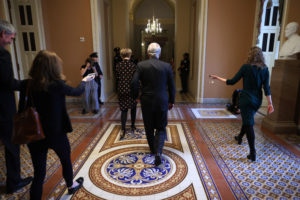
Senate Majority Leader Mitch McConnell returns to his office as negotiations continue on a $2 trillion economic stimulus in response to the coronavirus pandemic in Washington on March 24. CHIP SOMODEVILLA/GETTY IMAGES

Despite a record rebound in the financial markets on news that the U.S. Congress’s nearly $2 trillion rescue plan is imminent, some economists say the legislation may not be enough to blunt the sudden shutdown of so much economic activity from the coronavirus pandemic.

What is needed is not a “stimulus,” as the rescue package announced early Wednesday was called, or one-time payments to businesses and workers, but rather an across-the-board suspension of private debt payments and a nationwide program under which the government directly reimburses pay to laid-off employees, as other countries have done, some critics say. Only such an unprecedented government intervention can prevent permanent economic devastation from the virus-induced work stoppage, even if U.S. President Donald Trump manages to reopen parts of the economy in the next several weeks in defiance of his health experts, as he said Tuesday he was eager to do.

Trending Articles

As news spread that the bill was close to completion, the Dow Jones on Tuesday posted its largest percentage and point gain since Franklin Delano Roosevelt launched the New Deal in 1933, leaping by 2,113 points to finish at nearly 20,705. But that recovery came only after financial markets fell more in March than in any month since September 1931, suggesting the depression-sized stakes of the U.S. rescue package, the largest ever conceived by Congress.

The most pressing issue is that with economic activity across the country ceasing even more quickly than it did during the Great Depression—with businesses shuttering and workers laid off at a pace unprecedented in U.S. history—defaults are expected to be imminent on everything from corporate debt to mortgage payments.

As a result, some economists say, the more appropriate response should be a broad-based “holiday,” to use a Depression-era term, suspending foreclosures, evictions, bankruptcies, and other contractual obligations that would cause long-term damage to the economy. The federal government should step in, possibly invoking implicit force majeure clauses in private contracts, to guarantee such suspensions of debt payment and also to ensure that the millions of workers laid off or furloughed are paid.

“The very term ‘stimulus’ is indicative that people don’t understand the nature of this downturn,” said the Nobel Prize-winning economist Joseph Stiglitz of Columbia University.  “There’s no awareness of this on Capitol Hill at all. In 2008 we were worried about the potential consequences of a credit freeze. Then it was top-down: a freeze of the banking system. But this is bottom-up and has not been adequately talked about: If workers don’t have wages, they can’t pay their bills. They’ll be buying food [with stimulus money], but their balance sheet is still going to be ruined.

“The answer is we need no evictions, no foreclosures on all properties, and the government should guarantee pay,” Stiglitz told Foreign Policy. Credit card companies should also be pressed to issue “a stay on interest on all debt.”

The Trump administration has declined to apply pressure directly to commercial lenders, announcing last week that mortgages guaranteed through the Federal Housing Administration and Fannie Mae and Freddie Mac would not result in foreclosures or evictions for at least 60 days. The giant rescue plan that was completed shortly after midnight Wednesday would funnel out enormous amounts of cash to individuals and businesses, but with no assurances about what happens in the medium to long term to their jobs or debt obligations. It would grant about $500 billion in direct payments to people, in two phases of checks of up to $1,200 per individual making up to $75,000 a year. Additional payments for families with children could total $3,000 for a family of four. Another $500 billion, the most intensively negotiated portion, would go to corporations for unspecified purposes, to be overseen by an inspector general and congressional panel. The package would also reportedly grant immediate tax rebates of up to $1,200 per taxpayer; offer $350 billion subsidized loans to small businesses that maintain their payrolls and direct loans to the hardest-hit industries; relax income tax rules and deadlines; and give financial aid to students, schools, and colleges.

Unemployment insurance benefits in the bill would give recipients 100 percent of their salary for an extended period, but Stiglitz and other economists worry that such indirect methods requiring workers to apply online could crash the system. “I worry if we have the capacity to deliver checks to everybody in two weeks, or two months. I also worry whether the unemployment insurance system is capable of expanding tenfold in two weeks,” Stiglitz said.

Some economists say the Danish approach of directly guaranteeing the better part of salaries through companies, also recently adopted to differing degrees by the German and British governments, is a better remedy. Last Friday, Britain’s chancellor of the exchequer, Rishi Sunak, announced an unprecedented intervention in the British economy that would cover 80 percent of worker salaries for at least the next three months up to $2,900 a month, a figure pegged at more than the average income. Earlier, the Danish government said that companies that would otherwise be forced to cut staff by 30 percent or lose more than 50 people will be covered for 75 percent of their wage bills for three months. The German government, meanwhile, is planning to expand a program to guarantee wages and prohibit eviction due to not paying rent between April 1 and Sept. 30.

“Keeping workers on the payroll, with the cost covered by the Federal government, is very important,” said the Harvard University economist Dani Rodrik, president-elect of the International Economic Association. “It is essential to instill confidence and reduce the insecurity of job loss that will otherwise result, even with generous unemployment compensation. So yes, the Danish (and German, and UK) way is the right way to go. There should be a separate facility to help small and medium sized businesses to help with their liabilities.”

The G-7 nations on Tuesday issued a common call from finance ministers and central banks pledging “coordination on our dynamic domestic and international policy efforts” against the health and economic impact of the virus. And G-20 leaders are expected to deliver an “action plan” later this week. But in practice, the United States has gone its own way. Trump, in particular, has been notably reluctant to inject the federal government too much into economic activity or health responses, declining to mandate anything from industry despite signing the Defense Production Act last week. On Tuesday, Federal Emergency Management Agency chief Peter Gaynor said the government for the first time would use the new act to order about 60,000 test kits.

Stiglitz said the government could work with private companies through the tax system, since they have to fill out a quarterly return anyway, supplying them with a new tax form so that reimbursement to the companies for laid-off workers is simply subtracted from what they owe. “Denmark has done it most clearly,” he said. “They told employers to send workers you don’t want home, lay them off, but pay them, and we’ll pay you.”

Other economists agree that an unprecedentedly swift shutdown of economic activity calls for an unprecedented response by the government. “We are in worse times than in anybody’s memory,” said Lawrence White of New York University, who noted that the devastation of the Great Depression took four years to ruin the economy while the current stoppage is happening in weeks. Both lenders and borrowers in the debt equation need to be encouraged or ordered to stand off from using the typical means of bankruptcy and restructuring. “I can imagine a faster process,” he said, to “encourage shops to reopen and provide liquidity and loans, whatever is needed to get entrepreneurial processes going again.”

Such efforts are needed now because even in the best case, said White, “I  can’t imagine a sharp ‘V’ [shaped recovery] where we declare the coronavirus threat over. It ain’t gonna be full employment on June 1.”

March 25: This story was updated with news of the rescue package.

Michael Hirsh is a senior correspondent and deputy news editor at Foreign Policy. Twitter: @michaelphirsh

foreignpolicy.com

The Economic Wallop of COVID-19: Q&A with RAND Experts

0

rand.org

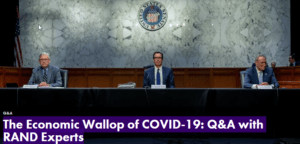
Senate Majority Leader Mitch McConnell (left) and Minority Leader Chuck Schumer (right) meet with Treasury Secretary Steve Mnuchin about coronavirus economic aid legislation, Washington, D.C., March 20, 2020

Photo by Mary F. Calvert/Reuters

March 26, 2020

The speed with which large swaths of the U.S. economy have shut down this month—which some economists have dubbed “The Great Cessation”— is unprecedented. With Congress finalizing an economic stabilization plan to help distressed companies and send cash payments to some Americans, we asked several RAND researchers to discuss the outlook for the economy and strategies for relief and recovery when the COVID-19 crisis ends.

  • Debra Knopman is a principal researcher who previously served as vice president and director of RAND Infrastructure, Safety, and Environment.
  • Krishna B. Kumar holds RAND’s Distinguished Chair in International Economic Policy and previously directed RAND’s Labor and Population research unit.
  • Howard J. Shatz is a senior economist who specializes in international economics and development.
  • Jennifer Kavanagh is a senior political scientist who leads RAND’s Countering Truth Decay initiative

They spoke on a conference call with RAND media relations director Jeffrey Hiday on March 23. What follows is an edited transcript of the conversation.

The economic hit clearly is going to be massive. Some bank analysts are predicting a 12 percent drop in GDP in the second quarter, some even more. What’s the government going to do about it?

Debra Knopman: What’s on the table in the Capitol is a $1.8 trillion package of measures to provide immediate relief to individuals through direct cash checks, $350 billion in loans to small businesses to cover their business interruption expenses, $500 billion to provide relief to other businesses through primarily loan guarantees, and a number of other measures.

This is just to provide an immediate injection of cash liquidity to individuals and small businesses. Right now there is something of a deadlock within the Senate as to how to proceed, and there are real differences of opinion with regard to how that $500 billion would be divvied up among businesses.

Could you talk a bit about the different buckets and what the intended targets are, maybe some of the possible effects?

Knopman: One of the several immediate needs is to get money to individuals using multiple avenues. In this particular bill, Congress is proposing to give at least $1,000 or $1,200 per adult, $500 for children, for all those adults who have filed tax returns. But there are many people who have not filed taxes; they will not be provided for in that particular mechanism. There are other social safety net programs—Social Security or food stamps and the like—where aid will need to be provided. There are several proposals out there to deal with small businesses largely through loans from the Small Business Administration. The point of this program—and the $500 billion for larger businesses—is to open the spigot on federal support to enable them to keep workers employed through the crisis. This is different than the “economic stimulus” we saw in the 2008 financial crisis.

You mentioned $1.8 trillion. How much can, or should, the country afford?

Krishna Kumar: To put $2 trillion in perspective, the U.S. is a $21.4 trillion economy, so we’re talking about 10 percent. Interestingly, if you look at the drop that people are projecting, that is at least 10percent of the economy. So given the drop in GDP that people are projecting, this does not seem an unusually large number.

One of the things people are worried about is that, going into the crisis, we were already running huge deficits and our debt was standing at around 100 percent of GDP. The question is, do we have leeway? But these are extraordinary times. They may call for extraordinary actions. At the end of World War II, our debt to GDP was 121 percent, and the U.S. clearly bounced back from that. So as long as the recovery does not take too long and the economy can get back on track, these numbers are not that large in the grander scheme of things. But eventually the U.S. will want to bring the debt-to-GDP ratio to a manageable level.

How can the money be allocated most effectively?

Howard Shatz: We can think about it two ways. One is what will get the economy moving more rapidly? Economic activity will create employment and that’s one area of recovery. But that’s the kind of thing to think about down the road. The immediate need is people who are going to lose their jobs, who don’t have protections, and public health and health professionals.

Giving something to everyone may be the quickest way to provide assistance to those who have no other supports, but it’s certainly not the most efficient.

Howard J. Shatz

Share on Twitter

We want to give direct assistance to people who will have no other supports. Giving something to everyone may be the quickest way, but it’s certainly not the most efficient, because there are many people out there who will not lose their jobs or sources of support. We could therefore more carefully target that kind of assistance. We also want to make sure that businesses that are at true risk will survive in some way. That might require assistance to businesses or financial institutions that would otherwise see all their loans go bad.

Smaller businesses are certainly likely to get hurt the most. They often have the thinnest profit margins and the fewest financing options. If major companies start cutting back, they might stop purchases from smaller suppliers or delay payments. In the U.S., about 33 percent of all employees work for firms with fewer than 100 employees. In construction and such services as auto repair and personal care, this figure is above 60 percent. So if assistance to small business is limited, a lot of people will be affected. The best option may be to reach those employees directly if they lose their jobs. But more likely, both the businesses and the employees will need help.

Knopman: The other category of immediate need is money for emergency response and medical costs that are falling heavily on state and local governments—local governments in particular. They are on the front lines. Unlike the federal government, they’re all required to balance their budgets and are operating under debt limitations in many cases. Some of these local and state governments have reserve funds—rainy-day funds—others do not. There is a push now in Congress to immediately inject money into state and local government budgets to make sure they’ve got the means to meet these emergency obligations.

Kumar: I want to mention unemployment insurance. If you look at the ways this disaster is unfolding, the phase one response was to address the immediate health impact. Phase two was paid sick leave and free testing. Now we’re thinking about the next phase. People are getting laid off, so how do we get money to them?

The $2 trillion package does involve boosting state support for employment insurance. For example, states like California are already waiving the one-week-wait limit.

With respect to allocating resources, I completely agree that you have to be very careful because we have, in addition to government debt at 100 percent of GDP, we have corporate debt at $10 trillion, or about 47 percent of GDP. So while the intention to help companies is well-placed, we have to be careful. Howard was mentioning companies that have a good chance of surviving—in other words, those companies that would have done well were it not for the crisis. These should be at the top of the list for help.

Which ones should get more or less of this money? Is it right for companies like Apple to get a few billion?

Kumar: Clearly Apple has a huge amount of cash reserves. In fact, incentive compatibility, as economists would call it, demands that we not make the interest on these loans too low because you want companies with future prospects and returns and companies that lack cash reserves who were behaving responsibly fiscally to be able to get this money first.

For example, 16 percent of publicly traded U.S. companies are not even making enough money to pay interest on their debt. That’s why you have to choose carefully.

Shatz: I think the other point is program design. You don’t just want to give assistance to companies away for free, at least to larger companies. If it’s a loan, they’re going to have to pay back that loan. You would like a company like Apple to look at the terms of an assistance flow and say, “Well, those aren’t very good terms. It’s much better for us to use our cash.”

There has to be some skin in the game by the companies—whether it’s a higher interest rate with a government loan or some kind of restriction while they have the assistance, such as whether they can buy back stock or how they treat employees or executive compensation. These are the kinds of terms you might want so that companies have to make a choice that it is worth their while, and the U.S. government would not be throwing away money where it’s not needed.

Let’s try to put this in perspective. How does this compare, for example, to the 2008 financial crisis?

Shatz: The most recent estimates from investment banks suggest that the second quarter will be the largest quarterly decline in the U.S. since World War II.

The decline in quarter four of 2008 was about 8.4 percent on an annualized basis. Estimates are putting the annualized decline in quarter two of this year at around 13 percent. So it’s very large.

There’s also been good work on what disasters do to economies. After World War I, World War II, and the Great Depression, the Great Influenza Epidemic of 1918–20—perhaps our most relevant comparison—is number four in terms of economic decline.

When we look at major historic events like this we see GDP and equity markets decline, while unemployment rises. But we also see very low, risk-free interest rates—government bonds, for example. There’s some discussion about why that is the case. I think right now, as we saw in 2008, there’s a big flight to quality or certainty, and the U.S. government, even at the debt levels mentioned earlier, still offers the best certainty for investors to get their capital back.

We have to be careful that we don’t convert a health crisis into a financial crisis… It is extremely important to contain the health crisis first.

Krishna B. Kumar

Share on Twitter

Kumar: One way I think the two cases differ is that the 2008 Great Recession was a financial crisis that spilled over into the real economy. Whereas this is a real health crisis that is spilling over into the economy and the financial sector. That is why we have to be careful that we don’t convert a health crisis into a financial crisis.

From a policy point of view, that is why it is extremely important to contain the health crisis first, because if we don’t, people are not going to go out, people are not going to spend. The hope then is that the recovery will be hopefully quicker than it was in the 2008 crisis.

How close are we to a recession or, worse, a depression?

Shatz: We are probably in recession right now. Depression? That’s a tough call. There are huge differences between now and the 1930s. One is that we’ve learned from events. We have a pretty good government infrastructure now on how to handle these issues. In fact, in the Great Depression, the Federal Reserve did exactly the opposite of what it should have done.

So we’ve learned from the past. And, since the Great Financial Crisis of 2008, with new laws in place and with bureaucracy to handle this, the Federal Reserve and the Treasury are well prepared. That’s why we saw, last week, different financing facilities get rolled out by the Fed. That’s why we’re seeing big rescue packages now. That’s also why it looks like there’s going to be a European package, too.

What are your thoughts on the recovery rates in the Asia Pacific, Europe, and the U.S.? Given the almost near recovery already of some first-hit countries—China, Japan, Korea—what might we realistically copy from these efforts?

Knopman: There is a close connection between getting the public health emergency under control and being able to restart the economic engine. There’s a distinction to be made, however, between the restarting process, and the kind of fiscal and monetary policy you do for that, versus a stimulus when you’re in a deep recession like in 2008 where you need to pump up demand. Of course, unemployment was much higher then than what we had at least a couple of weeks ago. So a lot is depending here on the timing of getting the public health crisis under control. That should shape the policy responses to re-starting or getting the economy back on its growth path.

Kumar: One interesting point here. During the Great Recession there was talk about whether there’s a decoupling—whether the emerging economies and the developed countries are behaving differently, so that if one part of the world is not doing well, the other countries may still do well. It doesn’t always happen.

But as we are seeing, China, Japan, and South Korea are going to recover earlier just because they faced the crisis first. So we could see the “decoupling” happen where they first start off and bear the burden, if you will, of reviving the global economy. Let’s not forget that we are all hugely interconnected with global supply chains. We talked about Apple, which shut down many of its stores in China during the crisis, but now they’re reopening. So for the globalized U.S. companies, this might offer some relief if some parts of the Asian economies pick up faster.

Some are wondering if the cure could potentially be worse than the disease. Is it too soon to think about an exit strategy to emerge from the shutdowns and isolation? Are we going to reach a point where we just have to get the country to go back to work?

Shatz: That certainly is a risk. I would refer to what Debra said: We have to take care of health first. If we trace the causes of the economic problems, they were a supply shock caused by a health crisis in China, and then demand shocks. We also have other supply shocks with Europe being closed.

Think about this: China is a major trading partner, and its shutdown negatively affected a lot of U.S. businesses. But the U.S. receives only 15 percent of its imports from China and sends only 7 percent of its exports to China. We send 34 percent of our exports to the EU and receive 30 percent of our imports from the EU. Now those economies are shut down. Our neighbors Canada and Mexico are also major trading partners with us, so our economic health will depend in part on theirs as well.

So if we don’t solve the health problem, this could go through waves. In fact, the 1918–’20s flu pandemic went through three waves. That would certainly be not something we want.

But it’s not too early to start thinking of recovery. Public health authorities are, I hope, thinking: “How long do different communities have to remain in lockdown before we’re reasonably sure that the virus will not spread anymore? Or spread too fast?” Part of that may hinge on the development of a vaccine.

We do want to release people from the lockdown at some time—but not too soon. That’s not necessarily an economic issue. If the lockdown remains for a long time, that may just mean that more assistance would be needed. But keep in mind that many businesses are not shutting down, so not all economic activity is coming to a halt.

Knopman: This is where adaptive management applies to government. We’re familiar with this in business dealings: As you get in new information, you make changes, you pivot in your business strategy.

The government is going to need to stay agile. Of course, many of these decisions are being made at the state and local level based on their own circumstances. So it’s not a wholly coordinated response nationally at this point in time.

I would hope that those in the federal government are thinking about what those trigger points are, what those decision rules are going to look like for easing up the restrictions. It may be contingent on the availability of testing and the ability to segregate those who are infected and allowing those who are not and who don’t pose a danger to others to be back out and about.

Kumar: About exit strategies—let’s not forget that the Fed has been pumping the economy with much-needed liquidity. Because the financial plumbing system has been in danger of getting frozen and you want there to be a counterparty to buy the assets and so on, the Fed is doing that.

But even going into the crisis, the banks were sitting on $1.3 trillion of excess reserves. The cash was sitting in the banking system. So think of it as a dam where a lot of water is getting accumulated, and there is a crack. All this is going to enter the economy and cause inflation. So when we think of the exit strategy, we should be thinking about how the Fed is going to unwind quickly enough so that we don’t face inflationary pressures.

Japan seems to have dealt with this crisis quite differently. What do you make of that?

Kumar: Well the Bank of Japan did end up with the security purchases as well, so it’s not like they’ve done something drastically different than the Fed. But they might’ve been a little bit different on the stay-at-home and other policies.

One of the things that is becoming very clear is that the effect of this virus is highly heterogeneous across countries. What is happening in Italy is very different from Spain. Even within the U.S. you are seeing that what’s happening in New York and Washington and California is extremely different.

All of us on this call are talking economics, but we keep coming back to the primary health crisis and the need to keep the number of cases under control. Once that happens, we might have more flexibility in our policy actions as well.

What about pumping billions—or hundreds of billions—of dollars into infrastructure as a way to guarantee employment or kickstart the economy?

Knopman: While we’re still in this health crisis, pumping money into infrastructure is not going to help because we’re trying to not have people in workplaces—whether the workplace is out on a highway or at a water treatment plant. But certainly, once we start to come out of the immediate health crisis, I think there’s going to be huge need to help bolster the state and local budgets.

While we’re still in this health crisis, pumping money into infrastructure is not going to help, because we’re trying to not have people in workplaces.

Debra Knopman

Share on Twitter

One way to do that is to have that funding focused on infrastructure operations and maintenance, which is not what the federal government typically does when it provides aid to state and local governments for infrastructure. That takes enormous pressure off those local budgets so money could be used on social services, public safety, and the like.

Over the longer term, the federal government could start pumping in more money into infrastructure for new projects. But you don’t want to be throwing money around without careful thought. You want to make sure you can match up your excess labor to the extent you have unemployment in certain areas and can get that directed to the infrastructure needs in that region. So although I do think that is going to be a way to get the economy moving again, those jobs are temporary, and practically speaking this would have to be spread out over probably a 10-year period.

Obviously, transportation infrastructure is being used a lot less now. Here in Washington the trains are running at a much lower frequency, and I presume revenues are down sharply. What does that do?

Knopman: This is having a huge effect in major urban areas where they’re trying to maintain public transit, whether it’s New York’s subway, New Jersey transit, BART, WMATA Metro here in Washington DC. Their revenue streams have collapsed. And yet as a public utility, they need to keep operating. So operating subsidies to these entities is extremely important. This is what is under discussion in the Senate now. Once people are able to get back to work, pumping money into these systems’ backlogs of deferred maintenance will also help enable the recovery.

I suppose this could have other knock-on effects, such as municipal bonds not being as sturdy as they were.

Knopman: All sorts of things have been happening with the municipal bond market. Basically it fell apart. Today, with the Fed action, there seems to be some restoration of a semblance of a market.

But the problem is that because of this liquidity crunch, these bonds—which have an extremely low default rate at something like 0.01 percent over the last 40–50 years—are being sold off to purchase 10-year Treasuries or just cash. There’s going to be a huge demand from state and local governments to borrow immediately to go back into this market. It’s going to be tough for them to sell those bonds until there’s a stabilization in these markets.

With the economic recovery so tied to health recovery, as we’ve mentioned a few times, aren’t we in completely uncertain times?

Shatz: We are, and the uncertainty is driven by not fully understanding the nature of the disease. Once we learn more about it and how to deal with it, we’ll have more certainty.

In terms of duration, that’s also going to depend on what we learn about the disease. If the reports from China are correct, China basically shut down for two months. Parts of China are now, while not operating at 100 percent, back operating decently.

Provided the information coming out is correct, China is worth watching to see whether what they’ve done in fact has reduced the disease to low or manageable levels, and then to see how their economy has recovered. If they’re operating partially after two months, and that continues on that trajectory, then perhaps we’re looking at another two or even six months. And then if there’s, unfortunately, a reemergence, sure, we could be looking at a year. But right now, given China’s trajectory, it looks like four to six months—but with a very wide error band around that.

Knopman: I’d like to inject a note of optimism here. In the wake of the 2008 financial crisis, state and local government budgets were hit really hard and many didn’t get their finances back in shape until the last couple of years.

But they learned a lot. And the vast majority of states now have rainy day funds. Same for most cities as well. There is more resilience in their financial management. So while they will have revenue shortfalls in the near term, we hope it’s going to be short-lived.

They also are building on a somewhat more solid base and know what to expect in the coming years of having to adjust their revenue projections. If a state is dependent on income taxes, capital gains, they’re going to see big, big hits. But overall, I believe there’s more resilience in the system at that level than there was in 2008 and 2009.

Kumar: One thing adding to the uncertainty is that some of our health experts are saying the virus could recur in the fall. But if we can get even a few months respite, we can actually prepare for it. We can put in more protections in place for workers and consumers.

In fact, preparing some of the health care equipment and so on can be part of the recovery process if we can handle training and placement of workers. One of our colleagues looked at some of the past pandemics and was able to show that the economy in all cases, most recently the SARS epidemic, turned around and grew faster right after the crisis.

The stock markets clearly are not appreciating all the uncertainty. How is the level of uncertainty being affected by what RAND terms “Truth Decay,” the diminishing role that facts play in making important public policy decisions?

Jennifer Kavanagh: Truth Decay contributes in a number of ways. The first is through the myths and misinformation that exist about the virus—about its mortality rate, its trajectory, how quickly it spreads, how it spreads, whether you can spread it when you are asymptomatic.

But there is also disinformation and misinformation about government policy—whether you’re talking about local and city government or Congress or the Fed. There are rumors about everything. When people don’t know where to turn, they react to any information even if it is false.

Can you talk more about low trust public trust in institutions and how misinformation is part of that?

Kavanagh: Trust is very low in all of the institutions that we are looking to for information and for responses to this problem. Trust is low across all types of media platforms and all levels of government. It’s higher for local government, higher for city government, but still really very low in the bigger picture.

So people don’t know where to turn for good information, and they don’t have any confidence that the government has this situation under control. My colleagues have mentioned several times that in order to stabilize the markets and have an economic recovery, we first have to control the public health crisis. Part of that is having the American public believe that the government is capable of dealing with this crisis.

Part of controlling this public health crisis is having the American public believe that the government is capable of dealing with it.

Jennifer Kavanagh

Share on Twitter

Economically, what are going to be the long-lasting impacts from the virus?

Shatz: I think we’re going to see a number of things that will sound very familiar to people who have been watching the trade war. For example, I think there’s going to be a lot more emphasis on resiliency and diversity of supply chains.

There’s going to be much more sensitization to risk. We may see more government consideration of what must be or what should be produced in the United States. Maybe more stockpiling of goods that we think would be important in the case of disaster or other crisis.

This would mean somewhat less efficiency in the economy. But maybe it’s something like an insurance policy: For those who are lucky, it’s just an expense. But for people who are unlucky, there’s a big payoff.

Given that much of the needed medical supplies are imported, what about the recent trade tariffs?

Shatz: I won’t go into whether the tariffs should be rescinded. I will say that there are no trade heroes so far from the pandemic. There have been several dozen new restraints added onto trade and medical supplies. I don’t think any have come from the United States since January.

In addition, we’re learning that many countries have a number of trade restraints on basic things. For example—and this is coming from the very good team in Switzerland at Global Trade Alert—there are a number of countries that have high barriers on soap. All of a sudden, we’re learning that maybe you don’t want high trade barriers on soap.

The discussion about tariffs on health equipment is going to go hand in hand with thinking about location of production of medical goods.

Kumar: At the same time, we’re seeing a huge increase in scientific and medical cooperation across countries. So, counter-intuitively actually, I think this can bring the world together, and you’re going to see more scientific and medical cooperation going forward.

Given the medical, health, and economic effects, if there was more widespread testing, would that enable people to get back to work more quickly?

Shatz: I will approach that from a data perspective. If we were to have more widespread testing, we would probably find we have a lot more cases. Then what we know about the disease would change dramatically.

We might find that the fatality rate is lower than we think. We might find it’s more widespread. We’d be able to do more contact tracing. It might allow us to recover more quickly because we’d be better able to see where the disease is going.

You put those together, and more testing probably means better understanding of the disease, more targeted health intervention, and a more rapid recovery.

What are the three most important things a city and its business community can do now to speed economic recovery from COVID-19?

Kumar: The local response to the crisis has been nothing short of terrific. At the end of the day, the disease exists in communities. Right now, the key thing that cities and communities can do is to get information out there on safety and distancing, what kind of restaurants are open, and so on.

As soon as it is safe to go out, I think cities can help increase confidence in the safety of public places and restaurants. That might mean more testing, more cleaning of public places.

The second thing governments at all levels can do to help aid this recovery is to remove frictions. For instance, they can provide job matching services by listing openings. They can organize job fairs. They can speed up local permits for construction and other things.

Third, they can provide assistance to households and businesses to avail themselves of stimulus benefits out there.

Shatz: To make sure that local economies don’t decline, I’d think about what steps can be taken to keep businesses going. Allowing or facilitating restaurants to do take out, for example, is very good.

The other thing is that municipalities, especially smaller towns, are going to have limited ability to finance recovery. If they do have reserves, a question could be, can they delay taxation? Can they delay fines? Can they delay things that will cause their residents to have to pay into the city rather than to pay for businesses?

Knopman: Forbearance is a word that I think we’re going to hear a lot, and not just from the point of view of banks loosening terms with borrowers. Local governments may need to consider similar approaches with tax payments.

Zooming back out, what is the impact of the virus on international relations and the U.S. position in the world?

Kumar: RAND’s very own Ambassador James Dobbins and I have an article that should be coming out saying that on the international front, closed should not become the new normal. This is not a time for us to make permanent the temporary barriers that we have erected out of necessity.

We quote an author who said that you cannot protest against globalization because nobody’s in charge. Globalization is a result of 7–8 billion of the world’s citizens wanting to be interconnected and be in the global supply chain.

I already mentioned the medical and other coordination that exists. So I think that we should try to cut down trade barriers, increase cooperation, be more a greater part of multilateral organizations.

Shatz: There is something of a PR effort right now in terms of major countries trying to establish themselves as the global leaders. I think it’s much too soon to say whether this will actually have any effect.

What people who may be skeptical of the U.S. should keep in mind is that the U.S. moved very quickly to shore up its international partners in particular—as we did in 2008—on the financial side by the Fed extending swap lines first with major central banks and then with emerging market central banks. And the world, for better or worse, operates on dollars, and the U.S. moved very quickly to make sure that the world could continue to operate on dollars. So there is multilateral action going on at many levels.

I think it’s much too early to say how the globe will reshape—especially because it depends on whether countries really have the capability to serve as international leaders too.

rand.org

Ο ΚΟΡΩΝΟΙΟΣ ΑΠΕΙΛΕΙ ΜΕ ΑΡΜΑΓΕΔΔΩΝ ΤΗΝ ΕΛΛΗΝΙΚΗ ΟΙΚΟΝΟΜΙΑ

1

Της Μαρίας Νεγρεπόντη-Δελιβάνη                                          24.03. 2020

========================================================

Όταν κάποτε φθάσει στο τέλος της  αυτή η τρομακτική  όψη του κορωνοϊού, που απειλεί τη ζωή μας,  η υφήλιος θα έρθει αντιμέτωπη με  μια άλλη πλευρά του, εξίσου φοβερή. Αυτή δεν θα θέτει σε άμεσο κίνδυνο την ύπαρξή μας, αλλά σε δεινή  δοκιμασία τον τρόπο ζωής και το βαθμό ευημερίας μας. Ο κορωνοϊός διαβρώνει συστηματικά τα θεμέλια των οικονομιών ολόκληρης της υφηλίου, μη αφήνοντας αλώβητη καμία τους πτυχή. Ο καταραμένος αυτός ιός εξασθενεί ταυτόχρονα τη ζήτηση και την προσφορά, συμπιέζοντας  το σύνολο των εισοδημάτων, αποθαρρύνοντας την επένδυση και θρυψαλιάζοντας  σε αμέτρητα σημεία της την αλυσίδα  της παραγωγικής διαδικασίας. Η ελεύθερη διακίνηση αγαθών, υπηρεσιών και εργαζομένων υπόκειται καθημερινά σε ολοένα πιο στραγγαλιστικούς περιορισμούς, επιφέροντας έτσι απανωτά και θανάσιμα χτυπήματα στην παγκοσμιοποίηση. Το σύνολο της τουριστικής βιομηχανίας σχεδόν νεκρώνεται.  Οι οριακές επιχειρήσεις είναι οι πρώτες που αποχωρούν από την αγορά. Δεν είναι όμως οι μόνες, δεδομένου ότι όσο παρατείνεται και όσο  βαθαίνει η κρίση ανοίγεται διάπλατα  η λεωφόρος προς  τη χρεοκοπία και  άλλων λιγότερο προβληματικών, και κατά προτεραιότητα μικρών επιχειρήσεων, σε συνδυασμό με μαζικές   απολύσεις εργαζομένων. Το χρηματοπιστωτικό σύστημα βρίσκεται σε κατάσταση εντεινόμενου πανικού,  ενόψει  των «κόκκινων δανείων» των επιχειρήσεων, που κορυφώθηκαν εξαιτίας των πολύ χαμηλών ή και σε αρκετές περιπτώσεις αρνητικών επιτοκίων. Παρότι είναι ακόμη νωρίς για την εξαγωγή εμπεδωμένων  προβλέψεων, η Παγκόσμια Τράπεζα, πριν από μερικές ημέρες, ανήγγειλε ότι το παγκόσμιο ΑΕΠ αναμένεται να μειωθεί κατά 5%. Παρότι πρόκειται για καταστρεπτικά υψηλό ποσοστό, ικανό να βυθίσει σε βαθιά ύφεση την υφήλιο,  εκτιμώ  ότι δυστυχώς θα είναι πολύ μεγαλύτερο.

Η βαθιά αυτή ύφεση, που φθάνει καλπάζοντας, θα λαβώσει όλες ανεξαιρέτως τις οικονομίες του κόσμου, αλλά όχι στον ίδιο βαθμό. Η ένταση και η διάρκεια της οικονομικής κρίσης, για τις επί μέρους εθνικές οικονομίες, θα είναι συνάρτηση πολλών παραγόντων. Ανάμεσα και σε άλλους, της διάρθρωσής τους κατά τομείς παραγωγής, του ύψους του χρέους τους, δημοσίου και ιδιωτικού, της  γενικότερης οικονομικής τους κατάστασης, αλλά και σε μεγάλο βαθμό της αποτελεσματικότητας των μέτρων, που θα σχεδιαστούν για την αντιμετώπισή της ύφεσης.

Στο άρθρο μου αυτό θα προσπαθήσω να εκτιμήσω το μέγεθος των καταστροφών που αναμένουν την εξαιρετικά ευάλωτη, από πολυάριθμες πλευρές,  Ελλάδα,  από την οικονομική εισβολή του κορωνοϊού:

Η στρεβλή ανάπτυξη της ελληνικής οικονομίας

Σε αντίθεση με τις ήδη  αναπτυγμένες  οικονομίες, των οποίων το μοντέλο αναγνωρίζεται ως κανονικό, η Ελλάδα ακολούθησε ανορθόδοξη   εξέλιξη. Δηλαδή, από την κυρίαρχη στα πρώτα αναπτυξιακά στάδια, συμβολή του πρωτογενή τομέα, στο ΑΕΠ και στη συνολική απασχόληση,  η Ελλάδα βρέθηκε απότομα στον τριτογενή, χωρίς να παραμείνει αρκετά στο δευτερογενή, ώστε να εξασφαλιστεί η ανάπτυξή του και η σημαντική συμμετοχή του στην απασχόληση και στο ΑΕΠ. Η ανώμαλη αυτή εξέλιξη οφείλεται, σε σημαντικό βαθμό,  στην πρόωρη είσοδο της χώρας στην ενωμένη Ευρώπη, καθώς και στα ακατάλληλα, για το στάδιο ανάπτυξης της Ελλάδας,  προγράμματα  που της επιβλήθηκαν έκτοτε. Με τον πρωτογενή τομέα εξαιρετικά αναιμικό, εξαιτίας και των συνεπειών της ΚΑΠ, η οποία αφάνισε πολλά παραδοσιακά μας προϊόντα, προκειμένου να αποφευχθεί μείωση της τιμής τους διεθνώς, και με τον δευτερογενή τομέα που δεν ξεπέρασε την παιδική του ηλικία, η Ελλάδα εμφανίζεται με έναν υπερδιογκωμένο  τριτογενή, που συμμετέχει γύρω στο 85% του ΑΕΠ της. Στον τομέα αυτό των υπηρεσιών κυριαρχεί ο τουρισμός. Ο μεγάλος αριθμός των δραστηριοτήτων, που τροφοδοτείται από τον τουρισμό καταλήγει, σύμφωνα με σχετικές μελέτες,  σε πολλαπλασιαστή υπερδιπλάσιο της αρχικής /άμεσης δαπάνης. Εκτιμάται, δηλαδή, ότι μια αρχική δαπάνη για τουριστικές υπηρεσίες από 1 ευρώ, καταλήγει να αυξάνει το ΑΕΠ μέχρι και κατά 2.65 ευρώ. Η σημαντική αυτή διάχυση των τουριστικών δραστηριοτήτων εξασφαλίζει  τεράστια συμβολή του κλάδου στη δημιουργία του ΑΕΠ και στην απασχόληση, που υπερβαίνει το 30%, ενώ συμβάλλει και στο μισό περίπου της μεγέθυνσης της οικονομίας. Ειδικότερα, η συμμετοχή του τουρισμού στη συνολική  απασχόληση εκτιμάται για τους μήνες αιχμής (Ιούνιο-Σεπτέμβριο) μέχρι και στο 44% της συνολικής. Η συνέπεια αυτής της εφιαλτικής πτώσης του ΑΕΠ και της απασχόλησης που, εκτός ευνοϊκού  απροόπτου,  θα προκληθεί, θα επιφέρει βαρύτατο πλήγμα στο σύνολο του πληθυσμού, αλλά όχι στον ίδιο βαθμό στις επί μέρους κατηγορίες του. Περισσότερο θα υποφέρουν τα τουριστικά μας νησιά, οι γυναίκες που συμμετέχουν σε υψηλό ποσοστό στην τουριστική απασχόληση, οι εργαζόμενοι στα εστιατόρια, τα ξενοδοχεία, τα μέσα μεταφοράς και τα κέντρα αναψυχής, στα κρουαζιερόπλοια και στη βιομηχανία παραγωγής τροφίμων και αναμνηστικών.  Το σύνολο του ελληνικού πληθυσμού, κατά μέσο όρο, απειλείται με πτώχευση γύρω στο 30% (που θα προστεθεί σε αυτήν των 25% εξαιτίας των μνημονίων).

Η μνημονιακή θανάτωση της δυνητικής μας ανάπτυξης

Το γεγονός  που  διαπιστώνεται ολοένα πιο τραυματικά,  στην Ελλάδα,   είναι  ότι τα μνημόνια, πέρα από τα  επώδυνα και  εγκληματικά μέτρα, που επέβαλαν στη χώρα,  επί δέκα ολόκληρα χρόνια, απενεργοποίησαν επιπλέον εξαιτίας των εσφαλμένων  προγραμμάτων τους, και τη δυνητική της ανάπτυξη. Τη δυνατότητά, δηλαδή,  της οικονομίας να αναπτυχθεί με ρυθμούς πολύ ταχύτερους από τους αντίστοιχους πραγματικούς, μόλις οι συνθήκες θα το επέτρεπαν.  Ως απόδειξη αυτής της εξαιρετικά δυσάρεστης εξέλιξης είναι το γεγονός  ότι, ενώ θα έπρεπε τα δύο αυτά τελευταία χρόνια, που η ανάπτυξη ήταν θεωρητικά δυνατή, αυτή  να εκτοξευθεί σε 5-6%, έμεινε αντιθέτως καθηλωμένη γύρω στο 1%..

Η συμβολή των μέτρων εναντίον των οικονομικών συνεπειών του κορωνοϊού

Οι ΗΠΑ και η ΕΕ, αλλά και η Ελλάδα άρχισαν να σχεδιάζουν και να ανακοινώνουν τη λήψη μέτρων στην προσπάθειά τους να περιορίσουν τις συνέπειες της ύφεσης από τον κορωνοϊό στις οικονομίες τους:

*Στις ΗΠΑ, που ορισμένες προβλέψεις ρίχνουν δραματικά το εισόδημα  το δεύτερο τρίμηνο του 2020, ο Ντόναλντ Τραμπ αναφέρθηκε σε ενίσχυση της ρευστότητας με $3 τρισεκατομμύρια. Να σημειώσω ότι δεν είναι διόλου σίγουρο ότι η πρόσθετη αυτή ρευστότητα θα είναι αποτελεσματική, δεδομένου ότι τα τελευταία χρόνια υπήρχε υπεραφθονία ρευστού, που όμως, εξαιτίας  της κορυφούμενης ανισότητας κατανομής, δεν κατευθυνόταν στην κατανάλωση ή στην επένδυση, αλλά στο χρηματιστήριο και στην αποθησαύριση.

*Στην ΕΕ, oι μέχρι τώρα σχετικές δηλώσεις της προέδρου της ΕΚΤ Christine Lagarde  ουδόλως πείθουν  για τις ορθές της προθέσεις.  Και τούτο, διότι, τα ποσά που ανήγγειλε ότι θα έθετε σε κυκλοφορία υπολείπονταν σημαντικά των αντίστοιχων, στις ΗΠΑ, παρά το γεγονός ότι ο πληθυσμός στην Ευρώπη υπερέχει κατά πολύ του αντίστοιχου των ΗΠΑ. Εκτός των άλλων, η πρώτη γκάφα της κυρίας Lagarde, μόλις ανέλαβε τα καθήκοντά της, σχετικά με την άγνοιά της  τής  διαφοράς απόδοσης γερμανικών και λοιπών χρηματιστηριακών τίτλων, έκρουσε τον κώδωνα του κινδύνου, που ελλοχεύει   από την ανάθεση  σε μη οικονομολόγο,  του οικονομικού της μέλλοντος. Ήδη, ωστόσο, βρισκόμαστε σε δραματικές εξελίξεις, που οδηγούν σε σπασμωδική αναστολή του Συμφώνου Σταθερότητας, και που απαιτούν, φυσικά σοβαρή και ad hoc ενημέρωση και προβληματισμό.

*Στην Ελλάδα, και σπεύδω να το υπογραμμίσω, η Κυβέρνηση Μητσοτάκη κάνει ότι μπορεί,  προκειμένου να τιθασεύσει τη λαίλαπα του ιού στη μολυσματική, και όσο γίνεται και στην οικονομική του υπόσταση. Η ειρωνεία, βέβαια, έγκειται στο γεγονός ότι μια αφθονία ρευστότητας θα είχε τα θετικά αποτελέσματα, που οι πλουσιότερες οικονομίες επιδιώκουν, χωρίς να εξασφαλίζουν. Αντιθέτως, η στερημένη, εδώ και δέκα χρόνια, από την απολύτως απαραίτητη, για οποιαδήποτε  οικονομία, ρευστότητα Ελλάδα, θα είχε αυξημένες προοπτικές  για ικανοποιητικά αποτελέσματα. Δυστυχώς, όμως δεν τα έχει ούτε και τώρα, παρότι τα πάντα καταρρέουν. Και τούτο διότι, το 3.5% του ΑΕΠ που χωρίς τον κορωνοϊό θα όδευε, ως πρωτογενές πλεόνασμα, στους εταίρους, εκτός  του ότι είναι ανεπαρκέστατο μέγεθος για να αντιμετωπίσει τον κορωνοϊό, και στις δύο μορφές του, είναι ξεκάθαρο ότι  δεν πρόκειται για μέτρο βοήθειας και αλληλεγγύης από την ΕΕ, αλλά για δική μας αιμοδοσία. Η ίδια περίπου κριτική ισχύει και για τα επιστρεφόμενα -κατακρατούμενα από την ΕΚΤ εδώ και χρόνια ποσά.  Το ευρωπαϊκό, ωστόσο, τοπίο μεταβάλλεται με ταχύτατους ρυθμούς. Και…λοιπόν, παρέχεται η άδεια σε κάθε εθνική οικονομία «να δαπανήσει όσο της χρειάζεται», προκειμένου να τα βγάλει μόνη της πέρα με τον φονικό ιό.  Ωραία φαίνεται, από πρώτη όψη,  αυτή η ελευθερία χαλάρωσης. Αλλά…. τι μπορεί να σημαίνει για την  Ελλάδα; Δηλαδή, τι άφησαν όρθιο οι ορδές των μνημονίων, που να μπορεί τώρα να δαπανηθεί; Και, αλήθεια,  με ποιο νόμισμα θα γίνουν αυτές οι δαπάνες για την αντιμετώπιση  του Αρμαγεδδών;

Έφθασε, επιτέλους, όπως όλα δείχνουν, η ώρα των θλιβερών διαπιστώσεων χάρη αφενός της συνειδητοποίησης της καταλυτικής σημασίας που έχει το εθνικό  νόμισμα, αλλά και αφετέρου του θανάσιμου κινδύνου της απεμπόλησής του. Από εδώ και μπρος θα είναι σαφέστατη η διάκριση, ακόμη και για εκείνους που ανέφεραν το ευρώ με ευλάβεια,  ανάμεσα στις  τυχερές εκείνες ευρωπαϊκές οικονομίες, που διατήρησαν τα εθνικά τους νομίσματα, και στις άλλες που με τόση ασύγγνωστη  επιπολαιότητα τα πέταξαν στον κάλαθο των αχρήστων, ανταλλάσσοντάς τα με   το εκ γενετής άρρωστο ευρώ.


Coronavirus, God, and Science

0

By March 25, 2020

BESA Center Perspectives Paper No. 1,504, March 25, 2020

EXECUTIVE SUMMARY: When PM Benjamin Netanyahu said, in a March 21 TV interview, that “with God’s help we’ll get through” the coronavirus crisis, the interviewer interrupted him with these words: “With the help of the Weizmann Institute…The modern Temple of Zionism is at the Weizmann Institute.” This exchange reveals the gap between the modern state’s promise of efficient management even in the face of great adversity and the elements of randomness and surprise that can render the most powerful and advanced states helpless.    

From the outset, the modern state has depended on science and human rationality as the means to a stable and secure future. As the French sociologist Bruno Latour described the modern era: “The laws of nature enabled the first Enlightenment to demolish the groundless pretensions of the ancient human conceptions…All thoughts of the past were rendered foolish or hypothetical…A shining dawn arrived.” Similarly, Theodor Herzl envisioned a modern state that would succeed on the basis of scientific knowledge. As he wrote in his book The Jewish State: “The founding of a Jewish State, as I conceive it, presupposes the application of scientific methods. We cannot journey out of Egypt today in the primitive fashion of ancient times.”

For the devotees of science and human rationality, this is the essence of the promise of stability, prosperity, and security. If something spins completely out of control, it is not—according to the “religion of rationality”—because the promise was overblown but because someone was negligent, did not do his job right, or failed to consult the right expert in time. It is a “foul-up,” a phenomenon that in our era requires an investigation.

The French philosopher Paul Virilio described at length how rational scientific thought strives to achieve control over the world of phenomena, seeking to control even the uncontrollable. In his view, however, this thralldom to the great promise of technology and science may well lead to an “integral accident” that not only will change the human perception of technology but could even bring about the end of the “modern project.”

Virilio was not, of course, hoping for such an “accident,” but warned of it: the crisis would be as deep as the promise was great. Modern humanity’s expectations of science and the state collide again and again with a defiant reality, and the coronavirus crisis is a dramatic example of such a clash.

In times of distress and extremity, the ultimate test of a national leadership lies first and foremost in its ability to function properly in the eye of the storm while taking resolute decisions and actions that are attuned to the state of emergency as the full scale of the disaster gradually emerges. And it is here that the basic behavioral problems of the modern state reveal themselves: at a time when the “great accident” has actually occurred, it has trouble dealing with it because of procedural and legal restrictions, stubborn cognitive stipulations, a failure to understand the unprecedented event, and an impulse to try to achieve centralized control over the crisis when it is not clear that it is controllable at all.

Egyptian hieroglyphics, which were once at the scientific forefront, were well able to account for the crisis of the descent of plagues upon Egypt: “It is the finger of God.” The humility that is needed in extreme crisis conditions of this magnitude is not only between man and God but also between humanity and the forces of nature. It is here that the path to coping with the crisis begins: in the awareness that not everything is controllable by human beings. The great scientists know how much even the scientific pursuit requires profound humility and the hope of salvation by the Creator.

View PDF

This is an edited version of an article to be published in The Liberal in April 2020.

Maj. Gen. (res.) Gershon Hacohen is a senior research fellow at the Begin-Sadat Center for Strategic Studies. He served in the IDF for 42 years. He commanded troops in battles with Egypt and Syria. He was formerly a corps commander and commander of the IDF Military Colleges.