Αρχική Blog Σελίδα 2504

Η άγνωστη διπλωματία μαλακής ισχύος (soft power) της Τουρκίας πατάει στη Βιολογική κρίση

0

Του Δημητρίου Τσαιλά.

Η παρούσα βιολογική κρίση επηρεάζει και την ισορροπία της μαλακής ισχύος μεταξύ της Ελλάδος και της Τουρκίας. Δηλαδή τις ικανότητές μας να ασκούμε επιρροή μέσω της έλξης σε αλλοεθνείς, της ευθυγράμμισης των αξιών μας και των υποκείμενων ηθών και εθίμων μας.

Αν και οι φυσικοί ιοί όπως το COVID-19 δεν είναι εθνικές δημιουργίες και δεν πρέπει να κατηγορήσουμε κάποιους για την πανδημία, έχει γίνει μια καλή υπόθεση εργασίας, για τις πληγές της τουρκικής κυβέρνησης στα πλαίσια της ασύμμετρης απειλής και του διεξαγόμενου υβριδικού πολέμου με τη διαχείριση του μεταναστευτικού να εκμεταλλεύονται  και τους παθόντες λόγω  ιού, αποστέλλοντας τους σε ελληνικά νησιά με σκοπό την περαιτέρω αποσταθεροποίηση της χώρας μας.

Τι ακριβώς κάνει η Τουρκία

Η Τουρκία, προσπαθεί μέχρι στιγμής να αποφύγει να τεθεί σε στρατηγική άμυνα. Αντ’ αυτού, εκμεταλλεύεται το μεταναστευτικό πρόβλημα και την πανδημία ακολουθώντας μια πολύπλευρη προσέγγιση για να μετατρέψει την κρίση σε μια γεωπολιτική ευκαιρία.

Ο θύτης φαίνεται ως θύμα

Πρώτον, έχει κεφαλαιοποιήσει την εμφανή τεχνοκρατική της ικανότητα να φαίνεται ως θύμα αντί για θύτης που είναι στην πραγματικότητα. Η Άγκυρα χρησιμοποίησε ένα αδιάκοπο ρεύμα προπαγάνδας στο εσωτερικό και στο εξωτερικό για να δημιουργήσει την αντίληψη ότι έχει καταφέρει να διαχειριστεί το μεταναστευτικό και να αγοράσει τον παγκόσμιο χρόνο για να ανταποκριθεί αποτελεσματικότερα στο εσωτερικό της.

Δεύτερον, η Τουρκία έχει ανακοινώσει μετά το ξέσπασμα της πανδημίας πως θα παράσχει  βοήθεια σε πολύπαθες χώρες της Ευρώπης. Με σκοπό να κερδίσει τις εντυπώσεις.

Προπαγάνδα πολέμου

Ένα τρίτο και σχετικό σημείο της στρατηγικής της Τουρκίας είναι η χρήση της αποκαλούμενης αιχμηρής ισχύος. Η Άγκυρα έχει κλιμακώσει την ενημερωτική της εκστρατεία εναντίον της Ελλάδος, καθώς προωθούν τις θεωρίες συνωμοσίας που αποκρύπτουν το δικό τους ρόλο στην προσπάθεια παράνομης εισόδου μεταναστών από τα σύνορα με την αλλαγή ευθύνης προς την Αθήνα. Η Τουρκία έχει συνδυάσει τη δημόσια διπλωματία με πληρωμένη και συντονισμένη ανταλλαγή μηνυμάτων από τα κρατικά ελεγχόμενα μέσα ενημέρωσης, τις λεγεώνες των κοινωνικών μέσων μαζικής ενημέρωσης εσωτερικού και εξωτερικού και τους δημιουργούς ψευδών ειδήσεων με προσφορά βοήθειας από τις τουρκικές μυστικές υπηρεσίες, για να ενισχύσουν περαιτέρω την αφήγηση ότι η Τουρκία είναι θύμα κακομεταχείρισης και μοναδικός σωτήρας στην περιοχή.

Στόχος η κατάληψη του Ελληνικού εδάφους

Ο αποτελεσματικός συνδυασμός στρατιωτικών και πολιτικών μέσων είναι το κλειδί για την αντιμετώπιση της όποιας υβριδικής απειλής, η οποία είναι δύσκολο να προσδιοριστεί επακριβώς και μπορεί να εναλλάσσει και να συνδυάζει διάφορες μορφές δράσης. Η Τουρκία χρησιμοποιεί έναν συνδυασμό πολλών δόλιων μεθόδων (εργαλειοποίηση μεταναστευτικού, εκμετάλλευση ανθρώπινης κρίσης και πανδημίας, διάδοση ψευδών ειδήσεων και δηλώσεις μίσους) για την κατάληψη ελληνικού εδάφους και την αποσταθεροποίηση της περιοχής σε όλο το μήκος των ελληνικών συνόρων. Σκοπός τους είναι η επίτευξη αντικειμενικών της στόχων, χωρίς να μπορεί να της αποδοθεί άμεσα η ευθύνη της διεξαγωγής ενός συμβατικού επιθετικού πολέμου εναντίον ενός κυρίαρχου κράτους.

Συμπέρασμα

Η πλημμυρίδα των κοινωνικών μέσων ενημέρωσης ενισχύει την παραπληροφόρηση, οι θεωρίες συνωμοσίας και οι δηλώσεις μίσους είναι μια στρατηγική τόσο παλιά όσο ο πόλεμος. Η διαφορά είναι ότι πλέον αυτή η προσέγγιση έχει εξαπλωθεί γρήγορα με τις νέες τεχνολογίες σε όλο τον κόσμο. Η Τουρκία είναι σαφώς από τους κορυφαίους επενδυτές σε στρατό των trolls. Ο πόλεμος της πληροφόρησης έχει μετατραπεί σε χαοτική μάχη.

Εμείς χρειαζόμαστε να επιδείξουμε σύνεση, συναίνεση, εθνική συνείδηση και ομοψυχία από όλους μας σε αυτή τη δύσκολη μάχη.

Δημήτριος  Ν. Τσαϊλάς

new-economy.gr

(O Ναύαρχος Ε.Α. Δ. Τσαιλάς δίδαξε, μεταξύ άλλων, επι σειρά ετων στις έδρες Επιχειρησιακής Σχεδιάσεως και της Στρατηγικής και Ασφάλειας,

σε ανώτερους Αξιωματικούς στην Ανώτατη Διακλαδική Σχολή Πολέμου)

Τίτλοι υποτιτλοι new-economy.gr.

Σχετικό άρθρο κου Τσαιλά : Το καταλαβαίνουμε ότι είμαστε πλέον σε πόλεμο με την Τουρκία;

Ολα τα Αρθρα του κου Τσαιλά: ΠΑΤΗΣΤΕ ΕΔΩ

new-economy.gr

Xi Jinping’s China did this

0
 

12 April 2020, 3:01 pm  74

The corrupt, criminal regime wasted 40 days blocking information while it crushed domestic dissent and ensured COVID-19 would become a global pandemic

People wearing masks, attend a vigil for Chinese doctor Li Wenliang, in Hong Kong, February 7, 2020. (AP Photo/Kin Cheung)

People wearing masks, attend a vigil for Chinese doctor Li Wenliang, in Hong Kong, February 7, 2020. (AP Photo/Kin Cheung)

There is authoritative and compelling evidence — including a study from the University of Southampton — that if interventions in China had been conducted three weeks earlier, transmission of COVID-19 could have been reduced by 95 percent.

For 40 days, President Xi Jinping’s CPC concealed, destroyed, falsified, and fabricated information about the rampant spread of COVID-19 through its state-sanctioned massive surveillance and suppression of data; its misrepresentation of information; its silencing and criminalizing of its dissent; and its disappearance of its whistleblowers.

In late December 2019, Dr. Ai Fen, director of the Emergency Department at the Central Hospital of Wuhan — “The Whistle-Giver” — disseminated information about COVID-19 to several doctors, one of whom was Dr. Li Wenliang, and eight of whom were later arrested. Dr. Ai has recently disappeared.

Dr. Ai also detailed efforts to silence her in a story titled, “The one who supplied the whistle,” published in China’s People (Renwu) magazine in March. The article has since been removed.

On January 1, 2020, Dr. Li Wenliang — the “hero” and “awakener” — was reprimanded for spreading rumors, and was summoned to sign a statement accusing him of making false statements that disturbed the public order. Seven other people were arrested on similar charges. Their fate is still unknown.

On January 4, 2020, Dr. Ho Pak Leung — president of the University of Hong Kong’s Centre for Infection — indicated that it was highly probable that COVID-19 spread from human-to-human, and urged the implementation of a strict monitoring system.

For weeks, the Wuhan Municipal Health Commission declared that preliminary investigations did not show any clear evidence of human-to-human transmission.

On January 14, 2020, the WHO reaffirmed China’s statement, and on January 22, 2020, Director-General Tedros Adhanom Ghebreyesus praised the CPC’s handling of the outbreak, commending China’s Minister of Health for his cooperation, and President Xi and Premier Li for their invaluable leadership and intervention.

On January 23, 2020, Chinese authorities announced their first steps to quarantine Wuhan. By then, it was too late. Millions of people had already visited Wuhan and left during the Chinese New Year, and a significant number of Chinese citizens had traveled overseas as asymptomatic carriers.

On February 23, 2020, Ren Zhiqiang — former real estate tycoon and longstanding critic of the CPC — wrote in an essay that he “saw not an emperor standing there exhibiting his ‘new clothes,’ but a clown stripped naked who insisted he continue being emperor.” He spoke of a “crisis of governance” and the strict limits on free speech, which had magnified the COVID-19 epidemic. He has also gone missing, and it has recently been reported that the CPC has opened an investigation against him.

The world would have been more prepared and able to combat COVID-19 had it not been for President Xi’s authoritarian regime’s widespread and systematic pattern of sanitizing the massive domestic repression of its people.

Forty days of silence and suppression cost Italy — the epicenter of Europe’s COVID-19 pandemic — a death toll of 12%, more than double that of China’s, followed by Spain with a fatality rate of 9%. As we write, the United States — whose presidential leadership has been wanting — has become the pandemic’s new epicenter, and there is heightened concern about what could become of developing countries like India, and South Africa’s immunosuppressed population of over 10 million.

While global infections continue to surge relentlessly upwards, China — ironically — is now considered safer than the majority of countries. The South Korean model — where it pioneered drive-through COVID-19 testing centers collecting swabs from over 15,000 people a day, and quarantining the infected immediately thereafter — is one of the only precedents and case studies to date, along with China, that significantly reduced the number of infected people and fatalities.

Attention should also be drawn to the CPC’s massive surveillance and suppression of data juxtaposed with its misrepresentation of information. China’s big data collection — approximately 200 million CCTV cameras — not only precipitated the highest tech epidemic control ever attempted by the CPC, but also underpinned the salience of its repression.

The CPC’s infodemic — in addition to its intense spinning of solidarity on social media and its framing of a “people’s war against the virus” — was both a deceitful and farcical illusion of a coming together in China. The extent of the CPC’s self-promotion and its portrayal of President Xi as a hero ready to save the world — while making Western democracies look grossly incompetent — is as shameful as it is duplicitous.

In a word, President Xi’s government has exacerbated the world’s COVID-19 health and systemic crises, which has paved the way for one of the greatest humanitarian crises in history.

The world is watching. People in China no longer stand alone. Many are no longer fearful. They have already started publishing firsthand accounts of the CPC’s orchestrated cover-ups and monumental failures, revealing the rotten core of Chinese governance.

In defending the struggle for democracy and human rights in China, the international community must stand in solidarity with the people of China in seeking to unmask the CPC’s criminality, corruption, and impunity.

The community of democracies must undertake the necessary legal initiatives — be they international tort actions as authorized by treaty law, or the utilization of international bodies, like the International Court of Justice — to underpin the courage and commitment of China’s human rights defenders. This is what justice and accountability is all about.

—

Irwin Cotler is the Chair of the Raoul Centre for Human Rights, Emeritus Professor of Law at McGill University, and former Minister of Justice and Attorney General of Canada.

Judith Abitan is the Executive Director of the Raoul Wallenberg Centre for Human Rights, and a Human Rights Advocate.

timesofisrael.com

ΓΙΑΤΙ ΕΠΙΜΕΝΟΥΝ…

1

Ανεχόμαστε περιορισμό των δικαιωμάτων μας για ένα υπέρτερο καλό ή διότι ο εξουσιαστικός λόγος διαμόρφωσε συνθήκες ηγεμονίας προς τις οποίες υποτασσόμαστε;
Δεν μπορεί να μας παραχωρήσει, ο εξουσιαστικός λόγος, την πολυτέλεια να μην θεωρείται η σημερινή κατάσταση συνηθισμένη αξιοποιώντας τη δυνατότητα που του δίνει το Σύνταγμα;
Γιατί επιμένει να ταυτίζει τους περιορισμούς με κανονικότητα;

Οι ανταγωνιστικές σχέσεις Αθήνας- Ρώμης στον 20ο αιώνα. Μπορεί να υπάρξει σύγκλιση;

0


Το μνημόνιο Τουρκίας- Κυβέρνησης Τρίπολης ενεργοποίησε την ελληνική διπλωματία προς την κατεύθυνση και της Ρώμης. Μήπως η Αθήνα δεν πρέπει να περιμένει και πολλά απο την Ιταλία στο γεωπολιτικό πεδίο; Όπως θα διαπιστώσετε παρακολουθώντας την πολύ ενδιαφέρουσα εκπομπή “Η Ιταλία στο χρόνο” της διαδικτυακής τηλεόρασης “Ανιχνεύσεις” web tv μετά απο τις πρώτες δεκαετίες δημιουργίας του Ιταλικού κράτους, οι σχέσεις Ιταλίας και Ελλάδας στον 20ο αιώνα ήταν συγκρουσιακές. Τα γεωπολιτικά συμφέροντα των δύο χωρών ήταν ανταγωνιστικά και η εξωτερική πολιτική της Ρώμης υπονόμευε, πάντοτε, την ελληνική. Με αποκορύφωμα τον Α! Π.Π. οπότε η Ιταλία επεδίωξε με διπλωματικούς ελιγμούς να μην μπεί η Ελλάδα στον πόλεμο στο πλευρό της Entente για να μην έχει γεωπολιτικά οφέλη τα οποία υπέβλεπε η Ρώμη. Η ιστορία των σχέσεων των δύο χωρών πρέπει να κάνει την Αθήνα προσεκτική στην αναζήτηση υποστήριξης απο την Ιταλία. Μπορεί κατά την αποικιοκρατική της εξάπλωση στη Λιβύη το 1911 η Ιταλία να ήρθε αντιμέτωπη με την Τουρκία, λίγο αργότερα, όμως, το 1921-22 η Ιταλία συνεργάστηκε με τις δυνάμεις του Κεμάλ στη Μικρά Ασία. Δείτε την εκπομπή στην οποία συμμετέχουν: Αγγελική Σφήκα Θεοδοσίου, πρώην καθηγήτρια Ιστορίας στο Αριστοτέλειο Πανεπιστήμιο Θεσσαλονίκης. Ελευθερία Μαντά, καθηγήτρια Ιστορίας στο Αριστοτέλειο Πανεπιστήμιο Θεσσαλονίκης.

Coronavirus is a moment to change our way of life

0

New Statesman

CORONAVIRUS

12 APRIL 2020

The disease is a warning of our collective and individual fragility – we must show greater compassion towards the planet and to each other.

BY MATTHEW STADLEN

GETTY IMAGES

A general view shows clear waters in Venice’s Grand Canal near the Rialto Bridge on March 18, 2020, as a result of the stoppage of motorboat traffic.

The clock has been ticking for longer than most of us cared to acknowledge. Most of us knew we risked our futures with the relentlessness with which we were harming the planet. But grasping something intellectually is very different from understanding something emotionally.

Plato identified in the Protagoras that we often give undue weight to the prospect of immediate gratification, to the detriment of a more distant but more significant good. We are, most of us, blinded – I’d argue wilfully so – by the trappings of our lifestyles. We prioritise travel, meat eating, convenience and money over our long-term safety and security. Coronavirus isn’t itself about climate change, but it is an arrogance-shredding, hubris-busting warning to us all of our communal and individual fragility in the face of life-and-death challenges.

As millions of us first applauded the brave healthcare workers on the front line in the struggle against this virus, and our cheers rang out above the rooftops, tears began to fill my eyes. It was a reminder of what is best in us; a reminder that we are and can be a society and that there are many among us who put others first. Most, if not all of us, have an instinct for what is good and can recognise human kindness when we witness it. Most, if not all of us, are capable of it ourselves. But the great sweep of modern society, certainly in the West, is built, at least in part, on false foundations and the worship of false gods.

It’s a set-up that promotes a laziness of the imagination, selfishness, greed, protectiveness of what we already have and covetousness of what we don’t yet have. These drivers are built into the capitalist system and enhanced by the exhausting promotion of a #Me culture on social media. The trauma of coronavirus has exposed the short-sightedness of these counter-values. As others have long since pointed out, it feels as though we have all been sent to our rooms to reflect on what we are doing to our planet; not to mention how we treat each other and the other species with which we share it. We are learning, as one writer put it, that we are only as healthy as our neighbour. We are, right across the world, far more thoroughly interconnected than we adequately appreciated.

Generations that have never experienced the hardship and horrors of war have, overnight, been suddenly and savagely shocked out of a rigid complacency. We have been forced onto our sofas and into recognising how vulnerable we are as individuals, as businesses, as political systems and as a species. Now that we can kill each other simply by breathing, the act that keeps us alive, we cannot ignore the risks we face. Of course, as Emily Maitlis has observed on Newsnight, those with least will typically be hardest hit, but the virus doesn’t respect borders, nor many of the distinctions between rich and poor. The suffering is unquantifiable. Try to imagine your way into homes across the country struck by illness, bereavement, fear, anxiety and depression, by hopes dashed, IVF treatment interrupted, businesses crushed and livelihoods wrecked. As I type, another siren fills the air in the largely empty streets outside.

We are remarkably adaptable. Already, communicating over FaceTime and other video calling apps – for those of us lucky enough to have access to them – has become the new norm. The prospect of meeting someone face to face for those of us who have been self-isolating for weeks, already seems almost alien. It isn’t at all clear yet whether, when we leave lockdown, we will even be able to go back to normal. But, if we are, there is a risk that we will simply adapt back to how things were. And if we do that, we may be doomed.

Should we fail in our attempts to address the threats of climate breakdown, overpopulation, famine and antibiotic resistance, those of us who survive the consequences may look back on these weeks as our last, and perhaps most significant, missed opportunity to think again.

The word “crisis” derives from the Latinised form of the Greek word krisis, and can mean “turning point in a disease” – a critical juncture. We are, collectively, suffering from a disease – literally and figuratively – and for those of us not busy saving lives, we have to grasp this moment in human history as a chance to cure ourselves. We must look beyond ourselves to see ourselves.

How we choose to reshape our world when we emerge from this strange and disorientating time is down to each of us. As pollution clears from our skies and fish return to the waterways of Venice, we can glimpse a different future. We have it in us to change. This virus has forced us apart physically, but it has also drawn us together psychologically and spiritually. We have come to realise that we depend, as a matter of life and death, on each other. And we are capable of great compassion. The 750,000-strong army of those who have signed up to become NHS volunteer responders shows this; the doctors and nurses, many of them retired, who are willing to risk their lives to help others, show this; the delivery drivers, supermarket workers, emergency services and postal workers striving to keep the country running, all show this.

We must now show that compassion to the planet and in the way we model our societies. On some level, though buried deep in many of us, we understand that something about the way we have been running our world doesn’t quite add up. The time for action is upon us. We must urgently change our lifestyles, and prepare for climate catastrophe regardless. We must strategise far more effectively, and in far more coordinated ways internationally, for the next pandemic. And here in Britain, we must continue to forge a new relationship with each other, where those who keep us alive by administering oxygen or delivering food, are properly valued, where our NHS is properly funded and where all lives are valued equally.

As Franklin Roosevelt said in his presidential inauguration address in 1933: “Let me assert my firm belief that the only thing we have to fear is fear itself – nameless, unreasoning, unjustified terror which paralyses needed efforts to convert retreat into advance.”

If we abandon fear and rise, in our different ways, to this challenge with self-sacrifice, clear-sightedness and good will, we can still forge a better future. As we follow the government’s guidelines in a united effort to keep each other safe, we can turn our minds – and with hope in our hearts – to what happens next.

Matthew Stadlen is an LBC presenter and the author of “How To See Birds” (Papadakis)

New Statesman

Serge Latouche: Ονειρεύομαι έναν κόσμο που να μαθαίνει από την αποανάπτυξη

0

Συνέντευξη στην Republica – Μτφ Άννα Γρίβα
2 Απρ, 2020

Γιατί ο Mauss είναι τόσο σημαντικός στην πνευματική σας διαμόρφωση;

«Γιατί, χωρίς να είναι οικονομολόγος, κατανόησε τα όρια του κλάδου, τους παραλογισμούς του. Στα μάτια μου η σημασία του εστιάζεται σε δύο θέσεις: την έννοια του κοινωνικού φαινομένου στην ολότητά του που κάνει θρύψαλα τα όρια των θεωρητικών πεδίων και την εξαιρετική του ανάλυση σχετικά με το δώρο ως βάση της κοινωνικότητας».

Θεωρείτε πραγματικά ότι η έννοια του δώρου έχει ακόμη κάποια ισχύ;

«Φυσικά και ναι. Μάλιστα εδώ και καιρό υπάρχει έναν επώνυμο κίνημα, το Mauss (Movimento antiutilitarista delle scienze sociali= Αντιωφελιμιστικό κίνημα των κοινωνικών επιστημών) του οποίου υπήρξα, μαζί με τον Alain Mille, ένας από τους ιδρυτές και εμψυχωτές. Κατά το Mauss η λογική του δώρου δομεί πάντα— παρά το παραπέτασμα της οικονομίας— την πρωτογενή κοινωνικότητα, δηλαδή τις σχέσεις γονιών – παιδιών, συζύγων, φίλων – εχθρών, πάνω στις οποίες χτίζονται οι πολιτικές και οικονομικές σχέσεις που συνιστούν τη δευτερογενή κοινωνικότητα».

Τελικά το δώρο είναι πιο σημαντικό από το εμπόρευμα;

«Σε μια κοινωνία που κυριαρχείται από την αγορά το εμπόρευμα είναι πιο σημαντικό. Αλλά χρειάζεται να δούμε τι πυροδοτεί και ποια αποτελέσματα παράγει άπαξ και παγκοσμιοποιηθεί».

Η κριτική σας στην οικονομία είναι ουσιαστικά μια κριτική στον νεοφιλελευθερισμό;

Όχι, αφού ο νεοφιλελευθερισμός είναι μόνο η απόληξη της οικονομικής λογικής που είναι ήδη παρούσα από τις απαρχές, στην κλασική οικονομία.

Σας αρέσει ο οικονομολόγος Karl Polany;

Οι αναλύσεις του είναι θεμελιώδεις, μα δεν τον θεωρώ οικονομολόγο, αλλά μάλλον ανθρωπολόγο.

Κι εσείς επίσης είστε κατά βάθος ένας ανθρωπολόγος που ξεκίνησε με την ενασχόληση με την οικονομία.

Σπούδασα οικονομία στη σχολή δικαίου. Έπειτα, κατά τη διάρκεια της στρατιωτικής μου θητείας, ειδικεύτηκα στις πολιτικές επιστήμες. Το 1964 έφυγα για το Κονγκό με ένα διδακτορικό στην οικονομία κι έμεινα εκεί για δύο χρόνια.

Για να κάνετε τι;

Δίδασκα, στην εθνική σχολή δικαίου και διοίκησης της Κινσάσα, λογιστική και πολιτική οικονομία. Πάνω σε αυτή την εμπειρία συνέγραψα τη διατριβή μου και το 1966 έφυγα για το Λάος για να κάνω πάνω κάτω τα ίδια πράγματα. Δούλευα στο Vientiane στο υπουργείο προγραμματισμού. Μετά από έναν χρόνο επέστρεψα στη Γαλλία και έγινα καθηγητής πανεπιστημίου.

Πού γεννηθήκατε;

Στη Βαν στη Βρετάνη μπροστά από έναν εκπληκτικό κόλπο γεμάτο νησάκια. Ο πατέρας μου ήταν δικηγόρος και η μητέρα μου ασχολιόταν με τα πέντε παιδιά. Νέα δίδασκε μαθηματικά.

Πότε καταλάβατε ότι η ενασχόληση με την οικονομία δεν ήταν η κλίση σας;

Η απομάκρυνση ωρίμασε μέσα μου στη διάρκεια της παραμονής μου στην Αφρική. Για τριάντα χρόνια συνέχισα να μελετώ και να επισκέπτομαι αυτή την ήπειρο. Έχω αναλύσει την οικονομία μεταξύ δώρου και αγοράς. Μελέτησα τους τρόπους επιβίωσης συγκεκριμένων κοινωνιών εκτός των νόμων του καπιταλισμού, παρατήρησα με ενδιαφέρον τις μορφές αυτό-οργάνωσης  των περιθωριοποιημένων. Και μέσα σε όλο αυτό –και βέβαια μέσα σε συνθήκες ακραίας αβεβαιότητας– είδα το περίγραμμα μιας κοινωνίας της αποανάπτυξης.

Εσείς θεωρείτε ότι αυτή η ιδέα της Αφρικής είναι ένα πρότυπο προς μίμηση;

Μου φαίνεται δύσκολο, μεταξύ άλλων και επειδή η αναταραχή που προκλήθηκε από την παγκοσμιοποίηση, το έργο δηλαδή κοινωνικής και πολιτιστικής καταστροφής αυτής της ηπείρου, έβλαψε σφοδρά το μέλλον που κάποτε μπορούσε να διαφαίνεται.

 Πώς μπορούμε λοιπόν να φανταστούμε ή να σχεδιάσουμε μια κοινωνία της αποανάπτυξης;

Χρειάζεται να ξεκαθαρίσουμε το πεδίο από τις εύκολες λύσεις. Το σχέδιο της αποανάπτυξης δεν προσφέρει την εικόνα ενός μέλλοντος που μπορεί να προσδιοριστεί παρά μόνο αν αντιπαρατεθεί με τα αρνητικά στοιχεία της κοινωνίας της ανάπτυξης που είναι μη βιώσιμη και άδικη.

Δεν έχουμε καμία ιδέα για το πώς να πραγματοποιήσουμε μια κοινωνία που να κάνει ένα ποιοτικό άλμα και να αντιστρέψει τη σημερινή πορεία;

«Υπάρχουν κάποια σημεία της συζήτησης που μπορούμε  να εκθέσουμε. Δεν κατέχουμε ένα ολοκληρωμένο σχέδιο. Αλλά ξέρουμε πώς δομήθηκε και λειτουργεί αυτή η ισχυρή μηχανή, ο καπιταλισμός, που ρίχνεται προς τον γκρεμό.  Κάθε καταστροφική ανατάραξη την οποία βιώνουμε –ας σκεφτεί κανείς την κρίση του 2008 ή τη σημερινή κρίση που έχει πυροδοτηθεί από τον κορονοϊό– δεν είναι μια απλή ανακατάταξη, είναι ένα κουρελιασμένο δέρμα που σκίζεται και φέρνει στο φως το άλλο πρόσωπο της οικονομικής ανάπτυξης: φτώχεια και αδικίες».

Ένας νεοφιλελεύθερος θα σας αντέτασσε ότι θα ήταν αδιανόητη μια διαφυγή από την αγορά και όσες ανισότητες και αδικίες κι αν παράγει είναι σε κάθε περίπτωση κάτι καλύτερο από τα αδύνατα εναλλακτικά μοντέλα τα οποία η αποανάπτυξη φιλοδοξεί.

«Το σημερινό οικονομικό μοντέλο, που βέβαια δεν απομακρύνεται από εκείνο το φανταστικό των κλασικών μας, έχει συνδέσει το πεπρωμένο του με μια οργάνωση που εγκαθιδρύεται πάνω στην απεριόριστη συσσώρευση. Μέσα σε αυτή την προοπτική, είναι κανείς καταδικασμένος να παράγει και να καταναλώνει περισσότερο. Μόλις η ανάπτυξη επιβραδύνεται ή σταματά έχουμε την κρίση και τον πανικό».

Σχετικά με τον πανικό, πώς βιώνετε αυτή την αντίδραση, την τόσο ανθρώπινη, που ταλαντεύεται ανάμεσα σε βιολογικές και χρηματοοικονομικές απειλές;

«Είναι πολύ δύσκολο να αποσπαστούμε από κάποιες μορφές παράνοιας γιατί, όπως δείχνουν κάποιοι ψυχαναλυτές, υπάρχει πάντα μια λογική βάση στον φόβο. Κι έτσι συμβαίνει και στην ψύχωση του κορονοϊού στην οποία είμαστε βυθισμένοι».

Αυτός ο φόβος για τον οποίο μιλάτε έχει κάποιο καινούριο στοιχείο;

«Η αντίδραση είναι τυπική, καινούρια είναι η διασταύρωση μεταξύ περισσότερων ιών: βιολογικού, οικονομικού και των μέσων ενημέρωσης. Όλο αυτό υπάρχει ο κίνδυνος να κάνει πιο διευρυμένο και βαθύ τον πανικό».

Μέχρι του σημείου να ζημιωθούν οι ίδιες οι δομές του συστήματος;

«Δεν το νομίζω. Θα αναθεωρηθούν προς το ελάχιστο οι προβλέψεις της ανάπτυξης, αλλά στο τέλος ο αντίκτυπος στην οικονομία θα είναι σχετικά περιορισμένος».

Συστολή των δαπανών, δραστική μείωση των εκπομπών CO2, το ΑΕΠ να δοκιμάζεται σκληρά, όλα μοιάζουν να προδιαθέτουν για μια συζήτηση πάνω στην αποανάπτυξη. Το περιμένατε;

«Δεν θα μπορούσα να δω αυτά τα δραματικά γεγονότα ως μια οδό που μπορεί κανείς να τη διαβεί με το κλειδί της αποανάπτυξης. Πέραν τούτου, οι κυβερνήσεις πήραν κάποια μαθήματα, Είναι σε θέση να επεμβαίνουν στις αγορές. Προφανώς υπάρχουν όρια σε αυτή την ικανότητα να επισκευάζει κανείς τη μηχανή. Αλλά στις σημερινές περιστάσεις το σύστημα είναι ακόμη σε θέση να αντιμετωπίζει μια παγκόσμια ύφεση υπό τον όρο ότι δεν μετασχηματίζεται σε μια απόλυτη ύφεση, γιατί σε αυτό το σημείο τίποτε πια δεν θα ήταν υπό έλεγχο».

Δεν νομίζετε ότι αυτό που συμβαίνει μπορεί να μας διδάξει κάποια πράγματα σχετικά με τις οικονομικές και πολιτικές επιλογές;

«Θα μου άρεσε να το σκέφτομαι, αλλά δυστυχώς η εμπειρία με κάνει να είμαι αρκετά σκεπτικιστής. Όταν όλα θα έχουν περάσει, όταν η πανδημία θα είναι μια ανάμνηση, όπως και η οικονομική κρίση που δημιουργεί, θα επιστρέψουν όλοι στον παλιό τρόπο ζωής. Για πολλούς θα είναι ευχάριστο, τουλάχιστον στην αρχή, έπειτα όμως θα αρχίσουμε πάλι να παραπονιόμαστε για τις πρωτοφανείς καταστροφές που θα αναφανούν. Όλοι θα κλαιν ή θα γελούν περιμένοντας την επόμενη κρίση. Για να εξηγούμαστε, κάποια μικρή αλλαγή θα πραγματοποιηθεί. Ίσως στον τομέα της υγείας, αλλά θα είναι μικρή».

Δεν πιστεύετε ότι ο καπιταλισμός είναι το μόνο οικονομικό σύστημα που έμαθε από τα λάθη του;

«Δεν είναι λάθος να το σκεφτεί κανείς. Η ιστορία μάς δείχνει τις ισχυρές του αναγεννητικές ικανότητες. Αλλά όσο προχωρά κανείς τόσο αναφαίνονται τα όρια σε αυτή την οργάνωση. Ο σημερινός καπιταλισμός που θα όριζα ως “εμπορικό ολοκληρωτισμό” δεν είναι σε θέση να λύσει την οικολογική κρίση. Το βλέπουμε με την εν εξελίξει κλιματική αλλαγή. Οι σημερινές πολιτικές, υπό τη δικτατορία της χρηματοοικονομικής αγοράς, δεν μπορούν να τροποποιήσουν την καταστροφική πορεία».

Δεν πιστεύετε ότι ο πλανήτης πιέστηκε πολύ πέρα από τα όρια του και ότι η παγκοσμιοποίηση δεν μπόρεσε να ανακοπεί;

«Είναι ανάγκη να σκεφτούμε σχετικά με τη σημασία της παγκοσμιοποίησης. Η ανθρωπότητα είναι παγκόσμια από το 1492, δηλαδή ήδη από την ανακάλυψη της Αμερικής. Αλλά κάτι ιδιαιτέρως διαφορετικό πραγματοποιήθηκε εκκινώντας από το 1989, με την πτώση του Τείχους, δηλαδή η σχεδόν ολοκληρωτική εμπορευματοποίηση του κόσμου, που διευκολύνθηκε από τις νέες τεχνολογίες και έγινε δεκτή παθητικά από τις γοητευμένες και υποταγμένες μάζες. Αντί για το τέλος της ιστορίας, που θεωρήθηκε ως θρίαμβος  της πλουραλιστικής δημοκρατίας και της οικονομίας της αγοράς, βρεθήκαμε αυτά τα χρόνια μπροστά στην ανάδυση ενός ασίγαστου χάους με την ανάπτυξη διαφόρων τρομοκρατιών: εθνικών, θρησκευτικών, οικονομικών».

Μέσα σε όλο αυτό εσείς με το τελευταίο σας βιβλίο προτείνετε την αναγκαιότητα επαναμάγευσης του κόσμου. Δεν είναι αυτό κάτι απατηλό;

Γιατί;

Ο Μαξ Βέμπερ με την εικόνα του ατσάλινου κλουβιού είχε πλήρως συλλάβει το δράμα τους σύγχρονου ανθρώπου και της επακόλουθης απομάγευσης.

Είναι αλήθεια και μου φαίνεται ότι πρέπει να δοκιμάσει να βγει από εκείνο το κλουβί.

Εύκολο να το λέει κανείς.

Έχω επίγνωση των δυσκολιών, αλλά ο κίνδυνος είναι ότι στο τέλος δεν θα υπάρχει ούτε το κλουβί ούτε ο φυλακισμένος. Η πίστη στην απεριόριστη ανάπτυξη του παραγωγικού μας συστήματος είναι ανόητη. Αυτό που θα μας συντρίψει θα είναι η κοινωνία των σκουπιδιών. Καθετί μετατρέπεται γρήγορα σε σκουπίδια.

Δηλαδή;

Δεν μπορούμε να παράγουμε ψυγεία, αυτοκίνητα, τρένα, αεροπλάνα, τηλεοράσεις καλύτερα και πιο μεγάλα χωρίς να παράγουμε σκουπίδια ακόμη πιο μεγάλα. Η οικονομική διαδικασία δεν είναι μια διαδικασία καθαρά μηχανική και ανατρέψιμη, αλλά έχει ως φύση της την εντροπία. Η αποανάπτυξη θα είναι αναπόφευκτη. Και πρέπει να καταλάβουμε πώς θέλουμε να την αντιμετωπίσουμε, πού θα στρέψουμε το βλέμμα. Η επαναμάγευση του κόσμου σημαίνει ακριβώς αυτό: να πειστούμε ότι η αποανάπτυξη δεν έχει τίποτε το νοσταλγικό, δεν είναι μια μείωση της ευημερίας. Αλλά είναι μια άλλη έννοια της ευημερίας και του χρόνου που έχουμε στη διάθεσή μας.

Δεν είστε πολλοί που να στοχεύετε σε αυτή τη διαφορετική ιδέα ευημερίας.

Μα ούτε και λίγοι. Ο ίδιος ο πάπας Φραγκίσκος φαίνεται να κινείται προς αυτή την κατεύθυνση. Η δουλειά μου έχει πίσω της διανοητές που έχουν διατυπώσει πριν από εμένα κάποιες από τις ιδέες μου.

Ποιους;

Συγγραφείς όπως ο Τολστόι, ο Jean Giono, ο George Bernanos, ο Aldous Huxley, ή προσωπικότητες όπως ο Ivan Illich και ο Κορνήλιος Καστοριάδης, ο  Raimon Panikkar και ακόμη η Simone Weil έχουν κατανοήσει με άψογο τρόπο τους κινδύνους της έλλειψης ορίων τόσο για την κοινωνία όσο και για τα μέλη της.

Αν η λέξη αποανάπτυξη υπονοεί μείωση και αναθεώρηση μεγεθών πιστεύετε πράγματι ότι υπάρχει κόσμος διαθέσιμος να εγκαταλείψει το όνειρο του απεριόριστου;

«Τα σημερινά μας καταναλωτικά μοντέλα αξιοποιούν ένα φαντασιακό που κυριαρχείται από τη διαφήμιση. Η διαφήμιση εγείρει μια επιθυμία γιατί ξέρει ότι αυτή είναι ακόρεστη».

Λέμε ότι η διαφήμιση είναι σήμερα η μόνη μάγευση του κόσμου.

«Όμως η διαφημιστική μάγευση προορίζεται να ικανοποιεί την επιθυμία για να δημιουργεί αμέσως μετά ματαίωση ως υπόσχεση μιας νέας επιθυμίας. Καταλαμβάνεται το φαντασιακό και δημιουργούνται έτσι ψευδείς ανάγκες».

Όλα αυτά μας οδηγούν στον Jean Baudrillard στον οποίο εσείς έχετε αφιερώσει, προκαλώντας μια κάποια έκπληξη, ένα βιβλίο.

«Παρακολούθησα τον Baudrillard για δώδεκα χρόνια και ανέπτυξα την κριτική μου για την πολιτική οικονομία στη σκιά της σκέψης του. Έπειτα οι δρόμοι μας χωρίστηκαν. Αλλά τελικά τον ανακάλυψα εκ νέου. Υπήρξαμε φίλοι. Και οι ιδέες του, γεμάτες ειρωνεία, και με ένα λογοτεχνικό ύφος γεμάτο ένταση, υπήρξαν ιδιαιτέρως γόνιμες».

Ποιος ξέρει τι θα έγραφε σχετικά με τη σημερινή πανδημία.

«Δεν μπορούμε  να το ξέρουμε, Αλλά όσον αφορά την παγκοσμιοποίηση ο Baudrillard μίλησε για βία που μετασχηματίζεται σε μίασμα, δηλαδή μια παθογενή βία που λειτουργεί ως επιδημία και τείνει να καταστρέψει τις άμυνές μας και την ικανότητα αντίστασης. Αναφερόταν στην τρομοκρατία στις διάφορες εκδηλώσεις της αλλά όχι μόνο. Αναφερόταν κυρίως στο χαρακτηριστικό των άλογων γεγονότων να διαχέονται στον καθένα και σε κάθε πράγμα. Το ονομάζει η γέννηση του εχθρού».


Πηγή: https://www.alerta.gr/archives/2001

RUSSIA IN REVIEW: KREMLIN TESTS AUTHORITARIAN SOCIETAL CONTROL MEASURES DURING COVID-19 CRISIS

0

By: Mason Clark and Aidan Therrien 

Apr 13, 2020 

Key Takeaway: Putin’s response to the COVID-19 crisis is focused on shaping reality to conform to his desired narrative. The Kremlin is restricting the free flow of information on COVID-19, jailing doctors, and obfuscating its public infection numbers to support Putin’s central narrative that COVID-19 will affect Russia less than much of the world. The Kremlin is additionally testing new methods of societal control as part of its efforts to control the spread of COVID-19. The Kremlin will retain these improved authoritarian tools for use against future opposition.

Putin delayed responding to COVID-19 in Russia until late March to continue advancing his power retention campaign. Russia closed its land border with China on January 30, but delayed implementing quarantines and other travel restrictions throughout February and March.[1] Kremlin-run media claimed Russia would combat the virus without major disruptions.[2] Putin claimed as late as March 17 that the situation was “under control” and infections had been “contained.”[3] Kremlin-run media have repeatedly claimed the West is targeting Russia with disinformation exaggerating the scale of COVID-19. [4] The Kremlin has simultaneously conducted disinformation campaigns on COVID-19 around the world.[5] Kremlin officials continue to deny widespread reports Russia is underreporting its infection numbers.[6]

Putin likely downplayed the scale of COVID-19 to minimize disruption to his ongoing campaign to retain power beyond 2024. The Kremlin planned to hold a national referendum on April 22 to legitimize Putin’s sweeping constitutional changes, passed in early March. One of the changes would allow Putin to run for president in 2024 by resetting his term limits.[7] The Kremlin initially resisted delaying the referendum and announced on March 19 that Russia’s Central Election Commission was considering holding electronic voting amid the pandemic.[8]

Putin shifted his rhetoric in late March, warning during a G20 meeting that the problems caused by COVID-19 would exceed the shocks of the 2008 global recession.[9] He postponed the national referendum indefinitely and enacted a nationwide paid holiday – later extended through the end of April.[10] The Kremlin pledged $18 billion to combat the economic shocks of COVID-19 and falling oil prices after initially denying either event would affect the Russian economy.[11]

Putin is increasingly centralizing Russia’s response to COVID-19 as the crisis worsens. The Kremlin did not initially impose any nationwide controls, initially delegating decision making to regional administrations. All 85 of Russia’s federal regions imposed emergency measures by March 19, but procedures were not centrally coordinated.[12] Putin ordered regional governments on April 2 to respond to COVID-19 by increasing sanitary health, closing non-essential businesses, and restricting travel within each district.[13] Putin likely spread responsibility to allow local leaders to tailor their responses, in addition to dispersing potential blame for mishandling the pandemic response away from the Kremlin, an approach Putin has taken in past crises.[14]

The Kremlin recentralized control of Russia’s COVID-19 response in early April. The Russian Parliament passed a law on March 31 providing the Russia’s Cabinet of Ministers the ability to declare an emergency – previously a power reserved for the Kremlin.[15] The law additionally grants the central government control of a newly created “Unified State System for the Prevention and Liquidation of Emergencies.”[16] The Kremlin pressured three regional governors to resign due to their reportedly insufficient responses to COVID-19 in early April.[17] The Kremlin additionally reprimanded Chechen leader Ramzan Kadyrov in early April after Kadyrov closed Chechnya’s borders to the rest of Russia. [18] Chechnya is a Russian Federal subject in the Caucasus region. Prime Minister Mishustin further warned all regional leaders to not step outside the bounds of their own authority on April 6. [19] While Kadyrov holds unique independent authority compared to Russia’s other regional leaders, the Kremlin will likely punish – not only reprimand – any further violations of central policy by Russian regional leaders.

The Kremlin is limiting the free flow of information around the COVID-19 issue in Russia. Putin signed a sweeping package of legislation on COVID-19 into law on April 1.[20] The laws include punishments of up to five years in prison for spreading “misinformation” on COVID-19 and up to seven years of jail time for breaking quarantine.[21] Roskomnadzor, Russia’s federal body responsible for media censorship, announced monitoring of all “mass-media, social networks, video hosting, and broadcasting companies” to identify inaccurate information about COVID-19 on March 18.[22] Rozkomnadzor quickly began cracking down on alleged misinformation, forcing multiple media organizations, Facebook, YouTube, and VKontakte to remove content disputing official Kremlin coverage of COVID-19.[23]

The Kremlin’s security forces are arresting individuals who dispute Kremlin claims. Russian police arrested Anastasia Vasilyeva, the head of Russian doctor’s union Doctor’s Alliance, on April 2.[24] The Doctor’s Alliance has publicly criticized the Kremlin for its poor response to COVID-19 and for shipping medical equipment abroad when Russian doctors lack supplies for their own patients.[25] Russian police arrested Vasilyeva on April 2 on charges of quarantine violation while she was delivering medical supplies to healthcare providers.[26]

The Kremlin is likely sending Russian nationals with COVID-19 to its proxy republics in Ukraine. The Foreign and Health Ministries of the self-proclaimed Donetsk People’s Republic in Ukraine– which are controlled by the Kremlin – announced their willingness to treat Russian COVID-19 patients in their own health facilities on March 22.[27] Ukraine’s Security Service (the SBU) reported separatist media says there are no COVID-19 cases on their territory. However, SBU sources claim at least 13 people have died in the self-proclaimed Luhansk People’s Republic from COVID-19 symptoms. The SBU also claims COVID-19 patients are being intentionally falsely diagnosed with acute respiratory disease, a tactic the Kremlin has likely employed domestically as well.[28] The deportation of Russian nationals with COVID-19 allows the Kremlin to artificially keep their infection rates down while minimizing the risk of further infection of Russian medical professionals and citizens.

Russian authorities are testing a variety of new societal control technologies. Moscow mayor Sergei Sobyanin announced the use of city-wide facial recognition software to enforce quarantine restrictions on February 21.[29] Moscow installed this software, developed by a company partially owned by Russian state-owned defense giant Rostec, in January.[30] Rostec is run by Sergei Chemezov, a close associate of Putin.[31] The Kremlin is using the Moscow quarantine to experiment with the mass implementation of population monitoring software; COVID-19 provides the Kremlin a test case for the active use of the new camera system. In one instance, Russian police tracked a Russian national returning from China to her home to arrest her.[32] Sobyanin also announced that Moscow law enforcement and health professionals are carrying out “unpleasant, but necessary” raids on apartments, hotels, and other places of residence of Chinese nationals.[33] The Kremlin will continue to use these techniques on its citizens after the COVID-19 crisis has passed.

Russian regional administrations are testing societal control tech solutions as well. The administration of Nizhny Novgorod – a city with a population of over 1 million – rolled out a QR code system to track all resident movement, issuing each resident a code scanned by security personnel whenever they moved about the city.[34] The government announced security personnel will have the right to return any residents moving without a QR code to their homes. Moscow announced the creation of a similar QR code system on April 1 but said the system would be delayed on April 3.[35]  Moscow authorities stated other measures have successfully kept Moscow residents home but threatened to impose QR code restrictions if more people broke quarantine.[36] Moscow authorities may have refrained from imposing additional population controls due to their potential political costs.

The Russian National Guard, Rosgvardia, is preparing for a large-scale domestic deployment to fight the COVID-19 outbreak, their first deployment for healthcare purposes. Putin directly commands Rosgvardia and has previously used it to suppress protests and control population.[37] Rosgvardia is creating teams of medical professionals from Russian government entities, such as the Ministry of Health and the Main Center for the State Sanitary and Epidemiological Research, to prepare for efforts to contain the virus and interact with suspected infected patients. Rosgvardia will also engage in “unscheduled inspections” on entities or citizens based on suspected threats to human life and health.[38] Putin’s deployment of Rosgvardia during the COVID-19 crisis allows the Kremlin to further test and expand its population control measures.

The Kremlin will likely apply authoritarian societal control measures refined during the COVID-19 crisis to future public discontent. The Kremlin is testing a new set of authoritarian tools – including facial recognition software, QR code systems, and extending the authority of domestic security services. The Kremlin will refine these tools during the COVID-19 crisis and likely use them to control public resistance to any future Kremlin policies. The Kremlin may overplay its hand in the information space to retain normalcy, however. Putin’s reluctance to pause his power retention campaign poses a potential test case to watch of the Kremlin’s risk of its information campaigns backfiring by impeding concrete action.


[1] “The Latest: Russia is Closing its Land Border with China,” AP News, January 30, 2020, https://apnews.com/4ab3d1f101c55f376e204727e620afc4.

[2] Andrew Higgins, “As Russia Braces for Coronavirus, Putin Lets Underlings Take the Heat,” The New York Times, March 30, 2020, https://www.nytimes.com/2020/03/30/world/europe/coronavirus-russia-putin….

[3] “Virus Situation in Russia ‘Under Control,’ Putin Says,” The Moscow Times, March 17, 2020 https://www.themoscowtimes.com/2020/03/17/virus-situation-in-russia-unde….

[4] “Coronavirus: Russia Denies Spreading US Conspiracy on Social Media,” BBC News, February 23, 2020,  https://www.bbc.com/news/world-us-canada-51599009; Zlatica Hoke, “Analysts: Russia Using Virus Crisis to Sow Discord in West,” VOA News, March 20, 2020, https://www.voanews.com/science-health/coronavirus-outbreak/analysts-rus….

[5] George Barros, “Viral Disinformation: The Kremlin’s Coronavirus Information Operation in Ukraine,” Institute for the Study of War, March 11, 2020, http://www.understandingwar.org/backgrounder/viral-disinformation-kremli….

[6] “[Sobyanin has Denied the Rumors about Underestimation of the Number of Infected COVID-19 in Moscow],” Interfax, March 15, 2020, https://www.interfax((.))ru/moscow/699171.

[7] “Russia’s Putin Orders April Vote on Constitutional Changes Despite Coronavirus,” Reuters, March 17, 2020, https://www.reuters.com/article/us-russia-putin/russias-putin-orders-apr….

[8] Natalya Bashlykova, “[Adjusted for the Virus: How Will the Vote on the Constitutional Change Take Place],” Izvestia, March 19, 2020, https://iz((.))ru/988377/natalia-bashlykova/s-popravkoi-na-virus-kak-proidet-golosovanie-ob-izmenenii-konstitutcii.

[9] Alena Yakushova, “[Putin: Coronavirus Crisis will be Worse than in 2008],” Vedomosti, March 26, 2020, https://www.vedomosti((.))ru/politics/articles/2020/03/26/826337-putin-krizis-iz-za-koronavirusa-tyazhelee-chem-v-2008.

[10] “[Appeal to the Citizens of Russia],” Kremlin, March 25, 2020, http://kremlin((.))ru/events/president/news/63061; “Putin Extends Nationwide Paid Holiday as Coronavirus Numbers See Sharpest Rise Yet,” Moscow Times, April 3, 2020, https://www.themoscowtimes.com/2020/04/02/putin-extends-nationwide-paid-….

[11] Andrey Ostroukh, “Russia Earmarks $18 Billion to Tackle Coronavirus Crisis,” Reuters, April 1, 2020, https://www.reuters.com/article/us-health-coronavirus-russia-fund/russia….

[12] “[High Alert due to Coronavirus Introduced Throughout Russia],” TASS, March 19, 2020, https://tass((.))ru/obschestvo/8027563.

[13] “[Decree on Measures to Ensure the Sanitary and Epidemiological Well-being of the Population in Connection with the Spread of Coronavirus Infection],” Kremlin, April 2, 2020, http://kremlin((.))ru/events/president/news/63134.

[14] Fabrice Deprez, “Russia’s Confusing COVID-19 Response,” FPRI, April 7, 2020, https://www.fpri.org/article/2020/04/russias-confusing-covid-19-response/.

[15] “[Amendments to Emergency Measures Related to the Spread of Coronavirus Adopted],” State Duma, March 31, 2020, http://duma.gov((.))ru/news/48185/.

[16] “[Amendments to Emergency Measures Related to the Spread of Coronavirus Adopted],” State Duma, March 31, 2020, http://duma.gov((.))ru/news/48185/.

[17] Alexander Marrow, “Under Pressure from Putin and Coronavirus, Russian Governor Resigns,” Reuters, April 3, 2020, https://www.reuters.com/article/us-health-coronavirus-russia-regions/und….

[18] “Russia’s Chechnya First Region to Seal Off Internal Borders Amid Coronavirus,” Moscow Times, April 1, 2020, https://www.themoscowtimes.com/2020/04/01/russias-chechnya-first-region-… “[Mishustin Advised the Regional Authorities not to Confuse Their Powers with Federal],” Interfax, April 6, 2020, https://www.interfax((.))ru/russia/702737; “[Kadyrov refused to open the borders of Chechnya for residents of other regions],” Vedomosti, April 6, 2020, https://www.vedomosti((.))ru/politics/news/2020/04/06/827284-kadirov-otvetil-na-trebovanie-pravitelstva-k-regionam-otkrit-granitsi

[19] “[Mishustin Advised the Regional Authorities not to Confuse Their Powers with Federal],” Interfax, April 6, 2020, https://www.interfax((.))ru/russia/702737.

[20] “Russians Risk Fines, Jail Time for Dodging Coronavirus Quarantine,” Moscow Times, April 1, 2020, https://www.themoscowtimes.com/2020/04/01/russians-risk-fines-jail-time-….

[21] Elena Mukhametshina, “[State Duma Toughens Punishment for Quarantine Violations and Fake News on Coronavirus],” Vedomosti, March 31, 2020, https://www.vedomosti((.))ru/society/articles/2020/03/31/826686-gosduma.

[22] “[Roskomnadzor Warns of Responsibility for the Dissemination of False Information],” RKN, March 18, 2020, http://rkn.gov((.))ru/news/rsoc/news72342.htm.

[23] “Russian News Outlets Ordered to Take Down ‘Fake’ Coronavirus News,” Moscow Times, March 20, 2020, https://www.themoscowtimes.com/2020/03/20/russian-news-outlets-ordered-t….

[24] “Russia Doctor Who Criticized Government’s COVID-19 Response Detained,” Radio Free Europe, April 3, 2020, https://www.rferl.org/a/head-of-russian-doctors-union-arrested-on-trip-t… Doctor’s Alliance, Twitter, April 2, 2020, https://twitter((.))com/alyansvrachey/status/1245793613419876352?ref_src=twsrc%5Etfw%7Ctwcamp%5Etweetembed%7Ctwterm%5E1245793613419876352&ref_url=https%3A%2F%2F

[25] Doctor’s Alliance, Twitter, March 19, 2020, https://twitter((.))com/alyansvrachey/status/1240669524166402051; Anastacia Vasilyeva, Twitter, March 22, 2020, https://twitter((.))com/DrAnastasy/status/1241669421887827971; Anastacia Vasilyeva, Twitter, March 21, 2020, https://twitter((.))com/DrAnastasy/status/1241380032376983552; Doctor’s Alliance, Twitter, March 19, 2020, https://twitter((.))com/alyansvrachey/status/1240669524166402051; “Russia Doctor Who Criticized Government’s COVID-19 Response Detained,” Radio Free Europe, April 3, 2020, https://www.rferl.org/a/head-of-russian-doctors-union-arrested-on-trip-t… “FAQ,” Doctor’s Alliance, https://alyansvrachey((.))ru/#chastye-voprosy.

[26] “Russia Doctor Who Criticized Government’s COVID-19 Response Detained,” Radio Free Europe, April 3, 2020, https://www.rferl.org/a/head-of-russian-doctors-union-arrested-on-trip-t… Doctor’s Alliance, Twitter, April 2, 2020, https://twitter((.))com/alyansvrachey/status/1245793613419876352?ref_src=twsrc%5Etfw%7Ctwcamp%5Etweetembed%7Ctwterm%5E1245793613419876352&ref_url=https%3A%2F%2F

[27] “[DNR Invited Russians Affected by Coronavirus to Donetsk Hospitals],” News Sky, March 22, 2020, https://newssky.com((.))ua/dnr-priglasili-v-bolniczy-doneczka-zabolevshih-koronovirusom-rossiyan/; “[Media: The Hospitals of Donetsk are Ready to Accommodate Russian Patients with Coronavirus],” Donpress, March 22, 2020, https://donpress((.))com/news/22-03-2020-smi-v-bolnicah-donecka-gotovy-razmestit-bolnyh-koronavirusom-rossiyan;

“[The ‘DNR’ will Carry Patients with Coronavirus from Russia, Donetsk Hospitals are Preparing for the Mass Reception of Infected],” Dialogue, March 22, 2020, https://www.dialog((.))ua/ukraine/203630_1584863876.

[28] The Security Service of Ukraine, Facebook, April 3, 2020, https://www.facebook.com/SecurSerUkraine/videos/1280265678845330/; “What Exactly is Going On With Russia’s Low Coronavirus Numbers?” Radio Free Europe, March 24, 2020, https://www.rferl.org/a/what-exactly-is-going-on-with-russia-s-low-coron… Doctor’s Alliance, Twitter, March 19, 2020, https://twitter.com/alyansvrachey/status/1240669524166402051.

[29] “Moscow’s Coronavirus Quarantine Explained,” Moscow Times, April 3, 2020, https://www.themoscowtimes.com/2020/04/03/moscows-coronavirus-quarantine… “Moscow Deploys Facial Recognition Technology for Coronavirus Quarantine,” Reuters, February 21, 2020, https://www.reuters.com/article/us-china-health-moscow-technology/moscow….

[30] “[Moscow Authorities will Monitor Isolation Through Face Recognition and Geodata],” RBC, March 31, 2020, https://www((.))rbc.ru/technology_and_media/31/03/2020/5e820b139a7947ce8c3d5830; James Vincent, “Moscow Rolls Out Live Facial Recognition System with an App to Alert Police,” The Verge, January 30, 2020, https://www.theverge.com/2020/1/30/21115119/moscow-live-facial-recogniti….

[31] Nataliya Bugayova, “How We Got Here With Russia: The Kremlin’s Worldview,” Institute for the Study of War, March, 2019, http://www.understandingwar.org/report/how-we-got-here-russia-kremlins-w….

[32] “Moscow Deploys Facial Recognition Technology for Coronavirus Quarantine,” Reuters, February 21, 2020, https://www.reuters.com/article/us-china-health-moscow-technology/moscow….

[33] “Moscow Deploys Facial Recognition Technology for Coronavirus Quarantine,” Reuters, February 21, 2020, https://www.reuters.com/article/us-china-health-moscow-technology/moscow….

[34] “[The Size and Distribution of the Population],” GKS, http://www.gks((.))ru/free_doc/new_site/perepis2010/croc/perepis_itogi1612.htm; “[Gleb Nikitin approved a mechanism for monitoring compliance with self-isolation],” Government of Nizhny Novgorod, April 2, 2020, https://www.government-nnov((.))ru/?id=254621.

[35] Eduard Lysenko, “[About the Application for Monitoring Quarantined Muscovites],” Echo, April 1, 2020, https://echo.msk((.))ru/programs/razvorot-morning/2616757-echo/.

[36] Sergei Sobyanin, “[Coronavirus: Extension of the Home Regime, Transfer of the Introduction of Passes and Other Solutions 04/02/2020],” Sobyanin, April 2, 2020, https://www.sobyanin((.))ru/koronavirus-prodlenie-domr-perenos-vvedeniya-propuskov.

[37] “Russian Riot Police Launch Recruitment Drive ‘To Suppress Uprisings’ in Moscow,” Moscow Times, August 27, 2019, https://www.themoscowtimes.com/2019/08/27/russian-riot-police-launch-rec… “Russia: Over 1,000 Detained at Weekend Protest,” Human Rights Watch, August 6, 2019, https://www.hrw.org/news/2019/08/06/russia-over-1000-detained-weekend-pr….

[38] “[Rosgvardia prepares freelance teams against the virus],” Kommersant, March 31, 2020, https://www((.))kommersant.ru/doc/4309328.

understandingwar.org

Apollo 13 at 50 Years: Looking Back at the Mission’s Lost Lunar Science

0

Scientific American

Its commander Jim Lovell and pilot Fred Haise reflect on their fateful, flawed voyage to the moon

Apollo 13 at 50 Years: Looking Back at the Mission's Lost Lunar Science
Crew members of Apollo 13 exit a helicopter onto the USS Iwo Jima shortly after their successful return to Earth on April 17, 1970. From left: lunar module pilot Fred Haise, commander Jim Lovell and command module pilot Jack Swigert. Credit: NASA

Had everything gone to plan, NASA’s third mission to land astronauts on the moon would have deployed a pallet of science instruments and brought back samples from humanity’s first visit to the lunar uplands. Instead, 50 years ago this month, Apollo 13 “had a problem.”

An oxygen tank that had been unknowingly damaged before it left the ground exploded en route to the moon, crippling the spacecraft with astronauts Jim Lovell, Fred Haise and Jack Swigert onboard. In an instant, the April 1970 mission’s priority switched from extending knowledge about Earth’s natural satellite to safely returning the crew home.

“We said, ‘Oh, my God, the moon landing is off,’” recalls Lovell, Apollo 13’s commander. “We still had one good fuel cell, and it was providing enough electrical power to get us back to Earth. But the oxygen needed for the fuel cell was being spewed out the backend of our spacecraft.”

Quickly assessing the situation  and following the guidance of a team of engineers on the ground, the crew went to work on shutting down the command module and powering up the lunar lander to serve as a lifeboat.

Group of flight controllers gather to discuss the challenge of bringing the crew of the crippled Apollo 13 spacecraft safely home. Credit: NASA

“Before you go on one of these missions, you assume, necessarily, you’re not going to get back,” says Haise, Apollo 13’s lunar module pilot. “I had no idea about the percentage—what odds there were. It was a matter of working through it with a number of the challenges and [hoping] that someone on the ground, working at mission control, would find the answers.”

Using something that was still operating on the spacecraft—namely, the rocket engine that would have landed Lovell and Haise on the moon—Apollo 13 was put on a “free-return” trajectory. Looping around the far side, the moon’s gravity would provide the acceleration needed to get the astronauts back to Earth.

Lovell had been to the moon before—he was among the first three people to enter its orbit on the Apollo 8 mission two years earlier—but this journey was the first time Haise and Swigert saw the cratered surface up close. As command module pilot, Swigert had trained to photograph the natural satellite from high above, including using a new large-format topographic camera that had not been flown before. But with the crew members’ survival weighing heavily on everyone’s mind, the mission’s science objectives were not a priority.

“The flight plan was in the wastebasket. Jack and I both pulled out our cameras and shot a lot of pictures. We shot them mostly out of interest as a tourist,” Haise says. “Looking down at the moon, we could view Fra Mauro, our site where we planned to land.”

Tsiolkovsky Crater, photographed by the Apollo 13 astronauts as they looped around the far side of the moon in April 1970. Credit: NASA

Unlike the sites chosen for the Apollo 11 and Apollo 12 landings, which had both been on the flat basaltic plains of the moon’s maria, or “seas,” the Fra Mauro highlands were characterized by low ridges and large hills, offering brand-new varieties of lunar terrain to explore. The area was of particular interest to geologists, because it was anticipated that much of the material on the surface had been excavated and ejected from the nearby Cone Crater.

Haise’s first view of Fra Mauro should have been a moment of excitement: under normal circumstances, it would have been a glimpse of things to come. Instead the view was immediately a reminder of what he would not get to achieve. “It wasn’t an overwhelming kind of emotion at that point. It was just a continuation of the feeling of disappointment that we were not going to be able to do as we trained and set out to do,” he says.

Had there not been an explosion, Lovell and Haise would have touched down on the lunar surface and made two moon walks, including a trek to the rim of Cone Crater. The two astronauts had undergone extensive training not just to pick up moon rocks and traverse their landing site but also to deploy instruments in order to “gather and relay long-term scientific data to Earth for at least year on the Moon’s physical and environmental properties,” as NASA’s preflight press kit read.

Some of the hardware was of the same design that had flown on the two prior moon landings. For example, both Apollo 11 and Apollo 12 had left behind seismometers to measure meteoroid impacts and “moonquakes.” (Apollo 12’s seismometer, like Apollo 13’s, was powered by a nuclear radioisotope thermoelectric generator, or RTG, that led to a disposal concern at the end of the latter mission.) Others science tools were planned to be used for the first time.

“The unique one that we had on our flight, which was not flown again until Apollo 15, was the electric drill,” Haise says, referring to part of a heat-flow experiment that called for boring a few meters into the moon’s surface to collect core samples. (As it turned out, Haise might have run into the same difficulty that the Apollo 15 crew later did, given the tendency for the lunar regolith, or soil, to clog up the drill.)

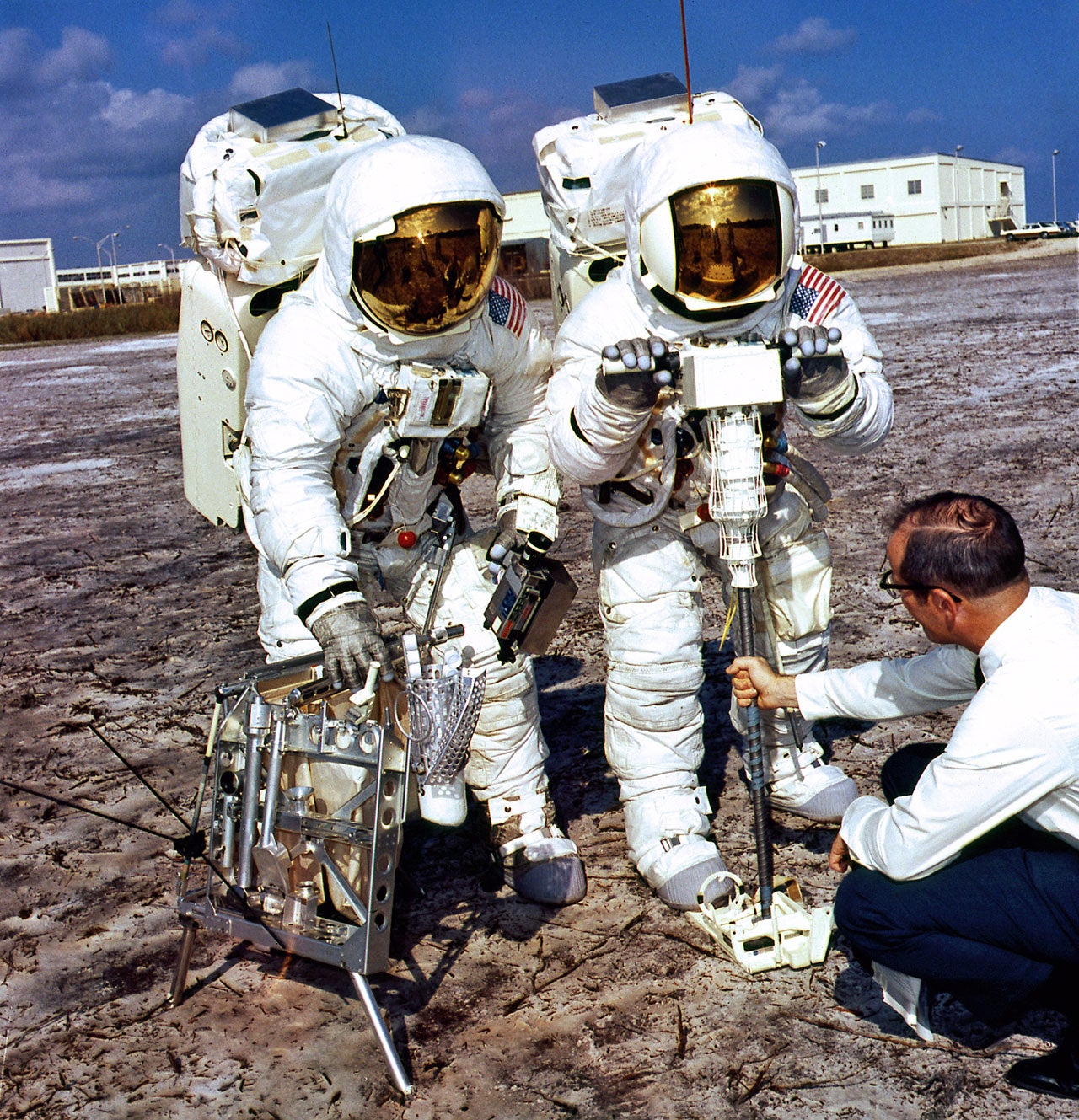
Clad in spacesuits during a training exercise in January 1970, Apollo 13 astronauts Jim Lovell (at left) and Fred Haise train with an electric drill in preparation for their ill-fated mission to the lunar surface. Credit: NASA

The other lunar science packages on Apollo 13 included a charged-particle experiment that would have measured the effects of the solar wind in the moon’s environment; a cold-cathode-gauge experiment to quantity the density and temperature variations in its thin atmosphere and a dust detector. “I think if we had landed, and if we never had the problem in the first place, I think the science work we had trained for would have been achieved,” Lovell says.

In the end, the crew did get home safely (Swigert later died of cancer in 1982). Without the opportunity to survey the Fra Mauro region and deploy the lunar-surface experiments, NASA’s program director recommended the Apollo 13 mission be considered “unsuccessful.” But not all of its science was lost.

As the astronauts were returning home, the segment of their rocket that boosted them away from Earth was purposely directed to collide with the moon. The resulting impact, as measured by a seismometer deployed during Apollo 12, walloped the surface with an energy equivalent of more than 10 metric tons of TNT. The data that were collected provided new insight into the composition of the natural satellite, which, in turn, informed future moon-landing missions and their experiment packages.

After having set aside all of their training and science objectives, the news from mission control that the booster’s impact had been successfully recorded inspired Lovell to respond. “Well, at least something worked on this flight,” he radioed back to Earth.

Πότε και πώς θα ξανανοίξει η οικονομία

0
ΝΙΚΟΣ ΟΙΚΟΝΟΜΙΔΗΣ*
 

Ο ιός από την Κίνα, μετά την Κίνα, μαστίζει την Αμερική και ιδιαίτερα την Ευρώπη. Χωρίς γνωστή θεραπεία ή εμβόλιο, έχει κοστίσει ήδη 100.000 θανάτους και 1,6 εκατ. κρούσματα με σημαντικά συμπτώματα. Με εννεαπλάσια κρούσματα με πολύ ελαφρά ή μηδέν συμπτώματα, μιλάμε ήδη για πάνω από 16 εκατομμύρια κρούσματα.

Σχεδόν όλες οι χώρες του κόσμου επέβαλαν περιορισμούς στην κυκλοφορία και έκλεισαν τα καταστήματα και τα εργοστάσια. Αλλες άρχισαν νωρίς όπως η Ελλάδα, άλλες καθυστέρησαν όπως η Ιταλία. Στις Ηνωμένες Πολιτείες, πάρα την έγκαιρη απαγόρευση πτήσεων από την Κίνα, καθυστέρησε η επιβολή απαγόρευσης πτήσεων από την Ευρώπη. Οι Αρχές της Νέας Υόρκης δεν έκλεισαν τα σχολεία και τις επιχειρήσεις νωρίς. Ετσι, πάρα τον περιορισμό της κυκλοφορίας από τις 22 Μαρτίου, η Νέα Υόρκη θρήνησε πάνω από 1.700 θανάτους και 161.000 κρούσματα, που σχεδόν όλοι μολύνθηκαν πριν από την επιβολή των περιορισμών κυκλοφορίας.

Ομως τα καλά νέα για την πανδημία ήδη έφτασαν. Στη Νέα Υόρκη, οι νέες εισαγωγές στα νοσοκομεία έπεσαν κάθετα, σε μόλις 200 την Τέταρτη σε σύγκριση με πάνω από 1.100 τέσσερις μόνο ημέρες νωρίτερα. Αυτό σημαίνει ότι η Νέα Υόρκη ξεπέρασε την κορυφή της επιδημίας! Οσο κρατούν τα περιοριστικά μέτρα θα έχουμε λιγότερα κρούσματα, λιγότερες εισαγωγές στα νοσοκομεία και λιγότερους θανάτους.

Απ’ την άλλη μεριά, το κλείσιμο των επιχειρήσεων δημιούργησε μεγάλη οικονομική κρίση, σχεδόν 20% μείωση του ΑΕΠ στις ΗΠΑ για το δεύτερο και το τρίτο τρίμηνο, ίσως και μεγαλύτερη. Η Fed προσέφερε απεριόριστη ρευστότητα στην οικονομία και αγόρασε πάνω από 1 τρισ. ομολογιών του Δημοσίου. Το κράτος ήδη ξοδεύει 2 τρισ. (περίπου 10% του ΑΕΠ) σε πακέτο διάσωσης και μάλλον θα ξοδέψει επιπλέον 5%-10% του ΑΕΠ. Η κατάσταση σταθεροποιήθηκε και η χρηματαγορά ανέβηκε 13% αυτή την εβδομάδα. Ομως η Αμερική πρέπει να ξανανοίξει.

Εχοντας ξεπεράσει τα χειρότερα, η Αμερική πρέπει να αποφασίσει πότε και πώς θα ξανανοίξει. Τι χρειάζεται γι’ αυτό; Πρώτα, χρειάζεται να μάθουμε τι ποσοστό του πληθυσμού νοσεί, έστω και πολύ ελαφρά. Γι’ αυτό χρειάζεται στατιστικό τεστ 1.000 ατόμων από τον γενικό πληθυσμό, με το τεστ που ήδη έχουμε. Δεύτερον, χρειάζεται να μάθουμε τι ποσοστό του πληθυσμού έχει νοσήσει και αναρρώσει, και δεν βρίσκεται σε κίνδυνο να νοσήσει. Αυτό το ανιχνεύουν τεστ αντισωμάτων, που κυκλοφορούν σε διάφορες χώρες σε διαφορετικά στάδια έγκρισης. Πάλι χρειάζεται στατιστικό τεστ 1.000 ατόμων από τον γενικό πληθυσμό.

Εχοντας πολλά τεστ αντισωμάτων στα χεριά μας, μπορούμε να κάνουμε μια πολύ σοφή κίνηση που θα μας βοηθήσει να ξανανοίξουμε. Να κάνουμε τεστ όχι σε χίλια, αλλά σε εκατομμύρια άτομα. Αυτούς που έχουν αντισώματα και δεν μπορούν να προσβληθούν να τους αφήσουμε να πάνε στην εργασία τους, να ταξιδέψουν κ.λπ. Ετσι, μπορούμε σταδιακά να ανοίξουμε τις δουλειές, τα μαγαζιά, τα εργοστάσια. Ελπίζω να μπορούμε να κάνουμε αυτά τα τεστ στις Ηνωμένες Πολιτείες τις επόμενες τρεις εβδομάδες και να πάρουμε απόφαση για το μερικό άνοιγμα στις αρχές Μαΐου.

Και στην Ελλάδα; Το σχέδιο «Μένουμε σπίτι» ήταν εξαιρετική κίνηση της κυβέρνησης και μείωσε πολύ τα κρούσματα. Ελπίζω να συνεχίσει ο κόσμος να το ακολουθεί. Από την άλλη μεριά, το κόστος από το κλείσιμο της ελληνικής οικονομίας είναι τεράστιο. Ο τουρισμός μειώθηκε δραματικά και θα συνεχίσει να είναι μειωμένος ακόμα κι αν η Ελλάδα νικήσει πλήρως τον ιό, γιατί οι τουρίστες μπορεί να έχουν ακόμα προβλήματα στη χώρα τους και μπορεί να φοβούνται να μπουν σε μεταφορικά μέσα. Η ζημία είναι μεγάλη και μπορεί να φτάσει και στο -30% του ΑΕΠ για δύο τρίμηνα (χωρίς τα μέτρα ενίσχυσης), κάνοντας το 2020 χειρότερο και από τα χρόνια της κρίσης. Το πακέτο στήριξης της Ευρωπαϊκής Ενωσης της 10ης Απριλίου, ύψους περίπου 4,5% του ΑΕΠ της Ευρωζώνης, είναι πάρα πολύ μικρό για τις ζημίες και της Ελλάδας και της υπόλοιπης Ευρωζώνης. Χρειάζεται να υπάρξει και δεύτερο μεγάλο πακέτο στήριξης.

Η Ελλάδα έχει κάνει μερικά θετικά βήματα βγαίνοντας από τη δεκαετή οικονομική κρίση, όμως αναγκάζεται να αντιμετωπίσει μια βραχυχρόνια αλλά μεγάλη νέα οικονομική κρίση, ενώ συγχρόνως αντιμετωπίζει απειλές από τα ανατολικά. Επαιξε σωστά τα χαρτιά της προς τους Τούρκους και την Ευρωπαϊκή Ενωση και σοφά επέβαλε το «Μένουμε σπίτι» αποσοβώντας μεγάλη υγειονομική κρίση. Η πιο δύσκολη κρίση θα είναι η οικονομική, αλλά η Ελλάδα έχει για πρώτη φορά το ατού ότι όλες οι ευρωπαϊκές χώρες αντιμετωπίζουν παρόμοια κρίση και άρα υπάρχουν μεγαλύτερες πιθανότητες βαθύτερης αλληλεγγύης από την προηγουμένη κρίση.

* Ο κ. Νίκος Οικονομίδης είναι καθηγητής στο Stern School of Business, NYU.

kathimerini.gr

C/2019 Y4 Atlas fragmentation: follow-up – 12 Apr. 2020

0

Φαρμακόπουλος

Thanks to good weather, we imaged C/2014 Y4 Atlas again and could clearly detect again several fragments, with evident changes in the brightness distribution. Here it is our image.

C/2019 Y4 Atlas and its fragments. 12 Apr. 2020

C/2019 Y4 Atlas and its fragments. 12 Apr. 2020

The image above comes from the average of 57, 60-seconds exposures, remotely taken with the “Elena” (PlaneWave 17″+Paramount ME+SBIG STL-6303E) robotic unit available at Virtual Telescope. The telescope tracked the apparent motion of the comet and images were stacked using the orbit of the comet, to provide the best accuracy. Image scale is 0.63″/pixel. No image processing was performed, to preserve the reliability of the visible features. The signal-to-noise ratio is reasonably good (the sky was a bit worse than yesterday, when it was great), so it is possible to do, carefully, some digital enhancements.

In the upper left insert, you can see the central region, this time after applying an unsharp masking filtering: there are at surely three, but likely four fragments there, as we saw yesterday.

Apparently, the most Western fragment is now the brightest, when yesterday it looked the faintest, while the overall aspect of the group changed as for expansion of the componets.

We have much more data from all the past nights and we are processing them, to provide a detailed analysis, but we wanted to share right away this latest, amazing view of comet C/2019 Y4 Atlas. Here you can find all our observations of this comet.

Back to “Solar System” page

Support The Virtual Telescope Project!

If everyone reading this right now would donate something, our fundraiser would be done in a few days. Please, donate and receive unique, LIMITED EDITION set of images of stunning Potentially Hazardous Asteroids, images of the International Space Station above Rome and more, specifically made for supporters like you!

virtualtelescope.eu

Ανάλυση: Τα παράδοξα που χαρακτηρίζουν την παραίτηση Σοϊλού

0

ΝΙΚΟΣ ΕΥΣΤΑΘΙΟΥ

Οι εικόνες από τους συνωστισμένους δρόμους της Κωνσταντινούπολης, έπειτα από την αιφνιδιαστική ανακοίνωση επιβολής μέτρων περιορισμού την Παρασκευή το βράδυ με παράθυρο μονάχα δύο ωρών, προκάλεσαν οξείες αντιδράσεις από το ευρύ πολιτικό φάσμα της Τουρκίας – γεγονός σπάνιο για την γείτονα χώρα. Ωστόσο, οι πολιτικές εξελίξεις που ακολούθησαν, με κυριότερη την παραίτηση του Υπουργού Εσωτερικών Σουλεϊμάν Σοϊλού, είναι πραγματικά πρωτόγνωρες για την σημερινή τουρκική πραγματικότητα. Αξίζει, λοιπόν μια πιο λεπτομερής ματιά στο παρασκήνιο της παραίτησης του πανίσχυρου υπουργού και στενού συνεργάτη του Ερντογάν.

Δεν είναι υπερβολή να ισχυριστεί κανείς πως η ανάληψη ευθύνης, η δημόσια συγγνώμη και η παραίτηση υπουργών είναι φαινόμενα σχεδόν ανύπαρκτα στην Τουρκική πολιτική σκηνή – ιδιαίτερα όσον αφορά κυβερνών κόμμα AKP το οποίο φημίζεται για την άκαμπτη στάση του και την αντίσταση του απέναντι σε οποιαδήποτε κριτική. Το πιο πρόσφατο περιστατικό το οποίο είναι συγκρίσιμο με την παραίτηση του Σοϊλού έλαβε χώρα πριν επτά χρόνια, τον Δεκέμβρη του 2013, όταν μια σειρά σκανδάλων διαφθοράς αναφορικά με κονδύλια της τράπεζας Halkbank οδήγησε στην παραίτηση τριών υπουργών του τότε πρωθυπουργού Ρετζέπ Ταγίπ Ερντογάν. Μάλιστα, ο υπουργός περιβάλλοντος Ερντογάν Μπαϊρακτάρ είχε στραφεί εναντίον του Τούρκου ηγέτη με ομοβροντία καυστικών δηλώσεων, καλώντας τον σε άμεση παραίτηση “για χάρη της ευημερίας της χώρας”. Η αντίθεση με την σημερινή μεταπραξικοπηματική πραγματικότητα – όπου η παραίτηση του Σοϊλού συνδυάστηκε με όρκους πως θα υπηρετήσει τον Τούρκο Πρόεδρο έως ότου πεθάνει – είναι εμφανής.

Δεύτερον, η ισχύς του έμπειρου Υπουργού Εσωτερικών και η θέση του στην ιεραρχία των έμπιστων συνεργατών του Ερντογάν είναι εξαιρετικά σημαντική. Παρότι ξεκίνησε την συνεργασία του με το κυβερνών κόμμα το 2012 ως μέλος της κεντροδεξιάς πτέρυγας που αποσπάστηκε από το Δημοκρατικο Κόμμα, ο Σοϊλού εξελίχθηκε σε έναν από τους πιο ένθερμους υπερασπιστές του Τούρκου Προέδρου και μια από τις πιο εμβληματικές φιγούρες της σημερινής κυβέρνησης. Οι στάσεις του απέναντι στα Μέσα Μαζικής Ενημέρωσης, τους πολίτες που θεωρούνται συνεργάτες του πραξικοπήματος αλλά και την Κουρδική μειονότητα έχουν υπάρξει εξαιρετικά σκληρές. Οι περισσότεροι αναλυτές θεωρούσαν τον Σοϊλού ως δεξί χέρι του Ερντογάν και πιθανότερο αντικαταστάτη του – με μοναδικό αντίπαλο τον γαμπρό του και Υπουργό Οικονομίας, Μπεράτ Αλμπαιράκ με τον οποίον το τελευταίο διάστημα διατηρούσε θυελλώδεις σχέσεις.

Τρίτον, ίσως το πιο παράδοξο χαρακτηριστικό της παραίτησης του Υπουργού Εσωτερικών ήταν ο τρόπος ανακοίνωσης της. Ο Σοϊλού γνωστοποίησε την πρόθεση του μέσω του προσωπικού λογαριασμού του στο Τουίτερ, όπου κοινοποίησε ένα screenshot με το κείμενο της παραίτησης του από την εφαρμογή σημειώσεων του κινητού τηλεφώνου του. Πρόκειται, μάλλον, για την πρώτη φορά στην ιστορία που ο υπουργός μιας κυβέρνησης ανακοινώνει την παραίτηση του μέσω μιας τόσο ανορθόδοξης διαδικασίας.

Όπως είναι πλέον γνωστό, η παραίτηση του Υπουργού Εσωτερικών δεν έγινε δεκτή από τον Τούρκο Πρόεδρο, ο οποίος δήλωσε χαρακτηριστικά πως “ η τρέχουσα ώρα δεν είναι κατάλληλη για να εξετάσουμε οποιαδήποτε παραίτηση”.

Αξίζει, ωστόσο, να αναφερθεί πως πριν από μόλις δύο εβδομάδες, ο Υπουργός Μεταφορών Μεχμέτ Τζαχίτ Τουρχάν εκδιώχθηκε από το κυβερνητικό επιτελείο της Τουρκίας, λόγω “της ανεπάρκειας του να ανταποκριθεί στην κρισιμότητα της κατάστασης” σύμφωνα με τα φιλοκυβερνητικά μέσα. Επομένως, είναι βέβαιο πως η αλλαγή προσώπων εν καιρώ κρίσης σίγουρα δεν είναι ο μόνος λόγος που οδήγησε τον Τούρκο Πρόεδρο σε απόρριψη της παραίτησης του Υπουργού.

Τέλος, υπάρχει ένα κοινό σε όλες τις λεπτομέρειες του πολιτικού πρασκηνίου των τελευταίων ημερών: τόσο η ανακοίνωση των μέτρων περιορισμού, όσο και η παραίτηση του Σοϊλού, η απόρριψη της από τον Ερντογάν, αλλά και η απομάκρυνση του Τουρχάν από το κυβερνητικό επιτελείο έλαβαν χώρα μετά τις 10μμ. Όπως αναφέρουν χαρακτηριστικά οι αναλυτές, πλέον το βράδυ έχει εξελιχθεί στην πιο ενεργή περίοδο της τουρκικής πολιτικής σκηνής.

“Καθημερινή”

The Beginning of Social Dysfunction

0

Geopolitical Future

By George Friedman

A few weeks ago, I laid out a model for thinking about the coronavirus crisis. I argued that there were four structures operating: medical, economic, social and military, with the political structure attempting to coordinate all four while managing its own disorder. This is an American model, but it maps to other nations reasonably well.

To this point, the medical structure has defined the basic framework. Having no vaccine to prevent the virus, nor proven medications for alleviating symptoms (I stay out of the chloroquine debate, lacking any right to an opinion), the only medical option was a social one: social distancing. Put differently, where quarantines were meant to create barriers to those who were ill with a disease, this was extended to everyone. In its most extreme form, this meant shelter in place: Stay home with your family and don’t venture out. Even the more moderate forms, such as putting six feet between yourself and others, were fairly radical.

The medical solution created an economic crisis. Many cannot go to work. Shopping, eating out and other activities are limited. Unemployment soared, supply chains are strained, demand for goods and services has fallen. The political structure crafted strategies for mitigating the crisis, cushioning unemployment and preventing business failures with stimulus packages and so on. The amount of money committed is about 10 percent of U.S. gross national product, with the assurance that more will be committed. It is not clear that these economic events will cause economic failure, but it is clear that they will cause distortions in the economy on the order of the infusions. The economy will not function as it has before, and the distortion will not rapidly end.

The social consequences are perhaps even more profound. At its core, the social is the family. The functioning of the family assumed that children would go to school, one or both parents would go to work, and all would have periods of being alone, or being in other places with other people. On the broadest level, the social is our mingling with strangers, from going to the movies, to standing in line and chatting, to discussing the purchase of a computer with a salesman. There are a billion kinds of social interactions, and each has its rituals. We know how to find a seat in a movie, and how to excuse ourselves as we pass by those already seated. We know how to appear amiable and unthreatening when standing in line. We understand the rituals when buying a computer, the carefully crafted pretense of knowing what you are talking about.

Human beings mediate their relations with other people through rituals — sometimes called manners and sometimes having no name at all. We know the rituals in our home. We know what will make mom and dad sad, we know how to come to dinner, and we know when we may disappear into our rooms to chat online. When we look at social organization, the family, dysfunctional or robust, is the most intense experience we have, and that experience is filled with safety valves, ritualized opportunities to be free of the family. This may be school, work, parties, whatever.

If social distancing and the economic crisis will have a social impact, it will be sensed first in the most delicate seismograph humans have: the home. Nowhere are the stresses so intense and continuous, nowhere are the safety valves so essential and rigidly prescribed. So when the medical structure requires that families dramatically alter their behavior, and the economic system generates such fear and uncertainty, the pressures are first felt in the family. Outside the family the pressures can be diffused, but now the family is the only sphere there is, and it becomes the sum of all fears, a place whose releases have been closed down.

The social system, including the family, has endured through the first month of social separation quite well. Gallup polls show happiness and contentment at normal levels. But under the hood, we can see the first signs of dysfunction. The secretary-general of the United Nations, for example, has issued a warning that domestic violence is surging. There have been scattered reports coming in as well, from Italy to Ohio.

Family violence, normally man against woman, secondarily either against children, is a constant reality. Individuals who are psychologically dysfunctional, and families that are fractured, cause a constant and predictable level of family violence. When violence surges globally, it is unlikely that the numbers are being cooked, and unlikely that the violence is coincidental. There are two forces at work. First, homes and apartments are frequently built with the expectation that a substantial amount of time will be spent outside. They are not designed for constant occupation by all. The pressure of 24-hour intimacy coupled with a situation that has no clear endpoint can create tension between even the most loving families. And many families are not particularly loving. These are the ones that explode first, most without violence, all with a high degree of rancor that can’t be escaped. In some cases both parents are home without work. The parents must finally face each other, along with their unruly children. The family explodes inside of walls from which there is no escape. Family violence is not the norm. It is simply the first statistically collectible indicator. Many or most families will accommodate with love. But some won’t.

When I look at the pressure on our essential rituals, I note that Dr. Anthony Fauci has said that no one should shake hands now or ever again. It is common for male friends to hug. In Europe, when I greet a woman, I know I must kiss near the cheek but not quite on it. I always forget how many times — whether one or both sides, or even three times — I must kiss in each country. When I was young, a date ended in a kiss. When I was older, it could, with luck, end in more.

Are all these rituals of our life, along with all other rituals of touching that I don’t at the moment remember, to be abolished along with the handshake? The job of the medical community is to protect our health and life. But health is not simply a matter of medicine. It is also a matter of enormously complex and individual rituals. Last week, Jews celebrated Passover, remembering how God freed them from slavery. On Sunday, Christians celebrated Easter. These are communal celebrations of families and congregants who speak, touch and hug.

We are in an enormously difficult position. We cannot accept the death of fellow human beings who might be saved. We also cannot readily live with the restraints required to minimize those deaths. And we must calculate the suffering and death caused by economic depressions — a very real event.

The obvious solution is medical — a medicine that will not require quarantine and will allow us to go back to work. Given the virulence of the virus, the problem is that even lifting the social distancing might allow a return of its spread. I suspect we could take a risk with a poorly proven drug more than we can endure the limited lives we lead. But that is a suspicion. The point is that family violence has surged and it has surged because of the measures we must take to prevent the spread of disease. The rise in family violence is real but not decisive. The other social breakdowns will happen as the economy fails and our lives become crippled. Then choices will have to be made. Perhaps Fauci and his colleagues will find a cure we can live with. I wish them all the best in their quest.