Για τους ιστορικούς του μέλλοντος, η απόφαση του γερμανικού Συνταγματικού Δικαστηρίου για το πρόγραμμα αγοράς ομολόγων της ΕΚΤ μπορεί να θεωρηθεί το σημείο καμπής. Ποιες είναι οι επιλογές και τα πιθανά σενάρια.
Δημοσιεύθηκε: 18 Μαΐου 2020 – 08:03
Η 75η επέτειος της νίκης επί της ναζιστικής Γερμανίας ήταν στις 8 Μαΐου. Η 70ή επέτειος της διακήρυξης του Schuman, με την οποία ξεκίνησε η μεταπολεμική ευρωπαϊκή ενοποίηση ήταν στις 9 Μαΐου. Λίγες ημέρες πριν τις δύο επετείους, το Συνταγματικό Δικαστήριο της Γερμανίας εκτόξευσε έναν νομικό πύραυλο στην καρδιά της ΕΕ. Η απόφασή του είναι εκπληκτική. Είναι μια επίθεση στα βασικά οικονομικά, στην αξιοπιστία της κεντρικής τράπεζας, στην ανεξαρτησία της και στη νομική τάξη της ΕΕ.
Το Δικαστήριο απεφάνθη κατά του προγράμματος αγοράς ομολόγων του δημόσιου τομέα από την ΕΚΤ, το οποίο ξεκίνησε το 2015. Δεν υποστηρίζει πως η ΕΚΤ ενεπλάκη παράτυπα σε νομισματική χρηματοδότηση, αλλά ότι απέτυχε να εφαρμόσει μια ανάλυση «αναλογικότητας», όταν αξιολογούσε την επίπτωση των πολιτικών της, σε μια σειρά συντηρητικών ανησυχιών: «Δημόσιο χρέος, προσωπικές αποταμιεύσεις, συντάξεις και συνταξιοδοτικά προγράμματα, τιμές ακινήτων και τη διάσωση οικονομικά μη βιώσιμων εταιρειών».
Οι νομισματικές πολιτικές είναι απαραιτήτως οικονομικές πολιτικές. Όμως οι πολιτικές της ΕΚΤ, περιλαμβανομένων των αγορών ομολόγων, δικαιολογούνται από το γεγονός πως δεν κατάφερνε -και εξακολουθεί να μην καταφέρνει- να πετύχει τον «πρωταρχικό στόχο» της εντολής που έχει βάσει συνθήκης, δηλαδή τη «σταθερότητα τιμών» που ορίζεται ως πληθωρισμός «κάτω από, αλλά κοντά στο, 2% μεσοπρόθεσμα». Η συνθήκη της ΕΕ λέει πως άλλα ζητήματα είναι δευτερεύοντα.
Το δικαστήριο αποφάσισε επίσης πως «τα γερμανικά συνταγματικά όργανα και διοικητικά σώματα», περιλαμβανομένης της Bundesbank, δεν δύναται να συμμετέχουν σε ενέργειες ultra vires (δηλαδή ενέργειες που πάνε πέραν της νομικής εξουσίας τους). Έτσι, η Bundesbank δεν δύναται να συνεχίσει να συμμετέχει στα προγράμματα αγοράς ομολόγων της ΕΚΤ, μέχρις ότου η ΕΚΤ διενεργήσει μια «αξιολόγηση αναλογικότητας» που θα ικανοποιεί το δικαστήριο.
Ωστόσο, η συνθήκη της ΕΕ δηλώνει πως «ούτε η ΕΚΤ ούτε μια εθνική κεντρική τράπεζα… θα επιδιώξουν ή θα λάβουν οδηγίες… από οποιαδήποτε κυβέρνηση κράτους-μέλους ή από οποιοδήποτε άλλο σώμα (η έμφαση είναι δική μου)». Η οδηγία του δικαστηρίου φέρνει την Bundesbank σε σύγκρουση νόμων.
Το δικαστήριο επιτίθεται επίσης στο δικαίωμα της ΕΚΤ να λαμβάνει ανεξάρτητα τις αποφάσεις πολιτικής της. Η Γερμανία αγωνίστηκε σκληρά να εδραιώσει την ανεξαρτησία της κεντρικής τράπεζας εντός της νομισματικής ένωσης. Τώρα, το συνταγματικό της δικαστήριο αποφάσισε πως αν η ΕΚΤ δεν ικανοποιήσει τους δικαστές ότι έχει λάβει πλήρως υπόψη την εξαιρετικά πολιτική λίστα επιπτώσεων των νομισματικών πολιτικών, τότε οι αγορές ομολόγων είναι ανεπίτρεπτες. Τα δικαστήρια άλλων χωρών-μελών μπορεί επίσης να κρίνουν πως μπορούν να αποφασίσουν ότι οι εθνικές κεντρικές τους τράπεζες δεν μπορούν να συμμετέχουν σε πολιτικές που δεν τους αρέσουν. Πολύ σύντομα, η ΕΚΤ θα πετσοκοπεί και θα εκμηδενιστεί.
Πάνω απ’ όλα, το γερμανικό δικαστήριο αποφάσισε πως μπορεί να αγνοήσει προηγούμενη απόφαση του Ευρωπαϊκού Δικαστηρίου που τάχθηκε υπέρ της ΕΚΤ, διότι «υπερβαίνει τη δικαστική εντολή του… όπου μια ερμηνεία των Συνθηκών δεν είναι κατανοητή και πρέπει ως εκ τούτου να θεωρηθεί αυθαίρετη από αντικειμενικής απόψεως». Πρόκειται για μια πράξη δικαστικής αποστασίας.
Η ΕΕ είτε είναι ένα ενοποιημένο νομικό σύστημα είτε δεν είναι τίποτα. Βασίζεται στην αποδοχή από όλα τα κράτη-μέλη της εξουσίας της στους τομείς αρμοδιοτήτων της. Σε δελτίο Τύπου που εξέδωσε μετά την απόφαση του συνταγματικού δικαστηρίου, το Ευρωπαϊκό Δικαστήριο δικαίως απάντησε πως «το Δικαστήριο… είναι το μόνο αρμόδιο να διαπιστώσει ότι μια πράξη θεσμικού οργάνου της Ένωσης είναι αντίθετη στο ενωσιακό δίκαιο. Τυχόν αποκλίσεις μεταξύ των δικαστηρίων των κρατών-μελών όσον αφορά το κύρος των πράξεων των θεσμικών οργάνων θα μπορούσαν να θέσουν σε κίνδυνο την ενότητα της έννομης τάξης της Ένωσης και να θίξουν τη θεμελιώδη αρχή της ασφάλειας του δικαίου». Φανταστείτε αν τα δικαστήρια κάθε κράτους-μέλους μπορούσαν να αποφανθούν πως οι αποφάσεις του Ευρωπαϊκού Δικαστηρίου είναι «αυθαίρετες από αντικειμενικής απόψεως».
Ποιες είναι οι επιπτώσεις;
Αν το γερμανικό δικαστήριο ικανοποιηθεί τελικά πως η ΕΚΤ εκτίμησε επαρκώς την οικονομική επίπτωση των αγορών της, τότε μπορεί να συνεχιστεί το PSPP. Όμως το δικαστήριο μείωσε τη μελλοντική ευελιξία της ΕΚΤ με το να περιορίζει τα holdings ομολόγων οποιασδήποτε χώρας-μέλους στο 33% του συνόλου και να επιμένει πως οι αγορές τίτλων θα πρέπει να κατανέμονται ανάλογα με τα μερίδια του κάθε κράτους-μέλους στην ΕΚΤ.
Απουσία άλλων προγραμμάτων στήριξης της ευρωζώνης, η πιθανότητα χρεοκοπιών έχει εκτιναχθεί. Πράγματι, τα spreads των ιταλικών κρατικών ομολόγων έχουν αυξηθεί λίγο από τότε που βγήκε η ανακοίνωση του δικαστηρίου. Μπορεί στο τέλος να υπάρξει κρίση, με καταστροφικές επιπτώσεις, ακόμα και διάσπαση της ευρωζώνης.
Άλλοι μπορεί να ακολουθήσουν τη Γερμανία και να απορρίψουν τη δικαιοδοσία του Ευρωπαϊκού Δικαστηρίου και της ΕΕ. Η Ουγγαρία και η Πολωνία είναι προφανείς υποψήφιοι. Οι ιστορικοί του μέλλοντος μπορεί να θεωρήσουν πως αυτό ήταν το αποφασιστικό σημείο καμπής στην ιστορία της Ευρώπης, προς την αποσύνθεση.
Τι μπορεί να γίνει; Η ΕΚΤ δεν μπορεί να είναι υπόλογη σε ένα εθνικό δικαστήριο. Όμως η Bundesbank μπορεί να δώσει στο δικαστήριο την ανάλυση αναλογικότητας. Ίσως αυτό θα είναι αρκετό, αν και αποτελεί επίσης κακό προηγούμενο. Ή, η απόφαση μπορεί να αγνοηθεί. Αν ένα γερμανικό δικαστήριο μπορεί να αγνοήσει το Ευρωπαϊκό δικαστήριο, τότε ίσως η Bundesbank μπορεί να αγνοήσει αυτό το δικαστήριο. Εναλλακτικά, η ΕΚΤ θα μπορούσε απλώς να εγκαταλείψει τις προσπάθειες να σώσει την ευρωζώνη και να αποδεχθεί το όποιο αποτέλεσμα προκύψει.
Η ΕΕ θα μπορούσε να κινήσει διαδικασία επί παραβάσει της ευρωπαϊκής νομοθεσίας κατά της Γερμανίας. Όμως ο άμεσος στόχος της θα ήταν η γερμανική κυβέρνηση, η οποία βρίσκεται εγκλωβισμένη μεταξύ των οργάνων της ΕΕ, από τη μια πλευρά, και του δικαστηρίου, από την άλλη. Δεν θα μπορούσε να αλλάξει την απόφαση.
Μια ακόμα πιο ριζοσπαστική έκβαση θα ήταν η ΕΕ να ενεργήσει ώστε να δημιουργήσει το απαιτούμενο διάταγμα για τη δημοσιονομική αλληλεγγύη. Όμως τα εμπόδια για κάτι τέτοιο είναι μεγάλα. Φαίνεται πως δεν τίθεται θέμα νέας συνθήκης στο σημερινό περιβάλλον έντονης αμοιβαίας δυσπιστίας. Τέλος, η Γερμανία θα μπορούσε θαρραλέα να αποσχιστεί από την ευρωζώνη. Ωστόσο, προτού λάβει μια τέτοια απόφαση, θα ήλπιζε κάποιος πως και αυτή θα απαιτηθεί να κάνει μια πλήρη ανάλυση του αν αυτό θα ήταν «αναλογικό».
Ένα, πάντως, είναι ξεκάθαρο: το συνταγματικό δικαστήριο αποφάσισε πως και η Γερμανία μπορεί να ξαναπάρει τον έλεγχο. Ως αποτέλεσμα, δημιούργησε μια πιθανότατα ανεπίλυτη κρίση.
Ο Πρόεδρος Αναστασιάδης ας μην αρχίσει να ψαλμωδεί ξανά το κακόηχο και γελοίο ρεφρέν περί επανέναρξης των συνομιλιών «από εκεί που σταμάτησαν στο Κραν Μοντανά». Η Λευκωσία δεν συζητά πλέον για τουρκοδιζωνική τερατουργία. Δεν ανοίγουν τα κατοχικά οδοφράγματα. Εξαγγέλλεται η αναβίωση και ισχυροποίηση του Δόγματος του Ενιαίου Αμυντικού Χώρου. Η Τουρκία δεν εντάσσεται στην ΕΕ.
Την περ. Τετάρτη, 13.5.2020 και προχθές Παρασκευή, δεκάδες Τ/κύπριοι εμφανίστηκαν στα κατοχικά οδοφράγματα Περγάμους και Αγίου Δομετίου με σημαίες της Τουρκίας και του ψευδοκράτους. Απαιτούσαν άνοιγμά τους επειδή αρκετοί εργάζονται στις ελεύθερες περιοχές. Η εκδήλωση εναντίον των κατοχικών «αρχών» είναι ενδεικτική της σοβαρής οικονομικής δυσπραγίας των Τ/κ, η οποία οφείλεται, εξαιτίας και του κορωνοϊού, σε τέσσερεις, κυρίως, παράγοντες.
Πρώτον, η κατοχική Τουρκία βρίσκεται στα πρόθυρα οικονομικής κατάρρευσης με την τουρκική λίρα να χάνει διαρκώς μέρος της αξίας της, ενώ τα συναλλαγματικά αποθέματα της χώρας του Αττίλα έχουν μειωθεί σε επικίνδυνα όρια. Ξένοι αναλυτές επισημαίνουν ότι οι τρεις κυριότερες τράπεζες είναι χωρίς ρευστό, η Τουρκία αντιμετωπίζει το φάσμα της χρεοκοπίας και ο Ερντογάν επαιτεί κυριολεκτικά χρήματα.
Ο Τούρκος Πρόεδρος, παρά την απύθμενη αλαζονεία και την προσπάθεια ανακάλυψης εχθρών που δήθεν απειλούν τη χώρα, με τρόμο αντιμετωπίζει την πιθανότητα και την αναγκαιότητα να καταφύγει, μέχρι τον Σεπτέμβριο, στο Διεθνές Νομισματικό Ταμείο. Η κατοχική δύναμη δεν μπορεί να πληρώνει 800 εκ. τον χρόνο για να συντηρεί το τερατούργημα των κατεχομένων και να καταβάλλει μισθούς των Τ/κ «δημόσιων υπαλλήλων».
Δεύτερον, η μεγαλύτερη πηγή εσόδων για το ψευδοκράτος είναι ο τουρισμός. Η μία πτυχή είναι οι τουρίστες οι οποίοι μεταβαίνουν απευθείας στα κατεχόμενα μέσω Τουρκίας. Η άλλη, είναι οι εκατοντάδες χιλιάδες που αφικνούνται στο αεροδρόμιο Λάρνακας και, με την εγκληματική ανοχή της εκάστοτε κυπριακής κυβέρνησης, μεταφέρονται στα κατεχόμενα με ταξί και λεωφορεία Τ/κυπρίων. Τα έσοδα από τον τουρισμό συμποσούνται σε εκατοντάδες εκατομμύρια.
Τρίτον, η άλλη μεγάλη πηγή εσόδων για το ψευδοκράτος είναι η οικονομική αιμοδοσία που χιλιάδες ανόητοι Έλληνες προσφέρουν καθημερινά σε επιχειρήσεις, κέντρα, εστιατόρια, ξενοδοχεία και καζίνα. Και δι’ αυτών στηρίζουν το κατοχικό μόρφωμα, το οποίο είναι η αιχμή του δόρατος της τουρκοποίησης και ισλαμοποίησης της Κύπρου. Τα κατεχόμενα είναι παράδεισος παρανομίας και παρανόμων. Με αυτό το παράνομο καθεστώς, Πρόεδροι, πολιτικοί και κόμματα της διεθνώς αναγνωρισμένης Κυπριακής Δημοκρατίας συνομιλούν και συναγελάζονται ηλιθιωδώς για να… λύσουν, τάχα, το Κυπριακό.
Τέταρτη μεγάλη πηγή εσόδων για το ψευδοκράτος είναι οι δεκάδες χιλιάδες ξένοι φοιτητές στα ψευδοπανεπιστήμια των κατεχομένων. Και αυτή η πηγή έχει στερέψει, τουλάχιστον για φέτος, με απώλεια εκατοντάδων εκατομμυρίων.
Είναι εμφανές ότι οι κρίσιμες οικονομικές δυσκολίες της Τουρκίας και των κατεχομένων είναι χρυσή και μοναδική ευκαιρία για την Ελλάδα και την Κύπρο. Τώρα είναι η ώρα για να σχεδιαστεί και να αποφασιστεί από την Αθήνα και τη Λευκωσία μια ριζοσπαστική και διεκδικητική στρατηγική αντιμετώπισης του Τούρκου. Αυτή η πολύπτυχη στρατηγική μακράς πνοής, η οποία επιβάλλεται από τις δραματικές αλλαγές που επιφέρει η πανδημία, περιφερειακά και παγκόσμια, πρέπει να εστιαστεί στους εξής πυλώνες:
Πρώτον, η Λευκωσία δεν συζητά πλέον για τουρκοδιζωνική τερατουργία, η οποία οδηγεί κατευθείαν στην προτεκτορατοποίηση και τουρκοποίηση της Κύπρου. Ο Πρόεδρος Αναστασιάδης ας μην αρχίσει να ψαλμωδεί ξανά το κακόηχο και γελοίο ρεφρέν περί επανέναρξης των συνομιλιών «από εκεί που σταμάτησαν στο Κραν Μοντανά». Με αυτόν τον Ερντογάν θέλει συνομιλίες;
Δεύτερον, η Κυπριακή Δημοκρατία είναι ο μόνος διεθνής και αναγνωρισμένος χαλύβδινος και αήττητος θώρακας του κυπριακού λαού. Άρα, διά της απόρριψης της τουρκοδιζωνικής η Κυπριακή Δημοκρατία διασώζεται για δεύτερη φορά.
Τρίτον, δεν ανοίγουν τα κατοχικά οδοφράγματα παρά μόνο μετά την ανακάλυψη εμβολίου και μόνο για ειδικές περιστάσεις. Έτσι, εμποδίζεται και η εισβολή παράνομων μεταναστών.
Τέταρτον, οι Τ/κύπριοι καλούνται να επιστρέψουν στην Κυπριακή Δημοκρατία της οποίας κατέχουν ταυτότητες και διαβατήρια. Αν δεν την αναγνωρίσουν, να τους αφαιρεθούν οι ταυτότητες και τα διαβατήρια. Δεν μπορούν να το παίζουν δίπορτο: Να στηρίζουν το ψευδοκράτος και να υπονομεύουν την Κυπριακή Δημοκρατία.
Πέμπτον, απαγορεύονται οι μεταφορές τουριστών από τα αεροδρόμιά μας προς τα κατεχόμενα. Ταυτόχρονα αποτρέπονται οι, δίκην τουρισμού και αναψυχής, μεταβάσεις Ε/κυπρίων στα κατεχόμενα. Δεν νοείται πολίτες κατεχόμενης χώρας να αιμοδοτούν ένα παράνομο μόρφωμα, στο οποίο μάλιστα επιδεικνύονται έγγραφα της νόμιμης Κυπριακής Δημοκρατίας.
Έκτον, εξαγγέλλεται η αναβίωση και επαναλειτουργία του Δόγματος του Ενιαίου Αμυντικού Χώρου. Η Κύπρος δεν μπορεί να συνεχίσει να κείται μακράν. Άρα, Ελλάδα και Κύπρος οφείλουν να αντιμετωπίσουν αποφασιστικά τον σιχαμερό Τουρκοϊό, με δραστική ισχυροποίηση της άμυνάς τους και με στρατιωτικές συμμαχίες με φίλες χώρες και δη με το Ισραήλ.
Έβδομον, αναθεωρείται ο Κανονισμός της Πράσινης Γραμμής, που κατήντησε η αποθέωση της παρανομίας, του λαθρεμπορίου και της εδραίωσης κατοχικών τετελεσμένων.
Όγδοον, Αθήνα και Λευκωσία συναποφασίζουν, επιτέλους, ότι η Τουρκία δεν εντάσσεται στην ΕΕ μέχρι να καταστεί δημοκρατικό κράτος και να αποχωρήσει από την Κύπρο.
Αυτά και άλλα μέτρα προϋποθέτουν ικανή, πατριωτική και διορατική, έκδηλα αποφασιστική πολιτική ηγεσία στην Αθήνα και στη Λευκωσία, στο μπόι των μέγιστων κινδύνων που απειλούν τον Ελληνισμό και που προκαλούνται από τον αδίστακτο Τουρκοϊό.
Η Τουρκία επιμένει αδιαλείπτως και παντί τρόπω να αμφισβητεί την ελληνική κυριαρχία επί νήσων και βραχονησίδων, πράγμα που δεν είναι καθόλου τυχαίο, αφού ανάγεται στην εκπεφρασμένη στρατηγική στόχευσή της να επιτύχει σε πρώτο στάδιο την ουδετεροποίηση ως προς το καθεστώς κυριαρχίας πλειάδας νήσων και βραχονησίδων ή άλλως μετατροπή τους σε αυτό που από το τέλος της δεκαετίας του 1990 γνωρίζουμε ως «γκρίζα ζώνη»
Η απαίτηση της Τουρκίας για αποστρατιωτικοποίηση νήσων και βραχονησίδων του Αιγαίου εντάσσεται προδήλως στη στρατηγική της Άγκυρας να καταστήσει τον υπό αναφορά χώρο ευάλωτο και προσιτό στην υλοποίηση των επεκτατικών σχεδίων της, που υπερβαίνουν το Αιγαίο και εκτείνονται στην ευρύτερη μεσογειακή λεκάνη.
Η Τουρκία επιμένει αδιαλείπτως και παντί τρόπω να αμφισβητεί την ελληνική κυριαρχία επί νήσων και βραχονησίδων, πράγμα που δεν είναι καθόλου τυχαίο, αφού ανάγεται στην εκπεφρασμένη στρατηγική στόχευσή της να επιτύχει σε πρώτο στάδιο την ουδετεροποίηση ως προς το καθεστώς κυριαρχίας πλειάδας νήσων και βραχονησίδων ή άλλως μετατροπή τους σε αυτό που από το τέλος της δεκαετίας του 1990 γνωρίζουμε ως «γκρίζα ζώνη». Σημειώνεται πως η ως άνω διεκδίκηση αποτελεί στρατηγικό στόχο του συνόλου του τουρκικού πολιτικού συστήματος και όχι μόνο της σημερινής ηγεσίας.
Η ουδετεροποίηση σημαίνει ότι μία πλειάδα νήσων και βραχονησίδων θα τελούν υπό καθεστώς αγνώστου, ακαθορίστου ή αμφισβητούμενης κυριαρχίας, συνθήκη που επιτρέπει στην Τουρκία και σε κάθε άλλη δύναμη να τις διεκδικήσει, δεδομένου πως δεν θα υφίσταται νόμιμη υπεράσπιση των περιοχών αυτών.
Κατά το άρθρο 12 της Συνθήκης της Λωζάννης προεβλέπετο πως η ελληνική κυριαρχία θα ασκείτο στα νησιά του Αιγαίου, εκτός από τις Μαυρυές, την Ίμβρο και την Τένεδο, όπου για τα δύο τελευταία οριζόταν καθεστώς αυτοδιοίκησης, που ως γνωστόν παραβιάστηκε μονομερώς από την Τουρκία. Το άρθρο 13 προέβλεπε πως ορισμένες νήσοι, όπως η Μυτιλήνη, η Σάμος, η Χίος και η Ικαρία είχαν την υποχρέωση μερικής αποστρατιωτικοποίησης. Για τα Δωδεκάνησα η αποστρατιωτικοποίηση συνιστούσε μία εκ των προβλέψεων της Συνθήκης των Παρισίων του 1947, στην οποία η Τουρκία δεν υπήρξε συμβαλλόμενο μέρος.
Παρά ταύτα η Ελλάδα, δεδομένης της τουρκικής επιθετικής, διακηρυγμένης και έμπρακτης πολιτικής έναντι ελληνικών νήσων και βραχονησίδων, πολιτική που εκφράζεται και διά της Στρατιάς του Αιγαίου, εφαρμόζει όχι μόνο το νόμιμο δικαίωμά της, αλλά και την υποχρέωσή της περί αυτοάμυνας, όπως ρητώς προβλέπεται από το άρθρο 51 του Καταστατικού Χάρτη των Ηνωμένων Εθνών.
Η στρατιωτικοποίηση περιοχών γενικότερα συνιστά μια ζωτική κίνηση αποτροπής, δεδομένης της επιθετικής στάσης της γειτνιαζούσης χώρας. Είναι γνωστή, εξάλλου, η τουρκική στρατηγική να δημιουργεί ή να αξιοποιεί ευκαιρίες, που θα της επέτρεπαν να αναθεωρήσει το ελληνικό καθεστώς, όπως έπραξε με την Κύπρο το 1974, δεδομένης της αποχώρησης της Ελληνικής Μεραρχίας το 1967.
Η Άγκυρα παραδοσιακά σε στιγμές κρίσεως των ελληνοτουρκικών σχέσεων, όπως π.χ., κατά το 1964, 1967 και 1974, ανακινεί το ζήτημα εν γένει της κυριαρχίας νήσων του Αιγαίου, θεωρώντας πως ορισμένα νησιά δεν είναι ελληνικά, προκειμένου να ενισχύσει τη δική της διαπραγματευτική θέση στο ενδεχόμενο διαμόρφωσης συνθηκών διαπραγμάτευσης, όπερ σαφώς και δεν συνιστά καινοφανές φαινόμενο πολιτικής αντιμετώπισης των διαδραματιζομένων στις σχέσεις των δυο χωρών.
Η Ελλάδα παραπέμπουσα ορθώς και στο διεθνές δίκαιο της θάλασσας, επ’ ουδενί δεν αποδέχεται τις τουρκικές αιτιάσεις ότι παραβιάζει διεθνείς συνθήκες. Η Άγκυρα περαιτέρω, μη αποδεχόμενη την προσέγγιση του διεθνούς δικαίου της θάλασσας, παραπέμπει σε καθεστώς ειδικών συνθηκών στο Αιγαίο, μη αναγνωρίζοντας σε πλειάδα νήσων την ελληνική κυριαρχία, θεωρώντας ότι ορισμένα τούτων είναι προέκταση του υφάλου της Ανατολίας εξ ου και τουρκικής κυριαρχίας. Η συνέπεια της τουρκικής στρατηγικής αναφέρεται στο γεγονός πως εάν η Ελλάδα επεκτείνει τα χωρικά της ύδατα στα 12 ναυτικά μίλια, ως προνοεί το διεθνές δίκαιο, τούτο εκλαμβάνεται ως αιτία πολέμου.
Εκ των πραγμάτων μια ενδεχόμενη αποστρατιωτικοποίηση θα ενίσχυε τη θέση της Τουρκίας έναντι της Ελλάδος, καθώς σε ένα τέτοιο υποθετικό σενάριο αποδυναμώνονται ραγδαία οι ελληνικές δυνατότητες αντίδρασης σε μια επιθετική κίνηση της γείτονος.
Πέραν των ανωτέρω, η ελληνική πολιτική ηγεσία οφείλει να γνωρίζει πως στην περίπτωση που τεθεί θέμα προσφυγής στο Διεθνές Δικαστήριο της Χάγης, σενάριο που δεν τίθεται σε ρεαλιστικά πλαίσια, τότε η Τουρκία θα επιδιώξει, πέραν των άλλων διεκδικήσεών της, να προβληθεί ενώπιον της διεθνούς δικαιοταξίας και η αποστρατιωτικοποίηση νήσων και βραχονησίδων του Αιγαίου.
Στόχος της Τουρκίας, που είναι εμφανώς και εμπράκτως αναθεωρητική δύναμη, ήταν και παραμένει να σύρει την Αθήνα σε ένα διάλογο εφ’ όλης της ύλης σε διμερές επίπεδο, όπου να λάβει όσα περισσότερα μπορεί, αποβλέποντας στη διχοτόμηση του Αιγαίου και την οικοδόμηση συνθηκών συγκυριαρχίας, που συναφώς περιλαμβάνουν και τη συνεκμετάλλευση.
Εν κατακλείδι, η τουρκική αξίωση για αποστρατιωτικοποίηση νήσων και βραχονησίδων του Αιγαίου εντάσσεται στο υφιστάμενο συνολικό στρατηγικό σχέδιο της Άγκυρας, μέρος του οποίου εν προκειμένω συνιστούν και το αμφιλεγόμενο Τουρκο-λιβυκό σύμφωνο, αλλά και οι αντίστοιχες πολιτικές της Τουρκίας στη Συρία, για να επεκτείνει στον μεγαλύτερο δυνατό βαθμό την επιρροή της στη νοτιοανατολική Μεσόγειο και τη Μέση Ανατολή.
*Καθηγητής Διεθνούς Πολιτικής, Διευθυντής Κέντρου Ανατολικών Σπουδών Για τον Πολιτισμό και την Επικοινωνία, Πάντειο Πανεπιστήμιο
Παρακολουθώ όσο μπορώ τα όσα γίνονται τις τελευταίες εβδομάδες στις ΗΠΑ. Οικονομολόγοι σε έρευνα του Reuters βρήκαν ότι μόνο την περασμένη εβδομάδα 2,5 εκατομμύρια Αμερικανοί βγήκαν στην ανεργία .
Ένα γενικό ποσοστό ανεργίας της τάξεως του 14,7% είναι αρκετά τρομακτικό για μια χώρα όπου ο πρόεδρός της, που δεν είναι υπόδειγμα ψυχραιμίας και πολιτικού ήθους, επαίρονταν ότι έλυσε το πρόβλημα της απασχόλησης και της ανάπτυξης – με τον τρόπο του βέβαια. Σε τρελαίνει. Η αλήθεια είναι ότι η ανάκαμψη από τη χρηματοπιστωτική κρίση του 2008 πήρε αρκετό χρόνο…
Ο κορονοϊός δεν φεύγει εύκολα , ούτε κοιτάζει τη σπουδή κυβερνώντων και πολιτών για επιστροφή στην καθημερινή οικονομική και κοινωνική δραστηριότητα. Ισχυρές χώρες που ξεθάρρεψαν είδαν τα κρούσματα να πληθαίνουν. «Κι αν εσύ το ξεχάσεις, η ζωή στο θυμίζει» που έγραψε ο Άκης Πάνου.
Ο πλανήτης «έχει να διανύσει παρά πολύ μακρύ δρόμο» για να θέσει υπό έλεγχο την πανδημία του κορονοϊού, παρά τα διστακτικά βήματα πολυάριθμων χωρών προς μια επανεκκίνηση της κανονικής ζωής, προειδοποίησε ο Μάικ Ράιαν, εκτελεστικός διευθυντής του προγράμματος εκτάκτων καταστάσεων του Παγκόσμιου Οργανισμού Υγείας.
Οπότε τι γίνεται; Η στοχοποίηση των πολιτικών αντιπάλων είναι μονόδρομος.
Η οικονομική κρίση πάντα τροφοδοτεί τον διχασμό. Δυστυχώς θολώνει την κρίση και το μυαλό. ‘’Τρελαίνει’’ τους ευάλωτους , τους ανέργους, τους αδικημένους, τους ‘’γελασμένους’’. Υπάρχουν και οι άλλοι. Αυτοί που με μυριάδες στερήσεις και μόχθο απλώς επιβίωσαν αλλά πάντα δυστυχώς και αυτοί που βολεύτηκαν όπως ήξεραν και μπορούσαν αλλού με μεθόδους υποκόσμου , αλλού με εκβιασμούς , με μαύρη αγορά και με συνεργασία με τους κατακτητές Αυτά συνέβησαν και στο Κραχ του ’29 και στα χρονιά της μεγάλης ύφεσης της δεκαετίας του 1930 στις ΗΠΑ και την Ευρώπη αλλά και στην Κατοχή σε μας. Ο διχασμός, η δημαγωγία, οι θεωρίες συνωμοσίας, το εμφυλιοπολεμικό κλίμα στην κοινωνία και οι απλουστεύσεις ‘’άσπρο-μαύρο’’ στο φόρτε τους.
Δύο έθνη που υπερηφανεύονταν για το εξαιρετικό οικονομικό, ιστορικό και πολιτικό τους καθεστώς έπεσαν στα γόνατα. ‘’Η πτώση τους από τη δόξα είναι το αποτέλεσμα μιας κατεστραμμένης πολιτικής κουλτούρας και μιας ξεχωριστής μορφής αγγλοαμερικανικού καπιταλισμού’’ έγραψε ο Guardian τις ΗΠΑ και το Ηνωμένο Βασίλειο .
“Υπάρχει κάτι βαθύτερο σε αυτή την ειρωνεία’’, προσθέτει . ‘’Τα υψηλότερα ποσοστά θανάτου από κορονοϊό στον κόσμο ανήκουν σε δύο χώρες των οποίων οι ηγέτες ήρθαν στην εξουσία υποσχόμενοι την αποκατάσταση του μεγαλείου και της κυριαρχίας του παρελθόντος τους’’!
Η αποτυχία του Άγγλο-αμερικανικού μοντέλου να αποκρούσει τις συνέπειες του κορονοϊού θα απασχολεί τους ιστορικούς , τους πολιτικούς αναλυτές και τους οικονομολόγος του μέλλοντος
Κι όμως , δεν μπορούν να ισχυριστούν ότι βρέθηκαν προ εκπλήξεως: είχαν το όφελος του χρόνου, άφθονες επιστημονικές προειδοποιήσεις και τα διδακτικά παραδείγματα της Κίνας και της Ιταλίας.
Οι ομοιότητες είναι εντυπωσιακές, τα συμπεράσματα αναπόφευκτα. Στο Ηνωμένο Βασίλειο, η κοινή γνώμη ανακούφιζε τον εαυτό της με την πεποίθηση ότι ο δικός της ηγέτης είχε μεν τα λάθη του, αλλά τουλάχιστον δεν ήταν Ντόναλντ Τραμπ. Αλλά στο τέλος, ο Μπόρις Τζόνσον κατάφερε να σκοντάψει ακόμη και σ’ αυτό το πιο χαμηλότερο εμπόδιο.
Στις ΗΠΑ βέβαια τον μεγάλο καημό τον έχει ο Ντόναλντ Τραμπ που περιμένει τις εκλογές του προσεχούς Νοεμβρίου με το φόβο του τερματοφύλακα μπροστά στα πέναλτι. Αν φύγει το καλοκαίρι χωρίς κάποια πρόοδο στη μάχη κατά της ανεργίας, σχόλασε ο γάμος. Ο Τζόνσον έχει νωπή ετυμηγορία και ακόμα κάποια ανοχή από τον –διχασμένο κι εκεί- λαό του.
Οι σκληροί ρεπουμπλικάνοι που προωθούν την ‘’ερμηνεία’’ πως για όλα του κορονοϊού φταίνε οι Κινέζοι, ισχυρίζονται τώρα πως οι αντίπαλοί τους , οι Δημοκρατικοί , ανέχονται αν δεν υποστηρίζουν υπογείως τα καμώματα της Κίνας. Γι αυτό και ξέσπασε η Τwitter καμπάνια #BeijingBiden. Ο Μπάϊντεν του Πεκίνου ! Οι παλιότεροι θυμήθηκαν την επίθεση που δεχόταν πάλι από ρεπουμπλικάνους η Τζέην Φόντα στα τέλη του ’60 με το “Hanoi Jane” (Η Τζέιν του Ανόϊ) επειδή ήταν ‘’υποστηρίκτρια των Βιέτ Κονγκ’’.
Οι Times της Νέας Υόρκης με άρθρο τους ρωτούν: ‘’Can the Democrats Avoid Trump’s China Trap?’’ (Μπορούν οι Δημοκρατικοί να αποφύγουν την ‘’κινέζικη παγίδα’’ που στήνει ο Τραμπ;). Η παγκοσμίου κύρους εφημερίδα υποστηρίζει πως ο πρόεδρος θέλει έναν νέο ψυχρό πόλεμο για να αποσπάσει την προσοχή του κόσμου από τις αποτυχίες του στο τεράστιο πρόβλημα του κορονοϊού…
Οι ΗΠΑ βρίσκονται στη δίνη μιας πρωτόγνωρης για το μέγεθός και το κύρος τους κρίσης.
*Στη φωτογραφία, η Τζέιν Φόντα σε διαδήλωση κατά του πολέμου στο Βιετνάμ , Απρίλιος 1973.
BESA Center Perspectives Paper No. 1,570, May 18, 2020
EXECUTIVE SUMMARY: Many governments have responded to the coronavirus pandemic by pushing aside civil rights. It is not yet clear whether this shift in national attitudes toward fundamental rights will continue over the long term or how that trend will manifest. During the crisis, governments approved the tracking of citizens as well as other tools that infringed their privacy. Once the need for emergency measures has passed, discussions—both civil and legal—will grow more intense over how much longer civil rights should remain compromised.
In response to the coronavirus pandemic, many governments approved the wholesale infringement of their citizens’ civil rights. Large populations accepted the dramatic curtailment of their civil liberties for weeks and even months on end on the understanding that that curtailment was temporary. One wonders, now that the crisis is beginning to abate, whether their rights will be fully restored.
Many governments approved tracking measures and other privacy-breaching capabilities that can have long-term consequences. Albert Fox Cahn of the Surveillance Technology Oversight Project said, “We could so easily end up in a situation where we empower local, state, or federal governments to take measures in response to this pandemic that fundamentally change the scope of American civil rights.”
Once most of the emergency measures have ended, discussion is likely to intensify about the extent to which civil rights were abolished at the height of the crisis. Robert Seegmüller, chairman of an organization of German constitutional judges, said that future courts will have to decide whether his country’s constitution gives parliament the right to transfer so much of its operational competence to the executive branch. He added that it has not yet been determined whether the closure of many institutions in the first weeks of the crisis was legally acceptable.
The first step in tackling these questions is to identify the fundamental rights that were limited or canceled entirely. The most important was the right to move freely in the streets of one’s own city, a right that was summarily stripped from citizens during periods of lockdown. Lockdowns also infringed people’s freedom to gather or to visit friends or family. (During the lockdown in the UK, Prof. Neil Ferguson, an epidemiologist and the top British government adviser on the virus issue, had to resign his position after it became known that in direct contravention of the social distancing limits he himself had convinced the government to impose on the general public, he had allowed his lover to visit him repeatedly at his home.)
The obligation to wear a face mask outside one’s home is another major limitation of civil rights. This precaution not only infringes personal freedom but makes people difficult to recognize. In Western societies, recognition of faces is part of the culture. In some European countries the wearing of veils is forbidden. One cannot detach this issue from prior debates in these societies about expressions of Muslim fundamentalism. Similarly, social distancing rules have prohibited handshakes, which are a hallmark of Western culture and one to which religious Muslims have long objected (when they compel contact with women).
It is part of the culture of Western society to be able to socialize in physical proximity. The obligations of social distancing have had many consequences for this tradition. People in southern European countries kiss good friends on the cheek when they meet, a habit that has had to be abandoned. British pubs, where friends have gathered for generations, have been decimated by the crisis. Social distancing will go on in many places after the crisis is over, with British Chief Medical Officer Professor Chris Whitty forecasting that it will go on for another year.
The crisis has also had a sharp impact on the free movement of people across borders, which, though not exactly perceived as a civil right, was considered normal and a development in which many Europeans took great pride. Several European countries closed their borders during the pandemic, and the EU closed its external borders to foreign nationals.
Lockdowns and social distancing have had a heavy impact on religious freedom. While individuals are permitted to pray at home, religious gatherings are still prohibited in many countries. This is irrespective of how important community meetings are for some religions. In the US, multiple lawsuits have been filed arguing that coronavirus-related restrictions violate the First Amendment’s guarantee to freely exercise religion.
For the most part, the crisis has not limited freedom of speech, with the right to demonstrate often permitted during lockdown. The German Constitutional Court decided health concerns linked to the outbreak were not grounds for a general ban on demonstrations. Several anti-lockdown demonstrations were held in German cities toward the end of the emergency, some of which turned violent. There were also public protests against the lockdown in the US.
Privacy is a fundamental right, and data protection is a growing concern. Even before the coronavirus, it was generally known that companies like Google and Facebook have access to a wealth of data on huge numbers of individuals. Facebook had to pay a $5 billion fine to the US government for deceiving users about its ability to keep personal information private. This occurred as a result of the Cambridge Analytica data breach. The security, freedom, and privacy triangle will probably become a major area of debate.
The more populations distrust their governments, the more problematic tracking applications become. Governments claim the data acquired through such apps will be anonymized—but as the data is held at central databases, full anonymity is cast into doubt.
In some countries, there is serious fear of the abuse of power by governments and police overreach. Belgian Minister of Interior Affairs Pieter De Crem sent a letter in early April to mayors and chiefs of police calling on them to apply rigorous measures to people who went to stay in their second homes. Drones were employed to locate offenders near the coast, a measure that prompted liberal politicians to protest the use of the emergency conditions to set up the beginnings of a police state.
Another civil rights issue concerns equality. In places where there were more people in need of respirators than there were available, choices had to be made. Equality would mean that those who came first were given respirators, but in many places, priority was determined by the patient’s state of health and age. Triage protocols for critical care provision during a pandemic are a policy choice that values the right to life of some over others.
Major economic intervention will be necessary to mitigate the effects of the economic recession that is likely to follow the pandemic in many countries. Government measures in pre-virus society often ran into both public protests and legal problems. Governments may well decide they cannot afford to delay measures to restart the economy. This can lead to emergency measures that can in turn limit civil rights. It would be very problematic if parliaments are not allowed proper verification procedures, provided they do not stall decision-making.
The Hungarian parliament has given up part of its rights, which has led to limitations on speech. PM Victor Orban can declare emergency measures by decree. If he wishes, he can prolong those measures without the approval of parliament. The measures allow jail sentences of up to five years for distribution of “fake news” about the pandemic or the government. The Hungarian government has accused some independent media of propagating “fake news.”
Thirteen members of the EU have signed a declaration warning of the danger to fundamental rights posed by some responses to the coronavirus emergency. They express concern about risks to the state of law that can occur as a result of certain emergency measures. The declaration does not mention any specific country, but it is understood that it is addressed to the Hungarian Parliament. It is telling that about half the EU member states have not signed it.
A fundamental question has to be asked: Is it by chance that the great majority of the sick and the dead were in Western liberal democracies? Is there something inherent in the societal modus operandi that causes those governments to have more difficulty reacting to and controlling an emergency situation than non-democratic states?
Dr. Manfred Gerstenfeld is a Senior Research Associate at the BESA Center and a former chairman of the Steering Committee of the Jerusalem Center for Public Affairs. He specializes in Israeli–Western European relations, antisemitism, and anti-Zionism, and is the author of The War of a Million Cuts.
The COVID-19 disease, which seems likely to be with us for a long time, has done its part to define history. But it has not suspended history. Though there is much we still don’t know about the disease, we do know that all nations have been affected by it. The death toll is significant but does not threaten to annihilate populations as other diseases have. It has, however, inflicted damage on economies that will take years to repair. Either science will defeat it or the world will adjust to living with it. But that branch in the logic will not come for a while.
Since nations continue to exist, the distrust between them remains – in many cases, it has intensified. As things evolve, the relationships between nations will return to their traditional role. As there is little more to be said for now about the virus that has not been said already, we need to return to the consideration of geopolitics, which like diseases can cause massive casualties. Were this the bubonic plague, we would be returning to the relationship between Rome and Florence. Today we will return to the relationship between the U.S. and China.
When we last visited these two nations, the United States had placed tariffs on some Chinese exports to the U.S., hurting and angering China and leaving it no effective counter. The Chinese built their economy the same way the United States had between 1890 and 1929: by exporting cheap manufactured goods and agricultural products. The international system needs cheap products, and the exporter must export to increase domestic prosperity and create a self-sustaining society. The advantage of an exporter is it makes money. The disadvantage is it depends on the willingness and ability of its customers to buy. So when, for example, the post-World War I depressions took hold of Europe, Europe’s ability to buy U.S. products became a major cause of the Great Depression.
China suffered a blow in 2008, when the global recession following the subprime loan crisis cut into China’s exports dramatically. More recently, tariffs imposed by the U.S. threatened to create a massive imbalance in the Chinese economy. Chinese industry vastly outgrew domestic Chinese demand, producing more than Chinese consumers could buy. The U.S. move was designed to destabilize China, which had been emerging as a major power suffering a major vulnerability. The U.S. took advantage of it.
At roughly the same time, it was revealed that the Chinese were operating concentration camps of sorts for Uighurs, Turkic Muslim minority populations in far western Xinjiang province, as demonstrations and riots broke out in Hong Kong. Try as it might, China’s excellent propaganda had a harder time convincing the world that it was passing the U.S. as a great power. China’s gross domestic product was about $14 trillion and the United States’ was just under $22 trillion, and China has many more people. The U.S. military is able to operate globally. The Chinese are trying to find a lever in the South China Sea. Propaganda aside, China was to the U.S. what the U.S. was to Britain in 1900. Looked at from that point of view, the U.S. could be ambitious but had to be cautious. Britain could be contemptuous at its own risk.
China is not in any way the equal of the U.S., either economically or militarily. Propaganda is not trivial but it can not be decisive. Or more precisely, it could not be decisive yet. Britain in 1900 was celebrating its very real glory. By the 1920s, it was defaulting on its vast debt to the United States, in the midst of economic agony, struggling to hold its position in Europe, fearing reasonably that its empire was in danger.
There are of course many differences between the three countries, but the core dynamic had similarities. One of these similarities is that British investment in the United States was a centerpiece of both nations’ economic strategies. British capital was critical to U.S. industrialization and to ranches in the West. Similarly, U.S. investment in China was critical to China’s industrial development, as was the import of Chinese goods. The United States and China were linked economically as were the U.S. and Britain. And we should remember that when Britain fought in World War II to save its empire, it was the United States that compelled the British to follow a military strategy that made its loss of empire inevitable. Winston Churchill accused Franklin Roosevelt of trying to destroy the British Empire. Roosevelt was shocked and offended by the charge.
China remains inferior to the U.S. in all measures, but it has risen to the point where the U.S. can no longer accept China’s military ambitions nor finance the Chinese economy. China wants badly to resume the economic relationship it had with the United States, while having the U.S. accept its need to dominate first the South and East China seas and then the Pacific, while also projecting economic power and later military power globally. The United States is dominant in North America. It fought for control of the Pacific and the Atlantic in World War II. From China’s point of view, the geography of the Western Pacific and the ability of the U.S. to blockade China is an existential threat.
China has little appetite for risk. Starting a war carries with it the chance of losing. Nor can China trust the U.S. So it is laying the groundwork for an opportunity or an aggressive decision by the United States. Facing historically hostile enemies like Japan and South Korea and, more recently, Taiwan and Indonesia, the Chinese lack a meaningful alliance structure. North Korea is a useful but dangerous tool with which to goad the United States. Other than that, it has a strategy of making random investments around the world to demonstrate its growing power. As propaganda, it works. The use of investments in, say, Serbia is less clear strategically.
China therefore has three core strategic problems. Challenging the U.S. for command of the sea is a dangerous game. While countries such as Russia might fear the U.S. as much as China does, geography prevents cooperation, so China lacks a meaningful alliance structure. Finally, China’s main adversary, the U.S., is also indispensable for the Chinese economy.
China’s solution to this dilemma, bravado aside, is twofold. The first is to hope that the U.S. gets involved in a war like World War I, as Britain did. The other is to confront the U.S. in another domain: space. Success in the latter might create an opportunity for the former. Thus for China, space and missiles provide a military option but don’t solve the economic problem.
The U.S. is obviously aware of the military challenge. It has announced a massive withdrawal of forces from the Middle East to devote more time and attention to Russia and China. Patriot missiles have been removed from Saudi Arabia and bases in Iraq have closed. At the same time, the U.S. has withdrawn B-52s from Guam, indicating it is focusing on a space-based missile option against China. But in the end, both nations are in deterrence mode. Neither can afford losing a war against the other.
The major U.S. weapon against China is economic. Here the virus opens opportunities. The U.S. is dependent on China for vast amounts of products, a supply chain that gave the U.S. the benefit of low-cost manufacturing, and the Chinese an industrial base. The Chinese move is to expel and block the U.S. supply chain, but Beijing can’t do it while also maintaining social stability. And the U.S. has options to replace the Chinese supply chain.
The solution on both sides is to hurl insults. The Americans hint that the Chinese are responsible for the coronavirus. The Chinese have a global effort to show that the virus has crippled the United States permanently and that China is now the leading power. Propaganda wars may be fun to watch, and hurling insults should perhaps be an Olympic sport, but power is not a matter of perception, at least not when bombs start landing and bankruptcies mount. The U.S. will continue to hurl insults while undermining the Chinese by shifting the supply chain. China will continue seeking a military advantage.
China and the U.S. have been hammered by the virus. The hopes, imperatives and constraints of both countries relative to each other have been bent but not broken by the epidemic. As it was before so it will be in the future.
Overwatch, a podcast series from the Institute for the Study of War (ISW), goes beyond the news headlines to give listeners analysis and commentary on issues related to U.S. national security and American foreign policy. The episodes feature discussions with experts and practitioners to explore what challenges and opportunities lie ahead for the U.S. Episodes are released on a biweekly basis.
OVERWATCH EPISODES
Episode 20: Kremlin Suffers Setbacks in the Balkans
Russia, the US, the EU, and NATO all consider the Balkans to be a region of significant strategic value. Despite the Kremlin’s best efforts to the contrary, the region is currently swinging toward the West, with North Macedonia recently joining NATO and several other Balkan states making progress toward EU membership. In this episode of Overwatch, ISW Russia Team Lead Nataliya Bugayova and Research Assistant George Barros discuss the past, present, and future of this historically volatile region.
The virus that causes COVID-19 can persist in aerosol form, some studies suggest. But the potential for transmission depends on many factors, including infectiousness, dose and ventilation
New coronavirus is known to be spread via large droplets that fall to the ground. But whether it can be spread by smaller airborne particles remains unclear. Credit: Getty Images
Several months into a pandemic that has claimed hundreds of thousands of lives and decimated economies around the world, scientists still lack a complete understanding of how the virus that caused it is transmitted. Lockdowns are already easing in some places, and people are preparing to return to a version of work and social life. But a crucial question stubbornly remains: Can the pathogen behind COVID-19 be “airborne”?
According to the U.S. Centers for Disease Control and Prevention and the World Health Organization, the novel coronavirus is primarily spread by droplets from someone who is coughing, sneezing or even talking within a few feet away. But anecdotal reports hint that it could be transmissible through particles suspended in the air. After attending a choir practice in Washington State in early March, dozens of people were diagnosed with or developed symptoms of COVID-19 even though they had not shaken hands or stood close to one another. At least two died. After dining at an air-conditioned restaurant in China in late January, three families at neighboring tables became sickened with the virus—possibly through droplets blown through the air.
To address the prospect of airborne spread of the novel coronavirus, it is first necessary to understand what scientists mean by “airborne.” The term refers to transmission of a pathogen via aerosols—tiny respiratory droplets that can remain suspended in the air (known as droplet nuclei)—as opposed to larger droplets that fall to the ground within a few feet. In reality, though, the distinction between droplets and aerosols is not a clear one. “The separation between what is referred to as ‘airborne spread’ and ‘droplet spread’ is really a spectrum,” especially when talking about relatively small distances, says Joshua Santarpia, an associate professor of pathology and microbiology at the University of Nebraska Medical Center.
Airborne spread has been hypothesized for other deadly coronaviruses, including the ones that cause severe acute respiratory syndrome (SARS) and Middle East respiratory syndrome (MERS). A handful of studies suggest the new coronavirus, SARS-CoV-2, can exist as an aerosol in health care settings. But much remains unknown about whether the aerosolized virus is infectious and what amount of virus one needs to be exposed to in order to become sick, known as the minimal infectious dose. Even if aerosol transmission does occur, it is not clear how common it is, compared with other transmission routes, such as droplets or surfaces. Uncovering this information is vital, especially given the fact that people can spread SARS-CoV-2 when they have no symptoms.
Perhaps “Is the coronavirus airborne?” is the wrong question. COVID-19 may have the potential for airborne spread, says Stanley Perlman, a professor of microbiology at the University of Iowa. “But whether [this route is] important clinically is really the question one wants to know about,” he says.
EVIDENCE FOR AEROSOL TRANSMISSION
Some of the strongest evidence that airborne transmission of the new coronavirus may be possible comes from a study published late last month in Nature. In it, researchers measured the virus’s genetic material, or RNA, in aerosols sampled in February and March at two hospitals in Wuhan, China—the city where the outbreak is widely believed to have begun. The researchers found very low levels of airborne viral RNA in the hospitals’ isolation wards and in ventilated patient rooms. But there were measurably higher levels in some of the patients’ toilet areas. They also found high levels of viral RNA in places where medical workers remove protective gear, as well as in two crowding-prone locations near the hospitals. “Our study and several other studies proved the existence of SARS-CoV-2 aerosols and implied that SARS-CoV-2 aerosol transmission might be a nonnegligible route from infected carriers to someone nearby,” says study co-author Ke Lan, a professor and director of the State Key Laboratory of Virology at Wuhan University.
A preprint (not yet published) study led by Santarpia and his colleagues similarly found evidence of viral contamination in air samples and surfaces from rooms where COVID-19 patients were being kept in isolation. “I think there are a lot of us—myself included—who feel very strongly that the airborne route of transmission is very possible,” he says. “I would hesitate to call it proven by any means. But I think there’s mounting evidence to support it.”
Both the Nature study and Santarpia’s paper measured viral RNA, not actual virus, so it is not clear that the material found in aerosols was functionally infectious. “Finding RNA doesn’t tell you [that] you have aerosol spread,” says Perlman, who was not involved in either study.
Another paper, recently published in the New England Journal of Medicine, showed that infectious SARS-CoV-2 virus can remain in aerosols for at least three hours—and for several days on various surfaces—in a laboratory setting. But the amount of viable virus diminished significantly during that time. Scientists do not know the infectious dose of SARS-CoV-2. (For influenza, studies have shown that just three virus particles are enough to make someone sick.)
Overall, most of the evidence that SARS-CoV-2 can become airborne comes from clinical settings—which tend to have a lot of sick people and may host invasive procedures, such as intubations, that can cause patients to cough, generating aerosols. It is not clear how representative of everyday environments these areas are. “There is not much convincing evidence that aerosol spread is a major part of transmission” of COVID-19, Perlman says.
That assessment does not mean it is not occurring, however. Benjamin Cowling, head of the division of epidemiology and biostatistics at the University of Hong Kong’s School of Public Health, says there is a popular misconception that if a virus can spread through the air at all, it must be able to spread over a long range. He gives the analogy of being in a restaurant where someone is smoking: “If the person on the other side of restaurant is smoking, you probably wouldn’t smell it, and you’d never even notice. That’s because the smoke would never reach you,” he says. “It doesn’t mean there’s not smoke produced.” In other words, just because SARS-CoV-2 may not be transmitted over a long range, that does not mean it is not airborne. Like cigarette smoke, aerosol particles spread around a person in a cloud, with the concentration being highest near the smoker and lower as one gets farther away.
Even if aerosols do not travel farther than most droplets, the oft-touted “six-foot rule” for social distancing may depend on the circumstances, Cowling says. If there is a fan or air conditioner, infectious aerosols (or even droplets, as was suspected in the case of that restaurant in China) could potentially sicken someone farther away who is downwind.
Some evidence suggests that talking could be a significant mode of viral transmission. A study published on May 13 in Proceedings of the National Academy of Sciences USA used laser light scattering to visualize tiny saliva droplets expelled during speech. The research did not measure droplets with viable SARS-CoV-2 virus. But if one assumes the droplets contain seven million virus particles per milliliter, a minute of loud speech could generate more than 1,000 virus-containing droplets that could hang in the air for eight minutes or more, the researchers write in the study. “There is a substantial probability that normal speaking causes airborne virus transmission in confined environments,” they conclude.
FACTORS THAT AFFECT THE RISK OF AIRBORNE SPREAD
Cowling hypothesizes that many respiratory viruses can be spread through the airborne route—but that the degree of contagiousness is low. For seasonal flu, the basic reproduction number, or R0—a technical designation for the average number of a people a sick person infects—is about 1.3. For COVID-19, it is estimated to be somewhere between two and three (though possibly as high as 5.7). Compared with measles, which has an R0 in the range of 12 to 18, these values suggest most people with the disease caused by SARS-CoV-2 are not extremely contagious.
But there are seeming exceptions, such as the choir practice in Washington State, Cowling says. A CDC report about the event released on May 12found that of the 61 people who attended the 2.5-hour practice (one of whom had coronavirus symptoms), 32 developed confirmed COVID-19 infections and 20 developed probable ones. The report concluded that “transmission was likely facilitated by close proximity (within 6 feet) during practice and augmented by the act of singing” andthat singing “might have contributed to transmission through emission of aerosols, which is affected by loudness of vocalization.” For unknown reasons, some individuals seem to infect many more people than others do. These so-called superspreaders were documented in the SARS outbreak of 2003, too. In what has become known as the 20/80 rule, about 80 percent of infectious-disease-transmission events may be associated with just 20 percent of cases, Cowling notes. “We don’t know how to identify those 20 percent,” he says. “But if we were able to, in some way, then that would be a major advance.”
Ventilation likely also plays an important role in how easily the virus can be transmitted through the air. Indoor spaces probably pose a higher risk than outdoor ones, especially if they are poorly ventilated, Cowling and others say. Crowded areas such as bars, restaurants and subway trains could all be risky—especially if people are asymptomatic and spend long periods of time in such areas. Precautions could include better ventilation, regular cleaning and mask wearing.
Cowling co-authored a study, published in early April in Nature Medicine, of patients with respiratory infections at an outpatient clinic in Hong Kong between 2013 and 2016. This research detected RNA from seasonal coronaviruses—the kind that cause colds, not COVID-19—as well as seasonal influenza viruses and rhinoviruses, in both droplets and aerosols in the patients’ exhaled breath. The paper, led by Nancy Leung, an assistant professor at the University of Hong Kong’s school of public health, found that wearing surgical masks reduced the amounts of influenza RNA in droplets and of seasonal coronavirus RNA in aerosols.
Although the study did not look at COVID-19 specifically, the findings support mask wearing as an effective way to limit transmission of the virus from an infected person—known in medical parlance as source control. There is not much evidence that masks convey protection to healthy people, although it is possible (and may depend on the type of mask). Given the prevalence of asymptomatic infection with COVID-19, however, there is some justification for universal mask wearing to prevent those who do not know they are sick from infecting others. In Hong Kong, which has kept its outbreak relatively under control, masks are worn by the vast majority of the population, Cowling says.
The likelihood of airborne transmission—especially compared with other routes, such as droplets or surfaces—remains unclear. Most researchers still think the new coronavirus is primarily spread via droplets and touching infected people or surfaces. So diligent hand washing and social distancing are still the most important measures people can take to avoid infection.
Leung puts the risks in perspective. Most of what people know about aerosol transmission is from tuberculosis, measles and chickenpox, she says—and these pathogens usually have high transmissibility, with the potential for long-range spread. “The conventional thinking is, therefore, once you mention there’s aerosol transmission, everyone is so worried because [they assume that the virus has] higher transmissibility and that it’s more difficult to control,” she explains. But even if there is airborne transmission, it may only happen at short range—within which other infection routes may be just as likely—or more so. Thus, Leung adds, “having a higher risk of aerosol transmission itself doesn’t necessarily translate to more transmissibility.”
Editor’s Note (5/14/20):This story was updated after posting to include new informationabout droplets spread by talking and about a choir practice in Washington State that sickened many people.
The Propaganda Battle between China and the U.S. is heating up — and America is Not WinningILLUSTRATION BY RYAN OLBRYSH
It had been a bedrock belief of U.S. policy for 40 years that it was possible to bring the People’s Republic of China smoothly into the family of nations—and now, one of the architects of that policy was finally acknowledging the obvious.
In a speech six months ago, former World Bank President and Deputy Secretary of State Robert Zoellick reminded listeners of his own famous 2005 call on Beijing to become a “responsible stakeholder.” He ticked off a few of the ways in which China had done just that: voting for sanctions on North Korea and limiting missile exports, for instance. But he acknowledged that the project had gone off the rails.
“Xi Jinping’s leadership,” Zoellick said of the PRC president, “has prioritized the Communist Party and restricted openness and debate in China. China hurts itself by forging a role model for dystopian societies of intrusive technologies and reeducation camps.” He added: “The rule of law and openness upon which Hong Kong’s ‘One Country, Two Systems’ model rests may topple or be trampled. If China crushes Hong Kong, China will wound itself—economically and psychologically—for a long time.”
Zoellick had that right. A global pandemic has brought relations between Beijing and Washington to its lowest point since China reopened to the world in 1978—even lower even than in those extraordinary days following the 1989 Tiananmen massacre.
What had been a more confrontational, trade-centric relationship since the start of President Donald Trump’s term, has now descended into bitterness in the midst of a presidential reelection campaign Trump fears is slipping away. Any chance that the pandemic might spur Washington and Beijing to set differences aside and work together on treatments and other aspects of the pandemic—such as how exactly it started—is long gone.
Last week, the Trump administration moved to block shipments of semiconductors to Huawei Technologies. The Commerce Department said it was amending an export rule to “strategically target Huawei’s acquisition of semiconductors that are the direct product of certain U.S. software and technology.” Previously on May 13, the FBI announced an investigation into Chinese hackers that it believes are targeting American health care and pharmaceutical companies in an effort to steal intellectual property relating to coronavirus medicines. Without specifying how, the Bureau said the hacks may be disrupting progress on medical research.
President Trump had already made it clear just how bitter he is at Beijing on May 7 when meeting with reporters at the White House. “We went through the worst attack we’ve ever had on our country,” he said, “this is the worst attack we’ve ever had. This is worse than Pearl Harbor, this is worse than the World Trade Center. There’s never been an attack like this. And it should have never happened. Could’ve been stopped at the source. Could’ve been stopped in China…And it wasn’t.” The comparison of a virus, which originated in China and then spread globally, to the two most infamous attacks in U.S. history, stunned Trump’s foreign policy advisers—even Beijing hard-liners. It will be impossible, U.S. officials acknowledge, for Trump to soften his hard line toward Beijing should he win reelection in November.
The president is right to reach for historical metaphor, given the weight of the moment. But the aftermath of the Wuhan outbreak more closely resembles the building of the Berlin Wall in 1961 than either Pearl Harbor or 9/11. What follows will not be a sharp burst of savage conflict, but a global scramble to shape the new order rising from the rubble of old. As with the Wall, the forces that led to the dispute over the Wuhan outbreak were unleashed years before the events that made history. And the change they represent is likely irreversible, no matter who sits in the White House.
Though Joe Biden has on occasion downplayed Beijing’s rise as a threat to the U.S., and for sure would not be so rhetorically reckless as Trump, his foreign policy advisers acknowledge there’s no turning back. Since Xi Jinping came to power seven years ago, China has imprisoned more than one million ethnic Muslims in “reeducation” camps, imposed an ever-tightening surveillance state on its own citizens and cracked down on all dissent. Overseas, Beijing’s goal is to entice authoritarian regimes in the developing world to view it as a “model” to be followed. And, of course, selling the technology those leaders need to create their own surveillance states.
Would a President Joe Biden take a harder line toward China, which hopes to reduce dependance on American firms?MICHAEL BROCHSTEIN/ECHOES WIRE/BARCROFT MEDIA/GETTY
“No one on either side of the political aisle in Washington is ignoring any of that,” says one Biden adviser. “The era of hope that China might evolve into a normal country is over. No one with any brains denies that.”
That notion has fully settled in here. Sixty-six percent of Americans now have a negative view of China, according to a recent Pew Research poll. At the same time, in China, state-owned media and a government-controlled internet whip up nationalism and anti-Americanism to levels unseen since the U.S. accidentally bombed Beijing’s embassy in Belgrade during the Balkan wars in 1999.
The world’s two most powerful nations are now competing in every realm possible: militarily, for one, with constant cat-and-mouse games in the South China Sea and cyber warfare. The competition to dominate the key technologies of the 21st century is intensifying, too. This type of rivalry hasn’t been seen since the Soviet Union collapsed in 1991.
Thus, a growing number of policymakers, current and former, and China hands old and new, acknowledge the obvious: Cold War 2.0 is here. To the generation of Americans who remember duck-and-cover drills in elementary school at the peak of the Cold War with the Soviet Union, the new global struggle will look very different. It will also, many U.S. strategists believe, be much harder for the West to wage successfully. “Another long twilight struggle may be upon us,” says former Pentagon China planner Joseph Bosco, “and it may make the last one look easy.”
Now, U.S. policymakers are trying to discern what that struggle will look like, and how to win it.
New-Age War
The first major difference in the coming Cold War with Beijing is in the military realm. Beijing spends far less than the U.S. on its military, though its annual rate of spending is fast increasing. According to the Center For Strategic and International Studies, a Washington think tank, Beijing spent $50 billion on its military in 2001, the year it joined the World Trade Organization. In 2019 it spent $240 billion, compared to the U.S.’ $633 billion.
For a few decades at least, the U.S.-China military competition will look vastly different from the hair-trigger nuclear standoff with Moscow. Instead, China will seek asymmetric advantages, rooted where possible in technology. It has, for example, already developed an arsenal of hypersonic missiles, which fly low and are hard for radar to detect. They are known as “carrier killers” because of their ability to strike U.S. aircraft carriers in the Pacific from long distances. These weapons could be critical in “area denial” operations, as military planners put it. For example, should the day come when Beijing seeks to take Taiwan by force, hyper-sonics could keep U.S. carriers far from the island nation once a war began.
China’s pursuit of preeminence across a wide range of technologies, in areas like quantum computing and artificial intelligence, are central to the economic clash with the U.S. But they also have significant military components. Since the 1990s, when Chinese military planners were stunned by the U.S.’ lightning victory in the first Iraq war, they have consistently focused their efforts on developing war-fighting capabilities relevant to their immediate strategic goals—Taiwan is an example—while creating the ability to one day leapfrog U.S. military technologies.
That may be drawing nearer. Quantum computing is an example. In an era in which digital networks underpin virtually every aspect of war, “quantum is king,” says Elsa Kania, a former DOD official who is now a Senior Fellow at the Center for a New American Security. Take cyber warfare—the ability to protect against an enemy disrupting your own networks, while maintaining the ability to disrupt the adversary’s. Quantum networks are far more secure against cyber espionage, and Kania believes China’s “future quantum capacity has the potential to leapfrog U.S. cyber capabilities.”
China has upped its game militarily; a show of force in Beijing in 2019 marking the 70th anniversary of the founding of the People’s Republic of China.XINHUA/SHENHONG/GETTY
That’s not the only advantage of quantum technology. Beijing is also exploring the potential for quantum-based radar systems that can defeat stealth technology, a critical U.S. war-fighting advantage. “These disruptive technologies—quantum communications, quantum computing and potentially quantum radar—may have the potential to undermine cornerstones of U.S. technological dominance in information-age warfare, its sophisticated intelligence apparatus, satellites and secure communications networks and stealth technologies,” says Kania. “China’s concentrated pursuit of quantum technologies could have much more far-reaching impacts than the asymmetric approach to defense that has characterized its strategic posture thus far.” That is a big reason why Pan Jianwei, the father of China’s quantum computing research effort, has said the nation’s goal is nothing less than “quantum supremacy.”
Washington, and its allies in East Asia and Europe, are paying attention. In a just-published book—The Dragons and the Snakes: How the Rest Learned to Fight the West—David Kilcullen, a former Australian military officer who served as special adviser to U.S. General David Petraeus in Iraq, writes: “our enemies have caught up or overtaken us in critical technologies, or have expanded their concept of war beyond the narrow boundaries within which our traditional approach can be brought to bear. They have adapted, and unless we too adapt, our decline is only a matter of time.”
The book is being widely read in U.S. national security circles.China is not yet a “peer power,” as U.S. national defense analysts put it. But the steadily aggressive pursuit of quantum technologies—and a wide array of others that also have dual-use applications—increasingly convince Pentagon planners that Beijing will one day be one. China, says Michael Pillsbury, one of Trump’s key informal advisers on relations with Beijing, “is nothing if not patient.” The year 2049 will mark the Chinese Communist Party’s 100th anniversary of taking power in Beijing. That’s the year Chinese propaganda outlets have said will see the completion of China’s rise to the dominant power on earth.
An Economic Divorce?
The most significant difference in the emerging geopolitical standoff between Washington and Beijing is obvious: China is economically powerful, and deeply integrated with both the developed and developing worlds. That was never the case with the former Soviet Union, which was largely isolated economically, trading only with its east bloc neighbors. China, by contrast, trades with everyone, and it continues to grow richer. It is sophisticated across a wide range of critical technologies, including telecommunications and artificial intelligence. It has set as a national goal—in its so-called Made in China 2025 plan—preeminence not just in quantum computing and AI, but in biotech, advanced telecommunications, green energy and a host of others.
But the U.S. and the rest of the world have problems in the present as well. The pandemic has exposed the vulnerability of locating supply chains for personal protective equipment as well as pharmaceutical supplies in China. That’s a significant strategic vulnerability. If China shut the door on exports of medicines and their key ingredients and raw material, U.S. hospitals, military hospitals and clinics would cease to function within months if not days, says Rosemary Gibson, author of a book on the subject, China Rx. Late last month, Arkansas Senator Tom Cotton introduced legislation mandating that U.S. pharmaceutical companies bring production back from China to the U.S.
China’s explicit desire to dominate the industries of the future is bad news for foreign multinational companies that have staked so much on the allure of the China market. If China’s steep rise up the technology ladder continues, American and other foreign multinationals are likely to get turfed out of the market entirely. “China 2025 is all about replacing anything that American companies sell of any value, just taking the Americans out of that,” says Stewart Paterson, author of China, Trade and Power, Why the West’s Economic Engagement Has Failed.
Donald Trump’s tariffs, and China’s public desire to dominate key industries, have pushed American multinational and U.S. policymakers to ask: should the U.S. get an economic divorce from Beijing? And if so, what would that look like?
The COVID-19 outbreak and China’s response to it has greatly intensified that debate. Trump’s trade war had triggered a slow-motion move toward an economic “decoupling,” as companies in low-tech, low- margin industries began to move production out of China to avoid tariffs. The textile, footwear and furniture business have all seen significant movement out of China so far. But pre-pandemic, there was no mad rush for the exits and there was no reason to expect one anytime soon. As recently as last October, 66 percent of American companies operating in China surveyed by the American Chamber of Commerce in Beijing said “decoupling” would be impossible, so interlinked are the world’s two largest economies.
President Donald Trump at a China “Phase-One” trade pact ceremony in Washington, D.C.ZACH GIBSON/BLOOMBERG/GETTY
Things have changed. The number who now believe decoupling is impossible, according to the same survey, has dropped to 44 percent. If reelected, Trump’s advisers say, the president will likely pressure other industries beyond pharmaceuticals and medical equipment to bring back production. How he would actually do that is unclear, but aides are looking at the example of Japan. The Japanese legislature recently approved a program in which the government will offer subsidies—up to $2.25 billion worth—to any company that brings its supply chain back home.
As negative perceptions of China harden in the U.S., executives are faced with a stark choice: as Paterson puts it, “do you really want to be seen doing business with an adversary?”
The answer isn’t that easy. In the U.S., a lot of companies simply do not want to reduce their exposure to China. They spent years—and billions—building up supply lines and are loath to give them up. Consider the semiconductor industry, a critical area in which the U.S. is still technologically more advanced than China. A complete cessation of semiconductor sales to China would mean U.S. firms lose about 18 percent of their global market share—and an estimated 37 percent of overall revenues. That in turn would likely force reductions in research and development. The U.S. spent $312 billion on R&D over the last decade, more than double the amount spent by its foreign competitors—and it’s that R&D which allows them to stay ahead of competitors.
Paterson argues that the costs of total divorce from China is often overstated. He calculates that about 2 percent of U.S. corporate profits come from sales in the Chinese market, mostly from companies that manufacture there in order to sell there. Corporate profits overall are 10 percent of U.S. GDP. Eliminating the China portion of that “is a rounding error,” he says.
But getting companies such as Caterpillar Inc., which operates 30 factories in China and gets 10 percent of its annual revenue from sales there, is an uphill lift. There are scores of companies like Caterpillar, who have no intention of leaving China, even if relations between Washington and Beijing are at new lows. And there are also scores of companies like Starbucks, which operates 42,000 stores across China, or Walmart, whose revenue in the country is more than $10 billion annually. Those companies don’t have critical technology to steal and may be little worry to the U.S. if they continue to operate in China.
But other companies do. Tesla, to take one example, is a company whose advanced technology should be protected at all costs. Which is why some in Washington are scratching their heads at both Elon Musk and the Trump administration. Musk said on May 10th that he was so angry at the shutdown orders in the state of California, he might move the Tesla factory in Fremont to Texas. Meanwhile, he manufactures his cars in Shanghai, which is an obvious target for intellectual property theft and industrial espionage, given that electric vehicles are one of the industries targeted in the China 2025 plan. “California bad, Shanghai good is not a formulation that’s going to hold up well in the post-COVID environment,” says Paterson.
A smarter U.S. strategy than “divorce” is “economic distancing,” says John Lee, a Senior Fellow at the Hudson Institute, a Washington think tank. The goal of U.S. industrial policy should be “ensuring that China is not in a position to dominate key technologies and assume the leading role in dominating supply and value chains for these emerging technologies,” he says. Rationing access to large and advanced markets is critical. “It becomes much more challenging [for Beijing] if China’s access to markets in the U.S. Europe and East Asia is restricted, and it is denied key inputs from those areas.”
That presumes coordination with allies, which has not been a Trump administration strong suit. But that would change under a President Joe Biden. Even before the pandemic, key European and Asian allies were souring on their relations with China. That includes Canada as well. A former senior Canadian official said Ottawa wanted to work with Trump and the Europeans to map out a tougher, united front on trade. The only problem? “You were sanctioning our steel exports on ‘national security grounds,'” this official says. “We are a NATO ally, for godssake!”
The opportunity to work more closely to form a united front versus Beijing is something Biden advisers are intent on doing. A reconfigured Trans Pacific Partnership, which Barack Obama pushed, is likely the first order of business in a Biden administration—this time more explicitly targeted at excluding Beijing from free trade deals among U.S. allies.
That is, if there is a Biden administration.
What’s Next?
In the context of the new Cold War, the move toward a smart economic distancing, as Hudson’s Lee and others call for, will gain momentum. “Washington put too much faith in its power to shape China’s trajectory. All sides of the policy debate [in the U.S.] erred,” says Kurt Campbell, former assistant secretary of state under Obama. Biden’s people are already spreading the word that there will be no return to the laissez faire attitudes that governed Washington’s approach to China. The U.S. may also have to overtly subsidize companies in the Made in China 2025 industries that Beijing has targeted.
Beijing had resisted suspending its own industrial subsidies to state-owned industries in the Trump trade negotiations and had shown few signs of backing off from the goals expressed in Made in China 2025. In the wake of the global fury kicked up by the coronavirus, an economic rapprochement appears unthinkable.
Militarily and geopolitically, no matter who wins the next election, the U.S. will work hard to bring India, which has hedged its bets between Washington and Beijing as China rose, more closely into the fold of a “free and open Indo-Pacific,” as the Trump administration has called its policy toward Asia. The ability to work more closely with allies, both in East Asia and in Europe, in creating a united front against Beijing has never been stronger.
“No one that we talk to is happy,” says Rand Corporation’s Scott Harold.
What many look for is steadier and clearer public messaging from Washington. As Harold puts it, as the ideological competition with Beijing intensifies, “the defenders of the liberal international order, like-minded democracies, should grow more active in defense of their interests and values.”
In the wake of the pandemic, the U.S. is suffering a defeat that should be unthinkable: it is losing the propaganda war, particularly in the developing world. Both internally and abroad, the Chinese Communist party’s propaganda outlets, digital and broadcast, are trumpeting Xi Jinping’s handling of COVID-19, and contrasting it with the Trump administration’s shambolic efforts to deal with the virus. State media outlets chronicled how badly the U.S. and others have managed the crisis. Their message: Those countries should copy China’s model.
As competition between the United States and China grows, the information wars will be critical. In this, the “America First” Trump administration has been mostly AWOL—the President has not been able to rouse himself to support pro-democracy demonstrators in Hong Kong, so desperate was he for a trade deal with Xi Jinping. But, Trump and Biden have some good role models and, thus, there’s hope. U.S. presidents have defended the country’s values quite well, and steadily, throughout the last Cold War, none more ably than Ronald Reagan, who left office a year before the Berlin Wall came down.
We will see, of course, if the next administration is up for the fight. Washington has at least recognized, as Kurt Campbell observes, that it overvalued its ability to influence China’s development” Presumably it won’t make that mistake again. Instead, Washington and its allies need to focus more on how to cope effectively with a powerful rival.
The mission: Wage the 21st century’s Cold War, while ensuring it never turns hot.
The battle between China and the U.S. is more than a war on words.ILLUSTRATION BY ALEX FINE
Newsweek
Crown Prince Muhammad bin Salman, photo via Office of the President of Russia
BESA Center Perspectives Paper No. 1,569, May 18, 2020
EXECUTIVE SUMMARY: Combatting the coronavirus pandemic and coping with its economic fallout may be Saudi Crown Prince Muhammad bin Salman’s most immediate challenge. Equally urgent is repairing strained relations with the US and ensuring the kingdom’s competitiveness with Iran as the two rivals compete for China’s favor.
Saudi Crown Prince Muhammad bin Salman may feel the global coronavirus pandemic and its economic fallout are the more immediate of his problems as the kingdom gradually lifts restrictions put in place to stymie its spread.
However, looming large on the horizon is a potential rift with the US resulting from the kingdom’s oil price war with Russia, which contributed to the collapse of oil markets and an existential crisis for America’s shale industry.
President Donald Trump is believed to be weighing a ban on import of Saudi oil in a bid to force the kingdom to reroute tankers carrying some 40 million barrels of crude to the US.
More fundamentally, Prince Muhammad has put the kingdom’s relationship with the US at risk without having any real alternatives. At this time, an agreement among oil producers to cut production amounts to at best a timeout in a price war that is all about market share.
The price war has further strained Saudi Arabia’s ties to the US Congress, which was already troubled by the war in Yemen, the kingdom’s record of human rights abuse, and the assassination of journalist Jamal Khashoggi at the Saudi consulate in Istanbul in 2018.
Recent Saudi judiciary reforms, including the abolishing of flogging as a legal punishment and death sentences for minors who commit crimes, were an effort to respond to criticism but were unlikely to turn the tide.
Speaking for Congressmen representing US shale states, North Dakota Senator Kevin Cramer warned that “Saudi Arabia’s next steps will determine whether our strategic partnership is salvageable.”
Salvaging Saudi-US relations may be Prince Muhammad’s only option.
Russian president Vladimir Putin is unlikely to have taken kindly to a reported shouting match over the phone with the crown prince at the outset of the price war.
Signaling that the production cuts are a ceasefire rather than an end to the war, Saudi Arabia and Russia continued to fight it out on oil markets with the kingdom undercutting Russia with discounts and special offers, according to a Reuters investigation.
Strained relations did not prevent the two countries from moving forward with an agreement on Russian wheat sales to the kingdom. A first Russian shipment of 60,000 tons set sail for Saudi Arabia last month.
Irrespective of the state of Saudi-Russian relations, Russia’s call for replacing the US defense umbrella in the Gulf with a multilateral security arrangement that would involve the US as well as China, Europe, and India is a skeleton with no flesh.
Russia has neither the wherewithal nor the will to shoulder responsibility for Gulf security. Nor do the other states envisioned by Russia as participants in a revised Gulf security arrangement.
Moreover, the proposal is stillborn as long as Saudi Arabia refuses to engage with Iran with no preconditions. During the coronavirus pandemic, the kingdom has hardened fault lines with the Islamic Republic rather than take opportunities to build bridges with goodwill gestures.
China has no appetite for a major military role in the Middle East despite having established its first foreign military base in Djibouti and contributing to anti-piracy operations off the coast of Somalia.
Equally troubling for Prince Muhammad is the fact that he cannot be certain that China would maintain its neutrality if US-Iranian tensions were to explode into all-out war. When the chips are down, Tehran may be of greater strategic significance to Beijing than Riyadh.
Iran’s geography, demography, and highly educated population give it a leg up on Saudi Arabia for Chinese favor. So does the fact that China and Iran see each other as the bookends of Asia and share a civilizational history that goes back thousands of years.
Iran also plays a pivotal role in China’s Belt and Road-related efforts to link to Europe by a rail line that would traverse Central Asia and the Islamic Republic. This route would end the expensive and time-consuming process of having to transfer goods to ships at one end of the Caspian Sea and then load them back onto trains on the Caspian’s opposite shore.
Prince Muhammad’s maneuvering to strike a balance in securing Saudi Arabia’s place in a world of contentious big power relationships is reflected in coverage by the kingdom’s tightly controlled media of Chinese and US efforts to combat the pandemic.
Andrew Leber, a student of Saudi policymaking, noted that “China’s mixed record in boosting its image in Riyadh is a reminder that soft-power competition is not a zero-sum game. Even as Saudi outlets have grown more willing to air criticisms of China, some have derided the efforts of President Donald Trump and his administration to blame COVID-19 on Beijing.”
Leber’s analysis of Saudi media coverage suggests that Prince Muhammad is seeking to keep all doors open. Still, it will take a lot more than vacillating media coverage and reform of the kingdom’s penal code to polish Saudi Arabia’s tarnished image in the US and level the playing field with Iran when it comes to China.
Dr. James M. Dorsey, a non-resident Senior Associate at the BESA Center,is a senior fellow at the S. Rajaratnam School of International Studies at Singapore’s Nanyang Technological Universityand co-director of the University of Würzburg’s Institute for Fan Culture.
Ankara has thrown in its lot with the Government of National Accord for reasons that have more to do with its own interests than Libya’s.
Fighters opposed to Libyan leader Col. Moammar Gadhafi fire a multiple rocket launcher near Sirte in Libya, Sept. 24, 2011. Gadhafi was killed a month later, and Libya has been in chaos since. Photo by REUTERS/Goran Tomasevic/File Photo.
Semih Idiz
May 15, 2020
The consensus among Libya watchers is that Turkey’s involvement in the North African country has tipped the military balance in favor of the UN-recognized Government of National Accord headed by Prime Minister Fayez al Sarraj.
Reports that the renegade general Khalifa Hifter is on the defensive, after months of speculation regarding what some saw as his imminent grab of power over the whole of Libya, are encouraging for Turkish President Recep Tayyip Erdogan on multiple levels.
This development comes at a time when his successes on the foreign policy front have been few and far between in recent years. Developments in Libya also tie in with Erdogan’s Islamist ideological ambitions.
Ever since the 2013 coup in Egypt against President Mohammed Morsi, the country’s first democratically elected president, Erdogan has seen the Muslim Brotherhood being rolled back across the Middle East.
Erdogan stands close to the Brotherhood and is providing strong political support and shelter for its beleaguered members. Turkey’s intervention in Libya promises to prevent further losses by the Brotherhood in the region.
The Brotherhood-backed Justice and Construction Party in Libya, whose name closely resembles that of Erdogan’s own Islamist Justice and Development Party, maintains a strong position within the Government of National Accord.
With the military backing it got from Turkey, under a memorandum of understanding arrived at between the sides in November, the Tripoli-based Government of National Accord gained a major boost against Hifter’s self-styled Libyan National Army based in Tobruk.
These gains also score points for Erdogan against Saudi Arabia, Egypt and the United Arab Emirates, which are the main regional supporters of Hifter and the Libyan National Army.
All three countries vehemently oppose the Brotherhood, which they have listed as a terrorist organization.
Turkey’s support for the Brotherhood is one of the main driving forces behind the growing cold war Ankara has with these countries as the sides vie for regional influence.
Ankara decries as “illegal” the military support these countries are providing Hifter.
Turkey argues that its military support for the Government of National Accord is legal as the entity, which asked for Ankara’s support, is recognized by the UN Security Council as the “legitimate executive authority in Libya.”
Political and military analyst Nihat Ali Ozcan said the biggest advantage Turkey has had for its overt and covert operations in Libya has been the “legitimacy” provided to the Sarraj government by the UN.
“Following the weight that Turkey brought to bear in the game, Hifter not only felt the absence of such legitimacy but also started losing his military and psychological edge,” Ozcan argued in his column for the Turkish daily Milliyet.
Military successes by the Government of National Accord also enabled Ankara to score “brownie points” against France, which is supporting Hifter politically, and against Russia, which is backing the Libyan National Army indirectly by means of the Wagner group, a Russian mercenary outfit with links to the Kremlin.
Erdogan is still smarting over the loss of face he suffered in Moscow in March, when he was forced by President Vladimir Putin into accepting a cease-fire agreement in Idlib that fell far short of Ankara’s expectations.
Putting these factors aside, what is equally if not more important for Erdogan is the fact that successes by the Government of National Accord on the battlefield also bolster the demarcation accord Ankara arrived at with Tripoli for the eastern Mediterranean in the memorandum of understanding signed in November.
Under the “shore to shore” accord, Turkey and the Government of National Accord have delimited a large swath of the eastern Mediterranean as their exclusive economic zones.
The accord cuts right through the region where Cyprus, Egypt and Israel are cooperating for energy exploration and exploitation.
Ankara says these countries are disregarding the rights that Turkey and the Turkish north of the divided Island of Cyprus have over the natural resources of the region.
Turkey has vowed to stymie the efforts of Cyprus, Egypt and Israel by any means, including military ones.
Ankara’s demarcation pact with the Government of National Accord has been condemned by the European Union and the United States, which have declared it invalid under international law, as have Egypt, Cyprus and Israel.
Turkey has disregarded these warnings and continues with its own exploration activities in the region under the protection of its navy.
The EU has imposed some minor and ultimately insignificant sanctions on Ankara, which — to the annoyance of EU members Greece and Cyprus — amount to less than a slap on the hand.
The demarcation agreement with the Government of National Accord also strengthens Erdogan’s hand against domestic critics who have criticized Turkey’s military engagement in Libya.
Meanwhile, this engagement has also provided Ankara another opportunity to showcase its military technology, especially its domestically made drones that also have been used by the Turkish military to great effect against President Bashar al-Assad’s forces in Syria.
Nevertheless, these relative successes for Erdogan have to be qualified with some important caveats regarding the long haul in Libya.
If and when international efforts for a political settlement kick in, Ankara could find itself losing the advantages it gained on the battlefield, given that its hand in Libya is unlikely to be as politically strong as its military hand appears to be today.
Ankara’s advantages in Libya are contingent on the fact that no other country is prepared to engage in that country militarily in the overt manner that Turkey has.
“Another difficulty for Hifter is his awareness that it is hard for the countries supporting him, namely Saudi Arabia, the UAE, Egypt, Russia and France, to engage directly in the military conflict,” Ozcan wrote.
However, these countries, as well as others in the West and the region, are not enamored of the idea of seeing oil-rich Libya fall into the hands of Islamists.
There is the distinct risk for Ankara, therefore, that a secular government of national reconciliation negotiated for Libya under UN auspices could easily annul Turkey’s shaky memorandum of understanding with the Sarraj government.
Turkey can still try to manipulate such negotiations through its strong influence over Sarraj and his supporters, but in doing so it will become a “spoiler” rather than a proactive player that contributes to regional stability.
Such a position could undermine Turkey’s long-term interests, whatever gains it may appear to be securing in Libya today unilaterally.
Consequently, it is imperative for the Sarraj government to remain at the helm in Libya if Ankara is to maintain the advantages it secured with the memorandum of understanding it signed with Tripoli.
The only thing Erdogan can rely on in this respect, at least for the time being, is the fact that a political settlement for Libya is nowhere in sight due to the clashing interests of outside powers with a finger in the Libyan pie.
A far more immediate threat to Erdogan’s ambitions in Libya is the possibility that the country will be divided into two — or even three — now that Hifter appears to be having difficulties with domestic groups that have supported him.
Mehmet Ali Guller, a foreign policy commentator for the Turkish daily Cumhuriyet, believes developments on the ground are pointing at a division. “Such an outcome will effectively annul the demarcation accord Turkey arrived at with the Sarraj government,” Guller wrote in reference to the division of the Mediterranean.
“The reason is that the line of demarcation that has been drawn does not fall on the Sarraj side but on the other side [which is controlled by Hifter]. This is why the unity of Libya is important mostly for Turkey,” Guller added.
To help maintain this unity, however, Turkey has to be an impartial player in Libya. It has, however, thrown in its lot with the Government of National Accord for reasons that have more to do with its own interests than Libya’s.
This could be the rock that Erdogan’s plans and expectations in Libya founder on in the end.
Άσκηση κινεζικής επιρροής στις Βρυξέλλες μέσα από ύποπτες διασυνδέσεις με ορισμένα κράτη μέλη, κατασκευαστικές εταιρείες, ακροδεξιούς ηγέτες και πανεπιστημιακούς
Αυτές οι βαρύτατες διαπιστώσεις προκύπτουν από δυο απανωτά ρεπορτάζ του ανταποκριτή στη βελγική πρωτεύουσα JacquesFollorou της εφημερίδας Le Monde στις 15-5-2020 με τίτλους :
«Κατασκοπεία: οι κινεζικές σκιές της Πρεσβείας της Μάλτας στις Βρυξέλλες» (Espionnage : les ombres chinoises de l’ambassade de Malte à Bruxelles)
«Το Βέλγιο επαναστατεί ενάντια στους Κινέζους κατασκόπους» (La Belgique se rebiffe face aux espions chinois).
Η περίπτωση εξαγοράς και πολυτελούς ανακαίνισης κτηρίου με κινεζική δωρεά 21 εκατ. ευρώ
«Οι βελγικές μυστικές υπηρεσίες ανησυχούν εδώ και πολλά χρόνια για την κατάσταση της πρεσβείας της Μάλτας, απέναντι από την έδρα της Ευρωπαϊκής Επιτροπής (το τετρασκελές κτήριο LeBerlaymont), της οποίας η ανακαίνιση έχει πληρωθεί από την Κίνα», συνόψισε ο JacquesFollorou, στο πρώτο ρεπορτάζ του. Η εν λόγω πρεσβεία, που ονομάζεται «DarMalta», βλέπει το εμβληματικό αυτό κοινοτικό κτήριο, στην οδό Αρχιμήδη 25, και ακριβώς από πίσω από την έδρα του Συμβουλίου της Ευρωπαϊκής Ένωσης (ΕΕ). Από το 2007, η αντιπροσωπεία της Μάλτας, στεγάζεται σε ένα υπερσύγχρονο κτήριο εννιά ορόφων, που εξαγοράστηκε και ανακαινίστηκε ως δωρεά της Κίνας, φιλοξενεί δε και ένα προξενείο. Η τοποθεσία είναι μοναδική και αριστοκρατική.
Από τις αρχές της δεκαετίας του 2010, η βελγική κρατική ασφάλεια κατηγoρεί αυτήν την πρεσβεία ότι διέθετε τεχνικά μέσα, εγκατεστημένα από τις κινεζικές μυστικές υπηρεσίες, για την κατασκοπεία των ευρωπαϊκών θεσμικών οργάνων. Μια δραστηριότηταπου θα μπορούσε, σύμφωνα με τη βελγική ασφάλεια, να συνεχίζεται και σήμερα. Οι σχετικές πληροφορίες διαβιβάστηκαν στο βελγικό Υπουργείο Εξωτερικών από τον AlainWinants, επικεφαλής των μυστικών υπηρεσιών του Βελγίου έως το 2014. Ερωτηθείς σχετικά από την εφημερίδα LeMonde, ο εκπρόσωπος τύπου αυτού του υπουργείου, περιορίστηκε να δηλώσει ότι «τηρείται το αυστηρότερο απόρρητο για το περιεχόμενο αυτών των πληροφοριών και των δράσεων που προκύπτουν από αυτές», χωρίς να διαψεύδει την πληροφορία. Παρακληθείς και ο κ. Winants, που σήμερα είναι γενικός εισαγγελέας στο Ακυρωτικό Δικαστήριο, αρνήθηκε να μιλήσει, όπως έκανε και ο διάδοχός του στην ασφάλεια του κράτους, JaakRaes, τωρινός γενικός διευθυντής.
Από την πλευρά του, ο εκπρόσωπος του Υπουργείου Εξωτερικών και Ισότητας της Μάλτας, DanielAttard, δήλωσε στον Monde ότι «η Μάλτα έχει μια ισχυρή σχέση με την Κίνα, όπως και με άλλες χώρες, ιδίως όσον αφορά τη συνεργασία». Σε αυτό το πλαίσιο, εξήγησε, «ότι το 2006-2007 μια συμφωνία που υπεγράφη μεταξύ του υπουργού Οικονομικών της Μάλτας και της κινεζικής κυβέρνησης επέτρεψε την πλήρη ανακαίνιση της πρεσβείας της DarMalta στις Βρυξέλλες». Ενώ απέφυγε να σχολιάσει τις κατηγορίες της βελγικής ασφάλειας για τη χρήση του κτιρίου, εν γνώσει της Μάλτας, για κατασκοπία από τους Κινέζους των ευρωπαϊκών θεσμικών οργάνων. Με βάση τις πληροφορίες που διαβιβάζονται από τις υπηρεσίες τους, οι βελγικές αρχές δεν επέλεξαν μια δημόσια απάντηση ούτε έστειλαν αστυνομικές δυνάμεις εντός της πρεσβείας, η οποία απολαμβάνει, όπως και κάθε διπλωματική εκπροσώπηση, την αρχή του απαραβίαστου. Όταν ρωτήθηκε, το βελγικό Υπουργείο Εξωτερικών διευκρίνισε ότι «οι εκθέσεις που του διαβιβάζονται από την ασφάλεια του κράτους υπόκεινται συστηματικά σε έναν έλεγχο από τις αρμόδιες υπηρεσίες. Υπάρχουν κατάλληλα κανάλια για τη μετάδοση οποιωνδήποτε χρήσιμων πληροφοριών σε άλλους ενδιαφερόμενους που επηρεάζονται από αυτές τις εκθέσεις – συμπεριλαμβανομένων των συμμαχικών χωρών ή διεθνών οργανισμών». Μια πηγή στο Υπουργείο Εξωτερικών των ΗΠΑ επιβεβαίωσε στην εφημερίδα LeMonde ότι η Πρεσβεία των Ηνωμένων Πολιτειών στις Βρυξέλλες ενημερώθηκε για τις κατηγορίες που άσκησε η κρατική ασφάλεια σε αυτήν την υπόθεση. Το περιβάλλον του JohnDemers, αναπληρωτή Υπουργού Δικαιοσύνης των Ηνωμένων Πολιτειών, υπεύθυνου για θέματα εθνικής ασφάλειας, ο οποίος ήρθε στις Βρυξέλλες τον Νοέμβριο του 2019 για να καταγγείλει την κινεζική ανάμειξη, είπε ότι λυπάται για τη μικρή απήχηση που είχε στους Ευρωπαίους αυτή η μορφή «επίθεσης». Οι γαλλικές αρχές και η Επιτροπή διαβεβαιώνουν, ιδιωτικά, ότι δεν θυμούνται καταγγελίες που διατύπωσαν οι βελγικές μυστικές υπηρεσίες κατά της Πρεσβείας της Μάλτας στις Βρυξέλλες.
1.1 Η Ανακαίνιση
Το 2007, η Μάλτα προσχώρησε στην ΕΕ και η Κίνα συμφώνησε να πληρώσει για τις εργασίες της νέας πρεσβείας της Μάλτας, συμπεριλαμβανομένης ολόκληρης της ανακαίνισης και της εξαγοράς του κτηρίου, συνολικής αξίας 21 εκατομμυρίων ευρώ.
«Ξεκινήσαμε από τον τσιμεντένιο σκελετό του κτιρίου και ανακαινίσαμε τα πάντα, τα δάπεδα, τις οροφές, τα χωρίσματα, κ.λπ.», αναφέρει με λεπτομέρειες ο εκπρόσωπος της κατασκευαστικής εταιρείας CITBlaton, υπεύθυνης για τις δομικές εργασίες. «Στο τέλος, το σύνολο ήταν αρκετά καινοτόμο, όσον αφορά τη μόνωση και την ασφάλεια, σε αυτό το τελευταίο σημείο, ευθυγραμμιστήκαμε με αυτά που έχουμε ήδη κάνει για το ΝΑΤΟ». Η εν λόγω εταιρεία θεωρείται υψηλών προδιαγραφών. Σε συνεργασία με την αρχιτεκτονική εταιρεία Dethier, η CITBlaton επιβλέπει την εγκατάσταση κουφωμάτων αλουμινίου με θερμομόνωση, διπλά τζάμια και αλεξήλιο για την αποφυγή υπερθέρμανσης σε εκτεθειμένες προσόψεις. Όλη η πρεσβεία προστατεύεται από κάμερες παρακολούθησης και αναγνώστες ηλεκτρονικών κοριών. Ανιχνευτές ανθρώπινης παρουσίας είναι εγκατεστημένοι παντού, συμπεριλαμβανομένων και των ανελκυστήρων και των χώρων στάθμευσης. Κάθε ζώνη έχει ένα συγκεκριμένο βαθμό ασφάλειας και ο κεντρικός σταθμός είναι εξοπλισμένος με αλεξίσφαιρα παράθυρα. Τέλος, μια παχιά θωράκιση συγκολλήθηκε στην μεσοτοιχία με το γειτονικό κτίριο!
Η διπλωματική κοινότητα στις Βρυξέλλες εξεπλάγη από το γεγονός ότι η μικρή Μάλτα προτίμησε να αγοράσει ένα κτίριο παρά να το νοικιάσει, και ειδικότερα ότι θεώρησε επίσης τόσο σημαντικό να εγκατασταθεί κάτω από τα παράθυρα των ευρωπαϊκών θεσμικών οργάνων. Τα κτίρια των άλλων κρατών μελών και των μεγάλων δυνάμεων του κόσμου βρίσκονται σε κάποια απόσταση από εκεί, χωρίς αυτό να επηρεάζει τη δουλειά τους, και με χαμηλότερο κόστος.
Οι διαμορφωθείσες σχέσεις μεταξύ της CITBlaton και των Κινέζων δεν θα τελειώσουν εκεί. Το 2019, η εταιρεία, μαζί με δύο άλλους εταίρους, ολοκλήρωσε την κατασκευή, στην πόλη Louvain–la–Neuve, του Τεχνολογικού Κέντρου Κίνας-Βελγίου, ένα τεράστιο συγκρότημα που περιλαμβάνει γραφεία, ένα ξενοδοχείο, ένα συνεδριακό κέντρο και θέσεις στάθμευσης, συνολικού κόστους πάνω από 100 εκατομμυρίων ευρώ. Ερωτηθείσα για την εγκατάσταση ύποπτου εξοπλισμού, κατά τη διάρκεια των εργασιών της Πρεσβείας της Μάλτας, η διεύθυνση της CITBlaton υπενθύμισε ότι ασχολήθηκε μόνο με τις χοντρές δομικές εργασίες. Η άλλη εταιρεία DethierArchitecture δεν θέλησε να απαντήσει στις ερωτήσεις της εφημερίδας Monde .
Προώθηση των συμφερόντων της Κίνας
Η βελγική κρατική ασφάλεια δεν αποκάλυψε μόνο αυτή την υπόθεση. Σύμφωνα με τις πληροφορίες του ρεπορτάζ του JacquesFollorou, ειδοποιήθηκε, πρώτα, από τις βρετανικές μυστικές υπηρεσίες σχετικά με την παρουσία των κινεζικών μυστικών υπηρεσιών πίσω από το έργο της πρεσβείας. Κατά την έρευνά της, πριν διαβιβάσει τα συμπεράσματά της στις αρχές, η ασφάλεια συνέχισε επίσης να βασίζεται στην εμπειρογνωμοσύνη και στα μέσα των μυστικών υπηρεσιών του Ηνωμένου Βασιλείου. Η βελγική στρατιωτική μυστική υπηρεσία, η γενική υπηρεσία πληροφοριών και ασφάλειας, έδωσε επίσης ένα ισχυρό χέρι βοηθείας για να υποστηρίξουν τις κατηγορίες κατασκοπείας.
Η κινεζική κατασκοπεία στο Βέλγιο έχει γίνει τόσο σημαντική που η κρατική ασφάλεια τελικά βγήκε από τη σιωπή της το 2019 : «Τα ευρωπαϊκά θεσμικά όργανα συγκαταλέγονται στις προτεραιότητες των κινεζικών υπηρεσιών πληροφοριών (…). Θέλουν πληροφορίες για τις αποφάσεις, για τα στρατηγικά σχέδια και τις πολιτικές δηλώσεις που ενδέχεται να επηρεάσουν την Κίνα». Σύμφωνα με την βελγική ασφάλεια, οι κινεζικές υπηρεσίες πληροφοριών – δηλαδή η Διεύθυνση του Υπουργείου Ασφάλειας του Κράτους και των Στρατιωτικών Πληροφοριών (MID) – επιδιώκουν, ιδίως, να επωφεληθούν από τις διαιρέσεις μεταξύ των χωρών της Ένωσης και να μάθουν για τα σχέδια της ΕΕ. Θέλουν να γνωρίζουν τις εμπορικές αποφάσεις που θα μπορούσαν να θέσουν σε κίνδυνο τις επενδύσεις τους.
Τέλος, προσθέτουν στην βελγική ασφάλεια, ότι «οι κινεζικές υπηρεσίες πληροφοριών καταβάλλουν κάθε δυνατή προσπάθεια για να επηρεάσουν τους ευρωπαίους λήπτες αποφάσεων, με την ελπίδα να προωθήσουν τα συμφέροντα της Κίνας». Αυτό το έργο άσκησης επιρροήςπερνάει, κυρίως, μέσα από διασυνδέσεις με ορισμένα κράτη μέλη. Αυτό επιβεβαιώνεται, στον παραπάνω ρεπόρτερ, και από έναν ανώτερο ευρωπαίο αξιωματούχο, ο οποίος επιθυμεί να παραμείνει ανώνυμος : «Εντός της Ένωσης, η αδυναμία ορισμένων κρατών αποτελεί κίνδυνο για όλους. Η μεγάλη διαβλητότητά τους στην εξωτερική ανάμειξη είναι ένα μεγάλο πρόβλημα. Η Κίνα είναι πολύ επιθετική απέναντι σε μέτρια κράτη όπως η Μάλτα. Αλλά βλέπουμε επίσης αυτήν τη στρατηγική και στην Κεντρική Ευρώπη με το πρόσχημα της οικονομικής και εμπορικής συνεργασίας».
Η εφημερίδα LeMonde συνάντησε στη Βαλέτα, την πρωτεύουσα της Μάλτας, τον RenoCalleja, πρόεδρο του Κινεζο-μαλτέζικου Συνδέσμου, ο οποίος βλέπει αυτήν τη σχέση διαφορετικά. «Η Μάλτα, όπως καμία άλλη χώρα, κατάφερε να συνδέσει το πεπρωμένο της με την μοίρα της Κίνας η οποία σε γενικές γραμμές φροντίζει να μην εξαρτάται από κανέναν. Εμείς αποτελούμε μια εξαίρεση». Μετά την άνοδο στην εξουσία του εργατικού κόμματος το 2013, η κυβέρνηση της Μάλτας ενίσχυσε περαιτέρω αυτούς τους δεσμούς στον τομέα της ενέργειας, των τηλεπικοινωνιών, των μεταφορών, του τουρισμού, ακόμη και του αθλητισμού. Η Μάλτα ήταν η πρώτη χώρα όπου η Κίνα εισήγαγε την τεχνολογία 5G. Μια συμφωνία-πλαίσιο, που υπεγράφη το 2015, επέτρεψε στον κινεζικό όμιλο Huawei να δοκιμάσει αυτό το δίκτυο και να εγκαταστήσει ίνες σε ολόκληρη την επικράτεια της Μάλτας.
Τι δήλωσαν οι Κινέζοι για τις κατηγορίες κατασκοπίας ;
«Δεν γνωρίζουμε τίποτα για αυτήν την ανακαίνιση της πρεσβείας της Μάλτας, διαβεβαίωσαν την εφημερίδα Monde. Το να μιλάς για την κινεζική κατασκοπεία στο Βέλγιο είναι μια καθαρή κατασκευή. Παρά τις εθνικές πραγματικότητες και τα διαφορετικά πολιτικά συστήματα, η Κίνα και η Ευρώπη έχουν διμερείς σχέσεις που βασίζονται στον αμοιβαίο σεβασμό, την ισότητα και το αμοιβαίο όφελος. Η υπονόμευση αυτής της συνεργασίας αντιβαίνει στην ίδια την εξέλιξη του σημερινού κόσμου. Η Ευρώπη είναι μια σημαντική δύναμη στη διεθνή σκηνή. Η Κίνα την θεωρούσε πάντα τον κύριο εταίρο της και μία από τις προτεραιότητες της εξωτερικής πολιτικής της».
Η περίπτωση της εξαγοράς φυσικών προσώπων δια της Συμβουλευτικής
Παρά τα διπλωματικά αυτά λόγια των Κινέζων, ο JacquesFollorou συνοψίζει στο δεύτερο ρεπορτάζ του : «Οι υπηρεσίες πληροφοριών παρακολουθούν δημόσιους ή ιδιωτικούς οργανισμούς, πανεπιστήμια ή ομάδες προβληματισμού που συνδέονται με την Κίνα. Οι σχέσεις ακόμα και των Βέλγων πολιτικών ηγετών εξετάζονται προσεκτικά».
Το Βέλγιο επαναστατεί εναντίον των Κινέζων κατασκόπων. Εδώ και ένα χρόνο, οι βελγικές αρχές εντείνουν τα μέτρα κατά των δραστηριοτήτων που θεωρούνται εχθρικές από την Κίνα στο έδαφός του. Αφού απαγόρευσε την παραμονή του το 2019, στον SongXinning, διευθυντή του Ινστιτούτου Κομφουκίου που εγκαταστάθηκε στην πανεπιστημιούπολη του Ελεύθερου Πανεπιστημίου των Βρυξελλών στην ολλανδική γλώσσα (VUB), μόλις έλαβε μια παρόμοια απόφαση εναντίον άλλου αξιωματούχου πολιτιστικού κέντρου στις Βρυξέλλες. Επιπλέον, η Επιτροπή Ελέγχου Υπηρεσιών Πληροφοριών και Ασφάλειας, γνωστή ως «Επιτροπή R», ξεκίνησε έρευνα για ύποπτη κινεζική διείσδυση ακόμα και στις βελγικές μυστικές υπηρεσίες ! Η υπόθεση του Ινστιτούτου του Κομφούκιου αποτέλεσε ένα σημείο καμπής όσον αφορά τη δημόσια συζήτηση στο Βέλγιο. Αυτή η χώρα είναι πολύ απρόθυμη στην ιδέα να δράσει σε ένα ευαίσθητο ζήτημα όπως η κινεζική κατασκοπεία στο έδαφος της. Η κρατική ασφάλεια, με πρωτοβουλία της έρευνας, είχε ήδη εκφράσει, το 2016, τους φόβους της μετά την άφιξη αυτού του ινστιτούτου, δεδομένου ότι δεν περιόρισε την παρέμβασή του στον πολιτιστικό τομέα, αλλά την επέκτεινε σε πολιτικές υποθέσεις. Αυτός ο οργανισμός εξαρτάται, στην πραγματικότητα, από το κινεζικό Υπουργείο Παιδείας και η βελγική ασφάλεια υποψιαζόταν τον κ. Song ότι κρύβει άλλες δραστηριότητες πίσω από το στάτους του ως καθηγητή.
2.1.Συμβάσεις παροχής συμβουλευτικών υπηρεσιών
Όπως αναφέρει ο JacquesFollorou : «η έρευνα έδειξε ότι ο διευθυντής του Ινστιτούτου Κομφούκιου ήλθε σε επαφή με δύο μέλη της κινεζικής πρεσβείας στις Βρυξέλλες, στην οποία ανέφερε σχετικά με τη δουλειά του αναφορικά με την πρόσληψη κατασκόπων φιλο-κινεζικής επιρροής. Αυτοί οι σύνδεσμοι του Πεκίνου στην Ευρώπη ανήκαν, για πολλούς, στην κινεζική κοινότητα που ζούσε στο Βέλγιο. Αλλά υπήρχε επίσης η παρουσία Ευρωπαίων, φοιτητών ή διδασκόντων, που προσκλήθηκαν στην Κίνα για πολιτιστικά ταξίδια. Κατά την επιστροφή τους στο Βέλγιο, έλαβαν μεγάλα ποσά για την αποζημίωση των εξόδων ταξιδιού τους, πριν αποδεχτούν ακριβά δώρα και σταδιακά να εξαρτώνται από αυτά. Υπογράφηκαν επίσης συμβόλαια συμβουλευτικής με ακαδημαϊκούς και εμπειρογνώμονεςμε πολύ γενναιόδωρους όρους, καθιστώντας τους υποχρεωμένους».
Ψευδο-δημοσιογράφοι
Στο εξής, οι υποψίες απευθύνονται επίσης σε δημόσιους ή ιδιωτικούς οργανισμούς, σε πανεπιστήμια ή κέντρα προβληματισμού που έχουν σχέση με την Κίνα, όπως το Κολέγιο της Ευρώπης, στην Μπριζ, που παρουσιάζονται από τους Βέλγους κατασκόπους, ως «η αχίλλειος πτέρνα» και η πύλη εισόδου της κινεζικής επιρροής στην Ευρώπη». Οι σχέσεις ακόμα των Βέλγων πολιτικών ηγετών εξετάζονται επίσης προσεκτικά.
Στα τέλη του 2018, φάνηκε ότι ο φλαμανδός ακροδεξός ηγέτης FilipDewinterείχε γίνει ο «σύμβουλος» μιας κινεζικής εταιρείας στην Αμβέρσα, με επικεφαλής κάποιον, ShaoChangchun, που διοργάνωνε πολιτιστικές εκδηλώσεις. Τα οδοιπορικά του έξοδα, τα έξοδα διατροφής, τα έξοδα διαμονής σε ξενοδοχεία και για τα ταξίδια στο εξωτερικό καλύπτονταν. Σε αντάλλαγμα, συναντήθηκε κυρίως με τον διευθυντή της βελγικής ομοσπονδιακής αστυνομίας κατόπιν αιτήματος των Κινέζων. Απάντησε ότι αυτό δεν τον καθιστούσε έναν Κινέζο κατάσκοπο. Ο JanJambon (N-VA), πρώην ομοσπονδιακός υπουργός Εσωτερικών, εμφανίζεται επίσης σε μια φωτογραφία του 2014 με τον κ. Shao. Για τις βελγικές υπηρεσίες, τα πρόσωπα της κινεζικής ανάμειξης είναι πολυάριθμα : πράκτορες που ενεργούν υπό διπλωματική κάλυψη, πολλοί ψευδο-δημοσιογράφοι διαπιστευμένοι στις Βρυξέλλες, Κινέζοι φοιτητές που εργάζονται, στην πραγματικότητα, για την κυβέρνησή τους, ύποπτες πανεπιστημιακές συνεργασίες και δημιουργίες νεοσύστατων επιχειρήσεων (start-up) που προορίζονται να διεισδύσουν στον οικονομικό ιστό. «Οι Κινέζοι επιχειρηματίες ή διπλωμάτες έχουν συχνά ύποπτη συμπεριφορά, αναφέρει ένας Βέλγος αξιωματούχος της ασφαλείας. Αλλάζουν δωμάτια ή ακόμη και ξενοδοχεία, με την άφιξή τους, αναβάλλουν τις ημερομηνίες ταξιδιού τους, αλλάζουν συνεχώς το δρομολόγιό τους».
Πώς όμως να κατηγορήσει καθαρά την Μάλτα το Βέλγιο, όταν δικές τους υπηρεσίες φέρονται ως Δούρειοι Ίπποι της Κίνας ;


 euro2day.gr/ftcom


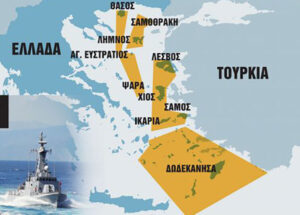


 By George Friedman Geopolitical Future




 Του Αλκη Καλλιαντζίδη, Οικονομολόγου,
 αντιπροσωπεία της Μάλτας, στεγάζεται σε ένα υπερσύγχρονο κτήριο εννιά ορόφων, που εξαγοράστηκε και ανακαινίστηκε ως δωρεά της Κίνας, φιλοξενεί δε και ένα προξενείο. Η τοποθεσία είναι μοναδική και αριστοκρατική.
 Εξωτερικών από τον Alain Winants, επικεφαλής των μυστικών υπηρεσιών του Βελγίου έως το 2014. Ερωτηθείς σχετικά από την εφημερίδα Le Monde, ο εκπρόσωπος τύπου αυτού του υπουργείου, περιορίστηκε να δηλώσει ότι «τηρείται το αυστηρότερο απόρρητο για το περιεχόμενο αυτών των πληροφοριών και των δράσεων που προκύπτουν από αυτές»,
 χωρίς να διαψεύδει την πληροφορία. Παρακληθείς και ο κ. Winants, που σήμερα είναι γενικός εισαγγελέας στο Ακυρωτικό Δικαστήριο, αρνήθηκε να μιλήσει, όπως έκανε και ο διάδοχός του στην ασφάλεια του κράτους, Jaak Raes, τωρινός γενικός διευθυντής.
 Μάλτας, Daniel Attard, δήλωσε στον Monde ότι «η Μάλτα έχει μια ισχυρή σχέση με την Κίνα, όπως και με άλλες χώρες, ιδίως όσον αφορά τη συνεργασία». Σε αυτό το πλαίσιο, εξήγησε, «ότι το 2006-2007 μια συμφωνία που υπεγράφη μεταξύ του υπουργού Οικονομικών της Μάλτας και της κινεζικής κυβέρνησης επέτρεψε την πλήρη ανακαίνιση της πρεσβείας της Dar Malta στις Βρυξέλλες». Ενώ απέφυγε να σχολιάσει τις κατηγορίες της βελγικής ασφάλειας για τη χρήση του κτιρίου, εν γνώσει της Μάλτας, για κατασκοπία από τους Κινέζους των ευρωπαϊκών θεσμικών οργάνων. Με βάση τις πληροφορίες που διαβιβάζονται από τις υπηρεσίες τους, οι βελγικές αρχές δεν επέλεξαν μια δημόσια απάντηση ούτε έστειλαν αστυνομικές δυνάμεις εντός της πρεσβείας, η οποία απολαμβάνει, όπως και κάθε διπλωματική εκπροσώπηση, την αρχή του απαραβίαστου. Όταν ρωτήθηκε, το βελγικό Υπουργείο Εξωτερικών διευκρίνισε ότι «οι εκθέσεις που του διαβιβάζονται από την ασφάλεια του κράτους υπόκεινται συστηματικά σε έναν έλεγχο από τις αρμόδιες υπηρεσίες. Υπάρχουν κατάλληλα κανάλια για τη μετάδοση οποιωνδήποτε χρήσιμων πληροφοριών σε άλλους ενδιαφερόμενους που επηρεάζονται από αυτές τις εκθέσεις – συμπεριλαμβανομένων των συμμαχικών χωρών ή διεθνών οργανισμών». Μια πηγή στο Υπουργείο Εξωτερικών των ΗΠΑ επιβεβαίωσε στην εφημερίδα Le Monde ότι η Πρεσβεία των Ηνωμένων Πολιτειών στις Βρυξέλλες ενημερώθηκε για τις κατηγορίες που άσκησε η κρατική ασφάλεια σε αυτήν την υπόθεση. Το περιβάλλον του John Demers, αναπληρωτή Υπουργού Δικαιοσύνης των Ηνωμένων Πολιτειών, υπεύθυνου για θέματα εθνικής ασφάλειας, ο οποίος ήρθε στις Βρυξέλλες τον Νοέμβριο του 2019 για να καταγγείλει την κινεζική ανάμειξη, είπε ότι λυπάται για τη μικρή απήχηση που είχε στους Ευρωπαίους αυτή η μορφή «επίθεσης». Οι γαλλικές αρχές και η Επιτροπή διαβεβαιώνουν, ιδιωτικά, ότι δεν θυμούνται καταγγελίες που διατύπωσαν οι βελγικές μυστικές υπηρεσίες κατά της Πρεσβείας της Μάλτας στις Βρυξέλλες.
 πρεσβείας της Μάλτας, συμπεριλαμβανομένης ολόκληρης της ανακαίνισης και της εξαγοράς του κτηρίου, συνολικής αξίας 21 εκατομμυρίων ευρώ.
 συνεργασία με την αρχιτεκτονική εταιρεία Dethier, η CIT Blaton επιβλέπει την εγκατάσταση κουφωμάτων αλουμινίου με θερμομόνωση, διπλά τζάμια και αλεξήλιο για την αποφυγή υπερθέρμανσης σε εκτεθειμένες προσόψεις. Όλη η πρεσβεία προστατεύεται από κάμερες παρακολούθησης και αναγνώστες ηλεκτρονικών κοριών. Ανιχνευτές ανθρώπινης παρουσίας είναι εγκατεστημένοι παντού, συμπεριλαμβανομένων και των ανελκυστήρων και των χώρων στάθμευσης. Κάθε ζώνη έχει ένα συγκεκριμένο βαθμό ασφάλειας και ο κεντρικός σταθμός είναι εξοπλισμένος με αλεξίσφαιρα παράθυρα. Τέλος, μια παχιά θωράκιση συγκολλήθηκε στην μεσοτοιχία με το γειτονικό κτίριο!
 την παρουσία των κινεζικών μυστικών υπηρεσιών πίσω από το έργο της πρεσβείας. Κατά την έρευνά της, πριν διαβιβάσει τα συμπεράσματά της στις αρχές, η ασφάλεια συνέχισε επίσης να βασίζεται στην εμπειρογνωμοσύνη και στα μέσα των μυστικών υπηρεσιών του Ηνωμένου Βασιλείου. Η βελγική στρατιωτική μυστική υπηρεσία, η γενική υπηρεσία πληροφοριών και ασφάλειας, έδωσε επίσης ένα ισχυρό χέρι βοηθείας για να υποστηρίξουν τις κατηγορίες κατασκοπείας.
 μέτρα κατά των δραστηριοτήτων που θεωρούνται εχθρικές από την Κίνα στο έδαφός του. Αφού απαγόρευσε την παραμονή του το 2019, στον Song Xinning, διευθυντή του Ινστιτούτου Κομφουκίου που εγκαταστάθηκε στην
 πανεπιστημιούπολη του Ελεύθερου Πανεπιστημίου των Βρυξελλών στην ολλανδική γλώσσα (VUB), μόλις έλαβε μια παρόμοια απόφαση εναντίον άλλου αξιωματούχου πολιτιστικού κέντρου στις Βρυξέλλες. Επιπλέον, η Επιτροπή Ελέγχου Υπηρεσιών Πληροφοριών και Ασφάλειας, γνωστή ως «Επιτροπή R», ξεκίνησε έρευνα για ύποπτη κινεζική διείσδυση ακόμα και στις βελγικές
 μυστικές υπηρεσίες ! Η υπόθεση του Ινστιτούτου του Κομφούκιου αποτέλεσε ένα σημείο καμπής όσον αφορά τη δημόσια συζήτηση στο Βέλγιο. Αυτή η χώρα είναι πολύ απρόθυμη στην ιδέα να δράσει σε ένα ευαίσθητο ζήτημα όπως η κινεζική κατασκοπεία στο έδαφος της. Η κρατική ασφάλεια, με πρωτοβουλία της έρευνας, είχε ήδη εκφράσει, το 2016, τους φόβους της μετά την άφιξη αυτού του ινστιτούτου, δεδομένου ότι δεν περιόρισε την παρέμβασή του στον πολιτιστικό τομέα, αλλά την επέκτεινε σε πολιτικές υποθέσεις. Αυτός ο οργανισμός εξαρτάται, στην πραγματικότητα, από το κινεζικό Υπουργείο Παιδείας και η βελγική ασφάλεια υποψιαζόταν τον κ. Song ότι κρύβει άλλες δραστηριότητες πίσω από το στάτους του ως καθηγητή.
 κινεζικής εταιρείας στην Αμβέρσα, με επικεφαλής κάποιον, Shao Changchun,
 που διοργάνωνε πολιτιστικές εκδηλώσεις. Τα οδοιπορικά του έξοδα, τα έξοδα διατροφής, τα έξοδα διαμονής σε ξενοδοχεία και για τα ταξίδια στο εξωτερικό καλύπτονταν. Σε αντάλλαγμα, συναντήθηκε κυρίως με τον διευθυντή της βελγικής ομοσπονδιακής αστυνομίας κατόπιν αιτήματος των Κινέζων. Απάντησε ότι αυτό δεν τον καθιστούσε έναν Κινέζο κατάσκοπο. Ο Jan Jambon (N-VA), πρώην ομοσπονδιακός υπουργός Εσωτερικών, εμφανίζεται επίσης σε μια φωτογραφία του 2014 με τον κ. Shao. Για τις βελγικές υπηρεσίες, τα πρόσωπα της κινεζικής ανάμειξης είναι πολυάριθμα : πράκτορες που ενεργούν υπό διπλωματική κάλυψη, πολλοί ψευδο-δημοσιογράφοι διαπιστευμένοι στις Βρυξέλλες, Κινέζοι φοιτητές που εργάζονται, στην πραγματικότητα, για την κυβέρνησή τους, ύποπτες πανεπιστημιακές συνεργασίες και δημιουργίες νεοσύστατων επιχειρήσεων (start-up) που προορίζονται να διεισδύσουν στον οικονομικό ιστό. «Οι Κινέζοι επιχειρηματίες ή διπλωμάτες έχουν συχνά ύποπτη συμπεριφορά, αναφέρει ένας Βέλγος αξιωματούχος της ασφαλείας. Αλλάζουν δωμάτια ή ακόμη και ξενοδοχεία, με την άφιξή τους, αναβάλλουν τις ημερομηνίες ταξιδιού τους, αλλάζουν συνεχώς το δρομολόγιό τους».