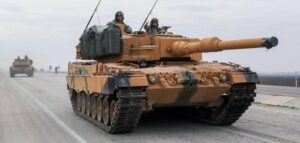
Turkey is the #1 recipient of German arms exports for the second year running, according to a classified document revealed by the German Press Agency (DPA) on Tuesday.
According to the document, Turkey received 344.6 million euros worth of weapons last year from Germany, which amounts to more than one third of Germany’s total weapons exports.
After the invasion of Turkish troops into Syria in October of 2019, Germany’s federal government had imposed a partial arms export ban on Turkey. However, this only applies to weapons that could be used in the Syrian war.
According to the document, the weapons delivered last year were exclusively for “maritime” purposes.
Dietmar Bartsch, Chairman of the leftist Die Linke parliamentary group in the Bundestag, called for an arms export ban against Turkey. “Apparently, whoever wages the most war receives the most weapons from the federal government,” he said, according to the German daily Die Welt.
Die Welt notes that although Berlin is publicly critical of Turkey’s actions in regional conflicts including Syria or Libya, it continues to export large quantities of arms to Ankara.
A pact with Palestine could strengthen Turkish oil and gas claims in the Mediterranean
The Palestinian Authority (PA) is ready to negotiate a maritime delimitation deal with Turkey and cooperate with Ankara on natural resources in the eastern Mediterranean, a PA envoy told Turkish media on Monday.
Faed Mustafa, Palestine’s ambassador to Ankara, said in an interview that the PA could follow Turkey’s maritime delimitation deal with Libya and sign its own pact.
“We are open for every idea to deepen our relations with Turkey, and this includes a deal on exclusive economic zones,” Mustafa told the Aydinlik newspaper.
“We also have rights in the Mediterranean. Palestine has shares in oil and gas located in the eastern Mediterranean. We are ready to cooperate in these areas and sign a deal.”
With the Gaza Strip, the Palestinian territories have a coastline along the eastern Mediterranean that makes it eligible for maritime rights. Since 2007, Gaza has been ruled by the Hamas movement, which has fractious relations with the Fatah-dominated, West Bank-based PA.
‘We also have rights in the Mediterranean. Palestine has shares in oil and gas located in the eastern Mediterranean. We are ready to cooperate in these areas and sign a deal’
– Faed Mustafa, Palestinian ambassador to Turkey
Mustafa said Israel had been restricting Palestinian efforts to conduct exploration and drilling activities in the Gaza Marine gas field, which was discovered in 1999 approximately 30km off the besieged coastal enclave’s shore.
With Israel and Egypt keeping Gaza under strict blockade, and conflicts and flare-ups common, the field, which is estimated to contain one trillion cubic feet of gas, has remained dormant for nearly 20 years since its discovery.
“We couldn’t benefit from the gas due to Israeli pressure,” Mustafa said.
Turkey and Libya’s UN-recognised Government of National Accord last November signed a memorandum of understanding to delimit maritime zones in the eastern Mediterranean in an attempt to block further Greek and Cypriot energy drilling activities in the area.
A deal with the PA could further embolden Turkish attempts to minimise Greek ambitions to restrict Turkish activity into a tight coastline.
Turkey and Greece are Nato allies but have long been at loggerheads over Cyprus, which has been ethnically split between Greek and Turkish Cypriots since 1974, when the island was divided after a brief Greek-inspired coup triggered a Turkish invasion.
The Republic of Cyprus in the south of the island is a member state of the EU, while the north of the island is controlled by the Turkish Republic of Cyprus, which is only recognised by Turkey. Several peacemaking efforts have failed and the discovery of offshore resources in the eastern Mediterranean in the 2000s has complicated the negotiations.
According to the UN Law of the Sea, coastal states have a right to 320km of maritime territory from their shoreline where they can declare an “exclusive economic zone” (EEZ), and where they have the right to explore and exploit natural resources.
However, because of the concave shape of the eastern Mediterranean, there is an overlap between the areas that each country can claim, requiring negotiations and compromise – and opportunity, some say, for leverage in ongoing conflicts.
Neither Turkey nor Greece have made official EEZ claims, but that has not stopped them from fighting over the territory they envision to be their own.
U.S. President George W. Bush and CIA director George Tenet at the White House, December 2001.
Christopher Morris / VII / Redux
Russian President Vladimir Putin tends to respond to questions about his government’s interference in the 2016 U.S. presidential election with a mix of denials and countercharges. It is the United States, he alleged in June 2017, that “all over the world is actively interfering in electoral campaigns in other countries.” The purpose of this claim is to excuse and distract from Russia’s actions, and in many places overseas, it’s working. From Kyiv to Brussels to London, government officials told me that they assume the Central Intelligence Agency (CIA) frequently interferes in elections abroad.
This perception is understandable: for decades, it was true. The CIA’s first-ever covert action program was an operation to manipulate Italy’s 1948 election. American intelligence officers spread incendiary propaganda, bankrolled their preferred candidate, and orchestrated grassroots initiatives—all to advantage Italy’s centrist forces over their leftist competitors. After the Italian Communist Party lost, the 1948 operation became “a template,” David Robarge, the CIA’s chief internal historian, told me, for what the agency then did in “many, many countries” in competition with its Soviet counterpart, the KGB. From Chile and Guyana to El Salvador and Japan, the CIA and the KGB targeted democratic elections across the globe. Some of those operations manipulated ballots directly; others manipulated public opinion; all were designed to influence election outcomes.
Then, the Cold War ended, and the opposing objectives of Moscow’s and Washington’s electoral operations—to spread or to contain communism—became obsolete. Since then, Russian intelligence has interfered in many foreign elections, not to advance an ideology but to promote divisive and authoritarian-minded candidates, sow chaos and confusion, and delegitimize the democratic model. But what of the CIA?
Over the past two years, I interviewed more than 130 officials about the century-long history of covert electoral interference, or concealed foreign efforts to manipulate democratic votes of succession. My interviewees included eight former CIA directors and many more CIA officers, as well as directors of national intelligence, secretaries of state, national security advisers, a KGB general, and a former U.S. president. I learned that in the twenty-first century, Washington’s senior-most national security officials have considered using the CIA to interfere in foreign elections at least twice. In one instance—in Serbia in 2000—debate turned into action, as the CIA spent millions of dollars working against the tyrant Slobodan Milosevic. In the other—in Iraq in 2005—the CIA stood down. In both instances, U.S. policymakers weighed the potential benefits of covert action against the perceived risks. These behind-the-scenes stories reveal why, contrary to Putin’s claims, Washington, unlike Moscow, has moved away from the practice of covert electoral interference.
“THERE’S A DEATH THRESHOLD, AND MILOSEVIC CROSSED IT”
The first case arrived in 2000, when Milosevic, the Yugoslav president, was competing for reelection in Serbia. Milosevic was many things: a Moscow-aligned Communist, a Serbian nationalist, and a grave abuser of human rights. In the mid-1990s, he had enabled a campaign of ethnic cleansing in Bosnia and Herzegovina. A few years later, he did the same in Kosovo, as his soldiers systemically terrorized, murdered, and expelled ethnic Albanians. The severity of these atrocities prompted NATO, in 1999, to launch an air campaign against Milosevic’s forces and an international court to indict him as a war criminal. Leon Panetta, U.S. President Bill Clinton’s chief of staff from 1994 to 1997, told me, “Milosevic was viewed as a bad guy and influence and somebody that was going to turn that part of the world upside down if there weren’t steps taken to go after him.”
The 2000 election presented such an opportunity. “I don’t know that we publicly said that our goal was regime change,” said James O’Brien, then Clinton’s special envoy for the Balkans, but “we did not see Milosevic being able to lead a normal country.” From mid-1999 to late 2000, public and private U.S. organizations spent roughly $40 million on Serbian programs, supporting not just Milosevic’s opposition but also the independent media, civic organizations, and get-out-the-vote initiatives. Through this overt engagement, O’Brien explained, the United States aimed to level the playing field in an election that Milosevic was poised to manipulate.
As the State Department, the United States Agency for International Development (USAID), and U.S.-funded nongovernmental organizations (NGOs) influenced the Serbian election in the light, the CIA did the same in secret. John Sipher told me that between 1991 and 2014, when he was serving as a CIA operations officer, he knew of just one “successful” operation to interfere in an election: in Serbia in 2000. “There was a covert effort to try to support the opposition to Milosevic,” Sipher said, recalling that after Clinton notified select members of Congress, the CIA went to work “supporting and funding and providing help to specific opposition candidates—that was the main thing.”
Sipher, who became the CIA’s station chief in Serbia just after the election, explained that the agency funneled “certainly millions of dollars” into the anti-Milosevic campaign, mostly by meeting with key aides to Serbian opposition leaders outside their country’s borders and “providing them with cash” on the spot.
As the State Department and U.S.-funded NGOs influenced the Serbian election in the light, the CIA did the same in secret.
In an interview, Clinton confirmed that he authorized the CIA to interfere in the 2000 election in favor of Milosevic’s opponents. “I didn’t have a problem with it,” he told me of the CIA’s covert action program, because Milosevic “was a stone-cold killer and had caused the deaths of hundreds of thousands of people.” Just as Cold War–era U.S. presidents believed they could strengthen foreign democracies by undermining communist candidates, Clinton believed he could strengthen Serbian democracy by working against Milosevic. “The guy was a war criminal,” Clinton told me. “I didn’t consider Milosevic to be a democracy candidate; I thought he was trying to get rid of democracy.”
In Serbia, the CIA’s focus was on influencing minds rather than altering ballots. “We did not rig the vote nor knowingly lie to the voters to get them to support the people we hoped to win,” Clinton explained. Instead, the CIA provided money and other types of assistance to the opposition campaign.
Congressional leaders knew about and backed this secret plan. Trent Lott, the Senate majority leader, recalled that when he was briefed on the CIA’s operation, he supported it wholeheartedly. “[Milosevic] was totally out of control,” Lott told me. “We weren’t gonna invade, but it was a mess, and we had to do something.” CIA officers, unlike other U.S. government officials, could operate undercover. “Because of the nature of the way we do business,” explained Douglas Wise, then a CIA operations officer based in the Balkans, “Serbia was a lot more penetrable than it was for people who were much more overt, shall we say.” The U.S. intelligence community’s involvement in the election was “substantial,” Wise continued, as Washington used “all the instruments of our national power to create an outcome that was pleasing for the United States.”
Milosevic speaks to a crowd in Montenegro, September 2000
Reuters
But would it be enough? As the election approached, Clinton worried that Milosevic would cheat his way to victory. “These elections are going to be important, but they probably won’t be fair,” he told Vladimir Putin, Russia’s new president, two and a half weeks before the vote, according to a recently declassified transcript of their conversation. “Milosevic is running behind in the polls, so he’ll probably steal it. It would be preferable for him to lose, but he’ll probably arrange not to.” (Putin, in response, complained about NATO’s intervention the previous year. “We weren’t consulted in the decision to bomb Yugoslavia,” he said. “That’s not fair.”)
U.S. democracy promotion organizations, sharing Clinton’s concerns, sought to ensure that Milosevic could not falsify the vote count. One U.S.-funded NGO trained more than 15,000 activists to monitor polling places. The day of the election, opposition members tallied ballots alongside government officials. The state’s vote count suggested that Milosevic had a narrow lead. The parallel count, however, revealed the truth: he had lost overwhelmingly. Major protests erupted. Milosevic, unable to quell a popular revolution, was forced to resign.
The CIA’s hand remained hidden. Two decades later, now retired American intelligence officers expressed unexplained confidence that their work proved pivotal in defeating Milosevic. Sipher commented on the “success” of the CIA’s operation. Wise said that the United States made “a big difference” and that “a combination” of covert and overt tactics had produced “a positive outcome.” As with all covert operations to influence voters, though, the CIA could not assess its precise impact. “Measuring it is hard,” Sipher recognized. But he noted that Serbian government officials did credit the CIA for their victory behind closed doors. “Many of the key players who became senior figures in the follow-on government continued to meet with us and continued to tell us that it was our efforts that led to their success,” Sipher said, “in terms of helping them with everything, from advertising to financing to how they did things” during the campaign.
In interviews, more senior government officials grew uncomfortable at any mention of the CIA and Milosevic’s defeat. “I know stuff about that, but I’m not able to talk about it,” said John McLaughlin, who was the CIA’s deputy director in 2000. This discomfort made sense: CIA interference in the 2000 election was not representative of the agency’s post–Cold War operations. How often, after all, can a war criminal be ousted by ballot? “There seemed to be a higher comfort level not just in the intelligence part of the world but really just policy writ large that something had to be done in the Balkans,” said Steven Hall, a former CIA operations officer who was stationed in the region in 2000. For Washington, “electoral manipulation” had become “a tool of last resort,” Wise added, and the Serbian case was “the complete exception,” in part because of Milosevic’s atrocities and in part because of the “receptive,” “credible,” and “attractive” nature of the opposition. For such cases, Wise argued generally, “the ends justify the means . . . the risk is you maybe do something that is un-American in the eyes of some.” But the result is “the genocidal maniac is no longer in power.”
When I asked Clinton why covert action was merited in Serbia, he said simply, “There’s a death threshold, and Milosevic crossed it.”
THE CIA IS SIDELINED
In 2004, U.S. President George W. Bush was on the verge of authorizing another such operation. The story unfolded in the White House Situation Room, where, in the summer and fall, national security officials weighed a familiar proposal: for the CIA to engage in covert electoral interference. This time, the target would be Iraq.
In March 2003, the United States had invaded Iraq to remove Saddam Hussein, the country’s longtime dictator, and seize weapons of mass destruction that he allegedly possessed. Hussein’s government fell within weeks, but no such weapons were found. Struggling to justify the war, Bush renewed his promise to transform Iraq’s political system. In late 2003, he declared that “Iraqi democracy will succeed” and that its citizens would enjoy popular representation. “For [the U.S. government] at that time it was extremely important to have free and fair elections because that’s actually justifying the invasion,” said Arturo Muñoz, then a senior CIA operations officer. “As long as we didn’t find weapons of mass destruction, we were kind of desperate by then to justify ourselves, so at least we can create democracy in this place.” American democracy promotion organizations poured resources into Iraq. The International Republican Institute and the National Democratic Institute, in particular, launched substantial programs there, helping to produce voter-education materials, train party officials, and facilitate political debates and get-out-the-vote efforts.
The purpose of elections, though, is for voters to determine the direction of their state. In this sense, Bush had a problem: intelligence reports indicated that his preferred candidate, Ayad Allawi, would lose in Iraq’s first-ever parliamentary election, scheduled for January 2005.
The transition from containing Communism to promoting democracy made electoral interference a riskier proposition.
The U.S. intelligence community believed that Iran was manipulating the election in favor of Allawi’s opposition. “Of course, Iran was involved,” said McLaughlin, then the CIA’s deputy director. “Why wouldn’t they be? They’re right next door, they have the capability, and they were close to some of the leadership.” Wise was based in Iraq ahead of the election and a few years later, became the CIA’s station chief there. He described Iranian interference in the Iraqi election as wide-ranging: “We’re talking money, activists, threats, extortion, a paramilitary presence.”
Bush and his advisers debated whether to respond with covert action. John Negroponte, then the U.S. ambassador to Iraq, regularly participated in interagency teleconferences from Baghdad with a sole agenda item: CIA-led electoral interference. “We really thought about it hard,” said Negroponte, who told me that he had been “open to the possibility” in discussions with other senior administration officials.
Deliberations reached a serious enough stage that the White House briefed the congressional leadership on its planning. “[The] top line was that there’s an opportunity here to engage in a way that could provide much more of a guaranteed outcome,” recounted Tom Daschle, then the Senate minority leader. The officials I interviewed could not recall, or were unwilling to share, the operational details of the CIA’s plan, although Daschle told me that it included “a lot of activities that we thought were just untoward and inadvisable.”
For the CIA, interfering in Iraq’s election would be the latest rendition of an age-old operation, and by the fall of 2004, the agency was moving toward action. Allawi had come to expect covert help. “The initial attitude of the U.S. was to support moderate forces, financially and in the media,” he said in 2007. Then, unexpectedly, this assistance “was brought to a halt,” Allawi said, “under the pretext that the U.S. does not want to interfere.”
Within the CIA, Congress, and the White House, an unlikely alliance of officials had united against covert electoral interference. The CIA’s representatives, Negroponte recalled, “least wanted to be involved” with this operation, since it could expose the agency to criticism if detected. McLaughlin, laughing, said that he “wouldn’t disagree” with Negroponte’s recollection. “We had, after all, invaded a country to make it democratic,” he said. “How hypocritical would it be then to subvert their election?” Speaking generally, Muñoz said, “If you’re going to ruin the elections, and it becomes known, and things frequently leak,” then once “word gets out that so-and-so won because the CIA did X, Y, and Z, then you’ve just wrecked the whole foreign policy adventure that you’ve embarked on.”
Congressional leaders also objected to the plan. For Daschle, the arguments against covert action were twofold. The first was a matter of optics: how “terrible it would look” if exposed. The second was normative. “It was no longer the Cold War,” he said. “Doing what we had been doing even twenty years earlier was just not appropriate; it wasn’t keeping with what our country should be all about.” Daschle recalled that Nancy Pelosi, his counterpart in the House of Representatives, was “very vocal” in opposing the plan. Pelosi reportedly found an ally in Condoleezza Rice, the national security adviser. “As I heard the debate go on,” Negroponte said, “I realized, ‘It is just not worth it, and people do not want to do it,’ and we rejected it.”
Bush, in attempting to build a democracy, was unwilling to intervene covertly in that democracy’s elections. “You wanted to be pretty much clean and free when it came to interference in their electoral processes,” McLaughlin said. “I was involved in a lot of covert action planning and decisions, and you always have to ask yourself, ‘What are the unintended consequences of what we are proposing to do or thinking about doing?’”
The CIA’s plan was shelved. And come January 2005, Allawi’s coalition lost resoundingly in a contest marred by instability and terrorist attacks. A governing coalition with close ties to Tehran then took power.
A NEW AGE
How, then, has the role of the CIA changed in the post–Cold War period? As Russian intelligence again manipulates elections around the world, the CIA has charted the opposite course. The Serbian operation, according to various U.S. officials, was an “extraordinary” measure that reflected extraordinary circumstances. For the Iraqi election, which did not involve a ruler like Milošević, U.S. policymakers judged that the risks of covert action were too high. In the years since, based on my interviews with the seven directors of the CIA from July 2004 to January 2017, as well as former directors of national intelligence and deputy CIA directors, the logic behind the Iraqi decision has become the norm. Contrary to Putin’s claims, Washington has all but abandoned the use of covert electoral interference.
In interviews about the CIA’s modern covert action programs, the United States’ former spy chiefs fall into two groups. The first insists that the agency no longer engages in covert electoral interference. David Petraeus, who led the CIA in 2011 and 2012, said he is “not aware . . . in more recent times” of such operations. John Brennan, the CIA’s director from 2013 to 2017, offered a more blanket assurance: “With President Obama and President Bush 43, there was never an effort to try to influence the outcome of a democratic election. We believed it was antithetical to the democratic process to do that.” The CIA once targeted foreign elections, he continued, “but over the course of the last 18 years or so, that has not been the case.”
The second group of officials does not speak in absolutes, suggesting instead that the CIA has moved away from, but not necessarily stopped, influencing elections overseas. “There wasn’t much of it. This is not something that intelligence does with anything like the sense of flexibility and freedom that it might have had in the early Cold War,” said McLaughlin, who, as the CIA’s number two in 2000, would have been involved with the Milosevic case. Since then, such operations have, at the very least, been raised at the highest levels. The Bush administration debated the Iraq scheme; the Obama administration weighed similar proposals. “It’s not like these ideas don’t resurface, but at least in [the Obama] administration they would get rejected,” said Tony Blinken, who served in senior national security positions for the entirety of Barack Obama’s presidency.
Former CIA director John Brennan testifying before the House Intelligence Committee in Washington, May 2017
Kevin Lamarque / Reuters
Of this second group, Leon Panetta, the CIA’s director from 2009 to 2011, was the most forthcoming. He said he never “got into” altering votes directly or spreading disinformation. But on rare occasions, his CIA did influence foreign media outlets ahead of elections in order to “change attitudes within the country.” The CIA’s method, Panetta went on, was to “acquire media within a country or within a region that could very well be used for being able to deliver” a specific message or work to “influence those that may own elements of the media to be able to cooperate, work with you in delivering that message.” As in Italy in 1948 or Serbia in 2000, the programs that Panetta described complemented overt propaganda campaigns. “Even though we were operating on a covert basis,” he said, “you had to make sure that the overt methods that were being used at least delivered the same message.” Even this type of operation presented risks. “There is no question it’s a gamble,” Panetta continued, which is why it was an option of last resort and why more aggressive tactics had been sidelined.
Every interview pointed to the same conclusion: for the CIA, covert electoral interference has become the exception rather than the rule. Either the agency no longer seeks to influence election outcomes, as Brennan and Petraeus asserted, or it does so in rare cases when, as with Milosevic, a tyrant can be ousted by ballot. The exact truth is unknown. But this general shift marks a dramatic departure from the Cold War, when the CIA was interfering in the elections of “many, many” countries. Of this evolution, Negroponte, a former director of national intelligence, said, “Frankly, political action of that kind is really part of the past. Iraq convinced me of that. It was just zero appetite for [electoral] intervention.”
Skeptics will insist that the United States’ intelligence chiefs are lying. But considering present-day realities, the skeptics may be the ones defying logic. It would be self-defeating for the CIA to manipulate foreign elections in all but the most exceptional of circumstances. One reason why concerns the end of the Cold War, which robbed the CIA of its long-running purpose: to counter the Soviet Union. Milosevic, for one, was a relic of a previous era. In September 2001, the CIA found a new focus in counterterrorism, which called for drone strikes and paramilitary operations, not electoral interference.
The United States’ post–Cold War leaders declared an era of liberal democracy defined by free and fair elections. This transition, from containing communism to promoting democracy, made covert electoral interference a riskier proposition. As Michael Hayden, a former CIA director, explained, “Meddling in an electoral process cuts across the grain of our own fundamental beliefs. You might want to do it to level the playing field, you might want to do it because of just the demands of national security, but it doesn’t feel right.” McLaughlin elaborated upon Washington’s evolving outlook. “If you are interfering in an election and are exposed as doing so,” he said, “you are a lot more hypocritical than you would have appeared in the Cold War, when that sort of thing tended to be excused as part of the cost of doing business.”
Hypocrisy, however, had not stopped the CIA before. And in recent years, as great-power competition has reemerged, the United States has had a stake in many foreign elections. Changes in high politics, then, only partly explain this shift in CIA activity. The rest of this story has to do with the spread of the Internet, which has exposed American elections to outside interference. Officials in Washington are reluctant to execute the type of operation to which their country has become so vulnerable. “If you’re in a glass house, don’t throw stones,” Petraeus said. “And we’re the biggest glass house when it comes to Internet connectivity.”
The digital age has also made it harder to maintain the secrecy of covert operations to manipulate foreign electorates. “It’s very difficult to keep that kind of activity from ultimately getting out,” Petraeus continued. And for Washington, getting caught matters. “If the United States were identified as having promoted disinformation or tampering with votes in an election, it would undermine our credibility and our policy efforts, given how inconsistent such actions would be with the values we promote, which are at the heart of our soft power,” said Avril Haines, a former deputy CIA director. “The same is not true for Russia.”
Amid all the uncertainty about the world that will follow the pandemic, one thing is almost sure to be true: tensions between the United States and China will be even sharper than they were before the coronavirus outbreak. The resurgence of U.S.-Chinese competition poses a host of challenges for policymakers—related to trade and economics, technology, global influence, and more—but none is more consequential than reducing the risk of war. Unfortunately, thanks to today’s uniquely dangerous mix of growing Chinese assertiveness and military strength and eroding U.S. deterrence, that risk is higher than it has been for decades, and it is growing.
Neither Washington nor Beijing seeks a military conflict with the other. Chinese President Xi Jinping and U.S. President Donald Trump both undoubtedly understand that a war would be disastrous. Yet the United States and China could all too easily stumble into conflict, sparked by a Chinese miscalculation of the United States’ willingness or capability to respond to provocations in disputed areas such as the South China Sea or to outright aggression against Taiwan or another U.S. security partner in the region.
For the past two decades, the People’s Liberation Army (PLA) has been growing in size, capability, and confidence. China is also emerging as a serious competitor in a number of technological areas that will ultimately determine military advantage. At the same time, the credibility of U.S. deterrence has been declining. For Beijing, the 2008–9 financial crisis gave rise to an enduring narrative of U.S. decline and Chinese superiority that has been reinforced by perceptions of U.S. withdrawal from the world—as well as, more recently, by its perception of bungled U.S. management of the pandemic and societal upheaval over systemic racism.
What’s more, Washington has not delivered on its promised “pivot” to Asia. U.S. troop levels in the region remain similar to what they were a decade ago. The current administration discarded the Trans-Pacific Partnership trade agreement its predecessor had so painstakingly negotiated. Senior diplomatic positions in the region remain empty, and the United States is often underrepresented or entirely AWOL from the region’s major diplomatic forums. There has been no U.S. answer to Beijing’s Belt and Road Initiative, even as its influence expands through Asia and well beyond. And Chinese activities in the “gray zone,” below the level of conflict—such as building militarized “islands” and using coercive measures to enforce disputed sovereignty claims in the South China Sea—have gone largely unanswered by the United States beyond the occasional diplomatic démarche or freedom-of-navigation operation.
All of this spells trouble for deterrence. The more confident China’s leaders are in their own capabilities and the more they doubt the capabilities and resolve of the United States, the greater the chance of miscalculation—a breakdown in deterrence that could bring direct conflict between two nuclear powers. As tensions continue to rise and Chinese assertiveness in the region grows, it will take a concerted effort to rebuild the credibility of U.S. deterrence in order to reduce the risk of a war that neither side seeks.
DECLINING ADVANTAGE, INCREASING RISK
Since the 1991 Gulf War, the PLA has gone to school on the American way of war and developed an expanding set of asymmetric approaches to undermine U.S. military strengths and exploit U.S. vulnerabilities. Of greatest concern is the substantial investment Beijing has made in “anti-access/area-denial” (A2/AD) capabilities. Ranging from persistent precision strikes on U.S. logistics, forces, and bases to electronic, kinetic, and cyber attacks on digital connections and systems inside U.S. battle management networks, these capabilities are designed to prevent the United States from projecting military power into East Asia in order to defend its interests or allies. As a result, in the event that conflict starts, the United States can no longer expect to quickly achieve air, space, or maritime superiority; the U.S. military would need to fight to gain advantage, and then to keep it, in the face of continuous efforts to disrupt and degrade its battle management networks.
The Chinese military has also made rapid advances in cyber- and artificial intelligence—thanks to China’s massive theft of Western technology, state support for its leading technology companies, and doctrine of “civil-military fusion,” which requires that any commercial or academic technological advancement with military implications be shared with the PLA. Technological investments have come along with doctrinal innovations. Chinese military doctrine now holds that the side that can make and execute battlefield decisions most quickly will gain a decisive advantage in any conflict. China’s theory of victory increasingly relies on “system destruction warfare”—crippling an adversary at the outset of conflict, by deploying sophisticated electronic warfare, counterspace, and cyber-capabilities to disrupt what are known as C4ISR networks (command, control, communications, computers, intelligence, surveillance, and reconnaissance), and thereby thwarting its power projection and undermining its resolve. Among other things, this means that the United States can no longer assume that its satellites—essential for navigation, communications, early warning, targeting, and much more—would escape attack during a conflict. Given China’s ability to interfere with, spoof, damage, or destroy U.S. satellites, Washington can no longer take space for granted as an uncontested domain during war.
Deterrence could break down owing to either strategic or tactical miscalculation.
The upshot of the developments is dangerous new uncertainty about the U.S. ability to check various Chinese moves, which could invite risk-taking by Chinese leaders. Deterrence could break down owing to either strategic or tactical miscalculation. A strategic miscalculation might involve Chinese leaders choosing to blockade or attack Taiwan in the near term or midterm based on a set of strongly held beliefs about the United States as a declining power—one racked by internal political divisions, preoccupied with domestic crises, no longer showing up in the region diplomatically, lacking the military capabilities that might be effective in the face of A2/AD, and with an uncertain commitment to defending Taiwan. They could conclude that China should move on Taiwan sooner rather than later, a fait accompli that a weakened and distracted United States would have to accept.
Alternatively, a tactical miscalculation could have strategic consequences. For example, Chinese military planning for taking Taiwan by force envisions early cyberattacks against the electric power grids around key military bases in the United States, to prevent the deployment of U.S. forces to the region. But these same power grids also support the surrounding civilian population, including hospitals, emergency services, and other functions critical to public safety. Any such attack would have a high risk of killing American citizens. So rather than deter U.S. action, the envisioned cyberattacks could actually increase the U.S. determination to respond.
REESTABLISHING DETERRENCE
To reestablish credible deterrence of China, the United States must be able to prevent the success of any act of military aggression by Beijing, either by denying the PLA’s ability to achieve its aims or by imposing costs so great that Chinese leaders ultimately decide that the act is not in their interest. And Xi and his advisers must believe that the United States has not just the capability but also the resolve to carry through on any deterrent threat it makes.
Given China’s A2/AD networks and ability to field a far larger force in its own backyard than the United States can, U.S. policymakers need to start thinking more creatively about how to shape Beijing’s calculus. For example, if the U.S. military had the capability to credibly threaten to sink all of China’s military vessels, submarines, and merchant ships in the South China Sea within 72 hours, Chinese leaders might think twice before, say, launching a blockade or invasion of Taiwan; they would have to wonder whether it was worth putting their entire fleet at risk.
In part, the United States can develop such approaches to deterrence by using existing capabilities in new ways. Yet new capabilities will also be necessary, and here especially, the Pentagon’s current efforts are lagging, notwithstanding some promising exceptions. The Defense Department continues to overinvest in legacy platforms and weapons systems while underinvesting in emerging technologies that will determine who has the advantage in the future. Although the Defense Innovation Unit, Special Operations Command, and various military service organizations are doing a good job of scouting for new, transformative technologies, there is a “valley of death” between demonstrating a prototype of a new capability and getting it produced at scale and into the hands of deployed operators. And the Pentagon still lacks the tech talent it needs—at all levels, civilian and military—and has failed to give its acquisition workforce the right incentives to adopt cutting-edge technologies, such as artificial intelligence and unmanned systems, rapidly and at scale.
The Defense Department continues to underinvest in technologies that will determine who has the advantage in the future.
There are several steps that the Defense Department can take to accelerate innovation in service of deterrence. In the wake of the pandemic, there will be substantial downward pressure on defense spending, as other priorities compete for funding. A flat or declining defense budget will require making tough tradeoffs between legacy programs, which alone are insufficient to maintain the U.S. military’s edge, and the new capabilities that will ultimately determine military success—such as resilient battlefield networks, artificial intelligence to support faster decision-making, fleets of unmanned systems, and hypersonic and long-range precision missiles. Continuing to underinvest in these emerging capabilities will ultimately have dire costs for U.S. deterrence. For every existing major program, both defense officials and Congress need to ask whether buying one additional unit or platform is really worth forgoing investment in the new technologies and capabilities that are key to making U.S. forces effective in a far more contested and lethal environment. The secretary of defense should press each service chief to recommend tough choices, and Congress should back up the Pentagon when it makes those choices.
The U.S. military also needs to adapt its own overseas posture while shoring up the capabilities of allies and partners. It should expect that China will try to disrupt the U.S. ability to reenforce forward forces from the outset of a conflict, in all domains—air, sea, undersea, space, cyberspace. Accordingly, U.S. forces, bases, logistics networks, and C4ISR networks must be made more survivable and resilient. This will require investments in stronger cyber- and missile defenses; more geographically dispersed bases and forces; more unmanned systems to augment manned platforms; and resilient networks that can continue to function under attack.
China’s A2/AD capabilities can be thought of as having different rings of threat intensity that generally correspond to the first island chain (the first arc of archipelagos east of the East Asian continent, stretching from the Kuril Islands, to Japan and Taiwan, and then to the northern Philippines and Borneo) and the second island chain (further to the east, formed by the Bonin Islands, the Volcano Islands of Japan, and the Mariana Islands)—with anything inside the inner ring highly vulnerable to Chinese attack, and anything within and beyond the outer ring less so. Beyond the outer ring, the United States will likely want to maintain bases, fortified against threats, for staging and logistics. But the overall operating principle should be based on “places, not bases”: within the inner ring, the military should increasingly rely on smaller, more agile force packages such as submarines and unmanned underwater vehicles, expeditionary air units, and highly mobile marine or army units able to move between austere, temporary bases in order to complicate Chinese planning. Also essential will be taking a more strategic approach to security cooperation, assessing what each U.S. ally and partner can contribute to deterrence and developing multiyear security cooperation plans for each.
A Chinese ballistic missile submarine in the South China Sea, April 2018
Reuters / China Stringer Network
The Pentagon will also need to implement a series of acquisition, investment, and workforce-development reforms. Acquisition officials must be trained on best practices for acquiring software and emerging technologies. There must be more funding for turning successful prototypes into successful programs. And to bolster its tech workforce, the department should work with Congress to expand programs that offer scholarships or debt relief to students in a broad array of tech fields in return for government service and to recruit mid- and senior-level talent by expanding fellowships for private-sector technologists. For employees at all levels, it needs to create opportunities for skill development and viable career paths for technical talent that allow for both promotion and continued technical development, including through rotations in the private sector.
Finally, defense officials need to accelerate efforts to develop new operational concepts—new ways in which the military will fight—in order to clarify which capabilities will be essential, or even game changing, and to accelerate their acquisition and delivery into the hands of service members in the field. There are ongoing efforts to develop and test “joint” (that is, applicable across the different military services) operational concepts, such as Multi-Domain Operations, as well as service-specific operational concepts, which aim to erode the adversary’s advantage in various ways. Determining which technologies will be essential to these will require iterative, ongoing development and experimentation—with dedicated funding from Congress.
WHERE THERE’S A WILL
Effective deterrence does not depend just on Chinese leaders believing the United States has the capability to thwart any act of aggression; they must also believe it has the will to do so. Today, Beijing has doubts on both scores. Accordingly, along with investments in military capabilities, Washington needs to clarify—and consistently demonstrate—its commitment to the Indo-Pacific region, making clear who and what it is willing to defend. It must deploy more senior officials and additional military forces to the region, to underscore its enduring presence, strengthen its relationships, and counterbalance China’s influence. It should conduct more regular military exercises with allies and partners in the region, both to demonstrate capabilities it has already and to accelerate the development of new ones.
Ultimately, competition with China is far more than a military one, and its economic, technological, political, and ideological elements cannot be neglected. The most consequential thing the United States can do is to invest in the drivers of competitiveness at home—especially as it emerges from the current crisis. It is a time for investments in everything from STEM and higher education to critical technology and twenty-first-century infrastructure, such as 5G. It is also a time for restoring a smart immigration policy, welcoming foreign-born talent that poses no risks to national security and encouraging it to stay and build innovative enterprises in the United States.
Competition with China is far more than a military one.
The United States should also leverage its unique advantage of having an unrivaled network of allies and partners around the world. The best way to deal with the challenges China poses, be they unfair trade practices or orchestrated disinformation campaigns, is by making common cause with allies and partners whenever possible, confronting violations of the rules-based order as a coalition of like-minded states committed to a shared set of norms. The United States should work closely with its allies and partners to make a clear-eyed assessment of what each country can contribute to stabilizing the region and deterring increasingly aggressive behavior. This will also require reassuring them in words and deeds that they can count on the United States to have their backs in disputes with Beijing and ultimately to help defend them against gray-zone coercion or outright attacks.
Washington should spell out to countries in the region the stark contrast between what international rules and norms shaped by Beijing would look like and those the region has enjoyed to date—especially when it comes to enduring norms such as the freedom of navigation and peaceful resolution of disputes. In an Asia dominated by an authoritarian, revisionist China, ships that today can freely navigate the seas would be vulnerable to possible harassment. Decisions taken today by independent governments could increasingly fall prey to coercion. And failure to resist these coercive measures would, in turn, limit the collective ability of the United States and its allies to deter aggression or, if aggression takes place, to reverse it.
Yet even as it strengthens its capacity to deter China, Washington must also reopen a sustained high-level strategic dialogue with Beijing—a practice that every administration since Richard Nixon’s has adopted, until the current one. Reestablishing a forum in which China and the United States could regularly discuss their respective interests and perspectives, identify areas of potential cooperation (such as nonproliferation and climate change), and manage their differences short of conflict is essential; tactical discussions on trade issues are simply not enough. After all, deterrence depends on the clear and consistent communication of interests and intent in order to minimize the risk of miscalculation. Given Beijing’s assumption that the United States is preoccupied and in decline, Chinese leaders’ propensity to test the limits in areas such as Taiwan or the South China Sea, and the faulty, potentially escalatory assumptions embedded in Chinese military doctrine, such a dialogue cannot come too soon.
MICHÈLE A. FLOURNOY is Co-Founder and Managing Partner of WestExec Advisors. From 2009 to 2012, she served as U.S. Undersecretary of Defense for Policy.
At a seaside summit in southern India in October 2019, Chinese President Xi Jinping and Indian Prime Minister Narendra Modi pledged to take relations between their two countries to “greater heights” in the next year. The Asian neighbors—which together contain over a third of the world’s population—promised to work more closely in 2020, the 70th anniversary of formal ties between the two nations. Officials outlined 70 joint activities, ranging from trade and military delegations to academic studies of ancient civilizational links, all intended to strengthen Sino-Indian cooperation.
But instead of deeper ties, 2020 has highlighted the growing rivalry between China and India. Since early May, Chinese and Indian troops have been facing off at multiple points on the remote, rugged, and often disputed border between the two nations. The situation escalated on June 15 when Chinese and Indian soldiers clashed in the Galwan Valley. At least 20 Indian soldiers died in the skirmish, along with an unknown number of Chinese troops (China has yet to disclose any casualty figures). According to the Indian government, China precipitated the fighting by seeking to change the status quo on the boundary, advancing into or hindering Indian patrols in territory that both countries claim. Chinese officials, meanwhile, blamed India for instigating the violent face-off.
The border dispute between China and India caused a full-fledged war in 1962, and it has been a constant source of friction since then. Still, last week’s violence is a serious escalation. The skirmish resulted in the first fatalities along the Sino-Indian boundary in 45 years. It also demonstrated that despite New Delhi’s and Beijing’s cooperative efforts, their relationship is a fundamentally—and increasingly—competitive one that can spill over into conflict. This bloody clash in the Himalayas, in other words, could have wider implications for geopolitics in Asia.
SOURCES OF TENSION
Over the last two decades, China and India have deepened their diplomatic relations. They have strengthened their economic ties; held meetings at the highest levels; and participated together in regional institutions such as the Asian Infrastructure Investment Bank and multilateral organizations such as the BRICS grouping of Brazil, Russia, India, China, and South Africa. China is India’s second-largest trading partner, and Chinese investment in India has grown from a negligible amount a few years ago to around $26 billion of current and planned investment today, including in the technology sector. Recent years have also seen a greater number of Indians traveling to study in China and more Chinese tourists visiting India.
But these signs of greater cooperation cannot mask the growing competition between the two countries. Over the last decade, the long-running boundary dispute has flared up at Depsang in 2013 and at Chumar in 2014, with the two militaries also involved in a 73-day standoff at Doklam in 2017. In each case, India accused China of trying to unilaterally change the territorial status quo by advancing troops and establishing a permanent presence in positions they were not supposed to occupy. Other unresolved issues continue to bedevil the bilateral relationship, including the presence of the Dalai Lama and Tibetan refugees in India (which rankles China), China’s control of the waters of the Brahmaputra River (a source of concern for India), and what New Delhi sees as an unbalanced economic relationship.
Moreover, New Delhi feels increasingly encircled. Not only has Beijing strengthened its close ties with India’s longtime rival Pakistan but China has also expanded its presence in other South Asian countries, including Bangladesh, Nepal, and Sri Lanka, as well as in the wider Indian Ocean region. For its part, Beijing has looked askance at India’s growing closeness not just to the United States but also to Australia, Japan, and some Southeast Asian countries. Chinese officials worry about India joining U.S.-led efforts to balance against China.
At the level of global institutions, Indian officials believe that China seeks to stymie India’s ambitions on the international stage by blocking its membership in organizations such as the Nuclear Suppliers Group and the United Nations Security Council. China, in turn, worries that greater Indian coordination with the United States in multilateral institutions such as the Financial Action Task Force, the United Nations, and the World Intellectual Property Organization will threaten Chinese interests.
“A WATERSHED MOMENT”
Increased friction along the disputed border was, to some extent, expected. Over the last decade, India has built up infrastructure—including roads and bridges—near the boundary to try to match similar Chinese efforts. But the current standoff differs from the three previous clashes of the Xi era in scale as well as intensity. Whereas previous skirmishes occurred in a single location, this one erupted almost simultaneously at multiple locations in the western sector of the Sino-Indian border and at one in the eastern sector. This round of clashes also saw the deployment of a greater number of troops, and far more aggression, on both sides than in previous skirmishes. Satellite imagery and local reports suggest that China and India are sending reinforcements to the region following the clash.
The violence of June 15 has the potential to mark what some analysts have called “a watershedmoment” in the China-India relationship. Not only did the fighting result in the first fatalities along the border since October 1975 but it made clear that the existing boundary agreements and protocols are not working. It also suggests that Chinese and Indian officials don’t have the same view about which stretches of the border are settled and which remain contested. Beijing is now claiming sovereignty over the Galwan Valley, an area that had not been a flash point since 1962. This impasse worryingly echoes the middle to late 1950s, when Indian Prime Minister Jawaharlal Nehru believed the boundary issue to be settled but eventually learned that the Chinese side did not accept the status quo, leading to a series of events that sparked the 1962 China-India war.
De-escalation may not be straightforward.
Chinese and Indian officials are currently engaged in dialogue at the military and diplomatic levels to ease tensions, but de-escalation may not be straightforward. After the loss of so many soldiers, a furious Indian public will make it harder for Modi to accept a change in the status quo along the boundary. But to restore the status quo prior to the Chinese military movements in May, India needs either to convince Beijing to remove its troops from multiple points or to dislodge the People’s Liberation Army by force from the disputed areas.
The clash in the Galwan Valley might lead Indian policymakers to take a hardened approach to China. The Indian readout of a June 17 call between the foreign ministers was much firmer than the Chinese one. It noted that Subrahmanyam Jaishankar told his counterpart Wang Yi that “this unprecedented development will have a serious impact on the bilateral relationship.” Since then, an Indian official bluntly noted that it would be “ridiculous” to expect no economic or other repercussions. Reports of changes to procurement guidance to India’s telecom sector to exclude Chinese companies might be intended as signals, but they also offer a hint of what might come next.
A HARDER LINE
The standoff will likely weaken the position of those within the Indian government who seek more engagement with China or argue that stronger economic ties would ease political strains. Many erstwhile advocates of these softer approaches have now adopted a more assertive stance. Public sentiment regarding China, already turning sour owing to the spread of the novel coronavirus, has deteriorated further as details of the brutality of the killings of Indian soldiers in the Galwan Valley spread in Indian media. Calls for a boycott of Chinese products quickly followed news of the clash.
This latest skirmish has made clear that New Delhi has to make some critical choices. At home, the government could feel compelled to improve Indian military capabilities and border infrastructure, which will require the diversion of resources away from development spending. In addition, Indian officials will now aim to reinforce relations with other regional and global powers to balance against a more assertive China. New Delhi and Washington will likely grow closer. Concerns about China’s behavior in large part drive U.S.-Indian relations, alongside an Indian belief that the United States is “indispensable” to a global balance of power. But there will be some hesitation in New Delhi about putting all its eggs in the American basket. Indian officials worry about Washington’s reliability and the consistency of U.S. policy toward China. They will also not want to irk Russia, a key source of military equipment and one of the few Indian partners that might have some influence with China.
There remains the distant possibility of India and China reaching a new, more effective agreement or modus vivendi. A serious border confrontation in 1986–87 led to a landmark visit to China by Prime Minister Rajiv Gandhi in 1988 and the subsequent forging of new boundary agreements. But such a positive outcome seems unlikely for now. And even if a new agreement materializes, the rancor of the past few weeks ensures that India will doubt China’s commitment to future pacts. New Delhi will warily watch its mountainous northern border for any sign of Chinese aggression.
The president’s niece Mary Trump is set to publish a tell-all this summer—and to reveal that she was a primary source for The New York Times’ investigation into Trump’s taxes.
Donald Trump’s niece, his deceased brother’s daughter, is set to publish a tell-all book this summer that will detail “harrowing and salacious” stories about the president, according to people with knowledge of the project.
One of the most explosive revelations Mary will detail in the book, according to people familiar with the matter, is how she played a critical role helping The New York Times print startling revelations about Trump’s taxes, including how he was involved in “fraudulent” tax schemes and had received more than $400 million in today’s dollars from his father’s real estate empire.
As she is set to outline in her book, Mary was a primary source for the paper’s Pulitzer Prize-winning investigation, supplying Fred Trump Sr.’s tax returns and other highly confidential family financial documentation to the paper.
Details of the book are being closely guarded by its publisher, Simon & Schuster, but The Daily Beast has learned that Mary plans to include conversations with Trump’s sister, retired federal judge Maryanne Trump Barry, that contain intimate and damning thoughts about her brother, according to people with knowledge of the matter.
Mary Trump has kept out of the public eye and has not spoken publicly in decades—but in 2000, amidst a bitter family court battle over Fred Trump Sr.’s will, she told the New York Daily News, “Given this family, it would be utterly naive to say it has nothing to do with money. But for both me and my brother, it has much more to do with that our father [Fred Jr.] be recognized,” she said.
Fred Trump Jr., the firstborn son and once the heir apparent to his father’s real estate empire, worked for Trans World Airlines after turning his back on the family business.
He died in 1981 aged just 42 from a heart attack owing to complications from his alcoholism, leaving behind a son, Fred the 3rd, and daughter Mary, who has a Ph.D. in clinical psychology.
The circumstances of Fred Trump Jr.’s descent into alcoholism are also aired in the book, with allegations that Donald and Fred Trump Sr. contributed to his death and neglected him at critical stages of his addiction.
In a 2019 interview, Donald Trump admitted to pressuring his brother over his career choices but said he had come to regret it. “I do regret having put pressure on him,” Trump told The Washington Post. Discussing his brother and the family business Trump said it “was just something he was never going to want” to do.
“It was just not his thing… I think the mistake that we made was we assumed that everybody would like it. That would be the biggest mistake… There was sort of a double pressure put on him,” Trump admitted.
After Fred Jr.’s children brought their messy court case against the family—contesting their grandfather’s will and alleging it was “procured by fraud and undue influence” on the part of Donald and his siblings—they highlighted Donald’s callous treatment of family members as he, along with siblings Maryanne and Robert, cut off the medical benefits to his nephew’s sick child William, who was born with cerebral palsy. The move, the family said at the time, was payback for Mary and Fred the 3rd’s challenge to the will.
The Tulsa Trump Won’t Dare See
That court case produced a treasure trove of confidential and highly sensitive Trump family financial documents, including Fred Trump Sr.’s tax returns, which almost two decades later would fall into the hands of The New York Times and form the basis for one of the most stunning pieces of journalism in recent years.
In June of 2019, The Daily Beast reported how The New York Times Trump tax team imploded when four-time Pulitzer Prize-winner David Barstow went rogue, aggressively pursuing a source of their groundbreaking investigation to ghostwrite a book and secure a six-figure payday—a move explicitly forbidden by the Times’ ethics rules.
That story detailed how Barstow went behind his colleagues’ backs and pursued the source—who was not his source to begin with—even after his editors told him not to do the book.
Barstow even went so far as to make a surprise visit to the source’s residence after they ceased communications with him, staying at least three hours, and ringing the front and back doorbells multiple times as the person hid in their home.
“The source was freaked out. The source felt invaded. They ended up hiding until he left the residence,” a person with knowledge of the situation told The Daily Beast at the time, adding that the source considered calling the police.
While Times Executive Editor Dean Baquet backed Barstow over his questionable ethical decisions and Barstow claimed he acted appropriately, he soon left the paper to take up a position leading the University of California Berkeley Graduate School of Journalism’s investigative reporting program.
At the time of publication, The Daily Beast did not name the source and took extensive measures to protect their identity. In the upcoming book, however, Mary Trump will out herself as a source for the Times and detail her involvement working with journalists Russ Buettner, Susanne Craig, and Barstow to crack the story, according to people with knowledge of the matter.
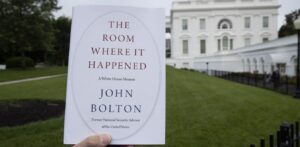
The book is sure to send shock waves through Washington and the Trump family just months before the election and it comes hot on the heels of John Bolton’s much-anticipated memoir. But unlike all the books by former Trump staffers, this is the first time a Trump family member has written a tell-all that is highly critical of the president.
The bad blood between President Trump and his niece dates back 20 years to the fight over Fred Trump Sr.’s will and the actions he took to cut off financial and medical support for her brother’s ill child. Now that feud is about to spill out into the public eye during a critical election year, with the president struggling to shore up his plummeting popularity.
“My aunt and uncles should be ashamed of themselves,” Mary Trump said about Donald Trump and his siblings in that rare 2000 interview, which provides a preview of the tone of her book. “I’m sure they are not.”
Lachlan Cartwright
Senior Reporter
Credit: Photo Illustration by The Daily Beast/Getty
Comme le disait Jacques Chirac – grand admirateur du Japon –, « les emmerdes, ça vole en escadrille ». Le Premier ministre nippon en fait l’amère expérience.
Scandales en cascade, crise sanitaire, report des Jeux olympiques de Tokyo, obligation de renoncer à des réformes à cause de protestations populaires : tout va mal pour le Premier ministre nippon Shinzo Abe.
« Il y a clairement un problème d’usure, il est là depuis trop longtemps, neuf ans en tout si on compte son premier mandat raté en 2007-2008 », estime pour Le Point Robert Dujarric, directeur de l’Institut des recherches asiatiques de l’université Temple à Tokyo. « À vrai dire, les affaires qui le touchent sont assez minables, ce ne sont pas des scandales majeurs d’enrichissement personnel. Mais il n’a pas compris que le monde a changé, que la politique aujourd’hui devait être plus propre, que ce qui était admis il y a 30 ans ne l’est plus.
Abe est accusé d’avoir favorisé des amis à diverses occasions. À moins que des sous-fifres aient d’eux-mêmes privilégié les connaissances du « tout-puissant Abe » pour lui faire plaisir, un processus appelé sontaku, un des mots les plus entendus ces dernières années. « C’est répétitif et ça fait très mauvaise impression », souligne Robert Dujarric. L’arrestation le 18 juin du député et ex-ministre de la Justice Katsuyuki Kawai et de son épouse Anri, sénatrice, est la dernière affaire en date d’une série qui commence à être longue.
Le couple est accusé d’avoir copieusement arrosé des élus locaux et autres personnes pour qu’Anri soit élue. « L’unité d’enquête spéciale du bureau des procureurs de Tokyo aime ce genre de coup qui prouve son indépendance », confie au Point un ex-inspecteur de cette section d’investigation connue pour avoir aussi arrêté Carlos Ghosn fin 2018. La presse ressort des archives les photos où l’on voit Anri juchée sur le toit d’un camion de campagne électorale, la main dans celle du Premier ministre appelant à voter pour elle.
La chute est brutale dans les sondages : la cote du gouvernement Abe est désormais autour de 36 %, selon l’enquête de l’agence Kyodo réalisée après l’arrestation des Kawai. Abe, l’héritier d’une lignée de politiciens, paie aussi les effets « corona ». « La crise du coronavirus n’a pas été catastrophique sur le plan sanitaire, mais ce n’est pas forcément grâce aux décisions prises. Les conséquences économiques en revanche sont massives », souligne M. Dujarric.
Les critiques se font de plus en plus vives, y compris dans le Parti libéral démocrate d’Abe, où on lui cherche un successeur, son mandat de président prenant fin en septembre 2021.
Esquive
S’il compte encore des régiments de nationalistes pour le soutenir, les protestataires, qui l’ont déjà empêché de prolonger la carrière d’un procureur allié, appellent désormais à sa démission, dont des écrivains comme Keiichiro Hirano et Masahiko Shimada, qui voient en lui un danger pour la démocratie. Le politologue Koichi Nakano juge que « ce gouvernement se caractérise par son manque de transparence » et que cela se voit de plus en plus. Si Abe a montré à maintes reprises qu’il avait de la ressource et pas mal de chance, il semble cette fois coincé. De plus, il ne peut pas utiliser « l’outil de la diplomatie » qu’il a souvent manié pour rebondir, note l’analyste Tobias Harris.
Pour le moment, Abe s’en tire avec des pirouettes et des phrases prétextes qu’il lit au Parlement ou en conférence de presse en réponse à des questions préalablement reçues. Un proche se fait épingler, un ministre est forcé de démissionner ? « Je ressens pleinement ma responsabilité, je prie les citoyens de m’excuser », puis rien. Il balaie les critiques et confie le service après-vente à son fidèle serviteur, le secrétaire général du gouvernement, Yoshihide Suga, très doué pour rembarrer les journalistes pugnaces et s’accorder les faveurs des moins aguerris. Reste qu’Abe est toujours obsédé par la mission qu’il s’est lui-même assignée : réformer la Constitution pacifiste jamais retouchée depuis 1947. « On voit mal comment il pourrait y parvenir », tranche Robert Dujarric. Quant aux JO de Tokyo, qu’il veut voir avant de partir, rien ne garantit pour l’heure qu’ils se tiendront bien l’an prochain.
Το τελευταίο διάστημα απο τις στήλες αυτές επισημαίνουμε δύο, κυρίως, στοιχεία:
1.-Ότι τα πράγματα με την Τουρκία είναι περισσότερο σοβαρά απο ό,τι φαίνονται.
2.-Ότι χρειάζεται άμεση ενίσχυση των Ενόπλων Δυνάμεων για την επιτυχή αντιμετώπιση στρατιωτικής κλιμάκωσης.
Τα παραπάνω έρχεται να ενισχύσει με τη βαρύτητα της υπογραφής του ο Επίτιμος Αρχηγός ΓΕΕΘΑ και ακαδημαϊκός Δημήτριος Σκαρβέλης με άρθρο του στην”Καθημερινή” το οποίο αναδημοσιεύουμε.
Λόγω κάκιστου παρελθόντος των πολιτικών διαχειριστών των Ενόπλων Δυνάμεων και τη στενή σχέση τους με τη διαφθορά, έχει ψηφισθεί ένας χρονοβόρος νόμος που δυσκολεύει την άμεση προμήθεια των αναγκαίων εξοπλισμών.
Πρέπει να αλλάξει και ο όποιος έλεγχος για τη διασφάλιση της διαφάνειας πρέπει να γίνει απο διακομματική επιτροπή της βουλής.
Σε περίπτωση που, παρόλο τον διακομματικό χαρακτήρα της Επιτροπής υπάρξει διασπάθιση και κατάχρηση των σχετικών κονδυλίων απο το στέρημα του ελληνικού λαού, να προβλεφθεί ισόβια στέρηση πολιτικών δικαιωμάτων, επιστροφή όλων όσων έχει εισπράξει το φυσικό πρόσωπο με τη βουλευτική ιδιότητα ως σήμερα και ισόβια κάθειρξη.
Δεν μπορούν, πια, οι πολιτικοί να παίζουν με την ασφάλεια της χώρας και του λαού της.
Και κάτι ακόμη. Επειδή η χώρα εγκαταλείφθηκε απο υποδομές για την παραγωγή αμυντικού εξοπλισμού, να διασφαλισθεί στο μέγιστο δυνατό επίπεδο ότι θα υπάρξει η δυνατότητα συνέχισης των προμηθειών των Ενόπλων Δυνάμεων σε περίπτωση που τα πράγματα οδηγηθούν σε ακραίες καταστάσεις.
Ελπίζω, ακόμη, πως η κυβέρνηση έχει τον νουν να προνοήσει συνεργασίες με δυνάμεις που θα μπορούσαν να βοηθήσουν περαιτέρω άμεσα και αποτελεσματικά σε περίπτωση που η Τουρκία ανοίξει την πόρτα του φρενοκομείου. Οι δυνάμεις αυτές είναι υπαρκτές και παρά την πικρία τους φαίνονται διατεθειμένες να συνδράμουν.
Δεν πρόκειται για την απώλεια μερικών βαρελιών πετρελαίου ή κυβικών φυσικού αερίου. Αλλά για τη απώλεια του Αιγαίου, αν η χώρα δεν αντιδράσει σε περίπτωση που η Τουρκία επιχειρήσει έρευνες και γεωτρήσεις σε ελληνική υφαλοκρηπίδα. Το γιατί μπορείτε να το πληροφορηθείτε βλέποντας την εκπομπή “Έξω απο τα δόντια” με τους Σάββα Καλεντερίδη και Νίκο Κανέλλο, των διαδικτυακών “Ανιχνεύσεων”.
Οι εξελίξεις στις ελληνοτουρκικές σχέσεις είναι περισσότερο σοβαρές απο την εικόνα που έχει διαμορφωθεί στην ελληνική κοινή γνώμη.
Αν η Τουρκία επιχειρήσει παραβίαση κυριαρχικών δικαιωμάτων στην ελληνική υφαλοκρηπίδα, νότια της Κρήτης ή, ανοικτά του Καστελόριζου χωρίς ελληνική αντίδραση, δεν είναι η απώλεια κάποιων κυβικών πετρελαίου η φυσικού αερίου που θα επισυμβεί. Αλλά, ουσιαστικά, χάνεται το μισό Αιγαίο.
Το γατί εξηγούν οι συνομιλητές στην αποκαλυπτική εκπομπή για την εξέλιξη των ελληνοτουρκικών σχέσεων στις διαδικτυακές “Ανιχνεύσεις”.
Πόσο προετοιμασμένη είναι η Ελλάδα.
Δείτε την εκπομπή “Εξω απο τα δόντια” με τους Σάββα Καλεντερίδη και Νίκο Κανέλλο, πρέσβη ε.τ.
Οι καταιγιστικές αποκαλύψεις στο βιβλίο του πρώην συμβούλου Εθνικής Ασφαλείας του Λευκού Οίκου Τζον Μπόλτον, το παράδειγμα της Συρίας για το πώς ο Αμερικανός ηγέτης «παραχώρησε» τα στρατηγικά συμφέροντα των ΗΠΑ στα χέρια του Τούρκου προέδρου και οι φόβοι για μια αμερικανική παρέμβαση-εκβιασμό για να ικανοποιηθεί η Αγκυρα στα Ελληνοτουρκικά
Οπρώην σύμβουλος Εθνικής Ασφαλείας του Λευκού Οίκου, Τζον Μπόλτον, ο οποίος χαρακτηρίζεται ως το πιο ψυχροπολεμικό «γεράκι» στην ιστορία της Αμερικής, δεν αφήνει τη φαντασία κανενός να καλπάζει για την ανάρμοστη, όπως την έχω χαρακτηρίσει εδώ και δύο χρόνια, σχέση του προέδρου Ντόναλντ Τραμπ με τον εθνικοϊσλαμιστή ομόλογό του της Τουρκίας. Στο βιβλίο του, που θα κυκλοφορήσει αύριο, Τρίτη, δεν κρύβει τίποτα, αποδεικνύοντας ότι οι φήμες που τον ακολουθούν είναι πέρα για πέρα αληθινές. Λένε, λοιπόν, ότι απεχθάνεται το ψέμα και τους διεφθαρμένους ηγέτες. Αρα, και με βάση όσα έχουμε διαβάσει για το βιβλίο του, αυτό περιέχει μόνο αλήθειες. Κατά καιρούς είχαμε γίνει δέκτες παρόμοιων πληροφοριών, τις οποίες είχαμε δημοσιεύσει.
Ομως οι «ψεκασμένοι» και φανατικοί οπαδοί του Αμερικανού προέδρου στην… Ελλάδα και στην Ομογένεια μας είχαν κατηγορήσει. Ακόμα και σήμερα, και μετά τις καταιγιστικές αποκαλύψεις του κ. Μπόλτον, μουρμουρίζουν και ψιθυρίζουν για «ψέματα», αλλά δεν τολμούν να βγουν στο φως και να υποστηρίξουν τον πλέον φιλότουρκο πρόεδρο στην ιστορία των Ηνωμένων Πολιτειών. Αυτό που συμβαίνει μπροστά στα μάτια μας είναι αχαρακτήριστο. Πρόκειται για το μεγαλύτερο «ξεπούλημα» Αμερικανού προέδρου, και μάλιστα σε έναν ισλαμιστή και εθνικιστή δικτάτορα, ο οποίος εργάζεται συνειδητά για τα συμφέροντα της Ρωσίας και του Ιράν. Οι αφελείς Αμερικανοί διπλωμάτες, όπως ο πρώην πρέσβης στην Τουρκία, Τζέιμς Τζέφρι, πουλάνε αέρα κοπανιστό στον αμερικανικό λαό, ότι δήθεν ο Ερντογάν είναι σύμμαχος της Αμερικής στον «πόλεμο» εναντίον της Μόσχας και της Τεχεράνης. Ο κ. Τζέφρι ψεύδεται στον ύψιστο βαθμό και με τη βοήθεια που προσφέρει στην Τουρκία εργάζεται εναντίον των συμφερόντων της Δύσης, και ειδικά της Αμερικής.
Απειλή
Ολοι οι σοβαροί αναλυτές στην αμερικανική πρωτεύουσα, εκτός ελαχίστων που ενισχύονται από την Αγκυρα, υποστηρίζουν ακριβώς το αντίθετο: ότι η σημερινή Τουρκία αποτελεί απειλή -ναι, καλά διαβάσατε- για τα αμερικανικά στρατηγικά συμφέροντα. Ο κ. Τραμπ, για τα δικά του προσωπικά και επιχειρηματικά συμφέροντα, δημιούργησε έναν «δράκο» στην περιοχή της Ανατολικής Μεσογείου και δεν μπορεί πλέον να τον ελέγξει. Κατά τη γνώμη μου, δεν θέλει να τον ελέγξει, διότι πιθανότατα πιστεύει ότι δρα με τρόπο που εξυπηρετεί και την Αμερική. Ο κ. Τραμπ δεν έχει ιδέα από εξωτερική πολιτική, ούτε γνωρίζει τι σημαίνουν τα «στρατηγικά συμφέροντα», αυτές οι δύο πολύ σημαντικές λέξεις για όλους τους αξιωματούχους των εκάστοτε κυβερνήσεων. Ο σημερινός πρόεδρος άφησε τα στρατηγικά συμφέροντα της υπερδύναμης να τα χειρίζεται ο Ερντογάν. Είναι να τρελαίνεται κανείς. Οι περιγραφές στο βιβλίο του κ. Μπόλτον είναι υπό πολιτικούς όρους φρικιαστικές, διότι μέσα από τις σελίδες βλέπουμε πώς εκχωρήθηκαν δικαιώματα στον ισλαμιστή πρόεδρο της Τουρκίας για να δρα εκ μέρους της Αμερικής. Η περίπτωση της Συρίας είναι χαρακτηριστική.
Ο κ. Τραμπ έδωσε το «πράσινο φως» στον Ερντογάν να επιτεθεί στους Κούρδους και να τους καταστρέψει. Πρόκειται για τους πιο γνήσιους συμμάχους που είχε η Αμερική και οι οποίοι προσέφεραν 11.000 ζωές, των παιδιών, των γυναικών και των ανδρών τους, για να νικήσουν τους τζιχαντιστές του Ισλαμικού Κράτους. Η απαράδεκτη στάση του και η άδεια που παραχώρησε στους Τούρκους να επιτίθενται σε γειτονικές χώρες είναι πολύ εύκολο να τεκμηριωθούν. Αποτελούν πολιτικά «εγκλήματα» εναντίον ξένων λαών αλλά και της ίδιας Αμερικής, η οποία κατέστησε την Τουρκία μικρή δύναμη, προς όφελος προσωπικών και επιχειρηματικών συμφερόντων. Οι άνθρωποί του τα λένε και τα υποστηρίζουν αλλά και τα γεγονότα το επιβεβαιώνουν. Οι αποκαλύψεις του κ. Μπόλτον ήρθαν στην καλύτερη στιγμή, πιστεύω, όχι λόγω των προεδρικών εκλογών στην Αμερική – θα μπορούσαν να ξυπνήσουν και τους οπαδούς του που τον έχουν «θεοποιήσει».
Αυτήν τη δεδομένη στιγμή ο Ερντογάν απειλεί με πόλεμο την Ελλάδα -και την Κύπρο, βεβαίως- και οι αποκαλύψεις θα μπορούσαν να δράσουν ως ξυπνητήρι για πολλούς σοβαρούς ανθρώπους στην Ουάσιγκτον: Νομοθέτες, διπλωμάτες και στρατιωτικούς. Το βασικό ερώτημα που τίθεται είναι αυτό: Θα επιτρέψουν οι ΗΠΑ στην Τουρκία να επιτεθεί στο Αιγαίο και στην Κύπρο; Αλλά το ερώτημα θα πρέπει να τεθεί και διαφορετικά: Μπορούν οι Αμερικανοί και γενικά η Δύση να σταματήσουν την επιθετικότητα του Ερντογάν; Η απάντηση είναι ένα μεγάλο ναι. Αν το αποφασίσουν, είναι εύκολο να το επιβάλουν. Ειδικά η Αμερική έχει τον τρόπο. Φοβάμαι, όμως, ότι για να το πράξει ο Τραμπ, θα ζητήσει ανταλλάγματα από την Ελλάδα προς την Τουρκία. Θα ονομάσει συμβιβασμό αυτό τον συγκεκαλυμμένο «εκβιασμό» για να ικανοποιήσει για ακόμη μία φορά την Τουρκία.
Συμφέροντα
Για έναν περίεργο λόγο, που δεν εξηγεί επαρκώς ο κ. Μπόλτον, ο «σουλτάνος» ελέγχει τον αφελέστατο Τραμπ. Εικάζω ότι ο Ερντογάν, μέσω επιχειρηματικών καναλιών φίλων του που συνεργάζονται με την οικογένεια του προέδρου, ανακάλυψε τη «μαλακή πλευρά» του κ. Τραμπ, που είναι η εξυπηρέτηση των συμφερόντων του. Αποτελεί όνειδος για την Αμερική και τη Δημοκρατία το ξεπούλημα της αμερικανικής εξωτερικής πολιτικής και της Δικαιοσύνης στον Ερντογάν. Ο πρόεδρος Τραμπ είναι αχαρακτήριστος. Δημιούργησε παράλληλα και ένα τεράστιο πρόβλημα στους καλούς διπλωμάτες -και ευτυχώς έχει πολλούς η Αμερική- που εργάζονται για τα συμφέροντά της σε χώρες της Ανατολικής Μεσογείου. Εχει κάνει τη ζωή τους πολύ δύσκολη και τους αναγκάζει να αμύνονται για μια ανάρμοστη σχέση, αυτή με τον Ερντογάν. Βεβαίως, οι πρόεδροι στην Αμερική έρχονται και φεύγουν και πολλές φορές δεν αφήνουν κανένα στίγμα. Η χώρα, όμως, μένει… Οι καλοί Αμερικανοί διπλωμάτες πρέπει να συνεχίσουν την προσπάθειά τους, διότι θα χρειαστεί -όταν θα φύγει ο κ. Τραμπ- να επουλώσουν τις μεγάλες πληγές που άφησε πίσω του.
al-monitor.comBasak Demirtas, wife of jailed Peoples’ Democratic Party leader Selahattin Demirtas, arrives at a polling station during the presidential and parliamentary elections in the Kurdish-dominated city of Diyarbakir, Turkey, June 24, 2018 Photo by REUTERS/Sertac Kayar.
A threatening tweet against a jailed Kurdish opposition leader’s wife has Turkey up in arms against the patriarchal mindset that threatens women with sexual violence.
Pinar Tremblay
@pinartremblay
Jun 20, 2020
On June 13, Turkish social media was rocked by a crude threat from a pro-Justice and Development Party (AKP) account. The target was Selahattin Demirtas and his wife, Basak Demirtas. Demirtas, the former chair of Turkey’s pro-Kurdish People’s Democratic Party (HDP), has been imprisoned since Nov. 2016 along with his co-chair Figen Yuksekdag.
Vedat Muti tweeted that Demirtas “has been in prison while his wife is free,” saying, “She must be hot by now, one should extinguish her fire.”
Muti has been arrested, said Mahsuni Karaman, attorney of the Demirtas family. The complaints against him included intimidation, slander, incitement and sexual threats, Karaman explained.
Muti’s Twitter account was suspended. Screen shots provide ample information about his status as an “AK troll,” as certain pro-AKP social media users are called. These accounts often display flattering images of Turkish President Recep Tayyip Erdogan and most of their followers are others like them.
A hashtag meaning “We stand with Basak Demirtas” trended and political figures spoke in solidarity with the Demirtas family, condemning the tweet. Justice Minister Abdulhamit Gul denounced the tweet as well.
Female politicians and journalists who are critical of the government are frequently subjected to sexual objectification, rape threats and slurs from such accounts. It’s credited as one of the reasons the number of women in politics is dwindling in Turkey.
One of the strongest voices against the offensive words has been that of Meral Aksener, leader of ultra-nationalist IYI or Good Party. In a searing speech at the parliament, Aksener said bluntly, “This corruption will continue until the people who govern over us take a clear stance against it. So I am calling the government and especially President Erdogan to make their point of view known.”
Aksener asked that “dirty hands” be kept off women and said these sorts of explicit sexual threats owe to the indifference of the government.
Such sexual comments about “lonely” women can have grave consequences. If a woman is singled out as “lonely,” meaning without a husband — divorced, widowed or simply home alone — she becomes a social anomaly. A patriarchal society dictates a woman’s place is with a man, and “lonely” women are the pariahs. Not virgins but still of childbearing age, they are associated with promiscuity and their sexuality must be controlled. This perception forces women to remarry as soon as possible, even into “levirate” marriages, where widows are compelled to marry their dead husband’s brothers.
This sort of entitlement can lead to rape and even murder. Systemic rape often goes unreported as women suffer in silence. In the notorious case of Nevin Yildirim, for example, she quietly suffered rape for three years while her husband was working out of town for long periods of time. She got pregnant by her rapist and the town exploded in gossip. Yildirim murdered the rapist to defend her honor and was sentenced to life in prison.
The state’s patriarchal Islamist ideology has made women’s bodies vulnerable. In its logic, women are the property of men. Each political conflict is seen as a battle. When the battle is over, the winner can have the loot, including the women and girls. For example, after the July 15 attempted coup, pro-AKP social media posts claimed that the “wives of putschists are our trophies.” During the referendum of 2017, an employee of Istanbul Municipality posted on social media that it was war, and when those who oppose the presidential system lose the referendum, “we can have their daughters and wives.”
Suleyman Demirtas, younger sibling of Selahattin, told Al-Monitor, “These sorts of threats are made to further polarize society and keep women locked in the house and obedient to men at all times. The HDP champions women’s struggle for equality, and it is not a gift or a blessing from the men. Kurdish women and women who are working in HDP’s ranks have earned it all by themselves. If women are obedient and subservient to men, this helps the establishment to limit competition and turn women into servants of men at all levels.”
It should be noted that although the HDP is a pro-Kurdish party, the movement embraces all ethnicities.
Gulistan Kocyigit, an HDP parliamentarian from Mus province, told Al-Monitor how meticulously the HDP and Kurdish movement have worked over the years to create an equal representation and a support network among female political activists.
“Our establishment has been designed around trust,” Kocyigit said. “That encourages more women to participate in the political process. That is precisely what the AKP aims to block. These types of attacks signal to women, ‘Politics is not for you.’ They know and fear that women acting on their own free will are able to destroy the patriarchal system and mindset.”
Kocyigit provided several examples of how Kurdish women who may have been housewives only a few years back are now at the forefront of the political process. Kocyigit also explained that although Kurdish women are specifically targeted, they are not the only ones that the larger system wants to control. “Even a white scarf my colleague [Remziye Tosun of Diyarbakir] wears to the parliament has been made an issue with the patriarchal political system,” said Kocyigit. Tosun is not a part of the political elite and she is not rich, but she made it to the parliament as a part of HDP, Kocyigit emphasized.
Huda Kaya, a HDP parliamentarian from Istanbul, told Al-Monitor, “The words against Demirtas reflect the government’s perspective on women. I have also been targeted with slurs and threats. In the last weeks, the threats have intensified from calling for making us into concubines to other offensive words I will not repeat. These minds rely on the AKP’s power. They know there will be no consequences, no punishment for their acts or words.”
“The Turkish state is a party to the European Council’s Istanbul Convention, which aims to minimize violence against women. But in practice, this convention is not in effect,” Eren Keskin, a prominent attorney and vice president of the Turkish Human Rights Association, told Al-Monitor. “All sorts of violence against women is political. And this is the perspective with which I approach the violence against Demirtas.”
Within hours of Keskin’s interview with Al-Monitor, unknown perpetrators broke into her house to threaten her.