O θάνατος της εμβληματικής Ρουθ Μπέιντερ Γκίνσμπεργκ σημαίνει ότι ο πρόεδρος Τραμπ μπορεί να προτείνει τον αντικαταστάτη της. Ακόμη κι αν χάσει τις εκλογές μπορεί να επηρεάσει τη σύνθεση του Ανώτατου Δικαστήριου.
Λίγο πριν πεθάνει στα 87 της χρόνια η εμβληματική δικαστής και ιστορική φυσιογνωμία της νομικής ζωής στις ΗΠΑ, υπέρμαχος των δικαιωμάτων γυναικών και μειονοτήτων, Ρουθ Μπέιντερ Γκίνσμπεργκ, εξέφρασε μια σοβαρή ανησυχία. «Η πιο ένθερμη επιθυμία μου είναι να μην αντικατασταθώ, έωσότου εκλεγεί νέος πρόεδρος», είχε πει στην εγγονή της, πριν αφήσει την τελευταία της πνοή. Μένει να δούμε, αν η επιθυμία της πραγματοποιηθεί.
Οι προεδρικές εκλογές στις ΗΠΑ θα πραγματοποιηθούν στις 3 Νοεμβρίου, αλλά επισήμως ο διορισμός του νέου προέδρου δεν θα γίνει πριν τις 20 Ιανουαρίου 2021. Ακόμη κι αν ο Τραμπ χάσει τις εκλογές, θα μπορούσε όμως να επηρεάσει τις εξελίξεις διαδοχής στο Ανώτατο Δικαστήριο των ΗΠΑ στο ενδιάμεσο διάστημα μέχρι τον διορισμό του νέου προέδρου. Πριν από τον θάνατο της φιλελεύθερης φεμινίστριας Μπέιντερ Γκίνσμπεργκ, το Ανώτατο Δικαστήριο απαρτιζόταν από πέντε συντηρητικούς και τέσσερις φιλελεύθερους. Ωστόσο, ενώ ο αρχηγός του δικαστηρίου Τζον Ρόμπερτς είχε διοριστεί από τον Τζορτζ Μπους και θεωρείται μέλος του συντηρητικού μπλοκ του δικαστηρίου, έχει εκφραστεί με τον ίδιο τρόπο σε πολλές αποφάσεις με τους φιλελεύθερους συναδέλφους. Εάν ο Τραμπ μπορούσε τώρα να τοποθετήσει έναν υποψήφιο «της αρεσκείας του» του στο Ανώτατο Δικαστήριο, αυτό θα έδινε στους συντηρητικούς μία πλειοψηφία 6-3. Αυτό θα μπορούσε να αποδειχθεί καθοριστικό σε υποθέσεις που αφορούν κρίσιμα κοινωνικά θέματα όπως η άμβλωση, τα δικαιώματα των LGBTQ + και η μετανάστευση, προκαλώντας μια ιδεολογική μετατόπιση προς τα δεξιά του κορυφαίου δικαστηρίου των ΗΠΑ.
Πώς διαγράφεται μέχρι τώρα η κατάσταση;
Η Ρουθ Μπέιντερ Γκίνσμπεργκ ήταν ιστορική φυσιογνωμία της νομικής ζωής των ΗΠΑ και δικαστής με φωνή υπέρ των αδυνάμων
Ήδη από τις αρχές Σεπτεμβρίου ο Ντόναλντ Τραμπ είχε ήδη παρουσιάσει λίστα 20 προτιμώμενων υποψηφίων για τα έδρανα του Ανώτατου Δικαστηρίου. Μεταξύ αυτών συγκαταλέγονται ο Νόελ Φρανσίσκο, ο οποίος έχει εκπροσωπήσει την κυβέρνηση Τραμπ ενώπιον του Δικαστηρίου σε 17 προσφυγές, αλλά και ο ελληνικής καταγωγής Γκρέγκορι Κάτσας (γεννημένος στη Βοστόνη), ο οποίος παρείχε νομικές συμβουλές στον πρόεδρο Τραμπ στην περίπτωση της άκρως αμφιλεγόμενης ταξιδιωτικής απαγόρευσης και εισόδου στις ΗΠΑ σε ανθρώπους που προέρχονταν από την πλειοψηφία των μουσουλμανικών χωρών. Όταν ο Τραμπ ρωτήθηκε τον Αύγουστο, αν θα κινούσε διαδικασίες για κάλυψη πιθανής κενής θέσης στο Ανώτατο Δικαστήριο, εν μέσω προεκλογικής περιόδου, απάντησε: «Απολύτως, ναι θα το έκανα. Θα κινηθώ γρήγορα. Γιατί όχι; Θέλω να πω, θα το έκαναν και οι Δημοκρατικοί θα ήταν σε αυτή τη θέση». Μάλιστα, το Σάββατο ο Τραμπ κατέστησε σαφές ότι ήθελε να προχωρήσει στην πλήρωση της κενής δικαστικής θέσης «χωρίς καθυστέρηση».
Το προηγούμενο της θητείας Ομπάμα και ο ρόλος της Γερουσίας
«Θα κινηθώ γρήγορα. Γιατί όχι;» λέει ο Ντόναλντ Τραμπ
Ο επικεφαλής της πλειοψηφίας στη Γερουσία, ο Ρεπουμπλικανός Μιτς Μακ Κόνελ, είχε ήδη επιβεβαιώσει την Παρασκευή το απόγευμα μετά το θάνατο της Γκίνσμπεργκ ότι σχεδίαζε να προχωρήσει γρήγορα στη διαδικασία διορισμού νέου δικαστή, μετά από πρόταση του προέδρου Τραμπ. Αξίζει βέβαια να σημειωθεί ότι το 2016, πριν τις προεδρικές εκλογές της εποχής, ενήργησε διαφορετικά, αρνούμενος επί ένα χρόνο υποψηφιότητα για πλήρωση θέσης στο Ανώτατο Δικαστήριο, την οποία είχε προτείνει ο τότε πρόεδρος Μπαράκ Ομπάμπα. Τότε είχε δικαιολογήσει τη θέση του με το επιχείρημα ότι οι ψηφοφόροι χρησιμοποιούν την ψήφο τους στις προεδρικές εκλογές και για αποφασίσουν τι είδους δικαστές θέλουν στο Ανώτατο Δικαστήριο. Κατά παράδοση τη χρονιά των προεδρικών εκλογών η Γερουσία δεν αποφασίζει για διορισμούς ανώτατων δικαστικών. Βέβαια, ακόμη κι αν η υποψηφιότητα προταθεί, έπειτα θα πρέπει και η ίδια η Γερουσία να αποφασίσει. Στο πεδίο αυτό λοιπόν ο ΜακΚόνελ διαθέτει ένα ευρύ πεδίο εξουσίας.
Ο Τραμπ μπορεί βέβαια να προτείνει υποψηφίους, αλλά δεν αποφασίζει μόνος για τον διορισμό τους. Η διαδικασία στην Γερουσία είναι επίσης μακρά και πολύπλοκη. Αρχικά η η Επιτροπή Δικαστικών Υποθέσεων διεξάγει ακρόαση, στην οποία 11 Ρεπουμπλικάνοι και 9 Δημοκρατικοί Γερουσιαστές θέτουν ερωτήματα στους υποψηφίους. Έπειτα το θέμα πηγαίνει στην Ολομέλεια μαζί με γνωμοδότηση της επιτροπής για κάθε υποψήφιο. Σε ειδική συνεδρίαση της Ολομέλειας, οι Γερουσιαστές καλούνται να ψηφίσουν επί των υποψηφίων. Στην τελική ψηφοφορία, μια απλή πλειοψηφία 51/100. Tη δεδομένη στιγμή στη Γερουσία βρίσκονται 53 Ρεπουμπλικάνοι, 45 Δημοκρατικοί και 2 ανεξάρτητοι Γερουσιαστές. Αν το αποτέλεσμα της ψηφοφορίας είναι 50-50, τότε η αποφασιστική ψήφος ανήκει στον αντιπρόεδρο των ΗΠΑ, Μάικ Πενς από τους Ρεπουμπλικανούς.
Πολύπλοκοι χρονικοί υπολογισμοί
Kαθοριστικής σημασίας ο ρόλος της Γερουσίας στον διορισμό των ανώτατων δικαστών
Η αρχική ακρόαση συνήθως διαρκεί κάποιες μέρες και δεν υπάρχει συγκεκριμένο χρονικό πλαίσιο για την έναρξη της συζήτησης στην Ολομέλεια. Εξαιτίας αυτής της ασάφειας, ο MακΚόνελ μπόρεσε να καθυστερήσει την ψηφοφορία για τους υποψηφίους του Ομπάμα έως ότου ο Τραμπ διοριστεί πρόεδρος των ΗΠΑ. Αυτή τη φορά, μάλλον είναι απίθανο να συμβεί κάτι τέτοιο. Επίσης και η συζήτηση στην Ολομέλεια μπορεί να καθυστερήσει πολύ. Αυτό συνέβη με τον τελευταίο δικαστή που έχει ορίσει στη μέχρι τώρα θητεία του ο Τραμπ, τον Μπρετ Καβάνο. Μεταξύ της πρότασης για την υποψηφιότητά του μεσολάβησαν 89 ημέρες, διότι στο μεταξύ ήρθαν στο φως κατηγορίες σε βάρος του για σεξουαλική κακοποίηση. Ιστορικά το μεγαλύτερο διάστημα αναμονής μέχρι σήμερα καταγράφηκε το 1916 για τον Εβραϊκής καταγωγής δικαστή Λούις Μπράντεϊς – o πρώτος Εβραίος δικαστής στην ιστορία του Ανώτατου Δικαστηρίου-. Μεταξύ της πρότασής του από τον πρόεδρο Γούντροου Γουίλσον και την επικύρωσης του διορισμού του από τη Γερουσία, πέρασαν 125 ημέρες. Από τον θάνατο της Ρουθ Μπέιντερ Γκίνσμπεργκ μέχρι την 20 Ιανουρίου 2021 μεσολαβούν επίσης 125 μέρες.
Το Βερολίνο προσπαθεί εδώ και μήνες να μεσολαβήσει στην αυξανόμενη σύγκρουση μεταξύ Άγκυρας και Αθήνας για τα αποθέματα αερίου της Ανατολικής Μεσόγειου. Το έχει κάνει με πολύ μικρή μέχρι στιγμής, ορατή επιτυχία.
Σε αντίθεση με τον Emmanuel Macron στη Γαλλία, η γερμανική κυβέρνηση δεν παίρνει ξεκάθαρα το μέρος της Ελλάδας, αλλά αντιθέτως βλέπει τον εαυτό της -επίσης στο πλαίσιο της προεδρίας της ΕΕ- στον ρόλο ενός έντιμου διαμεσολαβητή μεταξύ των αντικρουόμενων πλευρών.
Ο υπουργός Εξωτερικών, Heiko Maas, έδωσε έμφαση στην ομιλία του στη Διάσκεψη των Πρέσβεων της Γαλλίας ότι η γερμανική κυβέρνηση και οι Ευρωπαίοι εταίροι της δεν θα αποδεχθούν πλέον την “αποσταθεροποιητική πολιτική” της Τουρκίας στη Λιβύη και στην Ανατολική ΜΕσόγειο. Αλλά κατέστησε επίσης σαφές ότι μόνο ο διάλογος θα μπορούσε να επιλύσει την τρέχουσα κρίση.
Είναι σημαντικό για τη Γερμανία να διατηρήσει ανοιχτά τα κανάλια διαλόγου με την Τουρκία παρά την τρέχουσα δύσκολη σχέση με τον Τούρκο πρόεδρο Recep Tayyip Erdogan. Με τον τρόπο αυτό, η ομοσπονδιακή κυβέρνηση παραμένει πιστή στη δοκιμασμένη τακτική της γερμανικής διπλωματίας σε περιόδους κρίσης -“ετοιμότητα για διάλογο” και “πολιτική της detente”- σε αντίθεση με, ας πούμε, την αποστολή φρεγατών στη Μεσόγειο.
Αν και η γερμανική και η γαλλική προσέγγιση στην Αθήνα και στην Άγκυρα διαφέρουν ουσιαστικά, το Βερολίνο προσπαθεί να κρατήσει αυτές τις διαφορές από το να γίνουν ορατές και να μην θέσει σε κίνδυνο τη γαλλογερμανική αρμονία που μόλις αποκαταστάθηκε, από το Ταμείο Ανάκαμψης.
Μέσα στην ΕΕ, η Γερμανία έχει τις πιο ολοκληρωμένες, πολιτικές, οικονομικές και στρατιωτικές σχέσεις με την Τουρκία. Από τη μια πλευρά, αυτό μπορεί να δώσει στη γερμανική κυβέρνηση κάποια μόχλευση έναντι της Άγκυρας. Από την άλλη πλευρά, όπως υποστηρίζουν πολλοί επικριτές στη Γαλλία, αυτό αμφισβητεί την αξιοπιστία της Γερμανίας ως ένας ειλικρινά “έντιμος μεσολαβητής”.
Εξάλλου, η Γερμανία έχει μια πολύ σημαντική τουρκική κοινότητα και προσελκύει μεγάλο τμήμα των χιλιάδων προσφύγων στα τουρκικά στρατόπεδα υποδοχής. Για αυτό η Ομοσπονδιακή Δημοκρατία, που θεωρείται ότι είναι η αρχή της συμφωνίας για τους πρόσφυγες μεταξύ ΕΕ-Τουρκίας, συνεχίζει να έχει ισχυρό ενδιαφέρον να παραμείνει σε επικοινωνία με την Τουρκία.
Στο Βερολίνο, η πολιτική της Τουρκίας δεν αφορά μόνο στη γεωπολιτική και στην ασφάλεια -είναι τουλάχιστον και η εσωτερική πολιτική και η πολιτική μετανάστευσης.
Το δίλημμα «οικονομία ή υγεία» επανήλθε με δραματικό τρόπο στο προσκήνιο, καθώς ο αόρατος εχθρός όχι μόνο δεν υποχώρησε το καλοκαίρι, αλλά επανήλθε δριμύτερος.
Ηχώρα βρίσκεται και πάλι μπροστά σε κρίσιμο σταυροδρόμι.
Το δίλημμα «οικονομία ή υγεία» επανήλθε με δραματικό τρόπο στο προσκήνιο, καθώς ο αόρατος εχθρός όχι μόνο δεν υποχώρησε το καλοκαίρι, αλλά επανήλθε δριμύτερος.
Σαν να διεκδικεί «ρεβάνς» για την πρώτη φάση της πανδημίας, στην οποία ηττήθηκε κατά κράτος.
Οι Έλληνες έχουμε την κακή συνήθεια να επαναπαυόμαστε στις δάφνες της επιτυχίας πολύ πριν από το τελικό «σφύριγμα του διαιτητή», το οποίο στη συγκεκριμένη περίπτωση είναι η κυκλοφορία του κατάλληλου εμβολίου.
Τα καλά λόγια και οι διεθνείς έπαινοι λειτούργησαν αποπροσανατολιστικά. Το κλίμα που καλλιεργήθηκε δημιούργησε την ψευδαίσθηση ότι η μάχη είχε τελειώσει.
Η πραγματικότητα όμως μας διαψεύδει, όπως βεβαιώνεται καθημερινά από τα θλιβερά στατιστικά της πανδημίας και τις δυσοίωνες προβλέψεις των ειδικών.
Κρίνοντας από την επιδημιολογική εικόνα του φθινοπώρου, ο χειμώνας που έρχεται προμηνύεται βαρύς.
Ο πρωθυπουργός και η κυβέρνησή του θα κληθούν να τετραγωνίσουν τον κύκλο. Να προστατεύσουν τη δημόσια υγεία χωρίς να πληγεί περαιτέρω η οικονομία.
Μόνο που αυτή τη φορά οι συσχετισμοί και τα δεδομένα έχουν μεταβληθεί προς το χειρότερο.
Η κατάσταση της οικονομίας αλλά και οι ανθρώπινες αντοχές δεν επιτρέπουν πλέον ούτε σαν σκέψη την ιδέα γενικευμένης καραντίνας. Κάτι τέτοιο θα ήταν καταστροφικό.
Ο μόνος ρεαλιστικός τρόπος για να αποφύγουμε το σενάριο αυτό παραμένει η ευλαβική τήρηση και εφαρμογή των μέτρων προστασίας από όλους, χωρίς δεύτερες σκέψεις και δισταγμούς.
Σε φόρμουλα ανακοίνωσης, πριν από την Σύνοδο Κορυφής, της συμφωνίας για επανέναρξη των διερευνητικών σε ημερομηνία όμως αμέσως μετά την Σύνοδο φαίνεται ότι καταλήγουν Αθήνα και Άγκυρα καθώς η δυσπιστία διακατέχει και τις δυο πλευρές μετά τα όσα έχουν συμβεί και τις τελευταίες εβδομάδες αλλά και λόγω των συνεχιζόμενων επιθετικών δηλώσεων της τουρκικής ηγεσίας σε περιτύλιγμα διαλλακτικότητας.
Η πίεση που ασκήθηκε από τους Γερμανούς αλλά και η διευθέτηση στο πλαίσιο του πρώτου βήματος αποκλιμάκωσης με την απόσυρση του Oruc Reis, που επίσημα δηλώνεται από την Άγκυρα ως προσωρινή, προέβλεπε κάποια σημαντική κίνηση στην κατεύθυνση έναρξης διαλόγου, πριν από την Σύνοδο Κορυφής.
Εξάλλου η Τουρκία θεωρεί ότι τουλάχιστον πέτυχε καταρχήν να διχάσει την Ε.Ε. σε ότι αφορά την επίδειξη έμπρακτης αλληλεγγύης απέναντι στην Ελλάδα και στην Κύπρο και να διεμβολίσει ένα ενιαίο ευρωπαϊκό μέτωπο, αλλά και ότι με την αποστολή του Oruc Reis στην ελληνική υφαλοκρηπίδα πέτυχε ένα ισοδύναμο τετελεσμένο στην κίνηση της Αθήνας να υπογράψει συμφωνία έστω και μερικής οριοθέτησης με την Αίγυπτο.
Και έτσι θεωρεί ότι μπορεί με μικρό κόστος να δώσει αυτήν την «ευκαιρία» στην διπλωματία, αναζητώντας μάλιστα… ανταλλάγματα για την… παραχώρηση της να αποσύρει για « συντήρηση» το Oruc Reis!
Αυτό φυσικά διευκολύνει τους χειρισμούς της Γερμανίας να απομακρύνει από το τραπέζι της Συνόδου τις προδιαγεγραμμένες σε διαφορετική περίπτωση κυρώσεις εναντίον της Τουρκίας, ενώ δυσκολεύει την προσπάθεια της Ελλάδας να πείσει ότι πρέπει να διαμορφωθεί και εγκριθεί λίστα κυρώσεων ως ελάχιστη έκφραση έμπρακτης αλληλεγγύης, αλλά και ως εγγύηση ότι δεν θα επιτραπεί στην Τουρκία να «ξεγελάσει» την Ε.Ε. με τον ελιγμό της προσωρινής απόσυρσης του Oruc Reis στις παραμονές της Συνόδου.
Όμως από την άλλη πλευρά η Αθήνα δεν ήθελε βιαστικές κινήσεις και εγκλωβισμό σε μια πιθανότατα αδιέξοδη διαδικασία που θα έδινε άλλοθι για τον ενταφιασμό των κυρώσεων.
Έτσι η κατ’ αρχήν συμφωνία για επανέναρξη των διερευνητικών αλλά η μετάθεση της έναρξης τους μετά την Σύνοδο θεωρήθηκε ότι αφήνει ορισμένα περιθώρια διαπραγμάτευσης ώστε να υπάρξει η συζήτηση περί κυρώσεων και να επιδιωχθεί, αν και μάλλον θα είναι δύσκολη η αναφορά σε μια διαδικασία που θα ενεργοποιούσε τις κυρώσεις σε περίπτωση υποτροπής της Τουρκίας και επανάληψης των προκλήσεων.
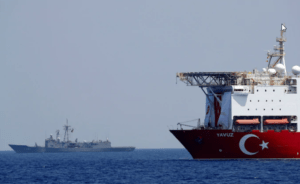
Βεβαίως υπάρχει θέμα με τις πρόσθετες κυρώσεις που είχε ζητήσει η Κύπρος και είχε αποσπάσει μάλιστα και απόφαση των υπουργών στο άτυπο Συμβούλιο Γκυμνιχ, στο Βερολίνο. Και για την Λευκωσία φυσικά δεν έχει τελειώσει τίποτε καθώς τα τουρκικά πλοία Barbaros και Yavuz παραμένουν εντός της κυπριακής υφαλοκρηπίδας.
Αλλά έχουν ασκηθεί πιέσεις στον Ν. Αναστασιάδη να εγκαταλείψει την απόφαση που είχε ληφθεί σε επίπεδο ΥΠΕΞ με παρέμβαση του Ν. Χριστοδουλίδη, και έδινε την δυνατότητα βέτο στην άλλη σημαντική για τους υπόλοιπους εταίρους απόφαση επιβολής κυρώσεων στην Λευκορωσία. Είχε μάλιστα διαμηνυθεί από την Αθήνα ότι εφόσον υπάρξει συμφωνία για επανέναρξη των διερευνητικών και με δεδομένο ότι θα είναι σε εξέλιξη η γερμανική πρωτοβουλία για τα ελληνοτουρκικά η Αθήνα δεν θα μπορεί να στηρίξει τις κυπριακές θέσεις…
Η κακοπιστία της Τουρκίας και οι πραγματικές προθέσεις της αποκαλύφθηκαν βεβαίως και με την νέα NAVTEX που εξέδωσε το βράδυ της Παρασκευής για παράταση των παράνομων ερευνών του Barbaros στην κυπριακή ΑΟΖ λίγες ημέρες αφότου είχε παρατείνει την παράνομη γεώτρηση του Yavuz σε οριοθετημένη και αδειοδοτημένη ΑΟΖ της κυπριακής Δημοκρατίας.
Η Τουρκία έτσι θέλησε να «στραπατσάρει» την Ε.Ε. η οποία πιέζει την Κύπρο ώστε να μην επιμείνει στην υιοθέτηση έστω και μικρού βεληνεκούς κυρώσεων εναντίον της Τουρκίας, δυσκολεύει τους χειρισμούς της Αθήνας η οποία θα φανεί ότι εγκαταλείπει την Λευκωσία και επιδιώκει να εμπεδώσει την εικόνα ότι ο διάλογος και η διαδικασία εξομάλυνσης των ελληνοτουρκικών σχέσεων είναι εντελώς ανεξάρτητη από το Κυπριακό και τα όσα συμβαίνουν με την παραβίαση των κυριαρχικών δικαιωμάτων της Κύπρου.
Το όραμα της ένωσης όλων των Ισλαμικών κρατών χρησιμοποιεί ο Ερντογάν για να προωθήσει εθνικιστική ατζέντα. Πώς δημιουργήθηκε η ιδεολογία του παν-ισλαμισμού και γιατί σταδιακά εγκαταλείφθηκε ή έγινε όπλο εθνικών στρατηγικών.
Δημοσιεύθηκε: 19 Σεπτεμβρίου 2020 – 09:30
Ο παν-ισλαμισμός και το όραμα ενός μοναδικού χαλιφάτου όλο και περισσότερο θεωρείται σήμερα απειλή για την σταθερότητα της Μέσης Ανατολής, με χώρες όπως τα Ηνωμένα Αραβικά Εμιράτα (ΗΑΕ) και η Σαουδική Αραβία να στρέφονται στον εθνικισμό για να καθορίσουν τις πολιτικές και την συμπεριφορά τους.
Ακόμα και χώρες που ακόμα υποστηρίζουν ότι εμφορούνται από το πνεύμα του παν-ισλαμισμού, όπως το Κατάρ και η Τουρκία, το κάνουν ως μέσο προς τον δικό τους εθνικισμό, χρησιμοποιώντας το κήρυγμα της Ισλαμικής ενότητας για να προστατεύσουν την ισχύ των κυβερνήσεών τους τόσο στο εσωτερικό, όσο και στο εξωτερικό.
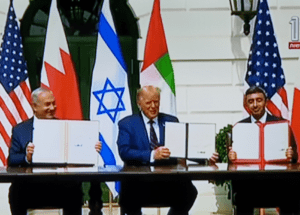
Η παραπάνω τάση έγινε ξεκάθαρη στην συνθήκη για την ομαλοποίηση των σχέσεων ΗΑΕ και Ισραήλ, η οποία αποτέλεσε ένα ακόμα χτύπημα στην ιδέα ότι η παγκόσμια μουσουλμανική κοινότητα, παρά τις πολλές διαφορές της, μπορεί τουλάχιστον να συμφωνήσει σε θέματα όπως το Παλαιστινιακό.
Η γέννηση ενός κινήματος
Ο παν-ισλαμισμός αναδύθηκε μετά τον Πρώτο Παγκόσμιο Πόλεμο ως ιδεολογικό αντίβαρο. Καθώς ο ευρωπαϊκός ιμπεριαλισμός διέλυε την Οθωμανική Αυτοκρατορία και αποικιοκρατούσε τον μουσουλμανικό κόσμο, οι ηγέτες των Μουσουλμάνων αναζήτησαν νέους τρόπους πολιτικής σκέψης για να αντιστρέψουν την κατάσταση. Κάποιοι υιοθέτησαν το μοντέλο του έθνους-κράτους των ίδιων των αποικιοκρατών. Ο Τούρκος Πρόεδρος Μουσταφά Κεμάλ (1923-1938) έχει γίνει διάσημος καθώς εξάλειψε το Σουνιτικό Χαλιφάτο στην προσπάθειά του να μετατρέψει τις στάχτες της Οθωμανικής Αυτοκρατορίας σε μια μοντέρνα, ανταγωνιστική Τουρκία.
Πέρα από την Τουρκία, κάποιοι προσπάθησαν τον παν-αραβισμό, που ενσάρκωσε ο Αιγύπτιος Πρόεδρος Γκαμάλ Αμπτέλ Νάσσερ (1954-1970), που επεδίωξε ένα ενωμένο Αραβικό Κόσμο. Όταν όμως η Αίγυπτος υπέστη αλλεπάλληλες στρατιωτικές ήττες από το Ισραήλ, το 1967 και το 1973, που ακολούθησαν τον θάνατο του Νάσσερ το 1970, ο παν-αραβισμός γρήγορα έφθινε.
Αυτό έδωσε χώρο γι’ αυτούς που επεδίωκαν να επικαιροποιήσουν την ισλαμική διακυβέρνηση, δανειζόμενοι πλευρές του δυτικού έθνους-κράτους χωρίς να ενστερνίζονται πλήρως τον κοσμικό και συχνά διχαστικό τύπο εθνικισμού.
Ο παν-ισλαμισμός βοήθησε να διαμορφωθούν τα κοινωνικά συμβόλαια των εκκολαπτόμενων κρατών της Μέσης Ανατολής, καθώς ξεκινούσαν το δρόμο τους μετά την περίοδο της αποικιοκρατίας. Πολλά από αυτά υιοθέτησαν τον Ισλαμικό Νόμο στα Συντάγματα και τα δικαστήρια και τύλιξαν τους πολιτικούς τους θεσμούς με ισλαμικούς τίτλους και τελετουργικά. Ενώ κάποια αντιστάθηκαν απέναντι στην παν-ισλαμική επιρροή, τα περισσότερα είτε υπέκυψαν, είτε εν τέλει προσαρμόστηκαν στην αυξανόμενη πίεση από ισλαμιστές κατοίκους τους.
Η αντίσταση του Ιρανού Σεϊχη Mohammad Reza Pahlavi στον παν-ισλαμισμό οδήγησε στην ανατροπή και την αντικατάστασή του από την Ιρανική Δημοκρατία το 1979. Το σχετικά ήπιο πρόγραμμα εκσυγχρονισμού της Σαουδικής Αραβίας το 1970 οδήγησε σε ισλαμική αντίδραση στη Μέκκα την ίδια χρονιά, η οποία έπεισε το Ριάντ να κάνει πίσω. Στο Ιράκ, ακόμα και ο κοσμικός Saddam Hussein στράφηκε προς τον ισλαμισμό στη δεκαετία του 1990, καθώς ο εθνικισμός στη χώρα υποχώρησε μετά την ήττα από τις δυτικές δυνάμεις στον πόλεμο του Κόλπου, αλλάζοντας μάλιστα και τη σημαία της χώρας.
Ενότητα μόνο στα χαρτιά
Παρότι μιλούσε για ενότητα του μουσουλμανικού κόσμου, η ιδεολογία του παν-ισλαμισμού αποδείχτηκε ανίκανη να λύσει εθνικές διαφορές μεταξύ μουσουλμανικών χωρών, όπως αποδείχτηκε τόσο από τον καταστροφικό πόλεμο Ιράν-Ιράκ το 1980-88, όσο και από τον πόλεμο του Κόλπου το 1990-91 και εντέλει ενέπνευσε ακραίους, όπως το ISIS και η Αλ Κάιντα.
Οι οπαδοί του μοιράστηκαν ως προς το ποια μορφή πρέπει να πάρει ο Ισλαμισμός: κάποιοι, όπως μέλη του τουρκικού κόμματος Δικαιοσύνης και Ανάπτυξης του Ερντογάν υποστηρίζουν μια προσέγγιση του Ισλαμισμού από κάτω προς τα πάνω που κυριάρχησε στην κοινωνία και μετά επηρέασε την πολιτική. Αλλοι περιλαμβανομένων Σιιτών Ισλαμιστών σε Ιράκ και Ιράν, προτιμούν μια προσέγγιση από πάνω προς τα κάτω, στην οποία η ιδεολογία βρίσκεται στο κέντρο της πολιτικής.
Ισως το πιο σημαντικό, όμως, είναι ότι ο παν-ισλαμισμός δεν είχε πολλά να δείξει στο να συγκεντρώσει στήριξη για τον παλαιστινιακό σκοπό, ένα θέμα που θεωρητικά, έπρεπε να είναι αυτό που ενώνει περισσότερο τους μουσουλμάνους.
Πράγματι τόσο σε διπλωματικό, όσο και σε στρατιωτικό επίπεδο, ο παν-ισλαμισμός προσέφερε λίγα πράγματα στους παλαιστίνιους σε ότι αφορά τη σύγκρουση με το Ισραήλ. Οι πιο μετριοπαθείς πτέρυγες του παν-ισλαμικού κινήματος παραδοσιακά καλούσαν σε απομόνωση του Ισραήλ μέχρι να ανταλλάξει την Δυτική Οχθη και τη Λωρίδα της Γάζας με μια συνθήκη ειρήνης. Οι εκκλήσεις όμως για καταστροφή του Ισραήλ από τους εξτρεμιστές του κινήματος επισκίασαν τους μετριοπαθείς και τους αποξένωσαν από τους ισχυρούς συμμάχους του Τελ Αβίβ, ειδικά τις ΗΠΑ, η οποίες ήταν υπέρ μια διεθνούς συμφωνίας. Ισραηλινοί διπλωμάτες συχνά «ζωγράφιζαν» το σύνολο του κινήματος με τα ίδια ακραία χρώματα, υποστηρίζοντας ότι οι κινήσεις των ισλαμιστών, συνολικά, αποτελούσαν υπαρξιακή απειλή για τη χώρα.
Κάποια κράτη, όμως, ιδιαίτερα τα Ηνωμένα Αραβικά Εμιράτα και η Σαουδική Αραβία, η αναταραχή κατά την Αραβική Ανοιξη το 2011 τα ανάγκασε να αντιμετωπίσουν ευθέως, την επαναστατική δυναμική του παν-ισλαμισμού. Η δίνη της επανάστασης έδωσε τόσο στους μετριοπαθείς, όσο και στους ριζοσπάστες οπαδούς του κινήματος την ευκαιρία να αντικαταστήσουν καθεστώτα και να αποκτήσουν ισχύ.
Η Μουσουλμανική Αδελφότητα κατέλαβε την Αίγυπτο που διαθέτει ισχυρή στρατιωτική δύναμη, ενώ εξτρεμιστές ενεπλάκησαν στον συριακό εμφύλιο πόλεμο και ξεκίνησαν να στήνουν «υβριδικά» κράτη (proto-states) σχεδιασμένα για εξαγωγή. Για κάποιες χώρες, αυτές οι ανησυχητικές εξελίξεις απέδειξαν ότι χρειάζεται να φύγουν από το μοντέλο άνετων σχέσεων μεταξύ κράτους και θρησκείας ώστε να μην γίνουν οι δυνάμεις του παν-ισλαμισμού αρκετά δυνατές ώστε να ανατρέψουν κι’ άλλες κυβερνήσεις.
Εκκολαπτόμενα εθνικιστικά κινήματα σε χώρες όπως το Ομάν, το Μπαχρέιν και η Σαουδική Αραβία μπήκαν μπροστά, καθώς οι κυβερνήσεις κινήθηκαν προκειμένου να στρέψουν τη βάση των κοινωνικών τους συμβολαίων στις εθνικιστικές ιδέες τις οποίες ο παν-ισλαμισμός πολέμησε επί δεκαετίες να υπονομεύσει.
Καθώς τα κράτη της Μέσης Ανατολής στράφηκαν προς την αυτοσυντήρηση, το να εμπλέκονται στην διαμάχη του Ισραήλ με τους παλαιστίνιους είχε όλο και λιγότερο νόημα. Για χώρες όπως τα Ηνωμένα Αραβικά Εμιράτα, η εστίαση στο παλαιστινιακό ερώτημα ήταν σχεδιασμένη ώστε να τονώσει το φιλικό προς το Ισλάμ κοινωνικό συμβόλαιο με τους κατοίκους. Καθώς όμως η αντίληψη του Αμπου Ντάμπι για τις απειλές που αντιμετωπίζει άλλαξε, ο παν-ισλαμισμός ξεκίνησε να δείχνει όχι ως η συγκολλητική ουσία του κοινωνικού συμβολαίου αλλά ως πηγή δυνητικών επαναστατικών τάσεων. Και ως αποτέλεσμα, το παλαιστινιακό ερώτημα όχι μόνο υποχώρησε στη λίστα των προτεραιοτήτων αλλά παράλληλα άρχισε να γίνεται επιζήμιο στα εθνικά συμφέροντα, καθώς η απομόνωση του Τελ Αβίβ δεν επέτρεπε στα ΗΑΕ πρόσβαση στην αυξανόμενα σημαντική ισραηλινή τεχνολογία, το διμερές εμπόριο και την συνεργασία σε θέματα ασφαλείας.
Ενας κρυμμένος εθνικισμός
Δεν αποποιήθηκαν, όμως, όλες οι χώρες τόσο γρήγορα τον παν-ισλαμισμό. Στη Λιβύη, εκδηλώθηκε μέσω της αμφιλεγόμενης συμφωνίας για την ΑΟΖ (σ.σ. με Τουρκία) που υπέγραψε η κυβέρνηση της Τρίπολης. Στη Συρία ισλαμιστικές συμμαχικές οργανώσεις αποτέλεσαν την ραχοκοκαλιά των μαχητών που ελέγχουν τα εδάφη που απέμειναν στους επαναστάτες στα βορειοδυτικά και κατ’ αυτόν τον τρόπο συγκρατούν εκατομμύρια Σύρους πρόσφυγες από το να φτάσουν στην Τουρκία.
Η Τουρκία και το Κατάρ προσπαθούν επίσης να χρησιμοποιήσουν τον παν-ισλαμισμό για να προβάλουν την ισχύ τους στο εξωτερικό, αλλά οι στόχοι τους είναι εγγενώς εθνικιστικοί, παρά θρησκευτικοί. Στην Τουρκία η ισχύς διαχέεται μέσω ισλαμιστικών κινημάτων και πολιτικών ως έκφραση δικών της συμφερόντων. Η συμπάθεια της Αγκυρας προς την Μουσουλμανική Αδελφότητα της επέτρεψε να εγκαταστήσει στρατιωτική βάση στον Περσικό Κόλπο για πρώτη φορά εδώ και έναν αιώνα και της εξασφάλισε κεφάλαια από την πλούσια Ντόχα, η οποία κάποιες φορές παρενέβη για να αμβλύνει τα οικονομικά προβλήματα της Τουρκίας.
Το Κατάρ, έχει χρησιμοποιήσει και τα μέσα ενημέρωσης για να προωθήσει ένα εγχώριο αφήγημα που συνδέει το βασίλειο με τον παν-ισλαμισμό σε μια προσπάθεια να ενισχύσει τη νομιμοποίηση της μοναρχίας, η οποία πρέπει να ισορροπήσει ανάμεσα σε μια περιοδικά δύστροπη βασιλική οικογένεια (με ιστορικό πραξικοπημάτων) και μακροπρόθεσμες καμπάνιες επιρροής από Σαουδική Αραβία και Εμιράτα.
Σε ότι αφορά το εξωτερικό, όμως, το Κατάρ εξακολουθεί να βλέπει τον παν-ισλαμισμό ως μέσω για να εξασφαλίσει τον εαυτό του. Το βοήθησε να διατηρήσει δεσμούς με την Χαμάς, κάτι που είναι κρίσιμο για το Ισραήλ καθώς τους χρησιμοποιεί προκειμένου να ελέγξει τις δραστηριότητες της οργάνωσης στη Λωρίδα της Γάζας. Το Τελ Αβίβ από την πλευρά του, ως αντάλλαγμα, βοηθά στο να τονωθεί η εικόνα του Κατάρ ως τοπικού διαπραγματευτή ειρήνης, ειδικά στις ΗΠΑ, υπονομεύοντας τις προσπάθειες Ηνωμένων Αραβικών Εμιράτων (ΗΑΕ) και Σαουδικής Αραβίας να πείσουν την Ουάσιγκτον για το αντίθετο.
Παρότι επικαλούνται τον παν-ισλαμισμό, είναι ξεκάθαρο ότι Τουρκία και Κατάρ τον χρησιμοποιούν για δικά τους συμφέροντα. Καμία δεν προσπαθεί να δημιουργήσει ισλαμιστικά κινήματα τόσο δυνατά ώστε να μπορούν να αντικαταστήσουν υφιστάμενα καθεστώτα. Αντίθετα, οι ισλαμιστές είναι απλά ένα εργαλείο για την στρατηγική της Αγκυρας και της Ντόχα στο εσωτερικό και το εξωτερικό, παραμένουν υποταγμένοι στους εθνικούς στόχους.
Υπό αυτό το πλαίσιο η επίθεση της Τουρκίας στη συμφωνία ΗΑΕ-Ισραήλ και η ψυχρότητα του Κατάρ στο ίδιο θέμα έχουν ως κίνητρο όχι τον παν-ισλαμισμό, αλλά εθνικά συμφέροντα. Και στις δυο χώρες η ομαλοποίηση των σχέσεων με το Ισραήλ θα υπονόμευε τις σχέσεις που έχουν οι ηγεσίες τους με Ισλαμιστές στο εσωτερικό και το εξωτερικό.
Προσωρινά, τουλάχιστον, τα οφέλη από την ομαλοποίηση των σχέσεων σε όρους εμπορίου, άμυνας και βελτιωμένων σχέσεων με τις ΗΠΑ είναι υποδεέστερα από τα μειονεκτήματα.
«Ο Ερντογάν μετατρέπει την Τουρκία σε κινέζικο εξαρτημένο κράτος» («Erdogan Is Turning Turkey Into a Chinese Client State»), τιτλοφορείται πολύ σημαντική ανάλυση του Foreign Policy.
Εξαρτημένο κράτος στις διεθνείς υποθέσεις είναι το κράτος το οποίο είναι οικονομικά, πολιτικά ή στρατιωτικά υποταγμένο σε άλλο πιο ισχυρό κράτος. Είδη εξαρτημένων κρατών περιλαμβάνουν: κράτος-δορυφόρος, συνδεδεμένο κράτος, κράτος-μαριονέτα, νεοαποικία, προτεκτοράτο, υποτελές κράτος, κράτος φόρου υποτελές.
Τι γράφει το Foreign Policy
Σύμφωνα με την ανάλυση, τεράστια ποσά σε δολάρια από το Πεκίνο είναι αυτά που βοηθούν πραγματικά τον Ερντογάν να αρνείται να ζητήσει βοήθεια από το Διεθνές Νομισματικό Ταμείο, το οποίο θα απαιτούσε να δεσμευτεί για μεταρρυθμίσεις και άλλα μέτρα που θα μπορούσαν να υπονομεύσουν την πολιτική του και να τον ρίξουν από την εξουσία.
«Εκτός από την οικονομική συνεργασία, Κίνα και Τουρκία έχουν εμβαθύνει ακόμα πιο πολύ και τις διμερείς αμυντικές σχέσεις τους, συμπεριλαμβανομένων αυτών της ανταλλαγής πληροφοριών και του κυβερνο-πολέμου.
»Η συμμετοχή Κινέζων στρατιωτικών αξιωματούχων στη στρατιωτική άσκηση της Τουρκίας ΕΦΕΣ και η συνεργασία τους για την μεταφορά τεχνολογίας στην κατασκευή του τουρκικού βαλλιστικού πυραύλου Bora είναι ενδεικτική», τονίζει το Foreign Policy.
Πρόκειται για τον τουρκικό βαλλιστικό πύραυλο, την εμβέλεια του οποίου διαφήμιζαν συνεχώς οι Τούρκοι στρατηγοί με χάρτες που δημοσιοποίησαν, απειλώντας με την εμβέλεια τους ακόμα και την ελληνική πρωτεύουσα.
Η στρατηγική συνεργασία μεταξύ Κίνας και Τουρκίας δίνει στον Τούρκο Πρόεδρο Ρετζέπ Ταγίπ Ερντογάν πραγματική σωτηρία για τα πολιτικά και οικονομικά δεινά του, αναφέρουν οι αναλυτές του Foreign Policy.
Η Κίνα έχει βρει ένα πολύ καλό στρατηγικό εταίρο στην Τουρκία, που είναι μέλος του ΝΑΤΟ, με μεγάλη αγορά ενέργειας, υποδομών, αμυντική τεχνολογία, ευρισκόμενη στο σταυροδρόμι της Ευρώπης, της Ασίας και της Αφρικής.
Για την Τουρκία και τον Ερντογάν, η Κίνα παρέχει απεριόριστα τους απαραίτητους πόρους για τη χρηματοδότηση μεγάλων έργων μεγάλης κλίμακας και τη διατήρηση του ρυθμού ανάπτυξης παρά την άθλια οικονομική πραγματικότητα.
Οι ειδικοί δήλωσαν ότι οι ταμειακές ροές από την Κίνα, το δεύτερο μεγαλύτερο εισαγωγέα της Τουρκίας μετά τη Ρωσία, θα αυξηθούν για την κυβέρνηση του Ερντογάν, αφού τον ενισχύουν συνεχώς σε κρίσιμες στιγμές.
Κίνα και Τουρκία έχουν υπογράψει πολλές διμερείς συμφωνίες, ενώ το Πεκίνο σκοπεύει να επενδύσει 6 δισεκατομμύρια δολάρια στην Τουρκία έως το 2021. Alemdaroğlu και Tepe ανέφεραν επίσης και άλλα παραδείγματα με τα οποία εκτιμούν ότι και τώρα η Κίνα «θα έρθει προς διάσωση του Ερντογάν».
Όταν η αξία της τουρκικής λίρας μειώθηκε περισσότερο από 40% το 2018, η κρατική Βιομηχανική και Εμπορική Τράπεζα της Κίνας παρείχε στην Άγκυρα δάνεια 3,6 δισεκατομμυρίων δολαρίων για τρέχοντα έργα ενέργειας και μεταφορών, ανέφερε το κρατικό πρακτορείο ειδήσεων της Κίνας Xinhua.
Μετά τις ενδείξεις μιας καταρρέουσαςυποστήριξης προς τον Ερντογάν μετά τις δημοτικές εκλογές της Κωνσταντινούπολης πέρυσι, η κεντρική τράπεζα της Κίνας μετέφερε 1 δισεκατομμύριο δολάρια, που ήταν η μεγαλύτερη εισροή μετρητών στο πλαίσιο συμφωνίας ανταλλαγής μεταξύ των κεντρικών τραπεζών των δύο χωρών.
Η Κίνα επιτρέπει τώρα στις τουρκικές εταιρείες να χρησιμοποιούν το κινεζικό γιουάν για να πραγματοποιούν πληρωμές, επιτρέποντάς τους ευκολότερη πρόσβαση στον κινεζικό τραπεζικό τομέα, ως ένα ακόμη βήμα για την ενίσχυση της δημοτικότητας του Ερντογάν, η οποία έχει μειωθεί φέτος κατακόρυφα.
Οι κινεζικές εταιρείες τεχνολογίας Huawei και ZTE εξασφάλισαν την είσοδο στην τουρκική αγορά τηλεπικοινωνιών παρά τις διεθνείς κατηγορίες σχετικά με τον κινεζικό έλεγχο της τηλεπικοινωνιακής υποδομής για κρατική παρακολούθηση και καταστολή, που αποτελεί μια ανησυχητική προοπτική για τους Τούρκους στο Διαδίκτυο και στα κοινωνικά μέσα, σε πρόσβαση και πληροφορίες τη στιγμή που όλα τα ΜΜΕ βρίσκονται υπό αυστηρό κρατικό έλεγχο.
«Κίνα και Τουρκία δεν έχουν πολλούς φίλους στην περιοχή της Μεσογείου, ενώ και οι δύο μοιράζονται ένα σχέδιο αμφισβήτησης της ηγεμονίας των Ηνωμένων Πολιτειών, και μιας διεθνούς τάξης που θα βασίζεται σε ιδρύματα που δημιουργήθηκαν από τη Δύση», τονίζει το Foreign Policy.
Ο Ερντογάν έχει αποστατήσει
Το TRIBUNE επανειλημμένα έχει υποστηρίξει την τελευταία πενταετία ότι η Τουρκία έχει αποστατήσει από τη Δύση. Το ισλαμιστικό καθεστώς παραμένει τυπικά στο ΝΑΤΟ για να κερδίζει χρόνο και να απολαμβάνει ασυλία.
Όταν θα συναποφασίσει με τους συμμάχους του, Ρώσους, Ιρανούς και Κινέζους, τότε θα επιχειρήσει να τινάξει τον ΝΑΤΟ στον αέρα. Η επιθετικότητα προς Ελλάδα, Κύπρο και Ισραήλ είναι ενταγμένη στη στρατηγική υπονόμευσης της δυτικής συνοχής.
Οι αποφάσεις του «ερντογανάτου» είναι ειλημμένες. Μην ξεγελιέται κανείς. Στη Δύση πολλοί αρνούνται να δουν την πραγματικότητα ή ματαιοπονούν ότι θα επαναφέρουν την Τουρκία μετά τον Ερντογάν. Δεν έχουν συνειδητοποιήσει ότι η Τουρκία και μετά τον Ερντογάν δεν θα έχει επιστροφή.
Ο λεγόμενος «τουρκικός ευρασιατισμός», σχήμα ανταγωνιστικό ως προς τις γεωπολιτικές και γεωοικονομικές σταθερές του ευρωπαϊκού, κατ’ αρχήν, και του δυτικού μοντέλου, γενικότερα, εξελίσσεται σε κυρίαρχη ιδεολογία όχι μόνο μεταξύ των εθνοϊσλαμιστών αλλά και των κεμαλικών.
Σημειώνεται ότι ο παντουρκισμός των κεμαλικών φτάνει, μέσω των τουρκικών δημοκρατικών της κεντρικής Ασίας, έως τα δυτικά σύνορα της Κίνας.
Έτσι ο «τουρκικός κόσμος» γίνεται η γεωπολιτική Οδός του Μεταξιού που φέρνει την Κίνα ευθέως στη Μεσόγειο. Οι Τούρκοι, λαός χαμηλά στην ιεραρχία των μογγολικών φυλών, υποτάχθηκαν στους φυσικούς αφέντες τους.
Οι ΗΠΑ έχουν κατηγορήσει τη Χεζμπολάχ ότι τα τελευταία χρόνια αποθηκεύει όπλα και νιτρικό αμμώνιο σε κρησφύγετα στην Ευρώπη για χρήση στη δημιουργία εκρηκτικών με στόχο, όπως ισχυρίζονται, την προετοιμασία μελλοντικών επιθέσεων με εντολή του Ιράν.
Τον εν λόγω ισχυρισμό εξέφρασε ο συντονιστής αντιτρομοκρατίας του Στέιτ Ντιπάρτμεντ, Νέιθαν Σέιλς, ο οποίος κάλεσε τις ευρωπαϊκές χώρες να ακολουθήσουν μια αυστηρότερη γραμμή απέναντι στο πολιτικό κίνημα Shia του Λιβάνου, το οποίο υποστηρίζεται από την Τεχεράνη, καθώς και απέναντι στην πολιτοφυλακή του.
Ο ισχυρισμός ότι η Χεζμπολάχ μεταφέρει και αποθηκεύει νιτρικό αμμώνιο στην Ευρώπη ήλθε έξι εβδομάδες αφότου μια αποθήκη που περιείχε μεγάλη ποσότητα νιτρικού αμμωνίου εξερράγη στο λιμάνι της Βηρυτού, σαρώνοντας την πρωτεύουσα του Λιβάνου.
Σε εξέλιξη βρίσκεται έρευνα σχετικά με την έκρηξη καθώς και για το πώς το χημικό αυτό έμεινε αποθηκευμένο για χρόνια στο λιμάνι της πόλης προτού κατασχεθεί από ένα πλοίο. Σύμφωνα με πληροφορίες, η Χεζμπολάχ έχει σημαντική επιρροή στη διοίκηση του λιμανιού.
«Μπορώ να αποκαλύψω ότι τέτοιου είδους κρησφύγετα (για όπλα της Χεζμπολάχ) έχουν μεταφερθεί μέσω του Βελγίου στη Γαλλία, την Ελλάδα, την Ιταλία, την Ισπανία και την Ελβετία. Μπορώ επίσης να αποκαλύψω ότι σημαντικά κρησφύγετα με νιτρικό αμμώνιο έχουν εντοπιστεί και καταστραφεί στη Γαλλία, την Ελλάδα και την Ιταλία», αναφέρει ο Σέιλς σε εμφάνισή του μέσω βίντεο στην αμερικανική – εβραϊκή επιτροπή, μια ομάδα υπεράσπισης με έδρα τις ΗΠΑ.
«Έχουμε λόγο να πιστεύουμε ότι αυτή η δραστηριότητα λαμβάνει χώρα ακόμα. Από το 2018, υπήρχαν υποψίες για κρυψώνες με νιτρικό αμμώνιο εντός της Ευρώπης, πιθανώς στην Ελλάδα, την Ιταλία και την Ισπανία».
«Για ποιο λόγο αποθηκεύει η Χεζμπολάχ νιτρικό αμμώνιο σε ευρωπαϊκό έδαφος; Η απάντηση είναι ξεκάθαρη. [Προκείμενου να] μπορεί να προβεί σε μεγάλης κλίμακας τρομοκρατικές επιθέσεις οποτεδήποτε οι ηγέτες της στην Τεχεράνη το θεωρήσουν απαραίτητο».
Η Ευρωπαϊκή Ένωση έχει ορίσει ως τρομοκρατική οργάνωση τον στρατιωτικό βραχίονα της Χεζμπολάχ, αλλά όχι και τον πολιτικό, εξαιτίας έλλειψης ομοφωνίας στο συγκεκριμένο ζήτημα. Το Ηνωμένο Βασίλειο και η Γερμανία χαρακτήρισαν ολόκληρη την οργάνωση ως τρομοκρατική νωρίτερα το 2020, ενώ οι ΗΠΑ παροτρύνουν την υπόλοιπη Ευρώπη να ακολουθήσει αυτό το παράδειγμα.
«Η Χεζμπολάχ αντιπροσωπεύει έναν ξεκάθαρο και υπαρκτό κίνδυνο για τις ΗΠΑ και την Ευρώπη σήμερα», είπε ο Σέιλς.
«Η ουσία είναι ότι η προσέγγιση της Ε.Ε. από το 2013 απλά δεν έχει λειτουργήσει. Ο περιορισμένος προσδιορισμός του στρατιωτικού βραχίονα της Χεζμπολάχ (ως τρομοκρατική οργάνωση) δεν έχει αποτρέψει το κίνημα από το να ετοιμάζει τρομοκρατικές επιθέσεις στην ήπειρο. Η Χεζμπολάχ συνεχίζει να βλέπει την Ευρώπη ως μία ζωτικής σημασίας πλατφόρμα για τις επιχειρησιακές, υλικοτεχνικές και χρηματικές της δραστηριότητες. Και θα συνεχίσει να το κάνει έως ότου η Ευρώπη λάβει αποφασιστική δράση όπως έχουν κάνει τόσο το Ηνωμένο Βασίλειο όσο και η Γερμανία».
Οι ισχυρισμοί των ΗΠΑ ήλθαν εν μέσω σταθερά κλιμακούμενων εντάσεων με το Ιράν από τότε που ο Ντόναλντ Τραμπ απέσυρε τις ΗΠΑ από την πυρηνική συμφωνία του 2015 με την Τεχεράνη και άρχισε να επιβάλλει ένα ευρύ οικονομικό και χρηματοπιστωτικό εμπάργκο.
Αυτό το Σαββατοκύριακο, οι ΗΠΑ πρόκειται να ισχυριστούν ότι οι κυρώσεις των ΗΠΑ στο Ιράν θα τεθούν και πάλι σε ισχύ, μετά από πέντε χρόνια αναστολής τους, τα οποία ακολούθησαν την υπογραφή της πυρηνικής συμφωνίας, παρότι σχεδόν όλα τα άλλα μέλη του Συμβουλίου Ασφαλείας του ΟΗΕ αμφισβητούν το δικαίωμα των ΗΠΑ να δώσουν το έναυσμα για εκ νέου επιβολή των κυρώσεων.
On November 11, 1980, a car filledwith writers was making itswayalong a rain-slick highway to a conference in Madrid. The subject of the meeting was the human rights movement in the Soviet Union, and in the vehicle were someof the movement’s long–suffering activists: Vladimir Borisov and Viktor Fainberg, both of whom had endured horrific abuse in a Leningrad psychiatric hospital; the Tatar artist Gyuzel Makudinova, who had spent years in internal exile in Siberia; and her husband, the writer Andrei Amalrik, who had escaped to Western Europe after periods of arrest, rearrest, and confinement.
Amalrik was at the wheel. Around 40 miles from the Spanish capital, the car swerved out of its lane and collided with an oncoming truck. Everyone survived except Amalrik, his throat pierced by a piece of metal, probably from the steering column. At the time of his deathat the age of 42, Amalrik was certainly not the best-known Soviet dissident. Aleksandr Solzhenitsyn had published The Gulag Archipelago, won the Nobel Prize in Literature, and immigrated to the United States. Andrei Sakharov had been awarded the Nobel Peace Prize, which he was forced to accept in absentia because the Soviet government denied him an exit visa. But in the pantheon of the investigated, the imprisoned, and the exiled, Amalrik occupied a specialplace.
Starting in the mid-1960s, a series ofhigh-profile prosecutions of writers, historians, and other intellectuals under Soviet leader Leonid Brezhnev had galvanized the country’s dissidents. To many observers in the West, this nascent democratic movement seemed to offera pathtoward de–escalating the Cold War. In the summer of 1968, just weeks before Soviet tanks rolled into Prague, TheNew York Timesset aside three pages for an essay by Sakharov on “progress, peaceful coexistence, and intellectual freedom.”In theera of nuclear weapons, Sakharov said, the West and the Soviet Union had no choice but to cooperate to ensure the survival of humankind. The two systems were already witnessing a “convergence,” as he put it. They would have to learn to live together, leveling out national distinctions and takingsteps toward planetwide governance.
To all of this, Amalrik showed up with a bucket of cold water. In the fall of 1970, he managed to smuggle his own short manuscript out of the Soviet Union. It soon appeared in the London-based journal Survey.Global capitalism and Soviet-style communism were not converging, Amalrik argued, but were in fact growing further apart. Even the communist world itself was in danger of splitting up. The Soviet Union and China were increasingly mistrustful of each other and seemed on a clear course toward a cataclysmic war. (A year earlier, in 1969, the two countries had skirmished along their common border, with significant casualties.) But the real problem with Sakharov, Amalrik wrote, was that he failed to recognizethatthe Soviet stateand the Soviet system—both the country and communism as a political and economic order—were headed for self-destruction. To make his point, he titled his essay “Will the Soviet Union Survive Until 1984?”
The piece was a persecuted dissenter’s struggle to diagnose early Brezhnev-era malaise,but Amalrik ended up identifying a more general political syndrome: the process through whicha great power succumbs to self-delusion. By the 1960s, the Soviet government had hammered into existence a country that citizens under Lenin or Stalin would have thought impossible. Consumer goods, single-family apartments, a space program, international sports heroes, a globe-spanning airline—the successes of Soviet society were on full display. Yet more than any other thinker at the time, Amalrik grasped the fact that countries decay only in retrospect. Powerful states, as well as their inhabitants, tend to be congenital conservatives when it comes to their own futures. The “comfort cult,” as he called it—the tendency in seemingly stable societies to believe “that ‘Reason will prevail’ and that ‘Everything will be all right’”—is seductive. As a result, when a terminal crisis comes, it is likely to be unexpected, confusing, and catastrophic, with the causes so seemingly trivial, the consequences so easily reparable if political leaders would only do the right thing, that no one can quite believe it has come to this.
Amalrik also provided a kind of blueprint for analytic alienation. It is actually possible, he suggested, to think your way through the end of days. The method is to practice living with the most unlikely outcome you can fathom and then to work backward, systematically and carefully, from the what-if to the here’s-why. The point isn’t to pick one’sevidence to fit a particular conclusion. It is rather to jolt oneselfout of the assumption of linear change—to consider, for a moment, how some future historian might recast implausible concerns as inevitable ones.
Viewed from 2020, exactly 50 years since it was published, Amalrik’s work has an eerie timeliness. He was concerned with how a great power handles multiple internal crises—the faltering of the institutions of domestic order, the craftiness of unmoored and venal politicians, the first tremors of systemic illegitimacy. He wanted to understand the dark logic of social dissolution and how discrete political choices sum up to apocalyptic outcomes. His prophecy was timedelimited, ending in 1984, but it isn’t hard to hear its ghostly echo today. To know how great powers end, onecould do worse than study the last one that actually did.
A COUNTRY ON THE PRECIPICE
Amalrik beganhis essay by setting out some of his qualifications for the task. As a history student, he had researched Kievan Rus, the medieval principality that gave rise to modern-day Russia and Ukraine,and suffered for some of his findings. He had been expelled from Moscow State University for suggesting that it was Norse traders and colonizers, not Slavs, who were the real founders of Russian statehood—a claim now widely accepted by historians but that at the time ran counter to official Soviet historywriting. As an intellectual and friend of writers and journalists, he had been closely associated with the democratic movement in the Soviet Union and knew its major players. For people in the West, he said, he was what a talking fish would represent to an ichthyologist: a miraculous communicator of the secrets of an alien world.
It was a great mistake, Amalrik continued, to believe that onecould make political predictions about a country by surveying its main ideological currents. People might cleave themselves into rival camps or be sorted into them by outside experts: hard–line leftists, nationalists, liberals, and the like. But these groups are always amorphous. Their constituents display little real agreement among themselves about what constitutes orthodox belief or a coherent political program.
A better way to thinkabout political cleavages was to observe which portions of society are most threatened by change and which ones seek to hasten it—and then to imagine how states might manage the differences between the two. Bureaucrats and politicians want to keep their jobs. Workers want a better standard of living. Intellectuals question old verities of national identity. These divides can create a survival problem for the institutions of state power. “Self-preservation is clearly the dominant drive,” Amalrik wrote. “The only thing [the government] wants is for everything to go on as before: authorities to be recognized, the intelligentsia to keep quiet, no rocking of the system by dangerous and unfamiliar reforms.” But what happens in times of rapid disruption, when economic transition, social evolution, and generational shifts make it impossible for things to go on as before? Repression is always an option, but smart rulers will use their power selectively—prosecuting a writer, say, or dismissing a senior official who has fallen afoul of the leadership. Even more enlightened authorities might ensure self-preservation “through gradual changes and piecemeal reforms, as well as by replacing the old bureaucratic elite with a more intelligent and reasonable group.”
Governments are good at recognizing the faults in other places and times but terrible judges of the injustices built into their own foundations.
But one should be skeptical about the degree to which leaderswho trumpet reform are in fact committed to enacting it. Governments are good at recognizing the faults in other places and times, but they are terrible judges of the injustices built into their own foundations. Thiswas especially the case for great powers such as the Soviet Union, Amalrik believed. If a country could sail the seas unrivaled and put humans into outer space, it had little incentive to look inward at what was rotten at the core. “The regime considers itself the acme of perfection and therefore has no wish to change its ways either of its own free will or, still less, by making concessions to anyone or anything.” Meanwhile, the old tools of repression (all-out Stalinism in the Soviet case) had been given up as backward and inhumanand were now too rusty to be functional. Society was becoming more complicated, more riven with difference, more demanding of the state but less convinced that the state could deliver. What was left was a political system far weaker than anyone—even those committed to its renewal—was able to recognize.
Of course, no one ever thinks their society is on the precipice. When he talked to his comrades, Amalrik reported that they just wanted things to calm down a bit, without really knowing how that might be achieved. Citizens tended to take their government as a given, as if there were no real alternative to the institutions and processes they had always known. Public discontent, where it existed, was most often directed not against the government as such but merely against certain of its faults. “Everybody is angered by the great inequalities in wealth, the low wages, the austere housing conditions, [and] the lack of essential consumer goods,” Amalrik wrote. So long as people believed that, by and large, things were getting better, they were content to hold fast to the ideology of reformism and the hope of gradual, positive change.
Up to this point in his argument, Amalrik was following an analytic line that would have been familiar to Sakharov and other dissidents. Stability and internal reform were always in tension. But he then made a leap by asking a simple question: Where is the breaking point? How long can a political system seek to remake itself before triggering one of two reactions—a devastating backlash from those most threatened by change or a realization by the changemakers that their goals can no longer be realized within the institutions and ideologies of the present order? Here, Amalrik warned, great powers’ proclivity for self-delusion and self-isolation puts them at a particular disadvantage. They set themselvesapart fromthe world, learning little fromthe accumulated stock of human experience. They imaginethemselvesimmune to the ills affecting other places and systems. This same predisposition might trickle down through society. The various social strata could come to feel isolated from their regime and separated from one another. “This isolation has created for all—from the bureaucratic elite to the lowest social levels—an almost surrealistic picture of the world and of their place in it,” Amalrik concluded. “Yet the longer this state of affairs helps to perpetuate the status quo, the more rapid and decisive will be its collapse when confrontation with reality becomes inevitable.”
Amalrik with his wife, artist Gyuzel Makudinova, at a press conference in the Netherlands, 1976
Dutch National Archives / Wikimedia Commons
There was no reason to believe such a reckoning would threaten only a particular set of elites. Given the right circumstances, the country as a whole could be its ultimate casualty. In his own society, Amalrik identified four driversof this process. One was the “moral weariness” engendered by an expansionist, interventionist foreign policy and the never–ending warfare that ensued. Another was the economic hardship that a prolonged military conflict—in Amalrik’s imagination, a coming Soviet-Chinese war—would produce. A third was the fact that the government would grow increasingly intolerant of public expressions of discontent and violently suppress “sporadic eruptions of popular dissatisfaction, or local riots.” These crackdowns were likely to be especially brutal, he argued, when the suppressors—police or internal security troops—were “of a nationality other than that of the population that is rioting,” which would in turn “sharpen enmities among the nationalities.”
It was a fourth tendency, however, that would spell the real end of the Soviet Union: the calculation, by some significant portion of the political elite, that itcould best guarantee itsown futureby jettisoning itsrelationship to the national capital. Amalrik supposed that this might occur among Soviet ethnic minorities, “first in the Baltic area, the Caucasus and the Ukraine, then in Central Asia and along the Volga”—a sequence that turned out to be exactly correct. His more general point was that in times of severe crisis, institutional elites face a decision point. Do they cling to the system that gives them power or recast themselves as visionaries who understand that the ship is sinking? Especially if the regime is seen to be “losing control over the country and even contact with reality,” canny leaders on the periphery have an incentive to preserve themselves and, in the process, simply ignore the directives of the higher-ups. In such an unstable moment, Amalrik said, some sort of major defeat—for example, “a serious eruption of popular discontent in the capital, such as strikes or an armed clash”—would be enough “to topple the regime.” In the Soviet Union,he concluded, this “will occur sometime between 1980 and 1985.”
ALL COUNTRIES END
Amalrik missed the precise date of his country’s disintegration by seven years. Mikhail Gorbachev’s attempt to liberalize and democratize the state unleashed a set of forces that caused the Soviet Union to disappear, piecewise, over the course of 1991. At the end of that year, Gorbachev stepped down as president of a country that had faded away beneath him. Still, in the annals of political prognoses of world-historical events, Amalrik’s accuracy probably deserves a prize. He was certainly right about the big picture. In the Soviet case, reform was ultimately incompatible with the continuation of the state itself.
Amalrik was deadby the time Western academics and policy experts began to write their own late-century big histories: Paul Kennedy’s warning of the perils of imperial overstretch, Francis Fukuyama’s millenarian paean to liberal democracy, and Samuel Huntington’s neo-racist clash of civilizations. But in the early 1990s, Amalrik’s work finally came into its own. He turned out to be especially insightful on what would emerge after the Soviet demise: a congeries of independent countries, a new quasicommonwealth dominated by Russia, the entry of the Baltic republics into “a Pan-European federation,” and, in Central Asia, a renewed version of the old system, combining bits of Soviet-style ritual with local despotism. American conservatives came to cite him as a kind of Cassandra of the steppe. While globalists and antinuclear campaigners were stroking Sakharov and feeding their own fantasies of coexistence with a tyrannical empire, the argument went, they should have heeded Amalrik. Doing so might have forced an earlier confrontation with the teetering Soviet state—“Mr. Brezhnev, tear down this wall!”—and hastened the collapse of communism.
In the Soviet case, reform was ultimately incompatible with the continuation of the state itself.
There was also much that Amalrik got wrong. He misjudged the likelihood of a Soviet-Chinese war, which was one of the pillars of his analysis (although one might say the Soviet-Afghan conflict was a good stand-in: a drawn-out, exhausting war, prosecuted by decrepit leaders, which drained the Soviet government of resources and legitimacy). He overstated the violence associated with the Soviet collapse. It was far more peaceful than anyone might have expected, especially given the panoply of border disputes, clashing nationalisms, and elite rivalries churning through the world’s largest country. Within three decades, one of its successors, Russia, had even reconstituted itself as a great power with the ability to do something the Soviets never managed: to understand and exploit the principal social divisions of its rivals, from the United States to the United Kingdom, with significant political and strategic effect. Amalrik also failed to foresee the possibility of East-West convergence of a different kind: toward capitalist oligarchies that were surveillanceobsessed, deeply unequal, selectively observant of human rights, dependent on global supply chains, and structurally vulnerable to both markets and microbes. He might have been surprised to learn that this was the form that Sakharov’s “peaceful coexistence” eventually took, at least for a while.
“Soviet rockets have reached Venus,” Amalrik wrote toward the end of his 1970 essay, “while in the village where I live potatoes are still dug by hand.” His country had invested in catching up to its rivals. It had worked hard to compete as a global superpower. But fundamental things had gone unattended. Its citizens were stuck at different waystations along the path of economic development, poorly understood by one another and by their rulers. In such a situation, a future of gradual democratization and fruitful cooperation with the West was a chimera, Amalrik felt. Faced with a series of external shocks and internal crises, and pursued by more dynamic and adaptable competitors abroad, his country had far less life in it than anyone at the time could see.
All countries end. Every society has its own rock bottom, obscured by darkness until impact is imminent. Already in the sixth century, Amalrik wrote, goats were grazing in the Roman Forum. As a theorist of his own condition, he was in many ways a fatalist. He believed that the Soviet Union lacked the nimbleness to engage in system-shaking reform and still survive, and he was correct. But his broader contribution was to show the citizens of other, differently structured countries how to worry well. He offered a technique for suspending one’s deepest political mythologies and posing questions that might seem, here and now, to lie at the frontier of crankery.
This method won’t reveal the secret of political immortality. (Remember those goats in the Forum.) But in working systematically through the potential causes of the worst outcome imaginable,one might get smarter about the difficult, power-altering choices that need to be made now—those that will make politics more responsive to social change and one’s country more worthy of its time on the historical stage. The powerful aren’t accustomed to thinking this way. But in the lesser places, among the dissidents and the displaced, people have had to be skilled in the art of self-inquiry. How much longer should we stay? What do we put in the suitcase? Here or there, how can I be of use? In life, as in politics, the antidote to hopelessness isn’t hope. It’s planning.
CHARLES KING is Professor of International Affairs and Government at Georgetown University and the author of Gods of the Upper Air.
It was the day before Donald Trump’s inauguration and, over lunch at Washington’s Watergate Hotel, a foreign government was trying to break into the new U.S. administration.
Meeting for the first time to talk business were Mevlüt Çavuşoğlu, Turkey’s foreign minister, and Brian Ballard, a powerful lobbyist then serving as vice chairman of Trump’s inaugural committee.
Also present were the two men who set up the meeting. One was Lev Parnas, a colorful Florida businessman whose backchannel dealings in Ukraine would, nearly three years later, lead to Trump’s impeachment. The other was Mübariz Mansimov, a Turkish-Azerbaijani shipping magnate now on trial in Turkey on terrorism charges.
The meeting on January 19, 2017, which has never before been disclosed, was key to building a close relationship between the administrations of Trump and Turkish President Recep Tayyip Erdoğan. It has perhaps been the most successful foreign lobbying effort of the Trump presidency — no mean feat for an administration mired from the beginning in foreign influence scandals.
On the agenda were what would become two multi-million-dollar contracts to lobby for Turkey and its Islamist leader, Erdoğan, in the U.S. For Parnas, one of the middlemen, it also represented a potential payday. In response to reporters’ questions, Ballard Partners said in a statement that lobbying was not discussed at the Watergate meeting.
“There was a lot of bodyguards, Turkish bodyguards,” Parnas recalled in an interview. “It was in a little restaurant. We went in. [Çavuşoğlu] was sitting in the restaurant with a couple of other Turkish dignitaries.”
The warm relationship that followed would see Trump administration officials, and the president himself, make decisions that baffled advisers who believed they put Erdoğan’s interests over America’s.
In a recent memoir, Trump’s former national security adviser, John Bolton, described a “bromance” between the two leaders.
But behind that bromance is a deeper story — one that involves Russia-linked oligarchs, alleged crooks, and key players in Trump’s Ukraine impeachment scandal, an investigation by OCCRP, Courthouse News Service and NBC News has found.
Both Lev Parnas and his business partner, Igor Fruman, were key players in a backchannel dirt-digging operation in Ukraine that backfired and led to President Trump’s impeachment by the U.S. House of Representatives last December. (The president was subsequently acquitted by the Senate.)
Starting in late 2018, Parnas and Fruman worked with Trump’s personal attorney Rudy Giuliani and a cast of Ukrainian prosecutors and businessmen to promote misleading allegations of corruption against Trump’s 2020 rival, Joe Biden, and his family. Trump was impeached after a whistleblower leaked details of a call in which Trump pressured Ukrainian President Volomymyr Zelensky into opening an investigation.
Parnas and Fruman were arrested last October and are awaiting trial on federal charges that they funneled hundreds of thousands of dollars in illegal campaign contributions to Republican Party causes. Both men have pleaded not guilty. Parnas was hit with additional fraud charges by federal prosecutors on Thursday.
Reporters discovered that Turkey built much of its relationship via an international network of businessmen and oligarchs, most of whom are linked to former Soviet republics — and nearly all of whom are now either in jail or facing serious criminal charges.
The lobbying contracts with Ballard were established with the help of both Parnas and the shipping tycoon Mansimov, as well as Farkhad Akhmedov, who is listed by the U.S. Treasury as a Russian oligarch closely tied to Russian President Vladimir Putin. Neither Mansimov nor Akhmedov responded to requests for comment.
The contracts eventually included a $125,000-per-month deal for Ballard’s firm to represent Halkbank, a Turkish state bank being prosecuted in the U.S. for fraud, money laundering and sanctions busting, public records show. Trump has reportedly tried to quash the Halkbank case.
Parnas was paid $45,000 for setting up the deals. He now characterizes that money as a hush payment from Ballard. Ballard Partners denies this.
The Ballard contracts were part of a broader pattern of Turkish influence. The deal between Ballard and Turkey overlapped with earlier, widely reported efforts in which Turkish businessmen and ministers illegally hired another Trump’s former national security advisors, Ret. Gen. Mike Flynn, as a lobbyist, and discussed a $10 million influence campaign with another Trump adviser.
Both the shipping magnate, Mansimov, and one of the businessmen who had met Flynn were also during this time in partnerships with an Armenian-American gangster convicted in the U.S. of a $511-million fraud scheme with members of a Mormon polygamist sect. A federal agent with the IRS has alleged in court that the fraudsters were directly linked to Erdoğan and had bought the protection of Turkey’s government.
In response to detailed questions, Turkey’s ambassador to the United States, Serdar Kılıç, said: “Turkey’s dealings with U.S. lobbying firms have always been in total agreement with U.S. legal requirements.”
Credit: Aurélien Sesmat
Talking Turkey
According to Parnas, his introduction to shipping tycoon Mansimov came via another figure who had worked with Giuliani on his Ukraine dirt-digging missions: Belarusian-born Florida businessman Igor Fruman. The encounter happened on December 5, 2016, during a rowdy night at Buddha-Bar, a flashy, Asian-themed nightclub Fruman co-owned in the center of Ukraine’s capital, Kyiv.
Born in Soviet-era Ukraine and raised in Brooklyn, Parnas was at the time a relatively unknown businessman with a string of failed ventures and unpaid debts. During the 2016 campaign, Parnas had managed to raise enough money to become a major donor to pro-Trump causes from his home in South Florida, where he moved among the local Russian-speaking Jewish community. When Trump won in November 2016, Parnas found himself with an inside track to the next White House.
According to Parnas, his conversation with Mansimov at Buddha-Bar turned to his relationship with Ballard, who was already seen as an influential power broker in Trump’s world. That October, Parnas had met Ballard at a South Florida function for V.I.P. Trump donors, where the two men “clicked,” he said. Mansimov wanted an introduction.
A photograph from the night out in Kyiv shows the men in high spirits, arm in arm as Mansimov throws the hand sign of the Grey Wolves, an ultra-right-wing Turkish militant group. According to Parnas, Mansimov touted his personal links to Erdoğan, including his reported gift of a $25-million oil tanker to the Turkish president’s family.
Credit: Lev ParnasLev Parnas first met Mübariz Mansimov in Kyiv at Buddha-Bar, a nightclub co-owned by his business partner Igor Fruman. From left: Fruman, Mansimov, Turkish businessman Fikret Orman, and Parnas.
“He used to brag that he was very well connected to Erdoğan,” Parnas said.
“[Mansimov] told me that even Erdoğan and some of his people used his private planes to travel.”
Mansimov now sits in a Turkish jail, facing what he says are trumped up charges of involvement with Fethullah Gülen , a Turkish cleric living in exile in the U.S. who Erdoğan’s government claims is behind a 2016 coup attempt.
But on that winter night in Kyiv, Mansimov was still an influential figure. His company, Palmali, was a major shipper of oil across the Black Sea, and he enjoyed high-level connections in Turkey, Russia, and his native Azerbaijan.
As with Ballard, Parnas “clicked” with Mansimov on their evening out, he said. Their next meeting would be in Washington, D.C.
With Mansimov on his way to the U.S. capital, Parnas asked Ballard for invitations for both of them to attend a string of V.I.P. inauguration balls around the city. Parnas said Ballard gave them the tickets for free.
Credit:Mansimov’s Instagram accountMübariz Mansimov (second from left) at Trump’s inauguration with (from left), Moldovan businessman Emmanuil Grinshpun, Kazakh oligarch Alexander Mashkevich, and Lev Parnas.
“Brian [Ballard] made it happen. He was remarkable,” Parnas said.
Photographs published online by Mansimov and his firm, Palmali, show he attended at least two V.I.P. events. In one picture, he can be seen posing with Parnas; in another, he is standing in front of Trump.
‘It Wasn’t a Bad Gig’
Two days after Trump’s inauguration, the world’s second-largest expedition yacht, the Luna, pulled into a mooring in Miami. The ship belonged to the Russian oligarch, Akhmedov.
Like Mansimov, Akhmedov was born in Azerbaijan and had risen in Russia to become a key businessman in the power structure of President Vladimir Putin.
The superyacht stayed at Miami’s Museum Park for months as Akhmedov criss-crossed the country.
Akhmedov has publicly claimed to have helped resolve international disputes between Turkey and Russia at least twice. In a 2016 interview with Russian state media outlet Sputnik, Turkish Foreign Minister Çavuşoğlu described Akhmedov as a valuable diplomatic go-between “who has worked closely with Putin and knows Putin well.”
After arriving in Florida, he also took up a role in mediating relations between the U.S. and Turkey.
Parnas joined Akhmedov on his $500-million superyacht after being tasked by Mansimov with entertaining the oligarch.
“It wasn’t a bad gig,” Parnas recalled with a laugh. “I mean, it was a 385-foot boat! I mean, 70 people on staff, four chefs, every toy in the book.”
Parnas said Akhmedov had high hopes for the start of a new relationship with Ballard. According to Parnas, he and Ballard then introduced Akhmedov to Steve Wynn, a casino billionaire and G.O.P. megadonor.
Credit: Lev ParnasLev Parnas, Farkhad Akhmedov, and casino magnate Steve Wynn at a Republican National Committee retreat on March 4, 2017.
Parnas said he made that introduction at Republican National Committee retreat in Palm Beach, Florida, on March 4. A photo obtained by reporters shows the three men embracing each other at the event. Trump had been there the day before, attending the first day of the event, where he reportedly pleaded for donations from well-heeled supporters. A lawyer for Wynn, Reid Weingarten, said it was possible that the men took a photo together, but that Parnas and Akhmedov are “strangers” to Wynn.
Days later, on March 8, Parnas flew with Akhmedov on his private jet to Washington, D.C. The trip, he said, was to meet Ballard.
On May 11, 2017 — just days before a notorious incident in which Erdoğan’s bodyguards beat protesters on a Washington street — Ballard Partners signed its first Turkey-related lobbying contract, with the country’s government. The second contract, with Halkbank, was signed in August. Combined, the two contracts brought in more than $4 million. (Ballard terminated the contract with the Turkish government on November 15, 2018, a few days after the Trump administration gave sanctions relief letting Erdogan’s regime purchase oil from Iran. The firm’s Halkbank contract was terminated in October 2019, after the bank was indicted by U.S. federal prosecutors.)
In a statement, Ballard Partners noted that its agreement with Turkey was signed seven months before Akhmedov was placed on the U.S. Treasury list in January 2018.
Text messages also show that Akhmedov played a role in discussions over a later Ballard Partners contract, signed in April 2018, to lobby on behalf of Azerbaijan’s authoritarian government for $50,000 per month. Ballard Partners denies this.
Even though Parnas had tried to make himself useful, he said he was soon iced out of the Turkey-Ballard relationship.
Parnas only found that Ballard and Turkey had signed a deal after reading a May 2017 article in Politico. Text messages seen by reporters showed that Parnas questioned Ballard and another of his employees about it in early June.
Parnas said that Ballard, when confronted, attempted to minimize his role in setting up the contracts. “We got into a heated argument. He realized that I wasn’t gonna just take ‘no’ for an answer, and he decided to pay me something,” he said.
Bank records obtained by reporters show Ballard’s lobbying firm, Ballard Partners, made two payments of $22,500 each to Parnas in 2018, over a year after he had helped set up the deal.
“He wanted to make sure that, you know, that [the story] gets, I guess, buried,” Parnas said. Ballard Partners told reporters that Parnas was paid in a “timely manner” and only for facilitating the contract with the Turkish government, not Halkbank.
Credit: ConfidentialOne of two 2018 payments from Ballard Partners to Parnas.
‘A Convoy of Three Cars with Bodyguards’
Keeping things quiet was probably smart. As it turns out, some of those behind the lobbying deal were connected to a foreign influence scandal that had already hit the Trump administration.
In early 2017, it had been revealed that Trump’s former national security adviser Michael Flynn — who was forced to resign on February 13 that year over undeclared contacts with Russia’s ambassador to the U.S. — had been secretly hired as an undeclared foreign agent by Erdoğan’s government.
American federal prosecutors have since indicted a Turkish-Dutch businessman, Ekim Alptekin, over his alleged role in the scheme, which involved funneling over $500,000 in Turkish government money to Flynn’s consultancy. Prosecutors allege the scheme was directed by two Turkish ministers. Lobbying documents show they were Foreign Minister Çavuşoğlu and Erdoğan’s son-in-law, Berat Albayrak, who at the time was energy minister.
As part of that effort, Flynn and those same Turkish figures also discussed kidnapping Erdogan’s cleric rival, Gülen, from his home in Pennsylvania and “whisking” him to Turkey to face charges, former C.I.A. Director Michael Woolsey, who was at the September 2016 meeting, told the Wall Street Journal. Flynn has denied the report.
In a meeting on September 20, 2016, Woolsey, then also a Trump campaign adviser, said he met Alptekin and his close associate, Sezgin Baran Korkmaz, to unsuccessfully pitch his own $10-million plan to help Turkey by discrediting Gülen.
Korkmaz faces allegations that he played a key role in a half-billion-dollar fraud scheme orchestrated by Lev Aslan Dermen, an Armenian-American organized crime figure. Dermen was convicted earlier this year, and was alleged in court proceedings to be personally linked with Erdoğan.
Also closely tied to the two men was Mansimov. Photographs published online show all three — Mansimov, Dermen, and Korkmaz — attended a wedding together in Turkey in early November 2016, within days of the U.S. election.
At the time they were involved in brokering U.S.-Turkey relations, both Mansimov and Korkmaz were also partners in business with the Armenian-American organized crime figure.
🔗A $500-Million Fraud, a Mormon Polygamist Sect, and Erdoğan
Dermen, who also goes by the name Levon Termendzhyan, was convicted in March over a complex fraud carried out with members of The Order, a secretive Mormon polygamist sect, to defraud the U.S. government by claiming over $500 million in fake renewable-fuel tax credits.
Based in Los Angeles, Dermen owned a fleet of luxury cars, traveled with bodyguards, and used bribery to recruit moles in the police, Immigration and Customs Enforcement, and, allegedly, the F.B.I.
Korkmaz, the Turkish businessman, allegedly helped the group move over $130 million to Turkey, where both he and Dermen had cultivated links with Erdoğan, I.R.S. agent Tyler Hatcher testified during a pre-trial hearing. Dermen and Korkmaz “have used their wealth to ensure that their money would be a safe haven in Turkey as well as protect them against extradition,” Hatcher said.
Dermen was also business partners with Mansimov, the shipping tycoon. Business records show the men, via proxies, set up a U.S. branch of Mansimov’s company, Palmali, in October, 2016.
Daniel McDyre, a former subordinate of Dermen who has since turned state’s witness, told reporters that the company was an aborted joint venture between Mansimov and Dermen to pursue a crude oil shipping deal with the Turkish government.
“It was a company that was stood up in case a particular contract came in from the [Turkish] government or from strong Turkish support. But that never materialized,” said McDyre, whose name was one of those used to register the company. Dermen is now facing up to 30 years in prison. Korkmaz did not respond to a request for comment.
Parnas also said he was vaguely aware of a business relationship between Dermen and Mansimov, and said Mansimov had introduced him to the organized crime figure.
According to Parnas, he and Akhmedov, the Russian oligarch, flew to Las Vegas in early February 2017, and were put up by Dermen at the hotel owned by Wynn. There is no indication that Wynn had any involvement with Dermen. Parnas said Dermen was not present, but sent his entourage to greet them instead.
Dermen then invited Parnas and his wife to Los Angeles, where the businessman said he and his family were treated “like celebrities.”
“He picked me up with a convoy of three cars with bodyguards,” Parnas said of Dermen. “It’s something I’m used to seeing in Ukraine and Russia and other places. Not in Beverly Hills, California.”
A lawyer for Dermen declined to comment.
‘Best International Buddies’
The upshot of Turkey’s outreach has been a Trump administration that has often been strikingly receptive to the interests of Erdoğan’s authoritarian government.
In his time serving as Trump’s national security adviser, Bolton wrote in his recent memoir, the U.S. president seemed, despite a rocky bilateral relationship, to regard the Turkish leader as one of his “best international buddies.”
Records filed under the U.S. Foreign Agents Registration Act show that Turkey’s government and related agencies have spent more than $7.3 million on five U.S. lobbying firms in 2018 alone. Apart from Ballard, one major beneficiary has been Mercury Public Affairs, another outfit that enjoys close links to the administration.
Mercury has contracts with Turkey’s government and the Turkish-U.S. Business Council, a semi-official Turkish body that was previously headed by Alptekin, the businessman currently under indictment for his alleged role in secretly recruiting Flynn.
The council is now headed by Mehmet Ali Yalçındağ, a Turkish businessman who partnered with the U.S. president in the Trump Towers Istanbul project. Trump described the development in 2015, without elaboration, as a “little conflict of interest”. Yalçındağ reportedly enjoys a close relationship with the Trump family.
Among Trump’s moves in Erdoğan’s favor, according to Bolton, was a push to drop the prosecution of Ballard’s client, Halkbank. The case, which involved laundering billions of dollars out of Iran, in violation of U.S. sanctions, implicates Erdoğan and his finance minister son-in-law, Albayrak.
Bolton described one incident where Erdoğan handed Trump a dossier from the bank’s lawyers absolving it of any wrongdoing. According to Bolton, Trump flipped through the document before declaring he believed it.
Trump, Bolton wrote, “told Erdoğan he would take care of things, explaining that the Southern District [of New York] prosecutors were not his people, but were Obama people, a problem that would be fixed when they were replaced by his people.”
Text messages supplied by Parnas also give a hint that the money launderer’s case was a priority for Turkey.
On January 22, 2017, just days after the meeting at the Watergate, Mansimov sent Parnas a text message that simply contained the words “Riza Zarrab,” using another spelling for his name. According to Parnas, this was Mansimov restating what he saw as Turkey’s key priority in the deal.
Erdoğan’s persuasive power was also on display last October, when a phone call with Trump led the U.S. president to suddenly announce he was greenlighting a Turkish invasion of northern Syria. The chaotic U.S. troop withdrawal that resulted from that decision was criticized across the political spectrum, and many saw it as an abandonment of America’s Kurdish allies.
Carl Bernstein, a veteran journalist who helped break the Watergate scandal that brought down Richard Nixon, reported in June that Erdoğan has enjoyed a level of telephone access to the U.S. president unrivaled by any other foreign leader.
“By far the greatest number of Trump’s telephone discussions with an individual head of state were with Erdogan, who sometimes phoned the White House at least twice a week and was put through directly to the President on standing orders from Trump,” Bernstein wrote.
Additional reporting by Kelly Bloss, Dada Lyndell, and Yanina Korniienko (OCCRP), and Andrew W. Lehren and Dan De Luce (NBC News)
Την προηγούμενη φορά που ήταν στο προσκήνιο το θέμα των κυρώσεων που θα έπρεπε να επιβάλει η ΕΕ στην Τουρκία, συνέβη το εξής:
Λίγα εικοσιτετράωρα πριν τη συζήτηση του θέματος στη Σύνοδο κορυφής της ΕΕ, ο ΥΠΕΞ της Τουρκίας Μεβλούτ Τσαβούσογλου αποκάλυψε την τριμερή του Βερολίνου, για την οποία δήλωσε άγνοια ο Έλληνας ομόλογός του κ. Δένδιας. Μάλιστα ο Τούρκος ΥΠΕΞ μάς είπε ότι συμφωνήθηκε η έναρξη ελληνοτουρκικού διαλόγου. Τη συμφωνία επιβεβαίωσε και ο κ. Μητσοτάκης, χωρίς όμως να γνωρίζει κανείς το πλήρες περιεχόμενό της. Και αναρωτιέται κανείς, ποια εθνικά συμφέροντα της Ελλάδας διακυβεύονται αν δημοσιοποιηθεί το περιεχόμενο εκείνης της συμφωνίας.
Ίσα-ίσα, εμείς θα λέγαμε ότι όσο τηρείται μυστική εκείνη η συμφωνία διακυβεύονται τα εθνικά μας συμφέροντα, γιατί υπάρχει ενυπόγραφο άρθρο έγκριτου δημοσιογράφου που κάνει πολλά χρόνια διπλωματικό ρεπορτάζ, που λέει ότι η Ελλάδα «δέχτηκε την μερική αποστρατιωτικοποίηση κάποιων νησιών», για να αρχίσει ο διάλογος.
Και όσο σέρνεται μια τέτοια πληροφορία, αυτό πλήττει τα εθνικά μας συμφέροντα. Εν πάση περιπτώσει, η αποκάλυψη του Τσαβούσογλου τίναξε στον αέρα την υπόθεση των κυρώσεων. Γιατί όντως θα ήταν τουλάχιστον ανακόλουθο η Ελλάδα να πιέζει για κυρώσεις άλλες χώρες, τη στιγμή που η ίδια βρίσκεται σε διαδικασία διαλόγου. Κάτι τέτοιο θα τίναζε στον αέρα τον διάλογο.
Στα τέλη Αυγούστου ο Ύπατος Εκπρόσωπος για θέματα εξωτερικής πολιτικής και ασφάλειας της ΕΕ, Ζοζέπ Μπορέλ, κατά τη διάρκεια της δεύτερης μέρας της άτυπης Συνόδου των Υπουργών Εξωτερικών της Ευρωπαϊκής Ένωσης, παρουσίασε προφορικά κατάλογο κυρώσεων εναντίον της Τουρκίας, που ήταν της αποδοχής των ΥΠΕΞ της Ευρώπης των «27», για να συζητηθούν στη Σύνοδο Κορυφής της 24-25ης Σεπτεμβρίου. Ο κατάλογος των κυρώσεων περιλαμβάνει τα εξής:
α. Έγγραφο επιλογών
Περιοριστικά μέτρα σε περίπτωση συνέχισης παράνομων γεωτρήσεων στην Ανατολική Μεσόγειο.
Καταχώρηση των πλοίων που εμπλέκονται σε παράνομες ερευνητικές δραστηριότητες της Τουρκίας.
Τομεακές κυρώσεις (πωλήσεις, προμήθειες, εξαγωγή υλικού σχετικά με έρευνες στον ενεργειακό τομέα, μεταφορά τεχνολογίας και προϊόντων)
Απαγόρευση δανεισμού σε τράπεζες και βιομηχανίες της Τουρκίας από κρατικές τράπεζες της ΕΕ
Ενδεχόμενο μείωσης ευρωπαϊκών κονδυλίων στην Τουρκία.
Σε περίπτωση μη συμμόρφωσης της Τουρκίας μέχρι τον Σεπτέμβριο, δυνατότητα εξέτασης απαγόρευσης ταξιδιών σε συγκεκριμένα πρόσωπα (travel ban)
Να ενισχυθούν περαιτέρω οι καταχωρήσεις για ενέργειες Τουρκίας σε θαλάσσιες ζώνες ΚΔ και Ελλάδας σε υφιστάμενο καθεστώς κυρώσεων κατά Τουρκίας.
β. Άλλα αποτελέσματα
Επιβεβαίωση αλληλεγγύης προς Ελλάδα και Κύπρο και άμεση έκκληση προς την Τουρκία να τερματίσει τις παράνομες ενέργειες στην Ανατολική Μεσόγειο, σημειώνοντας ότι η αποχή της Τουρκίας από μονομερείς ενέργειες είναι βασικό στοιχείο για την πρόοδο του διαλόγου.
Επίσπευση της εξέτασης από αρμόδιες ομάδας Συμβουλίου προτάσεων ΚΔ 18/7/20 για επιπλέον καταχωρήσεις σε υφιστάμενο καθεστώς κυρώσεων κατά της Τουρκίας, με στόχο την άμεση ολοκλήρωση τους.
Έκκληση προς την Τουρκία να ανταποκριθεί σε πρόσκληση ΚΔ για οριοθέτηση θαλάσσιων ζωνών, σύμφωνα με το διεθνές δίκαιο, συμπεριλαμβανομένης και της υποβολής σε Διεθνές Δικαστήριο της Χάγης.
Διασύνδεση των κυρώσεων κατά της Λευκορωσίας με το ζήτημα των κυρώσεων κατά της Τουρκίας.
Τώρα, μερικές ημέρες πριν τη Σύνοδο Κορυφής, είναι σε εξέλιξη μια ανάλογη διαδικασία, με πρωταγωνιστή και πάλι τη Γερμανία. Μάλιστα, ο Γερμανός πρέσβης στην Ελλάδα Έρνστ Ράιχελ, δήλωσε ότι είναι «προσωπική υπόθεση» της κ. Μερκελ η αποφυγή στρατιωτικής σύγκρουσης μεταξύ Ελλάδας-Τουρκίας. Επίσης, είναι γνωστό ότι τηλεφώνησε στους κ.κ. Μητσοτάκη και Ερντογάν, για να τους πείσει να έχουν μια τηλεφωνική συνομιλία πριν τη Σύνοδο Κορυφής, με τον Ερντογάν να εμμένει στη θέση του, ότι η Τουρκία θα διεκδικήσει με κάθε τρόπο τα δικαιώματά της στην Αν. Μεσόγειο, ενώ η ελληνική πλευρά δηλώνει ότι δέχεται το διάλογο για ένα μόνο θέμα, την οριοθέτηση των θαλασσίων ζωών, υπό τον όρο ότι θα παύσουν οι προκλητικές ενέργειες και απειλές.
Το θέμα είναι ότι η απόσυρση του Oruc Reis, για το οποίο ο κ. Τσαβούσογλου δηλώνει ότι θα επανέλθει στην περιοχή του για έρευνες μετά το πέρας της περιοδικής συντήρησης, όπως κάνει το Barbaros στην ΑΟΖ της Κύπρου, μαζί με τον «διάλογο» που ξεκινάει οσονούπω, χρησιμοποιείται ως άλλοθι για να μην επιβληθούν οι κυρώσεις στην Τουρκία.
Εδώ η ελληνική διπλωματία έχει να αντιμετωπίσει αρκετά προβλήματα, για να προετοιμάσεις τις θέσεις της Ελλάδας στη Σύνοδο Κορυφής της επομένης εβδομάδος.
Πρώτον, θα υποστηρίξουμε την επιβολή κυρώσεων ναι ή όχι; Το πιο σωστό είναι να αποφασιστεί η επιβολή κυρώσεων και να ισχύσουν όταν η Τουρκία προβεί σε προκλητικές ενέργειες, οι οποίες επίσης θα πρέπει να καθοριστούν με σαφήνεια.
Δεύτερον, πώς θα χειριστούμε το θέμα των συνεχιζόμενων βάναυσων παραβιάσεων της Τουρκίας στην ΑΟΖ της Κύπρου; Η Κύπρος είναι ένα ανεξάρτητο κράτος, όμως, εκτός του ότι είναι ένα ελληνικό κράτος, η Ελλάδα είναι και εγγυήτρια δύναμη. Ως πότε θα κάνουμε τους… Ελβετούς στις βάναυσες παραβιάσεις της Τουρκίας εναντίον της Κύπρου;
Τρίτον, τι στάση θα κρατήσει η Ελλάδα στο θέμα της «διασύνδεσης των κυρώσεων κατά της Λευκορωσίας με το ζήτημα των κυρώσεων κατά της Τουρκίας», που είχε αποφασιστεί στη σύνοδο των ΥΠΕΞ του Αυγούστου;
Πέραν των ζητημάτων που αφορούν την Ελλάδα και την Κύπρο, είναι εντελώς παράλογο, για να μην χρησιμοποιήσουμε κάποια άλλη λέξη, σεβόμενοι τους αναγνώστες μας και το μέσο που μας φιλοξενεί, να επιβληθούν κυρώσεις στον Λουκασένκο, που μοιάζει με αθώα περιστερά μπροστά στον Ερντογάν και την κυβέρνησή του.
Ο Λουκασένκο δεν κρατάει στη φυλακή τους συμπροέδρους ενός κόμματος που πήρε μέχρι και 13,1%, που σημαίνει 80 βουλευτές και πάνω από έξι εκατομμύρια ψήφους, όσοι είναι οι ψηφοφόροι σε ολόκληρη τη Λευκορωσία. Ούτε έχει φυλακίσει δεκάδες βουλευτές που εκλέχτηκαν από το λαό, δεκάδες δημάρχους που εκλέχτηκαν από το λαό με ποσοστά 70 και 80%, δεν έχει φυλακίσει χιλιάδες στελέχη απλά επειδή είναι Κούρδοι, δεν έχει φυλακίσει δεκάδες δημοσιογράφους, οι παρακρατικοί και παραστρατιωτικοί του μηχανισμοί δεν έχουν βιάσει αγόρια και κορίτσια και δεν έχουν βασανίσει και σκοτώσει δεκάδες νέους, απλά επειδή είναι Κούρδοι. Ο Λουκασένκο δεν κατηγορείται από τον ΟΗΕ για εγκλήματα πολέμου, όπως η Τουρκία για τα εγκλήματα που διαπράττει μέχρι και σήμερα που γράφονται αυτές οι γραμμές στο Αφρίν και το Γκίρε Σπι – Σερεκάνιγε, που κατέχει με στρατεύματα και μισθοφόρους ισλαμιστές τρομοκράτες.
Η ελληνική διπλωματία και η Ελλάδα, μαζί με την διπλωματία και τον Πρόεδρο της Κύπρου, καλούνται να στηρίξουν τα εθνικά μας συμφέροντα αλλά και να καταγγείλουν ένα κράτος που ασχέτως των τακτικών ελιγμών που κάνει, βοηθούμενο από τη Γερμανία αλλά και άλλες χώρες της ΕΕ, αποτελεί σοβαρή απειλή για την ευρύτερη περιοχή και την ίδια την Ευρώπη, ενώ συνεχίζει να διαπράττει γενοκτονία εναντίον των Κούρδων και εναντίον όπου θεωρεί ότι απειλεί το ρατσιστικό νεοοθωμανικό «όραμα» του Ερντογάν και των συντρόφων του.
Τέλος, για όσους θεωρούν ότι οι κυρώσεις είναι «άνευρες». Η επιβολή κυρώσεων θα έχει έναν τεράστιο συμβολισμό, ότι η Ευρώπη έχει αντιληφθεί την απειλή που συνιστά στο νεοναζιστικό μόρφωμα που είναι σε εξέλιξη στα ανατολικά μας και ότι είναι αποφασισμένη να το αντιμετωπίσει.
Asli Aydintasbas is a senior fellow at the European Council on Foreign Relations. Sinan Ülgen is chairman of the Istanbul-based EDAM think tank and a visiting scholar at Carnegie Europe.
On Sunday, Turkey pulled back its seismic exploration vessel, Oruc Reis, from the contested areas of the eastern Mediterranean to pave the path for the beginning of negotiations with Greece. Just as well. Tensions in “the East Med” — the shorthand for a corner of the Mediterranean with rich gas reserves and contested maritime boundaries — run so high that no one is ruling out an actual war between Turkey and Greece.
Turkey, Greece and Cyprus are at loggerheads about how to allocate zones to explore the newly discovered hydrocarbon resources in the area — with France throwing its weight behind the Greek position and the United Arab Emirates sending warplanes to Crete. The specter of a confrontation between NATO allies could spiral into a conflict that draws in much of Europe. And with Turkey’s involvement in the Libyan war and a bitter Turkish-UAE feud running in the background, Europe risks being sucked into a wider Middle East conflict.
At the heart of the matter are two conflicts: the old Cyprus problem — it was partitioned since 1974 into Greek and Turkish zones by U.N. peacekeeping forces — and an even more ancient disagreement between Greece and Turkey about how the maritime boundaries of Greek islands adjacent to Turkey are to be drawn. Greeks say that under international maritime law, Greece’s islands should be granted an extensive maritime economic zone. Turks argue that with its long shores, the Anatolian mainland generates its own continental shelf, limiting the scope of the Greek islands.
Europe is torn. France, Cyprus and Greece want sanctions to contain what they see as a resurgent Turkey, but remain somewhat isolated. While wanting to show solidarity with Cyprus and Greece, many European countries feel it is a bad idea to alienate Turkey — and that Ankara’s concerns about being frozen out of the eastern Mediterranean are not unwarranted. While paying lip service to European Union solidarity, they are reluctant to support crippling sanctions.
The only way out of this deadlock is to get Turkey and Greece to sit and talk — which is what Germany has been trying to do. Chancellor Angela Merkel is playing the role that U.S. presidents traditionally play, periodically calling Turkish President Recep Tayyip Erdogan and Greek Prime Minister Kyriakos Mitsotakis separately.
Europeans need to recognize that recent conflict in the East Med cannot be addressed in isolation from broader issues that involve Turkey’s involvement in Libya, its regional isolation, the long-standing Cyprus dispute and the overlapping claims on the Aegean. These issues are now interwoven. For example, Turkish troop deployment to Libya in January in support of the Tripoli-based Government of National Accord, and its subsequent maritime deal with the GNA, was out of a desire to stake its claim in the East Med.
Legally and politically, this is not a black-and-white case. The E.U. has called for an emergency session on Sept. 24 to discuss sanctions on Turkey, but those would only add oil to the fire.
Instead, the E.U. should press Greece and Turkey to return to “exploratory” talks, suspended since 2016, which cover the gamut of legal and political disputes — from maritime boundaries to overhead flights. With simultaneous announcements in Ankara and Athens, the new round of talks should start immediately and also cover the East Med. Turkey and Greece (and perhaps later Turkish and Greek Cypriots) should be encouraged to explore the possibility of joint ventures for the exploration of undersea resources in the disputed maritime geographies. Alternatively, the talks could also eventually lead to an agreement on a joint framework for international adjudication.
Europe and Turkey need one another on a wide range of issues, from migration to security. Ankara needs to tone down the “conquest” rhetoric. But in the absence of U.S. leadership, it is up to Europeans to develop a set of policy options to create a positive agenda and a new bargain with Turkey. Convening a wider conference on the East Med could be a start. Another option could be to give Turkey access to the East Med Gas Forum, a planned pipeline to run across the region, with the purpose of creating an axis that excludes Turkey. The pipeline, a brainchild of the Trump administration, triggered a siege mentality in Ankara, eventually contributing to Turkey’s entry into the Libyan war.
Europeans should also appoint an East Med envoy who can engage in shuttle diplomacy among the different parties for the goals of conflict mitigation and settlement.
And finally, NATO should get involved to prevent a confrontation. The organization can develop a deconflict mechanism between Turkey and Greece, possibly including France, with a view to preempt naval accidents that could lead to war.
In a world so interconnected, there can be no clear winners in a confrontation in the East Med. Best to sit and talk — and share.
Netanyahu, Trump, and Zayed at signing of Abraham Accords in Washington, DC, September 14, 2020, TV screenshot
BESA Center Perspectives Paper No. 1,753, September 18, 2020
EXECUTIVE SUMMARY: The official normalization of relations between Israel and the United Arab Emirates (UAE) is a rare victory for the United States’ overall political and military strategy in the Middle East and has significant global implications. Should Israel elect to accept a measure of risk by supporting the sale of F-35 fighters to the UAE, both parties could see immediate as well as longer-term benefits.
For Israel, the new opening with Arab countries in the Persian Gulf offers unparalleled political, strategic, and financial opportunities. With the UAE case as a model, Israel has the opportunity not only to showcase its technological knowhow in safeguarding Gulf states from threats posed by Iran and other potential adversaries, but also to extend its own defensive measures further from its borders and closer to its most ardent adversary. Beyond security sector collaborations, numerous other Israeli firms—from desalinization plants to those producing safe nuclear energy—stand to expand their markets and accrue benefits, not only in economic terms but also in terms of public perception.
The UAE’s bold move to formally normalize its relationship with Israel came with considerable risk. The calculations in Abu Dhabi hinged on security factors from threats emanating from Iran, the perceived unreliability of the US commitment to long-term security arrangements in the region, and the confrontational stances taken by Muslim Brotherhood-inspired governments in Qatar, Turkey, and Libya. The normalization process between Israel and the UAE, while ongoing for years, was formalized with the mediation of the US. That factor was part of Abu Dhabi’s risk-benefit calculation: by smoothing relations with Israel, it is trying to further solidify its relationship with Washington.
Cooperation between Abu Dhabi and Jerusalem on shared threats could have been enhanced without overt normalization, but a US-mediated opening of normalized relations suggested several key benefits that made it worthwhile to the UAE. The most immediate of these potential benefits is the sale to the Emirates of F-35s.
This issue has prompted much debate, mainly in Israel, revolving around the American commitment to maintain Jerusalem’s qualitative military edge (QME) as mandated by Congress in 2008. That commitment assured Israel that it would continue to possess technological and other advantages that would enable it to deter larger enemy forces.
Those in Israel who oppose the sale of F-35s to the UAE point to the instability of the political order in the Middle East as reason enough to fear the sale’s ultimate result. Others opposing the sale argue that should the UAE obtain the advanced stealth fighters, the US would find it very difficult to avoid selling them to Saudi Arabia as well, which would further erode Israel’s QME in the region.
Both arguments have merit. However, Abu Dhabi took the step of normalizing relations with Jerusalem to safeguard its political system from both internal and external threats. If the first act of post-normalization is an Israeli campaign to persuade Congress or the Trump administration to rescind the F-35 sale to the UAE, trust in the budding relationship between Abu Dhabi and Jerusalem, as well as between Abu Dhabi and Washington, will be damaged.
Unlike the peoples of Israel’s neighbors Egypt and Jordan, with whom Jerusalem has had chilly peace agreements for many years, the people of the Emirates seem to be embracing their government’s decision. The UAE government and its people now regard both Israel and the US as trusted partners. Building alliances based on trust and dependability would provide Israel with much greater defensive depth and would afford the US a chance to deny further access to Russia and China in the region—all while maintaining a lighter American footstep there.
As for the Saudis, as leaders of the Muslim world, they have thus far made the resolution of the Palestinian issue a prerequisite to normalization of relations with Israel. With ample reports of covert collaboration between Israel and Saudi Arabia, what message would it send to Riyadh should Jerusalem pressure Washington to withdraw the F35s from the table?
It is important to keep in mind that Israel’s QME is not hinged on aircraft only. Israel, through its relationship with the US and on its own, has qualitative tactical military advantages over its potential adversaries, and these should be maintained. The overall strategy would be to change existing and potential enmities to acceptance, if not full normalization of relations, between Israel and states in the region. To achieve that, some minor risks will have to be taken by all parties involved.
Moreover, if the US does not offer F-35s to the UAE or potentially to Saudi Arabia, both US adversarial peer competitors and European allies can be expected to step in. Not only would they reap the economic and political advantages of such deals, but also, in the case of China and Russia, they would weaken both the US and Israel.
Dr. Amin Tarzi is Director of Middle East Studies at Marine Corps University. The opinions and conclusions expressed herein are those of the author and do not necessarily represent the views of either the U.S. Marine Corps or any other U.S. governmental agency. Any references to this piece should include the foregoing statement.



 Η Ρουθ Μπέιντερ Γκίνσμπεργκ ήταν ιστορική φυσιογνωμία της νομικής ζωής των ΗΠΑ και δικαστής με φωνή υπέρ των αδυνάμων
 «Θα κινηθώ γρήγορα. Γιατί όχι;» λέει ο Ντόναλντ Τραμπ
 Kαθοριστικής σημασίας ο ρόλος της Γερουσίας στον διορισμό των ανώτατων δικαστών


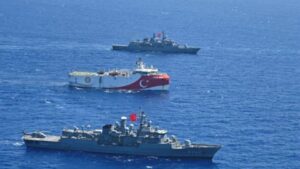 Νίκος Μελέτης


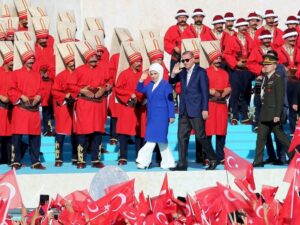


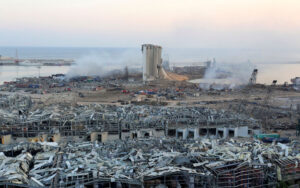
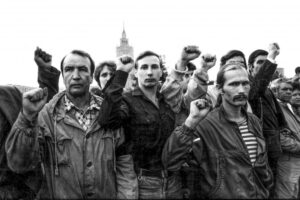


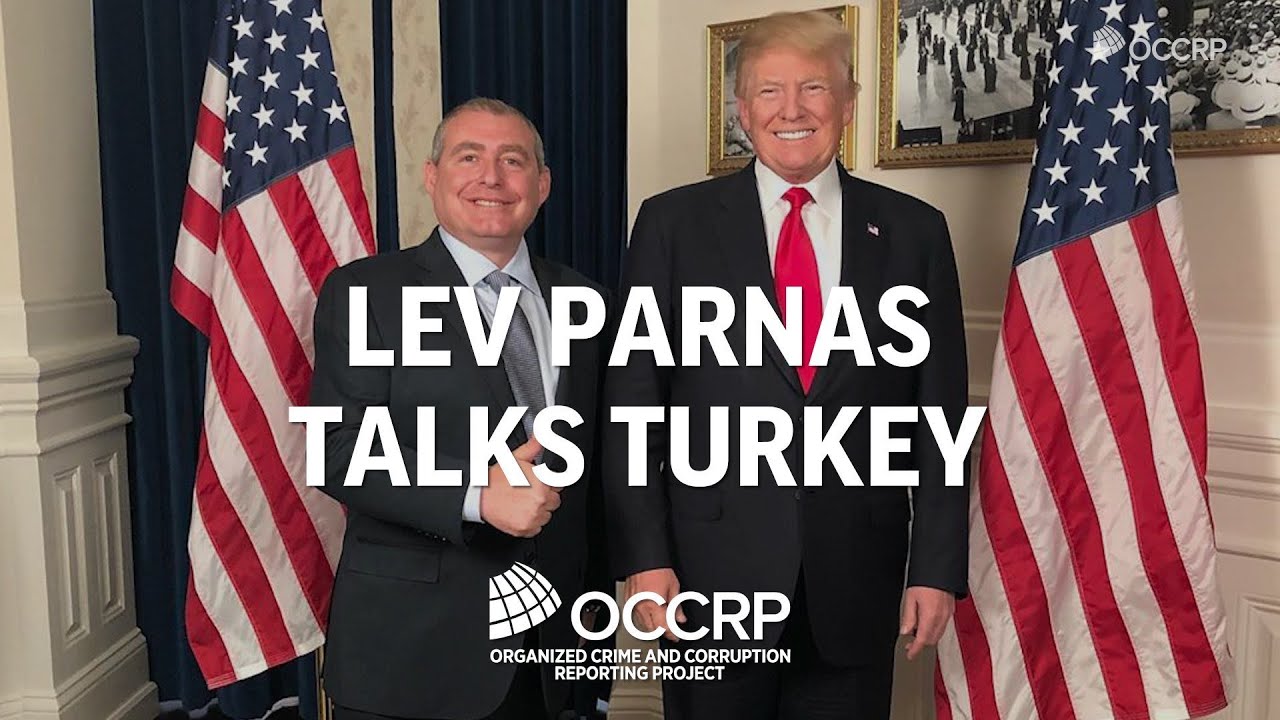



 Σάββας Καλεντερίδης