Το τέλος της ανοχής απέναντι σε αυταρχικούς ηγέτες, όπως ο Ταγίπ Ερντογάν και η επιστροφή των ΗΠΑ στη συμφωνία για τα πυρηνικά του Ιράν. Οι δύσκολες ισορροπίες στη σχέση με τη Σαουδική Αραβία και το φρένο στις φιλοδοξίες του Ισραήλ.
Δημοσιεύθηκε: 15 Νοεμβρίου 2020 – 08:25
Ο Donald Trump έκανε τη Σαουδική Αραβία τον πρώτο προορισμό του στο εξωτερικό ως προέδρου των ΗΠΑ. Τον είχε πείσει ο γαμπρός του, Jared Kushner, πως ο Mohammed bin Salman, ο νεαρός διάδοχος του Σαουδαραβικού θρόνου, είναι «κλειδί» για την πολιτική των ΗΠΑ στη Μέση Ανατολή και για την εκστρατεία «μέγιστης πίεσης» του κ. Trump κατά του Ιράν.Ο Joe Biden, που την περασμένη εβδομάδα έγινε ο εκλεγμένος πρόεδρος, έχει πολλά περισσότερα να σκεφτεί από τη Μέση Ανατολή. Θα κληρονομήσει μια φορτισμένη εσωτερική ατζέντα που περιλαμβάνει την τσαπατσούλικη αντίδραση στην πανδημία της Covid-19 και την καταστροφή που επέφερε στην αμερικανική οικονομία, καθώς και τον αναβρασμό στον οποίον βρίσκεται η χώρα λόγω των φυλετικών και μετεκλογικών εντάσεων.
Αλλά το ίδιο συνέβη και με τη νεοεισερχόμενη τότε κυβέρνηση του κ. Barack Obama, στην οποία ο κ. Biden υπηρέτησε ως αντιπρόεδρος από το 2008. Και πέρασε τρία τέταρτα της διαχείρισης κρίσης της στην περιοχή.
Ηγέτες σε όλη την περιοχή περιμένουν πως μια κυβέρνηση Biden προμηνύεται μετάβαση από την αλλοπρόσαλλη και συναλλακτική εποχή Trump σε έναν πιο πολιτισμένο και πολυμερή τρόπο διπλωματίας. Ο εισερχόμενος πρόεδρος θα είναι προσεκτικός απέναντι στις «περιπέτειες» των ΗΠΑ που απαιτούν πόρους και δυνάμεις. Ο κ. Biden στήριξε την αμερικανική εισβολή στο Ιράκ το 2003, αλλά τάχθηκε εναντίον της επέμβαση στη Λιβύη το 2011. Μπορεί επίσης να θελήσει να αποφύγει την εμβάθυνση του κενού εξουσίας που έχει αφήσει ο κ. Trump σε προβληματικές περιοχές της Μέσης Ανατολής, στις οποίες με ενθουσιασμό «πάτησαν» Ρωσία, Ιράν και Τουρκία για να καλύψουν το κενό.
Υπάρχουν αρκετά σημεία στα οποία θα πρέπει να δοθεί προσοχή. Ο κ. Biden έχει δεσμευτεί να επανεντάξει τις ΗΠΑ στην πυρηνική συμφωνία του 2015 με το Ιράν, την οποία υπέγραψαν οι ΗΠΑ με πέντε παγκόσμιες δυνάμεις, υπό την προϋπόθεση πως η Τεχεράνη θα συμμορφωθεί και πάλι σε ό,τι αφορά τα όρια εμπλουτισμού ουρανίου.
Ο κ. Trump απέσυρε μονομερώς τις ΗΠΑ από τη συμφωνία το 2018, αλλά ο κ. Biden περιστοιχίζεται από ανθρώπους που τον είχαν βοηθήσει να διαπραγματευτεί την ανακωχή και οι οποίοι έχουν προσωπικό συμφέρον να την αναβιώσουν. Ο απερχόμενος κ. Trump μπορεί και πάλι να προσπαθήσει να «δηλητηριάσει» το κλίμα επιβάλλοντας ακόμα περισσότερες κυρώσεις στο Ιράν και τους συμμάχους του.
Αν και ο κ. Biden είναι ένας παραδοσιακά φιλοϊσραηλινός Δημοκρατικός, θα θελήσει να αποθαρρύνει την προσάρτηση οικισμών της Δυτικής Όχθης από το Ισραήλ, την οποία ενθάρρυνε ο κ. Trump. Αν στηρίξει μια τέτοια προσάρτηση, τότε θα νομιμοποιήσει την αρπαγή γης ή εξουσίας σε άλλα σημεία του κόσμου: από τη Ρωσία (στην Κριμαία και στην ανατολική Ουκρανία), από την Τουρκία (στη βόρεια Συρία και στη βόρεια Κύπρο), από την Κίνα (στο Χονγκ Κονγκ) ή από την Ινδία (στο Κασμίρ).
Ο κ. Biden και οι περισσότεροι στο κόμμα του χαιρετίζουν την «ομαλοποίηση» των σχέσεων μεταξύ του Ισραήλ και των αραβικών κρατών, με πρώτα τα Ηνωμένα Αραβικά Εμιράτα. Οπωσδήποτε θα ήθελαν να την επεκτείνουν, αλλά όχι ως «πράσινο φως» για μονομερή προσάρτηση των κατεχόμενων Παλαιστινιακών εδαφών.
Ο κ. Biden έχει επίσης πει πως θα επανεκτιμήσει την αμερικανική πολιτική έναντι της Σαουδικής Αραβίας, που πέρυσι αποκάλεσε «παρία» για την δολοφονία του δημοσιογράφου Jamal Khashoggi στο προξενείο της Σ. Αραβίας στην Κωνσταντινούπολη το 2018. Οι πωλήσεις όπλων και τα ανθρωπιστικά ζητήματα, καθώς και η στήριξη του καταστροφικού πολέμου το Πρίγκηπα Mohammed στην Υεμένη, θα μπουν το μικροσκόπιο. Ο κ. Trump στήριξε τον πρίγκηπα διάδοχο το 2018, αλλά έκτοτε ο ριψοκίνδυνος και επιθετικός τρόπος διακυβέρνησης του πρίγκηπα έχει σχεδόν ενώσει το Κογκρέσο των ΗΠΑ εναντίον του. Οι ΗΠΑ έχουν επενδύσει βαριά τα τελευταία 75 χρόνια στο βασίλειο, όχι όμως το ίδιο με τον διάδοχο του θρόνου.
Ένας άλλος περιφερειακός ηγέτης που διαθέτει τη σπάνια ικανότητα να ενώνει τους Αμερικάνους εναντίον του είναι ο Τούρκος πρόεδρος Recep Tayyip Erdogan. Η κατ’ εξακολούθηση ανάπτυξη των στρατιωτική δυνάμεών του από τη Λιβύη και την ανατολική Μεσόγειο, μέχρι τη Συρία, το Ιράκ και το Κατάρ, συγκρούεται με τα αμερικανικά συμφέρονται και συμμάχους. Η ανοχή που έδειξε ο κ. Trump έχει πιθανότατα λήξει.
Και πάλι, σε αντίθεση με τον κ. Trump, ο κ. Biden είναι απίθανο να αναφερθεί στον Abdul Fattah al-Sisi, τον στρατηγό που ήρθε στην εξουσία της Αιγύπτου με το πραξικόπημα του 2013, ως «τον αγαπημένο του δικτάτορα». Η πολιτική των ΗΠΑ έναντι της Αιγύπτου είχε διάφορες διακυμάνσεις κατά την περίοδο διακυβέρνησης του Obama, που συναίνεση στην πτώση του προέδρου Hosni Mubarak το 2011 και τη σύντομη άνοδο της Μουσουλμανικής Αδελφότητας. Η μακροπρόθεσμη άποψη της Ουάσινγκτον είναι πως τα 1,3 δισ. δολάρια που δίνουν οι ΗΠΑ για τον στρατό της Αιγύπτου αξίζουν σε όρους διασφάλισης της Διώρυγας του Σουέζ. Αυτό δεν θα αλλάξει, αλλά μπορεί να αλλάξει η στάση έναντι του ανεξέλεγκτου αυταρχισμού.
Τέλος, μια κυβέρνηση Biden είναι πιθανό να ακολουθήσει μια πιο νηφάλια στάση ως προς την αποχώρηση από τη Συρία και το Ιράκ. Η απόσυρση των ΗΠΑ από τη βορειοανατολική Συρία τον περασμένο Οκτώβριο δεν αποτέλεσε μόνο προδοσία έναντι των Κούρδων συμμάχων που πολεμούσαν κατά του Ισλαμικού Κράτους και έναυσμα για εισβολή της Τουρκίας. Θα ήταν επικίνδυνο για οποιαδήποτε κυβέρνηση να αγνοήσει τον τεράστιο κίνδυνο να δημιουργηθεί κενό σε μια αλυσίδα αποτυχημένων και προβληματικών κρατών στην περιοχή της Ανατολικής Μεσογείου, για τα οποία βρίσκονται σε διαμάχη οι Σουνήτες τζιχαντιστές και οι στηριζόμενοι από το Ιράν Σιίτες ένοπλοι μαχητές.
Τον Μάιο του 1978 ο νεοεκλεγείς γερουσιαστής από το Ντέλαγουεαρ, Τζο Μπάιντεν, ψήφιζε υπέρ της συνεχίσεως του αμερικανικού εμπάργκο όπλων στην Τουρκία λόγω της εισβολής στην Κύπρο. Ηταν μία από τις πολλές κρίσεις των δεκαετιών 1960-70 στις αμερικανο-τουρκικές σχέσεις. Τον Ιανουάριο του 2021, έπειτα από 43 χρόνια, ο Μπάιντεν, ως νεοεκλεγείς Αμερικανός πρόεδρος, καλείται να χειρισθεί τη χειρότερη κρίση της χώρας του με την Τουρκία.
Η τελευταία συμπεριφέρεται ωσάν να έχει το ειδικό βάρος υπερδυνάμεως. Ακολουθεί τον δικό της ανεξάρτητο από τη Δύση σχεδιασμό που περιλαμβάνει στρατιωτικές παρεμβάσεις σε Μέση Ανατολή, Αφρική, Ανατολική Μεσόγειο και Καύκασο. Απαιτεί προσαρμογή των Δυτικών σε αυτό τον σχεδιασμό. Εχει πάψει να εξυπηρετεί δυτικές ανάγκες ασφαλείας, ενώ περιστασιακά πλέον μπορεί να θεωρηθεί συμμαχικό κράτος. Το μεγάλο ερώτημα είναι εάν η Τουρκία μπορεί να επιστρέψει εκ νέου στο δυτικό «μαντρί» ή εάν θα απολεσθεί οριστικά από το δυτικό σύστημα ασφαλείας.
Πολλοί στις ΗΠΑ (αλλά και στο Ισραήλ) θεωρούν ότι πρέπει να κάνουν λίγη υπομονή μέχρι να φύγει ο Ερντογάν από την εξουσία και να αποκατασταθεί η προηγούμενη τάξη πραγμάτων. Ο Ερντογάν γνωρίζει αυτές τις σκέψεις. Οι κινήσεις του στο εσωτερικό της Τουρκίας δείχνουν ότι βαδίζει σε πρόωρες εκλογές. Αναβαπτιζόμενος στη λαϊκή βούληση θα δώσει το μήνυμα ότι αυτός είναι ο μόνος συνομιλητής από την Τουρκία. Παράλληλα θα έχει το περιθώριο να ξεκινήσει ένα νέο κεφάλαιο στις αμερικανο-τουρκικές σχέσεις.
Ο Μπάιντεν γνωρίζει άριστα τα θέματα εξωτερικής πολιτικής. Οι βασικοί άξονές του θα είναι: απόλυτη συνεννόηση με τη γραφειοκρατία των υπουργείων Εξωτερικών και Αμυνας· έμφαση στους πολυμερείς διεθνείς οργανισμούς· θερμή υποστήριξη του ΝΑΤΟ· αποκατάσταση της επικοινωνίας με τους μεγάλους Ευρωπαίους συμμάχους· στοιχειώδης βελτίωση των χείριστων σχέσεων της χώρας του με το Ιράν· επαναφορά μιας ενεργού αντιπαλότητας με τη Ρωσία. Μέσα από το πρίσμα της Ρωσίας θα προσεγγίσει ο Μπάιντεν την Τουρκία.
Η ενεργοποίηση των ρωσικών πυραύλων S-400 από την Αγκυρα, λίγες μόλις ημέρες πριν από τις αμερικανικές εκλογές, είναι κάτι που θα επιφέρει κυρώσεις. Η εφαρμογή της νομοθεσίας που απαγορεύει τη συνεργασία με Ρωσία, Ιράν και Βόρεια Κορέα (γνωστή με το ακρωνύμιο CAATSA) θα εφαρμοσθεί μετά βεβαιότητος, αν και σταδιακά. Με τον ίδιο αυστηρό τρόπο θα αντιμετωπίζεται και οποιαδήποτε κίνηση του Ερντογάν είναι αντίθετη προς τα αμερικανικά συμφέροντα. Θα πάψει και το βασικό χαρακτηριστικό των αμερικανο-τουρκικών σχέσεων της περιόδου Τραμπ. Ο Ερντογάν μπορούσε με ένα τηλεφώνημα να ανατρέψει τον σχεδιασμό και τις εισηγήσεις της αμερικανικής γραφειοκρατίας.
Από εκεί και πέρα όμως οι ΗΠΑ δεν θα απομονώσουν την Τουρκία. Τουναντίον, θα προσπαθήσουν να της προσφέρουν κίνητρα για να «επιστρέψει» στο δυτικό στρατόπεδο. Το ερώτημα είναι εάν ο κυνικά ρεαλιστής Ερντογάν θελήσει να εκμεταλλευθεί το γεγονός ότι η Τουρκία είναι η μόνη χώρα του ΝΑΤΟ που βρίσκεται θεωρητικώς «αντιμέτωπη» με τη Ρωσία σε τρία μέτωπα: Συρία, Λιβύη, Καύκασο. Ιδίως στο μέτωπο της Λιβύης το τουρκικό επιχείρημα ότι δεν πρέπει να αφεθεί η χώρα στα χέρια της Ρωσίας έγινε στο παρελθόν δεκτό από το ΝΑΤΟ.
Τυχόν αποκατάσταση των αμερικανοτουρκικών σχέσεων μας αφορά άμεσα. Η πολιτική των ΗΠΑ έναντι χωρών μεσαίου διαμετρήματος (όπως η Ελλάδα), σπανίως (έως ποτέ) παρουσιάζει διακυμάνσεις λόγω της αλλαγής του ενοίκου του Λευκού Οίκου. Εμείς, όμως αντιμετωπιζόμαστε ως μέρος ενός ενιαίου συστήματος ασφαλείας με την Τουρκία. Σήμερα, οι σχέσεις μας με την Αμερική διάγουν μία εξαιρετική περίοδο. Η απερίφραστη αμερικανική καταδίκη των τουρκικών ενεργειών στην Ανατολική Μεσόγειο βρίσκει αναλογίες μόνον στην επιστολή του Αμερικανού προέδρου Τζόνσον το 1964. Ηταν τότε που οι ΗΠΑ προειδοποίησαν ευθέως την Τουρκία να μην προχωρήσει σε εισβολή στην Κύπρο. Σε αντίθετη περίπτωση το ΝΑΤΟ δεν θα υποστήριζε την Τουρκία, εάν η τελευταία δεχόταν σοβιετική επίθεση. Χρειάσθηκε να περάσουν 56 χρόνια για να δούμε ανάλογες δηλώσεις. Ολα αυτά αντικατοπτρίζουν την ευρύτερη καχυποψία των ΗΠΑ έναντι της σημερινής Τουρκίας. Επιπλέον, με πρόεδρο τον Μπάιντεν η Ελλάδα έχει άμεσους διαύλους επικοινωνίας που είχαν χαθεί επί Τραμπ. Εάν, όμως, βελτιωθούν οι αμερικανοτουρκικές σχέσεις, θα ξαναγυρίσουμε στα κούφια λόγια Αμερικανών επισήμων περί των ενδόξων προγόνων μας και των ισχυρών δεσμών μας, όπως είχαμε συνηθίσει στο παρελθόν;
Συν Αθηνά και χείρα κίνει. Το επόμενο χρονικό διάστημα χρειάζεται να τονώσουμε την εικόνα της Ελλάδας ως πυλώνα σταθερότητας. Επιπλέον, πρέπει να αλλάξουμε στα μάτια των Δυτικών την αντιμετώπιση της Ελλάδας ως τμήματος ενός ενιαίου χώρου ασφαλείας με την Τουρκία. Οι συμμαχίες στις οποίες είμαστε μέλη (ΝΑΤΟ και Ε.Ε.) δεν μας καλύπτουν επαρκώς στην Ανατολική Μεσόγειο. Η δημιουργία ενός τοπικού συστήματος αμυντικής ασφαλείας στην Ανατολική Μεσόγειο με συμμετοχή Ελλάδας, Κύπρου, Ισραήλ, Αιγύπτου, Ιορδανίας και Εμιράτων δείχνει εφικτή. Οι συνεχείς διασκέψεις με ξένους ηγέτες της ευρύτερης γειτονιάς μας, κινούνται προς τη σωστή κατεύθυνση.
* Ο κ. Αγγελος Συρίγος είναι καθηγητής Διεθνούς Δικαίου και Εξωτερικής Πολιτικής, βουλευτής της Νέας Δημοκρατίας στην Α΄ Αθηνών.
Many hope that, when US President-elect Joe Biden takes over in January, he can salvage, and even renew, the American-led post-1945 liberal world order. That’s an understandable desire, but it is entirely unrealistic.
TEL AVIV – In less than four years, outgoing US President Donald Trump has achieved what, historically, only devastating wars had done: recast the global order. With his isolationism, wannabe authoritarianism, and sheer capriciousness, Trump gleefully took a sledgehammer to the international institutions and multilateral organizations his predecessors had built from the ashes of World War II and maintained ever since. What now?
Many hope that, when President-elect Joe Biden takes over, liberal international arrangements can be salvaged, and even renewed. That would certainly be desirable. Unfortunately, it is an unrealistic hope. A post-Trump order appears to be more about a return to the inter-bloc competition of 1945 than to post-Cold War liberal euphoria.
For starters, the Biden administration will be consumed by the daunting tasks of healing the domestic wounds that Trump has inflicted and correcting America’s critical weaknesses, laid bare by the pandemic. The US’ recovery from the most divisive presidency in its history will be neither quick nor painless. Reforming America is a prerequisite to restoring its capacity for global leadership.
Even if Biden’s administration had infinite capacity, there would be no turning back the clock. The status quo ante sprang from a kind of post-Cold War euphoria, animated by the belief that Western liberal democracy had secured a definitive victory over the rest, and the world had reached, in Francis Fukuyama’s famous formulation, the “end of history.”
In the 1990s and 2000s, when the United States was the world’s unrivaled economic, military, and diplomatic power, the logic of liberal hegemony was compelling. But, in today’s rapidly changing multipolar world, it no longer is. This has been true for more than a decade, which is why the US was retreating from global leadership long before Trump took office.
Although Trump’s isolationism is often portrayed as anomalous, it reflects a strain of American thought stretching back to the country’s founding. Had German submarines not attacked American merchant ships in 1917, the US may well have stayed out of World War I.
Likewise, it was only when Japan attacked Pearl Harbor in December 1941 that the US entered World War II. And after the war, US efforts to preserve peace (by deploying troops) and restore prosperity in Europe (by implementing the Marshall Plan) were driven by fear of Soviet expansion, not some sense of moral duty.
It was also in America’s interest that Trump’s predecessor, Barack Obama, in whose administration Biden served as vice president, and even George W. Bush before him, took steps to scale back US foreign policy’s hegemonic project. Like Trump, both Obama and Bush voiced frustration about inadequate burden-sharing by America’s NATO allies.
The US retreat from hegemony reflects history that Biden cannot undo: America’s loss of credibility as a result of its long, costly, and inconclusive Middle East wars, and the 2008 global financial crisis, which exposed the downside of globalization and the shortcomings of neoliberal orthodoxy. Far from fulfilling the promise of broadly shared prosperity, it became clear, the free-market ethos of the last few decades had facilitated the emergence of obscene inequalities and the collapse of the middle class.
This combination of never-ending war and rising inequality fueled the nationalist backlash that propelled Trump to victory in November 2016. The same frustrations were reflected in the United Kingdom’s Brexit vote that June, France’s Yellow Vest protests in 2018, and even the COVID-19 crisis.
A pandemic would seem like an unmissable opportunity for cooperation. Yet it has been met with border closures and competition over supplies and future vaccine doses, not to mention curbs on civil liberties and expansion of surveillance capabilities, including in democracies. Simply put, just when we need global cooperation the most, our broken multilateral system has driven us back to the bosom of the nation-state.
So, the world seems to be returning to a Westphalian order, in which sovereignty prevails over international rules. Trump’s “America First” stance fits neatly within such an order. And while China touts international cooperation in some realms, multilateralism is a fundamentally alien concept to it. It would oppose the revival of a world order based on liberal precepts. Other big nationalist powers (such as Brazil, India, Russia, and Turkey) and smaller ones in Eastern Europe (Hungary and Poland) move broadly within the same illiberal realm.
The Biden administration should aspire to lead the world’s democracies in their competition with a rising authoritarian bloc, while upholding the multilateral institutions and structures most essential to peace. To this end, it should immediately abandon its predecessor’s connivance with Turkish President Recep Tayyip Erdoğan, and replace his bellicose strategy toward Iran with an effort to reach a revised, durable nuclear agreement. Fortunately, it appears set to do both.
At the same time, the Biden administration will need to treat America’s alliances more as collective enterprises, which the US ideally leads without dominating. From the allies’ side, this shift has already begun, with European leaders, especially French President Emmanuel Macron, increasingly recognizing the need to take Europe’s security into their own hands. The US should work with an empowered European Union to contain Russia’s revisionism on NATO’s borders and end its hybrid war on Western democracies.
Similarly, to manage its ongoing strategic confrontation with China, the US will need to work with its Asian allies, such as a rearmed Japan and South Korea. With China having all but abandoned its “peaceful rise” strategy, avoiding violent conflict will be a delicate balancing act.
More broadly, the US will need to galvanize the world’s liberal democracies to forge a bloc capable of standing up to the world’s authoritarians. This should include efforts to counter the forces of disintegration within the EU and, potentially, to transform NATO into a broader security alliance of democracies.
Crucially, the two blocs would also need to cooperate effectively in key areas of shared interest, such as trade, non-proliferation, climate change, and global health. This will require diplomatic skills that Trump could scarcely imagine, much less muster.
A correspondent shared the following with one of the authors of this piece: In an event organised in the USA for a group of Greek luminaries the main speaker was a former American ambassador to Greece. He boasted about his strong philhellenic credentials and even brandished a photo of himself dressed in an ancient Greek tunic, earning universal applause from his Greek audience. When he had finished his address, which was replete with praise and expressions of admiration for Greece, he was asked about America’s position on Graeco-Turkish relations. Suddenly the cheerful and polite speaker turned sour and morose, banging on the table with his palm and asking the audience to get it into their heads that America will never disappoint ‘strategic military ally’ Turkey just to please the Greeks. This episode strikingly describes the reality of Graeco-American relations. When it comes to American support for the Greeks, it boils down to empty words and no deeds. American policy favours Turkey and will continue thus for the foreseeable future. This trend started with the Truman Doctrine in 1947 and continues to this day (for 73 years.) Surprisingly the Greek leadership appears to see nothing wrong in this, and continues without complaint its suppliant relations with America. In exchange for supple behaviour, the Greeks get words of praise for the achievements of their forefathers 2,500 years back. The American response to Turkish aggression against the Greeks is and always has been predictable. Turkey puts out an unreasonable claim against Greek sovereignty, and then uses intimidation to get her way, knowing that at some point America will step in to ask both sides (aggressor and victim) to compromise! Although both Greece and Turkey are NATO members, Turkey sits on the first-tier, while Greece is considered less vital. Greece is expendable; Turkey is not.
There has always been one constant in Graeco-American relations: irrespective of which American administration is in power, American policy consistently supports the Turks over the Greeks. Equally, irrespective of which administration runs Greek affairs, Greece remains an American instrument. The supposedly ‘anti-American’, ‘socialist/communist’ Syriza administration proved to be an American acolyte. Interestingly, when it comes to American presidential elections, Greeks support the most ‘philhellene’ of candidates, only to be disappointed. The ‘socialist/communists’ in Greece typically pray for a Democratic win, only to receive a rude awakening when their prayers are answered. When ‘philhellene’ Jimmy Carter won the Presidency in 1976, church bells pealed in Cyprus to welcome the ‘saviour’ of the Greeks, as he had promised to rid Cyprus of Turkish occupation. But instead of working to free the Greeks, Carter’s administration worked overtime to lift the American arms embargo against Turkey. Clinton glibly yet sweetly fooled the Greeks into believing that he was a man of ideals and fairness, only to see him provide Turkey with arms galore; a staggering $10 billion funded fully by the American taxpayer to the tune of $8billion. These weapons in the end served Turkish aggression against the hapless Kurds and threatened the Greeks. (see, Arming repression) Other Greeks pray for a Republican win, oblivious to the fact that it was the Republican Henry Kissinger who gave the nod to Turkey to invade Cyprus and capture 37% of its territory. Democrat or Republican makes no difference to the Greek cause.
Greece’s membership of NATO, intended to afford her protection from outside attacks, proved illusionary, seeing that her tormentor and only adversary is NATO-member Turkey. This means that the collective defence provision at the centre of NATO’s founding treaty does not apply in this case. Article 5 of the Alliance, which says that an attack on one member is an attack on all, becomes null and void in the event of Turkey attacking Greece; in this sense NATO is of no use to the Greeks. Greece is however valuable to NATO, particularly in her support for American plans against Russia and China, neither of which have harmed the Greeks, nor intend to do so. Aggrieved Greece remains silent, voicing no dissatisfaction with American policy, and instead partaking in American designs against two friendly countries. Perhaps rather absurdly, the Greek political élite praises the ‘strategic military alliance’ with America, although this gives no protection to Greece from Turkish aggression.
To an independent observer, Greece seems to be interested more in American strategic designs against Russia and China and less in defending herself against Turkish aggression, enough to bewilder any political science scholar. Confusion sets in when one begins to think that Russia is a traditional friend of the Greek people and China an economic partner of debt-ridden Greece. Ingratitude hits roof level when one is reminded that Russia played the key rôle in freeing the Greeks from 400 years of Ottoman/Turkish occupation. In that period Russia even fought a war against Turkey (1828-9), with many Russians dying, when the Ottomans failed to avenge Russia’s involvement on the side of the Greeks at Navarino in 1827. Another twist to this saga is the fact that Turkey hardly co-operates with the USA on pivotal American challenges. Indicatively, in his memoirs Decision Points, President George Bush made reference to the 2003 second Iraq war saying that ‘ally’ Turkey proved not to be a true ally: “On one of the most important requests we had ever made, Turkey, our NATO ally, had let America down.” Yet, America steadily supports ‘ally’ Turkey, but not ally Greece which, unlike Turkey, fought on America’s side in both World Wars.
Linda S. Heard (October, 2020) correctly observes that Erdogan and Turkey behave aggressively against all and sundry because America turns a blind eye to Turkish aggression: “Instead of taking the moral high ground, NATO’s chief marshal and chairman of the NATO Military Committee, Sir Stuart Peach, recently praised Turkey’s role within NATO and its essential contributions to NATO operations and activities.” Was Sir Stuart playing games with people’s intelligence and memory, one wonders, when in the same breath he added, perhaps mendaciously, that, “[…] no other ally has suffered more from terrorist attacks,” conveniently hiding the fact that Turkey is a net contributor to terrorism (see “There’s no doubt Turkey sponsors terrorism; why won’t the State Department say so?”)
Seeing that things work in her favour and against the Greeks, irrespective of the merits of the case, Turkey has found it expedient to press for further advantage through the employment of lobbyists in America, as the ineffectual and powerless ‘Greek lobby’ looks on passively. Just over a year ago Ahval News reported that, “Turkey paid nearly $9 million to lobbying firms in U.S. in 2018.” Even a former US National Security Adviser lobbied for Turkey. Ahval notes that the Turkish lobbyist list includes international law firms. Even more bizarrely, a former senior American naval officer of Greek decent, though not a lobbyist, finds it morally acceptable to support the continued arming of Turkey.
The [Athenian] Greek political élite pretend not to see and not to hear and maybe not to bother. Lately the American Ambassador in Greece publicly mandated the Greco-Turkish agenda saying that Greek Prime Minister Mitsotakis “[…] will make all the needed comprises […]” (SLPress.) Turkey is trying to encroach on Greece’s sovereignty; yet the Ambassador asks Greece to compromise. Meanwhile, Pompeo has announced cheerfully that the Graeco-American relationship is “at an all time high and getting stronger.” In his last visit to Crete, Pompeo even boasted that he was in Greece, “[…] to showcase one of America’s strongest military relationships throughout all of Europe […]” Not to be upstaged, the Greek Prime Minister heralded the permanent docking of «USS Hershel «Woody» Williams» in Souda Bay in Crete. Pompeo capped it all by adding that he was incredibly proud to support the Greek leadership (29 September, 2020 Washington Post). Pompeo spoke with no pretence and made no attempt to hide America’s real intentions as regards the three American military bases on continental Greece and the naval base in Crete. He said, “[the military relationship] is especially important, as Russia continues to destabilize the region, especially in Libya, where the U.S. calls for the withdrawal of all foreign military forces and support for military de-escalation and for Libyan reconciliation.” So, we see Greece in a Graeco-American ‘strategic military alliance’ that targets friendly Russia rather than enemy Turkey. The Greek political élite have yet to articulate a single benefit for Greece’s security needs from the Graeco-American recently announced ‘strategic military alliance.’
The Greek political élite are used to getting empty promises and by now are numb to these. The Greeks asked the EU to apply sanctions against Turkey for her violations of Cyprus’ sovereignty. A meeting was arranged for September 24-25, 2020, but was postponed to 1 October on the pretext that someone tested positive to the corona virus. Even that meeting was to be conducted remotely. Meanwhile, the agenda was miraculously expanded to include China, Belarus, Nagorno-Karabakh and the Navalny assassination, leaving little time to discuss sanctions against Turkey!. (see EU incompetence .)
Russia is perplexed by the Graeco-American ‘strategic military alliance’ that is steered against her. Thankfully Russia has not taken vindictive action against her friends the Greeks, who always turn to her for support in the UN Security Council. Greece is obviously unhappy with Russia supplying Turkey with the S-400 air defence system, but the truth is that Russia first supplied the Greeks with the S-300 over twenty years ago. A secret agreement between America and the then defeatist Greek government made this powerful defence system inoperable. Russia supports Cyprus unequivocally on the issue of the withdrawal from Cyprus of all Turkish occupation troops. America is vague on the issue, seeing that the Turkish occupation troops are also NATO troops. Most important, Russia spared Cyprus from the damage the American/British-initiated Anan Plan of 2004 would have brought to the Greeks of Cyprus.
. A lie was deliberately circulated many years back, to the effect that Russia was opposed to Greece extending her territorial waters to 12nm. This served America well in that it stopped Greece from exercising her legitimate rights in the face of an aggressive Turkish casus belli that could end in a war between two NATO [supposed] allies. In direct contrast to the disinformation, Russia’s Ambassador to Athens Andrei Maslov came out recently stating in no uncertain terms that all islands have a continental shelf and an EEZ of their own, thus rubbishing Turkish claims to the contrary. This unnerved the USA, which is now in a quandary, and worried that Greece may finally exercise her rights to 12nm. However, the Greek political élite made little use of the Russian pronouncement, for this would have meant having to take a decision that would have angered America and Turkey.
Is the Greek political éite therefore suffering from auditory illusions, creating false perceptions of what they actually hear the Americans telling them in clear words and actions? The Americans are crystal clear, saying openly that Turkey is their ‘strategic military ally’. Equally, the Americans tell the Greeks to concentrate their military energies on the perceived Russian threat to America, and not the real threat to Greece coming from Turkey. They tell the Greeks to compromise on Turkish demands that are outside international law and to stop creating problems for NATO, because if it comes to the USA taking sides, the Greeks will be the losers. For now Greeks have to be satisfied with the praise they get for their ancestry: Leonidas, Pericles, Xenophon, Plato et al. The Greeks do to Russia as America does to them. Whilst verbally praising the common cultural bonds and Christian Orthodoxy between Greece and Russia, in practice they provide Americans with bases to frustrate Russian plans in the Eastern Mediterranean. As long as Greece supports anti-Russian American plans, Russia will not openly favour their fellow Christian Orthodox Greeks. If Greece thinks that Turkey will be expelled from NATO anytime soon, with Greece filling the gap, that would prove illusionary; America is marking time, waiting for Erdogan to leave; then it’s back to business. Greece could test American sincerity and support for the Greeks by asking for a ban on servicing Turkey’s F-16s, to undermine her combat capabilities against Greece and to stop her from being a menace to her neighbours.
Conclusion: In a world of auditory illusions, games, international trickery and cunning, the [Athenian] Greek political élite stands little chance of gaining anything for Greece.
World could slide into catastrophe like World War I: Kissinger
Says Biden, Xi should agree not to resort to military conflict
Kissinger Warns of Catastrophe If U.S. and China Don’t Cooperate
Dr. Kissinnger warns of new U.S.-China conflict. He speaks at the Bloomberg New Economy Forum.
Former U.S. Secretary of State Henry Kissinger said the incoming Biden administration should move quickly to restore lines of communication with China that frayed during the Trump years or risk a crisis that could escalate into military conflict.
“Unless there is some basis for some cooperative action, the world will slide into a catastrophe comparable to World War I,” Kissinger said during the opening session of the Bloomberg New Economy Forum. He said military technologies available today would make such a crisis “even more difficult to control” than those of earlier eras.
“America and China are now drifting increasingly toward confrontation, and they’re conducting their diplomacy in a confrontational way,” the 97-year-old Kissinger said in an interview with Bloomberg News Editor-in-Chief John Micklethwait. “The danger is that some crisis will occur that will go beyond rhetoric into actual military conflict.”
The diplomat who paved the way for President Richard Nixon’s historic 1972 trip to China said he hoped that the shared threat of the Covid-19 pandemic would provide an opening for political discussions between the two countries when Biden takes office on Jan. 20.
“If you can look at Covid as a warning, in the sense that in practice it is dealt with by each country largely autonomously, but its long-term solution has to be on some global basis,” Kissinger said, “it should be dealt with as a lesson.”
U.S.-China relations are at their lowest in decades, despite the two sides reaching a “phase one” trade deal at the start of the year. Since then, the virus outbreak that began in Wuhan, China, has gone global, killing more than 1.3 million people and crushing economies around the world.
As President Donald Trump stepped up his criticism of China, blaming it for the spread of the virus and the death toll in the U.S., each side also has ramped up moves the other sees as hostile.
Last week, China’s crackdown on Hong Kong’s autonomy continued, as officials there disqualified lawmakers viewed as insufficiently loyal to Beijing. U.S. officials have decried the death of the “one country, two systems” policy that has helped Beijing navigate its ties with the West for a generation.
The U.S. followed up on its criticism by imposing new sanctions, banning investments in 31 Chinese firms it says are controlled by the country’s People’s Liberation Army.
“Trump has a more confrontational method of negotiation than you can apply indefinitely,” Kissinger said. Early in Trump’s term, “it was important for him to emphasize the deep concerns Americans have about the evolution of the world economy that is not balanced. I think that was important to emphasize. But since then, I would have preferred a more differentiated approach.”
Swift Erosion
The swift erosion in ties this year means China and the U.S. are edging toward a new Cold War, Kissinger said, adding that the two sides should “agree that whatever other conflict they have, they will not resort to military conflict.”
To achieve that, the U.S. and China should jointly create “an institutional system by which some leader that our president trusts and some Chinese leader that President Xi trusts are designated to remain in contact with each other on behalf of their presidents,” he said.
Relations with China may dominate the foreign policy agenda of President-elect Joe Biden’s administration. He’s expected to seek ways to defuse tensions in areas including the future of 5G technology, China’s expansionism in the South China Sea and Hong Kong’s fading autonomy.
While Biden has decades of experience in dealing with China, his tone took a harsher turn during the presidential primaries. He frequently criticized China’s assertive policies in its region as well as Beijing’s human rights record, even branding President Xi Jinping a “thug” during a debate in February.
China Congratulates Biden, Harris on U.S. Election Win
China has offered congratulations to Joe Biden and Kamala Harris on winning the U.S. presidential race after being one of a few nations that had not commented as President Donald Trump contests the election results. Bloomberg’s Enda Curran reports on “Bloomberg Surveillance.” (
Source: Bloomberg)
“Of course, there are differences on the issue of human rights,” Kissinger said when asked what more China could do to improve relations. “It is important for each side to understand the sensitivities of the other, and not necessarily to solve the problem, but to alleviate it to a point where further progress is possible.”
Xi used a speech last week to call for countries to strengthen cooperation and avoid conflict, even as his policies set China on a collision course with the U.S. And China last week congratulated Biden and Vice President-elect Kamala Harris on their election victory.
“The United States and China have never faced countries of a magnitude that is roughly equal with the other,” Kissinger said. “This is the first experience. And we must avoid its turning into conflict, and hopefully lead to some cooperative endeavors.”
Reviewing some of Biden’s proposals for addressing China, Kissinger urged caution when asked about the idea of building a coalition of democracies to take on Beijing.
History of Crisis
“I think democracies should cooperate wherever their convictions allow it or dictate it,” he added. “I think a coalition aimed at a particular country is unwise, but a coalition to prevent dangers is necessary where the occasion requires.”
Ultimately, Kissinger said, the two nations’ leaders need to recognize that they see the same issues very differently, and that colors their approach to talks.
“Americans have had a history of relatively uninterrupted success,” he said. “The Chinese have had a very long history of repeated crises. America has had the good fortune of being free of immediate dangers. Chinese have usually been surrounded by countries that have had designs on their unity.”
Europe will increasingly find itself caught in a tug-of-war between the U.S. and Eurasia, Kissinger added.
“Europe has been an anchor of American foreign policy in the entire post-World War II period,” he said. “The question for them now is whether, in the evolution of relations with other parts of the world, they will attempt to play a totally autonomous role.”
The New Economy Forum is being organized by Bloomberg Media Group, a division of Bloomberg LP, the parent company of Bloomberg News. Other guests include Microsoft Corp. co-founder Bill Gates, Stephen Schwarzman, chairman, co-founder and chief executive officer of Blackstone Group Inc., and Chris Kempczinski, president and CEO of McDonald’s Corporation.
An Overview of Policies for the United States and Other High-Income Economies
For decades, a gap has been growing between the rich and poor in advanced economies, especially the United States. Then the coronavirus pandemic struck, costing over a million lives globally by the end of October 2020 and setting off the worst global recession in nearly a century. The people most vulnerable to a health and economic shock have been hit the hardest.
Now at a time of acute health and economic crisis, widening divisions are raising moral, social, economic, and political challenges. Many experts argue that longstanding US policies that widened inequality have also exacerbated the pandemic’s impact. As the United States and other countries strive to rebuild their economies, governments have an opening to alleviate unfair economic disparities and improve access to opportunities.
This guide draws together research from the world’s leading experts on inequality trends and causes within countries and a list of available policy options to mitigate the growing gap (mostly for the United States, with lessons applicable to other advanced countries).
Most of the research below comes from the Peterson Institute 2019 conference on “Combating Inequality,” later work from attending experts, and other PIIE publications. Read also “We Have the Tools to Reverse the Rise in Inequality,” by conference organizers Olivier Blanchard (PIIE) and Dani Rodrik (Harvard University), from their forthcoming book of essays by conference participants, Combating Inequality: Rethinking Government’s Role, to be published by MIT Press in 2021.
Income inequality has grown within advanced economies as top earners have experienced more rapid income growth and bottom earners were left behind.
In the past few decades, the Gini coefficient—a standard measure of income distribution across population segments—increased within most high-income economies. The United States remains the most unequal high-income economy in the world. The disparity reflects a surge in incomes for the richest population segments, along with sluggish or even falling incomes for the poorest, especially during bad economic times.
At the same time, the middle class is shrinking. The percent of Americans in the middle class has dropped since the 1970s, from 61 percent in 1971 to 51 percent in 2019. Some have moved up the income ladder, but an increasing number are also moving down. The middle class has also shrunk considerably in countries like Germany, Canada, and Sweden, but other advanced economies have generally experienced more modest declines.
The Gini coefficient measures how equally income is distributed across a population, with 0 being perfectly equal (where everyone receives an equal share) and 1 being completely unequal (where 100 percent of income goes to only one person). Between 1985 and 2013 (or latest available year of data), the Gini coefficient rose significantly for most high-income countries for which long-time series are available.
Disposable income (what is left after taxes and government spending) has risen the most for the top 10 percent of earners in recent decades. Poorer families have benefited much less from wider economic growth in most countries. Across many countries, middle and low incomes are barely higher or less in 2016 than what they were ten years prior.
Since 1980, the pretax income of the bottom half of workers in European countries has grown by 37 percent. For the bottom half of Americans, pretax income has risen only 3 percent.
While inequality within countries has worsened, global inequality has declined—in large part because of globalization.
Inequality between the poorest and richest people in the world has noticeably declined in recent decades. Trade has been a critical driver of this improvement, cutting the number living in extreme poverty (those living on less than $1.25 a day) by half since 1990, according to the World Bank. Total trade as a share of GDP in developing countries has doubled since 1985. Opening up to trade boosts a country’s economy, which helps create new investment and employment opportunities that foster long-term growth. As Figure 4 below demonstrates, there is a strong correlation between expanded exports as a share of global GDP and the reduction in extreme poverty.
Wealth is even more concentrated at the top than income.
Wealth buttresses financial security for families. It comprises the value of assets, such as a home or corporate stocks, minus outstanding debt, such as a mortgage or student loans. Wealth is much more concentrated among the top tier of wealth holders, with households in the top 10 percent of the wealth distribution in high-income countries owning more than half of all household wealth in 2015 (or latest year available), according to the Organization for Economic Cooperation and Development (OECD). In the United States, they own 79 percent. By comparison, the top 10 percent of all income earners receive about a quarter of all cash income. Changes in wealth inequality in recent years differ across countries, though it grew particularly wider in the United States and the United Kingdom after the global financial crisis.
The richest Americans have been able to save more of their money and grow their wealth faster than the average American since the late 1980s. A Pew Research Center study finds only upper-income families in the United States grew wealth between 2001 and 2016, gaining 33 percent at the median. Middle-income families experienced a 20 percent loss in median net worth while lower-income families lost 45 percent.
Wealth inequality is higher than income inequality in advanced economies.
Only upper-income families in the United States made lasting wealth gains in recent decades. Middle- and lower-income families lost wealth between 2001 and 2016.
How to measure inequality?
Inequality can be measured in many ways, most often using income. The Gini coefficient is a measure of how equally income is distributed across the population, with 0 being perfectly equal (where everyone receives an equal share) and 1 being completely unequal (where 100 percent of income goes to only one person). Wealth inequality considers the value of people’s assets, like real estate and corporate stock, minus debts. Many income inequality measures do not account for taxes and government transfers like healthcare and income support programs, which help reduce inequality. For more on the impact of government intervention, see Section 6 below and this study by the Congressional Budget Office (CBO).
“The American Dream” is fading. Generations today are much less likely to earn more than their parents.
Social mobility—the chance to move up the income ladder—has fallen in the United States. Americans are increasingly stuck in the income bracket they were born into. Research by Raj Chetty (Harvard University) shows on average, almost 80 percent of children born in 1950 were earning more than their parents by age 30. For children born in 1980, that number dropped to 50 percent. Escaping poverty has become more difficult as wider economic gains disproportionally benefit wealthier classes. A child born in Canada has almost double the chance of moving from the bottom to top income quintile.
US children born in the early 1980s were much less likely to earn more at age 30 than their parents did at the same age.
Americans born into low-income households are more likely to remain at the bottom of the income ladder than their European counterparts, according to an OECD report.
The top 1 percent command an ever bigger share of national income and wealth in the United States.
In the United States, the top 1 percent of earners made a little over 10 percent of the country’s income in 1980. In 2017, they made 20 percent, surpassing the share of the bottom half of earners. In Europe, the gains among the top 1 percent have been less dramatic, and the bottom half still has more income share than the top 1 percent.
The top 1 percent wealth share declined for much of the 20th century in the United States but then started rising in the late 1970s. It has recently reached levels last observed in the early 1920s. The upswing has been almost entirely driven by the wealthiest top 0.1 percent, who held 7 percent of US wealth in 1979 and nearly 20 percent today, based on research by Emmanuel Saez and Gabriel Zucman.
In the United States, the top 1 percent of earners now receive a larger pretax share of national income than their European equivalents.
The wealthiest 1 percent of Americans have held close to 40 percent of the nation’s wealth in recent years, approaching levels not seen in nearly a century.
The income gap between men and women has narrowed but persists.
Since the 1970s, widespread progress occurred in reducing the wage gap between men and women across advanced economies, but progress leveled off in the United States and elsewhere around 2005. Women in the United States earned 18 percent less than men on average in 2019, close to the average among G7 countries. Factors for the wage gap include differences in jobs held by men and women and outright discrimination. If current trends continue, it may take a century to reach wage parity.
Progress towards narrowing the gender wage gap slowed starting around 2005.
The income gap between Black and white Americans has remained about the same since the 1980s. The racial wealth gap has widened considerably.
White Americans earned 2.5 times more than Black Americans in the 1960s. By the 1980s that differential dropped to 1.3 times more, partially because the minimum wage expanded to more sectors. The racial earnings gap has since stagnated.
The US racial wealth gap has grown since the 1980s-1990s and the difference between groups is pronounced. In 2019, a typical white family had eight times the wealth of a Black family and five times the wealth of a Hispanic family.
Wealth among Black and Hispanic families has grown more slowly since the 1990s than in white families.
People generally accumulate wealth as they grow older, but the differences in wealth across US racial and ethnic groups is stark. A 2019 Fed survey shows young Black families have almost no wealth ($600) compared with $25,400 for white families.
The global economy moves fast. We help you navigate it.
The Peterson Institute for International Economics (PIIE) is an independent nonprofit, nonpartisan research organization dedicated to strengthening prosperity and human welfare in the global economy through expert analysis and practical policy solutions.
SECTION 2
What drives inequality?
Technology and trade are factors, but policies determine outcome.
Automation and trade liberalization have profoundly transformed labor markets across advanced economies, giving disproportionate advantages to highly skilled and educated workers, and research shows these forces have played a role in widening inequality. But it is important to emphasize the role of governments in mitigating these effects. The United States and Europe have very different levels of inequality despite similar levels of technological change and trade liberalization. Divergent policies among countries must logically have influenced their disparities in the growth in inequality.
Trade data show how the United States and many European countries have increased their imports from emerging-market countries at similar levels since 1980, suggesting factors other than trade are influencing differences in inequality levels.
How have technology and globalization widened inequality within the United States?
Economists generally think globalization has contributed marginally to rising US wage inequality but that technology has played a much bigger role. For the last half century, the United States has generated tremendous economic growth and wealth as a result of technological innovations and international trade and investment. Tech giants emerged with the advent of the internet. Businesses tapped global supply chains, technology breakthroughs, and international markets to expand their reach, turning some into multinational powerhouses, generating high-end jobs, and making a whole new range of products affordable for consumers.
But some workers have lost out. US industrial production is still at historically high levels, but automation makes that achievement possible with far fewer workers. The US economy, like many advanced economies, has been driven more by services (information, business and professional services, health care, restaurants, travel, financial services) and less by manufacturing, with consumers spending a smaller percent of their incomes on manufactured goods than they used to.
Manufacturing as a share of total employment has been in decline since the 1940s.
Technology has reduced demand for certain low- and middle-wage workers, such as in factory assembly lines, and increased demand for high-skilled, higher-paid workers. To cut costs and stay competitive, many businesses outsourced manufacturing production from domestic factories to countries like China, Vietnam, and Mexico, displacing some domestic manufacturing jobs. (A Peterson Institute study finds about 156,000 US manufacturing jobs were lost on net each year between 2001 and 2016 from expanded trade, or less than 1 percent of the workers laid off in a typical year).1
Men and workers without a college degree have been hardest hit, especially in factory towns outside major US cities. Many of these workers have dropped out of the labor force. By contrast, highly educated and skilled workers, particularly in urban areas, earned a premium.
Learn more about the effects of trade and investment in this guide, “What Is Globalization?”
Governments have cut top tax rates.
Tax policy is one of the most important factors in determining inequality levels in advanced economies. Taxes in the United States and many other rich countries have become less progressive in the past 50 years, meaning that tax obligations have declined for those with the highest incomes. The top earners used to pay much higher tax rates on their income than they do now. Less progressive taxation has accelerated the growth of top incomes.
The average tax rate paid by the top 1 percent of US earners has steadily declined over many decades; since 2010, the highest-earning individuals have been paying an average tax rate roughly equal to or even less than other Americans. (Income levels of taxpayers do not account for government transfers).
In the 1950s, the top US marginal income tax rate was above 90 percent, a legacy of the war-footing economy of World War II. It is now just below 40 percent. (In the United States, the top marginal tax rate is charged only on earnings above $510,000 for an individual). Other countries, like Japan and France, had similar declines.
As top marginal tax rates have declined in many richer countries, the share of income going to the top 1 percent of earners has grown. Countries like Germany, Spain, Denmark, and Switzerland cut top tax rates by little or not at all, and also experienced little to no increase in top income shares.
Poor Americans are much less likely to attain higher education than rich Americans.
In the United States, 90 percent of children with parents in the top 10 percent of the income distribution will likely attend college. For children with parents in the poorest 10 percent, less than a third will. American families are more burdened by college tuition costs than families in Europe, where higher education is more likely to be free or subsidized. US college tuition for four-year institutions has risen five-fold since 1985, adjusted for inflation, reaching $27,000 a year on average in 2017. US children today are less likely to exceed their parents’ standard of living because education levels are failing to grow at the rate required to meet the demand for a more educated workforce.
Healthcare in the United States is not universal.
The United States is the only wealthy nation without universal health coverage. Healthcare expenditures grew from 5 percent of GDP in 1960 to almost 18 percent in 2018. Americans spend more than double on healthcare per person than other wealthy countries on average, many of which have some form of publicly funded healthcare system, yet the country lags on many health outcomes such as life expectancy and infant mortality. In 2018, 8.5 percent of people, or 27.5 million, did not have health insurance at all (though the Affordable Care Act made some headway in reducing the number after 2010). Employers that provide health benefits to workers shoulder the costs of rapidly rising insurance premiums.
The US federal minimum wage has fallen.
The US federal minimum wage, currently $7.25 an hour, has dropped by almost 30 percent since the 1960s when adjusted for inflation. More than half of US states have set higher minimum wages but the rest have not. France’s minimum wage grew more than 80 percent between 1980 and 2016 when adjusted for inflation, to almost €10 or nearly $12 an hour.
Unions are less powerful than they used to be.
Union membership has long been declining across rich countries, especially in the United States. In the 1950s, approximately one-third of all US workers belonged to a union. In 2019, that figure was just 10 percent. Most European countries still have much higher shares of workers in unions than the United States. Some European countries (Germany, for example) also have employees on corporate advisory boards or board seats that can be reserved for trade unions, increasing their influence over wages and workplace regulations.
Americans are moving less often while cities attract high-paying jobs.
In the past three decades, the share of the US population making an interstate move fell by half, limiting the ability of families to pursue new job opportunities in response to declines in manufacturing jobs. It’s not clear why mobility fell, but rising housing prices in areas of opportunity may be a factor. In cities, wages for highly educated workers grew faster than for the less educated, widening the income gap between urban and nonurban areas.
The economic fallout from the COVID-19 pandemic has disproportionately harmed already vulnerable groups.
Low-income workers, minorities, and women are among those who have suffered the biggest economic losses. (See Section 5)
Climate change hits the poorest the hardest.
Extreme weather patterns attributed to climate change are widening inequality. Low-income groups tend to be more exposed to environmental threats, like flooding, hurricanes, and heat waves, and live in communities without effective disaster relief strategies.
Additionally, certain policy responses to limit the climate crisis could disproportionally affect low-income workers. An example is the French government’s attempt to implement a fuel tax, which provoked street protests throughout the country.
1In 2016, 19.9 million workers [pdf] were laid off or discharged (i.e., involuntary separations).
SECTION 3
Why care about inequality?
Social and economic inequalities, for example inequalities of wealth and authority, are just only if they result in compensating benefits for everyone, and in particular for the least advantaged members of society.
There are opposing views on whether economic inequality needs to be narrowed, ranging from economic to political to philosophical. The most obvious case for combating inequality rests on the notion of fairness—that everyone should have an equal chance at attaining prosperity.
On the other side of the argument, some influential economists have long held that there is a tradeoff between equality and growth—that greater inequality may be an inevitable outcome of higher output, but this point of view is hotly contested. Some social scientists think that inequality may be acceptable if people are also lifted out of poverty (regardless if others are becoming superrich). Others defend inequality as an inevitable result of differences in talent and the important role of free choices by individuals. They argue that excessive focus on inequality is misplaced.
Here are some counterpoints and alternative ways of thinking about it.
It matters who is treated unequally and why.
Policy solutions for inequality must distinguish those people still excluded from economic security because of their race, gender, ethnicity, or place of birth, argues Adam S. Posen (PIIE). Inequality on the basis of discrimination requires a higher priority and given the source must be addressed differently than economic equality per se. Similarly, high wealth or income that does not come from unfair advantages may not be something to reduce for its own sake, but disparity from that source could still be reduced in pursuit of other social or economic goals.
Inequality may hurt a country’s economy.
Recent studies find evidence that inequality hampers a country’s growth, and this view is gaining ground among policymakers. Jason Furman (PIIE) warns that it is difficult to generalize about the causal relationship between inequality and growth but that policymakers don’t need to choose, because they can pursue well-known “win-win” options, such as improving primary education.
People at the bottom lack power and opportunities to get ahead.
Economic growth metrics cannot by themselves measure human wellbeing, explains Danielle Allen (Harvard University). People must feel included and empowered in society. In an economy with high levels of inequality, people at the bottom lack options to gain wealth or participate in the political system.
Inequality is undemocratic.
Thomas M. (Tim) Scanlon (Harvard University) argues that inequality must be addressed when it results in unfair discrimination by democratic institutions—for example, when benefits like education and health care are available unequally, when opportunities for advancement are limited, or when citizens are subjected to racism, sexism, or shameful treatment for being poor.
Authoritarians exploit inequality for political gain.
Experts have linked rising inequality to the wave of populism and authoritarianism across the world—when governments exploit economic anxiety by appealing to “ordinary people” in opposition to “elites” who are accused of discriminating in favor of foreigners, immigrants, or minorities in the workforce.
SECTION 4
American beliefs and perceptions on inequality
00:00Current time01:30
Views on inequality rest on many misperceptions, says Stefanie Stantcheva (Harvard University).
Most Americans (6 in 10, according to Pew Research) think that economic inequality is a problem. Lower earners are much more likely to believe addressing economic inequality should be a top policy priority. Slightly more than half of Americans with lower incomes say reducing inequality should be a top legislative priority compared with only 36 percent of upper-income earners.
Research by Stefanie Stantcheva (Harvard University) shows that people who are optimistic about social mobility—that rags to riches stories come true, at least for some—generally oppose redistributive policies and tend to oppose government assistance for low-income groups. Conversely, Americans pessimistic about the probability of becoming rich tend to favor such programs.
Americans as a whole overestimate their chances of ascending the income ladder and think that social mobility, achieving the “American Dream” through hard work, is a US hallmark. In fact, social mobility is greater in Europe than the United States.
SECTION 5
The coronavirus crisis
“The burden of the downturn has not fallen equally on all Americans. Instead, those least able to withstand the downturn have been affected the most.”
In addition to costing numerous lives and infecting tens of millions, the COVID-19 pandemic has triggered an unprecedented global recession, worsening underlying social vulnerabilities that contribute to inequality. As of the end of October 2020, the United States has the highest number of cumulative cases and deaths in the world from the disease and is among the countries with the highest number of cases and deaths per capita. Research continues to emerge on the pandemic’s economic damage, but some repercussions for US inequality are obvious.
Low-wage workers lost a higher share of jobs than high-wage workers.
The US unemployment rate hit levels not seen since the Great Depression, peaking in April 2020 at 14.7 percent.2 Employees in the lowest-income brackets and in low-wage jobs in sectors like retail, transportation, in-person services, and hospitality were hit disproportionately by lockdowns. Forty percent of households making less than $40,000 per year lost a job in March 2020. By contrast, only 13 percent of those earning more than $100,000 a year lost their employment in the same period, according to the US Federal Reserve. At the same time, one study shows that US billionaires gained over $500 billion in the months following mid-March 2020.
Lack of healthcare and sick leave, and crowded housing conditions, spurred disease spread and death.
Lacking access to healthcare, many low-income families deferred testing and treatment, which raised transmission rates, says Heather Boushey (Washington Center for Equitable Growth). Countries with greater paid sick leave benefits were better positioned to contain the virus as employees with symptoms could afford to stay home. Those in poor communities had more preexisting respiratory problems, obesity, and hypertension, which led to higher COVID-19 mortality rates. They were also more likely to live in multigenerational homes, increasing their exposure to the disease.
Minorities suffered the worst health and economic outcomes.
As of September 2020, Black Americans have died from COVID-19 at 3.4 times the rate of white Americans, adjusting for age differences in race groups, while Hispanic and Indigenous populations died at 3.3 times the rate of white Americans. Minority workers were more likely to work in high-exposure jobs in the food service, health, and transportation sectors.
Black and Hispanic Americans were also particularly affected by the economic shock of COVID-19. In April 2020, 61 percent of Hispanic Americans and 44 percent of Black Americans reported that someone in their household had lost a job due to the coronavirus outbreak, compared with just 38 percent of white adults. The disproportionate effects continued even as unemployment began to fall in June.
Those lacking college degrees were more likely to be exposed to the virus.
College-educated workers with higher incomes were better able to work remotely, and thus reduce their exposure to the virus, than low-wage, non-college-educated workers, who were more likely to hold jobs that could not be done remotely.
Working mothers bore the brunt of lost childcare.
About one in five working-age adults said in July 2020 they were not working because the pandemic disrupted their childcare arrangements. Of those not working, women ages 25 to 44 were three times as likely as men to say it was because of childcare demands.
US economic relief was less effective in keeping workers employed than in Europe
Between January and May 2020, the US unemployment rate more than tripled, from 3.6 percent to 13.3 percent, but countries like France, Italy, and Germany each experienced less than a 2 percentage point increase.
One preexisting factor was that US workers have fewer protections against being fired than European counterparts. And when the pandemic hit, European countries allowed greater numbers of workers to stay with firms even if they were not working, with the state paying most wages. The United States’ job retention scheme, known as the Paycheck Protection Program (PPP), largely sent payments to workers individually instead of employers and also gave aid to firms that did not need it while missing others in desperate need. As a result, it was not as effective at keeping workers employed. Many European workers maintained connections to their employers, whereas US workers were laid off or furloughed and had to obtain unemployment insurance from overburdened state governments.
European countries like France, Italy, and Germany were better able to keep workers employed during the pandemic than the United States through existing “short-time” work schemes and wage subsidies to businesses.
Inequality could widen in the aftermath.
Inequality may deepen in the pandemic’s wake as businesses act protectively to automate tasks now performed by low-wage workers. The shift to online education could also disadvantage the 45 million Americans from low-income households with limited access to broadband internet and smartphones and devices.
The depth and duration of lockdowns forced many small businesses, which lacked liquidity and access to capital, to close, increasing the dominance of larger firms in many industries. Research shows larger firms pay a smaller share of earnings to workers, instead channeling profits to investors and owners and giving the wealthy investor class a larger slice of the economic pie.
2Due to misclassifications in data as some workers were furloughed, that number could be as high as 20 percent.
SECTION 6
How much have governments slowed the rise of inequality?
US efforts have lagged most other advanced economies.
Governments can reduce inequality through tax relief and income support or transfers (government programs like welfare, free health care, and food stamps), among other types of policies. A study by Jacob Funk Kirkegaard (PIIE) shows that before the effects of direct taxes (excluding sales and other indirect taxes) and government transfers, the US Gini level is not unusual for advanced economies, on par with Germany or France. But the United States ranks highest on Gini after taxes and transfers because it redistributes income relatively less than most other advanced economies.
Before direct taxes and government transfers, US inequality (measured by the Gini coefficient) is similar to other wealthy countries. But after taxes and transfers take effect, it ranks the highest, indicating the US government is doing less than other governments to mitigate inequality.
Taxes reduce inequality more than government spending.
While much political attention focuses on what governments spend money on, inequality levels depend more on how governments collect revenue and which type and level of taxes they levy, argues Kirkegaard. Before taxes and government spending, total US spending on social services, like Social Security and Medicare, is near the average for advanced economies. These programs do play an important role in alleviating poverty in America. But the US direct tax system is the least redistributive and results in the United States ranking almost the highest in inequality levels after government intervention.
All of the world’s advanced economies rely more on taxes than spending to reduce inequality. The United States has the least progressive tax system but spends near the average amount on social programs.
Despite the high level of US inequality, tax relief and government spending programs do help low-income Americans.
Since 1965, the United States has expanded the social safety net for poor and low-income families, notes Jason Furman (PIIE). As a result, the US poverty rate is lower than it would be without these transfers—15 percent instead of 27 percent in 2015.
Since 1965, the gradual expansion of the social safety net has brought post-tax-and-transfer poverty, the poverty level after government tax relief and assistance programs are administered, down by around 10 percentage points.
US federal government programs include:
Social Security: This program provides income to Americans when they retire or cannot work due to a disability.
Earned Income Tax Credit, or EITC: This tax credit, firsts enacted in the 1970s and expanded many times since then, refunds what low- and moderate-income workers pay in Social Security and Medicare taxes, with benefits depending on one’s income and number of children. Income support for working families through the EITC supplements wage income by as much as 40 percent, helping workers in low-paying jobs make ends meet.
Supplemental Nutrition Assistance Program, or SNAP: This program (formerly known as food stamps) provides aid to low-income families that they can use in stores to purchase food
Medicaid and Medicare: These programs subsidize health care for the poor and elderly.
Housing subsidies: These housing assistance programs are aimed at alleviating housing costs for very low-income families.
Trade Adjustment Assistance: This program, started in the 1960s, aids workers who lose their jobs because of increased imports.
Child and Dependent Care Tax Credit (CDCTC): Established in the 1970s, this tax credit allows families to claim tax refunds for children and dependents. Children experience the highest rates of poverty compared with all other age groups in the United States. The CDCTC has been effective at reducing childhood poverty rates and has been expanded many times since its inception.
The supplementary income accruing from these programs is often not included in official statistics measuring the high level of poverty in the United States. But these programs have kept millions of Americans out of poverty and more support would alleviate poverty even further.
The US government transfer that does the most in reducing poverty is Social Security followed by refundable tax credits.
SECTION 7
Policy recommendations
This menu of policy recommendations is focused on the United States, with some also applicable to other advanced economies. It represents some commonly cited solutions by inequality experts, organized by policies related to taxes, education, labor, corporate regulations, and the social safety net. Economics can provide some guidance over which approach is most effective, but political attitudes toward inequality will play a significant role in which ones to focus on.
Another way of thinking about policies to combat inequality is to organize them by economic stages: Policies in the pre-production stage focus on people entering the workforce, production policies affect workers, and post-production policies redistribute income and wealth. These categories can then be further divided by policies directed at bottom, middle, and top income levels. Listen to Dani Rodrik explain here.
TAX POLICIES
“We have shed our blood in the glorious cause in which we are engaged; we are ready to shed the last drop in its defense. Nothing is above our courage, except only (with shame I speak it) the courage to tax ourselves.”
Expand the Earned Income Tax Credit (EITC) and Child and Dependent Care Tax Credit (CDCTC).
Adding a universal child allowance to the EITC to replace the child tax credit would reach unemployed families in addition to those earning and deliver payments monthly instead of yearly. This step would be the most effective way of reducing childhood poverty, based on a report by the National Academy of Sciences.
The EITC is calculated based on the number of dependents (children) and work status. Expanding the program and relaxing conditions could reach more people who are out of work and/or do not have children but who need assistance. Hilary Hoynes (University of California Berkeley) estimates that an investment of $90 billion to $100 billion a year in expanding existing policies like EITC, CDCTC, housing vouchers, and food assistance would cut child poverty in half.
Shift taxes toward capital and away from labor to encourage hiring workers.
Laura D’Andrea Tyson (University of California Berkeley) suggests reducing payroll taxes to ease the burden on workers and taxing capital gains (profit from the sale of an asset like a stock or bond) at the same rate as personal income or higher. She also suggests that local governments agree not to compete against each other in a race to provide ever more expensive tax breaks for corporations to locate there. There are also growing calls for cross-country coordination to tax “mobile” stateless capital income.
Create a wealth tax.
Adjusting the top marginal tax rate alone would not increase the effective tax rate on the superrich, argues Gabriel Zucman (University of California Berkeley). Incomes are only a very small fraction of their wealth. Many billionaires accumulate their wealth through shares and other assets, which are subject to capital gains taxes, rather than income taxes.
Two former 2020 presidential candidates, Senators Elizabeth Warren and Bernie Sanders, backed taxing wealth directly. Their wealth tax plans sought to tax the net wealth, the assets held minus debts, of the richest citizens on an annual basis. Supporters of a wealth tax, including Emmanuel Saez (University of California Berkeley) and Zucman, contend that it would curtail the power of the superrich while funding valuable programs to help those in need. Other experts, such as Lawrence Summers (Harvard University), argue it is impractical because calculating individual wealth (real estate, possessions) is problematic, and wealth can be shifted abroad. Still others say a wealth tax may be unconstitutional and note that it has been difficult to implement in Europe.
Keep the estate tax.
Taxing inheritances with an estate tax has been a feature of US tax policy since the Civil War. Proponents of the tax, which is levied on the wealth of the deceased (including real estate, stocks and bonds, cash, and other assets) before it is passed on to their heirs, see it as a tool to address inherited economic inequality and incentivize spending over holding wealth. Opponents deride it as a “death tax” that prevents family farms and small businesses from being transferred to heirs.
Stefanie Stantcheva (Harvard University) finds the estate tax is often misunderstood. The American public vastly overestimates how many families are over the exemption threshold—that is, how many families actually pay the estate tax. The exemption threshold has been raised over the years (from $3.5 million in 2009 to $11.58 million in 2020), so in reality only 1 in 1,000 US households have estates above the exemption level. Stantcheva suggests that informing the public about the threshold and the small number of estates that would be taxed would increase support for the estate tax.
Impose a value-added tax (VAT).
Many advanced industrial economies impose a value-added tax (VAT), which is like a retail sales or consumption tax but collected at each stage of production of goods and services and harder to evade. VATs raise significant revenue in countries that use it, but the financial costs are borne more heavily by low-income consumers since they spend a higher percent of their income on taxable goods. To combat inequality, advocates say that products that take up a larger share of low-income family expenditures, like food, should be exempted from the VAT. Also, revenues generated from the tax could be used for government aid programs or direct cash transfers.
Create automatic tax cuts and unemployment benefits.
Policymakers should set up automatic tax cuts and benefits, known as automatic stabilizers, in the United States that kick in when the unemployment rate rises above a certain threshold in a given time period, instead of having to draw up new legislation that has to pass through Congress every time there is a downturn. Unemployment benefits could also start automatically during recessions.
Provide tax credits for more research and development (R&D).
Support for R&D, in the form of investment or tax credits, would spur job creation and raise wages through increased productivity. As new fields emerge there will be more training opportunities. Federal R&D could be more directed away from military and toward economic development. Climate change has been identified as a national security threat and defense spending could be invested in R&D to combat and/or adapt to climate change, which would create jobs as well.
EDUCATION POLICIES
Provide universal early childhood education and increase support for childcare.
Government-provided universal preschool education and childcare could financially benefit low-skilled and low-income workers and help keep women in the workforce. The COVID-19 crisis has heightened the need for sustained, increased public investment in childcare, as many working women disproportionately have left the workforce to take on care responsibilities. Investing in and increasing publicly funded childcare is also a way to create jobs that cannot be automated.
In the last 40 years, a college degree has become the “big dividing line” as wages for college graduates have increased at a much faster rate than high school graduates.
Improve access to quality higher education.
Making quality public higher education more accessible to more people is one important way to boost incomes. Many policies have been put forward to address this: tax credits to offset college costs; expanding grants and providing reduced or free tuition for low-income students (i.e. Pell grants); a national service program to allow students to earn money that can be put toward education; canceling outstanding loans based on income, time passed, or amount repaid; providing grants to colleges and universities to give more scholarships; or even cancelling tuition entirely. The debate continues over which schools any of these policies should apply to—community colleges and other 2-year degree programs, all public colleges, all 2- and 4-year programs, private schools, etc.
Germany has made almost all programs at public universities tuition-free for domestic and international students.
Provide more job training.
Improving access to low-tuition and tuition-free community colleges and vocational and apprenticeship programs would help prepare young people for new jobs in technology, health care, and other expanding fields that require learned skills. Sectoral training programs can raise earnings 20 to 40 percent, says Lawrence Katz (Harvard University). State and local governments can supplement federal programs in this area: 11 states in the United States have already implemented tuition-free community college, says Laura D’Andrea Tyson (University of California Berkeley). Programs must combine on-the-job training with more general occupation-specific knowledge to build a flexible workforce that can adapt to changing technologies and is receptive to retraining.
Implement talent discovery and matching programs.
Identifying talent in low-income areas and giving them access to educational and training opportunities would improve social mobility. Talent matching programs could link people with a specific set of skills with jobs they can pursue in the long term.
The global economy moves fast. We help you navigate it.
The Peterson Institute for International Economics (PIIE) is an independent nonprofit, nonpartisan research organization dedicated to strengthening prosperity and human welfare in the global economy through expert analysis and practical policy solutions.
LABOR POLICIES
Raise the federal minimum wage and wages for essential low-paying jobs.
Raising the federal minimum wage would help the lowest paid workers in states that have not already introduced their own higher minimum wages. Opponents say raising the minimum wage would burden employers and reduce the number of jobs available, but severalstudies find there is little effect on employment.
Jobs in childcare, nursing, elder care, food service, and healthcare are vital to society, but they pay poorly with little to no opportunities for advancement. Workers in these fields need higher wages and career progression opportunities to raise social mobility. These jobs are also less susceptible to automation.
Enforce existing minimum wage laws.
Some employers evade minimum wage laws by classifying employees as independent workers, deducting company costs from wages (for example, taking the cost of a uniform from an employee’s pay), failing to pay overtime, and through other forms of wage theft. One study suggests that the total wages US employers steal by violating minimum wage and other labor laws exceeds $15 billion each year. More resources to combat wage theft and incentives for compliance would help.
Increase government investment in job creation programs.
Fiscal and monetary stimulus—more government investment in job-creating projects—can be more effective than specific government transfer programs to spur a “hot economy” that pushes wages up faster than prices, according to Jason Furman (PIIE). Governments can also spend on infrastructure or other programs to generate employment (which was done during 2009-10), supplement worker income, or train workers for jobs, as programs did during the Great Depression.
Give employees more bargaining power at companies.
Richard Freeman (Harvard University) calls trade unions the one “institutional force that fights against inequality.” Several experts point out that as US union membership has fallen, worker bargaining power has declined. As a result, growth in labor productivity has benefitted mainly top wage earners. Easing restrictions on the formation of unions would help. Daron Acemoglu (MIT) says corporations should have nonexecutive workers serve on their boards, the way some German companies do.
Many experts advocate for empowering unions to bargain for better compensation, benefits, access to training, and education. A recent Business Roundtable initiative recommends that big companies make commitments to all stakeholders, including workers and customers, not just investor shareholders.
Protect workers in the “gig economy” and other alternative work arrangements.
Shifts in technology and labor arrangements, such as temporary, part-time, on-call, and self-employment jobs, have sometimes disadvantaged workers. Firms are incentivized to hire or classify existing workers as independent contractors because they do not have to provide them with traditional labor protections and worker benefits. The government can develop universal and portable systems that give social protections and benefits for these workers and prevent worker misclassification.
Create a federal job guarantee.
The federal government can become the employer of “last resort” through a National Investment Employment Corps spending $750 billion to $1.5 trillion while eliminating the need for some antipoverty programs, argues William Darity Jr. (Duke University). A federal job guarantee would cut inequality by lifting the lowest earners and protecting employment opportunities for groups subject to discrimination.
Richard Freeman (Harvard University) maintains that a federal job guarantee could have been effective at managing the economic shock of the COVID-19 crisis. It could have put newly unemployed workers to work on critical government projects, such as contact tracing, at a wage above the poverty level. As economies rebuild, the federal government can facilitate access to labor through job programs that expand during periods of economic slowdown and shrink during periods of private sector job growth. The same can be said of the need for climate-related labor—federal governments can provide jobs to work on critical green projects.
Trade Adjustment Assistance (TAA) is much criticized as ineffective, but those who received training through the program enjoyed substantial increases in earnings. The program falls short because of its limited scope—it only helps workers demonstrably hurt by trade, not by technology or other factors beyond their control. Removing the conditions and expanding the TAA program to include workers displaced by automation and other factors would deliver the program’s benefits to a wider group of recipients.
How did Germany manage the twin shocks of offshoring and automation?
Germany has had more success than other developed economies in assisting workers hit by offshoring of manufacturing jobs and an influx of imports from China and Eastern Europe. Some of this success can be attributed to German competitiveness in manufacturing goods that were exported to China to support its expanding industrial sector, but German manufacturers have also negotiated temporary wage reductions with workers and unions to save jobs and have been more willing to retrain their workers to take high-skilled and technologically demanding jobs.
German apprenticeship programs have helped new workers enter the job market. (Workers 55 years or older have had less success with these programs). Unions and employers in Germany are more accustomed to cooperating than in the United States, allowing for the development of training possibilities within firms. These relationships helped prepare the German workforce for automation and have increased their resilience to future shocks.
CORPORATE REGULATION POLICIES
Create strong competition policies that promote technological innovation.
Technological innovation can be a factor in reducing inequality when new firms enter the market and compete with incumbents for market share. Without strong competition and antitrust policies allowing new entrants into the business landscape, large firms like Amazon and Facebook can use their technology and market dominance to drive out competitors by denying them access to their platforms or engaging in predatory pricing models. Some policymakers favor government regulation to break up monopolies that stifle competition, but supporters of digital sector monopolies argue that their size benefits consumers.
Eliminate noncompete agreements.
Almost 40 percent of workers have at some point signed a noncompete agreement that sets limits on their ability to work for competing firms after leaving a job. Ostensibly, these contracts protect trade secrets, but they also reduce worker mobility and bargaining power. Research indicates wages increase when noncompete agreements are banned and workers can leave low-paying jobs without constraint.
Ban mandatory arbitration and class action waivers.
Mandatory arbitration prevents workers from suing their employers in court, requiring workers to resolve disputes with their employers through private arbitrators. These arbitrators are often chosen by the employers, leading to worse outcomes for workers.
Workers who can pursue legal action against their employers often face prohibitively high legal costs. Class action lawsuits allow workers to share the legal costs among multiple plaintiffs, reducing the financial barriers to legal remedy. Class action waivers that prevent workers from bringing these lawsuits against their employers should also be prohibited, says Heidi Shierholz (Economic Policy Institute).
SOCIAL SAFETY NET POLICIES
Expand access to health care.
The Affordable Care Act (ACA) enacted in the United States in 2010 offers to fund 90 percent of the cost if states expand Medicaid eligibility to include a segment of low-income adults and children, and people with mental illness, who remain uninsured. Some states have declined this incentive. Macroeconomic stability during a public health crisis depends on access to health care, as the COVID-19 crisis amply makes clear. Expanding access to healthcare through Medicaid, Medicare, or subsidized COBRA health insurance plans (for laid off workers) would go far in combating economic inequality and improving economic resilience during a crisis.
Relax eligibility conditions for safety net programs.
In 2019, the Trump administration imposed work requirements for accessing the Supplemental Nutrition Assistance Program (SNAP), formerly known as food stamps, tightening eligibility. Extremely poor families, including children, are often denied access to the program because of work requirements, which punishes families with children especially, according to Hilary Hoynes and Jesse Rothstein (University of California, Berkeley).
Such steps have been part of a wider trend in the United States of diverting public spending on safety net programs away from families without earnings to families with at least one employed parent. Various studies show that tying work requirements to government aid has little effect on employment. Reversing this trend and channeling more assistance to the most disadvantaged segments of the population would help reduce inequality.
In the 1990s, social safety net spending was targeted at families without earnings. By the 2000s, the trend had reversed, and the federal government began spending more on families with earnings than on those without.
Expand other programs to assist the poor.
Housing vouchers, unemployment benefits, Supplemental Security Income (SSI), and Social Security Disability Insurance (SSDI) have helped the elderly and disabled during the opioid crisis of recent years. Expanding these programs could help tackle rising inequality and build an economy resilient to future shocks.
Ensure existing safety net administration is scalable and up-to-date.
The COVID-19 pandemic exposed the administrative weakness of some existing safety nets in the United States. Out-of-date unemployment insurance systems could not handle the massive influx of unemployment insurance claims as the pandemic hit and businesses shuttered, slowing payments to people in need. Ensuring that safety net systems can be scalable in times of need will reduce wait times for those who need these systems the most.
Guarantee a minimum level of income for everyone.
One longstanding idea among some economists is to enact a universal basic income (UBI), which grants everyone a fixed cash transfer every month, regardless of income or need. Greg Mankiw (Harvard University) argues that a UBI would be simple to administer and financed efficiently by a VAT. Jesse Rothstein (University of California Berkeley) suggests a broad negative income tax scheme instead of UBI, where people earning under a certain amount receive supplemental pay from the government instead of paying taxes (this could be seen as a massive expansion in the EITC program) along with a tax increase for the wealthy to fund those transfers.
SECTION 8
We already have the tools needed to combat inequality
No single roadmap exists on how to narrow the gap between the rich and poor, but governments have the toolkit to make a difference. There is broad agreement among inequality experts to use a variety of methods across many fronts. To make progress, policymakers will need to accept and follow through on several points:
1. Inequality is an urgent problem.
The acceleration of the trend has damaging repercussions on society, with many falling behind on living standards and growing discontent among the “have-nots.” COVID-19 laid bare these structural failings and deep economic vulnerabilities.
2. Governments must act more forcefully.
By themselves, macroeconomic policies to stimulate private sector economic growth will not close the gap. Governments have to do more to directly address inequality through focused policies while considering the effects of technology, globalization, public health, and any other rising factors.
3. Taxes and spending programs need to be more progressive, particularly in the United States.
Policymakers face decisions on whether to focus on the government’s revenue side via a tax system in which the wealthy pay more of a share or on public spending for programs that benefit the lower and middle classes. Either way, a legitimate goal would be to expand access for lower-income citizens to quality education, healthcare, and other fundamentals for living and working in society.
4. Data should drive policymaking, but novel approaches should be considered.
Governments that rely only on proven policy solutions may have limited scope. They need to try and test new and innovative policies to confront complex problems, especially the displacement of jobs by technology and the effects of climate change.
The United States faces a range of crises: a continuing pandemic, widespread unemployment and business failures, climate change, racial and political polarization, and economic inequality. As the world attempts to heal from the damage inflicted by COVID-19, policymakers can use this moment to rebuild more equal and just economies that work for the many, not just the few.
“The millions who are in want will not stand by silently forever while the things to satisfy their needs are within easy reach.”
Franklin Roosevelt (1932)
GLOSSARY
Antitrust laws are a collection of federal and state laws designed to promote market competition. They include bans on price fixing, conspiring with competitors to divide markets, and bid rigging.
Automatic stabilizers are ongoing fiscal policy measures that are automatically triggered when a condition is met, without the need for government action.
Automation occurs when a machine carries out a process or procedure that was previously done by human labor.
Consumer goods, or final goods, are the end products or services that can be sold to users without further manufacturing or production activity.
Fiscal stimulus refers to policy measures designed to increase economic activity through increased government spending or reduced taxes. By contrast, monetary stimulus refers to central bank actions to spur the economy—including lowering interest rates or purchasing securities.
The Gini coefficient is an index that measures economic inequality through income distribution. On the Gini scale, each economy receives a value between 0, indicating everybody earns the same amount, and 1, indicating one person earns all the country’s income.
Government transfers are payments made to individuals for the purposes of redistributing wealth, not in exchange for any goods or services. Welfare payments and Social Security are both examples of government transfers in the United States.
Inheritance refers to the assets transferred to the next of kin after death.
Investment assets are items purchased to produce additional income. These can be tangible, like artworks or properties, or intangible, like stocks, bonds, and mutual funds.
National income is the total amount of money earned within a country.
Offshoring is the process of moving a company’s operations abroad to save costs. Companies usually offshore processes from developed countries, where the cost of doing business is often higher, to developing nations.
Pretax income refers to the amount of money a person earns before taxes are applied. The employer then deducts a percent of the employee’s earnings and sends it to the government in the form of payroll taxes. In the United States, federal income, Medicare, and Social Security are the three main payroll taxes. But an individual’s tax rate is not calculated on their entire income; instead different parts of an individual’s income are taxed at different rates. Marginal tax rates are the rates paid on each additional dollar of income earned. In the United States, for example, the first $9,875 an individual earns is taxed at a lower rate than the next $30,250.
Progressive taxes are set at rates that depend on a person’s ability to pay them. Lower earners pay a lower rate than higher earners, who can afford to pay more. By contrast, regressive taxes, which have no correlation to earnings and tax everyone at a similar rate, place a greater financial burden on lower-income families, as a larger percentage goes towards the tax.
Social mobility refers to the ease with which an individual or family can move up or down the wealth ladder.
The social safety net is a collection of government programs designed to help vulnerable families and individuals.
Trade liberalization is the process of removing or reducing barriers to the movement of goods or services between nations. In this context, liberal refers to more free or open trade.
A trade union is an organized association of workers that works to protect and promote their rights and interests. The association may contain workers from a single profession or company, or it can be made up of workers from related fields of work.
Unemployment insurance, or unemployment benefits, is the financial assistance governments pay out to workers that lose their jobs and become unemployed. Unemployment insurance schemes typically have strict eligibility requirements and do not pay out if the worker leaves their job voluntarily.
A value added tax (VAT) is a tax applied to each stage of a supply chain whenever value is added to a product. For example, a manufacturer would pay VAT on raw materials purchased, a retailer pays VAT on the goods purchased from the manufacturer, minus the amount previously paid by the manufacturer on the raw materials. Finally, a consumer pays VAT on the final product, minus the amount paid by the retailer and manufacturer.
Wealth is the value of all assets owned minus debts.
CREDITS
Written by Anjali Bhatt, Melina Kolb, and Oliver Ward
Edited by Madona Devasahayam and Steven R. Weisman
Additional research by Jacob Funk Kirkegaard, David Xu, and Eva (Yiwen) Zhang
Graphics by William Melancon
Photo research and publication production by Susann Luetjen
Web production by Helen Hillebrand and Jeremey Tripp
Special thanks to Olivier Blanchard, Lucas Chancel, Jérémie Cohen-Setton, Simeon Djankov, Joseph E. Gagnon, Egor Gornostay, Michele Heller, Patrick Honohan, Robert Z. Lawrence, Mary E. Lovely, Lawrence Katz, Jacob Funk Kirkegaard, Theodore Moran, Marcus Noland, Maurice Obstfeld, Jean Pisani-Ferry, Adam S. Posen, Sherman Robinson, Dani Rodrik, Edwin M. Truman, and Angel Ubide for their contributions.
This feature was first published on November 17, 2020.
The Peterson Institute for International Economics is an independent nonprofit, nonpartisan research organization dedicated to strengthening prosperity and human welfare in the global economy through expert analysis and practical policy solutions. The Institute discloses all sources of funding, which comes through donations and grants from corporations, individuals, private foundations, and public institutions, as well as income on the Institute’s capital fund and from publishing revenues. Donors do not influence the conclusions or policy implications drawn from Institute research. All Institute research is held to strict standards of replicability and academic integrity. Visit piie.com to learn more.
Bartley Johns, Marcus, Paul Brenton, Massimiliano Cali, Mombert Hoppe, and Roberta Piermartini. 2015. The Role of Trade in Ending Poverty.Washington: The World Bank Group.
Belman, Dale, and Paul J. Wolfson. 2014. What Does the Minimum Wage Do? Michigan: W.E. Upjohn Institute for Employment Research.
Derenoncourt, Ellora, and Claire Montialoux. 2018. Minimum Wages and Racial Equality. Job Market Paper (November 5). Cambridge: Harvard University.
Donovan, Sarah A., Marc Labonte, and Joseph Dalaker. 2016. The US Income Distribution: Trends and Issues. CRS Report Prepared for Members and Committees of Congress (December 8). Washington: Congressional Research Service.
Furman, Jason. 2019. The Benefits of a Hot Economy. PIIE Realtime Economic Issues Watch (September 27). Washington: Peterson Institute for International Economics.
Furman, Jason. 2019. Combating Inequality: Social Safety Net. Presentation delivered at Combating Inequality: Rethinking Policies to Reduce Inequality in Advanced Economies. Event held at the Peterson Institute for International Economics, October 18, 2019.
Hoynes, Hilary W., and Diane Whitmore Schanzenbach. 2018. Safety Net Investments in Children. Brookings Papers on Economic Activity (March 8). Washington: The Brookings Institution.
Menasce Horowitz, Juliana, Ruth Igielnik, and Rakesh Kochhar. 2020. Trends in Income and Wealth Inequality. Social Research Trends (January 9). Washington: Pew Research Center.
Posen, Adam, Joseph E. Stiglitz, Robert J. Shiller, Gita Gopinath, Carmen M. Reinhart, Eswar Prasad, Adam Tooze, Laura D’Andrea Tyson, and Kishore Mahbubani. 2020. How the Economy Will Look After the Coronavirus Pandemic.Foreign Policy (April 25).
Roser, Max, Hannah Ritchie, Esteban Ortiz-Ospina, and Joe Hasell. 2020. Coronavirus Pandemic (COVID-19).Our World in Data. Accessed on August 20, 2020.
Starr, Evan, J.J. Prescott, and Norman Bishara. 2020. Noncompetes in the US Labor Force. U of Michigan Law & Econ Research Paper No.18-013 (May 7). Michigan: University of Michigan Law.
Του Ραούφ Μπέηκερ, 18/20/2020 (πρώτη δημοσίευση Κέντρο Στρατηγικών Σπουδών Μπέγκιν – Σαντάτ – besacenter.org)
Περίληψη: Οι σχέσεις της Τουρκίας με την Γερμανία ήταν πάντοτε ιδιαίτερες, αλλά η Άνκελα Μέρκελ τις έκανε ακόμα στενότερες με το να συμπεριφέρεται στον Ταγίπ Ερντογάν σαν να ήταν ο προστατευόμενός της στην διεθνή σκηνή. Έτσι, οι δεσμοί τους έγιναν ισχυρότεροι, και μαζί με αυτούς ενισχύθηκε η εμπορική, καθώς και η στρατιωτική τους συνεργασία. Αλλά η θητεία της Μέρκελ φτάνει προς το τέλος της, και έχει συμβεί μια αισθητή μεταστροφή του κλίματος που επικρατεί στο πολιτικό κατεστημένο του Βερολίνου απέναντι στην Άγκυρα. Έτσι, ο τούρκος πρόεδρος δεν θα έχει την δυνατότητα να στηρίζεται για πάντα στις γερμανικές αγαθοεργίες.
Οι σχέσεις της Τουρκίας με τις ευρωπαϊκές χώρες υπήρξαν άστατες και επιφυλακτικές κατά το παρελθόν, αλλά η Άγκυρα για παρά πολλά χρόνια διατηρούσε ιδιαιτέρως στενούς δεσμούς με μια από αυτές, την Γερμανία. Οι δεσμοί αυτοί μεταξύ των δυο χωρών, υπάρχουν εδώ και πάρα πολύ καιρό, πάνω από 100 χρόνια, από την εποχή που οι δύο χώρες πολεμούσαν στο ίδιο στρατόπεδο κατά τον Πρώτο Παγκόσμιο Πόλεμο. Κατά την διάρκεια του Δευτέρου Παγκοσμίου Πολέμου, ο τότε Τούρκος πρόεδρος, Ισμέτ Ινονού, θα υπογράψει μια συμφωνία φιλίας με την ναζιστική Γερμανία. Και ήταν μόνο κατόπιν πιέσεων από τους Συμμάχους, που η Άγκυρα ακύρωσε την συμφωνία αυτή, το 1945 –μόλις λίγους μήνες πριν το τέλος του πολέμου.
Το 1961, η Γερμανία και η Τουρκία υπέγραψαν μια συμφωνία δημιουργώντας ένα πρόγραμμα ‘φιλοξενούμενων εργατών’ που στόχευε στην ικανοποίηση των αναγκών σε ανειδίκευτη εργασία που είχε η καλπάζουσα γερμανική οικονομία. Σήμερα, στην Γερμανία υπάρχει ένας πληθυσμός τουρκικής καταγωγής, που υπολογίζεται περί τα 4 εκατομμύρια. Αποτελεί την μεγαλύτερη μεταναστευτική κοινότητα της Γερμανίας.
Η άνοδος της Άνκελας Μέρκελ στην Καγκελαρία πριν από 15 χρόνια επιφύλασσε μια άνευ προηγουμένου ώθηση στις διμερείς σχέσεις, κάτι που σχεδόν συνέπεσε με την άνοδο του Ερντογάν στην τουρκική προεδρία, το 2003. Ο Ερντογάν μετασχημάτισε το τουρκικό πολιτικό σύστημα σε προεδρικό, και διατήρησε την ανώτερη πολιτειακή θέση από το 2014 και έκτοτε. Η Μέρκελ και ο Ερντογάν διαμόρφωσαν μια πολιτική συμμαχία στην διεθνή αρένα, σε τέτοιο βαθμό μάλιστα που επί της ουσίας η Καγκελάριος της Γερμανίας μετέτρεψε τον Τούρκο Πρόεδρο σε προστατευόμενό της.
Όταν η Άγκυρα κλιμάκωσε την ενεργειακή αντιπαράθεση στην Ανατολική Μεσόγειο, η Γερμανία μεσολάβησε ανάμεσα στην Τουρκία και τα δυο κράτη μέλη της Ε.Ε., Ελλάδα και Κύπρο. Σε μια σπάνια περίπτωση όπου μια ευρωπαϊκή χώρα διαμεσολαβεί σε μια σύγκρουση που εξελίσσεται ανάμεσα σε κράτη-μέλη της Ένωσης, και ένα μη-μέλος της.
Κατά την διάρκεια των συγκρούσεων στο Ναγκόρνο Καραμπάχ, το Βερολίνο εξέδωσε μια απρόθυμη καταδίκη της προκλητικής στάσης του Ερντογάν. Η Μέρκελ στην πραγματικότητα δημιούργησε μέσα στην Ε.Ε. κάτι σαν διπλωματική ομπρέλα γύρω από τον Τούρκο Πρόεδρο, ελπίζοντας ότι έτσι θα κερδίσει την συμμετοχή της στην ομάδα του Μινσκ.
Ακόμα και όταν ο Ερντογάν εισέβαλε στην Βόρεια Συρία, η Μέρκελ δεν προέβη σε καμία έμπρακτη κίνηση για να τον σταματήσει. Στην πραγματικότητα, υποστήριξε σιωπηρά αυτήν την κίνηση, θεωρώντας ότι αποτελεί και έναν τρόπο ανάσχεσης των μεταναστευτικών ρευμάτων προς την Ευρώπη. Η λογική της ήταν ότι τα ρεύματα αυτά θα σταματούσαν εάν επιτρεπόταν στον Ερντογάν να μετατρέψει σε ασφαλή προορισμό για τους Σύριους μετανάστες τα εδάφη που ήλεγχε η Τουρκία.
Σε ό,τι έχει να κάνει με τους αριθμούς, οι διμερής σχέσεις της Τουρκίας με την Γερμανία άγγιξαν τα 30,4 δισ.€ το 2019, με το Βερολίνο να είναι ένας από τους κορυφαίους εμπορικούς εταίρους της Άγκυρας. Πάνω από 7.500 γερμανικές επιχειρήσεις λειτουργούν στην Τουρκία, μεταξύ των οποίων και η Europipe GmbH –η εταιρεία που προμήθευσε τους σωλήνες για να ολοκληρωθεί το έργο του αγωγού αερίου Turkstream.
Στο αποκορύφωμα της ευρωπαϊκής μεταναστευτικής κρίσης του 2015, όταν ο Ερντογάν έστειλε μόνο στην Γερμανία περίπου ένα εκατομμύριο πρόσφυγες, η Γερμανική αυτοκινητοβιομηχανία της Volkswagen πούλησε πάνω από 107.400 κομμάτια της στην Γερμανία –αριθμό-ρεκόρ, από το 2002, χρονιά που ο Ερντογάν κέρδισε τις κοινοβουλευτικές εκλογές στην Τουρκία. Ένας άλλος γερμανικός κολοσσός της αυτοκινητοβιομηχανίας, η Mercedes, διατηρεί ένα εργοστάσιο κατασκευής Λεωφορείων στην Κωνσταντινούπολη, πλήρως καθετοποιημένο.
Η συνεργασία των δυο χωρών σε ό,τι αφορά στο εμπόριο όπλων, έφτασε επίσης σε αξιοσημείωτα επίπεδα τα τελευταία χρόνια. Πλέον, η Άγκυρα αποτελεί τον κορυφαίο εισαγωγέα γερμανικών όπλων στον κόσμο. Την προηγούμενη χρονιά, η Τουρκία εισήγαγε οπλισμό αξίας 250 εκατομμυρίων € από την Γερμανία –ποσό ρεκόρ από την χρονιά που η Μέρκελ ανήλθε στην εξουσία (2005).
Η Γερμανία διαδραματίζει έναν ιδιαίτερο ρόλο στο πρόγραμμα Μη Επανδρωμένων Αεροσκαφών της Τουρκίας, που αποτέλεσε την αιχμή του δόρατος στις μάχες που έδωσε ο τουρκικός στρατός στην Λιβύη, την Συρία, και το Ναγκόρνο Καραμπάχ. Οι κεφαλές των πυραύλων που εγκαθίστανται στα αεροσκάφη αυτά, εξελίσσονται από μια γερμανική πολεμική βιομηχανία, την TDW. Σε μια επίσημη έκθεσή της, η γερμανική κυβέρνηση παραδέχεται ότι χορήγησε 33 άδειες στην Τουρκία, για εισαγωγές προϊόντων που προορίζονταν για χρήση στα μη-επανδρωμένα αεροσκάφη. Οι ίδιοι οι πύραυλοι κατασκευάζονται από την Roketsan, τουρκική εταιρεία κρατικής ιδιοκτησίας που συνδέεται στενά με την οικογένεια του Ερντογάν.
Ωστόσο, δεν είναι μόνοι οι Γερμανοί που έχουν την δυνατότητα να επεκτείνουν την επιρροή τους. Οι σχέσεις αναμεταξύ των δυο κρατών, διατηρούν κάποιον βαθμό αμοιβαιότητας, ακόμα και αν η ισορροπία προφανώς λειτουργεί προς όφελος του Βερολίνου. Η τουρκική διασπορά της Γερμανίας, θεωρείται πως λειτουργεί σαν την τέταρτη μεγαλύτερη εκλογική περιφέρεια της Τουρκίας (1,5 εκατομμύριο Τούρκοι της Γερμανίας, διατηρούν το δικαίωμα ψήφου στην Τουρκία και τα 2/3 εξ αυτών ψήφισαν για τον Ερντογάν στις τελευταίες εκλογές).
Η Τουρκική Ισλαμική Ένωση Θρησκευτικών υποθέσεων (DİTİB) είναι το πιο σημαντικό εργαλείο στα χέρια του Ερντογάν –καθώς έχει υπό την διεύθυνσή της πάνω από 3.000 τζαμιά, το 1/3 των συνολικών που υπάρχουν στην Γερμανία αυτήν την στιγμή. Ο οργανισμός αυτός λαμβάνει εκατοντάδες χιλιάδες ευρώ σε ετήσια βάση από την γερμανική κυβέρνηση και έχει υπό τον έλεγχό του το μεγαλύτερο Τζαμί της Γερμανίας. Ο Ερντογάν παρέστη προσωπικά στα εγκαίνιά του, στην Κολωνία, το 2018.
Ενώ οι γερμανο-τουρκικές σχέσεις βασίζονταν υπερβολικά στην χημεία που υπάρχει μεταξύ του Ερντογάν και της Μέρκελ, ο πρώτος δεν είναι σε θέση να στηρίζεται σε αυτήν για πάντα· θα εγκαταλείψει τη θέση της περίπου σε 1 χρόνο από τώρα. Την ίδια στιγμή, υπάρχει μια αλλαγή κλίματος του γερμανικού κατεστημένου στο Βερολίνο για την Άγκυρα, κάτι που θα μπορούσε να οδηγήσει σε αλλαγή της γερμανικής πολιτικής απέναντι στην Τουρκία –ιδίως αν ο Ερντογάν συνεχίσει να εκθέτει τους Γερμανούς, σε ό,τι έχει να κάνει με τις διάφορες αντιπαραθέσεις που έχει ανά τον πλανήτη.
Η στρατηγική της Μέρκελ έστειλε στον Ερντογάν το επικίνδυνο μήνυμα ότι μπορεί να συμπεριφέρεται όπως επιθυμεί –δίχως ποτέ να έχει συνέπειες. Περισσότερο, μάλιστα, του έδειξε ότι η Γερμανία, και η Ευρώπη μαζί της, είναι διατεθειμένη να υποκύψει στους πολιτικούς του εκβιασμούς. Ήταν η Μέρκελ που ενορχήστρωσε την προσφυγική συμφωνία με την Τουρκία το 2016, για την ανάσχεση των μεταναστευτικών ροών προς την Ευρώπη, μια συμφωνία την οποία η Άγκυρα αποδέχθηκε εξαιτίας των σημαντικών οικονομικών ανταλλαγμάτων που της επιφύλασσε.
Ωστόσο, δεν είναι οι πολιτικές περιπέτειες του Ερντογάν το στοιχείο εκείνο που εν τέλει θα του κοστίσει σε εσωτερικό και εξωτερικό επίπεδο, αλλά η παραπαίουσα τουρκική οικονομία καθώς και η ελεύθερη πτώση της τουρκικής λίρας. Τα οικονομικά προβλήματα της Τουρκίας υπερβαίνουν τις δυνατότητες της Γερμανίας να συνδράμει, παρά τις προσπάθειες της Μέρκελ να αποστείλει μια έσχατη χείρα βοηθείας προς τον Ερντογάν, πριν εγκαταλείψει την πολιτική σκηνή. Η τελευταία της προσπάθεια να διασώσει τον Τούρκο προστατευόμενό της, έχει να κάνει με μια απόπειρα τροποποίησης της συμφωνίας Τελωνειακής Ένωσης ΕΕ-Τουρκίας, για την παροχή περισσότερων διευκολύνσεων και οικονομικών ωφελειών για την Άγκυρα.
Russia has behaved throughout the conflict like it had other important issues to deal with.
NOVEMBER 17, 2020 15:40
A service member of the Russian peacekeeping troops stands next to a tank near the border with Armenia, following the signing of a deal to end the military conflict between Azerbaijan and ethnic Armenian forces, in the region of Nagorno-Karabakh, November 10, 2020
(photo credit: REUTERS/FRANCESCO BREMBATI)
Russia brokered the end of fighting in Nagorna-Karabakh last week in a deal that will see many Armenians leaving their homes and areas handed over to Azerbaijan. It is a humiliating defeat for Armenia, a reverse of what happened in the 1990s when Armenia defeated Azerbaijan in the same disputed area.
For Russia, it is a point of prestige. On Tuesday, Russia’s TASS media said Moscow was sending 64 pieces of military equipment for its peacekeepers that are being deployed.
Russia has behaved throughout the conflict like it had other important issues to deal with. An Egyptian naval group was scheduled to arrive in mid-November. Turkey was testing Russia’s S-400s. The southern Caucasus is not the priority. That would surprise many who believed that Russia was deeply invested in Armenia and saw it as an ally.
Pro-Azerbaijan voices, including pro-Turkish lobbyists in Washington, celebrated the war against Armenians by claiming that defeating Armenia would be a setback for Russia and Iran. Yet Iran supported Azerbaijan’s claims under international law and Russia basically held the same view. As long as the fighting was confined to Nagorna-Karabakh, which was supposed to be an autonomous area under Azerbaijan control, it wasn’t a setback for Moscow.
Defending Armenia is ostensibly part of Russia’s strategic interests. It launched a massive surprise military drill in February 2016 and July 2020 in southern Russia to show off its power. Kavkaz drills also involved Armenia in September 2020. Belarus, China, Iran, Pakistan and Myanmar were involved.
Furthermore, there is the Collective Security Treaty Organization (CSTO) which was formed in 1992 with several post-Soviet states, such as Armenia, Russia and Kazakhstan. But this isn’t the Warsaw Pact, and Russia didn’t feel the need to defend Armenians in Nagorna-Karabakh, only Armenia inside its international borders.
Why not? One might have assumed that Russia, which under President Vladimir Putin has rapidly expanded its military and improved its capabilities, would defend a small and poor Christian Armenia against a Turkish-backed Azerbaijan offensive. And Russia has the capabilities to do so. Former Russian airborne commander Vladimir Shamanov had said seven years ago, according to an RIA Novosti report, that Russia’s airborne troops could be moved quickly to places like South Ossetia, or Armenia.
SO WHY wasn’t Nagorna-Karabakh seen as similar to Abkhazia, which Russia defended in the 2008 war with Georgia? Why wasn’t it like the Donbass and Crimea, which Russia has defended, and in the second case annexed, in 2014? It’s not even like Transnistria, apparently.
To understand why is to try to understand Russia’s current geopolitical stance. Moscow sees the Caucasus as part of its historic sphere of influence, but it apparently did not see Azerbaijan’s war as harming that influence. It believes that it can broker a deal with peacekeepers and remain the key player, with Baku and Yerevan relying on it. Russia has in the past balked at countries in its sphere seeking out Western support.
When the war broke out in September, many experts said that Moscow was displeased with Armenian Prime Minister Nikol Pashinyan. Moscow remembered that he had come to power after the “Velvet Revolution” of 2018, and that he was critical of Moscow’s role in Armenia. In short, he had said in the past, according to reports, that Armenia was treated as a kind of vassal, a relationship with Moscow of “speaker and listener” – and Armenia was supposed to listen.
He also reportedly opposed Armenia’s role in the Eurasian Economic Union, an economic pact led by Russia and including Belarus and Kazakhstan, believing that Armenia’s sovereignty was being eroded.
However, Armenia was not in a position to make many changes. Sandwiched between a hostile Turkey and Azerbaijan – and with an Iran that is not helpful and also under sanctions, and a Georgia that was not deeply supportive – the country had no real options. It couldn’t rely on the West because the era of Western expansion was over. The US no longer cared about protecting countries like Armenia. And Turkey, although it is hostile to the US, is a NATO member – and Armenia wasn’t going to grow closer to NATO with such a hostile neighbor and Azerbaijan seeking a closer relationship with the US and NATO.
As such, Armenia was not only forced to be dependent on Russia but there was a powerful group of people deployed by Turkey to cheerlead a war against Armenia and pretend that it was actually a war that would harm Russia and Iran’s interests. Armenia was forced into the tragic position, by voices in the US close to the Trump administration, of being sacrificed as the last hurrah in a policy designed to appease Turkey and confront Iran by destroying the lives of a few thousand Armenians.
BUT RUSSIA didn’t buy into this. Moscow believed its role in the end was to swoop in and treat the squabbling countries like children. It saw this as a kind of police action. Russia has done this before in Syria and Libya: It moves in and appears to end the fighting and creates a tenuous cold peace or frozen conflict. It did this as the Trump administration created chaos in eastern Syria through a withdrawal in October 2019.
That Trump decision was also pushed by the same pro-Ankara voices in Washington claiming that the Syrian Democratic Forces – US partners in eastern Syria who defeated ISIS – were somehow a leftover from the Obama administration’s pro-Iran policy. As the Armenians were forced to pay the price for a mythical link to Iran, so the Kurds were also sacrificed.
Russia doesn’t see the region this way; it didn’t view the defeat of Armenia’s fighters in Artsakh as a setback. It did appear to hope to teach Yerevan a lesson: Depend on Moscow and listen to us, or more of this will happen. Armenia’s army proved woefully incapable of confronting Baku’s modern army which is festooned with drones, some supplied from Israel and others from Turkey.
This should be humiliating for Russia’s arms industry, that it couldn’t supply Armenia the right weapons. But Moscow has proven cynical in this respect before, enabling Turkey to punish Assad’s forces in February 2020, before Russia swooped into areas near Aleppo and Idlib to stop the fighting. This is the Russian model.
PUTIN HAS old memories of the humiliation of Serbia in the Balkan Wars of the 1990s. He has vowed to remake Russia as a massive power and project strength amid the chaos unleashed by US withdrawal from areas in the world and Trump’s isolationism. However, that comes at a cost. Moscow is willing to let some areas of countries be sacrificed, for what it sees as the greater good. That is why airstrikes can hunt down Iranian elements in southern Syria while Moscow claimed it would send S-300s to Syria in 2018.
Moscow believes in the long game. That game is consistent, reliable foreign policy based on a Clausewitz model of policy following military affairs. It believes in energy as a weapon of policy and foreign military sales. For Moscow, Turkey is a bigger prize than Armenia. Ankara is moving toward the authoritarian alliance of Tehran, Moscow and Beijing, and that is the bigger goal.
Russia wants to weaken Europe more than it is already weakened and encourage US isolationism. And if getting there means a few thousand people fled Nagorna-Karabakh and now Armenia is even more dependent on Moscow, then Russia thinks it has won. After all, there are no more humiliations like the Kosovo War and the battle for Grozny in the 1990s. Now Russia can wait; time is on its side, it thinks.
Did it make a mistake in waiting too long and no enforcing a ceasefire in October with Armenia and Azerbaijan? It appears that it may think that it is the senior partner with Turkey but that Ankara’s ambitions are larger and that it may find that constantly coddling Ankara has enabled Turkey to do the same to Russia as it did with the US: run circles around them while pretending to be friends to both.
The problem is that Moscow and Washington compete for Ankara’s affections while Turkey views itself as an equal to both. This is the trouble that Moscow got itself in now in the Caucasus. It thinks it won by weakening Armenia. But in the long run, it may not see that it lost a bit of prestige by not standing by Yerevan.
Russia prefers its partners to be weak and subservient. That is why the Donbass republics, poor and incapable, like Abkhazia and other areas, are preferred. But that does not add to Russia’s strength; it means it has to prop up a bunch of poor countries. Turkey has preferred a strong Azerbaijan, while Russia preferred a weak Armenia. Time will tell if Russia played this conflict right.
Angela Merkel and Recep Tayyip Erdogan, image via Twitter
BESA Center Perspectives Paper No. 1,824, November 18, 2020
EXECUTIVE SUMMARY: Turkey’s relations with Germany have always been privileged, but Angela Merkel took that relationship even further by treating Recep Tayyip Erdoğan as a protégé in the international arena. Their relationship strengthened in parallel with a significant increase in German-Turkish military and trade cooperation. But Merkel’s term is coming to an end, and there has been a noticeable shift in tone within the Berlin political establishment toward Ankara. The Turkish president will not be able to count on German benevolence forever.
Turkey’s relations with European countries have been volatile and unfriendly in the past, but Ankara has long enjoyed warm and stable strategic relations with one European country: Germany. Strong Turkish-German relations can be traced back more than 100 years to the time when the two countries fought side by side during WWI. During WWII, then Turkish president Ismet İnönü signed a friendship pact with Nazi Germany. It was only when Allied pressure on Ankara mounted that in 1945—just a few months before the end of the war—it dissolved the agreement.
In 1961, Germany and Turkey signed a pact creating a guest workers program designed to fill demand for unskilled labor in Germany’s booming economy. Today, around 4 million people of Turkish descent live in Germany. It is the country’s largest migrant community.
The ascent to power of Chancellor Angela Merkel 15 years ago saw an unprecedented boost to bilateral relations that coincided with Recep Tayyip Erdoğan’s assumption of the Turkish premiership in 2003. Erdoğan went on to transform the Turkish ruling system into a presidential one, and has held onto the position of president since 2014. Merkel and Erdoğan formed a political partnership in the international arena to the extent that Merkel essentially turned Erdoğan into a protégé.
When Ankara escalated the energy dispute in the eastern Mediterranean, Germany mediated between Turkey and fellow EU members Greece and Cyprus. It is a rare event when an EU country arbitrates a conflict between members of the bloc and a non-member.
During the recent clashes in Nagorno-Karabakh, Berlin issued a lackluster condemnation of Erdoğan’s provocative attitude. Merkel in fact created something of a diplomatic umbrella for Erdoğan within the EU in the hope of eventually being awarded the co-chairmanship of the Minsk Group.
Even when Erdoğan invaded northern Syria, Merkel did nothing tangible to stop him. In fact, she implicitly backed the move, interpreting it as a method of curbing the influx of refugees to Europe. Her logic was that such an influx would not occur if Erdoğan was allowed to transform Turkish-controlled areas into a so-called “safe haven” for Syrians.
In terms of figures, bilateral trade volume between Turkey and Germany stood at €30.4 billion in 2019, with Berlin one of Ankara’s top business partners. More than 7,500 German companies operate in Turkey, including Europipe GmbH—the company that supplied the Turkstream gas pipelines with pipes.
At the height of the European migrant crisis in 2015, when Erdoğan sent nearly a million refugees to Germany alone, the German automotive company Volkswagen sold more than 107,400 units to Turkey—the highest number since 2002, which was the year Erdoğan won the legislative elections. Another German car giant, Mercedes, maintains a bus production facility in Istanbul that is in full operation.
The level of cooperation in arms trade has also been significant in recent years. Ankara is now the number one importer of German arms in the world. Last year, Turkey imported arms worth more than a quarter of a billion euros from Germany—the highest figure since 2005, when Merkel came to power.
Germany plays a particularly crucial role in Turkey’s drones program, which has been the spearhead of the Turkish army in its battles in Libya, Syria, and Nagorno-Karabakh. The missile warheads installed on drones are developed by German arms manufacturer TDW. In an official report, the German government admitted that it had granted 33 permits to Turkey to export goods that were designated as suitable for use on military drones. The missiles themselves are manufactured by Turkish state-owned company Roketsan, which is closely linked to the Erdoğan family.
It is not only the Germans who have influence to exert. The depth of relations is mutual to some extent, even if the balance is clearly tilted in Berlin’s favor. Germany’s enormous Turkish diaspora is considered the fourth-largest electoral district in Turkey (1.5 million German Turks are eligible to vote, and more than two-thirds of them voted for Erdoğan in the last elections).
The Turkish Islamic Union for Religious Affairs, DİTİB, is Erdoğan’s most important tool, as it administers about 3,000 mosques—a third of all the mosques in Germany. The organization receives hundreds of thousands of euros in annual funding from the German government and runs Germany’s largest mosque. Erdoğan personally attended the opening ceremony of this mosque in Cologne in 2018.
While German-Turkish relations have relied largely on the relationship between Erdoğan and Merkel, he will not be able to count on her indefinitely. She will be leaving office exactly a year from now. There has been a noticeable shift in tone among the political establishment in Berlin toward Ankara, and this could lead to a change in Germany’s policy—especially if Erdoğan persists in provoking the Germans in disputes around the world.
Merkel’s strategy sent Erdoğan the dangerous message that he could behave as he pleased without consequences—and more than that, it showed him that Germany, and Europe along with it, was willing to submit to political blackmail. It was Merkel who orchestrated the EU-Turkey refugee deal in 2016 to stop the influx of migrants into Europe, a deal Ankara agreed to in exchange for financial benefits.
It is not Erdoğan’s political adventures that will ultimately cost him internally and externally, but rather the faltering Turkish economy and the freefall of the Turkish lira. Turkey’s financial problems exceed Germany’s capability to assist, even with Merkel’s efforts to lend Erdoğan a helping hand before she withdraws from political life. The last attempt by Merkel to bail out her Turkish protégé will be an effort to amend the EU-Turkey Customs Union agreement to grant Ankara more facilities and economic benefits.
Συχνά διαβάζουμε ή βλέπουμε στην τηλεόραση ότι η Ουγγαρία και η Πολωνία καταπατούν τις αρχές του Κράτους Δικαίου. Δηλαδή οι δεξιοί κυβερνόντες τους (πρώην κομμουνιστές να μην ξεχνιόμαστε) ελέγχουν την Δικαιοσύνη και την συντριπτική πλειοψηφία των ΜΜΕ (μέσω των Ολιγαρχών-κολλητών τους) για να διαιωνίζουν την εξουσία τους και να συγκαλύπτουν τις παρανομίες τους. Απευθυνόμενοι στους πιο συντηρητικούς ψηφοφόρους τους, κυνηγούν τους συμπατριώτες τους που έχουν άλλη άποψη ή διαφορετικό σεξουαλικό προσανατολισμό τους οποίους στιγματίζουν και απαγορεύουν τις αμβλώσεις (στην Πολωνία), προκαλώντας συχνές γυναικείες διαδηλώσεις. Τις σχετικές πολιτικές τους θα τις ζήλευαν και οι δικτάτορες της Ρωσίας, της Τουρκίας, της Κίνας, της Λευκορωσίας και τόσες άλλες δικτατορίες ανά τον κόσμο.
Έχω γράψει αρκετά άρθρα στις Ανιχνεύσεις για αυτές τις κοινοτικές χώρες του ιλιμπεραλισμού (illiberalisme-της αστικής δημοκρατίας γιαλαντζί δηλαδή) οι οποίες μεταχειρίζονται την Ευρωπαϊκή Ένωση ως ένα «σουπερμάρκετ». Δηλαδή να διεκδικούν νομίμως η Ουγγαρία και η Πολωνία τους κοινοτικούς πόρους, αλλά παρανόμως δεν επιθυμούν τα αρμόδια κοινοτικά όργανα να ασχολούνται με την καταπάτηση του Κράτους Δικαίου στις χώρες τους. Κάτι όμως που έχει αποτελέσει εσχάτως το αντικείμενο ενός σχεδίου κοινοτικού κανονισμού ο οποίος λέει τι ;
Για να εισπράττει δηλαδή τους κοινοτικούς πόρους που δικαιούται μια ευρωπαϊκή χώρα της Ένωσης, δεν θα πρέπει να καταπατά τις αρχές του Κράτους Δικαίου. Τουτέστιν ο εν λόγω κοινοτικός κανονισμός εισάγει αυτήν την αιρεσιμότητα την οποία δεν αποδέχθηκαν (βάζονταςβέτο) την Δευτέρα 16-11-2020 οι πρέσβεις της Ουγγαρίας και της Πολωνίας στην αντίστοιχη συνάντηση που είχαν με τους πρέσβεις των άλλων 25 κοινοτικών χωρών. Παρόλο ότι την αιρεσιμότητα αυτή την απαιτεί και το Ευρωκοινοβούλιο.
Κι έτσι οι εν λόγω χώρες μπλοκάρουν την ολοκλήρωση των προβλεπόμενων διαδικασιών για την έγκριση τόσο του επταετούς (2021-2027) κοινοτικού προϋπολογισμούόσο και του πολυπόθητου «ταμείου ανάκαμψης», δημιουργώντας μια σοβαρότατη κοινοτική κρίση η οποία ή θα λήξει με ακόμη έναν συμβιβασμό ή θα μπορούσε να οδηγήσει ακόμα και στην αποπομπή τους από την Ένωση με έναν ιδιόρρυθμο τρόπο, σύμφωνα με το άρθρο του JeanQuatremer στην Libération στις 17-11-2020, με τίτλο : «Η Βουδαπέστη και η Βαρσοβία γκρεμίζουν έναν ευρωπαϊκό προϋπολογισμό ανάκαμψης ύψους 1,8 τρισεκατομμυρίων ευρώ» (Budapest et Varsovie plantent un budget de relance européen à 1800 milliards d’euros). Η Ουγγαρία και η Πολωνία αντιτίθενται σε ένα σχέδιο κανονισμού της ΕΕ που εξαρτά την καταβολή των ευρωπαϊκών επιδοτήσεων από τον σεβασμό του κράτους δικαίου.
Δεν αποτέλεσε βέβαια έκπληξη: η Ουγγαρία και η Πολωνία εμπόδισαν την υιοθέτηση του πολυετούς δημοσιονομικού πλαισίου 2021-2027 (ΠΔΠ, περίπου 1.100 δισεκατομμύρια ευρώ) και του ταμείου ανάκαμψης (750 δισεκατομμύρια). Κάτι που απαιτεί μια ομόφωνη συμφωνία των 27. Αντιτίθενται, στην ουσία, σε ένα σχέδιο ευρωπαϊκού κανονισμού που συνδέει τη μελλοντική καταβολή ευρωπαϊκών επιδοτήσεων με το σεβασμό του κράτους δικαίου. «VETO ή θάνατος : είναι το μότο που συμβολίζει την υπεράσπιση της πολωνικής κυριαρχίας ενάντια στις αντιδημοκρατικές και ιδεολογικές φιλοδοξίες των Ευρωκρατών», τουϊτάρισε ο υφυπουργός Πολωνίας JanuszKowalski στις αρχές Νοεμβρίου …
«Θα βρεθεί μια λύση»
Ωστόσο, το θέμα αυτό δεν έχει ακόμη τελειώσει, καθώς επρόκειτο μόνο για μια συνάντηση σε επίπεδο πρεσβευτών των Κρατών-μελών. Το εν λόγω ζήτημα θα επανέλθει τώρα στο επίπεδο των υπουργών και χωρίς αμφιβολία στο Ευρωπαϊκό Συμβούλιο των Αρχηγών Κρατών και Κυβερνήσεων στις 10 και 11 Δεκεμβρίου για να προσπαθήσουν να βρουν μια πολιτική λύση σε ένα πολιτικό πρόβλημα. Η τύχη του σχεδίου ανάκαμψης, που προορίζεται να βοηθήσει τις χώρες που πλήττονται περισσότερο από την πανδημία κορωναϊού να ανακάμψουν, δεν θα οριστικοποιηθεί εάν τα ουγγρικά και πολωνικά κοινοβούλιααρνηθούν να το ψηφίσουν. Αλλά ακόμη κι έτσι, οι συζητήσεις θα συνεχιστούν, καθώς η Ένωση θα μπορεί να συνεχίσει να λειτουργεί με βάση τον προϋπολογισμό του 2020, ο οποίος θα ανανεωθεί παρόμοιος με το 2021 … Αυτό όμως θα καθυστερήσει την εφαρμογή του ταμείου ανάκαμψης που οι 27 ήθελαν να ενεργοποιηθεί πριν από το τέλος του τρέχοντος έτους.
Στο Παρίσι, είναι σίγουροι. «Θα βρεθεί μια λύση στις επόμενες εβδομάδες», δήλωσε ο ClémentBeaune, υφυπουργός Ευρωπαϊκών Υποθέσεων. «Έχουμε κάνει την επιλογή να ψηφίσουμε σήμερα, έτσι ώστε όλοι να αναλάβουν τις ευθύνες τους. Κάθε χώρα έχει συμφέρον για μια ταχεία ανάκαμψη της Ευρώπης. Είμαστε έτοιμοι να συνεχίσουμε τις συζητήσεις τις επόμενες μέρες, χωρίς να παραιτηθούμε από τις αξίες μας ή την ιστορική και ομόφωνη πολιτική συμφωνία που επιτεύχθηκε τον Ιούλιο».
Αποπομπή της Βουδαπέστης και της Βαρσοβίας ;
Αλλά πώς να καταλήξουν σε μια συμφωνία με τη Βουδαπέστη και τη Βαρσοβία ; Με μια προς τα κάτω αναθεώρηση του σχεδίου κανονισμού για το κράτος δικαίου ; Φαίνεται δύσκολη, καθώς το ΕυρωπαϊκόΚοινοβούλιο και οι «σφιχτές» χώρες – οι οποίες αποδέχτηκαν με το ζόρι το σχέδιο ανάκαμψης, θέτοντας αυτήν την απαραίτητη προϋπόθεση (τον σεβασμό του Κράτους Δικαίου). Είναι πιο πιθανό ότι οι 25 να τις προσφέρουν περισσότερες επιδοτήσεις : στο τρέχον σχέδιο ανάκαμψης, η ισορροπία μεταξύ επιδοτήσεων, που επιστρέφονται από τον ευρωπαϊκό προϋπολογισμό και των επιδοτούμενων δανείων, που αναλαμβάνονται από κάθε κράτος, είναι προς στιγμή μάλλον δυσμενής για τις χώρες της Ανατολής που δεν γνώρισαν ένα ισχυρό πρώτο κύμα πανδημίας. Το πρόβλημα είναι ότι θα πρέπει τότε άλλες χώρες να παραιτηθούν από ένα μέρος των επιδοτήσεών τους …Πράγμα δύσκολο. Η Ελλάδα π.χ., που φέρεται στα χαρτιά να είναι από τις πλέον Ωφελούμενες χώρες, θα πρέπει να αποδεχθεί να χάσει μέρος από τους αρχικά εγκριθέντες πόρους της.
Μια άλλη λύση θα ήταν να βγεί το ταμείο ανάκαμψης από τους κοινοτικούς μηχανισμούς και να υπογραφεί μια διεθνής συνθήκη, όπως αυτή που διέπει τον Ευρωπαϊκό Μηχανισμό Σταθερότητας (ESM). Το πρόβλημα σε αυτήν την περίπτωση είναι ότι θα πρόκειται για ένα πραγματικό εργοστάσιο αέρα κοπανιστού : διότι θα χρειάζεται την ομοφωνία των Κρατών για κάθε εκταμίευση, χωρίς να υπολογίζουμε για ορισμένες χώρες, όπως τη Γερμανία, όπου θα απαιτείται η έγκριση του κοινοβουλίου τους. Επιπλέον, η επιστροφή δεν θα μπορεί να πραγματοποιείται παρά μέσω του ευρωπαϊκού προϋπολογισμού: δηλαδή κάθε κράτος θα πρέπει να επιστρέψει τα ποσά που έλαβε, πράγμα που σκοτώνει την ίδια την ιδέα ενός κοινού δανείου, ή θα είναι απαραίτητο να δημιουργηθεί ένας adhoc προϋπολογισμός …
Τέλος, εάν δεν βρεθεί κανένας συμβιβασμός, οι 25 εταίροιτης Πολωνίας και της Ουγγαρίαςδιαθέτουν ένα πυρηνικό όπλο, απειλώντας τες να τις αποπέμψουν από την Ένωση. Τούτο είναι αδύνατο ; Σύμφωνα με τις τρέχουσες συνθήκες, αυτό είναι αληθές. Αλλά τίποτα δεν απαγορεύει τις χώρες που το θέλουν να υπογράψουν μια νέα συνθήκη για τη δημιουργία μιας νέας ΕΕ και να αφήσουν τους αντιρρησίες στην νυν ΕΕ, κενής όμως από το περιεχόμενό της. Αυτή η βάναυση λύση είχε προβλεφθεί τον Ιούνιο του 1992, την επόμενη μέρα από το δανικό «όχι» στη Συνθήκη του Μάαστριχτ, σε περίπτωση που η χώρα δεν θα είχε αλλάξει γνώμη … Αυτό το ουγγρο-πολωνικόβέτο θα μπορούσε συνεπώς να καταλήξει σε μιααποπομπή για τη Βουδαπέστη και τη Βαρσοβία, αυτές που έχουν μια ζωτική ανάγκη του κοινοτικού χρήματος.
Δεν νομίζω οι εν λόγω χώρες να διατηρήσουν το βέτο τους έως τον κοινοτικό τους θάνατο. Απλά εκβιάζουν τώρα για να πάρουν περισσότερα λεφτά από το «σούπερμακετ», να κερδίσουν χρόνο και να συνεχίσουν βέβαια στα μουλωχτά την καταπάτηση του Κράτους Δικαίου.
Δρέσδη 1945: Ερείπια. Ανάμεσά τους και ο Μαρτίνος Λούθηρος, ο εισηγητής της αίρεσης του Προτεσταντισμού…Εμβληματική εικόνα της δεύτερης αυτοκτονίας της Ευρώπης.
…Η Ευρώπη είναι απαραίτητη. Μόνο μεγάλοι πολιτικοί, οικονομικοί και πολιτιστικοί χώροι μπορούν να είναι ανταγωνιστικοί στον σημερινό κόσμο. Η Ευρώπη υπήρξε ο μεγαλύτερος πολιτιστικός χώρος εδώ και αιώνες, αλλά η ποικιλία των γλωσσών, των παραδόσεων και των θρησκειών της δεν της επέτρεψε ποτέ να βρει την πολιτική της ενότητα. Ένας αιώνας μετά τον Μεγάλο Πόλεμο και εβδομήντα τέσσερα χρόνια μετά την απελευθέρωση από το Άουσβιτς, ενδέχεται να είμαστε την παραμονή μιας τρίτης ευρωπαϊκής αυτοκτονίας. Η αποφυγή είναι απαραίτητη – αλλά είναι δυνατή; Είναι ακόμη δυνατή, μετά από τουλάχιστον δύο δεκαετίες φανερών λαθών και παραλείψεων των ίδιων δημοκρατικών δυνάμεων που καθοδήγησαν τη διαδικασία της ευρωπαϊκής ενότητας καθ ‘όλη τη μεταπολεμική περίοδο; Και ο χρόνος για την αποκατάστασή της είναι πολύ σύντομος: μέχρι τις εκλογές την επόμενη άνοιξη…
Οι συνήγοροι της Ευρώπης έχουν ελάχιστη ενθάρρυνση. Αλίμονο σε όσους θέλουν να υπερασπιστούν το ανεπίδεκτο υπεράσπισης! Πρώτα απ’ όλα, η Ευρώπη που γνωρίζουμε από το ευρώ, και ειδικά μετά την κρίση που ξέσπασε πριν από δέκα χρόνια, πρέπει να επανεξεταστεί ριζικά. Μόνο δίνοντας στην Ευρώπη νέα ώθηση μπορούμε να υπερασπιστούμε την παρούσα ύπαρξή της. Αυτή η πρόταση πρέπει πρωτίστως να επικεντρωθεί στη μεταρρύθμιση των ευρωπαϊκών θεσμικών οργάνων που αποφασίζουν πραγματικά για τα ουσιώδη ζητήματα – ή που πρέπει να αποφασίζουν, επειδή ο κανόνας της ομοφωνίας καθιστά αδύνατη οποιαδήποτε πραγματική απόφαση.
Εκτός από τη μεταρρύθμιση των θεσμικών οργάνων, πρέπει να σκεφτούμε οικονομικές πολιτικές που ξεπερνούν τη «τυφλή αυστηρότητα» που τους καθοδήγησε μέχρι στιγμής, αυτή την «αυστηρότητα» που είναι επιζήμια για όλους και για την ίδια τη Γερμανία. Τέλος, πρέπει να αναπτύξουμε μια πραγματική εξωτερική πολιτική, επιτέλους και στη Μεσόγειο, και, πέρα από τις χώρες της Μεσογείου και του Μαγκρέμπ, τις υποσαχάριες χώρες, οι οποίες θα γνωρίσουν τεράστια δημογραφική ανάπτυξη τα επόμενα είκοσι χρόνια.
Είναι δυνατόν να ομονοήσουμε σ΄αυτή τη γραμμή; Φαίνεται πολύ δύσκολο, αν όχι αδύνατο, μετά τη διεύρυνση της ΕΕ. Ωστόσο, πρόκειται για αποφάσεις που κρίνονται επείγουσες και απαραίτητες, και το καθήκον θα πέσει στις ιδρυτικές χώρες, ίσως και στην Πορτογαλία και την Ισπανία, να αναλάβουν τις ευθύνες τους και να καθορίσουν ένα σταθερό και επιχειρησιακό σύμφωνο μεταξύ τους, για όλα τα πιο σημαντικά ζητήματα, ξεκινώντας από τις πολιτικές μετανάστευσης. Δεν πρόκειται για «καπέλωμα» των άλλων χωρών, αλλά για κατανόηση της κατάστασης, χωρίς ανιστορικές απαιτήσεις ισότητας. Τίποτα δεν εμποδίζει η ευρωπαϊκή πολιτική ενότητα να ωριμάσει σε διαφορετικούς χρόνους και με διαφορετικούς ρυθμούς.
Ακόμη και οι ευρωπαϊκές πολιτικές δυνάμεις που δηλώνουν έτοιμες να πολεμήσουν για μια «νέα ώθηση» μπορούν να διατυπώσουν τις θέσεις τους με διαφορετικούς τρόπους. Είναι μη ρεαλιστικό, ακόμη και αντιπαραγωγικό, να σκεφτόμαστε μοναδικά ψηφοδέλτια «Ευρωπαϊστών». Κάθε δύναμη ή κάθε κόμμα μπορεί να επιμείνει σε αυτήν ή σε άλλη πτυχή του ευρωπαϊκού προβλήματος. Αυτό που είναι σημαντικό είναι η κοινή συνείδηση ότι πρέπει να προσβλέπουμε σε μια νέα ώθηση και αυτό πρέπει να καταστήσει σαφή τη σχέση που ενώνει σε ευρωπαϊκό επίπεδο τις διάφορες «φιλοευρωπαϊκές» δυνάμεις κάθε χώρας. Νομίζω ότι θα μπορούσαν να σχηματιστούν τουλάχιστον τρεις μεγάλες ομάδες: η πρώτη φιλελεύθερου προσανατολισμού (ας πούμε ο προσανατολισμός του Macron), η δεύτερη σοσιαλδημοκρατικού προσανατολισμού (δύσκολο να γίνει με τους Πράσινους των διαφόρων χωρών!), και μια τρίτη που αντιπροσωπεύει τις διάφορες τάσεις της ριζοσπαστικής αριστεράς.
Το τελικό τους αποτέλεσμα θα μπορούσε ακόμη να επιτρέψει έναν «συμβιβασμό» με τις λαϊκές και κεντρώες δυνάμεις. Αντιθέτως, αυτές θα ήταν καταδικασμένες να καταλήξουν στην αγκαλιά της ευρωπαϊκής δεξιάς, εάν αντιπροσώπευε τη μόνη δυνατή πλειοψηφία. Η ιστορία δεν επαναλαμβάνεται ποτέ, αν και αποκαλύπτει με σαφήνεια ορισμένες σταθερές: όταν η «Αυστροουγγρική Αυτοκρατορία» και η Βαυαρία διαδηλώνουν ενάντια στο Βερολίνο, ξεκινούν οι πιο σκοτεινές ώρες της Ευρώπης.
Γνωρίζω καλά ότι ο συλλογισμός για τη «χρησιμότητα» μιας ενωμένης Ευρώπης και για τους δραματικούς κινδύνους που θα συνεπαγόταν η νίκη μιας εθνικιστικής και αυταρχικής δεξιάς δεν θα αρκεί να πείσει όλους εκείνους που δεν γνωρίζουν την προοδευτική φάση. των δημοκρατιών μας, και οι οποίοι έχουν υποφέρει ιδιαίτερα από την κρίση της τελευταίας δεκαετίας. Εξηγώντας στους συμπολίτες μας ότι η παγκοσμιοποίηση έβγαλε εκατοντάδες εκατομμύρια Κινέζους και Ινδούς από τη φτώχεια σίγουρα δεν θα τους κάνει να ξεχάσουν την απογοήτευσή τους και τη δυσπιστία τους έναντι της αντιπροσωπευτικής δημοκρατίας και της λειτουργίας της Ευρωπαϊκής Ένωσης..
Στην πολιτική, εκτός από τη λογική, είναι επίσης απαραίτητες οι συμβολικές ιδέες. Σε αντίθεση με αυτήν την έλλειψη συμβολικών ιδεών, οι εθνικιστές έχουν μια εντελώς οπισθοδρομική, παιδική λογική, αυτή του «αφεντικού στο σπίτι», ή ακόμη και του «εχθρού προ των πυλών». Αυτά είναι ενοχλητικά σύμβολα, αλλά λειτουργούν πολύ καλά σε σοβαρές κρίσεις.
Και εμείς? Πριν από μια δεκαετία, καταβλήθηκαν προσπάθειες για τη δημιουργία ενός ευρωπαϊκού συντάγματος. Αν και άτονο, ανιστορικό και αφηρημένο, ήταν μια προσπάθεια απάντησης στην ερώτηση. Ας προσπαθήσουμε να το αναδιατυπώσουμε με τους εξής όρους: ποιο καθήκον πρέπει να έχει η Ευρώπη, κατά τη γνώμη μας, στο μέλλον; Πέρα από το απλό οικονομικό συμφέρον, πέρα από κάθε «ορθολογισμό πρόθεσης», μπορεί να γίνει δεκτό αυτό το καθήκον; Μπορούμε εμείς οι Ευρωπαίοι να βρούμε το σκοπό μας, με βάση την ιστορία μας;
Η Ευρώπη είναι ο τόπος (αόριστος εντός των συνόρων του) που δημιούργησε τη διαδικασία εξορθολογισμού με την οποία επηρέασε όλους τους τομείς της ζωής μας και ολόκληρου του πλανήτη. Αλλά είναι επίσης ο τόπος που «εφεύρε» τις ιδέες της ισότητας και της προοδευτικής δημοκρατίας, δηλαδή μιας δημοκρατίας που απαιτεί τη συνεχή εφαρμογή των δικαιωμάτων και των καθηκόντων. Η Ευρώπη είναι ο τόπος όπου σκέφτηκαν, μετά από αντιφάσεις και αγώνες κάθε είδους, την πιθανή «συμφιλίωση» αυτών των δύο τρομερών τάσεων.
Ωστόσο, στον σύγχρονο κόσμο, αυτές οι τάσεις τείνουν να διαχωρίζονται και η δεύτερη κινδυνεύει ακόμη και να εξαφανιστεί. Εναπόκειται σε εμάς να δείξουμε την αποτελεσματικότητά της ή, μάλλον, τη δύναμή της. Εναπόκειται σε εμάς να δείξουμε ότι η εξουσία μπορεί να αρθρώνεται και να διαιρείται, χωρίς να σπάζει. Εναπόκειται σε εμάς να δείξουμε ότι οι φορείς που συγκροτούνται από πολίτες με αυτόνομο τρόπο μπορούν να έχουν αποτελεσματική εξουσία σε θέματα ζωτικής σημασίας χωρίς ωστόσο να συγκροτούν «κράτη εν κράτει».
Η Ευρώπη που έρχεται θα διαμορφωθεί από αυτήν την ομοσπονδιακή κουλτούρα ή δεν θα υπάρξει. Αλλά δεν πρόκειται απλώς για μια ομοσπονδοποίηση τεχνική-διοικητική, τύπου ιδιωτικής σύμβασης. Μεταξύ των ευρωπαϊκών λαών και των κρατών τους, τα οποία θα συνεχίσουν να υφίστανται ισχυρότερα από ποτέ εάν ομοσπονδοποιηθούν μέσω μιας αυθεντικής ευρωπαϊκής κυριαρχίας, πρέπει να παραμείνει ένας σύνδεσμος, δηλαδή μια τιμιότητα, μια φιλία, μια συνείδηση ενός κοινού πεπρωμένου. Αυτή ήταν η ιδέα που διατύπωσαν οι πατέρες-ιδρυτές της Ευρωπαϊκής Ένωσης, μετά την τεράστια τραγωδία της «εποχής των άκρων» που ήταν ο 20ος αιώνας. Μια ιδέα αδελφοσύνης, θα μπορούσαμε να πούμε.
Χριστιανική; Ναι, αλλά όχι χωρίς τις θεμελιώδεις αρχές της Γαλλικής Επανάστασης. Οι επαναστάτες γνώριζαν καλά ότι υπήρχε ένας αδιάλυτος σύνδεσμος μεταξύ Ευρώπης και Χριστιανισμού. Και οι Aντενάουερ, οι Σουμάν και οι Nτε Γκάσπερι το ήξεραν καλύτερα. Το πρόβλημα σήμερα είναι ότι η κρίση των ευρωπαϊκών χριστιανικών λαϊκών δυνάμεων είναι ίσως ακόμη πιο βαθιά από εκείνη των σοσιαλδημοκρατικών κομμάτων.
Αλλά δεν μπορούμε να περιμένουμε τη θεοφάνεια ενός νέου Υποκειμένου, πολύ περισσότερο να επιμένουμε στη μάταιη ελπίδα των Μεγάλων Αρχηγών, που μας έχουν πικράνει τις τελευταίες δεκαετίες. Πρέπει να επικεντρωθούμε στη θετική και επιχειρησιακή αυτοκριτική των υπαρχουσών δυνάμεων, στην ικανότητά τους να κάνουν ανοίγματα και να συναρμόζονται για να προσφέρουν στους λαούς της Ευρώπης νέα θεσμικά όργανα και νέες πολιτικές, ακόμη και αν αυτή η βούληση υπαγορευόταν μόνο από ένστικτο επιβίωσης. Και σε ένα νέο – παλιό καθήκον.
*Φιλόσοφος και πολιτικός (γεν. 1944). Ως δήμαρχος της Βενετίας (1993-200) υποδεχόμενος τον Οικουμενικό Πατριάρχη Δημήτριο δήλωσε ότι «Η ορθοδοξία μας δίνει το πρότυπο ομοσπονδιακής οργάνωσης της Ευρώπης».
For the first time in the history of economics, economists are able to monetise their own theoretical innovations.
BY EDWARD NIK-KHAH AND PHILIP MIROWSKI
ANDERS WIKLUND/TT NEWS AGENCY/AFP VIA GETTY IMAGES.
Tommy Andersson speaking at the Nobel Prize for economics at the Royal Swedish Academy of Sciences in Stockholm on 12 October 12 2020.
The Nobel Prize committee has awarded its 2020 prize in economic sciences to Stanford professors Paul Milgrom and Robert Wilson “for improvements to auction theory and inventions of new auction formats”. In light of its 2019 prize, which was awarded to Esther Duflo and others for efforts “alleviating global poverty”, one may be forgiven for wondering what the big deal is.
But make no mistake: this year’s award is epoch-making for the economics profession. Some acquaintance with the history of economics shows why.
Economics today is a radically different enterprise than it was for most of the 20th-century. Whereas economists were once guided by a conception of the economy as a clearly defined space governed by uniform laws, today, it is acknowledged that markets are plural, differentiated and artificial (as opposed to naturally arising), that they often work better when they are created by economists, because they can then be manipulated to produce desired outcomes.
This year’s Nobel prize recognises some of these notions. It marks the ascendency of the field of “market design” in modern microeconomics – the branch of economics that analyses the behaviour of individual agents, such as firms or consumers. This development is of far greater importance than the creation of a new academic sub-speciality: it has fundamentally transformed what economists do.
Prior to 1980, microeconomists would advise the government on how to rectify “market failures”, that is, when the market failed to serve the public good. For example, since the market fails to take into account the environmental impact of the goods it distributes, economists may have previously suggested that the state introduce a tax on emissions to curtail pollution. This role bore some resemblance to economists’ traditional endeavour to offer “cool heads” in service of “warm hearts”, to paraphrase the 19th-century British economist Alfred Marshall. The principle guiding economists’ activities was that when markets work well, they should give the general public what they want, or, in the case of pollution, less of what they do not.
Market designers like Milgrom and Wilson turned the traditional job of economists on its head. Instead of offering counsel to governments and making recommendations in the public interest, they designed bespoke markets for private businesses or select government entities. In order to deliver these custom-made markets – in effect, a system for organising the allocation of a specific good or service – the market designers founded specialised startup firms, produced these markets for their own profit, and claimed they “owned” the intellectual property underpinning the resulting projects.
Many of these tailored market forms are characterised as “auctions”. As the Nobel Prize website’s “popular information” page explains, nowadays auctions are no longer confined to physical forums for selling antiques or expensive art. Since the mid-1990s, auctions have become a ubiquitous, “increasingly complicated” and usually computerised method for selling public assets – from government bonds to carbon emissions allowances to radio frequencies in what are known as “spectrum auctions” (telephone service providers, such as Vodafone in the UK and AT&T in the US, literally purchase specific frequencies on the electromagnetic spectrum in order to provide us with mobile phone coverage).
This emphasis on building bespoke markets for specific clients was reflected in a noticeable change in the language of economics. Where economists once discussed the properties of the “English” or “Dutch” auctions, or more generically, simply “the market”, they now talk of the “Milgrom Assignment Auction” or the “Hybrid Clock-Proxy Auction” – as if there were as many kinds of auction as there were auction designers, or kinds of thing to sell. The new nomenclature represented more than a newfound appreciation for their “real world” application. For the first time in the history of economics, microeconomists could monetise their own theoretical innovations, as opposed to serving as mere advisers.
Who “demanded” this new form of economics? Here, the historical record is clear. The market designers’ biggest source of clientele came from projects seeking to privatise government assets, such as radio frequencies, or public utilities, like energy. They did not aim to serve some greater “public good”. Such markets, made to order, promised only to further the interests and goals of those who paid for them – even if at the expense of national economic performance and public welfare.
Take, for example, the “practical application” of Milgrom and Wilson’s auction theory, featured on the Nobel Prize committee’s press release: the US Federal Communications Commission’s spectrum auctions, which sell the rights to transmit signals at specific radio frequencies. The committee’s press release suggests that the prize recipients invented a new auction format “on behalf of a seller motivated by broad societal benefit” – an idea parroted by the Wall Street Journal editorial, “Thank These Nobel Laureates for Your Cellphone.”
But this ignores the fact that the economists in question were not hired by the seller – the government, as represented by the Federal Communications Commission (FCC) – but instead by a for-profit bidder in that auction (the telecom operator Pacific Bell). Unsurprisingly, the activities undertaken by Milgrom and Wilson’s client make clear that it was less motivated by “broad societal benefit” than the promotion of auction rules that would advance its narrow business interests. Moreover, the FCC’s use of the “Milgrom-Wilson auction” encouraged the formation of shell corporations, court cases, bankruptcies and industry consolidation (for instance, the telecom behemoth AT&T has swallowed up Pacific Bell).
Since the prize’s founding in 1968, the Nobel committee has endeavoured to burnish the virtues and munificence of the economics profession. The Nobel committee has gone to greatlengths to link the award of this year’s prize to advances in game theory, which analyses how actors make decisions and act strategically in competitive situations. But this is misleading. Game theory cannot “solve” whose interests should prevail in the market: that is ultimately a political problem. The game theorist’s sophisticated mathematics can, however, obscure the wilful skewing of market rules to benefit well-heeled clients.
Indeed, controversies bearing upon Milgrom’s activities have broken out in the last few years – and not just among historians of economics. Once again, the FCC is at the centre of a storm, in this case for its 2017 “Spectrum Incentive Auction”, which sold the rights to use spectrum bands to mobile communications companies in a fashion that may have dealt private equity firms an exorbitant cut. Confirmation of all details of the case is still pending, but the award of the prize will surely exacerbate the controversy. Nevertheless, one may safely conclude that when microeconomics is turned into a lavish source of profit, all manner of opportunities for self-dealing arise.
By taking the longer view, then, one can appreciate what the prize is actually celebrating. In our current era of commercialised science and the defunding of universities, economists have innovated a new way for themselves to thrive. It is no accident that the best and the brightest, sometimes branding themselves “tech economists”, take jobs with Microsoft, Google, Amazon and Facebook, and so, as William Davies argued in the New Statesman in August, help to create the online platforms that will rule the 21st-century. As for our current awardees, the economist Alex Tabarrok observed with admiration that they have made so much money advising firms that the Nobel Prize money “won’t mean much” to them. Following the lead of Milgrom and Wilson, economists have at last broken free from the mere whispers in the ears of impetuous politicians.
Edward Nik-Khah is a professor of economics at Roanoke College and the author of The Knowledge We Have Lost in Information (Oxford University Press, 2017) and Philip Mirowski is a philosopher of economic thought at the University of Notre Dame and the author of Never Let A Serious Crisis Go to Waste: How Neoliberalism Survived the Financial Meltdown (Verso, 2014)


 euro2day.gr


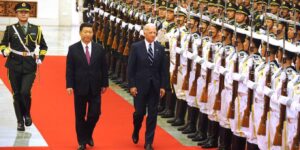





 By

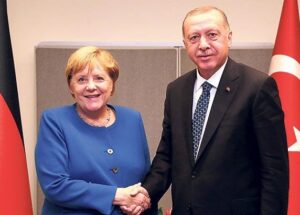

 ανάκαμψης», δημιουργώντας μια σοβαρότατη κοινοτική κρίση η οποία ή θα λήξει με ακόμη έναν συμβιβασμό ή θα μπορούσε να οδηγήσει ακόμα και στην αποπομπή τους από την Ένωση με έναν ιδιόρρυθμο τρόπο, σύμφωνα με το άρθρο του
 ανάκαμψης (750 δισεκατομμύρια). Κάτι που απαιτεί μια ομόφωνη συμφωνία των 27. Αντιτίθενται, στην ουσία, σε ένα σχέδιο ευρωπαϊκού κανονισμού που συνδέει τη μελλοντική καταβολή ευρωπαϊκών επιδοτήσεων με το σεβασμό του κράτους δικαίου. «VETO ή θάνατος : είναι το μότο που συμβολίζει την υπεράσπιση της πολωνικής κυριαρχίας ενάντια στις αντιδημοκρατικές και ιδεολογικές φιλοδοξίες των Ευρωκρατών», τουϊτάρισε ο υφυπουργός Πολωνίας Janusz Kowalski στις αρχές Νοεμβρίου …
 Δεκεμβρίου για να προσπαθήσουν να βρουν μια πολιτική λύση σε ένα πολιτικό πρόβλημα. Η τύχη του σχεδίου ανάκαμψης, που προορίζεται να βοηθήσει τις χώρες που πλήττονται περισσότερο από την πανδημία κορωναϊού να ανακάμψουν, δεν θα οριστικοποιηθεί εάν τα ουγγρικά και πολωνικά κοινοβούλια αρνηθούν να το ψηφίσουν. Αλλά ακόμη κι έτσι, οι συζητήσεις θα συνεχιστούν, καθώς η Ένωση θα μπορεί να συνεχίσει να λειτουργεί με βάση τον προϋπολογισμό του 2020, ο οποίος θα ανανεωθεί παρόμοιος με το 2021 … Αυτό όμως θα καθυστερήσει την εφαρμογή του ταμείου ανάκαμψης που οι 27 ήθελαν να ενεργοποιηθεί πριν από το τέλος του τρέχοντος έτους.
 υφυπουργός Ευρωπαϊκών Υποθέσεων. «Έχουμε κάνει την επιλογή να ψηφίσουμε σήμερα, έτσι ώστε όλοι να αναλάβουν τις ευθύνες τους. Κάθε χώρα έχει συμφέρον για μια ταχεία ανάκαμψη της Ευρώπης. Είμαστε έτοιμοι να συνεχίσουμε τις συζητήσεις τις επόμενες μέρες, χωρίς να παραιτηθούμε από τις αξίες μας ή την ιστορική και ομόφωνη πολιτική συμφωνία που επιτεύχθηκε τον Ιούλιο».
 Το πρόβλημα σε αυτήν την περίπτωση είναι ότι θα πρόκειται για ένα πραγματικό εργοστάσιο αέρα κοπανιστού : διότι θα χρειάζεται την ομοφωνία των Κρατών για κάθε εκταμίευση, χωρίς να υπολογίζουμε για ορισμένες χώρες, όπως τη Γερμανία, όπου θα απαιτείται η έγκριση του κοινοβουλίου τους. Επιπλέον, η επιστροφή δεν θα μπορεί να πραγματοποιείται παρά μέσω του ευρωπαϊκού προϋπολογισμού: δηλαδή κάθε κράτος θα πρέπει να επιστρέψει τα ποσά που έλαβε, πράγμα που σκοτώνει την ίδια την ιδέα ενός κοινού δανείου, ή θα είναι απαραίτητο να δημιουργηθεί ένας ad hoc προϋπολογισμός …
 τρέχουσες συνθήκες, αυτό είναι αληθές. Αλλά τίποτα δεν απαγορεύει τις χώρες που το θέλουν να υπογράψουν μια νέα συνθήκη για τη δημιουργία μιας νέας ΕΕ και να αφήσουν τους αντιρρησίες στην νυν ΕΕ, κενής όμως από το περιεχόμενό της. Αυτή η βάναυση λύση είχε προβλεφθεί τον Ιούνιο του 1992, την επόμενη μέρα από το δανικό «όχι» στη Συνθήκη του Μάαστριχτ, σε περίπτωση που η χώρα δεν θα είχε αλλάξει γνώμη … Αυτό το ουγγρο-πολωνικό βέτο θα μπορούσε συνεπώς να καταλήξει σε μια αποπομπή για τη Βουδαπέστη και τη Βαρσοβία, αυτές που έχουν μια ζωτική ανάγκη του κοινοτικού χρήματος.