Sergey Lavrov: Good afternoon, colleagues.
We have not met for a long time, for understandable reasons, but the pandemic is not the only matter of concern for us. Many other developments are underway around the world, including close to Russia’s borders and other regions where Russia has legitimate interests. This is why I was delighted to meet with you today in this format. I am at your service. Maria Zakharova will moderate the process.
Question: About the Nagorno-Karabkah settlement and Turkey’s role in the region: First, how will Turkish observers work in the ceasefire monitoring centre in Azerbaijan, and have the boundaries of their mobility been set? Second, the heads of the Turkish foreign and defence ministries announced this morning that Turkey would play the same role as Russia in the ceasefire monitoring process. Foreign Minister Mevlut Cavusoglu has proposed that the parliament should be asked to approve the deployment of Turkish troops there. Does Ankara have the right to do this, and how can its latest actions be assessed considering that the joint statement on Nagorno-Karabakh by the leaders of Armenia, Azerbaijan and Russia does not even mention Turkey?
Sergey Lavrov: The mobility of Turkish observers will be limited by the geographic coordinates of the Russian-Turkish monitoring centre in a region of Azerbaijan located away from Nagorno-Karabakh, which is yet to be chosen for the centre. A memorandum to this effect was signed yesterday between the defence ministers of Russia and Turkey. The centre will operate exclusively remotely, using live monitoring and recording systems, such as drones and other technology, to monitor the situation on the ground in Nagorno-Karabakh, primarily on the contact line, and to determine which party violates and which party complies with the terms of the ceasefire and termination of hostilities. The boundaries of the Turkish observers’ mobility will be limited to the premises that are to be set up on the territory of Azerbaijan, not in the zone of the former conflict.
I have read the statements made by Turkish Foreign Minister Mevlut Cavusoglu and Defence Minister Hulusi Akar to the effect that Turkey will be working on the same conditions as Russia. This refers exclusively to the centre that is to be deployed in Azerbaijan, will be stationary and will not conduct any on-site missions. It is true that Russian and Turkish observers and specialists will be working at this centre on equal conditions. But no Turkish peacekeeping units will be deployed in Nagorno-Karabakh. This is clearly stated in the three leaders’ statement you mentioned.
Many people, including in Russia, are misinterpreting the agreements reached. I was astounded by some of these self-professed experts’ deliberations. Speculations also abound in other countries, but the thing to go by is what has been put down on paper following the intensive talks held throughout the week before the announcement of the ceasefire.
Question: Since yesterday, we have been hearing some people in Armenia calling to denounce the agreement reached by Azerbaijan and Armenia with President Putin’s mediation, which can be construed as a provocation fraught with resumption of hostilities. At the same time, a number of speakers are trying to portray the presence of the Russian peacekeepers as a shield. What can you say about this? Do you think this is dangerous, and what may the consequences be like?
Sergey Lavrov: The current phase of the conflict began following extremely emotional, aggressive and confrontational statements that have been piling up for rather a long time. Our preference would have been to have seen the conflict settled a long time ago based on the principles developed by the OSCE Minsk Group co-chairs. President of Azerbaijan Ilham Aliyev mentioned them more than once and emphasised his willingness to comply with the co-chairs’ proposals based on these principles. Had we followed that path, the result would have probably been almost the same with regard to liberating five and then two districts. However, first, it would have been done without bloodshed and, second, it would have been done as part of the final political settlement.
These peaceful proposals and political and diplomatic steps that were shared by everyone without exception at some point came into question lately. It was said that returning five and two districts would fail to provide any reliable security. Emotionally charged, tough and aggressive statements began to pile up on both sides. The atmosphere was heating up. Incidents flared up on the Armenia-Azerbaijan border. They were quickly suppressed, but the desire for a speedy resolution hung in the air.
The OSCE Minsk Group co-chairs made some efforts and came up with a number of appeals. Later, statements were adopted at the level of the foreign ministers of Russia, Azerbaijan and Armenia, which were subsequently reiterated in new documents initiated by the French and then by the Americans as co-chairs. None of this was conducive to ending the bloodshed, since the ceasefire monitoring mechanism that the co-chairs urged to create, failed to materialise.
Extensive talks at the level of the presidents of Russia and Azerbaijan and the prime minister of Armenia over the past week gave these agreements a whole new dimension. President Putin spoke with each of his colleagues several times a day. The efforts focused on coordinating the peacekeeping operation and were crowned with success. At Baku and Yerevan’s request, Russia decided on its membership. The mission is being deployed in Nagorno-Karabakh on the line of contact, while simultaneously securing the Lachin corridor as a transport link between Nagorno-Karabakh and the Republic of Armenia.
We are aware of the protests in Yerevan, and the fact that the opposition is trying to take advantage of these developments. Of course, some of them are really hurt by the current outcome. However, there must be no illusion that the seven districts around Nagorno-Karabakh would forever keep the status they had 45 to 60 days ago.
I believe that the officials in charge had to explain to the people that at some point the settlement will have to be implemented in accordance with the principles outlined by the OSCE Minsk Group co-chairs. These principles have been on the table for many years now. They opened the door to resolving the conflict without any bloodshed or damage to anyone’s security in this region, primarily, the Karabakh Armenians and other ethnic groups living in Nagorno-Karabakh , as well as the countries of the region, namely, Armenia and Azerbaijan.
Unblocking all transport and economic communication routes must play an enormous positive role in this region’s revival, including in the recovery of Armenia’s economy, which was damaged more than others in the wake of severed trade and transport links connecting it with Azerbaijan and Turkey. At the moment, under the agreement that has entered into force, these routes are being restored. The economy should be able to breathe now, and transport connectivity with Armenia’s partners will be restored. I’m confident that everyone will benefit if we act upon our agreements. So far, I see no sign of anyone trying to thwart the agreements.
We are talking with our Armenian colleagues. Yesterday, President Putin spoke with Prime Minister Pashinyan. This morning, I spoke with Foreign Minister of Armenia Zohrab Mnatsakanyan. I’m convinced that the Armenian government is fully aware of its responsibilities and signed these agreements based on the highest interests of its people. I’m convinced that this agreement’s integrity will be preserved, and it will be acted upon. At least, I can see numerous political forces in Armenia which understand what is going on and are drawing proper conclusions.
Question: About paragraphs four and nine of the ceasefire statement. Paragraph four says the peacekeeping contingent of the Russian Federation is there for five years with automatic extension for further five-year periods.
Is the presence of Russian peacekeepers a temporary or an indefinite security guarantee for the people of Nagorno-Karabakh?
Sergey Lavrov: You have quoted the paragraphs that contain an answer to your question. The term is five years. It can be renewed for another five years if, six months before its expiration, neither party proposes to cancel the extension. This is what it says.
I think it is a perfectly reasonable wording. It creates a sufficient horizon for the situation not only to calm down, but also to get on a constructive track, because there is so much that needs to be done in Nagorno-Karabakh. I will just mention the need to handle all the status-related issues, primarily with regard to ensuring the rights of ethnic and religious groups that have lived there and are living there now. All refugees and displaced persons have the right to return to Nagorno-Karabakh, back to their cultural, civilisational and religious roots.
They will need to decide what happens to the numerous religious facilities – churches and mosques – many of which are in a deplorable state. This also applies to sites of worship in other parts of the region. The Armenian side has repeatedly raised the issue of Christian churches in Nakhichevan. Now that we are finally embarking on a peaceful settlement after the cessation of hostilities, all matters concerning the cultural heritage of Armenians, Azerbaijanis and other groups living in these countries should be given special attention, I am sure. It will be one of the most important steps to help restore interethnic peace and harmony. Overall, a lot remains to be done to ensure that the cultural heritage of Armenians and Azerbaijanis, the nations that are very closely and deeply historically connected with Nagorno-Karabakh, will also become a unifying factor in the steps to be taken.
I hope that this five-year period the Russian peacekeeping contingent will stay in the region, which is where we started, will at least lay a solid foundation for further progress in this direction. I would not get ahead of myself as to what will happen after five years. We are fully confident that the parties are interested in the presence of the Russian peacekeepers. We have included a reservation about the possibility of terminating their mandate, but let’s not project anything right now, nor make any predictions. Let’s support the Russian peacekeepers in fulfilling their complicated and important mandate to ensure that peaceful life returns to Karabakh, in every corner of that region.
Question: What is the point of negotiating the extension of the New START treaty with Donald Trump’s administration, which is obviously leaving (and which offered no more than a one-year extension, with preconditions) when the most likely President-elect, Joe Biden, seems to be offering five years without any preconditions?
Sergey Lavrov: When you ask what the point is in doing something now you imply that we are interested in it. We expressed and demonstrated our interest by stating that we need the proposals on the table no more than the Americans do.
I have been reading rather fidgety comments from Washington – primarily, from the depths of the outgoing administration, or Donald Trump’s administration. There is no complete clarity yet about whether it is in fact outgoing. But in any case, it is outgoing because, even if the Republicans get the White House, it will still be a new administration. We have been hearing rather fidgety comments from the depths of the Trump administration, something along the lines of Russia having little time to decide who to sign the treaty with, Donald Trump or Joe Biden – as a gift to the latter. Perhaps Russia still wants to make Donald Trump happy and let him steal this foreign policy triumph from Joe Biden.
All this talk again resembles self-professed experts’ deliberations and a product of the mindset of who wins and who loses. This is not where our interests lie. We are interested in a mutual victory. When it comes to the New START, in the current environment, all sides can win only if the treaty is extended without any preconditions. We proposed this more than a year ago but for some reason the Americans started looking for signs of our weakness and our great interest in extending the treaty at any cost, so they started to make unacceptable demands. Lately, they have been saying that they are ready to extend the treaty, on the condition that not only do we have to freeze all nuclear warheads through political commitments but we also have to recount them and check which category these warheads belong to, and immediately establish control over the facilities producing these warheads.
We have already been in a situation when American inspectors sat outside the checkpoints of our military plants in the 1990s. There is no coming back to this system. Then they also started saying that they were ready to extend but, in addition to exhibiting all our warheads and putting American experts at the checkpoints of the plants where the warheads were produced, we also had to destroy a couple of our new military developments such as Poseidon and Burevestnik. They were ready to discuss the rest but these two, they had to be destroyed. I don’t know if this is more about interest in a real dialogue on strategic stability to ensure the security of their country, their allies and humanity as a whole, or it is just a publicity stunt, inflating one’s worth and trying to look tough.
Considering the current commotion in the United States caused by the ongoing vote recount, lawsuits and other perturbation, we cannot expect any coherent proposals from either Trump’s people or Joe Biden’s team – I mean proposals that would be realistic rather than riddled with these temporary domestic political considerations. So we will wait until the dust settles.
President Vladimir Putin already said that we need this treaty no more than the Americans do. We would like to extend it. We put everything that can be done for that on the table. Now it’s up to the Americans. If their answer is no, we can live without this treaty. We have everything we need to ensure our security. This was once again convincingly reiterated during a recent series of meetings in Sochi between the Russian President, the military and representatives of the defence industry.
Question: US Secretary of State Mike Pompeo has had several meetings on Nagorno-Karabakh, but to no avail. Can Washington play a constructive role in this process, and do you expect any foreign policy changes regarding this issue from the Biden administration?
Sergey Lavrov: You said that the meeting US Secretary of State Mike Pompeo has held was to no avail. I wouldn’t say that it was not successful. Since the beginning of the hostilities, the co-chairs have taken efforts [to stop the fighting], including at the highest level. The presidents of Russia, the United States and France adopted a statement urging the parties to stop the hostilities and to start the process of political settlement based on the proposals made by the co-chairs during the past few years. That statement did not produce any results; the conflicting parties refused to listen. After that, the foreign ministers of Russia, Azerbaijan and Armenia adopted a statement in Moscow, which called for the termination of hostilities and included a commitment of Yerevan and Baku to stop the hostilities and to establish a verification mechanism. It has not produced any results either. Then the President of France put forth an initiative. One more statement was coordinated remotely in support of the previous moves. And ultimately there was the US initiative for a meeting to which the foreign ministers of Azerbaijan and Armenia were invited.
Taken together, this has created a critical mass, which made it possible to translate the will of the international community, put forth in the numerous statements of the co-chairs, into practical actions taken by the presidents of Russia and Azerbaijan and the prime minister of Armenia in the last few days before November 10.
I had a telephone conversation with my French colleague yesterday. My subordinates spoke with our American partners. We sensed a degree of disappointment on their part because we had not updated them on the details of the process. First of all, we pointed out openly a number of times (President Putin mentioned this) that we were working towards a ceasefire based on the co-chairs’ positions. Second, when it comes to a more concrete and detailed updating, the talks on the November 9 statement made in Moscow went on for several days round the clock; we had several telephone conversations every day. Therefore, if what they mean is that we should have briefed our American and French partners after every such conversation, this was physically impossible. I am sure that the explanations we have ultimately provided were accepted in the right spirit. I have concluded from my telephone conversation with the French foreign minister yesterday that this is so.
By the way, we have proposed that the UN Security Council should welcome the ceasefire agreements, given that they are in keeping with the co-chairs’ initiatives. We do not want to put a distance between us and our American and French colleagues in any way. Moreover, we have invited them to Moscow and they will come within a few days to hold a detailed discussion on their possible assistance to the implementation of the agreements, especially in terms of rebuilding peaceful life in Nagorno-Karabakh, ensuring the coexistence of ethnic and religious groups, restoring cultural facilities and religious objects, and ensuring their safe functioning based on mutual respect. A crucial role in this respect can be played by the co-chairs and UN bodies, primarily UNESCO.
We have launched preliminary discussions with our colleagues at other specialised UN agencies, in particular, the UN Refugee Agency and the International Committee of the Red Cross, which is not a UN body but is closely cooperating with all countries on international humanitarian matters. The ICRC has a mandate for operating in Armenia and Azerbaijan, including in Nagorno-Karabakh. This mandate was approved years ago. We have spoken with ICRC leadership in Geneva. We expect ICRC President Peter Maurer to come to Moscow next week. We will talk about how the ICRC can resume its efforts in the new conditions to promote the exchange of the dead, prisoners of war, hostages and other detainees. In other words, the co-chairs still have a great role to play, as the foreign minister of Armenia has reaffirmed in a telephone conversation today. Yesterday I spoke by telephone with the foreign minister of Azerbaijan, who also reaffirmed his country’s interest in the continued cooperation of the co-chairs.
Question: Do you expect any changes in the Biden administration’s foreign policy, not just in relation to Nagorno-Karabakh, but in general?
Sergey Lavrov: You are aware, of course, that diplomats should project certain developments and potential changes in their partners’ approaches to various problems in the international arena. However, I think that speculating on this matter at this point is not a very good idea. Of course, we are following the developments in the United States which is a major power. Much, but not everything, in the international arena is still depending on it. We can only follow the statements that are being made and take note of the names that are mentioned as potential new participants in the US foreign policy processes. Names are being mentioned by President Trump’s administration as well. Joe Biden, too, is mentioning names of the people he would like to have on his team.
Judging by the first signs of what the US foreign policy may be like in the event Joe Biden gets inaugurated, it appears that it will follow the line promoted by Barack Obama, which is understandable, as Biden was his vice-president. Primarily, it concerns the climate, returning to the Paris Agreement, and the Iranian nuclear programme. However, it’s trickier than it looks. As we know from numerous statements, even if the Democratic administration decides to return to the JCPOA it will not do so in a straightforward manner, but will try to alter the agreement in its favour in order to make it lucrative and intrusive towards Iran. I’m not sure how much promise this approach holds, and I’m not going to speculate on it. I’m simply designating the things that we will need to deal with after the vote counting campaign is finally over in the United States.
I hope that the United States will adopt a more constructive approach to the WTO regardless of the outcome of the elections, and that Washington will not block the WTO activities or try to destroy or replace it with ad hoc bilateral agreements with its partners around the world which will not be connected by any logic other than the desire to derive maximum benefit for the United States. In general, Europeans are expecting to see greater versatility in Washington’s approaches after this saga is over. We will wait and see.
Our political scientists are not expecting any revolutionary changes on the Russian track, and I mostly agree with them. America is deeply divided as we can see from the presidential vote. Clearly, responsible politicians must look for ways to overcome this divide and promote unifying ideas that will unite the American people. Here, too, many observers believe that the attitude towards Russia is something that may serve as common ground for the Republicans and the Democrats in order for them to unite and address common issues. Over the past four years, beginning with the last few months of Obama’s presidency, Russophobia in American society has become so widespread as to become part of political culture. It will be a shame to see the United States trying to reunite as a nation based on Russophobia. But we’ll see.
Question: Protests have been going on in Belarus for many months now. Not much can be heard about the constitutional reform and it’s hard to objectively cover the situation given that the Belarusian Foreign Ministry has not yet issued new accreditations to the applicants. Will the Russian Foreign Ministry assist Russian journalists in this matter?
Sergey Lavrov: We will, of course, assist our journalists. We are planning to hold a meeting of the joint collegium of the foreign ministries of Russia and Belarus this month. We will definitely touch upon this matter there. But even without waiting for the collegium, we are posing these questions to our partners as part of our daily activities. Frankly, I haven’t heard about any Russian journalists having any problem in this regard recently. I’m sure Director of the Information and Press Department Maria Zakharova is in the loop, and she will help me out, if need be. I will definitely get involved if I have to. I see no reason why Russian journalists would not receive accreditation in time, as, for that matter, the vast majority of other journalists who want to work in Belarus, with the exception of those who are directly involved in the assignments seeking to undermine the political situation in the capital and other cities of Belarus. We have witnessed such cases, and the Belarusian authorities have mentioned them.
Speaking of the situation in general, we are concerned that the unrest continues, but we are satisfied with the fact that the protests are fading away. The number of the unauthorised rallies’ participants is waning. Last Sunday, there were anywhere from 3,000 to 5,000 protesters, which is well below the numbers we’ve seen before when over 100,000 people took to the streets. Clearly, this decrease reflects understanding by the people who took to the streets and wanted to be heard that the situation needs to be calmed down and a constructive dialogue started, especially since the authorities have come up with quite actionable proposals. They remain on the table, I mean the constitutional reform.
But fewer numbers of sincere protesters who want a better life and a dialogue with the authorities and want to be heard is offset by the aggressive behaviour of the people who are now taking to the streets. Clearly, this is a different crowd that wants to provoke law enforcement agencies into having to use force. Young people, among them many criminals, are taking to the streets armed with cobblestones, iron bars and Molotov cocktails. They are clearly looking for aggressive action.
This is a provocation, an attempt to prevent the situation from evolving into a political dialogue, which is what President Lukashenko is calling for when he promotes the constitutional reform initiative. As far as I understand, it is being actively discussed now. I cannot say that it has been put on hold. There’s a schedule and there’s content that is being explained to the people: limiting the powers of the president of Belarus and redistributing some of the presidential responsibilities between the legislative authority, the government and regional authorities. The possibility of reforming the parliament is being discussed so that it becomes unicameral and be elected either by a mixed or proportional system. All this will be submitted to the Belarusian People’s Assembly for consideration. The dates have already been set for the next month, or January, after which the draft new constitution will be submitted to a national referendum.
We are making every effort to support this process and are operating on the premise that broad groups of society, trade unions, labour collectives, students, youth organisations, non-governmental associations, and political parties should be involved in drafting the constitutional amendments and a new constitution. Healthy opposition forces should be involved in this as well.
Unfortunately, the opposition, which is now operating from outside the country, from Vilnius and Warsaw, takes a different position. They do not want any dialogue. They are not offering any constructive counter-programme, except for replacing President of Belarus Alexander Lukashenko. They demand his resignation and new presidential elections. It is very difficult to estimate the potential programme the opposition leaders might propose for that hypothetical election they are demanding. Judging by their slogans, it seems they want to return to the period in their history when Belarus was not an independent country, not an independent republic, but part of other states. Well, the Belarusian people should probably decide themselves how they feel about those leaders trying to determine their future like this.
As you know, a Coordination Council has been set up in Vilnius, and National Anti-Crisis Management in Warsaw. These people are received in European capitals, in European parliamentary agencies. I don’t think our Western colleagues are ignorant of what they are doing. And yet, they declare for all to hear that it is not an attempt to change the government in Minsk, it is not an attempt to drive a wedge between Belarus and the Russian Federation, yet all these good intentions are not confirmed by their actions. The Belarusian opposition is actually supported financially and is being incited to adopt an uncompromising position and demand a change of regime, to go on indefinite strikes, which failed, and many other things brought from the outside to maintain this confrontational atmosphere.
The United States, Canada and the European Union have announced personal sanctions against President of Belarus Alexander Lukashenko and his closest allies on his administration. We know that there is more than just financing of protests, including those involving thugs with criminal backgrounds and attempts to carry out force provocations. There are messages distributed on social media, also from Warsaw and Vilnius, which contain instructions, and we have seen them. Those are instructions on how to make incendiary mixtures and explosives – the Molotov cocktails and much more. Therefore, our position is very simple. Stop interfering in the internal affairs of Belarus. All Belarusians, including the opposition, need to be encouraged to participate in a political settlement process through constitutional reform. Playing the confrontational card in Belarus on international platforms is a destructive and malicious idea.
As you know, the OSCE has activated the so-called Moscow Mechanism, created in 1990, a period when those who wanted the collapse of the Soviet Union were quite euphoric. This Moscow Mechanism was now used to prepare a remote report (it was also considered by the European Parliament), and use it as a basis for a resolution calling for comprehensive assistance to the Belarusian opposition and setting up an aid fund to be transferred to the people of Belarus as soon as the current regime is overthrown. The resolution was approved. This is a very harmful undertaking.
Incidentally, the UN Human Rights Council has the Universal Periodic Review process to evaluate the human rights situation in each member state. It so happens that just a week ago, it was the turn of Belarus to be reviewed after about a year and a half of preparations. The results of the review of Belarus’s 18-month effort to strengthen human rights were appreciated at the HRC. I am not saying that everything is so good there. No country has a perfect human rights record. However, it is not a black and white picture, but it is much more complex. A reasonable politician who wants all peoples to live in accordance with their interests and decide their future independently should help create the right conditions for this. And those who want to play geopolitical games will cherish and nurture oppositionists, invite them to foreign bases and give them a platform to direct and manage processes in their country from there. Belarus’s experience is very sad. I think even the benefactors of the Belarusian protests realise the idea is hopeless, but unfortunately, they cannot stop.
Question: In 2016, the outgoing US President Barack Obama imposed new sanctions against Russia and expelled Russian diplomats at the very end of his term. Is Moscow expecting any attempts from Donald Trump to take similar steps and shut the door on the prospects of recovery in the relations between Moscow and Washington? And what could they be? New sanctions against Russia or Nord Stream 2, more steps to hinder future agreements on strategic stability, or something else?
Sergey Lavrov: You don’t have to wait for Donald Trump’s administration to leave office for new sanctions against Russia to be imposed. We recently cited statistics for Donald Trump’s presidential term in Washington. The sanctions against Russia have been announced 46 times. There have been sanctions against certain sectors, against legal entities and individuals in the Russian Federation. This is an absolute record for the scope of anti-Russian sanctions imposed over a four-year period. I don’t know why we need to wait for the end of the term. At any rate, Donald Trump’s administration didn’t hesitate to introduce those sanctions without any reason whatsoever. This is not a question for us. We are already used to having to rely only on ourselves.
There is this term: import substitution. Sometimes it gets a one-dimensional interpretation and prompts criticism because it is not always possible to provide a good replacement for a specific foreign product. In some cases it takes a lot of time and in other cases it is better to hope for a better foreign alternative. Sometimes people don’t want to create something of their own. But the same import substitution is necessary in a broader, global and geopolitical sense.
We can no longer structure our policy, our plans with respect to trade and energy, and our general communication with the outside world and primarily the West on the assumption that our Western partners will respect and deliver on all our agreements with them unequivocally. The West has proved that it is completely unreliable and unable to negotiate. It proved that it is often tempted to play geopolitical games and put politics before the economy when it ignored the just developments in Crimea after the coup in Ukraine, when the Russian-speaking population, Russians refused to accept its results. I have already spoken about this. That was why the West imposed sanctions. The West exhibited its complete helplessness when it failed to prevent that coup although the coup scrapped the agreement that had been negotiated by the EU. There have been many examples of the West simply working its frustration off on us for its own huge gaffes and failures in its policies. We have to get used to this.
Now there are the Skripals and Navalny, which is a total outrage. I think that the actions of our German and other Western partners have been completely unacceptable. This is an issue for a separate conversation. We can see them reaching for the sanctions baton at the slightest pretext while the actual reason for our disagreements is the fact that our Western partners are not willing to fulfil their own obligations. Be it the obligations on Ukraine, where they completely failed their mission in February 2014. Be it the clarification that we are demanding from them on the Skripals and Navalny, as well as on many other accusations they have levelled at us. We have to get used to substituting imports not only when it comes to cheese, truffles and agricultural products but also when it comes to everything that we need for a sustainable secure, steady and advanced development in all areas without exception.
Question: From the beginning of hostilities in Nagorno-Karabakh, Turkey has been actively involved in the diplomatic efforts to settle the conflict. How would you assess Turkey’s contribution to the implementation of the agreement between Azerbaijan and Armenia on the termination of hostilities in Nagorno-Karabakh?
Sergey Lavrov: Our assessments have already been provided. President Putin spoke with President of Turkey Recep Tayyip Erdogan on many occasions during our efforts to ensure a ceasefire and deploy peacekeeping forces. President Erdogan expressed support for Russia’s actions on the agreement that had been reached.
We have coordinated with our Turkish colleagues the establishment of a monitoring centre on the territory of Azerbaijan away from the conflict zone. Technology will be used there for remote monitoring of the situation, primarily in the air and also on the ground in Nagorno-Karabakh, so that Russia and Turkey can use their influence on the parties, if necessary, to correct violations (I hope there will be none). I would like to point out once again that this will be done on the territory set aside for the joint monitoring centre. Its work will not be connected in any way to the peacekeeping activities in the conflict zone, which should be taken into account by everyone. I know that various proposals have been advanced, but they should be set aside so that we can do practical work. It must be based on the agreements on the operations inside the monitoring centre reached by the defence ministers of Russia and Turkey yesterday.
We have heard a number of statements bordering on euphoria in some cases and hysteria in others. Some say that Russia has lost the Caucasus and that next it will lose Crimea. There are enough such couch experts in Russia, as well as in Turkey and several other countries. Turkish newspapers claim that Ankara has let Russia outsmart it and that Russia has defeated everyone. Turkey had allegedly hoped for a much better effect from its assistance to Azerbaijan, and has won on the battlefield while Russia has won at the negotiating table. I have read these items in the Turkish press. You probably know about this as well.
I would like to say again that a similar wave of criticism has risen in the Russian liberal press and social media, which have accused Russia of betrayal (we have been accused of all sorts of sins). This is backseat driving. It does not deserve any regard.
It has become fashionable to use anatomic references in politics. As for Armenia, back in the Soviet era there were jokes about the “Armenian Radio” and its quick-witted answers to tricky questions. One question was: What is the difference between parts of the body and life? The answer was, Life is much harder. All these deliberations about who lost more and who could have got more out of this situation are from the league of zero-sum politics: I defeated you, so I’m a tough guy; I humiliated you or you humiliated me and I won’t allow that. This is not our kind of politics.
We want peace around the world, especially on our borders without any simmering conflicts. It has been alleged that Russia is not interested in the settlement of the Nagorno-Karabakh conflict, and that it has been drawing out a solution all these years. This is not true. Russia led the efforts towards a Nagorno-Karabakh settlement, as you can see from the famous Kazan document. It could have resulted in the same outcome as we have reached on the ground now, but without the bloodshed. Unfortunately, this did not happen, but not through our fault. After that we proposed a two-phased approach, which the parties initially accepted quite enthusiastically. But later they started asking questions: Why should anyone cede five districts or two districts? And how will their safety be ensured? The idea fell through and the settlement was postponed for an indefinite period, but we were not to blame either.
In addition to having good intentions, we also made practical proposals. We have coordinated a settlement now (regrettably, after a period of hostilities and loss of life on both sides), just as Russia proposed. Of course, history is a bad teacher, but it is a shame that the result achieved through bloodshed could have been brought about peacefully.
The Russian Federation is not interested in any frozen conflicts in Nagorno-Karabakh, Transnistria or any other part of the former Soviet Union. Those who make such insinuations are unscrupulous people. Another reason is that they do not have the full information or a desire to get down to the bottom of the matter when it comes to Russia’s position and initiatives.
Russia and Turkey have common tasks, as I have said: to use technical means deployed on the territory of Azerbaijan to monitor the situation in the zone of the peacekeeping operation, which will be conducted exclusively by Russian troops. There is no ambiguity regarding this. Our Turkish partners are well aware of this. We will continue to collaborate with them, including in other areas of global politics, first of all in Syria.
Question: I would like to return to the United States and the vote counting process the country is going through. Many world leaders have already congratulated Joe Biden on winning the presidential election. As far as we know, Russian President Vladimir Putin has not called America on this score yet. Is Russia concerned about reports of violations in the US election, held without international observers? It is quite easy to imagine that in a similar situation, if that happened in any other country, the State Department would already claim the elections are illegitimate. Is Russia going to act in a similar manner and, for example, insist on a full count, and maybe even a recount of the votes?
Sergey Lavrov: If you have heard the statement made by US Secretary of State Mike Pompeo, the State Department has not yet recognised the US election as legitimate. Mike Pompeo has asked to wait until the counting process is completed.
As for Russia’s approach, we have said more than once that we respect the right of the American people to make decisions about their future themselves. Their electoral system is probably the most archaic of all now in existence in any major country. I have pointed this out many times when we had friendly conversations with my colleagues, Secretaries of State, predecessors of Mike Pompeo. I remember discussing election results with Condoleezza Rice. She began to list her objections to our election and our electoral system. I gave her an example where a certain president came to power in the United States – he had fewer votes, but with that electoral system, he still made it into the White House through a rather crooked logic. She said they knew about that flaw in the system, but that was their problem, they were perfectly aware of it and would handle it themselves. “Please, don’t worry,” she asked me. I really do not want the Americans to lose sleep over our problems at least, problems they point out to our country. I would also like them to worry less about similar problems in other countries.
Each country has its own traditions. If the Americans are willing to live with a tradition, which significantly distorts the popular will, that is their right. If they are happy that way, and have everything under control (apparently, not everything now), how can we tell them what to do? Let them figure out these matters by themselves.
As for congratulations, I wonder why everyone is so concerned about this. Congratulatory messages are usually sent after the election results are officially announced. This has not happened in the United States yet. They have a General Services Administration that is formally empowered to make such announcements. For now, they are refraining. All the congratulations offered so far are based, as we know, on CNN or NBC counts, on social media, and primarily the leading American media. Whoever has a tradition to offer state congratulations on these grounds, we cannot do anything about that either. We have a slightly different approach. Congratulations can be sent before the results are officially announced when there is no dispute, when the other side recognises the victory of the opponent. This was actually the case in 2016, when Hillary Clinton recognised Donald Trump’s victory. Then no one had any questions. Now questions still remain. We need to wait for the official announcement. Moreover, as I understand it, the United States has a fairly clear procedure for how everything should be done. The Electors will meet on December 14 to cast their votes. They are not meeting in the same room, but will meet separately in the capital of each state. In some states, electors are absolutely required to vote as the majority of voters in their precinct. In other states, electors are free to put any name on their ballot papers, not necessarily the candidate who ran for president in that particular region of the United States. On January 6, 2021, the US Congress will meet and listen to the electors’ report. If there are any doubts left when approving the electors’ votes for each state, the presidential and vice-presidential elections will follow a different procedure. The President is then elected by Congress, but not by individual votes from members of the House of Representatives. Each state has one vote in Congress for this purpose. There are 50 votes. How they will be distributed is a big question, because the distribution of votes by state (Democrats vs Republicans) is not entirely proportional to the majority that Democrats have in the House of Representatives. The president will be elected there. The Vice President will be elected by the Senate.
I am now explaining the steps they will need to take if there is no clarity at the Electoral College stage, if there is no clarity in Congress, etc. In any case, the inauguration ceremony should be held on January 20, 2021. We’ll know something by then.
I would like to add, since we are discussing the congratulations issue, that Russia and, as of this moment, China are not the only ones – Mexico has not sent them yet either. The Mexican President has clearly stated that he will be guided by the official announcement of the result.
I would rather not try to dig out much here from some conspiracy theory perspective. I would say, this is normal polite practice. Those who think it all right to send congratulations before the official results are announced, can do so, it’s up to them. We remember how, back in 2016, many European leaders sent congratulations to the losing candidate, and had to hastily withdraw them later. I see no reason for speculation here.
Question: Is Russia ready, in cooperation with Turkey, to make efforts for a more efficient implementation of the ceasefire agreement in Libya – specifically, when it comes to withdrawing foreign militants out from Sirte and Al Jufra? And, in your opinion, how does the situation on the ground in Libya correlate with holding elections there? Is it possible to hold them in the foreseeable future?
Libyans are currently boosting oil production. It has been reported that we helped with lifting the embargo on the Libyan oil sector. Is Russia concerned about the uncontrolled growth of oil production in Libya?
Sergey Lavrov: We should not forget about the origins of the Libyan crisis. It was a violent aggression by NATO, which bombed Libya and destroyed Libya’s statehood. All that gave rise to hosts of terrorists and resulted in arms smuggling and drug trafficking to Africa, the south and the north, and a massive illegal migration that is strangling Europe. Despite the fact that this problem was created by somebody else, we are, of course, interested in preventing it from continuing forever and becoming a never-healing boil. Therefore, from the very early stages after the NATO aggression was finished, when Libya was divided into several parts and it was already a big question whether it will ever be possible to put together this once trouble-free and prosperous country, we started working on creating conditions for resuming some kind of intra-Libyan dialogue. We worked with all political forces in Libya without exception. At the time, we were probably the only country that was working on this because all the other external players picked their so-called ‘charges’ and started to support them. Some favoured the government set up in Tripoli; others only dealt with Tobruk and Benghazi, where the Libyan National Army was based; still others were in contact with smaller but rather aggressive militant groups that controlled small territories acting there as if they were landlords.
Libya was in a dire state. In 2015, the Skhirat agreement was signed and, for the first time since the NATO aggression, a balance was established when the recognised government was the government based in Tripoli and the recognised parliament was the House of Representatives based in Tobruk. A balanced system was created: the government operated with the parliament’s support. Unfortunately, that did not last long, due to disagreements between these two camps. Then the hostilities resumed, and there were many attempts to hold various meetings. France held a conference several years ago and participants even set a specific date for the general election in Libya. Italy organised a similar event in Palermo; there were meetings in the UAE. All that resembled attempts of putting a brave face on the defeat because appeals to set specific election dates remained unsupported with actions. Recently, thanks to Russia’s and Turkey’s deeper involvement, among other things, and considering that our countries had special links (Ankara had links with the Government of National Accord in Tripoli and we had close links with both Tripoli, Tobruk and other players in the Libyan field), we have been trying to use our influence to motivate the parties to the conflict to reach a compromise. The Berlin Conference in January 2020 became an important step resulting in the adoption of a UN Security Council resolution.
We made a decisive contribution to the decision to invite the Libyan parties to the Berlin Conference. Initially, it was not Germany’s plan. The Germans wanted to organise yet another get-together of external players, discuss some principles in that circle and then present the Libyans with fait accompli. Moreover, they did not even want to invite Libya’s neighbours. During the preparations, we insisted that Berlin invite the Libyan parties (Fayez al-Sarraj and Khalifa Haftar) as well as Libya’s neighbours, which Germany initially did not want to do. Although, with the involvement of Libya and its neighbours, the conference resulted in the adoption of a document, there were still doubts about whether this document would be received well on the ground. Not coincidentally, UN Secretary-General’s Special Representative for Libya Ghassan Salame resigned immediately after the Berlin Conference. He probably realised that it was wrong to try and impose decisions from the outside without listening to the Libyan parties themselves. Eventually, it came down to the approach that Russia had promoted from the very beginning. Seventy-five delegates from the three historical regions of Libya – Tripolitania, Cyrenaica and Fezzan (25 representatives from each region) – gathered in Tunisia with the support of the United Nations. They must develop a roadmap to reach the final political settlement and to facilitate political stability in their country, that is, to draft a constitution, establish a presidential council with an equal number of representatives from the three Libyan regions, form a government and elect a parliament. The entire political process which they are discussing right now is planned out for 18 to 24 months. We hope very much that this work will be a success and, most importantly, that the outcome of this work will be complied with rather than remain just a piece of paper after yet another conference.
Now, as regards oil. Indeed, in September, we invited the Libyan parties to Moscow in order to help them reach an agreement on resuming oil trade. The agreement was reached. As they resume the exports, there are several legal and property issues that remain to be regulated. Libya’s National Oil Corporation, the Libyan government and the parliament are all currently dealing with this. As for the impact of this process on global oil markets, prices, and energy carriers, doubtless, there is such an impact. The oil price is currently going up. At any rate, when we speak about the need to regulate the oil market, we do not mean that it should be done by discriminating against a specific hydrocarbons producer.
Question: Mr Lavrov, may I ask you to return once again to the topic of Nagorno-Karabakh and to clarify the status of Stepanakert and the others territories that remain under the control of the Armenian side. When and in what format will there be a discussion of these territories’ status, or will there be a discussion at all, given that Azerbaijan says the Nagorno-Karabakh issue has been resolved?
Sergey Lavrov: I have already spoken about this. The status of Nagorno-Karabakh is probably the main focus of the political process at the moment, because the reinstatement of Azerbaijan’s control over five regions and then two more regions is already underway. Baku is creating temporary administrations there and is going to restore a peaceful life. Let us not forget that the issues of returning refugees and internally displaced persons that fled during the war and afterwards to their homes in Nagorno-Karabakh and adjacent regions, have yet to be resolved.
The status of Nagorno-Karabakh has not been determined. President of Azerbaijan Ilham Aliyev spoke about this. We assume that this status will be determined depending on what actions we must all take to help restore ethnic and religious harmony in Nagorno-Karabakh, as it had been for many years until the war began after the collapse of the Soviet Union. That entailed the disastrous consequences we are now dealing with. Its status can be determined only after it becomes clear what rights will be granted to all those who lived in Nagorno-Karabakh and are entitled to return to that region, as well as to those who have lived there all the time. This applies to both Azerbaijanis and Armenians.
I have already spoken about the cultural heritage, about religious sites, about the need to restore trust, interethnic and inter-religious peace. To do this, the local churches and mosques need to be restored, and everyday life needs to be arranged the way it was when representatives of all ethnic groups and religions lived there side by side. This is very difficult to do. So we had better not set any artificial deadlines. We can see that Azerbaijani refugees will have the opportunity to return to their homes in southern Nagorno-Karabakh, including the Shusha region. Together with our peacekeepers, we will try to ensure harmony in that area as well. Our Azerbaijani and Armenian colleagues are interested in this. Of course, we will involve UNESCO in restoring the local cultural heritage sites and ensuring respect for them. We will involve the International Committee of the Red Cross and the Office of the United Nations High Commissioner for Refugees to help people return back to their homes, rebuild them and establish a normal life. When all this happens, I have no doubt that the status problem will lose its urgency and will be resolved very, very quickly and smoothly.
Question: My colleagues have already raised the question of the Minsk Group’s role and, additionally, the role of Turkey. You explained why the Minsk Group is still playing a role in the future settlement of the conflict. But do you think that Ankara, so to speak, is also joining as a co-chair of the group?
Sergey Lavrov: No, Ankara is not joining as a co-chair of the group. You were right to say that the OSCE Minsk Group continues to play a role. The Minsk Group comprises about ten countries (including Turkey). It discusses Nagorno-Karabakh, periodically hears reports made by its co-chairs, and each of its members has every right to express their point of view and make proposals. The co-chairs, as in any group, should take into account the positions of all members of the group that has granted them the appropriate powers. No, there are no plans to add anyone to the three co-chairs – Russia, the US and France. As I mentioned, we are maintaining constant contact. Yesterday I spoke with French Foreign Minister Jean-Yves Le Drian, and my staff are in contact with US representatives who work on Nagorno-Karabakh as part of their co-chairmanship. Next week, we are expecting the French and American co-chairs in Moscow, where we will inform them in detail about how we are deploying the peacekeeping force, and we will probably consult with them on what I just said – how we could help rebuild a peaceful life, taking into account the rights of all ethnic and religious communities in and around Nagorno-Karabakh.
Question: Berlin is dissatisfied with cooperation in the Tiergarten murder, and Moscow is dissatisfied with collaboration in the so-called Navalny case. What is the effect of the Russia-Germany standoff on political processes, the situation in Ukraine (the Normandy format summit) and other issues, including the reopening of borders between Russia and the EU?
Sergey Lavrov: As for the murder in the Tiergarten park, I don’t know why the Germans are dissatisfied. A trial is underway. As far as I am aware, lawyers are working, and witnesses are being interviewed. We would like to know if there are any witnesses to the murder, if anyone really witnessed it. So far, we have no proof of this. Therefore, there could be more questions for the German investigators. I do not see any reason for the Germans’ complaints, because we are doing everything we can. There is an individual, who has been charged with the murder, but there is no proof whatsoever of his connection to the Russian state. There were several unsubstantiated accusations, but it is not us but those who have advanced them who must substantiate them. This individual has lawyers, who have been asking questions, including about what exactly the witnesses saw and what they didn’t see, but they have not received any answers so far.
As for Navalny, there are reasons for serious concern, indeed, for saying that the actions of our German colleagues are absolutely unacceptable and contradict their international commitments. I will not go into detail, because this story has been covered during Foreign Ministry briefings and in the media, and all the details are well known. The hardest fact to which our German colleagues should respond is that, contrary to all the hue and cry, the patient Navalny was transferred to Germany within less than two days, as soon as our doctors improved his condition to a degree where they could sign a document allowing him to be transported to Germany. A German plane was immediately allowed to enter the country to evacuate him. There are questions about who was on board apart from the doctors. This is an interesting subject for discussion as well, but it concerns not so much the medical side of the case as those who could be involved in it outside the medical sphere. Navalny was immediately delivered to the Charité clinic. Just like the Omsk doctors, the Charité staff found no chemical warfare agents in his samples, but they were detected later by the Bundeswehr clinic.
When we asked to be shown the results of these tests, we were told that we would not be given anything because otherwise we would learn the “secrets” that enable the Germans to establish the presence of chemical agents in various substances. Are they serious? I would not like to describe them as kindergarten staff, because the Germans are much smarter than that. This means that their unwillingness to give us anything is a conscious position and a provocation. Instead of responding to the five requests submitted by our Prosecutor General’s Office in accordance with the European Convention on Mutual Assistance in Criminal Matters, under which the Germans should have told us what substances they had found in Navalny’s biomaterials, they said that they might consider providing this information on the condition that a criminal investigation was initiated in Russia. That is, not that they would provide the information, but would consider doing so. But we can initiate criminal proceedings only if we see in the materials we have requested the substances that were not found in Omsk. I believe that disregarding Russian laws and demanding that we comply with their wishes by violating our legislation is indecent and unethical for Germany or any other country, no matter what it thinks or imagines about itself.
Our German colleagues think that they have absolutely no faults and that their word must be trusted for granted, without any facts. They have said that the Navalny case is no longer a Russian-German matter but an issue of international security. This is why they have moved it to the OPCW. Then the OPCW refused to tell us the truth for a long time. It took it time to admit that Germany had requested its assistance. Ultimately, it turned out that OPCW experts had been sent to Berlin to collect the samples, which they inspected and then compiled a report. When we asked them to show it to us, they replied that we should ask Berlin, which had ordered the analysis. Berlin directs us to The Hague, which sends us back to Berlin. What is this? Is this diplomatically or humanly decent? Quite to the contrary, as I see it. Eventually, the OPCW report was published, but all the chemical formulas in it were crossed out with black marker and hence impossible to read, and we know that the devil is in the details.
German Foreign Minister Heiko Maas called me on November 5. I explained that it is completely unacceptable for Berlin to refuse to show us its findings but at the same time accuse us of all deadly sins. Germany and France were the main initiators of discussing sanctions against Russia by the EU and NATO over an incident that was never proved by anybody, over “something that took place on the territory of the Russian Federation”. We have reasons to believe that everything that happened to Navalny with respect to the warfare agents that ended up in his body may have happened in Germany or onboard the plane which transported him to the Charite hospital. Chemical warfare agent is deadly. Just like the Skripals, this man is apparently feeling fine although nobody has seen him and the Germans have not permitted any consular visits.
If you remember the versions suggested at the beginning, when Navalny was on his way to Omsk, the entire world was shouting that his tea at the Tomsk airport had been poisoned. Everybody who sat with him in the bar, who poured the tea and served it were immediately investigated but nothing was found. Soon after that, another version emerged, involving a bottle that his staff (who are now in hiding to avoid any contact with the investigation) stole from the hotel room, where they broke illegally and in violation of the hotel’s rules. The bottle was taken to Germany. Nobody showed it to us. However, they claim that conclusive evidence was found on this bottle and that we will have to answer for it. Then, the other day Navalny himself said that it had not been the tea or the bottle but the poison had been on his clothes. If he was at the Charite hospital, this whole situation is starting to look like a charade. The real motives of our German partners are difficult for me to understand.
I can repeat what I told Heiko Maas. I think it is no longer a secret to anybody. We see that Germany has taken the leading role in the new escalation in relations with Russia. We are concerned about that, also because of the global role that Germany has played and, apparently, intends to play again in Europe.
We have huge objections to the actions of our German and French colleagues with respect to Ukraine. Hiding behind the EU’s five principles, stating that everything will be fine with Russia as soon as it fulfils the Minsk agreements, is laced with diplomatic and political dishonesty. The statements by Ukrainian officials must receive some kind of reaction at least from Paris and Berlin, co-authors of the Minsk agreements in the Normandy format. President of Ukraine Vladimir Zelensky claims that the border needs to be taken under control first and then they will sort it out themselves, without any Minsk agreements. He and Deputy Prime Minister Alexey Reznikov say that the Minsk agreements are outdated, long expired and everything must be done from scratch.
Leonid Kravchuk, appointed as the chief negotiator from Ukraine in the Contact Group (which is where everything should be decided), recently circulated a new initiative, already described by our negotiators as completely undermining the Minsk Agreements and pursuing one single goal – to do nothing at any cost, but to hold a new Normandy summit. Apparently, Vladimir Zelensky just likes to talk to world leaders, and to give his electorate and possibly his admirers in the West the impression that he is actually capable of doing something and can make a difference. But this is in fact replacing the substance with external effects. We have been there before – with Petr Poroshenko, and now with Zelensky. Unfortunately, we are not seeing any changes. Before they condone this approach – to undermine the Minsk Agreements – Berlin and Paris should speak out and demand that the President of Ukraine and his team respect what was said at the December 2019 Normandy format summit in Paris: there is no alternative to the Minsk Agreements. Until this is done, we will assume that Germany and France are indulging in the destruction of what they have created.
This will be the second case of betrayal of their own agreements. The first was in February 2014, when Berlin, Paris and Warsaw witnessed and signed a settlement agreement between Viktor Yanukovich and the opposition. The next morning, the opposition spat in their faces and tore up the signed papers, and the EU representatives just swallowed that, accepting an illegal seizure of power through an anti-constitutional armed coup d’etat. And then they “punished” Russia for supporting those who refused to recognise that anti-constitutional coup. It was not even a blunder – it was a downright crime against justice and against international law committed by our German and French partners. Now for a second time, we are witnessing a similar betrayal of their own agreements, the Minsk Agreements being undermined. First the February 2014 deal, now the February 2015 one. It is like our colleagues from Berlin and Paris have done things once every year that they later tried to undo.
You asked about the border between Russia and the EU. I do not know what you are talking about. We have had negotiations on visa-free travel. It took us a long time and several rounds of meetings. The last round, which we reached around 2012-2013, had to do with a major facilitation of mutual travel formalities, including visa-free entry for many categories of citizens participating in youth, cultural, sports and educational exchanges. Unfortunately, this document never came into force, because at that time, the European Commission and Jose Manuel Barroso had their own considerations. One condition was that the new regime should apply to holders of biometric passports only. We agreed. After that they said that before the agreement is enacted, we had to sign a protocol on readmission so that any violators could be legally deported immediately. We agreed to that as well, but it did not help. They were just reluctant to sign any new agreements with us that would make borders more transparent and more penetrable.
We finally found out that it was not about the EU’s concerns about readmission or biometric passports after all. At some stage, we were honestly told (this was long before the Ukrainian crisis) that the EU had made a political decision to avoid agreeing on visa-free travel with Russia before similar deals were signed with Ukraine, Georgia and Moldova. We were told so honestly and frankly, although at that time, neither Ukraine, nor Georgia or Moldova were anywhere close to reaching visa agreements that were reached between Russia and the European Commission. So much for the worth of the assurances made back then about strategic partnership and about the EU’s Eastern Partnership programme (embracing, in particular, Ukraine, Georgia and Moldova) having no anti-Russia subtext. It turned out it did have one – those countries had priority with regard to any improvements in relations with the EU that facilitated exchanges between civil societies or other contacts, while Russia could wait, although it was far more ready for this than the others.
Question: Will there be a response to the EU and German sanctions?
Sergey Lavrov: There will certainly be a response. Germany was behind the EU sanctions in connection with the Navalny case. Since they directly affect senior officials from the Russian President’s Executive Office, our response will mirror those sanctions. They have already been adopted, and we will soon let our German and French colleagues know about them. The sanctions will apply to senior officials of the German and French leaders’ executive offices.
Question: You have already answered questions on the US election. Thank you for your honest answers. I would now like to move to strategic relations. What issues did you manage to discuss and resolve with the current US administration?
Sergey Lavrov: We had many proposals. When President Trump assumed office, we sincerely responded to his numerous public statements to the effect that he wanted to establish good relations with Russia.
I have been to the White House twice. I was received by President Trump in 2016 and more recently, in late 2019. Each time, I sensed his sincere desire to work with Russia on terms of mutual benefit and ensuring US national interests in conjunction with ensuring Russia’s interests. We welcome this approach, but in fact, it wasn’t used by the US administration in its practical work. As I earlier mentioned, sanctions have been imposed almost 50 times, which was unheard of under any other US administration, whose leaders were much less positive in their public statements about Russia.
However, as the saying goes, a person getting offended is doing a disservice to himself. We take no offence. We approach such situations and relations with one of the world’s leading states from the point of view of pragmatism and real politics which demand that we at least try to maintain a dialogue with the Americans on various problems, primarily, strategic stability. This is the most important thing. We must maintain the dialogue and keep intact the mechanisms that at the very least have helped maintain strategic stability for decades to the benefit of the peoples of the Russian Federation and the United States and to the relief of every other nation in the world. I can say that without exaggeration.
Lately, we tried to respond constructively to every potential irritant that, as a rule, has always been created by Washington.
When President Barack Obama made up a story about Russia’s interference in the US elections in 2016, we immediately proposed using a special off-limits communication channel used by the nuclear risk reduction centres for nuclear incidents or clearing up suspicions about each other’s intentions. It has a very good closed communication line. When we were accused of using hackers to interfere in the US cyberspace, to manipulate the voting results and to hack the Democratic Party’s server, we suggested that the Americans use this off-limits communication channel to send all their complaints to us without fear of them becoming known to the public so that we could respond to their complaints and concerns.
We have sent such requests several times, but each time they were turned down. When, already under President Trump, Russia was again accused of interfering in the election and failing to respond to US concerns, we invited them to publish the correspondence that we had through this off-limits channel of communication from October 2016 to January 2017, where we invited the Americans to start a candid dialogue so that they could present their specific concerns to us and we could respond to them. They strongly refused to do so and chose not to publish it. However, we mentioned the fact of making our proposals.
Then, problems began to arise with disarmament agreements, such as the INF Treaty. Under an absolutely made-up pretext, the United States accused us of building a missile that was allegedly tested for a prohibited range and announced its withdrawal from the Treaty. Our invitation to inspect this missile was arrogantly rejected. Not only did the Americans fail to send in their specialists, they also told other NATO countries, which were also invited to attend this procedure, not to accept our invitation. Only the Greeks, Turks and Bulgarians “disobeyed” the United States. They sent in their military attachés, who spent several hours examining the missile, asking our specialists questions and receiving answers. Turkey, Greece and Bulgaria are the countries that probably do not have the specialists like the United States, which could ask more pertinent questions about the intermediate and shorter-range missiles’ specifications. But Washington refused to come and announced its withdrawal from the Treaty. The reason for doing so became clear quite soon. The United States planned to deploy the missiles banned by the Treaty long before it came up with the announcement about terminating it. Now, as everyone can see, these missiles are being deployed in Japan and South Korea. Concurrently, anti-missile defence installations deployed in Romania and soon-to-be-deployed in Poland (MK-41) began to be used for launching cruise missiles.
As we have been stating our concerns for many years, the Americans said that MK-41 is exclusively anti-missile defence, and they will launch nothing but anti-missiles. But they are manufactured by Lockheed Martin Corporation, which runs an ad on its website to the effect that MK-41 is a dual-use product and can successfully launch both anti-missiles and attack cruise missiles. And that means ground-based deployment of intermediate and shorter-range missiles, which the Treaty prohibits.
Two months after the INF Treaty was terminated at the initiative of the United States, it tested this installation with an attack cruise missile. So, accusing us of violating the Treaty, which supposedly was the reason why the Americans withdrew from it, are made-up and disingenuous. They wanted out because they needed these weapons deployed in Europe and even more so in Asia.
With regard to the current situation with these missiles and this category of weapons, a year ago President Putin sent proposals to all his partners, including NATO countries, on overcoming the crisis associated with the collapse of the INF Treaty. He reiterated that we are declaring a moratorium on deploying intermediate and shorter-range ground-based missiles until corresponding US-made systems are deployed in any region of the world. He proposed making this moratorium mutual, stressing that we are willing to discuss corresponding verification measures. The proposal was ignored by all countries except France. The French wanted to know how this kind of moratorium could be verified. This is the key to building mutual trust. Everyone else said no. Allegedly, Russia has this missile already, is breaking every rule in the book and does not want them to have the same and, thus, proposes the “moratorium.”
We don’t give up and continue to believe that redeploying intermediate- and shorter-range missiles in Europe and Asia (primarily, Europe) will pose a tremendous threat as they will also be able to reach a significant portion of our territory from Asia, even if they are deployed, as stated, to contain China. Nevertheless, President Putin came up with a new initiative. With regard to intermediate- and shorter-range missiles, he proposed returning to a joint mutual moratorium with concrete settlement of issues of trust through verification. Since NATO and the Americans have MK-41 deployed in Romania and Poland and can launch ground-based attack cruise missiles, and we have the 9M729 missile, which they suspect violates the range limit established by the INF Treaty, let’s go ahead and carry out mutual inspections.
They would show us their installation, and we would show them our missile. Moreover, we will be willing (even if we do not convince them that the 9M729 missile does not exceed the range of 500 km) to not only remove it from the Kaliningrad Region, but also from European Russia. Isn’t that an honest proposal? So far, there has been no clear response. This goes to show once again that the Americans do not need arms control at all. What they need is uncontrolled deployment of any weapon they want and consider necessary to contain China, Russia or any other country.
One more proposal. I have already mentioned cyber concerns. There has recently been an upsurge in hysteria in the United States about interference in each and every sphere through cyberspace. We have long been promoting initiatives at the UN to ensure international information security, as well as to improve the governance in cyberspace, in particular internet governance, to establish collective control, not just by one party, to ensure that all countries understand how the internet works, and that it works in such a way as not to infringe on anyone’s national security. We continue this work at the UN. This does not seem to make everyone happy though. The Americans are trying to slow this work down. However, the recent decisions by the UN General Assembly envisage further work to agree on the rules of responsible behaviour of all states in cyberspace.
Simultaneously, we invited the Americans (as you know, the initiative was announced by Russian President Vladimir Putin in September 2020) to intensify bilateral work on cybersecurity, resume the activities of the working group that was quite effective until they suspended it, and take a number of other steps to significantly reduce tensions in cyber matters – maintain a transparent dialogue and stop making unfounded accusations while evading further discussion.
We have many initiatives aimed at cooperating with the United States to tackle issues of global security, which is being increasingly tested.
The United States is withdrawing from the Open Skies Treaty (OST). The Treaty states that the data obtained from flights under the Open Skies arrangement must be provided to all parties to this Treaty, i.e. it should not be provided to non-participants. We are aware that the Americans are now actively working with their NATO partners that remain part of the OST. Washington is demanding that they sign papers stating that when the United States withdraws from the Treaty, they will make the data received by the Westerners from flights over Russia available to the United States. Can this be called decent behaviour? Not at all. The United States does not want to show anything to anyone, but it will illegally force its allies to provide information which, under the Treaty, they cannot give to the Americans. At the same time, they are forcing their allies to make sure that when Russia (if the Treaty continues to operate) files an authorisation request for a flight over Europe or other Western countries, not to authorise flights over US military installations in these countries. This also represents a gross violation of the Treaty. However, the Americans – we know this for a fact – are forcing their partners to present such demands to us.
Of course, we cannot accept this. If they want to keep the Treaty in force, and if we choose to remain part of it, we will require our partners to legally confirm in writing that, first, they will not prohibit flights over any part of their territory regardless of whether US bases are located there or not. This is their territory, the territory of the Western countries remaining part of the Treaty. Second, they strongly commit not to transmit data on flights over Russia to the United States.
With regard to New START, if it expires, we will be left without a single treaty to at least control the armaments and provide transparent conditions for maintaining strategic stability. We are willing to start a conversation on new types of weapons, including the ones announced by President Putin that are now being actively developed and are already entering service. We have stated explicitly that Sarmat and Avangard systems are subject to the START Treaty. We are ready to make these weapons part of the Treaty. The rest – Poseidon, Burevestnik and a number of others – do not fall under this Treaty. So, we need to hold new talks and to create a new framework if we want to discuss these weapons. We propose starting such a dialogue, but not just discuss the number of warheads, as the Americans are saying, so that they can finally find out the status of our tactical nuclear weapons (they are eager to find this out). Warheads are secondary. The means that can deliver these warheads are of prime importance.
We invite the Americans to sit down and discuss the new situation, to inspect our new weapons and, most importantly, to analyse our countries’ doctrines which stipulate the use of nuclear weapons and the circumstances in which this can be done.
The US doctrines have dramatically lowered the nuclear threshold. They are creating low-yield nuclear weapons that can be used in a pre-emptive strike as a battlefield weapon. It is an extremely dangerous turn of events. US doctrines define outer space and cyberspace as battlefields. All of this should be discussed. This is much more important than the number of tactical nuclear warheads. A warhead is not important in itself. It only has a meaning when there is a delivery vehicle and a doctrine that can allow the use of this vehicle. This is what we would like to discuss.
If the United States is honest about this and is ready to abandon its one-way street approach, it should accept our invitation. We strongly hope that the US administration, no matter who sits in the White House, will accept its share of responsibility for strategic stability, including in light of extremely negative trends: the destruction of everything we created and inability to create an equally comprehensive new document.
And one last point: about the format of such talks. All of us are aware of the fervent desire of the United States to involve China in such talks. We are not against turning bilateral talks into a multilateral format. But we respect China’s position, according to which its potential is incomparable to the arsenals of Russia or the United States and hence it cannot and will not take part in any negotiations. However, as far as I am aware, Beijing is conducting consultations with the Americans. But we also hold consultations with all sides on various topics. If Washington agrees to hold talks but thinks that no new document is possible without Beijing, let it try to convince China to join in. We will not object. But we are not going to try to convince China either, because we know and respect its stand. And then, if these talks should be multinational, they should also involve Britain and France. When we said so, the Americans replied that this is quite a different matter, that Britain and France are allies, while China is a common threat to all of us. What kind of logic is that? Yes, they are US allies, but in that case it is even more important to take their arsenals into account. France is currently testing a new submarine and new missiles. It is a US ally, and they are tied together by Article 5 of the Washington Treaty. How can Washington say that they must be left out because they are friends? This is just impolite, to put it mildly. Of course, we cannot accept this approach,
I have been talking about this for so long because, as you can see, we have quite a few practical proposals. We are waiting for a response from whatever administration will sit in the White House on January 20, 3021.
the saker





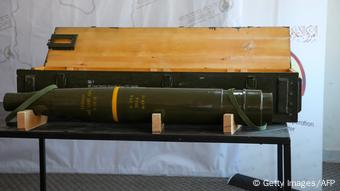



 Γιώργος Ρωμανός
 Νεγρεπόντη-Δελιβάνη Μαρία



 Edward Hunter Christie