Αρχική Blog Σελίδα 2338

Turkey’s axis is under attack. You will lose this fight!

0

İbrahim Karagül Yeni Safak


They are seeking out undemocratic paths. They are establishing alliances. They are building fronts. They are assuming roles – willingly or on someone’s instructions – in plans and scenarios that will devastate Turkey.

They are taking steps with political myopia, personal ambitions and the desire for revenge which will set ablaze our cities, our homes, and turn the country into Syria. They are making attempts aimed at shrinking and weakening Turkey.

They are relying on social unrest, on violence, on terrorism, on internal conflict, on hate speech, and on social division. They are playing games with our nation’s nerve endings, attacking their sacred values, unaware that the outcome will harm them as well.

Foreign, exhaustive, destructive

They abandoned legitimate mechanisms, legitimate political methods, legitimate channels. They deviated from the right path. They became entrapped in the scenarios of others. They disassociated themselves from all that would benefit Turkey.

They are taking steps and getting entwined in formations that will essentially give the country, the nation, the past and the future hostage to the power domains of the old colonialist, pro-tutelage states and global companies.

Their political language, the path they have chosen to take, their goals, are not “Turkey’s way.” They are not one of us; they are not what we associate with the identity of Turkey. They are foreign, external, exhaustive, and destructive.

They forgot their patriotism, their nationalism, their promise

They forgot their conservativeness. They forgot their nationalism. They forgot their patriotism. They pushed aside all that is represented by these identities.

They forgot all the promises they made for this cause until now; they forgot the fight they put up and the prices they paid. They forgot their past. They took a path that will give hostage their future to others.

They are attacking, weakening and trivializing every notion that makes the state powerful, that unites the people, that is paving the way for Turkey and making it rise in the new global storm.

They’re sabotaging our recovery a century later

They are sabotaging Anatolia’s recovery after a century. Instead of supporting it, instead of turning over a new leaf in our millennium-old history in the region, instead of celebrating this joy and glee together, they are attacking it from within.

Instead of spreading a great miracle in waves from the Middle East to Central Asia, from Central Africa to South Asia, while they should be supporting recovery after a collapsed and plundered empire, while they should be marching with honor, they are instead bringing Turkey into line on behalf of the colonialist states of the past which are now collapsing.

They are seeking a sign from Biden, help from Pentagon, terror barons

They are calling on the U.S. for help. They are waiting for a sign from Joe Biden’s administration, instructions from the White House. They are relying on the Pentagon, and its terror barons in Syria and Iraq. They accept the U.S.’s friends as their own, and treat Turkey’s allies as foes.

They are building political alliances with the armed forces of those who have been carrying on an indirect war with Turkey for five decades through the Kurdistan Workers’ Party (PKK) and other terrorist organizations; they consider as enemies every group, every movement and every struggle that stands by Turkey.

How many thousand Turkish citizens were martyred through the terrorist organizations armed by the U.S.? Thinking about this alone is enough to determine a party’s political identity. If you are devoted to Turkey, then this criterion alone will be enough.

They sided with the French in the East Mediterranean, the Greeks in the Aegean

They are calling on European countries for help. They are declaring partners all institutions and marginal groups of the EU. Very much like the last period of the Ottoman Empire, they are receiving instructions via European countries’ embassies, and drawing power from European capitals.

We are competing in the Mediterranean against France; however, they chose to support the French. In the initiative in Africa, they judge Turkey through the lens of France. They supported the Armenians and Europe in Karabakh. They supported Greece and the EU in the Aegean dispute.

They openly support the PKK in Syria, while they secretly support Daesh and its patrons. They cooperate with whomever is against Turkey, making breakthroughs and establishing strong relations with them.

Power plays by groups inside Turkey, invasion attempts by foreign forces

How is it that the power plays of those inside the country and the plans of those abroad to take Turkey hostage overlap to such an extent? Who designed this? Who built this front? Why does Turkey’s opposition consider terrorist organizations and their bosses as its partners, instead of the nation, the state and our common future? This is the sort of threat, the sort of danger we are facing. And this is no longer an issue of domestic politics.

We will never again go through the collapse we experienced in the early 20th century. This is such a great struggle that it is a preparation for the great future, by drawing inspiration from centuries-old history.

They’re writing scenarios of unrest they will set fire to our streets, homes

They made 10 attempts in the last 10 years. We thwarted them then, and we will thwart them again. We will not only hinder their attempts but also progress with much firmer steps. This war, which is carried out with foreign instructions, will be overcome as well.

We witnessed that those whom they rely on do not have the strength necessary to bring Turkey to its knees. We know that they are enmeshed in major power struggles, that these struggles are wasting them away, and how they will act from now on.

We are aware of their plans for unrest aimed at setting fire to our streets and homes, spreading from Bosporus University to all other universities, from Istanbul to all other cities.

We have been on watch since Manzikert. Not long left for 2023

We will be on watch against all internal and foreign threats until 2023. This watch is not that of the soldiers and police, but that of everybody who belongs to this land. We have been on this watch since the Battle of Manzikert, on every inch of land in Anatolia and the region.

Our troops have been being martyred on this land for centuries. Our psychology and resistance cannot be broken with the recklessness, the effect of armed organizations, the Trojan horses of the U.S., Europe, or any other power, and with the impact of the civil society organizations and marginal groups funded by them.

A war lost before it started. You do not have the power to make us surrender

They are carrying on a long-lost war. This war gained them terror and tutelage states, but lost them Turkey, the nation, and our common identity. Through this, they lost the Turkey axis.

Turkey’s axis is the intellect and belief resisting against the Crusader invasions. It is the idea that recovered the region after all the disasters and invasions which had destroyed it and paved the way for great leaps.

Those who fail to see this and reject it, those who have alienated themselves from Turkey have nothing to teach us. They cannot call us to account, take control over or threaten us. Neither they nor their masters have the power to make us kneel.

Therefore, let us join our powers to expedite Turkey’s strengthening. Remember, we are no longer discussing politics on a domestic scale. We are now discussing Turkey’s power showdown at a global level.

So, side with Turkey.
Yeni Safak

ANALYSIS – Biden administration peers at the Eastern Mediterranean

0

Dr. Adam McConnel   |10.02.2021 Anadolu Agency

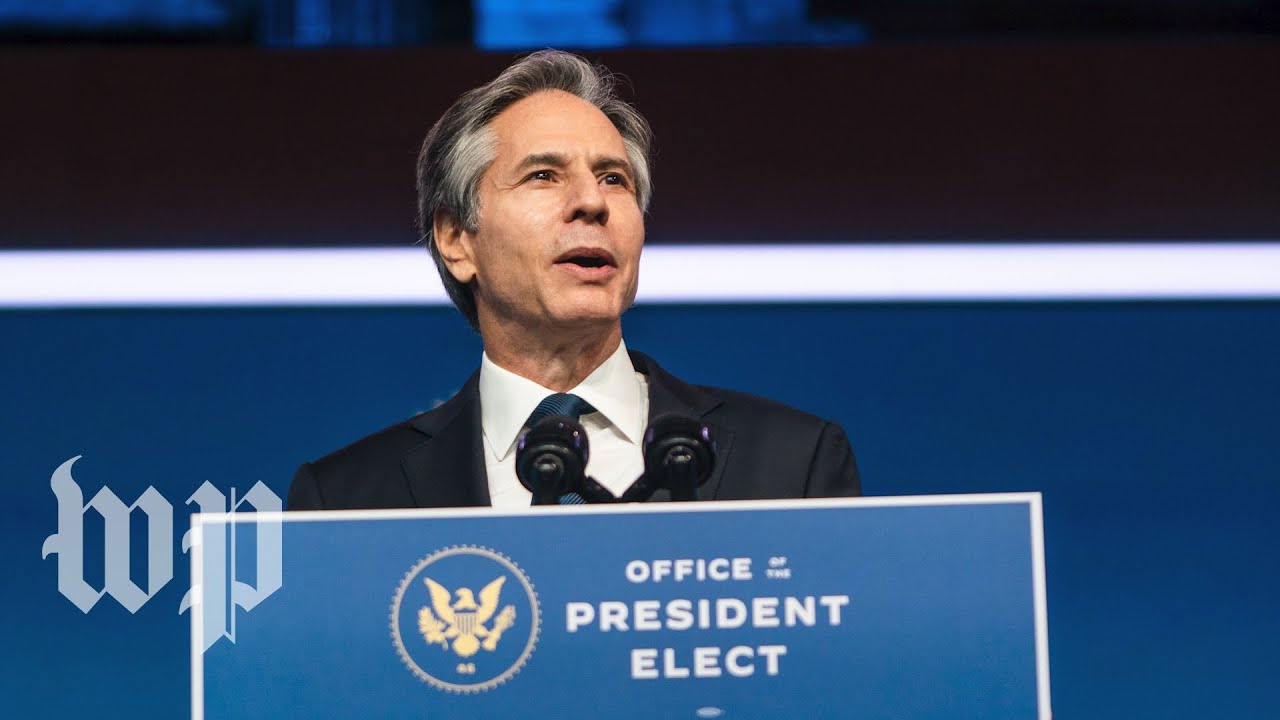
Next four years of Turkey-US relations will depend on whether Blinken will be able to recognize that current US policy towards Turkey is not only mistaken,but duplicitous, and disastrous not only for US interests,but also for Turkey and other nations

ANALYSIS - Biden administration peers at the Eastern Mediterranean

[ The author teaches Turkish history at Sabanci University in Istanbul. He holds an MA and PhD in history from the same university. ]

ISTANBUL

Dean Acheson prefaced his collection of political essays, A Democrat Looks at His Party, with a quote from the esteemed US Supreme Court Justice Oliver Wendell Holmes Jr.: “And it seems to me that at this time we need education in the obvious more than investigation of the obscure.” Holmes’s quote provided an effective summary of what Acheson, writing only two years after the end of his tenure as US Secretary of State, explained in the rest of the text.

While serving as the secretary of state, Acheson carried out one of the boldest and most visionary foreign policy initiatives of an era dominated by bold and visionary foreign policy initiatives. From the inception of NATO in 1949, and until February 1952, Acheson engaged in a long process of arguing, cajoling, and eventually convincing various European allies, as well as Congress, into accepting the Turkish Republic as a full NATO partner and ally. President Harry Truman, under which Acheson served as the secretary of state, considered the decision to support Turkey as “… the most important decision he had made subsequent to the bombing of Hiroshima” (reported in a Memorandum of Conversation between Acheson, Turkish Foreign Minister Necmettin Sadak, and the Turkish ambassador to the US, Feridun Erkin, dated 12 April, 1949).

Acheson’s conviction that Turkey needed support was a testament to the clear-sightedness with which he approached foreign policy and the principled pursuit of US interests. In reality, Acheson was pushing not only Congress, but especially the various European states involved, to overcome centuries of prejudice, religious chauvinism, and outright racism in accepting Turkey to NATO.

The focused, realistic eye that Acheson trained on international relations is in stark contrast to the befuddlement that has plagued US foreign policy for several decades now. The moral crusade that had come to define US Cold War policy evaporated along with the Berlin Wall. Since then, America’s imperial overreach and the “War on Terror” have dragged the US into progressively deeper conflicts and contradictions, both in terms of policy and principles. Joe Biden claimed in his victory speech that his administration will lead “by the power of our example,” but US leadership long ago became characterized by imposition through various types of power. Now, as the world becomes multipolar, and the most important challenger to US global dominance, China, is unapologetically anti-democratic, the US finds itself unable to identify another concrete, unquestionable, and comprehensive foundation for its international relations.

Biden-Blinken foreign policy and the Turkish Republic

A prominent case is the US’ misguided and confounding behavior towards the same ally that Acheson worked with such determination to bring into NATO. Strikingly, the US has, for two decades, implemented policies that overtly, sometimes purposefully, damage Turkish interests, and that have resulted in the deaths of hundreds of Turkish citizens. The George W. Bush administration invaded Iraq, which opened up the regional Pandora’s Box, but it was the Obama administration that chose to do nothing in Syria except partner with the PKK’s Syrian arm.

US President Joe Biden’s choice for secretary of state, Antony Blinken, was sworn in on Jan. 26 after a short Senate confirmation process. During the confirmation hearings, as was widely reported in the Turkish press and in response to a question (read off of a crumpled piece of paper) from South Carolina Senator Lindsey Graham, Blinken referred to Turkey as a “so-called strategic partner.” Graham is not a stranger to Turkey-US relations, so his question about the S-400 situation was not surprising. Blinken’s response cannot be seen as surprising either. The hearings were a public forum, and Blinken responded to the Senators’ inquiries in an eager manner, trying to please both parties and to avoid any sort of disagreement or tension by providing answers attuned to Washington’s current political mood.

Despite the fact that Blinken’s comments during the hearing should be understood as bromides, his response to Graham was drenched in unintentional irony. Blinken’s full statement was, “I think that what Turkey has done, as a NATO ally, in acquiring the S-400, is unacceptable. The idea that a strategic – so-called strategic – partner of ours would actually be in line with one of our biggest strategic competitors, in Russia, is not acceptable.” Beyond the fact that other NATO allies possess and utilize Russian-made weapons systems, Blinken’s comment comes after the US actively armed, funded, and trained an organic branch of the PKK – a US-designated terrorist organization that primarily targets Turkey and which has taken the lives of tens of thousands of Turkish citizens – for the past six years. Blinken toured the rubble in the bombed Turkish parliament after the failed July 2016 FETO coup attempt, so he must be aware that Turkish public perception of the US is not positive. Most Turkish citizens would respond to Blinken’s comments by stating that the US is the “so-called strategic partner” that needs to be sanctioned.

The political reality is that Blinken, as a former high-ranking member of the Obama administration and tabbed for the secretary of state position by Obama’s vice president, brings with him the dismal legacy of that administration’s policies towards Turkey specifically, and towards the Eastern Mediterranean in general. But there are no signs whatsoever that Blinken (or Biden) has taken any lessons from the disasters wrought in Turkey’s region by Obama’s ill-advised decisions and ephemeral red lines.

As soon as Blinken was sworn in, the State Department tweeted Biden’s claim that he will “repair our alliances,”  but Biden clearly does not recognize how weak his position vis-à-vis Ankara actually is. Nearly two weeks went by before the Biden administration contacted Ankara, and even then the contact was only through Biden’s National Security Advisor Jake Sullivan. That resurrects ghosts of Obama’s feeble and dilatory response to the Gulen cult’s failed July 2016 coup attempt.

Even worse, immediately after the Biden administration took office, a wave of PKK/PYD violence erupted in northern Syria. The State Department, in response, insisted on the same rhetorical chicanery used throughout the past eight years in order to avoid mentioning who carried out that violence. And only a week after Blinken assumed his official duties, the State Department took another step strongly reminiscent of the Obama era by making an official statement concerning the protests surrounding Bogazici (Bosphorus) University’s new rector. Continual comments about Turkey’s domestic politics will do nothing but further inflame Turkish popular resentment towards the US, and does not serve US interests. In sum, the Obama administration’s attitudes towards Turkey and its region have picked up without missing a step, as if the past four years had never happened.

A better example can be taken from the activities of the current US Ambassador to Turkey David Satterfield. Though his actions and statements have not always been above reproach, he has been a strong improvement over the embarrassing, sometimes disgraceful behavior of his immediate predecessors, Francis Ricciardone and John Bass. Satterfield has, for instance, given greater importance to sincerely and respectfully communicating through the Turkish press with the Turkish people. Recent extensive comments that he provided to the Anatolian Agency reflect this more constructive manner of carrying out public diplomacy.

The nice guy takes charge

The description of Antony Blinken that one repeatedly encounters is that he is “nice”. I find that fully possible to believe because, when I read what he has to say or when I watch footage of him, I get the same impression. Take, for instance, the promotional video for Blinken’s secretary of state candidacy, which features… Grover. That’s the extent to which America’s “Cult of Childhood” has permeated even its politics: the person who will spend the next four years interacting with Xi Jinping’s and Vladimir Putin’s emissaries, while trying to convince the Europeans to make even the simplest mutual compromises for the sake of humanity’s future, introduced himself to the global community with a Muppet.

Blinken comes to the position with the lowest public profile of any secretary of state since Condoleeza Rice even though he has spent most of the past 30 years in Washington and involved with foreign relations. When it comes to Turkey and issues in Turkey’s region, we do know some of his opinions. For example, Blinken penned an editorial for the NYT in early 2017 that urged continued US support for the “Syrian Democratic Forces” (SDF), the moniker created for the PKK’s Syrian arm (PYD/YPG) in order to deceive the American public. Blinken has previously commented on US relations with Turkey, but in a manner far more circumspect than Biden’s hostile statements to the NYT in December 2019. Because Blinken does not have to worry about getting votes, he may be simply saying bland things in public but have entirely different ideas in private. For that reason, Blinken’s SDF editorial looms inauspiciously.

On the other hand, Biden’s initial foreign policy move is to put more emphasis on China and Asia, where Blinken will apparently devote most of his energy. Given Blinken’s support for the SDF, one would initially find relief in that development. But in this case, the nice guy, who asserts that he will “seek out dissenting views and listen to the experts,” would be preferable to the person that will subsequently be given more influence over US policy towards Turkey’s region, President Biden’s coordinator for the Middle East and North Africa, Brett McGurk. If Blinken’s focus will be on Asia, McGurk will have more freedom to act because less attention will be paid to his domain.

McGurk is almost universally despised in Turkey because of the role he played in providing arms, money, and training to the PKK/PYD/YPG from late 2015 through December 2018. McGurk openly, publicly collaborated with high-ranking PYD/YPG members who are, in reality, PKK terrorists. The vast majority of Turkish citizens see McGurk as having not only the blood of Syrian civilians on his hands, but also that of Turkish citizens. For that reason, the recent series of PYD/PKK bombings that killed dozens in northern Syria was met in Turkey with the bleak pronouncement, “McGurk is back.”

Can Blinken change the course of US relations with Turkey?

In the end, the next four years of Turkey-US relations will depend on whether Blinken, first of all, will be able to recognize that current US policy towards Turkey is not only mistaken, but duplicitous, and disastrous not only for US interests, but also for Turkey and other regional societies. In his promotional video, Blinken mentions the typical clichés about “American values,” and “enlisting allies” to meet global challenges. Turkey is a democracy, has been since 1950, is a NATO ally, is currently the only regional bulwark against Russia, and is perfectly willing to cooperate as much as possible with the US if the US would simply recognize Turkey’s interests.

If Blinken wants to enlist his Turkish ally, he will have to listen to and work with Turkish officials. Turkish officials, besides being the representatives of the region’s only truly democratically-elected government, understand this region far better than US officials do. US officials need to be willing to understand the regional situation from new perspectives, and to compromise with Turkey. Most importantly, they need to realize that US interests are in close alignment with those of Turkey – as has been the case since WWII.

Second, even if Blinken is able to recognize that US policy towards Turkey must change, would he then be able to fight for a change of direction? He will be in charge of only the State Department, and other US institutions have proved themselves to be highly independent in carrying out policy in Turkey’s region. Donald Trump, for example, decided to go against those institutional actors on several occasions, but achieved only limited success in seeing his decisions implemented. Would Blinken, and his niceness, have any chance in arguments against institutions, such as the Pentagon, which proved impervious to Trump’s blustery posturing? Would Blinken consider violating the strange anti-Turkey “oath” that Democratic New Jersey Senator Robert Menendez made Blinken recognize near the end of his Senate confirmation hearing?

Education in the obvious

As difficult as it may be for US officials to accept, the US’ time in the spotlight seems to be winding down. Other powers will rise and eventually replace the US. The fundamental concern in this situation is the preservation of democracy and its viability as a political system that provides better lives for human beings. That is why it is vital for the US to recognize Turkey’s importance, and to make the compromises necessary to work with Turkey. In an era when US influence visibly wanes, the EU’s future is beset by storm clouds, and the other rising powers are anything but democratic, the continued viability of democracy is at stake. Turkey’s officials and, most importantly, its citizens are committed to democracy. But current US policy towards Turkey, and its region, constitutes a threat to a democratic future for everyone involved.

What is worse, the mistaken, disastrous course that US policy towards Turkey has been on for the past decade should not be difficult to identify or apprehend — Turkish officials have been trying to explain this to US officials the entire time. Meanwhile, Turkish public anger grew steadily as Turkish security personnel and citizens continued to fall victim to PKK/PYD/YPG violence, and as successive US administrations refused to extradite FETO members sheltering in the US. The regional stalemate also deepened as Turkey and Russia faced off in an increasing number of regional conflict zones. But Turkey, by supporting Azerbaijan in Nagorno-Karabakh, and by supporting Kiev against Moscow, gained its first clear, independently-achieved military and diplomatic victories against Russia in 300 years.

This entire setting points to the need for Justice Holmes’s “education in the obvious.” Turkey remains as vital to US global interests as it was 70 years ago when Acheson exerted such intense effort to convince NATO allies to accept Turkey as a partner. Turkey is a vibrant, industrializing democracy, and a prime example of a society that has been influenced in positive ways by the American democratic model since WWII. If the Senate Foreign Affairs Committee and Secretary Blinken can understand that the “Chinese model” imperils the US democratic model, then why are those same officials not able to discern that supporting a designated terrorist organization (the PKK/PYD/YPG) that threatens Turkey can never serve US interests in this region? Why are those same officials unable to comprehend that harboring a violent religious cult that aims to subvert Turkey’s democracy and state institutions can never serve US interests in its relationship with Turkey?

Later in A Democrat Looks at His Party, Acheson discusses the two vital ingredients necessary for successful foreign policy — America’s will to achieve a goal, and the will of foreign societies to achieve that goal together with the US. Even when the will of a foreign state and society to work for a common goal with the US is present, Acheson cautions, “the problem of leadership in a coalition of free nations” still persists:

“Such a group operates on the basis of consent. … Leadership is accorded where trust has first been given. And trust is dependent on conduct. … But what do we mean by trust? We mean that we inspire confidence that the interests we are safeguarding embrace the interests of the people who trust us” (pp. 96-97).

Acheson’s explanation makes the fundamental, recurring problem in Turkish-American relations unquestionably clear.

* Opinions expressed in this article are the author’s own and do not necessarily reflect the editorial policy of Anadolu Agency.

Another Zionist Joins the Biden Team

3
Neuberger will make our cyber secure?

It does not require any particularly perspicacity to realize that the President Joe Biden Administration has been loaded with Zionists who not only believe in their own vision for Greater Israel but also in some cases have strong and enduring ties to the Israeli government itself. The new Secretary of State Tony Blinken comes from an American Jewish family that has well established ties to Israel. Blinken’s paternal grandfather was one of the founders of an organization that eventually evolved into the American Israel Public Affairs Committee (AIPAC). Blinken said at his Senate confirmation hearing that the new administration would “consult with Israel” before any possible return to the 2015 nuclear deal and he also made clear that there will be “additional conditions for Iran,” an odd position to take since it was the U.S. that withdrew from the agreement and introduced a harsh sanctions regime even though Iran was in compliance. More recently, Blinken claimed that Iran is weeks away from having the enriched uranium needed to make a nuclear weapon. Strangely enough, or perhaps not, Israeli Prime Minister Benjamin Netanyahu has been making the same claim since the 1980s.

Joe Biden himself proclaims proudly that he is a Zionist and Vice President Kamala Harris has spoken at AIPAC gatherings, pledging her unconditional support for the Jewish state. Senate Majority leader Chuck Schumer has proclaimed himself “shomer” or protector of Israel in the Senate while House Speaker Nancy Pelosi has said that the “If this Capitol crumbled to the ground, the one thing that would remain would be our commitment to our aid, I don’t even call it our aid, our cooperation with Israel. That’s fundamental to who we are.” The House Majority Leader, the second ranking Democrat, Steny Hoyer has proudly led numerous Congressional delegations to Israel.

One has to suspect that many White House and Congressional friends of Israel are opportunists, knowledgeable of the fact that Zionism is career enhancing and equally aware that getting on the wrong side of “The Lobby” is a political death wish. Many politically astute senior officials meanwhile wind up by design in positions in the Department of State, CIA and National Security Council where they will be able to narrow foreign policy options in favor of the Jewish state. Under George W. Bush, folks like Paul Wolfowitz, Richard Perle, Doug Feith and Scooter Libby worked hard to infiltrate the Pentagon and White House and, having succeeded, the disastrous Iraq War was the result.

One might also recall the concurrent purge of the so-called “Arabists” in the State Department in the 1950s which has led to a domination of key foreign and national security positions relating to the Middle East by American Jews ever since. Indeed, the shift in priorities at State Department has been dramatic, with Foggy Bottom now housing an office of the Special Envoy to Monitor and Combat Anti-Semitism, allegedly because anti-Semitism is surging worldwide, apparently having nothing to do with how Israel and its supporters behave. The incumbent, Elan Carr, has recently been elevated to the rank of Ambassador-at-large and his office, as well as the Biden Administration, now insists that criticism of Israel is ipso facto anti-Semitism. So much for free speech in the new world order.

Once upon a time it was considered unwise to appoint senior officials who had personal ties to other countries lest it create a conflict of interest that would not ultimately be beneficial to either nation. In his often-cited Farewell Address of 1796, George Washington famously warned that “…permanent, inveterate antipathies against particular Nations, and passionate attachments for others should be excluded; and that in place of them just and amicable feelings towards all should be cultivated. The Nation, which indulges towards another an habitual hatred, or an habitual fondness, is in some degree a slave. It is a slave to its animosity or to its affection, either of which is sufficient to lead it astray from its duty and its interest.”

If Washington were to see the foreign policy ruined by the Israel-centric federal government that has prevailed since the time of Ronald Reagan he would surely be at a loss to understand how that could possibly have developed. Donald Trump even intensified the pander by giving the Israelis gifts that they had not asked for and Joe Biden looks like he will do more of the same. When it comes to Israel, no concession or gift is ever enough.

The FBI, in the past, routinely denied security clearances to appointed officials who had close and enduring ties to other countries that were not part of NATO. Under Donald Trump, it was reported that his son-in-law Jared Kushner had been denied a top-level clearance in part due to his family’s close personal connection with Israel, to include its Prime Minister Benjamin Netanyahu, who is regarded as a family friend. Donald Trump ignored the recommendation and used his own authority to grant Kushner the clearance anyway.

The latest friend of Israel to rise to the top as Biden completes his appointments is one Anne Neuberger, who recently was named senior director for cyber policy on the National Security Council. Neuberger has spent the last decade at the National Security Agency, the Pentagon’s cyber spying arm, where she was recently appointed head of the newly created cybersecurity directorate. Her husband Yehuda meanwhile is chair of the American Israel Public Affairs Committee (AIPAC) Baltimore executive council. He reportedly lobbied ardent Zionist Senator Ben Cardin to oppose the 2015 Iran nuclear deal the Obama White House had negotiated. Cardin did vote against it in spite of it being strongly supported by his party leader President Barack Obama.

There is, not surprisingly, an additional back story to the tale. It goes something like this: NBC news published on January 27th an article claiming that a family foundation connected to Neuberger has donated $500,000 to AIPAC, which is the largest of the hundreds of Jewish organizations that are dedicated to advancing Israeli interests in the United States. AIPAC had in 2019 an annual budget of $133 million, assets of $157 million and 476 employees. It lobbies Congress heavily and is successful to the point where it actually writes legislation favorable to the Jewish State.

The NBC article stated that: “The daughter of billionaire investor George Karfunkel, Neuberger is an officer of a foundation named for her and her husband, the Yehuda and Anne Neuberger Foundation. The foundation was created 12 years ago to ‘carry out the charitable and religious purposes of the Associated Jewish Community Federation of Baltimore,’ according to its tax records… From 2012 through 2018 — the last year for which tax records for the foundation are available — the Neuberger foundation donated $559,000 to AIPAC, tax record show. In a separate part of the forms, the foundation reports spending that exact amounts of its AIPAC donations under the category of spending for lobbying ‘to influence a legislative body’ or ‘to influence public opinion…’”

The article also observes that “[Israel] operates in its own interest and aggressively spies on the U.S., including using cyber capabilities.” It also cites “A cross section of current and former intelligence officials and foreign policy experts — none of whom were willing to be named — [who] said the donations created an appearance problem. They noted that Israel, whose companies build and sell spying gear to regimes abroad and whose intelligence agencies hack foreign governments around the world, has a big stake in American cyber policy.”

The Neuberger foundation also contributes money to the neocon dominated Foundation for Defense of Democracies (FDD), which, like AIPAC, colludes directly with the Israeli Embassy in Washington. FDD should be registered as a foreign agent, but no Israel connected entity has ever been forced to comply. To be sure, Neuberger’s involvement with the foundation and her participation in the money contribution to AIPAC should have been an element in her security clearance process, but that process may have been either modified for political reasons or the information was not made available. The NBC report observes that “A spokeswoman for the National Security Council declined to answer detailed questions about the matter, saying, ‘As a senior NSC employee, Ms. Neuberger will abide by the Executive Order on Ethics Commitments By Executive Branch Personnel.’ It’s not clear Neuberger would have been required to disclose contributions by her family foundation as part of her ethics or security clearance reviews — so it’s not known whether the Biden team vetted the donations. Although the donations are listed in public tax filings available on the web, some effort is required to find them.”

The supporters of Neuberger are incorrect in that the contributions made in her name to AIPAC, which most in Washington regard as a front for the Israeli government, would have most definitely been relevant to her clearance process. Under normal rules, it would disqualify her from having a top level clearance, but, as should be noted, we are dealing here with Israel. Neuberger’s appointment as head of U.S. cybersecurity while donating hundreds of thousands to the lobbying arm of a foreign government that recently welcomed to great fanfare a citizen of theirs, Jonathan Pollard, who spied on the U.S., as a hero is unacceptable. One might also add that Israel is regarded as the most active “friendly” government in respect to its spying on the United States, often using sayanim American Jews as their “agents,” and its well documented history of stealing U.S. high technology is extensive. It also has highly developed cyber capabilities of its own which it has recently used against American government targets, to include the White House.

The final twist to the Neuberger story is that complaints from Jewish groups and individuals began to pour into NBC after it released the story, some concerned that a wonderful organization like AIPAC was being impugned. AIPAC denounced the piece directly, claiming that its “Charges of dual loyalty are anti-Semitic and insult millions of Americans—Jewish & non-Jewish—who stand by our ally Israel.” The news network then surrendered, pulling and archiving the story after claiming that it had not met its usual standards due to its use of anonymous sources and failure to give Neuberger adequate time to respond. NBC did not contest the AIPAC claim that Israel is an actual American ally, which is itself a lie, nor to the compelling evidence that some American Jews certainly do demonstrate either dual or singular loyalty that favors Israel.

But my favorite contribution in support of Neuberger comes from President Barack Obama’s U.S. Ambassador to Israel Dan Shapiro, who appears to be in line for a Biden senior foreign policy appointment. He tweeted: “I don’t know Anne Neuberger, but the ‘charge’ against her — that she’s not fit for national security work because her family foundation supported political work that is fully protected under the Constitution — is offensive and belied by her stellar career. Glad she is serving.”

Shapiro’s claim that a senior national security official’s supporting a lobby that exists to obtain favors for a foreign country is a “free speech” issue is curious. One also wonders about Shapiro’s ultimate loyalty, recalling how he left his ambassadorial post to live in Israel, where he presumably now holds dual-citizenship. He subsequently told an American Jewish audience that Israel is “this miracle, this gift, this jewel” and worked as a senior officer in an Israeli national security think tank, representing it in testimony before Congress, which should have required him to register as a foreign agent. But he didn’t do so and got away with it because it was Israel, of course. And now he is giving advice on a critical United States national security issue in which he is dead wrong. That is the fundamental problem. We Americans are, at our peril, never allowed to challenge the extent of someone’s devotion to a foreign country if that country just happens to be Israel.

Philip M. Giraldi, Ph.D., is Executive Director of the Council for the National Interest, a 501(c)3 tax deductible educational foundation (Federal ID Number #52-1739023) that seeks a more interests-based U.S. foreign policy in the Middle East. Website is https://councilforthenationalinterest.org address is P.O. Box 2157, Purcellville VA 20134 and its email is [email protected]

unz.com

‘Not Our World’: This Greek Island Wants An End To Greece And Turkey’s Feud

0

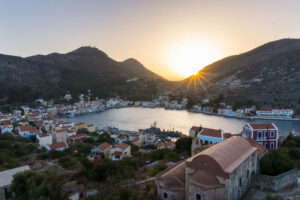
The Greek island of Kastellorizo, shown here at sunset from the top of an ancient castle, is a little over a mile away from the Turkish shore. Known for its architecture, turquoise sea and friendship with the neighbor Turks, it’s recently become a pawn in a geopolitical dispute between the Greek and Turkish governments over hydrocarbons and maritime borders.

Demetrios Ioannou for NPR

The pastel-painted taverns, cafes and hotels that line the small port in the remote Greek island of Kastellorizo are usually bustling this time of year with tourists, including hundreds of day-trippers from Turkey — which is just a 10-minute speedboat ride away.

This year, the port is quiet, and not just because of the coronavirus pandemic.

This stunning, craggy isle surrounded by the deep-blue Aegean Sea has become a pawn in a dispute between Greece and Turkey — NATO allies and longtime frenemies — over maritime borders and offshore gas and oil exploration rights.

As tensions heightened last month, their militaries went on alert, sending warships and warplanes to the eastern Mediterranean, and raising fears of a confrontation.

“If you type Kastellorizo on Google, you will have an idea of war, gray zone, that something terrible is happening,” says Eleni Karavelatzi, a tourism marketer who grew up on the island. “This is not our world. This is politics.”

Left: Eleni Karavelatzi, co-founder of the travel company Visit Kastellorizo. Right: A dog walks on the empty promenade along the island’s Aegean Sea shore.

Demetrios Ioannou for NPR

The trouble began when the Turkish research vessel Oruc Reis, accompanied by Turkish warships, started gliding near disputed waters to explore for offshore natural gas between Greece and Cyprus.

This angered the Greek government, which claims that, under the United Nations Convention on the Law of the Sea, Greece has exclusive drilling rights on the continental shelf of each of its islands. Turkey, which has not signed this convention, says it unfairly defines part of the Turkish continental shelf as Greek.

“And Turkey tries to make it look most unfair in the case of Kastellorizo,” says Ioannis N. Grigoriadis, a political science professor at Bilkent University in Ankara and head of the Turkey program at the Hellenic Foundation of European and Foreign Policy in Athens. “Turkey argues, how can this tiny island so close to Turkey deny continental shelf rights to a long Turkish coast?”

Turkey also takes issue with the Greek military presence on Kastellorizo, which is one of the Dodecanese islands that Italy ceded to Greece after World War II, with the provision that they be demilitarized. Greece says it made that promise to Italy, not to Turkey.

As the Oruc Reis made its way along the Aegean Sea, Greece sent its own navy ships to shadow it. When a Turkish frigate accidentally collided with a Greek warship on Aug. 12, both countries’ media speculated a showdown seemed imminent on Kastellorizo.

An empty military shelter on a hill of Kastellorizo that overlooks the Aegean and nearby Turkey.

Demetrios Ioannou for NPR

Karavelatzi could not even imagine it. The Turks who lived across the sea in the town of Kas were friends and neighbors. She remembers one Turkish man inviting the entire island to his wedding in Kas.

“People who are far away from the border think that we are enemies,” she says. “People that live near the borders don’t think that because they see how is it to drink ouzo and [have a] meze with Turks.”

This, she says, is what life looks like when politics gets out of the way.

The island of the “red castle”

The Turks call the island Meis, after its ancient Greek name, Megisti, which means “great.” Though the island is less than 4 square miles, it’s the largest of at least a dozen isles (most of them uninhabited) in a small archipelago. The name Kastellorizo likely has roots in Latin, says Constantina Agapitou Crowley, a former marketing executive whose roots here go back generations and who’s known as the island’s ambassador at large.

Constantina Agapitou Crowley, a former marketing executive and sixth-generation Kastellorizian, serves as the island’s ambassador-at-large. She is pictured at home with her dog, Zoe.

Demetrios Ioannou for NPR

Travelers and invaders to the island always spotted an ancient castle and fortress, shaded red by the setting sun. “They called it Castello Rosso, Castello Rougio, the Red Castle,” Agapitou Crowley says, “and it eventually became Kastellorizo.”

The island changed hands many times — the Byzantines, the Knights of Malta, the Ottomans. Kastellorizo flourished in the 19th century as a sea-trading power with a population of more than 14,000. After two world wars and occupations by the French, Italians and British, most of its residents fled to Egypt, Palestine and Australia.

Agapitou Crowley first saw the island in 1968, 20 years after it formally joined Greece along with the rest of the Dodecanese islands. Kastellorizo’s homes were still in ruins from wars and looting.

“The first thing you noticed was the silence,” she says. “Then I noticed the breathtaking beauty and the incredible smell of figs.” Fig trees were everywhere. After residents fled during the war, the trees had sprouted in the cisterns of collapsed homes. Her family invested in the island and helped it rebuild.

A bust of Despina Achladioti, a widow from Kastellorizo who lived with her goats and chickens on the nearby islet of Ro. She’s celebrated in Greece for raising the Greek flag every morning.

Demetrios Ioannou for NPR

By 1970, a former palace guard who joined the priesthood became the island’s presiding cleric. Father Giorgos Maltezos, or Papagiorgis as he’s known here, was happy to see life slowly returning to the island where he had grown up. Then Turkey invaded Cyprus in 1974. He feared Kastellorizo would be next.

“We heard it on the radio,” the priest recalled, settling down after his Sunday service at a fish tavern called Billy’s. “We shut off all the lights on the island. … At the time, we were vulnerable. We didn’t have soldiers here.”

Despina Achladioti, a widow who lived with her goats and chickens on the nearby islet of Ro, staked her defense by raising the Greek flag every morning. The priest calls her a hero. Greeks have deified her as the “lady of Ro.”

Greece installed an army base on Kastellorizo shortly after the Cyprus conflict, “to allay the security concerns of the islanders,” says Grigoriadis, the political scientist. “It’s still a very limited military presence.” The island is dotted with hidden shelters.

Kastellorizo got on the tourist map with the 1991 Oscar-winning movie Mediterraneo, which was filmed here.

Today, fewer than 500 people live on the island, most of them near the port. The number can go down to half that in the winter.

Earlier this month, a steel-gray military ship was docked at the marina, near a row of colorful fishing boats.

Fisherman Dimitris Achladiotis has gotten used to Greek soldiers in fatigues hanging around the island. As he unloads the catches of the day — amberjack and shrimp — he explains that the military presence has not hurt his relationships with Turkish fishermen, who work along the same invisible line in the sea that divides Greece from Turkey.

Top: Fisherman Dimitris Achladiotis and his son work on their boat after docking at the port of Kastellorizo. Left: Shrimp caught in the sea between Kastellorizo and Turkey. Right: Sayid Emasha, an Egyptian fisherman who has worked with Achladiotis for six years.

Demetrios Ioannou for NPR

“We all know each other,” he says. “They’re good guys. … They used to eat with us here. Now instead of the Turkish fishermen, we pass Turkish military ships that get too close to us.”

Another Dimitris Achladiotis — the deputy mayor of Kastellorizo, who is related to the fisherman with the same name — also laments the loss of Turkish visitors from Kas. The deputy mayor, whom the islanders call O Psilos, meaning The Tall One, says he wants the “big politicians” in Athens and Ankara to work out the maritime dispute reasonably, “without any more tension, which is hurting us all here.”

Deputy Mayor Dimitris Achladiotis (who is related to the fisherman) says he wants the “big politicians” in Athens and Ankara to work out their maritime dispute reasonably, “without any more tension, which is hurting us all here.”

Demetrios Ioannou for NPR

He points out that Turks kept the restaurants and cafes busy even during the winter.

“One of my Turkish friends even uploaded a photo of himself on Facebook dancing Greek-style,” he says, with a sigh. “He said he misses us. We miss them too.”

Before the pandemic, Greeks shopped at the Kas farmers market every Friday. They hung out at the town’s clubs and cafes.

A love story

Kykkos Magiafis — who goes by Tsikos — met Hurigul Bakirci at one of those cafes almost 10 years ago.

Kykkos Magiafis, a Greek who grew up on Kastellorizo, met his Turkish wife, Hurigul Bakirci, almost 10 years ago in the Turkish town of Kas, which is just a 10-minute speedboat ride from the island. They run a beach and lunch bistro on the nearby islet of Kastellorizo.

Demetrios Ioannou for NPR

“I had been out with my Turkish friends in Kas until really late,” says Magiafis, a Greek who was born and raised on Kastellorizo. “The sun was beginning to rise. I was dying for some coffee, and when I went to the first cafe that opened, there she was.”

“We spoke in a mix of Turkish, Greek and English,” says Bakirci, who is from Kas, laughing at the recollection. “A year later, we got married.”

She sometimes adds her husband’s Greek last name to her Turkish one. The couple has a 3-year-old son named Paraschos and homes in both Kas and Kastellorizo. They run a beach and lunch bistro on a nearby islet called Agios Georgios. The menu features homemade Turkish gozleme alongside Greek salads.

A photo from Magiafis and Bakirci’s wedding in 2012 in Istanbul.

Demetrios Ioannou for NPR

Bakirci, who has learned Greek, says their marriage prompted even more Turks to visit.

“Everyone wanted to see how I had settled here, how I was doing,” she says. “They would bring friends to our beach bistro, and those friends would bring more friends.”

Actors from Turkish soap operas — which are wildly popular in Greece — visited, too. Magiafis remembers how excited the islanders were. “The grandmothers were the best,” he says. “They all had canes yet they still seemed to be running to get autographs and hugs. It was so much fun.”

A Greek military ship glides along the stretch of sea between Kastellorizo and the neighboring Turkish town of Kas.

Demetrios Ioannou for NPR

Now business is down, and Bakirci hasn’t seen her parents in person in six months. “It feels strange because we are 10 minutes away from each other,” she says. “I can see my house from the island, I can see their cars moving. We flash our headlights to each other to say hi.”

“Let’s give diplomacy a chance”

Political tensions between Greece and Turkey are not new. Greece was part of the Ottoman Empire for 400 years, until it declared independence in 1821. A century later, after the empire had collapsed, Turks and Greeks went to war over territory.

A Greek soldier walks past patrons sipping iced coffee at cafes in Kastellorizo’s port.

Demetrios Ioannou for NPR

As recently as 1996, Turkey and Greece were on the brink of war over uninhabited islets in the Aegean Sea.

“The United States, through Richard Holbrooke, averted an escalation back then,” says Grigoriadis, the political analyst, referring to the late U.S. diplomat.

“Now the United States is withdrawing from the world. The secretary of state made some statements [about the current Greek-Turkish standoff] but did not claim a leading role. The void is in part being filled by Germany, which is trying to make sure violence is off the table,” he says.

Earlier this month, Greek Prime Minister Kyriakos Mitsotakis said his government plans to purchase new French fighter jets, helicopters and weapons systems. On Sept. 13, Greek President Katerina Sakellaropoulou visited Kastellorizo and declared that Turkey is causing “tensions aimed not only at Greece, but also the EU and NATO, threatening peace and stability in the region.”

A Greek military ship is moored at the port of Kastellorizo.

Demetrios Ioannou for NPR

The Turkish government criticized Greece for teaming up with Egypt, Israel and Cyprus — Turkey’s regional rivals — to form a new consortium to manage Mediterranean gas prices and infrastructure costs. In response, Ankara signed its own maritime agreement with Libya.

A series of diplomatic fails, including last year’s Turkish invasion of Kurdish-controlled northern Syria, has left Turkey isolated, says Sinem Adar, a research associate specializing in Turkey at the German Institute for International and Security Affairs in Berlin.

“Turkey’s concerns are now nearly inaudible on the world stage,” Adar says. “If this conflict is worked out according to sensibility, then [Greece and Turkey] need to sit at the negotiating table and come up with some compromise. And if that doesn’t work, they should go to the International Court of Justice.”

The European Union, which is threatening fresh sanctions on Turkey, has largely taken Greece’s side. Last week, Turkey’s government decided to pull back its exploration vessel for maintenance. Turkish President Recep Tayyip Erdogan recently told reporters, “Let’s give diplomacy a chance,” but he added that Turkey won’t stop surveying the eastern Mediterranean.

Pantazis Houlis, a Greek mathematician who recently opened a puzzle museum on Kastellorizo, has a special puzzle for Erdogan “in case he gets any ideas that our island is his,” he says.

“It’s like a Rubik’s cube with the colors of Greece, blue and white,” he says, twisting the cube. “And no matter how many ways you twist it, it’s always got the pattern of the Greek flag.”

Left: Mathematician and puzzle-master Pantazis Houlis holds a type of Rubik’s cube he created and wants to gift to Turkish President Recep Tayyip Erdogan. “No matter how many ways you twist it, it’s always got the pattern of the Greek flag,” he says. Right: Houlis in his newly opened puzzle museum on the island.

Demetrios Ioannou for NPR

Agapitou Crowley, the former marketing executive with deep roots on Kastellorizo, got used to watching Greek and Turkish military ships from her terrace, which has a sweeping view of the Aegean. She wonders how long the dispute will drag on.

“The irony is that, by the time this issue is solved, maybe all the gas and whatever will be obsolete,” she says. “And in the meantime, Kastellorizo and Kas will have suffered.”

Joanna Kakissis reported from Kastellorizo, Greece.

npr.org

Η Ευρώπη και οι εταίροι που δεν εμπιστεύεται

0

Εχοντας χαλυβδωθεί από την οδυνηρή έξοδο της Βρετανίας από τους κόλπους της, τις συγκρούσεις με τον τέως πρόεδρο των ΗΠΑ, Ντόναλντ Τραμπ και έχοντας υιοθετήσει  ρεαλιστικότερη προσέγγιση προς την Κίνα, μία τραυματισμένη Ε.Ε. αναμένεται την επόμενη εβδομάδα να παρουσιάσει τη μελλοντική εμπορική της πολιτική. Στόχος της είναι να βοηθήσει εαυτόν να αντιμετωπίσει εταίρους, τους οποίους δεν εμπιστεύεται. Η επιβολή των παγκόσμιων κανόνων του διεθνούς εμπορίου και η διασφάλιση της ισότιμης πρόσβασης στην αγορά θα αποτελέσουν τους ακρογωνιαίους λίθους μιας νέας στρατηγικής που θα παρουσιαστεί από την Ευρωπαϊκή Επιτροπή.

Αναμένεται να είναι ως προς τον τόνο που θα υιοθετήσει, πολύ πιο σκληρή από εκείνη η οποία είχε τιτλοφορηθεί «Εμπόριο για όλους» το 2015, όταν και επήλθε η τελευταία ανανέωση της ευρωπαϊκής εμπορικής στρατηγικής. Βούληση της Κομισιόν είναι να στηρίξει μία «πράσινη» και ψηφιοποιημένη ανάκαμψη, δίνοντας, παράλληλα, έμφαση στη μεγαλύτερη ανθεκτικότητα σε μία πιθανή πανδημία στο μέλλον, καθώς και στο ευ αγωνίζεσθαι – πρόκειται για το αίτημα των ίσων όρων ανταγωνισμού, το οποίο υπήρξε σημείο έντονης τριβής στη διαβούλευση για την έξοδο της Βρετανίας.

«Εμπλουτίζουμε την εργαλειοθήκη μας για να είμαστε σε θέση να αντιδράσουμε σε περίπτωση που τρίτες χώρες δεν συμμορφώνονται με τους κανόνες, οπότε είμαστε καλύτερα εξοπλισμένοι και προστατευμένοι», δήλωσε ο αρμόδιος επίτροπος Εμπορίου, Βάλντις Ντομπρόβσκις. Ο ίδιος δεν κατονόμασε τις τρίτες χώρες, ούτε αυτές καταγράφονται στη νέα στρατηγική, αλλά οι περισσότεροι θεωρούν πως στο επίκεντρο τίθενται οι ΗΠΑ και η Κίνα.  «Η μονομερής δράση του Ντόναλντ Τραμπ ανάγκασε την Ε.Ε. να αντιδράσει, ενδυναμώνοντας την ικανότητά της να ενεργεί, όχι εκτός του πλαισίου του Παγκόσμιου Οργανισμού Εμπορίου, αλλά με γρηγορότερο και εντονότερο τρόπο», δήλωσε ο Αντρέ Σαπέρ, ανώτερος ερευνητής του ινστιτούτου Μπρίγκελ. Υπό τους νέους κανόνες της Ε.Ε., εάν μία τρίτη χώρα παρεμποδίσει τη λειτουργία του μηχανισμού διαιτησίας και επίλυσης διαφορών –όπως το να προσφύγει κατά μιας απόφασης του ΠΟΕ στο ανύπαρκτο αρμόδιο Σώμα του οργανισμού–, τότε οι Βρυξέλλες θα μπορούν να προχωρήσουν σε αντίποινα εις βάρος της. Η Ε.Ε. έχει καταλήξει σε συμφωνία επί ενός προσωρινού συστήματος προσφυγών με εμπορικούς εταίρους της, συμπεριλαμβανομένης της Κίνας, αλλά όχι των Ηνωμένων Πολιτειών.

Εκλαμβανόμενο ως η απάντηση στις μονομερείς εμπορικές τακτικές του Ντόναλντ Τραμπ, θα μπορούσε το σύστημα αυτό να προκαλέσει συγκρούσεις με τη νέα κυβέρνηση του Τζο Μπάιντεν. Τέλος, ακόμα μία προσθήκη στο οπλοστάσιο της Ευρωπαϊκής Ενωσης είναι αυτή που αφορά το διεθνές σύστημα προμηθειών.

kathimerini.gr

Οι Γερμανοτουρκικές σχέσεις και Ελληνισμός

0

Α.  Μακρόχρονες και πολυεπίπεδες σχέσεις     

Η γερμανική στάση απέναντι στην πρόσφατη όξυνση της τουρκικής επιθετικότητας απηχεί τη μακρόχρονη και πολυεπίπεδη σχέση του Βερολίνου με την Άγκυρα.

Η Γερμανία προσπάθησε και προσπαθεί και σήμερα να μεσολαβήσει μεταξύ δυο μελών της Ευρωπαϊκής Ένωσης, της Ελλάδας και της Κύπρου, από την μια μεριά και της Τουρκίας από την άλλη. Είναι τουλάχιστον ασυνήθιστο να διαιτητεύει ως ουδέτερη μια χώρα της Ένωσης σε μια αντιπαράθεση μελών της και ενός μη μέλους. Κανονικά η Γερμανία θα έπρεπε να σταθεί ως αντίπαλος της Τουρκίας, στα πλαίσια της ελληνοτουρκικής αντιπαράθεσης, και όχι ως  μεσολαβητής.

Η ιδιαίτερη σχέση της Γερμανίας με την Τουρκία χρονολογείται εδώ και εκατό και πλέον χρόνια, όταν οι δυο χώρες βρέθηκαν μαζί στη μια από τις δυο αντιμαχόμενες πλευρές του Α Παγκοσμίου πολέμου. Στη διάρκεια του Β Παγκοσμίου πολέμου η Τουρκία υπέγραψε σύμφωνο φιλίας με την ναζιστική Γερμανία που διατηρήθηκε μέχρι το 1945, λίγους μήνες πριν την λήξη του πολέμου.

Το 1961 οι δυο χώρες συνήψαν μια συμφωνία, που προέβλεπε την δυνατότητα εγκατάστασης Τούρκων μεταναστών, για να απασχοληθούν ως ανειδίκευτοι εργάτες στη ραγδαία αναπτυσσόμενη γερμανική οικονομία. Σήμερα οι τουρκικής καταγωγής μετανάστες είναι τέσσερα εκατομμύρια. Η Τουρκία ασκεί έλεγχο στα μισά περίπου από τα πολυπληθή μουσουλμανικά τεμένη που υπάρχουν στη Γερμανία.

Από το 1996, εξάλλου, που ετέθη σε ισχύ η τελωνειακή ένωση της Τουρκίας με την Ευρωπαϊκή Ένωση το διμερές εμπόριο της Τουρκίας με τη Γερμανία ενισχύθηκε ιδιαίτερα και σήμερα ανέρχεται σε 30 περίπου δις ευρώ με το Βερολίνο να αποτελεί έναν από τους κύριους οικονομικούς εταίρους της Άγκυρας, ενώ η Τουρκία είναι ο δέκατος έβδομος στη σειρά εταίρος  της Γερμανίας.

Στις συναλλαγές των δυο χωρών περιλαμβάνεται και το εμπόριο όπλων, με την Τουρκία να αποτελεί τον σημαντικότερο εισαγωγέα όπλων από τη Γερμανία.

Σημειωτέον, επίσης, ότι στην Τουρκία δραστηριοποιούνται 7500 γερμανικές επιχειρήσεις. Το παζλ των γερμανοτουρκικών σχέσεων συμπληρώνει και ο έλεγχος που ασκεί, σε ένα βαθμό, η Τουρκία στις μεταναστευτικές ροές προς την Ευρώπη και ειδικά προς τη Γερμανία.

Οι οικονομικές σχέσεις των δυο χωρών είναι πασιφανώς άνισες. Η ηγεσία της Γερμανίας θεωρεί ότι στο οικονομικό πεδίο έχει σαφές πλεονέκτημα. Σε ότι αφορά όμως το μεταναστευτικό οι Γερμανοί πιστεύουν ότι η Τουρκία διαθέτει ένα ισχυρό όπλο πίεσης, παρά την καλύτερη φύλαξη των ελληνοτουρκικών συνόρων, τον τελευταίο χρόνο από πλευράς Ελλάδας.

Β. Η γεωπολιτική διάσταση των γερμανοτουρκικών σχέσεων και ο Ελληνισμός                       

Πέραν των οικονομικών δεσμών και του μεταναστευτικού, σημαντική πτυχή των σχέσεων Βερολίνου και Άγκυρας είναι και η γεωπολιτική τους διάσταση. Κατά τη διάρκεια του ψυχρού πολέμου η Τουρκία είχε κατά βάση φιλοδυτικό προσανατολισμό. Σήμερα όμως προσπαθεί, και το κατορθώνει σε ένα βαθμό, να αποσπά εύνοιες και παραχωρήσεις ταυτόχρονα και από την Δύση και από τις ευρασιατικές δυνάμεις. (Ρωσία και Κίνα)

Η άρνηση των Γερμανών, στα πλαίσια αυτά, να επιβάλλουν κυρώσεις στην Τουρκία για την στάση της απέναντι στην Ελλάδα και την Κύπρο απορρέει κατά την άποψη τους από τον βάσιμο τους φόβο μήπως χαθεί η Τουρκία για την Δύση οριστικά και κερδηθεί μόνιμα και σταθερά, για παράδειγμα από την Ρωσία.

Όμως η Τουρκία έχει χαθεί ήδη για την Δύση. Και έχει χαθεί, όχι επειδή την κέρδισε κάποιο μεγάλο μη δυτικό κράτος, αλλά επειδή έχει καταστεί αυτόνομο μέγεθος, σε υπολογίσιμο βαθμό. Η αποδυνάμωση της Αμερικής, η μετεωρική άνοδος της Κίνας η αναγέννηση της Ρωσίας και οι συνεχιζόμενες μεταναστευτικές ροές προς την Ευρώπη, έχουν διευρύνει τα περιθώρια ελιγμών της Τουρκίας και έχουν αυξήσει τους βαθμούς ελευθερίας της, απέναντι στις Μεγάλες δυνάμεις.

Το ζήτημα δεν είναι μήπως χαθεί ή δεν χαθεί λοιπόν η Τουρκία, αλλά μήπως καταστεί ανεξέλεγκτη από τους πάντες. Οι Γερμανοί κάνουν λάθος, όταν πιστεύουν ότι θα “εξημερώσουν το θηρίο” και θα  φέρουν την Τουρκία με το μέρος τους, αν της υποσχεθούν αναβάθμιση της τελωνειακής ένωσης και πειθαναγκασμό της Ελλάδας να προβεί σε παραχωρήσεις προς αυτή τη χώρα. Αν η Τουρκία καθυποτάξει τον Ελληνισμό  δεν θα μπορεί να την ελέγξει κανείς πλέον.

Η Τουρκία δεν είναι σήμερα, παρά τα οικονομικά της προβλήματα, ο ”μεγάλος ασθενής”, όπως ήταν στο παρελθόν η Οθωμανική αυτοκρατορία. Αντίθετα είναι μια ανερχομένη περιφερειακή δύναμη που επιδιώκει να γίνει ηγετικός παράγων στο σουνιτικό Ισλάμ και να επηρεάσει έτσι τις εξελίξεις ακόμη και στο ίδιο το εσωτερικό των ευρωπαϊκών χωρών μέσω της ακτινοβολίας της στους πληθυσμούς των μουσουλμάνων μεταναστών.

Το Ισλάμ, μεταξύ των άλλων, λειτουργεί ιστορικά ως πυρίμαχο υλικό και ανάχωμα απέναντι στο μηδενισμό και τη σήψη των αξιών. Ο ρόλος αυτός του Ισλάμ παίζεται με όρους υποστροφής στον κολεκτιβισμό. Ο μηδενισμός τώρα και η σήψη των αξιών κάθε άλλο παρά απουσιάζουν από την εποχή μας.

Δεν ισχυρίζεται κανείς, βέβαια, ότι οι ευρωπαϊκοί πληθυσμοί θα μεταστραφούν, μαζικά τουλάχιστον, στο Ισλάμ. Οι μετανάστες όμως και ένα μικρό αλλά υπολογίσιμο μέρος των γηγενών, μπορεί να νοιώσει να έλκεται από την τουρκική εκδοχή του Ισλάμ. Η Τουρκία συνιστά απειλή για την Ευρώπη, ιδιαίτερα αν αφεθεί να καθυποτάξει τον Ελληνισμό.

Πηγές                                                                                                                                                                                        

  • Erdogan as Merkel’s protege. By Rauf Baker. BESA Center perspectives Paper No.1, 824, November 18, 2020.
  • What is behind Germanys special relations hip with Turkey? By Cathrin Schaer. The new European. August 27,

antifono.gr

Generation Algorithm (Τεχνητή νοημοσύνη: η μεγάλη αλλαγή)

0

Ντοκιμαντέρ διάρκειας 45’, συμπαραγωγής Beckground TV & Filmproduktion GmbH, 2019.
Η ψηφιοποίηση δεδομένων προχωράει και οι πρωτοποριακές εξελίξεις στον τομέα της τεχνητής νοημοσύνης (ΤΝ) παρουσιάζουν τελείως νέες δυνατότητες. Πώς θα αλλάξει η τεχνητή νοημοσύνη τον εργασιακό μας χώρο, την κοινωνία και την καθημερινότητά μας; Κινδυνεύει η προσωπική μας ελευθερία από την τεχνητή νοημοσύνη; Ο Ράνγκα Γιόγκεσβαρ εξετάζει αυτές τις ερωτήσεις και επισκέπτεται τους πιο σημαντικούς επιστήμονες παγκοσμίως, που εργάζονται στον τομέα της τεχνητής νοημοσύνης.

Σκηνοθεσία: Tilman Wolff/ Ranga Yogeshwar

Lieutenant General Ilias Leontaris to GCT: Defense is an expensive sport… but freedom is not for free

0

Retired Lieutenant General Ilias Leontaris has a wealth of experience acquired over a career that spanned more than four decades.

He not only served in the former Yugoslavia, but also trained in the U.S., contributing to his immense knowledge and experience.

The retired Lieutenant General is Emeritus Commander of the First Hellenic Army and the Ex-Chief of the Cypriot National Guard.

Retired Lieutenant General Ilias Leontaris spoke with Greek City Times on a variety of issues, including Turkish delinquency, Greece’s rearmament program, and the changing diplomacy of Athens.

Billede
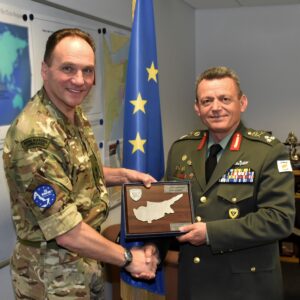
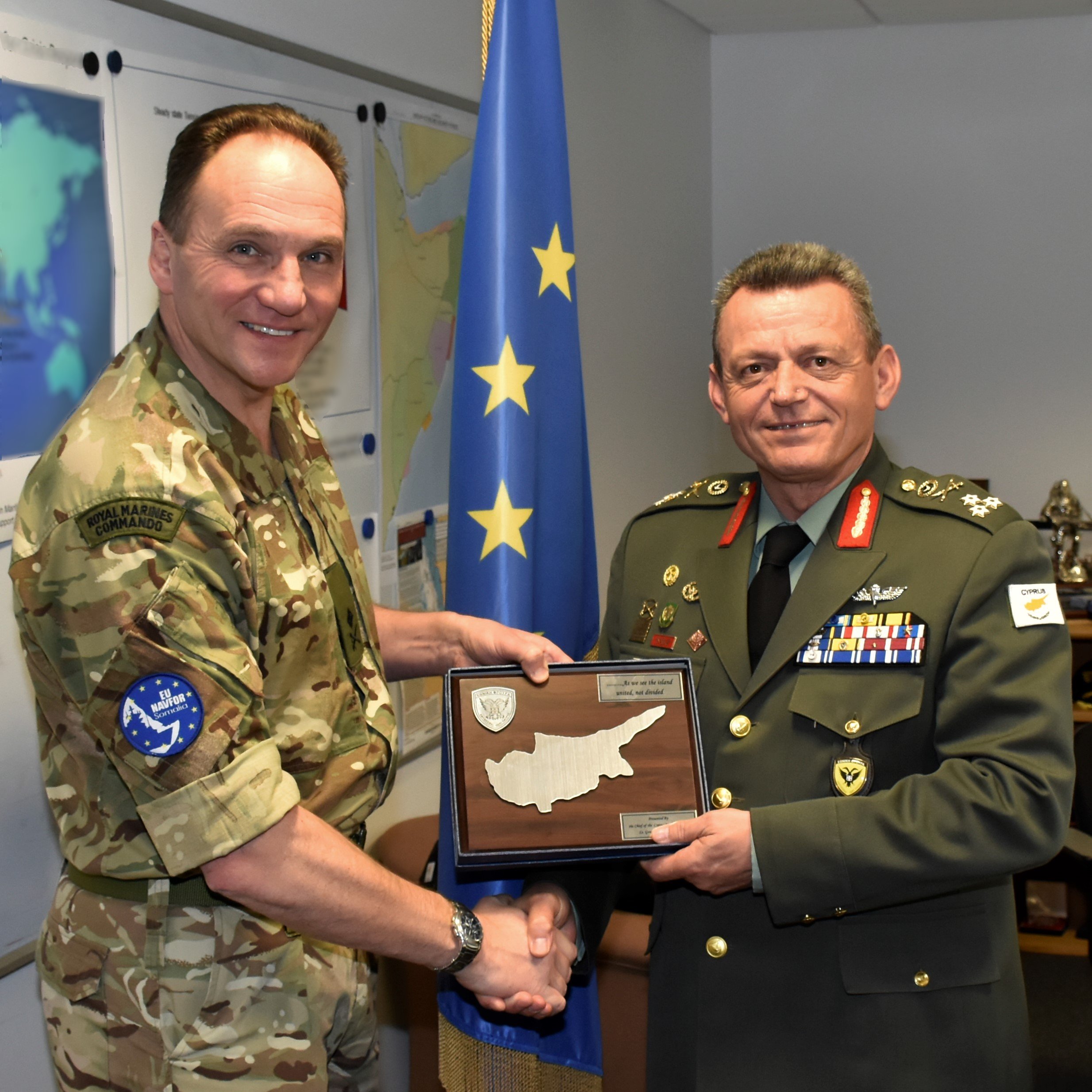
Lieutenant General Ilias Leontaris with EU NAVFOR Commander Major General Charlie Stickland in January 2019.

Lieutenant General Ilias Leontaris, have tensions between Greece and Turkey ever been this intense in recent times? 

It is a fact that the latest Greek-Turkish crisis has particular characteristics. We could describe it as the most intense because it has all the characteristics of hybrid warfare and there is also the presence of large military forces.

The missing element was the use of weapons or fire.

In this way Turkey has tried to show its strength and impose its Revisionist and Expansionist policy against the sovereign rights of Greece and Cyprus.

But I could say that it did not surprise anyone because Turkey has shown its intentions many decades ago and made their implementation more pronounced after 2010 when Erdoğan was already dominant in Turkey’s political game.

If we take the Treaty of Lausanne as the beginning of Greek-Turkish relations, we will see that tensions and crises of little or no intensity have never been lacking since then.

I can mention a few facts.

A) After the Treaty of Lausanne, the first attempt to normalise the relationship between the two countries was made by Eleftherios Venizelos and Mustafa Kemal Atatürk and the signing of the Friendship, Neutrality and Arbitration Pact on September 30, 1930.

B) During the Second World War, even though Turkey had declared neutrality, in practice it cooperated with Germany and indirectly acted against Greece.

C) Since then, significant moments could be mentioned.
i. In 1952, both countries joined NATO at the same time.
ii. On September 6, 1955 a guided Turkish mob provoked pogroms against the Greek population in Constantinople.
iii. The 1955-59 EOKA struggle against Britain in Cyprus and the island’s independence in 1960.
iv. In 1963 Turkey supported the Turkish Cypriots in their mutiny and in 1964 Ankara threatened to invade Cyprus and methodised their withdrawal from the Government of the Republic of Cyprus, followed by the events of the summer of 1964 in the region of Tellyria in Western Cyprus.
v. And we reach the turning point in the new era of Greek-Turkish relations, which is without doubt the crisis of 1974 that led to Turkey’s invasion in Cyprus. This was the first and substantial military engagement between the two countries (after the Treaty of Lausanne) and marked the revision of the operational battle order of the Greek Armed Forces.

D. Since 1974 there have been less but intense crises and incidents, which have created the current conditions and highlighted the need to “change” our attitude in our relations with the neighboring country, whose provocation manifests itself in multiple ways and sustains a situation that is far from the product of Confidence Building Measures and good neighborly relations.

More specifically:

  • HORA 1976. In 1973 the great oil crisis occurred. Three years later the tension over “black gold” extended to the Aegean Sea.
  • Sismik, 1987. It was March of ’87 when the ship “Hori”, which has now been renamed Sismik, created issues.
  • Imia, 1996. On January 31, three Greek naval officers died as a result of their helicopter crashing into the sea. With the intervention of the U.S., the tension was defused and what remained very strongly from this crisis was the constant issue of so-called “Grey Zones”.
  • Imia, 2018. At midnight on February 13, a Coast Guard vessel was inoculated by a Turkish coast guard in the maritime area of Imia.

E) To the above we should add:

  • Turkey’s daily air violations of Greece’s National Airspace, Violations of Air Traffic Rules, and Overflights over islands of the Eastern Aegean and the Dodecanese.
  • The issue of illegal NAVTEX’s that freeze areas for exercises and research activities.

You retired in March 2020, just a few months before tensions with Turkey in the East Mediterranean escalated. Would you have retired if you knew that Turkey would intensify its aggression against Greece and Cyprus?

The time of my retirement was well known much earlier. In March 2020 I completed almost 43 years of service in the Armed Forces and three years as Chief of the Cypriot National Guard – this is the usual stay time in the post. I feel complete.

If you mean that my term of office had to be extended because of the ongoing crisis, I would tell you, it could, however this decision falls into the responsibility of the political leadership and I have no reason to comment on it.

Furthermore, I could say that in organisations such as the Armed Forces, personalities have, of course, their role, and there is for sure a slight disruption at any change, but these organisations themselves ensure continuity in their operation.

With regard to the leadership (political and military) of the Greek Armed Forces, I am very pleased to see that there is an excellent climate, a matching of views, coordinated actions, and this has been demonstrated by the effective response and presence of the Armed Forces during last summer’s crisis.

Before retiring last year, you were Chief of the Cypriot National Guard. What were the major changes you made to the Cypriot National Guard?

The main objective was the implementation of Phase I of the National Guard Transformation Plan.

This project is accompanied by an ambitious procurement program of new weapons systems and the upgrade of existing ones.

Image result for Lieutenant General Ilias Leontaris cyprus
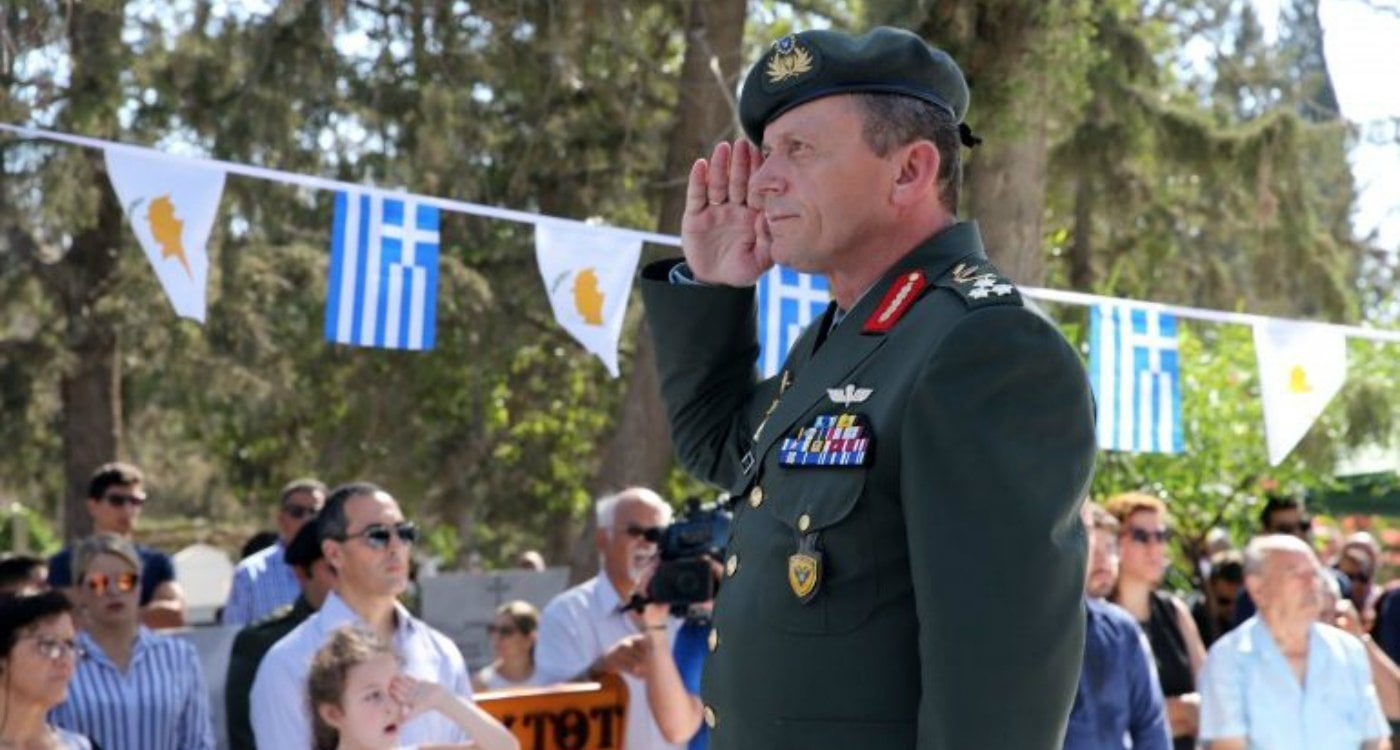
Lieutenant General Ilias Leontaris.

In the context of the project, several other changes had to be made.

To name some I would say improving the living and working conditions for the personnel, as well as their professional development. That is to say, the establishment of a framework of evaluation rules that will:
• inspires personnel’s confidence in their natural leadership
• offer opportunities for all to gain knowledge and experience
• guarantee meritocracy and the development of the most capable and most suitable at the top of the leadership
• allows Officers and non-commissioned officers to dream and have ambitions in their career

Of particular interest, we also had to integrate professional soldiers (men and women in all specialties) into the force.

It was a new institution with which the National Guard was transformed by 60% into a professional force and… it had to work.

Another area in which we gave weight was training and education. This is the base of discipline, morale and fighting ability of a force.

Finally, I find it useful to mention the scope of extroversion.

We implemented policies to inform the people of Cyprus about the work of the National Guard within the country and developed a rich program of defense cooperation with other countries that enabled us to have a presence in international activities in Europe, the Middle East, Egypt, as well as in the U.S.

Greece is currently going through a massive rearmament program. Although we are on the path of acquiring Rafale and F-35 fighter jets, upgrading F-16’s to Viper Class, and purchasing new frigates, from your perspective, what other upgrades need to be prioritized?

It is well known that there has been no procurement of a new weapons systems in Greece in the last 15 year, and it is also known that since the end of the 1990s the budget of the Ministry of National Defense started to decline and became worse after 2010 when the great economic crisis in Greece occurred.

Because of this gap there are extensive needs today and it will certainly cost quite a bit of money to fill that. But I’m used to saying that “Defense is an expensive sport… but freedom is not for free.”

As it concerns the priorities, and to answer your question, I believe that the following should be included in this long-term program:

  • Supply UAVs (Armed and Non-Armed), as well Anti-drone systems
  • Electronic Warfare Systems
  • Improvement of Cyber Defense Capabilities
  • Long Range Air Defense Systems
  • Long Range Artillery and Anti-Tank Weapons/Missiles
  • Early Warning and Command and Control Systems
  • Attack Helicopters
  • Enhancement of Amphibious Operations Capabilities

However, investment in Human Resources remains and should always be the first priority.

All Branches should be reinforced with new personnel in all categories (Officers, Non-commissioned officers, Enlisted etc) and extend conscription by at least three months.

2020 was a huge year for Greek diplomacy. We saw improved relations with many countries. How do you characterise Greece’s expansion of relations outside of our traditional allies in NATO and the EU?

The opening up of foreign policy and the development of a multidimensional network of international relations highlighted Greece’s role, both as a valuable geostrategic position and a factor of stability and security in the sensitive Mediterranean region.

I believe that Greece has all the qualitative elements that advance it as a strategic partner with a range that extends beyond Europe, the Balkans, and the Middle East.

I believe that the recognition of these quality characteristics is a given and should be ‘capitalised’, and while maintaining foreign policy independence, we must continue efforts in further strengthening our ties with the ‘Great Powers’ and the European Union.

In the defense field, Greece maintains strategic cooperation with the U.S., has a high level of cooperation with Russia, is a member of NATO and the European Union, has developed bilateral and tripartite cooperation with countries in the Middle East and the Persian Gulf.

India is a rising power and seeks to establish itself in the international environment. It is a new cooperation and I believe that both countries will gain from it, both in the defense and diplomatic field.

A new president sits in the White House. How do you estimate the new U.S. administration will deal with Turkey and what does a Joe Biden presidency mean for Greece?

It is a fact that Turkey is following “superpower” tactics with the tolerance – or even support – of some European countries, Russia in some cases, but especially with the support of former U.S. President Trump.

The aim of this Revisionist and Expansionary policy is to win the title and role of Regional Power, to extend its influence to regions and countries far from Turkey such as Qatar, Somalia, Libya, etc. and to be recognized as the leading country for Muslims.

In this context it shows that it is moving away from the West, but not leaving it. That is, while a NATO member, it procures the S-400 Air-Defense System from Russia and cooperates with it in Syria, Libya and Nagorno-Karabakh.

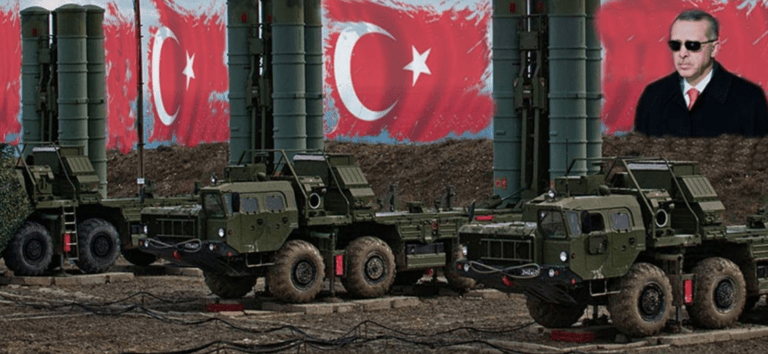
Russian-made S-400.
Russian-made S-400 missile defense system.

While it states that it wishes to join the European Union, what happens in practice is that Turkey is taking advantage of the privileges of the accession process with tolerance from the Europeans.

It is a fact that a few days ago a Turkish official accused the U.S. of supporting the July 15, 2016 coup. In doing so he wanted to show U.S. involvement in Turkey’s domestic issues.

The State Department certainly did not accept this accusation and replied that the Obama administration had nothing to do with it.

In this context I believe that the Biden Administration will continue a sanctions policy that was adopted by the Trump government for procuring the S-400 and will keep the same stance on the supply of F-35 Aircrafts and will press Turkey, not so much to remain in the West, but to limit its relations with China and Russia.

I also assess that Biden will put pressure on Erdoğan to respect human rights, freedom of the press, and I believe that Biden will continue supporting the Kurds in the region in his demand and right for the creation of an independent state.

Let me now come to the new leadership of the United States in relation to Greece.

It is a fact that U.S. relations with Greece improved during the Trump period and are now at a very good level.

I assess that President Biden will follow the same policy.

In any case Biden is elected as President of the United States and his obligation is to work for his country interests.

However, the good thing is that the new president is an experienced politician with a deep knowledge in foreign policy, both as a senator and as Vice President.

Image result for Biden Mitsotakis
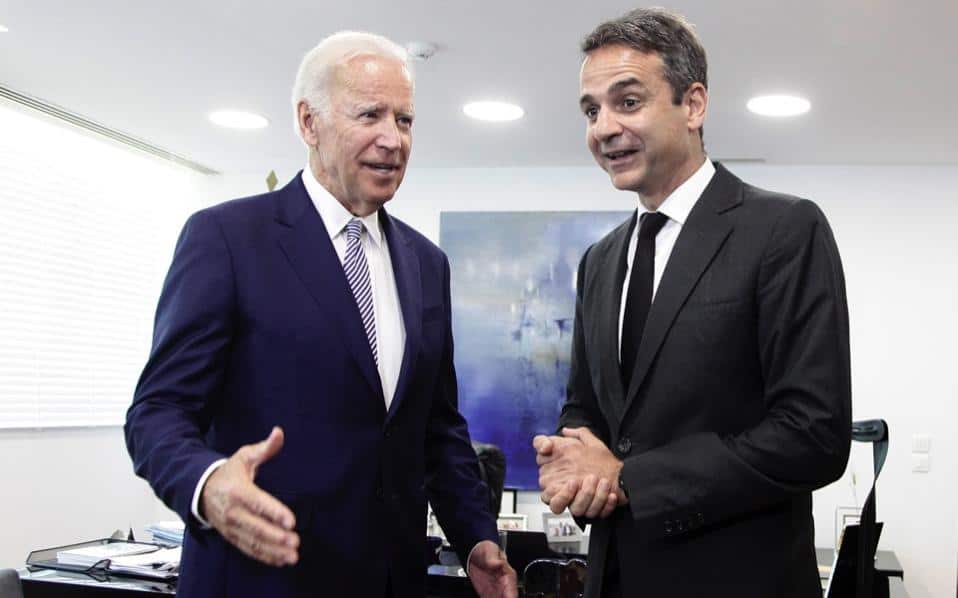
Joe Biden and current Greek PM Kyriakos Mitsotakis.

Biden is aware of the issue in Greek-Turkish relations, the Cyprus Issue in details, and the issues of the Ecumenical Patriarchate, and we hope that he will take a no-negative stance on Greece.

It was announced by the French Defense Minister that Greek personnel will be involved in the French-led peacekeeping mission in Mali. Why is it important that the Greek military becomes more involved in peacekeeping missions from your perspective?

Greece, despite being perhaps the only country in the Western world threatened with a “Casus Belli” by an “allied” country, is involved in efforts by the international community to keep or enforce peace.

In this context, Defense Diplomacy and the Armed Forces have a role to play and a mission to accomplish – Hard Power and Soft Power makes Smart Power.

Following the “Fly the Flag” policy is also important, in order to show our presence wherever we can and to exploit opportunities for gaining operational experience, improving our forces’ defense skills and establishing close “military-to-military” ties.

Participation in each mission and operation like the one in Mali is a way of gaining knowledge and training, especially for our young officers.

In addition, participation in operations like this enhances defense cooperation between contributing countries and helps establish personal relations between colleagues from allied or other countries, which are also important for future relationship since some of them will be senior officers or even leaders of the Armed Forces in their countries.

greekcitytimes.com

Ο κορονοϊός και το εμβόλιο

1
Στην Ελλάδα δεν έχουμε να αντιμετωπίσουμε, μόνο, τον φανατισμό των ανορθολογιστών αλλά και των ορθολογιστών.
Και οι δύο τάσεις πιστεύουν με απόλυτο τρόπο στην άποψή τους.
Έτσι, για ένα θέμα όπως ο κορονϊός και το εμβόλιο για την αντιμετώπισή του ενώ η γνώση είναι σχετικά περιορισμένη και η θεραπεία βρίσκεται σε πειραματικό στάδιο, αν εκφράσεις επιφυλάξεις για την αποτελεσματικότητα του εμβολίου θεωρείσαι κάτι σαν εξωγήινος. Σας να έχεις έρθει απο το μεσαίωνα.
Και, όμως, τα πράγματα δεν είναι ρόδινα., παρόλο που οι υποστηρικτές του εμβολιασμού έχουν μια βεβαιότητα σε αυτό που υποστηρίζουν.
Παρενέργειες σε ανθρώπους που έχουν εμβολιαστεί έχουμε συναντήσει σχεδόν όλοι στην καθημερινή εμπειρία μας. Αλλά και η αποτελεσματικότητα αμφισβητείται σε ένα επιστημονικό άρθρο με στατιστικά δεδομένα που μετέφρασε ο Ευάγγελος Νιάνιος από διεθνή ΜΜΕ και δημοσιεύεται στην ιστοσελίδα www.anixneuseis.gr.(Αξίζει να το δείτε http://www.anixneuseis.gr/%ce%b9%cf%83%cf%81%ce%b1%ce…/).
Οι επισημάνσεις αυτές δεν θέλουν να δημιουργήσουν αντιδράσεις στην προσπάθεια που καταβάλλει η διεθνής επιστημονική κοινότητα και οι κυβερνήσεις για την αντιμετώπιση του κορονοϊού. Αλλά κάποια περίσκεψη και αυτοσυγκράτηση και απο τους ειδικούς, ίσως, είναι αναγκαία.
Οι κυβερνήσεις προσπαθούν να ισορροπήσουν , μεταξύ της αντιμετώπισης των θανάτων, της ανταπόκρισης των συστημάτων υγείας και της λειτουργίας της οικονομίας. Και η εξισορρόπηση αυτή είναι δύσκολη.
Είναι, όμως, λύση η δημιουργία μιας αίσθησης βεβαιότητας ότι η κατάσταση ελέγχεται με τα εμβόλια;
Δεν είμαι σίγουρος.
Θα ήθελα να προσθέσω και το εξής. Ο επιστημονικός λόγος πρέπει να είναι έγκυρος. Αν σε αυτό που περιγράφει υπάρχει υψηλός βαθμός αβεβαιότητας, όπως στην περίπτωση του κονιντ, τότε ο κίνδυνος να διαψευσθεί είναι μεγάλος. Αυτό για την επιστημονική κοινότητα είναι γνωστό και δεδομένο. Για τον πολύ κόσμο, όμως, μπορεί να αποτελέσει μεγάλη απογοήτευση και πηγή αμφιβολίας. Το κακό θα είναι μεγάλο. Γι αυτό χρειάζεται προσοχή στη διαχείριση της πανδημίας απο τους επιστήμονες. Υποστηρίζω τις προσπάθειες που γίνονται και πρέπει να είμαστε ευγνώμονες στους ανθρώπους που βρίσκονται στην πρώτη γραμμή.

Biden’s Eastern Mediterranean agenda

0

Establishing coherent US policy regarding brewing conflict in the eastern Mediterranean should be a priority for the new administration.

The Biden administration faces a daunting array of challenges, many of them pressing: the corona crisis and its attendant economic emergency; deep and divisive disagreements on social policy, migration, race and identity politics; reversing Trump’s course on climate change; the competition with China; tensions with Putin; and Iran’s drive towards a nuclear bomb – an almost overwhelming list. Less urgent concerns may stay low down on the list.

Still, it is in the interest of Israel, and of her partners in the regional alignment (alongside Greece, Cyprus, Egypt and the United Arab Emirates, with France keenly involved too) to alert the administration, and Congress, to the need to chart a new and coherent course for US policy towards the eastern Mediterranean. Otherwise, the tensions that have threatened the region in recent months might erupt, in a manner damaging to basic American interests. Two NATO members coming to blows would be a major setback for the alliance and for the West.

This is partially the result of a problematic record, in recent years, of incoherence in US policy towards Turkish President Recep Tayyip Erdoğan’s neo-Ottoman agenda. Occasional bursts of criticism, and expressions of support for Greece and Cyprus (including the resumption of symbolic arms supplies to the latter) have been interspersed with acts signaling sympathy, at the highest level, for Erdoğan and his moves (for example, in northern Syria) and for his style of governance. In the crucial struggle for Libya, until recent weeks the United States had done little to affect the outcome. All this needs to change.

What happened? And what is at stake?

Tensions have become more acute since the humiliating failure of Erdoğan’s party, the AKP, in the municipal elections (notably in Istanbul) in the summer of 2019. This has only served to bolster his alliance with the ultra-nationalist MHP, enhancing the dangerous combination of the Islamist longing for the caliphate and ultra-nationalist yearnings for a lost empire. In practice, Erdoğan undertook several actions:

1. In October 2019, apparently with a nod from President Donald Trump, Turkish troops embarked on the conquest of significant Syrian territory extending east from ‘Afrin, already under full Turkish occupation, to the Euphrates, and then again in a large area further east, all the way to Iraq. Turkish and Russian patrols share control of the strip south of the Syrian-Turkish border. This greatly curtailed but has not (yet?) destroyed, the Kurdish state-within-a-state in northeastern Syria (called Rojava by the Kurds). (Trump later qualified his stance by telling Erdoğan, in his own inimitable style, “Don’t be a tough guy. Don’t be a fool.”)

2. In Iraq itself, Turkish forces have regularly operated for years across the border in active pursuit of PKK elements in the areas ruled by the KRG (Kurdish Regional Government). This pattern persists now, in conjunction with the Turkish incursion in Syria.

3. In November 2019, in Ankara, Erdoğan signed two memoranda of understanding with Prime Minister Fa’iz Sarraj – head of the “Government of National Accord” in Libya. The latter, at the time, was in control only of limited areas in the country’s northwest, and under siege in Tripoli itself by “Libyan National Army” troops loyal to the self-styled Field Marshal Khalifa Haftar.

One of the MoUs arranged for Turkish military intervention in the war, in support of the GNA. The other set in motion a broader regional crisis by agreeing on a map delineating Exclusive Economic Zones (EEZs) in the eastern Mediterranean in a manner that gives Turkey a common border with Libya (in line with the Turkish Mavi Vatan, or “Blue Homeland” concept, which ignores the EEZ rights of Greek islands such as Rhodes, Carpathos and Crete). If enforced, this would deny Israel, Egypt and Cyprus access by pipeline or cable to Greece and European energy markets. At the symbolic level, this represents an overt bid to assert neo-Ottoman hegemony.

4. By May 2020, the introduction of Turkish forces (including Bayraktar drones and air defense units) and proxies (mainly Syrian Islamist militias) brought about a dramatic reversal of military fortunes in Libya. Haftar’s over-extended forces withdrew, al-Wattiyah Air Base fell to the GNA militias and the siege of Tripoli was lifted. As the GNA offensive gained ground and threatened to push eastwards, President Abdel Fattah el-Sisi of Egypt made his own countermove. He drew a red line, warning that advance beyond the Jufra-Sirte line in central Libya would lead to an Egyptian military intervention (a threat backed by a significant concentration of armored forces near the Libyan border). This act indeed produced a fragile stalemate, and an opportunity for diplomatic efforts that led to the creation of a new governmental structure.

5. Consequently, on Aug. 6, 2020, Egyptian Foreign Minister Samih Shukri and his Greek counterpart Nikos Dendias signed in Cairo an agreement delineating a “counter-map,” asserting Greek EEZ rights and the existence of an EEZ border between Egypt and Greece. Significantly, the UAE expressed full support for this map within a day; Israel did so on Aug. 12. One day later came the announcement in Washington of the planned signing of the “Abraham Accords,” indicating the role of the new regional alignment in the Mediterranean, as well as in the Arabian Gulf facing Iran.

6. This alignment is openly backed by France. The Eastern Mediterranean Gas Forum, established in January 2019 and transformed into a proper regional organization a year later, includes Italy, Egypt, Greece, Israel, Cyprus, Jordan and the Palestinian Authority, with France scheduled to join in 2021. The UAE, the United States, and the European Union are permanent observers. The French have also conducted military exercises with Greece and hosted Sisi for a significant state visit.

7. On the other hand, Erdoğan’s Turkey looks upon the alignment as a hostile conspiracy. (This, despite repeated assertion by EMGF participants that this is not an exclusionary cabal, and that the Forum is open to other like-minded nations.) This has led to a series of provocative Turkish acts, particularly in the form of seismic surveying by research vessels (such as the Oruc Rais) in waters claimed by Ankara under the “Blue Homeland” map.

Tensions rose in the Aegean and over the Greek island of Kastelorizo, threatening to slide into hostilities. But European pressures helped reduce tensions and brought about comprehensive talks between Turkey and Greece. Whether these can lead to a “Zone of Possible Agreement” remains to be seen. To this list of tensions, one could add the Turkish successful intervention in support of Azerbaijan in the recent war with Armenia over Nagorno-Karabakh.

What is at stake amid these local confrontations is the ultimate question of Erdogan’s neo-Ottoman ambitions. Symbolic acts, such as the re-dedication of the Aghia Sophia as a mosque; and inflammatory language, such as the calls for the “liberation” of al-Aqsa, add to the sense of alarm in Jerusalem. Recent Turkish overtures have done little, so far, to allay the concerns of Israel, Egypt and Greece, given that Ankara continues to harbor Hamas and Muslim Brotherhood subversives and to endorse Islamist causes.

US Secretary of State Antony Blinken (AFP/Saul Loeb)

The American role

As noted by an Israel journalist, US policy – or the lack thereof – has played a problematic role in enabling Erdoğan’s conduct. True, in the waning months of the Trump administration Secretary of State Mike Pompeo did offer sharp criticism of Turkish regional policy, and the United States castigated the shelter and support Turkey extends to Hamas terrorists. But for years, Washington adopted positions that amounted to appeasement of the AKP government at the expense of US allies such as the largely Kurdish Syrian Democratic Forces. In Libya, too, the American position towards the GNA and the Turkish intervention was far too vague. Most significantly, there has been no authoritative American endorsement of the Greek-Egyptian map.

All this needs to change, and indeed can change under the Biden administration, as it settles down to sort out priorities and policies. Some of the appointments to the ranks below the Cabinet level indicate the prospect of a departure from past policies. Key players in the administration, who have been involved in various ways in the fight against the Islamic State since 2014, have formed an unfavorable opinion of Erdoğan’s role and the duplicity of the Turkish authorities. Even in the battle of Kobani, which played a crucial role in reversing the tide of ISIS expansion, Turkey did as little as possible – despite pressure from the US-led coalition – to enable the Kurds to survive and prevail. There are now people in positions of responsibility in Washington who have not forgotten this.

This does not mandate a swing to the other, extreme end of the spectrum. Clearly, Turkey is a major regional player and will remain so. (Nor will it leave NATO of its own free will, and there is no procedure for removing a member of the alliance). The United States does not want to push Ankara all the way to a full reliance on Russia and a working alignment with Iran (or even in the direction, already hinted at by Erdoğan, of seeking nuclear weapons). Even for Israel, let alone the United States, diplomatic engagement with Ankara is important.

But the “rules of the road” for such an engagement need to be equally clear. Talk about “liberating al-Aqsa,” and the sheltering of active Hamas operatives, must cease. Following the Qatari-Saudi understanding, and the parallel Egyptian effort to reach out to the GNA and stabilize the status quo, Turkey will need to assure the Biden administration that it will promptly renounce past patterns of propaganda against Egypt and support of the Muslim Brotherhood across the region.

Two-faced practices by the MIT (the “Turkish CIA,” under Hakan Fidan) in terms of facilitating the movement of Islamist radicals must come to an end. The same is true for the deployment of Syrian and other militias as Turkish proxies in Libya and elsewhere.

At the strategic level, and as a major demonstrable departure from Trump’s ambiguous policy, the United States should make it clear that the Turkish-Libyan EEZ delineation map should be taken off the table, in favor of an open-ended negotiation with Greece and Egypt aimed at a practical compromise serving the interests of all (including Israel).

What Israel should seek to do (in close cooperation with Greece and Cyprus and in consultation with Egypt’s leadership) is to draw the administration’s attention to these perspectives and to suggest a practical, open-minded way for Turkey to change course. It should be the purpose of such a policy to enable Ankara to change course, and thus take its proper place in a US-led regional alignment. US allies in the Gulf can be of help in offering positive incentives for this kind of transition.

At the same time, with their unique capacity to mobilize kin or “diaspora” communities, Israel and Greece can play a crucial role in encouraging key members of Congress to clarify what Turkey would be required to do; and what the relevant rewards would be if it does so (in terms of economic opportunities, and perhaps international help in dealing with a large refugee population). A creative solution for the S-400 problem is also needed. Since Congress is unlikely to defray the costs of packing up these missile systems and sending them back to Russia, perhaps some regional player (such as the Saudis or the UAE) may wish to do so, if and when Ankara proves that it is no longer playing a subversive role in regional affairs.

At the same time, Erdoğan should also be made aware of the consequences if he insists on pursuing his present policies. Biden does not need to utilize Trump’s crude threats. The Turkish economy is fragile, and Erdoğan’s popularity rests upon his ability to deliver economic growth. Turkey is not Iran, which has long been impoverished and cut off from world trade. As a member of the G-20, Turkey’s economic future depends on its place in the global economy. Defying the United States and the international community by pursuing its regional ambitions (let alone, as some suspect, embarking on a quest for military nuclear capabilities) could and should have an unambiguous price tag attached to it.

IDF Col. (res) Dr. Eran Lerman is vice president of the Jerusalem Institute for Strategic Studies.

This article was first published by the Jerusalem Institute for Strategic Studies.

israelhayom.com

Χέρι-χέρι ο Ερντογάν μαζί με τον αρχηγό της τουρκικής μαφίας ,ενάντια στους φοιτητές

0

Του Μιχάλη Ψύλου

Μόνο στην Τουρκία του Ερντογάν μπορούν να συμβαίνουν αυτά: Το αφεντικό της Τουρκικής μαφίας Αλαατίν Τσακιτσί να προσφέρει την προσωπική του … υποστήριξη στον διορισθέντα από τον Τούρκο Πρόεδρο, Πρύτανη του Πανεπιστημίου του Βοσπόρου, Μελίχ Μπουλού, ο οποίος έχει πυροδοτήσει τις μεγαλύτερες αντιδράσεις στην Τουρκία από το 2013 και την εξέγερση για το Πάρκο Γκεζί.

“Εάν παραιτηθείτε, θα ανοίξετε το δρόμο σε αυτούς τους τρομοκράτες ακτιβιστές” γράφει ο αρχιμαφιόζος σε δισέλιδη επιστολή του ,που δημοσιεύτηκε στο λογαριασμό του στο Twitter, προτρέποντας τον δοτό Πρύτανη να «αντισταθεί σθεναρά» στους τρομοκράτες φοιτητές. διαδηλωτές. Ποιος είναι ο Τσακιτσί; Απελευθερώθηκε από τη φυλακή τον περασμένο Απρίλιο με πρωτοβουλία του ακροδεξιού στενού του φίλου και κυβερνητικού εταίρου του Προέδρου Ερντογάν, Ντεβλέτ Μπαχτσελί. Ο αρχιμαφιόζος ήταν ο βασικός πρωταγωνιστής στο διαβόητο σκάνδαλο Σούσουρλουκ στα μέσα της δεκαετίας του 1990, με το οποίο αποκαλύφθηκε η συνομωσία της τουρκικής μαφίας με κορυφαίους πολιτικούς της εποχής και τους ακροδεξιούς Γκρίζους Λύκους για τη διάπραξη εγκλημάτων. Ο Τσακιτσί είχε απειλήσει μάλιστα τον περασμένο Νοέμβριο τον αρχηγό της αξιωματικής αντιπολίτευσης Κεμάλ Κιλιτσντάρογλου και ήδη διατυπώθηκαν εναντίον του κατηγορίες από την εισαγγελία της Αγκυρας.

Τι έχει να φοβηθεί όμως ο αρχιμαφιόζος; Αφού την ίδια γλώσσα εναντ΄λιον των διαδηλωτών φοιτητών χρησιμοποιεί και ο ίδιος ο Πρόεδρος της χώρας, Ρετζέπ Ταγίπ Ερντογάν. « Υπηρέτες τρομοκρατικών οργανώσεων» χαρακτήρισε και πάλι ο Ερντογάν τους φοιτητές, ενώ η αστυνομία καταφεύγει καθημερινά σε πογκρόμ συλλήψεων. Ο Ερντογάν κατηγόρησε μάλιστα τα κόμματα της αντιπολίτευσης ότι υποστηρίζουν τους φοιτητές σε μια προσπάθεια «να καλύψουν τη διαφθορά τους και την πολιτική τους εξουθένωση». Ζήτησε μάλιστα καλύτερη επικοινωνιακή πολιτική από το κράτος για να συνετιστεί η νέα γενιά. Και η αρχή έγινε στα τζαμιά όλης της χώρας , στην προσευχή της Παρασκευής.

Αντι-φοιτητική προπαγάνδα στα τζαμιά

Η Διεύθυνση Θρησκευτικών Υποθέσεων υποχρέωσε τους ιμάμηδες να κάνουν κήρυγμα ενάντια στις κινητοποιήσεις των φοιτητών, όπως κατήγγειλε ο δήμαρχος της Κωνσταντινούπολης Εκρέμ Ιμάμογλου.

«Το ανώτατο θρησκευτικό όργανο της πολιτείας χρησιμοποίησε τα τζαμιά για πολιτική, για να δώσει μαθήματα ηθικής στους φοιτητές» τόνισε ο Ιμάμογλου. Τι υποχρεώθηκαν να πουν στο κήρυγμά τους οι Ιμάμηδες; Ότι αν η νεολαία σταματήσει τις διαδηλώσεις «θα ωφεληθεί και θα κερδίσει τόσο σε αυτήν τη ζωή όσο και στη μεταθανάτια ζωή».

Η Διεύθυνση Θρησκευτικών Υποθέσεων -τόνισε ο Δήμαρχος της Κωνσταντινούπολης- «θα πρέπει να ζητήσει από τον Αλλάχ να δώσει στους νέους μας μια κυβέρνηση που δεν τους ξεχωρίζει και δεν θα χρησιμοποιεί όρους όπως« τρομοκράτες» για να τους χαρακτηρίσει. Αλλά και να απαντήσει στους νέους «γιατί δύο στους τρεις πτυχιούχους πανεπιστημίου στη χώρα είναι άνεργοι» ή γιατί έως και το 75¨% των νέων θα ήθελαν να φύγουν από τη χώρα εάν είχαν να επιλέξουν».

Την ίδια ώρα βέβαια , ο υπουργός Εσωτερικών, Σουλεϊμάν Σοϊλού εξαπέλυσε σφοδρή επίθεση εναντίον της Ολλανδέζας ευρωβουλευτίνας του Σοσιαλιστικού κόμματος ,Κάτι Πίρι ,γιατί τόλμησε να υποβάλει ερώτηση στο Ευρωκοινοβούλιο για την «κατάσταση των ανθρωπίνων δικαιωμάτων στην Τουρκία». Ο Σοϊλού ,προϊστάμενος των δυνάμεων ασφαλείας που καταδιώκουν τους φοιτητές, κατηγόρησε την Ολλανδέζα ευρωβουλευτίνα ότι παρεμβαίνει στις εσωτερικές υποθέσεις της Τουρκίας και την …καταράστηκε «να γερνάει με βρώμικες απαιτήσεις»! Για την ταμπακέρα όμως τίποτα! Κουβέντα για τις καταγγελίες της ευρωβουλευτίνας σχετικά με την συνεχιζόμενη κράτηση στις φυλακές του πρώην ηγέτη του φιλο-Κουρδικού HDP ,Σελαχατίν Ντεμιρτάς επί πέντε χρόνια «με μοναδικό έγκλημα το γεγονός ότι εκπροσωπεί ανθρώπους χωρίς φωνή
ενάντια στον αυταρχισμό του Προέδρου Ερντογάν».

«Δεν είναι προσωπική μου γνώμη, αλλά η άποψη που συμμερίζεται η ανώτατη αρχή για τα ανθρώπινα δικαιώματα στην Ευρώπη: Το Ευρωπαϊκό Δικαστήριο Ανθρωπίνων Δικαιωμάτων το οποίο αξίωσε να απελευθερωθεί αμέσως ο Ντεμιρτάς» τονίζει στην ερώτησή της η Κάτι Πίρι. Προσθέτει μάλιστα ότι αν «οι ηγέτες του HDP φυλακίζονται, όπως και οι βουλευτές του, οι δήμαρχοι και τα στελέχη του ,είναι άχρηστο να συνεχίσουμε να συνομιλούμε με την Αγκυρα, αν δεν υπάρξει δράση από την πλευρά της τουρκικής κυβέρνησης. Πιστεύω ότι είναι καιρός να ασκήσουμε πίεση, καθώς μόνο αυτό κατανοεί ο Ερντογάν» σημειώνει η Ολλανδέζα ευρωβουλευτίνα.
Σιγά μην ιδρώσει το αυτί του Σοϊλού βέβαια, ο οποίος ως σκληροπυρηνικός ισλαμο-εθνικιστής ,φλερτάρει με την ιδέα να διαδεχθεί τον Ερντογάν στην εξουσία όταν έλθει το πλήρωμα του χρόνου, καθώς προηγείται όλων των άλλων δελφίνων στις δημοσκοπήσεις, μεταξύ των μελών του κυβερνώντος κόμματος ΑΚΡ.

Κωφεύει η ΕΕ και η Τουρκία αγοράζει και τέταρτο πλωτό γεωτρύπανο

Δυστυχώς, η Κομισιόν και οι περισσότερες ευρωπαϊκές κυβερνήσεις-με πρώτη τη Γερμανική- κωφεύουν μπροστά στην ωμή καταπάτηση των δημοκρατικών και ανθρωπίνων δικαιωμάτων στην Τουρκία, ακολουθώντας μια πολιτική «κατευνασμού» έναντι του Ερντογάν. Την ώρα μάλιστα που ο Τούρκος Υπουργός Άμυνας Χουλουσί Ακάρ πραγματοποιούσε επίσημη επίσκεψη στη Γερμανία την περασμένη εβδομάδα για να αγοράσει γερμανικά όπλα , «ο Ερντογάν περιόριζε ακόμα περισσότερο την αντιπολίτευση στην Τουρκία και διέταζε να συλλαμβάνονται χωρίς κανένα φραγμό ειρηνικοί διαδηλωτές», τόνισε ο τουρκικής καταγωγής Πράσινος βουλευτής Τζεμ Οζντεμίρ μιλώντας στην εφημερίδα Die Welt. Η δε γερμανίδα υπουργός Αμυνας Ανεγκρέτ Κραμπ -Καρενμπάουερ έκανε λόγο για ένα «ιδιαίτερο και καλό μήνυμα μεταξύ συμμάχων»
Όπως λέει ο Οζντεμίρ , που στο παρελθόν διετέλεσε και ηγέτης των Γερμανών Πρασίνων, «είναι ντροπιαστικό το γεγονός ότι η γερμανική Κυβέρνηση δεν θεωρεί απαραίτητο να λάβει πρόσθετα μέτρα για την υποστήριξη της τουρκικής Κοινωνίας των Πολιτών». Αλλά να υποκύπτει στην «επίθεση γοητείας» του Ερντογάν…
Για την επίσημη Γερμανία όλα αυτά είναι όμως ψιλά γράμματα. Η καγκελάριος Μέρκελ μόνο «θετικά μηνύματα» βλέπει να έρχονται από την Τουρκία, όπως άλλωστε είπε στον ίδιο τον Ερντογάν στην τηλεφωνική συνομιλία που είχαν τη Δευτέρα. Όπως δήλωσε ο εκπρόσωπος της καγκελαρίας «η καγκελάριος Άνγκελα Μέρκελ συνεχίζει να βασίζεται στον διάλογο στη διαμάχη μεταξύ Τουρκίας και Ελλάδας και Κύπρου στην ανατολική Μεσόγειο» και «χαιρέτισε τα τελευταία θετικά μηνύματα και εξελίξεις στην ανατολική Μεσόγειο».

Τι κι αν η κυβέρνηση Ερντογάν καταστρατηγεί κάθε έννοια ανθρωπίνων δικαιωμάτων . Διάλογος να γίνεται ,χωρίς όρους και προϋποθέσεις . Για να ανανεώνεται το συγχωροχάρτι προς την Αγκυρα ,ενόψει και της συνόδου κορυφής της ΕΕ στις 25 Μαρτίου.
Οσο για τον Ερντογάν; Ανενόχλητος πλέον αγόρασε και τέταρτο πλωτό γεωτρύπανο ,από τη Νορβηγία, όπως έγραψε η Yeni Safak. Πρώτα η δουλειά και στα διαλείμματα… διάλογος!

Δημοκρατία


Γιατί ο Σαλβίνι στηρίζει Ντράγκι;

0

Στα παράδοξα της ιταλικής πολιτικής σκηνής, αλλά και στις εξελίξεις που προκαλεί η νέα διαδικασία αποπομπής του Ντόναλντ Τραμπ στις ΗΠΑ εστιάζει σήμερα ο γερμανόφωνος Τύπος.

    
Italien Senat Ex-Innenminister Salvini

Η Frankfurter Allgemeine Zeitung (FAZ) επισημαίνει ότι σχεδόν όλα τα ιταλικά κόμματα, ακόμη και η ακροδεξιά Λέγκα του Ματέο Σαλβίνι, στηρίζουν κατ’ αρχήν τον σχηματισμό νέας κυβέρνησης υπό τον πρώην διοικητή της ΕΚΤ Μάριο Ντράγκι. Που οφείλεται άραγε η φιλοευρωπαϊκή μετάλλαξη του Σαλβίνι, η «κοπερνίκεια στροφή» όπως την αποκαλεί ο ιταλικός τύπος; Σύμφωνα με τη γερμανική εφημερίδα «η αλλαγή φρονημάτων του Σαλβίνι είναι το αποτέλεσμα πιέσεων που ασκεί η οικονομικά φιλελεύθερη πτέρυγα της Λέγκα στο προπύργιό της, τις οικονομικά ισχυρές περιφέρειες της Βόρειας Ιταλίας. Επικεφαλής της πτέρυγας είναι ο αντιπρόεδρος του κόμματος Τζιανκάρλο Τζιορτζέτι, που θεωρείται κύριος υποψήφιος της Λέγκα για υπουργικό θώκο σε μία κυβέρνηση Ντράγκι. Αλλά και ο Λούκα Ζάια, ο οποίος τον περασμένο Σεπτέμβριο επανεξελέγη πανηγυρικά στο αξίωμα του κυβερνήτη στο Βένετο, εκτιμάται ότι έχει ασκήσει μετριοπαθή επιρροή στη Λέγκα. Μία απόρριψη του πρώην τραπεζίτη Ντράγκι, ο οποίος απολαμβάνει υψηλό κύρος τόσο σε πολυεθνικές όσο και σε οικογενειακές επιχειρήσεις, δεν συνάδει με την εικόνα που προβάλλουν (στη Λέγκα) ως ένα κόμμα με ιδιαίτερες ικανότητες στον χώρο της οικονομίας. Σε κάθε περίπτωση ο Σαλβίνι, μετά από τη συνάντησή του με τον Ντράγκι, προέβη σε εκτενή δήλωση στήριξης μίας ΕΕ, την οποία ο ίδιος επί σειρά ετών κατακευραύνωνε ως ‘δικτατορία των τραπεζιτών και των γραφειοκρατών’».

Υπάρχουν όμως και άλλες, μακροπρόθεσμες σκοπιμότητες, εκτιμά ο ανταποκριτής της εφημερίδας στη Ρώμη: «Μετά τη διάλυση του συνασπισμού με τα Πέντε Αστέρια τον Αύγουστο του 2019 από τον Σαλβίνι, που πίεζε για πρόωρες εκλογές, ο Ντράγκι του προσφέρει τώρα μία προοπτική πρόωρης επανόδου στην εξουσία. Κι έτσι η Λέγκα, που είδε τα ποσοστά της στις δημοσκοπήσεις να υποχωρούν από το 37% στο 24% μετά τη διάλυση του κυβερνητικού συνασπισμού με πρωτοβουλία Σαλβίνι, μπορεί να βγει κερδισμένη, επιδεικνύοντας συμπεριφορά υπεύθυνης πολιτικής δύναμης σε εποχές εθνικής κρίσης. Οι επικριτές του προειδοποιούν ότι ο εθνικιστής λύκος Σαλβίνι επανεμφανίζεται με προβιά φιλοευρωπαϊκού προβάτου στα άδυτα της εξουσίας, σκοπεύοντας να επιστρέψει στην πρωταρχική του μορφή μετά από μία νίκη στις εκλογές του 2023».

Το ρίσκο της «αποπομπής» Τραμπ

Νέα διαδικασία αποπομπής του Ντόναλντ Τραμπ εγκαινιάζουν οι Δημοκρατικοί, παρότι ο Τραμπ έχει ήδη αποχωρήσει από τον Λευκό ΟίκοΝέα διαδικασία αποπομπής του Ντόναλντ Τραμπ εγκαινιάζουν οι Δημοκρατικοί, παρότι ο Τραμπ έχει ήδη αποχωρήσει από τον Λευκό Οίκο

Τη νέα «διαδικασία αποπομπής» με στόχο τον Ντόναλντ Τραμπ σχολιάζουν πολλές γερμανικές εφημερίδες. Η Süddeutsche Zeitung σημειώνει ότι το εγχείρημα ενέχει κινδύνους, καθώς «ο Ντόναλντ Τραμπ δεν θα μείνει στην ιστορία μόνο ως ο πρώτος πρόεδρος των ΗΠΑ που αναγκάστηκε να αντιμετωπίσει δύο φορές τη διαδικασία αποπομπής- στίγμα που δεν συνοδεύει ούτε έναν από τους προκατόχους του. Θα μείνει επίσης στην ιστορία- αυτό θεωρείται βέβαιο από τώρα- ως ο πρώτος πρόεδρος που επιβιώνει δύο φορές από μία διαδικασία αποπομπής. Είναι και αυτό ένα ιστορικό επίτευγμα, για το οποίο κανείς από τους προκατόχους του δεν μπορεί να υπερηφανεύεται. Τι από τα δύο θεωρούν πιο σημαντικό οι ψηφοφόροι, είναι ένα ερώτημα καθοριστικής σημασίας για το μέλλον του Τραμπ και των ΗΠΑ».

Από την άλλη πλευρά η εφημερίδα του Μονάχου επισημαίνει: «Θα μπορούσαν οι Δημοκρατικοί να παραιτηθούν από αυτή τη διαδικασία αποπομπής; Όχι. Όχι μετά από ό,τι συνέβη στις 6 Ιανουαρίου. Η έφοδος στο Καπιτώλιο από μία ορδή οπαδών του Τραμπ αποτελούσε σημείο καμπής στη νεότερη αμερικαική ιστορία. Στα προηγούμενα 250 χρόνια οι ΗΠΑ έζησαν πολλά περιστατικά βίας με πολιτικά κίνητρα. Αλλά ποτέ στο παρελθόν ένας πρόεδρος δεν είχε ξεσηκώσει τον όχλο να κινηθεί προς το Κοινοβούλιο για να εμποδίσει βουλευτές και γερουσιαστές να επικυρώσουν την εκλογική του ήττα. Για ποιον λόγο προβλέπεται στο Σύνταγμα μια ρήτρα αποπομπής, αν όχι για να τιμωρείται μία τέτοια επίθεση προς την αμερικανική Δημοκρατία;»

Με το βλέμμα στις επόμενες αμερικανικές εκλογές

Θα επιστρέψει ως υποψήφιος ο Ντόναλντ Τραμπ;Θα επιστρέψει ως υποψήφιος ο Ντόναλντ Τραμπ;

Μία από τις λίγες γερμανικές εφημερίδες που επικρίνουν τη διαδικασία αποπομπής είναι η βαυαρική Nordbayerische Kurrier από το Μπάιροϊτ. Μεταξύ άλλων διαβάζουμε: «Οι Δημοκρατικοί επιδεικνύουν γελοία συμπεριφορά λέγοντας ότι η διαδικασία αποπομπής θα αποτρέψει τον Τραμπ να θέσει εκ νέου υποψηφιότητα για τον Λευκό Οίκο σε τέσσερα χρόνια. Τόσο πολύ φοβούνται έναν τόσο κακό πρόεδρο; Δεν πιστεύουν ότι θα καταφέρουν να πείσουν την πλειοψηφία των Αμερικανών, ακολουθώντας μία καλύτερη πολιτική;»

Στις επόμενες εκλογές αναφέρεται και η εφημερίδα Südkurier, καταλήγοντας όμως σε διαφορετικό συμπέρασμα: «Από τότε που ο Τζο Μπάιντεν πήρε θέση στον Λευκό Οίκο ο Ντόναλντ Τραμπ επιδιώκει την επιστροφή του, σαν ένα φάντασμα που είναι αδύνατον να εκδιωχθεί. Μόνο μία καταδικαστική απόφαση μπορεί να ακυρώσει τα σχέδιά του. Από αυτή την άποψη η αποπομπή θα εξυπηρετούσε και τα συμφέροντα του Ρεπουμπλικανικού Κόμματος, χωρίς τις ψήφους του οποίου δεν μπορεί να προχωρήσει. Ο Τραμπ έχει καταντήσει εφιάλτης για το ίδιο του το κόμμα. Σε τέσσερα χρόνια θα θέσει εκ νέου υποψηφιότητα- είτε με τους Ρεμπουμπλικανούς, είτε με ένα ανταγωνιστικό δεξιό σχήμα, για παράδειγμα με το Πατριωτικό Κόμμα. Σε αυτή την περίπτωση ο διχασμός των Ρεπουμπλικανών θα ήταν πλήρης. Έχουν και οι ίδιοι κάθε λόγο να εξουδετερώσουν οριστικά τον Τραμπ».

Γιάννης Παπαδημητρίου

DW