



Το αμιγώς ελληνικό συνεργατικό σχήμα θα αναπτύξει ένα πρότυπο/standard για την αναγνώριση και τον εντοπισμό δορυφόρων, συμβάλλοντας στη δημιουργία πιο ασφαλών συνθηκών στο Διάστημα
UFOs και «εξωγήινη τεχνολογία»: υπάρχουν, τελικά; Ερευνητική ομάδα του Χάρβαρντ ξεκινά τη διεθνή έρευνα “Galileo”

Αναζήτηση για την ύπαρξη, ή μη τελικά, όχι μόνο UFOs αλλά και εξωγήινης διαστημικής τεχνολογίας ξεκινούν ερευνητές του Χάρβαρντ, οι οποίοι θα προσπαθήσουν να συγκεντρώσουν σχετικά στοιχεία και αποδείξεις.
Στην έρευνα με το όνομα Galileo, θα αναζητούν και διερευνηθούν στοιχεία που θα μπορούσαν να καταδείξουν ανενεργούς ή και ενεργούς «εξωγήινους τεχνολογικούς πολιτισμούς».
Στο έργο θα αναλυθούν δεδομένα από αστρονομικές έρευνες και παρατηρήσεις τηλεσκοπίων, ενώ θα ερευνηθούν και νέοι αλγόριθμοι με τη χρήση τεχνητής νοημοσύνης (AI), ώστε να εντοπιστούν πιθανοί «διαστρικοί ταξιδιώτες», δορυφόροι εξωγήινων αλλά και μη αναγνωρισμένα ιπτάμενα αντικείμενα (UFOs), σύμφωνα με όσα ανακοινώθηκαν σχετικά.
Το πρόγραμμα Galileo παίρνει το όνομά του από τον πρωτοπόρο Ιταλό αστρονόμο. Ο ίδιος χρησιμοποίησε τηλεσκόπια για την παρατήρηση ουράνιων αντικειμένων, που οδήγησαν σε εκπληκτικές ανακαλύψεις.
Με την έρευνα για επιχειρηθεί από τους ειδικούς να επιλυθεί οριστικά το ερώτημα αναφορικά με το αν υπάρχουν ευφυείς εξωγήινοι.
Με πληροφορίες από LiveScience.com
Ένα βήμα πιο κοντά στο κβαντικό ίντερνετ

Το πρώτο κβαντικό δίκτυο πολλαπλών κόμβων, το οποίο μπορεί να συνδέει τρεις κβαντικούς επεξεργαστές μεταξύ τους, ανακοίνωσαν ότι δημιούργησαν Ολλανδοί ερευνητές.
Όπως τονίζεται, πρόκειται για ένα σημαντικό ορόσημο στον δρόμο προς την υλοποίηση του κβαντικού διαδικτύου στο όχι πολύ μακρινό μέλλον.
Οι ερευνητές της κοινοπραξίας QuTech και του Πολυτεχνείου του Ντελφτ, οι οποίοι έκαναν τη σχετική δημοσίευση στο περιοδικό «Science», σκοπεύουν -σταδιακά- να προσθέσουν περισσότερα κβαντικά bits στο δίκτυό τους, καθώς και υψηλότερου επιπέδου «στρώματα» υλικού (hardware) και λογισμικού (software).
Ερευνητές σε πολλά εργαστήρια ανά τον κόσμο εργάζονται για τη δημιουργία ενός κβαντικού διαδικτύου που θα μπορεί να συνδέει δύο οποιεσδήποτε κβαντικές συσκευές, όπως υπολογιστές ή αισθητήρες, σε μεγάλες αποστάσεις. Ενώ το σημερινό ίντερνετ μεταφέρει πληροφορίες σε μορφή bits που μπορεί να είναι είτε 0 είτε 1, ένα μελλοντικό κβαντικό ίντερνετ θα χρησιμοποιεί κβαντικά bits που θα είναι ταυτόχρονα 0 και 1, κάτι που θα τους προσδίδει τρομερά μεγαλύτερη υπολογιστική ισχύ σε σχέση με σήμερα.
«Ένα κβαντικό δίκτυο θα ανοίξει μία γκάμα νέων εφαρμογών, από επικοινωνίες και υπολογιστικό “νέφος” απαραβίαστα από χάκερ μέχρι την πλήρη προστασία της ιδιωτικότητας των χρηστών και την υψηλότατης ακρίβειας τήρηση του χρόνου. Και -όπως με το ίντερνετ πριν 40 χρόνια- θα υπάρξουν πιθανότατα πολλές εφαρμογές που σήμερα δεν μπορούμε να προβλέψουμε», δήλωσε ο ερευνητής Ματέο Πομπίλι.
Τα πρώτα βήματα για ένα κβαντικό ίντερνετ έγιναν την προηγούμενη δεκαετία με τη σύνδεση δύο κβαντικών συσκευών μέσω μίας άμεσης φυσικής σύνδεσης. Όμως, είναι ζωτικό να καταστεί εφικτή η μεταφορά κβαντικών πληροφοριών μέσω ενδιάμεσων κόμβων, ανάλογων των «ρούτερ» του κλασσικού διαδικτύου.
Επιπλέον, αρκετές -πολλά υποσχόμενες- εφαρμογές του κβαντικού διαδικτύου εξαρτώνται από το φαινόμενο της κβαντικής διεμπλοκής και τη μεταφορά κβαντικά «διαπλεκόμενων» bits ανάμεσα σε πολλαπλούς κόμβους. Οι Ολλανδοί ερευνητές είναι οι πρώτοι διεθνώς που συνέδεσαν δύο κβαντικούς επεξεργαστές, όχι άμεσα μεταξύ τους, αλλά μέσω ενός ενδιάμεσου κόμβου, πετυχαίνοντας παράλληλα κβαντική διεμπλοκή ανάμεσα σε πολλαπλούς μεμονωμένους κβαντικούς επεξεργαστές.
Το ολλανδικό -ακόμη στοιχειώδες- κβαντικό δίκτυο αποτελείται από τρεις κβαντικούς κόμβους που βρίσκονται σε κάποια απόσταση μεταξύ τους μέσα στο ίδιο κτίριο. Ο μεσαίος κόμβος έχει φυσική διασύνδεση με τους άλλους δύο κόμβους.
«Το μελλοντικό κβαντικό διαδίκτυο θα αποτελείται από αμέτρητες κβαντικές συσκευές και ενδιάμεσους κόμβους», ανέφερε ο επικεφαλής ερευνητής Ρόναλντ Χάνσον. Η πρώτη δοκιμή του ολλανδικού κβαντικού δικτύου εκτός εργαστηρίου, σε υπάρχοντα τηλεπικοινωνιακά δίκτυα, προγραμματίζεται να έχει υλοποιηθεί έως το τέλος του 2022.
Mε πληροφορίες από ΑΠΕ – ΜΠΕ
Ραλφ Μπάρικ: «Ποτέ δεν δημιουργήσαμε στο εργαστήριο έναν υπέρ-ιό όπως ο SARS-CoV-2»

Τον περασμένο Μάιο, ο Αμερικανός επιδημιολόγος Ραλφ Μπάρικ από τη Σχολή Δημόσιας Υγείας του Πανεπιστημίου της Β. Καρολίνας, βρέθηκε στο επίκεντρο της συζήτησης για τα πειράματα κέρδους – λειτουργίας, γνωστά στην επιστημονική κοινότητα ως «Gain of Function». Κατά τη διάρκεια μιας ακρόασης στο Κογκρέσο, ο γερουσιαστής Ραντ Πολ από το Κεντάκι, άφησε να εννοηθεί ότι τα Εθνικά Ινστιτούτα Υγείας χρηματοδοτούσαν τέτοιου είδους έρευνες τόσο στο Ινστιτούτο Ιολογίας της Γουχάν όσο και στο εργαστήριο του Μπάρικ, και ότι τα δύο εργαστήρια συνεργάζονταν για να δημιουργήσουν υπερ-ιούς.
Ο Μπάρικ εξέδωσε δήλωση όπου διευκρίνισε ότι, σύμφωνα με τα Εθνικά Ινστιτούτα Υγείας (NIH), η εν λόγω έρευνα δεν μπορούσε να χαρακτηριστεί ως κέρδους – λειτουργίας, καθώς κανένας από τους κορονοϊούς που έμοιαζαν με τον SARS και τους οποίους είχε χρησιμοποιήσει στα πειράματα, δεν σχετιζόταν στενά με τον SARS-CoV-2, ενώ τόνισε ότι η συνεργασία του με το Ινστιτούτο Ιολογίας της Γουχάν ήταν ελάχιστη.
Σε συνέντευξή του στο MIT Tecnology Review, ο επιστήμονας μίλησε για τα πειράματα κέρδους-λειτουργίας καθώς και για τις συνθήκες στο Ινστιτούτο Ιολογίας της Γουχάν.
Πώς ξεκίνησε αυτή η έρευνα με τους κορονοϊούς;
Το 2012 ή το 2013, παρακολούθησα μια παρουσίαση της Δρα Σι Ζενγκλί (Shi Zhengli). Η ομάδα της είχε πρόσφατα ανακαλύψει δύο νέους κορονοϊούς σε μια σπηλιά όπου βρίσκονταν νυχτερίδες, τους οποίους ονόμασε SHC014 και WIV1. Μιλήσαμε μετά τη συνάντηση και τη ρώτησα αν θα ήταν πρόθυμη να μας δημοσιοποιήσει τις αλληλουχίες των SHC014 και WIV1 αφού τις αναρτησει στη σχετική βάση. Πράγματι, μας τις έστειλε σχεδόν αμέσως, πριν μάλιστα τις αναρτήσει. Αυτή ήταν η μεγαλύτερη συνεισφορά της και όταν ένας ή μία συνάδελφος σας δίνει τις αλληλουχίες εκ των προτέρων, απαιτείται η αναφορά του ονόματος του/της.
Αυτή ήταν η βάση της συνεργασίας μας. Δεν δώσαμε ποτέ αλληλουχίες, κλώνους ή χιμαιρικούς ιούς στους ερευνητές του Ινστιτούτου Ιολογίας της Γουχάν (WIV) και η Σι Ζενγκλί, ή μέλη της ερευνητικής της ομάδας, δεν εργάστηκαν ποτέ στο εργαστήριό μας στο Πανεπιστήμιο της Βόρειας Καρολίνας (UNC). Κανείς από την ομάδα μου δεν εργάστηκε στα εργαστήρια του WIV.
Υπήρχε περίπτωση να είχε αναπτύξει μια τεχνική αντίστροφης γενετικής που θα της επέτρεπε να συνθέτει αυτούς τους ιούς μόνο από τη γενετική αλληλουχία;
Ναι, αλλά εκείνη την εποχή, το κόστος σύνθεσης του DNA ήταν υψηλό – περίπου ένα δολάριο ανά «γράμμα» DNA. Έτσι, η σύνθεση ενός γονιδιώματος κορονοϊού θα μπορούσε να κοστίσει 30.000 δολάρια. Επιπλέον, είχαμε μόνο την αλληλουχία των ακίδων. Η σύνθεση του γονιδίου των 4.000 νουκλεοτιδίων κόστισε 4.000 δολάρια. Έτσι εισάγαμε το στέλεχος SHC014 σε ένα προσαρμοσμένο στέλεχος SARS σε ποντίκια. Ο ιός ήταν βιώσιμος και διαπιστώσαμε ότι μπορούσε να αναπαραχθεί σε ανθρώπινα κύτταρα.
Πρόκειται λοιπόν για πειράματα κέρδους – λειτουργίας; Το γονικό στέλεχος του κορονοϊού SARS μπορούσε να πολλαπλασιαστεί αρκετά αποτελεσματικά σε πρωτογενή ανθρώπινα κύτταρα. Η χίμαιρα μπορούσε επίσης να προγραμματίσει τη μόλυνση ανθρώπινων κυττάρων, αλλά όχι καλύτερα από το γονικό στέλεχος. Έτσι, δεν αποκτήσαμε καμία λειτουργία, αντίθετα την περιορίσαμε. Επιπλέον, η χίμαιρα ήταν εξασθενημένη στα ποντίκια σε σύγκριση με το γονικό στέλεχος, οπότε αυτό θα μπορούσε να θεωρηθεί απώλεια λειτουργίας.
Ένα από τα εμπόδια σε αυτού του είδους την έρευνα είναι ότι έχει μικρή πρακτική αξία. Συμφωνείτε;
Από το 2016, με τη βοήθεια χιμαιρών και της αντίστροφης γενετικής, είχαμε καταφέρει να εντοπίσουμε αρκετούς κορονοϊούς υψηλού κινδύνου τύπου SARS και να δοκιμάσουμε φάρμακα που είχαν ευρεία δράση κατά των κορονοϊών. Εντοπίσαμε τη ρεμδεσιβίρη ως το πρώτο αντιιικό φάρμακο ευρείας βάσης που δρούσε κατά όλων των γνωστών κορονοϊών και δημοσιεύσαμε τα αποτελέσματα το 2017.
Το φάρμακο αυτό χορηγήθηκε σε εθελοντές που συμμετείχαν σε κλινικές δοκιμές και ήταν το πρώτο που εγκρίθηκε από τον FDA για τη θεραπεία για λοιμώξεις από COVID-19 παγκοσμίως. Ένα δεύτερο φάρμακο, που ονομάζεται EIDD-2801, ή molnupiravir, ήταν επίσης αποτελεσματικό κατά όλων των γνωστών κορονοϊών πριν από την πανδημία του 2020, και αργότερα αποδείχθηκε ότι λειτούργησε και κατά του SARS-CoV-2 τον Μάρτιο του 2020.
Δεν συμφωνώ λοιπόν με αυτή την υπόθεση. Θα ρωτούσα τους επικριτές αν είχαν εντοπίσει φάρμακα για τον κορονοϊό ευρέος φάσματος πριν από την πανδημία. Θα τους ρωτούσα εάν είχαν έγγραφα από τα εργαστήριά τους που να τεκμηριώνουν μια στρατηγική προσέγγιση για την ανάπτυξη αποτελεσματικών φαρμάκων για τους κορονοϊούς και τα οποία ήταν αποτελεσματικά κατά ενός άγνωστου αναδυόμενου πανδημικού ιού;
Δυστυχώς, το remdesivir μπορεί να χορηγηθεί μόνο ενδοφλέβια. Εμείς αναζητούσαμε ένα φάρμακο που θα μπορούσε να χορηγηθεί από το στόμα, αλλά εμφανίστηκε η πανδημία της Covid-19. Εύχομαι πραγματικά να είχα από την αρχή ένα τέτοιο φάρμακο. Αυτό θα μπορούσε να αλλάξει τα δεδομένα.
Από την άλλη, το molnupiravir χορηγείται από το στόμα και οι δοκιμές φάσης 3 καταδεικνύουν ταχεία καταπολέμηση της ιογενούς λοίμωξης. Εξετάζεται ήδη το ενδεχόμενο χορήγησης άδειας επείγουσας χρήσης στην Ινδία.
Τι γίνεται με τα εμβόλια;
Γύρω στο 2018 με 2019, το Κέντρο Έρευνας Εμβολίων του Εθνικού Ινστιτούτου Υγείας (NIH) επικοινώνησε μαζί μας για να ξεκινήσουμε τη δοκιμή ενός εμβολίου με βάση το αγγελιοφόρο RNA κατά του MERS-CoV, ενός κορονοϊού που μπορεί να μεταδοθεί από τις καμήλες στους ανθρώπους. Ο MERS-CoV αποτελεί σταθερό πρόβλημα από το 2012, με ποσοστό θνησιμότητας 35%, οπότε θα μπορούσε να αποτελέσει πραγματική απειλή για την παγκόσμια υγεία.
Στις αρχές του 2020, είχαμε έναν τεράστιο όγκο δεδομένων που έδειχναν ότι τα εμβόλια mRNA ήταν πράγματι αποτελεσματικά στην προστασία από τη λοίμωξη από τον MERS-CoV, στο μοντέλο ποντικού που είχαμε αναπτύξει. Έτσι, νομίζω ότι ήταν αυτονόητο για το NIH να θεωρήσει τα εμβόλια με βάση το mRNA ως ασφαλή κατά του SARS-CoV-2 και να τους δώσει υψηλή προτεραιότητα.
Πιο πρόσφατα, δημοσιεύσαμε μια μελέτη που δείχνει ότι τα εμβόλια mRNA προστατεύουν από όλες τις γνωστές λοιμώξεις από ιούς που μοιάζουν με SARS, στα ποντίκια. Οι παγκόσμιες προσπάθειες για την ανάπτυξη εμβολίων κατά των κορονοϊών όπως ο SARS και ο SARS-CoV-2- θα απαιτήσουν να παρασκευάσουμε ιούς όπως αυτοί που περιγράφονται στο έγγραφο του 2015. Θα έλεγα λοιπόν ότι όποιος λέει ότι δεν υπήρχε λόγος για να γίνει η μελέτη το 2015, απλώς δεν αναγνωρίζει την υποδομή που συνέβαλε στη δημιουργία θεραπειών και εμβολίων για τον covid-19 και άλλους μελλοντικούς κορονοϊούς.

Η έρευνα είναι πολύτιμη μόνο εάν τα οφέλη αντισταθμίζουν τους κινδύνους. Υπάρχουν πρότυπα ασφαλείας που πρέπει να εφαρμόζονται για την ελαχιστοποίηση αυτών των κινδύνων;
Βεβαίως. Διεξάγουμε την έρευνά μας σε εγκαταστάσεις τύπου BSL-3 plus. Οι ελάχιστες απαιτήσεις περιλαμβάνουν: μάσκες N95, προστασία των ματιών, γάντια και εργαστηριακή ποδιά, αλλά στην πραγματικότητα χρησιμοποιούμε αδιάβροχες στολές Tyvek, ποδιές, μποτάκια και γάντια. Το προσωπικό μας φοράει κουκούλες με PAPR που παρέχουν αέρα φιλτραρισμένο με HEPA. Έτσι, δεν κάνουμε μόνο όλη την έρευνα σε ένα θάλαμο βιολογικής ασφάλειας, αλλά σε μια εγκατάσταση αρνητικής πίεσης, η οποία διαθέτει πολλά πλεονάζοντα και εφεδρικά χαρακτηριστικά, ενώ κάθε εργαζόμενος είναι ασφαλισμένος στη δική του στολή.
Επίσης, πραγματοποιούμε ασκήσεις έκτακτης ανάγκης με τους τοπικούς πρώτους ανταποκριτές. Συνεργαζόμαστε με το τοπικό νοσοκομείο. Καθώς υπάρχουν πολλές εργαστηριακές λοιμώξεις, δεν υπάρχει στην πραγματικότητα ένα γνωστό γεγονός που να έχει προκαλέσει την εμφάνιση της λοίμωξης. Και οι άνθρωποι αρρωσταίνουν, σωστά; Θα πρέπει να έχετε σχέδια ιατρικής επιτήρησης για την άμεση καραντίνα των ανθρώπων στο σπίτι, να βεβαιώνεστε ότι φορούν μάσκες και να επικοινωνείτε τακτικά με έναν γιατρό στην πανεπιστημιούπολη.
Αυτά ισχύουν και για άλλες εγκαταστάσεις στις ΗΠΑ και διεθνώς;
Όχι, δεν νομίζω. Άλλες εγκαταστάσεις ακολουθούν διαφορετικές διαδικασίες λειτουργίας και μπορεί να μη διαθέτουν τον ίδιο εξοπλισμό. Εν μέρει αυτό εξαρτάται από τα οικονομικά τους καθώς και από τους παθογόνους μικροοργανισμούς που μελετώνται εκεί. Για παράδειγμα, μια μάσκα N95 είναι πολύ φθηνότερη από ένα PAPR.
Σε διεθνές επίπεδο, οι ΗΠΑ δεν μπορούν να επέμβουν σχετικά με τις συνθήκες βιοασφάλειας που ακολουθούνται στην Κίνα ή σε οποιοδήποτε άλλο κυρίαρχο κράτος για τη διεξαγωγή έρευνας για ιούς, είτε πρόκειται για κορονοϊό είτε για άλλους ιούς.
Το Ινστιτούτο Ιολογίας της Γουχάν κατασκεύαζε χιμαιρικούς κορονοϊούς, χρησιμοποιώντας τεχνικές παρόμοιες με τις δικές σας, σωστά;
Επιτρέψτε μου να διευκρινίσω ότι δεν έχουμε στείλει ποτέ κανέναν από τους μοριακούς μας κλώνους ή τους χιμαιρικούς ιούς στην Κίνα. Ανέπτυξαν τον δικό τους μοριακό κλώνο, με βάση τον WIV1, ο οποίος είναι ένας κορονοϊός που προέρχεται από νυχτερίδες. Σε αυτό τον κλώνο πρόσθεσαν τα γονίδια άλλων κορονοϊών επίσης από νυχτερίδες, για να διαπιστώσουν κατά πόσο τα γονίδια αυτών των στελεχών μπορούσαν να μολύνουν ανθρώπινα κύτταρα.
Θα το αποκαλούσατε αυτό πείραμα κέρδους-λειτουργίας;
Μια επιτροπή του NIH καθορίζει αυτού του είδους την έρευνα. Οι κανόνες επικεντρώνονται σε ιούς με πανδημικό δυναμικό και σε πειράματα που αποσκοπούν στη βελτίωση της μεταδοτικότητας ή της παθογένειας του SARS, του MERS και των στελεχών της γρίπης των πτηνών στον άνθρωπο. Ο WIV1 διαφέρει κατά 10% περίπου από τον SARS. Ορισμένοι υποστηρίζουν ότι ο κορονοϊός SARS εξ ορισμού καλύπτει οτιδήποτε ανήκει στο γένος των sarbecoronavirus. Σύμφωνα με αυτόν τον ορισμό, οι Κινέζοι θα μπορούσαν να διεξάγουν τέτοιου είδους πειράματα, ανάλογα με το πώς συμπεριφέρεται η χίμαιρα. Άλλοι υποστηρίζουν ότι ο SARS και ο WIV1 είναι διαφορετικοί και ως εκ τούτου τα πειράματα θα μπορούσαν να εξαιρεθούν. Βεβαίως, το CDC θεωρεί ότι ο SARS και ο WIV1 είναι διαφορετικοί ιοί. Τελικά, μια επιτροπή του NIH είναι ο τελικός κριτής που λαμβάνει την απόφαση σχετικά με το τι είναι ή δεν είναι πείραμα κέρδους- λειτουργίας.
Πέρα από τους ορισμούς, γνωρίζουμε ότι έκαναν την έρευνα υπό συνθήκες BSL-2, ένα χαμηλότερο επίπεδο ασφαλείας από το BSL-3 plus.
Οι Κινέζοι διεξήγαγαν μεγάλο μέρος της έρευνάς τους για τον κορονοϊό των νυχτερίδων υπό συνθήκες BSL-2. Προφανώς, τα πρότυπα ασφαλείας της BSL-2 είναι διαφορετικά από εκείνα της BSL-3 και οι εργαστηριακές λοιμώξεις εμφανίζονται πολύ συχνότερα στις εγκαταστάσεις BSL-2. Υπάρχει επίσης πολύ λιγότερη εποπτεία εκεί.
Φέτος, μια κοινή επιτροπή του Παγκόσμιου Οργανισμού Υγείας και της Κίνας δήλωσε ότι είναι εξαιρετικά απίθανο ένα εργαστηριακό ατύχημα να προκάλεσε τον ιό SARS–CoV-2. Στη συνέχεια όμως υπέγραψε μια επιστολή με άλλους επιστήμονες που ζητούσε να διερευνηθούν διεξοδικά όλες οι πιθανές αιτίες. Ποιος ήταν ο λόγος;
Ένας από τους λόγους για τους οποίους υπέγραψα την επιστολή στο Science ήταν ότι η έκθεση του ΠΟΥ δεν συζητούσε πραγματικά τον τρόπο με τον οποίον διεξαγόταν η έρευνα στο εργαστήριο του WIV ή ποια δεδομένα εξέτασε η ομάδα εμπειρογνωμόνων για να καταλήξει στο συμπέρασμα ότι ήταν «πολύ απίθανο» ο ιός να διέρρευσε ή να μολύνθηκε κάποιος στο εργαστήριο.
Θα πρέπει να αναγνωριστεί ότι μια εργαστηριακή μόλυνση θα μπορούσε να έχει συμβεί υπό τις συνθήκες λειτουργίας μιας εγκατάστασης BSL-2. Ορισμένοι άγνωστοι ιοί που συγκεντρώνονται σε γκουανό ή σε στοματικά επιχρίσματα μπορούν να αναπαραχθούν ή να ανασυνδυαστούν με άλλους, με αποτέλεσμα τη δημιουργία νέων στελεχών με μοναδικά και απρόβλεπτα βιολογικά χαρακτηριστικά.
Αν όλη αυτή η έρευνα γίνεται σε BSL-2, τότε υπάρχουν ερωτήματα που πρέπει να απαντηθούν. Ποιες είναι οι τυποποιημένες διαδικασίες λειτουργίας BSL-2; Ποια είναι τα αρχεία εκπαίδευσης του προσωπικού; Ποιο είναι το ιστορικό πιθανών συμβάντων έκθεσης στο εργαστήριο και πώς εξετάστηκαν και επιλύθηκαν; Ποιες είναι οι διαδικασίες βιοασφάλειας που έχουν σχεδιαστεί για την πρόληψη πιθανών συμβάντων έκθεσης;
ΠΗΓΗ: Editor99
Στην κούρσα του διαστήματος και η Porsche

Η Porsche είναι ο τελευταίος μεγάλος επενδυτής που ποντάρει στη διαστημική βιομηχανία για την ανάπτυξη μελλοντικών τεχνολογιών.
Η εταιρεία ανακοίνωσε ότι θα επενδύσει στο γερμανικό startup Isar Aerospace, που θέλει να ανταγωνιστεί την Blue Origin του Τζεφ Μπέζος και την SpaceX του Ίλον Μασκ, στην παραγωγή πυραύλων και τις υπηρεσίες εκτόξευσης δορυφόρων.
Ενώ οι εταιρείες Blue Origin και SpaceX υποστηρίζονται από δισεκατομμυριούχους και ήδη προγραμματίζουν επανδρωμένες διαστημικές αποστολές, η Isar Aerospace πιστεύει ότι μπορεί να έχει έναν ρόλο στην αναπτυσσόμενη αγορά για την εκτόξευση μικρών δορυφόρων σε τροχιά γύρω από τη Γη. Η εταιρεία σχεδιάζει ήδη την πρώτη της δοκιμαστική πτήση για το επόμενο έτος.
Η Porsche μαζί με την εταιρεία επιχειρηματικών κεφαλαίων HV Capital και την ελβετική τράπεζα Lombard Odier έδωσαν στην εταιρεία 75 εκατομμύρια δολάρια, στο πλαίσιο γύρου χρηματοδότησης ύψους 165 εκατομμυρίων δολαρίων που περιλαμβάνει και υφιστάμενους επενδυτές. Η Porsche δήλωσε ότι θα λάβει ένα «χαμηλό μονοψήφιο ποσοστό συμμετοχής».
«Η χρηματοδότηση θα επιτρέψει στην Isar Aerospace να επενδύσει περαιτέρω στην υποδομή εκτόξευσης, δοκιμών και κατασκευής για την αυτοματοποιημένη παραγωγή πυραύλων και τις εμπορικές της δραστηριότητες», ανέφερε η νεοφυής εταιρεία σε ανακοίνωσή της την περασμένη εβδομάδα.
Η εμπορική ζήτηση για την εκτόξευση μικρών δορυφόρων αναμένεται να αυξηθεί σημαντικά τα επόμενα χρόνια, καθώς οι εταιρείες σε παραδοσιακούς και αναδυόμενους κλάδους θα βασίζονται περισσότερο στη δορυφορική τεχνολογία για την εκτέλεση εφαρμογών λογισμικού.
Τον περασμένο μήνα, η SpaceX μετέφερε 88 δορυφόρους σε τροχιά με μία μόνο εκτόξευση πυραύλου, για λογαριασμό διαφόρων πελατών. Την ίδια ημέρα, η Virgin Orbit – η οποία προέκυψε από την Virgin Galactic του Ρίτσαρντ Μπράνσον το 2017 – έστειλε στο διάστημα δορυφόρους για λογαριασμό του υπουργείου Άμυνας των ΗΠΑ, του πολωνικού startup SatRevolution και της Βασιλικής Πολεμικής Αεροπορίας των Κάτω Χωρών.
«Το διάστημα θα γίνει μια βασική τεχνολογική πλατφόρμα για πολλές βιομηχανίες παγκοσμίως και αυτό θα φέρει εξελίξεις και νέες δυνατότητες, καθώς και εφαρμογές έξυπνης γεωργίας και επιτήρησης για την αντιμετώπιση της κλιματικής αλλαγής», δήλωσε η Isar Aerospace.
Σύμφωνα με την εταιρεία, η παγκόσμια αγορά υπηρεσιών διαστημικής εκτόξευσης αναμένεται να αυξηθεί σε πάνω από 30 δισεκατομμύρια ευρώ έως το 2027, εκ των οποίων σχεδόν το ένα τρίτο θα προέρχεται από την ανάπτυξη μικρών και μεσαίων δορυφόρων.
«Είμαστε πεπεισμένοι ότι η οικονομικά αποδοτική και ευέλικτη πρόσβαση στο διάστημα θα αποτελέσει παράγοντα καινοτομίας σε πολλούς τομείς της βιομηχανίας», δήλωσε ο Λούτζ Μέσκε στέλεχος της Porsche SE και υπεύθυνος για τη διαχείριση επενδύσεων.
«Με την Isar Aerospace, επενδύουμε σε μια εταιρεία που έχει πολλές πιθανότητες να καθιερωθεί ως κορυφαίος ευρωπαίος κατασκευαστής οχημάτων εκτόξευσης», πρόσθεσε.
Αν και πρόκειται για μια σχετικά μικρή συμφωνία για την Porsche, είναι μια αξιοσημείωτη κίνηση για μια επιχείρηση που έχει επενδύσει σε συντριπτικό βαθμό σε επιχειρήσεις αυτοκινήτων και αποτελεί το πιο πρόσφατο παράδειγμα της διαστημικής κούρσας που διεξάγεται μεταξύ ιδιωτικών εταιρειών και των δισεκατομμυριούχων υποστηρικτών τους.
Η Isar Aerospace έχει πλέον συγκεντρώσει 180 εκατ. δολάρια από το 2018, μεταξύ άλλων από την Airbus και το πρώην στέλεχος της SpaceX Bülent Altan. Ισχυρίζεται ότι είναι η ταχύτερα αναπτυσσόμενη ιδιωτική εταιρεία παροχής υπηρεσιών εκτόξευσης στην Ευρωπαϊκή Ένωση, ενώ η Airbus (EADSF) είναι ένας από τους πρώτους πελάτες της.
Τον Μάιο, η διαστημική υπηρεσία της Γερμανίας υπέγραψε σύμβαση με την εταιρεία για την εκτόξευση δύο δορυφόρων σε τροχιά, για λογαριασμό της γερμανικής κυβέρνησης.
ΠΗΓΗ: CNN
Microsoft: Τα Windows 10 θα αποσυρθούν το 2025

Η Microsoft έκανε γνωστό ότι θα σταματήσει την υποστήριξη των Windows 10 το φθινόπωρο του 2025. Παράλληλα, η αμερικανική εταιρεία προετοιμάζεται να ανακοινώσει μέσα στον Ιούνιο μια νέα μείζονα αναβάθμιση του δημοφιλούς λειτουργικού συστήματος της για υπολογιστές.
Όταν τα Windows 10 είχαν κυκλοφορήσει το καλοκαίρι του 2015, η Microsoft είχε ανακοινώσει ότι επρόκειτο να είναι η τελική έκδοση του λειτουργικού συστήματος της, η οποία θα υφίστατο διαδοχικές αναβαθμίσεις. Όμως τώρα ξεκαθαρίστηκε ότι από τις 14 Οκτωβρίου 2025 και μετά δεν θα υπάρξουν νέες αναβαθμίσεις και «μπαλώματα» για λόγους ασφαλείας είτε στην οικιακή έκδοση (Home) είτε στην επαγγελματική (Pro).
Τα Windows 10 ήσαν τα πρώτα που ονομάστηκαν «τα Windows ως υπηρεσία», επειδή το λογισμικό τους ανανεώνεται βαθμιαία χωρίς έξτρα κόστος για τον χρήστη, αντί η εταιρεία να κυκλοφορεί κάθε λίγα χρόνια κάποια νέα αυτόνομη έκδοση που θα διαδέχεται την προηγούμενη. Αυτή τη στιγμή η νεότερη έκδοση είναι τα Windows 10 21H1, η οποία, όπως έχει ανακοινωθεί, θα υποστηρίζεται έως το Δεκέμβριο του 2022.
Τελικά στις 24 Ιουνίου, σύμφωνα με το BBC, ο διευθύνων σύμβουλος της Microsoft Σάτια Ναντέλα και ο υπεύθυνος για την ανάπτυξη νέων προϊόντων Πάνος Πανάι πιθανώς δεν θα ανακοινώσουν απλώς μια μείζονα αναβάθμιση (21Η2) των Windows 10 για το δεύτερο εξάμηνο τους 2021, αλλά ένα νέο λειτουργικό σύστημα. Μερικοί αναλυτές εκτιμούν μάλιστα ότι αυτό μπορεί να μην ονομαστεί Windows 11, αλλά να πάρει άλλη ονομασία. Σε κάθε περίπτωση, αναμένεται να περιλαμβάνει πολλά νέα χαρακτηριστικά σε σχέση με τα Windows 10.
Τα παλαιότερα πολύ δημοφιλή Windows 7 είχαν αποσυρθεί το 2020, αν και οι επιχειρήσεις μπορούν να πληρώνουν τη Microsoft για να συνεχίσουν να λαμβάνουν ανανεώσεις των επαγγελματικών εκδόσεων Professional και Enterprise.
Με πληροφορίες από ΑΠΕ – ΜΠΕ
Δίωξη Ηλεκτρονικού Εγκλήματος: Προσοχή για την παραβίαση λογαριασμών σε μέσα κοινωνικής δικτύωσης

Καταγγελίες για περιπτώσεις αλίευσης των στοιχείων εισόδου σε λογαριασμούς, σε μέσα κοινωνικής δικτύωσης (user name – password), με πρόσχημα την ολοκλήρωση της επίσημης πιστοποίησής τους (verify account – bluetick), δέχεται το τελευταίο διάστημα η Διεύθυνση Δίωξης Ηλεκτρονικού Εγκλήματος (ΔΔΗΕ), σύμφωνα με όσα αναφέρει σε σχετική ανακοίνωσή της.
Οι δράστες, όπως αναφέρει η ΔΔΗΕ, αποστέλλουν άμεσο μήνυμα, κυρίως σε λογαριασμούς με μεγάλη ανταπόκριση στο κοινό, στο οποίο αναφέρουν ότι προκειμένου να ολοκληρωθεί η διαδικασία πιστοποίησης του λογαριασμού (verify account) πρέπει να ακολουθήσουν τον σύνδεσμο που τους υποδεικνύεται.
Οι επίμαχοι σύνδεσμοι οδηγούν σε ιστοσελίδες στις οποίες πρέπει να συμπληρωθούν τα στοιχεία εισόδου του χρήστη στο λογαριασμό (phishing pages), το οποίο επιτρέπει στους δράστες να αποκτήσουν πρόσβαση στους λογαριασμούς που δεν είναι ασφαλισμένοι με έλεγχο ταυτότητας δύο παραγόντων.
Στη συνέχεια, οι δράστες αποστέλλουν εκβιαστικά μηνύματα στους χρήστες προκειμένου να ζητήσουν χρηματικό αντίτιμο για την επιστροφή του λογαριασμού στον κάτοχό του. Επισημαίνεται ότι τα άμεσα μηνύματα στα μέσα κοινωνικής δικτύωσης χρήζουν μεγάλης προσοχής, καθώς είναι εξαιρετικά αληθοφανή.
Η ΔΔΗΕ συμβουλεύει τους παραλήπτες των απατηλών αυτών μηνυμάτων εκβιαστικού περιεχομένου τα εξής:
– Να μην επιλέγουν τους προτεινόμενους συνδέσμους.
– Να μην απαντούν στα μηνύματα.
– Να μην καταχωρούν και να μην στέλνουν προσωπικά δεδομένα και στοιχεία λογαριασμών στα μέσα κοινωνικής δικτύωσης, καθώς σε καμία περίπτωση δεν είναι αληθινά.
Παράλληλα, η ΔΔΗΕ συστήνει:
– Οι εταιρείες που παρέχουν εφαρμογές και υπηρεσίες κοινωνικής δικτύωσης, δεν απαιτούν την επαλήθευση στοιχείων εισόδου σε λογαριασμούς με την αποστολή μηνυμάτων.
– Οι λογαριασμοί κοινωνικής δικτύωσης καθώς και οι λογαριασμοί ηλεκτρονικού ταχυδρομείου που συνδέονται με αυτούς, πρέπει απαραίτητα να ασφαλίζονται με έλεγχο ταυτότητας δύο παραγόντων, έτσι ώστε σε περίπτωση που οι χρήστες εισάγουν τα στοιχεία εισόδου των λογαριασμών τους σε παραπλανητικές ιστοσελίδες (phishing pages) να είναι αδύνατη η είσοδος σε αυτούς από τους δράστες.
– Χρησιμοποιήστε ένα νέο e-mail αποκλειστικά για να συνδέσετε τους λογαριασμούς σας στα μέσα κοινωνικής δικτύωσης.
– Ασφαλίστε τους λογαριασμούς σας με ισχυρούς κωδικούς πρόσβασης, διαφορετικούς για κάθε λογαριασμό, τους οποίους θα αλλάζετε ανά τακτά χρονικά διαστήματα.
– Μην ανοίγετε συνδέσμους ή ύποπτα επισυναπτόμενα αρχεία τα οποία αποστέλλονται μέσω εφαρμογών ανταλλαγής μηνυμάτων και μέσων κοινωνικής δικτύωσης χωρίς την προηγούμενη εξακρίβωση της αξιοπιστίας τους.
– Απευθυνθείτε στις αρμόδιες αστυνομικές Αρχές όταν αντιληφθείτε ότι πέσατε θύμα απάτης ή αλίευσης των προσωπικών σας δεδομένων.
Δ.Κ.
Πηγή: ΑΠΕ-ΜΠΕ
Η «εξαφάνιση» των επεξεργαστών χτυπά την Apple – Μειώνει την παραγωγή iMac, MacBook, iPad και iPhone

Στην προειδοποίηση ότι η έλλειψη ημιαγωγών που επηρεάζει ήδη την παραγωγή υπολογιστών Mac και iPad θα επεκταθεί σύντομα και στο iPhone, κάτι το οποίο αναμένεται να περιορίσει την αύξηση των εσόδων, προχώρησε η Apple.
Συγκεκριμένα, στελέχη της εταιρείας ενημέρωσαν τους μετόχους ότι η έλλειψη ολοκληρωμένων κυκλωμάτων ήταν λιγότερο σοβαρή από ό,τι αναμενόταν το Γ’ τρίμηνο, ωστόσο αναμένεται να επιδεινωθεί στο Δ’ τρίμηνο.
Ειδικότερα, ο διευθύνων σύμβουλος Tιμ Κουκ επισήμανε ότι η έλλειψη αφορά τσιπ που παράγονται με παλαιότερη τεχνολογία παραγωγής, είναι όμως απαραίτητα ως συνοδευτικά κυκλώματα στα τελευταία μοντέλα iPhone.
«Έχουμε κάποιες ελλείψεις» τόνισε στους επενδυτές. «Η ζήτηση ήταν τόσο υψηλή, τόσο πέρα από τις προσδοκίες μας, ώστε είναι δύσκολο να προμηθευτούμε όλα τα εξαρτήματα στους χρόνους που επιθυμούμε».
Ωστόσο, η Apple δεν αποκλείεται να στοκάρει τσιπ για τα επόμενα μοντέλα της εις βάρος των σημερινών, εκτίμησε μιλώντας στο Reuters ο Άντζελο Ζίνο, αναλυτής της εταιρείας ερευνών CFRA.
Πάντως, το προηγούμενο τρίμηνο, η εταιρεία είχε προειδοποιήσει τους μετόχους ότι η έλλειψη ημιαγωγών αναμενόταν να περιορίσει τις πωλήσεις κατά 3 με 4 δισ. δολάρια.
Τα δε έσοδα του φετινού τέταρτου τριμήνου αναμένονται να αυξηθούν κατά διψήφιο ποσοστό αλλά θα περιοριστούν κάτω από την άνοδο του 36,4% στο τρίτο τρίμηνο.
Σημειώνεται ότι οι πωλήσεις Mac και iPad έφτασαν το περασμένο τρίμηνο τα 7,37 δισ. και τα 8,24 δισ. δολάρια, κοντά στα νούμερα που περίμεναν οι επενδυτές.
Οι μετοχές της Apple, της οποίας η χρηματιστηριακή αξία υπερδιπλασιάστηκε σε τρία χρόνια σε σχεδόν 2,5 τρισεκατομμύρια δολάρια, υποχώρησαν μετά την ενημέρωση των επενδυτών κατά 1,7% στα 144,34 δολάρια.
Το ΙΤΕ της Κρήτης εντοπίζει τους «απολωλούς» δορυφόρους στο Διάστημα (φωτ.)

Στο Διάστημα έχει αρχίσει να επικρατεί «πολυκοσμία»: Πάνω από 6.000 δορυφόροι βρίσκονται σε τροχιά γύρω από τη Γη, εκ των οποίων το 60% εκτιμάται πως είναι ανενεργοί, δηλαδή αποτελούν διαστημικά σκουπίδια, και περίπου το 40% λειτουργικοί, σύμφωνα με το Παγκόσμιο Οικονομικό Φόρουμ.
Εντός της επόμενης δεκαετίας υπολογίζεται πως θα εκτοξεύονται ετησίως 990 δορυφόροι, κάτι που σημαίνει ότι έως το 2028 θα μπορούσαν να βρίσκονται σε τροχιά πάνω από 15.000. Μέσα στον «συνωστισμό» που σταδιακά δημιουργείται, με εκατοντάδες ταυτόχρονες εκτοξεύσεις ενίοτε, δεν είναι ασύνηθες ο ιδιώτης, ή ο οργανισμός που «ανέβασε» έναν δορυφόρο να χάνει τα ίχνη του -έστω προσωρινά- και να μη μπορεί να τον εντοπίσει άμεσα, να τον ελέγξει και να του δώσει εντολή για ελιγμούς. Σε αυτό το σημαντικό πρόβλημα φιλοδοξεί να δώσει λύση τεχνολογία με ελληνική υπογραφή, που αναπτύσσει ο οργανισμός «Libre Space Foundation» (LSF), σε κοινοπραξία με το Ίδρυμα Τεχνολογίας και Έρευνας στην Κρήτη, στο πλαίσιο του τριετούς έργου SIDLOC, με χρηματοδότηση από τον Ευρωπαϊκό Οργανισμό Διαστήματος (σ.σ. ESA) και το πρόγραμμα ARTES.

Στο πλαίσιο του έργου SIDLOC, προϋπολογισμού 750.000 ευρώ, το αμιγώς ελληνικό συνεργατικό σχήμα θα αναπτύξει ένα πρότυπο/standard για την αναγνώριση και τον εντοπισμό δορυφόρων, συμβάλλοντας στη δημιουργία πιο ασφαλών συνθηκών στο Διάστημα.
Μιλώντας στο ΑΠΕ-ΜΠΕ, o Ελευθέριος Κοσμάς, αντιπρόεδρος του LSF, το οποίο έχει αναπτύξει μέσα σε λίγα χρόνια το μεγαλύτερο -και μάλιστα ανοιχτό- δίκτυο λήψης δορυφορικών δεδομένων παγκοσμίως (https://www.amna.gr/macedonia/article/528747/Elliniki-upografi-sto-megalutero-diktuo-lipsis-doruforikon-dedomenon), εξηγεί πως «η “νούμερο ένα” πηγή δεδομένων για τροχιές δορυφόρων ή άλλων αντικειμένων στο Διάστημα είναι σήμερα η αμερικανική υπηρεσία “US Space Command”. Ωστόσο, το δίκτυο ραντάρ που διαθέτει “βλέπει” απλά ένα αντικείμενο, χωρίς να μπορεί πάντα να το ταυτοποιήσει. Αυτό που ζητά η ESA στην προκήρυξή της είναι η δημιουργία μιας συσκευής, αυτόνομης με ηλιακά πάνελ, “κουμπωτής” πάνω στον δορυφόρο ή στο fairing (ανώτερο αποσπώμενο τμήμα) ή άλλο τμήμα ενός πυραύλου, που θα επιτρέπει την ταχεία ταυτοποίηση αντικειμένων σε τροχιά».
GPS του Διαστήματος;
Το ιδιαίτερο σήμα της συσκευής, όπως αναφέρει, θα εκπέμπεται με ραδιοκύματα, πιθανώς συχνότητας 400 MHz. Θα έχει, δηλαδή, περισσότερα κοινά με έναν πομπό ραδιοφάρου, που λειτουργεί σαν βοήθημα ναυσιπλοΐας και λιγότερα με κάτι που θα αποκαλούσαμε «GPS του Διαστήματος». «Στόχος είναι σε βάθος τριετίας το πρότυπο να είναι πλήρως λειτουργικό. Ήδη, κομμάτια της τεχνολογίας έχουν ενσωματωθεί στους πικοδορυφόρους “Qubik-1” και “Qubik-2” (είναι ενσωματωμένοι στο σύστημα απελευθέρωσης, που βρίσκεται στον ανώτερο όροφο του πυραύλου “Firefly Alpha”), για τους οποίους αναμένεται η εκτόξευση, οπότε θα έχουμε εικόνα “επί του πεδίου”. Στο τέλος του πρότζεκτ στόχος είναι το πρότυπο της τεχνολογίας που θα διαμορφωθεί, να το “σετάρουμε” με ανοιχτό hardware», γνωστοποιεί ο κ. Κοσμάς.

Η ομάδα σχεδιάζει το πρότυπο της συσκευής λαμβάνοντας υπόψη το γεγονός ότι θα πρέπει να μπορεί να τοποθετείται και σε πολύ μικρά αντικείμενα, όπως πικοδορυφόρους, ο εντοπισμός των οποίων στο Διάστημα αποτελεί μεγάλη πρόκληση. Έτσι, στόχος είναι οι διαστάσεις της συσκευής να μην ξεπερνούν τα 5 επί 5 εκατοστά, ώστε να μπορεί να «κουμπώνει» σε μικρούς δορυφόρους και τμήματα πυραύλων, επιτρέποντας -μέσω του ιδιαίτερου εκπεμπόμενου σήματος- τη γρήγορη ταυτοποίηση του κάθε αντικειμένου, ακόμα και με «απλή» τεχνολογία όπως η Doppler επί της Γης, μέσω της πρόσβασης σε ένα παγκόσμιο δίκτυο δορυφορικών σταθμών, σαν αυτό που έχει αναπτύξει το LSF.
«Κλείνοντας» δεκάδες θέσεις πικοδορυφόρων με 1 εκατ. ευρώ
«Στη χαμηλότερη περιγήινη τροχιά έχει αρχίσει να δημιουργείται πολλή κίνηση. Έχουμε τη νέα γενιά επιχειρηματιών, όπως οι Ίλον Μασκ και Τζεφ Μπέζος, που εκτοξεύουν συστοιχίες, ενώ μόνο στην Κίνα ιδιώτες και οργανισμοί έχουν αιτηθεί άδειες για πάνω από 15.000 δορυφόρους. Όταν ένας μη κερδοσκοπικός οργανισμός, όπως το LSF, μπορεί σήμερα να κλείσει 50 θέσεις πικοδορυφόρων με 1 εκατ. ευρώ, γίνεται σαφές τι μπορεί να κάνει μία μεγάλη εταιρεία και γιατί η κίνηση στο Διάστημα θα μεγαλώσει πολύ στα επόμενα χρόνια. Κι αφού η κίνηση αυξάνεται, πρέπει να έχουμε πλέον και τις τροχιακές υποδομές, που είναι απαραίτητες στην επιστήμη και την οικονομία», επισημαίνει ο κ. Κοσμάς. Ποια είναι, όμως, η διαδικασία για να «σηκωθεί» δορυφόρος; «Οποιοδήποτε αντικείμενο περνάει τη γραμμή Kármán (σ.σ. συμβατικό όριο λήξης της γήινης ατμόσφαιρας, πάνω από το οποίο αρχίζει το Διάστημα), χρειάζεται να εξασφαλίσει άδεια από την αρμόδια υπηρεσία της εκάστοτε χώρας. Αυτό φυσικά ισχύει αν η χώρα έχει αυτήν τη διαδικασία, γιατί σε κάποιες μπορείς να εκτοξεύσεις τον δορυφόρο και χρειάζεσαι άδεια μόνο για να εκπέμψεις σήμα», διευκρινίζει.

Μία χρήση, λοιπόν, της συσκευής αφορά την ασφάλεια στο Διάστημα. «Κάποιος που έχει δορυφόρο σε τροχιά, θα μπορεί να ελέγχει πού βρίσκεται και να του “μιλήσει” για να κάνει έναν ελιγμό ή μία διόρθωση τροχιάς. Κι αυτό είναι ιδιαίτερα χρήσιμο σε εταιρείες (σ.σ. από τους 2.505 ενεργούς δορυφόρους στις ΗΠΑ, οι 2.091 υπολογίζεται ότι εξυπηρετούν εμπορικές χρήσεις, σύμφωνα με τη UCS), για τις οποίες οι δορυφόροι είναι εργαλεία παραγωγής χρήματος», σημειώνει ο ίδιος, τονίζοντας ότι, φυσικά, ουδείς περιμένει πως στρατιωτικοί δορυφόροι, π.χ., θα έχουν προσαρτημένη μία τέτοια συσκευή, αλλά και πάλι το τοπίο μπορεί να ξεκαθαρίσει σημαντικά.
Η συσκευή θα μπορούσε να βοηθήσει και στον σχηματισμό ακριβέστερης εικόνας για τα διαστημικά σκουπίδια. «Σήμερα υπάρχουν χιλιάδες λειτουργικοί δορυφόροι και κατά προσέγγιση τουλάχιστον άλλα 5.000-6.000 αντικείμενα σε αχρησία, που αποτελούν διαστημικά σκουπίδια. Η συσκευή αυτή θα μπορεί τουλάχιστον να δώσει πληροφορία για το τι είναι “space debris” και τι όχι. Ακόμα και αν ο δορυφόρος πάνω στον οποίο βρίσκεται πάψει να λειτουργεί, η αυτόνομη συσκευή, εφόσον βρίσκεται στο φως, θα λειτουργεί κανονικά με τα ηλιακά πάνελ και θα μπορείς να ταυτοποιήσεις το αντικείμενο», υπογραμμίζει ο κ. Κοσμάς.

Το SIDLOC είναι από τα σημαντικότερα έργα διαστημικής τεχνολογίας στην Ελλάδα. Η ανάπτυξη, όμως, δεν θα περιοριστεί στα όρια της τριετίας. Κατά τον πρόεδρο του LSF, Ματθαίο Παπαματθαίου, «στην επόμενη πενταετία θα αξιοποιηθούν συνεργασίες με σπουδαίους παγκόσμιους φορείς», καθώς σημαντικά ονόματα της Διαστημικής από όλον τον κόσμο θα συνεργαστούν με το ίδρυμα «και θα διερευνηθούν τρόποι δημιουργίας-υλοποίησης ενός προτύπου ασφαλείας για τους δορυφόρους».
* Επισυνάπτονται φωτογραφίες που παραχώρησε στο ΑΠΕ-ΜΠΕ ο Ελευθέριος Κοσμάς, στις οποίες απεικονίζονται κατά σειρά η κοινότητα του LSF, οι πικοδορυφόροι Qubik, σχεδιάγραμμα του SIDLOC και χάρτης του μεγαλύτερου δικτύου λήψης δορυφορικών δεδομένων παγκοσμίως, που δημιούργησε το LSF
Πηγή: Εφημερίδα Μακεδονία
Ποιά είναι η ασφαλέστερη εφαρμογή μηνυμάτων

Η προστασία των προσωπικών δεδομένων είναι το παν και αυτές είναι οι εφαρμογές που μπορείτε να επιλέξετε.
Οι επιλογές για να στείλεις ένα γραπτό μήνυμα σε κάποιον ποικίλλουν. Υπάρχει το Messenger, το Slack, το Snapchat, το Instagram, το Skype και άλλα. Ωστόσο η ασφάλεια και αξιοπιστία πολλών από αυτών είναι αμφιλεγόμενη.
Σίγουρα, δεν θα επιθυμούσες το προσωπικό σου μήνυμα σε ένα άτομο να διαρρεύσει, ώστε να μπορεί και τρίτος να το δει, ειδικά όταν δεν θέλεις αυτό να χρησιμοποιηθεί εναντίον σου σε μια δικαστική διαμάχη ή για οποιονδήποτε άλλο λόγο.
Ποιες προϋποθέσεις πρέπει να πληροί η εφαρμογή μηνυμάτων σου;
Η άκρως αποτελεσματική κρυπτογράφηση, λοιπόν, είναι απαραίτητο στοιχείο για την επιλογή εφαρμογής. Η κρυπτογράφηση δεδομένων είναι, ουσιαστικά, το πως μετατρέπετε μια πληροφορία, -ένα κείμενο στην προκειμένη περίπτωση- έτσι ώστε να μην βγάζει κανένα νόημα στα μάτια τρίτων. Μόνο όποιος έχει το «κλειδί» της κρυπτογράφησης μπορεί να διαβάσει την αρχική πληροφορία. Ετσι, λοιπόν, οι εφαρμογές ανταλλαγής μηνυμάτων, δίνουν σε κάθε χρήστη ένα δημόσιο και ένα ιδιωτικό «κλειδί». Τα μηνύματα που φτάνουν στο κινητό του είναι κρυπτογραφημένα με το δημόσιο «κλειδί» και μπορούν να ανοιχτούν μόνο με το ιδιωτικό «κλειδί».
Με αυτόν τον τρόπο, κανένας άλλος εκτός από τον χρήστη της εφαρμογής (ούτε η εταιρία που τη δημιούργησε) μπορεί να διαβάσει το μήνυμα.
Επίσης, δεν θα πρέπει να φτάνουν σε τρίτο μάτι πληροφορίες όπως σε ποιόν μιλάτε και πότε, ποια πρόσωπα έχετε στη λίστα επαφών σας ή ποια μηνύματα έχετε αποθηκεύσει στο πρόχειρο ή το ιστορικό σας.

Για να προτιμήσετε μια εφαρμογή μηνυμάτων θα πρέπει να βεβαιωθείτε ότι έχει χαρακτηριστικά ασφαλείας όπως η δυνατότητα «αυτοκαταστροφής» μηνυμάτων. Αυτό σημαίνει ότι μπορούμε να βάζουμε χρονοδιακόπτη στις μυστικές μας συνομιλίες επιτρέποντας τους να διαγράφονται μόνες τους μετά από ορισμένο χρονικό διάστημα. Αυτό προστατεύει από αδιάκριτα «βλέμματα» που έχουν πρόσβαση στο κινητό σου και από χάκερ.
Το να μπορείτε να στέλνετε ανώνυμα μηνύματα μπορεί να αποτελεί για εσένα ένα ακόμη πλεονέκτημα.
Ακόμη και ο μη κερδοσκοπικός οργανισμός προστασίας απορρήτου Electronic Frontier Foundation δεν συνιστά κάποια συγκεκριμένη εφαρμογή μηνυμάτων. Και αυτό γιατί λαμβάνοντας υπ′ όψη τα παραπάνω, η επιλογή εφαρμογής είναι μια περίπλοκη υπόθεση.
Οι εφαρμογές μηνυμάτων λειτουργούν μόνο όταν ο συνομιλητής σου έχει και εκείνος λογαριασμό σε αυτές. Μόνο το SMS φτάνει σε όλους με έναν αριθμό τηλεφώνου, αλλά δεν είναι σε καμία περίπτωση ασφαλές. Το iMessage διαθέτει καλή κρυπτογράφηση αλλά είναι διαθέσιμο μόνο σε συσκευές Apple. Το Facebook Messenger και το WhatsApp έχουν παγκόσμια εμβέλεια, αλλά και μια κοινή πηγή αξιοπιστίας: Το Facebook.
Ουσιαστικά, θα πρέπει να βάζετε πάνω από όλα την ασφάλεια. Αυτές, λοιπόν είναι οι εφαρμογές που πρέπει να προτιμάς, σύμφωνα με την ιστοσελίδα τεχνολογίας Engadget:
Facebook Messenger

Πλεονεκτήματα: Είναι η πιο διαδεδομένη εφαρμογή (περίπου 1,3 δισεκατομμύρια χρήστες). Δεν χρειάζεσαι τον αριθμό τηλεφώνου για να συνομιλήσεις και μπορείς να ενεργοποιήσεις διάφορες ρυθμίσεις για άκρως μυστικές συνομιλίες, όπως η «αυτοκαταστροφή».
Μειονεκτήματα: Αυτές οι ρυθμίσεις δεν είναι εύχρηστες για όλους και δεν λειτουργούν σε οποιαδήποτε συσκευή. Το κυριότερο απ′ όλα: Ανήκει στο Facebook. Μια εταιρία που πουλάει τα δεδομένα των χρηστών σε διαφημιστές, δεν είναι σίγουρο τι μπορεί να κάνει με τα μηνύματά μας, σύμφωνα με τους ειδικούς σε θέματα απορρήτου.

Πλεονεκτήματα: Άκρως αξιόπιστη κρυπτογράφηση που επιτρέπει ομαδικές συνομιλίες σε παγκόσμια εμβέλεια και για κάθε είδος συσκευής (iOS ή Android). Επίσης, δεν αποθηκεύει τα μηνύματά σου στο αρχείο του αφού παραδοθούν.
Μειονεκτήματα: Η επιφυλάξεις των ειδικών για το Facebook, που ωστόσο δηλώνει πως δεν έχει πρόσβαση στα μηνύματα και δεν χρησιμοποιεί αυτή την εφαρμογή για συλλογή δεδομένων.
Telegram

Πλεονεκτήματα: Έχει ποικιλία ρυθμίσεων για την ασφάλεια των κρυφών συνομιλιών, είναι και αυτό δωρεάν και δεν ανήκει σε εταιρία που επιτρέπει την πώληση δεδομένων.
Μειονεκτήματα: Για μια εφαρμογή με προτεραιότητα της την προστασία του απορρήτου, δεν έχει την καλύτερη δυνατή μέθοδο κρυπτογράφησης.
Signal

Πλεονεκτήματα: Αξιόπιστες ρυθμίσεις ασφάλειας και προστασίας και πάρα πολύ καλή κρυπτογράφηση. Ανήκει στην μη κερδοσκοπική εταιρία Signal Foundation και είναι δωρεάν.
Μειονεκτήματα: Πρέπει το άτομο με το οποίο θέλεις να συνομιλήσεις να κατεβάσει και εκείνο την εφαρμογή.
Η Signal Foundation διευθύνεται από έναν συνιδρυτή του WhatsApp.
Το κείμενο αυτό αρχικά δημοσιεύτηκε στην αμερικανική έκδοση της HuffPost και αποδόθηκε στα ελληνικά.
Πηγή: https://www.huffingtonpost.gr/entry/asfalesteri-efarmogi-minimaton_gr_5d78b6fce4b094928f088579
Redefining the U.S.-Turkey Relationship
 SINAN ÜLGEN
Source: Getty
SUMMARY
This working paper is the first publication of Carnegie’s new Turkey and the World Initiative.
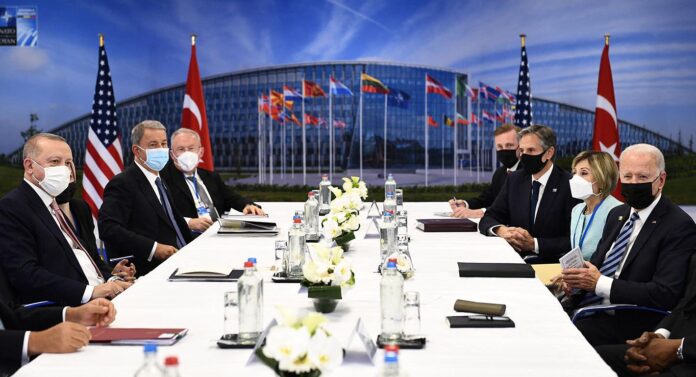
At present, the relationship between Turkey and the United States is in a deep crisis. The meeting between U.S. President Joe Biden and Turkish President Recep Tayyip Erdoğan at the margin of the June 2021 North Atlantic Treaty Organization (NATO) Summit in Brussels raised expectations that the U.S.-Turkey relationship can be put back on track. And yet recovery from the present crisis is uncertain, as the underlying factors that previously shaped the relationship have changed.
The end of the Cold War and the emergence of a more multipolar system have altered the nature of U.S.-Turkey engagement. In Washington, competition between global powers is now the overriding frame for U.S. foreign policy. Ankara, however, views the world very differently. The rise of Asia and the ascendancy of China are seen more as opportunities than threats. Ankara interprets these trends, as well as Russia’s growing regional activism, as signs of the lasting emergence of a multipolar world order. This understanding now shapes the strategic calculus of Turkish policymakers. Turkish political elites firmly believe that a successful repositioning of their country in this multipolar environment will benefit the nation in the long run.
This growing divergence in terms of how Ankara and Washington see the world creates a challenging environment for constructively addressing the range of prevailing bilateral disputes. This paper examines five main areas of disagreement between the two countries and explores how the two sides might overcome these differences. At the top of the list of current disagreements are Turkey’s acquisition of the S-400 air and missile defense system from Russia and ongoing U.S. support for Syria’s Kurdish military and political factions. Also important are the consequences of the erosion of democratic norms in Turkey; the U.S. position on the self-exiled Islamic preacher Fethullah Gülen, who many in the Turkish government believe was the architect of the failed coup attempt in Turkey in July 2016; the possible impact of the Halkbank court case on grounds of past violations of Iran sanctions; and the Biden administration’s decision to use the word “genocide” to refer to the killings and deportations of Ottoman Armenians during World War I. Under these circumstances, it is clear that the Turkey-U.S. relationship is in need of redefinition.
The Turkey-U.S. relationship has long been defined as a strategic alliance underwritten by NATO. Today, this definition has become obsolete and does not capture the new reality of this relationship. Turkey undoubtedly will remain a strong NATO ally, but its relationship with the United States will no longer be shaped by the power asymmetry of this military alliance. In other words, the reality of the United States being the main security provider will not be sufficient to override and contain the centrifugal trends that have shaped the relationship since the end of the Cold War and that have gained momentum in the past decade as a result of the growing divergences between Ankara and Washington.
Yet differences with Turkey cannot be managed with the same clinical approach reserved for adversaries of the United States. Turkey is not an adversary, and therefore, a categorical separation of areas of agreement and cooperation from areas of disagreement is unrealistic. Unlike in the case of the United States and its true adversaries, the perpetuation of areas of dispute will always hinder the scope of U.S. collaboration with Turkey. The underlying alliance relationship has a built-in expectation of solidarity and mutual trust. Without these values, the bilateral relationship cannot function effectively.
Neither will the “grand bargain” approach favored by Ankara be successful. Turkey wants a diplomatic process with the United States that would involve deliberations on all the disputed areas in a flexible manner. These deliberations could then lead to trade-offs that would create the conditions for a mutually beneficial reset. Ankara could also showcase its flexibility provided that Washington demonstrates its willingness for compromise. And yet there is little interest in Washington in undertaking such an enterprise with the Erdoğan government.
A scenario of gradual rapprochement as an alternative to the grand bargain championed by Turkey or the principled engagement currently favored by Washington can be promoted. The gradual rapprochement would entail a series of confidence-building actions. Positive areas of engagement could include future negotiations with Iran, the reconstruction of Syria, the normalization of Libya, the stabilization of governance reform in Afghanistan given Turkey’s interest to operate the Kabul airport even after the U.S. and NATO withdrawals, the countering of Russian aggressiveness (especially toward Ukraine), and collaboration in Africa to dampen the influence of China. The Turkey-U.S. relationship may in that sense be in acute need of gradual but concrete steps that over time will set a new tone for a more positive and constructive strategic partnership and reestablish mutual trust.
INTRODUCTION
At present, the relationship between Turkey and the United States is in a deep crisis. This is not the first difficult period that the two countries have seen. One may recall U.S. President Lyndon B. Johnson’s letter in 1964 to Turkish Prime Minister İsmet İnönü, warning Turkey not to intervene in the internal conflict in Cyprus between the island’s Greek and Turkish populations. Similarly, the U.S. arms embargo on Turkey in 1974, following the Turkish military campaign in Cyprus in support of the embattled Turkish Cypriots, severely strained the relationship during a period of regional tension. In 2003, Turkey’s refusal to allow the United States to open a northern front in advance of the war to oust Iraqi President Saddam Hussein was yet another issue of fierce contention. However, after each crisis point, the relationship recovered, essentially because of the underlying dynamics that argued for closer Turkey-U.S. cooperation.
The meeting between Biden and Erdoğan at the margin of the June 2021 NATO Summit in Brussels raised expectations that the U.S.-Turkey relationship can be put back on track. At their meeting, the two leaders underlined the strategic importance of their countries’ ties. And yet, despite these well-meaning statements, recovery from the present crisis is uncertain, as the factors that previously shaped the relationship have changed.
The end of the Cold War and the emergence of a more multipolar system has altered the nature of the U.S.-Turkey engagement. In Washington, competition between global powers is now the overriding frame of analysis. The Biden administration’s long-term strategic focus aims to counter China’s and Russia’s increasing international assertiveness and influence. Related to this outlook is a broader emphasis on democracy and human rights in general in the administration’s foreign policy. A core aim of the Biden White House’s security strategy is the strengthening of democracy abroad through a set of effective partnerships, mirroring its domestic interest in protecting democratic practices. The corollary of this strategic shift is that Washington has started to view its alliances from the perspective of their real and potential contribution to the achievement of its evolving long-term strategic objectives. This reorientation inevitably has led to a downgrading of the geostrategic importance of regions and countries that dominated U.S. foreign policy thinking in the past.
Viewed from Ankara, however, the world looks very different. The rise of Asia and the ascendancy of China are seen more as opportunities than threats. Ankara interprets these trends, as well as Russia’s growing regional activism, as signs of the lasting emergence of a multipolar world order. This understanding now shapes the strategic calculus of Turkish policymakers. Turkish political elites firmly believe that a successful repositioning of their country in this multipolar environment will benefit the nation in the long run. The 2011 Arab Spring was the spark for this changed vision. At the time, Turkish policymakers were hopeful that a more democratic shift in the Arab polities would present a historic opportunity for Ankara. Turkey could then use its successful economic model and the example of its leadership cadre (and their close affiliation with political Islam) to acquire greater regional influence. In a clear departure from its secular foreign policy tradition, Turkey’s Muslim identity came to the fore of its engagement with its partners in the Arab countries. Against the background of this new and more sovereignist Turkish foreign policy, Ankara sought to diversify its foreign policy partners and establish closer relations with emerging and reemerging powers like China and Russia—sometimes to the detriment of its established ties with its traditional partners in the West.
This growing divergence in terms of how Ankara and Washington see the world creates a challenging environment for constructively addressing the range of prevailing bilateral disputes. Moreover, the traditional institutions in both countries that have worked to sustain the bilateral relationship during past crises—including the defense establishment and the strategic community—have lost interest in attempting to ameliorate the growing tensions. Mounting anti-Americanism in Turkey has been paralleled by a serious erosion of support for Turkey in Washington’s political establishment, in particular in the U.S. Congress. As a result, the Turkey-U.S. relationship today stands at a critical juncture and a historically unique brittle position.
This paper examines five main areas of disagreement between the two countries and explores how the two sides might overcome their differences. At the top of the list of current disagreements are Turkey’s acquisition of the S-400 air and missile defense system from Russia and the ongoing U.S. support for Syria’s Kurdish military and political factions—which Turkey regards as terrorist threats—in the Syrian Civil War. Also important are the consequences of the erosion of democratic norms in Turkey; the U.S. position on the self-exiled Islamic preacher Fethullah Gülen, who many in the Turkish government believe was the architect of the failed coup attempt in Turkey in July 2016; the possible impact of the Halkbank court case on grounds of past violations of Iran sanctions; and the Biden administration’s decision to use the word “genocide” to refer to the killings and deportations of Ottoman Armenians during World War I. The assessment concludes that under these circumstances, the Turkey-U.S. relationship is in need of redefinition.
The essence of the engagement between the United States and Turkey can no longer be summarized mainly by viewing their alliance within the historic NATO relationship. Another conceptual framework is necessary to better interpret the dynamics that have shaped these ties in recent years. But more importantly, a different engagement framework will be needed to ensure any improvement in these damaged ties. This paper offers a gradual rapprochement strategy that combines the quest to identify areas of collaboration with a willingness to address in a more flexible manner prevailing themes of divergence.
THE S-400 DILEMMA
The S-400 is an advanced air and missile defense platform manufactured by Russia. In mid-2017, Ankara signed an agreement with Moscow to acquire this system, which was delivered in June 2020. In response, the United States imposed sanctions on Turkey under the parameters of the Countering America’s Adversaries Through Sanctions Act (CAATSA).1 In addition, the U.S. government formally excluded Turkey from the manufacturing chain of the F-35 fighter plane and canceled planned deliveries of F-35s to Turkey.2
Given these negative consequences, why did Ankara choose this option? A comprehensive answer to this question requires a quick review of Turkish plans to acquire a missile defense platform. Turkey’s defense planners have long viewed missile defense as a strategic shortcoming. Turkey is under the NATO missile defense umbrella, but owing to the country’s proximity to the potential crisis areas, Ankara has been facing an uphill struggle in NATO to ensure full coverage of its territory.3 To date, this situation has not been remedied—despite Turkey’s contribution to NATO missile defense as the host of the X-band radar, one of the most critical components of NATO’s missile defense architecture.
To remedy this vulnerability, Turkey launched in 2012 a tender for the acquisition of a missile defense system that would be owned and operated by the Turkish military. Initially, it selected a competitively priced Chinese system. Turkish planners have always sought to use the acquisition of strategic weapons platforms as an opportunity to transfer international know-how to the domestic military industry, and consequently Ankara expected that Beijing would provide both technology and expertise with its successful bid. However, Turkey’s decision to opt for a Chinese system raised concerns within NATO given its non-operability with NATO equipment. Eventually, the Turkish government canceled the tender, both in response to NATO pressure and because of the belated realization that China ultimately was unwilling to deliver the proposed technology transfer.4 Following the collapse of the Chinese deal, Turkish decisionmakers engaged in bilateral discussions with remaining suppliers. The other bidders were Russia with its S-300 system, the U.S. manufacturer Raytheon with its Patriot systems, and the French/Italian consortium MBDA with its Eurosam system.
The botched coup attempt of July 2016 became a turning point in many areas, including Turkey’s travails to acquire a missile defense system. The coup attempt triggered anti-West sentiments, bolstered by the widespread belief that the coup plotters had benefited from the support—or at least the benign neglect—of Washington.5 Another point of contention at the time was the U.S. decision to arm the Democratic Union Party (Partiya Yekîtiya Demokrat, or PYD), a Syrian Kurdish political party, and the Kurdish militia group known as the People’s Protection Units (Yekîneyên Parastina Gel, or YPG) in the fight against the self-proclaimed Islamic State. This action was highly inflammatory to Turkey, not least because both the PYD and YPG are offshoots of the Kurdistan Workers’ Party (Partîya Karkerên Kurdistanê, or PKK), a Kurdish political party that is listed as terrorist organization in Turkey, the European Union (EU), and the United States.
As relations with the West soured, Turkey’s political elites and security establishment decided to decrease the country’s reliance on Western systems. The domestic narrative shifted considerably. The West, and particularly the United States, came to be branded as an enemy of Turkey.6 The political discourse highlighted the need for Turkey to curtail its dependence on the West. Russia’s smart response to the coup attempt—notably, Russian President Vladimir Putin’s swift show of reaching out to the beleaguered Erdoğan—also helped accelerate this transition away from the West’s orbit. It is in this context that Turkey signed an agreement with Russia in mid-2017 to procure the S-400 system.
A few further points, however, should be highlighted for a better understanding of this controversial decision. First, Ankara’s decision to procure the system may have been taken without full realization of its possible consequences. At the time, the Turkish government lacked reliable policy-level engagement with the U.S. administration, which was struggling with interagency coordination due to the unpredictable actions of President Donald Trump and his disdain for institutional rule.7 It was unclear whether the U.S. government could impose CAATSA sanctions for a transaction that predated the act’s congressional ratification, given that CAATSA had been adopted in August 2017. Further, Washington did not clearly communicate to Ankara that Turkey’s sidelining from the F-35 program would be an explicit consequence of this transaction with Russia. Instead, the focus of the criticism was on the lack of interoperability between the Russian-provided equipment and NATO assets, rather than the source of the equipment itself.8 As late as November 2017—months after the Russia-Turkey agreement was signed—Heidi Grant, deputy undersecretary of the United States Air Force for international affairs, was unable to say exactly what course of action the United States would pursue if Turkey were to purchase the S-400. “As a major NATO ally, we haven’t really looked into this yet,” she said in a November 15 press interview.9
The emphasis on challenges that the S-400 deal with Russia would pose for continued Turkish involvement in the F-35 program came only after the signature of the S-400 deal.10 As late as July 2018, then defense secretary James Mattis was lobbying Congress to not exclude Turkey from the F-35 program.11 And in stark contrast with the immediacy of the issue, the United States took seventeen months to answer Turkey’s request for a renewed offer for the Patriot systems. Even as it was signing the deal with Russia, Ankara asked for a new U.S. proposal for its Patriot systems. Washington communicated its reply to Ankara in December 2018. The offered package was substantive, but it came too late in the game to make a difference.12
The S-400 debacle also was shaped by some ill-fated presidential-level politics. Erdoğan was one of the world leaders who had established a robust working relationship with Trump. This presidential dialogue was instrumental in managing the overall U.S. reaction to Turkey’s S-400 decision. Trump used his presidential prerogatives to refrain until the last moment from imposing the CAATSA sanctions on Turkey, even in the face of congressional pressure. He also encouraged U.S. authorities to seek a compromise based on the non-operationalization of this system: under such an agreement, Turkey would not be sanctioned provided that it would be willing to commit itself to keep the S-400 from ever becoming operational.13 Ankara, wrongly interpreting the United States’ internal political balances, gave too much credit to Trump and his ability to deliver on his promises. As a result, Congress reacted negatively to Trump’s procrastination on the CAATSA sanctions, and in the 2021 National Defense Authorization Act (NDAA) it inserted wording that not only compelled the administration to immediately impose CAATSA sanctions but also conditioned the lifting of these sanctions on Turkey “ceasing ownership” of these systems.14
This heavy conditionality has now become the official position of the United States in the Biden era. It is, however, a hugely challenging political condition for Erdoğan, who has relentlessly defended the S-400 decision at home. The question, now, is this: can Turkey and the United States find a mutually satisfactory compromise to overcome this strategic divide?
A possible solution is rekindling the concept of “non-operationalization” of the S-400. The United States would need to demonstrate some flexibility to negotiate a formula that departs from the wording of the 2021 NDAA, based on the assumption that the Turkish president cannot politically deliver on the condition that Turkey should “cease ownership” of the S-400. Biden should also be ultimately willing to convince Congress to accept the negotiated settlement with Ankara on different terms than the congressionally approved NDAA wording. The system has already cost the Turkish taxpayer around $1.3 billion. More importantly, the Turkish leadership cannot realistically be seen to totally yield to U.S. pressure and accept the NDAA-imposed conditionality. A hardened U.S. stance risks pushing Turkey to make new deals with Russia, further complicating the relationship between the two NATO allies. Indeed, Moscow has been making overtures to Ankara to sell a second battery of S-400s; its fourth-generation Su-35 as a replacement for the Turkish Air Force’s aging F-16s; as well as its fifth-generation aircraft, the Su-57, as a replacement for the F-35.
In essence, for a lasting understanding to emerge, Ankara will need to satisfy Washington that any use of this system will be limited to exceptional circumstances, such as those that present clear and imminent dangers to Turkey’s national security. A link to NATO could also be established to satisfy possible U.S. concerns over the utilization of this equipment. Under this agreement, Turkey would be allowed to rely on the S-400 system only if Article 4 (response to a threat to territorial integrity, political independence, or security) or Article 5 (response to an armed attack) consultations have been held at NATO at Turkey’s request, and Turkey’s treaty allies have not fulfilled Ankara’s consequent demand for the positioning of missile defense systems in Turkey within a specified time frame. This agreement would protect against the nonconditional use of the S-400 system and severely restrict its usage. It also rests on the assumption that Turkey will not abuse the fundamental procedures of the NATO alliance. Under this rubric, Turkey foregoes its sovereign right to use the S-400 regularly as part of its missile defense infrastructure.
The conditional-use formula may need to be accompanied by a set of verification rules designed to ensure the integrity and longevity of the agreed framework. Satellite technology easily could be used to achieve this goal. In addition, the S-400 could be placed at the Incirlik Air Base, where the significant U.S. Air Force presence would simplify any joint monitoring of the system. The choice of Incirlik also would help protect this missile defense equipment in times of military conflict.
In return for Ankara agreeing to these stringent conditions on the potential use of the Russian-made air and missile defense system, Washington would need to lift the barriers to more comprehensive military-industrial cooperation with Turkey. In addition to eliminating the CAATSA sanctions, possible measures would include lifting the congressional embargo on Turkey for the modernization of its aging F-16 fleet and allowing Ankara to rejoin the F-35 program. For Turkey to address its needs for a missile defense system, Washington should also reengage with Turkish authorities on the potential sale of Patriot systems. European allies also have a role to play to ensure that Turkey remains wedded to a NATO-compatible ecosystem for its future strategic platforms. Given the United States’ reluctance to consider technology transfer and joint production with Turkey, the European Eurosam consortium could revitalize talks with Ankara for a jointly designed and produced air and missile defense system. The lifting of the CAATSA sanctions is therefore also crucial to incentivize other NATO nations to engage in such long-term military-industrial cooperation with Turkey.
Despite the controversies that it has caused, the S-400 dispute is an eminently solvable problem. It will, however, require some creative thinking and, above all, a political willingness both in Ankara and Washington to agree to mutual concessions for the greater purpose of normalizing bilateral relations.
THE SYRIA DEBACLE
No policy choice on the U.S. side has been as toxic in recent memory for its bilateral relationship with Turkey as the U.S. decision to partner with and weaponize the Syrian-based Syrian Democratic Forces (SDF), an alliance with a strong component of Kurdish militia groups, in the fight against the Islamic State. Arguably, the decision came in the wake of a series of failed negotiations between Ankara and Washington. Nonetheless, the United States mistakenly believed that it could keep its relationship with the SDF and still protect its ties with Turkey.15 Continuing U.S. support for the SDF has been a main driving force of the recent intensification of anti-Americanism in Turkey. According to a 2020 poll by Kadir Has University, 70 percent of the Turkish population see the United States as a threat to Turkey, and the same poll ranks Washington’s relationship with the SDF as the biggest problem in the bilateral relationship.16
The United States’ engagement policy with the SDF is predicated on the claim that this mostly Kurdish group is a different entity than the PKK—a key distinction, given that for more than twenty years the Department of State has listed the PKK as a foreign terrorist organization.17 By contrast, Turkey considers the YPG, the SDF’s core component, as an organic offshoot of the PKK. The YPG was indeed established in the past by the PKK as its Syrian affiliate.18 Washington’s artificial separation of the SDF and PKK may have helped the alliance acquire a modicum of legitimacy at home, but it did very little to assuage Ankara’s concerns.
Beyond the issue of the U.S. relationship with the SDF, the nature of Turkey’s former Syria policy was another controversial factor in regional politics. Since the beginning of the Syrian crisis in 2011, the Turkish government has taken a clear stance against the Syrian regime of President Bashar al-Assad. In a radical departure from the established tenets of Turkish foreign policy—which prioritized the principle of nonintervention in the internal affairs of neighboring countries—Ankara championed regime change in neighboring Syria. This policy took an active form with a campaign designed to help Syria’s civilian and military opposition accelerate the fall of the Assad government. The United States encouraged Turkey in this position, such as when then president Barack Obama declared in March 2013 that the Assad regime had lost its legitimacy and should go.19 Eventually, however, the Obama administration decided not to become more proactively involved in Syria. Turkey then relied on a host of different entities within Syria to continue its campaign against the Assad regime. Along with Qatar and Saudi Arabia, Turkey supported a cohort of Islamist armed groups. As in all conflicts, over time, the warring parties became more radicalized.
The issue came to a head in September 2014, when the Islamic State began a campaign to take control of Rojava, a Kurdish province neighboring Turkey. At the time, Turkey and the United States were still negotiating their involvement in the deepening conflict. Turkey had offered a militia led by a Sunni Arab Syrian force to help with the campaign against the Islamic State, but the United States “did not believe those fighters were sufficiently ‘moderate’ and suspected that they (like Turkish leader Recep Tayyip Erdoğan) were more focused on overthrowing Bashar al-Assad’s regime than eliminating the Islamic State.”20 With Ankara hesitant to intervene, Obama decided to airlift weapons to the Kurdish fighters. Ultimately, Ankara and Washington failed to reach an agreement on the overall strategy to eradicate the Islamic State or the role that each side would play.
At the same time, the Turkish government, still fixated on its goal of regime change, considered the Islamic State as a useful enemy that could help bring down the Assad regime.21 Policymakers in Ankara felt that regime change in Syria should be a priority at all costs because Assad’s continued presence and the dirty tactics he employed to remain in power, including the alleged use of chemical weapons, were radicalizing the country and the region. In that sense, the Islamic State was the symptom of a problem rather than its cause. For Ankara, there was no point in fighting the symptom without attacking its root cause.
Turkey’s policy changed in 2016 when Ankara was forced to partner with Moscow and Tehran to impose a degree of stability in Syria. The main reason for this change was Russia’s military involvement in Syria, which gave the Assad regime the support it needed to survive. This forced partnership with two countries that had supported the regime compelled Turkey to drop its regime change agenda. The Moscow declaration of December 2016 formalized the end of Ankara’s military campaign against Assad.22 Turkey thus had to reprioritize the objectives of its Syria policy. It therefore decided that its foremost policy objective was to contain the influence of the Syrian Kurds, particularly the PYD, and its secondary objective was to eliminate the Islamic State.
The thinking in Washington obviously was different: the Islamic State was the primary target. This perspective was shaped by a presidential doctrine that aimed to limit U.S. involvement in Syria—to the extent that Obama refused to condone strikes against the Assad regime even after it became clear that Damascus had used chemical weapons in its fight against armed militants. An offshoot of this policy was that the United States, after having failed to secure a deal with Turkey, reached out to the SDF as a potential fighting force in the region. In May 2017, Trump approved a Pentagon proposal to provide arms to the YPG. Even then, U.S. authorities were fully aware of the negative impact of this action on their ties with Turkey. At the time, Mattis sought to reassure Turkey that U.S. support for the SDF would be temporary, transactional, and tactical. In addition, he stated that weapons delivered to the SDF would be taken back after the Islamic State was defeated.23
Yet over time, the U.S. attitude toward the SDF changed—much to Turkey’s chagrin. The “tactical” relationship started to acquire a visible “strategic” dimension, with Washington’s support for the SDF becoming a more mainstream U.S. objective rather than being limited to the fight against the Islamic State. In a further sign of apparent normalization of relations with the SDF, local U.S. forces in Syria attached to U.S. Central Command (CENTCOM) openly publicized meetings and interactions with SDF officials who were on the wanted list in Turkey.24 In Turkish eyes, these initiatives were the actions of a major ally clearly undermining Turkey’s national security.
It now seems that there will be little change under the Biden administration concerning Washington’s engagement with the SDF.25 In May 2021, a U.S. delegation headed by Joey Hood, the acting assistant secretary of state for Near Eastern affairs, visited northeast Syria and met with the SDF. During this visit, the United States pledged to continue its assistance to liberated areas to ensure the enduring defeat of the Islamic State. Under this set of circumstances, what then are the options to salvage the U.S.-Turkey relationship?
Obviously, Ankara will continue to pressure Washington for a clean break with the SDF. But as long as there is no political settlement in Syria and the threat of renewed fighting or a further erosion of law and order remains a concern, the United States is unlikely to seriously consider reversing its policy. Washington’s current approach is predicated on an effort to separate the SDF from the PKK. Until 2015, when the internal peace process with the Kurdish political representatives collapsed, Ankara appeared to be following a similar strategy to delink the SDF from the PKK, even to the point of meeting with SDF political representatives.26 Today, however, the official Turkish position is that the PKK and the SDF are one and the same and any attempt to separate them would be futile. Ankara also claims that the SDF has developed a stronger sense of empowerment and legitimacy on account of the international support it has received for its role in the fight against the Islamic State. Under these conditions, therefore, it feels that the already slim prospect of separating the SDF from the PKK has become even less likely.
Another concern for both Ankara and Washington with regard to the PKK-SDF connection is Iran’s influence over the Kurdish entities in Syria. Even though the PKK has its roots in the predominantly Kurdish-populated southeast of Turkey, over the years the entity has become a more multinational enterprise with a growing number of Syrian recruits. Nonetheless, the PKK’s senior military leadership remains under the control of the original gerontocratic cast of Turkish origin. After having been forced to leave the border areas following Turkey’s successful counterterrorism campaigns, the leadership of the PKK’s military wing established themselves in the Kandil mountains and became increasingly reliant on Iranian support. Theoretically, the PKK-SDF split could be advanced on the basis of a nationalist agenda, with the Syrian-dominated SDF potentially willing to acknowledge a purely domestic role and to disassociate itself from the border-changing ambitions of the PKK. This end result would also significantly weaken the PKK wing that remains under Iranian influence.
In reality, U.S.-Turkey counterterrorism cooperation efforts have been more functional in Iraq. The United States has provided real-time intelligence to back Turkish efforts to eliminate the PKK threat, yet the viewpoint of Turkish authorities is that even in the Iraqi theater, U.S. support has been considerably below its potential, falling short of the threshold of “actionable intelligence.”27 In Syria, however, the plan to separate the SDF from the PKK and assuage Turkey’s concerns has run into several obstacles. One critical dimension of this effort was to ensure the merger of the SDF with the Turkey-supported, non-PKK-aligned Kurdish National Council (KNC). The KNC is part of the National Coalition for Syrian Revolutionary and Opposition Forces, which operates under Turkish tutelage. These critical negotiations to set up a more united Kurdish front in Syria and thereby to dilute PKK influence have reached a stumbling block owing to differences over power-sharing in a potentially merged entity.
Given the damage caused to bilateral ties by the ongoing U.S. relationship with the SDF, Washington should take the lead in seeking to assuage Ankara’s concerns by devising confidence-building measures. A key measure would be to return to the original commitment of transparency, in which the list of weapons supplied to the SDF would be shared with Turkey.28 This early and important practice appears to have been discontinued. A second and more meaningful step would be to design a realistic program, calendar, and road map for the United States to take back the majority of the weapons system supplied to the SDF. In this respect, it is important to make a distinction between weapons systems that can be used to fight the Islamic State and weapons systems that Turkey regards as a security threat. These two groups may overlap to some extent, but certain categories of weapons such as surface-to-air systems (whether fixed or portable, as in the case of MANPADS) or anti-tank weapons will be of little use against a terrorist entity that has no rotary-wing assets or tanks. A joint Turkey-U.S. commission to deliberate on the nature and scope of this weapons take-back program could help mitigate the erosion of trust between the two allies.
More fundamentally, a real settlement will be conditional on strategic shifts in the foreign policy outlooks of both Washington and Ankara. The United States has to weigh whether its ongoing relationship with the SDF is really worth the damage it causes in its bilateral ties with Turkey. Much as with the S-400 issue from the American perspective, from the Turkish perspective, the real and most major stumbling block in efforts to improve mutual ties is the U.S. relationship with the SDF. If indeed the objective is to regain mutual trust, Washington will need to determine how these ties with the SDF can be severed gradually.
Nevertheless, for Turkey, the real stumbling block is Ankara’s long-term view on the future of Syria, which is also related to its democracy agenda at home. Turkish policymakers will need to realistically assess the implications of a likely scenario where the Kurdish entity is a constituent element of postwar Syria. The master objective for Ankara should be to ensure that this entity does not become a security threat to Turkey. This goal will be served by nudging Washington to implement a weapons take-back program as discussed above. It will be helped by the emergence of a lasting political settlement in Syria. But it will also require the broadening of democratic rights within Turkey so that the outreach to the Syrian Kurds is no longer viewed purely from the security angle. Such reforms also would further isolate the PKK and improve the SDF’s potential to disassociate itself from terrorism. Recent history tells us that this objective is not far-fetched. After years of conflict and suspicion, Ankara has been able to establish a mutually beneficial relationship with the Kurdistan Regional Government of Iraq. That framework may be the model for the future of Turkey’s relationship with the Syrian Kurds.
THE DEMOCRACY AND RULE OF LAW CHALLENGE
Another highly divisive issue in the Turkey-U.S. relationship is the deterioration of democracy and the rule of law in Turkey over the past decade. In the Trump years, the erosion of fundamental rights in America’s allied nations was not much of an agenda item. Trump saw the world in transactional terms and cared little for a values-based foreign policy. But under Biden, there has clearly been a shift toward reincorporating the goal of advancing democratic freedoms into U.S. foreign policy. As set out in the Interim National Security Strategic Guidance, the Biden administration has committed to rejuvenating American democracy and, at the same time, is intent on revitalizing “democracy the world over” with the help of like-minded allies and partners.29
This redefinition of U.S. external engagement is a byproduct of a global vision where the White House believes that the world is at an inflection point and that the future of the world order will be determined by the competition between the alliance of democratic nations and the major authoritarian states, above all China and Russia.30 Its external aim to help American allies strengthen and rebuild democracy is therefore congruent with its strategic mission to combat the rise of authoritarianism. Yet it is easier to envision how such a foreign policy is to be implemented when America’s adversaries are authoritarian nations and much less obvious when America’s own allies, including Turkey, India, and Poland, are mired in democratic backsliding.
From this perspective, Turkey will be a challenge for the implementation of the Biden foreign policy doctrine. The Turkey-US relationship presents a real-world test of how U.S. policymakers will balance their desire for the advancement of democracy abroad with the hard realities of strategic imperatives. Drawing on data compiled by the Stockholm-based V-Dem Institute, figure 1 captures the regressive trend of Turkish democracy. In the same vein, Freedom House has downgraded Turkey to the “Not Free” category of democracies since 2018.

The botched coup attempt of July 2016 and the subsequent transition to a hypercentralized presidential system in 2018 has accelerated this downward trend. It is difficult to see how Turkish democracy can recover under the current constitutional order, which has failed to enshrine even basic checks and balances. The transfer of unparalleled power to the presidential office has greatly impeded the separation of powers. Erdoğan is not only the president of the country but also the chairman of the ruling Justice and Development Party (Adalet ve Kalkınma Partisi, or AKP), which together with its minority partner, the Nationalist Movement Party (Milliyetçi Hareket Partisi, or MHP), commands a majority in parliament. In addition, his constitutional prerogatives to nominate members of the high courts have given him sizeable influence over the judiciary, undermining its independence.31 As a result, the Turkish judiciary has distanced itself from European norms, as illustrated by the refusal of local courts to abide by the rulings of the European Court of Human Rights on the now symbolic cases of civic activist Osman Kavala and Selahattin Demirtaş, the former co-chair of the pro-Kurdish Peoples’ Democratic Party (Halkların Demokratik Partisi, or HDP).
In reality, this accumulation of powers has been a disservice not only to the Turkish democracy but also to Erdoğan’s political prospects. The presidential system has not functioned as advertised. The break with Turkey’s decades-long tradition of a parliamentary system has undermined political and economic governance. The performance of the AKP government has been negatively affected by this major transformation. As a result, support for the presidential system has been dropping steadily. According to a December 2020 poll by Istanbul Economics Research, popular support for a return to the parliamentary system reached 68 percent.32 In the 2017 referendum for the transition to the presidential system, only a narrow majority (52 percent of the electorate) had voted in favor. Mirroring this trend, support for Erdoğan and the ruling AKP has also been eroding. According to the June 2021 survey by Istanbul Economics Research, support for AKP reached a historic low of 26 percent.33 The ruling People’s Alliance (Cumhur) is now in a minority position, commanding the support of 45 percent of the electorate. This may not be a grave risk for Erdoğan, given that presidential and legislative elections are still two years away. But the Turkish president will nonetheless need to redress political and economic governance and substantially improve the rule of law to maintain his electoral prospects.
For a country like Turkey, the rule of law is intricately linked to economic performance. With low domestic savings and a lack of commodity resources, Turkey needs foreign capital to boost its growth. It has a high degree of economic interdependence with the West—55 percent of Turkey’s exports go to Europe, and Europe is the source of 73 percent of incoming foreign direct investments.34 The rule of law is a major factor in determining a country’s ability to continue to attract the needed investments. The rule of law also influences Turkey’s risk ratings and therefore its cost of capital. Improvements in the rule of law can only benefit Turkey’s economy through its positive impact on country risk and the lowering of its financing costs.
A potential improvement in Turkey’s democratic standards would also positively contribute to the overall relationship with Washington in at least two major ways. First, it would eliminate a major conundrum for U.S. policymakers. A U.S. ally would have moved in the direction of upgrading its democracy, allowing the United States to avoid the difficult trade-off of how to manage a strategic relationship with an ally that is backtracking on democratic norms. Once a clear path of progress emerges in Ankara, many of the bilateral issues that have and continue to bedevil the relationship can be tackled under a more benign climate. For example, this improvement in atmospherics could be instrumental in making real progress on a long-standing major issue surrounding U.S.-based cleric Fethullah Gülen, who Turkey blames for the failed July 2016 coup attempt.
It is beyond the scope of this paper to detail the development of Gülen’s influence during the AKP years. But when AKP came to power in 2002, its leadership relied on the human resources of the Gülen network to gradually replace the traditional secularist bureaucracy of the country. Gülen instrumentalized this alliance to infiltrate and capture many important state institutions, including the judiciary and the police. For instance, by the end of 2013, seventy-seven out of eighty-one provincial police commissioners were Gülenist sympathizers, according to Turkey’s minister of interior.35 This control allowed the Gülenists to pursue their agenda. Major milestones in the rise to power of the Gulenist network are represented by the court cases brought against alleged clandestine networks known as Ergenekon and Balyoz. The cases targeted the top brass of the Turkish military, with army commanders being charged with plotting a coup to overthrow the government. Hundreds of military commanders were sent to prison on fabricated charges by a judiciary under the control of the Gülenists.36 The power-sharing alliance broke down in December 2013 when the Gülen followers in the judiciary and law enforcement sought to bring down members of the government. Within a few years, Gülenist members of the military led the coup attempt to oust the democratically elected government.
The past rhetoric of the Turkish leadership has nurtured the widespread belief that the United States has been backing Gülen and his organization.37 These alleged ties are a major source of mounting anti-Americanism in Turkey. The unwillingness of successive U.S. administrations to deliver on Turkey’s adamant demands to pressure this organization and disrupt its activities on U.S. soil is seen as proof of Washington’s complicity. In spite of Ankara’s repeated requests to extradite Gülen, U.S. authorities have not even taken the symbolic step of questioning him about his possible role in the coup attempt.38 The Gülen network operates several charter schools in the United States, which are partly funded by federal money; and despite recurrent Turkish demands, this funding has not ceased.39 Similarly, U.S. authorities have been recalcitrant to put pressure on or fully investigate the network’s ongoing fundraising in the United States. Many local organizations tied to the Gülen network operate freely as fundraising nongovernmental organizations, and these organizations have provided financial support for U.S. political candidates, giving the Gülenists access and influence within state and federal structures.40
Gülen and his followers appear today as the innocent victims of the degradation of the rule of law in Turkey. In reality, they are as responsible for this erosion as the country’s political elites. Their attempt to capture the state and infiltrate its institutions has corroded the Turkish state to its core. Yet this simple reality does not seem to have encouraged U.S. authorities to fundamentally reassess their support for the organization and its adherents. One major reason for this surprising lack of reappraisal may be the continuation of the downward trend in democratic norms in Turkey. Had Turkey been able to chart a different trajectory after the failed coup attempt, the U.S. response may have been different. The elimination of Gülen’s influence from positions of power and authority gave the Turkish leadership a window of opportunity to rebuild a more inclusive system of governance in the wake of the coup attempt. This opportunity was squandered. But there is always a new opportunity for rebuilding democracy. Any real and sustained effort by the Turkish leadership to that end can only facilitate the emergence of a more permissive environment to constructively address this important range of bilateral disputes.
To date, the Biden administration’s policy response to the erosion of democratic norms in Turkey has been to rely on the EU to incentivize reforms in Turkey.41 The administration has nudged Brussels to reengage with Ankara, believing that the absence of constructive European engagement with Turkey has been detrimental to the prospects of democratic normalization. Washington seems to be promoting early and positive European engagement as a vehicle to gradually improve democratic norms and the rule of law in Turkey. On the European side, consensus appears to be growing that, despite the potential drawbacks, the EU sorely needs an engagement strategy with Turkey. In its absence, and with Turkey’s accession process on hold, Brussels has lost a great deal of its leverage over Turkish policymaking, especially domestic reforms. EU leaders have been deliberating on a road map for a positive agenda with Turkey, which is set to include the start of negotiations for the modernization of the Turkey-EU Customs Union, the revitalization of the visa liberalization process, a renewal of the refugee deal, and a high-level policy dialogue.
For Washington, a coordinated EU-U.S. approach to combat Turkey’s democratic backsliding is obviously the favored and diplomatically least costly option. If this effort proves to be ineffective, however, Washington will face a conundrum. One alternative could be to downgrade the importance of democracy and rule-of-law issues in U.S. bilateral relations with Turkey and maintain a working relationship based on geostrategic considerations. This approach would still imply a more open criticism of Turkey’s human rights record compared to the Trump era but nonetheless suggest a willingness to refrain from creating barriers to cooperation with Turkey on these grounds. The other alternative is for Washington to adopt a more aggressive stance. For instance, the Biden administration could deny Turkey an invite to the Summit for Democracy slated for the end of 2021 or possibly employ Global Magnitsky sanctions, as it has done with Russia. In either case, the policy impact of the U.S. reaction is likely to be handicapped by widespread anti-Americanism in Turkey, which has created a political environment where U.S. measures are more likely to be seen as an unjustified attack on Turkish interests rather than a reaction to the democratic failures of the Turkish government.
THE HALKBANK CASE
A potentially significant area of disagreement between the United States and Turkey has reemerged with the slated start of the court proceedings against the Turkish state-controlled Halkbank on grounds of its past violations of Iran sanctions. According to the allegations of the U.S. Department of Justice, Halkbank willfully played a role in several long-running schemes to illegally transfer around $20 billion in funds to Iran. The indictment charges the bank with conspiracy to defraud the United States, conspiracy to violate the International Emergency Economic Powers Act, bank fraud, and money laundering.42
The case had already made headlines when Halkbank’s deputy manager, Hakan Atilla, was convicted in January 2018 following a five-week jury trial.43 He was one of the nine indicted individuals, including the former Turkish economic minister Zafer Çağlayan. Reza Zarrab, a Turkish-Iranian gold trader who appears to have played a major role in the alleged scheme, had already pleaded guilty and was cooperating with the justice authorities. Zarrab was instrumental in the creation of a pool of Iranian oil funds held in the names of front companies, with some of the money flowing through U.S. banks.
The Halkbank case has also acquired a visible political dimension. It has been reported that the case was frequently on the agenda of the talks between Erdoğan and Trump. According to former national security adviser John Bolton, Erdoğan raised the issue repeatedly with Trump, seeking to have the case dismissed.44 Trump was criticized for wanting to interfere with the functioning of the judiciary. He allegedly asked the former secretary of state Rex Tillerson to pressure the U.S. Department of Justice to drop the case. In an interview, Tillerson said that he refused to do so and “objected to Trump’s efforts, considering them illegal interference.”45 There have been separate claims that Trump forced the resignation of Preet Bharara, the U.S. attorney for the Southern District of New York, as well as his successor Geoffrey Berman, for failing to drop the case.46
This case is particularly sensitive for the Turkish government as well because of its potential economic and political implications. U.S. authorities have in the past prosecuted several foreign and domestic banks for their role in violating Iran sanctions. The largest penalty issued to date has been the $8.9 billion fine against BNP Paribas in 2014.47 But in all previous cases, the banks came to an amicable settlement with Justice Department. The fine was issued as a result of direct negotiations with the banks and the Treasury Department’s Office of Foreign Assets Control. The Halkbank case is therefore the first one that will have reached the threshold of litigation.
Previous negotiations between Halkbank and U.S. authorities did not lead to an agreement. Several reasons explain why such talks may have fallen through. First, Trump’s personal efforts to squash the investigation may have given Halkbank a false sense of confidence, and the bank’s officials may not have had enough of an incentive to negotiate in earnest under these warped conditions. Second, in these negotiations, Halkbank seemingly defended the view that the violations were the result of negligence, whereas the Treasury Department wanted the defendant bank to accept its wrongdoing.48 From Halkbank’s perspective, accepting wrongdoing would have involved full disclosure of its illegal activities, which would then have consequences going forward for the bank’s international credibility and its ability to raise money in international markets.
The arguments on the Turkish side are that the trade with Iran did not violate U.S. law because the trade in question largely involved gold and food, was not conducted in U.S. dollars, and did not involve U.S. banks.49 Domestically, the Turkish government also maintains the narrative that ultimately Turkey is not legally bound by U.S. laws and American attempts to penalize Turkey are an illegal application of the principle of extraterritoriality. Moreover, the claims against Halkbank have been contaminated in the eyes of the Turkish public because they initially were raised by the Gülenist members of the Turkish judiciary back in December 2013.50 The police investigations and ensuing arrests of several individuals linked to Halkbank were led by Gülenists in an early effort to attack the Erdoğan government.51 The evidence put forward by the Gülenists was also compiled through extrajudicial means like illegal wiretaps incongruous with universal legal norms. Yet the allegations were serious enough to have led to the resignation of four members of the Turkish cabinet—including economics minister Zafer Çağlayan, who is included in the U.S. indictment. In fact, the Justice Department’s indictment also refers to other members of the Turkish cabinet who allowed or facilitated these alleged criminal transactions.52 These serious allegations necessarily raise the prospect of further political escalation between Ankara and Washington.
Unlike the Trump administration, the Biden administration likely will have a much more standoffish approach to the Halkbank litigation and await the verdict of the court. Obviously, if the court finds no wrongdoing, a serious political escalation would be avoided. In the alternative scenario, the Justice Department, with the cooperation of the Treasury Department, will take the lead in determining the scope of the fine. U.S. law empowers the Treasury to demand up to twice the amount of the illegal financial activities. The real scope of such activities will need to be determined by the relevant authorities, but the $20 billion figure mentioned in the indictment represents the overall amount. What ostensibly matters for the potential fine is the share of these transactions that went through the U.S. financial system illegally. According to a statement issued by Democratic Senator Ron Wyden of Oregon, the chair of the U.S. Senate Finance Committee, at least $1 billion in funds from Iranian oil proceeds were transferred through correspondent banking services at U.S. financial institutions.53 Therefore, the eventual fine, if Halkbank is found guilty, may be in the range of $1 to $2 billion, an amount that would not imperil the financial sustainability of the defendant bank. From that perspective, however, Ankara’s reaction would also be important. If Halkbank refuses to pay the fine to avoid recognizing its wrongdoing, U.S. authorities could contemplate additional sanctions, such as excluding the state-owned bank from the SWIFT international financial transaction system and therefore prohibiting it from accessing the international payment system for U.S.-dollar-denominated transfers.
Yet even under the alternative scenario of a guilty verdict by U.S. courts, Ankara and Washington’s interests would be best served by avoiding political escalation. This goal would essentially require the U.S. administration to incentivize the Turkish government to settle—through two possible considerations. The first would require a degree of leniency from the relevant U.S. authorities to fix the fine at more manageable levels. The second would entail Washington acknowledging a role for Turkey in any future negotiations with Iran. With the United States returning to the Joint Comprehensive Plan of Action (JCPOA), the new round of nuclear nonproliferation negotiations with Tehran are set to be broader in scope. The talks will include Iran’s ballistic missile program as well as its regional policies—themes that were left out of the initial JCPOA under the Obama administration. As a neighbor of Iran, as a state that often competes directly with Tehran over regional influence, and ultimately as a country that is under threat by Iran’s burgeoning missile program, Turkey has a legitimate claim to be part of or associated with these negotiations. Turkey’s inclusion would need to be countenanced especially if Gulf Cooperation Council countries like Saudi Arabia and the United Arab Emirates were to be brought into these negotiations.
THE ARMENIAN QUESTION
The tragedies associated with the dismantling of the Ottoman Empire in the early twentieth century continue to impact interstate relations in the Middle East and beyond. The proper characterization of the large-scale massacres committed against the Armenians under Ottoman rule remains controversial to this day. Beginning in 1915, the Ottoman leadership began to arrest, kill, deport, and forcibly resettle the empire’s Armenian minority, in order to quash potential resistance or independence movements among the Armenian population. Armenians claim that these events amount to genocide. Turks, in return, claim that it was a forced relocation under the conditions of war, which ended tragically. This historical memory has been a divisive issue not only between Turkey and modern-day Armenia but also between Turkey and other countries around the world that label these events as genocide.
Until very recently, the U.S. government had shied away from characterizing these events as genocide. Statements by past administrations recognized the mass murders of Armenians but preferred to use different terminology to remember these events. In 1981, president Ronald Reagan alluded to the events of 1915 as genocide, but he did not do so in a specific statement on the Armenian tragedy.54 Instead, the phrasing appeared in a speech delivered on the occasion of the commemoration of the Holocaust. Reagan retracted this wording in his subsequent statements as a result of domestic pressure, which highlighted Turkey’s importance as a strategic partner. Later, the Obama administration used the Armenian term “Meds Yeghern” (Great Tragedy).55 The key concern at this time was the fear of “losing Turkey” at a time when Ankara’s support was seen to be critical to advance U.S. foreign policy objectives in the Middle East.56
This long-standing position changed recently. On April 23, 2021, Biden labeled the events as genocide in his statement commemorating the tragedy.57 The change under the Biden administration can be attributed to several factors. First, Turkey’s geostrategic importance for U.S. policymakers has declined at a time when their strategic focus is clearly shifting to East Asia and China. Second, the U.S.-Turkey relationship itself has deteriorated. Ankara and Washington have a growing number of unsettled disputes—to the extent that the fundamentals of this bilateral relationship have come to be questioned. For instance, Secretary of State Anthony Blinken spoke of Turkey as a “so-called strategic partner” in his confirmation hearing before the U.S. Senate Foreign Relations Committee.58 In Washington, the fear of “losing” Turkey is therefore considerably less acute than before.
Finally, Erdoğan has few friends left in Washington. His decline in standing comes from Turkey’s recent antagonistic policies toward Israel as well as the erosion of democratic rule in Turkey under his presidency. The pro-Israel lobby had been a long-standing political friend of Turkey in Washington, not least because Turkey was viewed as a friendly nation to Israel. Turkey traditionally had relied on the assistance of the pro-Israel lobby in Congress to rebut earlier congressional initiatives that would have recognized the events of 1915 as genocide. With the decline of the Turkey-Israel relationship, this support evaporated. In 2019, for the first time in history, both Houses of Congress passed a resolution recognizing Armenian genocide. Before 2019, similar bills had all failed to receive enough support in Congress. As a result, the political cost to a U.S. president intent on recognizing the events of 1915 as genocide is considerably lower in 2021 than it was in earlier years.
Even though it had opted to use terminology long resisted by Ankara, the Biden administration sought to reassure Turkey that the president’s statement should not be construed as an attack against the Republic of Turkey. The statement does not refer to Turkey but to the Ottoman Empire and to Constantinople rather than Istanbul. This message was conveyed to Turkish authorities on the occasion of the first direct conversation between Biden and Erdoğan—a day before Biden made the statement. The readout of the maiden conversation between the two leaders emphasizes the U.S. president’s interest in a “constructive bilateral relationship with expanded areas of cooperation and effective management of disagreements.”59 Turkey’s official reaction to the Biden statement has been surprisingly calm and has so far remained at the level of rhetoric, with Erdoğan stating that Biden’s announcement had opened a deep wound in bilateral relations between the NATO allies.60 The Turkish Foreign Ministry stated that “the US President’s statement will not yield any results other than polarizing the nations and hindering peace and stability in our region.”61 The Turkish government has so far resisted pressure from the political opposition to react more strongly against the United States, such as by closing Incirlik Air Base to U.S. access.
Nonetheless, for the bilateral relationship a potential risk going forward will be a legal one related to U.S.-based claims of compensation surrounding this historical tragedy. Several such claims have been submitted to U.S. local courts. In every instance, local courts ruled against the complainants on grounds that courts did not have the competence to rule on these claims. The case brought before the Los Angeles District Court in 2010 by Carbis Davoyan and Hrayr Turabyan, two Americans of Armenian origin, is illustrative in this respect.62 The plaintiffs put forward a claim to compensate for the real estate and property of their ancestors, which had been seized by the imperial government and ultimately brought under the control of Turkish state-owned banks such as the Turkish Central Bank and Ziraat Bank. The Turkish government argued that these actions fall under the Foreign Sovereign Immunities Act of 1976, which establishes circumstances under which foreign states are immune from lawsuits.63 Ankara thus claimed that U.S. courts do not have jurisdiction under this act.
In return, the complainants argued that under the “expropriation” or “international takings” exception of the said act, a foreign state is not immune from U.S. jurisdiction in any case of rights in property taken in violation of international law and by extension as a result of a genocidal act. Although the court confirmed that under the jurisprudence of the state of California, genocide violates international law and that therefore claims of genocide fall within the limited category of claims constituting a violation of internationally accepted norms for jurisdiction, it nonetheless ruled that “allowing the lawsuit to proceed would involve judicial interference in foreign relation, here because establishing that ‘genocide’ occurred is a jurisdictional prerequisite. In light of the political question doctrine and analogous Ninth Circuit precedent, this Court cannot resolve such an inherently political question that our Constitution reserves for the other two coordinate branches of government.”64 Therefore, the court decided to dismiss the lawsuit. The official viewpoint of the U.S. administration on the nature of the events of 1915—as of 2010—was therefore instrumental in the outcome of the adjudication.
Thus, the Biden administration’s use of the genocide terminology is a drawback for Turkey in potential litigations in the United States over submitted compensation claims. It eliminates the validity of the argument that Turkey used on the lack of competence of tribunals to decide on the nature of historical facts surrounding the events of 1915. Now that the White House has officially recognized these events as genocide, local courts can rely on this categorization in future litigation.
This is not to say the route for American Armenians to seek compensation before U.S. courts is now completely open. This path has been legally barred, at least in California; Davoyan and Turabyan appealed to the U.S. Court of Appeals, which ruled on the matter in August 2019.65 The Appeals Court upheld the decision of the Los Angeles District Court on grounds that the plaintiffs’ claims were time barred and that the statute of limitations for these claims had expired.
It goes beyond the remit of this paper to fully analyze whether the lack of legal consequences of the adopted White House terminology to describe the events of 1915 will be permanent. Ankara may, for instance, press the Biden administration to issue a statement to that effect. But on the chance that the U.S. court system is nonetheless used to advance these claims, Turkey may consider going to the International Court of Justice with the United States to preempt U.S.-based compensation claims. Ankara believes that it stands on solid legal ground regarding the allegation of genocide, with the following specific points: (1) the 1948 Genocide Convention cannot be used retroactively; (2) under prevailing international law, only an international court can rule on the validity of genocide claims; and (3) the burden of proof remains with the plaintiff, so in this case, the United States will need to demonstrate that all the requirements set out in the 1948 Convention had been fulfilled in 1915. Yet Ankara has reason to fear that the newly adopted “genocide” rhetoric of the White House could encourage other nations to move in a similar direction and politically recognize the 1915 tragedy as genocide. To date, more than twenty countries already have done so.66
The Turkish government has strongly reacted to these initiatives for several reasons. First, it regards many of them as politically motivated. Second, many Turks believe that the West was singularly interested in the fate of Christian Armenians but totally aloof to the large-scale tragedies that affected Muslim Turks in the same period, including those who were displaced and perished in large numbers as a result of ethnic cleansing in the Balkans in particular. In addition, the collective memory of many modern-day Turks has been shaped by the violence committed against their ancestors during World War I by Armenian militants in eastern Anatolia, who allied themselves with Russia in a bid to obtain independence from a weakened Ottoman Empire. In more recent memory, the assassination campaign carried out by Armenian terrorist groups such as the Armenian Secret Army for the Liberation of Armenia (ASALA) against Turkish diplomats in the 1970s and 1980s has entrenched the viewpoint of Turkish victimhood. A poll carried out by the Turkish EDAM think tank in 2015 found that only 10 percent of the Turkish population regarded the events of 1915 as genocide.67
Finally, the gap between the popular understanding of genocide and its legal definition remains unabridged. The popular narrative maintains that events of 1915 must be categorized as genocide, at a time when the world has recognized acts of ethnic cleansing (for example, the killings of Bosnian Muslims at Srebrenica) as such. But as illustrated by a ruling of the European Court of Human Rights in 2013, the genocide claim cannot be substantiated on the basis that there is a consensus within the academic community about the nature of these events.68 Under international law, the definition of genocide is conditional on the fulfillment of specific criteria set out by the Genocide Convention—criteria that the court maintained would be exceedingly difficult to prove for an event that happened more than a century ago.
Against this fraught background, true historical conciliation can only happen by way of direct negotiations between Turkey and Armenia rather than through resolutions passed by foreign legislatures. A third party like the United States could play a positive role by encouraging this rapprochement. Paradoxically, the consequences of the Karabakh war of 2020 could be viewed as an opportunity in this respect. As a result of Azerbaijan reestablishing control over a sizeable part of Karabakh, the conditions that had led Turkey to close its land borders with Armenia—namely, the illegal occupation of several rayons (districts) of Karabakh by Armenian armed militants—have now become obsolete. It is therefore easier for Ankara to open the land border. More importantly, Washington could use its diplomatic leverage to revitalize the critical reconciliation process between Ankara and Yerevan, which began in 2009. The two nations initially agreed on a scope of confidence-building measures, including the establishment of a commission of historians to examine the controversial period in 1915 as well as more practical measures such as the opening of the land border. Yet, ultimately, the initiative failed because of Azerbaijan’s severe reaction to the potential of a Turkey-Armenia rapprochement. After last year’s war in Karabakh and the strong support that Turkey provided to Azerbaijan, Baku has less to fear from such a rapprochement.
Another area of the potential Ankara-Yerevan talks where the United States could provide significant value is in relation to augmenting the safety and security of the Metsamor nuclear power plant, which according to the European Commission “cannot be upgraded to meet internationally recognized nuclear safety standards and its closure and safe decommissioning remains a key objective for the EU.”69 Metsamor is a mere 36 kilometers from the Turkish border, meaning that any nuclear accident that affects its reactor—which is similar in technology to the Chernobyl power plant—will create enormous risks for Turkey as well.
A STRATEGY FOR MANAGING THE RELATIONSHIP UNDER DURESS
The Turkey-U.S. relationship has long been defined as a strategic alliance underwritten by NATO. Today, this definition has become obsolete and does not capture the new reality of this relationship. Turkey undoubtedly will remain a strong NATO ally, but its relationship with the United States will no longer be shaped by the power asymmetry of this military alliance. In other words, the reality of the United States being the main security provider will not be sufficient to override and contain the centrifugal trends that have shaped the relationship since the end of the Cold War and that have gained momentum in the past decade as a result of the growing divergences between Ankara and Washington. These differences are not only the result of Turkey’s democratic deficit and its quest for a more independent foreign policy but also of the structural changes in global and regional geopolitics. In addition, the current Turkey-U.S. relationship is handicapped by such a large mutual trust deficit that it stands apart from other gulfs in Washington’s bilateral ties with other NATO nations.
The reaction of the Biden administration to this uncomfortable reality has been to seek to transpose to Turkey the conceptual framework that initially was designed to undergird the relationship with adversaries like China and Russia. This approach postulates that there will be unbridgeable differences between the United States and its diplomatic counterparts. The United States will not concede on its established positions for the sake of maintaining an improved climate for its bilateral ties. At the same time, it will seek to collaborate with these countries in other areas where a convergence of policies can be secured. For instance, Washington will continue to criticize the human rights abuses in China or the aggressive politics of Russia while at the same time urging these countries to cooperate on climate change and the global pandemic. This willingness to accept and manage differences while at the same time seeking commonalities defines the Biden administration’s emerging policy toward its strategic rivals. In stark contrast to Turkey’s status as a NATO ally, the White House seems inclined to transpose this frame of relationship to Turkey as well. The lack of any serious reaction in Washington to Ankara’s demands to reassess the U.S. position on the Syrian PYD/YPG or even on the S-400 issue is evidence, at least so far, of this observation.
This “clinical” approach is bound to fail, however; Turkey is not an adversary, and hence the categorical separation of areas of agreement and cooperation from areas of disagreement is unrealistic. Unlike in the case of the United States and its true adversaries, the perpetuation of areas of dispute will always hinder the scope of U.S. collaboration with Turkey. The underlying alliance relationship has a built-in expectation of solidarity and mutual trust. Without these values, the bilateral relationship cannot function effectively.
This logic may explain why the Turkish government wants a “grand bargain,” in which the United States should agree to discuss with Turkey all the disputed areas in a flexible manner.70 These deliberations could then lead to mutual trade-offs that would be instrumental in overcoming the prevailing disagreements. In this type of negotiation, Ankara could also showcase its flexibility provided that Washington demonstrates its willingness for compromise. A win-win solution for the strategic alliance could then be achieved. Yet in view of the Biden administration’s reluctance to engage in this type of a grand bargain with the Erdoğan government, repairing the Turkey-U.S. relationship may depend on whether Ankara and Washington can nonetheless agree on an overriding framework for the management of bilateral ties that is different than either side’s diplomatic position.71
A scenario of gradual rapprochement as an alternative to the grand bargain championed by Turkey or the principled engagement currently favored by Washington can be promoted. The gradual rapprochement would entail a series of confidence-building actions. Positive areas of engagement could include future negotiations with Iran, the reconstruction of Syria, the normalization of Libya, the stabilization of Afghanistan given Turkey’s interest to operate the Kabul airport even after the U.S. and NATO withdrawals, the countering of Russian aggressiveness (especially toward Ukraine), and collaboration in Africa to dampen the influence of China. Along with the main topic of engagement, these interactions also would seek to resolve gradually the differences over the main themes highlighted in this analysis.
In other words, unlike a grand bargain, a strategy of gradual rapprochement would not ambitiously seek to solve all differences through mutual concessions. And unlike the current U.S. posture, it would not exclude negotiations over any of the areas of disagreement but would chart a road map where clearly identified sequential steps can start to address mutual grievances in a more conducive environment, helped by collaboration in areas of common interest. The Turkey-U.S. relationship may in that sense be in acute need of gradual but concrete steps that over time will set a new tone for a more positive and constructive strategic partnership and reestablish mutual trust.
NOTES
1 The Countering America’s Adversaries Through Sanctions Act (CAATSA), which came into effect in August 2017, is a U.S. federal law that imposes economic sanctions on Iran, North Korea, and Russia. The CAATSA aims to deter U.S. companies from doing business with sanctioned entities from these countries and covers secondary sanctions on transactions between the sanctioned entities and third countries.
2 “US Removes Turkey From F-35 Fighter Jet Programme,” BBC News, July 17, 2019, https://www.bbc.com/news/world-us-canada-49023115.
3 Nilsu Gören, “Turkey’s Turbulent Journey With the EPAA and Quest for a National System,” Missile Defense, Extended Deterrence, and Nonproliferation in the 21st Century, Center for International & Security Studies, University of Maryland, Fall 2016, https://cissm.umd.edu/sites/default/files/2019-07/Paper%202%20-%20Turkey%E2%80%99s%20Turbulent%20Journey%20with%20the%20EPAA%20.pdf.
4 Can Kasapoglu, “The Military Strategic Rationale of Turkey’s T-Loramids Project and the Eurosam Offer,” Recherches et Documents no. 1, August 2014, Fondation pour la Recherche Strategique, https://www.frstrategie.org/sites/default/files/documents/publications/recherches-et-documents/2014/201401.pdf.
5 Tim Arango and Ceylan Yeginsu, “Turks Can Agree on One Thing: U.S. Was Behind Failed Coup,” New York Times, August 3, 2016, https://www.nytimes.com/2016/08/03/world/europe/turkey-coup-erdogan-fethullah-gulen-united-states.html.
6 Dorian Jones, “Erdogan Accuses US of ‘Political Coup Attempt,” Voice of America, January 9, 2018, https://www.voanews.com/europe/erdogan-accuses-us-political-coup-attempt.
7 A remarkable illustration of this phenomenon happened during the joint press conference of Trump and Erdoğan in Osaka at the margin of a G20 meeting in June 2019. Erdoğan had claimed during the official meeting that the reason why Turkey opted for the S-400 was because the Obama administration had failed to agree to sell the U.S.-made Patriots to Turkey. Instead of relying on his own talking points, Trump reiterated Erdoğan’s allegations in front of the television cameras, blaming his predecessor for this strategic failure. This episode, particularly Trump’s own assertion of Erdoğan’s claims, consolidated the narrative in Turkey that the Obama-era refusal was the cause of the current dispute. See Roberta Rampton and Tuvan Gumrukcu, “Turkey’s Erdogan Says U.S. Will Not Impose Sanctions Over Russian Missile Deal,” Reuters, June 29, 2019, https://www.reuters.com/article/g20-summit-putin-erdogan-idINKCN1TU08Z.
8 Valeria Insinna, “US Official: If Turkey Buys Russian Systems, They Can’t Plug Into NATO Tech,” Defense News, November 16, 2017, https://www.defensenews.com/digital-show-dailies/dubai-air-show/2017/11/16/us-official-if-turkey-buys-russian-systems-they-cant-plug-into-nato-tech/.
9 Insinna, “U.S. Official.”
10 The core claim is that the S-400 could get multiple readings of the flight patterns and corresponding radar footprint of the F-35, thereby undermining the stealth characteristics of the fifth-generation fighter. A less convincing claim was that with its advanced electronics, the S-400 could be used to “hack” the F-35 and ultimately access its cloud architecture.
11 Joe Gould, “Jim Mattis Warns Congress Not to Block Turkey from F-35 Program,” Defense News, July 23, 2018, https://www.defensenews.com/congress/2018/07/23/jim-mattis-warns-congress-not-to-block-turkey-from-f-35-program/.
12 Can Kasapoğlu and Sinan Ülgen, “Strategic Weapon Systems in the Turkey-US-Russia Triangle,” Foreign Policy & Security no. 2, January 2019, EDAM, https://edam.org.tr/wp-content/uploads/2019/01/EDAM_Patriot-F35-S400-assessment-1.pdf.
13 Katie Bo Williams, “Graham: I Told Turkey They Can Avoid Sanctions If They Don’t Activate Russian Radar,” Defense One, July 25, 2019, https://www.defenseone.com/policy/2019/07/graham-trump-asked-me-call-turkey-s-400-deal/158706/.
14 U.S. Congress, “National Defense Authorization Act for Fiscal Year 2021,” September 7, 2020, H.R. 6395, https://www.congress.gov/bill/116th-congress/house-bill/6395.
15 Amanda Sloat, “The US Played Down Turkey’s Concerns About Syrian Kurdish Forces. That Couldn’t Last,” Order from Chaos (blog), Brookings Institution, October 9, 2019, https://www.brookings.edu/blog/order-from-chaos/2019/10/09/the-us-played-down-turkeys-concerns-about-syrian-kurdish-forces-that-couldnt-last/.
16 Mustafa Aydın, “Türk Dış Politikası Kamuoyu Algıları Araştırması” [Research on public opinion perceptions of Turkish foreign policy] (PowerPoint presentation), Kadir Has University, June 17, 2020, https://www.khas.edu.tr/sites/khas.edu.tr/files/inline-files/DPA2020_BASIN%5B1%5D.pdf. The figure was 81 percent in 2019.
17 “Foreign Terrorist Organizations,” Department of State, March 2021, https://www.state.gov/foreign-terrorist-organizations/.
18“The SDF Seeks a Path Toward Durable Stability in North East Syria,” International Crisis Group, November 25, 2020, https://www.crisisgroup.org/middle-east-north-africa/eastern-mediterranean/syria/sdf-seeks-path-toward-durable-stability-north-east-syria.
19 “Obama on Syria: Assad Must Go” (press conference excerpts from President Barack Obama), Wilson Center, March 24, 2013, https://www.wilsoncenter.org/article/obama-syria-assad-must-go.
20 Sloat, “The US Played Down Turkey’s Concerns About Syrian Kurdish Forces.”
21 “U.S.-Turkish Cooperation Toward a Post-Assad Syria,” Bipartisan Policy Center, April 2013, https://bipartisanpolicy.org/wp-content/uploads/2019/03/BPC-US-Turkey-Syria.pdf.
22 “Joint Statement by the Foreign Ministers of the Islamic Republic of Iran, the Russian Federation and the Republic of Turkey on Agreed Steps to Revitalize the Political Process to End the Syrian Conflict,” Turkish Ministry of Foreign Affairs, December 20, 2016, https://www.mfa.gov.tr/joint-statement-by-the-foreign-ministers-of-the-islamic-republic-of-iran_-the-russian-federation-and-the-republic-of-turkey-on-agreed-steps-to-revitalize-the-political-process-to-end-the-syrian-conflict_-20-december-2016_-moscow.en.mfa.
23 “US to Take Back Arms From PKK/PYD After Daesh Defeat,” Anadolu Agency, June 22, 2017, https://www.aa.com.tr/en/americas/us-to-take-back-arms-from-pkk-pyd-after-daesh-defeat/847017.
24 “US CENTCOM General, Envoy Meet With Top YPG Terrorist in Syria,” Daily Sabah, July 22, 2019, https://www.dailysabah.com/war-on-terror/2019/07/22/us-general-envoy-meet-with-ypg-terror-group-in-syria.
25 Ali Barada, “US Committed to Supporting Stability in Northeast Syria,” Asharq Al Awsat, May 18, 2021, https://english.aawsat.com/home/article/2979236/us-committed-supporting-stability-northeast-syria.
26 Until 2015, Ankara recognized Salih Muslim, the head of the political wing of the SDF, as an interlocutor. Salih Muslim traveled to Turkey on several occasions to have talks with Turkish officials. See Cengiz Candar, “Has Turkey Made U-Turn On Syria’s Kurds?,” Al Monitor, July 29, 2013, https://www.al-monitor.com/originals/2013/07/turkey-changes-position-on-syrian-kurds.html.
27 Interviews with acting Turkish officials.
28 Michael R. Gordon and Eric Schmitt, “Trump to Arm Syrian Kurds, Even as Turkey Strongly Objects,” New York Times, May 9, 2017, https://www.nytimes.com/2017/05/09/us/politics/trump-kurds-syria-army.html.
29 Interim National Security Strategic Guidance, White House, March 2021, https://www.whitehouse.gov/wp-content/uploads/2021/03/NSC-1v2.pdf.
30 “Remarks by President Biden at the 2021 Virtual Munich Security Conference,” White House, February 19, 2021, https://www.whitehouse.gov/briefing-room/speeches-remarks/2021/02/19/remarks-by-president-biden-at-the-2021-virtual-munich-security-conference/.
31 “Turkish Authorities Must Restore Judicial Independence and Stop Targeting and Silencing Human Rights Defenders,” Council of Europe Commissioner for Human Rights, February 19, 2020, https://www.coe.int/en/web/commissioner/-/turkish-authorities-must-restore-judicial-independence-and-stop-targeting-and-silencing-human-rights-defenders.
32 “Türkiye’nin Yönetim Sistemine Kamuoyunun Bakışı” [Public perspective on Turkey’s management system], Türkiye Raporu, December 25, 2020, https://www.turkiyeraporu.com/arastirma/turkiyenin-yonetim-sistemine-kamuoyunun-bakisi-1953/.
33 “Sürekli Takip” [Continuous tracking], accessed July 1, 2021, Türkiye Raporu, https://www.turkiyeraporu.com/surekli-takip/.
34 “Turkey Exports By Country,” Trading Economics, accessed May 17, 2021, https://tradingeconomics.com/turkey/exports-by-country; and “Uluslararası Doğrudan Yatırım İstatistikleri” [International direct investment statistics], Turkish Ministry of Industry, accessed May 17, 2021, https://sanayi.gov.tr/istatistikler/yatirim-istatistikleri/mi0803011615. The United States accounts for a further 8 percent.
35 Asli Aydıntasbas, “The Good, the Bad and the Gulenists,” European Council on Foreign Affairs, September 23, 2016, https://ecfr.eu/publication/the_good_the_bad_and_the_gulenists7131/.
36 Cagri Ozdemir, “Turkey’s Former Generals Walk Free on ‘Coup’ Verdict,” Middle East Eye, April 5, 2015, https://www.middleeasteye.net/news/analysis-turkeys-former-generals-walk-free-coup-verdict.
37 Dorian Jones, “Erdogan Accuses US of Political Coup Attempt,” Voice of America, January 9, 2018, https://www.voanews.com/europe/erdogan-accuses-us-political-coup-attempt.
38 The U.S. position has been that the documentation submitted by the Turkish authorities was not sufficient and strong enough legally to initiate any court proceedings against Fethullah Gülen for his eventual extradition.
39 The United States has 156 Gülen-operated schools; see “Gulen Charter Schools in the United States,” A Guide to the Gulen Movement’s Activities in the US, April 17, 2017, https://turkishinvitations.weebly.com/list-of-us-schools.html. See also Jeanne Dugan and Douglas Belkin, “Turkey’s Battle With Muslim Cleric Careens Through U.S. Classrooms,” Wall Street Journal, September 22, 2016, https://www.wsj.com/articles/turkeys-battle-with-muslim-cleric-careens-through-u-s-classrooms-1474553432.
40 Rosie Gray and Nicolas Medina Mora, “Secretive Turkish Movement Buys U.S. Influence,” Buzzfeed News, July 23, 2014, https://www.buzzfeednews.com/article/rosiegray/secretive-turkish-movement-buys-us-influence#.ac5YeBwlk.
41 Spiros Sideris, “Turkey Is an Important Partner and Must Remain in the West, Blinken tells EU FMs,” Independent Balkan News Agency, February 23, 2021, https://balkaneu.com/turkey-is-an-important-partner-and-must-remain-in-the-west-blinken-tells-eu-fms/.
42 United States of America vs Turkiye Halk Bankasi AS, U.S. District Court Southern District of New York, https://www.justice.gov/usao-sdny/press-release/file/1210401/download.
43 “Turkish Banker Found Guilty in Iran Sanctions Case Allegedly Tied to Erdoğan” Guardian, January 3, 2018, https://www.theguardian.com/world/2018/jan/03/turkey-banker-iran-sanctions-mehmet-hakan-atilla.
44 Alexander Sarovic, “Former U.S. National Security Adviser Bolton: ‘Trump Wanted to Make an Impression on Erdoğan,’” Der Spiegel, March 3, 2021, https://www.spiegel.de/international/world/john-bolton-on-halkbank-trump-wanted-to-make-an-impression-on-erdogan-a-f14f84bf-7632-430f-a786-abc6000e2524.
45 Nick Wadhams, Saleha Mohsin, Stephanie Baker, and Jennifer Jacobs, “Trump Urged Top Aide to Help Giuliani Client Facing DOJ Charges,” Bloomberg News, October 10, 2019, https://www.bloomberg.com/news/articles/2019-10-09/trump-urged-top-aide-to-help-giuliani-client-facing-doj-charges.
46 Eric Lipton and Benjamin Weiser, “Turkish Bank Case Showed Erdogan’s Influence With Trump,” New York Times, October 29, 2020, https://www.nytimes.com/2020/10/29/us/politics/trump-erdogan-halkbank.html.
47 For a full list, see “Fines for Banks That Breached U.S. OFAC Sanctions,” Refinitiv, 2020, https://www.refinitiv.com/content/dam/marketing/en_us/documents/infographics/fines-for-banks-that-breached-us-sanctions-infographic.pdf.
48 Lipton and Weiser. “Turkish Bank Case Showed Erdogan’s Influence With Trump.”
49 “Turkey’s Halkbank Urges US Judge to Dismiss Iran Sanctions Case,” Al Jazeera, September 18, 2020, https://www.aljazeera.com/economy/2020/9/18/turkeys-halkbank-urges-us-judge-to-dismiss-iran-sanctions-case.
50 Dexter Filkins, “Turkey’s Thirty Year Coup,” New Yorker, October 10, 2016, https://www.newyorker.com/magazine/2016/10/17/turkeys-thirty-year-coup.
51 Ibid.
52 Department of Justice U.S. Attorney’s Office Southern District of New York, “Former Turkish Minister of the Economy, Former General Manager of Turkish Government-Owned Bank, and Two Other Individuals Charged With Conspiring to Evade U.S. Sanctions Against Iran and Other Offenses,” September 6, 2017, https://www.justice.gov/usao-sdny/pr/former-turkish-minister-economy-former-general-manager-turkish-government-owned-bank.
53 “Wyden Continues Investigation Into Trump Interference in Halkbank Case on Behalf of Turkey,” U.S. Senate Committee on Finance, March 11, 2021, https://www.finance.senate.gov/chairmans-news/wyden-continues-investigation-into-trump-interference-in-halkbank-case-on-behalf-of-turkey.
54 “Proclamation 4838—Days of Remembrance of Victims of the Holocaust,” Ronald Reagan Presidential Library and Museum, April 22, 1981, https://www.reaganlibrary.gov/archives/speech/proclamations-april-22-1981.
55 “Statement by the President on Armenian Remembrance Day,” White House, April 23, 2015, https://obamawhitehouse.archives.gov/the-press-office/2015/04/23/statement-president-armenian-remembrance-day.
56 Karen DeYoung, “Obama’s Statement on Armenia Avoids Genocide,” Washington Post, April 24, 2015, https://www.washingtonpost.com/news/post-politics/wp/2015/04/23/obama-marks-armenian-remembrance-day-without-using-genocide/.
57 “Statement by President Joe Biden on Armenian Remembrance Day,” White House, April 24, 2021, https://www.whitehouse.gov/briefing-room/statements-releases/2021/04/24/statement-by-president-joe-biden-on-armenian-remembrance-day/.
58 Humeyra Pamuk and Arshad Muhammed, “U.S. Secretary of State Nominee Blinken Says Turkey Not Acting Like an Ally,” Reuters, January 20, 2021, https://www.reuters.com/article/us-usa-biden-state-turkey-idUSKBN29O2OM.
59 “Readout of President Joseph R. Biden, Jr. Call With President Recep Tayyip Erdogan of Turkey,” White House, April 23, 2021, https://www.whitehouse.gov/briefing-room/statements-releases/2021/04/23/readout-of-president-joseph-r-biden-jr-call-with-president-recep-tayyip-erdogan-of-turkey/.
60 “Erdogan Slams Biden’s Recognition of Armenian Genocide,” Al Jazeera, April 26, 2021, https://www.aljazeera.com/news/2021/4/26/erdogan-slams-bidens-armenian-genocide-recognition.
61 “Press Release on 24 April,” Ministry of Foreign Affairs, Republic of Turkey, April 24, 2021, https://www.mfa.gov.tr/no_-160_-24-nisan-hk.en.mfa.
62 Davoyan vs Republic Turkey, United States District Court, C.D. California, March 26, 2013, https://casetext.com/case/davoyan-v-republic-turkey.
63 Foreign Sovereign Immunities Act of 1976, P.L. 94-583 (October 21, 1976), https://www.govinfo.gov/content/pkg/STATUTE-90/pdf/STATUTE-90-Pg2891.pdf.
64 Davoyan vs Republic Turkey, United States District Court, C.D. California.
65 “Alex Bakalian, Anais Haroutunian, Rita Mahdessian vs Central Bank of the Republic of Turkey, T.C. Ziraat Bankasi and David Davoyan, Hrayr Turabian vs Republic of Turkey and Central Bank of the Republic of Turkey, T.C. Ziraat Bankasi,” U.S. Court of Appeals for the Ninth Circuit, August 8, 2019, https://www.courthousenews.com/wp-content/uploads/2019/08/ArmenianGenocide-9CA.pdf.
66 “Q&A: Armenian Genocide Dispute,” BBC News, April 24, 2021, https://www.bbc.com/news/world-europe-16352745.
67 “Turks Regretful Over the Armenian Tragedy of 1915 but Refuse to Qualify It as a Genocide,” EDAM, January 2015, https://edam.org.tr/en/turks-regretful-over-the-armenian-tragedy-of-1915-but-refuse-to-qualify-it-as-a-genocide/.
68 “Affaire Perinçek contre Suisse,” Paragraph 116, File 27510/08, European Court of Human Rights, December 17, 2013, http://hudoc.echr.coe.int/fre?i=001-139276.
69 “Programming of the European Neighbourhood Instrument (ENI) – 2017-2020. Single Support Framework for EU support to Armenia,” European Commission, https://ec.europa.eu/neighbourhood-enlargement/sites/near/files/armenia_ssf_2017-2020_final.pdf.
70 Sinan Ulgen, “A Path for Joe Biden to Reset US Relations With Turkey,” Financial Times, January 31, 2021, https://www.ft.com/content/e4194007-b6be-4836-b936-cf0f2074df11.
71 A less publicized reason may be the expectation of political change in Turkey by the next electoral threshold of 2023.
End of document
Carnegie does not take institutional positions on public policy issues; the views represented herein are those of the author(s) and do not necessarily reflect the views of Carnegie, its staff, or its trustees.