Αρχική Blog Σελίδα 2021

Την Συμβουλευτική πολλοί πολιτικάντηδες αγάπησαν, τους Συμβούλους κανείς : η περίπτωση της θητείας του Μακρόν

0

Του Αλκη Καλλιαντζίδη,Οικονομολόγου, [email protected],  www.kalkis.eu

Δυο εβδομάδες πριν τις γαλλικές προεδρικές εκλογές, οι αντίπαλοι του Μακρόν τον κατηγορούν για «Συμβουλοκρατία» και για «φορολογική βελτιστοποίηση» (διάβαζε σύννομη φοροδιαφυγή) της αμερικανικής εταιρείας σύμβουλων McKinsey.

Αυτό προκύπτει από πολλά σχετικά δημοσιεύματα μετά τις 17 Μαρτίου 2022 και ιδιαίτερα από το ρεπορτάζ του Alexandre Lemarié στις 27-3-2022 στην ηλεκτρονική έκδοση του le monde με τίτλο : «Ο Εμανουέλ Μακρόν διαψεύδει κάθε {κομπίνα} με αφορμή την συμβουλευτική εταιρεία McKinsey» (Emmanuel Macron dément toute « combine » à propos du cabinet de conseil McKinsey). Ο απερχόμενος και υποψήφιος πρόεδρος υπερασπίστηκε, την Κυριακή 27 Μαρτίου 2022, την προσφυγή σε ιδιωτικές συμβουλευτικές εταιρείες από την κυβέρνηση κατά την πενταετή θητεία του, η οποία πρόσφατα καταγγέλθηκε από μια έκθεση της γαλλικής Γερουσίας στην οποία,ως γνωστόν, πλειοψηφεί η παραδοσιακή Δεξιά των Ρεπουμπλικάνων.

Πάρα πολύ συχνά, για να μην πω συνέχεια, και ιδιαίτερα προεκλογικά ο κάθε αποχρώσεως πολιτικαντισμός καταφεύγει στην σκανδαλολογία εναντίον αυτών που βρίσκονται στην εξουσία ή την διεκδικούν. Του το συνιστούν (του πολιτικαντισμού) οι επικοινωνιακοί του τρισκατάρατοι Συμβουλάτορες (!) : για να «αποδείξουν» στον Λαό πόσο «άτιμος» είναι ο πολιτικός τους αντίπαλος ο οποίος έτσι θα χάσει ψήφους, όπως συνέβη στην περίπτωση του δις καταδικασθέντος όχι τελεσίδικα François Fillon.

Τι έγινε στη Γαλλία ;

Αόρατοι, αλλά πανταχού παρόντες, ποια είναι η πραγματική επιρροή των ιδιωτικών συμβούλων στη διεκπεραίωση των γαλλικών κρατικών υποθέσεων ; Αυτό ήταν το ερώτημα που έθεσε η συσταθείσα Επιτροπή της γαλλικής Γερουσίας για την επιρροή των συμβουλευτικών εταιρειών στις ασκούμενες δημόσιες πολιτικές, η οποία δημοσιοποίησε την έκθεσή της στις 17 Μαρτίου 2022. Παράλληλα, η εφημερίδα Le Monde διεξήγαγε τη δική της έρευνα, βασισμένη σε μαρτυρίες, ανοιχτές πηγές και αιτήματα για πρόσβαση σε έγγραφα, για να προσπαθήσει να υπολογήσει τον αντίκτυπο αυτών των εταιρειών συμβούλων στην πενταετή θητεία του Εμανουέλ Μακρόν.

Αυτό είναι το ζήτημα επί του οποίου ο Εμανουέλ Μακρόν βρίσκεται αμυνόμενος, δύο εβδομάδες πριν από τον πρώτο γύρο των προεδρικών εκλογών. Δέκα ημέρες μετά τη Γερουσία, που καταγγέλλει την εκτεταμένη χρήση συμβουλευτικών εταιρειών από την κυβέρνηση, ιδίως της αμερικανικής McKinsey, η έκθεση βεβαιώνει επιπλέον ότι η εν λόγω εταιρεία δεν έχει πληρώσει κανέναν φόρο στη Γαλλία μεταξύ 2011 και 2020. Ο υποψήφιος Πρόεδρος διαβεβαίωσε από την πλευρά του ότι δεν υπήρξε τίποτα το παράνομο. «Δεν υπάρχει καμία σύμβαση που να έχει υπογραφεί από τη γαλλική Δημοκρατία, χωρίς να τηρείται ο κανόνας των δημοσίων συμβάσεων, δηλαδή : ο ανταγωνισμός, η διαφάνεια, η ευθύνη όσων υπογράφουν…», δήλωσε, την Κυριακή 27 Μαρτίου 2022, στο κανάλι France 3. «Έχουμε την εντύπωση ότι γίνονται κομπίνες, είναι ψέμα. Υπάρχουν κανόνες για τις δημόσιες συμβάσεις. Η Γαλλία είναι μια χώρα δικαίου», επέμεινε ο Μακρόν. Το ότι υπουργεία, που «εργάζονται νυχθημερόν», βασίζονται σε «παρόχους Συμβουλών» για να τα βοηθήσουν, «δεν με σοκάρει», είπε.

«Ώστε όλα είναι καλά και άγια επί αυτού του θέματος ; », τον τσίγκλησε ο δημοσιογράφος. «Ναι, αλλιώς πρόκειται για ποινικό αδίκημα», συνέχισε ο Μακρόν. Πριν αμφισβητήσετε όσους λένε το αντίθετο, η δικαιοσύνη είναι εκεί. «Όποιος έχει αποδείξεις χειραγώγησης, ας αμφισβητήσει τη σύμβαση στην ποινική δικαιοσύνη», είπε ο αρχηγός του κράτους. Ζητώντας να υπάρχει «διαφάνεια», επέμεινε: «Εάν υπάρχει πρόβλημα, υπάρχουν δικαστές και ανεξάρτητη δικαιοσύνη». Και επανέλαβε : « Εάν υπάρχουν στοιχεία χειραγώγησης, να πάνε στην ποινική δικαιοσύνη» !

Ενώ οι αντίπαλοί του για τις προεδρικές εκλογές τον καλούν να δώσει εξηγήσεις για τη συχνή χρήση ιδιωτικών συμβουλευτικών εταιρειών, την οποία η Γερουσία θεωρεί ως ένα   «αυξανόμενο φαινόμενο», με αυξανόμενο κόστος για τις δημόσιες δαπάνες, ο  Μακρόν προσπάθησε να αντεπιτεθεί. «Δεν είμαι πεπεισμένος ότι στην πενταετή θητεία μου υπήρξαν περισσότερες αναθέσεις συμβουλευτικού έργου σε σχέση με άλλους, συμπεριλαμβανομένων και ορισμένων που μας επιτίθενται σήμερα», είπε. Μια περίεργη φρασεολογία, που υποδηλώνει ότι οι προκάτοχοί του (François Hollande και Nicolas Sarkozy) μπορεί να είχαν μεγαλύτερη προσφυγή σε εταιρείες συμβούλων, κατά την επίμαχη χρονική περίοδο μεταξύ 2011 και 2020.

Και οι αναλογούντες φόροι της McKinsey;

Όσο για την αποκαλούμενη «φορολογική βελτιστοποίηση» (έτσι αποκαλείται η σύννομη δυνατότητα να επιλέγει να καταβάλει τους αναλογούντες φόρους της μια πολυεθνική στη χώρα όπου η φορολογία της είναι ευνοϊκότερη) που φέρεται να έκανε η McKinsey, τι είχε να πει ο Μακρόν στο κανάλι Μ6 ; «Σοκαρίστηκε» από το γεγονός ότι η εν λόγω συμβουλευτική εταιρεία φέρεται να μην έχει πληρώσει εταιρικό φόρο επί δέκα χρόνια, σύμφωνα με τις αποκαλύψεις της έκθεσης των γερουσιαστών ; Ο Μακρόν θεώρησε ότι αυτό εξηγείται από τους ισχύοντες φορολογικούς κανόνες. «Κανείς δεν επιβάλει να πληρώσουν φόρο οι εταιρείες, όπως αυτή, γιατί δεν είναι αυτοί οι ισχύοντες κανόνες», διαβεβαίωσε, τονίζοντας ότι αυτό αποτελεί μέρος «μιας διεθνούς μάχης», την οποία ο ίδιος διεξήγαγε στην Ευρώπη, προκειμένου να υποχρεώσει τις εταιρείες να πληρώνουν «έναν ελάχιστο φόρο» . Ειδικά οι ψηφιακοί γίγαντες. «Έχουμε μια διεθνή συμφωνία, η Ευρώπη βρίσκεται στη διαδικασία επεξεργασίας της υπό τη γαλλική προεδρία της Ευρωπαϊκής Ένωσης. Θα περάσουμε τον ελάχιστο φόρο για όλες τις εταιρείες και όλες αυτές οι περιπτώσεις μπορούν να απαγορευτούν. Σε λίγους μήνες θα μπορούμε να το κάνουμε», υποσχέθηκε. Μια αναφορά στο διεθνές σχέδιο φορολογίας για τις μεγαλύτερες εταιρείες, σχεδιασμένη ως όπλο ενάντια στους φορολογικούς παραδείσους και τις στρατηγικές ντάμπινγκ. «Αγωνίζομαι από την αρχή της θητείας μου για να πληρώνουν φόρους όλες οι εταιρείες που δουλεύουν στη Γαλλία και βγάζουν κέρδη στη Γαλλία», διαβεβαίωσε ξανά ο Μακρόν.

Ο αρχηγός του γαλλικού κράτους, ωστόσο, δεν διευκρίνισε αν ήθελε η McKinsey να προλάβει και να πληρώσει τους φόρους που δεν θα πλήρωνε στη Γαλλία. Αυτή η ιδιωτική εταιρεία «θα πληρώσει ό,τι χρωστάει στους φορολογούμενους και στο γαλλικό κράτος», δήλωσε ο υπουργός Οικονομίας και Οικονομικών, Μπρουνό Λεμέρ, στις 20 Μαρτίου.

Η εταιρεία McKinsey βεβαίωσε, το Σάββατο 26 Μαρτίου, ότι σέβεται τους γαλλικούς φορολογικούς κανόνες, διευκρινίζοντας ότι μία από τις θυγατρικές της είχε πληρώσει εταιρικό φόρο επί έξι χρόνια κατά την επίμαχη περίοδο κατά την οποία η Γερουσία την κατηγορεί για «φορολογική βελτιστοποίηση». Την προηγούμενη μέρα, η εξεταστική επιτροπή της Γερουσίας ανακοίνωσε ότι είχε προσφύγει στη δικαιοσύνη για υποψία ψευδομαρτυρίας,  μετά την ακρόαση του Karim Tadjeddine, ενός από τους διευθυντές της McKinsey, σχετικά με τις φορολογικές πρακτικές αυτής της εταιρείας.

Αναμένουμε με ενδιαφέρον τις εξελίξεις, γιατί η πολιτική περίοδος δίνει να λαβή για πολιτικάντικες υποψίες.

Πάντως από τώρα μπορούμε να ισχυριστούμε ότι : όταν οι πολιτικοί στερούνται νέων ιδεών και προτάσεων για επίλυση συγκεκριμένων προβλημάτων, καταφεύγουν στους τρισκατάρατους Συμβούλους.

Οποία υποκρισία !


Πόλεμος στην Ουκρανία: Τι θα μπορούσε να φρενάρει τον Βλαντιμίρ Πούτιν;

0

Οι κυρώσεις πλήττουν την οικονομία σοβαρότατα, και το Κρεμλίνο προσφέρει ψευδαίσθηση μεγαλείου

Τα όρια της αποφασιστικότητας του Βλαντίμιρ Πούτιν δοκιμάζονται από το μεγάλο οικονομικό και στρατιωτικό κόστος της εισβολής στην Ουκρανία, με δεδομένες τις απώλειες στα πεδία των μαχών και τις κυρώσεις που έχουν οδηγήσει στην απομόνωση της Ρωσίας.

Δεκαετίες καταπίεσης της αντίθετης γνώμης στη Ρωσία έχουν επιτρέψει στον Ρώσο πρόεδρο να παρακάμψει αντιδράσεις που θα ήταν φυσιολογικά τεράστιες σε μια ανοικτή δημοκρατία Δυτικού τύπου. Επιπλέον η συνεχής ροή εσόδων από την ενέργεια που πωλείται παρά τις Δυτικές κυρώσεις βοηθά τον κ. Πούτιν να απαλύνει το πλήγμα του οικονομικού πολέμου που υφίσταται.

Ωστόσο το Κρεμλίνο αντιμετωπίζει σημαντικά εμπόδια στα πεδία των μαχών και στο γεωπολιτικό και οικονομικό πεδίο που περιορίζουν τη δυνατότητά του να διεξάγει επί μακρόν πόλεμο στην Ουκρανία – χωρίς να τον αποκλείουν.

«Ο χρόνος δεν είναι στο πλευρό του Πούτιν», επισημαίνει η Ρωσίδα πολιτική αναλυτής Τατιάνα Στανόβαγια, ιδρύτρια της συμβουλευτικής εταιρείας R. Politik. Προσθέτει ότι όσο σέρνονται οι πολεμικές επιχειρήσεις και πιέζουν οι κυρώσεις, τα προβλήματα στη Ρωσία από τον πόλεμο θα αυξάνονται.

Σε πολιτικό επίπεδο ο Αμερικανός πρόεδρος Τζο Μπάιντεν είπε το Σάββατο ότι ο κ. Πούτιν δεν μπορεί να παραμένει στην εξουσία, πράγμα που την επομένη ανασκεύασε ο υπουργός Εξωτερικών Άντονι Μπλίνκεν. Στο πεδίο της μάχης οι Ρώσοι έχουν δημιουργήσει διάδρομου που συνδέει το Ντονμπάς με την Κριμαία, αλλά δεν έχουν καταφέρει τίποτε ούτε στο Κίεβο και το Χάρκοβο ούτε στα νοτιοδυτικά, στο Μικολάιβ και την Οδησσό.

Το ΝΑΤΟ εκτιμά ότι οι ρωσικές απώλειες κυμαίνονται ήδη μεταξύ 7.000 και 15.000 στρατιωτών. Αυτό πάντως δε σημαίνει απαραιτήτως πρόβλημα για τον κ. Πούτιν, επισημαίνει ο Μιχαήλ Κόφμαν, Ρώσος στρατιωτικός αναλυτής της ερευνητικής ομάδας CNA στις ΗΠΑ – ελαττώνει όμως ουσιαστικά τις επιχειρισιακές δυνατότητες στο πεδίο της μάχης. Το κόστος είναι τόσο σε ηθικό επίπεδο όσο και στη δυνατότητα των Ρώσων στρατηγών να προωθήσουν την εκστρατεία.

Η επιστράτευση νέων στρατεύσιμων στη Ρωσία αρχίζει την Παρασκευή, 1 Απριλίου, και αναμένεται να υπογραφεί το προεδρικό διάταγμα με τον αριθμό των αναγκαίων νεοσυλλέκτων. Τυχόν παρατεταμένη κατοχή ουκρανικών εδαφών θα απαιτήσει μεγαλύτερο στρατιωτικό προσωπικό.

«Τον Απρίλιο πρέπει να αποφασίσουν στη Μόσχα τι θα κάνουν: Θα εμπλακούν σε μακροχρόνιο πόλεμο ή θα ασχοληθούν μόνο με το πού μπορούν να φτάσουν τις δύο επόμενες εβδομάδες;» διερωτάται ο κ. Κόφμαν.

Ήδη η ουκρανική αντίσταση, και σε μερικές περιπτώσεις αντεπίθεση, περιορίζει τις στρατιωτικές δυνατότητες των Ρώσων. Επιπλέον υπάρχουν προβλήματα στον ανεφοδιασμό των ρωσικών δυνάμεων.

Ωστόσο κ. Κόφμαν τονίζει ότι οι αποφάσεις του κ. Πούτιν βασίζονται κυρίως στις πληροφορίες που φθάνουν στο Κρεμλίνο, και κατά τις αμερικανικές υπηρεσίες πληροφοριών η ενημέρωση του Κρεμλίνου κάθε άλλο παρά ακριβής είναι, βασιζόμενη σε έναν στενό κύκλο συμβούλων.

Η πραγματικότητα των Δυτικών ενισχύσεων της Ουκρανίας με όπλα και των απωλειών σε στρατιώτες, ηθικό και υποστήριξη μπορεί να υποχρεώσει τον Ρώσο πρόεδρο σε αλλαγή του αρχικού στόχου για ανατροπή της ουκρανικής κυβέρνησης και επιλογή ουσιαστικών αλλαγών στη θέση της Ουκρανίας ή εστίασης του πολέμου σε ένα και μόνο μέτωπο.

Η Μόσχα έχει καταφέρει να παρακάμψει τις Δυτικές κυρώσεις καθώς συνεχίζει να πωλεί πετρέλαιο και αέριο σε πελάτες όπως η Κίνα και η Ινδία, μαζί με την Ευρώπη, υποχρεώνοντας παράλληλα τους Ρώσους εξαγωγείς να αγοράζουν ρούβλια με τα έσοδα αυτά ώστε να αποτραπεί η πλήρης κατάρρευση του ρωσικού νομίσματος. Ωστόσο τυχόν κλιμάκωση της στρατιωτικής δράσης μπορεί να επιφέρει και νέες κυρώσεις, ενώ η Ρωσία θα βασίζεται ολοένα και περισσότερο σε προϊόντα και τεχνολογία από χώρες που δεν έχουν επιβάλει κυρώσεις, όπως Κίνα, η Τουρκία και η Ινδία. Είναι αμφίβολο πόσο αυτές οι χώρες θα ρισκάρουν να αποξενωθούν από τη Δύση.

Το εσωτερικό μέτωπο στη Ρωσία φαίνεται αρραγές ακόμη, με μόνη εξαίρεση την αποχώρηση του βετεράνου συμβούλου Ανατόλι Τσουμπάις. Προς το παρόν φαίνεται απίθανο να υπάρξει εσωτερική αντίσταση στον πρόεδρο Πούτιν.

Μετά δύο και πλέον δεκαετίες που ο Ρώσος πρόεδρος είχε καταφέρει να προσφέρει μια σταθερότητα σε πολλούς πολίτες, τώρα τα πράγματα άλλαξαν: «Ο κ. Πούτιν πρέπει να προσφέρει στον ρωσικό λαό κάτι άλλο, αφού δεν έχει πια την οικονομία», λέει ο Κίριλ Μαρτίνοφ, αναλυτής της ανεξάρτητης εφημερίδας Νόβαγια Γκαζέτα: «Έτσι φαίνεται πως αυτό που μπορεί να προσφέρει είναι πολιτικό μεγαλείο, με όλους τους Ευρωπαίους ηγέτες να συνομιλούν με αυτόν διότι είναι τόσο σπουδαίος και επικίνδυνος».

Για τον κ. Μαρτίνοφ η απήχηση αυτού του μηνύματος θα είναι όλο και μικρότερη όσο δυσκολεύουν τα οικονομικά, επομένως, προσθέτει, το μόνο που μπορεί να κάνει ο κ. Πούτιν είναι να ξεκινά συγκρούσεις…

Πηγή: The Washington Post /Καθημερινή

Why Can’t the West Admit That Ukraine Is Winning?

0

America has become too accustomed to thinking of its side as stymied, ineffective, or incompetent.

Gleb Garanich / Reuters

About the author: Eliot A. Cohen is a contributing writer at The Atlantic, a professor at The Johns Hopkins University School of Advanced International Studies, and the Arleigh Burke chair in strategy at CSIS. From 2007 to 2009, he was the Counselor of the Department of State. He is the author most recently of The Big Stick: The Limits of Soft Power and the Necessity of Military Force.

When i visited iraq during the 2007 surge, I discovered that the conventional wisdom in Washington usually lagged the view from the field by two to four weeks. Something similar applies today. Analysts and commentators have grudgingly declared that the Russian invasion of Ukraine has been blocked, and that the war is stalemated. The more likely truth is that the Ukrainians are winning.

So why can’t Western analysts admit as much? Most professional scholars of the Russian military first predicted a quick and decisive Russian victory; then argued that the Russians would pause, learn from their mistakes, and regroup; then concluded that the Russians would actually have performed much better if they had followed their doctrine; and now tend to mutter that everything can change, that the war is not over, and that the weight of numbers still favors Russia. Their analytic failure will be only one of the elements of this war worth studying in the future.

At the same time, there are few analysts of the Ukrainian military—a rather more esoteric specialty—and thus the West has tended to ignore the progress Ukraine has made since 2014, thanks to hard-won experience and extensive training by the United States, Great Britain, and Canada. The Ukrainian military has proved not only motivated and well led but also tactically skilled, integrating light infantry with anti-tank weapons, drones, and artillery fire to repeatedly defeat much larger Russian military formations. The Ukrainians are not merely defending their strong points in urban areas but maneuvering from and between them, following the Clausewitzian dictum that the best defense is a shield of well-directed blows.

The reluctance to admit what is happening on the ground in Ukraine stems perhaps in part from the protectiveness scholars feel for their subject (even if they loathe it on moral grounds), but more from a tendency to emphasize technology (the Russians have some good bits), numbers (which they dominate, though only up to a point), and doctrine. The Russian army remains in some ways very cerebral, and intellectuals can too easily admire elegant tactical and operational thinking without pressing very hard on practice. But the war has forcibly drawn attention to the human dimension. For example, most modern militaries rely on a strong cadre of noncommissioned officers. Sergeants make sure that vehicles are maintained and exercise leadership in squad tactics. The Russian NCO corps is today, as it has always been, both weak and corrupt. And without capable NCOs, even large numbers of technologically sophisticated vehicles deployed according to a compelling doctrine will end up broken or abandoned, and troops will succumb to ambushes or break under fire.

The West’s biggest obstacle to accepting success, though, is that we have become accustomed over the past 20 years to think of our side as being stymied, ineffective, or incompetent. It is time to get beyond that, and consider the facts that we can see.

The evidence that Ukraine is winning this war is abundant, if one only looks closely at the available data. The absence of Russian progress on the front lines is just half the picture, obscured though it is by maps showing big red blobs, which reflect not what the Russians control but the areas through which they have driven. The failure of almost all of Russia’s airborne assaults, its inability to destroy the Ukrainian air force and air-defense system, and the weeks-long paralysis of the 40-mile supply column north of Kyiv are suggestive. Russian losses are staggering—between 7,000 and 14,000 soldiers dead, depending on your source, which implies (using a low-end rule of thumb about the ratios of such things) a minimum of nearly 30,000 taken off the battlefield by wounds, capture, or disappearance. Such a total would represent at least 15 percent of the entire invading force, enough to render most units combat ineffective. And there is no reason to think that the rate of loss is abating—in fact, Western intelligence agencies are briefing unsustainable Russian casualty rates of a thousand a day.

Add to this the repeated tactical blundering visible on videos even to amateurs: vehicles bunched up on roads, no infantry covering the flanks, no closely coordinated artillery fire, no overhead support from helicopters, and panicky reactions to ambushes. The 1-to-1 ratio of vehicles destroyed to those captured or abandoned bespeaks an army that is unwilling to fight. Russia’s inability to concentrate its forces on one or two axes of attack, or to take a major city, is striking. So, too, are its massive problems in logistics and maintenance, carefully analyzed by technically qualified observers.

The Russian army has committed well more than half its combat forces to the fight. Behind those forces stands very little. Russian reserves have no training to speak of (unlike the U.S. National Guard or Israeli or Finnish reservists), and Putin has vowed that the next wave of conscripts will not be sent over, although he is unlikely to abide by that promise. The swaggering Chechen auxiliaries have been hit badly, and in any case are not used to, or available for, combined-arms operations. Domestic discontent has been suppressed, but bubbles up as brave individuals protest and hundreds of thousands of tech-savvy young people flee.

If Russia is engaging in cyberwar, that is not particularly evident. Russia’s electronic-warfare units have not shut down Ukrainian communications. Half a dozen generals have gotten themselves killed either by poor signal security or trying desperately to unstick things on the front lines. And then there are the negative indicators on the other side—no Ukrainian capitulations, no notable panics or unit collapses, and precious few local quislings, while the bigger Russophilic fish, such as the politician Viktor Medvedchuk, are wisely staying quiet or out of the country. And reports have emerged of local Ukrainian counterattacks and Russian withdrawals.

The coverage has not always emphasized these trends. As the University of St. Andrews’s Phillips P. O’Brien has argued, pictures of shattered hospitals, dead children, and blasted apartment blocks accurately convey the terror and brutality of this war, but they do not convey its military realities. To put it most starkly: If the Russians level a town and slaughter its civilians, they are unlikely to have killed off its defenders, who will do extraordinary and effective things from the rubble to avenge themselves on the invaders. That is, after all, what the Russians did in their cities to the Germans 80 years ago. More sober journalism—The Wall Street Journal has been a standout in this respect—has been analytic, offering detailed reporting on revealing battles, like the annihilation of a Russian battalion tactical group in Voznesensk.

Most commentators have taken too narrow a view of this conflict, presenting it as solely between Russia and Ukraine. Like most wars, though, it is being waged by two coalitions, fought primarily though not exclusively by Russian and Ukrainian nationals. The Russians have some Chechen auxiliaries who have yet to demonstrate much effectiveness (and who lost their commander early on), may get some Syrians (who will be even less able to integrate with Russian units), and find a half-hearted ally in Belarus, whose citizens have begun sabotaging its rail lines and whose army may well mutiny if asked to invade Ukraine.

The Ukrainians have their auxiliaries, too, some 15,000 or so foreign volunteers, some probably worthless or dangerous to their allies, but others valuable—snipers, combat medics, and other specialists who have fought in Western armies. More important, they have behind them the military industries of countries including the United States, Sweden, Turkey, and the Czech Republic. Flowing into Ukraine every day are thousands of advanced weapons: the best anti-tank and anti-aircraft missiles in the world, plus drones, sniper rifles, and all the kit of war. Moreover, it should be noted that the United States has had exquisite intelligence not only about Russia’s dispositions but about its intentions and actual operations. The members of the U.S. intelligence community would be fools not to share this information, including real-time intelligence, with the Ukrainians. Judging by the adroitness of Ukrainian air defenses and deployments, one may suppose that they are not, in fact, fools.

Talk of stalemate obscures the dynamic quality of war. The more you succeed, the more likely you are to succeed; the more you fail, the more likely you are to continue to fail. There is no publicly available evidence of the Russians being able to regroup and resupply on a large scale; there is plenty of evidence to the contrary. If the Ukrainians continue to win, we might see more visible collapses of Russian units and perhaps mass surrenders and desertions. Unfortunately, the Russian military will also frantically double down on the one thing it does well—bombarding towns and killing civilians.

The Ukrainians are doing their part. Now is the time to arm them on the scale and with the urgency needed, as in some cases we are already doing. We must throttle the Russian economy, increasing pressure on a Russian elite that does not, by and large, buy into Vladimir Putin’s bizarre ideology of “passionarity” and paranoid Great Russian nationalism. We must mobilize official and unofficial agencies to penetrate the information cocoon in which Putin’s government is attempting to insulate the Russian people from the news that thousands of their young men will come home maimed, or in coffins, or not at all from a stupid and badly fought war of aggression against a nation that will now hate them forever. We should begin making arrangements for war-crimes trials, and begin naming defendants, as we should have done during World War II. Above all, we must announce that there will be a Marshall Plan to rebuild the Ukrainian economy, for nothing will boost their confidence like the knowledge that we believe in their victory and intend to help create a future worth having for a people willing to fight so resolutely for its freedom.

As for the endgame, it should be driven by an understanding that Putin is a very bad man indeed, but not a shy one. When he wants an off-ramp, he will let us know. Until then, the way to end the war with the minimum of human suffering is to pile on.

Eliot A. Cohen is a contributing writer at The Atlantic, a professor at The Johns Hopkins University School of Advanced International Studies, and the Arleigh Burke chair in strategy at CSIS. From 2007 to 2009, he was the Counselor of the Department of State. He is the author most recently of The Big Stick: The Limits of Soft Power and the Necessity of Military Force.

Οργή Κινέζων με τα εγκλήματα πολέμου των Ουκρανών: Ζητούν να σηκωθεί η κόκκινη σημαία στο Κίεβο

0

Άνοιξαν τον «Ασκό του Αιόλου» οι Ουκρανοί – Δημοσίευσαν βίντεο με βασανισμούς Ρώσων αιχμαλώτων

Εγκλήματα πολέμου πραγματοποιούν οι Ουκρανοί, οι οποίοι έφτασαν στο σημείο να δημοσιεύσουν μέχρι και βίντεο το οποίο δείχνει τον βασανισμό (και πιθανότατα) την εκτέλεσε Ρώσων αιχμαλώτων πολέμου.

Οι τακτικές των Ουκρανών έχουν εξοργίσει μέχρι και τους Κινέζους και πλέον πολλοί είναι αυτοί στα μέσα κοινωνικής δικτύωσης που ζητούν εμπλοκή της Κίνας στον πόλεμο, αλλά και να υψωθεί η κόκκινη σημαία στο Κίεβο!

Αντίστοιχες είναι και οι αντιδράσεις στην Ρωσία, πράγμα που όμως ήταν αναμενόμενο. Το γεγονός ότι οι φερόμενοι δράστες του εγκλήματος πολέμου έπαιρναν μετά τηλέφωνο τις οικογένειες των θυμάτων και της εξύβριζαν κάνοντας «πλάκα», έχει ακυρώσει οποιοδήποτε αίσθημα αλληλεγγύης του ρωσικού λαού στους αμάχους Ουκρανούς. Η πλειοψηφία των μέσων κοινωνικής δικτύωσης στην Ρωσία σχολιάζοντας τα συγκεκριμένα βίντεο τα οποία έχουν κατακλύσει και τα μεγάλα ΜΜΕ, απαιτούν από τον Πούτιν να «ισοπεδώσει το Κίεβο».

Οι Ρώσοι στρατηγοί όμως απαιτούν αυτοσυγκράτηση και προσπαθούν να κρατήσουν τους Ρώσους στρατιώτες από οποιαδήποτε ενέργεια αντεκδίκησής που θα επιβαρύνει ακόμα περισσότερο το διεθνές κλίμα το οποίο είναι καταδικαστικό για την ρωσική εισβολή.

Δείτε το βίντεο-σοκ: 

https://www.pronews.gr/amyna-asfaleia/enoples-sygkroyseis/orgi-kinezon-me-ta-egklimata-polemou-ton-oukranon-zitoun-na-sikothei-i-kokkini-simaia-sto-kievo/

Άρθρο-κόλαφος από την Μ.Ζαχάροβα: Αυτό είναι το «διαβολικό σχέδιο» των ΗΠΑ στην Ουκρανία – Όλες οι αποκαλύψεις

0

Αποκαλύψεις για τα βιολογικά όπλα των ΗΠΑ στην Ουκρανία – Τι γράφει για τον Covid-19

Ένα άρθρο-κόλαφος έγραψε η εκπρόσωπος του ρωσικού υπουργείου Εξωτερικών Μαρία Ζαχάροβα, η οποία χρησιμοποίησε ανοιχτές πηγές και έγγραφα που διέρρευσαν στο Διαδίκτυο και έφτιαξε μια χρονολογική λίστα των δραστηριοτήτων των ΗΠΑ στην Ουκρανία. 

Η Μ.Ζαχάροβα χαρακτήρισε τη στρατιωτική-βιολογική δραστηριότητα των ΗΠΑ στην Ουκρανία «σχέδιο του διαβόλου» και τονίζει ότι οι πηγές που χρησιμοποιεί δίνουν μια πρόχειρη ιδέα για τον βαθμό ανάμειξης των αμερικανικών πολιτικών ελίτ στη στρατιωτική-βιολογική δραστηριότητα στην Ουκρανία.

Υπάρχουν πάρα πολλά κενά σε αυτό το πραγματικά «διαβολικό σχέδιο» που δεν έχουν ακόμη ανακαλυφθεί, πρόσθεσε η Ζαχάροβα

Το άρθρο της εκπροσώπου του ρωσικού υπουργείου Εξωτερικών φέρει τον τίτλο: «BioBiden».

Υπάρχουν πάρα πολλά κενά σε αυτό το πραγματικά ”διαβολικό σχέδιο” που δεν έχουν ακόμη ανακαλυφθεί, πρόσθεσε η Ζαχάροβα

Αναλυτικά το άρθρο της Μαρίας Ζαχάροβα:

«Μπορούμε να έχουμε μια πρόχειρη ιδέα για τη συμμετοχή των πολιτικών ελίτ των ΗΠΑ στη στρατιωτική βιολογική δραστηριότητα στην Ουκρανία, αν βασιστούμε σε ανοιχτές πηγές καθώς και σε έγγραφα που διέρρευσαν. Παρακάτω γίνεται μια προσπάθεια ανασύνθεσης της χρονολογίας αυτής της εμπλοκής, αν και όχι ολοκληρωμένη. Υπάρχουν πολλά κενά σε αυτό το πραγματικά διαβολικό σχέδιο που πρέπει ακόμη να καλυφθούν.

1991: Οι ΗΠΑ εγκαινιάζουν το πρόγραμμα Nunn-Lugar για τις πρώην σοβιετικές χώρες για τον έλεγχο/εξάλειψη των σοβιετικών όπλων μαζικής καταστροφής, συμπεριλαμβανομένων των βιοόπλων. Η Υπηρεσία Μείωσης Αμυντικών Απειλών (DTRA) του Πενταγώνου ονομάστηκε ως ο κύριος εκτελεστής του προγράμματος.

1993: Υπογράφεται η Συμφωνία Ουκρανίας-ΗΠΑ για την πρόληψη της διάδοσης των ΟΜΚ.

2005: Υπογράφεται πρόσθετο πρωτόκολλο στη συμφωνία μεταξύ του Ουκρανικού Υπουργείου Υγείας και του DTRA για την πρόληψη της διάδοσης τεχνολογιών, παθογόνων παραγόντων και τεχνογνωσίας που μπορούν να χρησιμοποιηθούν για την ανάπτυξη βιοόπλων. Αυτή είναι η αρχή της μεταφοράς του ουκρανικού στρατιωτικού βιολογικού δυναμικού στα χέρια των ειδικών των ΗΠΑ.

Δεκαετία 2000: Μεγάλες αμερικανικές στρατιωτικές και βιομηχανικές εταιρείες ασχολούνται με στρατιωτική βιολογική δραστηριότητα στην Ουκρανία.

2005 – 2014: Η Black & Veatch Special Projects, ανάδοχος της DTRA, κατασκευάζει και αναβαθμίζει 8 βιοεργαστήρια στην Ουκρανία αντί να καταργήσει τη στρατιωτική βιολογική υποδομή, όπως είχε αρχικά ισχυριστεί. Μία από τις εγκαταστάσεις, ένα βιοεργαστήριο στην Οδησσό, χρηματοδοτείται από το 2011 για τη μελέτη «παθογόνων παραγόντων που μπορούν να χρησιμοποιηθούν σε βιοτρομοκρατικές επιθέσεις».

2007: Ο υπάλληλος του Υπουργείου Άμυνας των ΗΠΑ Nathan Wolfe ίδρυσε το Global Viral Forecasting Institute (στη συνέχεια – Global Viral), μια βιοϊατρική εταιρεία. Η αποστολή που αναφέρεται στον χάρτη είναι η μη εμπορική μελέτη των διασυνοριακών λοιμώξεων, συμπεριλαμβανομένης της Κίνας.

2009: Η Rosemont Seneca Partners ιδρύεται από τον θετό γιο του πρώην υπουργού Εξωτερικών των ΗΠΑ Τζον Κέρι, Κρίστοφερ Χάιντς και τον γιο του νυν προέδρου των ΗΠΑ Τζο Μπάιντεν, Χάντερ Μπάιντεν.

2014: Αντισυνταγματικό πραξικόπημα στην Ουκρανία.

2014: Ο Χάντερ Μπάιντεν εντάσσεται στο Διοικητικό Συμβούλιο της Burisma Holdings, μιας ουκρανικής εταιρείας ενέργειας.

2014: Η Metabiota, ένας ιδιωτικός εμπορικός οργανισμός που ειδικεύεται στη μελέτη των κινδύνων πανδημίας αποσπάται από το Global Viral. Ο Neil Callahan και ο John DeLoche, υπάλληλοι της εταιρείας Rosemont Seneca Partners του Hunter Biden διορίζονται στο διοικητικό συμβούλιο της Metabiota. Η Global Viral και η Metabiota αρχίζουν να λαμβάνουν χρηματοδότηση από το Υπουργείο Άμυνας των ΗΠΑ.

2014: Η Metabiota δείχνει ενδιαφέρον για την Ουκρανία και προσκαλεί τον Χάντερ Μπάιντεν να «διεκδικήσει την πολιτιστική και οικονομική ανεξαρτησία της Ουκρανίας από τη Ρωσία».

2014: Η Metabiota και η Burisma Holdings ξεκινούν συνεργασία σε ένα ανώνυμο “επιστημονικό έργο στην Ουκρανία”.

2014: Τα Metabiota, Global Viral και Black & Veatch Special Projects ξεκινούν την πλήρη συνεργασία στα πλαίσια των προγραμμάτων του Υπουργείου Άμυνας των ΗΠΑ.

2014: Υλοποίηση συμβάσεων Metabiota και Υπουργείου Άμυνας των ΗΠΑ, συμπεριλαμβανομένου ενός έργου 300.000 $ στην Ουκρανία.

2016: Η πολίτης των ΗΠΑ Ulana Nadia Suprun, απόγονος Ουκρανών Ναζί, διορίζεται Υπουργός Υγείας της Ουκρανίας. Το πρόγραμμα συνεργασίας του Υπουργείου Υγείας των ΗΠΑ και του Υπουργείου Υγείας της Ουκρανίας επεκτείνεται σημαντικά.

2016: Ξέσπασμα γρίπης των χοίρων μεταξύ του προσωπικού του Υπουργείου Άμυνας της Ουκρανίας που φρουρεί βιοεργαστήριο στο Χάρκοβο της Ουκρανίας. 20 νεκροί. Το περιστατικό αποσιωπάται.

2016: Ο πρώην Βοηθός Υπουργός Άμυνας των ΗΠΑ Andrew Weber διορίζεται επικεφαλής του τμήματος παγκόσμιων συνεργασιών της Metabiota.

2016: Η EcoHealth Alliance, η δομή του ιδρυτή του Global Viral Nathan Wolfe, ασχολείται με τη μελέτη των κορονοϊών που μεταδίδονται από νυχτερίδες στο ερευνητικό κέντρο σε ένα εργαστήριο της Γουχάν, στην Κίνα.

2016: Η DTRA και το Υπουργείο Υγείας της Ουκρανίας επεκτείνουν τη σύμβαση αφού λάβουν έγκριση από το Υπουργείο Άμυνας της Ουκρανίας.

2019: Η πανδημία του κορωνοϊού της μεταλλαγμένης νυχτερίδας COVID-19 ξεκινά με ένα ξέσπασμα στη Γουχάν.

24 Φεβρουαρίου 2022: Εναρξη της ειδικής επιχείρησης του ρωσικού στρατού στην Ουκρανία.

24-25 Φεβρουαρίου 2022: Ταχεία εξάλειψη στελεχών σε βιοεργαστήρια στην Ουκρανία.

8 Μαρτίου 2022: Η υφυπουργός Εξωτερικών των ΗΠΑ για Πολιτικές Υποθέσεις Victoria Nuland αναγνωρίζει ανοιχτά την ύπαρξη συνεργασίας μεταξύ των ΗΠΑ και της Ουκρανίας σε παθογόνα».


https://www.pronews.gr/amyna-asfaleia/diethnis-asfaleia/arthro-kolafos-apo-tin-m-zaxarova-ayto-einai-to-diavoliko-sxedio-ton-ipa-stin-oukrania-oles-oi-apokalypseis/

ΤΑ “ΓΙΑΤΙ” ΤΟΥ ΠΟΛΕΜΟΥ

16


Του Παντελή Σαββίδη

Ο πόλεμος στην Ουκρανία συνεχίζεται και το ανθρώπινο δράμα, παράλληλα με την καταδίκη της εισβολής είναι η πρώτη προτεραιότητά μας. Απολύτως υπεύθυνος για τον πόλεμο είναι ο Πρόεδρος Πούτιν που έσυρε την χώρα του σε μια τραγωδία Αθώα θύματα και από τις δύο πλευρές χάνουν τη ζωή τους καθημερινά στον βωμό διεθνών σκοπιμοτήτων. Είναι μυωπική η αντίδραση διαχωρισμού των θυμάτων σε καλούς και κακούς.

Μια κοινωνική μηχανική έχει ενεργοποιηθεί και από τις δύο πλευρές. Είναι εντυπωσιακή η εύκολη πρόσβαση ανθρώπων και από τις δύο πλευρές σε προπαγανδιστικό υλικό. Προκαλεί, μάλιστα, απορία γιατί το κάνουν με τόση επιμονή.

Από την μια γνωστά πρόσωπα που σε κάθε ανάλογη αφορμή διακηρύσσουν τα ατλαντικά τους αισθήματα, πολλές φορές προκλητικά, χωρίς στοιχεία, και επικαλούμενα διαφόρους ηθικούς κώδικες που παραβλέπουν σε άλλες περιπτώσεις και από την άλλη ένα κοινωνικοπολιτικό ρεύμα που έχει αναγάγει την ρωσοφιλία στην Ελλάδα σε υπ.  αρ ένα ποσοστό από ένα σύνολο χωρών της Ευρώπης. Το γιατί αποτελεί ερώτημα. Περισσότερο έχει να κάνει με νοοτροπία, με αντίληψη κρατικής διοίκησης ή με κάποιο αίσθημα φόβου και αναζήτησης ισχυρού προστάτη παρά με την ιστορία την οποία επικαλούνται. Η ιστορία δεν επιβεβαιώνει όσα ισχυρίζονται περί διαχρονικής υποστήριξης των Ελλήνων από τη Ρωσία στην προσπάθειά τους να δημιουργήσουν κράτος. Οι Έλληνες υποστηρίχθηκαν στον αγώνα τους στον βαθμό που η Ρωσία είχε συμφέρον από αυτό. Αντιθέτως, η ιδεολογία του πανσλαβισμού είχε φέρει την Ελλάδα σε ακραία όρια συρρίκνωσης αν η Ρωσία επικρατούσε.

Αυτός ο κόσμος και της μιας και της άλλης πλευράς που προσθετικά πρέπει να είναι πλειοψηφία στον ελληνικό πληθυσμό, ενοχλείται και με την ύπαρξη, έστω, και μιας άλλης φωνής στην προσέγγιση του πολέμου. Έχει εμποτιστεί από μια αντίληψη περί απολυτότητας της αλήθειας που πρεσβεύει και θέλει να την επιβάλλει.

Σε μια χώρα που από την αρχή της Επανάστασης την οποία οι άνθρωποι που την δημιούργησαν, ενστερνίστηκαν το αγαθό της ελευθερίας το οποίο τους οδήγησε και στην εξέγερση, οι απόγονοί τους, διακόσια χρόνια μετά, νοιώθουν άνετα σε έναν μονοφωνικό κόσμο. Και τον επιδιώκουν.

Ίσως, η τύχη, τους ευνόησε το κρίσιμο 1949.

Τους ευνόησε αλλά δεν έχουν καταλάβει την σημασία της φιλελεύθερης δημοκρατίας. (Επειδή, κάλλιστα, μπορεί να μπερδεύουν την φιλελεύθερη δημοκρατία με τον οικονομικό νεοφιλελευθερισμό, τους πληροφορώ πως καμιά σχέση δεν έχουν).

Η στάση και των μεν και των δε υπονομεύει τα θεμέλια ενός φιλελεύθερου δημοκρατικού πολιτεύματος με όλες τις αδυναμίες του. Δεν υπάρχει, σήμερα, κάτι καλύτερο. Μόνο αν το στερηθούν θα καταλάβουν την σημασία του.

Το δεύτερο στοιχείο που αναδεικνύεται από την ουκρανική πολεμική τραγωδία είναι η καθυστερημένη, κατά 20 χρόνια, αντιπαράθεση δύσης και ανατολής. Η αντιπαράθεση που δεν μπόρεσαν να κάνουν οι Ρώσοι το 1991 γίνεται τώρα. Με όρους επίκλησης ιδεολογημάτων τα οποία, υποτίθεται είχαν ξεπερασθεί. Είναι ψευδαίσθηση ότι ξεπεράστηκαν. Η θεωρία του ζωτικού χώρου και της γεωπολιτικής επιρροής είναι παρούσα. Σε αντίθεση με την επίκληση του διεθνούς δικαίου και των οικονομικών σχέσεων που προβλήθηκαν από τη δύση την εικοσαετία που πέρασε μετά την κατάρρευση των ανατολικών καθεστώτων. Αλλά η αμερικανικής πρόνοιας νέα θεωρία δεν ευδοκίμησε. Διότι και άφησε κενά και δεν εφαρμόσθηκε ως αξία που θα καθόριζε τις διεθνείς σχέσεις. Εφαρμόζεται εκεί που θέλουν, κυρίως, οι ΗΠΑ.

Η ρωσική εισβολή στην Ουκρανία είναι, απολύτως, καταδικαστέα διότι παραβιάζει κάθε έννοια δικαίου. Αλλά και η τουρκική εισβολή στην Κύπρο είναι πανομοιότυπη. Για την ρωσική εισβολή διεξάγεται πόλεμος με άγνωστη κατάληξη. Για την τουρκική, σιωπή ιχθύος. Γιατί να πιστέψει η ανθρωπότητα πως οι ΗΠΑ ενδιαφέρονται, πράγματι, για την επικράτηση του διεθνούς δικαίου και δεν το επικαλούνται όποτε τις συμφέρει;

Γιατί, λοιπόν, διεξάγεται ο πόλεμος;

Την ευθύνη για την διεξαγωγή του έχουν και η Ρωσία αλλά και οι ΗΠΑ. Ο Πούτιν άρπαξε, αφελώς, το κοκαλάκι που του πέταξαν οι Αμερικανοί οι οποίοι φρόντισαν να διεξάγουν έναν Πόλεμο δι αντιπροσώπου με την Ρωσία. Ο αμερικανικός αντιπρόωπος είναι η Ουκρανία. Ένας άμεσος πόλεμος ΗΠΑ-Ρωσίας δεν θα ήταν, απλώς, πάρα πολύ επικίνδυνος με απίστευτη κλιμάκωση. Θα ήταν και αβέβαιος. Και η αβεβαιότητα καθιστούσε άδηλο τον νικητή. Ο νικητής θα τα έπαιρνε όλα. Ένας τέτοιος πόλεμος αν δεν οδηγήσει σε ανθρώπινη καταστροφή, θα είναι μηδενικού αθροίσματος.

Οι ΗΠΑ εγκατέλειψαν το δόγμα περί επικράτησης του διεθνούς δικαίου και προσχωρούν στην αντίληψη των σφαιρών επιρροής. Αντίληψη από την οποία η Ρωσία του Πούτιν ποτέ δεν παραιτήθηκε. Η επιμονή της περί  buffer zone, ζωτικού χώρου, τα ζητήματα ασφαλείας που ήγειρε, οι επεμβάσεις της στον πρώην σοβιετικό χώρο παραπέμπουν σε μια αντίληψη διεθνούς οργάνωσης που η δύση προσπάθησε να προσπεράσει. Προσπάθησε, δηλαδή, η δύση να επιβάλλει την ιδέα ενός παγκόσμιου χώρου όπου θα διεξάγονται όλες οι δραστηριότητες χωρίς πολλά εμπόδια. Κυρίως, χωρίς οικονομικά εμπόδια. Οι «πορτοκαλί» επαναστάσεις, η «Αραβική άνοιξη» και άλλα αμερικανικής εμπνεύσεως προϊόντα αυτό ήθελαν να πετύχουν. Έστω και δια της βίας.

Η Ρωσία αντέδρασε σ αυτήν την πολιτική. Και η σημερινή της αντίδραση στην Ουκρανία δηλώνει πως δεν θέλει να συμμετάσχει σε έναν τέτοιο κόσμο. Διεκδικεί τον δικό της κόσμο. Και είναι αποφασισμένη να τον υπερασπίσει.

Το θέμα είναι αν ο κόσμος που διεκδικεί θέλει να συμμετάσχει στην ρωσική αντίληψη και πόσο είναι διατεθειμένος να αντιδράσει. Η Ουκρανία δεν θέλησε, η Ρωσία αντέδρασε και οι ΗΠΑ δημιουργούν μια νέα παγκόσμια ισορροπία. Με τον δικό τους κόσμο. Η προσπάθεια ρωσικής, ίσως, και κινεζικής ένταξης στον νέο αμερικανικό κόσμο εγκαταλείπεται. Ένα νέο Σιδηρούν Παραπέτασμα εγείρεται.

Τι επιδιώκουν, λοιπόν, οι ΗΠΑ στην νέα αρχιτεκτονική ασφαλείας;

Πρώτον να ενισχύσουν την δική τους ασφάλεια. Στο ερώτημα από ποιόν κινδυνεύουν εκεί που βρίσκονται η απάντηση είναι από την ενδεχόμενη κυριαρχία της Κίνας στον Ειρηνικό ωκεανό. Μια κυριαρχία που δεν είναι απίθανο να συμβεί και στον αγώνα για την επιτυχία της θα μπει και η Ρωσία. Με τον τρόπο που διαχειρίζεται την Ρωσία η Αμερική, την σπρώχνει στην αγκαλιά της Κίνας. Τίποτε, όμως, δεν είναι δεδομένο. Αν πρόκειται να συμβεί η σινορωσική σύγκλιση, τότε η εξασθένιση της Ρωσίας είναι απολύτως επιβεβλημένη για τις ΗΠΑ. Αυτό σημαίνει παράταση του πολέμου. Η λήξη των εχθροπραξιών δεν θα εξαρτηθεί από τον Ζελένσκι και τους ουκρανούς. Θα εξαρτηθεί από τις ΗΠΑ. Οι ΗΠΑ είναι παρούσες και με Ειδικές Δυνάμεις και συμβούλους. Ελάχιστη γνώση στρατιωτικών οδηγεί στην εκτίμηση πως οι συνηθισμένοι στην φιλοσοφία των ρωσικών οπλικών συστημάτων ουκρανοί είναι αδύνατον να λειτουργούν με τόση αποτελεσματικότητα τα δυτικά όπλα.

Το δεύτερο που επιδιώκουν οι ΗΠΑ είναι να διαχειριστούν το χρέος τους. Και ο πόλεμος προσφέρεται γι αυτό. Στο όνομα των κυρώσεων κατά της Ρωσίας, οι Αμερικανοί ευνοούνται και οικονομικά. Υποτάσσουν στα κελεύσματά τους την Ευρώπη και την αναγκάζουν να υποταγεί και οικονομικά και πολιτικά και στρατιωτικά. Το ΝΑΤΟ αναβιώνει και ένας ευρωστρατός θα λειτουργήσει είτε εντός, είτε συμπληρωματικά με το ΝΑΤΟ.

Η τρίτη αμερικανική επιδίωξη παράλληλα με την επίτευξη των δύο προηγουμένων, είναι η επιβεβαίωση της κυριαρχίας τους.

Για την επιβεβαίωση αυτή θα ασκήσουν και πιέσεις που είναι γνωστές από την περίοδο του ψυχρού πολέμου. Θα ασχοληθούν με τα κυρίαρχα δικά τους θέματα και τα περιφερειακά, όπως το κυπριακό και οι ελληνοτουρκικές διαφορές θα λυθούν προς εξυπηρέτηση των αμερικανικών συμφερόντων.

Θυμίζω πως όταν επι Ψυχρού Πολέμου ο Τίτο ήγειρε θέμα «μακεδονικής μειονότητας» και ονόμασε μια από τις δημοκρατίες της Γιουγκοσλαβίας
«Δημοκρατία της Μακεδονίας» η εντολή που πήρε η κυβέρνηση Καραμανλή από τις ΗΠΑ την δεκαετία του 60 ήταν να μην δημιουργεί προβλήματα στον Τίτο διότι είχε αποστασιοποιηθεί από την σύμπλευσή του με τον Στάλιν και αυτό ικανοποιούσε τα αμερικανικά συμφέροντα.

Υπάρχει κίνδυνος στο κυπριακό να επιβληθεί μια λύση η οποία δεν θα απέχει από το Σχέδιο Ανάν, για τον επιπλέον λόγο ότι πρέπει να περάσει από την κυπριακή ΑΟΖ (και την ΑΟΖ των κατεχομένων) ο αγωγός που θα μεταφέρει τα ενεργειακά κοιτάσματα της Ανατολικής Μεσογείου στην Τουρκία (ο EastMEd, είναι, μάλλον, δευτερεύουσα επιλογή).

Δεν αποκλείεται να επιβληθεί ένας de facto διαχωρισμός του Αιγαίου κατά μήκος του 25ου Μεσημβρινού, κάτι που διεκδικεί, επιμόνως, για χρόνια η Τουρκία και να δημιουργηθεί μια ουδετεροποιημένη ζώνη από τα Δαρδανέλια ως την Ανατολική Μεσόγειο.

Όπως αντιλαμβάνεσθε τίποτε από αυτά δεν πλησιάζει τις ελληνικές θέσεις. Ίσως, ακόμη, αρχίσει και μια συνεκμετάλλευση των υδρογονανθράκων χωρίς καμιά λαϊκή αντίδραση. Η κυβέρνηση θα επικαλεστεί τον κίνδυνο πολέμου, το οικονομικό όφελος και την ανάγκη ειρηνικής συμβίωσης και όλα θα πάνε καλά.

Στην Αθήνα η αμερικανική επιρροή είναι απόλυτη. Αντιθέτως, η Τουρκία έχει πετύχει βαθμούς αυτονομίας.

Διαβάστε ένα, μόνο, μικρό απόσπασμα από το βιβλίο του Φρανκ Βέμπερ «Ο Επιτήδειος Ουδέτερος»: “Τον Οκτώβριο του 1938 ο πρεσβευτής Πέρσι Λόρεν πήρε μία ακόμη περισσότερο εκπληκτική απάντηση όταν ρώτησε τον Αράς (σσ ο Ρουστί Αράς ήταν υπουργός εξωτερικών της Τουρκίας)  για την θέση της Τουρκίας στην περίπτωση εκρήξεως ενός ευρωπαϊκού πολέμου. Αν και απέφυγε να μιλήσει με σαφήνεια ο Τούρκος δήλωσε με έμφαση ότι η Άγκυρα θα πολεμούσε ως σύμμαχος οποιουδήποτε από τους αντιμαχόμενους της προσέφερε τα μεγαλύτερα ανταλλάγματα. Πρότεινε στον Λόρεν να ανατεθεί στον τουρκικό στρατό η φύλαξη της Αιγύπτου σε περίπτωση που οι βρετανικές δυνάμεις οι οποίες στάθμευαν σε εκείνη τη χώρα αναγκάζονταν να αποσυρθούν για να πολεμήσουν εναντίον του Χίτλερ. Ο Δρ Αράς  προσέθεσε:

Σήμερα δεν μπορούμε να αναμένουμε ότι ένα έθνος θα βάλει την ψυχή του και ολόκληρη τη θέληση του σε έναν πόλεμο αν δεν έχει πειστεί ότι ο αγώνας αυτός είναι δίκαιος. Για παράδειγμα το να πολεμήσει κάνεις για να διατηρήσει 3,5 εκατ γερμανικής φυλής υπό τσεχική κατοχή δεν θα αποτελούσε δίκαιο αγώνα”. (σσ. θεωρούσε ότι το να πολεμήσει με τους συμμάχους εναντίον των Γερμανών που επιτέθηκαν στην Τσεχοσλοβακία με το πρόσχημα απελευθέρωσης των Γερμανών Σουδητών).

Προσέξτε και το εκπληκτικό παρακάτω:

“Ο Λόρεν θεώρησε τις προτάσεις του  Αράς για την Αίγυπτο πολύ σημαντικές και πολύ ενδιαφέρουσες. Οι προτάσεις όμως αυτές συνάντησαν τις αντιδράσεις του Φόρειν Όφις επειδή κανείς απολύτως δεν τις είχε ζητήσει από τον Αράς και επειδή φόβισαν τους Αιγύπτιους όλων των πολιτικών κομμάτων”.

Τα γράφω αυτά για όσους κυβερνητικούς αξιωματούχους- έχουν την εντύπωση “και τι έγινε που ο Μητσοτάκης συναντήθηκε με τον Ερντογάν. Καλό είναι να συνομιλούμε”.

ΟΥΚΡΑΝΙΑ: Η σλαβόφιλη Ρωσία κατά της παρηκμασμένης Ευρώπης;

1


του Saïd Mahrane. LE POINT

Είναι η Ορθοδοξία εμπόδιο στον εξευρωπαϊσμό της Ρωσίας και το αίτιο που η Δύση συνασπίζεται εναντίον της. Ο Ντοστογιέφσκι βάζει στο στόμα ενός Ρώσου θιασώτη του γαλλικού πνεύματος στους Δαιμονισμένους: «Οι Ρώσοι θα’ πρεπε να εξολευθετούν για το καλό της ανθρωπότητας σαν βλαβερά παράσιτα!»

Ενας πόλεμος πολιτισμών. Κανένας δεν τολμά να πει τη λέξη, και όμως, φαίνεται ότι αυτή η ρωσο-ουκρανική σύγκρουση υπερβαίνει την απλή εδαφική κατάκτηση. Εισβάλλοντας στη γείτονά του, ο Βλαντιμίρ Πούτιν  έχει τη σταθερή πρόθεση – χωρίς να το ομολογεί δημόσια– να σταματήσει την ηπειρωτική «γάγγραινα» που, σύμφωνα με τον ίδιο, έρχεται από τη Δύση. Ο Πούτιν είναι Ρώσος, Ορθόδοξος και Σλαβόφιλος: από αυτό το ρεύμα πηγάζει ένας κόσμος παραδοσιακών αξιών που σκοπεύει να τον διαιωνίσει.

Μέσα σε αυτή την κληρονομιά βρίσκεται η αρχαία και θεμελιώδης ιδέα μιας παρακμιακής και ανήθικης Δύσης. «Για να ξεπεράσει την Ευρώπη, η Ρωσία  δεν πρέπει να την προσεγγίσει, αλλά αντίθετα να απομακρυνθεί από αυτήν. Επιπλέον, δεν είναι σε καμία περίπτωση η Ρωσία, όπως συνήθως πιστεύεται, είναι η Δύση που θα χρειαζόταν αυτή την προσέγγιση», έγραψε το 1820 ο Μιχαήλ Μαγκνίτσκι, συγγραφέας και πολιτικός. «Η Ρωσία, ο εκλεκτός λαός, θα σώσει την Ευρώπη από την παρακμή», υποστήριξε ο δημοσιογράφος Αντρέι Κραϊέφσκι, από την πλευρά του, στα τέλη του 19ου αιώνα.

«Ο μεγάλος Σατανάς»

Για να κατανοήσουμε την τρέχουσα σύγκρουση στο σύνολό της, πρέπει να διαβάσουμε την ομιλία του Βλαντιμίρ Πούτιν τον Οκτώβριο του 2021 στο Valdai Club, μια δεξαμενή σκέψης προσκείμενη στο Κρεμλίνο. Απόσπασμα:

«Η κρίση που αντιμετωπίζουμε είναι εννοιολογική, και μάλιστα πολιτισμική. Στην πραγματικότητα, είναι μια κρίση προσεγγίσεων, αρχών που καθορίζουν την ίδια την ύπαρξη του ανθρώπου στη γη. […]

Στις δυτικές χώρες, ορισμένοι είναι πεπεισμένοι ότι το επιθετικό σβήσιμο ολόκληρων σελίδων της ιστορίας τους, η «αντίστροφη διάκριση» της πλειοψηφίας υπέρ των μειονοτήτων ή η απαίτηση να εγκαταλείψουμε τη συνήθη κατανόηση θεμελιωδών πραγμάτων όπως η μητέρα, ο πατέρας, η οικογένεια ή ακόμα και η διάκριση φύλου, αυτά είναι ορόσημα του κινήματος προς την κοινωνική ανανέωση. […]

Έχουμε διαφορετική άποψη, η συντριπτική πλειονότητα της ρωσικής κοινωνίας έχει διαφορετική άποψη: πιστεύουμε ότι πρέπει να βασιστούμε στις πνευματικές μας αξίες, στην ιστορική παράδοση και στον πολιτισμό του πολυεθνικού λαού μας.»

Το 2013, είχε διατυπώσει τα πράγματα με πιο προκλητικό τρόπο: «Στη Δύση ασκούν πολιτικές που εξισώνουν πολύτεκνες οικογένειες και ομογονεϊκές οικογένειες, πίστη στον Θεό και πίστη στον Σατανά…» Συναντούμε εδώ την ανατολική ρητορική ότι η Δύση είναι «ο μεγάλος Σατανάς». Αυτή η ετυμηγορία εναντίον της ασεβούς και ετοιμοθάνατης «Δύσης» χρονολογείται από τη γέννηση της σύγχρονης Ρωσίας υπό  τον Μέγα Πέτρο.

Μια ετυμηγορία που πέρασε και στον δυτικό κόσμο, συχνά μετά από στρατιωτικές ήττες ή επαναστάσεις. «Ένα έργο του διαβόλου», είπε ο Ζοζέφ ντε Μαιστρ για την επανάσταση του 1789. Στις αρχές του 20ου αιώνα, μετά τον Μεγάλο Πόλεμο [Α΄Π.Π.], ο Oσβαλντ Σπένγκλερ διατύπωσε τη θεωρία της παρακμής της Δύσης σε ένα διάσημο βιβλίο. Ο Πεταίν, τον Ιούνιο του 1940, δικαιολόγησε την ήττα ως εξής: «Το πνεύμα της απόλαυσης καταστρέφει ό,τι έχει χτίσει το πνεύμα της θυσίας.»

Ο Γάλλος συγγραφέας Μισέλ Ουελμπέκ δεν είναι ο μόνος Δυτικός που μιλάει για την παρακμή της Δύσης. Προηγήθηκαν Οσβαλντ Σπένγκλερ, Μισέλ Μοράν, Σελίν, Οσκαρ Ουάιλντ…

Μεταξύ των σύγχρονων συγγραφέων,  ο Μισέλ Ουελμπέκ, μεταφρασμένος στα ρωσικά, είναι αυτός που πλησιάζει περισσότερο σε αυτήν την ιδέα της ηθικής και πολιτισμικής παρακμής. Δεν ξέρουμε αν οι φιλοπουτινικές ελίτ έχουν διαβάσει τον συγγραφέα του Υποταγή, αλλά θα δουν στο έργο του – χωρίς να τον κάνουν συνένοχο! – η ίδια αναπαράσταση των δυτικών αποτυχιών. Ουελμπέκ: «Αν κάποιος γράψει σε εκατό χρόνια από τώρα: «Στη Δύση στο τέλος του 20ου και  στις αρχές του 21ου αιώνα, για την παρακμή που περνούσε εκείνη την εποχή, ο Ουελμπέκ προσφέρει μια μαρτυρία μεγάλης αξίας, «Αυτό είναι ένα κομπλιμέντο που δέχομαι εκ των προτέρων», είπε όταν του απονεμήθηκε το βραβείο Οσβαλντ Σπένγκλερ το 2018.

Το πολιτισμικό ζήτημα μάς τίθεται από τον Ουελμπέκ, αλλά εν μέρει από τον Πούτιν: έχουμε υποταχτεί τα τελευταία χρόνια στην υλική άνεση, τον ατομικισμό και την κατανάλωση, ενώ υποβιβάζουμε την ανωτερότητα, τις ηθικές αξίες και την κοινή αίσθηση; Για να αναφέρω τον Σελίν, είμαστε τώρα «με τα χέρια αιωρούμενα μπροστά στα γεγονότα, τα ένστικτα διπλωμένα σαν ομπρέλα, ξεχαρβαλωμένα από ασυνέπεια, εκτονωνόμενα πάνω μας, δηλαδή τίποτα»;

Καθολικισμός κατά Ορθόδοξης Εκκλησίας

Χωρίς να φτάνουμε να προβλέψουμε την έξοδό μας από την ιστορία, πολλοί συγγραφείς, με ή χωρίς ιδεολογική προκατάληψη, έχουν αποδοκιμάσει τα τελευταία χρόνια την εγκατάλειψη των κοινών ιδανικών (πατρίδα, Δημοκρατία, βιομηχανία, έρευνα, κοσμικότητα κ.λπ.). Οπως δείχνει ο Ζερόμ Φουρκέ στο έργο του, η κατάργηση της στρατιωτικής θητείας, η κατάρρευση του μορφωτικού επιπέδου, η απαξίωση κομμάτων και συνδικάτων καθώς και ο αποχριστιανισμός της χώρας άφησαν τους Γάλλους χωρίς κανένα ορόσημο προσανατολισμού. Από τότε, αυτό το πνευματικό και ηθικό κενό καλύφθηκε από πολιτικό και θρησκευτικό ριζοσπαστισμό, νέες πεποιθήσεις ή έναν κόσμο που περιορίστηκε στους οπαδούς (followers) στο Instagram.

Όπως ο Σολζενίτσιν πριν από αυτόν, ο Πούτιν θεωρεί ότι «όποιος χάνει τον Χριστό του χάνει τον λαό του». Σύμφωνα με αυτή την άποψη, κανένας λαός που τρέφεται από κηρύγματα δεν θα μπορούσε να βυθιστεί στον δυτικό μηδενισμό. Αυτός είναι ο λόγος που ο Ρώσος πρόεδρος μπορεί να υπολογίζει, σήμερα, στην υποστήριξη του πατριάρχη της Μόσχας – ο οποίος δεν έχει άψογο ήθος. Στην Καθολική Δύση με τις άδειες εκκλησίες, υπάρχει η ιδέα, και ακόμη περισσότερο μετά την Βατικανό Β’, ότι ο Καθολικισμός είναι πολύ αφελής, ακόμη και παθητικός, απέναντι στις δυνάμεις της φθοράς της πίστης. Η Σλαβοφιλία, που γεννήθηκε πριν από δύο αιώνες, από καιρό τρέφει άγριο μίσος σε οποιονδήποτε πολιτισμό εμποτισμένο με τη Ρώμη. Η Ορθόδοξη Εκκλησία κράτησε καλύτερα. Στη Ρωσία, μπόρεσε, παρά την επίθεση του δυτικού «διαβόλου», να διατηρήσει το ίδιο μήνυμα από την αρχή του, τον 10ο αιώνα.

Αυτή ήταν η αντίληψη του Πωλ Μοράν στη  Ρωσική Ευρώπη του Ντοστογιέφσκι  (1948), ένα βιβλίο ελάχιστα γνωστό στο ευρύ κοινό. Ο συγγραφέας αποτίει φόρο τιμής στον Ντοστογιέφσκι, ενώ εκφράζει τον ένθερμο θαυμασμό του για τις ορθόδοξες εκκλησίες και το πιστεύω τους. Ο συγγραφέας του  Flèche d’Orient [Ανατολικό Βέλος] του άρεσε να πηγαίνει στην Ανατολή, ιδιαίτερα στη Ρουμανία, τη χώρα καταγωγής της συζύγου του, πριγκίπισσας Σούτσου*, «για να καθησυχάζει βλέποντας την παρακμή του καπιταλιστικού μας πολιτισμού. Θα μάθουμε να αποδίδουμε στα πράγματα μόνο παροδική αξία και σχετική τιμή, που στην εποχή μας την κορεσμένη από οικονομικές και οικονομικές ενασχολήσεις, είναι η μόνη σχολή διατήρησης της αριστοκρατίας. Θα δούμε να ασκείται αυτή η περιφρόνηση, που φτάνει στο σημείο της ασυνειδησίας, απέναντι στο «πρέπει» και το «έχουμε», στέρεες βάσεις του κερδοσκοπικού πολιτισμού μας».

Ας ολοκληρώσουμε με τα λόγια του «προφήτη» Ντοστογιέφσκι, ο οποίος έγραψε στο  Ημερολόγιο ενός συγγραφέα,  για μια νέα σύγκρουση μεταξύ Ευρώπης και Ρωσίας: «Θα τη δούμε στο μοίρασμα της κληρονομιάς. Θα είναι όμως μόνο η κληρονομιά; Αν κερδίσουν οι Σλάβοι, θα τους επιτρέψει η Ευρώπη να πετάξουν τον «άρρωστο» από το κρεβάτι;» Στο οποίο ο Μοράν, στο δοκίμιό του, απάντησε: «Μπροστά σε αυτή τη θριαμβεύουσα Ευρώπη που κρατά στις γροθιές της τα δύο τρίτα του πλανήτη, ορθώνεται ένας άνθρωπος, ένας Ρώσος, μικρόσωμος, αδύνατος, φτωχός και άρρωστος και, με ήρεμη σιγουριά, εκτοξεύει αυτή την ετυμηγορία: «Η Ευρώπη είναι καταδικασμένη σε θάνατο».

*Την Ελένη Χρυσοβελώνη (1879-1975), με καταγωγή από την φαναριώτικη οικογένεια Σούτσου, που ηγεμόνευε κατά την τουρκοκρατία τις παραδουνάβιες χώρες.

Μετάφραση: Ευάγγελος Δ. Νιάνιος

Πηγή: https://artofuss.blog/2022/03/23/orient-occident-sommes-nous-decadents/


Κάθε συμφωνία με το Ιράν είναι μια κακή συμφωνία

0
Iran's chief nuclear negotiator Ali Bagheri Kani speaks to the press in front of the Palais Coburg, venue of the Joint Comprehensive Plan of Action (JCPOA) meeting that aims at reviving the Iran nuclear deal, in Vienna on December 27, 2021. (Photo by ALEX HALADA / AFP) (Photo by ALEX HALADA/AFP via Getty Images)

Is A New And Different World Order Being Created? – Analysis

0

Europe is faced with yet another crisis that reminds of the horrors of the two world wars. The consequences of the war ravaging the Eastern part of the European continent, will not be limited only to the region, but will have ramifications on the rest of the world as well.

Russia started the war with Ukraine after a number of phases of oscillations and conflicts in their relations since the fall of the Soviet Union (USSR) in 1990. Relations between the two countries culminated at various levels and erupted with the Russian military intervention.

Russian tanks have reached the suburbs of the Ukrainian capital of Kiev. The scenes remind of the developments in the sixties of the twentieth century, when the Soviet tanks entered Prague and crushed the “Prague spring.”

It is important to emphasize that this is not a traditional war, nor a conflict between two states over disputed territory, nor a pre-election propaganda, but a war of an entirely different kind. This war is a first step on the path to establishment of a new order in international relations, that is a new division of spheres of influence at the global level.

In fact, this war is not the first episode on that path, as it was preceded by similar episodes in Georgia- – Abkhazia in 2008, Crimea in 2014, Syria in 2015, Libya in 2019, Belarus in 2020, Kazakhstan in 2022, etc.

Russia tests the US and the West in Ukraine

Ukraine is a new episode. However, it will not be the first nor the last if the Russian President Vladimir Putin succeeds in this battle on the path to transformation of international relations, within which major geopolitical changes are expected to take place on the European continent, as well as in Asia and, even, the entire world. The developments in Ukraine represent the beginning of the end of the existing world order, which was a result of the victory of the US-led Western block over the USSR-led East-bloc in the early nineties of the twentieth century.

Put succinctly, the current developments are a prelude to the emergence of a new international order. It will seemingly have three poles (US – Russia – China), while practically only two poles, as was the case in the past. The US and its western allies are on one side, while Russia, China and their eastern allies on the other.  Russia will not be satisfied just with the annexation of Ukraine, but will subsequently work on annexation of Moldova and directly put pressure on the Baltic states, as well as on the borders of Poland, Slovakia, Hungary, Romania, etc. Russia will strive to convince the former socialist states that NATO cannot protect them, as is evident in the case of Ukraine.

The true goals of this war transcend Ukraine. In other words, what is happening is not just a military invasion of another country, but a serious Russian military enterprise to retailor the Russian sphere of interest, which would be recognized by NATO, and establish a new security structure along the demarcation line between Russia and NATO based on written guarantees. Specifically, if Putin’s project succeeds, the world will be faced with a transition era of complete chaos and fierce conflicts at the international level, all until the new order is officially validated and verified by the West.

Is Ukraine paying a price for its wrong policy and excessive expectations from NATO and US?

Ukraine is paying the praise for naivety of the young President Volodymyr Zelensky (without diminishing his patriotic fervor and heroic resistance), who has fallen a victim of empty promises of the Western and US officials made prior to the breakout of military conflict. The Ukrainian leadership ignored some important facts in its relations with Russia. Specifically, the opinion of the Ukrainian population of which Russians amount to 17%, particularly in the East part of the country, as well as the effects of historic influence of the Soviet period in which Ukraine was a part of the USSR, the requirements and concerns of the neighboring Russia as a superpower and, finally, the imperial ambitions of Russian President Vladimir Putin with respect to revival of the USSR era.

The war is raging, polarization will occur, the divisions in international relations will become deeper, whereas it is very difficult and even impossible to go a step backward. Particularly as there are the factors and an ambience that facilitate establishment of a bipolar world order, one of the most important being the presence of strong president Putin with totalitarian tendencies, an imperial dream and security-intelligence background.

Gulf states neutral in Ukraine crisis

Traditional US allies in the Gulf and the Middle East generally aspire to maintain good energy and geopolitical relations with Russia.

Early this year the United Arab Emirates (UAE) became a non-permanent member of the UN Security Council. In the eve of the meeting of the UN Security Council dedicated to the Ukraine crises, US Secretary of State Anthony Blinken called his UAE counterpart Sheikh Abdullah bin Zayed to underline “the importance of building a strong international response to support Ukrainian sovereignty through the UN Security Council.” However, on 27 February 2022, that is when the time to vote on Resolution 2623 came, the UAE ignored the appeals of Washington and sided with China and India, that is abstained from voting, as an expression of the frustration of the UAE over the US Policy[2].

The stance of the UAE was that the positioning could lead to an even bigger violence and that in the case of Ukraine crisis their priorities are to encourage the parties to resort to diplomacy and negotiate a political solution that would end the crisis.

Just like other Gulf states, the UAE also aspires to have a bigger political role in the regional and international arena, preserve important security, economic and military relations with Washington, but also its growing connections with Moscow. This forces the Gulf countries to establish a difficult balance in the relations between the US and Russia. While the world swiftly condemned the Russian military invasion of its smaller neighbor, Saudi Arabia, Bahrein and Oman predominantly remained silent on the issue, while Kuwait and Qatar refrained from direct criticism of Moscow and only condemned the violence. As the key stakeholders on energy markets, all countries of the Gulf Cooperation Council (GCC) cultivate close relations with Russia in the area of energy. Furthermore, for years already Riyadh and Moscow have been leading the OPEC Plus alliance, where their jointly control the production quotas in order to achieve market and price stability.

On 28 February 2022, one day after the vote, Russia supported the UAE in the UN Security Council on adoption of Resolution 2624[3], extending the arms embargo to the Yemen-based Houthi movement. This indicates a direct connection between the Russian support of Resolution 2624 and the decision of the UAE to abstain from voting the day before when the UN Security Council voted on the Resolution on Ukraine. In January 2021, Russia explicitly supported the Houthi movement in Yemen, which is at war with Saudi Arabia and the Emirate, and the Russian Minister of Foreign Affairs Sergey Lavrov stated in Riyadh that “designating the Houthi group as a terrorist organization would exclude it from the political solution in Yemen, and described such a move as an attempt to thwart the political process in Yemen.”

China’s strategic gains from the Russian war against Ukraine

On 24February 1972, US President Richard Nixon visited China with an intent to create an alliance between the US and China with the aim of “surrounding” and weakening the Soviet Union in the process of the change of structure of the global order. Fifty years later to the day, on 24 February 2022, the Russian military attacked Ukraine with the silent support of China.

China has not condemned the Russian invasion of Ukraine. In fact, it abstained from condemning the invasion in the UN Security Council, and subsequently at the vote in the UN General Assembly. China also did not welcome the economic sanctions of the West introduced against Russia because of its military invasion of Ukraine. These stances clearly show that China supports Russia in its current war policy. China is considered a winner in this war, now and in the future. China’s strategic gains from this ware include different levels:

  • Russia launched the war against Ukraine on 24 February 2022 under the pretext of defending its national security and stopping the enlargement of NATO. This war violates international conventions, particularly UN laws, as it does not fall under the concept of preemptive war. Lack of clear opposition of China to the war indicates that China has understanding for Russian national security concerns. Hence, in the future, China could find itself in a similar situation if it becomes necessary for it to intervene in neighboring countries for the sake of defense of its national security, that is to conduct a preemptive war.
  • One of the major requests regarding ending the current war is the insisting by Russia on recognition of the annexation of Crimea by Ukraine. In order words, the return of Russian territories, which under specific historic conditions were annexed to Ukraine in the fifties of the last century, as Crimea was considered Russian territory throughout the history. Such explanation is sufficient for China to put back, in the future, Taiwan under its constitutional-legal order, and if necessary use force in the process.
  • China realized that in the future it could become a target of NATO, just as is the case with Russia in the present times. The military doctrine of the Alliance designates Moscow as an adversary, not alleged by real adversary. That is why the Alliance spreads and relocates its advanced weapons, such as the rocket shield, from Spain to Rumania and Poland, for the purposes of interception of Russian ballistic and nuclear projectiles.
  • China reckons that in the future the Alliance could spread to Asia, if it finds an opportunity to do so. Countries such as Japan and Korea have the status of Major Non-NATO Allies (MNNA)[4].

China looks with concern on the increasing presence of US military basis and cooperation between the US and these two countries.

Over time, relations between China and Russia evolved from relations of partners to relations of allies. In the past twenty years, the relations between Moscow and Beijing experiences an exceptional boom and the mistrust that prevailed in their relations during the period of the Soviet Union no longer exists. In the past ten years and particularly since China sided with Russia after the introduction of international sanctions in 2014 because of the annexation of Crimea, the relations recorded a major increase and gradual transition from a strong partnership to the “alliance” concept.

One of the most prominent testimonies of the alliance between Russia and China is that the Russian President Vladimir Putin and his Chinese counterpart Xi Jinping have met 37 times in the past twenty years, which is a record in international relations, probably unparalleled among leaders of other countries. At the same time, the two countries take the same positions in international organizations, and particularly in the UN Security Council, where they have the right of veto. In such a way, the Russian-Chinese coordination has become a balance to the traditional US-British coordination, which has been in place ever since the inception of the United Nations.

China has a historic opportunity to deepen its economic relations and interests with Russia, as the largest country in the world that has significant agricultural and natural resources, mineral resources and energy. In case of introduction of an oil embargo on Russia, China has the capacity to import all the oil and gas that Russia exports to the EU and US. In 2021, the trade relations between Russia and China recorded growth of more than 35%, which amounts to 140 billion dollars. It is expected that the level of trade in goods will reach the level of 200 billion dollars in 2024. Hence, in the next two years China will become the biggest partner of Russia and replace the EU.

China is aware of the plans of the West. Hence, after the insisting on enlargement of NATO towards the East, Beijing managed to make its biggest strategic achievement, which is to win Russia to its side on the military plan, and then economically link it with China’s economy.

In general, China has realized that it will be the next target of the West, and particularly the US, because of the competition for global leadership. As a result, it sees the current war in Ukraine as a historic opportunity to achieve its strategic goals.

Where does Turkey stand in the new Cold War?

Although in the Turkish media there is broad support to the Ukrainian people, the anti-West sentiments are evident in the stances of all political parties, despite the fact that the country has been a NATO member since 1952.

There is a feeling of mistrust in the relations between Turkey and Russia. Turkey is not thrilled by the Russian policy. Namely, Russia has broadened its influence in the Caucasus and is now threating with the control of the northern part of the Black Sea. Historically, Turkey and Russia were rivals and even fought on opposite sides in the conflicts in Libya and Syria.

Turkey is aware that its actions in the northern part of Syria are subject to Putin’s approval.  There are also the economic relations that include Russian gas, Russian tourism and Russian investments. The spokesperson of the Turkish President Ibrahim Kalin stated that Turkey does not plan to join the sanctions against Russia in order to preserve the close political and trade relations. “We have to act bearing in mind the priorities of our country,” Kalin said in a TV interview. “There has to be a side capable to negotiate with Russia. Who will talk with Russia if everyone is destroying the bridges? We do not plan to introduce sanctions so that this channel can remain open.”[5]

EU surprised and unprepared

Prior to the Russian military invasion, the Ukraine crisis exposed major differences in the stances of Western countries with respect to relations with Russia and revealed a rift in the Western alliance at the time when the crisis culminated. The Ukraine crisis, which has been escalating in the heart Europe ever since the end of the Cold War and increasingly acutely since 2014, is a herald of a turning point in the history of the continent. Effects of the crisis, as it proceeds from one phase to another, indicate that it will have a role in the far-reaching changes in the structure of international relations, as it is the first major war in Europe since 1845. Truth be told, for the Europeans the war in Croatia (1991-1995), Bosnia and Herzegovina (1992-1995) and Kosovo (1999) was of local character. The Ukraine crisis is the first European war after 75 years in which one country attacks another country and strives to occupy it and remove its legally elected political leadership. Before 24 February 2022, the prevailing opinion was that things of the kind could happen only in the Middle East, or maybe in Asia and Africa, but definitely not in Europe. This has changed now and will probably have major reflections on the relations within the EU, and particularly between its two main pillars- Germany and France, the “defeated” and a “winner” in World War 2, respectively.

Maybe the most important change triggered by the Ukraine crisis is the decision of Germany to rearm itself. Namely, the German Federal Chancellor Olaf Scholz stated in the Bundestag of 27 February 2022 that the country will appropriate 100 billion Euros for arming of the German military (Bundeswehr) and increase the defense appropriations to 2% of the gross domestic product (GDP) of Germany, which implies that from this year Germany will spend around 85 billion dollars on defense. This means that Germany will be ranked third in the world, right after the US (770 billions), China (254 billions) and before Russia (61 billions). This decision constitutes a radical twist in the German and Western policy that had prevailed since the end of World War II and included restrictions on the arming of Germany, which had pushed Europe into three large wars in less than one century (war with France from 1870, World War I and World War II). This decision will have significant ramifications on the relations within the EU and broader area, because it changes the balance of forces on the “old continent” and threatens a return to policy of power, which had marked its modern history.

The Ukraine crisis has caused a major blow to the Russian-German partnership, which commenced during the tenure of the former German Chancellor Gerhard Schroeder (1998 – 2005) and developed during the rule of Angela Merkel (2005 -2021). In fact, this is one of the major consequences of the crisis. Nowadays, Germans believe that by refusing to talk about the requests of Moscow in relation to the membership of Ukraine in NATO and to give security guarantees, Washington did not leave Russia with any other option but to conduct a military invasion.

In fact, the German-Russian partnership is the main victim of the war. The partnership was based on import of Russian energy and export of German technology and goods. Over the past years, Washington tried to “break” this equation, which provides for development of closer relations between Moscow and Berlin at the cost of relations with Washington, but without major success. Over the past years, having decided to close its nuclear power plants and coal-based energy production within the framework of its obligations stemming from the Paris climate agreement from 2015, Germany increased its dependency on the Russian gas and resisted all the attempts by Washington to stop the construction of Nord Stream 2 pipeline, which supplies gas directly from Russia to Germany via the Baltic Sea.

The Ukraine crisis has changed all the plans made so far and gave a major blow not just to the pipeline, as Berlin has already announced freezing of the project despite the finalization of the 12-billion-dollar construction works, but also to the Moscow-Berlin axis.

Germany, which had agreed to introduce strongest sanctions to Russia after Russia’s intervention in Ukraine, now embarks on a search for alternatives to the Russian gas. Paradoxically enough, the US gas, whose sale in Europe has already increased by 15% in the last two months, will be one of the possible alternatives.

Through the Ukraine crises, the US achieved one of its most important strategic goals in Europe, which was to turn Germany against Russia, and focus on opposing its most important threat in the Indo-Pacific region (China).

So far, the stance of the French government has been that it is necessary to focus on diplomatic methods to reduce the escalation and tensions regarding Ukraine, which the French president articulated by saying, “we have to preserve all diplomatic channels so that Russia would return to the negotiating table.” French President Emmanuel Macron is the only Western leader who is in regular contact with Putin. The stance of the French government is succinct and clear: “We stand by Ukraine, but do not want to enter into conflict with Russia.” The war on Ukraine has given new momentum to Emmanuel Macron’s push to make the European Union more autonomous. However, European leaders still have to clarify what that means in practice. French politician Pascal Lamy, former World Trade Organization Director-General and ex-European commissioner, said crises such as the coronavirus pandemic and the war in Ukraine have accelerated Europe’s path toward that goal, which has been a long-standing French aim.

What response does NATO have in case of escalation?

The war that Russia is waging against Ukraine reveals an important and very worrying fact. Specifically, the inability of the West to militarily confront Russia, except in case of use of nuclear weapons. Furthermore, while the economic sanctions have yielded no significant influence on the Russian military and economic infrastructure, they have a reflexive effect on the political and economic circumstances within the alliance.

After four weeks of the war that Russia is waging against Ukraine, which is an illegal war and ever enters in the category of aggression on a sovereign state, despite all the justifications offered by Russia how it is defending its national security, it is becoming clear that advance weapons (i.e. military power) that dictate conduct in international relations.

NATO’s powerlessness and limited maneuver space became evident in front of the Russian military invasion. Firstly, there was talk about possible military intervention by NATO to protect a member that is a candidate for membership in the Alliance, and then such an option was rejected under the explanation that Ukraine is not a NATO member. In another attempt, there was talk of introduction of a no-fly zone, in order to prevent Russian aircrafts from attacking Ukrainian military forces, but this plan was also rejected under the pretext of avoiding a conflict with Russia, so that the third world war would not break out. The same explanation was used for the refusal to move Russian-made fighter jets from Poland to Ukraine.

In fact, this is not about ending a war. NATO has already waged many wars in the past. The list of wars includes the military intervention in Serbia in 1999, the war against terror in Afghanistan in 2002, the US military intervention in Iraq in 2003, the war against ISIL in Iraq and Syria in 2015, and then the intervention aimed to overthrow the regime of Muammar Gaddafi in Libya in 2011. European forces led by France are present in Mali in Africa, which is thousands of kilometers away from Europe, under the pretext of protection of European security from terrorism.

This time, in the case of Ukraine, NATO currently does not have the strength to confront Russia in Europe, although it believes that the current war is a real threat to Europe because it is happening within the borders of Europe and directly threatens its security. With the exception of nuclear weapons, NATO currently does not have sufficient military power to confront Russian nonnuclear weapons, nor does it have sufficient weapons to confront Russia. Numerous military experts from the West admit that had NATO had sufficient military power to force Russia to withdraw from Ukraine it would have used it in the name of protection of international law in the Crimea crisis in 2014, and would not wait for the current war in Ukraine to do so.

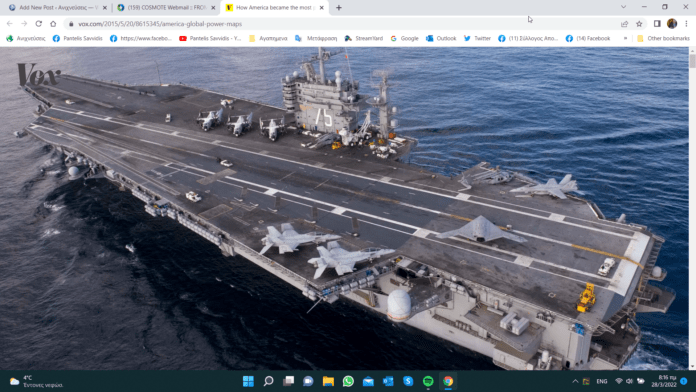
NATO does not have enough military equipment, not at the level of national militaries nor at the level of presence of US military troops on the European continent. In example, despite the gravity of the situation on the European continent, there is still just one US aircraft carrier, Harry Truman, in the European waters. Specifically, in the vicinity of Italian waters in the Mediterranean Sea, and not in the Baltic Sea where the situation is very worrying. If the situation deteriorates and the war spills over to NATO member states, such as Poland or Rumania, NATO would settle with repelling the Russian forces, intercepting their aircrafts and projectiles, without attacking Russian forces on the Ukrainian territory.

NATO is not able to carry out a military siege of Russia for the purposes of ensuring compliance with the economic and financial sanctions imposed by the West. Russia is a large state that has three key elements for survival: energy, as it is among top global exporters of oil and gas, other mineral resources/raw materials and food. Namely, Russia is self-sustainable in this respect and can produce on its own food not just for its requirements but for export as well. In fact, Russia is considered an important element in the preservation of food stability in the world.  The world is currently concerned by the increasingly high prices of grains, as well as the possible outbreak of famine and unrests in some African and Asian countries. Russia is self-sufficient in a number of industrial sector, starting from the defense sector to the medical and advanced technology sectors.

How to stop this war?

Currently, neither of the sides has an exit strategy. Putin cannot just return its military forces back home without a victory, and Zelensky cannot just hand over to Putin what he aspires to achieve by war. In the meantime, three strong mediators (presidents of France and Turkey, Macron and Erdogan, and the Israeli Prime Minister Naftali Bennett) remain powerless.

There are wars in which both sides are losers. Nevertheless, Putin is convinced that the military invasion will reinstate Russia in the position of a major power. He is aware that he will have to pay a high for that at the national and international level because of the 5,532 sanctions introduced against Russia, half of them after the invasion on Ukraine. (Prior to 24 February 2022, 2,754 sanctions had been introduced against Russia, and in the days after the attack an additional 2,778 sanctions, bringing the total number of sanctions to 5.532).[6] On the other side, Ukrainian President Zelensky believed that his path to the West is open, if not to NATO, then at least to the EU. However, the EU has told him that for the time being Ukraine does not meet the conditions for membership. Ukrainian leadership did not believe the warnings about the Russian military invasion and the enormous price that the Ukrainian people will pay.

Analysts believe that only an agreement under the auspices of the Unites States and China can stop the Russian advance. The question is whether the US can exert pressure on President Zelensky. An agreement would require a compromise, and a compromise would reveal that the West had forced a democratically elected government of Ukraine to yield to the dictate of a powerful state, specifically Russia -just like Arthur Neville Chamberlain did in Munich in 1938. However brutal it may sound, the history repeats itself?


[1] IFIMES – The International Institute for Middle East and Balkan Studies (IFIMES) from Ljubljana, Slovenia, has a special consultative status with the Economic and Social Council (ECOSOC)/UN since 2018.

[2] United Nations Security Council Resolution 2623 https://www.un.org/press/en/2022/sc14809.doc.htm

[3] United Nations Security Council Resolution 2624  https://www.un.org/press/en/2022/sc14810.doc.htm

[4] Major Non-NATO Ally (MNNA) status is a designation given by the US government to its close allies that have strategic working relations with the US armed forces, but are not a member of the North Atlantic Treaty Organization. Although the status does not automatically imply an agreement with the US on mutual defense, it still offers a number of military and financial benefits otherwise not available for the countries that are not NATO members. www.state.gov/major-non-nato-ally-status/

[5] Daily Sabah https://www.dailysabah.com/politics/diplomacy/russia-should-give-negotiations-a-real-chance-ankara-says

[6] Russia Is Now the World’s Most Sanctioned Country www.castellum.ai/insights/russia-is-now-the-worlds-most-sanctioned-country

Click here to have Eurasia Review’s newsletter delivered via RSS, as an email newsletter, via mobile or on your personal news page.

IFIMES

IFIMES – International Institute for Middle-East and Balkan studies, based in Ljubljana, Slovenia, has special consultative status with the Economic and Social Council ECOSOC/UN since 2018. IFIMES is also the publisher of the biannual international scientific journal European Perspectives. IFIMES gathers and selects various information and sources on key conflict areas in the world. The Institute analyses mutual relations among parties with an aim to promote the importance of reconciliation, early prevention/preventive diplomacy and disarmament/ confidence building measures in the regional or global conflict resolution of the existing conflicts and the role of preventive actions against new global disputes.


From Cold War to Hot Peace

0

In a world shaped by the iron logic of markets and national interests, Vladimir Putin’s atavistic war of conquest has mystified the “deep” strategists of realpolitik. Their mistake was to forget that under global capitalism, cultural, ethnic, and religious conflicts are the only forms of political struggle left.

LJUBLJANA – With the Russian invasion of Ukraine, we are entering a new phase of warfare and global politics. Aside from a heightened risk of nuclear catastrophe, we are already in a perfect storm of mutually reinforcing global crises – the pandemic, climate change, biodiversity loss, and food and water shortages. The situation exhibits a basic madness: at a time when humanity’s very survival is jeopardized by ecological (and other) factors, and when addressing those threats should be prioritized over everything else, our primary concern has suddenly shifted – again – to a new political crisis. Just when global cooperation is needed more than ever, the “clash of civilizations” returns with a vengeance.

Why does this happen? As is often the case, a little Hegel can go a long way toward answering such questions. In the Phenomenology of Spirit, Hegel famously describes the dialectic of master and servant, two “self-consciousnesses” locked in a life-or-death struggle. If each is ready to risk his own life to win, and if both persist in this, there is no winner: one dies, and the survivor no longer has anyone to recognize his own existence. The implication is that all of history and culture rest on a foundational compromise: in the eye-to-eye confrontation, one side (the future servant) “averts its eyes,” unwilling to go to the end.

But Hegel would hasten to note that there can be no final or lasting compromise between states. Relationships between sovereign nation-states are permanently under the shadow of potential war, with each epoch of peace being nothing more than a temporary armistice. Each state disciplines and educates its own members and guarantees civic peace among them, and this process produces an ethic that ultimately demands acts of heroism – a readiness to sacrifice one’s life for one’s country. The wild, barbarian relations between states thus serve as the foundation of the ethical life within states.

North Korea represents the clearest example of this logic, but there are also signs that China is moving in the same direction. According to friends in China (who must remain unnamed), many authors in Chinese military journals now complain that the Chinese army hasn’t had a real war to test its fighting ability. While the United States is permanently testing its army in places like Iraq, China hasn’t done so since its failed intervention in Vietnam in 1979.

At the same time, Chinese official media have begun to hint more openly that since the prospect of Taiwan’s peaceful integration into China is dwindling, a military “liberation” of the island will be needed. As ideological preparation for this, the Chinese propaganda machine has increasingly urged nationalist patriotism and suspicion toward everything foreign, with frequent accusations that the US is eager to go to war for Taiwan. Last fall, Chinese authorities advised the public to stock up on enough supplies to survive for two months “just in case.” It was a strange warning that many perceived as an announcement of imminent war.

This tendency runs directly against the urgent need to civilize our civilizations and establish a new mode of relating to our environs. We need universal solidarity and cooperation among all human communities, but this objective is made far more difficult by the rise of sectarian religious and ethnic “heroic” violence and a readiness to sacrifice oneself (and the world) for one’s specific cause. In 2017, the French philosopher Alain Badiou noted that the contours of a future war are already discernible. He foresaw

“…the United States and their Western-Japanese group on the one side, China and Russia on the other side, atomic arms everywhere. We cannot but recall Lenin’s statement: ‘Either revolution will prevent the war or the war will trigger revolution.’ This is how we can define the maximal ambition of the political work to come: for the first time in history, the first hypothesis – revolution will prevent the war – should realize itself, and not the second one – a war will trigger revolution. It is effectively the second hypothesis which materialized itself in Russia in the context of the First World War, and in China in the context of the second. But at what price! And with what long-term consequences!”

THE LIMITS OF REALPOLITIK

Civilizing our civilizations will require radical social change – a revolution, in fact. But we cannot afford to hope that a new war will trigger it. The far more likely outcome is the end of civilization as we know it, with the survivors (if there are any) organized in small authoritarian groups. We should harbor no illusions: in some basic sense, World War III has already begun, though for now it is still being fought mostly through proxies.

Abstract calls for peace are not enough. “Peace” is not a term that allows us to draw the key political distinction that we need. Occupiers always sincerely want peace in the territory they hold. Nazi Germany wanted peace in occupied France, Israel wants peace in the occupied West Bank, and Russian President Vladimir Putin wants peace in Ukraine. That is why, as the philosopher Étienne Balibar once put it, “pacifism is not an option.” The only way to prevent another Great War is by avoiding the kind of “peace” that requires constant local wars for its maintenance.

Whom can we rely on under these conditions? Should we place our confidence in artists and thinkers, or in pragmatic practitioners of realpolitik? The problem with artists and thinkers is that they, too, can lay the foundation for war. Recall William Butler Yeats’s apt verse: “I have spread my dreams under your feet, / Tread softly because you tread on my dreams.” We should apply these lines to poets themselves. When they spread their dreams under our feet, they should spread them carefully because actual people will read them and act upon them. Recall that the same Yeats continuously flirted with Fascism, going so far as to voice his approval of Germany’s anti-Semitic Nuremberg Laws in August 1938.

Plato’s reputation suffers because of his claim that poets should be thrown out of the city. Yet this is rather sensible advice, judging from the experience of recent decades, when the pretext for ethnic cleansing has been prepared by poets and “thinkers” like Putin’s house ideologue, Aleksandr Dugin. There is no longer ethnic cleansing without poetry, because we live in an era that is supposedly post-ideological. Since great secular causes no longer have the force to mobilize people for mass violence, a larger sacred motive is needed. Religion or ethnic belonging serve this role perfectly (pathological atheists who commit mass murder for pleasure are rare exceptions).

Realpolitik is no better guide. It has become a mere alibi for ideology, which often evokes some hidden dimension behind the veil of appearances in order to obscure the crime that is being committed openly. This double mystification is often announced by describing a situation as “complex.” An obvious fact – say, an instance of brutal military aggression – is relativized by evoking a “much more complex background.” The act of aggression is really an act of defense.

This is exactly what is happening today. Russia obviously attacked Ukraine, and is obviously targeting civilians and displacing millions. And yet commentators and pundits are eagerly searching for “complexity” behind it.

There is complexity, of course. But that does not change the basic fact that Russia did it. Our mistake was that we did not interpret Putin’s threats literally enough; we thought he was just playing a game of strategic manipulation and brinkmanship. One is reminded of the famous joke that Sigmund Freud quotes:

“Two Jews met in a railway carriage at a station in Galicia. ‘Where are you going?’ asked one. ‘To Cracow,’ was the answer. ‘What a liar you are!’ broke out the other. ‘If you say you’re going to Cracow, you want me to believe you’re going to Lemberg. But I know that in fact you’re going to Cracow. So why are you lying to me?’”

When Putin announced a military intervention, we didn’t take him literally when he said he wanted to pacify and “denazify” Ukraine. Instead, the reproach from disappointed “deep” strategists amounts to: “Why did you tell me you are going to occupy Lviv when you really want to occupy Lviv?”

This double mystification exposes the end of realpolitik. As a rule, realpolitik is opposed to the naivety of binding diplomacy and foreign policy to (one’s version of) moral or political principles. Yet in the current situation, it is realpolitik that is naive. It is naive to suppose that the other side, the enemy, is also aiming at a limited pragmatic deal.

FORCE AND FREEDOM

During the Cold War, the rules of superpower behavior were clearly delineated by the doctrine of mutual assured destruction (MAD). Each superpower could be sure that if it decided to launch a nuclear attack, the other side would respond with full destructive force. As a result, neither side started a war with the other.

By contrast, when North Korea’s Kim Jong-un talks about dealing a devastating blow to the US, one cannot but wonder where he sees his own position. He talks as if he is unaware that his country, himself included, would be destroyed. It is as if he is playing an altogether different game called NUTS (Nuclear Utilization Target Selection), whereby the enemy’s nuclear capabilities can be surgically destroyed before it can counterstrike.

Over the past few decades, even the US has oscillated between MAD and NUTS. Though it acts as if it continues to trust the MAD logic in its relations with Russia and China, it has occasionally been tempted to pursue a NUTS strategy vis-à-vis Iran and North Korea. With his hints about possibly launching a tactical nuclear strike, Putin follows the same reasoning. The very fact that two directly contradictory strategies are mobilized simultaneously by the same superpower attests to the fantasy character of it all.

Unfortunately for the rest of us, MADness is passé. Superpowers are increasingly testing each other, experimenting with the use of proxies as they try to impose their own version of global rules. On March 5, Putin called the sanctions imposed on Russia the “equivalent of a declaration of war.” But he has repeatedly stated since then that economic exchange with the West should continue, emphasizing that Russia is keeping its financial commitments and continuing to deliver hydrocarbons to Western Europe.

In other words, Putin is trying to impose a new model of international relations. Rather than cold war, there should be hot peace: a state of permanent hybrid war in which military interventions are declared under the guise of peacekeeping and humanitarian missions.

Hence, on February 15, the Russian Duma (parliament) issued a declaration expressing “its unequivocal and consolidated support for the adequate humanitarian measures aimed at providing support to residents of certain areas of the Donetsk and Lugansk regions of Ukraine who have expressed a desire to speak and write in Russian language, who want freedom of religion to be respected, and who do not support the actions of the Ukrainian authorities violating their rights and freedoms.”

How often in the past have we heard similar arguments for US-led interventions in Latin America or the Middle East and North Africa? While Russia shells cities and bombs maternity wards in Ukraine, international commerce should continue. Outside of Ukraine, normal life should go on. That is what it means to have a permanent global peace sustained by never-ending peacekeeping interventions in isolated parts of the world.

Can anyone be free in such a predicament? Following Hegel, we should make a distinction between abstract and concrete freedom, which correspond to our notions of freedom and liberty. Abstract freedom is the ability to do what one wants independently of social rules and customs; concrete freedom is the freedom that is conferred and sustained by rules and customs. I can walk freely along a busy street only when I can be reasonably sure that others on the street will behave in a civilized way toward me – that drivers will obey traffic rules, and that other pedestrians will not rob me.

But there are moments of crisis when abstract freedom must intervene. In December 1944, Jean-Paul Sartre wrote: “Never were we freer than under the German occupation. We had lost all our rights, and first of all our right to speak. They insulted us to our faces. … And that is why the Resistance was a true democracy; for the soldier, as for his superior, the same danger, the same loneliness, the same responsibility, the same absolute freedom within the discipline.”

Sartre was describing freedom, not liberty. Liberty is what was established when post-war normality returned. In Ukraine today, those who are battling the Russian invasion are free and they are fighting for liberty. But this raises the question of how long the distinction can last. What happens if millions more people decide that they must freely violate the rules in order to protect their liberty? Is this not what drove a Trumpian mob to invade the US Capitol on January 6, 2021?

THE NOT-SO-GREAT GAME

We still lack a proper word for today’s world. For her part, the philosopher Catherine Malabou believes we are witnessing the beginning of capitalism’s “anarchist turn”: “How else are we to describe such phenomena as decentralized currencies, the end of the state’s monopoly, the obsolescence of the mediating role played by banks, and the decentralization of exchanges and transactions?”

Those phenomena may sound appealing, but with the gradual disappearance of the state’s monopoly, state-imposed limits to ruthless exploitation and domination will also disappear. While anarcho-capitalism aims at transparency, it also “simultaneously authorizes the large-scale but opaque use of data, the dark web, and the fabrication of information.”

To prevent this descent into chaos, Malabou observes, policies increasingly follow a path of “Fascist evolution…with the excessive security and military build-up that goes along with it. Such phenomena do not contradict a drive towards anarchism. Rather, they indicate precisely the disappearance of the state, which, once its social function has been removed, expresses the obsolescence of its force through the use of violence. Ultra-nationalism thus signals the death agony of national authority.”

Viewed in these terms, the situation in Ukraine is not one nation-state attacking another nation-state. Rather, Ukraine is being attacked as an entity whose very ethnic identity is denied by the aggressor. The invasion is justified in the terms of geopolitical spheres of influence (which often extend well beyond ethnic spheres, as in the case of Syria). Russia refuses to use the word “war” for its “special military operation” not just to downplay the brutality of its intervention but above all to make clear that war in the old sense of an armed conflict between nation-states does not apply.

The Kremlin wants us to believe that it is merely securing “peace” in what it considers its geopolitical sphere of influence. Indeed, it is also already intervening through its proxies in Bosnia and Kosovo. On March 17, the Russian ambassador to Bosnia, Igor Kalabukhov, explained that, “If [Bosnia] decides to be a member of any alliance [such as NATO], that is an internal matter. Our response is a different matter. Ukraine’s example shows what we expect. Should there be any threat, we will respond.”

Moreover, Russian Foreign Minister Sergei Lavrov has gone so far as to suggest that the only comprehensive solution would be to demilitarize all of Europe, with Russia with its army maintaining peace through occasional humanitarian interventions. Similar ideas abound in the Russian press. As the political commentator Dmitry Evstafiev explains in a recent interview with a Croatian publication: “A new Russia is born which lets you know clearly that it doesn’t perceive you, Europe, as a partner. Russia has three partners: USA, China, and India. You are for us a trophy which shall be divided between us and Americans. You didn’t yet get this, although we are coming close to this.”

Dugin, Putin’s court philosopher, grounds the Kremlin’s stance in a weird version of historicist relativism. In 2016, he said:

“Post-modernity shows that every so-called truth is a matter of believing. So we believe in what we do, we believe in what we say. And that is the only way to define the truth. So we have our special Russian truth that you need to accept…. If the United States does not want to start a war, you should recognize that United States is not any more a unique master. And [with] the situation in Syria and Ukraine, Russia says, ‘No you are not any more the boss.’ That is the question of who rules the world. Only war could decide really.”

This raises an obvious question: What about the people of Syria and Ukraine? Can they not also choose their truth and belief, or are they just a playground – or battlefield – of the big “bosses”? The Kremlin would say they don’t count in the big division of power. Within the four spheres of influence, there are only peacekeeping interventions. War proper happens only when the four big bosses cannot agree on the borders of their spheres – as in the case of China’s claims to Taiwan and the South China Sea.

A NEW NON-ALIGNMENT

But if we can be mobilized only by the threat of war, not by the threat to our environment, the liberty we will get if our side wins may not be worth having. We are faced with an impossible choice: if we make compromises to maintain peace, we are feeding Russian expansionism, which only a “demilitarization” of all of Europe will satisfy. But if we endorse full confrontation, we run the high risk of precipitating a new world war. The only real solution is to change the lens through which we perceive the situation.

While the global liberal-capitalist order is obviously approaching a crisis at many levels, the war in Ukraine is being falsely and dangerously simplified. Global problems like climate change play no role in the hackneyed narrative of a clash between barbaric-totalitarian countries and the civilized, free West. And yet the new wars and great-power conflicts are also reactions to such problems. If the issue is survival on a planet in trouble, one should secure a stronger position than others. Far from being the moment of clarifying truth, and when the basic antagonism is laid bare, the current crisis is a moment of deep deception.

While we should stand firmly behind Ukraine, we must avoid the fascination with war that has clearly seized the imaginations of those who are pushing for an open confrontation with Russia. Something like a new non-aligned movement is needed, not in the sense that countries should be neutral in the ongoing war, but in the sense that we should question the entire notion of the “clash of civilizations.”

According to Samuel Huntington, who coined the term, the stage for a clash of civilizations was set at the Cold War’s end, when the “iron curtain of ideology” was replaced by the “velvet curtain of culture.” At first blush, this dark vision may appear to be the very opposite of the end-of-history thesis advanced by Francis Fukuyama in response to the collapse of communism in Europe. What could be more different from Fukuyama’s pseudo-Hegelian idea that the best possible social order humanity could devise had at last been revealed to be capitalist liberal democracy?

We can now see that the two visions are fully compatible: the “clash of civilizations” is the politics that comes at the “end of history.” Ethnic and religious conflicts are the form of struggle that fits with global capitalism. In an age of “post-politics” – when politics proper is gradually replaced by expert social administration – the only remaining legitimate sources of conflict are cultural (ethnic, religious). The rise of “irrational” violence follows from the depoliticization of our societies.

Within this limited horizon, it is true that the only alternative to war is a peaceful coexistence of civilizations (of different “truths,” as Dugin put it, or, to use a more popular term today, of different “ways of life”). The implication is that forced marriages, homophobia, or the rape of women who dare to go out in public alone are tolerable if they happen in another country, so long as that country is fully integrated into the global market.

The new non-alignment must broaden the horizon by recognizing that our struggle should be global – and by counseling against Russophobia at all costs. We should offer our support to those within Russia who are protesting the invasion. They are not some abstract coterie of internationalists; they are the true Russian patriots – the people who truly love their country and have become deeply ashamed of it since February 24. There is no more morally repulsive and politically dangerous saying than, “My country, right or wrong.” Unfortunately, the first casualty of the Ukraine war has been universality.

0
The aircraft carrier USS Harry S. Truman sails in the Atlantic in 2012.
 Cristina Young/US Navy via Getty

How America became the most powerful country on Earth, in 11 maps

We take it for granted that the United States is the most powerful country on Earth today, and perhaps in human history. The story of how that came to be is long, fascinating, complex — and often misunderstood. Here, excerpted in part from “70 maps that explain America,” are maps that help show some of the key moments and forces that contributed to the US’s rise as sole global superpower.

Because of a war that left North America vulnerable to British conquest — and thus ready for the US’s expansion

So much of America’s power comes from its size: it is one the largest countries on Earth by population and area, and is rich in natural resources and human capital. It is also in many ways an island nation; because it faces no major threats on its borders, it is freer to project power globally.

There was no reason that North America’s borders had to become what they are. A key moment in how that happened came with the French and Indian War, at the time just a sideshow in the larger Seven Years’ War in Europe. The war ended with France giving up its vast territory on the continent to Britain and Spain. Napoleon would seize back Louisiana and sell it to the US in 1803, but New France was lost forever. With the Spanish Empire already declining, the continent was left open to conquest from the British Empire and its successor, the United States.

Image credit: University of Maine

By stealing Native Americans’ land for an entire century

Of course, North America was not empty when European explorers and settlers arrived — it was filled with diverse, long-established societies. They may well have become sovereign nation-states had the US not sought to purge them from their lands, deny them self-rule, and, once they had been reduced to a tiny minority, forcibly assimilate them and their land. These acts are the foundation upon which American dominance of North America, and thus American global power, was built.

This map begins by showing Native Americans’ land in 1794, demarcated by tribe and marked in green. In 1795, the US and Spain signed the Treaty of San Lorenzo, carving up much of the continent between them. What followed was a century of catastrophes for Native Americans as their land was taken piece by piece. By the time the US passed the Dawes Act in 1887, effectively abolishing tribal self-governance and forcing assimilation, there was very little left.

Image credit: Sam B. Hillard/Sunisup

By taking land from Mexico in another war

American expansionism could only go so far. Upon Mexico’s independence in 1821, it gained vast but largely unincorporated and uncontrolled Spanish-claimed lands from present-day Texas to Northern California. American settler communities were growing in those areas; by 1829 they outnumbered Spanish speakers in Mexico’s Texas territory. A minor uprising by those American settlers in 1835 eventually led to a full-fledged war of independence. The settlers won, establishing the Texas Republic, which they voluntarily merged with the United States in 1845.

But Mexico and the US still disputed the Texas borders, and President James K. Polk wanted even more westward land to expand slavery. He also had designs on Mexico’s California territory, already home to a number of American settlers. War began in 1846 over the disputed Texas territory, but quickly expanded to much of Mexico. A hard-line Mexican general took power and fought to the bitter end, culminating in the US invading Mexico City and seizing a third of Mexico’s territory, including what is now California, Utah, Nevada, Arizona, New Mexico, and Texas. Had the war gone differently, or had Polk not sought these Mexican lands, the US would today be a much smaller country — and perhaps with no Pacific coast — making it less powerful globally, and particularly in the increasingly important Pacific region.

Image credit: Kaidor/Wikipedia

By choosing to become a European-style imperial power

If there was a single moment when the US became a global power, it was the war with Spain. The Spanish Empire had been crumbling for a century, and there was a ferocious debate within the US over whether America should become an imperial power to replace it. This centered on Cuba: pro-imperialists wanted to purchase or annex it from Spain (pre-1861, the plan was to turn it into a new slave state); anti-imperialists wanted to support Cuban independence.

In 1898, Cuban activists launched a war of independence from Spain, and the US intervened on their side. When the war ended in Spanish defeat, US anti-imperialists blocked the US from annexing Cuba, but pro-imperialists succeeded in placing it under a quasi-imperialist sphere of influence; the US base at Guantanamo Bay is a relic of this arrangement. The war also ended with the US taking three other Spanish possessions: Puerto Rico, Guam, and the Philippines, a massive and populous island nation in the Pacific. The US had become a European-style imperial power. While this experiment in colonialism was short-lived and controversial at home, it began America’s role as a major global power.

Image credit: Anand Katakam

Through colonialism in the Pacific — and by stealing Hawaii

America’s brief experiment with overt imperialism came late in the game, and mostly focused on one of the last parts of the world carved up by Europe: the Pacific. This began in Hawaii, then an independent nation. American businessmen seized power in an 1893 coup and asked the US to annex it. President Cleveland refused to conquer another nation, but when William McKinley took office he agreed, absorbing Hawaii, the first of several Pacific acquisitions. Japan soon entered the race for the Pacific and seized many European-held islands, culminating in this 1939 map, two years before America joined World War II.

Image credit: Emok

Because World War I devastated Europe — and not the US

For centuries, the world had been divided among several competing global powers. No one country had hope of becoming the sole global superpower in such a system. World War I was the beginning of the end of that era. These six dots represent not just the major participants in the first World War, but the countries that, at the time, were the world’s great powers. A seventh great power, the Ottoman Empire, was dismantled outright as a result of the war. (China, perhaps another great power, had been declining for some time.) As you can see, the destruction of the war and the massive war debts absolutely devastated the economies of the great powers — except, that is, for the United States and the still-mighty British Empire.

Image credit: Stephen Broadberry/Mark Harrison

Because World War II devastated Europe and Asia

It is impossible to fully capture the toll of the second world war in any one metric, but this map of military deaths can serve as a telling shorthand. While the war was terribly costly for all involved, the human cost was disproportionately felt by the two primary Axis powers — Germany and Japan — and particularly by the Soviets and Chinese, as well as by other countries in Eastern Europe and East Asia caught in the war machines. These military deaths merely hint at the much larger death toll in both continents from war, famine, and genocide, as well as economic and ecological devastation. While Americans paid dearly, as well — enduring the deaths of 400,000 military personnel — the US came out of the war far more powerful by virtue of everyone else’s decline.

Image credit: Tyson Whiting

Because European colonialism collapsed — but not the American or Russian empires

This animated map showing the rise and fall of European (as well as Japanese and Ottoman) imperialism is fascinating all the way through, but things get really interesting from 1914 through the end. In just a few years after World War II, the centuries-long project of European colonialism collapses almost entirely. The reasons for this were many: the rise of independence movements in Latin America, then in Africa and Asia; the collapse of European economies that drew them back home; and, with postwar colonial misadventures like the 1956 Suez Crisis, a sense that the new world order was not going to tolerate colonialism anymore. In any case, the world was left with two enormous land empires that happened to have European roots: the United States and the Soviet Union.

Image credit: Asuros

By dividing up the world in the Cold War

After the world wars and the end of colonialism, the global system went from many competing powers to exactly two: the US and the Soviet Union. Both had competing ideologies, competing interests in Europe and Asia, and deep mutual distrust. While that might have normally led to war, the horrifying power of nuclear weapons kept them from fighting outright. Instead, the US and Soviet Union competed for global influence.

American and Soviet fears of a global struggle became a self-fulfilling prophecy: both launched coups, supported rebellions, backed dictators, and participated in proxy wars in nearly every corner of the world. Both built up systems of alliances, offshore bases, and powerful militaries that allowed each to project power across the globe.

By 1971, the US and the Soviet Union had settled into a stalemate; this map shows the world as it had been utterly divided. In 1979, the Soviets invaded Afghanistan; a year later, Ronald Reagan ran for president, promising to end the détente and defeat the Soviet Union. The Soviet Union, along with many of its trappings of global power, disintegrated — leaving the United States with a vast global architecture of military and diplomatic power that was suddenly unchallenged.

Image credit: Minnesotan Confederacy

Because Europe unified under American-dominated NATO

In 1948, the Soviet Union blockaded Berlin from Western Germany. The next year, the powers of Western Europe joined with the US and Canada in signing a collective defense — the North Atlantic Treaty Organization — meant to deter Soviet aggression and counterbalance the Soviet Union in Europe. It expanded during the Cold War to include virtually every European country west of the Soviet bloc. This may have staved off another war in Europe by pledging that the US would defend any member as it would its own soil. It also left Western Europe, once full of independent powers that jostled against one another and against the United States, unified against a common threat — and led by its most powerful member, the United States.

That dynamic did not really change after the Cold War ended. NATO expanded, acquiring new members in Central and Eastern Europe that still feared Russia. NATO ensures the stability of Europe and the security of its members, but at a cost: Europe’s nations are now reliant upon, and thus yoked to, American power. This dynamic has played out in several places across the globe — South Korea and Japan are similarly tied to the US through security agreements and American military bases, for example — but it is most clearly pronounced in Europe.

Image credit: Arz

10

By outspending the next dozen countries combined on defense

Another way to show America’s status as the sole global superpower is its military budget: larger than the next 12 largest military budgets on Earth, combined. That’s partly a legacy of the Cold War, but it’s also a reflection of the role the US has taken on as the guarantor of global security and the international order. For example, since 1979, the US has made it official military policy to protect oil shipments out of the Persian Gulf — something from which the whole world benefits. At the same time, other powers are rapidly growing their militaries. China and Russia in particular are rapidly modernizing and expanding their armed forces, implicitly challenging global American dominance and the US-led order.

Image credit: International Institute for Strategic Studies/Agence France-Presse

11

By virtue of America’s scientific edge — and its democracy, creativity, and draw for immigrants

The US is so powerful for reasons other than its size, its military might, and its global system of alliances and bases — although those are certainly important. There is also America’s tremendous advantage in scientific research, which both furthers and is an expression of its technological and economic lead on much of the rest of the world; it’s also an indicator of innovation more broadly. An imperfect but revealing shorthand for that is the US’s tremendous lead in Nobel prizes from its 1901 inception through 2013, when I made this map (the US has not lost its Nobel lead since then). The US has won 371 Nobels, mostly in the sciences; the US thus accounts for 4 percent of the world population but 34 percent of its Nobel laureates. This is the result of many factors: wealth, a culture and economy that encourage innovation, education, vast state- and private-funded research programs, and a political culture that has long attracted highly educated migrants. All of those factors contribute to American wealth and thus power in more ways than just Nobel prizes, but the sheer number of US laureates is a sign of the American advantage there.

Image credit: Max Fisher

www.vox.com

«Ελληνικά στρατιωτικά τμήματα σε Ουκρανία»! – Γάλλος ΥΠΕΞ Ζαν-Ιβ Λεντριάν: «’Αμεση η αποστολή τους σε Μαριούπολη»

0

Την ενεργοποίηση της συμφωνίας Μητσοτάκη-Μακρόν για «ανθρωπιστική βοήθεια» στην Μαύρη Θάλασσα ζήτησε το Παρίσι

H Γαλλία πιέζει την Ελλάδα να ανακοινώσει άμεσα τις στρατιωτικές δυνάμεις που θα διατεθούν -υπό γαλλική διοίκηση πάντα- να αποπλεύσουν για την Ουκρανία, προκειμένου να «προσφέρουν ανθρωπιστική βοήθεια στους κατοίκους της Μαριούπολης», χωρίς να έχει υπάρξει κάποια έγκριση της σχετικής ενέργειας από την Ρωσία!

Απόλυτα έγκυρη πηγή του ΓΕΕΘΑ ανέφερε ότι «Έχουν γίνει κάποιες προκαταρτικές συζητήσεις στο πλαίσιο της πολιτικής συμφωνίας για την διενέργεια της ανθρωπιστικής αποστολής.

Πρέπει να δούμε τι μπορούμε να κάνουμε χωρίς να κινδυνεύσει το προσωπικό. Θα πρέπει να υπάρξει κάποια συμφωνία με την Ρωσία, γιατί εκεί πρόκειται για εμπόλεμη ζώνη και όλη Θάλασσα του Αζόφ κατέχεται από την Ρωσία.

Δεν είναι απλά πράγματα αυτά που ζητούν οι Γάλλοι. Σε κάθε περίπτωση η απόφαση είναι πολιτική. Εμείς θα εκθέσουμε όλα τα δεδομένα».

Να πούμε ότι η συμφωνία Μακρόν-Μητσοτάκη πριν τρεις ημέρες ήρθε ως αποτέλεσμα των συζητήσεων «με τον δήμαρχο της πόλης» όπως είχε πει ο Μακρόν, ο οποίος πλέον δεν είναι δήμαρχος. αφού η Μαριούπολη έπεσε στα χέρια των Ρώσων και «έγινε σε συνεργασία με τον Ουκρανό πρόεδρο Βολοντίμιρ Ζελένσκι», όπως ανακοίνωσαν οι Γάλλοι.

«Η δική μας ομάδα συντονίζει» δήλωσε ο Μακρόν, προσθέτοντας ότι αναζητά «περισσότερα μέρη για να συμμετάσχουν σε αυτή την επιχείρηση» η οποία θα πραγματοποιηθεί «τις επόμενες ημέρες. Μέχρι στιγμής, σε αυτή θα συμμετάσχουν η Ελλάδα και η Τουρκία» είπε.

Δηλαδή, Έλληνες και Τούρκοι θα πολεμήσουν από κοινού τους Ρώσους  με γαλλικό συντονισμό!

Θα εισέλθουν στην κλειστή Αζοφική Θάλασα χωρίς την έγκριση της Ρωσίας, υπό τα ρωσικά πυρά και θα φτιάξουν διάδρομο για απομάκρυνση αμάχων!

Αφέλεια, βλακεία, ύποπτη άγνοια των Γάλλων; Θα στείλουν ελληνικά στρατεύματα στην «σφηκοφωλιά» της Θάλασσας του Αζόφ; Ούτε μέχρι την είσοδο της Θάλασσας θα φτάσουν, χωρίς ρωσική συγκατάθεση.

Και γιατί οι Ρώσοι να δεχθούν αποστολή στρατιωτικών δυνάμεων «ανθρωπιστική βοήθεια» σε έναν πληθυσμό κατά 70-80% ρωσόφωνο για τους οποίους έκαναν άλλωστε και αυτό τον πόλεμο-τουλάχιστον αυτοί ήταν η αφορμή;

Να θυμίσουμε ότι και το 1919 στην Ουκρανία οι Γάλλοι πίεσαν την κυβέρνηση Βενιζέλου να στείλει Στρατό κατά των επαναστατημένων Ρώσων. Το 1921 η Γαλλία ήταν η πρώτη δυτική χώρα που στράφηκε υπέρ του Κεμάλ. Η Σοβιετική Ένωση βοήθησε κρίσιμα τη Τουρκία να επιτύχει τη νίκη του 1922…

https://www.pronews.gr/amyna-asfaleia/enoples-sygkroyseis/ellinika-stratiotika-tmimata-se-oukrania-gallos-ypeks-zan-iv-lentrian-amesi-i-apostoli-tous-se-marioupoli/