

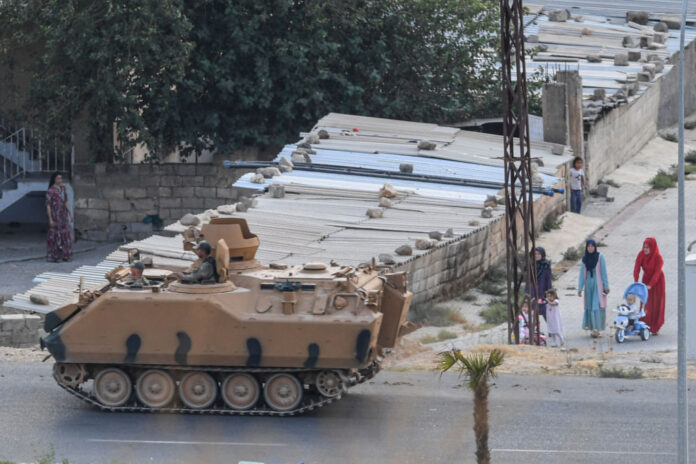
- In the indictment concerning the latest killing, the police officer said that the child “hit his vehicle”.
- “These reports are defective. It is a massive problem that these reports list many faults of the defendant but conclude that he is guiltless or is just secondarily at fault. It is also a huge problem that these reports are prepared not by independent persons or institutions, but rather by the police or other state institutions. Evidence was blacked out, and not collected properly. And a crime scene investigation has not been thoroughly conducted. The conclusions of these reports do not reflect reality.” — Ömer Sansarkan, human rights lawyer who joined Tektekin’s trials on behalf of the Diyarbakir Bar Association’s Children’s Rights Center, to Gatestone, April 5, 2022.
- According to a 2012 report by the Diyarbakır branch of the IHD, 569 Kurdish children were killed between 1988 and 2013 by state violence such as police or military fire, gas bombs, mines, or explosions of abandoned or derelict ordnance.
- Because of the “political tendencies of the government”, “the actions of the public officials in line with these tendencies” and “a lack of independence of the judiciary”, “human rights violations resulting from arbitrary practices by public officials are considered legitimate and the perpetrators are protected with impunity.” — The Working Group on Children Affected by War and Conflict of the Children’s Rights Center of Diyarbakir Bar Association, March 2, 2022.
- These crimes also constitute discrimination, as they occur mostly in the majority-Kurdish region of Turkey, the report added.
- “None of the perpetrators has received a fair punishment.” — Ömer Sansarkan, to Gatestone, April 5, 2022.
- On September 11, 2019, a five-year-old Kurdish child, Efe Tektekin, was killed crossing the street when a Turkish police officer hit him with his armored vehicle in Diyarbakir. The officer, after facing trial for “causing death by negligence,” was acquitted following the final hearing of the court case on March 29.
If Tektekin had run out into the road too fast for the policeman to stop, then there would have been a proper investigation and all evidence would have been used. But the lawyers have said that the legal system protects police officers. Moreover, there have been many other similar cases of killings by armored vehicles: in none of them is the driver ever punished. These armored vehicles, are only deployed, discriminatorily, in Kurdish-majority communities. They endanger public safety and should not even be driving in the streets.
Human rights lawyers say that impunity for state authorities or public officials who commit crimes against Kurds are systematic in Turkey.
After Tektekin’s death, the police officer who hit him was briefly arrested but then released. He has continued, on duty as a police officer, driving his armored vehicle ever since.
During the final court hearing, the Tektekin family lawyer, Sedat Çınar, noted the obstacles they faced during the investigation and trial:
“Right after the incident, the armored vehicle was taken away from the scene immediately. Photographs of the vehicle were not taken, necessary determinations were not made regarding the accident, and cameras from the workplaces around were not collected and examined. Witnesses stated that the vehicle’s camera was working [at the time of the incident], and it could see the images around, but in a reply letter [sent by authorities] it was reported that the vehicle’s camera was defective. It is clear in the defendant’s statements that he had gone out of his regular route [right before the incident]. It is against reason and science to find a 5-year-old child at fault in the incident.”
Çınar added that “when the scope of the current court file is evaluated as a whole, the defendant’s action should be assessed within the framework of conscious negligence or possible intent and the defendant be punished accordingly.”
In the indictment concerning the latest killing, the police officer said that the child “hit his vehicle”. The report prepared by authorities stated that the dead child was found to be “the main culprit” while the police officer was determined to be “the secondary culprit”. When the lawyers opposed the report, a second report claimed that Efe’s father, Ahmet Tektekin, was “primarily at fault” on the grounds that he “did not take care of his child during the accident and endangered his safety.” The report also found the police officer “secondarily at fault”, saying:
“The evidence at hand is that the driver managed the vehicle in a way that could be dangerous for the life, health and property of the people around without reducing his speed according to the environmental conditions. This accident should have been predictable and preventable had the driver paid the necessary attention and care.”
A third report by authorities found the dead child to be primarily at fault while calling the police officer “secondarily at fault.”
Human rights lawyer Ömer Sansarkan, who joined Tektekin’s trials on behalf of the Diyarbakir Bar Association’s Children’s Rights Center, told Gatestone:
“The first report was prepared by the police. The second report was by the Diyarbakir branch of the forensic medicine institute (ATK). And the last one was prepared by the Istanbul Traffic Specialization Office of the ATK.
“These reports are defective. It is a massive problem that these reports list many faults of the defendant but conclude that he is guiltless or is just secondarily at fault. It is also a huge problem that these reports are prepared not by independent persons or institutions, but rather by the police or other state institutions. Evidence was blacked out, and not collected properly. And a crime scene investigation has not been thoroughly conducted. The conclusions of these reports do not reflect reality.”
During the first court hearing in February 2020, the family’s attorney Çınar said that it was only the police force who collected the evidence regarding the offending officer.
“The driver’s license of the accused is not presented in the court file and there is a lot of other [evidence] that is missing. In our region [Kurdish-majority southeast], human lives are not valued [by police and other state authorities]… There are cameras, there are witnesses. If the police want to, they can find them and put them in the file. But the witnesses chosen for this court are two people who have committed criminal offenses. While there are many other witnesses, only the testimonies of these two people were taken. The boy’s father said that he watched the event from the vehicle’s camera. We want the camera records to be requested from the police.”
All of the requests of the family’s lawyers were not met.
The killing and wounding of Kurds caused by security forces in armored vehicles appear to be a systematic problem in the majority-Kurdish southeast of Turkey. Those police officers or soldiers who hit the Kurds with these vehicles seem to always get away with their crimes.
In the last 14 years, 90 Kurdish civilians were injured in 77 armored vehicle crashes. At least 43 people, 20 of whom were children, were killed as a result of being hit by armored vehicles, according to a local branch of the Human Rights Association (IHD) in the city of Batman.
A January 2022 report by the IHD noted that armored vehicle crashes have become commonplace in the cities and towns of Turkey’s majority-Kurdish region.
“As the Human Rights Association, we want armored vehicles to be removed from living areas [neighborhoods], and legal deterrent measures to be taken against the careless use of vehicles by law enforcement officers that endanger the right to life of citizens. We demand effective judicial and administrative investigations against law enforcement officers whose actions have caused death and injury, and an end to the protection of armored vehicles.”
According to a 2012 report by the Diyarbakır branch of the IHD, 569 Kurdish children were killed between 1988 and 2013 by state violence such as police or military fire, gas bombs, mines, or explosions of abandoned or derelict ordnance. A 12-year-old Kurdish child named Ceylan Önkol, for instance, was killed by a mortar shell on September 28, 2009 while grazing cattle in Diyarbakır.
Other reported killings of Kurdish children include:
- Umut Furkan Akçil, age 7, was killed on October 10, 2010 in the city of Sirnak. He was escaping from pepper gas thrown by the police during demonstrations but was then hit by a passing vehicle.
- On October 6, 2010, Ahmet İmre, age 12, was killed and another child of the same age was seriously wounded as a result of the explosion of a metal object that they had found in the rural area in Şırnak. The area where the children were playing was near a military zone.
- On September 17, 2010, 15-year-old Enver Turan was shot by a sergeant who had exited his vehicle during protests in Hakkari. The child died in hospital.
- On July 22, 2010, 16-year-old Canan Saldık, on the way to a picnic in a village near the city of Van, was killed by a bullet that hit her in the head. The gunfire allegedly came from a nearby military barracks.
- On June 24, 2010, Birem Basan, age 14, was hit and killed by a police armored vehicle in Şırnak.
- On May 25, 2010, in the city of Van, an explosion occurred while some children were playing about one meter outside the military barracks shooting range. Oğuzcan Akyürek, age 13, was killed and four children were wounded. It was alleged that a soldier from the barracks had thrown explosives at children.
- On April 23, 2010, 14-year-old Izzettin Boz, who was grazing animals in a village in Mardin, was killed when an object he found exploded. The munition reportedly belonged to the Turkish military.
- On April 2, 2010, 14-year-old Mehmet Nuri was shot dead by Turkish soldiers in a village near the city of Van.
The Working Group on Children Affected by War and Conflict of the Children’s Rights Center of Diyarbakir Bar Association issued a report on March 2 entitled “Armored Vehicle, Mines and Combat-War Waste Induced Child Rights Violations”.
The report analyzed the years 2011 to 2021. It noted that 22 Kurdish children were killed and 27 children were wounded as a result of being hit by an armored vehicle driven by police officers or shot by fire from armored vehicles.
From 2011 to 2021, mines, conflict, or unexploded ordnances in eastern Turkey killed 45 Kurdish children and wounded 135 children.
The perpetrators, however, are “protected,” the report noted:
“The concept of impunity means that no investigation or prosecution is opened in accordance with legislation or practice, that investigation and prosecution processes are not carried out properly, and/or that the judgment rendered as a result of these processes is incompatible with justice or it is not executed. In short, it means that the perpetrators of human rights violations are immune from punishment.”
Because of the “political tendencies of the government”, “the actions of the public officials in line with these tendencies” and “a lack of independence of the judiciary”, “human rights violations resulting from arbitrary practices by public officials are considered legitimate and the perpetrators are protected with impunity.”
These crimes also constitute discrimination, as they occur mostly in the majority-Kurdish region of Turkey, the report added:
“These rights violations that also violate the prohibition of discrimination are not seen throughout Turkey, but they are specific to a region of the country. Children’s rights violations arising from mines, conflict-war wastes, and armored vehicles systematically take place in the provinces of Eastern and Southeastern Anatolia Regions especially where [military] conflicts are intense. This situation should be considered within the scope of violations of the prohibition of discrimination defined in national and international legal texts.”
The arbitrary rights violations by state authorities including law enforcement officers in Turkey have led to the deaths and injuries of dozens of Kurdish children. But as Sansarkan concluded, “None of the perpetrators has received a fair punishment.
- “Uzay Bulut, a Turkish journalist, is a Distinguished Senior Fellow at the Gatestone Institute.
https://www.gatestoneinstitute.org/18419/turkey-kurdish-children-killed


 της Χρύσας Αράπογλου


 Του Πλάμεν Τόντσεφ (*)
Τα drones και τα ρομπότ στους άδειους δρόμους της Σαγκάης παραπέμπουν μεν σε δυστοπικές σκηνές από φουτουριστικές ταινίες, αλλά είναι η πραγματικότητα στην μεγαλούπολη της ανατολικής Κίνας αυτές τις μέρες. Το αυστηρό lockdown έχει φέρει 26 εκατομμύρια κατοίκους στα όριά τους, με πολλούς πολίτες να αντιμετωπίζουν το φάσμα της πείνας και με την εξάπλωση της μαύρης αγοράς, ενώ καταγράφονται πλέον και αυτοκτονίες. Ταυτόχρονα, ο κατάλογος των περιοχών σε καθεστώς καραντίνας περιλαμβάνει κι άλλες κινεζικές 22 πόλεις, με συνολικό πληθυσμό περί τα 200 εκατομμύρια.
Στην αρχή του 2020, όταν πρωτοεμφανίστηκε ο κορωνοϊός στην Κίνα, η ενστικτώδης αντίδραση των αρχών ήταν να υποβαθμίσουν την σοβαρότητα των κινδύνων και να εμφανίσουν τα πρώτα κρούσματα ως μεμονωμένα και αντιμετωπίσιμα περιστατικά, με αποτέλεσμα η πανδημία γρήγορα να προσλάβει παγκόσμιες διαστάσεις. Μια τέτοια συσκότιση είναι αδύνατη αυτή τη φορά, αν και η ασφυκτική λογοκρισία περιορίζει σε μεγάλο βαθμό τις εκδηλώσεις οργής των έγκλειστων πολιτών στα μέσα κοινωνικής δικτύωσης, όπως είναι το Weibo και το WeChat.
Οικονομικές προεκτάσεις του lockdown της Σαγκάης
Η Σαγκάη είναι αναμφίβολα το οικονομικό, εμπορικό και επιχειρηματικό κέντρο της Κίνας. Σημειωτέον, διαθέτει το μεγαλύτερο λιμάνι παγκοσμίως, με δυναμικότητα στα 47 εκατ. εμπορευματοκιβώτια ετησίως και πέρυσι σ’ αυτό αντιστοιχούσε περίπου το 20% όλων των εμπορευμάτων που μετακινήθηκαν από και πρός την Κίνα. Ο στόχος που έχει θέσει το Κομμουνιστικό Κόμμα της Κίνας (ΚΚΚ) για μεγέθυνση της οικονομίας το 2022 κατά “περίπου 5,5%” ήδη θεωρείται εξωπραγματικός. Πρόσφατη μελέτη που εκπονήθηκε από πανεπιστημιακούς ερευνητές στο Χονγκ Κονγκ, Πεκίνο, Zhejiang και Princeton καταλήγει στο συμπέρασμα πως το πλήρες lockdown διάρκειας ενός μήνα στις τέσσερις μεγαλύτερες πόλεις της Κίνας θα οδηγούσε σε ύφεση και πιθανότατα θα είχε πολύ ανησυχητικές επιπτώσεις σε διεθνή κλίμακα.
Η εξέλιξη αυτή επιτείνει τις σοβαρότατες διαρθρωτικές προκλήσεις που ήδη αντιμετωπίζει η κινεζική οικονομία. Οι ολοένα και χαμηλότεροι ρυθμοί ανάπτυξης είναι απόρροια του οξυμένου δημογραφικού προβλήματος της Κίνας, της σταθερά συρρικνούμενης παραγωγικότητας, της κρίσης στον τομέα των ακινήτων, του διογκούμενου κρυφού χρέους που είναι βραδυφλεγής βόμβα στα θεμέλια της οικονομίας, κ. λ. π. Σ ’αυτά προστίθεται τώρα και ο πόλεμος στην Ουκρανία που οδηγεί στα ύψη τις διεθνείς τιμές πρώτων υλών, από τις οποίες εξαρτάται σε μεγάλο βαθμό η Κίνα.
Είναι φανερό ότι το νέο ξέσπασμα της πανδημίας δεν θα μπορούσε να έρθει σε χειρότερη στιγμή για τον Κινέζο πρόεδρο Xi Jinping, ο οποίος επιδιώκει να επανεκλεγεί τον ερχόμενο Νοέμβριο για τρίτη συνεχόμενη φορά – κατά παράβαση του περιορισμού που είχε θεσπιστεί επί των ημερών του Deng Xiaoping για δύο θητείες των ανώτατων ηγετών της χώρας. Ενώ η οικονομική και κοινωνική σταθερότητα αποτελεί ύψιστη προτεραιότητα του ΚΚΚ φέτος, τα lockdowns και η οργή των πολιτών προκαλούν πολύ μεγάλη αμηχανία στις κινεζικές αρχές. Συν τοις άλλοις, αναζωπυρώνεται η διεθνής συζήτηση για τις ευθύνες της Κίνας για το ξεκίνημα της πανδημίας το 2020, μια συζήτηση που το Πεκίνο απορρίπτει σε όλους τους τόνους και απαντά με διάφορες θεωρίες συνωμοσίας δείχνοντας προς άλλες κατευθύνσεις.
Η Zero–Covid στρατηγική της Κίνας
Όλα αυτά θέτουν επί τάπητος το θέμα της στρατηγικής “μηδενικών κρουσμάτων” (zero-Covid strategy) των κινεζικών αρχών. Ενώ η Δύση και ολόκληρος ο πλανήτης έχει μάθει να ζει με τον κορωνοϊό, έστω και με σημαντικές δυσκολίες, η Κίνα είναι η μόνη μεγάλη χώρα που εφαρμόζει δρακόντεια κατασταλτικά μέτρα. Η πολιτική των “μηδενικών κρουσμάτων” βασίζεται σε σκεπτικό που έχει δύο σκέλη. Αφενός μεν υπάρχει το αντικειμενικό πρόβλημα αναχαίτισης του κορωνοϊού στην πολυπληθέστερη χώρα της υφηλίου, μαζί με τον φόβο πως η ανεξέλεγκτη εξάπλωσή του θα δοκιμάσει τις αντοχές του αδύναμου εθνικού συστήματος δημόσιας υγείας. Αφετέρου δε, το ΚΚΚ έχει προβάλει πανηγυρικά το αφήγημα για το ανώτερο κοινωνικό και πολιτικό μοντέλο της Κίνας, χάρη στο οποίο η χώρα έχει απαλλαγεί – υποτίθεται – από τον κορωνοϊό.
Είναι αλήθεια ότι μετά την εμφάνιση του κορωνοϊού το πρώτο τρίμηνο του 2020 η κυβέρνηση της Κίνας κατόρθωσε να θέσει την πανδημία υπό σχετικό έλεγχο και να κρατήσει τον αριθμό των κρουσμάτων χαμηλά επί δύο περίπου χρόνια, μέχρι το τωρινό ξέσπασμα. Τίθεται εκ των πραγμάτων το ερώτημα μήπως υπήρξε κάποιος εφησυχασμός από την πλευρά των κινεζικών αρχών; Μήπως το ΚΚΚ πίστεψε την ίδια την προπαγάνδα του περί αποτελεσματικής αντιμετώπισης της πανδημίας;
Αλλά ένας τρίτος λόγος για την χάραξη και την διατήρηση της zero-COVID στρατηγικής του Πεκίνου έχει να κάνει με το πολιτικό DNA του ολοκληρωτικού κινεζικού καθεστώτος, καθώς η δραστική προσέγγιση της κομμουνιστικής ηγεσίας έχει ένα ξεκάθαρο ιδεολογικό υπόβαθρο. Στην Δύση είναι φύσει αδύνατον να εφαρμοστούν τα απάνθρωπα περιοριστικά μέτρα των κινεζικών αρχών, διότι θα αποσταθεροποιούσαν πολλές δημοκρατικά εκλεγμένες κυβερνήσεις – κι έχει ήδη συμβεί αυτό σε αρκετές περιπτώσεις. Ωστόσο, στην Κίνα έχει επιβληθεί χρόνια τώρα ένα αυστηρότατο σύστημα κοινωνικής συμμόρφωσης (social credit system), το οποίο τιμωρεί “παραβάτες” για την παραμικρή απόκλιση από τις πολιτικά ορθές νόρμες συμπεριφοράς και πριμοδοτεί τους “συνειδητούς πολίτες”. Δεν αποτελεί έκπληξη, λοιπόν, η απόφαση των κινεζικών αρχών να επιλέξουν την κατασταλτική μέθοδο, η οποία συνάδει με την γενικότερη φιλοσοφία τους περί πειθαρχίας των πολιτών και “κοινωνικής μηχανικής” (social engineering).
Μεταξύ σφύρας και άκμονος
Η συζήτηση, κεκλεισμένων των θυρών, για αλλαγή της στρατηγικής μηδενικών κρουσμάτων δεν είναι καινούρια στα ανώτατα κλιμάκια της κινεζικής ηγεσίας. Μέχρι στιγμής, ο συνδυασμός χαμηλών υγειονομικών στάνταρ στην χώρα και αυταρχισμού του καθεστώτος δεν έχει επιτρέψει την αναθεώρηση της zero-COVID στρατηγικής. Ο απόλυτος έλεγχος της κοινωνίας ως πολιτικό πρόταγμα και η προφύλαξη του συστήματος δημόσιας υγείας είναι δύο εξίσου σημαντικά θέματα για το ΚΚΚ.
Ωστόσο, η Κίνα βρίσκεται μεταξύ σφύρας και άκμονος. Η επιστροφή του κορωνοϊού στην γενέτειρά του θέτει σε κίνδυνο την οικονομική σταθερότητα και κοινωνική γαλήνη που τόσο πολύ χρειάζεται η κινεζική ηγεσία φέτος. Στο προεδρικό μέγαρο Zhongnanhai στο Πεκίνο θα πρέπει να ληφθούν δύσκολες αποφάσεις υψηλού κόστους. Το δίλημμα συνοψίζεται ως εξής: Εγκατάλειψη ενός πολιτικού αφηγήματος που έχει διαψευστεί οικτρά ή διακινδύνευση μιας οικονομικής κρίσης απρόβλεπτων διαστάσεων;
(*) Πλάμεν Τόντσεφ Επικεφαλής του Τμήματος Ασιατικών Σπουδών στο Ινστιτούτο Διεθνών Οικονομικών Σχέσεων

 Του Γιώργου Πινακίδη, Δικηγόρου, Διδάκτορα Νομικής


