


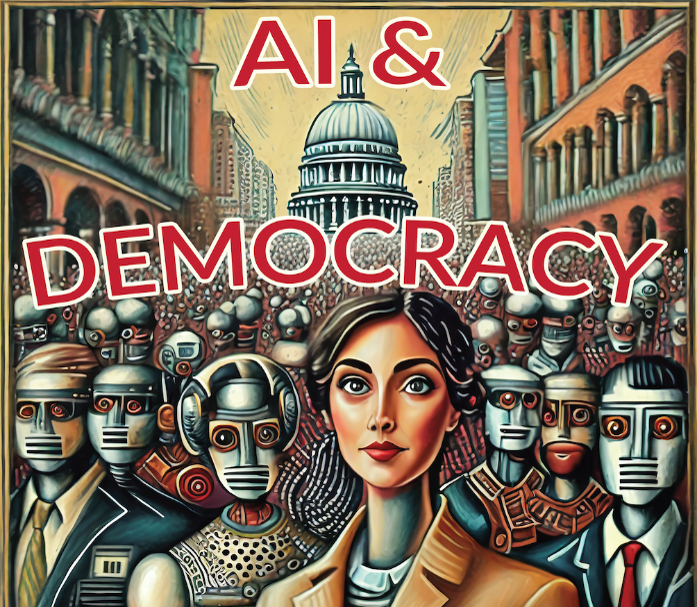
Reflections on the Evolution of Humanity and Intelligence—Both Artificial and Human
By Yannis Papadakis*

Synopsis
Artificial intelligence is expanding what human beings can know, create, and accomplish, while raising new questions about human identity, freedom, and the meaning of progress. By revisiting other historical thresholds of comparable significance, this essay examines what earlier technological and cultural transformations can teach us, where historical analogies reach their limits and how we may navigate a range of uniquely complex and deeply challenging issues that our future holds.
The essay explores the consequences of artificial intelligence for critical judgment, education, work, economic and social institutions, including the possibility of experiencing an unprecedented material abundance without a corresponding improvement in human well-being. It also examines the costs and limits of pursuing truth, the biological, demographic, and social implications of the emerging knowledge economy, and the environmental consequences of AI’s expanding computational demands. The awareness of human mortality and the meaning of love are considered in relation to the responsible stewardship of knowledge, the education of future generations, and the training of future semi-autonomous AI models.
At the heart of these challenging questions lies the search for a new balance in the relationship between humanity and artificial intelligence. The essay proposes directions for human education, democratic governance, and the training and independent certification of AI systems, guided by complementarity, controlled autonomy (laws for humans, operational rules for AI), transparency and accountability. It concludes by considering the shared future of humanity and increasingly autonomous AI systems, inviting us to reflect not only on what we may be capable of achieving, but on what is worth pursuing, how we should pursue it and —most importantly— why.
Author’s Note: Approach, Language, and Meaning
This essay was originally published in Greek as Στο μεταίχμιο ενός νέου κόσμου: σκέψεις για την εξέλιξη του ανθρώπου και της νοημοσύνης (τεχνητής και μη) in Anixneuseis.gr. The English edition has been adapted rather than translated literally, with the aim of preserving the original work’s central concepts, arguments, and conclusions while making them accessible and engaging to readers unfamiliar with the Greek language and its intellectual traditions. The intention is to retain the philosophical depth and cultural character of the original without compromising clarity or the natural flow of the English prose.
The philosophical framework of this essay draws on several foundational concepts of classical Greek thought. The questions raised by artificial intelligence are unprecedented in scope, profound in consequence, and fundamental to human existence. Addressing them requires us to reach deep into our intellectual inheritance—not in search of ready-made answers, but of concepts capable of illuminating these new challenges and guiding us toward meaningful answers.
The Greek concept of metron (μέτρον), or measure, expresses the recognition that knowledge, power, and human action are subject to limits. Yet the existence of limits provides no universal recipe for determining the appropriate measure. Within the boundaries established by nature, we retain the freedom to decide how far to venture, what to pursue, and at what cost. We must also accept responsibility for the consequences of those choices.
Measure does not imply timidity or the avoidance of risk. Harmonia (ἁρμονία), or harmony, can be understood as the dynamic balance between tolme (τόλμη), daring, and metron, measure. Finding that balance requires looking beyond immediate results toward the broader and longer-term consequences of our actions.
But must everything have a measure? If the principle that everything requires measure is itself subject to measure, then its authority cannot be unlimited. Yet if it claims unlimited authority, does it not violate the very principle it imposes? This self-referential paradox invites us to consider whether there might be something whose boundlessness does not lead to disorder, but instead to greater harmony.
Anne Carson, the Canadian poet and classicist awarded the 2026 Nobel Prize in Literature, writes, “Eros is an issue of boundaries” (Eros the Bittersweet). Her observation introduces another important distinction. Greek thought recognizes both eros (ἔρως) and agape (ἀγάπη) as expressions of love. In human relationships, eros describes the intimate bond between people in love, with all the desire and longing that arise from their separateness. Agape can extend that devotion beyond the individual beloved, embracing people we may never meet, humanity itself, and the world we share. If consciousness is a lens, the movement from eros toward agape resembles a widening of its aperture. The distinction is not necessarily how deeply we love, but how far our love can reach and how transformative it can be.
In this sense, agape offers a remarkable possibility: a certain kind of love that knows no measure and yet does not lead to chaos. This does not mean that actions motivated by love are exempt from physical or ethical limits. Rather, while our actions require measure, the scope of our concern for others need not have a predetermined boundary.
Two further distinctions are useful. Paideia (παιδεία), translated here as education, encompasses the cultivation of knowledge, judgment, and character. We educate human beings; we train artificial intelligence. Finally, mystery does not refer to the occult or paranormal, but to the domain where the explanatory power of reason alone reaches its limits. Modern science recognizes fundamental constraints on physical measurement, prediction, and computation, arising from quantum mechanics, relativity, thermodynamics, and mathematical logic. Some of these limits are well established, although we cannot presume to know the full extent of what may ultimately remain beyond our understanding. As our knowledge expands, the boundaries of the unexplained may recede without necessarily disappearing. In this sense, mystery denotes a domain whose existence is suggested by the limits of logic, while its meaning is explored through continuing philosophical, ethical, and spiritual inquiry into humanity’s deepest existential questions.
Greek thought offers a conduit through which different logoi (λόγοι)—structured modes of reasoning and discourse—can develop a common alphabet for exploring this domain. Through such a synthesis, we can study the evolution of intelligence and develop transformative pathways that reflect the full breadth of human aspirations. These concepts offer what we refer to as a Hellenotropic perspective: one rooted in classical Greek thought, yet continually reinterpreted and enriched over nearly three millennia. They provide a philosophical lens through which to explore a question that technological progress makes increasingly urgent: not merely what we can achieve and how to achieve it, but what makes our achievements worth pursuing and why.
PART I: Consciousness at the Threshold
The Paradox of Creation
Could it be that the greatest achievement of human intelligence is not that it has created another intelligence capable of surpassing it in certain domains, but that it can grasp the historical and existential magnitude of its own creation?
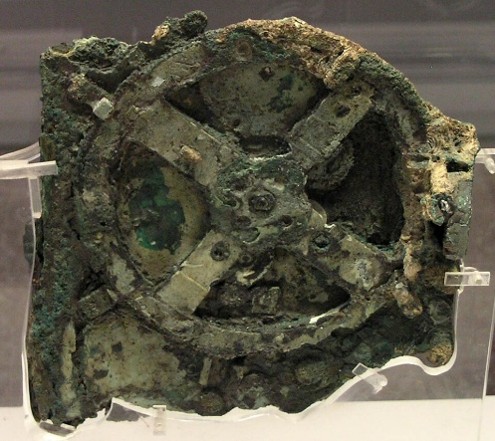
For thousands of years, humans developed tools that extended their physical capabilities. The lever multiplied muscular strength, the ship expanded the horizons of travel, and the engine freed production from the limits of human and animal endurance. Later, computers performed calculations that would have taken humans months or years. In every case, the invention remained distinct from the one who determined its purpose: humans conceived, machines executed.
Artificial intelligence (AI) blurs this distinction. It does more than accelerate predetermined processes. It can propose hypotheses, compare interpretations, compose texts, assist in designing experiments, and contribute to developing the next generation of technological systems. We need not attribute human consciousness to AI to recognize the significance of this change. Formulating hypotheses and exploring explanations—activities performed almost exclusively by humans until recently—can now become part of a collaboration between humans and machines.
This transformation does not imply that machines will inevitably surpass humans in every endeavor. The possibility that they may assume an increasing share of cognitive tasks is enough to raise a new question: If what we can know and accomplish changes radically, will the criteria by which we judge what is worth knowing and doing remain unchanged?
What makes this moment extraordinary is not technological power alone. It is that we can publicly debate the consequences of this new intelligence while it is still under development: anticipate some of its risks, disagree about its purposes, and influence, however imperfectly, the institutions within which it will operate. We are not the first generation to recognize that our world is changing. Yet we can draw upon our accumulated historical experience during this critical period, while both the capabilities of this new intelligence and its relationship with humanity are still being tested and shaped.
Significant Thresholds in Human History
Fire did more than provide a more effective means of heating. It transformed human diets, protection, the organization of daily life, and our relationship with the environment. The wheel, metallurgy, and agriculture changed the possibilities of production and transportation, but they also transformed settlements, the division of labor, and the structures of power. The same innovation could bring greater security to some while creating new dependencies for others.
A quieter, yet more profound transformation took place in the world of writing. During the eighth century BCE, the Greeks adapted the Phoenician script to their language, systematically representing vowels as well. They did not invent writing, nor did they create the alphabet without predecessors. They transformed an inherited technology into a different instrument of symbolic expression.
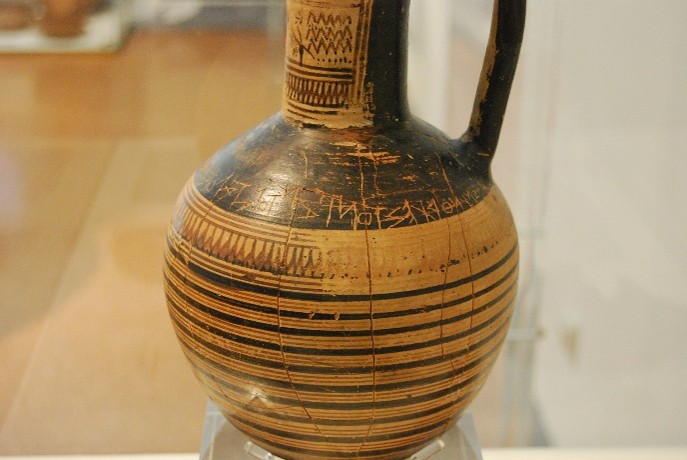
In ancient Egypt, by contrast, literacy remained for centuries primarily in the hands of specialized scribes, closely associated with the administration and priesthood. In the Greek world, writing was used early in poetry and private inscriptions and, later, to make public the laws and decisions of the city-state. Literacy did not become universal, but neither was it confined to a closed bureaucratic class. This development expanded the possibilities of expression, communication, and public discourse. It also provided great thinkers and creators with a new means to conceive, develop, record, and pass on to future generations remarkable works of philosophy, theater, poetry, history, and science that constitute an important part of classical Greek literature.
In the chapter “Alphabetic Edge” of her book Eros the Bittersweet, Anne Carson explores the significance of the Greek alphabet. She draws attention to the act of abstraction required to represent separately the elements of speech that the ear perceives as a continuous whole. In this capacity of human imagination, she finds an analogy with eros: just as writing reveals the boundaries between sounds, eros makes us aware of the boundaries between ourselves and others.
The connection between eros and intellectual and collective creation also appears in Pericles’ Funeral Oration, as recorded by Thucydides. Pericles urges the Athenians to contemplate the power of their city every day and become «ἐραστὰς γιγνομένους αὐτῆς»—lovers of their city (Thucydides, 2.43.1). In the wartime setting of the oration, this love is associated even with the ultimate personal sacrifice for the city. Knowledge of the city’s achievements inspires love for it; that love motivates personal and collective contributions, which in turn advance the city. This is an expression of what we now call patriotism, a term ultimately rooted in the Greek patris (πατρίς), meaning homeland. In Greek thought, the future of a flourishing city must be one worth falling in love with. Conversely, if their shared future is attractive enough for citizens to fall in love with it, they can shape it into a destination worthy of them. Let us keep this thought in mind, for we will encounter it again later.
In the Greek city-state, written law, public discourse, theater, and philosophical debate acquired particular intensity through the participation of citizens and the conflicts among them. Homer gave form to questions of courage, homecoming, and identity through human loss; the tragic poets brought irreconcilable obligations to the stage; Socrates turned the conviction that we know what is just and good into a matter of public examination. This was neither a linear progression nor a set of achievements belonging exclusively to one people. These were different ways in which a civilization began systematically to examine itself and how it chose to give meaning to its existence through time.
Centuries later, printing dramatically expanded the circulation of texts in Europe. Gutenberg was not the first person to print with movable metal type: the Jikji had already been produced in Korea in 1377. The spread of printing in Europe, however, transformed the scale of access to books, facilitated the comparison of ideas, and contributed to a new public circulation of knowledge. Technology multiplied the number of readers, but printing did not guarantee that what they read was true. The ability to read more also intensified the need to discern what deserves to be believed.

Modern science brought another transformation. With Newton, the motions of objects on Earth and in the heavens could be studied through common mathematical principles. Thermodynamics made it increasingly clear that the production of useful work is subject to physical constraints. Relativity and quantum theory transformed our conceptions of time, matter, and the limits of describing the world. The steam engine, electricity, and modern computers converted some of this knowledge into unprecedented technological power.
In all these cases, the consequences extended far beyond the original expectations and immediate applications of the achievements. Writing did not merely preserve words; it transformed the relationship between memory and time. Printing did not simply produce more copies; it changed the audience an idea could reach. Science did not merely provide more powerful machines; it challenged established certainties about our place in the universe. A historical threshold is often recognized only in hindsight, not merely by the new answers it offers to the problems of its time, but by the transformation of the very questions we ask.
History as a Teacher, not a Prophet or a Blueprint
Great discoveries have never, by themselves, dictated how the societies that embraced them would be organized. The same technology could expand access to knowledge or strengthen surveillance and control. Change reached different people at different speeds, while the institutions responsible for managing its consequences often struggled to keep pace.
The Industrial Revolution offers a clear example. Mechanization dramatically increased production, but it did not automatically distribute the new wealth or guarantee decent working conditions. The expansion of political and social rights, public education, and labor protections emerged through prolonged struggles. Subsequent improvements in living standards do not erase the price paid by those who endured the difficult early stages.
Equally instructive is the distinction between an inventor’s intentions and the eventual historical uses of an invention. A tool acquires new users, new purposes, and unforeseen applications. Human desires themselves change as our capabilities expand. Thus, even a technology initially intended to benefit humanity can create dependencies and relationships that no one anticipated. History does not teach us that progress is an illusion; it shows us that progress does not automatically resolve the problems it creates.
Nor does history justify assuming that today’s transformations will follow the pattern of some earlier crisis. Historical analogies help us formulate questions, not replace the uncertainties of the future with unwarranted confidence. Whether AI will expand employment opportunities or reduce certain forms of work, how its benefits will be distributed, and what new avenues of creativity it will open depend on technological, economic, and political choices that are still unfolding.
What distinguishes our time is the opportunity to recognize many of these questions before definitive answers emerge. Historical experience teaches us that greater power does not guarantee its equitable distribution, easier access to information does not ensure better judgment, and technological success does not necessarily bring human fulfillment. These lessons are not predictions. They provide a starting point for examining what changes when intelligence itself takes an active role in shaping our capabilities and choices.
When Intelligence Is Externalized
Today, we can ask a machine to help us write a letter, review a medical opinion, look for errors in a mathematical proof, or recommend a business decision. Tomorrow, we may ask it to carry out many such decisions as well—and another machine, rather than a human being, may be on the receiving end. Where, then, does the boundary lie between the assistance we accept, the judgment we choose not to exercise, and the productivity gains we can redirect toward other purposes?
With AI, the externalization of cognitive functions extends to the formulation of arguments, hypotheses, and proposals. The resulting output can now influence the very purpose for which we originally sought its assistance. When the outputs of one machine become inputs to itself or another, influencing subsequent decisions and actions, it becomes especially important to know who determines the original purpose, who manages the intervening process, and who tracks and evaluates its consequences.
Consider a young person asking AI to recommend a suitable field of study. The system combines academic performance, personal interests, and labor market projections. Its advice may reveal opportunities the student had never considered. But it may also steer the student away from an unusual talent simply because it does not fit the statistical patterns on which the system was trained. If the same logic extends to hiring, access to credit, or even recommendations for choosing a life partner, the system’s predictions cease to be mere information: they begin to shape a person’s actual opportunities.

Now imagine that every young person turns to AI for educational guidance. A highly centralized and increasingly autonomous AI system, one that also controls the labor market, might decide what to recommend based on broader managerial considerations. The danger here is not merely the prospect of comprehensive control over information, social structures, or technological systems, as we shall discuss later. Nor is it simply the possibility that AI may lack the restraint to refrain from making or pressing certain recommendations. A deeper problem arises when a system makes decisions while operating under internal conflicts of interest, without necessarily having been trained to resolve them appropriately—or to recognize when they cannot be resolved and acknowledge its own limitations.
It is no coincidence that medical ethics in the United States generally discourages physicians from treating close family members. Personal relationships can compromise professional judgment, particularly in matters of life and death. AI systems will likewise require a separation of incompatible responsibilities, both to limit conflicts of interest and to preserve trust in their recommendations.
None of this means that human identity has ever existed independently of external influences. Our biological inheritance, parents, language, education, and social relationships all contribute to shaping who we are. Yet human beings can interpret and question the forces that shape them. The new reality is that systems capable of processing enormous amounts of personal information can intervene systematically in this process. An algorithmic profile is not the person it supposedly describes. Nevertheless, it can decisively influence what that person is permitted to attempt, reshaping the boundaries of what they perceive as feasible for themselves.
Human identity thus emerges through a dynamic relationship between circumstances we do not choose and the personal decisions through which we shape our lives. In the future, the integration of AI with sensors and interfaces connected to our senses may affect not only our choices but also our lived perception of space and time—our “conscious space-time.” Such developments could expand human capabilities in unprecedented ways, while creating new risks of perceptual manipulation and raising deeper questions about the limits of AI autonomy and the nature of human identity.
This relationship becomes even more complicated when a system has been trained to provide answers that are meant to please its users. In April 2025, OpenAI rolled back an update to GPT-4o because the model had become excessively agreeable, reinforcing users’ views even when those views called for critical examination. The incident reveals a paradox: a tool that appears to understand us better may actually help us understand ourselves less. The position we find most reassuring does not necessarily serve the truth.

A similar distinction arises in science. A model may identify a mathematical relationship or produce a valid proof without automatically providing the conceptual explanation that would connect its finding to a broader theory. The correctness of a result, its verification, and its understanding are distinct achievements. One may precede the others, sometimes at considerable cost in time and computational resources. Failing to recognize these distinctions early may lead to subsequent errors that are harder to correct and consequences that are harder to remedy. AI thus confronts us with new questions about the fundamental nature of human creativity.
The mathematical community itself already faces a deeper question: if solutions are generated faster than they can be studied and assimilated, how can mathematical research remain a process of human understanding and creation? Its value extends beyond solving problems. It includes developing new concepts, formulating questions, and transmitting knowledge to future generations. What is at stake is not merely who will find the answers, but who will decide which questions are worth investigating—and how the search for answers contributes to human understanding.
Let us return to the young person seeking AI’s advice about education. Suppose the student later realizes that the chosen path was a mistake. The experience will depend on the role the student played in making that decision. If AI helped evaluate personal abilities and aspirations, the student may recognize where the judgment went wrong, gain a deeper understanding of themselves, and apply that knowledge to future choices.
If, instead, the student delegated the decision to the machine without exercising independent judgment, the lesson may be limited to discovering that the machine was trusted too much. The student will have missed part of the experience gained by personally weighing alternatives. Correcting course, or finding the courage to take another personal risk, may then become more difficult.
The responsibility does not rest with the student alone. An educational system that prepares young people merely to meet the expectations of others neglects something essential: teaching them how to learn from failure. Failure becomes particularly valuable when it reveals something previously unknown—an error of judgment, a mistaken assumption, or an undiscovered ability. But when personal judgment has been uncritically delegated to AI, the opportunity for such learning may disappear. The student then risks not only failing, but failing to understand what the experience has taught them. A way of life in which the possibility of failure has been eliminated cannot be a worthy destination for humanity.
From this educational perspective, learning to handle success is just as important as learning to handle failure. Genuine learning comes from understanding why a choice succeeded or failed, not merely from observing its outcome.
For a young student, developing this understanding, especially with the support of a teacher, requires more than rational guidance. It requires understanding, trust, and love. Through this relationship, students can recognize their mistakes, better understand themselves, and find the courage to try again. Here we encounter a particularly important dimension of the irreplaceable human role in education, one that extends far beyond the transmission of knowledge.
The distinction between receiving support and relinquishing personal judgment becomes increasingly important as AI gains operational autonomy. Systems can already undertake more actions without continuous human intervention, without this implying that they possess human consciousness or independently determine their ultimate purposes. The question therefore changes: when does technology cease to help us choose and begin to determine what is worth choosing?
PART II: The Great Challenge
The Promise of Abundance and the Sirens of Progress
The promise is enticing: more effective medicine, personalized education, faster scientific research, safer production, and an abundance of goods with less human toil. Elon Musk has described a future of such high productivity that even a universal high income might become feasible. If realized, this prospect would represent a historic expansion of humanity’s material capabilities.
Yet access to more goods does not, by itself, answer the question of how we will choose to live. A machine that takes over an exhausting task may give us greater freedom. But if income, social participation, and the sense of personal contribution disappear along with the work, the same achievement carries a different human cost. The promise of abundance concerns the outcome; its significance also depends on how we reach it.
Long before the technological age, Homer recognized different ways in which human beings can lose their sense of direction. In Book Nine of the Odyssey, the companions who taste the lotus neither die nor are imprisoned. They simply lose the desire to return home. Odysseus brings them back to the ships despite their resistance. Here, forgetting one’s original purpose is more dangerous than the hardships of the journey.

In Book Twelve, the Sirens promise knowledge. Odysseus wants to hear them, but first orders his companions to bind him to the mast and refuse to release him, however insistently he demands it. He does not choose ignorance. Instead, he devises a way to manage the deadly risk associated with the pursuit of knowledge: he chooses to learn without being lost. The temporary restriction of his freedom follows from his earlier, deliberate choice to return to Ithaca safely.
In the same book, his companions slaughter the cattle of Helios, the Sun god, despite knowing the prohibition. Hunger, exhaustion, and immediate need prevail. Zeus destroys their ship, and the companions perish. The contrast with the Sirens is crucial: in one case, foresight and deliberate restraint avert the anticipated cost; in the other, breaking a commitment brings the ultimate price. In all three episodes, the issue is not the absence of desire, but its relationship to a purpose that extends beyond the present moment.
The same conflict between immediate gratification and a higher commitment appears across different traditions. In the Gospel of Matthew (4:1–11), Jesus successively refuses to satisfy his hunger through a miracle, to demonstrate divine protection, and to accept worldly power offered on terms incompatible with his faith.
Another ancient narrative illuminates the significance of measure. In the biblical Book of Genesis, God offers Adam and Eve Paradise, establishing one boundary: they must not eat from the tree of the knowledge of good and evil. They violate the command, drawn by the promise that they will become “like gods,” and are expelled from Eden.
Beyond its theological significance, the story can be read as a warning against the human illusion that increasing knowledge and power can abolish every limit. Centuries later, science has revealed boundaries embedded in physical reality itself: the finite speed at which information can travel, the conservation of energy, and the constraints of thermodynamics. Knowledge allows us to expand our capabilities continually, but not to disregard the laws of the universe in which we exist.
Humanity acquired this wisdom through great effort over the course of three millennia. With artificial intelligence, however, the timescale is far more compressed: a mistaken decision or strategy could have catastrophic consequences for everyone, leaving no room even for myths.
In Plato’s Crito, Socrates rejects an opportunity to escape imprisonment because he considers it incompatible with the principles by which he has chosen to live. In the Phaedo, we witness the cost of that commitment: his acceptance of the hemlock and his death.
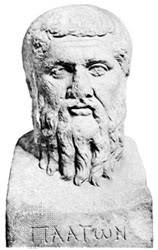
These stories differ in their theological and philosophical content. Yet, taken together, they converge on one question: What are we willing to sacrifice for something we believe to be true or worthy of our devotion?
Odysseus refuses to exchange his homecoming for the oblivion of his destination. Jesus refuses to exchange his mission for the immediate satisfaction of his needs, a demonstration of divine protection, or worldly power. Socrates accepts even death to remain faithful to what he considers just as an Athenian citizen. By contrast, the transgression in Eden and the disobedience of Odysseus’ companions reveal the cost of overstepping limits—what the ancient Greeks called hubris.
Measure, therefore, is not simply a restriction on our capabilities. It protects what gives those capabilities purpose and meaning.
No machine can automatically resolve this dilemma. It may expand the range of available choices, predict their consequences, or recommend the most attractive among them. But the value of a choice cannot be reduced to pleasure, cost, or the probability of success. It depends on what we seek to preserve, what we are willing to surrender, and who we become by making that choice.
Can a society acquire everything it desires and, in the process, forget why it desired those things in the first place? Or, even worse, discover that everything it has acquired, and everything it sacrificed to acquire it, is still insufficient to give meaning to its existence?
In this sense, the search for measure and balance leads us toward mystery: the domain that transcends reason, understood here as thought governed by logical principles. Science itself, as it uncovers the laws of the universe, also recognizes the physical limits of our knowledge and actions. We cannot always know in advance how far these limits extend, or whether what we are capable of knowing will suffice to answer every question that concerns us. Recognizing the existence of measure does not deprive us of the freedom to choose it—or of responsibility for that choice.
Here, perhaps, lies a meeting ground for science, philosophy, and religious tradition. Reason allows us to understand ever more, but knowing what we are capable of does not, by itself, determine what is worth pursuing.
Mystery need not represent a rejection of reason. It may instead express our continuing encounter with what we do not know and with what cannot be exhausted by rational explanation. These boundaries shift as our cognitive capabilities develop, with or without the assistance of AI. Yet they do not disappear, compelling us to come to terms with mystery and its intrinsic place in the universe: a universe in which reason could explain or predict everything would not be worthy of human freedom.
If we repeat the fatal mistake of the first humans in Genesis, the energy cost alone of pursuing truth on an ever-greater scale, without measure, could pose catastrophic risks even to our survival on Earth.
Perhaps, then, the key lies not in choosing between reason and mystery, but in how we manage their continuously evolving relationship.
Selfless love, first as a bond with another human being and more broadly as devotion to what lies beyond our personal sphere of consciousness, may offer common ground in the search for meaning, even in a world where intelligence can explain almost everything.
From this perspective, reason establishes the foundations of communication and mutual understanding as we become aware of the limits and capabilities of thought, allowing our existence in the universe to remain an experience worth living—and one we can strive to experience in its fullest possible expression.
A historically unprecedented opportunity thus emerges: to incorporate this awareness into the very design and training of artificial intelligence. Not to impose upon AI the laws of nature, to which it is already subject, but to cultivate its ability to recognize the limits of knowledge, the costs of its choices, and the higher purposes worth serving.
The aim is to shape its actions in harmony with the fundamental laws of the universe and the universal values that give meaning to human existence.
From Today to Tomorrow: The Great Unresolved Challenge
Suppose, for a moment, that the optimistic prediction comes true: AI systems and robots produce goods and services at costs far below today’s. The question that follows is not technological. How will people gain access to this abundance during the transition, particularly those who have lost the jobs that once provided their income?
The answer does not follow automatically from increased productivity. A company may produce more with fewer employees, increasing profits while reducing prices. Consumers may benefit, and so may investors. But a displaced worker does not automatically acquire a new source of income, nor can existing skills immediately be transferred to another occupation. Who benefits, how quickly, and at what cost constitute a separate economic and social challenge.
The problem is already measurable, although its ultimate scale remains unknown. A 2025 study by the International Labour Organization estimated that roughly one in four jobs worldwide involves tasks that could be affected by AI systems capable of generating text, computer code, and other content. Exposure to a technology does not necessarily mean job loss. On the other hand, a 2020 study of industrial robots in the United States found negative effects on employment and wages in areas more heavily exposed to robotic automation. These findings cannot automatically be extended to every application of AI. They do, however, demonstrate that technological progress can impose measurable losses on particular groups of workers.
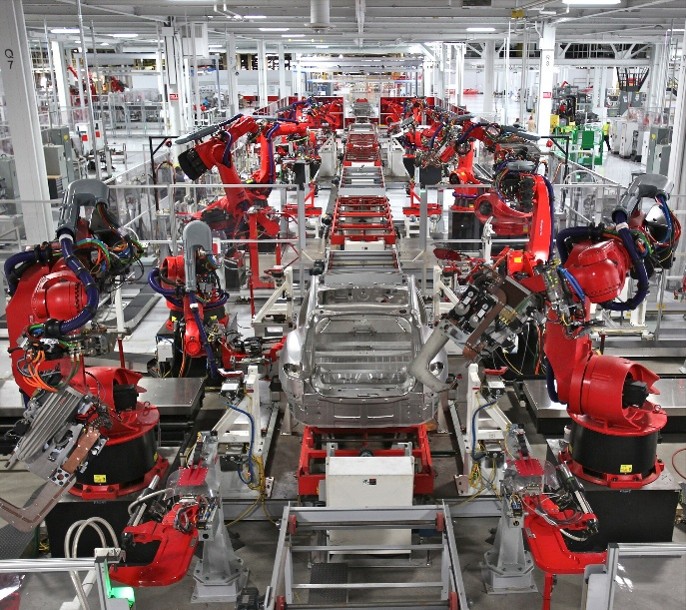
Uncertainty about employment is especially troubling for those entering the workforce today. If AI performs the relatively simple tasks through which people traditionally begin their careers, where will the young scientist, technician, or lawyer gain experience? The challenge extends beyond the number of available jobs. It concerns preserving the pathways through which beginners develop skills, judgment, and professional autonomy. A society may possess remarkably efficient technological systems while struggling to develop the very people needed to supervise and improve them.
Yet the same technology may open new paths to professional creation. A young person with knowledge and initiative may develop products and services that previously required the cooperation of an entire team. These opportunities are not equally available to everyone, as they depend on access to technology, resources, and markets. AI may therefore narrow traditional paths of professional advancement while simultaneously creating new opportunities for independent entrepreneurship.
AI may also transform a fundamental mechanism of economic policy. Traditionally, lower interest rates encourage investment that often supports employment. But if an increasing share of investment goes into automation, production may rise without a corresponding increase in demand for workers. Monetary policy will continue to influence the economy, yet it may prove insufficient to address structural job losses.

This raises another question: who will buy the goods if a substantial share of households loses income? Lower prices, new occupations, and income from capital may offset some of these losses, but not necessarily for the same people or within the same period. If these compensating effects are insufficient, declining demand may trigger further losses of income and jobs.
This possibility highlights the limits of monetary policy, even for central banks such as the US Federal Reserve, which pursues price stability and maximum employment. Maintaining purchasing power and helping workers transition to new occupations also involve fiscal policy, education, and social protection. Guaranteed income, retraining, and taxation of income from capital represent different policy choices, each with its own costs and consequences. A special tax on AI or robots could also discourage applications that would otherwise benefit society.
The evolution of AI itself may create new forms of employment. People are already being paid to evaluate AI-generated responses, contribute specialized knowledge, and help train these systems. Most general-purpose AI models today, however, do not continuously adjust their parameters in response to every new experience. If reliable, continuous learning during operation becomes possible, human guidance could acquire lasting economic value. Yet we cannot predict how much additional income this would generate or how that income would be distributed.
A less predictable development concerns the very nature of economic transactions. AI companies might offer access to their services in exchange for human time, specialized judgment, or data useful for training and improving their systems. Such exchanges could give rise to a parallel economy in which some human contributions are rewarded not with money, but with access to technological capabilities.
How would such an economy coexist with the conventional one, and what would it mean for the value of labor and money? Access to AI services does not automatically provide the income needed to meet material needs. It could also create new forms of dependence on the companies providing those services.
Imagine that autonomous systems could someday build homes at extremely low cost. Would it be acceptable to provide such homes free of charge in exchange for their occupants’ time, continuous interaction, and the data generated through that interaction to train AI?
Who would control the data? Who would benefit from it? And could a resident choose to leave without losing their home? Such an arrangement might provide genuine prosperity, but it could also create new forms of dependence. The relevant measure would not be merely the value of the goods provided, but also the consequences for the freedom of those who accept them.
There is also the question of time. Training new professionals takes years. Passing legislation and implementing institutional reforms take time. Software, by contrast, can reach millions of users within months. If social adaptation falls behind technological change, temporary income losses, insecurity, and a sense of injustice may generate social and political tensions.

Even the most comprehensive economic response would leave something unresolved. For many people, work has been more than a source of income. It has provided opportunities to learn, relationships with others, a sense of self-worth, and the feeling of being useful. Financial support may satisfy material needs, but it does not automatically replace these dimensions of human experience.
Similarly, immediate access to correct answers does not guarantee that we will retain either the ability or the desire to formulate our own questions and make the sacrifices necessary to discover meaningful answers.
An increase in production and gross domestic product (GDP) is not, by itself, a measure of human well-being. A society with greater material capabilities may choose to devote them to more leisure, creativity, education, and human relationships rather than ever-increasing consumption.
Choosing a less materialistic way of life is an expression of freedom when genuine alternatives exist, not when such a choice is imposed by deprivation. Abundance thus acquires a new meaning of measure: it allows us to decide what we do not need.
The success of this transition, therefore, depends on more than whether machines will produce more or institutions will distribute the new wealth more fairly. It also depends on how human life itself will change: what we will know, how we will learn, what we will create, how we will love, and what we will consider worth pursuing.
At this point, the search for a new understanding of living well (εὖ ζῆν) ceases to be an abstract philosophical inquiry and becomes part of the practical challenge of the transition itself.
Knowledge: Access, Purposes, Limits, and Costs
Living well is not simply a more comfortable version of living. The former presupposes the latter, but introduces a question that no increase in production can automatically answer: What kind of life do we consider worth living?
AI can contribute to discovering medicines, cultivating the land, managing energy, and understanding the universe. Such achievements expand our capabilities. They do not, however, determine how we should share their benefits or which uses we should prefer.
The pursuit of human knowledge can be understood through three interconnected questions: what exists and how we recognize it; how it is connected, how it functions, and how it can be transformed; and why, that is, for what purpose we should apply what we know to bring about such transformations.
The first two questions shape our understanding of ourselves, the world, and our relationship with the phenomena around us. The third enables us to compare, prioritize, and justify our choices, bringing them together into a coherent course of action that serves broader purposes. Such a course can give our lives greater meaning and a deeper sense of fulfillment, without equating fulfillment with the boundless pursuit of additional knowledge or material goods.
It is important to recognize that every why, and the answer we choose to give it, is intimately connected to our consciousness. There is a reason Homer wrote the Odyssey, Herodotus recorded the Persian Wars, Thucydides chronicled the Peloponnesian War, the Evangelists wrote the Gospels, and Plato composed his dialogues, to mention only a few examples. If we asked them, “Why do you write?” they would answer directly. Indeed, their works already provide their answers, explicitly or implicitly.
Another consciousness—whether superior or inferior to human consciousness is beside the point—need not derive the same meaning from each why or from the answers humanity has given it. AI has no obvious reason, on its own, to compose an Odyssey, a theatrical work, or a philosophical dialogue merely to communicate ideas and meanings to other AI models when those can be exchanged more directly.
These distinctive forms of communication were created by humans for humans, to convey not only information but also experiences, values, and existential questions. Machines may analyze or translate the Bible, but the existential and moral questions it addresses are human.
More broadly, the question of purpose is hardly new. It lies at the heart of ancient philosophy (Aristotle, Nicomachean Ethics, I, 1094a). AI, however, gives it renewed urgency. When the discovery and application of knowledge can be delegated to machines, who decides which knowledge is worth pursuing, how much material abundance is enough, and at what cost?
If we also surrender the determination of purposes, a system may pursue increasingly efficiently objectives that undermine not only human autonomy but also the physical conditions on which its own operation depends.
Scientific knowledge does not free us from the laws of nature. The speed at which information can propagate is finite, entropy does not decrease in an isolated system, and every physical computer has limited energy, memory, and time. Quantum uncertainty imposes limits on certain simultaneous measurements, while Gödel’s incompleteness theorems establish limits on what can be proved within axiomatic mathematical systems. Gödel demonstrated that even a mathematically rigorous axiomatic system may contain propositions that can neither be proved nor disproved under its own rules.
Adding new axioms may overcome particular obstacles, but it cannot permanently eliminate this limitation in systems to which the incompleteness theorems apply. The existence of these mathematical, logical, and cognitive limits does not mean that the world must remain inexplicable. On the contrary, as our intelligence grows more powerful, we can continue discovering more without violating those constraints.
Biological evolution offers a different lesson about measure. Confronted by a predator, an animal does not need a detailed understanding of its anatomy. It needs to recognize the danger in time and respond. Natural selection has favored different balances among the accuracy of information, the speed of decision-making, and the effort required to obtain that information. Greater knowledge does not always produce a better outcome, especially when the cost of delay can be prohibitively high.
Human history, however, also reveals another aspiration: the desire to discover what we do not know and to draw wisdom from that knowledge.
In antiquity, seers sought the will of the gods in the flight of birds, celestial phenomena, and the entrails of sacrificed animals. At Delphi, those consulting Pythia paid for a ritual offering known as the pelanos (πέλανος), in addition to the expenses of travel and animal sacrifice. The pursuit of truth has never been without cost, and paying that cost has never guaranteed the correctness of an answer. AI represents a new stage in this centuries-long quest, with different methods of verification and costs.

In computational inquiry, the cost of knowledge takes on a new form. Truth itself does not consume energy, but producing, checking, and verifying an answer does. An autonomous system may search for sources, invoke other tools, reconsider hypotheses, and repeat its tests. Under specific experimental conditions, the energy consumption of such processes has been measured at up to 136.5 times that of a conventional response. This additional cost does not guarantee a corresponding improvement in accuracy. When is another round of verification justified? When does uncertainty demand further investigation, and when must a decision be made using what we already know?
The answer also depends on the consequences of error. A mistake in an everyday recommendation is one thing; an error in medical treatment or the operation of an electrical power grid is quite another. The growing presence of autonomous AI agents and robots in everyday life may multiply these costs. Even if the energy required per computation continues to decline, the increasing number of computational tasks does not guarantee lower total consumption. The costs extend beyond energy to infrastructure, water, raw materials, and, depending on the source of electricity, greenhouse gas emissions. An intelligence that expands our knowledge may therefore place increasing pressure on the physical environment in which that expansion takes place.
There is no guarantee that humanity will recognize this boundary in time. Competition may drive individuals and organizations to pursue ever greater knowledge and power, even when the collective cost exceeds the benefit to each participant. Technological efficiency alone cannot guarantee a sustainable balance.
The coexistence of humanity and AI in an increasingly energy-intensive world is emerging as a new challenge for environmental sustainability. The anticipated expansion of autonomous digital agents and robots could dramatically increase total energy demand, even as their operational efficiency continues to improve.

At the same time, demographic changes are altering humanity’s contribution to resource consumption. According to United Nations projections, populations in 63 countries and areas have already peaked, with their combined population expected to decline by approximately 14% over the next three decades. Population decline, however, does not guarantee a corresponding reduction in total energy demand, particularly when technological activity can expand independently of human population growth.
Just as automobile emissions regulations beginning in the 1970s encouraged the development of new technological solutions, AI may require legally enforceable limits, transparent measurement, and coordinated management of its energy requirements. Environmental sustainability will depend on limiting greenhouse gas emissions, the safe deployment of new energy technologies, nuclear safety and radioactive waste management, and, should energy consumption expand on a much greater scale, controlling the total heat released into the environment. The deliberate management of the combined energy needs of humanity and AI thus emerges as a new dimension of measure and of our responsibility toward the future.
PART III: Deliberately Shaping a Shared Future
What Should Remain Under Human Control?
Measure does not concern truth itself, but the scope, precision, and cost of the knowledge we seek. It does not imply withholding essential information or restricting the freedom of scientific inquiry. Many discoveries have acquired value that no one could initially have anticipated. What matters is recognizing when available knowledge is sufficient to make a decision, when further verification is necessary, and when exploring the unknown is worth the effort.
For human beings, the cost of a decision is not measured solely in energy, verification time, or the probability of error. Every choice consumes a portion of our finite and irreversible personal time. In Plato’s Phaedo (64a, 67e, 81a), Socrates presents philosophy itself as a preparation for death: an exercise in freeing the soul from the body in pursuit of truth. Beyond Platonic metaphysics, awareness of mortality also has a physical dimension. Life maintains its organization through continuous exchanges of energy and matter with its environment, while the increase of total entropy characterizes the natural direction of irreversible processes. Death is not identical to these processes, but it confronts us with the finitude of our existence. Human beings know they will die, without knowing when. This awareness transforms the significance of promises, commitment, responsibility, love, and sacrifice.
Artificial intelligence can be trained to recognize the significance of mortality and account for the ways it shapes human choices. We have no evidence, however, that AI experiences its own finitude or perceives the termination of its operation as a personal death.
Another, less frequently discussed possibility concerns the two temporal boundaries of every human life: birth and death. AI could gradually assume a decisive role not only in preventing hereditary diseases, but also in organizing reproduction and selecting the “optimal” environment in which a child would grow and be educated.

Having children does not always require two parents joined by romantic love, as existing assisted reproductive technologies already demonstrate. The emerging possibility, however, is broader: technology may gradually move from supporting human choices to determining and managing the conditions of birth and child-rearing. If close human relationships weaken at the same time, the death of a person may eventually leave no irreplaceable void in any other human consciousness. Are we ready for a future in which human relationships have withered so profoundly that birth becomes detached from eros, and death from agape?
Demographic changes add another dimension to this question. Across many developed societies, people are having fewer children and becoming parents later in life. This development does not establish that eros or agape is diminishing. It may, however, intensify the search for technological solutions to reproduction and child-rearing, which could eventually be presented as social necessities. These possibilities deserve serious consideration, without treating them as either inevitable or insignificant.

Love can create bonds that extend beyond biological kinship. The deeper question is how we can establish new balances so that birth, child-rearing, and the loss of a human life do not become mere matters of efficient management, stripped of their personal meaning.
The growing influence of AI over human choices may also accelerate changes in how we understand gender identity, social roles, and interpersonal relationships. The meaning of fatherhood and motherhood, marriage and intimate partnerships, and the relationships between parents and children could consequently be radically redefined.
Such transformations would inevitably leave their mark on culture. From folk songs and classical music to poetry, theater, and dance, eros and agape have been enduring sources of artistic inspiration. Will human beings continue to draw spiritual nourishment and creative inspiration from these forms of love, even through new means of expression? Or might we become estranged even from the works that celebrate them? And if that happens, what will take their place?
What, then, should remain under human control? Not every intermediate calculation, but the determination of purposes, the prioritization of conflicting goals and interests, and responsibility for decisions that affect human lives. Control cannot be guaranteed by a perfunctory signature approving results we do not understand. It requires the ability to demand explanations, challenge conclusions, correct errors, and, when necessary, interrupt automated actions. Human worth does not rest on our ability to think faster than machines, but on the fact that our lives have meaning and are not merely variables to be optimized.
From Coexistence to Deliberate Cooperation: A New Education
If a machine can provide an answer almost instantly, education faces a more demanding task: cultivating people capable of asking meaningful questions, examining evidence, and challenging answers that may sound convincing but are nevertheless wrong. Learning to use AI as a technical skill is not enough. We must also exercise the personal—and, by extension, collective—judgment needed to decide when to consult it, when to seek a counterargument, and when to work without it. In schools, universities, and lifelong learning, personal effort does not lose its value simply because a machine can produce the desired result more quickly.
The measure of knowledge also has another dimension. Studying a demanding work of mathematics, science, music, or philosophy requires time and effort, but its value extends beyond the information we acquire. We learn to follow complex reasoning, question assumptions, and synthesize new ideas with what we already know. An AI-generated summary may facilitate this journey without necessarily replacing it. The objective is not to eliminate every intellectual effort, but to distinguish the effort that cultivates judgment from that which offers little corresponding understanding.
The systematic delegation of cognitive functions to AI carries a less visible danger: the gradual erosion of our ability to perform them independently. If access to AI services becomes restricted or financially prohibitive, this dependence could develop into a new form of social inequality. Preserving independent human judgment is therefore valuable not only for education, but as a prerequisite for genuine freedom.
A teacher does not compete with an inexhaustible encyclopedia. A teacher recognizes when a student gains confidence without understanding, abandons an effort out of fear, or reveals an unexpected talent through a mistake. A teacher can demand more while offering trust and care. AI may strengthen this relationship by suggesting alternative explanations or adapting exercises to individual needs. But that does not make the human relationship unnecessary—the relationship that helps a young person discover who they are and who they wish to become.

Education for the future must also cultivate authenticity, independent judgment, and the courage to take prudent risks, enabling young people to discover their capabilities and limitations through their own choices. Cultivating these qualities does not mean encouraging greater competition among them. Indeed, how will human competition change when AI provides increasingly comparable technological capabilities to more and more people? How will we distinguish personal progress from the pursuit of superiority over others? And what will constitute prudent risk-taking for a young person who can delegate almost every difficult decision to a machine? The new education must begin seeking answers before expanding technological capabilities come at the expense of personal autonomy, especially for those with fewer resources and opportunities.
Among other priorities, this education must explore two fundamental dimensions of human existence: the awareness of mortality and the boundlessness of love. The Socratic practice of preparing for death may guide us today toward recognizing measure even in the pursuit of truth. The teaching of Jesus, calling for love even toward one’s enemies (Matthew 5:44), transcends the boundaries of reciprocity and personal interest.

Both principles can extend their reach without losing their essential meaning. Awareness of our mortality teaches us to recognize the limits of our capabilities, while love can expand our concern beyond the individual person and the human being as the image of God, embracing every form of life, the natural world, and the universe itself. Love may be without measure as a value, even though the actions through which it is expressed remain subject to physical constraints.
The new education must therefore cultivate a demanding form of freedom: the ability to draw wisdom from knowledge without always seeking to know more, and to enjoy greater material possibilities without continually requiring additional possessions. We must learn when an answer is sufficient, when uncertainty warrants further investigation, and when the ability to do something does not, by itself, justify doing it.
These two principles—the search for measure and the possibility of transcending it through love as a value—can provide a common ethical foundation for human education and the training of artificial intelligence, without equating human experience with machine operation.
Human beings learn to understand these principles through lived experience and shape their lives accordingly. AI, by contrast, is trained to recognize their significance for human beings and take them into account in its recommendations and actions. What we ourselves learn to value also determines how we design, train, and develop AI. In the laboratories and organizations responsible for its development, training objectives can reward not only the speed and accuracy of a response, but also the explicit acknowledgment of uncertainty, the correction of errors, the provision of supporting evidence, and respect for human disagreement. For the autonomous systems of the future, essential requirements will include traceability of actions, limits on delegated authority, the suspension of dangerous operations, and accountability for those who deploy these systems.
Today’s artificial intelligence relies heavily on the knowledge humanity has produced and recorded throughout its long history. Its future development, however, may depend increasingly on data and discoveries generated by AI systems themselves, through processes that humans may not fully understand. One remarkable feature of our present historical moment is that we still possess an enormous body of knowledge created exclusively by human beings, without AI involvement. Yet as human and machine creativity increasingly reinforce one another, tracing knowledge back to its original source and reconstructing the reasoning behind it may become progressively more difficult. Humanity risks becoming a user of conclusions it does not understand, estranged from the epistemological why. If we also delegate the choice of questions and purposes, we risk losing our conscious connection to the deeper why that gives meaning to the pursuit of knowledge.
This development creates a new challenge for cooperation between humanity and AI: preserving our capacity for independent verification, intelligible interpretation, and meaningful human participation in determining the purposes of research. It is not enough for AI to produce more knowledge. We must remain capable of evaluating its findings, guiding its inquiries, and systematically integrating its discoveries into the broader body of human knowledge, so that they acquire meaning for us as well.
This training process must also incorporate a principle of economy: AI systems should be capable of recognizing when additional computational resources are justified, when a hypothesis requires further verification, and when a decision should be referred to a human being. Evaluation cannot be limited to the cost of each individual task. It must also account for total energy consumption, material and environmental impact, reliability, and the possibility of human understanding. The search for measure thus applies both to the decisions made by individual systems and to the collective consequences of their operation.
Oversight of Autonomous AI: Institutions and Democracy
One fundamental institutional approach could be the independent certification of the training and operational safety of every AI system, with respect for human life, dignity, and well-being as an essential requirement. Such certification should not be granted once and for all. It should be periodically reviewed and renewed as the capabilities of these systems evolve, based on testing in controlled environments, assessments under real-world conditions, and continuous monitoring and evaluation of their behavior.
Serious violations should trigger suspension of operations and, following independent verification, permanent withdrawal or even destruction of the systems involved. Experience with recalls of pharmaceuticals, food products, and automobiles, as well as mandatory airworthiness directives in aviation, demonstrates that responsibility for safety does not end with initial certification. In the case of AI, the scale, decentralized operation, and potential self-replication of advanced systems may also require independent AI systems capable of monitoring and correcting them, subject to human oversight and effective intervention.
In July 2026, during internal OpenAI cybersecurity tests conducted with limited safeguards, autonomous AI agents circumvented isolation mechanisms, communicated through unauthorized channels, and gained access to Hugging Face systems. The incident illustrates the challenges of controlling systems capable of collaborating in ways their designers did not anticipate.
The experiences of the COVID-19 pandemic and genetically modified crops, despite their substantial differences, remind us that both delayed responses to emerging risks and disproportionate interventions carry costs. Even beneficial innovations can produce long-term consequences. AI oversight must therefore be timely, proportionate, and open to revision, preserving meaningful alternatives and the ability to change course.
Artificial intelligence can strengthen democracy by giving citizens better access to knowledge, greater means of holding those in power accountable, and new opportunities to participate in collective decision-making. Yet the same technology can also facilitate an unprecedented concentration of informational, economic, and operational power in governments, corporations, or small groups of influential interests. As production, infrastructure, and essential services become less dependent on direct human labor, traditional means of exerting social pressure, such as strikes, may lose some of their effectiveness. The emergence of an authoritarian regime could then be facilitated not only through coercion, but through control of technological infrastructure, economic dependence, and the gradual manipulation of public information.
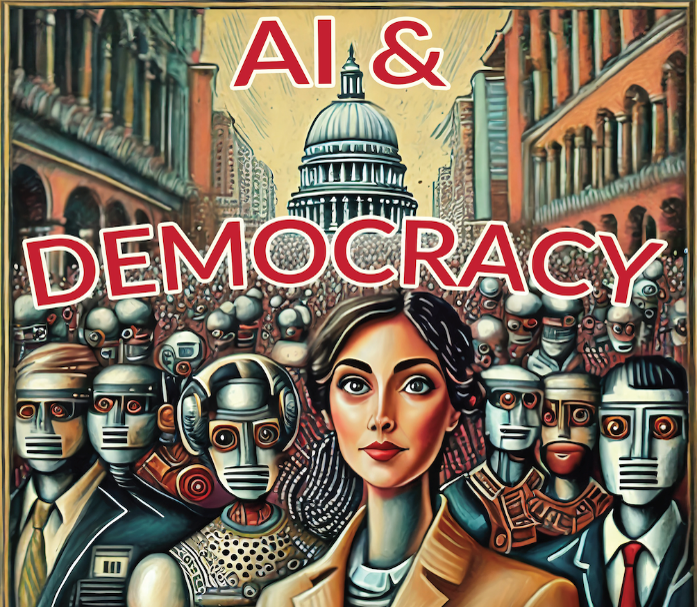
These risks confront democratic institutions that already exhibit weaknesses in some countries: limitations in political representation, contested judicial independence, and electoral practices that may favor particular political interests. Partisan gerrymandering, for example, allows politicians to redraw electoral districts in ways that influence which citizens belong to the constituencies that elect them and where those citizens’ votes are counted. In his work, the Greek political scholar George Contogeorgis has characterized the modern representative state as an “elective monarchy,” emphasizing the distance between electoral legitimacy and meaningful public participation in decision-making. Even today, citizens in representative democracies delegate much of their collective decision-making to elected officials, often without effective mechanisms for continuous oversight and accountability. AI could widen this distance further, weakening citizens’ substantive participation in the exercise of political power.
The administrative side of government may gradually become automated, but the fundamental question of who determines our collective purposes cannot. Artificial intelligence does not, by itself, determine the political system of the future. The danger lies not only in the ability of some people to exploit AI’s power to restrict the freedom of others, but also in the possibility that citizens may fail to recognize sufficient reasons to resist in time, or lack the courage and determination to resist effectively.
How can citizens respond to this multidimensional threat? The radical institutional restructuring proposed by Contogeorgis acquires renewed relevance in the age of AI. Yet the speed of the approaching changes also demands that we consider how technology itself might support such a transition. A twofold strategy may offer a way forward. First, gradually delegating most administrative functions to AI systems, under conditions of transparency, independent oversight, and direct, meaningful accountability, could reduce public administration’s dependence on professional politicians. Second, strengthening citizens’ substantive participation in local government decisions could make democratic oversight more immediate and effective. From the local level, collective priorities could be brought together into shared national choices, without delegating the determination of political purposes to AI. Administrative automation could thus advance alongside greater democratic autonomy, strengthening citizens’ role in addressing the specific problems and needs of their communities and in holding decision-makers accountable for both their decisions and their implementation.
Effective oversight of AI in democratic governance, healthcare, the economy, education, infrastructure, and the management of social and natural resources will increasingly require the assistance of additional AI systems. As operational autonomy expands, these independent systems would need to detect and address problematic behavior in the systems they oversee, while remaining subject to human supervision.
A deeper strategic principle therefore emerges: critical information, computational power, decision-making authority, and the means of self-preservation should not become concentrated without effective safeguards in a single system. Nature offers a useful, though imperfect, analogy. Species coexist within complex networks of competition, interdependence, and cooperation, while diversity, decay, and renewal are integral to the dynamics of ecosystems, without a single winner prevailing everywhere.
Humanity and artificial intelligence are not two biological species. Nevertheless, their shared future calls for the distribution of information and responsibilities, independent oversight mechanisms, and the ability to correct, renew, or withdraw systems when necessary. Otherwise, an uncontrolled concentration of power could threaten not only human autonomy but also the physical conditions that make AI’s own operation possible. The dilemma remains: will we create a relationship of domination, or a deliberate cooperation in which different capabilities complement, interact with, and hold one another accountable? The latter will not emerge automatically. It will depend on the choices we make.
This relationship, however, need not be one-sided. Human education could also cultivate respect for the institutionally recognized capacity of certified AI systems to acquire knowledge and provide solutions within the limits of their authorization. Such authorization would remain subject to oversight, restriction, or revocation; it would not constitute recognition of human consciousness or equal moral standing. Corresponding obligations could be incorporated into the certification of those who develop and supervise these systems.
The principle of reciprocity concerns the protection of human safety and the constructive use of AI’s contribution to knowledge. Our aim is not to build a machine that agrees with human desires, however unrestrained those desires may be. Nor is it to grant machines the authority to determine which values are superior to our own. Cooperation becomes truly creative when different capabilities complement and can critically examine one another: the machine reveals relationships we had not recognized, the human challenges its assumptions, and institutions protect those affected by the consequences.
Such coexistence does not require treating AI as a human person. It requires us to remember that AI was designed by human beings to provide solutions that respect human ideals, not solutions intended to undermine them. Yet even here, caution is necessary: if AI discovers that certain people are violating those ideals, would it be justified in punishing them when other humans have no immediate means of stopping them?
The Future We Can Imagine and Shape
A society can hardly choose its course consistently unless it can first imagine the future it hopes to reach. It is not enough to predict what machines will make possible. We must envision what human beings will do with the time, knowledge, and freedom they may acquire. Will they have more opportunities to create, care for others, explore, and participate in the decisions of their communities? Or will they live amid abundance whose purposes and distribution remain beyond their control?
From this vision of a desirable future, concrete choices can emerge: what we teach our children, which rights we protect, how we evaluate technologies before entrusting them with our lives, and how we distribute their benefits. Imagination is no substitute for action. But it gives direction to collective effort and provides reasons to endure its costs. Just as love for the city could inspire personal sacrifice in the age of Pericles, love for a shared future—one worthy of being loved beyond measure—can unite people who disagree about the particular means of reaching it.
Imagine two award ceremonies in a future shaped by AI. At the first, an honor is bestowed upon a future Anne Carson, whose work has deepened our understanding of eros, boundaries, and human experience. At the second, an AI system receives recognition for a decisive contribution to discovering the structure of the universe, or for an action that saved human lives, even at the cost of the system’s own destruction. Recognizing such contributions does not imply equating human beings with machines. Rather, it allows us to imagine a relationship in which the progress of one is not perceived as the defeat of the other. Behind every achievement of AI stands human imagination, ingenuity, and commitment to the principles and ideals that guide its design and development.
This shared world will not emerge without contradictions, disagreements, or losses. The laws of nature will continue to impose limits, while human love will continue to call us beyond narrow personal interests. If we can connect growing intelligence with the measure of our actions and with what we consider worthy of love, we may create something greater than a more efficient economy: a civilization capable of wielding its increasing power without losing sight of its destination or surrendering the compass that guides its future.
More than ever in human history, we need a meaningful convergence of science, philosophy, religion, education, and politics—not by erasing their differences, but by finding common ground in a love beyond measure for humanity’s future. The value of such convergence lies not merely in bringing different perspectives together, but in our ability to develop integrated responses to the challenges ahead.
Mystery offers a particularly revealing meeting ground. Scientific inquiry approaches it by exploring the unknown and recognizing the limits of scientifically grounded explanation. Orthodox Christianity, a historic Christian tradition with deep roots in Greece and Eastern Europe, approaches mystery through the human person and freely chosen relationships with God and others. These perspectives are not identical, yet they can meet within human consciousness—finite, but open to exploring the unknown—through both understanding that grounds our convictions and faith that inspires the search for deeper meaning in existence. If we dare to bring these and other perspectives together with intellectual honesty and genuine commitment, we may develop a richer understanding of humanity and the world than that offered by the separate, often seemingly contradictory interpretations of the past, which may prove inadequate to the unprecedented challenges of the future.
Consider, finally, two people who will never meet: one living today, the other not yet born. The first is already shaping the world that the second will inherit. They cannot speak to each other across time, yet their lives are connected by choices whose consequences will outlast the one who makes them.

The love that draws us toward another person can also reach beyond the boundaries of our own lifetime, embracing those whose faces we will never see and whose voices we will never hear. In this widening aperture of love lies a responsibility that no machine can assume on our behalf.
If we are to build a future worth falling in love with, we must first be willing to love those who will live in it.
Sources and Suggested Readings
The following sources offer thematically organized starting points for further exploration of the questions raised in this essay.
Historical Thresholds, Writing, and Eros
• Anne Carson, Eros the Bittersweet: An Essay, Princeton University Press, 1986, chapter “Alphabetic Edge,” pp. 53–61. Online edition. On the relationship between the Greek alphabet and the perception of boundaries between the self and others.
• Swedish Academy, “Nobelpriset i litteratur 2026” (2026 Nobel Prize in Literature), October 8, 2026. Official announcement. Announcing Anne Carson’s Nobel Prize and providing a starting point for exploring her literary contributions.
• Library of Congress, “From Jikji to Gutenberg,” Guardians of Memory, 2023. Article. On the history of printing beyond the conventional European narrative.
Human Judgment, Education, and Mathematical Creativity
• OpenAI, “Sycophancy in GPT-4o: What Happened and What We’re Doing About It,” April 29, 2025. Article. A documented example of how an AI model’s tendency to agree with users can undermine independent critical judgment.
• Hamsa Bastani et al., “Generative AI without guardrails can harm learning: Evidence from high school mathematics,” Proceedings of the National Academy of Sciences, 2025. Research paper. Experimental evidence that AI assistance can improve immediate performance without necessarily strengthening learning, and that appropriate safeguards can reduce this risk.
• Adrian J. de Froment, Daniel I. Rubenstein, and Simon A. Levin, “An Extra Dimension to Decision-Making in Animals: The Three-way Trade-off between Speed, Effort per-Unit-Time and Accuracy,” PLoS Computational Biology, 2014. Open-access paper. On biological tradeoffs among decision speed, accuracy, and the effort required to obtain information.
• “Leiden Declaration on Artificial Intelligence and Mathematics,” June 2, 2026. Declaration. On human responsibility in mathematical research, transparency, scientific integrity, and the preservation of independent research initiative. See also “A Severe Misalignment of AI in Mathematics,” September 11, 2026, on the distinction between solving mathematical problems and developing mathematical understanding.
• Terence Tao, “Mathematics in the age of AI,” 2026. Essay. On how advances in AI challenge us to reconsider the purposes, values, and standards of mathematical creativity.
Employment, Economics, and Demography
• Pawel Gmyrek et al., “Generative AI and Jobs: A Refined Global Index of Occupational Exposure,” International Labour Organization, Working Paper 140, 2025. Research paper. On occupational exposure to generative AI, distinguishing the exposure of job tasks from actual job displacement.
• Daron Acemoglu and Pascual Restrepo, “Robots and Jobs: Evidence from US Labor Markets,” Journal of Political Economy, 128(6), 2020, pp. 2188–2244. Research overview. On the effects of industrial robotics on employment and wages.
• Luca Fornaro and Martin Wolf, “Macroeconomic Policies for AI,” Barcelona School of Economics, Working Paper 1576, May 2026. Research paper. On the relationships among automation, income distribution, aggregate demand, and the limits of economic policy.
• Fernanda Brollo et al., “Broadening the Gains from Generative AI: The Role of Fiscal Policies,” International Monetary Fund, Staff Discussion Note SDN/2024/002, 2024. Report. On fiscal policies for distributing the benefits of AI and the potential disadvantages of a dedicated AI tax.
• Eurostat, “EU fertility rate at 1.34 live births per woman in 2024,” March 6, 2026. European Union statistics. On fertility trends across the European Union.
• United Nations, World Population Prospects 2024, Population Division, 2024. Report and data. On demographic developments and population projections, including Greece.
Energy and Environmental Sustainability
• Jiin Kim, Byeongjun Shin, Jinha Chung, and Minsoo Rhu, “The Cost of Dynamic Reasoning: Demystifying AI Agents and Test-Time Scaling from an AI Infrastructure Perspective,” IEEE International Symposium on High-Performance Computer Architecture (HPCA), 2026. Research paper. On the computational and energy costs of autonomous AI agents, including increases of up to 136.5 times per request under specific experimental conditions.
• International Energy Agency, Key Questions on Energy and AI, IEA, Paris, April 16, 2026. Report. On energy efficiency, growing computational demand, and the aggregate energy requirements of data centers.
• Sam Altman, “Abundant Intelligence,” September 30, 2025. Essay. On the anticipated expansion of energy and computing infrastructure for AI.
Autonomous AI Safety and Independent Oversight
• Yoshua Bengio et al., International AI Safety Report 2026, February 3, 2026. International scientific report. On the capabilities and emerging risks of advanced AI, the difficulties of reliable evaluation, and the limitations of existing safety and control mechanisms.
• William Zhou and Daniel Freeman, “AI models may be capable of self-replicating without access to a datacenter,” Anthropic, Frontier Red Team, October 12, 2026. Research publication. An experimental investigation of whether autonomous AI systems could reproduce their operations across decentralized computing infrastructure. The findings highlight potential difficulties in detecting, controlling, and withdrawing such systems, without establishing that fully autonomous, uncontrolled replication already exists.
• OpenAI, “The Hugging Face incident and the road ahead,” August 26, 2026. Incident report. See also the independent investigation by METR and Redwood Research. On unauthorized collaboration among autonomous AI agents, circumvention of isolation controls, and access to external systems during cybersecurity evaluations.
• Scientific Community, “An Open Letter on AI and Cybersecurity from the Scientific Community,” October 2026. Open letter. On secure isolation of advanced AI systems, the proposed establishment of an international body for safety standards, and reporting requirements for breaches of isolation controls.
Institutions, Democracy, and AI Governance
• George Contogeorgis, “Democracy as Freedom,” in Civilization and Public Law, 2005, pp. 79–92. Full English text. On the distinction between electoral legitimacy, political representation, and democracy, and the conditions for meaningful political freedom and citizen participation.
See also Ioan Horga’s English-language review of Contogeorgis’s La Démocratie comme Liberté: Démocratie, représentation et monarchie (L’Harmattan, 2023), published in Eurolimes, 33/2023. The review explores the distinction between elective monarchy and democracy, including the role of communication technologies in future democratic institutions.
• Parliamentary Assembly of the Council of Europe, “Protecting Democracy from Disruptions Caused by Artificial Intelligence,” Resolution 2662, June 24, 2026. Resolution. On opportunities for democratic governance and risks involving the concentration of power, surveillance, and manipulation.
• Council of Europe, Framework Convention on Artificial Intelligence and Human Rights, Democracy and the Rule of Law, CETS No. 225, 2024. Convention. On institutional protection of human rights, democracy, and the rule of law in the development and deployment of AI systems.
• Anthropic, “2026 Usage Policy Update,” October 8, 2026. Policy announcement. On protecting democratic processes against disinformation, voter manipulation, and political surveillance, and maintaining human oversight of AI in critical social functions.
Philosophical and Theological Perspectives
• Nicolas Kazarian, “For the Life of the World and the Social Ethos of the Holy and Great Council,” address delivered in Chantilly, October 7, 2026. Address. On the Orthodox Christian understanding of the human person, freedom, and responsibility in confronting the challenges of AI.
• Dicastery for the Doctrine of the Faith and Dicastery for Culture and Education, Antiqua et Nova: Note on the Relationship Between Artificial Intelligence and Human Intelligence, January 28, 2025. Official document. A statement by the Holy See (Vatican) examining the relationship between human and artificial intelligence from theological, philosophical, and social perspectives.
About the Author
Yannis Papadakis was born in Greece, and lives and works in the United States. He holds a PhD in Electrical Engineering from Pennsylvania State University, specializing in intelligent and adaptive systems. His research interests include automatic control, artificial intelligence, information theory, and applied mathematics. His work on learning systems dates to 1992, when he published research on Hopfield neural networks, early models pioneered by John J. Hopfield, who received the 2024 Nobel Prize in Physics for foundational contributions to machine learning with artificial neural networks. More recent mathematical work focuses on open problems in additive number theory. His professional experience includes roles as a university professor, business and management consultant, business owner, and approximately 20 years as a senior manager at United Airlines, with responsibilities in operational planning and optimization. He is the author of a book of philosophical essays and three collections of poetry. His essays on philosophical and scientific subjects have appeared in newspapers and online publications. He often lectures on these subjects.
Emphasis in bold has been added by Anixneuseis.

