Παρά τις οχλήσεις που δέχθηκα απέφυγα να γράψω αρνητικά σχόλια για τον πρώην πρωθυπουργό Κώστα Σημίτη που πέθανε χθες. Και θα συνεχίσω να το κάνω. Έχω εμμονές με ορισμένες αρχές που μου διαμορφώθηκαν κατά τα γυμνασιακά χρόνια, όπως η προσέγγιση του νεκρού αδελφού από την Αντιγόνη. Γι αυτό επιμένω πως είναι έγκλημα η εξάλειψη της κλασικής παιδείας από την εκπαίδευση. Κλασικό γυμνάσιο τελείωσα, παρά τον προσανατολισμό μου προς τις φυσικές επιστήμες.
Μια επιφανειακή αναφορά, όμως, στο τι πρέσβευε ο Σημίτης δεν είναι ασέβεια στη στιγμή. Άλλωστε και ο ίδιος και οι οπαδοί του επαίρονται για την ιδεολογία τους.
Μια μικρή λεπτομέρεια: στη Θεσσαλονίκη ήμουν, αν όχι το πρώτο, από τα πρώτα θύματα της σημιτικής επέλασης. Αλλά αυτό, πλέον, δεν επηρεάζει την κρίση μου. Δεν θα γράψω πολλά.
Ο Σημιτισμός αποτέλεσε την ελληνική έκφραση ενός πολιτικοιδεολογικού ρεύματος το οποίο διατυπώθηκε θεωρητικά από τον καθηγητή του London School of Economics Άντονι Γκίντενς με το βιβλίο του «ο Τρίτος Δρόμος» και επιχειρήθηκε να εφαρμοσθεί στη Βρετανία από τον Τόνυ Μπλέρ, στις ΗΠΑ από τον Κλίντον, στην Ιταλία από τον Ντ Αλέμα, στη Γερμανία από τον Σρέντερ και στην Ελλάδα από τον Σημίτη. Ήταν στην ουσία ένα ακόμη πλαίσιο με θεωρητικές καρικατούρες για την απομάκρυνση, ακόμη, περισσότερο και από την σοσιαλδημοκρατία, από αυτό που συνιστούσε μέχρι τότε αριστερά.
Για κόμματα όπως το ιταλικό PCI (το PSI εξέλειπε) ή το ελληνικό ΠΑΣΟΚ δεν ήταν εύκολο, τότε, να αποκλίνουν από τις αρχές τους. Η κοινωνική τους σύνθεση και οι ιδεολογικοπολιτικές αναφορές τους περιείχαν και λίγο Μάρξ. Ο Ανδρέας ξέφευγε από την πίεση των Μαρξιστών του κόμματός του λέγοντας κατά καιρούς πως το ΠΑΣΟΚ δεν απορρίπτει τον μαρξισμό αλλά τον δέχεται ως μέθοδο ανάλυσης. Ακόμη και ο πιο φιλελεύθερος οικονομολόγος, σήμερα, δεν θα απέρριπτε τον μαρξισμό ως μέθοδο ανάλυσης.
Η κριτική που γίνεται στην Ελλάδα για το δίδυμο Ανδρέας και Σημίτης διακρίνεται από μια ρηχότητα, αν δεν αποτελεί σκοπιμότητα. Το κυρίαρχο μοτίβο από χθες είναι ότι ο Σημίτης άλλαξε στο ΠΑΣΟΚ τον λαϊκισμό του Ανδρέα Παπανδρέου.
Ο Παπανδρέου εξέφρασε άλλα κοινωνικά στρώματα, άλλης εποχής, από αυτά που εξέφρασε ο Σημίτης. Ο Παπανδρέου εξέφρασε τα περιθωριοποιημένα κοινωνικά στρώματα που ηττήθηκαν πολιτικά και κοινωνικά από τη δεκαετία του 40. Και τα έβαλε στο πολιτικό και κοινωνικό προσκήνιο συγκρουόμενος με μια ισχυρή μετεμφυλιακή δεξιά που ήλεγχε τα πάντα.
Ο Σημίτης εξέφρασε τους ίδιους αυτούς ανθρώπους αλλά μεταλλαγμένους. Είχαν κερδίσει την εξουσία και την εκμεταλλεύτηκαν. Την εκμεταλλεύτηκαν όπως η δεξιά τις προηγούμενες δεκαετίες διότι αυτό ήταν το εξουσιαστικό πρότυπο στην Ελλάδα. Όποιος κερδίσει τα παίρνει όλα.
Όταν ο Ανδρέας διεκδίκησε την εξουσία την διεκδίκησε με όρους ιδεολογικής και πολιτικής μειοψηφίας. Όταν ο Σημίτης την παρέλαβε-δεν την κέρδσε- την παρέλαβε με όρους πολιτικοιδεολογικής κυριαρχίας και ηγεμονίας. Η διαφορά είναι τεράστια.
Η αχαριστία του σημιτικού ρεύματος ήταν ότι επέδραμε στο Κίνημα και στην κοινωνία με όρους κατακτητή. Και είχε μαζί του όλα τα μίντια της εποχής, όπως σήμερα ο κ. Μητσοτάκης. Φέρθηκε προσβλητικά, αχάριστα, εγωϊστικά και απορριπτικά προς τον πολιτικό ηγέτη που διαμόρφωσε και κέρδισε τους όρους της μετέπειτα σημιτικής ηγεμονίας. Ούτε έναν καλό λόγο για τον άνθρωπο που τους οδήγησε στην εξουσία. Αυτή είναι μια πολιτικοηθική διάσταση που δεν πρέπει να περνά απαρατήρητη.
Θυμάμαι χαρακτηριστικά όταν είπα, τότε, σε κάποιον σημιτικό ότι μπορεί να χάσουν την Κεντρική Επιτροπή μου απάντησε πως θα καθαρίσει Το Βήμα. Και, πράγματι, καθάρισε. Μέχρι και οι δημοσιογραφικές ενώσεις συνέβαλαν, τότε, στην άνοδο του Σημίτη. Γνωρίζω καλά το παρασκήνιο της κήρυξης απεργίας όταν ο Άκης θα εκπροσωπούσε τον αδύναμο Ανδρέα στην Σύνοδο Κορυφής της Μαδρίτης. Δεν υπήρχε κανένας λόγος απεργίας και τα αιτήματα που διατυπώθηκαν μύριζαν ναφθαλίνη. Για να μην φανεί ο Άκης στις οθόνες και κερδίσει πόντους στην μάχη της διαδοχής οι Ενώσεις απήργησαν ακριβώς, τις ημέρες της Συνόδου. Το σύστημα είχε αναλάβει τον ρόλο του.
Ο σημιτισμός ήταν που έθεσε και τις αποδομητικές βάσεις που βιώνουμε σήμερα καθώς και την εγκατάλειψη της ιδέας δημιουργίας ισχυρής αποτρεπτικής δύναμης. Το ό,τι επι ημερών Σημίτη αγοράσθηκαν εξοπλισμοί μικρή σχέση έχει με την αποτροπή. Τα μέσα δεν αρκούν. Αποτροπή είναι, κυρίως, η αποφασιστικότητα. Αυτό άρχισε να υποχωρεί.
Και επειδή σας κούρασα δύο λόγια για τα σημαντικότερα πεπραγμένα που του αποδίδουν. Δεν είναι δύο. Είναι ένα. Μόνο η ΟΝΕ. Η Κύπρος μπήκε στην Ε.Ε. επι Σημίτη αλλά την έβαλε η κυπριακή επιμονή, όχι η πολιτική επιλογή Σημίτη. Ο Παναγιώτης Ήφαιστος μου έστειλε πληθώρα στοιχείων που δείχνουν την επίμονη κυπριακή παρότρυνση προς την Αθήνα, με την Αθήνα να αδιαφορεί. Και η δουλειά στο τέλος έγινε από τον Γιάννο Κρανιδιώτη.
Η ΟΝΕ ήταν έργο της, τότε, ελληνικής ολιγαρχίας το οποίο συντόνισε ένας αστός. Ο Χρήστος Λαμπράκης.Ο Σημίτης ήταν ο εκφραστής του.
Και η ένταξη στην Ε.Ε. και η ένταξη στην ΟΝΕ με βρήκαν, και συνεχίζουν να με βρίσκουν σύμφωνο.
Χωρίς την Ε.Ε. δεν είμαι σίγουρος πως σήμερα θα υπήρχε η Ελλάδα. Για την ΟΝΕ εκείνο που με έπεισε είναι ότι δεν θα μπορούσαν να βυσσοδομήσουν και να κερδοσκοπήσουν κατά του νομίσματος οι ολιγάρχες με διάφορες υποτιμήσεις του ελέγχοντας ασθενείς κυβερνήσεις. Αν η Ελλάδα ήταν σοβαρό κράτος (προσωπικά πιστεύω πως δεν είναι ούτε καν κράτος) θα μπορούσα να δω και άλλες εναλλακτικές. Η Ελλάδα ως κράτος δεν υφίσταται.
Ο αποδομητισμός ως κυρίαρχο πολιτικό ρεύμα έχει συμβάλλει τα μέγιστα σ αυτό.
Ας είναι ελαφρύ το χώμα που θα σκεπάσει τον πρώην πρωθυπουργό. Σε σχέση με ό,τι ακολούθησε η παρουσία του ήταν αξιοσημείωτη.
Τον αποχαιρετώ με σεβασμό. Οι διαφορές είναι στοιχείο της κοινωνικής και πολιτικής μας συνύπαρξης.
Την περίοδο των εορτών επισκέφτηκα με την παρέα μου την πόλη των Σκοπίων στην βόρεια Μακεδονία, για αλλαγή περιβάλλοντος και αλλαγή του νέου έτους. Η επιλογή έγινε για οικονομικούς κυρίως λόγους αλλά και για λόγους διαθεσιμότητας καταλυμάτων, καθότι οι χειμερινοί προορισμοί της Μακεδονίας ήταν σχεδόν όλοι πλήρεις.
Φωτο 1Φωτό 2Φωτό 3
Την πρώτη ημέρα της επίσκεψης μας ο ξεναγός μας πέρασε από την κεντρική πλατεία της πόλης την πλατεία «Μακεδονίας» όπως την λένε στα Σκόπια (Φωτογραφία 1 και 2), και μας έδειξε την γέφυρα με τα αγάλματα (Φωτογραφία 3), καθώς και την πέτρινη γέφυρα που ενώνει τις δύο πλευρές του Αξιού. Δεν θα αναφερθώ στο κιτς της όλης εμφάνισης της περιοχής με τα πολλά και μεγάλα αγάλματα διαφόρων τύπων, τεχνοτροπιών, μεγεθών και υλικών κατασκευής, αλλά θα σταθώ στην σειρά των αγαλμάτων τα οποία βρίσκονται στην γέφυρα που συνδέει την μία όχθη του Αξιού με την άλλη ακριβώς μπροστά από το αρχαιολογικό μουσείο (Φωτογραφία 3). Στην γέφυρα αυτή και ξεκινώντας από την απέναντι όχθη, από εκεί που είναι κτισμένο το αρχαιολογικό μουσείο, τα αγάλματα δείχνουν την ιστορία της περιοχής. Έτσι λοιπόν έχουμε αγάλματα αρχαίων Μακεδόνων όπως του Περδίκα, του Περσέα, του Παρμενίωνα, του Αμύντα του Γ΄, του Φιλίππου του Ε΄, του Αρχελάου του Α΄, του Καράνου, και του Περδίκα του Α΄, Ακολουθούν αγάλματα διαφόρων άλλων της Ρωμαικής εποχής και όσο προχωράμε προς το αρχαιολογικό μουσείο εμφανίζονται αγάλματα νεότερων εποχών χριστιανικής και μεσαιωνικής περιόδου (Φωτογραφίες 4-11).
Διαπιστώσαμε αμέσως ότι στα αγάλματα που είναι της ελληνικής περιόδου έχουν τοποθετηθεί ανοξείδωτα stand στο σχήμα περίπου του αναλογίου, που στο πάνω μέρος τους είναι κεκλιμένο και έχουν χαραγμένο μικρό κείμενο στα αγγλικά και στα σλαβικά με την ιστορία του αγάλματος το οποίο συγκεκριμένα λέει «In honor of ……(π.χ. Perseus), a historic figure belonging to the ancient Hellenic history and civilization and to the world cultural and historic heritage”. [ μετάφραση: « Προς τιμήν του … (π.χ. Περσέα) ένα ιστορικό πρόσωπο που ανήκει στην αρχαία Ελληνική ιστορία και πολιτισμό, και στην παγκόσμια πολιτιστική και ιστορική κληρονομιά]. Αυτό τονίζω υπήρχε μόνο σε όλα τα αγάλματα που είχαν ελληνική προέλευση και όχι στα άλλα(Φωτογραφίες 4-11) .
Φωτό 12Φωτό 13Φωτό 14
Στο άγαλμα του Μεγάλου Αλεξάνδρου που βρίσκεται στο κέντρο της πλατείας της «Μακεδονίας» (Φωτογραφίες 12-14), στο άγαλμα του Φίλιππου (Φωτογραφίες 15-17) που βρίσκεται στην ακριβώς απέναντι πλατεία, στην είσοδο της παλιάς πόλης, καθώς επίσης και στο συντριβάνι, που δείχνει τη ζωή της μητέρας του Αλέξανδρου της Ολυμπιάδας (Φωτογραφίες 18-20), υπάρχουν και εκεί πινακίδες, φυσικά βανδαλισμένες με σβησμένα τα ανάγλυφα γράμματα και δεν έχει γίνει σχεδόν καμία προσπάθεια καθαρισμού. Στο δε άγαλμα του Μεγάλου Αλεξάνδρου όχι μόνο ήταν σβησμένα τα ιστορικά στοιχεία, αλλά είχε στραβώσει κάπως το stand και είχανε κρεμάσει πάνω του σακούλα σκουπιδιών (Φωτογραφία 14) .
Φωτό 15Φωτό 16Φωτό 17Φωτό 18Φωτό 19Φωτό 20
Το θέαμα που είδα ήταν απογοητευτικό, όπως φαίνεται και στις φωτογραφίες που έχω τραβήξει, και η απορία που αμμέσως μου δημιουργήθηκε είναι τι κάνει ο/η Έλληνας πρέσβης στα Σκόπια; Η πρόξενος που υπηρετεί εκεί και όλο το προσωπικό της πρεσβείας δεν τα έχουν δει αυτά; Έχουν διαμαρτυρηθεί; Ή έχουν άλλες δουλειές να κάνουν; Αυτές και άλλες πολλές απορίες πέρασαν από το μυαλό μου όταν έβλεπα αυτή την κατάσταση να επικρατεί στο κεντρικότερο σημείο των Σκοπίων και μάλιστα σε απόσταση λίγων τετραγώνων από την ελληνική πρεσβεία/ προξενείο.
«Άγγελος» ή «Δαίμονας»; Συνήθως η νεοελληνική κοινωνία βλέπει τους ηγέτες της, άλλοτε ως φορείς του απόλυτου Καλού και άλλοτε ως εμποτισμένους με το απόλυτο Κακό. Πότε ως Αρχαγγέλους και πότε ως Εωσφόρους. Κάπως έτσι δεν είχε θεωρηθεί από τους συγχρόνους του, και ο Κώστας Σημίτης (1936 – 2025), πρωθυπουργός της Ελλάδας επί οκτώ συναπτά έτη (1996-2004);
Η ελληνοτουρκική κρίση των Ιμίων (1996), η παράδοση του ηγέτη των Κούρδων (1999), το κραχ του χρηματιστηρίου (1999), η κρίση των ταυτοτήτων (2000), η εισδοχή της Ελλάδας στην Οικονομική Νομισματική Ένωση (2001), η ένταξη της Κύπρου στην Ευρωπαϊκή Ένωση (2003), ο τρόπος ιδιωτικοποίησης των κρατικών εταιρειών, η ανεξέλεγκτη άνθιση των τραπεζών, η οργάνωση των Ολυμπιακών Αγώνων και μία πλειάδα άλλων συνταρακτικών γεγονότων, σημάδεψαν την πρωθυπουργία του Κωνσταντίνου Σημίτη. Πάντως, ο Κωνσταντίνος Σημίτης προβλήθηκε ως ο οραματιστής του «εκσυγχρονισμού», και θεωρήθηκε από πολλούς συγχρόνους του, ως συνεχιστής της πολιτικής παράδοσης ενός Χαριλάου Τρικούπη, ακόμη και του μάρτυρα Ιωάννη Καποδίστρια. Άλλωστε ο εκσυγχρονισμός αναφέρονταν στην εγκαθίδρυση στην Ελλάδα ενός οργανωμένου και αποτελεσματικού, σύγχρονου κράτους, εφάμιλλου επιτέλους εκείνων της Δύσης. Πολλαπλώς ο Κωνσταντίνος Σημίτης επιδίωξε το εκσυγχρονιστικό όραμα του, για μία «ισχυρή Ελλάδα», όπως έλεγε. Αφ’ ενός μέσω των λεγόμενων «μεγάλων έργων», ήτοι μιας ατέλειωτης σειράς φαραωνικών δημοσίων έργων που θα βελτίωναν τις δημόσιες υποδομές μέσω νεόδμητων κατασκευών, από την εμβληματική Γέφυρα Ρίου-Αντιρρίου έως την περίφημη Εγνατία Οδό και το Μετρό της Αθήνας, αφ’ ετέρου μέσω μιας σειράς διοικητικών μεταρρυθμίσεων, που θα ενίσχυαν το κράτος δικαίου στην Ελλάδα, κυρίως με την θέσπιση ανεξάρτητων αρχών, την αναδιοργάνωση των δημοσίων υπηρεσιών, και την εν γένει αποκέντρωση της κρατικής εξουσίας. Ταυτόχρονα η ελληνική οικονομία θα ιδιωτικοποιούνταν, ενώ στις διεθνείς σχέσεις της χώρας θα επικρατούσε μια ελληνοτουρκική ειρήνη.
Εκσυγχρονίστηκε τελικά η Ελλάδα ως κράτος; Εξομοιώθηκε με την υπόλοιπη Δύση, όπως το φιλόπονο εκσυγχρονιστικό όραμα του Σημίτη στοχοθετούσε; Αν η επιτυχία του πολιτικού του εγχειρήματος μέλλει και αυτή να κριθεί οριστικά στο μέλλον, τι τελικά μπορούμε σήμερα να πούμε για τον Σημίτη; Σήμερα, καθώς η τελεσίδικη κρίση ακόμα αργεί, μπορούμε μόνον να εξετάσουμε τον Σημίτη ως πρωτότυπο ηγέτη ή όχι. Ως γνωστόν, πρωτότυπο πολιτικό έργο έχουν μόνον οι μεγάλοι της πολιτικής. Οι υπόλοιποι, οι ελάσσονες πολιτικοί είναι αντιγραφείς. Υπήρξε το έργο του Σημίτη πρωτότυπο; Ανήκει ο ίδιος στους «μεγάλους άνδρες» της νεώτερης Ελλάδας;
Κατ’ αρχάς, ήταν ο Κωνσταντίνος Σημίτης ο εκσυγχρονιστής ηγέτης που προκάλεσε αιτιωδώς τα «μεγάλα έργα»; Ως γνωστόν, τα «μεγάλα έργα» οφείλονται σε έναν πακτωλό χρημάτων που ήρθε τότε από το εξωτερικό, με την Ευρωπαϊκή Ένωση. Ο Κωνσταντίνος Σημίτης είχε την αγαθή τύχη να διαχειριστεί ως πρωθυπουργός το Β’ και Γ’ «Κοινοτικό Πλαίσιο Στήριξης», δηλαδή μία εν πολλοίς αστείρευτη πηγή οικονομικών πόρων, που έκαναν την τότε Ελλάδα να βλέπει την Ευρωπαϊκή Ένωση ως περίπου την μυθική όρνιθα με τα χρυσά αυγά. Άλλωστε με τόσο χρήμα, ποιος άλλος στην θέση του δεν θα πετύχαινε στην κατασκευή τους; Συνεπώς τα «μεγάλα έργα» δεν οφείλονται αποκλειστικά σε αυτόν, αλλά περισσότερο στην Ευρωπαϊκή Ένωση, η οποία τουλάχιστον αφειδώς τα συγχρηματοδότησε. Συν τοις άλλοις, τα περιβόητα έργα των Ολυμπιακών Αγώνων βασίστηκαν στον φθηνό δανεισμό, που προσφέρθηκε στην Ελλάδα από τις χρηματαγορές μετά την ένταξη της χώρας στην ζώνη του ευρώ. Μήπως δεν αποτελούν συνεπώς τα «μεγάλα έργα» προσωπικό πολιτικό έργο του Σημίτη, αλλά μία ευρωπαϊκή συγκυρία της εποχής; Άλλωστε παρόμοια έργα χρηματοδότησε η Ευρωπαϊκή Ένωση, παντού στην Ευρώπη, πότε στην νότια και πότε στην ανατολική Ευρώπη. Τίποτα αληθινά το έκτακτο και πρωτότυπο δεν συνέβη μόνον στην Ελλάδα, καθώς ανάλογα «μεγάλα έργα» έγιναν σε όλες τις χώρες της Ευρώπης.
Στάθηκαν οι διοικητικές μεταρρυθμίσεις της εποχής, πνευματική έμπνευση του Κωνσταντίνου Σημίτη; Οι περισσότερες από αυτές τις μεταρρυθμίσεις αποτέλεσαν εφαρμογή μέτρων και κανόνων των Κανονισμών και των Οδηγιών της Ευρωπαϊκής Ένωσης. Συχνά η Ελλάδα εφάρμοσε αυτές τις μεταρρυθμίσεις εν υστάτοις, κυριολεκτικά την τελευταία στιγμή, και υπό την δαμόκλειο σπάθη προστίμων και ποινών. Τίποτα το πολιτικά πρωτότυπο δεν συνέβη λόγω Σημίτη, καθώς ανάλογοι θεσμοί θεσπίστηκαν υποχρεωτικά σε όλη την Ευρώπη, στα πλαίσια της λεγόμενης ευρωπαϊκής ενοποίησης. Συνεπώς, οι περισσότερες διοικητικές μεταρρυθμίσεις της εποχής δεν συνιστούν πρωτότυπο νεοελληνικό έργο, αλλά ως επί το πλείστον υποχρεώσεις εντός της Ευρωπαϊκής Ένωσης. Σε κάθε περίπτωση, χάρισαν στον Σημίτη το δίκαιο προσωνύμιο του «ευρωπαϊστή», καθώς ανέλαβε την πολιτική ιδιοκτησία τους, αν και στην πράξη η Ελλάδα μάλλον υποχρεώθηκε να τις πράξει.
Τέλος, η εξωτερική πολιτική του Κωνσταντίνου Σημίτη συνιστούσε μία νεοελληνική πρωτοτυπία; Οι ελληνικές κυβερνήσεις της εποχής, και ο ίδιος ο Σημίτης ως πρωθυπουργός, προώθησαν την ένταξη της Τουρκίας, της Κύπρου, της Ανατολικής Ευρώπης και των Βαλκανίων στην Ευρωπαϊκή Ένωση. Ο Κωνσταντίνος Σημίτης θεωρούσε πως μπορούσε η Ανατολική Μεσόγειος και η Βαλκανική να γίνει απλώς όπως η Δυτική και Κεντρική Ευρώπη, μία γεωγραφία ειρήνης και ευμάρειας. Σύμφωνα με το όραμα αυτό, όλα τα κράτη της περιοχής θα εντάσσονταν στην Ευρωπαϊκή Ένωση, αφού πρώτα θα έλυναν με έναν χονδρικό τρόπο τις διενέξεις τους, χωρίς να πολυκοιτάξουν με ακρίβεια το δημόσιο διεθνές δίκαιο ή την γεωπολιτική. Άλλωστε θα έρχονταν στις σχέσεις τους να επικαθήσει το ευρωπαϊκό κοινοτικό δίκαιο που θα συγκάλυπτε τα πάντα, τρέποντας τα αδρά διακρατικά προβλήματα σε ξεχασμένους εθνικισμούς του παρελθόντος, και ενώ οι πολίτες, αδιακρίτως εθνικότητας θα στρέφονταν στην οικονομία, στον αέναο πλουτισμό, στον καταναλωτισμό, σε μία αειφόρο ανάπτυξη, που θα αποσπούσε την πολιτική προσοχή τους, απορροφώντας τις παντοειδείς διαφορές των κρατών.
Καθόρισε την μελλοντική Ελλάδα ο Κωνσταντίνος Σημίτης ή μήπως η επιρροή του στον ρου της Ιστορίας έσβησε μόλις αποχώρησε από την πρωθυπουργία, το 2004; Με την εξαίρεση των μακροχρόνιων συνεπειών του επιτεύγματος της ένταξης της Κύπρου στην Ευρωπαϊκή Ένωση και της Ελλάδας στην ευρωζώνη, μία γενιά μετά το «ευρωπαϊκό όραμα» του Σημίτη για την Ανατολική Μεσόγειο και την Βαλκανική, δεν επιβεβαιώθηκε παρά μόνον εν μέρει, ενώ αντιθέτως, η εθνοκρατοκεντρική και η αντιευρωπαϊκή ανάλυση στην περιοχή θριαμβεύει, κυρίως λόγω της ανάδυσης της Τουρκίας του Ερντογάν, ως περιφερειακής δύναμης και υβριδικής ηγέτιδας του μουσουλμανικού κόσμου. Επίσης, το ελληνικό κράτος δυστυχώς ουδέποτε εξομοιώθηκε με τα οργανωμένα και ισχυρά κράτη της Ευρώπης, καθώς στην πραγματικότητα κατά την οκταετία της πρωθυπουργίας του Σημίτη, δεν εκσυγχρονίστηκε σε βάθος, παρά μόνον επιφανειακά. Παράλληλα, η Ελλάδα είχε αποτύχει να ορθώσει μία ισχυρή ιδιωτική οικονομία, την οποία ο Σημίτης έντονα ευαγγελίζονταν, ενώ το 2010 συνέβη στην Ελλάδα μία τεράστια, άτυπη Χρεωκοπία, για την οποία ευθύνονται συλλογικά όσες κυβερνήσεις της Μεταπολίτευσης αύξησαν τον εξωτερικό δανεισμό, ήδη από την δεκαετία του 1980.
Φυσικά κάποτε θα συμβεί, να χωρέσει η Ελλάδα του Κωνσταντίνου Σημίτη σε μία μόνον πρόταση. Όμως μέχρι τότε, σίγουρα για δεκαετίες, ίσως για αιώνες, θα γράφονται ολάκερες βιβλιοθήκες που θα ζυγίζουν τον ιστορικό Σημίτη, σταθμίζοντας τα έργα και τις ημέρες της κυβέρνησής του. Εν κατακλείδι, οι ιστορικές ευθύνες, αν ποτέ αποδοθούν δικαίως στους πολιτικούς της Μεταπολίτευσης από τους φερέλπιδες κριτές του μέλλοντος, και αν εν τέλει δεν παρασιωπηθούν, μέλλει να φανούν σε τι βαθμό και εάν τον βαραίνουν. Εξάλλου, αν και ως γνωστόν, κατά την νεοελληνική νοοτροπία, στην Ελλάδα πάντοτε «ο νεκρός δεδικαίωται», το όραμα του εκσυγχρονισμού του κράτους πόρρω απέχει από το να έχει απονεκρωθεί, πολλώ δε μάλλον να έχει επιτέλους δικαιωθεί.
Κώστας Σημίτης / (ΒΑΣΙΛΗΣ ΡΕΜΠΑΠΗΣ/EUROKINISSI)
05/01/2025 08:10
Απεβίωσε ο Κώστας Σημίτης σε ηλικία 88 ετών.
Ο πρώην πρωθυπουργός άφησε την τελευταία του πνοή τα χαράματα της Κυριακής. Στις 7:31 διακομίσθηκε με ασθενοφόρο του ΕΚΑΒ στο νοσοκομείο Κορίνθου, χωρίς τις αισθήσεις του, όπου και έγιναν προσπάθειες ανάνηψης.
Οπως αναφέρει το korinthostv αυτή την ώρα, πραγματοποιείται ιατροδικαστική εξέταση για να διευκρινιστούν τα αίτια του θανάτου του.
Δείτε το βίντεο από το νοσοκομείο Κορίνθου
Ο Κώστας Σημίτης ήταν καθηγητής πανεπιστημίου και πολιτικός. Διετέλεσε πρόεδρος του ΠΑ.ΣΟ.Κ. (30 Ιουνίου 1996 – 8 Φεβρουαρίου 2004) και επίσης πρωθυπουργός της Ελληνικής Δημοκρατίας (18 Ιανουαρίου 1996 – 10 Μαρτίου 2004).
Μετά την πτώση της Χούντας το 1974, υπήρξε από τους ιδρυτές του Πανελλήνιου Σοσιαλιστικού Κινήματος (ΠΑ.ΣΟ.Κ.) και ανέλαβε αρκετές υπουργικές θέσεις, όταν το κόμμα του ανέλαβε την εξουσία.
Στις 18 Ιανουαρίου του 1996 διαδέχτηκε τον Ανδρέα Παπανδρέου στην πρωθυπουργία μετά από ψηφοφορία της Κοινοβουλευτικής Ομάδας του ΠΑ.ΣΟ.Κ. εκπροσωπώντας τον «εκσυγχρονιστικό» πόλο εξουσίας με κύριο στόχο την οικονομική μεταρρύθμιση της ελληνικής οικονομίας και την κοινωνική σύγκλιση της ελληνικής κοινωνίας με την «ισχυρή» Ευρώπη. Στις 30 Ιουνίου 1996, λίγες μέρες μετά τον θάνατο του Ανδρέα Παπανδρέου, ο Κώστας Σημίτης εξελέγη πρόεδρος του ΠΑ.ΣΟ.Κ. στο 4ο Συνέδριο του κόμματος. Επανεξελέγη πρωθυπουργός μετά τη νίκη του στις εκλογές του Σεπτεμβρίου 1996 και του Απριλίου 2000.
Ως πρωθυπουργός προώθησε μία μετριοπαθή εξωτερική πολιτική ταυτόχρονα με τη σταδιακή ιδιωτικοποίηση του μεγάλου ελληνικού δημόσιου τομέα, στοχεύοντας σε μία οικονομική σταθερότητα σύμφωνα με τις πολιτικές της Ευρωπαϊκής Ένωσης.
Ως πρόεδρος του ΠΑ.ΣΟ.Κ αποριζοσπαστικοποίησε τον λόγο του κόμματος προκρίνοντας την πορεία της χώρας προς την ευρωπαϊκή ενοποίηση στο πλαίσιο της παγκοσμιοποίησης.
Η δεύτερη θητεία του συνοδεύτηκε από την εφαρμογή μέτρων λιτότητας, με στόχο τη μείωση του πληθωρισμού και του εθνικού χρέους, καθώς και από προσπάθειες επίλυσης των ελληνοτουρκικών διαφορών για το Κυπριακό πρόβλημα στον τομέα της εξωτερικής πολιτικής. Μεταξύ των σημαντικότερων επιτυχιών της θεωρείται η ένταξη της Ελλάδας στην Οικονομική και Νομισματική Ένωση το 2001.
Στη Wall Street Journal, ένα ενδιαφέρον άρθρο με τίτλο “η περίοδος Ομπάμα στη Μέση Ανατολή έλαβε τέλος” αναφέρονται και τα εξής ενδιαφέροντα:
“Στη Συρία ξεκινά σήμερα μια νέα εποχή περιφερειακού και θρησκευτικού ανταγωνισμού. Πολλοί Αραβες φοβούνται ότι η Τουρκία θα πάρει τη θέση του Ιράν ως βασική απειλή για την ανεξαρτησία του αραβικού κόσμου. Αυτά είναι καλά νέα για τη στρατηγική συνεργασία του Ισραήλ με μερικές από τις χώρες του Κόλπου. Η Τουρκία του Ερντογάν συνιστά άλλωστε μια δυνητικά μεγαλύτερη απειλή για την ασφάλεια των κρατών του Κόλπου απ’ό,τι είχε καταφέρει να γίνει το Ιράν.
Τόσο το Ισραήλ όσο και οι Αραβες του Κόλπου έχουν λόγους να ανησυχούν για την παλαιστινιακή πολιτική του Ερντογάν. Η ευθυγράμμιση της Τουρκίας με τη Μουσουλμανική Αδελφότητα είναι ένα ισχυρό πολιτικό όπλο για την Αγκυρα στον ανταγωνισμό της με τις χώρες του Κόλπου για τον έλεγχο του σουνιτικού κόσμου. Η υποστήριξη των Παλαιστινίων μπορεί να βοηθήσει την Τουρκία να βελτιώσει την πολιτική εικόνα στις αραβικές χώρες”.
Σε ένα άρθρο του το οποίο αναδημοσιεύουν και οι Ανιχνεύσεις ο Κ. Χολέβας επισημαίνει, μεταξύ αρκετών άλλων ενδιαφερόντων, και το εξής:
“η μελέτη του ιστορικού παρελθόντος μάς θυμίζει ότι από τις αρχές του 16ου αιώνος μέχρι και το 1918 η σημερινή περιοχή της Συρίας, του Λιβάνου, της Ιορδανίας και άλλες γειτονικές περιοχές με αραβικό πληθυσμό ήσαν υπόδουλες στην Οθωμανική Αυτοκρατορία. Ο Γάλλος ιστορικός Μαξίμ Ροντινσόν στο βιβλίο του “Οι Άραβες” παρατηρεί ότι στην αραβική ιστοριογραφία η Οθωμανική περίοδος καταγράφεται ως η παρακμή του αραβικού πολιτισμού”.
Σε ένα εξαιρετικό άρθρο του ο Γιώργος Χαρβαλιάς αναφέρει, μεταξύ άλλων:
“Παραγνωρίζεται και περιθωριοποιείται ο ηγετικός ρόλος του ελληνισμού στη παγκόσμια ορθοδοξία. Σταδιακά η έννοια του «ελληνορθόδοξου» καταργείται και οι Χριστιανοί της Ανατολής, είδος υπό εξαφάνιση πλέον, παρότι υψώνουν τα χέρια τους παρακλητικά προς τη θρησκευτική τους κοιτίδα, αγνοούνται προκλητικά. Η σημερινή Ελλάδα δεν θέλει να τους ξέρει.”
Και ενώ συμβαίνουν όλα αυτά το αποκαλούμενο και υπουργείο εξωτερικών είναι ανύπαρκτο.
ΤΟ ΚΕΡΑΣΑΚΙ
Όπως αναφέρει στο άρθρο του ο Χαρβαλιάς:
Την ενόχλησή του έκανε φανερή ο Ισραηλινός υπουργός εξωτερικών με μία εξαιρετικά ασυνήθιστη στα διπλωματικά χρονικά ανάρτηση στην οποία εγκαλούσε ουσιαστικά τον Ελληνα ομόλογο του, Γιώργο Γεραπετρίτη, για την έλλειψη ελληνικού ενδιαφέροντος γύρω από τα τεκταινόμενα στην περιοχή και ιδιαίτερα την τύχη των Ελληνορθόδοξων και των άλλων θρησκευτικών μειονοτήτων της Συρίας.
Από το ύφος της ανάρτησης φαινόταν σαν ο Ισραηλινός να έκανε ένα είδος διαβήματος στην Αθήνα. Και η αλήθεια είναι ότι για τα όσα καταθλιπτικά συμβαίνουν στη Συρία η ελληνική κυβέρνηση κρατά επίμονη σιωπή. Εφερε πίσω καμία 30αριά Ελληνες με διαβατήρια, τους παράτησε στα hot spot με τους λαθραίους(!) και για τους υπόλοιπους ούτε κουβέντα.
Αυτοί που υψώνουν τα βυζαντινά λάβαρα και τρέχουν να γεμίσουν τις εκκλησιές με κατάνυξη και λαμπρότητα που θα ζήλευε η Μητρόπολη των Αθηνών, δεν αποτελούν πεδίο ενδιαφέροντος για την διπλωματία του Γεραπετρίτη.”
Αν το Οθωμανικό όραμα παγκόσμιας εδραίωσης του Σουνιτικού Ισλάμ συμβολίζεται με την κατάληψη της Ιερουσαλήμ και του Αλ-Ακσα, όπως συχνά ευαγγελίζεται ο σύγχρονος Σουλτάνος, το αντίστοιχο λυτρωτικό απωθημένο του ελεύθερου χριστιανικού κόσμου είναι η ανάκτηση της Κωνσταντινούπολης.
Σχετικώς απίθανα και τα δύο μπορεί να σκεφτείτε, αλλά εφόσον εσχάτως προβάλλεται το ένα, νομιμοποιείται απολύτως η απάντηση με το δεύτερο: «Ιερουσαλήμ και Αλ-Ακσα εσείς; Κωνσταντινούπολη και Αγιά Σοφιά εμείς!».
Θα περίμενε βεβαίως κανείς ο χριστιανικός «αντίλογος» στις εμπρηστικές εξαγγελίες του Ερντογάν να εκφέρεται από ελληνικά ή εν πάσει περιπτώσει, από Ορθόδοξα χείλη που σιγολαλούν το «Εν Τούτω Νίκα». Όχι από προτεστάντες Αμερικανούς!
Αλλά όπως γνωρίζουμε πολύ καλά στη χώρα μας αναφύεται πλέον μία ολόκληρη τάξη πολιτικών και πανεπιστημιακών που τα τελευταία χρόνια έχει φροντίσει να χώσει στο χρονοντούλαπο την βυζαντινή ιστορία της χώρας, περιθωριοποιώντας και χλευάζοντας οποιεσδήποτε αναφορές σε αυτήν.
Οτιδήποτε προέρχεται από τις ανατολικές παρυφές της πάλαι ποτέ πανίσχυρης βυζαντινής αυτοκρατορίας θεωρείται ντε φάκτο οπισθοδρομικό, ψεκασμένο εσχάτως δε και ρωσοκινούμενο. Ακατάλληλο επομένως…προς βρώσιν στην «ευρωπαική Ελλάδα» που ανήκει «εις την(γερμανικήν) Δύσιν». Το Βυζάντιο εξοστρακίζεται ως «ιστορική παρένθεση» όπως ακριβώς και ο Καποδίστριας, «ο άνθρωπος του Τσάρου»…
Κατά την ίδια έννοια παραγνωρίζεται και περιθωριοποιείται ο ηγετικός ρόλος του ελληνισμού στη παγκόσμια ορθοδοξία. Σταδιακά η έννοια του «ελληνορθόδοξου» καταργείται και οι Χριστιανοί της Ανατολής, είδος υπό εξαφάνιση πλέον, παρότι υψώνουν τα χέρια τους παρακλητικά προς τη θρησκευτική τους κοιτίδα, αγνοούνται προκλητικά. Η σημερινή Ελλάδα δεν θέλει να τους ξέρει.
Το ίδιο ασφαλώς και το Οικουμενικό Πατριαρχείο, που έχει μεταβληθεί σε μία ανυπόληπτη για τους Χριστιανούς διοικητική υπηρεσία με ιδιαίτερη εξειδίκευση στην άσκηση διχαστικών πρακτικών στις τάξεις της Ορθοδοξίας που τελικό στόχο έχουν την διάλυση της συνοχής της προς όφελος άλλων δογμάτων.
ΕΥΛΟΓΗΣΕ ΤΑ ΤΟΥΡΚΙΚΑ ΟΠΛΑ
Ο σημερινός Πατριάρχης που ευλόγησε (κατά κυριολεξία) πριν μερικά χρόνια την έναρξη των τουρκικών επιχειρήσεων στη Συρία, δεν μπορεί να λογίζεται ως σημείο αναφοράς των απανταχού Ορθοδόξων, καθώς είναι φανερό ότι οι όροι ομηρείας που του έχει επιβάλει το τουρκικό κράτος, ίσως και τρίτοι παράγοντες, περιορίζουν δραματικά το εύρος της αποστολής του.
Μπροστά λοιπόν σε αυτό το πέπλο σιωπής που ορθώνεται από τους κατ’ εξοχήν αρμόδιους για να μιλήσουν σχετικά με τα όσα συμβαίνουν στην Συρία, αλλά και τους απώτερους στόχους εξάπλωσης του ριζοσπαστικού ισλαμικού κινήματος, βρέθηκαν να μιλούν τρίτοι! Και αυτό δεν άρεσε στο προσκυνημένο και φοβικό ελληνικό κράτος, προφανώς επειδή μπορεί να προκαλέσει τον θυμό του Ερντογάν.
Κατά την γνώμη κάποιων Ελλήνων πολιτικών που κυβερνούν τη χώρα, ούτε οι ξένοι έχουν δικαίωμα να διαλαλούν την επιθυμία τους για απελευθέρωση της Κωνσταντινούπολης. Το να λένε οι Τούρκοι ότι θέλουν να φτάσουν μέχρι την Ιερουσαλήμ είναι φυσιολογικό. Αλλά το να θυμίζουμε σε ποιόν ανήκει ιστορικά η Βασιλεύουσα αποτελεί γραφικότητα…
Η αρχή έγινε με ένα μπλουζάκι που φόρεσε ο Στήβεν Μπάνον, ο πολύπειρος σύμβουλος του Ντόναλντ Τράμπ και πασίγνωστος Αμερικανός δημοσιογράφος. Σε μαύρο φόντο με ένα λευκό σπαθί και ασπίδα σταυροφόρου η μπλούζα έγραφε «Ελευθερώστε την Κωνσταντινούπολη».
Κι αυτό δεν άρεσε καθόλου στον Αδωνι Γεωργιάδη. Το θεώρησε γραφικότητα ή εν πάσει περιπτώσει άγαρμπη προβοκάτσια στους φίλους μας τους Τούρκους. Ο ίδιος που σε κάθε του ανάρτηση, κοτσάρει και ένα «I stand with Israel», μήπως μπορέσει και ξεπλυθεί από τα παλαιότερα αντισημιτικά του παραληρήματα, ενοχλήθηκε από κάτι που ενοχλεί μόνο τους Τούρκους!
Στο σημείο αυτό πρέπει να διευκρινίσουμε τα εξής: Η χρήση του όρου «Κωνσταντινούπολη», αντί του «Ινσταμπούλ» που επιλέγει συχνά-πυκνά το ελληνικό υπουργείο εξωτερικών, αλλά και το γραφείο του πρωθυπουργού(!)είναι εξαιρετικά συχνή στους μορφωμένους Αμερικανούς συντηρητικής, και όχι μόνο, προέλευσης.
Γιατί είναι φανερό ότι έχουν αρτιότερη ιστορική επίγνωση του ζητήματος από πολλούς Ελληνες επαγγελματίες του αναθεωρητισμού οι οποίοι επιστρατεύονται στο θάψιμο της Βυζαντινής ιστορίας.
Είναι αλήθεια επίσης ότι στο στρατόπεδο των «Σταυροφόρων» του Τραμπ επικρατεί μια πρωτόγνωρα αντι-ισλαμική ατμόσφαιρα που μοιραία στρέφεται ή τείνει να στραφεί κατά της Τουρκίας καθόσον αυτή προβάλλεται ως ηγέτιδα του ισλαμικού κινήματος στην «μαχητική» του(militant)εκδοχή.
Αρκετοί επώνυμοι υποστηρικτές του νέου προέδρου εκφέρουν εξαιρετικά αρνητικές κρίσεις για τον διαχρονικό ρόλο της Τουρκίας εις βάρος των Χριστιανών της Μικράς Ασίας, ενώ θυμίζω ότι αναφορές στην Κωνσταντινούπολη έχει κάνει σε αναρτήσεις του και ο ίδιος ο Ελον Μασκ.
Θα μου πείτε: Ηρθε η ώρα να πάρουμε τη Πόλη; Ε, μάλλον όχι, ειδικά από την ώρα που ούτε τη σημερινή ελληνική επικράτεια δε μπορούμε καλά-καλά να προστατεύσουμε. Αλλά οτιδήποτε φέρνει σε αντιπαράθεση την Τουρκία με τον πολιτισμένο κόσμο και εν προκειμένω τις ΗΠΑ (και όχι την γερμανική Ευρώπη που λειτουργεί ως συνεταίρος του Ερντογάν) έπρεπε να μας ενθουσιάζει. Να μας κάνει να χοροπηδάμε και με τα δύο πόδια.
Η ΑΘΗΝΑ ΝΑ ΕΜΠΛΑΚΕΙ ΣΤΗΝ ΑΝΤΙΠΑΡΑΘΕΣΗ
Η Ελλάδα οφείλει να ποντάρει σε αυτή τη διαφαινόμενη αντιπαράθεση του τουρκοκινουμενου ισλαμικού μεγαλοιδεατισμού με τη νέα κυβέρνηση των ΗΠΑ, στην οποία εσχάτως φαίνεται να εμπλέκεται και το Ισραήλ.
Το Ισραήλ, παρότι μπορεί να βοήθησε με την ανοχή του στην πτώση του Ασαντ, δεν φαίνεται καθόλου ευχαριστημένο με την νέα κατάσταση που οδηγεί σε ένα θεοκρατικό καθεστώς στυγνής δικτατορίας τύπου Ταλιμπάν.
Την ενόχλησή του έκανε φανερή ο Ισραηλινός υπουργός εξωτερικών με μία εξαιρετικά ασυνήθιστη στα διπλωματικά χρονικά ανάρτηση στην οποία εγκαλούσε ουσιαστικά τον Ελληνα ομόλογο του, Γιώργο Γεραπετρίτη, για την έλλειψη ελληνικού ενδιαφέροντος γύρω από τα τεκταινόμενα στην περιοχή και ιδιαίτερα την τύχη των Ελληνορθόδοξων και των άλλων θρησκευτικών μειονοτήτων της Συρίας.
Από το ύφος της ανάρτησης φαινόταν σαν ο Ισραηλινός να έκανε ένα είδος διαβήματος στην Αθήνα. Και η αλήθεια είναι ότι για τα όσα καταθλιπτικά συμβαίνουν στη Συρία η ελληνική κυβέρνηση κρατά επίμονη σιωπή. Εφερε πίσω καμία 30αριά Ελληνες με διαβατήρια, τους παράτησε στα hot spot με τους λαθραίους(!) και για τους υπόλοιπους ούτε κουβέντα.
Αυτοί που υψώνουν τα βυζαντινά λάβαρα και τρέχουν να γεμίσουν τις εκκλησιές με κατάνυξη και λαμπρότητα που θα ζήλευε η Μητρόπολη των Αθηνών, δεν αποτελούν πεδίο ενδιαφέροντος για την διπλωματία του Γεραπετρίτη.
Ε, λοιπόν είναι πραγματικά κατάντημα να φτάνει Ελληνας υπουργός να ειρωνευθεί κάποιον ξένο-και όχι τυχαίο-επειδή φόρεσε ένα μπλουζάκι για την Κωνσταντινούπολη. Δείχνει την σήψη της εθνικής συνείδησης από επαγγελματίες της εξουσίας οι οποίοι υπηρετούν αλλότρια συμφέροντα.
Για «φιλήκοους» των ξένων μιλούσε κάποτε ο Καποδίστριας. Αλλά μάλλον δεν φανταζόταν πως θα φτάναμε, διακόσια χρόνια μετά την απελευθέρωση, να ψηφίζουμε και φιλήκοους των Τούρκων…
* Γιώργος Χαρβαλιάς Συγγραφέας του βιβλίου «Γιαβόλ! Αίμα, Λήθη και Υποτέλεια»
Εντονα δυσαρεστημένοι, είναι οι Ελληνοαμερικάνοι Ομογενείς, και ειδικά αρκετοί παράγοντές της με μεγάλη οικονομική επιφάνεια και πολιτική επιρροή στις ΗΠΑ, από την είδηση που είδε το φως της δημοσιότητας στον αμερικανικό Τύπο, σύμφωνα με την οποία το ιστορικό κτίριο – φιλέτο στην Ουάσιγκτον, όπου στεγαζόταν το ελληνικό προξενείο, αφού πουλήθηκε από το ΤΑΙΠΕΔ, τώρα πέρασε σε άγνωστα -προς το παρόν- χέρια.
Εξαλλοι κύκλοι της Ομογένειας σημειώνουν ότι θα μπορούσαν να είχαν γίνει κινήσεις από το ελληνικό Δημόσιο, ούτως ώστε το κτίριο να αγοραζόταν από Ελληνες στις ΗΠΑ, προκειμένου να χρησιμοποιηθεί για εθνικούς σκοπούς. Το κτίριο, σύμφωνα με δημοσίευμα του αμερικανικού ιστοτόπου, Μansion Global (2 Ιανουαρίου 2025), πουλήθηκε έναντι 7,25 εκ. δολαρίων, ενώ το ελληνικό Δημόσιο είχε πουλήσει το «φιλέτο» έναντι 2,86 εκατομμυρίων.
Να σημειωθεί πως το πέρασμα στο ΤΑΙΠΕΔ αυτού του ιστορικού κτιρίου, το οποίο βρίσκεται σε μια περιοχή της Ουάσιγκτον με ιλιγγιώδεις αξίες γης και ακινήτων, έγινε το 2014, επί κυβέρνησης Σαμαρά – Βενιζέλου (ΝΔ- ΠΑΣΟΚ), οπότε δρομολογήθηκαν οι διαδικασίες της πώλησής του. Συνήθως, η ολοκλήρωσή τους διαρκούν από πολλούς μήνες έως χρόνια.
Μάλιστα, σε δημοσίευσή του, την 1η Μαΐου 2014, θορυβημένος, ο Ελληνοκύπριος ανταποκριτής στις ΗΠΑ, Μιχάλης Ιγνατίου, έγραφε ότι «η ελληνική κυβέρνηση αποφάσισε να πουλήσει το ιστορικό κτίριο που στεγάζει το ελληνικό Γραφείο Τύπου της ελληνικής πρεσβείας στην Ουάσιγκτον και να δώσει τα χρήματα για την … ελάφρυνση του χρέους. Σημείνε, δε, ότι επώνυμοι ομογενείς εκφράζουν φόβους. Το θέμα είναι σοβαρότατο και πρέπει να ασχοληθεί ο ίδιος ο πρωθυπουργός. Το κτίριο πρέπει να παραμείνει σε ελληνικά χέρια. Θα μπορούσε να απευθυνθεί ο ίδιος σε Ελληνοαμερικανούς πλούσιους –και υπάρχουν πάρα πολλοί. Θα μπορούσε δε να χρησιμοποιηθεί ως ο χώρος που θα στεγάσει μία καθαρά ελληνική «δεξαμενή σκέψης», η οποία θα αποτελούσε το δόρυ της ελληνικής εξωτερικής πολιτικής». Οπως αποδεικνύεται σήμερα, από το δημοσίευμα στη Μansion Global, αλλά και από άλλο προ μηνών στην Washington Post, τίποτε από αυτά δεν έγινε.
Σύμφωνα με την Μansion Global, «το ιστορικό εξαώροφο κτίριο που λειτούργησε για 60 χρόνια ως πρεσβεία της Ελλάδας στην Ουάσιγκτον, πωλήθηκε για 7,25 εκατομμύρια δολάρια μετά από δύο μήνες αφότου βγήκε αγγελία πώλησής του. Το κτίριο, που βρίσκεται στη λεωφόρο Μασαχουσέτης, γνωστή περιοχή ως Embassy Row στο Καλόραμα, πρόσφατα ανακαινίστηκε πλήρως. Το κτίριο των 8.685 τ.μ. χτίστηκε το 1904 από την Irene Sheridan, χήρα του στρατηγού της Ένωσης, Philip Sheridan.
»Το 1949, αγοράστηκε από την Ελλάδα και ενσωματώθηκε στο διπλανό κτίριο της πρεσβείας της, μαζί με ένα τρίτο παρακείμενο κτίριο. Το 2016, η Ελλάδα το πούλησε στον Ελληνοαμερικανό κατασκευαστή ακινήτων, Γιώργο Μπεχράκη, έναντι 2,86 εκατομμυρίων δολαρίων. Ο Μπεχράκης, μέσω της εταιρείας του Marwick Associates, ξεκίνησε την ανακαίνισή του, κατά τέτοιο τρόπο ώστε το κτίριο να μπορεί να χρησιμοποιηθεί είτε ως πρεσβεία είτε ως προσωπική κατοικία, καθώς είναι διαμορφωμένο και για τα δύο».
For the United States, a post-Assad Syria presents both potential opportunities and challenges. Counter-terrorism efforts against ISIS remain the cornerstone of Washington’s strategy in Syria, including support for its key ally – the Kurds.
Washington’s political options toward Damascus will depend on the ability of Hayat Tahrir al-Sham (HTS) to respond to the concerns and demands of the international community. Washington will hold on to two major leverages: lifting HTS from the list of terrorist organizations and lifting economic sanctions imposed on Syria.
Conditional lifting of sanctions on the new regime will depend on HTS’s efficacy in fighting ISIS, its willingness to cooperate with the Kurdish-led SDF, commitment to inclusive governance that respects the rights of Syrian minorities, as well as respect for gender equality.
The sudden collapse of the Assad regime came as a surprise to many countries in the region. The situation within Syria remains fluid and uncertain. The big question is whether the Islamist rebel groups will be able to fully consolidate control, given the enduring fragility of the Syrian state.
The leadership of the Hayat Tahrir al-Sham (HTS), the designated terrorist group that led the regime-toppling offensive, seems to recognize the imperative of consolidation and state-building. The emerging situation in Syria presents both significant risks and opportunities for the United States and its main regional ally, Israel.
With the exit of Bashar Al-Assad from Syria, Washington is now witnessing the emergence of a realignment among powers and actors across the Middle East. President Joe Biden called Assad’s ouster “a fundamental act of justice” and “a moment of historic opportunity.” And a senior Biden Administration official asserted that US policy helped bring about the weakness of the Assad regime and the “entire Iranian-backed artifice in the region,” and has “completely changed the equation in the Middle East.”
The major opportunity for Washington and Tel Aviv lies in the fact that, for the first time in half a century, Syria is no longer an Iranian or Russian proxy. For Tehran, the Assad regime was a cornerstone of its forward defense strategy and its main Arab ally as a state actor. The fall of Assad deprives Tehran of a key land bridge to its Lebanese proxy, Hezbollah, which is now in great need of Iranian support for rebuilding and rearming. Uprooted from its decades-long strategic posture in Syria, Iran is unlikely to recover from this significant setback for the foreseeable future. Russia, for its part, is facing an uncertain future as it stands to potentially lose its only strategic access to the Eastern Mediterranean. The future of the Russian naval and air bases in Syria depends on what kind of Syria will emerge once the dust settles.
Given Turkiye’s growing influence, Erdogan now holds the upper hand over Russia in Syria. In that sense the tables have turned and the balance of power in Syria has shifted from Tehran and Moscow to Ankara’s favor.
With the Iranian and Russian influence in Syria sharply diminished, the observation that Ankara has unprecedented leverage in Syria is shared by the Biden administration, as Anthony Blinken’s recent visit to Ankara attests. Turkiye already has a significant military presence in much of northern Syria, supported by its own ground forces as well as its main proxy armed militia, the Syrian National Army, formerly known as the Free Syrian Army. Turkiye’s buffer zone is likely to expand at the expense of Kurdish forces, particularly the YPG, which serves as the main American proxy on the ground.
Washington knows that Turkiye has the strongest ties to HTS. Although Turkiye does not openly collaborate with HTS, it has for years maintained discreet lines of communication and influence. These ties have come into the spotlight with the recent visits to Damascus of Ibrahim Kalin, the chief of the Turkish Intelligence Agency, and Hakan Fidan, the minister of foreign affairs.
Ankara has three main objectives in the evolving Syrian landscape:
First, to maintain and deepen its influence over HTS. Ankara wants to become the key HTS interlocutor and its main bridge to the international community.
Second, Turkiye is determined to militarily disrupt the YPG (People’s Defense Units) and its vision of Kurdish autonomy or federation in Syria. Ankara considers the YPG as the Syrian wing of the PKK (Kurdistan Workers Party), a Kurdish terrorist organization designated as such by both Ankara and Washington.
Third, and perhaps most importantly for Erdogan’s political standing at home, Ankara wants to facilitate the return of some four million Syrian refugees, a source of growing internal tension.
For Israel, Syria’s new reality is a mixed blessing. Neutralizing the Iranian and Hezbollah threat in Syria and forestalling Iran’s ability to rearm Hezbollah easily in the future are important victories for Israel. But the prospect of a former affiliate of Al Qaeda gaining power in Damascus is unsettling, to say the least. Israel will look to guard against potential spillover effects should Syria undergo a period of heightened chaos.
Mindful of these potential threats, Israel is already taking measures to enhance its security: It has deployed troops to the demilitarized buffer zone in the Golan Heights and continues to undertake strikes against strategic targets in Syria. Israeli targeted strikes in Syria in the last couple of weeks have effectively amounted to the total demilitarization of Syria. Today, there is almost nothing left of Syrian naval, air power and land force capacity.
US Interests and Strategic Vision in Syria
For the United States, a post-Assad Syria presents both potential opportunities and challenges. Certainly, the fall of a brutal dictator who was antithetical to US interests in the region and the demise of Iranian and Russian influence mark a major win for the United States. But with a former affiliate of Al Qaeda and a designated terrorist group positioned to be the primary power, the United States will face thorny challenges on how to engage and ensure against worst-case outcomes. Whether or not HTS has truly moderated, as it professes, will be central to defining Washington’s options. In remarks on December 8, President Biden acknowledged that “some of the rebel groups that took down Assad have their own grim record of terrorism and human rights abuses,” and said “we will assess not just their words, but their actions.”
In a groundbreaking diplomatic move, the US has chosen to engage with Ahmed Al-Sharaa, the HTS military leader. On December 20, Washington sent a delegation led by Barbara Leaf, the assistant secretary of state for Near Eastern affairs, to Damascus to meet with al-Sharaa. Apparently, talks focused on efforts to fight ISIS, the new Syrian administration’s policies with regard to governance and rights of various components of the Syrian society. Thus the visit included meetings with Syrian civil society leaders and activists from various backgrounds. Leaf praised al-Sharaa as “pragmatic,” noting his moderate views on women’s rights and equality. Following the meeting, Washington announced the cancellation of the $10 million reward previously offered for information leading to the capture of al-Sharaa.
Despite these diplomatic overtures, counter-terrorism efforts against ISIS remain the cornerstone of Washington’s strategy in Syria. The Biden administration remains vigilant about a potential ISIS resurgence in the country. The United States has spent nearly a decade combating the Islamic State in Syria and neighboring Iraq. While ISIS has lost almost all of what it once called its caliphate, its threat has not dissipated. On the contrary, ISIS has conducted nearly 700 attacks in Syria since January, putting it on track to triple its rate of last year.
The Assad regime forces, who had been trying to fend off the Islamic State’s desire to expand, have abandoned their positions in central Syria. While Syrian opposition fighters have already sought to fill some of the void, their numbers and inability to coordinate a complex desert campaign against ISIS pose significant challenges. It is not a coincidence that the US official visit to Damascus came on the heels of a Pentagon announcement that the US military presence in Syria has jumped from 900 to 2,000 soldiers, underscoring heightened concerns about ISIS exploiting the current vacuum. The first US response to this sudden vacuum came as quickly as the regime fell on December 8, when American aircraft struck more than 75 ISIS targets throughout central Syria.
A critical aspect of US national security interests remains the future of its Kurdish partners on the ground in northeastern Syria. For the past eight years, the United States has partnered with the Syrian Democratic Forces (SDF), a Kurdish-led coalition primarily composed of the YPG that paved the way for the fall of the Islamic State in Raqqa in 2017. The SDF is now facing a potentially critical moment. The Syrian National Army, a Turkish-backed rival militia grouping, has captured strategic towns from the SDF and now has the symbolic Kurdish city of Kobani in its sights.
A US-mediated cease-fire between these two warring factions is on the brink of collapse. Senator Lindsey Graham (Republican of South Carolina) has warned in a statement on social media that he was prepared to push for economic sanctions against Turkiye if it attacked the Kurdish forces. He said: “If Turkiye takes military action against Kurdish forces in Syria, it will jeopardize America’s interests dramatically.”
For now, the US appears committed to its Kurdish allies, as demonstrated by the December 10 visit of the CENTCOM Commander General Erik Kurilla to SDF forces in Syria. However, the incoming Trump administration may bring a shift in policy. President Trump is expected to be more receptive to Turkish proposals to replace Kurdish forces with Turkiye’s own troops and proxies in the ongoing campaign against ISIS.
One major leverage Washington holds in Syria is the country’s dire economic situation. Syria remains under US sanctions, including restrictions imposed in 2019 on financial flows to punish the Assad regime. These sanctions are cutting off Syria from financial resources it desperately needs for reconstruction and economic development.
Lifting US sanctions will be key to giving Syria’s post-Assad leadership a chance to build a different kind of government and country. Although some near-term waivers and similar measures to allow for humanitarian aid will be easier to legislate, broader delisting – at the state, group, or personal levels – will likely depend on demonstrable progress in inclusive governance and counter-ISIS efforts. If HTS continues to monopolize power as it did in Idlib – for example, by using a preselected list to limit who takes part in the imminent national dialogue process – US legislators will likely take this as a negative sign and keep sanctions in place for the foreseeable future.
Conclusions
As the euphoria over Assad’s demise gives way to Syria’s complex reality, the challenges associated with the country’s new power brokers are becoming evident. Power vacuums, infighting and threats to Syria’s minorities could provoke renewed chaos and violence. Yet Syria could also transform its nightmare into a nascent and inclusive state that reflects the diversity of its mosaic of religious sects and ethnic groups.
The main priority of the incoming Trump administration in Syria, according to Michael Walz who will be the next national security advisor, will be to keep a lid on ISIS resurgence. US leverage, bolstered by sanctions and the designation of HTS as a terrorist organization, will play a critical role. De-listing is likely to happen in the near future based on assessments on the ground. And some conditional lifting of sanctions on the new regime will depend on three main factors. First, on HTS’s efficacy in fighting ISIS. Second, willingness to cooperate with the Kurdish-led SDF, supported by 2000 American special forces. And third, commitment to inclusive governance that respects the rights of Christian, Druze, Alawite and other minorities, as well as respect for gender equality.
Disclaimer: The views and opinions expressed in the content are solely those of the authors and do not necessarily reflect the Emirates Policy Center’s position.
In recent years, Russia’s role as the main conflict mediator and security provider in the South Caucasus has diminished. Despite this, Russia retains its leading position in the region, which could be augmented if Russia achieves military or diplomatic success on the Ukraine front.
Recognizing limitations on the use of hard power in the region, Moscow is prioritizing economic cooperation and connectivity, opting for tools that offer a more sustainable, long-term impact.
Russia’s primary goals in the South Caucasus are to counter growing Western influence and curb the expanding roles of Turkiye and Iran. To achieve this, Moscow leverages cooperation with Ankara and Tehran while simultaneously working to secure its dominant position through both bilateral and multilateral engagements with regional states.
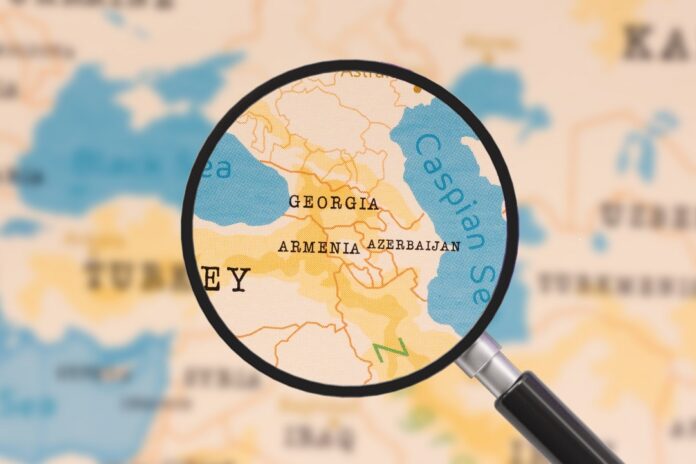
Over the past four years, Russia’s century-long dominance in the South Caucasus has been challenged. Key factors include Azerbaijan’s recapture of Nagorno-Karabakh; Moscow’s deteriorating ties with its strategic ally Armenia; its retreat as a regional mediator; the increasing presence of Turkiye, the West and Iran; Azerbaijan’s ambitions as a middle power; and the strain of the war in Ukraine. This paper examines how Russia lost its monopoly, its current priorities and how is its policies are adapting to these challenges.
Russia’s Broken Monopoly: Internationalization of the Region
For three decades after the Soviet Union’s collapse in 1991, Russia was the unchallenged dominant power in the South Caucasus. However, this began to change since 2020. Two key factors have weakened Russia’a position in the region: first, Armenia’s shift toward the West and diversification of its security partnerships, leaving Russia without a key local ally; and second, the Ukraine war, which diverted Moscow’s focus and allowed other actors to exploit its vulnerabilities in the Caucasus. The vacuum caused Russia’s diminishing role has been filled by regional and international actors, an unthinkable shift before 2020.
Russia’s strategic ally, Armenia, played a key role in maintaining Russian influence in the region for decades. This dynamic shifted dramatically in 2020 when the war between Azerbaijan and Armenia erupted over Nagorno-Karabakh, resulting in Azerbaijan’s capture of most of the region. At the time, Russia brokered a ceasefire that ended the conflict and stipulated the deployment of Russian peacekeepers in the remaining parts of Nagorno-Karabakh. That seemed an achievement for Russia – which for two decades has been seeking to have physical presence in in the region through various proposals – thereby securing its monopoly as a mediator. Retrospectively, however, the war was a turning point that marked the beginning of Russia’s declining influence.
The Ukraine war further undermined Moscow’s influence in the region, creating opportunities for Azerbaijan to intensify pressure on Nagorno-Karabakh, where Russian peacekeepers were stationed, leading to renewed fighting in 2022. That created a challenge for Russia and further strained Armenian-Russian military relations. Also, in 2022, Armenia notably began diversifying its security partnerships, signalling a shift away from Moscow.
Russia’s retreat has created a vacuum increasingly filled by regional and international actors:
Turkiye played a key role in Azerbaijan’s 2020 victory, paving the way for the further expansion of its influence through several key steps: establishing a joint Russian-Turkish monitoring center in Nagorno-Karabakh, embedding itself in Azerbaijan’s armed forces with the appointment of General Bakhtiyar Ersay as a key advisor in the Azerbaijani Ministry of Defense, signing the 2021 Shusha Declaration on allied relations (effectively a defense pact), and opening Turkish arms production facilities in Azerbaijan. Economically, Turkish companies have received a large number of tenders for projects in Nagorno-Karabakh.
Turkiye has also become a priority in Armenia’s foreign policy. Yerevan has sought to normalize ties with Ankara and Baku, reopen borders and unblock communications. Armenia has even suggested re-evaluating the need for maintaining a Russian base on its territory as it was perceived by Turkiye as a hostile presence. All of these factors have preserved Turkiye’s significant role in Caucasus politics.
Iran has sought to engage in regional processes to ensure its role in the post-war order by being one of the mediators between Armenia and Azerbaijan, but Russia kept it on the side-lines. However, today, Tehran holds several advantages over Moscow. First, Iran successfully opened a consulate general in Syunik, increasing its influence in geopolitically important southern Armenia – a goal Russia has failed to achieve despite two years of attempts. Second, Iran has become a key security provider for Armenia: for instance Indian arms to Armenia pass through Iranian territory, and Tehran has conducted border drills to deter Baku from forcibly opening a corridor through Armenia to its exclave of Nakhchivan. Third, the Armenian public’s trust in Iran has grown, while confidence in Russia has weakened. Tehran has also actively engaged Azerbaijan: for example, to avoid antagonizing Azerbaijan through closer ties with Armenia, Tehran and Baku conduct joint drills and collaborate on communication projects like the “Aras Corridor.” The clearest sign of the shifting regional balance is Tehran’s firm opposition to Russia’s pressure on Armenia to open channels of communication with Azerbaijan. For the first time in modern history, Tehran managed to block a Moscow-backed initiative.
Non-regional actors have gained influence, with the EU and the US emerging as key mediators in the Armenian-Azerbaijani peace process between 2022 and 2024. While Russia once held a monopoly on negotiations, key geopolitical decisions shifted to Brussels and Prague, side-lining Moscow. Following the failure of Russian security guarantees during Azerbaijan’s attack on Armenia in September 2022, the EU established an unarmed border monitoring mission in Armenia, despite Moscow’s dissatisfaction. Yerevan rejected a Collective Security Treaty Organization (CSTO) proposal for a border mission, opting instead for the EU’s European Union Mission in Armenia (EUMA). Initially mandated for two months, EUMA’s mission was extended to two years, with its team growing to 209 observers.
Armenia has frozen its CSTO membership and is seeking security guarantees from Brussels and Washington. The historic Armenia-EU-US trilateral summit was designed to provide the necessary support for Yerevan to reduce its dependence on Moscow. The West has also sidelined Moscow on security issues – a US military officer is now the main adviser to Armenia’s defense ministry, and French instructors are involved in improving the combat readiness of Armenian units.
Pakistan and China, two of India’s competitors, are also influencing the balance of power in the South Caucasus. Beijing has signed strategic partnership agreements with Tbilisi and Baku and is implementing major infrastructure projects, such as a port in Anaklia, Georgia. Pakistan and Azerbaijan regularly conduct joint exercises that also include Turkiye, with the two sides agreeing to cooperate closely in the arms industry.
Through its alliance with Azerbaijan, Israel too continues to have a qualitative impact on the balance of power in the South Caucasus through its regular weapon supplies, including modern air defense systems, cooperation in space and cybersecurity, all of which have boosted Azerbaijan’s role in the region.
In sum, the South Caucasus is gradually shifting away from its traditional post-Soviet framework as part of Russia’s sphere of influence. It is becoming a focal point for competing interests of more distant actors from the West, the Middle and the Far East. This trend highlights Moscow’s diminishing monopoly as a regional security provider. The internationalization of the South Caucasus presents a new and complex challenge for Russia.
Russia’s Top Priorities in the Region
Faced with challenges that have eroded its dominance in the South Caucasus, Russia is focusing on two key objectives: weakening the West’s influence in the region and maintaining a leading role among the key regional players, Turkiye and Iran. To achieve this, Moscow relies on two diplomatic tools: multilateral regional formats and bilateral relations.
The 3+3 format reflects Russia’s efforts to assert its influence at the regional level while also excluding external, especially Western, actors. This multilateral dialogue platform includes Armenia, Azerbaijan and Georgia (though Georgia has yet to join) alongside Russia, Turkiye and Iran. Originally proposed by Turkiye, its acceptance by Russia indicates Moscow’s acknowledgement of Turkiye’s and Iran’s growing roles as regional powers and that it no longer has monopoly over the region. Nevertheless, Russia aims to secure a leading role within the platform.
For instance, the first meeting was held in Moscow, allowing Russia to set the agenda and define limits for Turkiye and Iran. Moscow is now working to institutionalize the format, positioning itself as the dominant player in the process. For Russia, the 3+3 format also offers an opportunity to foster trade, economic, transportation and logistics cooperation within the region while excluding external players. Together with Iran, Russia also uses the platform to manage regional conflicts and prevent Western intervention.
Russia is pursuing the same interests not only regionally but also on bilateral format. For instance, Moscow has signaled that it is ready to have contacts with Georgia and facilitate normalization of relations between Georgia, on one hand, and the Russian-controlled breakaway regions of Abkhazia and South Ossetia, on the other. Russia’s accommodating policy came after the victory of the ruling Georgian Dream party, which has refused to enter into confrontation with Russia.
With Azerbaijan, which has ambitions to become a bigger economic player, Russia has encouraged Baku to become a member of BRICS. In August 2024 Vladimir Putin made a historic two-day visit to Azerbaijan, after which Baku declared its readiness to join BRICS and later, in October, took part in BRICS summit in Russia. Azerbaijan and Russia also regularly criticize EUMA. Azerbaijan has recently made the withdrawal of the mission from the territory of Armenia a new precondition for the peace treaty, aligning with Russia’s interests.
In response to Armenia’s West-leaning policies, Russia’s options are limited, but it actively seeks to caution Yerevan against deepening ties with the West, which Moscow views as incapable of offering any benefits to Yerevan. Russia continues to reaffirm its commitments to Armenia’s security amid regional instability and competes with Western influence wherever possible. For instance, as Armenia plans to build a new nuclear power plant and considers proposals from countries like the United States, Russia has also submitted its own proposal, reflecting not just energy considerations but also political alignment.
What Russia Is Doing to Keep Its Influence
With its hard power options constrained by the ongoing war in Ukraine, Russia is shifting its focus to softer strategies to keep the South Caucasus states partially within its orbit, emphasizing efforts to cultivate long-term connections and influence.
For Russia, enhancing connectivity is one of the long-term tools for engaging local and regional actors. The West’s attempts to isolate Russia have driven Moscow to expand and create new transport links to access Asia, turning the International North-South Transport Corridor (INSTC) into a top priority. A key segment runs through the South Caucasus, with Azerbaijan playing a vital role as the Russia-Iran railway crosses its territory. Moscow and Baku are modernizing this section to boost capacity from 15 million to 30 million tons annually, while Russia is also investing in the Resht-Astara section in Iran to complete the project.
To keep Yerevan in its orbit through integration into transportation initiatives, Moscow is also involved in infrastructure projects in Armenia: new road sections are being constructed in Syunik with financing from Armenia and the Eurasian Development Bank. Work is also underway to include the Upper Lars border crossing point (a checkpoint between Russia and Georgia that cargo passes through to reach Armenia) in the route of the INSTC. Armenia is interested in being part of a global route that will connect it to India.
Bilateral trade serves as another instrument to maintain and develop Russia’s relations with Caucasus states, as Moscow opens its markets to Georgia, Armenia, and Azerbaijan. After Western sanctions on Russia, Georgia’s exports increased from $1.6 billion in 2021 to $2.4 billion in 2023. The development of economic relations between the two nations has affected political relations. For example, in 2023 Russia canceled the visa regime for Georgian citizens and resumed direct air communication. And in 2024, the terms for visa-free regime were expanded. Despite the lack of political relations, a thaw is underway, partly driven by Georgia’s interest in economic cooperation with Russia and the prospects it offers.
Russia has also kept Armenia in its orbit through maintaining economic ties. The trade turnover between the two countries increased from $2.6 billion in 2021 to $7.3 billion in 2023. That has significantly ensured the growth of Armenia’s GDP by 12.6% in 2022 and by 8.3% in 2023. Armenia declares that it is not interested in breaking relations with the Eurasian Economic Union (EAEU), affirming plans to actively participate in the organization despite the fact that Armenia has frozen its membership in the CSTO and is reducing its activity in the Commonwealth of Independent States (CIS).
Moreover, the EAEU-Iran free trade agreement boosts Armenia’s role as the only EAEU member bordering Iran. Close economic ties also give Russia leverage, as many Armenian producers depend on its market, allowing Moscow to impose restrictive measures if needed. Additionally, EAEU membership prevents Armenia from signing an Association Agreement with the EU, creating a long-term economic deterrent against turning to the West.
Azerbaijan is not a member of the EAEU and does not have a high level of trade cooperation with Russia. Therefore, Moscow has prioritized energy cooperation and political rapprochement. Following the signing a strategic document between Azerbaijan and Turkiye in February 2022, Moscow sought to elevate the formal level of its relations with Baku. This culminated in the signing of a Declaration of Allied Cooperation between Moscow and Baku. During Putin’s visit to Baku in 2024, six agreements on cooperation in various spheres were signed. The most important of them is an agreement on the joint production of tankers to deliver Russian and Azerbaijani oil to the world market.
Mediation. Russia’s mediation in the Armenian-Azerbaijani settlement has been an important tool for maintaining balance and securing its interests. With Yerevan and Baku rejecting Moscow’s role as mediator, Russia has come up with a new format. Moscow now seeks to facilitate dialogue within multilateral platforms that it champions. A successful example was the BRICS summit in Kazan in October 2024, where the leaders of Armenia and Azerbaijan met for the first time for a significant period of time and engaged in talks that advanced the negotiation process.
Russia also endeavors to play a role in Armenian-Turkish normalization. However, its attempts have not yielded success. A key Russian interest lies in maintaining a presence on the Armenian-Turkish border, currently secured by Russian border guards. As Russia’s influence in Armenia diminishes, involvement in negotiations may allow Russian forces to maintain a presence in this section and give them a new role in the event of an opening of the Armenian-Turkish border.
Conclusion
In recent years, Russia’s role as the main conflict mediator and security provider in the South Caucasus has diminished. Despite this, Russia retains its leading position in the region, which could be augmented if Russia achieves military or diplomatic success on the Ukraine front.
Recognizing limitations on the use of hard power in the region, Moscow is prioritizing economic cooperation and connectivity, opting for tools that offer a more sustainable, long-term impact.
Russia’s primary goals in the South Caucasus are to counter growing Western influence and curb the expanding roles of Turkiye and Iran. To achieve this, Moscow leverages cooperation with Ankara and Tehran while simultaneously working to secure its dominant position through both bilateral and multilateral engagements with regional states.
Disclaimer: The views and opinions expressed in the content are solely those of the authors and do not necessarily reflect the Emirates Policy Center’s position.
In the short-term, China is expected to adopt a “calculated response” as part of its balancing policy to manage the transitional phase of the trade war. However, this strategy may shift toward an “escalating confrontation” in the medium to long term if the calculated measures prove inefficient in changing the Trump administration’s approach.
The Gulf countries could emerge as alternative hubs for supply chains disrupted by American tariffs in Southeast Asia. To mitigate risks, a balanced strategy combining trade openness with some precautionary measures is crucial to shield Gulf markets from the potential fallout of the potential trade war.
On the campaign trail, American president-elect Donald Trump floated the idea of universal tariffs of up to 20%, on all trade partners, and of at least 60% on Chinese goods. In November 2024, Trump also pledged to impose 25% tariffs on Canada and Mexico if they failed to address drug trafficking and migration across the border. Moreover, Trump threatened a 100% tariff on the exports of BRICS member countries if they undercut the US dollar in global trade.
This paper examines Trump’s motivations for adopting this protectionist policy toward China, Beijing’s potential responses and the likely implications for Gulf countries.
Return of the Trade War
If implemented, American consumers would bear the brunt of this protectionist policy. According to some assessments, the average US household could face an additional tax burden of nearly $3,000 in 2025. However, Trump will not have a free hand and some precautions should be taken into consideration. This paper estimates that while legal mechanisms, such as executive orders, allow the US president to impose tariffs, the process could extend into late 2025 or early 2026 despite Trump’s urgency to act early in his term.
It is also highly likely that these threats are part of Trump’s broader negotiating strategy, suggesting delays in imposing tariffs on targeted countries.
Taking these two factors into consideration and the likely endeavor by the Trump administration to limit inflationary fallouts on American households, the assessment of this paper aligns with others predicting that Trump will impose:
A 30% across-the-board tariff on Chinese imports to the US.
A 25% tariff on selected goods from Europe, including steel, aluminum and automobiles.
A 10% tariff on selected imports from Canada, Mexico, Japan, South Korea and Vietnam.
These measures would raise the effective US tariff rate on imported goods from 2% to around 6%.
China’s Tools for Response: Scenarios
The level of sanctions imposed by the Trump administration is likely to shape Beijing’s response. However, factors determining China’s relative power in the context of competition between the two countries have changed compared to Trump’s first term. Contrary to expectations by most Western experts, this variable may influence the Chinese leadership’s decisions more significantly than the tariff levels. This adds considerable uncertainty, making it challenging to establish clear standards for predicting Beijing’s actions or accurately measuring its potential response.
This paper focuses on two broad scenarios fundamentally based on Beijing’s assessments of its interests in the context of its bilateral ties with Washington and its evolving perception of its role in the global order, which has shifted significantly in the four years that followed Trump’s first term.
Scenario 1: A Calculated Response
Regardless of the size of tariffs imposed, China may conclude that avoiding direct confrontation with the US is in its best interest. In this scenario, Beijing would pursue de-escalation, adopt measures to mitigate the impact of tariffs and prioritize diplomacy to stabilize bilateral ties and preserve gains achieved during the Biden era.
A critical tool in this approach would be engaging with the new US administration on “Phase Two” of the trade negotiations, following the Phase One agreement reached after two years of talks. Trump’s associates accuse China of failing to meet the terms of this agreement, particularly its commitment to increase imports of American goods by $200 billion. In response, China’s commerce ministry has signaled its willingness to collaborate with the Trump administration’s economic and trade teams.
China’s strategy under this scenario might also involve prolonging negotiations, recognizing that Trump might seek a political victory before the 2026 midterm elections. This tactic could turn these negotiations into a pressure tool.
This scenario hinges on the Chinese leaders’ assessment of their country’s vulnerabilities, including the sharp decline in China’s economic performance, delays in advancing its high-tech sector compared to Western countries and military challenges in the South China Sea and the Taiwan Strait.
Therefore, China’s response might be limited to several non-confrontational measures, notably:
Expand Economic Stimulus: Increase the $1.4 trillion economic stimulus package announced in November 2024 by expanding the debt package. The Politburo of the Chinese Communist Party signaled this shift in its November 9, 2024 statement, marking a shift in China’s monetary policy from “prudent” to “moderately loose,” a term not used since the 2008 global financial crisis.
Devalue the Yuan: Compensate for tariff-related costs by devaluing the yuan for exported goods. This tactic was effectively employed during Trump’s first term to mitigate trade pressures.
Promote Domestic Production: Increase dependence on local products to meet the needs of the government and official institutions. This will have an impact on major American corporations and Western exporters.
Accelerate Economic Decoupling: Speed up the decoupling from the US to immunize China’s economy. This trajectory has actually existed since the start of Trump’s first era, encompassing goods not included in tariffs. For instance, since the implementation of the first tranche of tariffs in 2018, China’s share of US imports fell from around 18% to around 14% last year. In particular, China’s share of exports of goods under tariffs declined to 17% from 25%, while goods not under tariffs saw their share fall to 35% from 40%. This trajectory is likely to continue in the medium and long terms regardless of the level of imposed tariffs.
Enhance Security Cooperation: Strengthen measures to curb the export and trafficking of fentanyl used in making narcotics from China to the US, a condition Trump has cited for reconsidering some tariffs.
Address Excess Capacity: Implement reforms to address China’s “excess capacity” problem to convince other nations not to join US-led tariffs. In addition, accelerate efforts to localize Chinese industries in other countries and redirect exports to Western markets through countries not targeted by Trump’s tariffs.
The fundamental objective behind China’s adoption of these measures is to compel Trump to return to the negotiating table – a goal that aligns with Trump’s own strategy. However, a key challenge to this approach would arise if the Trump administration quickly imposes tariffs upon taking office in January 2025, a move likely intended to appease his domestic base.
Scenario 2: Escalation of Confrontation
While the first scenario focuses on de-escalation and non-confrontational policies, the second scenario assumes that the Chinese leadership might opt for escalatory measures in response to US tariffs. Beijing may calculate that China is now much stronger than during Trump’s first term, based on both internal and external factors.
Internal Strengths: President Xi Jinping enjoys consolidated authority, with his closest allies dominating the Communist Party. This unity contrasts with the factionalism prevalent during Trump’s first term, providing Xi greater flexibility to respond to external pressures – whether through cooperative engagement with the Trump administration without expecting an internal reaction or through adopting vengeful measures without facing significant domestic opposition.
External Strengths: China’s position as a global power has solidified, with Beijing aspiring to lead the Global South through multilateral platforms such as BRICS and the Shanghai Cooperation Organization (SCO). Additionally, China continues to champion a more open global economy under World Trade Organization (WTO) rules. Moreover, China is seen as a potential mediator in international conflicts.
Beijing might also estimate that it has acquired strategic tools to pressure the Trump administration to make recalculations and de-escalate. This could lead to a fierce trade war between the two sides with significant implications for the global economy. Key measures could include:
Imposing Retaliatory Tariffs: Introduce tariffs on US goods sold within its market.
Restricting Critical Exports: Limiting the export of critical and rare minerals, particularly those crucial to high-tech industries where China holds a dominant global market share.
Targeting US Companies: Enforcing bans on US firms under China’s “Unreliable Entity List” or the ” Anti- Foreign Sanctions Law,” mirroring Washington’s “Foreign Direct Product Rules.” This approach could target major US companies wherever Chinese components are integral – like Apple and Nvidia – potentially disrupting the global flow of US products.
Reducing US Treasury Bond Holdings: Escalating the sell-off of US Treasury bonds, currently valued at $780 billion. Having already reduced its holdings by 30% since 2017, such a move could destabilize US financial markets.
The primary obstacle to the realization of this scenario lies in China’s main objective in “Scenario 1:” bringing both sides to the negotiating table. Such negotiations could either extend the period of escalation or result in a mutual agreement.
Implications of the Trade War for the Gulf
Predicting the Chinese leadership’s exact calculations remains challenging, especially during these early stages. However, in the near term, China is likely to adopt the measures outlined in “Scenario 1” as part of a balancing strategy to navigate this transitional trade war. Over the medium to long term, however, Beijing may pivot to the actions described in “Scenario 2” if the tools in “Scenario 1” fail to influence the Trump administration’s approach.
This shift will largely depend on the progress of negotiations and the challenges encountered in reaching agreements on US-China trade relations. A critical factor will be the potential renewal of the US-China Agreement on Cooperation in Science and Technology, which expired last August. Beijing views the extension of this agreement as a potential safeguard against further escalation in the technology war by the Trump administration.
In essence, China will likely explore every possible avenue to avoid a full-scale trade war – or, at the very least, to avoid initiating one.
This trajectory of US-China relations will have significant implications for Gulf countries, largely shaped by the scale of the trade escalation. A key opportunity lies in the potential relocation of Chinese industries, particularly those associated with the energy transition, such as solar panels, electric vehicles and batteries. Gulf nations could position themselves as alternative hubs for disrupted Chinese supply chains, especially in Southeast Asia.
The Trump administration’s imposition of tariffs on Chinese companies operating in Southeast Asia has already reshaped trade patterns. By 2023, less than 1% of total US solar panel imports originated directly from China, according to official data. Instead, over 80% came from four countries: Cambodia, Malaysia, Thailand and Vietnam. This prompted some Chinese companies to relocate production lines to other countries in the region, including Indonesia and Laos.
US imports of solar panels from Indonesia doubled in 2023, reaching $246 million. By the first nine months of 2024, Vietnam reported a $83 billion trade surplus with the US, while Thailand recorded $39 billion, Indonesia $11 billion and Malaysia $15 billion.
In contrast, the ASEAN bloc recorded a trade deficit of $88 billion with China during the same period, underscoring the shifting trade dynamics in the region.
This suggests that Gulf countries could capitalize on the ongoing restructuring of global supply chains – a process that Chinese companies initiated early. For instance, Saudi Arabia and the UAE together account for approximately 53% of total solar production in the Gulf region. In 2022, Middle Eastern countries imported nearly 11.4 gigawatts of solar components from China, marking a 78% increase compared to the previous year. On the export side, China’s policy revisions aimed at addressing “overcapacity” in its industrial sector may foster greater balance in bilateral trade with several countries in the region. However, the Gulf bloc, as a whole, does not generally experience a trade deficit with China.
Additionally, Beijing is expected to strengthen ties with key US allies, including the European Union, Japan, South Korea, Australia and Britain, aiming to position itself as a leader among nations pursuing strategic independence. This strategy is intended to deter these countries from aligning with the US in the trade war. China’s efforts to deepen these relationships are already evident through key diplomatic engagements: President Xi’s visit to the EU in May, Premier Li Keqiang’s visit to Australia in June, Li’s meeting with his Japanese counterpart in October, Xi’s subsequent meeting with the Japanese prime minister in November and improved relations with Britain.
The desire of these countries to counterbalance the Trump administration by strengthening trade relations with China presents opportunities for the Gulf region. This is reflected in the openness of both sides to diversifying relations and partnerships to mitigate the impact of Trump’s protectionist policies. However, the challenges faced by Gulf countries due to the escalating trade war between Washington and Beijing outweigh the potential opportunities, even under the assumption of the Scenario 1, until an agreement is reached, as any resolution is likely to require considerable time. Among the most significant challenges are:
First, if the US imposes tariffs – whether as a bargaining tool or otherwise – a global economic slowdown is anticipated. This would likely lead to a decline in oil prices, reminiscent of the scenario during Trump’s first term. A slowdown in global demand, particularly from China and the broader Asian market, would be the key driver of this trend. Policies aimed at curbing industrial production in China while boosting domestic consumption would further contribute to this scenario. As a result, the oil-exporting Gulf states could experience a decline in both GDP and exports, while Iranian exports are also expected to drop as the “maximum pressure” policy is reinstated. Additionally, the anticipated slowdown in the energy transition, driven by Trump’s right-wing stance, could hinder global efforts to combat climate change. This would likely lead to a further deceleration of clean energy growth in the Gulf region.
Second, the Trump administration may extend tariffs to Chinese manufacturers operating in the Gulf countries, potentially stifling the region’s industrial growth. Ongoing discussions in Washington suggest that the Gulf states could be included among countries targeted by these tariffs, similar to those in Southeast Asia. This move would seek to prevent China from turning the Gulf region into an alternative export hub for its companies, regardless of existing Gulf trade agreements with the United States. In 2018, Trump extended tariffs of 25% on steel imports and 10% on aluminum imports to the European Union, Canada and Mexico, primarily to counter the re-export of Chinese products from these countries to the US.
Third, China may attempt to redirect its exports from US, European, Canadian and Mexican markets to the Gulf, leveraging the region’s high demand and purchasing power to mitigate the impact of tariffs. This redirection could result in a surge of low-cost Chinese goods entering Gulf Cooperation Council (GCC) markets. This would likely undermine local companies that may struggle to compete with cheaper imports and lead to a slowdown in the region’s industrial transformation and localization efforts, particularly as local markets become saturated.
Fourth, the Gulf region’s exports could also be indirectly affected by US tariffs on third-party countries, such as the European Union and ASEAN nations. While Gulf countries do not directly compete with China in these markets – due to their focus on oil exports – these tariffs could result in a trade deficit with some of these countries. This would be due to an expected increase in exports to the Gulf as Asian markets become saturated with inexpensive Chinese products. Furthermore, the imposition of new tariffs could drive up the cost of goods imported to the Gulf.
Conclusions
The Gulf economies face significant challenges in 2025 due to the global trade turbulence expected under the Trump administration. Even without the immediate imposition of tariffs, the persistent threat of such measures will likely influence market expectations. This could lead to higher prices for goods and services and a decline in the performance of Gulf financial markets. However, in the medium to longer term (over the next four years), the Gulf region could emerge as a new hub for Chinese investors and exporters seeking bypass US tariffs. This could position the Gulf as a key gateway for Chinese goods destined for Western markets.
In light of these developments, it is essential to adopt a balanced approach that combines trade openness with precautionary measures to safeguard the Gulf markets against the direct repercussions of a potential trade war. This could include exploring the imposition of tariffs on the re-export of certain Chinese goods destined for the US. At the same time, efforts should be made to enhance the competitiveness and diversification of Gulf-manufactured goods, as well as sources of foreign investment. Additionally, deepening cooperation with East and Southeast Asian markets, which are looking to counterbalance US sanctions, should be a priority. Expanding trade relations with the European Union and opening new markets in Latin America will also be key to fostering resilience and long-term growth in the Gulf region.
Disclaimer: The views and opinions expressed in the content are solely those of the authors and do not necessarily reflect the Emirates Policy Center’s position.
Επισκέφθηκα πριν από αρκετά χρόνια την Ιορδανία. Στα Γέρασα (Τζέρας) ο ξεναγός ήταν χαρούμενος που έβλεπε Έλληνες να επισκέπτονται μία περιοχή με σημαντικά μνημεία της ελληνιστικής-μακεδονικής περιόδου και της πρωτοχριστιανικής-βυζαντινής περιόδου. Όταν τον ρώτησα αν οι Ιορδανοί Άραβες συμπαθούν τους ομόθρησκους Τούρκους μού απήντησε: «Μα και εμείς ήμασταν υπόδουλοι επί αιώνες στους Οθωμανούς Τούρκους. Το μόνο καλό που μάς άφησαν είναι ο καφές τους» !
Πράγματι η μελέτη του ιστορικού παρελθόντος μάς θυμίζει ότι από τις αρχές του 16ου αιώνος μέχρι και το 1918 η σημερινή περιοχή της Συρίας, του Λιβάνου, της Ιορδανίας και άλλες γειτονικές περιοχές με αραβικό πληθυσμό ήσαν υπόδουλες στην Οθωμανική Αυτοκρατορία. Ο Γάλλος ιστορικός Μαξίμ Ροντινσόν στο βιβλίο του “Οι Άραβες” παρατηρεί ότι στην αραβική ιστοριογραφία η Οθωμανική περίοδος καταγράφεται ως η παρακμή του αραβικού πολιτισμού.
Στις 6 Μαΐου 1916 ο αιμοσταγής Νεότουρκος (Κομιτάτο Ένωση και Πρόοδος) και σφαγέας των Αρμενίων Τζεμάλ Πασάς, ως κυβερνήτης της Οθωμανικής επαρχίας της Συρίας, έδωσε εντολή για τον απαγχονισμό των αρχηγών του Αραβικού εθνικού κινήματος (Χριστιανών και Μουσουλμάνων) στην πλατεία Μερτζιέ της Δαμασκού και στην πλατεία Μπουρζ της Βηρυτού. Σήμερα και οι δύο πλατείες ονομάζονται πλατείες των Μαρτύρων. Συνολικά 34 ηγέτες της Αραβικής εξέγερσης κατά των Τούρκων εκτελέσθηκαν από τον Τζεμάλ. Η μνήμη των μαρτύρων τιμάται με τελετές στις 6 Μαΐου κάθε χρόνο. Η ιστορική μνήμη των Αράβων δεν διαγράφει εύκολα τα εγκλήματα των Νεοτούρκων.
Κατά τη διάρκεια του Α΄ Παγκοσμίου Πολέμου και με τη βοήθεια των Βρετανών οι Άραβες πολέμησαν σκληρά εναντίον των Τούρκων, όπως βλέπουμε και στη διάσημη ταινία «Ο Λώρενς της Αραβίας».
Το 1923 η Κοινωνία των Εθνών έδωσε Εντολή (mandate) στη Γαλλία για να διοικήσει προσωρινά τη σημερινή Συρία και τον Λίβανο μέχρι να «ωριμάσουν» πολιτικά οι τοπικοί πληθυσμοί. Η Εντολή προέβλεπε να δημιουργηθούν τέσσερις αυτόνομες οντότητες: Συρία με έδρα τη Δαμασκό, Λίβανος, περιοχή Αλαουιτών και περιοχή Δρούζων. Οι Γάλλοι σε συμπαιγνία με τη Τουρκία επέτρεψαν την εγκατάσταση τουρκικού πληθυσμού στην περιοχή της Αλεξανδρέττας και της ιστορικής Αντιόχειας. Το 1939 οι περιοχές αυτές αποσπάσθηκαν από τη Γαλλική Εντολή και προσαρτήθηκαν στην Τουρκία. Η Αντιόχεια είναι σήμερα μία πόλη στη ΝΑ Τουρκία και λέγεται Αντάκια. Οι Σύροι δεν λησμονούν ότι η Τουρκία κατέχει σήμερα ιστορικά συριακά εδάφη με αραβόφωνο πληθυσμό (χριστιανικό και μουσουλμανικό). Το σαντζάκι της Αλεξανδρέττας (Χάταϊ) θεωρείται από όλα τα αραβικά κράτη κατεχόμενο αραβικό έδαφος.
Η Τουρκία, αν και σήμερα προβάλλεται ως η προστάτις των Σουννιτών Μουσουλμάνων, σε καίριες στιγμές τάχθηκε κατά των Αράβων. Είναι χαρακτηριστικό ότι το 1961, όταν λειτουργούσε η δικοινοτική συνύπαρξη στο Κυπριακό Κοινοβούλιο, οι 35 Έλληνες Κύπριοι Βουλευτές πρότειναν Ψήφισμα υπέρ του αγώνος των Αλγερινών Αράβων κατά της γαλλικής αποικιοκρατίας. Οι 15 Τούρκοι Κύπριοι βουλευτές, με οδηγία από την Άγκυρα, αρνήθηκαν να υπογράψουν το Ψήφισμα.
Το μέλλον της περιοχής είναι αβέβαιο. Κάθε πρόβλεψη μπορεί να ανατραπεί. Το ιστορικό παρελθόν παρουσιάζει περισσότερες βεβαιότητες. Αξίζει να το ερευνούμε και να το αναδεικνύουμε για να κατανοήσουμε ότι οι παρεμβάσεις της Τουρκίας στην περιοχή πιθανόν να αναζωπυρώσουν αρνητικές μνήμες.
Αναλυτές εκτιμούν ότι η διακοπή ροής του φυσικού αερίου θα περιορίσει τα έσοδα της Μόσχας κατά 6,5 δισ. δολάρια τον χρόνο
ΜΑΡΚ ΣΑΝΤΟΡΑ, ΑΝΤΡΙΟΥ ΧΙΓΚΙΝΣ, ΤΖΕΝΙ ΓΚΡΟΣ / THE NEW YORK TIMES03.01.2025 • 07:03
Διεκόπη την 1η Ιανουαρίου η ροή φυσικού αερίου μέσω αγωγού, ο οποίος συνδέει τη Ρωσία με την Ουκρανία, όπως ανέφεραν αξιωματούχοι των δύο χωρών. Οι επιπτώσεις της διακοπής, παρότι αναμενόμενες εδώ και καιρό, μπορεί να προκαλέσουν αλυσιδωτή αντίδραση στον ενεργειακό τομέα της Ευρώπης και να επηρεάσουν σε βάθος χρόνου την ικανότητα της Μόσχας να χρηματοδοτήσει τον πόλεμό της στην Ουκρανία.
Τι συνέβη ακριβώς; Η Ουκρανία αρνήθηκε να ανανεώσει τη συμφωνία, η οποία επέτρεπε στη Ρωσία να εξάγει φυσικό αέριο μέσω αγωγού στην Ευρώπη. Τη συμφωνία συνέχισαν να τηρούν οι δύο πλευρές ακόμη και μετά την εισβολή του ρωσικού στρατού στην Ουκρανία το 2022. Ο αγωγός Ουρενγκόι – Πομάρι – Ουζγκορόντ κατασκευάστηκε στα χρόνια της ΕΣΣΔ προκειμένου να μεταφέρει φυσικό αέριο από τη Σιβηρία στις ευρωπαϊκές αγορές. Κατέστη μάλιστα η κύρια οδός ανεφοδιασμού της Σλοβακίας σε φυσικό αέριο, με τη ροή να ελέγχεται από την πόλη της Σούντζα στη ρωσική περιφέρεια του Κουρσκ στα σύνορα με την Ουκρανία, που ελέγχεται σήμερα από τον ουκρανικό στρατό. Ο αγωγός αποτελούσε τον τελευταίο ρωσικό ενεργειακό διάδρομο προς την Ευρώπη, μετά τη δολιοφθορά του αγωγού Nord Stream το 2022 προς τη Γερμανία, πιθανώς από Ουκρανούς σαμποτέρ και τη διακοπή της ροής αερίου μέσω της Λευκορωσίας.
Γιατί τώρα; Ο Ουκρανός πρόεδρος Βολοντίμιρ Ζελένσκι προειδοποιούσε εδώ και μήνες για την απόφασή του να μην ανανεώσει τη συμφωνία 5ετούς διάρκειας, η οποία εξέπνευσε τα μεσάνυχτα της 31ης Δεκεμβρίου. Η συμφωνία είχε υπογραφεί πριν από την εισβολή στην Ουκρανία, αλλά μετά την κατάληψη της Κριμαίας από τη Ρωσία.
Ποιο θα είναι το κόστος για τη Μόσχα και το Κίεβο; Αναλυτές εκτιμούν ότι η διακοπή ροής του αερίου θα περιορίσει τα έσοδα της Ρωσίας κατά 6,5 δισ. δολάρια τον χρόνο. Η επιμονή του Ζελένσκι εμπεριέχει, όμως, κινδύνους για την Ουκρανία. Η Ρωσία θα μπορούσε έτσι να αποφασίσει να βομβαρδίσει το ουκρανικό δίκτυο ενεργειακών αγωγών, το οποίο απέφευγε μέχρι στιγμής να στοχεύσει.
Πόσο θα πληγεί η Ε.Ε.; Η εκπνοή της συμφωνίας για το φυσικό αέριο ήταν προδιαγεγραμμένη, προσφέροντας στις χώρες της Ευρώπης χρόνο για την εκπόνηση εναλλακτικών σχεδίων. Η διακοπή λειτουργίας του αγωγού δεν αναμένεται να έχει σημαντικό αντίκτυπο στην τιμή του φυσικού αερίου, χάρη στις νέες συμφωνίες με εναλλακτικούς προμηθευτές που έχουν ήδη υπογραφεί. Η Μόσχα περιόρισε τον όγκο φυσικού αερίου που εξήγαγε στην Ευρώπη μετά την εισβολή στην Ουκρανία το 2022, προκαλώντας άνοδο των τιμών και υποχρεώνοντας πολλές κυβερνήσεις να καταφύγουν στα στρατηγικά τους αποθέματα προκειμένου να αντιμετωπίσουν τη ζήτηση από επιχειρήσεις και νοικοκυριά. Τα περισσότερα κράτη-μέλη της Ε.Ε. μείωσαν την εξάρτησή τους από το ρωσικό φυσικό αέριο και αναζήτησαν προμηθευτές στο Αζερμπαϊτζάν και τις ΗΠΑ, μεταξύ άλλων.
Το 2021 η Ρωσία προμήθευσε ποσοστό 40% του φυσικού αερίου που κατανάλωσε η Ευρωπαϊκή Ενωση, με το ποσοστό αυτό να υποχωρεί δραστικά στα χρόνια μετά την εισβολή στην Ουκρανία. Πέρυσι το μερίδιο ρωσικού αερίου στις ευρωπαϊκές εισαγωγές ήταν της τάξης του 15%. Μόλις 5% των ευρωπαϊκών εισαγωγών φυσικού αερίου διακινήθηκαν πέρυσι μέσω του ουκρανικού αγωγού. Η διακοπή λειτουργίας του, όμως, μπορεί να επηρεάσει την ήδη ασταθή αγορά ενέργειας. Η αναταραχή αυτή μπορεί να ασκήσει νέες επικίνδυνες πιέσεις στην αγορά ενέργειας. Οι ευρωπαϊκές ενεργειακές αγορές βρέθηκαν φέτος στο χείλος της κρίσης, με τις τιμές να σημειώνουν αύξηση 50% μέσα σε έναν χρόνο. Οι τιμές παραμένουν, όμως, σε πολύ χαμηλότερα επίπεδα από εκείνα της περιόδου μετά την εισβολή του 2022.
Ποιες χώρες της Ε.Ε. θα επηρεαστούν περισσότερο; Οι αναλυτές δεν φοβούνται ότι οι ευρωπαϊκές χώρες θα στερηθούν το φυσικό αέριο, αλλά ότι η προμήθειά του θα γίνει πιο περίπλοκη και δαπανηρή. Οι τιμές του φυσικού αερίου στην Ευρώπη είναι τετραπλάσιες από εκείνες στις ΗΠΑ. «Χώρες όπως η Σλοβακία, η Αυστρία και η Τσεχία θα αναγκαστούν να πληρώσουν πιο ακριβά για φυσικό αέριο», λέει η Νατάσα Φίλντινγκ, αναλύτρια της εταιρείας συμβούλων Argus Media. Ακόμη και μετά τη ρωσική εισβολή, τρία κράτη –Αυστρία, Ουγγαρία και Σλοβακία– συνέχισαν να αγοράζουν μεγάλες ποσότητες καυσίμων από τη Ρωσία. Η κυβέρνηση της Βιέννης ανακοίνωσε την Τετάρτη ότι ήταν προετοιμασμένη, έχοντας εξασφαλίσει εναλλακτικούς παρόχους εκτός Ρωσίας. Η κρατική ενεργειακή εταιρεία OMV είχε αναφέρει τον περασμένο μήνα ότι διέκοψε τα συμβόλαιά της με τη ρωσική Gazprom.
Η Ουγγαρία, η οποία πίεζε για διατήρηση του ουκρανικού αγωγού σε λειτουργία, λαμβάνει τον μεγαλύτερο όγκο ρωσικού αερίου μέσω του αγωγού Turkstream. Ο πρωθυπουργός της Σλοβακίας, Ρόμπερτ Φίτσο, διάκειται φιλικά προς τον Ρώσο πρόεδρο Βλαντιμίρ Πούτιν, με τη Σλοβακία να εξαρτάται άμεσα από το ρωσικό αέριο. Ο Φίτσο έχει απειλήσει να διακόψει τις εξαγωγές ηλεκτρικού ρεύματος αν η Ουκρανία δεν ανανεώσει τη συμφωνία.
Και ποιες εκτός Ε.Ε.; Κάποιες άλλες ευρωπαϊκές χώρες που δεν ανήκουν στην Ε.Ε., όπως η Σερβία και άλλα βαλκανικά κράτη, συνεχίζουν να αγοράζουν ρωσικό φυσικό αέριο. Η Μολδαβία επηρεάζεται πρωτίστως από τη διακοπή λειτουργίας του αγωγού. Τον Δεκέμβριο η χώρα κηρύχθηκε σε κατάσταση εκτάκτου ανάγκης εξαιτίας φόβων για διακοπή της παροχής ρωσικού αερίου μέσω Ουκρανίας, διακοπή που θα σήμαινε την αδυναμία της Μολδαβίας να ηλεκτροδοτήσει τις πόλεις της. Η Μολδαβία εξασφαλίζει το σύνολο του ηλεκτρικού της ρεύματος από εργοστάσιο με καύσιμο φυσικό αέριο στην αποσχισθείσα ρωσόφωνη περιοχή της Υπερδνειστερίας. Αξιωματούχοι του Κισινάου ανακοίνωσαν την περασμένη εβδομάδα ότι η γειτονική Ρουμανία δεσμεύθηκε να καλύψει τις ελλείψεις ηλεκτροδότησης που θα αντιμετωπίσει η Μολδαβία. Η ενεργειακή επιχείρηση στην Υπερδνειστερία ανακοίνωσε από την πλευρά της ότι θα διακόψει την παροχή αερίου για θέρμανση σε κατοικίες ιδιωτών, χωριά και κωμοπόλεις, διατηρώντας την παροχή αποκλειστικά για μαγείρεμα, «έως ότου η πίεση του αερίου στο δίκτυο πέσει κάτω από τα επίπεδα συναγερμού».




 του Γιώργου Τσουκαλά, Δικηγόρου