Αρχική Blog Σελίδα 873

“ΝΕΟΤΕΡΑ ΑΠΟ ΤΟ ΑΝΑΤΟΛΙΚΟ ΜΕΤΩΠΟ…¨

0

Γράφει ο Ευθύμιος

-Kurdistan: Ο τουρκικός στρατός πραγματοποίησε αεροπορικές επιδρομές και επιδρομές ελικοπτέρων εναντίον θέσεων των δυνάμεων του HPG στην περιοχή Amedi,Metina,Zap. –

Syria: Το τουρκικό κράτος βομβαρδίσε σφοδρά την περιοχή γύρω από το φράγμα Tishrin,την γέφυρα Qerekozak και τα γύρω χωριά με πολεμικά αεροσκάφη, UAV και βαρέα όπλα. Οι δυνάμεις των SDF κατέστρεψαν ένα στρατιωτικό όχημα που ανήκει σε SNA τρομοκράτες που υποστηρίζονται από την Τουρκία στον μπροστινό άξονα Qaraqozak. Σκληρες μαχες εγιναν στην περιοχη του Αbu Qalgal,οπου οι τρομοκρατες SNA υπεστησαν απωλειες απο της δυναμεις SDF και με την βοηθεια των ντροουν Μπρουσκ. Eπισης υπαρχει γενικος συναγερμος στο SDF στην Tabqa για επιθεσεις απο ΙΣΙΣ.


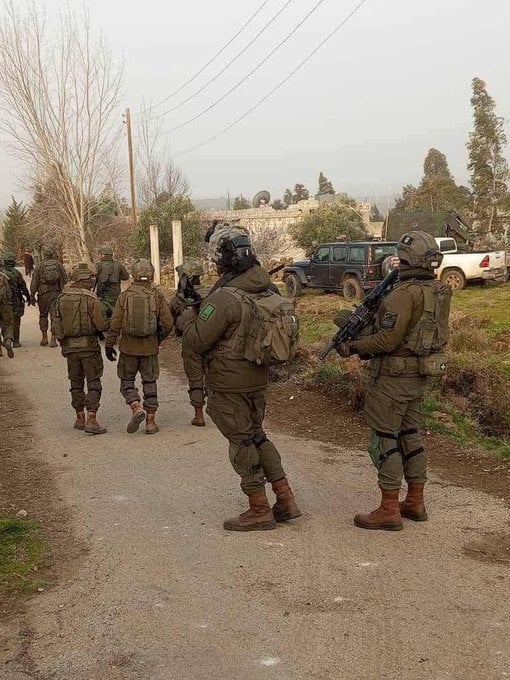
-Israel-Syria: Ο Ισραηλινος Στρατος προελαυνει στην επαρχία Κουνέιτρα στη νότια Συρία προς την Ουμ Μπάτνα – πιθανότατα πραγματοποιώντας εκ νέου επιχείρηση έρευνας και καταστροφής στρατιωτικών βάσεων του πρώην συριακού καθεστώτος. IDF δυναμεις μπηκαν στην πολη Suwaysa. Ο ισραηλινός στρατός εισήλθε με πολλά οχήματα στα χωριά Rasm al-Manbata και ad-Dawaiya al-Kabira, που ανήκουν στην πόλη Suwayda στη νοτιοδυτική επαρχία Quneitra στη Συρία.

-Syria-Druze: Διαδηλώσεις στην περιοχή Cerema της Δαμασκού, όπου η πλειοψηφία του πληθυσμού είναι Δρούζοι, για την υποστήριξη του Στρατιωτικού Συμβουλίου και της Αυτόνομης Διοίκησης που δηλώθηκε στη Suwêda δέχθηκαν επίθεση από HTS τρομοκρατες του Jolani.

-Syria-Rum: Παρά τις απαγωγές και την παρενόχληση από σουνιτικούς όχλους μετά την ανάληψη της εξουσίας από το HTS τρομοκρατες, οι Έλληνες Αντιοχίας στο Muzayneh, στη χριστιανική κοιλάδα, στάθηκαν σταθεροί και συγκεντρώθηκαν για την πρώτη ημέρα των προσευχών της Σαρακοστής. Η ανθεκτικότητά τους αντηχεί μέσα από την πίστη και την παράδοση.(Η Ελλας ειναι ανύπαρκτη στα ζητήματα της Συριας.Ο Πρωθυπουργος πρεπει αμεσα να αντικαταστησει τον ανυπαρκτο υπουγο εξωτερικων Γεραπετριτη ,οπως και την Ππαδοπουλου, με δραστηριους ανθρωπους.)

-Syria-Rum:Σαντάντ, Χομς: Ένας Σύρος χριστιανός από την πόλη Σαντάντ, ο Σουλεϊμάν αλ Χαλίλ, συνελήφθη από τους HTS τρομοκράτες του τζιχαντιστικού καθεστώτος.

-Syria-Alawites-Latakia: Al -Haffa φωτια πάνω από το νοσοκομείο Al-Haffa, πάνω από ένα σημείο, και εξαπλώνεται λόγω της ταχύτητας του ανέμου.Οι τρομοκράτες του Al-Jolani καίνε δάση στη συριακή ακτή, οι Πυρκαγιές πλησιάζουν σπίτια στην πόλη Qardaha.Τα μέλη του HTS τρομοκρατούν τους Αλεβίτες Μέλη του HTS εθεάθησαν να βασανίζουν και να αναγκάζουν εκατοντάδες Αλεβίτες να εγκαταλείψουν τα σπίτια τους στη γειτονιά El-Datur της Λαττάκειας. Κάποιοι νεαροί κρατήθηκαν. Επιπλέον, τα σπίτια οικογενειών Αλεβιτών παραβιάζονται και ερευνώνται.Η δολοφονία της νεαρής γυναίκας “Rahaf Twitti” στη γειτονιά #Datour στο Κυβερνείο #Latakia από τρομοκρατες του Jolani

– Αξίζει να σημειωθεί ότι τα μέσα ενημέρωσης του τζιχαντιστικού καθεστώτος στη Δαμασκό ανέφεραν ότι σκότωσαν 6 μέλη του πρώην καθεστώτος στη γειτονιά Datour .

-Israel-Turkey:Ένας εκπρόσωπος του IDF άνοιξε μια νέα σελίδα X στα τουρκικά, η οποία θα μπορούσε να υπονοεί τις προθέσεις και τις προετοιμασίες του Ισραήλ για μια πιθανή μελλοντική σύγκρουση με την Τουρκία, ειδικά στη συριακή αρένα. Η κίνηση έρχεται εν μέσω αυξανόμενων εντάσεων μεταξύ των χωρών.

-Israel: Ο Πρωθυπουργός Νετανιάχου ανακοίνωσε στην Κνεσέτ ότι θα παράσχει βοήθεια στο ΑΑΝΕΣ και στους Δρουζους. Νετανιάχου: «Δεν θα επιτρέψουμε στους εχθρούς μας στον Λίβανο και τη Συρία να γίνουν ισχυρότεροι. Θα απλώσουμε ένα χέρι ειρήνης στους Δρούζους και τους Κούρδους.

-Rum Pontos:Η Γενική Διεύθυνση Μετεωρολογίας προειδοποίησε για κίνδυνο χιονοστιβάδας στις περιοχές του Ρουμ Ποντου.

-HELLAS:Maria Karystianou Εξώδικο προς τον Πρόεδρο της Βουλής. Επειδή έχουμε δει ότι στο βαρέλι της απαξίωσής μας δεν υπάρχει πάτος, αναγκαστήκαμε να επιδώσουμε σήμερα εξώδικο προς τον Πρόεδρο της Βουλής με αίτημα να κοινοποιηθεί σε όλους τους Βουλευτές. Διότι σήμερα μείναμε άναυδοι, όταν από τις πλείστες όσες υποβληθείσες μηνύσεις κατά Υπουργών και του Πρωθυπουργού, συζητείται στη Βουλή πρόταση του ΠΑΣΟΚ για σύσταση Προανακριτικής μόνο για ΜΕΜΟΝΩΜΕΝΕΣ πράξεις του κ. Τριαντόπουλου, και μάλιστα μόνο για το ΠΛΗΜΜΕΛΗΜΑ της παράβαση καθήκοντος! Και ερωτώνται ΟΛΟΙ οι Βουλευτές του Ελληνικού Κοινοβουλίου, ιδίως οι Βουλευτές του ΠΑΣΟΚ που έκαναν μία τέτοια περικεκομμένη και αποδυναμωμένη πρόταση για σύσταση Προανακριτικής:

(α) Γιατί η πρόταση του ΠΑΣΟΚ για την Προανακριτική είναι μόνο για τον κ. Τριαντόπουλο και όχι για όλους τους μηνυθέντες πολιτικούς;

(β) Γιατί η πρόταση για την Προανακριτική αφορά μόνο πλημμέλημα παράβασης καθήκοντος και όχι τα λοιπά κακουργήματα και πλημμελήματα, για τα οποία όλοι οι πολιτικοί, Πρωθυπουργός, Υπουργοί και Υφυπουργοί έχουν μηνυθεί;

(γ) Ποιος ο λόγος μιας τέτοιας περικεκομμένης και περίτεχνα διατυπωμένης Πρότασης Σύστασης Προανακριτικής του ΠΑΣΟΚ;

(δ) Γιατί οι λοιποί βουλευτές δεν το επισημαίνουν και έτσι δια της αδράνειας και σιγής τους αφήνουν την άνω επιμελημένα “περικεκομμένη” διαδικασία να εξελίσσεται για τα μάτια του κόσμου, χωρίς αληθινή διερεύνηση ΟΛΩΝ των μηνυθέντων Πολιτικών Προσώπων και για ΟΛΑ τα ερευνητέα εγκλήματα (κακουργήματα και πλημμελήματα) που καταγγέλλεται ότι διέπραξαν;

(ε) Για ποιον λόγο λοιπόν παρακάμπτονται όλες οι μηνύσεις που έχουν φτάσει στη Βουλή; ή μήπως μετά από τόσους μήνες δεν έχουν φτάσει ακόμη και άρα πράγματι θάφτηκαν αμελλητί;

(στ) Μήπως αυτή είναι εν τέλει η αιτία για την οποία δεν μας απαντάει ο κ. Πρόεδρος της Βουλής στα ξεκάθαρα ερωτήματά μας που του θέσαμε από τις 03.02.25 για την πορεία των ποινικών δικογραφιών των Πολιτικών και στα οποία επίμονα δεν απαντά;

(ζ) Που είναι ο σεβασμός προς τις ιερές θεσμικές ιδιότητες που όλοι οι ερωτώμενοι (Βουλευτές και Πρόεδρος) φέρουν;

(η) Αν ήταν όλα διάφανα και καθαρά, όπως πρέπει να είναι, ο Πρόεδρος της Βουλής τιμώντας τις αρχές ενός αληθούς Κράτους Δικαίου, όφειλε να έχει απαντήσει δημοσίως στα απλά και ξεκάθαρα ερωτήματα μας. Αυτό θα έκανε ο Πρόεδρος της Βουλής που δεν ΦΟΒΑΤΑΙ να απαντήσει και δεν θέλει κάτι ή και πολλά να κρύψει.

-HELLAS:Eνα ανελπιστο δωρο ηταν η μη συμμετοχη της Ελλαδος στην συνοδο για την Ουκρανια που διοργανωσαν οι Βρετανοι!! Γιατι οπως ειχε πει ο τοτε Γεροντας Παισιος ο Αγιορειτης (νυν Οσιος) “οποιος παρει μερος σ αυτον τον πολεμο χαθηκε..¨ Την Παρασκευη το απογευμα ειναι η Πρωτη σταση των Χαιρετισμων στην Υπεραγια Θεοτοκο!!μια οαση μεσα στο ζοφερο κλιμα των ημερων.., Οσοι μπορειτε να πηγαινετε. Καλη Τεσσαρακοστη!!

Jeffrey D. Sachs: “Ο πόλεμος στην Ουκρανία τελείωσε».- Η ρωσοφοβία δεν εξυπηρετεί καθόλου την ασφάλειά σας.

0

Στις 19.02.2025 έλαβε χώρα μια ιδιαίτερα αποκαλυπτική ομιλία στην Ευρωβουλή με θέμα:
“Ο πόλεμος στην Ουκρανία τελείωσε» με ομιλητή το καθηγητή του Columbia Jeffrey D. Sachs ο όποιος ανέλυσε την “Ιστορία της Αμερικανικης Εξωτερικής Πολιτικής”,των τελευταίων 36 χρόνων, με επιχειρήματα αποδείξεις και στοιχεία.

«Η εξωτερικη πολιτική των ΗΠΑ»

Αυτοί οι πόλεμοι οδηγήθηκαν και προκλήθηκαν από τις ΗΠΑ. Και αυτό συμβαίνει για περισσότερα από τριάντα χρόνια. Οι ΗΠΑ πίστευαν, ιδιαίτερα το 1990-91 και στη συνέχεια με το τέλος της Σοβιετικής Ένωσης, ότι κυβερνούν πλέον τον κόσμο και ότι οι ΗΠΑ δεν χρειάζεται να λαμβάνουν υπόψη τις απόψεις κανενός, τις κόκκινες γραμμές, τις ανησυχίες, τις θέσεις ασφαλείας, τις διεθνείς υποχρεώσεις ή οποιοδήποτε πλαίσιο των Ηνωμένων Εθνών.

Λυπάμαι που πρέπει να το πω τόσο ξεκάθαρα, αλλά θέλω να το καταλάβετε.

Το 1991, προσπάθησα πολύ σκληρά να λάβω οικονομική βοήθεια για τον Γκορμπατσόφ, τον οποίο θεωρώ ότι είναι ο μεγαλύτερος πολιτικός της σύγχρονης εποχής μας. Πρόσφατα διάβασα το αρχειοθετημένο σημείωμα της συζήτησης του Συμβουλίου Εθνικής Ασφαλείας για την πρότασή μου στις 3 Ιουνίου 1991 και έμαθα για πρώτη φορά πώς ο Λευκός Οίκος την απέρριψε κατηγορηματικά και βασικά γέλασαν με την έκκλησή μου προς τις ΗΠΑ να βοηθήσουν τη Σοβιετική Ένωση να σταθεροποιηθεί οικονομικά και να παράσχουν οικονομική βοήθεια για να πραγματοποιήσει τις μεταρρυθμίσεις της.

Το υπόμνημα τεκμηριώνει ότι η κυβέρνηση των ΗΠΑ αποφάσισε να κάνει μόνο το ελάχιστο για να αποτρέψει μια καταστροφή. Αποφάσισαν ότι δεν ήταν δουλειά των ΗΠΑ να βοηθήσουν. Το ακριβώς αντίθετο.

Όταν η Σοβιετική Ένωση κατέρρευσε το 1991, αυτή η άποψη έγινε ακόμη πιο υπερβολική. Μπορώ να δώσω κεφάλαιο και στίχο, αλλά η άποψη ήταν ότι εμείς, οι ΗΠΑ ήμασταν επικεφαλής. Ο Cheney, ο Wolfowitz και πολλά άλλα ονόματα που θα γνωρίζετε μέχρι τώρα πίστευαν κυριολεκτικά ότι αυτός ήταν πλέον ένας κόσμος των ΗΠΑ και θα κάναμε ό,τι θέλαμε.

Θα καθαρίζαμε την πρώην Σοβιετική Ένωση. Θα εξαλείφαμε όλους τους εναπομείναντες συμμάχους της σοβιετικής εποχής. Χώρες όπως το Ιράκ, η Συρία και ούτω καθεξής θα εξαφανίζονταν. Και αυτή την εξωτερική πολιτική τη βιώνουμε 33 χρόνια τώρα.

Η Ευρώπη πλήρωσε υψηλό τίμημα για αυτό γιατί, απ’ όσο μπορώ να πω, η Ευρώπη δεν είχε εξωτερική πολιτική εκείνη την εποχή. Χωρίς φωνή, χωρίς ενότητα, χωρίς σαφήνεια, χωρίς ευρωπαϊκά συμφέροντα, μόνο αμερικανική πίστη.

Υπήρχαν στιγμές που υπήρξαν διαφωνίες, και νομίζω ότι ήταν πολύ υπέροχες διαφωνίες. Η τελευταία φορά που αυτό ήταν σημαντικό ήταν το 2003, ενόψει του πολέμου στο Ιράκ, όταν η Γαλλία και η Γερμανία δήλωσαν ότι δεν θα υποστήριζαν τις ΗΠΑ να παρακάμψουν το Συμβούλιο Ασφαλείας του ΟΗΕ για αυτόν τον πόλεμο. Αυτός ο πόλεμος υποκινήθηκε άμεσα από τον Νετανιάχου και τους συναδέλφους του στο Πεντάγωνο των ΗΠΑ.

Δεν λέω ότι υπήρχε κάποια σχέση ή αμοιβαιότητα. Λέω ότι ήταν ένας πόλεμος που έγινε για το Ισραήλ.

Ήταν ένας πόλεμος που ο Paul Wolfowitz και ο Douglas Feith συντόνισαν με τον Netanyahu.

Και αυτή ήταν η τελευταία φορά που η Ευρώπη είχε φωνή.

Μίλησα με τους Ευρωπαίους ηγέτες εκείνη την εποχή και ήταν πολύ ξεκάθαροι και ήταν υπέροχο να ακούσω την απόρριψή τους για έναν απαράδεκτο πόλεμο. Μετά από αυτό, αλλά ειδικά το 2008, η Ευρώπη έχασε εντελώς τη φωνή της.

Αυτό που συνέβη μετά το 1991, και για να μας φέρει στο 2008, είναι ότι οι ΗΠΑ αποφάσισαν ότι η μονοπολικότητα σήμαινε ότι το ΝΑΤΟ θα επεκταθεί σταδιακά από τις Βρυξέλλες στο Βλαδιβοστόκ.


iv. Η εξωτερική πολιτική των ΗΠΑ και η επέκταση του ΝΑΤΟ, Ισραήλ, Γεωργία

Όπως γνωρίζετε, η διεύρυνση του ΝΑΤΟ ξεκίνησε το 1999 με την Ουγγαρία, την Πολωνία και την Τσεχία. Η Ρωσία ήταν εξαιρετικά δυσαρεστημένη με αυτό, αλλά αυτές οι χώρες ήταν ακόμα μακριά από τα ρωσικά σύνορα. Η Ρωσία διαμαρτυρήθηκε, αλλά φυσικά χωρίς επιτυχία. Τότε ο Τζορτζ Μπους Τζούνιορ ανέλαβε τα καθήκοντά του. Όταν συνέβη η 11η Σεπτεμβρίου, ο Πρόεδρος Πούτιν υποσχέθηκε στις ΗΠΑ κάθε υποστήριξη. Και τότε γύρω στις 20 Σεπτεμβρίου 2001, οι ΗΠΑ αποφάσισαν ότι θα ξεκινούσαν επτά πολέμους σε πέντε χρόνια!

Μπορείτε να ακούσετε τον στρατηγό Wesley Clark να μιλάει για αυτό σε βίντεο. Διετέλεσε Ανώτατος Διοικητής του ΝΑΤΟ το 1999. Πήγε στο Πεντάγωνο γύρω στις 20 Σεπτεμβρίου 2001. Του δόθηκε ένα φύλλο χαρτί που περιγράφει την προοπτική επτά πολέμων κατά την κρίση των ΗΠΑ. Αυτοί ήταν πράγματι οι πόλεμοι του Νετανιάχου.

Το σχέδιο της αμερικανικής κυβέρνησης ήταν εν μέρει η εξάλειψη των παλιών σοβιετικών συμμάχων και εν μέρει η εξάλειψη των υποστηρικτών της Χαμάς και της Χεζμπολάχ.

Η ιδέα του Νετανιάχου ήταν και είναι ότι θα υπάρχει ένα κράτος σε ολόκληρη την επικράτεια που ονομαζόταν Παλαιστίνη πριν από το 1948. Ναι, μόνο ένα κράτος. Θα είναι το Ισραήλ. Το Ισραήλ θα ελέγχει ολόκληρη την περιοχή από τον Ιορδάνη μέχρι τη Μεσόγειο Θάλασσα. Κι αν κάποιος αντιταχθεί, θα τον ανατρέψουμε.

Λοιπόν, όχι το Ισραήλ, αλλά πιο συγκεκριμένα ο φίλος μας, οι ΗΠΑ. Αυτή ήταν η πολιτική των ΗΠΑ μέχρι σήμερα. Δεν ξέρουμε αν αυτό θα αλλάξει. Το μόνο πρόβλημα τώρα είναι ότι οι ΗΠΑ μπορεί να είναι ο «ιδιοκτήτης της Γάζας» [σύμφωνα με τον Τραμπ], αντί το Ισραήλ να κατέχει τη Γάζα.

Η ιδέα του Νετανιάχου υπάρχει εδώ και τουλάχιστον 25 χρόνια. Ανάγεται σε ένα έγγραφο που ονομάζεται “Clean Break” που ο Νετανιάχου και η αμερικανική πολιτική ομάδα του συνέταξαν το 1996 για να τερματίσουν την ιδέα μιας λύσης δύο κρατών. Μπορείτε επίσης να βρείτε αυτό το έγγραφο στο διαδίκτυο.

Πρόκειται επομένως για μακροπρόθεσμα έργα των ΗΠΑ. Είναι λάθος να αναρωτιόμαστε: «Είναι η Κλίντον; Είναι ο Μπους; Είναι ο Ομπάμα; Αυτός είναι ο βαρετός τρόπος να βλέπεις την αμερικανική πολιτική, ως ένα παιχνίδι καθημερινά ή χρόνο με το χρόνο. Αλλά δεν λειτουργεί έτσι η αμερικανική πολιτική.

Μετά το 1999, ο επόμενος γύρος επέκτασης του ΝΑΤΟ ήρθε το 2004 με επτά επιπλέον χώρες: τα τρία κράτη της Βαλτικής, Ρουμανία, Βουλγαρία, Σλοβενία και Σλοβακία. Σε αυτό το σημείο, η Ρωσία ήταν πολύ θυμωμένη.

Αυτό το δεύτερο κύμα επέκτασης του ΝΑΤΟ ήταν μια πλήρης παραβίαση της μεταπολεμικής τάξης που είχε συμφωνηθεί κατά την επανένωση της Γερμανίας. Ουσιαστικά, ήταν μια θεμελιώδης απάτη ή προδοσία από τις ΗΠΑ μιας συμφωνίας συνεργασίας με τη Ρωσία.
Όπως όλοι θυμούνται, επειδή μόλις είχαμε τη Διάσκεψη για την Ασφάλεια του Μονάχου την περασμένη εβδομάδα, ο Πρόεδρος Πούτιν πήγε στη Διάσκεψη (MSC) το 2007 για να πει:

«Σταματάτε, φτάνει». Φυσικά, οι ΗΠΑ δεν άκουσαν.

Το 2008, οι ΗΠΑ επέβαλαν στην Ευρώπη το μακροχρόνιο σχέδιο επέκτασης του ΝΑΤΟ ώστε να συμπεριλάβει την Ουκρανία και τη Γεωργία. Αυτό είναι ένα μακροπρόθεσμο έργο. Άκουσα τον κ. Σαακασβίλι να μιλά στο Συμβούλιο Εξωτερικών Σχέσεων στη Νέα Υόρκη την άνοιξη του 2008. Μας είπε ότι η Γεωργία ήταν στην καρδιά της Ευρώπης και ως εκ τούτου θα ενταχθεί στο ΝΑΤΟ. Βγήκα έξω, τηλεφώνησα στη γυναίκα μου και είπα: «Αυτός ο άνθρωπος είναι τρελός, θα ανατινάξει τη χώρα του».

Ένα μήνα αργότερα ξέσπασε πόλεμος μεταξύ Ρωσίας και Γεωργίας, στον οποίο η Γεωργία ηττήθηκε. Τα πρόσφατα γεγονότα στην Τιφλίδα για άλλη μια φορά δεν είναι χρήσιμα για τη Γεωργία, καθώς οι ευρωβουλευτές σας ταξιδεύουν εκεί για να πυροδοτήσουν διαδηλώσεις. Αυτό δεν θα σώσει τη Γεωργία, θα οδηγήσει στην καταστροφή της Γεωργίας, στην πλήρη καταστροφή της.

Όπως όλοι γνωρίζουν, ο πρώην διευθυντής μας της CIA Γουίλιαμ Μπερνς, ο οποίος ήταν τότε πρεσβευτής των ΗΠΑ στη Ρωσία, έστειλε ένα μακρύ διπλωματικό τηλεγράφημα στην Υπουργό Εξωτερικών Κοντολίζα Ράις το 2008, με τον περίφημο τίτλο  «Nyet σημαίνει Nyet».

Το μήνυμα του Μπερνς ήταν ότι ολόκληρη η πολιτική τάξη της Ρωσίας, όχι μόνο ο Πρόεδρος Πούτιν, ήταν κατά της επέκτασης του ΝΑΤΟ.

Γνωρίζουμε μόνο για το τηλεγράφημα μέσω του Τζούλιαν Ασάνζ. Πιστέψτε με, ο αμερικανικός λαός σήμερα δεν ακούει ούτε λέξη από την κυβέρνησή μας ή τις κορυφαίες εφημερίδες μας για οτιδήποτε σχετικά με αυτό το θέμα. Έχουμε λοιπόν τον Τζούλιαν Ασάνζ να ευχαριστήσουμε για το σημείωμα, το οποίο μπορούμε να διαβάσουμε αναλυτικά.

Όπως γνωρίζετε, ο Βίκτορ Γιανουκόβιτς εξελέγη πρόεδρος το 2010 με βάση την ουδετερότητα της Ουκρανίας. Η Ρωσία δεν είχε εδαφικά συμφέροντα ή σχέδια στην Ουκρανία.

Το ξέρω γιατί έχω πάει εκεί πολλές φορές όλα αυτά τα χρόνια.

Αυτό που διαπραγματεύτηκε η Ρωσία το 2010 ήταν μια μίσθωση 25 ετών έως το 2042 για τη ναυτική βάση της Σεβαστούπολης. Αυτό ήταν όλο. Δεν υπήρχαν ρωσικές απαιτήσεις για την Κριμαία ή το Ντονμπάς. Τίποτα τέτοιο.

Η ιδέα ότι ο Πούτιν θα ξαναχτίσει τη ρωσική αυτοκρατορία είναι παιδική προπαγάνδα. Με συγχωρείτε. Αλλά τα παιδικά πράγματα φαίνεται να λειτουργούν καλύτερα από τα πράγματα για ενήλικες.

Έτσι πριν από το πραξικόπημα του 2014 δεν υπήρχαν καθόλου εδαφικές διεκδικήσεις.

Παρόλα αυτά, οι Ηνωμένες Πολιτείες αποφάσισαν ότι ο Γιανουκόβιτς έπρεπε να ανατραπεί επειδή ήταν υπέρ της ουδετερότητας και ήταν αντίθετος στην επέκταση του ΝΑΤΟ. Αυτό ονομάζεται λειτουργία αλλαγής καθεστώτος.

Από το 1947, έχουν πραγματοποιηθεί περίπου εκατό επιχειρήσεις αλλαγής καθεστώτος από τις ΗΠΑ, πολλές στις χώρες σας [απευθυνόμενοι στα μέλη του Κοινοβουλίου] και πολλές σε όλο τον κόσμο. Αυτή είναι η δουλειά της CIA. Παρακαλώ να το γνωρίζετε αυτό. Αυτό είναι ένα πολύ ασυνήθιστο είδος εξωτερικής πολιτικής.
Εάν δεν αρέσει η άλλη πλευρά στην αμερικανική κυβέρνηση, δεν διαπραγματεύεστε μαζί τους, προσπαθείτε να την ανατρέψετε, κατά προτίμηση κρυφά. Εάν δεν λειτουργεί κρυφά, το κάνει ανοιχτά. Πάντα λένε ότι δεν φταίμε εμείς. Εσύ είσαι ο επιτιθέμενος. Είναι η άλλη πλευρά.

Είναι ο «Χίτλερ». Αυτό συμβαίνει κάθε δύο ή τρία χρόνια. Είτε είναι ο Σαντάμ Χουσεΐν, είτε ο Άσαντ, είτε ο Πούτιν, είναι πολύ βολικό. Αυτή είναι η μόνη δήλωση εξωτερικής πολιτικής που θα δοθεί ποτέ στον αμερικανικό λαό.

Λοιπόν, στεκόμαστε μπροστά στο Μόναχο 1938. Δεν μπορούμε να μιλήσουμε με την άλλη πλευρά. Είναι κακοί και ασυμβίβαστοι εχθροί. Αυτό είναι το μόνο μοντέλο εξωτερικής πολιτικής που ακούσαμε ποτέ από την κυβέρνησή μας και τα μέσα μαζικής ενημέρωσης.
Τα μέσα μαζικής ενημέρωσης το επαναλαμβάνουν εντελώς γιατί επηρεάζονται πλήρως από την κυβέρνηση των ΗΠΑ.

Ο πόλεμος της Ουκρανίας και ο έλεγχος των πυρηνικών όπλων

Ποια ήταν η πρόθεση του Πούτιν σε αυτόν τον πόλεμο;Μπορώ να σας πω ποια ήταν η πρόθεσή του. Ήθελε να αναγκάσει τον Ζελένσκι να διαπραγματευτεί την ουδετερότητα.

Αυτό συνέβη εντός ημερών από την έναρξη της εισβολής. Θα πρέπει να κατανοήσουν αυτό το θεμελιώδες σημείο και όχι την προπαγάνδα που γράφεται για την εισβολή, υποστηρίζοντας ότι στόχος της Ρωσίας ήταν να κατακτήσει την Ουκρανία με μερικές δεκάδες χιλιάδες στρατιώτες.

Κυρίες και κύριοι, καταλάβετε κάτι βασικό. Με την εισβολή της, η Ρωσία ήθελε να κρατήσει το ΝΑΤΟ έξω από την Ουκρανία. Και τι είναι στην πραγματικότητα το ΝΑΤΟ; Είναι ο αμερικανικός στρατός με τους πυραύλους του, τις επιχειρήσεις της CIA και οτιδήποτε άλλο.


Η Ρωσία ήθελε να κρατήσει τις ΗΠΑ μακριά από τα σύνορά της. Γιατί ενδιαφέρεται τόσο η Ρωσία για αυτό; Φανταστείτε αν η Κίνα ή η Ρωσία αποφάσιζαν να χτίσουν μια στρατιωτική βάση στο Ρίο Γκράντε ή στα σύνορα του Καναδά. Όχι μόνο θα ξετρέλαναν τις ΗΠΑ, αλλά θα είχαμε πόλεμο σε περίπου δέκα λεπτά. Όταν η Σοβιετική Ένωση το δοκίμασε αυτό στην Κούβα το 1962, ο κόσμος παραλίγο να καταρρεύσει σε πυρηνικό Αρμαγεδδώνα.

Όλα αυτά επιδεινώνονται σε μεγάλο βαθμό από τη μονομερή αποχώρηση των ΗΠΑ από τη Συνθήκη κατά των βαλλιστικών πυραύλων (Συνθήκη ABM) το 2002, τερματίζοντας έτσι το πλαίσιο ελέγχου των πυρηνικών όπλων που παρείχε σχετική σταθερότητα. Είναι εξαιρετικά σημαντικό να το κατανοήσουμε αυτό.

Το πλαίσιο για τον έλεγχο των πυρηνικών όπλων βασίζεται σε μεγάλο βαθμό στην προσπάθεια αποτροπής ενός πρώτου χτυπήματος (αποκεφαλισμός). Η Συνθήκη ΑΒΜ ήταν ένα κρίσιμο στοιχείο αυτής της σταθερότητας. Οι Ηνωμένες Πολιτείες αποχώρησαν μονομερώς από τη Συνθήκη ABM το 2002. Αυτό εξόργισε τη Ρωσία.

Έτσι, όλα όσα είπα για την επέκταση του ΝΑΤΟ συνέβησαν στο πλαίσιο της καταστροφής του πυρηνικού πλαισίου από τις ΗΠΑ.

Ξεκινώντας το 2010, οι ΗΠΑ άρχισαν να αναπτύσσουν συστήματα αντιπυραυλικής άμυνας Aegis στην Πολωνία και αργότερα στη Ρουμανία. Αυτό δεν αρέσει στη Ρωσία.
Ένα από τα θέματα που συζητήθηκαν τον Δεκέμβριο του 2021 και τον Ιανουάριο του 2022 ήταν αν οι ΗΠΑ θα διεκδικούσαν το δικαίωμα να αναπτύξουν πυραυλικά συστήματα στην Ουκρανία.

Σύμφωνα με τον πρώην αναλυτή της CIA, Ρέι ΜακΓκόβερν, ο Μπλίνκεν είπε στον Λαβρόφ τον Ιανουάριο του 2022 ότι οι ΗΠΑ διατηρούν το δικαίωμα να αναπτύξουν πυραυλικά συστήματα στην Ουκρανία.

Αυτό, αγαπητοί μου φίλοι, είναι ο υποτιθέμενος σύμμαχός σας. Και τώρα οι ΗΠΑ θέλουν να τοποθετήσουν πυραύλους μεσαίου βεληνεκούς στη Γερμανία. Υπενθυμίζουμε ότι οι ΗΠΑ αποχώρησαν από τη Συνθήκη INF το 2019. Επί του παρόντος δεν υπάρχει πλαίσιο για τα πυρηνικά όπλα. Βασικά, δεν υπάρχει.

Όταν ο Ζελένσκι δήλωσε, λίγες μόλις ημέρες μετά τη ρωσική εισβολή, ότι η Ουκρανία ήταν έτοιμη για ουδετερότητα, μια ειρηνευτική συμφωνία ήταν εφικτή.

Το γνωρίζω λεπτομερώς γιατί έχω μιλήσει εκτενώς με τους βασικούς διαπραγματευτές και μεσολαβητές και έχω μάθει πολλά από τις δημόσιες δηλώσεις άλλων.
Λίγο μετά την έναρξη των διαπραγματεύσεων τον Μάρτιο του 2022, ένα έγγραφο ανταλλάχθηκε μεταξύ των μερών, το οποίο εγκρίθηκε από τον Πρόεδρο Πούτιν και παρουσίασε ο Λαβρόφ. Σε αυτό ηγήθηκαν οι Τούρκοι μεσολαβητές.

Πέταξα στην Άγκυρα την άνοιξη του 2022 για να μάθω από πρώτο χέρι και λεπτομερώς τι συνέβη κατά τη διάρκεια της διαμεσολάβησης.

Το συμπέρασμα είναι ότι η Ουκρανία έχει αποσυρθεί μονομερώς από μια συμφωνία που είχε σχεδόν ολοκληρωθεί.


Το τέλος του πολέμου της Ουκρανίας

Επιτρέψτε μου να κλείσω με λίγα λόγια για τον Πρόεδρο Ντόναλντ Τραμπ. Ο Τραμπ δεν θέλει το “χαμένο χέρι” του Μπάιντεν. Ως εκ τούτου, ο Τραμπ και ο Πρόεδρος Πούτιν πιθανότατα θα συμφωνήσουν να τερματίσουν τον πόλεμο.
Ακόμα κι αν η Ευρώπη συνεχίσει την πολεμοχαρή της στάση, δεν θα έχει σημασία. Ο πόλεμος τελείωσε. Παρακαλώ ενημερώστε τους συναδέλφους σας. «Τελείωσε».

Τελείωσε γιατί ο Τραμπ δεν θέλει να μείνει με έναν “χαμένο σύμμαχο”. Ο χαμένος που θα σωθεί από τις τρέχουσες διαπραγματεύσεις είναι η Ουκρανία. Ο δεύτερος χαμένος είναι η Ευρώπη.

Ανοδικά κινείται το χρηματιστήριο τις τελευταίες ημέρες λόγω των «τρομερών ειδήσεων» για διαπραγματεύσεις και πιθανή ειρήνη. Γνωρίζω ότι η προοπτική μιας ειρήνης μέσω διαπραγματεύσεων έχει προκαλέσει φρίκη σε αυτές τις αίθουσες, αλλά αυτά είναι τα καλύτερα νέα που μπορείτε να πάρετε.

Προσπάθησα να επικοινωνήσω με ορισμένους από τους αρχηγούς κρατών και κυβερνήσεων της Ευρώπης. Είπα: «Μην πάτε στο Κίεβο, πηγαίνετε στη Μόσχα. Διαπραγματευτείτε με τους ομολόγους σας. Είναι η Ε.Ε. Είναι 450 εκατομμύρια άνθρωποι και μια οικονομία 20 τρισεκατομμυρίων δολαρίων. Παρακαλώ συμπεριφερθείτε ανάλογα.»

Η Ε.Ε. πρέπει να είναι ο σημαντικότερος εμπορικός εταίρος της Ρωσίας. Η Ευρώπη και η Ρωσία έχουν συμπληρωματικές οικονομίες. Οι συνθήκες για αμοιβαία επωφελείς εμπορικές συναλλαγές είναι πολύ καλές. Παρεμπιπτόντως, αν κάποιος θέλει να μιλήσει για το πώς οι ΗΠΑ ανατίναξαν τον Nord Stream, θα χαρώ να μιλήσω και γι’ αυτό.

Η κυβέρνηση Τραμπ είναι ιμπεριαλιστική στον πυρήνα της. Ο Τραμπ προφανώς πιστεύει ότι οι υπερδυνάμεις κυβερνούν τον κόσμο. Οι ΗΠΑ θα είναι αδίστακτες και κυνικές, και ναι, επίσης απέναντι στην Ευρώπη. Μην ζητάτε τίποτα από την Ουάσιγκτον. Αυτό δεν θα βοηθήσει. Μάλλον θα αύξανε την απερισκεψία. Αντίθετα, θα πρέπει να υπάρχει μια γνήσια ευρωπαϊκή εξωτερική πολιτική.

Επομένως, δεν λέω ότι βρισκόμαστε σε μια νέα εποχή ειρήνης, αλλά αυτή τη στιγμή βρισκόμαστε σε ένα πολύ διαφορετικό είδος πολιτικής, μια επιστροφή στην πολιτική των μεγάλων δυνάμεων.


Η Ευρώπη χρειάζεται τη δική της εξωτερική πολιτική και όχι απλώς μια εξωτερική πολιτική ρωσοφοβίας.


Η Ευρώπη χρειάζεται μια εξωτερική πολιτική που να είναι ρεαλιστική, που κατανοεί την κατάσταση της Ρωσίας, που κατανοεί τι είναι η Αμερική και τι πρεσβεύει, και που προσπαθεί να εμποδίσει τις ΗΠΑ να εισβάλουν στην Ευρώπη.

Σίγουρα δεν είναι αδύνατο η Αμερική του Τραμπ να αποβιβάσει στρατεύματα στη Γροιλανδία. Αυτό δεν είναι αστείο και δεν νομίζω ότι ο Τραμπ αστειεύεται.
Η Ευρώπη χρειάζεται μια εξωτερική πολιτική. Η Ευρώπη χρειάζεται κάτι άλλο από το: «Ναι, θα διαπραγματευτούμε με τον κ. Τραμπ και θα τον συναντήσουμε στα μισά του δρόμου». Ξέρετε πώς θα μοιάζει; «Τηλεφώνησέ μου μετά.»
Δημιουργήστε μια ευρωπαϊκή εξωτερική πολιτική. Θα ζείτε με τη Ρωσία για πολύ καιρό, γι’ αυτό παρακαλώ διαπραγματευτείτε με τη Ρωσία. Διακυβεύονται πραγματικά ζητήματα ασφάλειας, τόσο για την Ευρώπη όσο και για τη Ρωσία, αλλά η βόμβα και η ρωσοφοβία δεν εξυπηρετούν καθόλου την ασφάλειά σας.
Δεν εξυπηρετούν καθόλου την ασφάλεια της Ουκρανίας. Αυτή η αμερικανική περιπέτεια, την οποία εγκρίνατε και της οποίας είστε πλέον ο κύριος συνήγορος, συνέβαλε σε περίπου ένα εκατομμύριο Ουκρανούς απώλειες.

(Η συνοπτικη μετάφραση της ομιλίας έγινε από τον Απόστολο Κυριατσουλη)

Ο κατοχικός Τατάρ έλαβε πρόσκληση από τα Ηνωμένα Έθνη για την άτυπη διευρυμένη στη Γενεύη: Σημείο εκίννησης το δείπνο στις 17 Μαρτίου

1
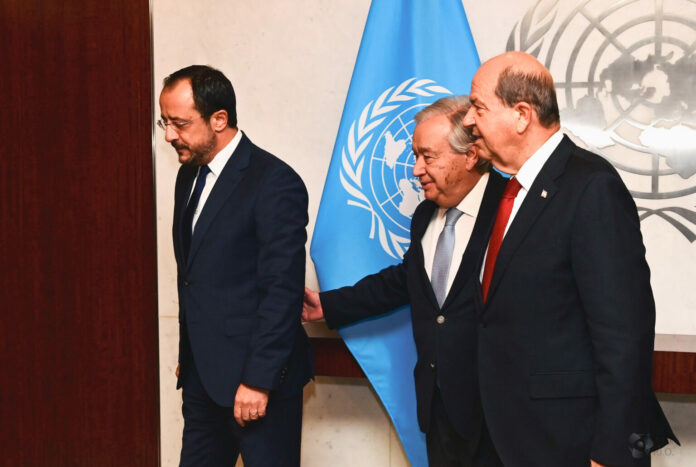
Πρόεδρος της Δημοκρατίας ‒ Τριμερής συνάντηση με Γενικό Γραμματέα Ηνωμένων Εθνών και ηγέτη Τουρκοκυπρίων Έδρα των Ηνωμένων Εθνών, Νέα Υόρκη Ο Πρόεδρος της Δημοκρατίας κ. Νίκος Χριστοδουλίδης σε τριμερή συνάντηση με τον Γενικό Γραμματέα των Ηνωμένων Εθνών κ. António Guterres και τον Τουρκοκύπριο ηγέτη κ. Ersin Tatar. // President of the Republic of Cyprus – Tripartite meeting with UN Secretary-General and Turkish Cypriot leader United Nations Headquarters, New York The President of the Republic Mr. Nikos Christodoulides at a tripartite meeting with the UN Secretary-General, Mr António Guterres, and the Turkish Cypriot leader, Mr Ersin Tatar.

Χθες μετά το μεσημέρι έλαβε την επίσημη πρόσκληση για την σύγκληση της άτυπης διευρυμένης συνάντησης στην Γενεύη από τον ΓΓ του ΟΗΕ, δήλωσε ο Ερσίν Τατάρ, που θ’ αρχίσει με επίσημο δείπνο στις 17 Μαρτίου.

Όπως μεταδίδεται στα κατεχόμενα, μετά από ερώτηση του παράνομου τ/κ πρακτορείου ειδήσεων ο κατοχικός ηγέτης ανέφερε ότι στις 18 Μαρτίου το πρόγραμμα περιλαμβάνει διμερείς συναντήσεις το πρωί κι αμέσως μετά ακολουθεί η διευρυμένη συνάντηση. Ο κ. Τατάρ είπε ότι το πρόγραμμα είχε επιβεβαιωθεί πριν λάβει την επίσημη πρόσκληση.

Πρόσθεσε ότι ο ΓΓ του ΟΗΕ δήλωσε ότι θα μοιραστούν το λεπτομερές πρόγραμμα με τους συμμετέχοντες μόλις το ξεκαθαρίσουν.

Ο Τατάρ ανακοίνωσε επίσης ότι μεθαύριο, Παρασκευή θα συναντηθεί με τον Βρετανό Υφυπουργό για την Ευρώπη και τη Βόρεια Αμερική, Stephen Doughty.

Εξάλλου ο Ερσίν Τατάρ με αφορμή το ψήφισμα 186 του ΣΑ το ΟΗΕ που εκδόθηκε σαν χθες πριν 61 χρόνια, δήλωσε ότι για να επιτευχθεί μια δίκαιη, μόνιμη και βιώσιμη λύση πρέπει να αρχίσει μια νέα και επίσημη διαπραγματευτική διαδικασία στη βάση της επιβεβαίωσης των εγγενών δικαιωμάτων του τουρκοκυπριακού «λαού», της κυριαρχικής του ισότητας και του ισοτίμου διεθνούς καθεστώτος του, κατά την έκφρασή του.

Στο μεταξύ, σύμφωνα με το ΓΤΠ, ο τ/κ Τύπος αναφέρει σήμερα πως ο «πρόεδρος» του ΡΤΚ, Τουφάν Ερχιουρμάν δήλωσε πως συνήθως οι ηγέτες των «κοινοβουλευτικών» κομμάτων πάντοτε προσκαλούνται σε τέτοιες συναντήσεις, σημειώνοντας ότι δημοσιεύματα αναφέρουν πως αυτό θα πράξει ο Πρόεδρος Χριστοδουλίδης. «Αυτό αναμένεται και από εδώ» είπε.

Κατά τον κ. Ερχιουρμάν είμαστε σε μια διαδικασία στο Κυπριακό που ξεκίνησε με το δείπνο στην Νέα Υόρκη, συνεχίστηκε με τις διαπραγματεύσεις για τα σημεία διέλευσης, ενώ υπήρξαν και συναντήσεις των εκπροσώπων των δύο ηγετών.

Αν δεν υπήρχε ελπίδα στο Κυπριακό, δεν θα διατίθετο αυτός ο χρόνος για μια πολυμερη συνάντηση πρόσθεσε ο Τουφάν Ερχιουρμάν. «Δεν είναι δυνατόν αυτή η πολυμερής συνάντηση να θεωρηθεί ως συνάντηση φίλων για πάρε δώσε. Ωστόσο, δεν θα πρέπει να περιμένει κανείς ότι η επίσημη διαδικασία διαπραγμάτευσης θα ξεκινήσει μετά από αυτή τη συνάντηση. Βλέπω ότι τα Ηνωμένα Έθνη και τα άλλα μέρη θέλουν να συνεχιστεί η διπλωματία».

Εξέφρασε δε την εκτίμηση ότι μετά τη συνάντηση στη Γενεύη θα επιδειχθεί μια στάση υπέρ της συνέχισης της διπλωματίας. «Δεν νομίζω ότι μόνο η Μια Μηλιά θα συζητηθεί σε αυτό το τραπέζι. Δεν ξέρω αν θα συζητηθεί γύρω από το τραπέζι, αν θα συζητηθούν οι υδρογονάνθρακες, εμπορικοί δρόμοι, ενεργειακά θέματα εκτός του τραπεζιού, αλλά το κύριο θέμα είναι η εξίσωση ενέργειας και ασφάλειας».

Ο πρόεδρος του ΡΤΚ δήλωσε επίσης ότι το πιο σημαντικό ζήτημα για τους Τουρκοκύπριους είναι η πολιτική ισότητα.

Με πληροφορίες από ΚΥΠΕ (ΚΥΠΕ-ΓΤΠ/ΡΠΑ/ΟΑ/ΑΓΚ)
Λευκωσία, Κύπρος

https://hellasjournal.com/2025/03/o-katochikos-tatar-elave-prosklisi-apo-ta-inomena-ethni-gia-tin-atypi-dievrymeni-sti-genevi-simeio-ekinnisis-to-deipno-stis-17-martiou/

Τραμπ: Θα πάρουμε τη Γροιλανδία με τον έναν ή τον άλλο τρόπο – Έτοιμη για διαπραγματεύσεις η Ουκρανία

1

Την πρώτη του ομιλία πραγματοποίησε ο Αμερικανός πρόεδρος Ντόναλντ Τραμπ για πρώτη φορά ενώπιον του Κογκρέσου από τότε που ξεκίνησε τη δεύτερη θητεία του στο «τιμόνι» των ΗΠΑ.

Σημειώνεται ότι, ο πρόεδρος των ΗΠΑ έκανε την πιο μακρά ομιλία που έχει εκφωνήσει ποτέ πρόεδρος στο αμερικανικό Κογκρέσο, διάρκειας 1 ώρας και 40 λεπτών, συντρίβοντας το προηγούμενο ρεκόρ που κατείχε ο Δημοκρατικός Μπιλ Κλίντον που μιλούσε στην ολομέλεια των δυο σωμάτων της εθνικής αντιπροσωπείας των ΗΠΑ επί σχεδόν μιάμιση ώρα για την Κατάσταση της Ένωσης το 2000.

Καταρχάς, αναφορικά με τον πόλεμο στην Ουκρανία, ο Ντόναλντ Τραμπ διαβεβαίωσε ότι ο Ουκρανός ομόλογός του, ο Βολοντίμιρ Ζελένσκι, με τον οποίο ενεπλάκη σε σφοδρή λογομαχία την Παρασκευή στον Λευκό Οίκο, είναι «έτοιμος» να διαπραγματευτεί με τη Ρωσία και να υπογράψει συμφωνία με την Ουάσιγκτον για τον ουκρανικό ορυκτό πλούτο.

«Έλαβα μια σημαντική επιστολή από τον Ουκρανό πρόεδρο Ζελένσκι. Η επιστολή λέει ότι η Ουκρανία είναι έτοιμη να καθίσει στο τραπέζι των διαπραγματεύσεων το συντομότερο δυνατόν για να φέρουμε πιο κοντά διαρκή ειρήνη», υποστήριξε ο Ρεπουμπλικάνος πρόεδρος των ΗΠΑ κατά τη διάρκεια της πρώτης του μεγάλης ομιλίας ενώπιον της ολομέλειας του Κογκρέσου το βράδυ της Τρίτης (σ.σ. τις πρώτες πρωινές ώρες σήμερα ώρα Ελλάδας).

«Η Γροιλανδία θα γίνει μέρος των ΗΠΑ, με τον έναν ή τον άλλον τρόπο»

Από την άλλη, ο Ντόναλντ Τραμπ διαβεβαίωσε ότι οι ΗΠΑ θα αποκτήσουν τη Γροιλανδία «με τον έναν ή τον άλλον τρόπο», λέγοντας πως εργάζεται με όλους τους ενδιαφερόμενους για να το επιτύχει.

«Τη χρειαζόμαστε αληθινά για τη διεθνή ασφάλεια και θεωρώ πως θα την αποκτήσουμε. Με τον έναν ή τον άλλον τρόπο, θα την αποκτήσουμε. Θα εγγυηθούμε την ασφάλειά σας, θα σας κάνουμε πλούσιους και, μαζί θα οδηγήσουμε τη Γροιλανδία σε ύψη που ποτέ δεν θα φανταζόσασταν πως είναι εφικτά», είπε, απευθυνόμενους στους κατοίκους της τεράστιας αυτόνομης περιοχής της Δανίας.

«Η Αμερική επέστρεψε», διαβεβαίωσε ο Τραμπ το Κογκρέσο

«Τίποτα δεν μπορεί να σταματήσει το αμερικανικό όνειρο»: Ο Ντόναλντ Τραμπ άρχισε  πρώτη του μεγάλη ομιλία στην ολομέλεια του Κογκρέσου, αφού εξαπέλυσε μέσα σε μερικές εβδομάδες άνευ προηγουμένου έφοδο σε αμερικανικούς θεσμούς και στην παγκόσμια τάξη.

«Οι ΗΠΑ κάνουν δυναμική επιστροφή που ο κόσμος δεν γνώρισε ποτέ και ίσως δεν ξαναγνωρίσει ποτέ», υποστήριξε ο Ρεπουμπλικάνος, εκφράζοντας ικανοποίηση διότι ανακτήθηκε «το πνεύμα» η «υπερηφάνεια» και η «αυτοπεποίθηση» της Αμερικής.

«Καταφέραμε περισσότερα μέσα σε 43 ημέρες από ό,τι οι περισσότερες κυβερνήσεις σε τέσσερα ή οκτώ χρόνια κι ακόμα δεν είμαστε παρά μόνο στην αρχή», τόνισε ο 78χρονος αρχηγός του αμερικανικού κράτους επευφημούμενος ηχηρά από τους Ρεπουμπλικάνους στην αίθουσα.

Στο φόντο: Ο πρόεδρος της κάτω Βουλής Μάικ Τζόνσον και ο αντιπρόεδρος Τζέι Ντι Βανς, ως εκ του αξιώματός του επικεφαλής της Γερουσίας.

Αρκετοί Δημοκρατικοί προτίμησαν να φορέσουν κίτρινα και μπλε χρώματα, του εθνικού συμβόλου της Ουκρανίας.

Ο Δημοκρατικός βουλευτής, ο Αλ Γκριν (Τέξας), αποβλήθηκε από τον «speaker» Τζόνσον επειδή στεκόταν όρθιος κατά τα πρώτα λεπτά της ομιλίας του προέδρου, παραβιάζοντας το αυστηρό πρωτόκολλο. Ο μεγιστάνας συνέχισε κατόπιν απτόητος την ομιλία του.

Αναμενόταν να παρουσιάσει στο Κογκρέσο, όπου το κόμμα του είναι κυρίαρχο για τουλάχιστον την προσεχή διετία, το όραμά του για την οικονομία, καθώς εξαπέλυσε σφοδρή επίθεση στον Καναδά και το Μεξικό επιβάλλοντας δασμούς που προκάλεσαν σοκ στις χρηματαγορές. Αναμενόταν επίσης να απαιτήσει κεφάλαια για να κάνει πράξη τις εξαγγελίες του για τη μαζική απέλαση παράτυπων μεταναστών.

Αναμενόταν ακόμη να εκφραστεί για το όραμά του για τη θέση και τον ρόλο των ΗΠΑ σε διεθνές επίπεδο, μετά την παύση που διέταξε στην αμερικανική στρατιωτική βοήθεια στην Ουκρανία, μετά τη λογομαχία του στο Οβάλ Γραφείο του Λευκού Οίκου με τον Βολοντίμιρ Ζελένσκι.

Έχει πει πως θέλει «ρήξη» με την αμερικανική διπλωματία «του παρελθόντος».

Καθώς οι δημοσκοπήσεις φέρουν τη δημοτικότητά του να βρίσκεται σε πτώση, παρά τις ανεξαιρέτως θριαμβευτικές δηλώσεις συμβούλων και συνεργατών του, ο Αμερικανός πρόεδρος μοιάζει πιο σίγουρος παρά ποτέ για τον εαυτό του, πρόσφατα εξάλλου πρότεινε να διανείμει στους δημοσιογράφους καπελάκια με το σύνθημα «ο Τραμπ είχε δίκιο για όλα».

Εννοεί να κυριαρχήσει στην πυραμίδα της εξουσίας, χωρίς να σκοτίζεται για τους μηχανισμούς ελέγχου που προβλέπει το Σύνταγμα, με τη μορφή του κοινοβουλίου ή των δικαστηρίων.

Έδωσε άλλωστε λευκή επιταγή στον πολυδισεκατομμυριούχο Ίλον Μασκ να περικόψει τις κρατικές δαπάνες ενίοτε ισοπεδώνοντας ομοσπονδιακές υπηρεσίες και γραφειοκρατίες και υπογράφοντας σειρά εκτελεστικών διαταγμάτων, κάποια από τα οποία αμφισβητούνται στη δικαιοσύνη.

Ο επικεφαλής εταιρειών όπως οι Tesla και SpaceX είναι παρών, ενώ οι Δημοκρατικοί προσκάλεσαν κάποιους ομοσπονδιακούς υπαλλήλους που απολύθηκαν.

Ο πρόεδρος Τραμπ υπόσχεται στο Κογκρέσο ότι οι ΗΠΑ θα διεξαγάγουν «πόλεμο» εναντίον καρτέλ των ναρκωτικών

Επίσης, ο Αμερικανός πρόεδρος Ντόναλντ Τραμπ διεμήνυσε στην πρώτη του μεγάλη ομιλία ενώπιον της ολομέλειας του Κογκρέσου πως η κυβέρνησή του διεξάγει «πόλεμο εναντίον των καρτέλ των ναρκωτικών», μεξικανικών και άλλων, μιλώντας περί «σοβαρής απειλής» για την «εθνική ασφάλεια» των ΗΠΑ.

«Τα καρτέλ διεξάγουν πόλεμο εναντίον της Αμερικής, είναι καιρός η Αμερική να διεξαγάγει πόλεμο εναντίον των καρτέλ – και το κάνουμε», πέταξε ο Ρεπουμπλικάνος, θυμίζοντας πως η κυβέρνησή του ήδη ενέταξε πολλές από αυτές τις συμμορίες στη μαύρη λίστα των «τρομοκρατικών» οργανώσεων.

Τραμπ: Υπόσχεται στο Κογκρέσο ότι οι ΗΠΑ θα διεξαγάγουν «πόλεμο» εναντίον καρτέλ των ναρκωτικών

Την ίδια ώρα, ο Αμερικανός πρόεδρος Ντόναλντ Τραμπ διεμήνυσε στην πρώτη του μεγάλη ομιλία ενώπιον της ολομέλειας του Κογκρέσου πως η κυβέρνησή του διεξάγει «πόλεμο εναντίον των καρτέλ των ναρκωτικών», μεξικανικών και άλλων, μιλώντας περί «σοβαρής απειλής» για την «εθνική ασφάλεια» των ΗΠΑ.

«Τα καρτέλ διεξάγουν πόλεμο εναντίον της Αμερικής, είναι καιρός η Αμερική να διεξαγάγει πόλεμο εναντίον των καρτέλ – και το κάνουμε», πέταξε ο Ρεπουμπλικάνος, θυμίζοντας πως η κυβέρνησή του ήδη ενέταξε πολλές από αυτές τις συμμορίες στη μαύρη λίστα των «τρομοκρατικών» οργανώσεων.

«Θα πάρουμε πίσω τη Διώρυγα του Παναμά»

Σημειώνεται ότι, ο Αμερικανός πρόεδρος Ντόναλντ Τραμπ επανέλαβε ότι οι ΗΠΑ θα «πάρουν πίσω» τη Διώρυγα του Παναμά, μετά την ανακοίνωση πως δυο λιμάνια τα οποία ανήκαν σε κολοσσό του Χονγκ Κονγκ, την εταιρεία Hutchinson, πωλήθηκαν σε κοινοπραξία υπό αμερικανική ηγεσία.

«Για να ενισχυθεί ακόμη περισσότερο η εθνική μας ασφάλεια, η κυβέρνησή μου θα πάρει πίσω τη Διώρυγα του Παναμά, κι ήδη αρχίσαμε να το κάνουμε», είπε ο πρόεδρος, προφανώς αναφερόμενος στην αγοραπωλησία, η οποία έγινε γνωστή χθες Τρίτη.

Όσα είπε για γραφειοκρατία και φορολογικές περικοπές – Επικρίσεις κατά Μπάιντεν

Σημειώνεται ότι, ο Τραμπ μίλησε ξανά για κυβερνητική αναποτελεσματικότητα και σπατάλη και υποστήριξε ότι «η γραφειοκρατία συνέτριψε τις ελευθερίες μας».

«Η κυβέρνησή μου θα ανακτήσει την εξουσία από αυτήν την αλόγιστη γραφειοκρατία και θα αποκαταστήσουμε ξανά την αληθινή δημοκρατία στην Αμερική», είπε. «Και κάθε ομοσπονδιακός γραφειοκράτης που αντιστέκεται σε αυτήν την αλλαγή θα απομακρυνθεί αμέσως από τα καθήκοντά του».

Επίσης, ο Τραμπ κάλεσε το Κογκρέσο να καταστήσει μόνιμες τις φορολογικές του περικοπές το 2017. «Είμαι σίγουρος ότι θα ψηφίσετε υπέρ αυτών των φορολογικών περικοπών, γιατί διαφορετικά δεν πιστεύω ότι ο κόσμος θα σας ψηφίσει ποτέ για να αναλάβετε το αξίωμα», είπε στα μέλη.

Τόνισε δε ότι «κληρονόμησε από τη διακυβέρνηση Μπάιντεν οικονομική καταστροφή και πληθωρισμό-εφιάλτη». Έθεσε ως παράδειγμα την τιμή των αυγών που έχει εκτοξευτεί τις τελευταίες εβδομάδες, και υποσχέθηκε ότι θα την ρίξει.

Αναφέρθηκε στην ενέργεια, κάνοντας ειδική αναφορά στις άδειες εξόρυξης. «Drill, baby, drill», είπε χαρακτηριστικά με το κοινό των Ρεπουμπλικάνων να χειροκροτεί.

Ο Τραμπ διακήρυξε το τέλος της εντολής των ηλεκτρικών οχημάτων. Υποστήριξε το τέλος σε αυτό που αποκάλεσε «παράφρονες εντολές ηλεκτρικών οχημάτων», του πρώην προέδρου Τζο Μπάιντεν.

Ο Τραμπ λέει ότι θα αντιμετωπίσει τον πληθωρισμό μετά την επιβολή δασμών σε βασικούς εταίρους. Ο Τραμπ κατηγόρησε τον πρώην πρόεδρο Τζο Μπάιντεν για τον επίμονο πληθωρισμό, λέγοντας ότι θα μειώσει τις τιμές.

«Ιαπωνία και Νότια Κορέα θέλουν να συνεργαστούν με τις ΗΠΑ στον αγωγό της Αλάσκας»

«Η Ιαπωνία, η Νότια Κορέα και άλλες χώρες θέλουν να συνεργαστούν με τις Ηνωμένες Πολιτείες σε έναν “γιγαντιαίο” αγωγό φυσικού αερίου στην Αλάσκα», δήλωσε ο πρόεδρος των ΗΠΑ.

Υποστήριξε ότι θα επενδύσουν «τρισεκατομμύρια δολάρια ο καθένας». Πρόσθεσε ότι ο αγωγός θα είναι ένας από τους μεγαλύτερους στον κόσμο.

«Βολές» κατά μεταναστών: Η «χρυσή κάρτα» θα είναι έτοιμη σύντομα

Ο Τραμπ αναφέρθηκε στο σχέδιο μετανάστευσης «χρυσής κάρτας», το οποίο θα έδινε καθεστώς υπηκοότητας σε αλλοδαπούς αιτούντες που πληρώνουν 5 εκατομμύρια δολάρια. Υποστήριξε ότι θα είναι διαθέσιμο «σύντομα». «Αυτοί οι άνθρωποι θα πρέπει να πληρώσουν φόρους στη χώρα μας», είπε.

Δεν έλειψαν ούτε και οι αναφορές στους «κακοποιούς παράνομους μετανάστες» και τα «εγκλήματα που προκάλεσαν» όπως και την «καταστροφική πολιτική των ανοιχτών συνόρων». Όπως είπε στην ομιλία του, «μειώθηκαν στο ελάχιστο οι διελεύσεις των συνόρων».

«Μειώθηκαν στο ελάχιστο οι διελεύσεις των συνόρων», είπε εν μέσω χειροκροτημάτων.

Προειδοποίησε τους ομοσπονδιακούς εργαζόμενους ότι «θα απομακρυνθούν αμέσως από τα καθήκοντά τους»

Παράλληλα, επικαλούμενος την «εντολή του για τολμηρή και βαθιά αλλαγή», ο Τραμπ τάχθηκε ενάντια στους κανονισμούς και τις εγκρίσεις χρέους που επιβραδύνουν τη λειτουργία της ομοσπονδιακής κυβέρνησης.

Προσπάθησε να αλλάξει το μέγεθος και το εύρος της ομοσπονδιακής κυβέρνησης από την ανάληψη των καθηκόντων του, δίνοντας τη δυνατότητα στον Έλον Μασκ και στο Υπουργείο Κυβερνητικής Αποτελεσματικότητας του να μειώσουν τις δαπάνες.

Υποστήριξε ότι «εκατοντάδες χιλιάδες ομοσπονδιακοί εργαζόμενοι… δεν έχουν εμφανιστεί στη δουλειά», καθώς η κυβέρνησή του διέταξε τον τερματισμό των κανόνων της εποχής Covid που επιτρέπουν μεγαλύτερη ευελιξία.

«Το δικαστικό σύστημα «ανατράπηκε από τρελούς της άκρας Αριστεράς» είπε στη συνέχεια, και κατήγγειλε την εργαλειοποίηση των Αρχών λέγοντας πως και ο ίδιος είναι θύμα αυτής της εργαλειοποίησης.

«Η πατρίδα μας δεν είναι πια woke»

Μάλιστα, αναφέρθηκε στα μέτρα που έλαβε για την κατάργηση «μη απαραίτητων διατάξεων» και τις απολύσεις ομοσπονδιακών υπαλλήλων που δεν εμφανίζονταν στις εργασίες τους καθώς και για τη μετονομασία του Κόλπου του Μεξικού σε Κόλπο της Αμερικής και την απόφαση «ότι υπάρχουν μόνο δύο φύλα, οι άνδρες και οι γυναίκες».

«Η πατρίδα μας δεν θα είναι πια woke», είπε χαρακτηριστικά, και πρόσθεσε ότι «χάρη σε εμάς σαρώνει τον κόσμο μια επανάσταση της κοινής λογικής».

https://www.liberal.gr/diethni-themata/tramp-apo-kogkreso-etoimi-gia-diapragmateyseis-i-oykrania-ergazomai-akoyrasta-gia

Μήνυμα καί γιά τόν Πρωθυπουργό ἀπό τήν σύγκρουση στόν Λευκό Οἶκο

0

Γιατί ὁ Κυριάκος Μητσοτάκης δέν στήριξε τόν ἐκλεκτό τοῦ Ζελένσκυ μετά τό ἐπεισόδιο μέ τόν Τράμπ καί τήν ἐπίθεση τοῦ ἀντιπροέδρου Τζαίυ Ντί Βάνς, ὅτι αὐτός ἔκανε περιοδεῖες ὑπέρ τῶν Δημοκρατικῶν στήν Πενσυλβάνια – Τί κρύβει ἡ ἐπίθεσις τοῦ ὁμογενοῦς ἐπιχειρηματία Τζών Κατσιματίδη ἐναντίον του – Ἀμηχανία Γεραπετρίτη στήν συνάντησή του μέ τόν Ρούμπιο

Ο ΔΙΑΛΟΓΟΣ Τράμπ καί Βάνς μέ Ζελένσκυ, τῆς περασμένης Παρασκευῆς, καί ἡ κατάρρευσις τῆς συμφωνίας γιά τά ὀρυκτά τῆς Οὐκρανίας ἀνεμεταδόθη σέ ὅλον τόν κόσμο καί ἐσχολιάσθη ποικιλοτρόπως. Τό κάθε μέσον ἐνημερώσεως ἔκανε τήν δική του ἀνάλυση καί ἔδιδε τίς δικές του ἑρμηνεῖες. Ἀκόμη καί τόν Θουκυδίδη θυμήθηκαν ὁρισμένοι, ἄλλοι γιά νά ἀναδείξουν τήν πραγματικότητα καί ἄλλοι γιά νά τόν διαστρεβλώσουν, ὥστε νά συνάδει μέ τίς ἰδεοληψίες τους.

Γιά τήν Ἑλλάδα ὅμως, γιά τήν Κυβέρνηση τῶν Ἀθηνῶν, αὐτό πού ἔχει σημασία εἶναι ἡ ἀναφορά τοῦ ἀντιπροέδρου Τζαίυ Ντί Βάνς στό γεγονός ὅτι ὁ Ζελένσκυ ἔκανε προεκλογική περιοδεία ὑπέρ τοῦ ἀτυχήσαντος Τζό Μπάιντεν. Καί τοῦτο, διότι καί ἄλλοι ξένοι πρός τήν Ἀμερική πολιτικοί παράγοντες, τοῦ Ἕλληνος Πρωθυπουργοῦ περιλαμβανομένου, ὑπέπεσαν στό ἴδιο ἀτόπημα. Τά λόγια λοιπόν τοῦ ἀντιπροέδρου Βάνς εἶναι μήνυμα καί γιά αὐτούς.

Παραθέτουμε ἐπακριβῶς τά λόγια τοῦ Τζαίυ Ντί Βάνς, ὅπως τά ἀπηύθυνε πρός τόν Ζελένσκυ: «Ἔχετε πεῖ ἕνα “εὐχαριστῶ” σέ ὅλη τή διάρκεια αὐτῆς τῆς συναντήσεως; Ὄχι. Στή διάρκεια αὐτῆς τῆς συναντήσεως, ἔχετε πεῖ ἕνα “εὐχαριστῶ”; Πήγατε στήν Πενσυλβάνια καί κάνατε καμπάνια ὑπέρ τῆς ἀντιπολιτεύσεως τόν Ὀκτώβριο. Πεῖτε κάποια λόγια ἐκτιμήσεως γιά τίς Ἡνωμένες Πολιτεῖες τῆς Ἀμερικῆς καί τόν πρόεδρο πού προσπαθεῖ νά σώσει τή χώρα σας».

Προφανῶς τό «μήνυμα ἐλήφθη» καί στήν Ἀθήνα, ἀφοῦ ὁ Πρωθυπουργός ἀπέφυγε ὄχι ἁπλῶς νά σχολιάσει τά ὅσα διημείφθησαν στόν Λευκό Οἶκο, ἀλλά ἀπέφυγε νά προβεῖ καί στήν παραμικρή δήλωση συμπαραστάσεως πρός τόν ἐκλεκτό τοῦ Ζελένσκυ. Κατά τοῦτο τόν εὐνόησε ἡ συγκυρία τοῦ ὅτι δέν προσεκλήθη στήν εὐρωπαϊκή σύνοδο γιά τήν Οὐκρανία στό Ἡνωμένο Βασίλειο. Ναί μέν τό γεγονός ὅτι οἱ Βρεταννοί ὅσο καί οἱ Εὐρωπαῖοι ἑταῖροι μας τόν παρηγκώνισαν, στήν συγκεκριμένη περίπτωση, συνιστᾶ περιφρόνηση πρός τήν Ἑλλάδα, ἀπό τήν ἄλλη πλευρά ὅμως ἔβγαλε τόν κ. Μητσοτάκη ἀπό τήν ἐξαιρετικά δύσκολη θέση νά ὑποχρεωθεῖ νά λάβει θέση γιά τά γεγονότα.

Πῶς θά μποροῦσε ἄλλως τε ἀφοῦ καί ὁ ἴδιος καί ἄλλοι παράγοντες τοῦ ἑλληνικοῦ πολιτικοῦ συστήματος εἶχαν ταχθεῖ ὑπέρ τῆς ὑποψηφίας τῶν Δημοκρατικῶν Κάμαλα Χάρρις καί εἶχαν προβεῖ σέ προεκλογικές ἐνέργειες στηρίξεώς της. Ὁ ἴδιος ὁ Ἕλλην Πρωθυπουργός μάλιστα εἶχε προχωρήσει καί ἕνα περαιτέρω βῆμα μιλῶντας ὑποτιμητικά γιά τόν «τραμπισμό». Τώρα προσπαθεῖ νά τά μαζέψει καί καλά κάνει.

Ὅμως ἡ Ἑλλάς ἔχει ἤδη περιέλθει σέ πολύ δυσχερῆ θέση, ὅσον ἀφορᾶ τίς σχέσεις μας μέ τίς ΗΠΑ, καί τοῦτο κατέστη πολύ ἐμφανές κατά τήν συνάντηση πού εἶχε ὁ ὑπουργός Ἐξωτερικῶν Γιῶργος Γεραπετρίτης μέ τόν ἐπί κεφαλῆς τοῦ Σταίητ Ντηπάρτμεντ Μᾶρκο Ρούμπιο. Ἦταν μιά ἐθιμοτυπική συνάντησις, στίς εἰκόνες ἀπό τήν ὁποία, ἡ ἀμηχανία τοῦ κ. Γεραπετρίτη εἶναι τόσο ἐμφανής πού οἱ διθυραμβικές ἀνακοινώσεις τοῦ ὑπουργείου του δέν μποροῦν νά ἀποκρύψουν τήν πραγματικότητα. Ἡ ἑλληνική διπλωματία εὑρίσκεται σέ ἐξαιρετικῶς δύσκολη θέση. Καί γιά αὐτό δέν εὐθύνονται οἱ διπλωμάτες. Φταίει ἀποκλειστικῶς ἡ πολιτική τῆς ἑλληνικῆς Κυβερνήσεως.

Δέν εἶναι ἄλλως τε ἄμοιρο σημασίας, ὅτι ἡ πολιτική αὐτή ἔχει δημιουργήσει διάσταση καί μέ τήν ἑλληνική ὁμογένεια τῶν ΗΠΑ, ἡ ὁποία δέν συμμερίσθηκε ποτέ τίς ἐπιλογές τῶν Ἀθηνῶν νά στηρίζουν τούς ὑποψηφίους τοῦ Δημοκρατικοῦ Κόμματος. Αὐτός εἶναι ὁ λόγος γιά τόν ὁποῖο ὁ κ. Γεραπετρίτης δέν εἶχε ἐπαφές μέ τήν ὁμογένεια κατά τήν παραμονή του στίς ΗΠΑ, μέ ἀποτέλεσμα νά ἀντιδράσει ὁ ἐπιφανής Ἑλληνοαμερικανός ἐπιχειρηματίας (καί ὑποστηρικτής τοῦ Ντόναλντ Τράμπ) Τζών Κατσιματίδης. Μπορεῖ νά ἐπικέντρωσε τήν κριτική του στό γεγονός ὅτι ὁ κ. Γεραπετρίτης ἀπέφυγε νά συναντηθεῖ μέ τόν Ἀρχιεπίσκοπο Ἐλπιδοφόρο, ἀλλά μιά προσεκτική ἀνάγνωσις τῆς ἀνακοινώσεώς του ἀναδεικνύει ὅτι τό πρόβλημα εἶναι βαθύτερο.

Ὑπάρχει διάστασις τῆς ὁμογενείας ἀπό τό ἐθνικό κέντρο καί γιά τήν διάσταση αὐτή δέν εὐθύνονται βεβαίως οἱ ὁμογενεῖς. Εὐθύνεται ἡ ἑλληνική Κυβέρνησις μέ τίς ἄστοχες επολογές καί γιά τήν Οὐκρανία καί γιά τίς ἑλληνο-αμερικανικές σχέσεις. Θά τά καταλάβει κανείς ἐναργῶς διαβάζοντας τήν ἀνακοίνωση τοῦ κ. Κατσιματίδη καί κυρίως τήν ἀναφορά του στόν Ἠρωδιανό καί τήν «ἑλληνική κατάρα».

Τονίζει ὁ κ. Κατσιματίδης: «Ὡς Ἑλληνοαμερικανός, ἐκφράζω τή βαθιά μου ἀνησυχία γιά τό γεγονός ὅτι ὁ νῦν Ὑπουργός Ἐξωτερικῶν τῆς Ἑλλάδας δέν ἐπισκέφθηκε τήν Ἀρχιεπισκοπή οὔτε συναντήθηκε μέ τόν Ἀρχιεπίσκοπο Ἀμερικῆς κατά τή διάρκεια τῆς πρόσφατης ἐπίσκεψής του. Πιστεύω ἀκράδαντα ὅτι πρέπει νά τιμοῦμε καί νά σεβόμαστε τήν “θεσμική ἀκεραιότητα” καί ὅτι δέν πρέπει νά θυσιάζουμε τίς ἀρχές μας ἐξ αἰτίας προσωπικῶν διαφορῶν. Ὁ Ἀρχιεπίσκοπος Ἀμερικῆς, εἴτε πρόκειται γιά τόν Ἀρχιεπίσκοπο Ἐλπιδοφόρο εἴτε γιά τόν μακαριστό Ἀρχιεπίσκοπο Ἰάκωβο, εἶναι ὁ ἐπί κεφαλῆς τῆς Ἑλληνορθόδοξης Ἐκκλησίας στίς ΗΠΑ καί de facto ἡγέτης τῆς Ἑλληνοαμερικανικῆς Κοινότητας. Γι’ αὐτόν τόν λόγο, ὁ ἑκάστοτε Πρόεδρος τῶν Ἡνωμένων Πολιτειῶν, εἴτε ὁ Τράμπ εἴτε ὁ Κλίντον, ὑποδέχεται κάθε χρόνο τόν Ἀρχιεπίσκοπο στόν Λευκό Οἶκο γιά τόν ἑορτασμό τῆς Ἑλληνικῆς Ἀνεξαρτησίας. Ὁ Ὑπουργός κ. Γεραπετρίτης δέν θά πρέπει νά ἐπιτρέπει σέ προσωπικές διαφορές νά ὑπονομεύουν τή ζωτικῆς σημασίας καί μακροχρόνια σχέση μεταξύ τῆς Ἐκκλησίας τῆς Ἀμερικῆς καί τῆς Ἑλληνικῆς Κυβέρνησης. Τό νά βγάζουμε στή φόρα “τά ἄπλυτά μας” δέν πρέπει νά ἀποτελεῖ οὔτε “ἐξωτερική” οὔτε “ἐσωτερική πολιτική” γιά καμμία κυβέρνηση πού διαχειρίζεται θέματα τῆς Ἑλληνικῆς Διασπορᾶς. Αὐτή ἡ ἐσωτερική διαμάχη, δυστυχῶς, εἶναι σχεδόν ἑλληνική κατάρα, πού φέρνει στό νοῦ τά προειδοποιητικά λόγια τοῦ Ἠρωδιανοῦ τό 238 μ.Χ.: “Αὐτό εἶναι τό ἀρχαῖο ἐλάττωμα τῶν Ἑλλήνων”. Ἡ συνεχής ὀργάνωση παρατάξεων ἡ μία ἐναντίον τῆς ἄλλης καί ἡ προθυμία τους νά ἐπιφέρουν τήν πτώση ἐκείνων πού φαίνονται ἀνώτεροι ἀπό αὐτούς ἔχουν καταστρέψει τήν Ἑλλάδα. Αὐτή ἡ κατάρα τῆς ζήλιας καί τοῦ φθόνου ἔχει περάσει στίς ἄλλοτε ἀκμάζουσες ἑλληνικές πόλεις τῆς πατρίδας μας.»

estianews.gr

Ο κ.Μητσοτάκης «είδε» διχασμό στο πλήθος που βγήκε στους δρόμους! Κατώτερος των περιστάσεωνμ διχαστικός και συνωμοσιολόγος!

2

Κατώτερος των περιστάσεων ο κ.Μητσοτάκης στην ομιλία του για το έγκλημα των Τεμπών στην προ ημερησίας διατάξεως συζήτησης στη Βουλή. Ο κ.Μητσοτάκης είδε …κίνδυνο διχασμού στο μέγα πλήθος που βγήκε στους δρόμους και στις πλατείες όλης της Ελλάδας διαμαρτυρόμενοι για το έγκλημα των Τεμπών και την οφθαλμοφανή συγκάλυψη του…

Ο κ. Μητσοτάκης δεν είπε απολύτως τίποτα για την ουσία , υπερασπίστηκε την δικαιοσύνη που λειτουργεί με καθυστέρηση …εξαιτίας των διαρκών αιτημάτων των συγγενών ,όπως λίγο πολύ μας είπε.

Συνωμοσιολόγος υποστήριξε το σενάριο της …αποσταθεροποίησης της κυβέρνησης απλό το εξωτερικό «φωτογραφίζοντας» …ξένες δυνάμεις που χρησιμοποιούν ψεύτικους λογαριασμούς για να διασπείρουν όπως είπε «ψευδείς ειδήσεις». Μάλλον «φωτογράφισε» τη Ρωσία στην οποία ως γνωστόν έχει κηρύξει τον πόλεμο. Το δράμα της χώρας επί κυβερνήσεων του είναι ότι ουδείς ασχολείται μαζί μας -προς το παρόν- ακόμη και με τον συνωμοσιολογικό τρόπο που περιέγρψε.

Έθεσε ξανά το …δίλημμα «ή εγώ ή το χάος», μιλώντας για «σταθερότητα». Έδειξε ότι δεν έχει καταλάβει ότι η «σταθερότητα» που «πουλάει» είναι πλέον δυσβάστχτη για τους μικρομεσαίους και τους συνταξιούχους και παράδεισος για τους μεγαλοεπιχειρηματίες και τους ευκατάστατους.

Προκάλεσε πικρό γέλιο όταν υποστήριξε στα σοβαρά ότι η ΝΔ δεν εργαλειοποίησε ποτέ καμία τραγωδία! Το 2019 δεν είναι και τόσο μακριά για να ξεχάσουμε και υπάρχουν πάρα πολλά βίντεο με τον κ. Μητσοτάκη «πρωτομάστορα» της εργαλειοποίησης.

Ο κ.Μητσοτάκης έδειξε πως υπολογίζει στη διαλυμένη αντιπολίτευση από την οποία ακόμη αντλεί αυτοπεποίθηση και αλαζονία.

Τι γράφει το Αθηναϊκό Πρακτορείο Ειδήσεων για την ομιλία Μητσοτάκη:

Για προσπάθεια δημιουργίας αστάθειας έκανε λόγο ο πρωθυπουργός Κυριάκος Μητσοτάκης μιλώντας στη Βουλή για το θέμα των Τεμπών στην προ ημερησίας διάταξης συζήτηση, ενώ επικαλέστηκε το πόρισμα του ΕΟΔΑΣΑΑΜ που είχε μαζί του και τόνισε ότι “το πόρισμα αναδεικνύει αδυναμίες αλλά δικαιώνει την εκτίμηση ότι εκείνη την τραγική νύχτα συγκρούστηκαν δυστυχώς οι ανθρώπινες αστοχίες με τα διαχρονικά κενά του κράτους”.

Ο πρωθυπουργός στην πρωτολογία του τόνισε ότι η τραγωδία των Τεμπών διαπερνά την καρδιά της κοινωνίας και πρέπει υπάρξει η αποφασιστικότητα και η δύναμη να αντιταχθούμε στις εύκολες εντυπώσεις που τις φουσκώνουν οι εύκολες καταγγελίες και το ψέμα.

“Το οφείλουμε στους συγγενείς των 57 θυμάτων των Τεμπών. Δεν τους αξίζει να γίνουν ένα γρανάζι εργαλειοποίησης σε μια θλιβερή προσπάθεια μιας στιγμής που συγκλόνισε όλη την Ελλάδα” είπε ο κ. Μητσοτάκης.

Τόνισε ότι συγκεκριμένοι κύκλοι επιδιώκουν να το μετατρέψουν σε ένα σημείο διχασμού ενώ θα μπορούσε να είναι εφαλτήριο ενότητας, και σημείωσε ότι το δυστύχημα των Τεμπών έγινε πολιορκητικός κριός για να αναβιώσουν τον διχασμό και την τοξικότητα.

Ο κ. Μητσοτάκης σημείωσε ότι η κυβέρνηση είναι προσηλωμένη στην αλήθεια και την δικαιοσύνη και είπε ότι βρίσκεται εδώ για να επισημάνει τον κίνδυνο η πολιτική ζωή να καταλήξει σε βούρκο αμφιβολίας για όλα.

“Η άλλη όψη ότι πολιτικής αστάθειας είναι η διάρρηξη κάθε σχέση εμπιστοσύνης στην κοινωνία. Ο μεγαλύτερος κίνδυνος για τη δημοκρατία μας” είπε ο κ. Μητσοτάκης.

Προσέθεσε ότι υπάρχει ένα “ηχηρό πόρισμα για το τι συνέβη” και κάλεσε τα κόμματα της αντιπολίτευσης να συμφωνήσουνε στο ότι κατά τις μεγάλες συγκεντρώσεις για τα Τέμπη ζητήθηκε από την κοινωνία η αλήθεια και η δικαιοσύνη αλλά και η δικαίωση των θυμάτων καθώς και τα αυτονόητα δηλαδή, ασφαλείς και σύγχρονες συγκοινωνίες για τη χώρα. Τόνισε ότι λίγοι στις συγκεντρώσεις για τα Τέμπη ζητούσαν να πέσει η κυβέρνηση, αλλά όπως είπε, “η μεγάλη πλειοψηφία αυτών προ διαδήλωσαν είχαν αίτημα να ανέβει περισσότερο η Ελλάδα”.

Αναφερόμενος στο πόρισμα είπε ότι ο φορέας που το έβγαλε συνεργάστηκε με ευρωπαίους ειδικούς μακριά από κάθε πολιτική παρέμβαση.

“Το πόρισμα το έχω στα χέρια μου, στην πρώτη σελίδα αναφέρονται οι 57 νεκροί των Τεμπών, το πόρισμα είναι ένας οδηγός για το πως δεν θα ξαναζήσουμε τέτοια τραγωδία. Μπορούμε να συμφωνήσουμε στο τι λέει το πόρισμα αυτό. Εντοπίζει πρώτον τις αιτίες του δυστυχήματος στους λάθος χειρισμούς ενός τοπικού σταθμάρχη και ενός μηχανοδηγού, δεύτερον περιγράφει τις ελλείψεις που συνέβαλαν στο μοιραία αποτέλεσμα, τρίτον περιγράφει την κρατική κινητοποίηση με κενά συντονισμού, τέταρτο αδυνατεί να δώσει τεκμηριωμένη απάντηση για τη φωτιά που ακολούθησε την σύγκρουση και ζητά περαιτέρω διερεύνηση και πέμπτο προχωρά σε 17 σαφείς συστάσεις προς τους αρμόδιους φορείς για την βελτίωση της ασφάλειας των τρένων. Δεν είναι κολακευτικό για την κυβέρνηση, αναδεικνύει αδυναμίες αλλά δικαιώνει την εκτίμηση ότι εκείνη την τραγική νύχτα συγκρούστηκαν δυστυχώς οι ανθρώπινες αστοχίες με τα διαχρονικά κενά του κράτους. Αυτό ακριβώς λέει το πόρισμα του ΕΟΔΑΣΑΑΜ, και καταρρίπτει την πολύ προσβλητική και αστήρικτη θεωρία της συγκάλυψης που διακινεί η αντιπολίτευση” είπε ο κ.Μητσοτάκης.

Επισήμανε ότι το πόρισμα τονίζει πως η κυβέρνηση ήταν παρούσα από την πρώτη στιγμή και δεν διαπίστωσε καμία ένδειξη πολιτικής παρέμβασης ούτε στο πεδίο ούτε στις εργασίες της επιτροπής. Ότι συνέβη, συνέβη από ελλιπή ετοιμότητα των μηχανισμών και οι άνθρωποι εκεί έκαναν το καλύτερο που μπορούσαν, λέει το πόρισμα, όπως είπε ο πρωθυπουργός. Επιτέθηκε στην αντιπολίτευση λέγοντας ότι “ποτέ δεν υπήρξε συγκάλυψη δεν μας είπατε ποτέ ποιον θέλαμε να συγκαλύψουμε, ούτε τι κίνητρα είχαμε”.

https://www.militaire.gr/o-k-mitsotakis-eide-dichasmo-sto-plithos-poy-vgike-stoys-dromoys-katoteros-ton-peristaseonm-dichastikos-kai-synomosiologos/

Σπουδαία ανακάλυψη στην Τουρκία: Βρέθηκε άγαλμα του θεού Ερμή, ύψους 1,65 μ.

0

Εικόνες και βίντεο από το εντυπωσιακό εύρημα στην Τουρκία. Οι πρώτες εκτιμήσεις για το άγαλμα του Ερμή.

Την ανακάλυψη ενός μαρμάρινου αγάλματος του Ερμή στην αρχαία πόλη της Ασπένδου Αττάλειας στην Τουρκία, ανακοίνωσε ο τούρκος υπουργός Πολιτισμού και Τουρισμού Mehmet, Nuri Ersoy.

«Στην Άσπενδο, τον σιωπηλό μάρτυρα του χρόνου, ήρθαν στο φως μορφές που παρέμεναν θαμμένες για αιώνες. Κατά τη διάρκεια των ανασκαφών που βρίσκονται σε εξέλιξη, ένα άγαλμα του Ερμή από τη Ρωμαϊκή Αυτοκρατορική Περίοδο αποκαλύφθηκε. Επιπλέον, στην ίδια περιοχή ανακαλύφθηκαν κεφαλές της Αφροδίτης και του Έρωτα, καθώς και θραύσματα αγαλμάτων της Άρτεμης και της Νέμεσης», ανέφερε ο τούρκος υπουργός.

Σύμφωνα με την ανακοίνωση του υπουργείου, το μαρμάρινο άγαλμα του Ερμή βρέθηκε ανάμεσα στα ερείπια μιας μνημειακής κρήνης (νυμφαίο) που βρίσκεται στη νότια πτέρυγα της πύλης εισόδου, ανατολικά της οδού Θεάτρου, όπου ξεκίνησαν οι ανασκαφές το 2024, όπως αναφέρει η Hurriyet Daily News.

Το άγαλμα απεικονίζει τον Ερμή, τον αγγελιοφόρο του αρχιθεού του Ολύμπου Δία και ταχύτερο όλων των θεών, να κρατά στο δεξί του χέρι ένα πουγκί με χρήματα και ένα καδούκιο (ραβδί) στο αριστερό του χέρι, το οποίο κρατάει με τον μανδύα του να κρέμεται από τον ώμο του. Δίπλα στο αριστερό του πόδι βρίσκεται μια φιγούρα κριού που κοιτάζει τον Ερμή.

Το άγαλμα στέκεται σε ενεπίγραφο βάθρο και το βάρος του μεταφέρεται στο αριστερό του πόδι, ενώ το δεξί είναι ελαφρώς λυγισμένο στο γόνατο. Το σχεδόν πλήρες άγαλμα βρέθηκε σε κομμάτια κατά τη διάρκεια των ανασκαφών και επανασυναρμολογήθηκε για πλήρη αξιολόγηση.

Φτάνοντας σε συνολικό ύψος 1,65 μέτρων με το βάθρο του, το άγαλμα έχει χρονολογηθεί υφολογικά στα τέλη του δεύτερου αιώνα – αρχές του τρίτου αιώνα μ.Χ. της Ρωμαϊκής Αυτοκρατορικής Περιόδου.

https://www.ieidiseis.gr/kosmos/436512/spoydaia-anakalypsi-stin-toyrkia-vrethike-agalma-toy-theoy-ermi-ypsoys-1-65-m/

CIA: Οι ΗΠΑ διέκοψαν και τη ροή πληροφοριών στην Ουκρανία

0
epa11930794 Ukrainian President Volodymyr Zelensky (L) talks with US President Donald Trump (C) and US Vice President JD Vance (R) in the Oval Office of the White House in Washington, DC, USA, 28 February 2025. Zelensky is in Washington to sign the framework of a deal, pushed by President Trump, to share Ukraines’s mineral wealth with the US. EPA/JIM LO SCALZO / POOL

Οι ασφυκτικές πιέσεις του Τραμπ που οδήγησαν στο γράμμα μεταμέλεια του Βολοντίμιρ Ζελένσκι.

Οι ΗΠΑ  έκοψαν και τη ροή πληροφοριών προς το Κίεβο, μια κίνηση που  – σύμφωνα με αξιωματούχους στους Financial Times – θα μπορούσε να εμποδίσει σοβαρά την ικανότητα του ουκρανικού στρατού να στοχεύει τις ρωσικές δυνάμεις.

Η συγκεκριμένη ενέργεια, η οποία ακολούθησε και την απόφαση για αναστολή παραδόσεων στρατιωτικής βοήθειας προς την Ουκρανία, πραγματοποιήθηκε στο πλαίσιο των πιέσεων προς το Κίεβο, οι οποίες τελικά απέδωσαν με το γράμμα μεταμέλειας του Βολοντίμιρ Ζελένσκι μετά το πρωτοφανές θερμό επεισόδιο – on camera – στον Λευκό Οίκο.

Η συνεργασία με τις αμερικανικές μυστικές υπηρεσίες είναι απαραίτητη για την ικανότητα της Ουκρανίας να εντοπίζει και να πλήττει ρωσικούς στρατιωτικούς στόχους. Δύο αξιωματούχοι επιβεβαίωσαν στους Financial Times ότι η Ουάσινγκτον είχε παγώσει τα κανάλια πληροφοριών με το Κίεβο.

Ωστόσο, ένας από τους αξιωματούχους δήλωσε ότι οι ΗΠΑ εξακολουθούν να μοιράζονται πληροφορίες για τη Ρωσία και την Ουκρανία με τους στενότερους συμμάχους τους, συμπεριλαμβανομένου του Ηνωμένου Βασιλείου. Ωστόσο η Daily Mail ανέφερε ότι η Ουάσινγκτον απαγόρευσε στο Ηνωμένο Βασίλειο να μοιράζεται τις πληροφορίες που παρέχονται με το Κίεβο.

Τη διακοπή της ροής πληροφορίων προς την Ουκρανία επιβεβαίωσε λίγη ώρα αργότερα και ο διευθυντής της CIA, Τζον Ράτκλιφ, μιλώντας στο Fox, διαψεύδοντας δηλώσεις Ουκρανού αξιωματούχου από νωρίτερα σήμερα που υποστήριζε ότι το Κίεβο εξακολουθούσε να λαμβάνει πληροφορίες από τις ΗΠΑ.

Νωρίτερα σήμερα, ο σύμβουλος εθνικής ασφάλειας του Λευκού Οίκου Μάικ Γουόλτς, δήλωσε ότι ο Αμερικανός πρόεδρος Ντόναλντ Τραμπ θα εξετάσει το ενδεχόμενο να αποκαταστήσει τη βοήθεια προς την Ουκρανία, εάν οργανωθούν ειρηνευτικές συνομιλίες και ληφθούν μέτρα οικοδόμησης εμπιστοσύνης.

«Νομίζω ότι αν μπορέσουμε να κανονίσουμε και να προχωρήσουμε προς αυτές τις διαπραγματεύσεις και, στην πραγματικότητα, να θέσουμε κάποια μέτρα οικοδόμησης εμπιστοσύνης στο τραπέζι, τότε ο πρόεδρος θα εξετάσει προσεκτικά την άρση αυτής της παύσης», δήλωσε ο Γουόλτς σε συνέντευξή του στο Fox News.

https://www.ieidiseis.gr/kosmos/436702/financial-times-oi-ipa-ekopsan-kai-ti-roi-pliroforion-stin-oykrania/

The Government Knows A.G.I. Is Coming

0
0:17/1:03:40

The Biden administration’s A.I. adviser Ben Buchanan discusses how the U.S. government is preparing for artificial general intelligence — and all the challenges that remain.

For the past couple of months, I’ve been having this strange experience where person after person, independent of each other, from AI labs, from government, has been coming to me and saying, it’s really about to happen. Artificial general intelligence, AGI AGI, AGI. That is really the Holy Grail of AI. AI systems that are better than almost all humans at almost all tasks. And before they thought, maybe take five or 10 years, 10 or 15 years. Now they believe it’s coming inside of 2 to three years. A lot of people don’t realize that AI is going to be a big thing inside Donald Trump’s second term. And I think they’re right. And we’re not prepared, in part because it’s not clear what it would mean to prepare. We don’t know how labor markets will respond. We don’t know which country is going to get there first. We don’t know what it will mean for war. We don’t know what it’ll mean for peace. And as much as there is so much else going on in the world to cover, I do think there’s a good chance that when we look back on this era in human history, this will have been the thing that matters. This will have been the event horizon. The thing that the world before it and the world after it were just different worlds. One of the people reached out to me was Ben Buchanan, who was the former special advisor for artificial intelligence in the Biden White House. He was at the nerve center of what policy we have been making in recent years, but there’s now been a profound changeover in administrations. And the new administration has a lot of people with very, very, very strong views on AI. So what are they going to do. What kinds of decisions are going to need to be made, and what kinds of thinking do we need to start doing now to be prepared for something that virtually everybody who works in this area is trying to tell us as loudly as they possibly can, is coming. As always, my email at nytimes.com. Ben Buchanan, welcome to the show. Thanks for having me. So you give me a call after the end of the Biden administration, and I got a call from a lot of people in the Biden administration who wanted to tell me about all the great work they did, and you seem to want to warn people about what you now. Thought was coming. What’s coming. I think we’re going to see extraordinarily capable AI systems. I don’t love the term artificial general intelligence, but I think that will fit in the next couple of years, quite likely. During Donald Trump’s presidency, and I think there’s a view that this has always been something of corporate hype or speculation. And I think one of the things I saw in the White House when I was decidedly not in a corporate position was trend lines that looked very clear. And what we tried to do under the president’s leadership was get the US government and our society ready for these systems before we get into what it would mean to get ready. What does it mean. Yeah when you say extraordinarily capable systems capable of what. The canonical definition of AGI, which again, is a term I don’t love, is a system. It’ll be good if every time you say AGI caveat that you dislike the term, it’ll sink in. Yeah people really enjoy that. I’m trying to get it in the training data. Ezra canonical definition of AGI is a system capable of doing almost any cognitive task a human can do. I don’t know that we’ll quite see that in the next four years or so, but I do think we’ll see something like that where the breadth of the system is remarkable, but also its depth, its capacity to go and really push in some cases exceed human capabilities, kind of regardless of the cognitive discipline systems that can replace human beings in cognitively demanding jobs. Yeah or key parts of cognitive demanding jobs. Yeah I will say I am also pretty convinced we’re on the cusp of this. So I’m not coming at this as a skeptic, but I still find it hard to mentally live in the world of IT. So do I. So I use deep research recently, which is a new OpenAI product. It’s on their more pricey tier. So most people, I think, have not used it, but it can build out something that’s more like a scientific analytical brief in a matter of minutes. And I work with producers on the show. I hire incredibly talented people to do very demanding research work, and I asked it to do this report on the tensions between the Madisonian constitutional system and the highly polarized nationalized parties we now have, and what it produced in a matter of minutes was, I would at least say the median of what any of the teams I’ve worked with on this could produce within days. I’ve talked to a number of people at firms that do high amounts of coding, and they tell me that by the end of the year, by the end of next year, they expect most code will not be written by human beings. I don’t really see how this can not have labor market impact. I think that’s right. I’m not a labor market economist, but I think that the systems are extraordinarily capable in some ways. I’m very fond of the quote from William Gibson. The future is already here. It’s just unevenly distributed. And I think unless you are engaging with this technology, you probably don’t appreciate how good it is today. And then it’s important to recognize today is the worst it’s ever going to be. It’s only going to get better. And I think that is the dynamic that in the White House we were tracking and that I think the next White House and our country as a whole is going to have to track and adapt to in really short order. And what’s fascinating to me, what I think is in some sense the intellectual throughline for almost every AI policy we considered or implemented is that this is the first revolutionary technology that is not funded by the Department of defense, basically. And if you go back historically, the last 100 years or so, nukes, space, early days of the internet, early days of the microprocessor, early days of large scale aviation radar, GPS. The list is very, very long. All of that tech is fundamentally comes from DOD money. But the central government role gave the Department of Defense and the US government an understanding of the technology that by default it does not have an AI and also gave the US government a capacity to shape where that technology goes that by default we don’t have an eye. There are a lot of arguments in America about AI. The one thing that seems not to get argued over that seems almost universally agreed upon and is the dominant. In my view, controlling priority and policy is that we get to AGI, a term I’ve heard you don’t like before. China does. Why I do think there are profound economic and military and intelligence capabilities that would be downstream of getting to AGI or transformative AI, and I do think it is fundamental for US national security that we continue to lead AI. I think the quote that certainly I thought about a fair amount was actually from Kennedy in his famous rice speech in 62. They were going to the moon speech. We choose to go to the moon in this decade and do the other things, not because they are easy, but because they are hard, everyone remembers it because he’s saying we’re going to the moon. But actually, at the end of the speech, I think he gives the better line for space science nuclear science and all technology has no conscience of its own. Whether it will become a force for good or ill depends on man, and only if the United States occupies a position of pre-eminence. Can we help decide whether this new ocean will be a sea of peace or a new, terrifying theater of war. And I think that is true in AI, that there’s a lot of tremendous uncertainty about this technology. I am not an AI evangelist. I think there’s huge risks to this technology, but I do think there is a fundamental role for the United States in being able to shape where it goes, which is not to say we don’t want to work internationally, which is not to say we don’t want to work with the Chinese. It’s worth noting that in the president’s executive order on AI. There’s a line in there saying we are willing to work even with our competitors on AI safety. But it is worth saying that I think pretty deeply there is a fundamental role for America here that we cannot abdicate. Paint the picture for me. You say there would be great economic, national security, military risks if China got there first. Help me help the audience here. Imagine a world where China gets there first. So I think let’s look at just a narrow case of AI for intelligence analysis and cyber operations. This is, I think, pretty out in the open that if you had a much more powerful AI capability, that would probably enable you to do better cyber operations on offense and on defense. What is a cyber operation breaking into an adversary’s network to collect information, which if you’re collecting a large enough volume AI systems can help you analyze. And we actually did a whole big thing through DARPA, the Defense Advanced Research Projects Agency called the AI cyber challenge, to test out AI’S capabilities to do this. That was focused on defense because we think I could represent a fundamental shift in how we conduct cyber operations on offense and defense. And I would not want to live in a world in which China has that capability on offense and defense in cyber, and the United States is not. And I think that is true in a bunch of different domains that are core to national security competition. My sense already has been that most people, most institutions are pretty hackable to a capable state actor. Not everything, but a lot of them. And now both the state actors are going to get better at hacking, and they’re going to have much more capacity to do it in the sense that you can have many more AI hackers than you can human hackers. Are we just about to enter into a world where we are just much more digitally vulnerable as normal people. And I’m not just talking about people who the states might want to spy on but will get versions of these systems that just all kinds of bad actors will have. Do you worry it’s about to get truly dystopic? Well, we mean canonically when we speak of hacking is finding vulnerability in software, exploiting that vulnerability to get illicit access. And I think it is right that more powerful AI systems will make it easier to find vulnerabilities and exploit them and gain access, and that will yield an advantage to the offensive side of the ball. I think it is also the case that more powerful AI systems on the defensive side will make it easier to write more secure code in the first place, reduce number of vulnerabilities that can be found, and to better detect the hackers that are coming in, we tried as much as possible to shift the balance towards the defensive side of this, but I think it is right that in the coming years here, this transition period we’ve been talking about that there will be a period in which older legacy systems that don’t have the advantage of the newest AI, defensive techniques or software development techniques will, on balance, be more vulnerable to a more capable offensive actor. The flip of that is the question which I a lot of people worry about, which is the security of the AI labs themselves. Yeah, it is very, very, very valuable for another state to get the latest OpenAI system. And the people at these companies that I’ve talked to them about on the one hand, know this is a problem. And on the other hand, it’s really annoying to work in a truly secure way. I’ve worked in this gift for the last four years, a secure room where you can’t bring your phone and all of that is annoying. There’s no doubt about it, I think. How do you feel about that vulnerability right now of AI labs. Yeah, I worry about it. I think there’s a hacking risk here. I also if you hang out in the right. San Francisco house party, they’re not sharing the model, but they are talking to some degree about the techniques they use and which have tremendous value. I do think it is a case to come back to this kind of intellectual through line of this is national security, relevant technology, maybe world changing technology that’s not coming from the auspices of the government and doesn’t have the kind of government imprimatur of security requirements that shows up in this way as well. We in the National screen memorandum, the president side tried to signal this to the labs and tried to say to them, we are as US government, want to help you in this mission. This was signed in October of 2024, so there wasn’t a ton of time for us to build on that. But I think it’s a priority for the Trump administration, and I can’t imagine anything that is more nonpartisan than protecting American companies that are inventing the future. There’s a dimension of this that I find people bring up to me a lot. And it’s interesting is that processing of information. So compared to spy games between the Soviet Union and the United States, we all just have a lot more data now. We have all this satellite data. I mean, obviously we would not eavesdrop on each other, but obviously we eavesdrop on each other and have all these kinds of things coming in. And I’m told by people who know this better than I do that. There’s just a huge choke point of human beings. And they’re currently fairly rudimentary programs analyzing that data and that there’s a view that what it would mean to have these truly intelligent systems that are able to Inhale that and do pattern recognition is a much more significant change in the balance of power than people outside this. Understand Yeah, I think we were pretty public about this. And the president signed a national security memorandum, which is basically a national security equivalent of an executive order that says this is a fundamental area of importance for the United States. I don’t even know the amount of satellite images that the United States collects every single day. But it’s a huge amount. And we have been public about the fact that we simply do not have enough humans to go through all of this satellite imagery, and it would be a terrible job. If we did. And there is a role for AI in going through these images of hotspots around the world of shipping lines and all of that, and analyzing them in an automated way and surfacing the most interesting and important ones for human review. And I think at one level you can look at this and say, well, it doesn’t software just do that. And I think that some level of course, is true. At another level, you could say the more capable that software, the more capable the automation of that analysis, the more intelligence advantage you extract from that data. And that ultimately leads to a better position for the United States. I think the first and second order consequences of that are also striking. One thing it implies is that in a world where you have strong AI, the incentive for spying goes up. Because if right now we are choked at the point of we are collecting more data than we can analyze, well, then each marginal piece of data we’re collecting isn’t that valuable. I think that’s basically true. I think there’s two countervailing aspects to it. The first is you need to have it. I firmly believe you need to have rights and protections that hopefully are pushing back and saying, no, there’s key kinds of data here, including data on your own citizens. That and in some cases citizens of Allied nations that you should not collect, even if there’s an incentive to collect it. And for all of the flaws of the United States intelligence oversight process and all the debates we could have about this, and that I think is fundamentally more important for the reason you suggest in an era of tremendous AI systems, how frightened are you by the National Security implications of all this, which is to say that the possibilities for surveillance states. So Sam Hammond, who’s an economist at the Foundation for American innovation, he had this piece called 95 Theses on AI. And one of them that I think about a lot is he makes this point that a lot of laws right now, if we had the capacity for perfect enforcement, would be constricting extraordinarily constricting. Laws are written knowing that human labor is scarce. And there’s this question of what happens when the surveillance state gets really good, right. What happens when AI makes the police state a very different kind of thing than it is now. What happens when we have warfare of endless drones, right. I mean, the company Anduril has become like a big hear about them a lot now. They have a relationship, I believe, with OpenAI. Palantir is in a relationship with Anthropic. We’re about to see a real change in a way that I think is from the National Security side, frightening. And there I very much get why we don’t want China way ahead of us. Like, I get that entirely. But just in terms of the capacities it gives our own government. How do you think about that. I would decompose essentially this question about AI and autocracy or the surveillance state, however you want to define it into two parts. The first is the China piece of this. How does this play out in a state that is truly in its bones, an autocracy, and doesn’t even make any pretense towards democracy and the. And I think we could probably agree pretty quickly here. This makes very tangible of something that is probably core to the aspirations of their society, of like a level of control that only an AI system could help bring about that I just find terrifying. As an aside, I think there’s a saying in both Russian and Chinese, something like heaven is high and the emperor is far away, which is like historically, even in those autocracies, there was some kind of space where the state couldn’t intrude because of the scale and the breadth of the nation. And it is the case that in those autocracies, I think I would make the force of government power worse. Then there’s a more interesting question of in the United States, basically, what is relationship between AI and democracy. And I think I share some of the discomfort here. There have been thinkers historically who have said part of the ways in which we revise our laws are people break the laws, and there’s a space for that. And I think there is a humanness to our justice system that I wouldn’t want to lose and to the enforcement of justice that I wouldn’t want to lose. And we task the Department of Justice and running a process and thinking about this and coming up with principles for the use of AI in criminal justice. I think there’s in some cases, advantages to it cases are treated alike with the machine. But also I think there’s tremendous risk of bias and discrimination. And so forth, because the systems are flawed and in some cases because the systems are ubiquitous. And I do think there is a risk of a fundamental encroachment on rights from the widespread, unchecked use of AI in the law enforcement system that we should be very alert to and that as a citizen, have grave concerns about. I find this all makes me incredibly uncomfortable, and one of the reasons is that there is a well, sorry way to put this. It’s like we are summoning an ally. We are trying to build an alliance with another like an almost interplanetary ally. And we are in a competition with China to make that alliance. But we don’t understand the ally and we don’t understand what it will mean to let that ally into all of our systems and to all of our planning. As best I understand it, every company really working on this, every government really working on this believes in the not too distant future, you’re going to have much better and faster and more dominant decision making loops by being able to make much more of this autonomous to the AI. Once you get to what we’re talking about is AGI, you want to turn over a fair amount of your decision making to it. So we are rushing towards that because we don’t want the other guys to get there first without really understanding what that is or what that means. It seems like a potentially historically dangerous thing, that I reached maturation at the exact moment that the US and China are in this Thucydides trap style race for superpower dominance. That’s a pretty dangerous set of incentives in which to be creating the next turn in intelligence on this planet. Yeah, there’s a lot to unpack here, so let’s just go in order. But basically, bottom line, I think I in the White House and now post-white house greatly share a lot of this discomfort. And I think part of the appeal for something like the export controls is it identifies a choke point that can differentially slow the Chinese down, create space for the United States to have a lead, ideally, in my view, to spend that lead on safety and coordination and not rushing ahead, including, again, potentially coordination with the Chinese while not exacerbating this arms race dynamic. I would not say that we tried to race ahead in applications to national security. So part of the National security memorandum is a pretty lengthy kind of description of what we’re not going to do with AI systems and a whole list of prohibited use cases, and then high impact use cases. And there’s a governance and risk management. You’re not in power anymore. Well, that’s a fair question. Now they haven’t repealed this. The Trump administration has not repealed this. But I do think it’s fair to say that for the period while we had power, the foundation we were trying to build with AI, we were trying we were very cognizant to the dynamic. You were talking about a race to the bottom on safety, and we were trying to guard against it, even as we tried to assure position of us preeminence. Is there anything to the concern that by treating China as such an antagonistic competitor on this, who we will do everything, including export controls on advanced technologies to hold them back, that we have made them into a more intense competitor. I mean, there is AI do not want to be naive about the Chinese system or the ideology of the CCP, they want strength and dominance and to see the next era be a Chinese era. So maybe there’s nothing you can do about this, but it is pretty damn antagonistic to try to choke off the chips for the central technology of the next era to the other biggest country. I don’t know that it’s pretty antagonistic to say we are not going to sell you the most advanced technology in the world. That does not in itself. That’s not a declaration of war. That is not even a declaration of a Cold War. I think it is just saying this technology is incredibly important. Do you think that’s how they understood it. This is more academic than you want. But my academic research when I started as a professor was basically on the trap. In academia, we call it a security dilemma of how nations misunderstand each other. So I’m sure the Chinese and the United States misunderstand each other at some level in this area. But I think but I don’t think they are reading the plain reading of the facts. Is that not selling chips to them, I don’t think is a declaration of war, but I don’t think they do misunderstand us. I mean, maybe they see it differently. But I think you’re being a little look, I’m aware of how politics in Washington works. I’ve talked to many people during this. I’ve seen the turn towards a much more confrontational posture with China. I know that Jake Sullivan and President Biden, wanted to call this strategic competition and not a new Cold War. And I get all that. I think it’s true. And also, we have just talked about and you did not argue the point that our dominant view is we need to get to this technology before they do. I don’t think they look at this oh, nobody would ever sell us the top technology. I think they understand what we’re doing here to some degree. I don’t want to sugarcoat this. I’m sure they do see it that way. On the other hand, we set up a dialogue with them, and I flew to Geneva and met them, and and we tried to talk to them about AI safety and the. So I do think in an area as complex as AI, you can have multiple things be true at the same time. I don’t regret for a second the export controls. And I think, frankly, we are proud to have done them when we did them because it has helped ensure that here we are a couple of years later, we retain the edge in AI for as good as a talented as deep sea is what made deep seek such a shock. I think to the American system was here is a system that appeared to be trained on much less compute, for much less money, that was competitive at a high level with our frontier systems. How did you understand what deep seek was and what assumptions it required that we rethink or don’t. Yeah, let’s just take one step back. So we’re tracking the history of deep sea care. So we’ve been watching deep seek in the White House since November of 23 or thereabouts when they put out their first coding system. And there’s no doubt that deep sea engineers are extremely talented, and they got better and better with their systems throughout 2024. We were hardened when their CEO said, I think the biggest impediment to a deep seek was doing was not their inability to get money or talent, but their inability to get advanced chips. Clearly, they still did get some chips that they some they bought legally, some they smuggled. So it seems. And then in December of 24, they came out with a system called version 3, deep sea version 3, which actually I think is the one that should have gotten the attention. It didn’t get a ton of attention, but it did show they were making strong algorithmic progress in basically making systems more efficient. And then in January of 25, they came out with a system called R1. R1 is actually not that unusual. No one would expect that to take a lot of computing power. It just is a reasoning system that extends the underlying V3 system. That’s a lot of nerd speak. The key thing here is when you look at what deep seac has done, I don’t think the media hype around it was warranted, and I don’t think it changes the fundamental analysis of what we were doing. They still are constrained by computing power. We should tighten the screws and continue to constrain them. They’re smart. Their algorithms are getting better. But so are the algorithms of US companies. And this, I think, should be a reminder that the ship controls are important. China is a worthy competitor here, and we shouldn’t take anything for granted. But I don’t think this is a time to say the sky is falling or the fundamental scaling laws are broken. Where do you think they got their performance increases from. They have smart people. There’s no doubt about that. We read their papers. They’re smart people who are doing exactly the same kind of algorithmic efficiency work that companies like Google and Anthropic and OpenAI are doing. One common argument I heard on the left, Lina Khan, made this point actually in our pages was that this proved our whole paradigm of AI development was wrong that we were seeing we did not need all this compute. We were seeing we did not need these giant mega companies that this was showing a way towards a decentralized, almost Solarpunk version of AI development. And that in a sense, the American system and imagination had been captured by like these three big companies. But what we’re seeing from China was that wasn’t necessarily needed. We could do this on less energy, fewer chips, less footprint. Do you buy that. I think two things are true here. The first is there will always be a frontier, or at least for the foreseeable future, there will a frontier that is computationally and energy intensive and our companies. We want to be at that frontier. Those companies have very strong incentives to look for efficiencies, and they all do. They all want to get every single last juice of insight from each squeeze of computation. They will continue to need to push the frontier. And I don’t think there’s a free lunch waiting in terms of they’re not going to need more computing power and more energy for the next couple of years. And then in addition to that, there will be kind of slower diffusion that lags the frontier, where algorithms get more efficient, fewer computer chips are required, less energy is required. And we need as America to win both those competitions. One thing that you see around the export controls, the AI firms want the export controls. When deep sea rocked the US stock market, it rocked it by making people question NVIDIA’s long term worth. And NVIDIA very much doesn’t want these export controls. So you at the White House, where I’m sure at the center of a bunch of this lobbying back and forth, how do you think about this. Every AI chip, every advanced AI chip that gets made will get sold. The market for these chips is extraordinary right now. I think for the foreseeable future. So I think our view was we put The export controls on NVIDIA didn’t think that the stock market didn’t think that we put the export controls on the first ones in October 2022. NVIDIA stock has increased since then. I’m not saying we shouldn’t do the export controls, but I want you to the strong version of the argument, not the weak one. I don’t think NVIDIA’s CEO is wrong, that if we say NVIDIA cannot export its top chips to China, that in some mechanical way in the long run reduces the market for NVIDIA’s chips. Sure I think the dynamic is right. I’m not suggesting there. If they had a bigger market, they could charge on the margins more. That’s obviously the supply and demand here. I think our analysis was considering the importance of these chips and the AI systems they make to US national security. This is a trade off that’s worth it. And NVIDIA again, has done very well since we put the export controls out. And I agree with that. The Biden administration was also generally concerned with AI safety. I think it was influenced by people who care about AI safety, and that’s created a kind of backlash from the accelerationist or what gets called the accelerationist side of this debate. So I want to play a clip for you from Marc Andreessen, who is obviously a very significant venture capitalist, a top Trump advisor, describing the conversations he had with the Biden administration on AI and how they radicalized him in the other direction. Ben and I went to Washington in May of 24 we couldn’t meet with Biden because, as it turns out, at the time, nobody could meet with Biden. But we were able to meet with senior staff. And so we met with very senior people in the White House in the inner core. And we basically relayed our concerns about AI. And their response to us was, Yes, the National agenda on AI, as we will implement in the Biden administration. And in the second term is we are going to make sure that AI is going to be only a function of two or three large companies. We will directly regulate and control those companies. There will be no startups. This whole thing where you guys think you can just start companies and write code and release code on the internet those days are over. That’s not happening. The conversation he’s describing there was that. Were you part of that conversation. I met with him once. I don’t know exactly, but we I met with him once. Would that characterize a conversation he had with you. He talked about concerns related to startups and competitiveness and the. My view on this is look at our record on competitiveness. It’s pretty clear that we want a dynamic ecosystem. So I executive order, which President Trump just repealed, had a pretty lengthy section on competitiveness. The Office of Management and Budget management memo, which governs how the US government buys. I had a whole carve out in it or a call out in it saying, we want to buy from a wide variety of vendors. The CHIPS and Science Act has a bunch of things in there about competition. So I think our view on competition is pretty clear. Now, I do think there are structural dynamics related to scaling laws and that will force things towards big companies that I think in many respects we were pushing against. And I think the track record is pretty clear of us. On competition. I think the view that I understand him as arguing with, which is a view I’ve heard from people in the AI safety community, but it’s not a view I necessarily heard from the Biden administration was that you will need to regulate the frontier models of the biggest labs when it gets sufficiently powerful, and in order to do that, we’ll need there to be controls on those models. You just can’t have the model weights and everything floating around. So everybody can run this on their home laptop. I think that’s the tension. He’s getting at. It gets at a bigger tension. We’ll talk about it in a minute. But which is how much to regulate this incredibly powerful and fast changing technology such that on the one hand, you’re keeping it safe, but on the other hand, you’re not overly slowing it down or making it impossible for smaller companies to comply with these new regulations as they’re using more and more powerful systems. So in the president’s executive order, we actually tried to wrestle with this question, and we didn’t have an answer when that order was signed in October of 23. And what we did on the open source question in particular, and I think we should just be precise here, at the risk of being academic, again, what we’re talking about are open weight systems. Can you just say what weights are in this context and then what open weights are. So when you have the training process for an AI system, you run this algorithm through this huge amount of computational power that processes the data, the output at the end of that training process, loosely speaking, and I stress this is the loosest possible analogy. They are roughly akin to the strength of connections between the neurons in your brain. And in some sense, you could think of this as the raw AI system. And when you have these weights, one thing that some companies like Meta and deep seq choose to do is they publish them out on the internet, which makes them, we call them open weight systems. I’m a huge believer in the open source ecosystem. Many of the companies that publish the weights for their system do not make them open source. They don’t publish the code. And so I don’t think they should get the credit of being called open source systems. At the risk of being pedantic, but open weight systems is something we thought a lot about in 23 and 24, and we sent out a pretty wide ranging request for comment from a lot of folks. For a lot of folks, we got a lot of comments back. And what we came to in the report that was published in July or so of 24 was there was not evidence yet to constrain the open weight ecosystem that the open weight ecosystem does a lot for innovation and which I think is manifestly true, but that we should continue to monitor this as the technology gets better, basically, exactly the way that you described. So we’re talking here a bit about the race dynamic and the safety dynamic. When you were getting those comments, not just on the open weight models, but also when you were talking to the heads of these labs and people were coming to you, what did they want. What would you say was like the consensus to the extent there was one from I world of what they needed to get there quickly, and also because I know that many people in these labs are worried about what it would mean if these systems run safe, what you would describe as their consensus on safety. I mentioned before, this core intellectual insight of this technology for the first time, maybe in a long time, is a revolutionary one, not funded by the government and its early incubator days. That was the theme from the labs, which it was, don’t we’re inventing something very, very powerful. Ultimately, it’s going to have implications for the kind of work you do in national security, the way we organize our society, and more than any kind of individual policy request. They were basically saying, get ready for this. The one thing that we did that could be the closest thing we did to any kind of regulation. There’s one action, which was after the labs made voluntary commitments to do safety testing. We said, you have to share the safety test results with us, and you have to help us understand where the technology is going. And that only applied really to the top couple of laps. The labs never knew that was coming, weren’t all thrilled about it when it came out. So the notion this was kind of a regulatory capture that we were asked to do, this is simply not true. But in my experience, never got discrete individual policy lobbying from the labs. I got much more. This is coming. It’s coming much sooner than you think. Make sure you’re ready to the degree that they’re asking for something in particular. It was maybe a corollary of we’re going to need a lot of energy, and we want to do that here in the United States. And it’s really hard to get the power here in the United States. But that has become a pretty big question. Yeah if this is all as potent as we think it will be, and you end up having a bunch of the data centers containing all the model weights and everything else in a bunch of Middle Eastern Petro states, because hypothetically speaking, hypothetically, because they will give you huge amounts of energy access in return for just at least having some purchase on this AI world, which they don’t have the internal engineering talent to be competitive in, but maybe can get some of it located there. And then there’s some technology, right. There is something to this question. Yeah and this is actually, I think, an area of bipartisan agreement which we can get to but this is something that we really started to pay a lot of attention to in 20 later part of 23 and most of 24, when it was clear this was going to be a bottleneck. And in the last week or so in office, President Biden signed an AI infrastructure executive order which has not been repealed, which basically tries to accelerate the power development and the permitting of power and data centers here in the United States, basically for the reason that you mentioned. Now, as someone who truly believes in climate change and environmentalism and clean power, I thought there was a double benefit to this, which is that if we did it here in the United States, it could catalyze the clean energy transition and the. And these companies, for a variety of reasons in general, are willing to pay more for clean energy and on things like geothermal and the. Our hope was we could catalyze that development and bend the cost curve and have these companies be the early adopters of that technology. So we’d see a win on the climate side as well. So I would say, there are warring cultures around how to prepare for AI. And I mentioned AI safety and AI accelerationism. And JD Vance just went to the big AI summit in Paris, and I want to play a clip of what he said. I’m not here this morning to talk about AI safety, which was the title of the conference a couple of years ago. I’m here to talk about AI opportunity. When conferences like this convene to discuss a cutting edge technology. Oftentimes, I think our response is to be too self-conscious, too risk averse. But never have I encountered a breakthrough in tech that so clearly caused us to do precisely the opposite. Now, our administration, the Trump administration, believes that I will have countless revolutionary applications in economic innovation, job creation, national security, health care, free expression, and beyond. And to restrict its development now would not only unfairly benefit incumbents in this space, it would mean paralyzing one of the most promising technologies we have seen in generations. What do you make of that. So I think he is setting up a dichotomy there that I don’t quite agree with. And the irony of that is, if you look at the rest of his speech, which I did watch, there’s actually a lot that I do agree with. So he talks, for example, I think he’s got four pillars in the speech. One is about centering the importance of workers, one is about American preeminence. And those are entirely consistent with the actions that we took and the philosophy that I think the administration, which I was a part espoused, and that I strongly believe, insofar as what he is saying is that safety and opportunity are in fundamental tension, then I disagree. And I think if you look at the history of technology and technology adaptation, the evidence is pretty clear that the right amount of safety action unleashes opportunity. And in fact, unleashes speed. So one of the examples that we studied a lot and talked to the president about was the early days of railroads. And in the early days of railroads, there were tons of accidents and crashes and deaths, and people were not inclined to use railroads as a result. And then what started happening was safety standards and safety technology block signaling, so that trains could know when they were in the same area, air brakes so that trains could break more efficiently. Standardization of train track widths and gauges and this was not always popular at the time. But with the benefit of hindsight, it is very clear that kind of technology and to some degree, policy development of safety standards, made the American railroad system in the late 1800s, and I think this is a pattern that shows up a bunch throughout the history of technology. To be very clear, it is not the case that every safety regulation, every technology is good. And there certainly are cases where you can overreach and you can slow things down and choke things off. But I don’t think it’s true that there’s a fundamental tension between safety and opportunity. That’s interesting because I don’t know how to get this point of regulation right. I think the counterargument to Vice President Vance is nuclear. So nuclear power is a technology that both held extraordinary promise. Maybe it still does. And also could really imagine every country wanting to be in the lead on. But the series of accidents, which most of them did not even have a particularly significant body count, were so frightening to people that the technology got regulated to the point that certainly all of nuclear’s advocates believe it has been largely strangled in the crib, from what it could be. The question, then, is when you look at the actions we have taken on AI, are we strangling in the crib and have we taken actions that are akin to. I’m not saying that we’ve already done it. I’m saying that, look, if these systems are going to get more powerful and they’re going to be in charge more things, things are both going to go wrong and they’re going to go weird. It’s not possible for it to be otherwise right. To roll out something this new in a system as complex as human society. And so I think there’s going to be this question of what are the regimes that make people feel comfortable moving forward from those kinds of moments. Yeah, I think that’s a profound question. I think what we try to do in the Biden administration was set up the kind of institutions in the government to do that as clear eyed, tech savvy way as possible. Again, with the one exception of the safety test results sharing, which some of the CEOs estimate cost them one day of employee work, we did not put anything close to regulation in place. We created something called the AI Safety Institute. Purely national security focused cyber risk, bio risks, AI accident risks, purely voluntary and that has relationships. Memorandum of understanding with Anthropic with OpenAI. Even with XAI, Elon’s company. And basically, I think we saw that as an opportunity to bring AI expertise into the government to build relationships between public and private sector in a voluntary way. And then as the technology develops, it will be up to now the Trump administration to decide what they want to do with it. I think you are quite diplomatically understating, though, what’s a genuine disagreement here. And what I would say Vance’s speech was signaling was the arrival of a different culture in the government around AI. There has been an AI safety culture where and he’s making this point explicitly that we have all these conferences about what could go wrong. And he is saying, stop it. Yes, maybe things could go wrong, but instead we should be focused on what could go right. And I would say, frankly, this is like the Trump Musk, which I think is in some ways the right way to think about the administration. Their generalized view, if something goes wrong, we’ll deal with the thing that went wrong afterwards. But what you don’t want to do is move too slowly because you’re worried about things going wrong. Better to break things and fix them than have moved too slowly in order not to break them. I think it’s fair to say that there is a cultural difference between the Trump administration and US on some of these things, and but I also we held conferences on what you could do with AI and the benefits of AI. We talked all the time about how you need to mitigate these risks, but you’re doing so so you can capture the benefits. And I’m someone who reads an essay like Dario Amodei, CEO of Anthropic machines of loving grace, about the upside of AI, and says, there’s a lot in here we can agree with. And the president’s executive order said we should be using AI more in the executive branch. So I hear you on the cultural difference. I get that, but I think when the rubber meets the road, we were comfortable with the notion that you could both realize the opportunity of AI while doing it safely. And now that they are in power, they will have to decide how do they translate vice president Vance’s rhetoric into a governing policy. And my understanding of their executive order is they’ve given themselves six months to figure out what they’re going to do, and I think we should judge them on what they do. Let me ask you about the other side of this, because what I liked about Vance’s speech is, I think he’s right that we don’t talk enough about opportunities. But more than that, we are not preparing for opportunities. So if you imagine that I will have the effects and possibilities that its backers and advocates hope. One thing that implies is that we are going to start having a much faster pace of the discovery or proposal of novel drug molecules, a very high promise. The idea here from people I’ve spoken to is that I should be able to ingest an amount of information and build modeling of diseases in the human body that could get us a much, much, much better drug discovery pipeline. If that were true, then you can ask this question, well, what’s the chokepoint going to be. And our drug testing pipeline is incredibly cumbersome. It’s very hard to get the animals you need for trials. It’s very hard to get the human beings you need for trials. You could do a lot to make that faster to prepare it for a lot more coming in. And this is true in a lot of different domains. Education, et cetera. I think it’s pretty clear that the choke points will become the difficulty of doing things in the real world, and I don’t see society also preparing for that. We’re not doing that much on the safety side, maybe because we don’t know what we should do, but also on the opportunity side, this question of how could you actually make it possible to translate the benefits of this stuff very fast. Seems like a much richer conversation than I’ve seen anybody seriously having. Yeah, I think I basically agree with all of that. I think the conversation when we were in the government, especially in 23 and 24, was starting to happen. We looked at the clinical trials thing. You’ve written about health for however long. I don’t claim expertise on health, but it does seem to me that we want to get to a world where we can take the breakthroughs, including breakthroughs from AI systems, and translate them to market much faster. This is not a hypothetical thing. It’s worth noting, I think quite recently Google came out with, I think they called it co scientist. NVIDIA and the arc Institute, which does great work, had the most impressive Biodesign model ever that has a much more detailed understanding of biological molecules. A group called future house has done similarly great work in science, so I don’t think this is a hypothetical. I think this is happening right now, and I agree with you that there’s a lot that can be done institutionally and organizationally to get the federal government ready for this. I’ve been wandering around Washington, DC this week and talking to a lot of people involved in different ways in the Trump administration or advising the Trump administration, different people from different factions of what I think is the modern right. I’ve been surprised how many people understand either what Trump and Musk and Doge are doing, or at least what it will end up allowing as related to AI, including people. I would not really expect to hear that from. Not tech right people, but what they basically say is there is no way in which the federal government, as constituted six months ago, moves at the speed needed to take advantage of this technology, either to integrate it into the way the government works, or for the government to take advantage of what it can do, that we are too cumbersome to endless interagency processes, too many rules, too many regulations. You have to go through too many people that if the whole point of AI is that it is this unfathomable acceleration of cognitive work, the government needs to be stripped down and rebuilt to take advantage of it. And them or hate them, what they are doing is stripping the government down and rebuilding it. And maybe they don’t even know what they’re doing it for. But one thing it will allow is a kind of creative destruction that you can then begin to insert AI into at a more ground level. Do you buy that. It feels kind of orthogonal from what I’ve observed from Doge. I mean, I think Elon is someone who does understand what I can do, but I don’t know how. Starting with USAID, for example, prepares the US government to make better AI policy. So I guess I don’t buy it that is the motivation for Doge. Is there something to the broader argument. And I will say I do buy, not the argument about Doge. I would make the same point you just made. What I do buy is that I know how the federal government works pretty well, and it is too slow to modernize technology. It is too slow to work across agencies. It is too slow to radically change the way things are done and take advantage of things that can be productivity enhancing. I couldn’t agree more. I mean, the existence of my job in the White House, the White House special advisor for AI, which David Sacks now is, and I had this job in 2023, existed because President Biden said very clearly, publicly and privately, we cannot move at the typical government pace. We have to move faster here. I think we probably need to be careful. And I’m not here for stripping it all down. But I agree with you. We have to move much faster. So another major part of Vice President Vance’s speech was signaling to the Europeans that we are not going to sign on to complex multilateral negotiations and regulations that could slow us down, and that if they passed such regulations anyway, in a way that we believed was penalizing our AI companies, we would retaliate. How do you think about the differing position the new administration is moving into vis a vis Europe and its approach, its broad approach to tech regulation. Yeah, I think the honest answer here is we had conversations with Europe as they were drafting the EU AI Act, but at the time that I was in the EU AI Act, was still kind of nascent and the act had passed, but a lot of the actual details of it had been kicked to a process that my sense is still unfolding. So speaking of slow moving. Yeah, I mean bureaucracies. Exactly, exactly. So maybe this is a failing on my part. I did not have particularly detailed conversations with the Europeans beyond a general kind of articulation of our views. They were respectful. We were respectful. But I think it’s fair to say we were taking a different approach than they were taking. And we were probably insofar as safety and opportunity are a dichotomy, which I don’t think they are a pure dichotomy. We were ready to move very fast in the development of one of the other things that Vance talked about and that you said you agreed with is making I pro-worker. What does that mean. It’s a vital question. I think we instantiate that in a couple of different principles. The first is that in the workplace, needs to be implemented in a way that is respectful of workers and the. And I think one of the things I know the president thought a lot about was it is possible for AI to make workplaces worse. And in a way that is dehumanizing and degrading and ultimately destructive for workers. So that is a first distinct piece of it that I don’t want to neglect. The second is, I think we want to have AI deployed across our economy in a way that increases workers, agencies and capabilities. And I think we should be honest that there’s going to be a lot of transition in the economy as a result of AI. You can find Nobel Prize winning economists who will say it won’t be much. You can find a lot of folks who will say, it’ll be a ton. I tend to lean towards the it’s going to be a lot side, but I’m not a labor economist. And the line that Vice President Vance used is the exact same phrase that President Biden used, which is give workers a seat at the table in that transition. And I think that is a fundamental part of what we’re trying to do here, and I presume what they’re trying to do here. So I’ve heard you beg off on this question a little bit by saying you’re not a labor economist. I will say I’m not a labor economist. You’re not. I will promise you, the labor economists do not know what to do about AI. Yeah you were the top advisor for AI. Yeah you were at the nerve center of the government’s information about what is coming. If this is half as big as you seem to think it is, it’s going to be the single most disruptive thing to hit labor markets ever. Given how compressed the time period in which it will arrive is right. It took a long time to lay down electricity. It took a long time to build railroads. I think that is basically true, but I to push back a little bit. So I do think we are going to see a dynamic in which it will hit parts of the economy first. It will hit certain firms first, but it will be an uneven distribution across society. I think it will be uneven. And that’s I think, what will be destabilizing about it in part. If it were just even then you might just come up with an even policy to do something about it. Sure but precisely because it’s not even and it’s not going to put I don’t think, 42 percent of the labor force out of work overnight. No let me give you an example, the kind of thing I’m worried about and I’ve heard other people worry about. There are a lot of 19-year-olds in college right now studying marketing. There are a lot of marketing jobs that I frankly can do perfectly well right now, as we get better at knowing how to direct. I mean, one of the things is slow. This down is simply firm adaptation. Yes but the thing that will happen very quickly is you will firms that are built around AI. It’s going to be harder for the big firms to integrate it. But what you’re going to have is new entrants who are built from the ground up with their organization is built around one person overseeing these seven systems. And so you might just begin to see triple the unemployment among marketing graduates. I’m not convinced you’ll see that in software engineers because I think AI is going to both take a lot of those jobs and also create a lot of those jobs because there’s going to be so much more demand for software. But you could see it happening somewhere there. There’s just a lot of jobs that are doing work behind a computer. And as companies absorb machines that can do work behind the computer for you, that will change their hiring. You must have heard somebody think about this. You guys must have talked about this. We did talk to economists and try to texture. This debate in 23 and 24. I think the trend line is even clearer now than it was then. I think we knew this was not going to be a 23 and 24 question, frankly, to do anything robust about this. It’s going to require Congress. And that was just not in the cards at all. So it was more of an intellectual exercise than it was a policy. Policies begin as intellectual exercise. Yeah, yeah, I think that’s fair. I think the advantage to AI that is in some ways a countervailing force here is that it will increase the amount of agency for individual people. So I do think we will be in a world in which the 19-year-old or the 25-year-old will be able to use a system to do things they were not able to do before. And I think insofar as the thesis we’re batting around here is that intelligence will become a little bit more commoditized. What will stand out more in that world is agency and the capacity to do things, or initiative and the. And I think that could, in the aggregate, lead to a pretty dynamic economy and the economy you’re talking about of small firms and dynamic ecosystem and robust competition. I think on balance, at an economy scale is not in itself a bad thing. I think where I imagine you and I agree, and maybe vice president Vance as well, agree, is we need to make sure that for individual workers and classes of workers, they’re protected in that transition, I think we should be honest. That’s going to be very hard. We have never done that well. I couldn’t agree with you more like in a big way. Donald Trump is President today because we did a shitty job on this with China. This is a kind of like the reason I’m pushing on this is that we have been talking about this, seeing this coming for a while. And I will say that as I look around, I do not see a lot of useful thinking here, and I grant that we don’t know the shape of it. At the very least, I would like to see some ideas on the shelf for if the disruptions are severe, what we should think about doing. We are so addicted in this country to an economically useful tale that our success is in our own hands. It makes it very hard for us to react with either compassion or realism. When workers are displaced for reasons that are not in their own hands because of global recessions or depressions, because of globalization. There are always some people with the agency, the creativity, the and they become hyper productive. And you look at them, why aren’t you them. But there are a lot. I’m definitely not. I know you’re not saying that, but it’s very hard. That’s such an ingrained American way of looking at the economy that we have a lot of trouble doing all. We should do some retraining. Are all these people going to become nurses. I mean, there are things that I can’t do. Like, how many plumbers do we need. I mean, more than we have, actually. But does everybody move into the trades. What were the intellectual thought exercises that all these smart people at the White House who believe this was coming. What were you saying. So I think Yes, we were thinking about this question. I think we knew it was not going to be a question we were going to confront in the president’s term. I think it was. We knew it was a question that you would need Congress for to do anything about. I think I insofar as what you’re expressing here seems to me to be like a deep dissatisfaction with the available answers. I share that I think a lot of us shared that you can get the usual stock answers, a lot of retraining. I share your doubts that is the answer. You probably talk to some Silicon Valley libertarians or something, and they’ll say, or tech folks and they’ll say, well, universal basic income, I believe and I think the president believes there’s a kind of dignity that work brings and doesn’t have to be paid work, but that there needs to be something that people do each day, that gives them meaning. So insofar as what you were saying is like there’s have a discomfort with where this is going on the labor side. Speaking for myself, I share that. I guess I don’t know the shape of it. I guess I would say more than that. I have a discomfort with the quality of thinking right now, across the board. But I will say on the Democratic side, right. Because I have you here as a representative of the past administration, I have a lot of disagreements with the Trump administration, to say the least. But, I do understand the people who say, look, Elon Musk, David Saks, Marc Andreessen, JD Vance, at the very highest levels of that administration are people who’ve spent a lot of time thinking about AI and have considered very unusual thoughts about it. And I think sometimes Democrats are a little bit institutionally constrained for thinking unusually. I take your point on the export controls. I take your point on the exec orders, the AI Safety Institute. But to the extent Democrats are the party want to be imagine themselves to be the party of the working class. And to the extent, we’ve been talking for years about the possibility of AI driven displacements. Yeah when things happen, you need Congress, but you also need thinking that becomes policies that Congress do. So I guess I’m trying to push like was this not being talked about. There were no meetings. There were no. You guys didn’t have Claude write up a brief of options. Well we definitely didn’t have Claude write a brief because we had to get over government use of. I see, but that’s like itself a slightly damning. Yeah I mean, I think Ezra, I agree that the government has to be more forward leaning on basically all of these dimensions. It was my job to push the government do that. And I think on things like government use of AI, we made some progress. So I don’t think anyone from the Biden administration, least of all me, is coming out and saying we solved it. I think what we’re saying is like we were building a foundation for something that is coming, that was not going to arrive during our time in office, and that the next team is going to have to, as a matter of American national security and in this case, American economic strength and prosperity address. I will say this gets at something I find frustrating in the policy conversation about AI, which is sit down with somebody and you start the conversation and they’re like, the most transformative technology, perhaps in human history is landing into human civilization in a 2 to three year time frame. And you say, Wow, that seems like a really big deal. What should we do. And then things get a little hazy right now. Maybe we just don’t know. But what I’ve heard you kind of say a bunch of times is look, we have done very little to hold this technology back. Everything is voluntary. The only thing we asked was a sharing of safety data. Now income, the accelerationists Marc Andreessen has criticized you guys extremely straightforwardly. Is this policy debate about anything or is it just the sentiment of the rhetoric. If it’s so big, but nobody can quite explain what it is we need to do or talk about except for maybe export ship controls. Like, are we just not thinking creatively enough, or is it just not time. Like match the kind of calm, measured tone of the second half of this with where we started. For me. I think there should be an intellectual humility about before you take a policy action, you have to have some understanding of what it is you’re doing and why. So I think it is entirely intellectually consistent to look at a transformative technology, draw the lines on the graph and say, this is coming pretty soon without having the 14 point plan of this is what we need to do in 2027 or 2028. I think ship controls are unique in that this is a robustly good thing that we could do early to buy the space I talked about before, but I also think that we tried to build institutions like the AI Safety Institute that would set the new team up, whether it was us or someone else, for success in managing the technology. Now that it’s them, they will have to decide as the technology comes on board. How do we want to calibrate this. On regulation, what are the kinds of decisions you think they will have to make in the next two years. You mentioned the open source one. I have a guess where they’re going to land on that, but that I think there’s an intellectual debate there that is rich. We resolved it one way by not doing anything. They’ll have to decide. Do they want to keep doing that. Ultimately, they’ll have to answer a question of what is the relationship between the public sector and the private sector. Is it the case, for example, that the kind of things that are voluntary. Now with AI Safety Institute will someday become mandatory. Another key decision is we tried to get the ball rolling on the use of AI for national defense. In a way that is consistent with American values. They will have to decide what does that continue to look like. And do they want to take some of the safeguards that we put in place away to go faster. So I think there really is a bunch of decisions that they are teed up to make over the next couple of years that we can appreciate they’re coming on the horizon without me sitting here and saying, I with certainty what the answer is going to be in 2027. And then always our final question what are three books you would recommend to the audience. One of the books is the structure of scientific revolutions by Thomas Kuhn. This is a book that coined the term paradigm shift, which basically is what we’ve been talking about throughout this whole conversation of a shift in technology and scientific understanding and its implications for society. And I like how Kuhn, in this book, which was written in the 1960s, gives a series of historical examples and theoretical frameworks for how do you think about a paradigm shift. And then another book that has been very valuable for me is rise of the machines by Thomas rid. And that really tells the story of how machines that were once the playthings of dorks like me became in the 60s, and the 70s and 80s things of national security importance. We talked about some of the Revolutionary technologies here, the internet, microprocessors and that emerged out of this intersection between national security and tech development. And I think that history should inform the work we do today. And then the last book is definitely an unusual one, but I think is vital. And that’s a swim in the pond in the rain by George Saunders. And he’s this great essayist and short story writer and novel writer, and he teaches Russian literature, and he in this book, takes seven Russian literature short stories and gives a literary interpretation of them. And what strikes me about this book is he’s an incredible writer, and this fundamentally is the most human endeavor I can think of. He’s taking great human short stories, and he’s giving them a modern interpretation of what those stories mean. And I think when we talk about the kinds of cognitive tasks that are a long way off for machines, I kind of at some level hope this is one of them, that there is something fundamentally human that we alone can do. I’m not sure if that’s true, but I hope it’s true. I’ll say I had him on the show for that book. It’s one of my favorite ever episodes. People should check it out. Ben Buchanan, Thank you very much. Thanks for having me.


Artificial general intelligence, AGI AGI, AGI.

The Biden administration’s A.I. adviser Ben Buchanan discusses how the U.S. government is preparing for artificial general intelligence — and all the challenges that remain.CreditCredit…The New York Times

The Government Knows A.G.I. Is Coming

The Biden administration’s A.I. adviser Ben Buchanan discusses how the U.S. government is preparing for artificial general intelligence — and all the challenges that remain.

Listen · 1 hr 6 min

This is an edited transcript of an episode of “The Ezra Klein Show.” You can listen to the conversation by following or subscribing to the show on the NYT Audio App, Apple, Spotify, Amazon Music, YouTube, iHeartRadio or wherever you get your podcasts.

For the last couple of months, I have had this strange experience: Person after person — from artificial intelligence labs, from government — has been coming to me saying: It’s really about to happen. We’re about to get to artificial general intelligence.

What they mean is that they have believed, for a long time, that we are on a path to creating transformational artificial intelligence capable of doing basically anything a human being could do behind a computer — but better. They thought it would take somewhere from five to 15 years to develop. But now they believe it’s coming in two to three years, during Donald Trump’s second term.

They believe it because of the products they’re releasing right now and what they’re seeing inside the places they work. And I think they’re right.

If you’ve been telling yourself this isn’t coming, I really think you need to question that. It’s not web3. It’s not vaporware. A lot of what we’re talking about is already here, right now.

I think we are on the cusp of an era in human history that is unlike any of the eras we have experienced before. And we’re not prepared in part because it’s not clear what it would mean to prepare. We don’t know what this will look like, what it will feel like. We don’t know how labor markets will respond. We don’t know which country is going to get there first. We don’t know what it will mean for war. We don’t know what it will mean for peace.

And while there is so much else going on in the world to cover, I do think there’s a good chance that, when we look back on this era in human history, A.I. will have been the thing that matters.

One of the people who reached out to me was Ben Buchanan, the former special adviser for artificial intelligence in the Biden White House. I thought Buchanan would be interesting to bring onto the show for a couple of reasons.

One, this is not a guy working for an A.I. lab. So he’s not being paid by the big A.I. labs to tell you this technology is coming.

Two, he has been at the nerve center of the policy we have been making in recent years — particularly to try to stay ahead of China.

Three, because there has been a profound changeover in administrations. The new administration — with Elon Musk and Marc Andreessen and David Sacks and JD Vance — has a lot of people with very strong views on A.I.

We’re at this moment of a big transition in policymakers, and they are probably going to be in power when artificial general intelligence, or something like it, hits the world. So what are they going to do? What kinds of decisions are going to need to be made? And what kinds of thinking do we need to start doing now to be prepared for something that virtually everybody who works in this area is trying to tell us, as loudly as they possibly can, is coming?

Ezra Klein: Ben Buchanan, welcome to the show.

Ben Buchanan: Thanks for having me.

After the end of the Biden administration, I got calls from a lot of people who wanted to tell me about all the great work they did. But when you called me, you wanted to warn people about what you thought was coming.

What’s coming?

I think we are going to see extraordinarily capable A.I. systems. I don’t love the term artificial general intelligence, but I think that will fit in the next couple of years, quite likely during Donald Trump’s presidency.

There’s a view that A.G.I. has always been something of corporate hype or speculation. And one of the things I saw in the White House, when I was decidedly not in a corporate position, were trend lines that looked very clear. What we tried to do under President Biden’s leadership was get the U.S. government and our society ready for these systems.

Before we get into what it would mean to get ready, what do you mean when you say “extraordinarily capable A.I. systems”?

The canonical definition of A.G.I., which, again, is a term I don’t love, is a system —

It’d be good if every time you say A.G.I., you caveat that you dislike the term. [Laughs.]

It will sink in, right? [Laughs.]

Yes, people will really enjoy that.

I’m trying to get it in the training data, Ezra.

A canonical definition of A.G.I. is a system capable of doing almost any cognitive task a human can do. I don’t know that we’ll quite see that in the next four years or so, but I do think we’ll see something like that, where the breadth of the system is remarkable but also its depth, its capacity to, in some cases, exceed human capabilities, regardless of the cognitive discipline —

Systems that can replace human beings in cognitively demanding jobs.

Yes, or key parts of cognitive jobs. Yes.

I will say I am also pretty convinced we’re on the cusp of this. So I’m not coming at this as a skeptic. But I still find it hard to mentally live in the world of it.

So do I.

I recently used Deep Research, which is a new OpenAI product. It’s on their pricier tier. Most people, I think, have not used it. But it can build out something that’s more like a scientific analytical brief in a matter of minutes.

I work with producers on the show. I hire incredibly talented people to do very demanding research work. And I asked Deep Research to do this report on the tensions between the Madisonian Constitutional system and the highly polarized nationalized parties we now have. And what it produced in a matter of minutes was at least the median of what any of the teams I’ve worked with on this could produce within days.

I’ve talked to a number of people at firms that do high amounts of coding, and they tell me that by the end of this year or next year they expect most code will not be written by human beings.

I don’t really see how this cannot have labor market impact.

I think that’s right. I’m not a labor market economist, but I think that the systems are extraordinarily capable. In some ways, I’m very fond of the quote: The future is already here — it’s just unevenly distributed.

Unless you are engaging with this technology, you probably don’t appreciate how good it is today. And it’s important to recognize that today is the worst it’s ever going to be. It’s only going to get better.

And I think that is the dynamic that we were tracking in the White House — and that I think the next White House and our country as a whole is going to have to track and adapt to in really short order.

What’s fascinating to me is that this is the first revolutionary technology that is not funded by the Department of Defense, basically. And if you go back historically, over the last hundred years or so, nukes, space, the early days of the internet, the early days of the microprocessor, the early days of large-scale aviation, radar, the global positioning system — the list is very, very long — all of that tech fundamentally comes from Department of Defense money.

It’s the private sector inventing it, to be sure. But the central government role gave the Department of Defense and the U.S. government an understanding of the technology that, by default, it does not have in A.I. It also gave the U.S. government a capacity to shape where that technology goes that, by default, we don’t have in A.I.

There are a lot of arguments about A.I. in America. But the one thing that seems almost universally agreed upon, and seems to be the dominant controlling priority in policy, is that we need to get to A.G.I. before China does. Why?

I do think there are profound economic, military and intelligence capabilities that would be downstream of getting to A.G.I. or transformative A.I. And I do think it is fundamental for U.S. national security that we continue to lead in A.I.

The quote that certainly I have thought about a fair amount was actually from Kennedy in his famous Rice University speech in 1962:

Archived clip of John F. Kennedy: We choose to go to the moon in this decade and do the other things not because they are easy but because they are hard.

Everyone remembers it because he’s saying we’re going to the moon. But actually I think he gives the better line when he talks about the importance of space.

Archived clip of John F. Kennedy: For space science, like nuclear science and all technology, has no conscience of its own. Whether it will become a force for good or ill depends on man. And only if the United States occupies a position of pre-eminence can we help decide whether this new ocean will be a sea of peace or a new terrifying theater of war.

And I think that is true in A.I. There’s a lot of tremendous uncertainty about this technology.

I am not an A.I. evangelist. I think there are huge risks to this technology. But I do think there is a fundamental role for the United States in being able to shape where it goes — which is not to say we don’t want to work internationally, which is not to say we don’t want to work with the Chinese.

It’s worth noting that in the president’s executive order on A.I., there’s a line in there saying we are willing to work even with our competitors on A.I. safety and the like. But it is worth saying that I think, pretty deeply, there is a fundamental role for America here that we cannot abdicate.

Paint the picture for me. You say there would be great economic, national security and military risks if China got there first. Help the audience imagine a world where China gets there first.

Let’s look at a narrow case of A.I. for intelligence analysis and cyberoperations.

It’s pretty out in the open that if you had a much more powerful A.I. capability, that would probably enable you to do better cyberoperations on offense and on defense.

What is a cyberoperation? Breaking into an adversary’s network to collect information — which, if you’re collecting in a large enough volume, A.I. systems can help you analyze.

We actually did a whole big thing through D.A.R.P.A., the Defense Advanced Research Projects Agency, called the A.I. Cyber Challenge to test out A.I.’s capabilities to do this. And I would not want to live in a world in which China has that capability on offense, defense and cyber and the United States does not. And I think that is true in a bunch of different domains that are core to national security competition.

My sense is that most people, most institutions, are pretty hackable to a capable state actor. And now both the state actors are going to get better at hacking, and they’re going to have much more capacity to do it. You can have many more A.I. hackers than you can human hackers.

Are we about to enter a world where we are much more digitally vulnerable as normal people? And I’m not just talking about people whom the states might want to spy on. But you will get versions of these systems that all kinds of bad actors will have.

Do you worry it’s about to get truly dystopian?

What we mean canonically when we speak of hacking is finding vulnerability in software and exploiting that vulnerability to get illicit access. And I think it is right that more powerful A.I. systems will make it easier to find vulnerabilities and exploit them and gain access. And that will yield an advantage to the offensive side of the ball.

I think it is also the case that more powerful A.I. systems on the defensive side will make it easier to write more secure code in the first place, to reduce the number of vulnerabilities that can be found and to better detect the hackers that are coming in.

We tried as much as possible to shift the balance toward the defensive side of this. But I think it is right that, in the coming years, in this transition period we’ve been talking about, there will be a period in which older legacy systems that don’t have the advantage of the newest A.I. defensive techniques or software development techniques will, on balance, be more vulnerable to a more capable offensive actor.

Which is what most people use.

I don’t know if that’s right, actually. You have an iPhone in your pocket. Or Google picks it up.

People are often not that quick about updating. The less tech literate you are, the more vulnerable you’re going to be with this.

Sure, I’m thinking more about legacy power systems and server mainframes that could be two decades old and that haven’t been turned off all the time. So that is where I feel the risk most acutely. For all of the risks that come with the monoculture of most people’s personal tech platforms these days, one of the upsides is they do push security updates pretty regularly. They push them with new emojis that get people to download the updates.

And on balance, people are probably better at patching their personal software now than they were 15 years ago,

Yeah, it gets very annoying if you don’t.

The flip of that is a lot of people also worry about the security of the A.I. labs themselves.

It is very valuable for another state to get the latest OpenAI system. The people at these companies — and I’ve talked to them about this — say: On the one hand, this is a problem. And on the other hand, it’s really annoying to work in a truly secure way.

I’ve worked in a SCIF — sensitive compartmented information facility — for the last four years, a secure room where you can’t bring your phone and all that. That is annoying. There’s no doubt about it.

How do you feel about the vulnerability right now of A.I. labs?

I worry about it. There’s a hacking risk here. Also if you hang out in the right San Francisco house party, they’re not sharing the model, but they are talking to some degree about the techniques they use, which have tremendous value.

To come back to the intellectual through line that A.I. is national security relevant, maybe even world-changing, technology that’s not coming from the auspices of the government and doesn’t have the government imprimatur of security requirements — that shows up in this way, as well.

In the national security memorandum, the president’s side tried to signal this to the labs and tried to say to them: We, as the U.S. government, want to help you in this mission.

Sign up for the Opinion Today newsletter  Get expert analysis of the news and a guide to the big ideas shaping the world every weekday morning. 

This was signed in October 2024, so there wasn’t a ton of time for us to build on that. But I think it’s a priority for the Trump administration. And I can’t imagine anything that is more nonpartisan than protecting American companies that are inventing the future.

There’s a dimension to this that people bring up to me a lot that is interesting about processing information.

Compared to spy games between the Soviet Union and the United States, we all have a lot more data now. We have all the satellite data. Obviously, we eavesdrop on each other and have all these kinds of things coming in.

I’m told by people who know this better than I do that there’s a huge choke point of human beings and the fairly rudimentary programs analyzing that data. So to have these truly intelligent systems that are able to inhale that and do pattern recognition is a very significant change in the balance of power.

I think we were pretty public about this, and President Biden signed a national security memorandum, which is basically the national security equivalent of an executive order, that says: This is a fundamental area of importance for the United States.

I don’t even know the amount of satellite images that the United States collects every single day, but it’s a huge amount, and we have been public about the fact that we simply do not have enough humans to go through all of this satellite imagery. It would be a terrible job even if we did. And there is a role for A.I. in going through these images of hot spots around the world, of shipping lines and all that, and analyzing them in an automated way and surfacing the most interesting and important ones for human review.

At one level you can look at this and say: Well, doesn’t software do that?

That, at some level, of course, is true. But at another level, you could say the more capable the software, the more capable the automation of that analysis, the more intelligence advantage you extract from that data. And that ultimately leads to a better position for the United States.

The first- and second-order consequences of that are also striking. In a world where you have strong A.I., the incentive for spying goes up. Because if we are currently collecting more data than we can analyze, then each marginal piece of data we’re collecting isn’t that valuable.

I think that’s basically true. I firmly believe that you need to have rights and protections that hopefully are pushing back and saying: No, there are key kinds of data here, including data on your own citizens and, in some cases, citizens of allied nations, that you should not collect, even if there’s an incentive to collect it.

And for all of the flaws of the United States intelligence oversight process and all the debates we could have about this, we do have those kinds of structures.

And that is fundamentally more important, for the reason you suggest, in the era of tremendous A.I. systems.

How frightened are you by the national security implications of all this, including for the possibilities for surveillance states?

Samuel Hammond, who’s an economist at the Foundation for American Innovation, had this piece months back called “Ninety-Five Theses on A.I.” One point he makes that I think about a lot is: If we had the capacity for perfect enforcement, a lot of our current laws would be constricting.

Laws are written with the knowledge that human labor is scarce. And there’s this question of what happens when the surveillance state gets really good. What happens when A.I. makes the police state a very different kind of thing than it is? What happens when we have warfare of endless drones?

You hear about the company Anduril a lot now. They have a relationship with OpenAI. Palantir has a relationship with Anthropic. We’re about to see a real change in a way that I think is frightening, from a national security perspective.

I understand why we don’t want China way ahead of us. But how do you think about the capacities it gives our own government?

I would decompose this question about A.I. and autocracy or the surveillance state into two parts.

The first is the China piece of this. How does this play out in a state that is truly, in its bones, an autocracy and doesn’t even make any pretense toward democracy?

I think we could agree pretty quickly here that this makes very tangible something that is probably core to the aspiration of their society — of a level of control that only an A.I. system could help bring about. I just find that terrifying.

As an aside, there’s a saying in both Russian and Chinese: “Heaven is high, and the emperor is far away.”

Historically, even in those autocracies, there was some kind of space where the state couldn’t intrude because of the scale and the breadth of the nation. And in those autocracies, A.I. could make the force of government power worse.

Then there’s the more interesting question in the United States: What is the relationship between A.I. and democracy?

I share some of the discomfort here. There have been thinkers, historically, who have said that part of the ways we revise our laws is when people break the laws. There’s a space for that, and I think there is a humanness to our justice system that I wouldn’t want to lose.

We tasked the Department of Justice to run a process and think about this and come up with principles for the use of A.I. in criminal justice. In some cases, there are advantages to it — like cases are treated alike with the machine.

But also there’s tremendous risk of bias and discrimination and so forth because the systems are flawed and, in some cases, because the systems are ubiquitous. And I do think there is a risk of a fundamental encroachment on rights from the widespread unchecked use of A.I. in the law enforcement system that we should be very alert to and that I, as a citizen, have grave concerns about.

I find that this all makes me incredibly uncomfortable. And one of the reasons is that there is a — what’s the right way to put this? — it’s like we are trying to build an alliance with another almost interplanetary ally, and we are in a competition with China to make that alliance. But we don’t understand the ally, and we don’t understand what it will mean to let that ally into all of our systems and all of our planning.

As best I understand it, every company and every government really working on this believes that in the not too distant future, you’re going to have much better, faster and more dominant decision-making loops once A.I. is more autonomous. We are rushing toward A.G.I. without really understanding what that is or what that means.

It seems potentially like a historically dangerous thing that A.I. has reached maturation at the exact moment that the U.S. and China are in this Thucydides’ trap-style race for superpower dominance. That’s a pretty dangerous set of incentives in which to be creating the next turn in intelligence on this planet.

Yes, there’s a lot to unpack here. So let’s just go in order.

Basically, bottom line: I greatly share a lot of this discomfort. Part of the appeal of the export controls is that it identifies a choke point that can differentially slow the Chinese down, create space for the United States to have a lead and, ideally, in my view, spend that lead on safety and coordination and not rushing ahead — including, again, potential coordination with the Chinese while not exacerbating this arms-race dynamic.

I would not say that we tried to race ahead in applications to national security. Part of the national security memorandum is a pretty lengthy description of what we’re not going to do with A.I. systems and a whole list of prohibited use cases and then high impact use cases. And there’s a governance and risk management framework —

Yes, but you’re not in power anymore.

Well, that’s fair. The Trump administration has not repealed this. But I do think it’s fair to say that, for the period while we had power, the foundation we were trying to build with A.I., we were very cognizant of the dynamic you were talking about, of a race to the bottom on safety. And we were trying to guard against it, even as we tried to ensure a position of U.S. pre-eminence.

Is there anything to the concern that, by treating China as such an antagonistic competitor on this — where we will do everything including export controls on advanced technologies to hold them back — that we have made them into a more intense competitor?

I do not want to be naive about the Chinese system or the ideology of the Chinese Communist Party. They want strength and dominance and to see the next era be a Chinese era. So maybe there’s nothing you can do about this, but it is pretty damn antagonistic to try to choke off the chips for the central technology of the next era to the other biggest country.

I don’t know that it’s pretty antagonistic to say we are not going to sell you the most advanced technology in the world. That’s not a declaration of war. That is not, in itself, a declaration of a cold war. I think it is just saying: This technology is incredibly important.

Do you think that’s how they understood it?

This is more academic than you want, but my academic research when I started as a professor was basically on the Thucydides’ trap, or what in academia we call a security dilemma, of how nations misunderstand each other. So I’m sure the Chinese and the United States misunderstand each other at some level in this area.

But I think the plain reading of the facts is that I don’t think not selling chips to them is a declaration of war —

But I don’t think they do misunderstand us. Look, I’m aware of how politics in Washington works. I’ve seen the turn toward a much more confrontational posture with China. I know that Jake Sullivan and President Biden wanted to call this strategic competition and not a new cold war. I get all that, and I think it’s true.

But we have just talked about — and you did not argue the point — that our dominant view is we need to get to this technology before they do. I don’t think China looks at this like: Oh, nobody would ever sell us the top technology.

I think they understand what we’re doing here.

To some degree — I don’t want to sugarcoat this — I’m sure they do see it that way.

On the other hand, we set up an A.I. dialogue with China. I flew to Geneva and met them, and we tried to talk to them about A.I. safety and the like. So I do think in an area as complex as A.I., you can have multiple things be true at the same time.

I don’t regret for a second the export controls. And I think, frankly, we are proud to have done them when we did them because it has helped ensure that a couple of years later, we retained the edge in A.I. — for as good or as talented as DeepSeek is.

What made DeepSeek such a shock, I think, to the American system was that it appeared to be trained on, much less compute, for much less money and was competitive at a high level with our frontier systems.

How did you understand what DeepSeek was and what assumptions it required us to rethink?

Let’s take one step back and track the history of DeepSeek here.

We had been watching DeepSeek in the White House since November 2023 or thereabouts, when they put out their first coding system. There’s no doubt that DeepSeek engineers are extremely talented, and they got better and better at their systems throughout 2024.

We were heartened when their chief executive said that the biggest impediment to what DeepSeek was doing was not their inability to get money or talent but their inability to get advanced chips. Though clearly they still did get some chips — some they bought legally, some they smuggled, so it seems.

In December 2024, they came out with a system called DeepSeek-V3, which actually is the one that should have gotten the attention. It didn’t get a ton of attention, but it did show they were making strong algorithmic progress and basically making systems more efficient.

And then in January 2025, they came out with a system called DeepSeek-R1. R1 is actually not that unusual. No one would expect that to take a lot of computing power just as a reasoning system that extends the underlying V3 system.

That’s a lot of nerdspeak. But the key thing here is when you look at what DeepSeek has done, I don’t think the media hype around it was warranted, and I don’t think it changes the fundamental analysis of what we are doing.

They still are constrained by computing power. We should tighten the screws and continue to constrain them. They’re smart. Their algorithms are getting better. But so are the algorithms of U.S. companies.

And this should be a reminder that chip controls are important, China is a worthy competitor here, and we shouldn’t take anything for granted. But I don’t think this is the time to say the sky is falling or the fundamental scaling laws have broken.

Where do you think they got their performance increases from? We read their papers. They’re smart people who are doing exactly the same kind of algorithmic efficiency work that companies like Google and Anthropic and OpenAI are doing.

One common argument I have heard on the left — Lina Khan made this point — was that DeepSeek proved our whole paradigm of A.I. development was wrong: We did not need all this compute, we did not need these giant megacompanies, that DeepSeek was showing a way toward a decentralized almost solarpunk version of A.I. development. And, in a sense, the American system and imagination had been captured by these three big companies.

But what we’re seeing from China is: That wasn’t necessarily needed. We could do this on less energy, fewer chips, less footprint.

Do you buy that?

I think two things are true here. The first is there will always be a frontier, at least for the foreseeable future. There will be a frontier that is computationally and energy intensive. And we want our companies to be at that frontier.

Those companies have very strong incentive to look for efficiencies, and they all do. They all want to get every single, last juice of insight from each squeeze of computation. But they will continue to need to push the frontier.

Then, in addition to that, there will be a slower diffusion that lags the frontier, where algorithms get more efficient, fewer computer chips are required, less energy is required. And we need to win both those competitions.

The A.I. firms want the export controls, but the semiconductor firms don’t. DeepSeek rocked the U.S. stock market by making people question Nvidia’s long-term worth. Nvidia very much doesn’t want these export controls.

You were at the White House, at the center of a bunch of this lobbying back and forth. How do you think about this?

Every advanced A.I. chip that gets made will get sold. The market for these chips is extraordinary right now, and I think for the foreseeable future. So I think our view was we put the export controls on —

Wait, but Nvidia didn’t think that. The stock market didn’t think that.

We put on the first export controls in October 2022. Nvidia stock has 10x-ed since then.

I’m not saying we shouldn’t do the export controls. But I want you to take the strong version of the argument, not the weak one. I don’t think Nvidia’s chief executive is wrong to say that if Nvidia cannot export its top chips to China, that reduces the market for Nvidia’s chips in the long run.

Sure. I think the dynamic is right. If they had a bigger market, they could charge on the margins more. That’s obviously the supply and demand.

I think our analysis was: Considering the importance of these chips and the A.I. systems they make to U.S. national security, this is a trade-off that’s worth it.

Nvidia, again, has done very well since we put the export controls out. Nvidia is currently trading, even post-DeepSeek, something like 50 times earnings. So the market is continuing to expect they will grow. And I agree with that.

The Biden administration was also generally concerned with A.I. safety. I think it was influenced by people who care about A.I. safety. And that has created a backlash from the accelerationist side of this debate.

I want to play a clip for you from Marc Andreessen, a prominent venture capitalist and a top Trump adviser, describing the conversations he had with the Biden administration on A.I. and how they radicalized him in the other direction.

Archived clip of Marc Andreessen: Ben [Horowitz] and I went to Washington in May of ’24. And we couldn’t meet with Biden because, as it turns out, at the time, nobody could meet with Biden. But we were able to meet with senior staff. And so we met with very senior people in the White House, in the inner core. And we basically relayed our concerns about A.I. And their response to us was: Yes, the national agenda on A.I., as we will implement in the Biden administration in the second term is: We are going to make sure that A.I. is going to be only a function of two or three large companies. We will directly regulate and control those companies. There will be no start-ups. This whole thing where you guys think you can just start companies and write code and release code to the internet, those days are over. That’s not happening.

Were you part of the conversation he was describing there?

I met with him once. I don’t know exactly —

Would that characterize the conversation he had with you?

He talked about concerns related to start-ups and competitiveness. And I think my view on this is: You look at our record on competitiveness, and it’s pretty clear that we wanted a dynamic ecosystem.

The A.I. executive order, which President Trump just repealed, had a pretty lengthy section on competitiveness. The Office of Management and Budget memo, which governs how the U.S. government buys A.I., had a whole callout in it, saying: We want to buy from a wide variety of vendors.

The CHIPS and Science Act also has a bunch of things in there about competition.

So I think our view on competition is pretty clear. Now I do think there are structural dynamics related to scaling laws and the like that will force things toward big companies that I think, in many respects, we were pushing against. But I think our track record on competition is pretty clear.

The view that I understand Andreessen arguing with — which is a view I have heard from people in the A.I. safety community but is not a view I had necessarily heard from the Biden administration — was that you will need to regulate the frontier models of the biggest labs when it gets sufficiently powerful.

And in order to do that, you will need controls on those models. You just can’t have the model and everything floating around so everybody can run this on their home laptop.

I think that’s the tension he’s getting at. It gets at a bigger tension, which is how much to regulate this incredibly powerful and fast-changing technology such that, on the one hand, you’re keeping it safe, but on the other hand, you’re not overly slowing it down or making it impossible for smaller companies to comply with these new regulations as they’re using more and more powerful systems.

In the president’s executive order, we actually tried to wrestle with this question, and we didn’t have an answer when that order was signed in October 2023.

What we did on the open-source question in particular — and I think we should just be precise here, at the risk of being academic again: But what we’re talking about are open-weight systems.

Can you explain what weights and open weights are in this context?

In the training process for an A.I. system, you run an algorithm through this huge amount of computational power that processes the data. The output at the end of that training process, loosely speaking — and I stress this is the loosest possible analogy — are roughly akin to the strength of connections between the neurons in your brain. And in some sense, you could think of this as the raw A.I. system.

When you have these weights, one thing that some companies like Meta and DeepSeek choose to do is publish them out on the internet, which makes them what we call open-weight systems.

The crucial thing about an open-weight system, on the good side, is that it’s much easier to innovate with that system to use as a basis for future systems because you’ve got access to the raw thing.

Maybe the riskier side is: Any safeguards that were built into that system — say, to refuse when a user asks you to help develop a biological weapon — are pretty easy to remove.

I’m a huge believer in the open-source ecosystem. Many of the companies that publish the weights for their system do not make them open-source. They don’t publish the code and the like. So I don’t think they should get the credit of being called open-source systems — at the risk of being pedantic.

But open-weight systems are something we thought a lot about in ’23 and ’24. And we sent out a pretty wide-ranging request for comment. We got a lot of comments back, and what we came to in the report that was published in July or so of ’24 was basically: There is no evidence yet to constrain the open-weight ecosystem. The open-weight ecosystem does a lot for innovation and the like, which I think is manifestly true. But we should continue to monitor this as the technology gets better.

Basically exactly the way that you described.

When you were getting those comments, not just on the open-weight models but also when you were talking to the heads of these labs, what did they want? What would you say was the consensus from the A.I. world, to the extent there was one, of what they needed to get there quickly?

And also — because I know many people in these labs are worried about what it would mean if these systems were unsafe — what would you describe as their consensus on safety?

I mentioned before this core intellectual insight: This technology — for the first time, maybe in a long time — is a revolutionary one that is not funded by the government. In its early incubator days, that was the theme from the labs — a sort of: Don’t you know we’re inventing something very powerful? Ultimately, it’s going to have implications on the work you do in national security and the way we organize our society.

More than any kind of individual policy request, they were basically saying: Get ready for this.

The closest thing we did to any kind of regulation was, after the labs made voluntary commitments to do safety testing, we said: You have to share those safety test results with us, and you have to help us understand where the technology is going.

That only applied to the top couple of labs. The labs never knew that was coming and weren’t all thrilled about it when it came out.

So the notion that this was kind of a regulatory capture — that we were asked to do this — is simply not true.

But in my experience, I never got individual policy lobbying from the labs. I got much more: This is coming. It’s coming much sooner than you think. Make sure you’re ready.

To the degree that they were asking for something in particular, it was a corollary of that: We’re going to need a lot of energy, and we want to do that here in the United States, and it’s really hard to get the power here in the United States.

But that has become a pretty big question. If this is all as potent as we think it will be, and you end up having a bunch of the data centers containing all the model weights and everything else, in a bunch of, say, Middle Eastern petrostates — because they will give you huge amounts of energy access in return for having some purchase on this A.I. world — there is something to this question.

Yeah. This is actually an area of bipartisan agreement.

We really started to pay a lot of attention to this in the later part of ’23 and most of ’24, when it was clear this was going to be a bottleneck.

In his last week or so in office, President Biden signed an A.I. infrastructure executive order, which has not been repealed, which basically tries to accelerate the power development and the permitting of power and data centers here in the United States, basically for the reason that you mentioned.

As someone who truly believes in climate change and environmentalism and clean power, I thought there was a double benefit to this, which is that if we did it here in the United States, it could catalyze the clean energy transition. And these companies, for a variety of reasons, are willing to pay more for clean energy and on things like geothermal.

Our hope was we could catalyze that development and bend the cost curve and have these companies be the early adopters of that technology so we’d see a win on the climate side, as well.

There are warring cultures around how to prepare for A.I. — I have mentioned A.I. safety and A.I. accelerationism.

JD Vance just went to the big A.I. summit in Paris. I’ll play a clip of what he said:

Archived clip of JD Vance: When conferences like this convene to discuss a cutting-edge technology, oftentimes I think our response is to be too self-conscious, too risk averse. But never have I encountered a breakthrough in tech that so clearly calls us to do precisely the opposite.

What do you make of that?

I think he is setting up a dichotomy there that I don’t quite agree with. And the irony of that is, if you look at the rest of his speech, which I did watch, there’s actually a lot that I do agree with.

For example, I think he’s got four pillars in the speech. One is about centering the importance of workers. One is about American pre-eminence.

And those are entirely consistent with the actions that we took and the philosophy that I think the administration of which I was a part espoused and that I certainly believe in.

Insofar as he is saying that safety and opportunity are in fundamental tension, I disagree. If you look at the history of technology and technology adaptation, the evidence is pretty clear that the right amount of safety action unleashes opportunity and, in fact, unleashes speed.

One of the examples that we studied a lot and talked to the president about was the early days of railroads. There were tons of accidents and crashes and deaths. And people were not inclined to use railroads as a result.

What started happening was safety standards and safety technology: block signaling so that trains could know when they were in the same area, air brakes so that trains could brake more efficiently, the standardization of train track widths and gauges and the like.

This was not always popular at the time, but with the benefit of hindsight, it is very clear that kind of technology and, to some degree policy development of safety standards, made the American railroad system in the late 1800s. And this is the pattern that shows up a bunch throughout the history of technology.

To be very clear, it is not the case that every safety regulation on every technology is good. And there are certainly cases where you can overreach and you can slow things down and choke things off. But I don’t think it’s true that there’s a fundamental tension between safety and opportunity.

That’s interesting because I don’t know how to get this point of regulation right.

I think the counterargument to Vice President Vance is nuclear. Nuclear power is a technology that both held extraordinary promise, maybe still does. And also you can really imagine every country wanting to be in the lead on it.

But the series of accidents — most of which did not even have a particularly significant body count — were so frightening to people that the technology got regulated to the point that nuclear advocates believe it has been largely strangled in the crib from what it could be.

The question then is: When you look at the actions we have taken on A.I., are we strangling it in the crib, and have we taken actions that are akin to —

I’m not saying that we’ve already done it. Look, if these systems are going to get more powerful and they’re going to be in charge of more things, things are both going to go wrong and they’re going to go weird. It’s not possible for it to be otherwise, to roll out something this new in a system as complex as human society.

So there’s going to be this question of: What are the regimes that make people feel comfortable moving forward from those kinds of moments?

I think that’s a profound question. What we tried to do in the Biden administration was set up institutions in the government to do that in as cleareyed, tech-savvy way as possible.

Again, with the one exception of the safety test results sharing, which some of the chief executives estimate cost them one day of employee work, we did not put anything close to regulation in place.

We created something called the U.S. Artificial Intelligence Safety Institute, which is purely national-security focused — cyber-risks, biorisks, A.I. accident risks — and purely voluntary and that has relationships, a memorandum of understanding, with Anthropic, with OpenAI, even with xAI, Elon’s company.

And basically I think we saw that as an opportunity to bring A.I. expertise into the government. To build relationships between the public and private sector in a voluntary way. And as the technology develops, it will now be up to the Trump administration to decide what they want to do with it.

But I think you are quite diplomatically understating what is a genuine disagreement here.

What I would say Vance’s speech was signaling was the arrival of a different culture in the government around A.I. There has been an A.I. safety culture where we have all these conferences about what could go wrong.

And Vance is saying: Stop it. Yes, maybe things could go wrong. But instead we should be focused on what could go right.

And frankly, I would say this is the generalized view of the Trump-Musk administration — which I think is, in some ways, the right way to think about the administration. That if something goes wrong, we’ll deal with the thing that went wrong afterward. But what you don’t want to do is move too slowly because you’re worried about things going wrong. That it’s better to break things and fix them than to have moved too slowly in order not to break them.

I think it’s fair to say that there is a cultural difference with the Trump administration and us on some of these things.

But we held conferences on what you could do with A.I. and the benefits of A.I. We talked all the time about the need to mitigate these risks, but you’re doing so so you can capture the benefits.

And I’m someone who reads an essay like “Machines of Loving Grace,” by Dario Amodei, the chief executive of Anthropic, that is basically about the upside of A.I., and says: There’s a lot in here we can agree with.

The president’s executive order said we should be using A.I. more in the executive branch. So I hear you on the cultural difference. I get that. But I think when the rubber meets the road we were comfortable with the notion that you could both realize the opportunity of A.I. while doing it safely.

And now that they are in power, they will have to decide how to translate Vice President Vance’s rhetoric into a governing policy. My understanding of their executive order is they’ve given themselves six months to figure out what they’re going to do. And I think we should judge them on what they do.

Let me ask about the other side of this. What I liked about Vance’s speech is: I think he’s right that we don’t talk enough about opportunities. But more than that, we are not preparing for opportunities.

If you imagine that A.I. will have the effects and possibilities that its backers and advocates hope, one thing that implies is: We’re going to start having a much faster pace of the discovery or proposal of novel drug molecules. A very high promise.

The idea here, from the people I’ve spoken to, is that A.I. should be able to ingest an amount of information and build the modeling of diseases in the human body that could get us a much better drug discovery pipeline.

If that were true, you can ask: What’s the choke point going to be?

Our drug-testing pipeline is incredibly cumbersome. It’s very hard to get the animals you need for trials, very hard to get the human beings you need for trials. You could do a lot to make that pipeline faster.

And this is true in a lot of different domains — education, etc. It’s pretty clear that the choke points will become the difficulty of doing things in the real world. And I don’t see society preparing for that. Maybe we’re not doing that much on the safety side because we don’t know what we should do.

But on the opportunity side, this question of how to actually make it possible to translate the benefits of A.I. quickly seems like a much richer conversation than I’ve seen anybody seriously having.

I basically agree with all of that. The conversation when we were in the government, especially in ’23 and ’24, was starting to happen. We looked at the clinical trials thing.

You’ve written about health care for however long, and I don’t claim expertise on health care. But it does seem to me that we want to get to a world where we can take the breakthroughs, including breakthroughs from A.I. systems, and translate them to market much faster.

This is not a hypothetical thing. It’s worth noting that, quite recently, Google came out with — I think they called it a co-scientist. Nvidia and the Arc Institute, which does great work, had the most impressive biodesign model ever that has a much more detailed understanding of biological molecules. A group called FutureHouse has done similarly great work in science.

So I don’t think this is hypothetical. This is happening right now. And I agree with you that there’s a lot that can be done institutionally and organizationally to get the federal government ready for this.

I’ve been wandering around Washington, D.C. this week and talking to a lot of people involved in the Trump administration — people from different factions of what I consider the modern right.

I’ve been surprised how many people understand either what Trump and Musk and DOGE are doing, or at least what it will end up allowing, as related to A.I. — including people who are not a part of the tech right, and from whom I would not really expect to hear that.

What they basically say is: The federal government is too cumbersome to take advantage of A.I. as a technology. So if the whole point of A.I. is that it accelerates cognitive work, the government needs to be stripped down and rebuilt to take advantage of A.I. — which, like it or hate it, is what Musk and DOGE are doing. And the dismantling of the government allows for a creative destruction that paves the way for the government to better use A.I.

Do you buy that?

It feels orthogonal to what I’ve observed from DOGE. I think Musk is someone who does understand what A.I. can do, but I don’t know how starting with the United States Agency for International Development, for example, prepares the U.S. government to make better A.I. policy.

So I guess I don’t buy that as the motivation for DOGE.

Is there something to the broader argument, though? I will say, I don’t buy the argument about DOGE — I would make the same point you just made.

But what I do buy is that I know how the federal government works pretty well, and it is too slow to modernize technology. It is too slow to work across agencies. And it is too slow to radically change the way things are done and take advantage of things that could be productivity enhancing.

I couldn’t agree more. The existence of my job as the White House special adviser for A.I. — which David Sacks is now — and I had this job in 2023 — existed because President Biden said very clearly, both publicly and privately: We cannot move at the typical government pace. We have to move faster here.

I think we probably need to be careful, and I’m not here for stripping it all down. But I agree with you. We have to move much faster.

Another major part of Vice President Vance’s speech was signaling to the Europeans that we are not going to sign on to complex multilateral negotiations and regulations that could slow us down — and that if they passed such regulations in a way that is penalizing our A.I. companies, we would retaliate.

How do you think about the differing position the new administration is moving into vis-à-vis Europe and its broad approach to tech regulation?

I think the honest answer here is we had conversations with Europe as they were drafting the European Union A.I. Act.

At the time that I was in the E.U., the A.I. Act was still nascent. The act had passed, but a lot of the actual details of it had been kicked to a process that is still unfolding. So —

Speaking of slow-moving bureaucracies.

Exactly. So maybe this is a failing on my part, but I did not have particularly detailed conversations with the Europeans beyond a general articulation of our views. They were respectful. We were respectful. But I think it’s fair to say we were taking a different approach than they were taking. And insofar as safety and opportunity are a dichotomy — which I don’t think are a pure dichotomy — we were ready to move very fast in the development of A.I.

One of the other things that Vance talked about, and that you said you agreed with, is making A.I. pro-worker. What does that mean?

It’s a vital question. We instantiate that in a couple of different principles. The first is that A.I. in the workplace needs to be implemented in a way that is respectful of workers and the like.

And one of the things I know the president thought a lot about was how it is possible for A.I. to make workplaces worse in a way that is dehumanizing and degrading and ultimately destructive for workers. So that is the first distinct piece of it that I don’t want to neglect.

The second is: I think we want to have A.I. deployed across our economy in a way that increases workers, agencies and capabilities. And I think we should be honest that there’s going to be a lot of transition in the economy as a result of A.I.

I don’t know what that will look like. You can find Nobel prizewinning economists who will say it won’t be much. You can find other folks who will say it will be a ton. I tend to lead toward the side that says it’s going to be a lot. But I’m not a labor economist.

The line that Vice President Vance used is the exact same phrase that President Biden used, which is: Give workers a seat at the table in that transition.

And I think that is a fundamental part of what we’re trying to do here and, I presume, what they’re trying to do here.

I’ve heard you beg off on this question by saying you’re not a labor economist.

I am not a labor economist, Ezra. [Laughs.]

I will promise you the labor economists do not know what to do about A.I. You were the top adviser for A.I. You were at the nerve center of the government’s information about what is coming. If this is half as big as you seem to think it is, it’s going to be the single most disruptive thing to hit labor markets ever, given how compressed the time period is in which it will arrive.

It took a long time to lay down electricity. It took a long time to build railroads. A.I. is going to come really quickly.

I think that is basically true, but I want to push back a little bit. I do think we are going to see a dynamic in which it will hit parts of the economy first. It will hit certain firms first. But it will be an uneven distribution across society.

Well, I think it will be uneven, and that’s what will be destabilizing about it in part.

Let me give you an example of the kind of thing I’m worried about. There are a lot of 19-year-olds in college right now studying marketing. And there are a lot of marketing jobs that, frankly, A.I. can do perfectly well right now.

As we get better at knowing how to direct A.I., I mean, one of the things that’s going to slow this down is simply firm adaptation. But the thing that will happen very quickly is you’ll have firms that are built around AI.

It’s going to be harder for the big firms to integrate it, but what you’re going to have is new entrants who are built from the ground up, where their organization is built around one person overseeing these, like, seven systems. So you might just begin to see triple the unemployment among marketing graduates.

I’m not convinced you’ll see that in software engineers. I think A.I. is going to both take a lot of those jobs but also create a lot of those jobs because there’s going to be so much more demand for software. But you could see it happening somewhere there.

There are just a lot of jobs that are doing work behind a computer. And as companies absorb machines that can do work behind a computer for you, that will change their hiring.

You must have heard somebody think about this. You guys must have talked about this.

We did talk to economists to try to texture this debate in ’23 and ’24.

The trend line is even clearer now than it was then. We knew this was not going to be a ’23 and ’24 question. Frankly, to do anything robust about this was going to require Congress, and that was just not in the cards at all.

So it was more of an intellectual exercise than it was a policy —

But policies begin as intellectual exercises.

Sure, I think that’s fair. The advantage to A.I. that is, in some ways, a countervailing force here — though I hear you and mostly agree with your side’s argument — is that it will increase the amount of agency for individual people.

So I do think we will be in a world in which the 19-year-old or the 25-year-old will be able to use a system to do things they were not able to do before. And insofar as the thesis we’re batting around here is that intelligence will become a little bit more commoditized, what will stand out more in that world is agency and the capacity to do things. And I think that could, in the aggregate, lead to a pretty dynamic economy.

And the economy you’re talking about of small firms and a dynamic ecosystem and robust competition, on balance, at an economy scale, is not in itself a bad thing. Where I imagine you and I agree — and maybe Vice President Vance, as well, agrees — is we need to make sure that individual workers and classes of workers are protected in that transition.

I think we should be honest: That’s going to be very hard. We have never done that well.

I couldn’t agree with you more. In a big way, Donald Trump is president today because we did a shitty job on this with China.

The reason I’m pushing on this is that we have seen this coming for a while. But as I look around, I do not see a lot of useful thinking here. And I grant that we don’t know the shape of it. But, at the very least, I would like to see some ideas on the shelf for what we should do if the disruptions are severe.

We are so addicted in this country to an economically useful tale — that our success is in our own hands — that it makes it very hard for us to react with either compassion or realism when workers are displaced for reasons that are not in their own hands — because of global recessions or depressions because of globalization.

There are always some people with the agency and the creativity who become hyperproductive. There’s often this sentiment of: Look at them. Why aren’t you them?

I’m definitely not saying that.

I know you’re not saying that. But that’s such an ingrained American way of looking at the economy: You should do some retraining.

Are all these people going to become nurses? There are things that A.I. can’t do. How many plumbers do we need? More than we have, actually. But does everybody move into the trades?

What were the intellectual thought exercises that all these smart people at the White House who believe this was coming — what were you saying?

Yes, we were thinking about this question. We knew it was not going to be a question we were going to confront in the president’s term. We knew it was a question that you would need Congress to do anything about.

Insofar as what you’re expressing here seems to be a deep dissatisfaction with the available answers, I share that. I think a lot of us shared that.

You can get the usual stock answers of a lot of retraining. But I share your sort of doubts of that as the answer. You could probably talk to some Silicon Valley libertarians or tech folks, and they’d say: universal basic income.

I believe, and I think President Biden believes, there’s a kind of dignity that work brings. And it doesn’t have to be paid work, but there needs to be something that people do each day that gives them meaning.

Insofar as you have a discomfort with where this is going on the labor side, I share that. Even though I don’t know the shape of it.

More than that, I guess I have a discomfort with the quality of thinking right now. Sort of across the board, but particularly on the Democratic side — because I have you here as a representative of the past administration.

I have a lot of disagreements with the Trump administration, to say the least. But I do understand the people who say: Look, Elon Musk, David Sacks, Marc Andreessen, JD Vance — at the very highest levels of the Trump administration are people who have spent a lot of time thinking about A.I. and have considered very unusual thoughts about it.

And I think sometimes Democrats are a little bit too institutionally constrained for thinking unusually. So I take your point on the export controls. I take your point on the executive orders and the A.I. Safety Institute.

But to the extent that Democrats imagine themselves to be the party of the working class, and to the extent we’ve been talking for years about the possibility of A.I.-driven displacements, it’s true that when things happen, you need Congress. But you also need thinking that becomes policies that Congress implements.

So I guess I’m trying to push. Was this not being talked about? There were no meetings? You guys didn’t have Claude, Anthropic’s A.I. assistant, write up a brief of options?

Well, we definitely didn’t have Claude write up a brief because we had to get over government use of A.I.

See, but that is itself slightly damning.

Ezra, I agree that the government has to be more forward-leaning on basically all of these dimensions. It was my job to push the government to do that. And I think on things like government use of A.I., we made some progress.

So I don’t think anyone from the Biden administration, least of all me, is coming out and saying: We solved it.

What we’re saying is: We were building a foundation for something that was coming that was not going to arrive during our time in office and that the next team would have to, as a matter of American national security — and, in this case, American economic strength and prosperity — address.

This gets to something I find frustrating in the policy conversation about A.I.

You start the conversation about how the most transformative technology — perhaps in human history — is landing in a two- to three-year time frame. And you say: Wow, that seems like a really big deal. What should we do?

That’s when things get a little hazy. Maybe we just don’t know. But what I’ve heard you kind of say a bunch of times is: Look, we have done very little to hold this technology back. Everything is voluntary. The only thing we asked was a sharing of safety data.

Now in come the accelerationists. Marc Andreessen has criticized you guys extremely straightforwardly.

Is this policy debate about anything? Is it just the sentiment of the rhetoric? If it’s so [expletive] big, but nobody can quite explain what it is we need to do or talk about — except for maybe export chip controls — are we just not thinking creatively enough? Is it just not time? Match the calm, measured tone of this conversation with our starting point.

I think there should be an intellectual humility here. Before you take a policy action, you have to have some understanding of what it is you’re doing and why.

So it is entirely intellectually consistent to look at a transformative technology, draw the lines on the graph and say that this is coming pretty soon, without having the 14-point plan of what we need to do in 2027 or 2028.

Chip controls are unique in that this is a robustly good thing that we could do early to buy the space I talked about before. But I also think that we tried to build institutions, like the A.I. Safety Institute, that would set the new team up, whether it was us or someone else, for success in managing the technology.

Now that it’s them, they will have to decide as the technology comes on board how we want to calibrate this under regulation.

What kinds of decisions do you think they will have to make in the next two years?

You mentioned the open-source one. I have a guess where they’re going to land on that. But there’s an intellectual debate there that is rich. We resolved it in one way by not doing anything. They’ll have to decide if they want to keep doing that.

Ultimately, they’ll have to answer the question of: What is the relationship between the public sector and the private sector? Is it the case, for example, that the kind of things that are voluntary now with the A.I. Safety Institute will someday become mandatory?

Another key decision is: We tried to get the ball rolling on the use of A.I. for national defense in a way that is consistent with American values. They will have to decide what that continues to look like and if they want to take away some of the safeguards that we put in place to go faster.

So I think there really are a bunch of decisions that they are teed up to make over the next couple of years that we can appreciate are coming down the horizon without me sitting here and saying: I know with certainty what the answer is going to be in 2027.

And then always our final question: What are three books you’d recommend to the audience?

One of the books is “The Structure of Scientific Revolutions” by Thomas Kuhn. This is the book that coined the term “paradigm shift,” which is basically what we’ve been talking about throughout this whole conversation — a shift in technology and scientific understanding and its implications for society. I like how Kuhn, in this book, which was written in the 1960s, gives a series of historical examples and theoretical frameworks for thinking about a paradigm shift.

Another book that has been very valuable for me is “Rise of the Machines” by Thomas Rid, which tells the story of how machines that were once the playthings of dorks like me became in the ’70s and the ’80s things of national security importance. We talked about some of the revolutionary technologies here — the internet, microprocessors and the like — that emerged out of this intersection between national security and tech development. And I think that history should inform the work we do today.

And then the last book is definitely an unusual one, but I think it’s vital: “A Swim in the Pond in the Rain” by George Saunders. Saunders is this great essayist and short story writer and novel writer. He teaches Russian literature and, in this book, takes seven Russian literature short stories and gives a literary interpretation of them.

What strikes me about this book is that it’s fundamentally the most human endeavor I can think of: He is taking great human short stories, and he’s giving a modern interpretation of what those stories mean. And when we talk about the kinds of cognitive tasks that are a long way off for machines, I hope, at some level, this is one of them — that there’s something fundamentally human that we alone can do. I’m not sure if that’s true, but I hope it’s true.

I’ll say I had Saunders on the show for that book. It’s one of my favorite-ever episodes. People should check it out.

Ben Buchanan, Thank you very much.

Thanks for having me.

You can listen to this conversation by following “The Ezra Klein Show” on NYT Audio App, Apple, Spotify, Amazon Music, YouTube, iHeartRadio or wherever you get your podcasts. View a list of book recommendations from our guests here.

This episode of “The Ezra Klein Show” was produced by Rollin Hu. Fact-checking by Michelle Harris, with Kate Sinclair and Mary Marge Locker. Mixing by Isaac Jones, with Efim Shapiro and Aman Sahota. Our supervising editor is Claire Gordon. The show’s production team also includes Elias Isquith, Kristin Lin and Jack McCordick. Original music by Pat McCusker. Audience strategy by Kristina Samulewski and Shannon Busta. The executive producer of New York Times Opinion Audio is Annie-Rose Strasser. Special thanks to Switch and Board Podcast Studio.

The Times is committed to publishing a diversity of letters to the editor. We’d like to hear what you think about this or any of our articles. Here are some tips. And here’s our email: [email protected].

Follow the New York Times Opinion section on Facebook, Instagram, TikTok, Bluesky, WhatsApp and Threads.

Ezra Klein joined Opinion in 2021. Previously, he was the founder, editor in chief and then editor at large of Vox; the host of the podcast “The Ezra Klein Show”; and the author of “Why We’re Polarized.” Before that, he was a columnist and editor at The Washington Post, where he founded and led the Wonkblog vertical. He is on Threads.

The New York Times

Μητσοτάκης: Με συνταγματική αναθεώρηση άρση της μονιμότητας στο Δημόσιο

1

«Κάποιοι θέλουν να μετατρέψουν τα Τέμπη σε σημείο διχασμού», είπε ο Κυριάκος Μητσοτάκης, τονίζοντας ότι δεν υπάρχει καμία συγκάλυψη για τα Τέμπη.

Την πρόθεση της κυβέρνησης να νομοθετηθεί η άρση της μονιμότητας στο Δημόσιο γνωστοποίησε ο Κυριάκος Μητσοτάκης από το βήμα της Βουλής, στην ομιλία του στην προ ημερησίας συζήτηση για τα Τέμπη.

«Θα ήθελα να ανακοινώσω μία πρωτοβουλία. Θα εισηγηθούμε την αξιολόγηση στο Δημόσιο στην επόμενη Συνταγματική Αναθεώρηση. Και από τους πολίτες», είπε ο πρωθυπουργός αφήνοντας αιχμές για τη στάση της αντιπολίτευσης. «Να δούμε τη θέση των κομμάτων που αντιδρούν σε κάθε αλλαγή που επιβραβεύει τους ικανούς και τους συνεπείς», συμπλήρωσε.

«Κάποιοι θέλουν τον διχασμό»

«Υπάρχουν στιγμές στην κοινοβουλευτική ζωή που απαιτούν περισσότερα από μια αντιπαράθεση. Απαιτούν αλήθεια. Ειδικά όταν αφορούν ένα θέμα που περνά από την καρδιά της κοινωνίας. Τότε οφείλουμε να είμαστε αποφασιστικοί. Το οφείλουμε στους συγγενείς. Δεν τους αξίζει να γίνουν γρανάζι σε μια θλιβερή προσπάθεια εργαλειοποίησης. Τέτοιες στιγμές ζούμε και σήμερα. Κάποιοι θέλουν να φέρουν τον διχασμό, ενώ θα έπρεπε να είναι στοιχείο ενωτικό. Είναι μια αφορμή για κάποιους να κάνουν πολιορκητικό κριό και χωρίς να προσφέρουν εναλλακτική πρόταση διακυβέρνησης. Είμαι εδώ για να απαντήσω στη θύελλα των fake news που θολώνουν τη σκέψη. Υπάρχει ένας βούρκος αμφιβολίας», είπε και συνέχισε: «Είμαι εδώ για να εισηγηθώ τρόπους για να ξεπεράσει το κράτος τις παθογένειες, για να μιλήσουμε για τους σιδηροδρόμους. Σε μια συζήτηση που διεξάγεται στη σωστή χρονική στιγμή. Έχουμε ένα πόρισμα για το τι συνέβη. Η ηχηρή φωνή των συλλαλητηρίων ακούγεται σε όλη την κοινωνία. Χιλιάδες βρέθηκαν στους δρόμους. Ας συμφωνήσουμε στο τι ζήτησαν. Αλήθεια, δικαιοσύνη και δικαίωση των θυμάτων. Ζήτησαν ασφαλείς συγκοινωνίες για τη χώρα. Σίγουρα κάποιοι ζήτησαν να πέσει η κυβέρνηση, πιστεύω όμως ότι η μεγάλη πλειοψηφία ζήτησε “να ανέβει ψηλότερα η Ελλάδα”. Εγώ αυτό άκουσα, παρά την προσπάθεια κάποιων να τους εκμεταλλευτούν πολιτικά».

«Στα Τέμπη συγκρούστηκαν οι ανθρώπινες αστοχίες με τα διαχρονικά κενά»

«Έχουμε στα χέρια μας την έκθεση του ΕΔΟΣΑΑΜ. Το διάβασα αναλυτικά. Θα ήθελα να σταθώ ότι στην πρώτη σελίδα αναφέρονται οι 57 νεκροί. Πρώτα και πάνω απ’ όλα είναι ένας οδηγός για το πώς δεν θα ξαναζήσουμε μια τέτοια τραγωδία. Να συμφωνήσουμε στο τι λέει το πόρισμα. Πρώτον: Εντοπίζει τις αιτίες στους λάθους χειρισμούς. Δεύτερον: Περιγράφει τις χρόνιες ελλείψεις των σιδηροδρόμων. Τρίτον: Περιγράφει την κρατική κινητοποίηση με σοβαρά κενά συντονισμού, Τέταρτον: Αδυνατεί να δώσει απάντηση για τη φωτιά των τρένων. Έχει και συστάσεις για τη βελτίωση της ασφάλειας των τρένων. Το πόρισμα δικαιώνει την εκτίμηση ότι εκείνη την τραγική νύχτα συγκρούστηκαν οι ανθρώπινες αστοχίες με τα διαχρονικά κενά. Αυτό λέει το πόρισμα».

«Καταρρίπτει και την αστήριχτη θεωρία της δήθεν συγκάλυψης που διακινεί η αντιπολίτευση. Δεν διαπιστώσαμε καμία ένδειξη πολιτικής παρέμβασης. Ούτε στο πεδίο, ούτε στην Επιτροπή. Ο Βέλγος εμπειρογνώμονας είπε ό,τι συνέβη, συνέβη από την ελλιπή ετοιμότητα. Κι αυτή είναι η αλήθεια. Δεν μας είπατε ποιον θέλαμε να συγκαλύψουμε. Σε όσους δεν επιμένουν να το χρησιμοποιούν αποσπασματικά για να διαστρεβλώσουν την αλήθεια, ας το διαβάσουν. Αυτός ο οργανισμός ιδρύθηκε από τη δική μας κυβέρνηση».

Επίθεση για τα fake news

Ο Κυριάκος Μητσοτάκης επιτέθηκε και προσωπικά στον Σωκράτη Φάμελλο, ο οποίος όπως είπε, μίλησε με άθλια υπονοούμενα για τον χαμό ενός νέου ανθρώπου στη Λάρισα. «Είπατε για μονταζιέρα», τόνισε.

Ακολούθως απευθύνθηκε στον πρόεδρο του ΠΑΣΟΚ: «Ουδέποτε υπήρξε κ. Ανδρουλάκη. Κάνατε μια πρόταση δυσπιστίας. Ή ο μύθος ότι ο κ. Τασούλας έκρυψε μια δικογραφία. Όλοι γνωρίζουν πως ό,τι έφτασε στη Βουλή, έφτασε στα χέρια των βουλευτών. 23 Οκτωβρίου ανακοινώθηκε από έναν βουλευτή του ΠΑΣΟΚ η άφιξη της δικογραφίας και λέτε ότι έκρυψε ο ΠτΒ τη δικογραφία. Δεν μπορείτε να κατηγορείται τον ΠτΔ με τέτοια ψέματα. Είναι εκλεγμένος της Ελληνικής Δημοκρατίας είτε σας αρέσει, είτε όχι. Αυτά για την αντιπολίτευση».

«Δεν πείσαμε την κοινωνία ότι η ανάταξη των τρένων αποτέλεσε την πρώτη μας προτεραιότητα»

«Να μιλήσω για τις δικές μας ευθύνες. Πράγματι και εγώ προσωπικά υποτιμήσαμε τη δύναμη που θα είχαν στην κοινή γνώμη. Όλοι σας, πλην του ΚΚΕ, διακινήσατε απίθανα σενάρια. Σεβαστήκαμε τον πόνο των συγγενών. Αντιμετωπίσαμε ενοχικά το δικό μας έργο. Δεν πείσαμε την κοινωνία ότι η ανάταξη των τρένων αποτέλεσε την πρώτη μας προτεραιότητα. Δεν εξηγήσαμε όσα κάναμε και τις δυσκολίες που αντιμετωπίσαμε».

«Όταν ολοκληρώθηκε η τηλεδιοίκηση σχεδόν κανείς δεν το έμαθε. Θα μιλήσω για αυτά τα οποία έγινα και πρέπει να γίνουν. Δεν είμαι ούτε αναλυτής, ούτε ανακριτής. Μόνο η Δικαιοσύνη θα ρίξει φως στην υπόθεση, όχι οι πλατείες. Αν όχι η Δικαιοσύνη, ποιος; Τη λύση θα δώσουν τα λαϊκά δικαστήρια. Ας μιλήσουμε για τη Δικαιοσύνη. Τι μας λέτε; Ότι καθυστερεί η δίκη για να καλύψουμε τους ενόχους. Είναι μεγάλο ψέμα. Διερευνήθηκαν όλες οι πληροφορίες».

«Υπάρχουν διώξεις σε 43 πρόσωπα. Ποιος θέλει να ξεκινήσει και ποιος κάνει ό,τι μπορεί για να καθυστερήσει. Εμείς συντομεύσαμε με νομοθετικές παρεμβάσεις. Βοηθήσαμε τη Δικαιοσύνη. Εξασφαλίσαμε ότι θα έχει μια αίθουσα να γίνει η δίκη. Κάποιοι άλλοι έψαχναν 5 χρόνια αίθουσα για τη Χρυσή Αυγή. Είναι διορισμένη η Δικαιοσύνη; Μιλά ο ΣΥΡΙΖΑ για Δικαιοσύνη; Του Νίκου Παππά, του 13-0. Για τον Νίκο Ανδρουλάκη που έχει καταθέσει προτάσεις για την αλλαγή του τρόπου εκλογής της ηγεσίας της Δικαιοσύνης, αναρωτιέμαι. Η εισαγγελέας του Αρείου Πάγου έλαβε 21 στις 26 ψήφους. Το ΠΑΣΟΚ τη στήριξε. Μήπως να εξηγήσετε αν εμπιστεύεστε το ίδιο σας το κόμμα».

«Έκρηξη bots πριν τα συλλαλητήρια, ακόμα και από άλλες χώρες»

«Είδαμε έκρηξη bots, κατασκευασμένων λογαριασμών, πριν τα συλλαλητήρια των Τεμπών. Κάποιοι έσπευσαν να εκμεταλλευτούν το κλίμα. Εμφανίζονται bots από άλλες χώρες και τώρα γράφουν στα ελληνικά και προωθούν τα πιο χυδαία σχόλια. Θα το ψάξουμε ποιοι συντόνισαν αυτή την προσπάθεια. Δεν θέλω να πω από ποιες χώρες. Όποιος θέλει να μπει στον διάλογο, ας μπει. Χωρίς προσωπεία. Να βγουν οι μάσκες του διαδικτύου».

Βολές κατά των ΜΜΕ

«Υπάρχει κίνδυνος η κοινωνίας μας να διχαστεί. Με φήμες που χτίζουν μια τεχνητή πραγματικότητα. Κάποιοι θεωρούν ότι μπορούν όλα να λέγονται και να ακούγονται. Βλέπουμε εμπειρογνώμονες να σχολιάζουν τα πάντα. Μια σελίδα του πορίσματος αναφέρεται στον ρόλο των ΜΜΕ. Ασκεί μεγάλη κριτική για τον τρόπο με τον οποίο έφυγε η συζήτηση από την ουσία και τα ΜΜΕ επικεντρώθηκαν στην έκρηξη. Να το διαβάσουν τα ΜΜΕ και οι ιδιοκτήτες τους. Η διαμόρφωση αυτής της πραγματικότητας είναι έργο πολλών».

«Κάποιοι θέλουν να σπείρουν τη δυσπιστία που ξεφυτρώνει ο λαϊκισμός»

«Ζήσαμε ψευδαισθήσεις πριν μερικά χρόνια. Τις πλατείες, τη Marfin, τις κρεμάλες. Θέλω να πιστεύω ότι έχουμε ωριμάσει. Η μεγάλη πλειοψηφία των πολιτών δεν θέλει να επιστρέψουμε σε αυτές τις εποχές. Κάποιοι θέλουν να κάνουν τον πόνο των συγγενών δικό τους εργαλείο. Θέλουν να σπείρουν τη δυσπιστία που ξεφυτρώνει ο λαϊκισμός. Δεν ροκανίζεται μόνο η εξουσία, αλλά η ομαλότητα του τόπου. Αυτή η ισορροπία είναι το ζητούμενο για κάθε δημοκρατία. Υπάρχουν και εκείνοι που συναντιόνται σε ένα αντικυβερνητικό μέτωπο. Δεν σας ενδιαφέρει η αλήθεια, ζητάτε λόγο ύπαρξης».

«Θα μας κρίνει ο λαός το 2027»

«Κάποιοι άλλοι επιλέγουν τη σκέψη από τη φωνή. Μας εγκαλεί δικαιολογημένα όταν σκοντάφτουμε. Το 2027 θα μας κρίνει για όσα κάναμε. Μπροστά στα δύσκολα αυτή η παράταξη και εγώ προσωπικά δεν θα το βάλουμε ποτέ κάτω», είπε ο Κυριάκος Μητσοτάκης.

Ο Κυριάκος Μητσοτάκης στην ομιλία του επισήμανε «τον κίνδυνο να χαθεί ο δρόμος προς την κάθαρση». «Θέλω να εντάξω αυτή τη συζήτηση στη μεγάλη εικόνα των διεθνών εξελίξεων. Ζούμε κοσμοϊστορικές στιγμές. Οι ΗΠΑ επιβάλλουν δεσμούς στους συμμάχους τους. Σε αυτό το περιβάλλον κάποιοι στοχεύουν την κυβέρνηση ως τη μεγαλύτερη απειλή για τον τόπο».

«Την αντιπολίτευση δεν την ενδιαφέρει να έχουμε ασφαλή τρένα»

«Πρώτο καθήκον είναι να φωτιστεί το δράμα των Τεμπών. Πώς η κυβέρνηση θα εργαστεί για να αναταχθούν οι συγκοινωνίες. Η κυβέρνηση έχει την ευθύνη, αλλά ας συνεισφέρουν και τα υπόλοιπα κόμματα. Δεν έχουμε καμία πρόταση. Αυτό αποδεικνύει ότι δεν σας ενδιαφέρει να έχουμε ασφαλή τρένα. Θέλω να ακούσω το σχέδιό σας για τα τρένα».

«Σύγχρονα τρένα το 2027»

«Μιλήσαμε για όσα κάναμε και ό,τι θα κάνουμε. Η χώρα θα αποκτήσει σύγχρονα τρένα μέχρι το 2027. Ο ΟΣΕ θα κάνει την υποστήριξη των υποδομών. Προκρίνεται η λύση της διακρατικής συμφωνίας με οργανισμό μεγάλης εμπειρίας που θα στηρίξει τον ΟΣΕ για τη συντήρηση και αναβάθμιση του δικτύου», είπε ο Κυριάκος Μητσοτάκης και κατέληξε:

«Πώς μπορούμε να μετατρέψουμε μια τραγωδία στο να γίνουμε καλύτερη. Αυτό έγινε στο Μάτι. Πήραμε το πόρισμα και φτιάξαμε το 112. Έτσι τιμούμε τη μνήμη των νεκρών. Αυτή η μάχη με το βαθύ κράτος και με έναν εθνικό στόχο να αφήσουμε πίσω τον κακό μας εαυτό. Αυτό θέλουν όσοι μετείχαν στα συλλαλητήρια. Θέλουν να γίνουμε καλύτεροι για τα παιδιά μας και κάθε πολίτη. Συγκρατώ την ευθύνη της Πολιτείας. Έχουμε μπροστά μας έναν αγώνα που είναι δύσκολος. Δεν είναι μάταιος. Κάποιοι έλεγαν ότι δεν αλλάζει η κατάσταση στον ΕΦΚΑ και το αλλάξαμε. Κάναμε το gov.gr. Κάποιοι μας έλεγαν ότι δεν καταπολεμείται η φοροδιαφυγή.

Το κάναμε. Μας έλεγαν ότι πάντα κάποιοι θα εκμεταλλεύονται τους εργαζόμενους. Κάναμε την ψηφιακή κάρτα. Ολοκληρώσαμε το Κτηματολόγιο. Το Κράτος ηττήθηκε στα Τέμπη, αλλά είναι πολλά ακόμη. Είναι τα λεωφορεία, είναι το panic button. Αυτές είναι δύο όψεις. Πρέπει η μία με το φως της να σβήσει την άλλη. Θα τον κερδίσουμε τον πόλεμο αυτόν. Για τη νέα γενιά που μας ζητά να κάνουμε την Ελλάδα καλύτερη. Περιμένω τη στάση της αντιπολίτευσης. Βλέπω να διακινείται πρόταση δυσπιστίας χωρίς να έχει κατατεθεί. Να μιλήσουμε για όλα. Γι’ αυτά που κάναμε. Είμαστε η μόνη πολιτική δύναμη που έχει σχέδιο για το αύριο. Αυτή είναι η παράταξη που υπηρετεί 51 χρόνια τον τόπο. Που αποκατέστησε τη Δημοκρατία, που έβαλε τη χώρα στην Ευρώπη, που κράτησε τη χώρα στην Ευρώπη».

«Έχω χρέος να κρατήσω τη χώρα ασφαλή»

«Θα κλείσω με μια προσωπική αναφορά. Είμαι 21 χρόνια στην πολιτική, θεωρώ ότι έχω πορευτεί με μετριοπάθεια. Δεν είναι εύκολο να σε λένε δολοφόνο και λαθρέμπορο. Όλα αυτά μου δίνουν δύναμη. Έχω χρέος να κρατήσω τη χώρα ασφαλή σε ένα αβέβαιο περιβάλλον. Καταθέστε την πρόταση δυσπιστίας για να δείτε αν η κυβέρνηση απολαμβάνει την εμπιστοσύνη του κοινοβουλίου», κατέληξε ο Κυριάκος Μητοτάκης.


https://www.ieidiseis.gr/politiki/436509/mitsotakis-me-syntagmatiki-anatheorisi-arsi-tis-monimotitas-sto-dimosio/

Ο Τραμπ στο Κογκρέσο: Επτά «στιγμιότυπα» από την ομιλία του Αμερικανού προέδρου

0

Εν μέσω της συνεχιζόμενης σαρωτικής μεταρρύθμισης της ομοσπονδιακής κυβέρνησης, των τεταμένων διαπραγματεύσεων για την Ουκρανία και της επιβολής νέων δασμών σε εισαγωγές από τον Καναδά και το Μεξικό, ο Αμερικανός πρόεδρος, Ντόναλντ Τραμπ, εκφώνησε το βράδυ της Τρίτης την πρώτη μεγάλη του ομιλία στο Κογκρέσο.

Πρόκειται για την πιο μακρά ομιλία που έχει εκφωνήσει ποτέ πρόεδρος στο αμερικανικό Κογκρέσο, διάρκειας 1 ώρας και 40 λεπτών. Ο 78χρονος Ρεπουμπλικανός συνέτριψε το προηγούμενο ρεκόρ που κατείχε ο Μπιλ Κλίντον, που μιλούσε στην ολομέλεια των δύο σωμάτων της εθνικής αντιπροσωπείας των ΗΠΑ επί σχεδόν μιάμιση ώρα για την Κατάσταση της Ενωσης το 2000.

«Η δυναμική της Αμερικής επέστρεψε», διακήρυξε ο Τραμπ. «Το πνεύμα μας επέστρεψε, η περηφάνια μας επέστρεψε, η αυτοπεποίθησή μας επέστρεψε. Και το αμερικανικό όνειρο αναβιώνει μεγαλύτερο, καλύτερο από ποτέ».

«Μεγάλες κουβέντες, αν σκεφτεί κανείς πως ο Τραμπ βρίσκεται στα μισά των πρώτων 100 ημερών του στην προεδρία και ό,τι έχει πετύχει μέχρι τώρα είναι κυρίως αναταραχή και μια θύελλα νομικών προκλήσεων», σχολιάζει η Κάρεν Τάμουλτι της Washington Post. 

Παρότι πολλά από τα πεπραγμένα του στις πρώτες ημέρες της δεύτερης θητείας του ήδη έχουν δοκιμάσει ακόμη και την υπομονή πολλών Ρεπουμπλικανών, ο Τραμπ έγινε δεκτός με παρατεταμένο χειροκρότημα και επευφημίες στο Κογκρέσο.

O αμερικανικός Τύπος συνοψίζει τα κύρια μηνύματα που έστειλε σε φίλους –άσπονδους και μη– και συμμάχους.

Λίγη «υπομονή για τη μικρή αναστάτωση» λόγω δασμών

Στην ομιλία του ο Τραμπ έθιξε ένα θέμα το οποίο ακόμη και πολλοί Ρεπουμπλικανοί φοβούνταν πως ήταν «πυροβολισμός στα πόδια»: Τους νέους δασμούς σε προϊόντα από τον Καναδά και το Μεξικό, που ενδέχεται να επιδεινώσουν τον πληθωρισμό και να βουλιάξουν την οικονομία.

Επικαλέστηκε τους δασμούς ως θέμα νομιμότητας και δικαιοσύνης, κατηγορώντας άλλες χώρες ότι εκμεταλλεύονται τις «εμπορικές ανισορροπίες».

Και κυρίως, αναγνώρισε πως, τουλάχιστον προσωρινά, οι δασμοί θα είναι οδυνηροί για τους πολίτες, αλλά τελικά θα αξίζει τον κόπο.

«Οι δασμοί δεν αφορούν μόνο την προστασία των αμερικανικών θέσεων εργασίας. Πρόκειται για την προστασία της ψυχής της χώρας μας», διεμήνυσε. «Θα υπάρξει μια μικρή αναταραχή. Αλλά είμαστε εντάξει με αυτό. Δεν θα είναι μεγάλη».

«Πρόκειται για μία αξιοσημείωτη στροφή από τον Τραμπ, ο οποίος συχνά παρουσίαζε τους δασμούς ως ουσιαστικά μια win-win λύση χωρίς μειονεκτήματα», σημειώνει η WP.

Γέλιο, η καλύτερη διαμαρτυρία

Ενα από τα σημαντικά, αν και δευτερεύοντα, ζητούμενα, το βράδυ της Τρίτης, ήταν ο τρόπος με τον οποίο οι Δημοκρατικοί θα ανταποκρίνονταν στην ομιλία Τραμπ.

Ο βουλευτής των Δημοκρατικών Αλ Γκριν από το Τέξας, φωνασκώντας και αρνούμενος να αποχωρήσει από την αίθουσα του Κογκρέσου, τελικά απομακρύνθηκε με εντολή του προέδρου της Βουλής των Αντιπροσώπων, Μάικ Τζόνσον.

Οταν ο Τραμπ αυτοχαρακτηρίστηκε υπέρμαχος των αρχών επιβολής του νόμου, οι Δημοκρατικοί άρχισαν να φωνάζουν «6η Ιανουαρίου» – αναφερόμενοι στη χάρη που έδωσε ο Τραμπ σε κατάδικους και υπόδικους που είχαν επιτεθεί στην αστυνομία την ημέρα της εισβολής στο Καπιτώλιο.

Οι Δημοκρατικοί κρατούσαν επίσης πλακάτ με συνθήματα όπως «ο Μασκ κλέβει» ή «Ψέμα», για να αντικρούσουν κάποιον από τους ισχυρισμούς του Τραμπ. Κάποιοι φορούσαν μπλουζάκια με το σύνθημα «Resist» (Αντισταθείτε), άλλοι προτίμησαν να αποχωρήσουν από την ομιλία.

Ο Τραμπ στο Κογκρέσο: Επτά «στιγμιότυπα» από την ομιλία του Αμερικανού προέδρου-1
Win McNamee/Pool via REUTERS

Ωστόσο, όπως σημειώνει η WP, «ίσως η πιο αποτελεσματική τακτική των Δημοκρατικών ήταν το γέλιο, στο οποίο κατέφευγαν επανειλημμένως».

Γέλασαν όταν ο Τραμπ επικαλέστηκε «πολλούς» ανθρώπους που χαρακτήρισαν τον πρώτο μήνα της θητείας του ως τον δεύτερο πιο επιτυχημένο στην Ιστορία ή όταν τους κάλεσε να «γιορτάσουν μαζί μας τόσες απίστευτες νίκες για την Αμερική».

Γέλασαν όταν ο Τραμπ είπε πως θα «καθαρίσει τον βάλτο» και ότι «οι ημέρες των μη εκλεγμένων γραφειοκρατών έχουν παρέλθει», προφανώς λόγω του Ελον Μασκ, ο οποίος, αν και μη εκλεγμένος, ασκεί τεράστια επιρροή στην εξουσία.

«Αυτή η πιο διακριτική μορφή διαμαρτυρίας φάνηκε καλύτερη από τις άλλες. Θύμισε την ομιλία του Τραμπ το 2018 στη Γενική Συνέλευση των Ηνωμένων Εθνών, όταν ένας ανάλογος ισχυρισμός περί των επιτυχιών της τότε διοίκησης προκάλεσε στους ξένους ηγέτες βροντερό γέλιο», υπενθυμίζει η WP.

Πανηγυρικός για τα σύνορα: «Τα κατάφερα»

Τα πιο απτά αποτελέσματα των προεκλογικών του διακηρύξεων δρέπει ο Τραμπ στο μέτωπο του μεταναστευτικού, αφού από την ανάληψη των καθηκόντων του καταγράφεται τεράστια πτώση των παράτυπων διελεύσεων στα σύνορα. Οι μηνιαίες συλλήψεις στα σύνορα ΗΠΑ – Μεξικού τον Φεβρουάριο έπεσαν στο χαμηλότερο επίπεδο τουλάχιστον από το 2000.

«Και ο Τραμπ φρόντισε το θέμα αυτό να κυριαρχεί σε όλη την ομιλία του, προβάλλοντας επανειλημμένα το γεγονός αυτό ως αποτέλεσμα της δικής του ισχυρής θέλησης», σημειώνει η Washington Post.

Ο Τραμπ στο Κογκρέσο: Επτά «στιγμιότυπα» από την ομιλία του Αμερικανού προέδρου-2
Οι Δημοκρατικοί ξέσπασαν σε γέλια όταν ο Τραμπ είπε πως «οι ημέρες των μη εκλεγμένων γραφειοκρατών έχουν παρέλθει», «δείχνοντας» τον Ελον Μασκ, ο οποίος, αν και μη εκλεγμένος, ασκεί τεράστια επιρροή στην εξουσία – Φωτ.: REUTERS/Evelyn Hockstein

«Ακουσαν τι είπα και επέλεξαν να μην έρθουν. Πολύ ευκολότερο με αυτόν τον τρόπο. Τα μίντια και οι φίλοι μας στο Δημοκρατικό Κόμμα όλο έλεγαν “χρειαζόμαστε νέα νομοθεσία για να θωρακίσουμε τα σύνορα”. Ομως, τελικά αυτό που πραγματικά χρειαζόταν ήταν ένας νέος πρόεδρος», υπερθεμάτισε ο ίδιος. «Και το ζήτημα είναι πως είναι δύσκολο οι Δημοκρατικοί να διαφωνήσουν με αυτό τη δεδομένη στιγμή», σχολιάζει η WP.

Οι δύο στιγμές που αντικατοπτρίζουν τη στροφή των Ρεπουμπλικανών

Η στάση των Ρεπουμπλικανών κυρίως σε δύο θέματα υψηλού συμβολισμού –στα οποία όχι πολύ παλιότερα από σήμερα δοκιμάστηκaν οι αρχές και η συνοχή του κόμματος– επισφράγισε τη στροφή της παράταξης και την πρόσδεση στο πολιτικό άρμα του Τραμπ. 

Οταν ο Τραμπ επισήμανε πως το Κογκρέσο είχε στείλει εκατοντάδες δισεκατομμύρια δολάρια στην Ουκρανία, οι Δημοκρατικοί χειροκρότησαν, αλλά οι Ρεπουμπλικανοί δεν αντέδρασαν. Και αυτό παρά το γεγονός ότι οι Ρεπουμπλικανοί είναι εδώ και καιρό το κόμμα που εχθρεύεται τη Ρωσία του Πούτιν και πολλοί ψήφισαν υπέρ αυτής της χρηματοδότησης της Ουκρανίας.

Ο Τραμπ στο Κογκρέσο: Επτά «στιγμιότυπα» από την ομιλία του Αμερικανού προέδρου-3
Η Αμερικανίδα βουλευτής Μάρτζορι Τέιλορ Γκριν χειροκροτεί τον Τραμπ – Φωτ.:
REUTERS/Kevin Lamarque

Επιπλέον, οι Ρεπουμπλικανοί δεν φείσθηκαν χειροκροτημάτων στο θέμα των δασμών, κάτι που μέχρι πρότινος θα ήταν αδιανόητο για το κόμμα της ελεύθερης αγοράς.

Κομπασμοί και υπερβολές

«Ενα από τα χαρακτηριστικά γνωρίσματα της πολιτικής καριέρας του Τραμπ είναι η στομφώδης επίδειξη των επιτευγμάτων του. Αλλά είναι πάντα πιο εντυπωσιακό όταν αυτοί οι αμφιλεγόμενοι –από άποψη ευστάθειας– κομπασμοί ενσωματώνονται σε μια προετοιμασμένη ομιλία. Και ο Τραμπ ξεκίνησε την ομιλία του αυτή με μια σειρά από υπερβολές», σχολιάζει η WP.

Δεν ήταν μόνο ο ισχυρισμός του περί του δεύτερου πιο επιτυχημένου πρώτου μήνα στην Ιστορία της χώρας. Ο Τραμπ ισχυρίστηκε επίσης ότι η προεδρία του έκανε περισσότερους Αμερικανούς να θεωρούν ότι η χώρα βρίσκεται στον «σωστό δρόμο» παρά στον «λάθος δρόμο», για «πρώτη φορά στη σύγχρονη Ιστορία». Κάτι τέτοιο δεν επαληθεύεται, σύμφωνα με την WP που επικαλείται δημοσκοπήσεις.

Ο 78χρονος πρόεδρος επανέλαβε και χθες τον συνήθη ισχυρισμό του για το κονδύλι της Ουκρανίας που ανέβαζε το συνολικό κόστος στα 350 δισ. δολάρια, ποσό, ωστόσο, που ανεξάρτητες πηγές υποστηρίζουν ως μακράν χαμηλότερο.

Τέλος, ο Τραμπ ισχυρίστηκε ότι τον Νοέμβριο κέρδισε «μια εντολή που δεν έχει ξαναγίνει εδώ και πολλές δεκαετίες». Παρότι, ωστόσο, κέρδισε και τις επτά αμφίρροπες πολιτείες, ο απολογισμός των εκλεκτόρων και η νίκη του κατά 1,5 μονάδα στις λαϊκές ψήφους δεν ήταν αξιοσημείωτα, ούτε καν για τον 21ο αιώνα.

Τα σχόλια για τον Ρούμπιο

Αν και ανθυπολεπτομέρεια στον ορυμαγδό εξελίξεων και μηνυμάτων, ο Τραμπ έκανε μερικά… αλλόκοτα σχόλια, αδιόρατα αιχμηρά, για τον επικεφαλής της αμερικανικής διπλωματίας.

Ο Τραμπ, αναφερόμενος στη διεκδίκηση της διώρυγας του Παναμά, σημείωσε ότι έχει θέσει τον Ρούμπιο επικεφαλής για αυτό.

«Τώρα ξέρουμε ποιον να κατηγορήσουμε αν κάτι πάει στραβά», είπε ο Τραμπ.

Επειτα, ο Τραμπ επικαλέστηκε την έγκριση του νέου υπουργού Εξωτερικών, πριν από έναν μήνα, από τη Γερουσία. Η διακομματική ψηφοφορία κατέληξε συντριπτικά υπέρ του Μάρκο Ρούμπιο, με ψήφους 99 προς 0 για την υποψηφιότητά του.

«Είμαι ή πολύ, πολύ χαρούμενος γι’ αυτό ή πολύ ανήσυχος», τόνισε ο Τραμπ για το γεγονός πως κανένας γερουσιαστής δεν ψήφισε κατά του Ρούμπιο.

«Ο υπαινιγμός του Τραμπ δεν ήταν σαφής, θα μπορούσε απλώς να αστειεύεται, καθώς συνέχισε εξαίροντας το έργο του Ρούμπιο», σημειώνει η WP, που υπενθυμίζει πάντως πως οι δύο άνδρες έχουν συγκρουστεί στο παρελθόν.

Ονομαστική αναφορά στον (μη εκλεγμένο) Ελον Μασκ

Ο Τραμπ αναφέρθηκε ονομαστικά στον δισεκατομμυριούχο σύμβουλό του, Eλον Μασκ, ο οποίος παρακολουθούσε από τον εξώστη, και μάλιστα στην αρχή της 100λεπτης ομιλίας του.

«Σε ευχαριστώ, Ελον», είπε ο 78χρονος πρόεδρος. «Δουλεύει πολύ σκληρά και δεν το είχε ανάγκη αυτό», ανέφερε, με τον επικεφαλής του υπουργείου Κυβερνητικής Αποδοτικότητας να σηκώνεται όρθιος και να απολαύει των επευφημιών.

Ο Τραμπ απαρίθμησε σειρά «αχρείαστων δαπανών» που, όπως είπε, εξαλείφθηκαν από την πρωτοβουλία του Μασκ για τη μείωση του κόστους.

«Οκτώ εκατομμύρια δολάρια για την προώθηση της ΛΟΑΤΚΙ+ στο αφρικανικό έθνος Λεσότο, το οποίο κανείς δεν έχει ακούσει ποτέ», είπε ο Τραμπ.

https://www.kathimerini.gr/world/563498800/o-tramp-sto-kogkreso-epta-stigmiotypa-apo-tin-omilia-toy-amerikanoy-proedroy/

Κίνα σε Ν.Τραμπ: «Αν οι ΗΠΑ θέλουν εμπορικό πόλεμο ή άλλου είδους πόλεμο, είμαστε έτοιμοι για μάχη μέχρις εσχάτων»

0

Τι δήλωσε ο εκπρόσωπος του ΥΠΕΞ της Κίνας

Η πρεσβεία της Κίνας στις ΗΠΑ απάντησε στον Αμερικανό πρόεδρο Ντόναλντ Τραμπ για την απόφασή του να επιβάλει δασμούς στα κινεζικά προϊόντα.

Σε ανάρτηση στον επίσημο λογαριασμό της πρεσβείας στο Χ σήμερα το πρωί αρχικά συμβούλεψε την Ουάσινγκτον ότι «το σωστό θα ήταν να διαβουλευτεί με την Κίνα ως ισότιμοι εταίροι» και στη συνέχεια προειδοποίησε: «αν οι ΗΠΑ θέλουν πόλεμο, είτε είναι πόλεμος δασμών είτε εμπορικός πόλεμος ή κάθε άλλου είδους πόλεμο, είμαστε έτοιμοι για μάχη μέχρις εσχάτων».

Σε δική του δήλωση ο εκπρόσωπος τύπου του υπουργείου Εξωτερικών της Κίνας χαρακτήρισε «ταπεινή δικαιολογία» την επίκληση του θέματος της φαιντανύλης από τις ΗΠΑ για να αυξήσουν τους δασμούς στα κινεζικά προϊόντα.

«Τα αντίμετρά μας για την υπεράσπιση των δικαιωμάτων και των συμφερόντων μας είναι απολύτως θεμιτά και απαραίτητα. Οι ΗΠΑ, όχι οποιοσδήποτε άλλος, είναι υπεύθυνες για την κρίση φαιντανύλης εντός των ΗΠΑ.

Στο πνεύμα της ανθρωπιάς και της καλής θέλησης προς τον αμερικανικό λαό, έχουμε λάβει ισχυρά βήματα για να βοηθήσουμε τις ΗΠΑ στην αντιμετώπιση του ζητήματος» συμπλήρωσε στη δήλωσή του.

«Αντί να αναγνωρίσουν τις προσπάθειές μας, οι ΗΠΑ προσπαθούν να συκοφαντούν και να μεταθέσουν την ευθύνη στην Κίνα και επιδιώκουν να πιέσουν και να εκβιάσουν την Κίνα με αυξήσεις δασμών.

Μας τιμωρούν που τους βοηθήσαμε. Αυτό δεν πρόκειται να λύσει το πρόβλημα των ΗΠΑ και θα υπονομεύσει τον διάλογο και τη συνεργασία μας για την καταπολέμηση των ναρκωτικών.

Ο εκφοβισμός δεν μας τρομάζει. Το bulling δεν λειτουργεί με εμάς. Η πίεση, ο εξαναγκασμός ή οι απειλές δεν είναι ο σωστός τρόπος αντιμετώπισης της Κίνας. Όποιος χρησιμοποιεί τη μέγιστη πίεση στην Κίνα επιλέγει τον «λάθος τύπο» και κάνει λάθος υπολογισμό» κατέληξε στη δήλωσή του ο εκπρόσωπος του ΥΠΕΞ της Κίνας.

https://www.pronews.gr/amyna-asfaleia/diethnis-asfaleia/kina-se-n-tramp-an-oi-ipa-theloun-emporiko-polemo-i-allou-eidous-polemo-eimaste-etoimoi-gia-maxi-mexris-esxaton/