Αρχική Blog Σελίδα 2887

Trump threatens to slash aid to countries backing UN Jerusalem vote

0

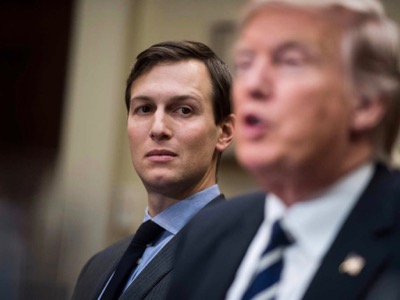
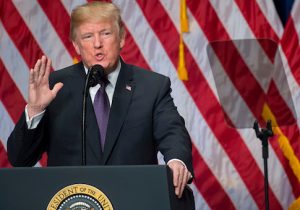
‘Let them vote against us. We’ll save a lot,’ says US president ahead of Thursday’s General Assembly sessionUS President Donald Trump speaks alongside Secretary of State Rex Tillerson (L) during a Cabinet Meeting in the Cabinet Room at the White House in Washington, DC, December 20, 2017. (AFP PHOTO / SAUL LOEB)

US President Donald Trump speaks alongside Secretary of State Rex Tillerson (L) during a Cabinet Meeting in the Cabinet Room at the White House in Washington, DC, December 20, 2017. (AFP PHOTO / SAUL LOEB)

US President Donald Trump on Wednesday cautioned he could slash funding to countries that support a UN General Assembly resolution on Thursday that seeks to annul the United States’ recognition of Jerusalem as Israel’s capital.

“They take hundreds of millions of dollars and even billions of dollars, and then they vote against us. Well, we’re watching those votes. Let them vote against us. We’ll save a lot. We don’t care,” Trump said at the White House, according to Reuters.

On Tuesday, Nikki Haley, Washington’s UN envoy, warned countries that she would report back to Trump with the names of those who supported a draft resolution rejecting the US recognition.

“The president will be watching this vote carefully and has requested I report back on those countries who voted against us,” she wrote to UN envoys. “We will take note of each and every vote on this issue.”

The UN General Assembly will hold an emergency session on Thursday to vote on the proposed measure, after the US vetoed a similar resolution for the Security Council.

No country has veto power in the 193-nation General Assembly, contrary to the council, where the United States, along with Britain, China, France and Russia, can block any resolution.

US Ambassador to the UN Nikki Haley voting against a Security Council resolution on Jerusalem on December 18, 2017. (Eskinder Debebe/UN)

Palestinian Foreign Minister Riyad al-Malki on Wednesday accused Washington of “threatening” member countries of the UN General Assembly over the vote.

Malki said American officials were “committing another mistake when they have distributed this famous letter trying to threaten countries, (and) threaten their sovereign decision to choose how to vote.”

He spoke at a press conference with his Turkish counterpart Mevlut Cavusoglu in Istanbul, shortly before both men left for New York.

“This is really a new definition of world order in politics and it seems that the American administration… are putting their stamp on a new political reality that many countries will reject,” Malki said.

Turkey and Yemen requested the urgent meeting on behalf of the Arab group of countries and the Organisation of Islamic Cooperation (OIC).

The two countries circulated a draft resolution on Tuesday that mirrors the vetoed measure, reaffirming that any decision on the status of Jerusalem has no legal effect and must be rescinded.

Malki said the UN session would show “how many countries will opt to vote with their conscience.”

“They will vote for justice and they will vote in favor of that resolution that was presented by both Yemen and Turkey on behalf of the Arab group and OIC,” he said.

In an address December 6 from the White House, Trump defied worldwide warnings and insisted that after repeated failures to achieve peace, a new approach was long overdue, describing his decision to recognize Jerusalem as the seat of Israel’s government as merely based on reality. He also said the US embassy would move from Tel Aviv to Jerusalem but did not give a schedule for the relocation.

Indonesians take part in a protest against US President Donald Trump’s recent decision to recognize Jerusalem as Israel’s capital, outside the US embassy in Jakarta, on December 17, 2017. (AFP Photo/Adek Berry)

Trump stressed that he was not specifying the boundaries of Israeli sovereignty in the city, and called for no change in the status quo at the city’s holy sites.

The announcement was hailed by Prime Minister Benjamin Netanyahu and by leaders across much of the Israeli political spectrum. It was criticized by many countries, condemned by the Arab world, and infuriated Palestinians, who held violent demonstrations for several days in the West Bank and on the Gaza Strip’s border with Israel.

In a memo to its missions around the world Tuesday, Israel’s Foreign Ministry advised diplomats to encourage their host countries to oppose the resolution at the General Assembly. In the case of countries that are planning to back the resolution, diplomats were urged to encourage their local counterparts to at least refrain from expressing public support for the proposal.

Israeli diplomats were told to emphasize that the resolution is one-sided and will harm prospects for peace by undermining Trump, and may also lead to further violence in the region.

www.timesofisrael.com

Ο Τζάρεντ Κούσνερ ανασυγκροτεί τη Μέση Ανατολή

0


Τιερί Μεϊσάν

Πολύ αμφισβητουμένη προσωπικότητα από τα ίδια τα μέλη της διοίκησης Τραμπ , ο Τζάρεντ Κούσνερ έχει την πλήρη εμπιστοσύνη του προέδρου. Του δόθηκε η αποστολή να αναδιατάξει τη Μέση Ανατολή σύμφωνα με την «αρχή της πραγματικότητας», εναντίον της δόξας του κάθε στρατοπέδου. Μετά από απτές επιτυχίες στη Σαουδική Αραβία, αντιμετωπίζει σήμερα το αραβο-ισραηλινό ζήτημα.

Ο Τζάρεντ Κούσνερ είναι μια πολύ μυστική προσωπικότητα από την οποία δεν γνωρίζουμε πολλά πράγματα. Το πολύ ξέρουμε ότι είχε μεγάλη εκτίμηση για τη Δικαιοσύνη και ότι προοριζόταν να γίνει εισαγγελέας. Ωστόσο, όταν ο πατέρας του συνελήφθη και φυλακίστηκε για φοροδιαφυγή, ήταν βέβαιος για την αδικία. Κατά τη γνώμη του, ο πατέρας του είχε πέσει σε δικαστική παγίδα. Εγκατέλειψε τότε τις νομικές σπουδές του και προσπάθησε να σώσει την οικογενειακή επιχείρηση ακίνητης περιουσίας. Και το κατάφερε με επιτυχία. Κατά τη διάρκεια αυτής της περιόδου, δημιούργησε την ομαλότερη δυνατή εικόνα, έτσι ώστε να αποστασιοποιηθεί από τις κατηγορίες εναντίον του πατέρα του.

Ο πεθερός του, Ντόναλντ Τραμπ, φαίνεται να τον εμπιστεύεται τόσο πολύ μέχρις ότου να του αναθέσει να διευθύνει de facto την εκλογική του εκστρατεία. Ορισμένοι αντίπαλοι του εξέφρασαν έκπληξη ενώπιον της ικανότητάς του να οργανώσει αυτή την εκστρατεία με ελάχιστα μέσα και ωστόσο να επιτύχει τη νίκη.

Μόλις αφιχθεί στο Λευκό Οίκο, ο πρόεδρος Τραμπ τον έβαλε να συμμετέχει στις πιο μυστικές συναντήσεις, παρότι δεν διαθέτει τη πιστοποίηση Secret-Defense· μια πιστοποίηση την οποία δεν δικαιούται ακόμα.

Ελπίζοντας να αφήσει ένα όνομα στην Ιστορία με την εκτέλεση ενός έργου που όλοι οι προκάτοχοί του έθεσαν χωρίς ποτέ να το πραγματοποιήσουν, ο πρόεδρος Τραμπ  του ανέθεσε να λύσει την αραβο-ισραηλινή σύγκρουση και να φέρει την ειρήνη στη Μέση Ανατολή. Πρόκειται για πολύ διακινδυνευμένο στοίχημα καθώς ο νεαρός άνδρας (36 ετών) έχει εμπλακεί προηγουμένως με το Ισραήλ, υποστηρίζοντας οικονομικά τη Τσαχάλ (ισραηλινό στρατό) και εβραϊκούς  αποικισμούς στην παλαιστινιακή γη. Όμως, ο Κούσνερ που έχει μεγάλη ανάγκη να γίνει αποδεκτός από το κύκλο του, είναι πιθανό αυτά τα δώρα να έχουν άλλο νόημα από αυτό που τους αποδίδεται εκ πρώτης όψεως.

Το να διορίσει σε αυτό το αξίωμα ένα πρόσωπο εμπιστοσύνης αλλά που στερείται διπλωματικής εμπειρίας αποτελεί ένα δεύτερο στοίχημα του προέδρου Τραμπ. Λαμβάνοντας υπόψη την αποτυχία των Αμερικανών επαγγελματιών διπλωματών, στοιχημάτισε σε μια νέα προσέγγιση ενός παλαιού προβλήματος. Για την αποστολή αυτή, ο Τζάρεντ Κούσνερ απέκτησε ένα σπάνιο προνόμιο: είναι ο μόνος ανώτερος αξιωματούχος του οποίου οι συνεντεύξεις με ξένες πολιτικές προσωπικότητες δεν αποτελούν αντικείμενο πρακτικών.

Κανείς δεν θα μπορεί να τον κατηγορήσει για τις γκάφες του, ούτε να επικρίνει τον τρόπο προσέγγισής του στα διάφορα θέματα. Ούτε καν ο υπουργός Εξωτερικών, αφού αναφέρεται μόνο στον πρόεδρο.

Σύμφωνα με τις προσωπικότητες που τον συνάντησαν, ο Κούσνερ ακολουθεί τις ίδιες αρχές με τον πεθερό του:

  • πρώτα λαμβάνει γνώση της πραγματικότητας, ακόμη και αν αυτό σημαίνει την εγκατάλειψη μιας καλά εκλεπτυσμένης επίσημης ρητορικής.
  • δεύτερον, εξετάζει όλα τα πλεονεκτήματα που μπορεί να αντλήσει από προηγούμενες διμερείς συμφωνίες ·
  • και τρίτον, λαμβάνει υπόψη όσο το δυνατόν περισσότερο το πολυμερές Δίκιο

Η μόνη διαφορά με τον πεθερό του βρίσκεται στην τέλεια αλαλία του παρά στις προκλητικές και αντιφατικές δηλώσεις που χρησιμοποιεί ο πρόεδρος για να ταράσσει τους συνομιλητές του.

Τους τελευταίους δέκα μήνες, ο Τζάρεντ Κούσνερ πολλαπλασίασε τα ταξίδια αλέ-ρετούρ προς τη Μέση Ανατολή, ιδιαίτερα στους δύο αγαπημένους προορισμούς του: τη Σαουδική Αραβία και το Ισραήλ. Μόλις παρακολουθήσαμε, χωρίς να το καταλάβουμε, το ξεκίνημα της επιχείρησης του.

Η Σαουδική Αραβία

  • Η πραγματικότητα στην Σαουδικής Αραβίας, ήταν, κατά την άποψη του Τραμπ  κατά τη διάρκεια της προεκλογικής εκστρατείας του:
    • η συσσώρευση πετροδολάριων που είναι μαζικά δολάρια που καταβάλλονται από τις ΗΠΑ σε ένα πετρέλαιο που οι Σαουδάραβες δεν κατασκευάζουν.
    • ο κεντρικός ρόλος του βασιλείου, υπό τον έλεγχο του MI6 και της CIA, στον αγώνα κατά του αραβικού εθνικισμού και της χειραγώγησης της ισλαμικής τρομοκρατίας.
    • η κρίση διαδοχής του.
  • Οι διμερείς συμφωνίες είναι αυτές του Quincy που υπογράφτηκαν από τον Φραγκλίνο Ρούσβελτ το 1945, ανανεωμένες από τον George Bush Jr. το 2005 μέχρι το 2065. Αν και δεν έχουν δημοσιευθεί ποτέ, πολλοί άνθρωποι που συμμετείχαν στις διαπραγματεύσεις τις έχουν συνοψίσει ως εξής:
    • Ο βασιλιάς της Αραβίας δέχεται τον έλεγχο των Ηνωμένων Πολιτειών σχετικά με το πετρέλαιο του, ενώ οι τελευταίες δεσμεύονται να προστατεύσουν τον βασιλιά και κατ ‘επέκταση την ιδιωτική του περιουσία, την Σαουδική Αραβία.
    • Ο βασιλιάς της Αραβίας δεσμεύεται να μην εμποδίζει τη δημιουργία ενός Κράτους για τον εβραϊκό πληθυσμό της παλιάς Οθωμανικής Αυτοκρατορίας, ενώ οι Ηνωμένες Πολιτείες ευνοούν τον περιφερειακό ρόλο του.

Ο Τζάρεντ Κούσνερ προετοίμασε, λοιπόν, τη σύνοδο κορυφής της 21ης ​​Μαΐου 2017, η οποία συγκέντρωσε στο Ριάντ σχεδόν όλους τους αρχηγούς κρατών του μουσουλμανικού κόσμου γύρω από τον πρόεδρο Τραμπ. Η Σαουδική Αραβία διέκοψε αμέσως τις γέφυρες με τη Μουσουλμανική Αδελφότητα και σταμάτησε να χρηματοδοτεί τις τζιχαντιστικές ομάδες σε όλο τον κόσμο – σε κάθε περίπτωση, σχεδόν όλες εκτός στην Υεμένη [ 1 ]-. Το βασίλειο χρησιμοποίησε την επιρροή του για να πείσει τα άλλα παρόντα μουσουλμανικά κράτη. Ωστόσο, αυτή η επιτυχία είχε ένα κόστος:

• Το Κατάρ αρνήθηκε τη νέα πολιτική των ΗΠΑ. Καθώς δεν θέλει να έχει σπαταλήσει για το τίποτα 137 δισεκατομμύρια δολάρια [ 2] κατά της Συρίας, συνέχισε την υποστήριξή του σε ορισμένους τζιχαντιστές. Η Σαουδική Αραβία και τα Ηνωμένα Αραβικά Εμιράτα αποφάσισαν τότε μονομερώς τον αποκλεισμό του. Αν και ο υπουργός Εξωτερικών RexTillerson προσπάθησε να κρατηθεί έξω από αυτή τη διαμάχη, ο Κούσνερ και ο πρόεδρος Τραμπ υποστήριξαν την Αραβία.
• Ο Κούσνερ δεσμεύτηκε να βοηθήσει τον βασιλιά Σάλμαν να διευθετήσει όπως θέλει τη διαδοχή του στο θρόνο.

Το πραξικόπημα παλατιού της 4ης Νοεμβρίου

Ο Τζάρεντ Κούσνερ ταξίδεψε στη Σαουδική Αραβία για τρεις ημέρες στα τέλη Οκτωβρίου. Διεξήγαγε μακρόχρονες συναντήσεις με τον γιο του βασιλιά, τον πρίγκιπα Μωάμεθ Μπιν Σαλμάν (MBS), και καθιέρωσε μαζί του τον κατάλογο των μελών της βασιλικής οικογένειας που θα εξουδετερώνονταν. Μη γνωρίζοντας ποιες θα ήταν οι αντιδράσεις της Βασιλικής Φρουράς μετά την αποπομπή του πρίγκιπα Μουτέμπ, παρέσχε στον MBS τη βοήθεια των μισθοφόρων της Academi (πρώην Blackwater) για να προβούν στις συλλήψεις. Τέλος, θυμούμενος την εκστρατεία των μέσων μαζικής ενημέρωσης εναντίον του πατέρα του, παρέσχε spin doctors για να καλύψουν αυτό το παλατιανό πραξικόπημα με το λενινιστικό λόγο της «μάχης κατά της διαφθοράς».

Είχε ήδη φύγει από το Ριάντ, όταν ο Λιβανέζος πρωθυπουργός Σαάντ Χαρίρι –νόμιμος γιος του Ραφίκ Χαρίρι, αλλά βιολογικός γιος ενός πρίγκιπα Fadh [3]—  προσκλήθηκε να επισκεφθεί έκτακτα το Ριάντ «για να γίνει δεκτός από τον βασιλιά Σαλμάν» . Η συνέχεια είναι γνωστή [ 4 ]: ο λόγος παραίτησης του Χαριρί και η σύλληψη ή η εκτέλεση όλων των πριγκίπων που πιθανόν να αμφισβητήσουν ή να διεκδικήσουν τη διαδοχή του θρόνου.

Οι εκατοντάδες ξαδέλφια του MBS συνελήφθησαν και τέθηκαν υπό κατ ‘οίκον περιορισμό ή υπό κράτηση. Το ένα μετά το άλλο, συμφώνησαν – συχνά υπό βασανιστήρια – να δώσουν την περιουσία τους στον κυρίαρχο τους. Ο τελευταίος ανέκτησε έτσι περισσότερα από 800 δισεκατομμύρια δολάρια, σύμφωνα με την Wall Street Journal  [ 5 ].

Καμία φωνή δεν σηκώθηκε στον κόσμο για να έρθει σε βοήθεια αυτών των επιδεινωμένων δισεκατομμυριούχων, που μέχρι τότε ήταν μέλη των πιο διάσημων διοικητικών συμβούλιων.

Μάρτυρες ισχυρίζονται ότι ορισμένα μέλη της βασιλικής οικογένειας νοσηλεύτηκαν και θεραπεύτηκαν πριν επιστρέψουν στην αίθουσα ανακρίσεων. Ο MBS ισχυρίζεται ότι έχειαπελευθερώσει  πολλές προσωπικότητες, μεταξύ των οποίων τον ίδιον τον πρίγκιπα Μετέμπ,τον Turki bin Abdullah, τον Δρ Ιμπραήμ bin Abdulaziz bin Abdullah Al-Assaf (πρώηνυπουργός Οικονομικών της Σαουδικής Αραβίας) και τον Mohammad bin Abdul Rahman al-Toubaichi (πρώην Διευθυντή Εθιμοτυπίας της Αυλής).

Η ιστορία σίγουρα δεν έχει τελειώσει. Σύμφωνα με τις οδηγίες του προέδρου Τραμπ , ο Τζάρεντ Κούσνερ θα επιδιώξει τώρα να ανακτήσει για τη χώρα του ορισμένες από τις κατασχεθείσες περιουσίες.

Η υπόθεση Χαρίρι

Σε αντίθεση με ό, τι υποστηρίζει ο γαλλικός τύπος, η απελευθέρωση του πρωθυπουργού του Λιβάνου δεν οφείλει πολλά στο Παρίσι. Βεβαίως, παρενέβη ο πρόεδρος Εμανουέλ Μακρόν, δεδομένου ότι ο Σάαντ Χαρίρι έχει τη τριπλή υπηκοότητα σαουδαραβική-λιβανέζικη-γαλλική. Βεβαίως, ο ίδιος πήγε στο Ριάντ, αλλά για να ταπεινωθεί [ 6 ]. Η μόνη χρήσιμη ενέργεια προήλθε από τον Λιβανέζο ομόλογό του, τον πρόεδρο Michel Aoun.

Η Γαλλία υποβλήθηκε σε μια απλή πραγματικότητα: στο διεθνές προξενικό δίκαιο, οι πολίτες με πολλές υπηκοότητες δεν μπορούν να έχουν διπλωματική ασυλία σε μια χώρα της οποίας είναι υπήκοοι. Ωστόσο, ο πρόεδρος Aoun ανέτρεψε την κατάσταση, μη υπερασπίζοντας τον άνθρωπο Σάαντ Χαρίρι, αλλά τον πρωθυπουργό του, Σάαντ Χαρίρι.

Δεν υπάρχει αμφιβολία ότι η σύλληψη και η κράτηση σε κατ ‘οίκον περιορισμό του επικεφαλής της κυβέρνησης μιας τρίτης χώρας χωρίς οποιασδήποτε δικαστική διαδικασία αποτελεί πράξη πολέμου· εξάλλου, ο διεθνής τύπος διέδινε ότι φημολογούταν πιθανός βομβαρδισμός του Λιβάνου από τη Σαουδική Αραβία. Ακολούθως, το προεδρικό μέγαρο της Μπάαμπντα (Λίβανος) απείλησε να παραπέμψει την υπόθεση στο διαιτητικό δικαστήριο των Ηνωμένων Εθνών και ταυτόχρονα να καλεί το Συμβούλιο Ασφαλείας. Επικοινώνησε επίσης, μέσω του Σύρου ομόλογού του Μπασάρ αλ-Άσαντ, με τον Αιγύπτιο πρόεδρο Αμπντέλ Φατάχ αλ-Σίσι, ο οποίος είναι ο δεσμός μεταξύ των προ και αντί-ΗΠΑ. Ήταν ο αλ-Σίσι που τηλεφώνησε στον Τζάρεντ Κούσνερ και κατάφερε με την υποστήριξή του την απελευθέρωση του πρωθυπουργού. Εξάλλου, μόλις απελευθερώθηκε ο τελευταίος, πήγε στο Κάιρο για να ευχαριστήσει τον αλ-Σίσι.

Το αραβοϊσραηλινό ζήτημα

Παραμένει το ισραηλινό-παλαιστινιακό ζήτημα.

Η ωμή πραγματικότητα είναι:

  • Επί 70 χρόνια, το Ισραήλ δεν σταμάτησε να ροκανίζει τα εδάφη των γειτόνων του. Σήμερα κατέχει το συριακό Γκολάν, το λιβανέζικο αγρόκτημαShebaa, ένα πολύ μεγάλο μέρος των παλαιστινιακών εδαφών του 1967 που περιλαμβάνει σχεδόν όλη την Ανατολική Ιερουσαλήμ.
    • Οι ηγέτες της παλαιστινιακής αντίστασης έχουν σχεδόν όλοι εξουδετερωθεί από το Ισραήλ: πολλοί δολοφονήθηκαν, το Τελ Αβίβ διαίρεσε τους Παλαιστίνιους σε αντίπαλες φράξιες,  όσοι παραμένουν στην Φατάχ είναι ευρέως διεφθαρμένοι από τους εχθρούς τους, ενώ εκείνοι της Χαμάς ανοιχτά συνεργάστηκαν με την Μοσάντ για την εξάλειψη των ανταγωνιστών τους [ 7 ]. Οι μόνοι που μένουν για να αγωνιστούν για τα δικαιώματά τους είναι μερικές μικρές ομάδες όπως η Ισλαμική Τζιχάντ και το FPLP-CG.
    • Φυσικά, οι Παλαιστίνιοι και οι άλλοι αραβικοί και/ή μουσουλμάνοι λαοί διατηρούν το αίσθημα της δικαιοσύνης και υποστηρίζουν το σεβασμό των αναφαίρετων δικαιωμάτων του παλαιστινιακού λαού. Ωστόσο, ελλείψει αξιόπιστης πολιτικής εκπροσώπησης, δεν μπορούν να κάνουν τίποτα, παρά να διαδηλώσουν με δεκάδες εκατομμύρια ανθρώπους την «Ημέρα των Ιεροσολύμων».

Οι διμερείς συμφωνίες είναι:

  • Η υλοποίηση του σχεδίου που εκφράζεται από τη βρετανική διακήρυξη Μπαλφούρ (Balfour) και από τα 14 σημεία του Αμερικανού προέδρουWilsonμε τη δημιουργία του Ισραήλ [ 8 ].
    • Η επιστολή προς τον πρωθυπουργό Ariel Sharon από τον πρόεδρο George Bush Jr., η οποία αντικρούει το δικαίωμα επιστροφής των παλαιστινίων προσφύγων και αναγνωρίζει τα εδάφη που κατακτήθηκαν από το 1949 ως ανυπόστατο μέρος του Ισραήλ [ 9 ].

Οι πολυμερείς συμφωνίες περιλαμβάνουν:

  • τα ψηφίσματα 242 [10] και 338 [ 11 ] του Συμβουλίου Ασφαλείας των Ηνωμένων Εθνών και το άρθρο 49 της Τέταρτης Σύμβασης της Γενεύης.

Μόνο ο πρόεδρος Τραμπ  και μερικοί από τους συμβούλους του γνωρίζουν το σενάριο που έγραψε ο Τζάρεντ Κούσνερ.

Συνέχισε την πολιτική των προκατόχων του της μείωσης του ισραηλινό-αραβικού ζητήματος σε μια απλή ισραηλινο-παλαιστινιακή διαφορά. Σύμφωνα με τη γραμμή του Τζον Κέρι, ευνόησε τη συμφιλίωση μεταξύ της Φατάχ και της Χαμάς κατά του Ισραήλ, και κατάφερε να τους βάλουν να υπογράψουν (αλλά ούτε το PFLP-GC, ούτε η Ισλαμική Τζιχάντ) μια συμφωνία στις 12 Οκτωβρίου στο Κάιρο [ 12 ]. Διόρισε ως επικεφαλής της Χαμάς, έναν παιδικό φίλο του ηγέτη της Φατάχ, Μοχάμεντ Ντάλαν, προετοιμάζοντας τη συγχώνευση των δύο κινημάτων.

Για την ώρα, οι παλαιστινιακές παρατάξεις εξακολουθούν να εκφωνήσουν ριζικά διαφορετικούς λόγους. Για τη Φατάχ, το Ισραήλ είναι μια δεύτερη Ροδεσία, είναι ένα αποικιοκρατικό κράτος που αυτο-ανακήρυξε την ανεξαρτησία του.

Ενώ για τη Χαμάς, με βάση ορισμένων Hadith (και όχι του Κορανίου ), το πρόβλημα είναι ότι μια μουσουλμανική γη δεν μπορεί να κυβερνηθεί από μη μουσουλμάνους.

Το ξεκίνημα των γεγονότων έχει μόλις αρχίσει με την ανακοίνωση της μεταφοράς της πρεσβείας των ΗΠΑ από το Τελ Αβίβ στην Ιερουσαλήμ.

Σαφώς, ο Λευκός Οίκος δοκιμάζει την ικανότητά του να προχωρήσει με τη δύναμη. Πράγματι, αφενός, το χωριστικό σχέδιο της Παλαιστίνης όντως προέβλεπε ότι η Δυτική Ιερουσαλήμ θα ήταν η πρωτεύουσα του εβραϊκού κράτους. Από την άλλη πλευρά όμως, το Συμβούλιο Ασφαλείας καταδίκασε το Ισραήλ όταν κατέστησε μονομερώς τη Δυτική Ιερουσαλήμ ως πρωτεύουσά του. [13].

Η περίεργη συνάντηση του Οργανισμού Ισλαμικής Συνεργασίας, που μόλις έγινε στην Κωνσταντινούπολη, πρότεινε τη μεταφορά της πρωτεύουσας του παλαιστινιακού κράτους από τη Ραμάλα στην Ανατολική Ιερουσαλήμ [14]. Εκτός από το ότι φαίνεται δύσκολο να γίνει και δεν έχει γίνει. Ίσως να ήταν μόνο μια στάση τιμής που σκόπευε να παραδεχτεί η μουσουλμανική κοινή γνώμη αυτή την εγκατάλειψη.

Προσωρινό συμπέρασμα

Οι αντίπαλοι του προέδρου Τραμπ  προσπαθούν με κάθε τρόπο να τον αναγκάσουν να εγκαταλείψει τον σύμβουλό του Τζάρεντ Κούσνερ. Ωστόσο, ο τελευταίος εξακολουθεί να είναι στη θέση του. Για την ώρα έχει καταφέρει να βάλει τέρμα στη Σαουδική υποστήριξη σε τρομοκρατικές ομάδες και να επιλύσει το ζήτημα της διαδοχής στο θρόνο κόβοντας τον γόρδιο δεσμό, δηλαδή, εξουδετερώνοντας την βασιλική οικογένεια.

Λυπηρή είναι η χρησιμοποιούμενη μέθοδος: το να κρεμάσεις γέρους  ανθρώπους από τα πόδια και να τους βασανίσεις μέχρι να αποδεσμεύσουν τους τραπεζικούς τους λογαριασμούς. Ωστόσο, όλες οι άλλες λύσεις, ή η απουσία λύσης, θα είχαν οδηγήσει σε εμφύλιο πόλεμο. Το λάθος δεν έγκειται στο Τζάρεντ Κούσνερ, αλλά σε εκείνους που αποδέχτηκαν για τόσο καιρό αυτό το βάρβαρο και μεσαιωνικό καθεστώς των Σαούντ.

Ομοίως, είναι σήμερα εξαιρετικά άδικο, όχι να μεταφερθεί η αμερικανική πρεσβεία στη Δυτική Ιερουσαλήμ, αλλά να εγκαταλειφθεί η εγκατάσταση της παλαιστινιακής κυβέρνησης στην Ανατολική Ιερουσαλήμ. Εδώ και πάλι η ευθύνη δεν ανήκει στον Τζάρεντ Κούσνερ, αλλά στη «διεθνή κοινότητα» και ιδιαίτερα στις Αραβικές Σιωνιστικές κυβερνήσεις, οι οποίες άφησαν για 70 χρόνια το Ισραήλ να ροκανίσει την πόλη, διαμέρισμα με διαμέρισμα.

Ενώ για 70 χρόνια, οι Δυτικοί διπλωμάτες κόπτονται να πολλαπλασιάσουν και να περιπλέκουν τις συγκρούσεις στη Μέση Ανατολή, ο Τζάρεντ Κούσνερ είναι ο πρώτος που φέρει κάποιες λύσεις.

Ο προεδρικός σύμβουλος με το αγγελικό πρόσωπο είναι ένας τρομερός διοργανωτής.

Τιερί Μεϊσάν

Μετάφραση Κριστιάν Άκκυριά

Πηγή Ινφογνώμων Πολιτικά (Ελλάδα)

[1] « L’Arabie saoudite et les Émirats n’ont pas rompu avec les Frères musulmans », Réseau Voltaire, 15 décembre 2017.

[2] Chiffre révélé par l’ancien Premier ministre, cheikh Hamad bin Jassim.

[3] Και όχι ενός πρίγκιπα Αμπνταλάχ όπως το έγραψα μια φορά κατά λάθος.

[4] “Πραξικόπημα του Παλατιού στο Ριάντ”, του Τιερί Μεϊσάν, Μετάφραση Κριστιάν Άκκυριά, Ινφογνώμων Πολιτικά (Ελλάδα) , Δίκτυο Βολταίρος, 8 novembre 2017.

[5] Stancati & Summer Said, Wall Street Journal, November 8, 2017. Ce chiffre contredit les assertions de MBS pour qui les sommes saisies ne dépassent pas les 100 milliards de dollars : “Saudi Arabia’s Arab Spring, at Last. The crown prince has big plans for his society”, Thomas L. Friedman, The New York Times, November 23, 2017.

[6] “Το χαστούκι της Σαουδικής Αραβίας στον πρόεδρο Μακρόν”, του Τιερί Μεϊσάν, Μετάφραση Κριστιάν Άκκυριά, Ινφογνώμων Πολιτικά (Ελλάδα) , Δίκτυο Βολταίρος, 14 novembre 2017.

[7] « Des agents du Mossad dans l’unité d’Al-Qaida qui a attaqué le camp de Yarmouk », Réseau Voltaire, 31 décembre 2012.

[8] “Ποιος είναι ο εχθρός;”, του Τιερί Μεϊσάν, Μετάφραση Κριστιάν Άκκυριά, Ινφογνώμων Πολιτικά (Ελλάδα) , Δίκτυο Βολταίρος, 4 août 2014.

[9] « Lettre de George W. Bush à Ariel Sharon », par George W. Bush, Réseau Voltaire, 14 avril 2004.

[10] « Résolution 242 du Conseil de sécurité de l’ONU », ONU (Conseil de sécurité) , Réseau Voltaire, 22 novembre 1967.

[11] « Résolution 338 du Conseil de sécurité de l’ONU », ONU (Conseil de sécurité) , Réseau Voltaire, 22 octobre 2003.

[12] « Réconciliation palestinienne », Réseau Voltaire, 13 octobre 2017.

[13] Η απόρριψη του Nόμου για τη Ιερουσαλήμ από το Συμβούλιο Ασφαλείας το 1980 δεν αφορούσε το ζήτημα του κατά πόσον το Ισραήλ επέλεξε ως πρωτεύουσα τη Δυτική Ιερουσαλήμ ή την Ιερουσαλήμ. Καταδίκασε την αρχή μιας μονομερούς διακήρυξης, θεωρώντας ότι το καθεστώς της Ιερουσαλήμ θα μπορούσε να αλλάξει μόνο με ισραηλο-παλαιστινιακή διαπραγμάτευση. Βλέπε αποφάσεις 476 και 478.

[14] Η πρόταση αυτή αποσκοπεί στην παράκαμψη μιας Σαουδικής πρότασης για τη μείωση της επικράτειας της Ανατολικής Ιερουσαλήμ και τη μεταφορά της παλαιστινιακής πρωτεύουσας σε ένα από τα προάστιά της, Abu Dis, το οποίο χωρίζεται από την υπόλοιπη πόλη από το Τείχος Διαχωρισμού.

infognomon

H νέα στρατηγική Εθνικής Ασφάλειας (National Security Strategy) των ΗΠΑ

0

Του Κων/νου Θ. Λαμπρόπουλου* Τετάρτη 20 Δεκεμβρίου 2017

Η αναμενόμενη στρατηγική εθνικής ασφάλειας της διακυβέρνησης Trump αποτελεί αναμφισβήτητα ορόσημο και προπομπό αλλαγής παραδείγματος (paradigm shift) στην διεθνή πολιτική. Η νέα αμερικανική στρατηγική εθνικής ασφαλείας ,ως αναπόσπαστο κομμάτι του δόγματος Trump, υιοθετεί μία επιθετική στρατηγική προσέγγιση (offensive strategic approach) αναφορικά με την προάσπιση των εθνικών συμφερόντων των ΗΠΑ ,επιδιώκοντας να αντιστρέψει την διαμορφούμενη απώλεια πρωτοκαθεδρίας της αμερικανικής υπερδύναμης στον παγκόσμιο καταμερισμό ισχύος τις προσεχείς δεκαετίες.

Η συγκεκριμένη στρατηγική εθνικής ασφάλειας προσδιορίζεται από το αξίωμα «Πρώτα η Αμερική» το οποίο τοποθετεί το αμερικανικό εθνικό συμφέρον ως ασύμβατο με τις αμερικανικές πολιτικές των προηγούμενων δύο δεκαετιών, οι οποίες βασίζονταν στην λογική της «υποστήριξης»(engagement) «ανταγωνιστικών» προς τις ΗΠΑ, χωρών μέσω της παγκοσμιοποίησης και της συμμετοχής τους στους πολυμερείς θεσμούς σκοπεύοντας στον εκδημοκρατισμό τους.

Αντιθέτως, η νέα στρατηγική της διακυβέρνησης Trump, υπεραμύνεται του εθνικού συμφέροντος με την στενή έννοια του όρου και δεν διακατέχεται από το πνεύμα της προώθησης των φιλελεύθερων αξιών και προτύπων διακυβέρνησης, παρά από τις αρχές του ρεαλισμού και του ανταγωνισμού.

Η συγκεκριμένη στρατηγική εθνικής ασφάλειας αναγνωρίζει τέσσερα ζωτικά (vital) συμφέροντα: Πρώτον, την προστασία της αμερικανικής ενδοχώρας από πάσης φύσεως τρομοκρατικές επιθέσεις, όπου ιδιαίτερη σημασία δίνεται στα όπλα μαζικής καταστροφής (χημικά ραδιολογικά βιολογικά πυρηνικά) τόσο από κρατικούς (περίπτωση Βόρειας Κορέας )όσο και από μη κρατικούς δρώντες (διεθνή τρομοκρατικά δίκτυα) και στον περιορισμό της παράνομης μετανάστευσης.

Δεύτερον, την αναθέρμανση της αμερικανικής οικονομίας μέσω της επαναδιαπραγμάτευσης των Διεθνών Εμπορικών Συμφωνιών (International Trade Agreements) με σαφές όφελος για τα αμερικανικά συμφέροντα, της διατήρησης του υπάρχοντος αμερικανικού ανταγωνιστικού πλεονεκτήματος στους τομείς της έρευνας και της τεχνολογίας , της προστασίας της πνευματικής ιδιοκτησίας (ευρεσιτεχνίες )από την επιβουλή ανταγωνιστριών χωρών (Η Κίνα αναγνωρίζεται ως ο υπ’ αριθμόν ένας κίνδυνος για την κλοπή πνευματικής ιδιοκτησίας) και της εκμετάλλευσης των ενεργειακών πόρων (Είναι καταφανέστατη η απουσία μνείας στην απειλή της κλιματικής αλλαγής –δομικό στοιχείο της στρατηγικής της πρότερης κυβέρνησης Obama και τις διεθνείς συμφωνίες για την καταπολέμηση του φαινομένου).

Είναι ιδιαίτερα αξιοσημείωτο γεγονός η ταύτιση της έννοιας της οικονομικής ασφάλειας με την έννοια της εθνικής ασφάλειας. Στην παρούσα στρατηγική υπερτονίζεται ο ρόλος της οικονομικής ανάκαμψης στην ευόδωση των τεθειμένων στρατηγικών στόχων της διακυβέρνησης Trump.

Τρίτον, την διατήρηση της ειρήνης μέσω της ισχύος (peace through strength) μέσω της ραγδαίας αύξησης των στρατιωτικών δαπανών και του αριθμού του στρατεύματος σε όλα τα Όπλα. Η πριμοδότηση της «σκληρής ισχύος» περιλαμβάνει την επένδυση στις νέες τεχνολογίες, την ανάπτυξη της αμερικανικής βιομηχανικής βάσης με στόχο την δημιουργία ενός ικανού στρατεύματος για επιχειρήσεις σ’ όλο το φάσμα του πολέμου (full spectrum war).

Τέταρτον, την προώθηση της αμερικανικής επιρροής στο εξωτερικό, με την έννοια της Ανταγωνιστικής Διπλωματίας (Competitive Diplomacy) να δεσπόζει και να συνίσταται στην δημιουργία ευνοϊκού περιβάλλοντος για τα αμερικανικά συμφέροντα στον κόσμο με αιχμή του δόρατος την ηγετική στάση (forward Presence) των Αμερικανών Διπλωματών.
Η νέα στρατηγική εθνικής ασφάλειας κάνει σαφείς αναφορές στην επαναφορά του Ανταγωνισμού των Μεγάλων Δυνάμεων ως χαρακτηριστικό της νέας εποχής στις Διεθνείς Σχέσεις, αποδίδοντας τον όρο του Στρατηγικού Ανταγωνιστή (Strategic Competitor) των ΗΠΑ σε παγκόσμιο επίπεδο, στην Κίνα και στην Ρωσία. Και οι δύο προαναφερθείσες χώρες θεωρούνται πλέον ως αναθεωρητικές δυνάμεις (revisionist powers) που επιδιώκουν, η μεν Κίνα την ηγεμονία στην περιοχή του Ειρηνικού, η δε Ρωσία, την αναβίωση της δικής της σφαίρας επιρροής στην Ευρασία.

Αξίζει να σημειωθεί πως η πρώτη στρατηγική εθνικής ασφάλειας της διακυβέρνησης Obama χαρακτήριζε την Κίνα ως σημαντικό στρατηγικό εταίρο (strategic partner) στην παγκόσμια διακυβέρνηση και την Ρωσία ως δυνητικό περιφερειακό ανταγωνιστή (regional competitor).

Παράλληλα, στρατηγικές απειλές για τις ΗΠΑ θεωρούνται πλέον οι χώρες που χαρακτηρίζονται ως έχουσες διεφθαρμένα καθεστώτα (rogue regimes),η Βόρεια Κορέα και το Ιράν.

Στο διεθνές επίπεδο η στρατηγική εθνικής ασφάλειας των ΗΠΑ σαφέστατα θα δημιουργήσει τριβές τόσο με την Κίνα όσο και με την Ρωσία, καθώς θεωρεί την οικονομική και στρατιωτική στρατηγική του Πεκίνου άκρως επιβλαβή για τα αμερικανικά συμφέροντα, ενώ οι υβριδικές επιχειρήσεις της Ρωσίας απειλούν βασικούς πυλώνες της αμερικανικής ισχύος.

Στο περιφερειακό επίπεδο και συγκεκριμένα στην Ευρώπη, ευνοεί μια ευρω-ατλαντική σχέση στην λογική της ισόποσης κατανομής των βαρών, ενώ στο μέτωπο της Μέσης Ανατολής διαμορφώνει έναν άξονα φίλιων δυνάμεων με αιχμή το Ισραήλ, την Αίγυπτο και την Σαουδική Αραβία για την καταπολέμηση του ριζοσπαστικού Ισλάμ. Ιδιαίτερα σημαντική κρίνεται η πλήρης απουσία της Τουρκίας στους αμερικανικούς σχεδιασμούς στην περιοχή.

Ουσιαστικά πρόκειται για μια στρατηγική που θέτει ως προτεραιότητα την περιοχή του Ινδο-Ειρηνικού. Παραταύτα, η στάση των ΗΠΑ σε περιφερειακό επίπεδο εγείρει μια σειρά από ερωτήματα, αναδιατάσσει την περιφερειακή ισορροπία ισχύος και προδιαθέτει για σημαντικές εξελίξεις που θα διαμορφώσουν δυναμικά αποτελέσματα.

*Ο κ. Κωνσταντίνος Θ. Λαμπρόπουλος είναι Ειδικός Επιστήμονας Άμυνας και Ασφάλειας στο Κέντρο Μελετών Ασφάλειας της Γενεύης (Centre for Security Policy).

liberal.gr

Ο επικίνδυνος Ερντογάν, η Τουρκία “αστακός” και η Ελλάδα των προφητειών και της απραξίας

1

 Γράφει ο Ειδικός Συνεργάτης

FILE PHOTO: Turkish tanks participating in military exercise near the border. EPA, SEDAT SUNA DECEMBER 20, 2017 214 SHARES FacebookTwitterGoogle+LinkedIn

Στην Ελλάδα υπάρχει μια γενικευμένη τάση υποτίμησης παραγόντων. Αυτό ισχύει και όσον αφορά τον μεγάλο εξωτερικό της αντίπαλο, την Τουρκία, για την οποία ορισμένοι βαυκαλίζονται ότι θα διαλυθεί αύριο το πρωί βάσει της τάδε ή της δείνα προφητείας, ότι θα τη διαλύσουν οι Αμερικάνοι, οι Ρώσοι ή οι ένδοξοι Ζουλού, ότι τέλος πάντως πόλεμος Ελλάδας – Τουρκίας δεν πρόκειται να γίνει γιατί θα το σταματήσουν οι Αμερικανοί κλπ.

Όλα αυτά είναι ενδεχομένως καλά και άγια, αλλά δεν έχουν και μεγάλη σχέση με την πραγματικότητα. Προφητείες, σουρεάλ ευσεβείς πόθοι και ρεαλισμός δεν συμβαδίζουν. Η Τουρκία είτε μας αρέσει, είτε όχι είναι ήδη περιφερειακή μεγάλη δύναμη και εκμεταλλεύεται ακριβώς τη θέση της αυτή. Έχει προβλήματα; Φυσικά, τεράστια. Αλλά η Ελλάδα δεν έχει; Γιατί δηλαδή θεωρείται δεδομένο ότι σε μια περίπτωση κρίσης η Ελλάδα θα επιδείξει τον καλύτερό της εαυτό και η Τουρκία τον χειρότερο; Και αν συμβεί το αντίθετο ή αν, όπως είναι και το λογικότερο, αμφότεροι οι αντίπαλοι αλλού κινηθούν ορθά και αλλού εσφαλμένα;

Η Τουρκία είναι μεγάλη χώρα με εξαιρετική γεωπολιτική θέση. Αυτό ακριβώς εκμεταλλεύεται ο σουλτάνος και αξιοποιεί το ρωσικό χαρτί έναντι των ΗΠΑ για όσο θα τον συμφέρει ή για όσο μπορεί.

Έχοντας καθαρίσει το εσωτερικό μέτωπο ο Ερντογάν για την ώρα είναι κυρίαρχος. Πρόσφατα μάλιστα πέτυχε δύο μεγάλες νίκες. Η πρώτη αφορά το κουρδικό δημοψήφισμα στο Ιράκ που οδήγησε σε απόλυτη ταπείνωση των εκεί Κούρδων και η δεύτερη την συμφωνία του με τη Μόσχα που του επιτρέπει να δρα στην Συρία εξουδετερώνοντας, σε μεγάλο βαθμό, τον κίνδυνο των Κούρδων της Συρίας.

Ενδυναμωμένος από τη μια και πιεζόμενος, τρόπο τινά, από την υπόθεση Ζαράμπ, από την άλλη, ο Ερντογάν ήρθε στην Αθήνα μας είπε όσα ήταν δεδομένο ότι θα πει – και απορούμε για την έκπληξη ορισμένων – και απήλθε κάνοντας ένα μικρό σόου στη Θράκη και συνεχίζοντας τη διεκδικητική του ρητορική επιστρέφοντας.

Αισθανόμενος αρκετά ισχυρός άνοιξε επίσης νέο μέτωπο με το Ισραήλ, κατηγορώντας το, αυτός ο μέγας «δημοκράτης», για τρομοκρατία κατά των Παλαιστινίων.

Όλα αυτά θα ήταν φαιδρά εάν δεν ήταν επικίνδυνα. Και είναι επικίνδυνα διότι απλώς η Τουρκία καθημερινά εξοπλίζεται. Ήδη παρουσίασε δύο νέα καμικάζι drones ικανά να φέρουν, κατά τους Τούρκους τουλάχιστον, θερμοβαρικές κεφαλές.

Έχει κάνει άλματα στον τομέα του πυροβολικού, προχωρά στο πρόγραμμα του εγχώριου άρματος μάχης και στην παραγωγή σειράς εγχώριων τεθωρακισμένων οχημάτων, την ώρα που το ελληνικό μηχανοκίνητο πεζικό διαθέτει ΤΟΜΠ Μ-113 μιας άλλης εποχής.

Παράλληλα τα εξοπλιστικά τουρκικά προγράμματα, πέραν των S-400, τρέχουν με απίστευτους ρυθμούς όπως οι προσπάθειες των Τούρκων να πουλήσουν τα όπλα τους. Ήδη θεωρείται σχεδόν βέβαιο ότι το Πακιστάν θα αγοράσει τέσσερις τουρκικές κορβέτες ενώ δεν έχουν διακοπεί οι διαπραγματεύσεις με την Σαουδική Αραβία για την αγορά πέντε κορβετών. Και μιλάμε για τις τουρκικές, εγχώριες, κορβέτες MILGEM (= εθνικό πλοίο).

Την ίδια ώρα στις τουρκικές φρεγάτες αρχίζει η εγκατάσταση νέας πλατφόρμας ηλεκτρονικού πολέμου.

Η Τουρκία του Ερντογάν, μας αρέσει ή όχι, συνεργάζεται με μεγάλους αμυντικούς οίκους, διεθνώς, αλλά και με χώρες, με στόχο, τελικά, την απεξάρτησή της από την ξένη αγορά στον τομέα της άμυνας και την αυτάρκειά της μέσω της εγχώριας παραγωγής.

Στην άλλη πλευρά η πτωχή πλην τίμια κόρη Ελλάς, ως συνήθως, περί άλλων τυρβάζει χαμένη στο success story της εξόδου από τα μνημόνια, την έξοδο στις αγορές με φόντο τις εκλογές και τη διατήρηση ή το κέρδος της καρέκλας.

Προφανώς ο περιώνυμος σύμβουλος στρατηγικού σχεδιασμού του Μαξίμου δεν είναι σε θέση, αστράτευτος κατά συνείδηση όντας, να γνωρίζει τις εν λόγω «πεζές» λεπτομέρειες που δεν συνάδουν άλλωστε με το αριστερό ανθρωπιστικό ιδεώδες.

Και για να προλάβουμε, δηλώνουμε ευθαρσώς ότι και οι προηγούμενοι έκαναν εγκλήματα στον τομέα της άμυνας. Είναι αυτός λόγος για να τα συνεχίζουν και οι νυν την ώρα ειδικά που συντελείται, σε παγκόσμιο επίπεδο, μια τεχνολογική κοσμογονία στον χώρο της αμυντικής τεχνολογίας; Υπάρχουν ήδη οι λεγόμενοι πολλαπλασιαστές ισχύος, υπάρχουν συστήματα ενεργητικής προστασίας αρμάτων μάχης, υπάρχουν πακέτα αναβάθμισης παλαιών συστημάτων και οχημάτων, υπάρχουν προοπτικές ένταξης στο πρόγραμμα για το ευρωπαϊκό μαχητικό 5ης γενιάς. Η Ελλάδα όμως είναι μονίμως απούσα από τις εξελίξεις. Μόνο στο παρά 1 τρέχει και αν φτάσει έφτασε, αλλιώς το χάος.

Πηγή: Ο επικίνδυνος Ερντογάν, η Τουρκία “αστακός” και η Ελλάδα των προφητειών και της απραξίας http://mignatiou.com/2017/12/o-epikindinos-erntogan-i-tourkia-astakos-ke-i-ellada-ton-profition-ke-tis-apraxias/

Στα νερά της Κύπρου η κόντρα του Ερντογάν με το Ισραήλ και τις ΗΠΑ; Το πόκερ του Σουλτάνου…

2

Του Βασίλη Κοψαχείλη*

A handout photo made available by the Turkish Presidential Press Office shows Turkish President Recep Tayyip Erdogan (C) speaking at the ‘Seb-i Arus’ celebration in Konya, Turkey, 17 December 2017. ‘Seb-i Arus’ means reunited with the Beloved One. Mevlana’s death is considered in Sufism to be his reunion with God. Poet Mevlana Jalal al-Din al-Rumi is an illustrious personage of Sufism is the mystical form of Islam. Rumi died on 17 December 1273. EPA, TURKISH PRESIDENTAL PRESS OFFICE, HANDOUT, EDITORIAL USE ONLY DECEMBER 20, 2017

Εξελίσσεται στη γειτονιά μας μια πολύ επικίνδυνη σύγκλιση δύο διαφορετικών κρίσεων. Και κατά πώς φαίνεται, η σύγκλιση αυτή θα γίνει μέσα στα χωρικά ύδατα της Κυπριακής Δημοκρατίας!

Το Τουρκικό Γεωτρύπανο

Η πρώτη κρίση αφορά το ενδιαφέρον της Τουρκίας να επιβάλλει με το «έτσι θέλω» τα ενεργειακά της συμφέροντα εντός της Κυπριακής ΑΟΖ. Ετοιμάζεται να «φυτέψει» εντός των χωρικών υδάτων της Κύπρου δικό της γεωτρύπανο, και άντε να το αποτρέψεις μετά…

Ακούω διάφορα να λέγονται περί σχεδίων αντιμετώπισης. Αφηγήματα… Η ισχύς και μόνο η ισχύς μπορούν να αποτρέψουν μία τέτοια εξέλιξη. Το ερώτημα είναι ποιος μπορεί και ποιος έχει άμεσο συμφέρον να προβάλλει ισχύ έναντι των Τουρκικών επιδιώξεων; Θα πάει η Ελλάδα, μήπως η Κύπρος ή οι ΗΠΑ, η Γαλλία και η Ιταλία;

Να θυμίσω απλά ότι η Ελλάδα, οι ΗΠΑ, η Γαλλία και η Ιταλία είναι συμμαχικά κράτη με την Τουρκία στο ΝΑΤΟ. Εάν εκδηλωθούν στρατιωτικά εναντίον της θα είναι βούτυρο στο ψωμί του Ταγίπ Ερντογάν και του Κρεμλίνου για να τινάξουν την Συμμαχία στον αέρα.

Μένει μόνο το Ισραήλ να έχει την ισχύ και το συμφέρον να το κάνει. Θα συμπλήρωνα και τη θέληση, και με αυτό οδηγώ τη σκέψη μας στη δεύτερη κρίση.

Η Ιερουσαλήμ

Η δεύτερη κρίση αφορά την απόφαση των ΗΠΑ, που χαιρετίστηκε από την κυβέρνηση του Ισραήλ, να ανακηρύξει ως πρωτεύουσα του Κράτους του Ισραήλ την Ιερουσαλήμ και μεταφορά της Αμερικανικής πρεσβείας εκεί.

Η στάση της Τουρκίας του Ερντογάν έχει ενοχλήσει πάρα πολύ το Λευκό Οίκο και τον Ισραηλινό πρωθυπουργό Νετανιάχου. Και δεν πρόκειται να αφήσουν τον Τούρκο Πρόεδρο να τους χαλάσει τους σχεδιασμούς τους.

Τα βολικά νερά της Κύπρου

Έτσι, είναι πολύ πιθανό, αν ο Ερντογάν προχωρήσει με την εγκατάσταση γεωτρύπανου εντός της Κυπριακής ΑΟΖ, το Ισραήλ και οι ΗΠΑ να το δουν ως αφορμή για να τον ενοχλήσουν, και να τον ενοχλήσουν πολύ. Και επειδή οι ΗΠΑ πρέπει να κρατούν τους τύπους ένεκα συμμαχίας, το Ισραήλ δεν έχει κανένα θεσμικό φραγμό για να δώσει ένα μάθημα στον Τούρκο Πρόεδρο. Αν οι δύο κρίσεις ενωθούν στα νερά της Κύπρου και τα πράγματα εξελιχθούν έτσι όπως τα περιγράφουμε, τότε αλλάζουν πολλά στο περιφερειακό περιβάλλον…

Ο κ. Βασίλης Κοψαχείλης είναι Διεθνολόγος, Γεωστρατηγικός Αναλυτής

Πηγή: Στα νερά της Κύπρου η κόντρα του Ερντογάν με το Ισραήλ και τις ΗΠΑ; Το πόκερ του Σουλτάνου… http://mignatiou.com/2017/12/sta-nera-tis-kiprou-i-kontra-tou-erntogan-me-to-israil-ke-tis-ipa-to-poker-tou-soultanou/

New study shows income redistribution from the poor to the rich

0
Analysis: 

Christopher IngrahamWashington Post

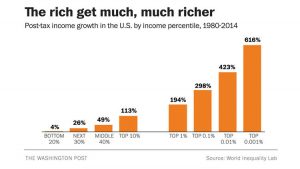
Back in 1980, the bottom 50 percent of wage-earners in the United States earned about 21 percent of all income in the country – nearly twice as much as the share of income (11 percent) earned by the top 1 percent of Americans.

But today, according to a massive new study on global inequality, those numbers have nearly reversed: the bottom 50 percent only take in 13 percent of the income pie, while the top 1 percent grab over 20 percent of the country’s income.

Since 1980, in other words, the U.S. economy has transferred eight points of national income from the bottom 50 percent to the top 1 percent.

Those trends are even more remarkable when you set them against comparable numbers for wealthy nations in western Europe. There, the bottom 50 percent earn nearly 22 percent of the income in those economies, while the top 1 percent take in just over 12 percent of the money.

The income situation in western Europe today, in other words, is similar to how things were in the United States nearly 40 years ago.

The 2018 World Inequality Report, written by a team of leading international economists including Thomas Piketty of “Capital in the Twenty-First Century” fame, finds that the rise of income inequality in the United States is “largely due to massive educational inequalities, combined with a tax system that grew less progressive despite a surge in top labor compensation since the 1980s, and in top capital incomes in the 2000s.”

Since the 1970s the price of higher education has skyrocketed, putting the price of tuition out of reach for many low-income students. Over the same time the tax code became more generous to the wealthiest Americans – the top marginal income tax rate fell from 70 percent in 1980 to 39.6 percent in 2017, taxes on capital gains fell by more than half from the mid-1970s to the mid-2000s and the estate tax has fallen as well.

Those changes have made it easier for high-income Americans to grab more and more of the income pie in any given year.

Income gains at the tip of the distribution were even more extreme, with the top 1 percent nearly tripling their post-tax income, and the top 0.001 percent realizing income gains of over 600 percent.

Western European countries, by contrast, took a different approach. “Continental Europe meanwhile saw a lesser decline in its tax progressivity,” according to the report, “while wage inequality was also moderated by educational and wage-setting policies that were relatively more favorable to low and middle-income groups.”

The income situation in Europe is a reminder that advanced economies don’t need to be set up this way, and that the growing gulf between rich and poor in America is largely a result of deliberate policy decisions.

The tax bill currently under consideration in Congress is likely to drive these disparities even wider, via a massive corporate tax cut and further reductions in the estate tax and the income tax rate for millionaires.

http://www.chicagotribune.com/business/ct-biz-world-inequality-report-20171215-story.html

“Γερμανοτσολιάδες”

1
Δυστυχώς, η χώρα βρίσκεται, ακόμη, στην επαναστατική περίοδο και στα πρώτα χρόνια μετά την επανάσταση, όταν τα κόμματα είχαν ονόματα τα οποία απέδιδαν περισσότερο πιστά, απο σήμερα, την πολιτική και ιδεολογική τους ταυτότητα. Αγγλικό, Γαλλικό, Ρωσικό. Προχθές ο Βούτσης στη Βουλή δήλωσε πως την κυβέρνηση Σαμαρά την έριξε η τρόϊκα, η οποία στηρίζει σήμερα το Συριζα.
Ο πρώην υπουργός της ΝΔ Δ.Σταμάτης του απάντησε χθες πως την κυβέρνηση την έριξε ο Συριζα, οι ΑΝΕΛ τα απομεινάρια του Κουβέλη και η Χρυσή Αυγή. Και αναρωτήθηκε- δικαίως- ποιός είναι “γερμανοτσολιάς”; Η κυβέρνηση Σαμαρά που αρνήθηκε να περάσει το “υπερταμείο” ή, η κυβέρνηση Συριζα- ΑΝΕΛ που το δέχθηκε ασμένως για να διατηρηθεί στην εξουσία;
Αφήνω το ερώτημα προς απάντησιν απο τους αναγνώστες. Με μια επισήμανση. Οι άνθρωποι που υλοποίησαν κατά γράμμα ό,τι ζήτησαν οι Γερμανοί, αποκαλούσαν τους πολίτες που δεν ήσαν μαζί τους “γερμανοτσολιάδες”.
Γιατί τα επισημαίνουμε; Διότι, όποιος ξεχνά το παρελθόν, θα το ξαναζήσει.

Επικίνδυνες κυβερνητικές ακροβασίες για την εκλογή Μουφτήδων!

1

Του Κωνσταντίνου Λουκόπουλου Τετάρτη 20 Δεκεμβρίου 2017 liberal.gr

Δεν πέρασαν ούτε καν δέκα ημέρες από την επίσκεψη Ερντογάν σε Αθήνα και Κομοτηνή και η Κυβέρνηση ανοίγει αιφνιδιαστικά και χωρίς καμία πολιτική συνεννόηση το κρίσιμο ζήτημα της εκλογής των Μουφτήδων στην Θράκη. Αναντίρρητα μία δημοκρατική και φιλελεύθερη χώρα που σέβεται ανεξαρτήτως θρησκείας τους πολίτες της πρέπει να υποστηρίζει και να κατοχυρώνει θεσμικά την δημοκρατική εκλογή και των θρησκευτικών λειτουργών της.

Δυτική Θράκη, μία ιδιαίτερη περίπτωση

Όμως στην Θράκη έχουμε μία ειδική κατάσταση λόγω δύο σημαντικών στοιχείων που την καθιστούν ιδιαίτερη περίπτωση. Το πρώτο είναι ότι η Μουφτεία είναι… Δημόσια Υπηρεσία, οι δε Μουφτήδες σύμφωνα με το Νόμο «ασκούν δικαιοδοσία μεταξύ Μουσουλμάνων Ελλήνων πολιτών της περιφερείας τους επί γάμων, διαζυγίων, διατροφών, επιτροπειών, κηδεμονιών, χειραφεσίας ανηλίκων και ισλαμικών διαθηκών» για σχέσεις που διέπονται από τον Μουσουλμανικό Νόμο. Δηλαδή είναι Δικαστικοί Λειτουργοί που δικάζουν με βάση την…Σαρία! Πρόκειται για παγκόσμια ιδιαιτερότητα καθόσον συνιστά θεσμό εσωτερικής έννομης τάξης.

Το δεύτερο στοιχείο είναι η διαχρονική προσπάθεια της Άγκυρας είτε αυτή είναι Κεμαλική είτε «Νέο-οθωμανική» να χειραγωγήσει μέσω του Προξενείου της Κομοτηνής και της Μουφτείας ολόκληρη την Μουσουλμανική Μειονότητα με απώτερο πολιτικό στόχο την «Κυπροποίηση» της Θράκης.

Πότε και πως δημιουργήθηκε το ζήτημα επιλογής-εκλογής Μουφτήδων

Ο θεσμός της Μουφτείας υφίσταται με τις προαναφερθείσες αρμοδιότητες στην Δυτική Θράκη από το 1923 και είναι απότοκος του Οθωμανικού Συστήματος Διοίκησης. Το Ελληνικό Κράτος για 70 χρόνια κατά πάγια πρακτική διόριζε μετά από διαβούλευση με παράγοντες της Μειονότητας τους Μουφτήδες και οι Μουσουλμάνοι συμπολίτες μας πάντα τους αποδέχονταν και σέβονταν όπως ακριβώς και η Τουρκία. Τον Δεκέμβριο 1990 οι δύο ανεξάρτητοι εθνικιστές μειονοτικοί Βουλευτές Ροδόπης και Ξάνθης κατ’ εντολή του Τουρκικού Προξενείου Κομοτηνής για πρώτη φορά δεν αναγνωρίζουν τον διορισμένο από το Ελληνικό Κράτος Μουφτή Ροδόπης, τον διαπρεπή Θεολόγο-Νομοδιδάσκαλο κ. Μέτσο Τζεμαλή.

Επιβάλουν, ερμηνεύοντας επιλεκτικά τον παλαιό αλλά ουδέποτε εφαρμοσθέντα Νόμο 2345/1920, την εκλογή του κ. Ιμπραήμ Σερίφ με ανάταση των χεριών όσων ήταν στα τεμένη της Μουφτείας Ροδόπης την 28 Δεκεμβρίου 1990! Η Κυβέρνηση Ζολώτα με την σύμφωνη γνώμη Μητσοτάκη, Παπανδρέου και Φλωράκη κυρώνει τον Νόμο 1920/1991 περί Μουφτήδων, ο οποίος προβλέπει τη δημιουργία ενδεκαμελούς επιτροπής μεταξύ των μελών της Μειονότητας, προκειμένου να προτείνει έναν κατάλογο υποψηφίων Μουφτήδων από τους οποίους επιλέγεται ένας με 10ετή θητεία. Λίγο αργότερα έχουμε την ίδια κατάσταση στην Ξάνθη, όταν πεθαίνει και ο εκεί διορισμένος Μουφτής κ. Μουσταφά Χιλμή και διορίζεται από το Ελληνικό Κράτος μετά από επιλογή ο κ. Εμίν Σινικόγλου.

Παρούσα Κατάσταση

Οι σημερινοί διορισμένοι Μουφτήδες Ροδόπης και Ξάνθης κ. Μέτσο Τζεμαλή και κ. Εμίν Σινίκογλου δεν αναγνωρίζονται από την Τουρκία ενώ οι μη νόμιμα εκλεγέντες από μερίδα πιστών στα τεμένη ψευδομουφτήδες κ. Ιμπραήμ Σερίφ και Αχμέτ Μετέ υποστηρίζονται από την Τουρκία και ακραία εθνικιστικά στοιχεία της Μειονότητας ενώ συμμετέχουν στις δραστηριότητες της αλυτρωτικής και ελεγχόμενης από το Τουρκικό Κράτος Τουρκικής Ένωσης Θράκης. Αυτή η κατάσταση διχάζει την Μειονότητα και δημιουργεί σοβαρά προβλήματα.

Ανάγκη για Εθνική Στρατηγική

Ο κ. Ερντογάν έθεσε το θέμα της εκλογής Μουφτή επιτακτικά στην πρόσφατη και μάλλον ατυχή για την ελληνική πλευρά επίσκεψη του στην Ελλάδα συνδέοντας το με την τήρηση της Συνθήκης της Λωζάνης αν και το υπερπροστατευτικό πλαίσιο της δεν προβλέπει εκλογή, με την η Ελληνική Κυβέρνηση να τρέχει μία εβδομάδα μετά να τον ικανοποιήσει όσο και αν προσπαθεί να μας πείσει για το αντίθετο. Άκρως επικίνδυνο ατόπημα όμως ήταν και η ηθελημένη ή όχι, πλήρης υιοθέτηση από τον κ. Γαβρόγλου της Τουρκικής επιχειρηματολογίας με την οποία απαράδεκτα εξίσωσε τον Οικουμενικό Πατριάρχη με έναν τοπικό Μουφτή κάτι που αποδεικνύει προχειρότητα και έλλειψη αντίληψης της πολυπλοκότητας του θεμάτων αυτών.

Σε ένα κρίσιμο θέμα διαφαίνεται ότι η Κυβέρνηση Τσίπρα-Καμμένου επιλέγει έναντι εθνικής συνεννόησης και σχεδιασμού τον αυτοσχεδιασμό και την ακροβασία! Έστω και στο «και πέντε» επιβάλλεται για ένα τέτοιο κρίσιμο εθνικά ζήτημα ευρύτερη πολιτική συνεννόηση για υιοθέτηση εθνικής Στρατηγικής γενικότερα για τα θέματα της Μειονότητας. Μιας Στρατηγικής που θα συμπεριλαμβάνει εκτός από την διευθέτηση του ζητήματος εκλογής-επιλογής Μουφτήδων, την απομόνωση των ακραίων μειονοτικών που είναι υποχείρια της αναθεωρητικής Άγκυρας και ταυτόχρονα την περαιτέρω κατοχύρωση της ισοπολιτείας και ισονομίας.


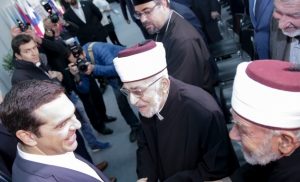
Φωτ 1: Ο Πρωθυπουργός κ. Τσίπρας με τον Μουφτή Ροδόπης κ. Μέτσο Τζεμαλή και τον Μουφτή Ξάνθης κ. Εμίν Σινικόγλου

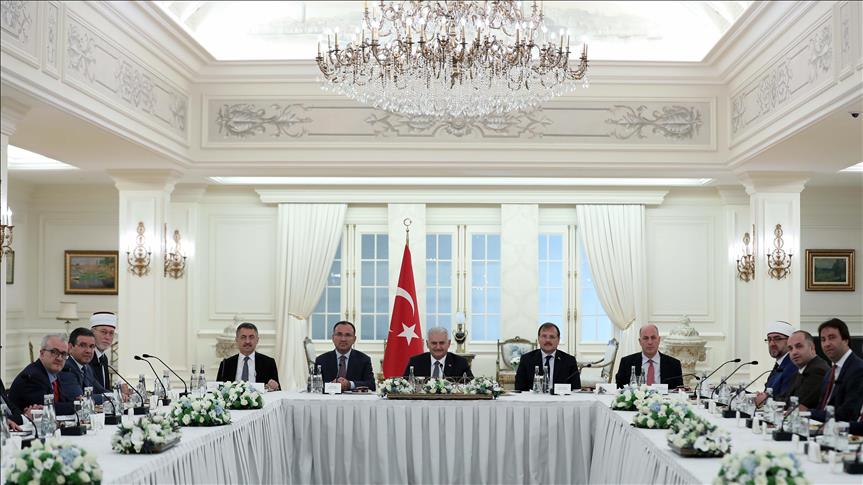
Φωτ 2: Οι ψευτομουφτήδες Ροδόπης και Ξάνθης στην Άγκυρα σε κλειστή συνάντηση της “Συμβουλευτικής Επιτροπή Τούρκων Δυτικής Θράκης” με τον Τούρκο Πρωθυπουργό.

http://www.liberal.gr/arthro/182298/amyna–diplomatia/2017/epikindunes-kubernitikes-akrobasies-gia-tin-eklogi-mouftidon.html


THREE REASONS WHY PUTIN’S VISITS TO EGYPT AND TURKEY WERE IMPORTANT

0
18.12.2017

Russian President Vladimir Putin’s quick tour to three Middle Eastern countries on December 11 was in fact a symbol of how quickly Russia has managed to regain the influence it used to enjoy in the region. The big picture of the trip was overshadowed by Putin’s unannounced visit to Russia’s Hmeimim air base, in which he ordered for the Russian troops to start withdrawing from Syria. This does not mean, however, that his two other destinations, namely Cairo and Ankara were of a lesser significance in Moscow’s regional approach. 

Given the topics raised during Putin’s meetings with his Egyptian and Turkish counterparts, as well as the current state of regional interactions in the Middle East, it could be said that the visits were important from several different but interrelated aspects.

First, while the current US administration led by President Donald Trump still lacks a clear Middle East strategy to exactly define its long-term goals, priorities and – most importantly – allies in the region, Russia’s attempt to consolidate its ties with Turkey and Egypt, as the two weaker rings in the chain of American regional alliances, entails clear messages about Moscow’s new regional plans.

Since the failed July 2016 coup in Turkey, an ever-widening gap started to take shape between Ankara and Washington – and the West in general – with issues such as the US support for the Syrian Kurdish fighters and making a legal case against the Turkish government over its deals with Iran during the sanctions period further deteriorating the relations. US relationship with Egypt has also been an uneasy one during the recent years over issues such as “human rights situation” in the country.

In this context, Moscow is apparently trying to build upon the opportunity provided by Washington’s vague and passive regional approach, as well as its tense relations with Ankara and Cairo, and introduce itself as a reliable partner for the two countries. Moving toward finalizing the deal to provide Turkey with S-400 anti-missile system and signing a deal to build Egypt’s first nuclear power plant could be interpreted in the same vein. Therefore, an integral part of the new Russian Middle East policy is to move forward wherever the US is moving back, with Putin’s visits to Cairo and Ankara as its latest representations.

Second, the Russian President’s tour to the Middle East came at a time that the region has been rattled by Trump’s move to recognize Jerusalem as the capital of Israel. As the move has already diminished Washington’s potential to be recognized as an honest broker in the Israeli-Palestinian dispute, Russia is doubling down on its efforts to take the initiative and enhance its position in this equation.

In fact, Moscow has long enjoyed friendly relations with both Israel and influential Palestinian groups and now is apparently trying to stay in touch with the influential regional actors involved in the issue. The Jerusalem issue was at the top of the agenda of Putin’s meeting with both Recep Tayyip Erdogan and Abdel Fattah el-Sisi. In this vein, one could arguably say that Russia is to be recognized as the sole global power with the ability to make a compromise between the diverging approaches of many parties involved in the Israeli-Palestinian dispute.

Finally, there’s a direct link between what Putin declared in Hmeimim and his visits to Egypt and Turkey the same day. At a time that Russia has started to reduce its military commitments in Syria and to shift toward a viable political solution for the Syrian Crisis, it needs as much regional actors as possible on board to support its political and diplomatic initiatives. As both Egypt and Ankara have had an important role in organizing a front of “moderate” Syrian opposition groups to take part at the political talks, keeping close contacts with them is crucial for Moscow to preserve its long-term interests regarding Syria.

One should remind, however, that this is just one piece of the complex Middle East puzzle Russia is now facing and to make a compromise between the long-term interests of its old and new regional partners (Iran, Turkey, Israel, Egypt, etc.) is a harder task to do by Moscow. Nonetheless, one thing’s for sure that we are just witnessing a totally new era of Russia’s activism in the Middle East.

http://valdaiclub.com/a/highlights/putin-s-visits-to-egypt-and-turkey/

Rethinking Russia’s Return to Global Big Policy

0

In the first decade of 21st century Russia managed to get out of the economic crisis, restore its military strength, and take course to become a sovereign political pole. To understand the entire scope of Russia’s reaction to difficult foreign challenges and to analyze its probable steps, it is important to investigate its foreign policy strategy.

On November 30, 2016, the Kremlin adopted the “Foreign Policy Concept of the Russian Federation” (Concept), which was signed by President Vladimir Putin. In the future, Russian diplomacy will continue its operations with this document as one of its main legal pillars.

This Concept argues that Russian foreign policy aims to ensure security, independence and territorial integrity of the state. It must contribute to the development of the democratic and juridical institutions of the country, and also be used for the further growth of the Russian economy.

It is worth mentioning that due to the Concept, one of the main aims of Russian foreign policy is making Russia one of the most influential centers in the modern world.

This clause of the Concept describes that in the future, Russia will be more actively involved in international politics. It will try to create new spheres of influence and find new allies and supporters, with whom it will be able to defend its national interests and reap benefits from different international developments.

It is worth mentioning that Russia has powerful levers to implement the aforementioned aims; the following circumstances can be mentioned:

1.Russia is a permanent member of the United Nations Security Council (UNSC). This factor provides Moscow with an opportunity to make its voice heard on the main platform for creation of international law. Permanent membership gives Russia veto power, whichmeans that the other parties of the UNSC cannot adopt any resolution without Russia’s agreement.  Thus, Russia remains in the group of main players in world affairs. It is the main reason why, in the new Foreign Policy Concept of Russia, it is mentioned that Russia will make efforts to strengthen the role of the UN.

2.Even after the collapse of the Union of Soviet Socialist Republics (USSR or Soviet Union) Russia still possesses the second most powerful military arsenal in the world, strengthened by modernized nuclear weapons. Only Washington surpasses Moscow with its military capabilities.

To strengthen and modernize its military capabilities, Russia plans to invest $700 billion before 2020.

3.Russia possesses tremendous sources of energy and other natural resources, which provide Russia with an opportunity for further development. Even during recent years, when prices on energy resources have drastically decreased, this factor has still played a significant role in Russia’s foreign policy, as Russia gets some economic and political influence in the countries, it supplies with its energy resources.

4.Russia’s geographic location also has its impact, as it provides great opportunities to the Russian navy and air force to maneuver from East to West. This geographic advantage also gives Russia wide economic prospects, as it is a unique bridge connecting Europe to Asia.

This paper aims to analyze and answer the following questions: in which directions will the “Russian bear” move? Which tools and sources will be used by Moscow for implementation of its foreign policy? Which kinds of developments will take place in the era of Russia’s return to big policy?

From Commonwealth of Independent States (CIS) to Eurasian Economic Union (EAEU)

In the section on regional priorities of the Foreign Policy Concept of the Russian Federation, it is written that Russia’s main aim is to develop bilateral and multilateral relations with the CIS member-states and foster implementation of integration projects in this organization with Russia’s involvement.

In the 51st clause of the Concept, it is written that in the framework of the Eurasian Economic Union, it is very important to develop relations and implement joint projects with Armenia, Belarus, Kazakhstan and Kyrgyzstan.

The main purpose of this ambitious plan is to unite in one political and economic union the former republics of the USSR which are not integrated in other economic or political unions. Firstly, it regards republics, which, unfortunately, after the collapse of the USSR, could not adapt to challenging modern world developments. These states could not find an economic and political role that could make them interesting for the world’s other main players, and as a result their economies have been destabilized and contracted greatly.  These states are in deep political and economic crises, and they have also security problems, as they are not able to secure their countries without the help of third parties. In this regard, Vladimir Putin mentioned, that the disappearance of the USSR was a “major geopolitical disaster.”Indeed, it was a disaster for the most of the USSR’s former member states and for its main allies. One-day citizens of the USSR slept in the one of the most powerful countries in the world, and the next day they woke up in a field state with a difficult political and socio-economic situation. In some former republics of the USSR, interethnic clashes started. It seems that Post Soviet states would be also very interested in integration with the EAEU, but the situation is much more complicated, because of the many conflicts acquired as a result of the USSR’s collapse. These unresolved issues create problems for integration processes in the Post-Soviet space.

The second main obstacle to integration developments in this space is the position of the West, which tries not to allow possible “reconciliation” of the USSR. However, it is evident that this is not possible even theoretically.

The Ukrainian revolution, which was fully supported by the West, can be considered the main argument for this second hypothesis. As a result of this political turmoil in Ukraine, Kiev broke its ties with Moscow, and did not join the EAEU, which is led by Moscow. Additionally, the clashes between Ukrainian military forces and the Russian population in East Ukraine are creating barriers between the two Slavonic nations, which are connected to each other by various historical and cultural ties.

In addition, the economic situation in Russia was heavily damaged by Western sanctions and the decreasing price of energy resources. Regardless, even in this challenging situation, Russia could have some success in Syria, where Bashar al-Assad was able to get out of a troublesome situation and start his counterattack with the help of Russian air forces.  In East Ukraine, Pro-Russian forces also keep a huge territory under their control.

The Russian Bear Tries to Save its Burned Middle Eastern Hives

From a Russian perspective, resolution of the Syrian conflict is possible via the restoration of the territorial integrity of the Syrian Arab Republic.

By the way, Russians can agree with Turkey and Iran on ridding Aleppo of terrorists and the so-called Syrian moderate opposition, and afterwards on the return of this strategically important city to Assad’s regime. It is worth mentioning that this unique triangle (Russia-Iran-Turkey), composed of such different states, could come to a conclusion without making an agreement with the US on this issue.

In the Foreign Policy Concept of the Russian Federation, it is mentioned that International society must jointly struggle against terrorists and prevent creation of dangerous organizations such as ISIS. Additionally, the Russians offer to create a coalition which will battle against terrorism and operate based on an agreed-upon legal framework.

Russia’s tough position on the Syrian crisis and its main aim to finally destroy radical Islamists, who are spreading their ideology worldwide, formed partly because Russia has millions of Muslim citizens, and by struggling against Islamic fundamentalism in Syria, Russia is trying to stop the proliferation of this “dangerous disease”, which is called “the Ideology of ISIS”, on its own territory.

As one of the Permanent Members of the United Nations Security Council (UNSC), Russia plays a significant role in resolution of the Iranian nuclear issue. On the Iranian diplomatic “front”, international society could achieve some success thanks to the constructive role played by Russia and other partners. It is worth mentioning that Russia always disagreed with the US on regime change in Iran under the shadow of the struggle against nuclear proliferation. Russia was against solving this problem by military means and also against unilateral sanctions imposed by the West and its partners to bring Tehran to its knees, as those sanctions were not approved by the UNSC. Playing a constructive role, Russia offered to solve the Iranian nuclear issue using a step-by-step method, which later formed the basis for success in multilateral negotiations with Iran.

Modern Russo-Turkish relations can be described as series of ups and downs, but it is a fact that both sides place importance on bilateral economic and political relations. The main argument of the aforementioned hypothesis is that the crisis of the Russo-Turkish relations was very short. This crisis started when Turkish forces shot down a Russian military jet along the Syrian border. Nevertheless, there is now a new political situation in the Middle East. As the US is trying to leave or showing that it would like to leave this region, it is possible that a new Russo-Turkish confrontation will emerge to divide spheres of influence, and of course, Iran will also participate in this struggle to protect its own national interests.

The Russian Far Eastern Vision, or the Russian Bear Looks towards Beijing

In the Foreign Policy Concept of the Russian Federation, it is mentioned that the world’s potential is clearly being concentrated in the Asia-Pacific region, and consequently the West is gradually losing its historical role as political and economic leader of the world.

In this context, the emerging Far Eastern superpower China is worthy of note, because through its “Silk Road Economic Belt” and “21st-century Maritime Silk Road” programs (The Belt and Road), it is trying to enlarge its influence. It is interesting that Russian President Putin does not see the new Chinese initiative as a threat; on the contrary, he believes that the EAEU and the Belt and Road must be combined.

It is obvious that in these circumstances, as a result of aggravated relations between Russia and the West, Moscow will deepen its relations with Beijing. It is also mentioned, in the 84th clause of the Concept, that Russia will increase its political and economic cooperation with China.But it is important to mention that China is unable to close the gap in the Russian economy, which emerged after the worsening of Russo-US and Russo-EU relations, alone.

Unlike economic relations, which are growing slowly, Russia and China have succeeded in forming close political cooperation. As a result of close political cooperation, Russia and China try to act as partners during negotiations on resolution of the Iranian and DPRK nuclear issues, as well as the problem of the South China Sea and Syrian crisis. In this regard, it is also worth mentioning the tough Sino-Russian position against the decision of the US and South Korea to place THAAD systems (Terminal High Altitude Area Defense) next to the border with North Korea, making them capable of destroying missiles fired from Russian and Chinese territories as well as North Korean.

Russia is against the proliferation of nuclear weapons on the Korean peninsula. As in the case of Iranian nuclear issue, Russia does not wish to see new turbulence in the Korean peninsula due to the DPRK nuclear issue, and favors a peaceful solution to this issue through political and diplomatic efforts and negotiations.  From my point of view, Moscow has agreed to follow China’s lead on the DPRK nuclear issue in the UNSC, in exchange for China following Russia’s lead on the Iranian nuclear issue.

It is worth mentioning that Iranians attempted to derive benefits from Sino-Russian cooperation in the UNSC. In this regard, Hassan Rouhani said, “We knew that if we could turn Russia to our side, China would also stand next to us.”

Closing, but Still Unclosed Doors to the West

Although it is mentioned in the Concept that Russia will continue implementation of the reduction and limitation of its strategic offensive arms, which it is undertaking due to Russo-American agreements,it must be mentioned, that the current escalation of tensions in Russia-US relations may complicate the possible conclusion of new arms-reduction agreements. Moreover, in this situation, there is the risk that both sides may abandon the agreements reached previously and start a new arms race, like that which existed during the Cold War. The Concept also condemns NATO and EU policies in the Euro-Atlantic region. In this document, Russia deems the policies being implemented by these two Western organizations expansionism.

It is mentioned that the idea to create a “European Common Security Framework” has remained on paper, and the main reason behind the escalation of tensions in relations between Russia and the West is the joint strategy of the US and its Western partners to contain and isolate Russia.

After the collapse of the USSR, when the former members of the Warsaw Pact started to join NATO, Russia tried to understand on which levels these processes helped or contradicted the national interests of Russia. It is worth mentioning that from 1988 to 1999, Russia reduced its army’s personnel from 5 mln. to 1 mln. people.

As Russian researcher Aleksandr Barsenkov mentioned, in the early 90s, Russian President Boris Yeltsin announced that Russia was ready to begin integration into NATO—one of Russia’s long-term goals in its foreign policy. After several years Yeltsin added that Russia is against NATO enlargement without Russia.

Furthermore, when Yevgeni Primakov was appointed as Russia’s Minister of Foreign Affairs, he announced that Moscow was against NATO’s enlargement, because to Russians it was a threat; due to NATO enlargement, soon Russia would be left alone, surrounded by NATO members.

As Yevgeny Primakov mentioned in his book about negotiations on the enlargement of NATO, “on July 30, 1996, during my meeting with Malcolm Rifkind, the Secretary of State for Foreign and Commonwealth Affairs of the UK, I mentioned that there are two red lines regarding NATO’s enlargement which Russians will not allow to be crossed. The vertical red line means that Russia is against the placement of NATO infrastructure next to Russian borders by drawing in new members, and the horizontal one means that Moscow will never approve of Baltic or post-Soviet States joining NATO.”

This position remains one of the most important pillars of Russian Foreign policy regarding the enlargement of NATO, and because of this foreign policy priority, Russia has tried to express its disagreement by presenting a tough reaction to Georgia’s and Ukraine’s desire to join NATO.

High-level Russian officials are convinced of the idea that NATO has an anti-Russian orientation. The main argument for this hypothesis may be Russian President Vladimir Putin’s speech in the General Assembly of the UN. He stated,“Sadly, some of our counterparts are still dominated by their Cold War-era bloc mentality and the ambition to conquer new geopolitical areas. First, they continued their policy of expanding NATO – one should wonder why, considering that the Warsaw Pact had ceased to exist and the Soviet Union had disintegrated.”It appears that NATO is the West’s main lever for deterring Russia, and also the West’s unique watchdog, used to topple regimes which are not playing according to Western rules.

This Russo-American confrontation also takes place in cyberspace. The countries are engaged in a real war there. On the American side, with the help of Russian hackers, information about Hilary Clinton’s official electronic correspondence was spread worldwide, which had an influence on the results of presidential elections in the US.   As a result, Clinton lost votes. Because of these Russo-American clashes in cyberspace, the Obama administration deported Russian diplomats from the US, accusing them of involvement in cyber-attacks perpetrated against the US. Putin did not respond to this measure with an equally aggressive answer, and instead announced that he had no wish to fall to the level of “kitchen diplomacy.” With this step, he did not participate in the burning of the Russo-American “last diplomatic bridge”. He confirmed once again that he is ready to cooperate with Donald Trump, elected president of the US, and that he did not want to escalate the situation.

However, while in 2017, Russia was able to keep its balance and avoid economic collapse, in the future, confrontation with the West may become more harsh and dangerous.

After the referendum on the status of Crimea, when Crimea was integrated into Russia, both the US and EU adopted sanctions against Russia.

In June 2016, during the St. Petersburg International Economic Forum, President Putin offered several proposals for normalization of Russia-EU relations to European Commission President Jean-Claude Juncker, but, the EU prolonged sanctions on Russia.

Further development of Russia-EU relations also highly dependent on US foreign policy under Donald Trump, because up to now US decisions have had profound influence on the generation of EU foreign policy.

Taking into consideration the fact that nowadays, the EU’s main leader is Germany, from my point of view, the political developments that have taken place in Ukraine can be placed within the framework of Russo-German historical clashes, but now in a new confrontation.

Throughout history, the German political elite was interested in the East, where it clashed with Russia several times, and as a result was forced to retreat. Until 1945 Germany’s eastern policy consisted of trying to conquer Eastern Europe by military means, but this strategy failed. It appears that German political thought has made new calculations, and now it tries to spread its influence not with weapons, but using its economic leverage—Soft Power. As a result of this new “Eastern Policy”, the majority of Eastern European countries have already joined the EU.

Because of the new Russia-West confrontation, Ukraine has been divided into two parts. On one hand, Western Ukraine has started cooperating with the West and set integration into the EU as its long-term political goal. On the other hand, Crimea and Sevastopol have been integrated into Russia, and Eastern Ukraine is still controlled by pro-Russian military groups.

It is worth mentioning that the annexation of Crimea by Russia was seen as a possibility by the Ukrainian political elite long before 2014. Back in 2007, former Ukrainian Prime Minister Yuliya Tymoshenko wrote in “Foreign Affairs” that Russia must not be permitted to use Kosovo’s independence from Serbia as a precedent to promote secessionist movements, most importantly a Crimean secessionist movement, in attempt to destabilize national governments.”

However, Russian Foreign Minister Sergey Lavrov mentioned that Russia has no intention to continue confrontations with the US, EU and NATO. As he stated, the best option for defense of the interests of the European continent’s population may be the creation of a single economic and humanitarian space, which would reach from the Atlantic to the Pacific Ocean. He added that the newly established EAEU could become the best bridge for integration processes between Europe and the Asia-Pacific.

Non-Traditional Forms of Classical Diplomacy: New Directions

It is mentioned in the Concept that soft power must be one of the most important tools of Russian foreign policy, and must be widely used by Russian diplomats.

The “Gerchakov Fund”and the “Russian World” foundation actively work towards the improvement of Russia’s reputation and the creation of a network of supporters worldwide. They grant scholarships and organize special courses to represent the Russian language, as well as Russian culture, history and policy.

In the new Concept, Russian diplomacy places high value on the preservation of Russian communities and Russian identity around the world. It is worth mentioning that Russia has started to place importance on the involvement of the Russian diaspora in its foreign policy. It means that Russian diplomats plan to use public diplomacy to achieve their main goals.

The 48th clause of the Concept says that Russia must take steps to use the potential of Russian researchers in its public diplomacy by activating contacts between Russian and foreign scholars. Currently Russia has many powerful analytical centers, for instance: the Russian Council on International Relations, the PIR Center, the Valdai International Discussion Club, and others, which, with the help of modern technologies, distribute their publications in both Russian and English.

Conclusion

It is worth mentioning, that in the Concept’s 21st and 22nd clauses, Russia acknowledges its responsibility for the maintenance of security on both regional and global levels. It is mentioned in this document that throughout history, Russia has always played a unique role, balancing international relations and contributing to the development of civilization.

Professor Stephan Kotkin does not agree with this idea; as he mentioned, “Until Russia brings its aspirations into line with its actual capabilities, it cannot become a ‘normal’ country, no matter what the rise in its per capita GDP or other quantitative indicators is.” In my turn, I do not agree with Kotkin, as after the collapse of the USSR, Russia tried to integrate into the Western world several times and become, as Kotkin described, a “normal” country, but it came across closed doors. Then it tried to turn toward the East, but in East it is also very hard to play one’s own game, as China, in turn, tries to play the leading role there and will not surrender its position to the Russians. That was the main reason that Russia turned to the former Soviet Republics and started to create its own, independent pole.

Because of the West’s attempts to isolate and deter Russia, the country started to implement aggressive policy to defend its national interests and break the potential blockade.  As a result, with lightning speed, Russia reunited with Crimea and Sevastopol.

By retaking Crimea and maintaining Assad’s regime, Russia ruined the West’s plans, due to which Russia could have been ousted from two seas, the Mediterranean and the Black. In short, thanks to its support of Assad, Russia extended its military bases in Syrian Latakia, and by reconquering Crimea, it kept the dominant strategic position of the Russian navy on the Black sea.

After the collapse of the USSR, during the Syrian crisis and Ukrainian political turmoil, Russia has demonstrated that it is capable of defending its national interests, not only via declarations and negotiations, but also by exerting its influence and projecting its power on a global scale by combining its military and economic strength.

Which kinds of developments will take place in the era of Russia’s return to big policy?

If Russia unites most of the Post-Soviet States in one economic and political block, it could form a new strong pole, which could become an alternative to the US and China’s political models. Russia chose the so-called Eurasian ideology for uniting different Eurasian nations under the umbrella of the EAEU. Indeed, this ideology can provide an opportunity to various states which were not brought into the EU or other integration programs projected by the West to join EAEU. The other argument is that if Russia and China will be able to harmonize the EAEU with the Chinese “One road, one Belt” program, they can form a very strong pole, and thus they will irreversibly change the unipolar world order, which was created at the end of the Cold War.

Russia’s return to global big politics means that the role of the UN will be strengthened. If, in the recent past, the US underestimated the role of UN, and many times made several steps without waiting or asking the UN, now it must, because Russia and China can keep them in the same manner, and as a result international society will face dangerous chaos. Thus, Russia’s return to “global big politics” will bring balance to world affairs. Development of the EAEU will provide an opportunity to improve the economic situations of Post-Soviet states, which are not in good political, social and economic condition.

The process of integration into the EAEU will provide opportunities for development to most of the Post-Soviet states which are still mired in political turmoil and economic hardship.

The only problem with Russia’s return to global big politics is that it can lead to new political crises in the world, arms races, a continuation of the so-called Cold war, wars, and victors and losers, if this return is seen by western capitals as a great threat.

(*)Mher D. Sahakyan-Doctor of Laws in International Relations (Nanjing University, China).Research Fellow, National Defence Research University, MoD, Armenia, Director of the “‘China-Eurasia’ Council for Political and Strategic Research” Foundation, Armenia and the author of the article Rethinking Russia’s Return to Global Big Policy, (Dar 21, 2(72), 2017, pp. 63-88), from which this essay is adapted. Translated from Armenian. Used by permission. All rights reserved.
Mher D. Sahakyan

Advisory Board member

Mher D. Sahakyan- Ph.D. (International Relations), School of International Studies, Nanjing University. China, Director of the “‘China-Eurasia’ Council for Political and Strategic Research” Foundation, Armenia.

http://moderndiplomacy.eu/index.php?option=com_k2&view=item&id=3481:rethinking-russia-s-return-to-global-big-policy&Itemid=124

Iran and the New Land Corridor

0

By December 19, 2017

BESA Center Perspectives Paper No. 690, December 19, 2017

EXECUTIVE SUMMARY: Reports emerged recently suggesting that Iran-backed forces are closer to controlling the Syria-Iraq border. This would mean Tehran will now be able to link up with its Lebanese proxy, Hezbollah. If this scenario is correct, after 12 years of conflict in Iraq and another conflict in Syria, Iran is steadily transforming into a more powerful geopolitical player whose influence will be projected hundreds and maybe thousands of kilometers beyond its borders.

In the early 620s CE, just before the Arab/Muslim invasions of the Middle East, the Sasanian Shah, Khosrow II, besieged Constantinople, the capital of Byzantium, with his large armies. His forces had already occupied Egypt, Syria, Palestine, and other former Byzantine lands. This was a momentous event in world history, as the Iranians had not reached the Mediterranean Sea since the end of the Achaemenid Empire in 330 BC.

However, the Iranian success proved short-lived. Iranian ambitions were checked for the next 1,400 years, until hints emerged recently that Iran-backed forces have moved closer to control the Syria-Iraq border.

If this turns out to be accurate, this is an exceptional moment. It means that at long last, Iran once again has a contiguous land bridge from its territory, through northern Iraq and Syria, right through to the Mediterranean coast.

The Iranians will be able to link up with their foremost regional proxy, the Lebanese Hezbollah. After 12 years of conflict in Iraq and Syria, Tehran is transforming into a powerful geopolitical player whose influence will be projected hundreds and maybe thousands of kilometers beyond its borders.

Still, that is not the whole story. The route is quite complex as it weaves across Arab Iraq, via Iraq’s Kurdish north, into Kurdish northeastern Syria, and through the battlefields north of Aleppo, where Russia, Iran, and their allies won an important battle earlier in 2017.

In addition to the geographic dilemma, the Iranian route could be threatened by independent actors. The Kurds of Syria, who populate the northeast corner of the country and who operate separately from the Kurds of Iraq, could forestall the nascent Iranian corridor.

Despite the serious obstacles the corridor faces, the development remains important. For the first time, the route would physically link a range of Iranian allies: Hezbollah in Lebanon; the Assad regime in Syria; and the Iran-influenced government in Baghdad.

The corridor was built up gradually over the course of the Syrian civil war. Israel, always wary about any extension of Iranian influence, has tried to employ a policy of prevention.

Israel has good reason to be worried, as the successful operation of a contiguous Iranian route to the Mediterranean would mean Tehran and Hezbollah can complement and strengthen each other. Above all, Hezbollah not only lends military expertise to its Iranian patron (as was seen on the Syrian battlefield), but also offers Arabic-speaking leaders and operatives who are familiar with the Arab world at large.

Putting the Iranian corridor in context

Geography is key to Tehran’s grand strategy. Iran’s major population centers are surrounded by almost impregnable mountains and deserts, as well as water barriers. To the west and northwest are the Zagros Mountains, which separate Iran from resource-rich and fertile Iraq. To the north, the Elburz Mountains and Armenia’s mountainous lands have always served as a defensive shield. The Caspian Sea in the north and the Arabian Sea in the south are yet more impregnable barriers. To the east and northeast, the harsh climate of Afghanistan and Pakistan, alongside Turkmenistan’s semi-barren steppe lands, have kept Iran’s provinces more or less safe (except for occasional attacks by nomadic peoples).

This mountainous and desert geography, while defensively advantageous, has also limited the projection of Iranian power abroad. Due to poor geographic conditions, it has never been economically or militarily feasible to project Iranian power into Central Asia, Afghanistan, or Pakistan. Strategically, the most advantageous territory into which Iran can attempt to project its power is the western frontier, or modern-day Iraq (Mesopotamia) –  long rich in population and natural resources, and therefore worth controlling. This at least partially explains Iran’s ambitious corridor to the Mediterranean.

History shows how crucial Iraq has been in Iran’s calculus. Take, for example, the Achaemenid Empire, followed by Parthia and the Sasanian State. They all hung onto Mesopotamia and even had their capital, Ctesiphon, located along the Euphrates River near modern-day Baghdad.

Iranians have always worried about a foreign presence in the territories surrounding the Iranian plateau. Any foreign influence close to the heart of Iran would represent a strategic weakening of the state. This could also explain modern-day Tehran’s behavior and great interest in Iraq.

View PDF

Emil Avdaliani teaches history and international relations at Tbilisi State University and Ilia State University. He has worked for various international consulting companies and currently publishes articles focused on military and political developments across the former Soviet space.

BESA Center Perspectives Papers are published through the generosity of the Greg Rosshandler Family

Trump Announces ‘America First’ National Strategy

0

Security strategy outlines new direction for countering China, Russia, North Korea, Iran, and ISIS.


Getty Images

BY: 

President Trump unveiled his vision for a new world order dominated by American values and economic ideals on Monday by presenting the administration’s “America First” national security strategy.

The 68-page strategy report warns the country is facing a new era of confrontation from threats ranging from traditional military powers to new cyber and space threats.

The strategy repudiates many of the security and foreign policies of the former President Barack Obama who sought to subordinate American power and influence in seeking greater comity with foreign states and international organizations.

The strategy reflects many of Trump’s presidential campaign statements and promises that brought him to power, such as the need for tighter immigration controls, including a border wall, adopting trade policies more directly favorable to U.S. interests, increasing defense spending, and for the first time since the end of the Cold War, aggressively promoting American ideals such as liberty, constitutional democracy, and free trade.

“With this strategy, we are calling for a great reawakening of America, a resurgence of confidence, and a rebirth of patriotism, prosperity, and pride,” Trump said at the White House announcing the National Security Strategy.

“And we are returning to the wisdom of our founders: In America the people govern, the people rule, and the people are sovereign.”

The strategy identifies five major threats and suggests China poses a more significant national security challenge than the dangers from Russia, North Korea, Iran, and Islamic terrorism.

“China and Russia challenge American power, influence, and interests, attempting to erode American security and prosperity,” the report says. “They are determined to make economies less free and less fair, to grow their militaries, and to control information and data to repress their societies and expand their influence.”

American military power remains preeminent but is eroding as the militaries of “revisionist powers” China and Russia and rogue regimes such as Iran and North Korea are moving ahead with high-tech strategic arms and capabilities.

The strategy report identifies four vital security interests: Protecting the American people and homeland; promoting prosperity; preserving peace through strength; and advancing American influence.

“We will strengthen America’s capabilities—including in space and cyberspace—and revitalize others that have been neglected,” the report says.

Trump in remarks at the White House said previous U.S. policies produced “disastrous” trade deals, policies of nation-building abroad that neglected domestic infrastructure, failed to provide the military with adequate resources, and neglected the menace of North Korea.

Also, excessive government regulation hampered development of U.S. energy resources and borders were opened to immigration over the “profound objections” of the American people, the president said.

“A nation that does not protect prosperity at home cannot protect its interests abroad,” Trump said. “A nation that is not prepared to win a war is a nation not capable of preventing a war. A nation that is not proud of its history cannot be confident in its future. And a nation that is not certain of its values cannot summon the will to defend them.”

Trump labeled China and Russia as key rivals that are challenging American influence, values, and wealth.

“We know that American success is not a foregone conclusion,” he said. “It must be earned and it must be won. Our rivals are tough. They’re tenacious and committed to the long term, but so are we.”

To be successful, Trump said the nation must “integrate every dimension of our national strength, and we must compete with every instrument of our national power.”

“With the strategy I’m announcing today, we are declaring that America is in the game and America is going win,” he declared.

New threats are posed by cyber attacks and electromagnetic strikes, and the administration views space as a near area of potential conflict.

Trump plans to build up U.S. missile defenses, including long-range interceptors capable of defending the U.S. homeland.

The Pentagon currently has around 44 anti-missile interceptors based in Alaska and California. A third missile defense site is planned for the East Coast.

The strategy says that America began to drift after the end of the Cold War, and Trump will seek to reverse the exploitation by nations and international institutions.

According to the strategy report, the Trump doctrine will be “principled realism” that promotes individual liberty, rule of law, democratic governance, tolerance, and opportunity.

“America’s values and influence, underwritten by American power, make the world more free, secure, and prosperous,” the strategy says.

On missile defenses, the new strategy calls for developing weapons capable of defeating missile threats “prior to launch.”

The Pentagon has dubbed the effort “left of launch,” for the position at the beginning stage of a timeline for a missile attack.

To knock out missiles before launch will require increased intelligence, cyber attacks that can disable or destroy missiles in the launch preparation phase, and drones that can knock out missiles on launchers or in storage areas.

The report said North Korea is developing nuclear missiles capable of hitting the United States while China and Russia are building “advanced weapons and capabilities that could threaten our critical infrastructure and our command and control architecture.”

On cyber security, the strategy calls for strengthening critical infrastructure, such as the electric grid, from cyber attacks. Other sectors facing risk of cyber attack include banking and finance, health and safety, communications, and transportation.

The report singles out China for its massive theft of American technology.

“Every year, competitors such as China steal U.S. intellectual property valued at hundreds of billions of dollars,” the report said. “Over the years, rivals have used sophisticated means to weaken our businesses and our economy as facets of cyber-enabled economic warfare and other malicious activities.”

Decades of efforts to coax China into becoming an international participant in the U.S.-led world order have not succeeded.

“Contrary to our hopes, China expanded its power at the expense of the sovereignty of others,” the report said. “China gathers and exploits data on an unrivaled scale and spreads features of its authoritarian system, including corruption and the use of surveillance. It is building the most capable and well-funded military in the world, after our own. Its nuclear arsenal is growing and diversifying. Part of China’s military modernization and economic expansion is due to its access to the U.S. innovation economy, including America’s world-class universities.”

Both China and Russia are engaged in information warfare against the United States, the report said.

“They employ sophisticated political, economic, and military campaigns that combine discrete actions,” the report said. “They are patient and content to accrue strategic gains over time—making it harder for the United States and our allies to respond. Such actions are calculated to achieve maximum effect without provoking a direct military response from the United States. And as these incremental gains are realized, over time, a new status quo emerges.”

The Trump strategy calls for developing policies to counter the operations of both states.

“We must convince adversaries that we can and will defeat them—not just punish them if they attack the United States,” the report says.

Militarily, the United States will seek forces that will “overmatch” all adversaries and ensure that U.S. forces are stronger in all aspects than potential enemies.

American intelligence capabilities also will be increased under the strategy. Foreign states’ economic policies will be studied to prevent the theft of sensitive information.

Diplomacy also will be reformed with the goal of advancing American interests, suggesting that current U.S. diplomacy has not been effective.

“We must upgrade our diplomatic capabilities to compete in the current environment and to embrace a competitive mindset,” the report said.

Economic tools, such as sanctions, also will be employed strategically to deal with security threats.

The strategy also calls for the use of “information statecraft” counter foreign information warfare threats, such as disinformation and propaganda. The danger is increasing as adversaries prepare to use artificial intelligence and machine learning, combined with large databases, in information operations.

“U.S. efforts to counter the exploitation of information by rivals have been tepid and fragmented,” the report said. “U.S. efforts have lacked a sustained focus and have been hampered by the lack of properly trained professionals.”

New tools for advancing American communications campaigns will be developed to “counter challenges from the ideological threats that emanate from radical Islamist groups and competitor nations.”

“These campaigns will adhere to American values and expose adversary propaganda and disinformation,” the report said.

“Our America First foreign policy celebrates America’s influence in the world as a positive force that can help set the conditions for peace and prosperity and for developing successful societies.”

To promote American policies, the Trump administration will work with “reformers” who share U.S. ideals and values.

That strategy is in stark contrast to the Obama administration’s failure to back Iranian opposition groups that challenged the theocratic regime in Tehran during 2009 elections.

Counterterrorism efforts will include preempting and disrupting plots before they can be carried out and direct action attacks.

The report appears to have adopted the conciliatory approach to political Islam similar to the Obama policy. A section of the report on confronting terrorist ideology emphasizes that the United States “rejects bigotry and oppression” and seeks to unite with American Muslims.

That narrative has been used by advocates of political Islam to stifle debate in the United States on the threat posed by the Muslim Brotherhood by defending the group as a persecuted religious minority.

A senior administration official who briefed reporters on the strategy was asked if the Muslim Brotherhood is considered part of the jihadist terror threat outlined in the strategy report. The official said Muslim Brotherhood is not a monolithic Islamist organization, suggesting that some of its offshoots are not linked to terrorism.

The Muslim Brotherhood is the ideological precursor to al Qaeda and the Islamic State whose five-part slogan is: “Allah is our objective; the Quran is the constitution; the prophet is our leader; jihad is our way; death for the sake of Allah is our wish.”

Bill Gertz   Email Bill | Full Bio | RSS
Bill Gertz is the senior editor of the Washington Free Beacon.