Αρχική Blog Σελίδα 2691

France’s Yellow Vests Are Rebels Without a Cause

0
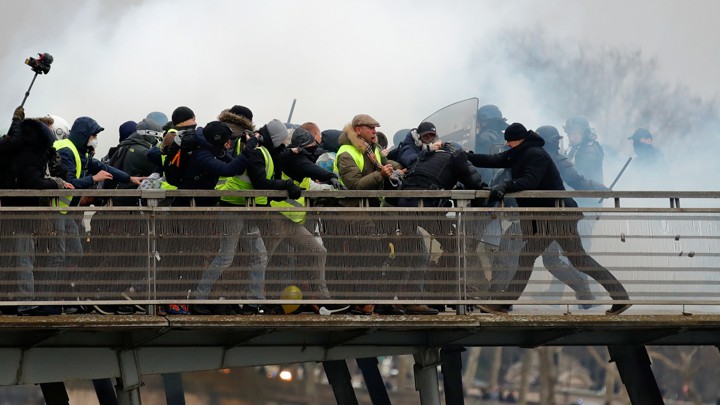
Yellow-vest protesters clash with police in Paris in January 2019.
Half of the French population supports the yellow vests, but roughly the same proportion wants the disruption to end.GONZALO FUENTES / REUTERS
PARIS—A crisis of representative democracy is unfolding in France.

For months now, President Emmanuel Macron has been crisscrossing the country for a grand débat, a series of town meetings he called in January to address the discontent embodied by the “yellow vest” movement. These demonstrations began as a protest of a fuel-tax hike and have now evolved into a wave of economic anxiety and anti-establishment sentiment—with bursts of violence, such as the torching of banks and businesses in Paris this past weekend. The latest incidents, part of “Act 18” of the movement’s weekly Saturday protests, were planned to mark the end of the grand débat.

The French president has been trying to claw back the support of local officials and citizens who felt ignored by a leader they saw as arrogant and out of touch, something of a populist in his own right who seemed to have little use for traditional mediators—mayors, unions—that stood between him and the people. Thousands have come together during the debates in a spirit of solidarity, discussion, and political engagement.

Many of these debates have come to their scheduled end, so the question arises: Now what?

How should an elected government contend with an upswell that represents a lack of faith in the institutions of representative democracy? How should the authorities respond when there’s no logical political outlet for the discontent, when the movement, on principle, refuses to select leaders or become a party? Above all, how should Macron and his government respond to a movement that has strong elements who are in opposition not simply to policies, but to representative power itself?

Macron is buying himself time by trying to extend the grand débat as long as possible, well into April with some regional debates and a discussion in the National Assembly, and maybe even longer, in sight of the European parliamentary elections on May 26. (This extension has upset some of the people chosen to run the debate, who wanted to guarantee its political neutrality.) And if anyone can debate, it’s Macron, who in his weeks traversing France has shown that he has an impressive, even tedious, grip on policy details, and the stamina to outtalk anyone in the country.

“In a way, it’s a revolution,” Sylvie Kauffmann, a columnist for Le Monde, told me about the grand débat. “I don’t want to use grand words, but it’s something unprecedented.” France lacked the American tradition of town meetings, she noted, but during past crises, the governments of the day always had clear interlocutors, whether student leaders in 1968 or labor unions in other turbulent seasons. That has changed. “We don’t have the right tools—they’re not in the constitution,” Kauffmann said. “This is something new.”

Macron’s approval ratings have been creeping upward, and on each successive Saturday, the protests have seen fewer people turn out, though Act 18—so named for the number of consecutive weeks the protests have been ongoing—was marred by violence by hard-core troublemakers. A survey conducted by the IFOP polling agency and published last week (between Acts 17 and 18) found that half the French population supports the yellow vests, although a similar proportion wants the disruption to stop.

In that sense, the grand débat might already have succeeded. The effort “had one main goal, which was to lower the temperature and give a bit of air to Macron,” Jérôme Fourquet, who conducted the survey for IFOP, told me. Citizens came together, and there was a sense of camaraderie and solidarity, of being seen and heard. “It was a nice operation in which he connected with and debated with the population, and that worked pretty well,” Fourquet said. “But difficulty has set in today: How do we get out of the grand débat? And how not to ruin the outcome and produce disappointment?”

Macron has said he’s open to the possibility of holding a citizens’ initiative—a referendum—such as on whether to reduce the number of members of the National Assembly, a request that has emerged during the debates. On other issues, though, he has limited room to maneuver. He has said he won’t reinstate a wealth tax or reduce France’s value-added tax, in spite of pressure from grand débat participants to do so. (Among the central contradictions of the yellow-vest movement and their supporters is a desire for lower taxes and more state services.) Other requests that have emerged in the debates are the possibility of choosing representatives by lottery, giving people in rural areas better access to hospital services, and allowing voters to cast blank ballots—that is, voting but without choosing a candidate.

Beyond the policy details, there are bigger questions: Is Macron himself up to this task, and does he have the political wherewithal to see it through? Even if he does, whom would he negotiate with, given that the yellow vests tend to distrust political parties and traditional media outlets, and have eschewed forming a cohesive leadership?

In a recent interview in Le Monde, the economist Jean Pisani-Ferry observed that the crisis transcends Macron’s personality as the embodiment of “metropolitan France” and a target for the anger of rural France, which feels left behind. The problem goes deeper, Pisani-Ferry argued, in that 20th-century ideologies—communist, socialist, Gaullist—have collapsed and have been replaced by socioeconomic strata. “Now what’s dangerous for democracy is the feeling that half of the population has been shunted aside. The absolute priority has to be to find some common ground,” he said.

Philippe Laurent, the mayor of the city of Sceaux, just outside Paris, and the secretary-general of the association of French mayors, told me he wasn’t convinced that Macron had actually won over mayors during his grand débatroad show. “When he says hello, people say hello because they’re polite,” he said, but Macron, a technocrat, lacks the political culture of his predecessors, who had more on-the-ground experience. “Someone tells him, ‘You have to cajole the mayors.’ He says, ‘Okay.’ But he’s not convinced of the necessity of understanding how the country works. The country is much more complex than he understands.”

Macron, who was finance minister under Socialist President François Hollande, rose to power in 2017 on a lucky star by bypassing the Socialist Party and starting his own movement. Presidential elections in France have two rounds of voting—first with the heart, then with the head, the saying goes. Macron took about a quarter of the votes in the first round, slightly more than his far-right opponent, Marine Le Pen. He then won a solid majority to defeat Le Pen in the second round, and subsequently won a majority of seats in the National Assembly. To some degree, he has a majority government with a minority of the country’s support.

Yet while Le Pen has more public support than seats in the National Assembly, and has publicly courted the yellow vests (she has said she has “supported the yellow vests from the outset”), they have not actively embraced her party, or indeed any party. Yellow-vest demonstrators have also professed their dislike for France’s mainstream media—even though these outlets helped give them a platform—and their enthusiasm for RT, the broadcaster formerly known as Russia Today, as well as sites such as Brut, which provide live feeds without mediation. “The yellow-vest movement mistrusts everything that we call intermediary bodies—it could be the media, local elected officials, unions,” Fourquet, the pollster, told me.

“It’s an institutional crisis,” he told me. “The institutions of the Fifth Republic aren’t commensurate to the task.”

Is the president?

We want to hear what you think about this article. Submit a letter to the editor or write to [email protected].

RACHEL DONADIO is a Paris-based staff writer at The Atlantic, covering politics and culture across Europe.
https://www.theatlantic.com/international/archive/2019/03/france-yellow-vest-protesters-want/585160/?silverid-ref=NDIxODcyMzAwNjkwS0&utm_campaign=atlantic-daily-newsletter&utm_content=20190318&utm_medium=email&utm_source=newsletter

Russia’s Next Land Grab Won’t Be in an Ex-Soviet State. It Will Be in Europe.

0

First he came for Georgia, then for Ukraine. Vladimir Putin’s next target is likely to be a non-NATO nation in the EU.

 
A Ukrainian soldier stands guard aboard the military vessel “Dondass” moored in Mariupol, the Sea of Azov port on Nov. 27, 2018, after three Ukrainian navy vessels were forcibly seized off the coast of Crimea by Russian forces. (SEGA VOLSKII/AFP/GETTY IMAGES)

Not many observers would consider the world’s coldest shipping lane a geopolitical hotspot. But that may be about to change. Last week, reports emerged that a new Kremlin policy will require all international naval ships to give Russia 45 days’ notice before entering the Northern Sea Route, which connects the Atlantic and Pacific Oceans via the Arctic waters north of Siberia. Every vessel on the route, where Russia has invested heavily in sophisticated military infrastructure, will also be required to have a Russian maritime pilot on board. Ships found in violation of these restrictions may be forcibly halted, detained, or—in unspecified “extreme” circumstances—“eliminated.”

The Kremlin’s latest threat has gone largely unnoticed, perhaps because it’s no surprise. Russian officials justify the new naval restrictions with a familiar explanation, claiming that “the more active naval operations in the Arctic of various foreign countries” require such a response.

This is the same tactic Russian President Vladimir Putin has used to justify his military adventurism for years: From Georgia in 2008, to Ukraine in 2014, to Syria in 2015, Putin has always laid the blame for Russian aggression squarely at the West’s feet. Kremlin-backed media outlets amplify this message, subjecting audiences to a constant deluge of scaremongering about “NATO encirclement” and pointing to the West’s condemnations of Putin’s actions as evidence of “Russophobia.”

Many wonder what Putin gains from pushing this narrative. In violating international norms, he has become a global pariah. U.S. and European sanctions have dealt serious blows to Russia’s already dismal economy—raising the question of why would Putin pay such a staggering price to carve out a few more pieces of territory.

Those who attempt to answer this question miss the point. In Crimea, eastern Ukraine, South Ossetia, or anywhere else Putin considers Russia’s backyard, territorial gain has never been an end in itself. Putin’s goal today is the same as when he invaded my country in 2008: to tighten his grip on the levers of power in Russia. Whenever Putin’s domestic popularity dips, he either escalates an ongoing conflict or launches a new offensive.

Whenever Putin’s domestic popularity dips, he either escalates an ongoing conflict or launches a new offensive.

And, clearly, it works. Putin has ruled the largest country in the world for nearly two decades, consolidating more control as he weathers each crisis. Ordinary Russian voters may struggle to survive on pensions of $200 each month, but Putin’s base can be proud to live in a superpower.

Putin is both predictable and logical: Invading a weaker neighbor delivers a cheaper and faster ratings boost than, say, improving Russia’s dystopian health care system. It’s no coincidence that Putin’s approval rating peaked in 2015, after the annexation of Crimea. Later that year, as the Russian economy foundered, the intervention in Syria served to shore up patriotism. Moreover, Russia’s actions in Syria marked Putin’s graduation from military adventurism in the former Soviet states to power projection beyond Russia’s “near abroad.”

To be sure, these steps earned Putin harsh criticism from Washington and Brussels. But condemnation from outside Russia only boosts his popularity within. With every foreign election the Kremlin meddles in, every violation of human rights in occupied Crimea, and every time Russian soldiers move barbed-wire fencing to carve out a few more acres of Georgia’s territory, the standard U.S. and European response—a diplomatic expression of “deep concern”—sounds more like a tired cliche.

From the invasion of Georgia to the hybrid offensive in Ukraine, Western leaders have demarcated red line after red line for Putin to trample with impunity.

From the invasion of Georgia to the hybrid offensive in Ukraine, Western leaders have demarcated red line after red line for Putin to trample with impunity.

The weakness of international norms, of the rules-based liberal order which many in Washington and Brussels endorse but few dare to defend, makes Moscow look ever stronger. In the eyes of his domestic supporters, Putin is calling the West’s bluff.But the status quo cannot hold. If we have learned anything from the past two decades, a new crisis is on the horizon. According to a March 7 poll by the Russian Public Opinion Research Center, Russian voters’ trust in Putin has fallen to 32 percent—the lowest level since 2006.

True to form, Putin has been escalating provocations in recent months as his popularity has declined. In November, Russian forces fired upon and detained three Ukrainian naval ships attempting to pass through the Kerch Strait into the Sea of Azov. More than 100 days have passed, and the outcry from the international community has long since died down. But the 24 Ukrainian sailors arrested during that incident remain in illegal detention.

Putin’s violations of laws and norms in Russia’s “backyard” no longer seem to shock the world. He has already redrawn the borders of Europe by force and gotten away with it. Now, to provoke the West’s ire, he will have to do something even more egregious.

It is not a question of whether he will attack, but where.

It is not a question of whether he will attack, but where.

Some point to Belarus, but Putin stands to gain little through a show of force in a country that most Russians already consider an integral part of Russia. Others predict that the Baltic nations of Estonia, Latvia, or Lithuania will be the next target. Putin certainly views the small Baltic countries as a threat; after all, they are functioning democracies on Russia’s border. But, for now, the Baltics are probably safe, for two reasons.First, the next frontier of Russian aggression is unlikely to be a NATO ally. The inconsistent responses of the West to Moscow’s various land grabs have only emboldened Putin, but he is not quite bold enough to risk triggering NATO’s Article 5—which could lead to all-out conventional war against a U.S.-led alliance. Putin understands when he is outmatched. If that weren’t the case, he would not have survived this long.

Second, Putin’s next adventure will likely be outside the former Soviet Union. The West has grudgingly accepted his neoimperialist ambitions in the region. Further incursions into Ukraine, Georgia, or other non-NATO Soviet successor states would be deja vu all over again, which would do little to bolster Putin’s position.

I have had the misfortune of getting to know Putin better than most people. Drawing on this firsthand knowledge, I predict a different direction of escalation.

Russia’s most likely target in the near future is either Finland or Sweden; although both are members of the EU, they are not members of NATO. By attacking a non-NATO country, Putin does not risk a proportional response in accordance with Article 5. But by targeting a European country, he can expect to reap the rewards of public approval at home from voters who are desperate for a victory. This is a simple cost-benefit analysis that Putin has conducted, openly, many times before. Each investment of Russian force has paid dividends. Finland and Sweden meet both requirements.

I do not expect Russian tanks to roll into Helsinki or Stockholm unopposed. But it would be relatively simple for Moscow to execute a land grab in a remote Arctic enclave or on a small island

I do not expect Russian tanks to roll into Helsinki or Stockholm unopposed. But it would be relatively simple for Moscow to execute a land grab in a remote Arctic enclave or on a small island

, like Sweden’s Gotland, considering the strategic capabilities Russia has built on its northern flank. After all, who would go to war over a frozen Baltic island or piece of Finland’s tundra? NATO wouldn’t, but Putin would—because the stakes are higher for him.Russian aggression on Scandinavian terrirory—in countries everyone in the West considers part of the West—might seem far-fetched. However, it was not long ago that Putin’s annexation of Crimea, which I predicted, struck even Russia hawks as an outlandish doomsday scenario. A few years earlier Russia’s invasion of Georgia, despite my dire warnings, also took the world by surprise.

Former Soviet states, even if they are NATO members like Estonia, are widely perceived as not quite Western. This perception may be inaccurate, but in politics, perception often matters more than reality. For Finland and Sweden, though, perception and reality are aligned. They are not ex-Soviet republics; they are unquestionably part of the West.

From Georgia to Ukraine, Syria, and beyond, Putin’s trajectory has been clear. By defying the norms imposed by the West, he has—in his view—taken progressively greater steps toward emancipating himself. But he will only achieve full emancipation by confronting the West directly.

This may sound shocking, but Putin has shocked the world many times over. The West cannot afford to be caught off guard again.

Mikheil Saakashvili is a senior statesman at the Fletcher School of Law and Diplomacy at Tufts University and was president of Georgia from 2004 to 2013.
https://foreignpolicy.com/2019/03/15/russias-next-land-grab-wont-be-in-an-ex-soviet-state-it-will-be-in-europe-putin-saakashvili-sweden-finland-arctic-northern-sea-route-baltics-nato/

Jamie Dimon says we’ve split the US economy, leaving the poor behind

0

Hugh Son | 


  • J. P. Morgan CEO Jamie Dimon points to two Americas: one that is benefiting from thriving U.S. corporations, and another that is struggling.
  • “It is absolutely obvious that a big chunk of [people] have been left behind,” Dimon says.

J.P. Morgan Chase CEO Jamie Dimon said that the U.S. economy has essentially been split into those benefiting from thriving corporations and those who are left behind.

“I don’t want to be a tone deaf CEO; while the company is doing fine, it is absolutely obvious that a big chunk of [people] have been left behind,” Dimon said. “Forty percent of Americans make less than $15 an hour. Forty percent of Americans can’t afford a $400 bill, whether it’s medical or fixing their car. Fifteen percent of Americans make minimum wages, 70,000 die from opioids” annually.

“If you travel around to most neighborhoods where companies live, they’re doing fine,” Dimon said. “So we’ve kind of bifurcated the economy.”

Dimon was speaking at an event at the bank’s New York headquarters to unveil a new $350 million program to boost job prospects for people in under-served communities. The J.P. Morgan chairman and CEO has frequently voiced concern about the declining labor force participation rate and the shortfalls of the educational system in preparing people for emerging roles.

Making progress against these issues involves companies working with local organizations to provide skills outside of the university context, he said.

“Companies have to be involved,” Dimon said. “Businesses can bypass all these parts of society that have been suffering a little bit because they do it themselves. They have their own schools, their own training, their own everything.”

Dimon added that “we made a mistake by ignoring some of these things. If we don’t [act], society is going to get worse, because these problems aren’t aging well.”

The bank’s new five year plan, announced Monday, includes $200 million to develop training programs for in-demand digital and technical roles and $125 million to boost collaboration between employers and the educational system. It also has $25 million to help spread labor market data and analysis to enable companies to focus on ways to lift people out of low-wage positions.

“It’s not about a college degree,” said Dimon, who graduated from Tufts University and Harvard Business School. “Having gone I know just how worthless a college degree is sometimes.”

Dimon called the education system “broken” and said his bank stopped giving philanthropic dollars to colleges years ago. Instead, the company is focusing on community colleges and training programs.

“Harvard and Princeton are not a philanthropy,” Dimon said. “Helping these kids is.”

https://www.cnbc.com/amp/2019/03/18/jamie-dimon-says-weve-split-the-us-economy-leaving-the-poor-behind.html

Turkey Is Changing the Middle East. The U.S. Doesn’t Get It.

0

Leadership of the Islamic world is shifting, weakening the anti-Iran coalition.

Getting stronger.
 Photographer: Emrah Yorulmaz/Anadolu Agency/Getty Images

The Middle East is changing fast but the U.S. seems to be the last government to realize it and respond.

For at least 10 years, the region has been caricatured as divided into two camps: a pro-Iranian coalition and a looser but larger group that opposes Iran’s ambitions. For short, it’s sometimes foolishly reduced to a Sunni-Shiite sectarian divide.

That was always a distortion, and it’s become increasingly clear that, while the pro- and anti-Iranian camps do exist, there’s also a distinctive third bloc emerging, with a Sunni Islamist orientation, led by Turkey. Ankara is turning into a major regional player with its own agenda, ambitions, ideology and allies.

The key players in the anti-Iranian group are pro-American: Arab states like Saudi Arabia, the United Arab Emirates, Egypt, Jordan and Israel. The war in Syria unified this group with Turkey and its allies starting in 2011, in shared opposition to the Iranian-backed dictator Bashar Assad.

But when rebel-held parts of Aleppo fell to pro-Assad forces in December, 2016, the Syrian war effectively ended along with the united front against Iran. Turkey instead began to focus on containing Kurdish militias in northern Syria and forging a partnership with Russia, Iran and Assad. It no longer views Iran as an adversary, but as a rival or, sometimes, a partner.

Turkey’s role at the epicenter of a new Middle East alliance was consolidated by the 2017 boycott of Qatar by Saudi Arabia, the UAE, Bahrain and Egypt. Qatar has relied on Turkey, which maintains a military base in that country, for support against the boycott. Qatar also needs to maintain cordial relations with Iran because those countries share a natural gas field that provides Qatar with its huge per capita income.

Qatar and Turkey also back the regional Sunni Islamist Muslim Brotherhood movement, and its support for those organizations, including Hamas, was a major cause of the boycott. During the Syrian war, Hamas had to choose between its Sunni Islamist identity and its alliance with Shiite Iran and Alawite Syria, where it was headquartered. Eventually it fled Syria, abandoning assets and property.

But now, just as Turkey and Qatar are growing closer to Iran, Hamas is renewing its Iranian ties.

Israel and most pro-American Arab states view the consolidation of this Turkish-led coalition with alarm partly because it weakens the anti-Iranian camp.

Moreover, if Turkey — finally turning away from Europe after a century of unsuccessful efforts to integrate with the West — fixes its gaze eastward, it could become a regional hegemon as ambitious as Iran and more effective.

Turkey has a larger economy, more sophisticated technology and a stronger military. It also remains a member of the North Atlantic Treaty Organization. Turkey isn’t as disruptive as Iran, but could become so, or at least as domineering, over the long run.

Turkey has not hidden its growing ambition to revive the dominance that the Ottoman Empire enjoyed over much of the Islamic world. At a recent rally, Turkish Interior Minister Suleyman Soylu declared, “We are not only just Turkey, but also Damascus, Aleppo, Kirkuk, Jerusalem, Palestine, Mecca and Medina.”

Former U.S. officials involved in counterterrorism campaigns in the region say they have seen Turkish government maps showing their spheres of influence extending to into Saudi Arabia and down to Basra, Iraq.

Turkey’s longstanding rivalry with Saudi Arabia, which dates to the early 19th century, has erupted again, and was on full display during the diplomatic crisis over the murder of journalist Jamal Khashoggi by Saudi agents at the Saudi consulate in Istanbul on Oct. 2, 2018.

In the ensuing uproar, Turkey was careful not to rupture all ties with Riyadh. But its government did everything it could to embarrass and weaken Saudi Crown Prince Mohammed bin Salman.

Turkish President Recep Tayyip Erdogan used the fracas to declare that “Turkey is the only country that can lead the Muslim world.” That’s a direct rejection of the implicit claim of Saudi Arabia and the explicit claim of Iran to global Islamic leadership.

Annual conferences in Turkey bring together Erdogan’s AKP party with Arab Muslim Brothers from around the region to promote a Turkish-led Sunni Islamist political agenda.

Israel and Arab countries like Saudi Arabia, the UAE and Egypt are alarmed that they not only have to deal with expanding Iranian influence, but now face a Sunni Islamist alliance led by Turkey and financed by Qatar.

And they fear that if this coalition thrives, it could grow to include currently pro-American states such as Jordan and Kuwait.

The administration of President Donald Trump has been slow to react. Despite warnings from the diplomatic and security experts who formerly worked for Trump, there’s no sign that key U.S. leaders, including National Security Adviser John Bolton and Secretary of State Mike Pompeo, have figured out how to respond.

Now that Turkey is no longer a U.S. partner in the Middle East and has an agenda that clashes with the interests of the U.S. and its Israeli and Arab allies, changes in U.S. attitudes are required. That involves developing alternatives to the Incirlik Air Base in southern Turkey and cutting back on military cooperation and supplies, especially given Turkey’s provocative determination to purchase Russian S-400 anti-aircraft missiles.

The U.S. must be clear about its own expectations and leverage the cooperation that Turkey still needs to ensure that Erdogan respects the interests of the U.S.-led Middle East partnership.

This column does not necessarily reflect the opinion of the editorial board or Bloomberg LP and its owners.

To contact the author of this story:
Hussein Ibish at [email protected]

To contact the editor responsible for this story:
Jonathan Landman at [email protected]

https://www.bloomberg.com/opinion/articles/2019-03-14/turkey-is-changing-the-middle-east-the-u-s-doesn-t-get-it

China’s Secret Weapon to Control Its Near Seas: Enter the Maritime Militia

0

A mysterious fleet of militarized fishing vessels is the front-line force in China’s escalating efforts to seize territory from neighboring countries.

A mysterious fleet of militarized fishing vessels is the front-line force in China’s escalating efforts to seize territory from neighboring countries.

That’s the startling topic of a March 2019 discussion between U.S. Naval War College professors Andrew Erickson and Ryan Martinson and reporter Dmitry Filipoff from the Center for International Maritime Security.

“In the last decade or so, China has dramatically expanded its control and influence over strategically important parts of maritime East Asia,” Erickson said. “It has done so despite opposition from regional states, including the United States, and without firing a shot.”

“Today, a large proportion of Chinese-claimed maritime space is controlled or contested by other countries,” Martinson said. He and Erickson called the disputed waters the maritime “gray zone.”

“This is the status quo that Beijing seeks to alter. Its campaign to assert control over these areas has progressed over a number of years. Clearly, then, Chinese leaders are in no rush to achieve their objectives. And while China’s navy plays a very important role in this strategy, it is not the chief protagonist.

Beijing’s secret weapon across the maritime “gray zone” is its maritime constabulary, the People’s Armed Forces Maritime Militia. An unofficial fleet of fishing vessels that occupy disputed seas and intimidate other countries’ own ships.

“PAFMM personnel are often disguised as civilian mariners, especially fishermen,” Martinson said. “Most do fish, at least some of the time. But they can be activated to conduct rights protection operations. And a new elite subcomponent is paid handsomely to engage in sovereignty promotion missions full-time without fishing at all.”

“In recent years, there has been a push to professionalize the PAFMM,” Erickson chimed in. “The Sansha City Maritime Militia, headquartered on Woody Island in the Paracels, is the model for a professional militia force. It is outfitted with seven dozen large new ships that resemble fishing trawlers but are actually purpose-built for gray-zone operations.”

“Lacking fishing responsibilities, personnel train for manifold peacetime and wartime contingencies, including with light arms, and deploy regularly to disputed South China Sea areas, even during fishing moratoriums,” Erickson added.

The PAFMM boats usually are unarmed, Erickson said. “They assert Chinese prerogatives through employment of a range of nonlethal tactics. In many cases, Chinese gray-zone ships are themselves the weapon: they bump, ram and physically obstruct the moments of other vessels.

“They also employ powerful water cannons to damage sensitive equipment aboard foreign ships and flood their powerplants,” Erickson added. “Foreign states are often helpless to respond because China has the region’s most powerful navy, which gives it escalation dominance.”

Japan and Vietnam have pushed back the hardest. But even those two countries have struggled to stop China’s militia boats. “In July 2017, Beijing likely used gray-zone forces to compel Hanoi to cancel plans to develop oil and gas in its own [exclusive economic zone], in cooperation with a Spanish company.”

Other countries have caved, Martinson explained. “The Philippines, for example, is apparently acquiescing to Beijing’s desire to jointly develop disputed parts of the South China Sea—areas that a 2016 arbitration ruling clearly place under Philippine jurisdiction.”

“Meanwhile, China continues to push Manila in other ways. Philippine supply shipments to Second Thomas Shoal are still subject to harassment. China has recently concentrated a fleet of gray-zone forces just off the coast of Philippine-occupied Thitu Island, in an apparent effort to pressure Manila to discontinue long-planned repairs and updates to its facilities there.”

American ships aren’t exempt, Erickson explained. “The U.S. Navy has also been targeted by China’s gray zone forces. U.S. Navy special mission ships such as the USNS Bowditch, USNS Impeccable, USNS Effective, USNS Victorious and USNS Howard O. Lorenzen have been shadowed and harassed, victims of China’s erratically-enforced opposition to foreign naval activities within its claimed EEZ.”

The United States and its Pacific allies should work together to confront Chinese vessels, Martinson said. “The U.S. Navy can do more to help [allies] protect their legitimate interests and defend the legal norms and conventions that China’s behavior threatens to erode.

“In short, the United States should be out there with them, operating on the front lines of China’s seaward expansion. To that end, it must develop a range of nonlethal tactics that it can use to achieve local effects without resorting to use of force.”

David Axe serves as Defense Editor of the National Interest. He is the author of the graphic novels  War Fix , War Is Boring and Machete Squad .
https://nationalinterest.org/blog/buzz/chinas-secret-weapon-control-its-near-seas-enter-maritime-militia-46837

The Geography of Gulenism in Turkey

0

As trials against the Gulen movement wrap up, a look at how deep its influence really was.

 
A stairwell at Fatih University in Istanbul on March 7, 2013. (Photo by Monique Jaques/Corbis/Getty Images)

In Turkey, hundreds of trials of security personnel and civilians accused of participating in the failed 2016 coup against Turkish President Recep Tayyip Erdogan are coming to a close. The Turkish government, which survived the coup largely unscathed, accused a cleric, Fethullah Gulen, of masterminding the attempt. It vowed to uproot his widespread religious movement, known as Hizmet (Service). As a result, Ankara has shut down about 800 companies, 1,100 schools, 850 dorms, and 1,400 civic associations. It has jailed over 38,000 people and terminated over 100,000 civil servants in the police, judiciary, education, and health sectors. Workers in the business, financial, and media worlds have been caught up as well.

Like many Islamist movements, the Gulenists won citizen support by providing services. In fact, reasonably reliable government information uncovered in the aftermath of the 2016 coup attempt shows that its control over social services was notable, although it varied by region.

To see how deep the Gulen movement’s influence really was, we looked at publicly available data on the Erdogan government’s purge to map and measure the extent of Hizmet’s reach across Turkey’s over 900 districts. We also used data scraped from official government websites on local public investments in education, health, and religious infrastructure, as well as data on non-Gulenist business associations and religious endowments, and information from the Turkish census and elections.

In our research, we found that the presence of Gulenists in various civil service sectors ranged from 1.5 percent to 11.3 percent of all civil servants. The Gulenist presence in education was striking, with influence across roughly 18 percent of all private dorms and 11 percent of all private schools.

The Gulenist presence in education was striking, with influence across roughly 18 percent of all private dorms and 11 percent of all private schools.

Educational institutions associated with the movement witnessed impressive growth over time and gained a reputation for producing high-performing students. The movement primarily emphasized the combination of religious and scientific training and was known to use educational institutions as a way to win the loyalty of many young people and spread Gulenist ideas.Among higher-ranking bureaucrats, the portion of Gulenists appears to have reached 30 percent in the judiciary and 50 percent in the police force, the two bureaucratic sectors with allegedly the largest overall Gulenist networks. In terms of regional variation, the movement’s presence was highest in Eastern Anatolia and the Aegean region. This was surprising; before this study, conventional wisdom held that conservative regions were more favorably disposed to the provision of services by Islamists.

The differences do not map state capacity either. More than opportunism—stepping in where government services are poor—Gulenist service provision seems to be related to the presence of business elites who were actively associated with the movement. This makes some sense. Several works predating the July 2016 coup argue that Fethullah Gulen, from the early years of his movement, supported a free market economy as a way to produce wealth that could be funneled into providing services.

As such, the Gulen movement was geared toward creating a space for capitalism to coexist with religious piety; businessmen could be observant while also profiting from Turkey’s economic liberalization in the 1980s, which promoted entrepreneurship. Scholars such as the researcher Gabriel Piricky have gone as far as to compare the role of the Gulen movement in mobilizing pious businessmen to the role Protestantism played in entrepreneurship in the Christian world.

From early on, the Gulen movement used pre-existing religious conversation circles, known as sohbet, as a way to bring together business-minded religious people to trade and partner. In return, they were expected to donate money to the cause, a sort of premium for benefiting from the movement’s networks. Business associations, meanwhile, provided an institutionalized environment to sustain these meetings and functioned as a honeypot for prospective members. The more formalized these associations grew, the easier it became for the movement’s administrators to collect funds intended for welfare and service provision.

Any government would have reason for concern if a group with undemocratic motivations such as the Gulen movement reached enormous capacity in bureaucracy and social services. But the case of the Gulen movement also shows that ensuring freedom for civil society and reducing discrimination in the business sectors and public employment is very important for good governance, to make sure that no such movement gains control over these sectors. Turkey should keep that in mind as it faces down multiple crises including financial turbulence from a weakened lira and security threats from ongoing conflicts in Syria and Iraq.

The Geography of Gulenism in Turkey

Το Βορειοηπειρωτικό ζήτημα και οι Βορειοηπειρώτες. Τι μέλλει γενέσθαι;

0

Φτάνουμε αισίως κοντά στην καταληκτική ημερομηνία οπού αρχίζουν οι ενταξιακές διαπραγματεύσεις της Αλβανίας με την ΕΕ, χωρίς ακόμη να έχει καθοριστεί ένα σχέδιο δράσης της Ελληνικής μειονότητας, αλλά ούτε και της ελληνικής κυβέρνησης. Και μπορεί μεν η ελληνική κυβέρνηση να έχει στον νου της ότι στην Βόρειο Ήπειρο υπάρχουν κάποιοι Έλληνες τους οποίους πρέπει να υπερασπιστεί και να κατοχυρώσει τα δικαιώματα τους, όσο ευρύτερα είναι δυνατόν, οι ίδιοι όμως οι Έλληνες της Βορείου Ηπείρου κάνουν τόσο την δική τους την ζωή δυσκολότερη, όσο και των υπεύθυνων στην Αθηνά. Διότι το πιο εύκολο είναι να κατηγορούμε χωρίς να αναλαμβάνουμε ευθύνες, και να βγαίνουμε πάντα καθαροί και άσπιλοι από κάθε κατάσταση.

Σε προηγούμενο άρθρο μου, είχα αναφερθεί στις υποχρεώσεις της Ελλάδος που προκύπτουν από το ζήτημα της Βορείου Ηπείρου, υποχρεώσεις προς τους Έλληνες Βορειοηπειρώτες, αλλά και προς την ιστορία της και την αξιοπρέπεια της. Αλλά τώρα πρέπει να αναφερθώ στην συμπεριφορά και τακτική των ίδιων των Βορειοηπειρωτών.

Οι Βορειοηπειρώτες περισσότερο συμπεριφέρονται σαν άτακτη αγέλη παρά σαν οργανωμένο σύνολο. Ως το 1997 και τα γεγονότα που διαδραματίστηκαν στην Αλβανία, η ελληνική παρουσία εκεί διατηρούσε σταθερούς ρυθμούς ζωής και ανάπτυξης, αλλά επίσης και πολίτικου βίου, χάρις στις προσπάθειες της ελληνικής κυβέρνησης αλλά και της Ομονοίας. Ήταν η Ομόνοια που πίεσε στην Αθηνά για να δοθούν τα επιδόματα του ΟΓΑ στους Βορειοηπειρώτες, ώστε να μπορέσουν να μείνουν οι περισσότεροι Έλληνες στην γη τους, και να διατηρήσουν την συνέχιση του Ελληνισμού εκεί. Με την πάροδο του χρόνου, οι Έλληνες διασπάστηκαν. Οι περισσότεροι έφυγαν για την Ελλάδα, ενώ ο πολίτικος σχηματισμός που τους ένωνε, η Ομόνοια δηλαδή, άρχισε να φθίνει στις πολιτικές προτιμήσεις των Ελλήνων, για να μην πω ότι σχεδόν εγκαταλείφθηκε. Πολλοί υπήρξαν οι παράγοντες που έπαιξαν ρόλο σε αυτό, αλβανικές πιέσεις, επιθυμία γρηγορότερης πολίτικης ανέλιξης κάποιων ατόμων, όπως και απληστία. Μα πάνω από όλα οι μόνιμοι καυγάδες και φιλονικίες παντός τύπου μεταξύ των Ελλήνων. Πισώπλατα χτυπήματα, κομματικοί ελιγμοί, οδήγησαν τον κόσμο στην πολίτικη απάθεια και αδιαφορία, έτσι ώστε οι Έλληνες, παραγκωνίζοντας την Ομόνοια, να μείνουν χωρίς ούτε έναν πολίτικο επίσημο φορέα, ο οποίος να μπορεί να απευθυνθεί με σθένος και κύρος σε εγχώριους και διεθνής παράγοντες.

Ήρθε λοιπόν η στιγμή να αποφασίσουν όλοι οι Βορειοηπειρώτες τι θέλουνε. Να ξεπουλήσουν την γη τους και να φύγουν για πάντα, η να οργανωθούν και να προτάξουν αντίσταση προβάλλοντας ένα πρόγραμμα με προτάσεις και λύσεις; Είναι καιρός να πέσουν τα προσωπεία όλων και να μιλήσετε ανοιχτά και χωρίς υπεκφυγές. Τι θέλετε από ένα κόμμα, έχετε ήδη ένα, τι θέλετε να κάνει η Ομόνοια η ποια προσέγγιση μπορεί να γίνει με φορείς του βορειοηπειρωτικού Ελληνισμού οι οποίοι αισθάνθηκαν παραγκωνισμένοι από την τωρινή ηγεσία της Ομονοίας; Είναι καιρός να ξεκινήσουν με ανοιχτές επιστολές όλοι αυτοί οι οποίοι πιστεύουν ότι μπορούν να υπερασπίσουν τα συμφέροντα του βορειοηπειρωτικού Ελληνισμού, να συναντηθούν σε μια μεγάλη συγκέντρωση, να αφήσουν να ακουστούν όλων τα αιτήματα, και να συσπειρωθούν σε ένα κεντρικό όργανο, οπού ο καθένας θα αφήσει τους εγωισμούς του, και θα βάλει το κάλο της πατρίδας υπεράνω. Είναι καιρός η ηγεσία της Ομονοίας υπό τον κύριο Ντουλε να αφουγκραστεί την άποψη όλων των Ελλήνων και όχι μόνον του κομματικού του μηχανισμού. Είναι καιρός ο κύριος Μπαρκας να μιλήσει ανοιχτά και να πει την γνώμη του, αφήνοντας τις υπεκφυγές που διατυπώνει στις επιστολές του. Είναι καιρός Έλληνες πολίτικοι που πάνε σε αλβανικά κόμματα εγκαταλείποντας την Ομόνοια, αλλά κάνουν βόλτες με Έλληνες πολίτικους της ΝΔ στην Αθηνά όπως ο κύριος Ταβος όπως ήδη γράφηκε από μέρος του τύπου, να έλθουν προ των ευθυνών τους, να πούνε τα πράγματα έξω από τα δόντια και να μην αφήνουν τον Ελληνισμό να στρέφει το βλέμμα του προς λάθος κατεύθυνση. Διότι αν φύγουν και οι τελευταίοι Έλληνες, τότε ο κύριος Ταβος θα μείνει χωρίς ψηφοφόρους. Είναι καιρός η Νεολαία Βορειοηπειρωτών να μιλήσει καθαρά και ξάστερα, να πει τι θέλει, και να αναλάβει πρωτοβουλίες για την Βόρειο Ήπειρο, αντί να περιμένει τον Δεκαπενταύγουστο να πάει διακοπές στα χωριά τους, η να κάνουν κοπή πίτας κάθε Γενναρη. Είναι καιρός να σοβαρευτείτε, να μαζευτείτε, και να κάνετε μια λίστα, ένα πρόγραμμα αιτημάτων, να μάθουν εν συνολω τα προβλήματα σας στην Αθηνά. Είναι καιρός και το MEGA να πει καθαρά και ξάστερα τι θέλει και τι επιδιώκει. Και εν ανάγκη να σχηματίσετε ολoι σας έναν ενιαίο φορέα πολίτικης βούλησης, πριν είστε οι τελευταίοι Έλληνες που θα τσακώνονται για πολιτικά προνομία στην γη της Βορείου Ηπείρου. Πάρτε το θάρρος και μιλήστε ανοιχτά και με αξιοπρέπεια, κάντε μια υστάτη προσπάθεια συμφιλωσης και συνεργασίας. Αυτό το κείμενο είναι μια πρόσκληση, και ταυτόχρονα μια ικεσία.

Οι άνωθεν αναφορές μου, αποτελούν προσωπικές προτάσεις, ούτως ώστε κι εγώ με τη σειρά μου, ως Έλληνας, να συνδράμω στην προσέγγιση μεταξύ όλων των Βορειοηπειρωτών που θέλουν να φτιάξουν ένα καλύτερο μέλλον στην γη τους.

Δημήτρης Ντοΐκος
Πηγή: Himara.gr | Ειδήσεις απ’ την Βόρειο Ήπειρο

American Universities Are in Crisis

0

March 19, 2019

By George Friedman Geopolitical Futures <[email protected]>

Elite universities are once again looking for social conformists rather than disrupters.

Last week, dozens of wealthy parents were charged for allegedly paying a firm to cheat on college entrance exams or bribe officials to get their children accepted into elite colleges. The number of people involved in the scam is small, so the case itself has proved little except that all human institutions can be corrupted. But there’s a broader point that must be considered. This case is an indicator of a profound crisis at American universities. I know that profound crises have become a dime a dozen, manufactured by people like me with writing deadlines, but I ask you to bear with me.

We live in a knowledge-based economy. Our universities are the social institutions designed to produce and educate the next generation that will participate in that economy. But the best universities do more than this. They teach those outside elite circles the manners and customs of power. They allow them to meet others who will form the networks of authority that are indispensable to society. If you go to Harvard, you likely won’t learn any more about biology in your freshman year than you would at a state school. But you will learn something that isn’t taught by professors but is still vitally important: how to fit into the structure and customs of influence.

Harvard is blunt about this, though it might be unaware how blunt it is. The school’s website lists several factors considered in the admissions process. One is particularly striking: “Would other students want to room with you, share a meal, be in a seminar together, be teammates, or collaborate in a closely knit extracurricular group?” In other words, the school wants to know if an applicant will conform to the social order. Eccentrics and non-conformists – people who have radically different views that might be offensive to some – are not really welcome. There is, of course, always the socially acceptable oddity, but the real outlanders, the ones who have beliefs or interests that would cause them not to attract roommates, are screened out.

According to the Harvard Crimson student newspaper, about 12 percent of Harvard’s student body is Republican. But it’s unlikely students with conservative views would, for example, wear MAGA hats or organize pro-life rallies because most students likely wouldn’t want to room with them if they did, and that would make them a bad fit for Harvard. What’s missing in all this is the idea that you should be required to work and learn with people who you profoundly disagree with and face the fact that those who disagree with you may be not only reasonable but even right.

Many will leap on the political imbalance in the student body, but the more important issue is that Harvard bases its admissions policy on social conformity. And in doing so, it undermines one of its most important claims: that it promotes social diversity. As in the 1920s, elite schools now are looking for students who would fit in, not those who have different or uncomfortable perspectives on life. It should be the role of a university to, as H.L. Mencken and others said about newspapers, “comfort the afflicted and afflict the comfortable.”

The American university system was transformed after World War II by the GI Bill, which provided educational assistance to veterans. They flooded the nation’s universities and were admitted into some of its top schools. They did superbly and created the mass professional class that powered the nation through the 1970s. The GIs were mostly men, many of whom faced the abyss and saw it smile back at them. Many others had not been in combat but understood discipline and knew that life did not have to be pleasant, but had to be lived. They had to live with strangers they may not have liked. They never expected to be surrounded only by people who had similar views and experiences as they did. They understood diversity in a personal way and were there to learn the skills they would need in the next phase of life.

During this time, money flowed into universities from the federal government. The Manhattan Project, the U.S.-led effort to develop an atomic bomb, turned universities into centers for national security research. They were an integral part of American life and, in the 1950s and 1960s, included the best of Europe’s emigre scholars. While teaching for a short time at Louisiana State University in the mid-1990s, I remember discovering that the legacy of German political philosopher Eric Voegelin, who fled Germany in the 1930s and taught as LSU, was still alive and well.

When I went to college, candidates were still judged on their merits, but the ideological battle had already surfaced at Cornell and was developing into a discussion of what was and wasn’t socially acceptable at Harvard. Having the wrong point of view (and I always seemed to have the wrong point of view) could get you barred from grad school parties, and debates on the Vietnam War began redrawing the lines of propriety as they had been before the war.

Today, that divide seems even deeper. According to a study cosponsored by the College Board, there are 800,000 veterans or family members of veterans enrolled in U.S. colleges under the Post-9/11 GI Bill. Only 722, however, are enrolled at the country’s 36 most selective universities. That’s a stunning reversal of the numbers under the previous GI Bill. What that bill broke open more than 70 years ago is now closed.

This is part of the nation’s upward mobility problem. The lower-middle class has an average annual income of about $35,000. That leaves a take-home pay of about $2,500 a month, barely enough to rent an apartment, much less buy a house. I grew up in a lower-middle-class family. We had a small house and a car, but these days, that would be nearly impossible. For families facing such circumstances, getting a university education gives some hope that they’ll be able to improve their lot in life. Some of these students may even have the qualifications to get into an elite college, but the question remains whether they would be accepted in such schools. Would, say, a devout Catholic from a lower-middle-class home in Michigan be welcomed at Harvard? Would the university support such diversity?

Here’s a radical idea. I taught political philosophy for many years, and I noted that my students were less than thrilled to prowl through Plato. At 19 years old, a student’s hormones are raging and the desire to be liked by others is at its peak. Plato has little to do with any of this. The idea of going to university at this age originated in the Middle Ages when the university was created and life expectancy was in the mid-30s. Now, life expectancy is about 80, and a 40-year-old would be far more willing to learn about Plato than a 19-year-old. A 40-year-old student can understand the importance of justice; a 19-year-old can understand only that class will be over shortly.

Universities are failing in two ways. First, they have slipped back into the role of gatekeeper for the conformists. Second, they seem incapable of playing their historic role in not just promoting upward mobility but integrating the brightest of the poor with the existing elite. That was a vital function, and as everyone knows, unrest begins when the most intelligent youngsters have no hope left.

The university has become the major bar to the kind of social ferment the United States has always enjoyed. The problem started when universities stopped focusing on achievement and tried to admit students based on personal characteristics that were impossible to verify. The result was inevitable. They recruited students who were intelligent, likeable and liked. Plato wrote about Socrates, who was put to death for being an ass. I guess he wouldn’t have been accepted into Harvard either.


Κλείνουν τις τράπεζες νωρίτερα μόνο για το κοινό!

1

Γ.Παπαδόπουλος- Τετράδης Τρίτη 19 Μαρτίου 2019
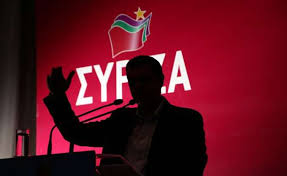
Εχτές, με αφορμή την εγκύκλιο της υπουργού Ξενογιαννακοπούλου, που δίνει δωράκια άδειες και επιδόματα και προαγωγές σε δημόσιους υπάλληλους, έγραψα ότι η κρατική γραφειοκρατία είναι εχθρός του λαού. Είχα αφήσει απ’ έξω τον άλλο εχθρό του λαού. Τη συνδικαλιστική νομενκλατούρα. Η ΟΤΟΕ φρόντισε να μου την επιβεβαιώσει. Κλείνει πλέον τις τράπεζες για το κοινό μισή ώρα νωρίτερα!

Σε όλες τις ρυθμίσεις που γίνονται τα τελευταία πολλά χρόνια για τις εργασιακές συνθήκες, το μόνιμο θύμα είναι ο πολίτης. Σε ποιότητα και αποτελεσματικότητα υπηρεσιών. Και για να το κάνω πιο λιανά, έχουμε τα εξής εξόφθαλμα φαινόμενα:

1. η δημόσια υπαλληλία παίρνει αυξήσεις υπέρτερες της προσφοράς της μόνο και μόνο επειδή η εξουσία θέλει τους πραιτοριανούς της. Όχι μόνο για να έχει «ελεγχόμενη» εκλογική πελατεία. Αλλά, κυρίως, για να μπορεί να κάνει ανενόχλητη από έλεγχο, από αντιδράσεις, από ξεσηκωμούς, τις πολιτικές της. Είτε αυτές είναι παράνομες, είτε καταχρηστικές. Και είναι καθημερινές αυτές οι πολιτικές των κυβερνήσεων.

2. Την ίδια ώρα η άλλη υπαλληλία, η ιδιωτική, αυτή που παράγει τον πλούτο, από τον οποίο ζει η δημόσια υπαλληλία και ο επιχειρηματικός κόσμος, και οι πολίτες την πλειονότητά τους, είναι παρατημένη στη μοίρα της. Γιατί είναι εργασιακά έρμαιο των εργοδοτών και της απειλής της απόλυσης, με 1 εκ. άνεργους να περιμένουν να βρουν δουλειά. Έρμαιο, γιατί οι νόμοι που ψήφισε ο ΣΥΡΙΖΑ και τα άλλα παιδιά, έχουν καταργήσει τη δύναμη της συνδικαλιστικής προστασίας. Αλλά…

3. …αλλά, στους εργατοπατέρες υπάρχει και η ΟΤΟΕ. Η οποία, ήταν πάντα ισάξια της κρατικής γραφειοκρατίας απέναντι στους πολίτες. Οι οποίοι ήταν και είναι οι πελάτες της! Οι αιμοδότες της. Επειδή οι τράπεζες χωρίς πολίτες, χωρίς καταθέτες, είναι κουφάρια. Και πράγματι, τέτοιες είναι εδώ και καιρό.

4. Η κρατική γραφειοκρατία, λοιπόν, ανοίγει και κλείνει το μαγαζί ό,τι ώρα τη βολεύει αυτήν, και οι πολίτες να πάνε να κουρεύονται. Είτε πρόκειται για εφορίες, για υπουργεία, για ιατρεία, για ασφαλιστικά ταμεία, για υπηρεσίες πρόνοιας, για ΔΕΗ, ΕΥΔΑΠ και λοιπούς ευγενείς συγγενείς. Ακόμα και για τα λεωφορεία και τα τραίνα. Να μη μιλήσουμε για πιο ντελικάτες υπηρεσίες σαν τους αρχαιολογικούς χώρους και τα μουσεία ή τις πινακοθήκες και τα λοιπά κέντρα… πολιτισμού.

5. Στα ίδια χνάρια βαδίζει και η ΟΤΟΕ. Όχι τώρα. Από πάντα. Μόνο που τώρα ξελούφαξε από τη σιωπή εδώ και 10 χρόνια, που δεν έβγαλε άχνα για τα capital controls, για τη ληστεία των ελληνικών σπιτιών από τις ανακεφαλαιοποιήσεις και τις κατασχέσεις και για τη σωτηρία των αφεντικών της. Και του εαυτού της βεβαίως, να μην ξεχνιόμαστε. Άχνα. Τσιμουδιά. Κιχ. Τίποτε.

Αλλά, η κυρία ΟΤΟΕ , έκοψε από την εξυπηρέτηση των πολιτών μισή ώρα την ημέρα, μετά από συμφωνία με τους τραπεζίτες! Προσέξτε: Δεν έδωσε μάχη να μη φορτώνονται οι υπάλληλοι παραπάνω δουλειά στις τράπεζες, οι οποίες σε λίγο θα έχουν περισσότερα μηχανήματα παρά υπαλλήλους! Και οι οποίες ετοιμάζονται να διώξουν με εθελουσία πάνω από 7.500 κόσμο. Λέξη η ΟΤΟΕ. Τσιμουδιά. Δεν έδωσε μάχη να φεύγουν μισή ώρα αργότερα και να την πληρώνονται υπερωρία. Δεν έδωσε μάχη να φεύγουν οι υπάλληλοι μισή ώρα νωρίτερα. Βρήκε την εύκολη λύση με το εύκολο θύμα. Έκοψε μισή ώρα από την εξυπηρέτηση των πολιτών! Λες και όλη αυτή η υπαλληλία υπάρχει για οποιονδήποτε άλλο λόγο εκτός από την εξυπηρέτηση των πολιτών! Και μάλιστα των πιο αδύναμων. Γιατί ο Κοπελούζος και ο Μαρινάκης δεν πάνε να στηθούν στην τράπεζα. Ο κύριος Θανάσης με τη κυρία Καίτη πάνε. Εναντίον αυτών συμφώνησε η ΟΤΟΕ.

Το κατάντημα της κοινωνίας είναι ότι η είδηση αυτή πέρασε στα ψιλά στα ΜΜΕ και ούτε που ακούστηκε στις ειδήσεις. Γιατί θεωρείται πια φυσικό ο πολίτης να είναι κλωτσοσκούφι και αναξιοσέβαστος. Έτσι τον έχουν κάθε μέρα και δε λέει λέξη. Ποιος θα τον σεβαστεί;

Όπως λέω εδώ και χρόνια, η ελληνική κοινωνία βρίσκεται στον πάτο της παρακμής εξ αιτίας τριών κυρίως κακών: Κυβερνήσεων, γραφειοκρατών και συνδικαλιστών. Αυτά είναι τα τρία κακά της μοίρας της χώρας.

Οι κυβερνήσεις καταστρέφουν την Παιδεία και λειτουργούν υπέρ των κομμάτων, της εκλογικής ψηφοθηρίας και των κρατικοδίαιτων επιχειρηματιών. Οι οποίοι με τη σειρά τους, ως Κεφάλαιο, δεν θα μπορούσαν να είναι άπληστοι και ευνοούμενοι χωρίς τις κυβερνητικές πλάτες.

Οι γραφειοκράτες λειτουργούν με γνώμονα μόνο το στενό ατομικό και οικογενειακό τους συμφέρον, όχι μόνο γράφοντας τους πολίτες στα παλιά τους τα παπούτσια, αλλά περιφρονώντας τους κι όλας. Διεκδικώντας τα πάντα γι αυτούς και τίποτε για τη βελτίωση των υπηρεσιών τους πρός τον κόσμο.

Οι συνδικαλιστές λειτουργούν υπέρ της στενής συντεχνίας τους, αδιαφορώντας για κάθε άλλο πολίτη ή εργαζόμενο. Μιλάμε για συνθήκες 15ου αιώνα. Η νοοτροπία είναι του ό,τι αρπάξουμε, κι οι άλλοι ας πάνε να κουρεύονται. Όσο πιο κοντά, μάλιστα, είναι με την κρατική μηχανή ή με τη μηχανή της εξουσίας- καλή ώρα όπως οι τράπεζες- τόσο πιο ατομιστικό και ανάλγητο για τους πιο αδύναμους πολίτες είναι το πρόσωπο του συνδικαλισμού.

Από τώρα και στο εξής ο κύριος Κώστας και η κυρία Καίτη χάνουν μισή ώρα εξυπηρέτησης στις τράπεζες. Μεγάλη επιτυχία ενός συνδικάτου που υποτίθεται ότι υπερασπίζεται εργαζόμενους. Αλλά, όπως έλεγε και η μακαρίτισσα η Αντουανέτα, έχει απάντηση το συνδικάτο: «ας έρθουν νωρίτερα». Για να προλάβει να φάει το παντεσπάνι του κι ο συνδικαλιστής.

Γ.Παπαδόπουλος- Τετράδης.

https://www.liberal.gr/arthro/244658/apopsi/stili-alatos/kleinoun-tis-trapezes-noritera-mono-gia-to-koino.html

Γιατί ο ΣΥΡΙΖΑ δεν μπορεί να μεταλλαχθεί!

3

Του Γιάννη Στεφανίδη* Τρίτη 19 Μαρτίου 2019 liberal.gr

Ένα από τα πολιτικά μυστήρια των τελευταίων μηνών είναι η δημόσια τοποθέτηση διανοουμένων και άλλων προσωπικοτήτων από τον χώρο της λεγόμενης Κεντροαριστεράς υπέρ της πολιτικής μακροημέρευσης του ΣΥΡΙΖΑ και του ηγέτη του.

Οι λόγοι που προβάλλονται από τα πρόσωπα αυτά συμπυκνώνονται στην άποψη ότι ο πολιτικός φορέας υπό τον κύριο Αλέξη Τσίπρα αποτελεί σήμερα τον πλέον αξιόπιστο, αν όχι και τον μοναδικό, διεκδικητή του ευρύτερου πολιτικού χώρου, ο οποίος, από την εποχή του Ανδρέα Παπανδρέου, με ισχυρές δόσεις αυθαιρεσίας και αυταρέσκειας, αναφέρεται ως «η μεγάλη δημοκρατική παράταξη».

Στα επιχειρήματα που προβάλλονται για να στηριχθεί η άποψη αυτή συγκαταλέγονται η αποτυχία του πειράματος να ανασυσταθεί η Κεντροαριστερά από το εναπομείναν ΠΑΣΟΚ, το Ποτάμι και διάφορα άλλα σχήματα· η ανάγκη να παγιωθεί η μεταμόρφωση του ΣΥΡΙΖΑ σε κεντροαριστερό κόμμα εξουσίας με βασικό προσανατολισμό την παραμονή της Ελλάδας στην Ευρωπαϊκή Ένωση και την Ευρωζώνη· και η υποτιθέμενη διολίσθηση της Νέας Δημοκρατίας προς έναν «άκρατο νεοφιλελευθερισμό» στα οικονομικά, «ακροδεξιές» αντιλήψεις σε ζητήματα εσωτερικής πολιτικής, και εθνικιστικές αγκυλώσεις στα ζητήματα εξωτερικής πολιτικής, με προεξάρχον το κλείσιμο του Μακεδονικού.

Θα μπορούσε κανείς να παρατηρήσει ότι οι, κατά τεκμήριο, καλοπροαίρετοι συνήγοροι του ΣΥΡΙΖΑ δίνουν συγχωροχάρτι για τις πράξεις και τις παραλείψεις του κόμματος αυτού, αν όχι από την εποχή που εκδηλώθηκε η τρέχουσα κρίση, τουλάχιστον για την περίοδο της συγκυβέρνησής του με το κάθε άλλο παρά κεντροαριστερό κόμμα του Παναγιώτη Καμμένου. Στη διαπίστωση αυτή, οι θιασώτες του κεντροαριστερού, (φιλ)ευρωπαϊκού ΣΥΡΙΖΑ ίσως αντέτειναν ότι αυτά είναι περσινά, ξινά σταφύλια (έστω και αν τις οικονομικές και άλλες συνέπειές τους θα τις πληρώνουν και οι επερχόμενες γενιές), αφού εκείνο που προέχει είναι η προϊούσα μετάλλαξη του κόμματος αυτού προς την επιθυμητή κατεύθυνση. Είναι δυνατόν να πέφτουν έξω οι αισιόδοξοι αυτοί άνθρωποι;

Αυτό μένει να αποδειχτεί. Ωστόσο, πλήθος είναι οι ενδείξεις ότι η όποια μετάλλαξη του ΣΥΡΙΖΑ είναι μάλλον φαινομενική: Η εγκατάλειψη της κρημνοβασίας και της ρήξης, τον Ιούλιο του 2015, έγινε υπό το κράτος φόβου και ανάγκης. Στην καλύτερη περίπτωση, η μεταστροφή της ηγετικής ομάδας του ΣΥΡΙΖΑ αντιστοιχεί σε εκείνη των κομμουνιστών απαράτσικ στα καθεστώτα του ανατολικού μπλοκ που, αντιμέτωποι με την πλήρη κατάρρευση, ενδύθηκαν τη λεοντή της σοσιαλδημοκρατίας για να διατηρήσουν κάποιον έλεγχο της μετάβασης στη μετά τον υπαρκτό σοσιαλισμό εποχή.

Στη χειρότερη περίπτωση, και καθώς η κατάρρευση αποφεύχθηκε για την ώρα, ο κύριος Τσίπρας και ο περίγυρός του αισθάνονται ότι το δικό τους «Μπρεστ Λιτόβσκ» τούς εξασφάλισε μια ανάσα ώστε, σε εύθετο χρόνο, να επανέλθουν στα κοσμογονικά τους σχέδια. Το πιθανότερο, όμως, είναι ότι τέσσερα και πλέον χρόνια στη διακυβέρνηση έπεισαν αυτούς τους ανθρώπους και την υπολογίσιμη πελατεία τους ότι η άσκηση της εξουσίας είναι αυτοσκοπός, ιδίως εφόσον συνοδεύεται από κάθε είδους ανέσεις και ανταμοιβές. Ο λογαριασμός αποστέλλεται στις μέλλουσες γενιές. Ο δε (φιλ)ευρωπαϊσμός τους εξαντλείται σε ευκαιριακή ρητορεία και, πολύ περισσότερο, στην εκμετάλλευση του πλαισίου στήριξης, το οποίο η ΕΕ και η Ευρωζώνη εξακολουθούν να παρέχουν στην ασθενική ελληνική οικονομία. Στο μέτρο αυτό, είναι συζητήσιμο κατά πόσον ο κύριος Γιούνκερ και η κυρία Μέρκελ πράγματι κατόρθωσαν να κάνουν τον κύριο Τσίπρα να νοιώσει σαν στο (ευρωπαϊκό) σπίτι του.

Επιπλέον, η λεγόμενη Κεντροαριστερά, στον βαθμό που επιδιώκει να διακρίνεται από την ολοκληρωτική Αριστερά, φροντίζει να επιδεικνύει υψηλό ποσοστό ταύτισης με τις κατακτήσεις του Διαφωτισμού και της φιλελεύθερης δημοκρατίας: κοσμικό κράτος, απρόσωπη, αμερόληπτη και χρηστή διοίκηση, χωρισμός των εξουσιών (και ανεξάρτητη δικαιοσύνη), ελευθεροτυπία, σεβασμός των πολιτικών και ατομικών δικαιωμάτων. Πρόκειται για έναν υψηλό πήχη, και είναι πλήθος οι ενδείξεις ότι η κυβέρνηση του κυρίου Τσίπρα δεν έχει κανένα πρόβλημα να περνά από κάτω του.

Σταχυολογώντας, η στάση της απέναντι στη λειτουργία του κοινοβουλευτισμού, τη στελέχωση της διοίκησης, τις ανεξάρτητες αρχές, τη δικαιοσύνη, τα ΜΜΕ, τα δικαιώματα των πολιτών στην ασφάλεια και την περιουσία, τα πολιτικά δικαιώματα των ελλήνων μεταναστών, και, εν γένει, η αντιμετώπιση αυτού που η Αριστερά υποτιμητικά ονομάζει «αστική νομιμότητα», συντείνουν στην άποψη ότι η πολιτική κουλτούρα του κυβερνώντος κόμματος αντιστρατεύεται τη φιλελεύθερη δημοκρατία.

Αν εξαιρέσει κανείς τη «σαγήνη των Συρακουσών» (δηλ. την γοητεία που ασκεί πάνω σε προσωπικότητες των γραμμάτων η ικανότητα ανθρώπων της δράσης να πιάνουν, φερ’ ειπείν, «πουλιά στον αέρα»), τότε οι καλοπροαίρετοι συνομιλητές των κυβερνώντων μάλλον παραβλέπουν τη θεμελιώδη αντιπάθεια ανθρώπων όπως ο σημερινός πρωθυπουργός για τη φιλελεύθερη δημοκρατία, δηλαδή το σταθερό πλαίσιο διακυβέρνησης του ευρωπαϊκού και, ευρύτερα, του δυτικού μας περίγυρου, αντιπάθεια που δύσκολα αποκρύπτεται όταν βρίσκονται στο κομματικό τους οικοσύστημα ή συναναστρέφονται ξένους εκπροσώπους εναλλακτικών επιλογών, με κοινό παρονομαστή τον αυταρχισμό.

Μένει, βέβαια, να διερευνηθεί η αιτίαση ότι ο επίδοξος διεκδικητής της εξουσίας, η Νέα Δημοκρατία, έχει επικίνδυνα διολισθήσει σε επικίνδυνα «ακροδεξιές» θέσεις. Πρόκειται για ζήτημα στο οποίο θα άξιζε να επανέλθουμε.

*Ο κ. Γιάννης Στεφανίδης είναι καθηγητής Διπλωματικής Ιστορίας Α.Π.Θ.

https://www.liberal.gr/arthro/244604/apopsi/arthra/metallagmenos-syriza.html

Ending climate change requires the end of capitalism. Have we got the stomach for it?

0

Policy tweaks won’t do it, we need to throw the kitchen sink at this with a total rethink of our relationship to ownership, work and capital
Firefighters tackle a bush fire in Sydney.
 ‘The need to keep the wheels of capitalism well-oiled takes precedence even against a backdrop of fires, floods and hurricanes.’ Photograph: Fire & Rescue NSW/AFP/Getty Images

Climate change activism is increasingly the domain of the young, such as 16-year-old Greta Thunberg, the unlikely face of the school strike for climate movement, which has seen many thousands of children walk out of school to demand that their parents’ generation takes responsibility for leaving them a planet to live on. In comparison, the existing political establishment looks more and more like an impediment to change. The consequences of global warming have moved from the merely theoretical and predicted to observable reality over the past few years, but this has not been matched by an uptick in urgency. The need to keep the wheels of capitalism well-oiled takes precedence even against a backdrop of fires, floods and hurricanes.

Today’s children, as they become more politically aware, will be much more radical than their parents, simply because there will be no other choice for them. This emergent radicalism is already taking people by surprise. The Green New Deal (GND), a term presently most associated with 29-year-old US representative Alexandria Ocasio-Cortez, has provoked a wildly unhinged backlash from the “pro free market” wing, who argue that it’s a Trojan horse, nothing more than an attempt to piggyback Marxism onto the back of climate legislation.

The criticism feels ridiculous. Partly because the GND is far from truly radical and already represents a compromise solution, but mainly because the radical economics isn’t a hidden clause, but a headline feature. Climate change is the result of our current economic and industrial system. GND-style proposals marry sweeping environmental policy changes with broader socialist reforms because the level of disruption required to keep us at a temperature anywhere below “absolutely catastrophic” is fundamentally, on a deep structural level, incompatible with the status quo.

Right now we can, with a massive investment of effort by 2030, just about keep the warming level below 1.5C. This is “bad, but manageable” territory. Failing to put that effort in sees the world crossing more severe temperature barriers that would lead to outcomes like ecosystem collapse, ocean acidification, mass desertification, and coastal cities being flooded into inhabitability.

We will simply have to throw the kitchen sink at this. Policy tweaks such as a carbon tax won’t do it. We need to fundamentally re-evaluate our relationship to ownership, work and capital. The impact of a dramatic reconfiguration of the industrial economy require similarly large changes to the welfare state. Basic incomes, large-scale public works programmes, everything has to be on the table to ensure that the oncoming system shocks do not leave vast swathes of the global population starving and destitute. Perhaps even more fundamentally, we cannot continue to treat the welfare system as a tool for disciplining the supposedly idle underclasses. Our system must be reformed with a more humane view of worklessness, poverty and migration than we have now.

Unfortunately for our children, the people they have to convince of all this are the people who have done very well out of this system, and are powerfully incentivised to deny that it is all that bad. Already, Joke Schauvliege, a Belgian environment minister, has been forced to resign after falsely claiming that she had been told by Belgian state security services that “ghosts” behind the scenes were behind demonstrations in Belgium.

This conspiracism of the elite, these claims that genuine mass movement can’t possibly really exist and must be in some way being guided by agents provocateurs, is just one of the ways in which those currently running things have resorted to a kind of political gaslighting in an attempt to maintain their grip on power.

 Dianne Feinstein rebuffs young climate activists’ calls for Green New Deal – video 

Gaslighting is a term I don’t use lightly, because it describes a genuine form of emotional abuse, where an abuser will deny reality in an attempt to get their victim to literally doubt their own sanity, and this should not be diluted by overuse. Yet I struggle to think of another word that adequately sums up the way in which “sensible” adults are doubling down on their tactic of manufacturing a political reality which bears no relationship to the world we see around us. It’s the Marxism of Groucho rather than Karl: “Who are you going to believe? The serious political professionals or your own lying eyes?”

US Senator Dianne Feinstein’s meeting with schoolchildren petitioning her to take action over the issue went viral because of the way she condescended to them for, basically, asking her to leave them a planet behind to live on. “I’ve been doing this for 30 years,” she said, “I know what I’m doing.” The obvious response is, of course, that messing something up for 30 years is quite long enough, thanks. Long tenure without results is not the same thing as expertise.

This is a tough and bitter pill to swallow for the political professionals whose feet are firmly under the table. It is increasingly obvious that all their tactics have done almost nothing except run down the clock, but still they insist that it’s the young who just don’t get it and that things aren’t that simple. They’re the living embodiment of the famous New Yorker cartoon, with a suited man sat in a post-apocalyptic landscape telling his young audience “Yes, the planet got destroyed. But for a beautiful moment in time we created a lot of value for shareholders.”

This is reality v the vested interests of the powerful. Any meaningful policy has to upset the established power base and the political donor class. Any policy that doesn’t upset these people will be useless. To pretend that we can compromise our way through this while we wait for a magical, technological bullet that will keep temperatures down without costing us anything is beyond wilful ignorance now. It is a question of basic morality.

Many of today’s climate strikers won’t even be 30 by the time the 1.5C deadline comes around in 2030. They are asking us to consider a simple question: is their future worth more than preserving our reputations? What will our response to them be?

• Phil McDuff writes on economics and social policy

At this critical time…

… we can’t turn away from climate change. For The Guardian, reporting on the environment is a priority. We give climate, nature and pollution stories the prominence they deserve, stories which often go unreported by others in the mainstream media. At this critical time for our species and our planet, we are determined to inform readers about threats, consequences and solutions based on scientific facts, not political prejudice or business interests. But we need your support to grow our coverage, to travel to the remote frontlines of change and to cover vital conferences that affect us all.

More people are reading and supporting our independent, investigative reporting than ever before. And unlike many news organisations, we have chosen an approach that allows us to keep our journalism accessible to all, regardless of where they live or what they can afford.

The Guardian is editorially independent, meaning we set our own agenda. Our journalism is free from commercial bias and not influenced by billionaire owners, politicians or shareholders. No one edits our editor. No one steers our opinion. This is important as it enables us to give a voice to those less heard, challenge the powerful and hold them to account. It’s what makes us different to so many others in the media, at a time when factual, honest reporting is critical.

Every contribution we receive from readers like you, big or small, goes directly into funding our journalism. This support enables us to keep working as we do – but we must maintain and build on it for every year to come. Support The Guardian from as little as $1 – and it only takes a minute. Thank you.

https://www.theguardian.com/commentisfree/2019/mar/18/ending-climate-change-end-capitalism?CMP=Share_iOSApp_Other&fbclid=IwAR3aD0BZPY89Z-wGu7_c9mnD_ApA3ePN5-rWkMbMoD6eqMhwE8cMRjj31cs

Castaner en boîte de nuit : les syndicats dénoncent une « faute professionnelle »

0

Un ministre de l’Intérieur peut-il être sans protection et alcoolisé par les temps qui courent ? La soirée arrosée de Christophe Castaner fait débat.