Αρχική Blog Σελίδα 2615

ΠΩΣ Η ΕΛΛΑΔΑ ΘΑ ΑΠΟΚΡΟΥΣΕΙ ΤΗΝ ΤΟΥΡΚΙΚΗ ΕΠΙΘΕΤΙΚΟΤΗΤΑ

1

του Παναγιώτη Μπαλακτάρη, Δικηγόρου.

Ά Μέρος

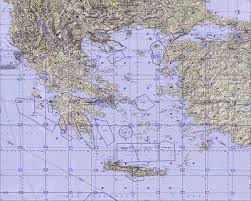
«Είναι ευλογία να ζεις σε αυτή τη χώρα!», «Ζούμε στο πιο όμορφο οικόπεδο της Γης!», «Η Ελλάδα είναι πολύτιμη γι’ αυτό μας επιβουλεύονται όλοι, εχθροί και σύμμαχοι!»… Πόσοι δεν έχουμε πει μία ή και περισσότερες από τις παραπάνω φράσεις; Για πόσους αυτές οι φράσεις δεν αποτελούν αξιώματα, θέσφατα, δεδομένα; Ε λοιπόν, είναι έτσι. Ή για την ακρίβεια, περίπου έτσι. Η Ελλάδα ζει και αναπνέει σε μια πολύ σημαντική γειτονιά του πλανήτη. Βρίσκεται στη Δύση, αλλά και στο κατώφλι της Ανατολής. Και αντιστρόφως αποτελεί την πύλη της Ανατολής προς τη Δύση. Είναι απόληξη της Ευρώπης στο νότιο σημείο των Βαλκανίων. Συνορεύει με τα Δαρδανέλλια, γεγονός που καθιστά το Αιγαίο πέλαγος πολύτιμο για τη ναυσιπλοΐα παγκοσμίως. Βρέχεται από τη Μεσόγειο και την Αδριατική. Η υφαλοκρηπίδα της εκτείνεται στα νοτιοανατολικά έως και την ανατολική Μεσόγειο, όπου ένα μεγάλο στοίχημα είναι ενεργό αυτή την εποχή, αυτό της εναλλακτικής παροχής ενέργειας στην Ευρώπη. Όλα αυτά επιβεβαιώνουν την ευλογία της Ελλάδος. Όμως αυτό είναι συγχρόνως και πρόβλημα.

Η γεωγραφική θέση μιας χώρας μπορεί να είναι ευλογία ή/και κατάρα. Σπανίως είναι μόνο το ένα εκ των δύο. Κι αυτό ακόμη αλλάζει στο διάβα του χρόνου. Για μια χώρα ισχυρή και αναπτυγμένη το να βρίσκεται σε εξαιρετική γεωγραφική θέση αποτελεί ευλογία. Σιγά σιγά αυτή η χώρα μετατρέπεται σε κυνηγό. Μια χώρα σε πλεονεκτική θέση, αλλά ανίσχυρη και φτωχή επέχει θέση λείας. Αντιθέτως, μια όχι ιδιαίτερη γεωγραφική περιοχή είναι ικανή να διαμορφώσει μια χώρα άνευρη ή και δραστήρια, αναλόγως της οικονομικής της κατάστασης και της ποιότητας του πολιτικού της συστήματος. Στις προαναφερθείσες περιπτώσεις, σε καθεμιά από αυτές συναντάμε και ειδικότερες κατηγορίες και παραλλαγές, διότι όλα στη ζωή είναι δυναμικά και εξελίσσονται. Για παράδειγμα, μέχρι την εκδήλωση εξωστρέφειας των προστατευμένων από δύο ωκεανούς Ηνωμένων Πολιτειών της Αμερικής στις αρχές του προηγούμενου αιώνα, αυτές δεν ήταν σοβαρός παράγοντας στο τότε παγκόσμιο σύστημα. Από την άλλη όμως, η σε μοναδική θέση ευρισκόμενη Μεγάλη Βρετανία χρειάστηκε δύο φορές την καταλυτική επικουρία των ΗΠΑ για να αντιμετωπίσει τις πρωσικές-γερμανικές στρατιές, λόγω της στρατιωτικής της αδυναμίας. Τελικά, καλή η γεωγραφική θέση αλλά από μόνη της δεν αρκεί.

Η ολοκλήρωση του σχηματισμού των σημερινών συνόρων της Ελλάδος έλαβε χώρα το 1947 με την ενσωμάτωση των Δωδεκανήσων. Από τη Μικρασιατική Καταστροφή του 1922 περιορίσθηκε ο πέριξ του Αιγαίου Ελληνισμός στη μία του πλευρά. Το Αιγαίο έχασε τον χαρακτηρισμό της ελληνικής λίμνης. Στρατιωτικά το ελληνικό κράτος απώλεσε εντελώς και τον έλεγχο του Αιγαίου το 1974, εξαιτίας της άφρονος αποχώρησης από το στρατιωτικό σκέλος του ΝΑΤΟ. Με δεδομένα τη γεωγραφική θέση, καθώς και τα χερσαία και θαλάσσια σύνορα είναι ευλογία να ζεις στην Ελλάδα. Οι γείτονες που έχει, ωστόσο, έχουν διαφορετική άποψη.

Τα Βαλκάνια απεξαρτήθηκαν από τον εγκληματικό κομμουνισμό μόλις το 1991. Η γεωπολιτική διελκυστίνδα που κρατούσε εξ ανάγκης ενωμένη τη Γιουγκοσλαβία έσπασε. Το σκοινί της έγινε θηλιά στο λαιμό των ανθρώπων του παλιού καθεστώτος και η εθνογένεση ξεκίνησε. Η Ελλάδα βρέθηκε με ένα μείζον πρόβλημα προς διαχείριση, το Σκοπιανό. Αλλά όχι μόνον αυτό. Η ελληνική μειονότητα της Βορείου Ηπείρου που στέναζε υπό τον Χότζα χρειαζόταν ανάσες. Οι ροές (λαθρο)μεταναστών άλλαξαν την ελληνική κοινωνία της δεκαετίας του ’90 και τις απόψεις της. Τα Σκόπια, υπό την ανάμνηση και των αθλιοτήτων του ελληνικού εμφυλίου πολέμου, σφετερίσθηκαν το όνομα της μίας και μοναδικής Μακεδονίας. Το θέμα του ονόματος υπολειπόταν της τουρκικής επιθετικότητας. Κανένα πρόβλημα από αυτά δε μοιάζει, παρά ταύτα, με αυτά που προκαλεί η Τουρκία.

Η Ιστορία διδάσκει λένε. Κι όσοι λαοί δεν διδάσκονται υφίστανται ήττες, κατοχές, ακρωτηριασμούς. Ο Ελληνισμός γνωρίζεται με τους Τούρκους (τα πρώτα φύλα τους) από τον 11ο αιώνα. Οι μεσαιωνικές πολεμικές συγκρούσεις συνεχίστηκαν μέχρι και τη σύγχρονη εποχή. Η κατ’ ευφημισμόν «Επιχείρηση Ειρήνευσης Κύπρου», δηλαδή η παράνομη εισβολή και κατοχή της Κύπρου το 1974 δεν ήταν τίποτε άλλο από μία ακόμη πολεμική σύγκρουση. Περιορισμένου πεδίου μεν, πολεμική δε. Η Ελλάδα καταναλώνει τεράστιο διπλωματικό κεφάλαιο στην αντιμετώπιση της τουρκικής απειλής, η οποία δεν περιορίζεται ούτε εξαντλείται στην πολεμική σύρραξη. Έχει να κάνει με ψυχολογικές επιχειρήσεις, με «πολιτιστική» διείσδυση και φυσικά με το μεταναστευτικό. Συνεπώς, μπορούμε να πούμε ότι η Τουρκία είναι από μόνη της μια πολυεπίπεδη απειλή. Μια απειλή που όπως και να ‘χει πρέπει να αντιμετωπισθεί αποτελεσματικά.

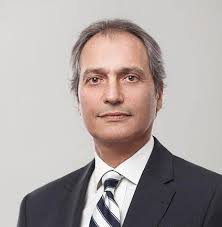
Ο David Meidan, πρώην επικεφαλής της TEVEL (Διεύθυνσης Πολιτικής Δράσης και Εξωτερικών Σχέσεων της MOSSAD) διατύπωσε την εξής θέση: «Όταν κάποια άλλη χώρα ή κάποιος οργανισμός θέλει να βλάψει τη χώρα σου βρίσκεσαι υπό διαρκή απειλή και είναι δύσκολο να διοικείς σωστά τη χώρα σου υπό τέτοια απειλή». Θα μπορούσε να έχει κατά νου και την ελληνοτουρκική σχέση για έναν τέτοιον ισχυρισμό. Αλλά εκείνος, όπως είναι φυσικό, δικαιολογούσε την ενεργητική πολιτική του Ισραήλ έναντι των εχθρών του. Μπορεί η Ελλάδα να διοικείται σωστά υπό καθεστώς μόνιμης απειλής; Όχι. Ουδεμία χώρα μπορεί. Άρα, είτε θα σταματήσει να υπάρχει αυτή η απειλή είτε θα εξουδετερωθεί. Καμία από τις δύο επιλογές δεν είναι μόνο θέμα πολιτικής βούλησης. Αντιθέτως, είναι συνάρτηση πολλών παραγόντων σε μια διαρκώς δύσκολη εξίσωση. Η χώρα που περιμένει να μην απειλείται έχει ακμαία οικονομία και δημογραφική άνθιση. Επίσης, έχει ισχυρές ένοπλες δυνάμεις και δεν μειώνει τη θητεία ούτε κλείνει στρατόπεδα. Πρωτίστως, η χώρα που δεν ανέχεται τις απειλές εκπέμπει σαφές μήνυμα περί αυτού. Αναμφισβήτητα, διαθέτει κοινωνική συνοχή και δεν είναι διχασμένη. Ξέρει τι θέλει και πώς να το αποκτήσει. Έχει όραμα για το μέλλον. Παρέχει στέρεα εκπαίδευση στη νεολαία της. Άλλωστε, τα αγαθά κόποις κτώνται. Ενίοτε και πολέμοις…


Ο πρωθυπουργός σε ρόλο εισαγγελέα.

2

Ξεκινώ από την διαρρεύσασα θέση του Μαξίμου: Μητσοτάκης για Τσίπρα: «Εγώ τους πολιτικούς μου αντιπάλους δεν τους στέλνω στα δικαστήρια» .

Παρόλο που αυτό ισχύει νομικά, με εξέπληξε. Ο πρωθυπουργός ενός κράτους, όπως η Ελλάδα, έχει ουσία- όχι τύποις- εισαγγελικές αρμοδιότητες. Και η έκπληξή μου δεν έχει να κάνει ούτε με τον Τσίπρα, ούτε με τη Μητσοτάκη.

Δεν μπορώ να πιστέψω πως σε μια Δυτική δημοκρατία μπορεί να παραπέμψει, ουσιαστικά σε δίκη,  με τη μορφή, σε πρώτη φάση, της σύστασης  προανακρτικής ή εξεταστικής επιτροπής, εκτός του εισαγγελέα και άλλο πρόσωπο, εκτός δικαιοσύνης. Εκφράζω τον προβληματισμό απλού πολίτη. Οι νομικοί μπορούν να το βλέπουν διαφορετικά.

Στο πολιτικό μέρος, τώρα, καλώς ο Μητσοτάκης δεν παραπέμπει και τον Τσίπρα. Τα μόνα στοιχεία, δημοσίως  γνωστά για τον Τσίπρα είναι ότι Σαμαράς και Βενιζέλος κατέθεσαν ότι δεν μπορεί να μη γνώριζε για τις ενοχοποιήσεις πολιτικών στην υπόθεση Novartis, ως πρωθυπουργός.

Αν αυτά είναι τα στοιχεία, δεν είναι ούτε καν ενδείξεις για παραπομπή. Οπότε πολύ καλά έκανε ο Μητσοτάκης.

Φαίνεται, όμως, ότι έχει πεπειραμένους συμβούλους. Παραπέμπεται ο Παπαγγελόπουλος. Προφανώς τα στοιχεία θα είναι πιο σημαντικά αφού και ο ίδιος ο Παπαγγελόπουλος φρόντισε με δηλώσεις του στο παρελθόν να ενοχοποιήσει τον εαυτό του για ανάμιξη στο έργο της δικαιοσύνης.

Ποιος αποκλείει ο Παπαγγελόπουλος, για να ελαφρύνει τη θέση του, “να δώσει” όπως λένε στη δημοσιογραφική γλώσσα, τον Τσίπρα; Να πει, δηλαδή, ότι είχα εντολή από τον Τσίπρα γι αυτό και για το άλλο. Οπότε, αναλόγως και της συγκυρίας το θέμα μπορεί να ξαναειδωθεί.

Για λόγους ισονομίας και διαφύλαξης του δημοσίου συμφέροντος ο πρωθυπουργός πρέπει να υπόκειται στους ίδιους νόμους με τους άλλους πολίτες.

Ένα δεύτερο ζήτημα που πρέπει να μας απασχολήσει για την ομαλή λειτουργία του κράτους είναι η υπόθεση της Λέρου. Σκοτάδι στις έρευνες. Μου έκαναν εντύπωση, όμως, δύο αναφορές των ΜΜΕ. Αν ισχύουν, τότε υπάρχει ένα βαθύ ελληνικό κράτος που συνεχίζει να προκαλεί προβλήματα.

Το ένα είναι πως η ΕΥΠ, σύμφωνα με τα ΜΜΕ, ξεπερνώντας τις δυσκολίες που της έθεταν άλλοι σχετικοί δημόσιοι φορείς εντόπισε τους ενόχους. Υπάρχουν, δηλαδή, κέντρα που θέτουν εμπόδια στις έρευνες από την ΕΥΠ;

Δεύτερον χθες, μόλις, διάβασα πως οι ΟΥΚ (Ομάδες Υποβρυχίων Καταστροφών) προσπαθούν να διαφυλάξουν από ευθύνες, μέλη τους. Και ποιές είναι αυτές οι Ομάδες (ΟΥΚ) που προσπαθούν να διαφυλάξουν μέλη τους από παράνομες πράξεις που μειώνουν το αξιόμαχο των Ενόπλων Δυνάμεων σε μια κρίσιμη περιοχή; Γιατί το επιτρέπει η δικαιοσύνη που επίσταται των ερευνών;

Τρίτο ζήτημα: έγινε μεγάλη προσπάθεια μέχρι που στις αρχές του ’80 ο Ανδρέας,  με τα μέτρα που πήρε να περιθωριοποιήσει το φόβο του χωροφύλακα από την ελληνική κοινωνία. Αυτό ακούγεται αστείο σήμερα που ο χωροφύλακας φοβάται τον μπαχαλάκια αλλά μέχρι τα μέσα του ’80 δεν ήταν.

Προϊόντος του χρόνου έγινε κατάχρηση της δημοκρατικής αυτής κατάκτησης και φθάσαμε με τη συνδρομή μπαχαλάκηδων, αντιεξουσιαστών, ακόμη και του Συριζα, στο σημείο να τρέμουν, αστυνομικοί και κοινωνία, διάφορες οργανωμένες ομάδες με πολιτικό πρόσημο.

Το γεγονός διαμόρφωσε μια αγανακτισμένη από τη δράση αντιεξουσιαστών και μπαχαλάκηδων κοινωνία, έτοιμη να αποδεχθεί ακόμη και αστυνομική ασυδοσία προκειμένου να εξασφαλισθεί η ηρεμία της.

Το γεγονός ότι ο κ. Χρυσοχοϊδης έρχεται πρώτος στις μετρήσεις δημοφιλίας δεν είναι τυχαίο.

Ελπίζω να μη φθάσουμε στην προ του 81 κατάσταση. Και να βρεθεί μια ισορροπία μεταξύ της διαφύλαξης των δημόσιων αγαθών από την αστυνομία και του περιορισμού της ασυδοσίας οργανωμένων ομάδων που δεν έχουν καμιά ιδεολογική αναφορά, αν και την επικαλούνται.

There is nothing inevitable about the victory of fascists

0

On the sixth anniversary of the murder of anti-racist rapper Pavlos Fyssas by far-right forces, KEVIN OVENDEN reports on how the Golden Dawn is in crisis.

Morning Star

GOLDEN DAWN closed its national headquarters in Athens on Saturday.

It is a further, massive blow to the Greek neonazi party whose trial for organising serious criminal activity is drawing to a close after four-and-a-half years.

That and other news from Greece in the last few days should provide inspiration and some pointers to the anti-fascist movements on both sides of the Atlantic.

The neonazis moved into the five-storey building on Mesogeion Avenue in Athens in 2012.

It symbolised Golden Dawn’s breakthrough in entering the parliament that year. With it came expanding its street-fighting capacity and a claim to a mass following, to become “the national party,” in the depths of the Greek economic crisis.

Now it has had to abandon the prestigious location and move back to the smaller offices near Larissa train station that it had dedicated to local organisation in Athens and Piraeus. There are redundancies, feuds and fallings out.

It is the latest retrenchment. Dozens of party offices around Greece have been forced to close in the last two years as a result of campaigning by anti-fascist forces, such as the Keerfa coalition, and due to internal and financial crises.

In July’s general election, which saw the centre-right New Democracy replace the outgoing Syriza government, Golden Dawn failed to reach the 3 per cent threshold and lost its parliamentary representation.

Overnight the fascist organisation had to say goodbye to the income of 15 MPs and over 50 members who were on the parliamentary payroll.

That accelerated a crisis that had already seen bitter splits and defections of MPs, MEPs, councillors and cadres across Greece.

It is a stunning fall from even a few years ago when Golden Dawn’s success made it a point of reference on the European far right.

Filip de Winter of the far-right Vlaams Belag, now topping opinion polls in the Flanders region of Belgium, was revealed in 2016 to have visited Golden Dawn leaders.

It was recently discovered that the leader of the German AfD in Brandenburg, Andreas Kalbitz, took part in a neonazi rally in Athens alongside Golden Dawn in 2007.

It was when the party, which has a record of neonazi violence going back to the 1980s, stood on the brink of major advance through exploiting the fears and distress thrown up by the crisis that hit Greece the following year.

What Golden Dawn offered the European far-right scene was a model that combined violent street fighting with, from 2012 onwards, big electoral gains. By 2015 it was the third party in parliament.

It thus appeared to provide a way forward for the fascist wing of the European far right looking to synthesise “militant” and electoral tactics. The two have tended to pull apart and cause schisms in other countries.

Of those two, the dominant tactic of Golden Dawn was to create a climate of terror in neighbourhoods through attacks on immigrants, leftists, trade unionists and opponents of all kinds.

The basic units of the organisation are its “battalion squads,” modelled on Hitler’s Brownshirts.

Thus, electoral success in 2012 was cashed in to ramp up its paramilitary organisation. It unleashed a rising wave of violence culminating in the murder of anti-racist rapper Pavlos Fyssas in September 2013.

It was part of a Septemvriana — a forensically organised “September of events” — aimed at terrorising opposition and even intimidating more conventional rivals on the far right.

Tonight, anti-fascist protesters will gather in the Keratsini neighbourhood of Athens-Piraeus to commemorate the sixth anniversary of Pavlos’s assassination.

His case is at the base of the trial of 69 Golden Dawn leaders and hardcore members that began in April 2015 and is now in its final stages.

It is not a trial of ideas or under constitutional provisions to protect democracy. It is a criminal trial.

Golden Dawn members stand accused of the Fyssas assassination, the attempted murder and attack on a group of Egyptian fishermen and the near fatal assault on trade unionists of the All-Workers Militant Front (PAME) near the shipyard zone of Piraeus.

The leadership as a whole is accused of running a criminal organisation that commissioned and directed those and other felonies — in the way that a mafia don directs the actions of his footsoldiers.

Many other crimes have come to court and resulted in guilty verdicts. Those judicial decisions are also evidence in the big trial.

One of them is for the attack in 2013 on the Synergeio autonomous social space. Seven Golden Dawn members were finally found guilty of that last Friday.

That was despite pressure by a representative of the Athens district attorney’s office to have the case dismissed on technical grounds arising from recent changes to the penal code.

Nevertheless, the court found a Golden Dawn MEP and a former MP, both also accused in the main trial, guilty of incitement to commit grievous bodily harm, and five others guilty of the assault itself.

The Synergeio verdict will enter the main trial today as the process of defendants giving their “apologias,” responses to charges, continues.

It is highly significant because the modus operandi of that attack is identical to the others the main trial is considering.

The last stage will be the apologias of the central leadership next month.

Anti-fascist lawyers have lodged a formal complaint against a government spokesperson for making a blatantly political intervention into the Synergeio trial by arguing before the verdict that the case should be dismissed.

That points to a second aspect of this long legal process. It has uncovered something of the collaboration of authoritarian parts of the state and of the “respectable” right with Golden Dawn.

It has allowed it to commit these crimes in an atmosphere of near impunity for years.

Golden Dawn has conceded that the court case, an extension of the anti-fascist movement that is represented in the trial, has played a major role in incapacitating it.

Verdicts are expected early next year. The threat of fascism and violent racism will not, of course, disappear even if Golden Dawn’s root and core is jailed.

But the news from Greece this last week is that there is nothing inevitable about the victory of fascist forces out of a combination of political breakdown and economic slump.

That was not the message from several quarters four years ago. As the Greek government clashed with the EU the foreign minister and the then finance minister, Yanis Varoufakis, said that the only beneficiaries of the EU crushing Greece would be Golden Dawn, Marine Le Pen in France and other fascist or far-right forces.

It was a reckless thing to say. It is one thing to contemplate what serious fascist advance could look like. We have the historical imagination and contact with those still with us from the generation of the 1940s to do that.

It is quite another to invoke it as a fait accompli, to contemplate it as victorious, idly and fatalistically.

The refusal of fighting elements of the Greek left to do that is the central reason for the halting and now throwing back of Golden Dawn.

The government did capitulate in 2015. The fascists hoped to gain in the slipstream with false claims to be a militant force against the imposition of yet more austerity.

The following year the government signed up to the EU-Turkey deal of shame to stop refugees reaching safety in Europe. In so doing it authenticated racism and put refugees in camps on islands that this week Medecins Sans Frontieres reveal to be utterly inhuman.

More recently the nationalist right launched a huge wave of chauvinist agitation over the Macedonia-naming issue. Then the one-time party of the radical left, Syriza, lost the general election.

All of these factors were held in advance to provide big openings for Golden Dawn, and that was the fascist strategy.

Instead, it is in crisis. That is down to the systematic effort, through mass and combative means, to drive the fascists out of the workplaces and neighbourhoods, and to isolate them through a popular, democratic cordon sanitaire.

It involved a sharp anti-fascist focus — thus avoiding the temptation to label all forms of reaction as fascist — with a firm anti-racist grounding that put the case against Islamophobia and anti-refugee policies.

The fact that at the heart of the trial stand three types of fascist target — radical youth, immigrants and militant trade unionists — underscored how fascism is aimed at the working-class movement as a whole, in all its diversity.

If racism is a poison used to dull the senses of the working class, fascism is a dagger plunged into its body.

Political breakdown is advancing in Europe, even before the anticipated next slump.

Factions of the AfD are clashing in Germany over whether to try to turn increased votes into coalitions in the East with the conservative right or into more “radical,” direct and fascistic strategies.

Hard right forces and worse in Britain are hoping to gain from the Brexit crisis if the labour movement proves incapable of offering a democratic way forward uniting the majority of working people.

And yet — the great German playwright Bertolt Brecht titled his satire upon the rise of Hitler “The Resistible Rise of Arturo Ui.”

A resistible rise. Fascism can be stopped.

https://morningstaronline.co.uk/article/there-nothing-inevitable-about-victory-fascists

The Pentagon’s $1.5 Trillion Addiction to the F-35 Fighter

0

By William J. Astore The Nation

Despite serious setbacks, Lockheed Martin’s defunct jet still has Washington’s ear.

EDITOR’S NOTE: This article originally appeared at TomDispatch.com. To stay on top of important articles like these, sign up to receive the latest updates from TomDispatch.

How are you with numbers? I can deal with $1.5 million. I think I can even imagine $1.5 billion, a sum a thousand times greater. But how about a million times greater: $1.5 trillion? That happens to be the estimated cost of the Pentagon’s program to build, deploy, and maintain the no-longer-so-new F-35 jet fighter over its lifetime. How can any people invest so much in a technology whose fundamental purpose is dominance through destruction—and which reportedly doesn’t even work particularly well?

The Egyptians had pyramids. The Romans had roads, aqueducts, and coliseums. The medieval Europeans had castles and cathedrals. These days, America’s pyramids, aqueducts, and cathedrals are those warplanes, among other deadly weapons programs, including a $1.7 trillion one to “modernize” the US nuclear arsenal. Unlike the massive projects of ancient history, which still endure and in some fashion represent the triumph of the human spirit, America’s massive spending on military weaponry has been for totems of power that will prove either ephemeral or make our very existence ephemeral, while casting a long shadow over our moment, thanks to the sheer extravagance and colossal waste they embody.

As ephemeral as the F-35 stealth fighter may prove in historical terms, it’s already a classic symbol of America’s ever more fruitless forever wars. Like them, the F-35 program has proven staggeringly expensive, incredibly wasteful, and impossible to stop, no matter the woeful results. It has come to symbolize the too-big-to-fail, too-sacrosanct-to-reject part of America’s militarized culture of technological violence.

Despite its astonishing cost and mediocre performance, the F-35 isn’t simply a product of the naked greed and power of the military-industrial-congressional complex. In a strange way, it also reflects the ongoing love affair Americans have had with weaponry of every sort. It’s about, you might say, the 1.5 trillion ways we worship warplanes and everything they mean to us.

Don’t think of “Jet noise, the sound of freedom” as merely a bumper sticker meant for the vehicles of Air Force veterans. After all, Americans invented the airplane and we still tend to see it as the means by which this country can dominate the global high ground, projecting our version of (super) power, while inflicting death across significant parts of the planet. It’s not so surprising, then, that our high-tech warplanes routinely roar in a celebratory fashion over American versions of those Roman coliseums, generating cheers and thrills among sports fans but little thought as to their cost, both in money and in lives.

Imagine, for example, what the $1.5 trillion to be spent on the F-35 over its lifetime might mean in green energy, or health care, or education, or infrastructure, or virtually any other pressing need in this country today. Given our actions, given what we’ve been most willing to extravagantly fund during this century, you’d think Americans truly believed a few squadrons of F-35s could blow up climate change or cure cancer or fix America’s roads and bridges. Then again, Donald Trump seems to think nuking hurricanes is a good idea! So why not?

I first heard of what would become the F-35 in 1995. I was then a captain in the Air Force, working on flight-planning software. I was told that a new Joint Strike Fighter, or JSF, was being developed. The “joint” meant that the Air Force, Navy, and Marines would all use it. Its big selling point at the time was the striking level of anticipated savings expected due to the commonality of the design, of spare parts, and of everything else. (Those in the know then, however, remembered the Pentagon’s previous shot at “jointness,” the TFX program in the 1960s; the resulting plane, the F-111, would be rejected by the Navy and unloved by the Air Force.)

The new JSF was advertised as offering the highest-tech possible at the lowest price imaginable, a fighter that would replace legacy aircraft like the Air Force’s F-16s and A-10s and the Navy’s F-18s. Winning the competition to develop the plane was weapons giant Lockheed Martin and a prototype F-35 Lightning II first took to the skies in 2006, by which time I was already retired from the Air Force. In the 13 years since then, the F-35 has gone through a mind-boggling series of major program delays and setbacks, burning money all the way.

In 2014, the plane’s woeful record finally caught the eye of CBS’s 60 Minutes, which documented how the program was seven years behind schedule and already $163 billion over budget. The Pentagon, however, simply plunged ahead. Its current plan: to buy more than 2,600 F-35s by 2037, with the assumption that their service lives will possibly extend to 2070. In Pentagon terms, think of it as a multigenerational warplane for America’s multi-generational wars.

Five years after that 60 Minutes exposé and 13 years after its first flight, the F-35 unsurprisingly remains mired in controversy. Harper’s Magazine’s Andrew Cockburn recently used it to illustrate what he termed “the Pentagon Syndrome,” the practice of expending enormous sums on weapons of marginal utility. The F-35, he noted, “first saw combat [in 2018], seventeen years after the program began. The Marines sent just six of them on their first deployment to the Middle East, and over several months only managed to fly, on average, one combat sortie per plane every three days. According to the Pentagon’s former chief testing official, had there been opposition, these ‘fighters’ could not have survived without protection from other planes.”

So far, in other words, the F-35 has had an abysmally low rate of availability. Technically speaking, it remains in “initial operational testing and evaluation,” during which, as defense journalist Dan Grazier has noted, it achieved a “fully mission capable rate” of just 11 percent in its combat testing phase. (The desired goal before going into full production is 80 percent, which is, in a sense, all you need to know about the “success” of that aircraft so many years later.) Compounding those dreadful percentages is another grim reality: The F-35’s design isn’t stable and its maintenance software has been a buggy nightmare, meaning the testers are, in a sense, trying to evaluate a moving and messy target.

These and similar problems led President Trump and former acting Defense Secretary Patrick Shanahan to push possible alternatives to the F-35 as a way of pressuring Lockheed Martin to improve its performance. In December 2016, before he even entered the Oval Office, for example, Trump tweeted about building F-18 Super Hornets in place of the F-35. Later, Shanahan advocated for an updated version of the venerable F-15 Eagle, made by Boeing, a company for which he had only recently been a senior executive. But the president’s tweets have moved on, as has Shanahan, and Lockheed Martin continues to hold all the cards. For the Pentagon, it’s still the F-35 or bust.

Unsurprisingly, the president has changed his tune, enthusing that the F-35 is invisible (“You literally can’t see it”) rather than merely difficult to detect on radar. (He has also referred to Marillyn Hewson, the CEO of Lockheed Martin, as Marillyn Lockheed.) The main selling point of the F-35 is indeed its stealth technology, marking it as a “fifth generation” fighter when compared to the older F-15s, F-16s, F-18s, and A-10s, which are decidedly unstealthy and radar detectable. Primarily because of such technology, the Pentagon argues that the F-35 will prove far more “survivable” than previous warplanes in any future conflict with Russia, China, or some other country equipped with sophisticated radars and surface-to-air missiles.

Yet such stealthiness comes at a real cost and not just in monetary terms. To maintain its stealthy profile, the F-35 must carry its weaponry internally, limiting its load and destructive power compared to “fourth generation” planes like the A-10 and F-15. It must also rely on an internal fuel system, which will limit its range in battle, while its agility in air-to-air combat seems poor compared to older fighters like the F-16. (The Pentagon counters, unconvincingly, that the F-35 wasn’t designed for such dogfighting.)

As a former Air Force project engineer and historian of technology and warfare, here’s my take on the F-35 program today: In trying to build an aircraft to meet the diverse requirements of three services, Lockheed Martin has produced a jack-of-all-trades, master-of-none albatross. Each military service piled requirements onto the F-35, as ever more esoteric features were added, including that stealth capability; special software featuring eight million lines of code; unique (and wildly expensive) helmets for its pilots; and vertical landing/short takeoff capacity for the Marines, which led to an airframe design that made it ever less maneuverable for the Air Force and Navy. The result: perhaps the classic example of a plane that is far less than the sum of its staggeringly expensive parts.

To get more specific, consider the mission of close air support, or CAS, which means supporting troops in or near combat. The best and most survivable plane for such a role remains the one specifically designed for it: the unglamorous A-10 Warthog, which ground troops love but Air Force officialdom hates (because it was designed in response to Army, not Air Force, needs). By comparison, the F-35, which is supposed to fill the A-10’s role, simply isn’t designed for such a mission. It’s too fast, meaning its loiter time over targets is severely limited; its weapons load is inadequate; it has only one engine, making it more vulnerable to ground fire; and its (malfunctioning) gun lacks punch. (It also costs twice as much to fly.) Despite all this, the Air Force continues to advocate for the F-35 in a CAS role, even as it grudgingly re-wings A-10s to extend their lives.

And keep in mind as well that, if you want an attack platform that can loiter for hours, while removing all risk to pilots, why not just use already existing drones like the military’s Reapers? Who even needs an expensive F-35 stealth fighter? To these and similar criticisms the Pentagon responds that it’s fifth generation! It’s new! It’s stealthy! It’s a game-changer! It scares the Russians and Chinese! And if those answers don’t work, there’s always that old standby: Tell me why you hate our troops!

Meanwhile, Lockheed Martin’s profits are soaring as that company and the Pentagon sell the F-35 to allies around the world. Despite its delays, cost overruns, and performance issues, it’s still being promoted as America’s latest and greatest. Foreign military sales have the added benefit of driving down per-unit costs for the Pentagon, even as politicians tout the F-35 as a huge job creator. In short, with no alternative in sight, Lockheed Martin remains top gun in the Pentagon’s cockpit (Eat your heart out, Tom Cruise!), with virtually guaranteed profits for the next half-century.

TOUCHING THE THIRD RAIL OF AMERICAN POLITICS

Refusing to genuflect to “the troops”—that is, the US military—has become the true third rail of American politics. In practice, this has meant giving the Pentagon a blank check to spend trillions of dollars on whatever it wants, including a fighter jet with a distinctly dubious record, once promised to the Pentagon at $38 million a plane but now estimated to cost $158.4 million each. If being a decade behind schedule and $200 billion over budget only wins you more money and more leeway, what does a military contractor like Lockheed Martin have to worry about? Even an outspoken progressive politician like Senator Bernie Sanders has muted his criticism of the F-35 (since some of them are to be based in his home state of Vermont, offering the promise of future jobs).

I’m old enough to remember Senator William Proxmire and his “Golden Fleece” awards. Nearly half a century ago, in what now seems like an alternate American universe, he had the temerity to regularly criticize major defense contractors when they fleeced Americans out of billions of dollars for wasteful weaponry. Today, that sort of principled outspokenness is rare indeed in the halls of Congress and rarer still in the White House. With both Congress and the president lining up to sell F-35s, what are ordinary Americans to do?

After all these decades of growth, the military-industrial-congressional complex is strong indeed. It’s not, however, omnipotent—not yet anyway. Its Achilles’ heel is funding. If Americans were, Proxmire-style, to start holding the weapons makers and the Pentagon accountable for their messes and mayhem in a language they understood—money—change might be possible. If, however, we continue to equate such deadly and staggeringly costly weaponry with safety and security, if that money continues to flow prodigiously to the Pentagon, the weapons makers, and their camp followers, you can count on two things: America’s forever wars will keep on churning and F-35s will soon roar loudly over a stadium near you.

One of these days, look for those same planes to be soaring in the skies over various unfortunate countries, dropping “Made in America” calling cards on their people. Just don’t look for them striking at cancer or climate change or solving any of the actual problems we face on this planet.

Υβριδικός πόλεμος της Τουρκίας εναντίον της Ελλάδας μέσω του μεταναστευτικού

1

του Αναστάσιου Λαυρέντζου. slpress.gr

Επί πολλές δεκαετίες δεδηλωμένη πρόθεση των τουρκικών ηγεσιών είναι να καταστήσουν την Τουρκία μεγάλη δύναμη στην Ανατολική Μεσόγειο. Στο πλαίσιο αυτής της επιδίωξης, η Τουρκία είναι ένας γεωπολιτικός παίκτης ο οποίος δεν αποφεύγει τις εξωτερικές προκλήσεις, αλλά αντίθετα προσπαθεί διαρκώς να τις εκμεταλλευτεί. Σε αυτή τη λογική, οι τουρκικές ηγεσίες και κυρίως ο Ερντογάν δεν θα μπορούσαν να αφήσουν αναξιοποίητες τις μαζικές μεταναστευτικές ροές που καταφθάνουν στην Ευρώπη από τον Τρίτο κόσμο.

Η Τουρκία λοιπόν όχι μόνο δεν προσπάθησε να αποφύγει αυτές τις ροές, αλλά αντιθέτως επιδίωξε να τις έλξει. Έτσι λ.χ. διευκόλυνε την έκδοση βίζας για μεγάλο αριθμό χωρών της Ασίας και της Αφρικής και καθιέρωσε πολύ φθηνά αεροπορικά εισιτήρια. Επίσης ανέχτηκε, αν όχι υπέθαλψε, διάφορα κυκλώματα διακίνησης παράνομων μεταναστών. Με τον τρόπο αυτό η Τουρκία κατάφερε να γίνει βασική χοάνη διοχέτευσης της παράνομης μετανάστευσης στην Ευρώπη, μετατρέποντας έτσι τις μεταναστευτικές ροές σε πολιτικό της όπλο.

Με το όπλο αυτό η Τουρκία εκβίασε την Ευρώπη το 2015, όταν οι μεταναστευτικές και οι προσφυγικές ροές γιγαντώθηκαν επ’ αφορμή της συριακής κρίσης. Στο πλαίσιο αυτό η ΕΕ συνομολόγησε το 2016 με την Τουρκία μια συμφωνία για το μεταναστευτικό. Στην πραγματικότητα επρόκειτο για μια εύθραυστη συμφωνία, με την οποία η ΕΕ θα πλήρωνε λύτρα στην Τουρκία, προκειμένου να κρατά υπό κάποιο έλεγχο τις μεταναστευτικές ροές. Στη μέση αυτής της διευθέτησης βρέθηκε η Ελλάδα, η οποία ανέλαβε το διαχειριστικό φορτίο, χωρίς όμως να έχει δυνατότητα ελέγχου στο πρόβλημα.

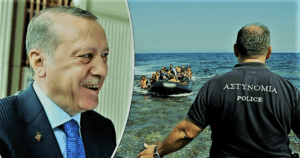
Τις τελευταίες εβδομάδες γινόμαστε μάρτυρες μιας νέας μεγάλης έξαρσης των παράνομων μεταναστευτικών ροών, η οποία θυμίζει μέρες του 2015. Σχετικά είναι ενδεικτικό ότι στις 28 Αυγούστου, σε διάστημα μόνο μισής ώρας δεκατρείς μεγάλες λέμβοι έφτασαν στις ακτές της Λέσβου και αποβίβασαν περισσότερους από 500 μετανάστες. Οι εικόνες τεράστιων λέμβων παρατεταγμένων στη Σκάλα Συκαμνιάς της Λέσβου έκαναν σύντομα τον γύρο του κόσμου, δημιουργώντας για την Ελλάδα την αίσθηση μιας ανοχύρωτης χώρας. Ανάλογα περιστατικά εμφανίζονται σε πολλές περιοχές της χώρας, με την εμφάνιση μεταναστευτικών ροών και στην ευαίσθητη περιοχή της Θράκης. Τί μέλλει γενέσθαι λοιπόν; Και πώς η Ελλάδα πρέπει να απαντήσει σε αυτές τις εξελίξεις;

Οι δύο βασικοί παράμετροι του μεταναστευτικού

Όσον αφορά το μεταναστευτικό ζήτημα, υπάρχουν δύο βασικοί ρυθμοί:

  • Ο ένας είναι ο ρυθμός εισροής των παράνομων μεταναστών και προσφύγων στην Ελλάδα. Όποιος ελέγχει αυτό τον ρυθμό, είναι αυτός που ασκεί πολιτική. Η Τουρκία ελέγχει αυτόν τον ρυθμό και άρα είναι ο παράγοντας που ασκεί πολιτική.
  • Ο δεύτερος ρυθμός είναι ο ρυθμός αποχώρησης των παράνομων μεταναστών από την Ελλάδα. Εκείνος που ελέγχει μόνο αυτόν τον ρυθμό, είναι απλώς διαχειριστής. Η Ελλάδα πασχίζει να ελέγξει αυτόν τον ρυθμό και άρα προσπαθεί να είναι ένας διαχειριστής.

Ανυπαρξία ελληνικής μεταναστευτικής πολιτικής

Υπό την πίεση των εντυπώσεων που δημιούργησαν οι πρόσφατες μαζικές αφίξεις μεταναστών, η κυβέρνηση συγκάλεσε πριν λίγες μέρες ΚΥΣΕΑ προκειμένου να αποφασίσει έκτακτα μέτρα για το μεταναστευτικό.

Όπως αποδείχτηκε, τα επτά μέτρα που ανακοίνωσε η κυβέρνηση επιχειρούν να ελέγξουν τον ρυθμό αποχώρησης μεταναστών από τη χώρα ή έστω να αποσυμφορήσουν τα νησιά του Αιγαίου. Μεταφέροντας έναν αριθμό μεταναστών στην ενδοχώρα, ανακουφίζουν προσωρινά τα νησιά (μέχρι να έλθει το επόμενο «κύμα»), άλλα όσους μεταφέρουν στο εσωτερικό, τους θέτουν εκτός συμφωνίας ΕΕ-Τουρκίας (δεν υπάρχει σχετική αναφορά στη συμφωνία, αλλά έτσι την ερμηνεύουν η ΕΕ και η Τουρκία). Ουσιαστικά δηλαδή τους εγκαθιστούν επ’ αόριστο στη χώρα. Με αυτές τις πρακτικές όχι μόνο δεν λύνουν το μεταναστευτικό, αλλά τελικά προωθούν ακριβώς αυτό που επιδιώκει η Τουρκία, δηλαδή, την εγκατάσταση μεταναστών σε όλη την ελληνική επικράτεια.

Από τα παραπάνω είναι σαφές ότι η Ελλάδα δεν διαθέτει μεταναστευτική πολιτική. Είναι μόνο ένας παθητικός δέκτης, ο οποίος πασχίζει να διαχειριστεί το πρόβλημα. Ακόμη και αυτό όμως το κάνει σπασμωδικά, όταν η ένταση των μεταναστευτικών ροών τον υποχρεώνει να δείξει ότι αντιδρά.

Στην προηγούμενη περίοδο της κυβέρνησης ΣΥΡΙΖΑ η ανυπαρξία μεταναστευτικής πολιτικής καλύφθηκε πίσω από το «ιδεολόγημα» των ανοικτών συνόρων. Με την αλλαγή κυβέρνησης στις πρόσφατες εκλογές καλλιεργήθηκαν οι προσδοκίες για μια διαφορετική προσέγγιση του μεταναστευτικού. Πράγματι, ορισμένες αποφάσεις των πρώτων ημερών έδειξαν μια αλλαγή πλεύσης, αλλά οι τελευταίες εξελίξεις δείχνουν ότι η κυβέρνηση ΝΔ δεν είχε ετοιμαστεί για να αντιμετωπίσει ένα μείζον και διαρκές ζήτημα όπως το μεταναστευτικό.

Η Ελλάδα δεν μπορεί να παραμένει μια ανοχύρωτη χώρα απέναντι στον υβριδικό μεταναστευτικό πόλεμο που έχει εξαπολύσει εναντίον της η Τουρκία. Επίσης, η ελληνική κοινωνία, η οποία επί μια δεκαετία αντιμετωπίζει μια βαθιά κρίση, δεν μπορεί να βλέπει τις ελληνικές κυβερνήσεις να προσπερνούν το βασικό πρόβλημα της χώρας και να ξοδεύουν χρόνο και πόρους για μια ατελέσφορη διαχείριση του μεταναστευτικού.

Πρόταση για μια ελληνική μεταναστευτική πολιτική

Σε αυτό το πλαίσιο είναι προφανές ότι η παρούσα κυβέρνηση καλείται να αντιληφθεί τις ευθύνες της και να ασκήσει με θάρρος μια συγκροτημένη μεταναστευτική πολιτική. Μια πολιτική η οποία θα υπηρετεί πρώτα τα καλώς εννοούμενα συμφέροντα της Ελλάδας και στη συνέχεια θα βοηθά όσους πραγματικά δικαιούνται ανθρωπιστική βοήθεια στα μέτρα των δυνατοτήτων της χώρας.

Μια τέτοια μεταναστευτική πολιτική θα πρέπει:

  1. Να περιορίσει ή να απαγορεύσει τη δράση όσων ΜΚΟ δεν λειτουργούν σε αυστηρά ανθρωπιστικό πλαίσιο. Ειδικότερα πρέπει να απαγορευτεί άμεσα η δράση των ΜΚΟ που λειτουργούν καταχρηστικά (ή ακόμη και σε συνεργασία με κυκλώματα λαθροδιακινητών), και βεβαίως όσων ΜΚΟ λειτουργούν ως μηχανισμοί προώθησης σχεδιασμών τρίτων χωρών.
  2. Να δημιουργήσει ένα πλέγμα αντικινήτρων στην έλευση παράνομων μεταναστών, ώστε οι τελευταίοι να πάψουν να θεωρούν την Ελλάδα εύκολη πύλη σε έναν παράδεισο δωρεάν παροχών. Επί παραδείγματι, μπορεί να δηλωθεί ρητώς (όπως π.χ. στην Αυστραλία) ότι όποιος εισέρχεται στην Ελλάδα παράνομα, δεν θα τύχει επιδομάτων και δεν θα λάβει ποτέ ελληνική υπηκοότητα. Μια τέτοια πρακτική θα αποκαταστήσει τη λειτουργία των συνόρων, αφού η παράνομη διάβασή τους θα συνεπάγεται μια σειρά ανεπιθύμητες συνέπειες για τους επίδοξους μετανάστες.
  3. Να θέσει σε λειτουργία ειδικά για τους παράνομους μετανάστες κλειστά προαναχωρησιακά κέντρα, τα οποία θα τελούν υπό ελληνική διοίκηση, ενώ τα έξοδα σίτισης, περίθαλψης κ.λπ. θα καλύπτονται από διεθνείς οργανισμούς (ΟΗΕ, ΕΕ). Υποστήριξη θα μπορούν επίσης να παρέχουν διεθνείς οργανώσεις (π.χ. Ερυθρά Ημισέλινος) ή διάφορες καθαρά ανθρωπιστικές ΜΚΟ. Σε περιπτώσεις που το ελληνικό κράτος θα πρέπει να αποσυμφορήσει τα νησιά του Αιγαίου, οι μεταφορές να μην γίνονται στην ενδοχώρα, αλλά σε εγκαταστάσεις δεύτερης γραμμής που μπορούν να βρίσκονται και σε μη κατοικημένα νησιά.
  4. Να περικόψει ή να σταματήσει την άμεση παροχή χρημάτων σε μετανάστες και πρόσφυγες, ώστε να σταματήσει η διάχυση των χρημάτων αυτών στις τοπικές κοινωνίες των νησιών του Αιγαίου. Έτσι θα υποχρεωθούν να αναστείλουν τη λειτουργία τους και διάφοροι μηχανισμοί παροχής υπηρεσιών, νομικών συμβούλων κ.λπ. που έχουν δημιουργηθεί στα νησιά.
  5. Να συντομευτούν οι διαδικασίες χορήγησης ασύλου με την εισαγωγή ορισμένων αυτοματισμών. Ενδεικτικά αναφέρεται ότι για τους υπηκόους κάποιων χώρων (που και ο ΟΗΕ δεν τους αναγνωρίζει a priori καθεστώς προσφύγων) θα μπορούσαν τα αιτήματα ασύλου να απορρίπτονται κατ’ αρχήν και να εξετάζονται ενδελεχώς μόνο περιπτώσεις για τις οποίες υπάρχουν συγκεκριμένα τεκμήρια. Επί παραδείγματι, δεν είναι δυνατόν ένας μετανάστης από το Μπαγκλαντές να διασχίζει 4-5 χώρες, στις περισσότερες από τις οποίες δεν υπάρχει πόλεμος (ούτε στη δική του), για να εμφανιστεί στα ελληνικά νησιά και να δηλώσει πρόσφυγας. Το ίδιο ισχύει και για πολλές άλλες από τις δεκάδες χώρες προέλευσης των μεταναστών που φθάνουν στην Ελλάδα.
  6. Να εκπονήσει και να υποβάλλει στην ΕΕ ένα πρόγραμμα διαχείρισης του μεταναστευτικού, το οποίο θα περιλαμβάνει ενισχυμένη χρηματοδότηση για επιδοτούμενες επιστροφές των παράνομων μεταναστών στις πατρίδες τους. Επίσης, θα πιέζει για διακρατικές συμφωνίες με τις χώρες προέλευσής τους, ώστε οι τελευταίες να τους δέχονται όταν απελαύνονται.


Ο υβριδικός πόλεμος της Τουρκίας εναντίον της Ελλάδας


Secret negotiations between Turkey and the European Union over refugees.

0

Secret negotiations between Turkey and the European Union over refugees have begun following the blackmail threatened by Turkish President Recep Tayyip Erdoğan, who has repeatedly said he would unleash a wave of Syrian and other refugees to flood Europe and destabilize the bloc’s governments.

According to information received by Nordic Monitor, Erdoğan demands additional billions of euros from the EU member states and support for his stated policy of establishing a safe zone in northern Syria. It appears Erdoğan’s blackmail triggered new series of EU-Turkey diplomatic talks aimed at keeping refugees out of Europe. Negotiations are conducted in secrecy in order to avoid a negative public reaction  after the fallout from the controversial refugee deal of 2016, which has been described by advocacy groups and human rights organizations as a shameful stain on the collective conscience of Europe.

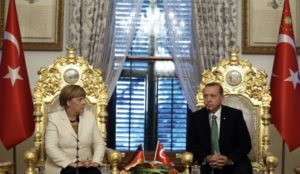
According to Turkey’s presidential communications office, Erdoğan spoke to German Chancellor Angela Merkel over the phone on Wednesday. Erdoğan and Merkel focused on migration, developments in Syria and bilateral relations, the office said in a statement. Leaks from both sides indicated that the Turkish president pressured Merkel, architect of the 2016 refugee deal, to extend the financial benefits of the previous agreement.

Two days after the phone call, on Friday, EU and Turkish delegations met in Brussels. The Turks, headed by Deputy Foreign Affairs Minister Faruk Kaymakcı, discussed issues related to migration with officials from the European Commission and the European External Action Service, the official statements revealed. Sources indicated that Kaymakçı led an advance team that might have been instructed to define the ground rules for further negotiations and explore the possibility of a summit.


The Turkey-EU Political Dialogue Meeting on September 13, 2019 in Brussels.

Meanwhile, Deputy Interior Minister Muhterem İnce and German Minister of Interior Horst Seehofer also met in Berlin on Friday. İnce was accompanied by Abdullah Ayaz, director general of migration management and responsible for the implementation of policies and strategies related to migration in Turkey and coordination between the relevant agencies and organizations.

The latest developments reveal the EU is considering striking a fresh migrant deal with Erdoğan. A possible extension was also signaled by Dutch Prime Minister Mark Rutte and Greek Prime Minister Kyriakos Mitsotakis last week. The day after Erdoğan’s threat, Rutte said the deal should be renegotiated. However, they appear to have been surprised by Erdoğan’s additional requests that may cost more than expected.

The new agreement will worsen the situation for the Syrians whose destiny rests in the hands of an Islamist dictator. Unfortunately, Turkey has reversed course, forcing thousands to leave its major cities in recent weeks and transporting many of them to its border with Syria in buses and police vans.

The Turkish president plans to resettle 1 million refugees in northern Syria. Last week he said he would build luxurious houses in the safe zone that Turkish and US officials are creating east of the Euphrates River. If the safe zone is not established to his satisfaction by the end of the month, Turkey will move unilaterally against the Kurdish People’s Protection Units (YPG), he also said. This threat came not long after his threat to open the border and flood the EU with migrants, indicating that the two are related.

Moreover, Erdoğan wants the funds transferred directly to his government, but the EU is unwilling to directly fund a government that is accused of corrupt and non-transparent tender practices. The agreement stipulates that funding be sent to finance projects through the mediation of official EU institutions, European development and investment banks and UN institutions.


Turkish Deputy Minister of Foreign Affairs Faruk Kaymakcı discussed issues related to migration with officials from the European Commission and European External Action Service.

Migration has become a leading topic of discussion in the bloc’s national parliaments since the beginning of the Syrian crisis, and the agreement allowed EU countries to return Syrian asylum-seekers to squalid camps in Turkey. The EU thus turned a blind eye to the anti-democratic rule of the Erdoğan regime in exchange for stronger controls on refugees leaving Turkish territory for Europe.

Since major corruption investigations that incriminated Erdoğan in December 2013, Erdoğan has presided over an Islamist regime in Turkey that has not received harsh criticism from the EU, in part due to the migration issue and in part because of trade and business interests. In the meantime Turkey’s human rights record has gone from bad to worse. The peace process with the Kurds was shelved by Erdoğan in 2015 when he realized his party was not benefiting politically and was losing votes to a pro-Kurdish party. Since a failed 2016 coup attempt, which many believe was orchestrated by Erdoğan as a false flag, over half a million people have been detained under the country’s abusive anti-terror laws, many of whom were subjected to torture and ill treatment in detention facilities and prisons. In addition to some 200 journalists, dozens of current and former MPs and academics and thousands of judges were imprisoned.


US Military Options in Iran

0

By George Friedman  September 17, 2019 Geopolitical Future

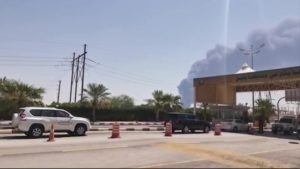
The United States has openly accused Iran of being behind the drone and cruise missile attacks on Saudi Arabia’s largest oil refinery. Now the question is what the United States will do in response.

The U.S. is in a difficult position. The attacks did not directly affect the U.S., save for the spike in oil prices, which actually helps the American oil industry. There is a temptation to let the attacks slip into history. But the United States has formed an anti-Iran alliance in which Saudi Arabia is a key (though weak) player. Saudi Arabia is under internal pressure from members of the royal family who oppose Crown Prince Mohammed bin Salman, and low oil prices have undermined the kingdom’s political cohesion. Doing nothing would call the U.S.-sponsored coalition into question. Saudi Arabia is an important player in the Sunni Arab world – and that world is the main threat to Iranian expansion. Failing to respond to an Iranian attack on a vital Saudi facility could help Iran increase its power throughout the region. During Donald Trump’s presidency, the United States’ inclination has been to avoid initiating direct military action in favor of applying economic pressure instead. He has maneuvered to minimize and halt active military engagement. Military action against Iran, therefore, would both endanger the alliance structure and cut against U.S. strategy.

An alternative option would be to introduce new sanctions, but there are two problems with this move. First, sanctions do not have the psychological impact military action does. The psychological impact would be on both Iran and the Sunni world, and the logic of the situation requires it. Second, the U.S. has already imposed painful sanctions on Iran’s economy. Any further sanctions would have limited effect and insufficient heft.

There is one military option that would have a severe economic shock but would also limit U.S. exposure: imposing a blockade on Iranian ports, with a selective closure of the Strait of Hormuz. This strategy has three weaknesses. First, a large naval force of multiple carrier battle groups would have to be deployed for a potentially unlimited time. Second, the fleet could come under attack from Iranian missiles, and while we would assume that U.S. naval vessels have effective anti-missile capabilities, any mistake could cost the U.S. a major vessel. To counter this, anti-missile air attacks as well as defensive measures would be needed, creating a second potentially costly dimension to this operation. Finally, such a blockade is by definition without a terminal point. If Iran does not fold under the pressure, the blockade could continue indefinitely, since ending it without a successful outcome would be seen as a defeat.

Another possible response would be to launch strikes against Iranian targets. The most appropriate target would be the factories producing drones and cruise missiles, along with storage facilities and so on. Here, the problem is getting accurate intelligence. The U.S. has undoubtedly been cataloging such things, but acting on poor information could result in an Iranian strike on U.S. forces or another sensitive site under informal American protection. This would only compound the problem of the Iranian attacks on the Saudi refinery.

The difficult question the U.S. faces is whether it should take an action so painful that it will block any further actions from Iran. If a blockade doesn’t shatter Iran’s economy, then escalation to eliminate its offensive air capability is needed. As for an air campaign, history has shown that they tend to take much longer than expected and sometimes fail altogether, providing the adversary an opportunity to take offensive action on its own. A U.S. attempt to eliminate Iran’s strike capability can be costly, and hidden Iranian missiles can attack regional targets. As with a blockade, an air campaign can go on indefinitely. Small-scale retaliatory strikes open the door to Iranian countermoves and could escalate into an extended operation.

As for sending in ground troops, not only does that not quickly solve the problem of Iranian air power, but it also returns the U.S. to a posture it has been in since 2001: occupation warfare. The U.S. military fully deployed can defeat the Iranian military and take terrain, but to hold it against a hostile militia would create interminable conflict with casualties that cannot be sustained. Iran is a big and rugged country, with a population of 82 million people, more than twice as large as Iraq or Afghanistan. And the idea that U.S. troops would be greeted as liberators is mere fantasy.

Apart from an air attack on Iran designed not to achieve a significant goal but rather to give the Saudis confidence in the U.S., the options for a direct attack are not promising. But there is another way to think about this problem. The United States has been concerned about Iran’s expanding political influence. But this creates potential targets that are of high value to Iran – and hitting these targets would be less daunting than an attack on Iran itself. Iran has its own or proxy forces in Iraq, Syria, Lebanon and Yemen. It has invested a great deal of time, resources and risk in creating these forces that are now holding territory in these countries.

Consider Lebanon, a place where Iran has been highly active since the 1980s through its proxy Hezbollah. If Hezbollah could be crippled, the political structure of Lebanon would shift out of Iran’s control, and Iran’s anchor on the Mediterranean would be gone. Such an operation could not be left to the Israelis partly because their force is much smaller than what the U.S. could bring to bear, and also because collaboration between U.S. and Israeli forces would put the U.S.’ Sunni allies in a difficult position. Such a response would directly hurt Iran’s interests but could be carried out at lower risk and at higher cost than other options.

Indeed, the very threat of an attack on Hezbollah might cause the Iranians to change their strategy. Of course, an attack there might also unleash a torrent of missile strikes from Iran, and that is the downside of this and all the other strategies. But the advantage is that where other strategies would likely fail to achieve their goals, an attack on Hezbollah might well succeed. It would be something Iran would not want to see and would be carried out by secure U.S. forces. Alternatively, the U.S. could attack Iranian forces in Syria, but that would have a lower impact.

This is a theoretical exercise; answering Iran’s attacks with an air campaign on a proxy power is unlikely. The Saudis would have trouble portraying it as U.S. commitment to Saudi security. Attacks in Syria, Iraq and Yemen would all suffer from a lack of clarity and from the fact that Iran itself would not be hit. There is the possibility that the Saudi air force could retaliate, but its ability to sustain losses and conduct an extended air campaign is doubtful. The Saudis could fire missiles at Iran, but that would begin an open-ended exchange, and the U.S. strategy has to be to hurt Iran in a mission with closure.

The Iranians know the dilemma they have posed the United States. They have bet that the risks are too high for the United States to respond. But the problem in Iran’s thinking is it can’t be sure the degree to which the U.S. sees Iranian expansion as a threat to U.S. long-term interests in the region. So the Iranians are asking the U.S.: Are you feeling lucky?

There would appear to be no good military options. Doing nothing could well destroy the anti-Iran bloc the U.S. has worked hard to create. The likely but not certain answer to this problem will be a symbolic retaliation. The problem with retaliations, however, is that they get out of hand.

George Friedman

George Friedman is an internationally recognized geopolitical forecaster and strategist on international affairs and the founder and chairman of Geopolitical Futures. Dr. Friedman is a New York Times bestselling author and his most popular book, The Next 100 Years, is kept alive by the prescience of its predictions. Other best-selling books include Flashpoints: The Emerging Crisis in Europe, The Next Decade, America’s Secret War, The Future of War and The Intelligence Edge. His books have been translated into more than 20 languages. Dr. Friedman has briefed numerous military and government organizations in the United States and overseas and appears regularly as an expert on international affairs, foreign policy and intelligence in major media. For almost 20 years before resigning in May 2015, Dr. Friedman was CEO and then chairman of Stratfor, a company he founded in 1996. Friedman received his bachelor’s degree from the City College of the City University of New York and holds a doctorate in government from Cornell University.
Geopolitical Future

Μια ταχεία εκτίμηση ευθυνών για την επίθεση στην Σαουδική Αραβία

0

του Δημήτρη Τσαϊλά, Υποναυάρχου ε.α.

Για να πούμε ότι οι επιθέσεις προήλθαν από το Ιράν είναι πολύ πρώιμο και επικίνδυνο καθώς πρέπει να περιμένουμε τη δημοσίευση των διεξοδικών αναλύσεων ακόμη και να ερευνήσουμε με σοβαρότητα τις σχετικές ενδείξεις. Ούτε και η αμερικανική πρόκληση ήταν ορθή προς τους Σαουδάραβες, όπως πρότεινε ο Πρόεδρος Τράμπ με ένα απερίσκεπτο tweet, στο οποίο είπε ότι είναι έτοιμος να αναλάβει στρατιωτική δράση για την αξιολόγηση της ευθύνης στη Σαουδική Αραβία.

Βεβαίως, η επίθεση δείχνει να είναι σύμφωνη με αυτά που έλεγαν οι Ιρανοί ότι θα έκαναν. Δηλαδή ότι θα απαντήσουν στις κυρώσεις των ΗΠΑ παρεμβαίνοντας στον παγκόσμιο ενεργειακό εφοδιασμό. Οι περισσότεροι από μας, συμπεριλαμβανομένου και εμού, πιστεύαμε ότι αυτή η απειλή αναφερόταν στη διακοπή της ναυσιπλοΐας μέσω των στενών του Ορμούζ. Η μείωση στο μισό της παραγωγικής ικανότητας της Σαουδικής Αραβίας με πυραύλους είναι πολύ πιο έξυπνη κίνηση και εντάσσεται στον υβριδικό πόλεμο.  Αυτές οι επιθέσεις πρώτον δεν φέρνουν απευθείας το Ιράν σε σύγκρουση με τις ΗΠΑ, δεύτερον δεν εμποδίζουν το πέρασμα που χρησιμοποιεί και η Τεχεράνη όσο και οι γείτονές της στον Κόλπο. Είναι τελείως πιθανό ότι το Ιράν, ίσως ενεργώντας μέσω των Χούτις, να είναι υπεύθυνο.

Τώρα ας εξετάσουμε τρις περιπτώσεις αμερικανικών πολέμων που ξεκίνησαν ή κλιμακώθηκαν με φταίξιμο που αποδιδόταν εσφαλμένα, αλλά πολύ συχνά εσκεμμένα:

  1. η έκρηξη στο Θωρηκτό Μαίην, και η βύθισή του στον λιμένα της Αβάνας, στις 15 Φεβρουαρίου του 1898, παρασύροντας στο θάνατο περισσότερα από τα 2/3 του πληρώματος, το κατέστησε διεθνώς γνωστό ως “αιτία” της κήρυξης του Ισπανοαμερικανικού πολέμου που ακολούθησε το ίδιο έτος,
  2. η επίθεση από άγνωστα σκάφη, στο Πολεμικό Ναυτικό των ΗΠΑ, στον Κόλπο Τόνκιν τον Ιούλιο του 1964 είχε ως αποτέλεσμα την κλιμάκωση του πολέμου στο Βιετνάμ,
  3. πρόσφατα το 2003, ο ισχυρισμός ότι ο Σαντάμ Χουσεΐν ανέπτυξε πυρηνικά όπλα που οδήγησαν τις ΗΠΑ σε ένα δεκαετή καταστροφικό πόλεμο στο Ιράκ.

Ειδικά με τον πρόεδρο Τράμπ που αντιμετωπίζει πλέον τη μομφή στο εσωτερικό των ΗΠΑ και την απώλεια στήριξης στο εξωτερικό, πρέπει να είμαστε καχύποπτοι και απαιτητικοί για την ανάθεση ευθύνης. Πρέπει επίσης να απαντήσουμε στις ερωτήσεις για το τι θα συμβεί μετά από μια επίθεση εναντίον του Ιράν.

  1. Οι ΗΠΑ θα βρεθούν σε καλύτερη οικονομική κατάσταση ή θα ωφεληθεί η Ισλαμική Δημοκρατία;
  2. Ο δρόμος για απόκτηση πυρηνικών όπλων είναι τώρα πιο σύντομος, από ότι πριν ένα χρόνο, μετά την απόσυρση του Τράμπ από το κοινό ολοκληρωμένο σχέδιο δράσης;
  3. Θέλουμε πραγματικά να διακινδυνεύσουμε να πιέσουμε την Τεχεράνη για μια επίθεση με πυρηνικά όπλα;
  4. Τι είδους στρατιωτική παρέμβαση θα χρειαζόταν για να αποφευχθεί αυτή η πορεία δράσης;

Ανεξάρτητα από το ποιος ξεκίνησε την επίθεση εναντίον της Σαουδικής Αραβίας, η Ουάσινγκτον πρέπει επίσης να διερωτάται πώς επιτράπηκε να συμβεί αυτή οι επίθεση, χωρίς να υπάρχει η ικανή πληροφόρηση για την αποτροπή. Φαίνεται ότι τα εκατοντάδες των δισεκατομμυρίων δολαρίων στρατιωτικού εξοπλισμού που οι ΗΠΑ έχουν πουλήσει στη Σαουδική Αραβία δεν είναι ικανά να αποτρέψουν μια τέτοια επίθεση, ή η Σαουδαραβική αεράμυνα πιάστηκε  εντελώς ανέτοιμη και μάλλον κοιμισμένη.


REGIME OF ISLANDS

0

Article 121 of the 1982 United Nations Convention on the Law of the Sea (UNCLOS III)

A lecture by Ambassador Andrew Jacovides at the Rhodes Academy of Oceans Law and Policy

Rhodes, 12 July 2019


I am very pleased to have the opportunity of addressing you, this time on the Regime of Islands. Even though it occupies only one of the 320 Articles of UNCLOS III, Article 121, the topic of islands is an important issue of the Law of the Sea, as evidenced by the extensive discussions in the early stages of the UN Conference (1973-1982) and in the preparatory stage preceding it (1970-1973) in the Seabed Committee, as outlined in the DOALOS publication “Regime of Islands – Legislative History”. It is very much a  live issue today, especially in the Pacific Ocean, but also in several other parts of the world.

What I propose to do, during the limited time available this morning, is to outline the historical introduction to the regime of islands; trace its evolution during the Conference itself following the earlier discussions in the Subcommittee II of the Seabed Committee; indicate the distinction between islands and rocks; outline the findings of the South China Sea Arbitral Tribunal and indicate some of the criticism to them;  briefly review how Article 121 was applied by international courts and tribunals; touch on, but not go into detail, the current international disputes involving islands and as applied in practice; and provide conclusions as to how such disputes, and those which no doubt will arise in the future, could be solved peacefully, as required by the UN Charter on the basis of the applicable rules of the Law of the Sea.

In doing so I shall rely on my experience of the past several decades as the representative of my country, Cyprus, in the Seabed Committee, the Third United Nations Conference on the Law of the Sea and as an academic writer in various forums and publications in more recent years (most recently, in a chapter of a volume in honour of Satya Nandan).

International law rules on islands were initially developed through state practice and then through negotiations during successive codification conferences on the Law of the Sea. The status of islands was a question raised in a number of international forums. For example, discussions focused on the type of insular formations which should be accorded fishery zones in the North Sea Fisheries Conference, 1881. Attempts were made in finding a definition for an island at the Hague Codification Conference 1930.

It was not until 1956 that the UN International Law Commission (ILC) initially elaborated rules regarding islands, which were negotiated at the first United Nations Conference on the Law of the Sea. They were then enshrined in the Convention on the Territorial Sea and the Contiguous Zone, as well as in the Convention on the Continental Shelf in 1958. These documents constituted the groundwork for the work of the Third United Nations Conference on the Law of the Sea (UNCLOS III), 1973-1982, on the specific question on the Regime of Islands.

Article 10 of the ILC Report of 1956 stipulated that “Every island has its own territorial sea. An island is an area of land, surrounded by water which in normal circumstances is permanently above high-water mark”. The commentary to Article 10 specified that elevations which are above water at low time only and technical installations built on the sea bed are not considered islands and have no territorial sea. Articles 10 and 67 of the ILC Articles were consolidated in the 1958 Convention on the Territorial Sea and the Contiguous Zone. An island was defined as “A naturally formed area of land, surrounded by water, which is above water at high tide”. In the 1958 Conference it was recognized that islands generate their own territorial sea and continental shelf. The principle that islands should be treated as any other land territory for the purpose of entitlement to territorial sea, contiguous zone and continental shelf was expressly recognized in Article 10 (1) of the 1958 Convention on the Territorial Sea and the Contiguous Zone and Article 1 of the 1958 Convention on the Continental Shelf. It is noteworthy that Article 1 (b) of the 1958 Convention on the Continental Shelf expressly provided that the term “continental shelf” is used as referring also “to the sea bed and subsoil of similar submarine areas adjacent to the coasts of islands”, thus dispelling any doubts based on the etymology of the term “continental’ as opposed to “insular” shelf (“insula”, of course means “island”). Thus, the 1958 Convention clearly established that islands are entitled to continental shelf as much as continents do.

In November 1973 the UN General Assembly adopted Resolution 3067 (XXVIII) convening the first session of UNLOS III and dissolved the Committee on the Peaceful Uses of the Seabed and the Ocean Floor Beyond the Limits of National Jurisdiction. The topic of Islands, which had been dealt within the Seabed Committee by Subcommittee II, was referred to the Second Committee of the Conference (under the Chairmanship of Ambassador Aguilar of Venezuela),

During the early stages of the Conference the attempt, systematically pursued by a number of continental states also in the Second Subcommittee of the Seabed Committee, was to differentiate between various kinds of islands and to apply criteria such as size, population, contiguity to the principal territory, geological and geomorphological factors as relevant to the entitlement of islands to the zones of maritime jurisdiction – which now included the EEZ, in addition to the territorial sea, contiguous zone and continental shelf.

On the opposite side, small island states (among them Cyprus and Trinidad-Tobago) but also the United Kingdom and Greece firmly argued that “no distinction whatsoever should be made between islands, irrespective of their size and population, and continental land masses; and that the principles for determining the territorial sea, the continental shelf and the exclusive economic zone should be exactly the same in the case of islands and continental land masses”.

These states stressed that:

“We are not prepared to accept any attempt at discrimination against islands in the form of artificial distinctions based on legally untenable considerations. Any deviation from the existing rules, as set out in the 1958 Conventions, should be in favour of islands since, generally speaking, their populations depend on the resources of the marine environment for their development, and even survival, to a greater extent than continental territories”.

(Cyprus position, as reflected in p.27 of the DOALOS Regime of Islands, Legislative History – Caracas session 1974).

The relevant proposals and arguments from both sides are detailed in the DOALOS Legislative History, Regime of Islands, to which you are referred if you are interested to pursue the subject.

This hotly contested issue, in the preparatory stage of the Seabed Committee and in the Conference itself, was settled through the adoption by the Conference of Article 121 in 1975 and later confirmed in the 1982 Convention.

Article 121, Regime of Islands, reads as follows:

“1. An island is a naturally formed area of land, surrounded by water, which is above water at high tide.

  1. Except as provided for in paragraph 3, the territorial sea, the contiguous zone, the exclusive economic zone and the continental shelf of an island are determined in accordance with the provisions of this Convention applicable to other land territory.

3, Rocks which cannot sustain human habitation or economic life of their own have no exclusive economic zone or continental shelf”.

The definition of an island is identical to that in Article 10 (1) of the 1958 Geneva Convention on the Territorial Sea and Contiguous Zone which-as already stated-was elaborated by the International Law Commission and had been framed in accordance with the traditionally held view.

This definition marks the rejection of the attempt, persistently pursued by a number of states (where Turkey played an active role) in the Seabed Committee and UNCLOS III, to establish different categories of islands with correspondingly different rights of entitlement to maritime jurisdiction.

The basic proposition of Article 121 that the same criteria apply for determining the maritime zones of jurisdiction of islands as for other land territory follows the traditional line. In customary international law it had always been considered that islands generated a territorial sea. This was expressly recognized in Article 10 (1) of the 1958 Convention of the Territorial Sea and Contiguous Zone. With regard to the newer notion of the continental shelf (Truman Declaration, 1945). Article 1 of the 1958 Convention of the Continental Shelf expressly provided that it be applied to islands. This was recognized to be the customary rule of international law by the International Court of Justice in the North Sea Continental Shelf case, 1969. Article 121 (2) simply recognizes this rule. The Exclusive Economic Zone (EEZ), which was the creation of UNCLOS III, was also covered by Article 121 (2).

Thus, the position stated in Article 121 (2) conclusively marks the acceptance of the views of a number of states participating in the Conference, including several island states, that no distinction whatsoever should be made between islands irrespective of their size, population or political status and the continental land masses; and that the criteria for determining maritime zones of jurisdiction apply to islands in the same way as they apply to continental land. Correspondingly, Article 121 (2) marks the rejection of the proposition that islands should b determined by the special circumstances of each island, such as size, population, contiguity to the principal territory, the physical, geographical and the geomorphological area involved, the general configuration of the respective coasts and even whether they were “situated on the continental shelf of another state”.

A valid reply to the argument that inequity might result if the position in Article 121 (2) was accepted, would be not more than other inequities created by nature. Why should maritime zones of islands of a small size or population be questioned while, for example, the same zones of continental countries consisting largely of deserts or otherwise unpopulated or underpopulated had not been open to dispute? It was argued that, if any discrimination was to be made on islands on the one hand and continental land masses on the other, this should be in favour rather than at their expense, because ordinarily the populations of islands are dependent on the resources of the sea for their economic development or even survival, while the populations of continental territories could rely on the resources of the hinterland.

The Philippines v. China arbitration (also known as the South China Sea arbitration of 2016) provided the first opportunity for an international tribunal to interpret and apply the meaning of Article 121 (3) in the Regime of Islands under the 1982 UNCLOS.

This case has received substantial attention not only because of its legal but also geopolitical and security implications. Much has been written on it and it has not been free from controversy.

One conclusion of the tribunal was that China’s claim to historic rights to the living and non-living resources within the nine-dash line is incompatible with the Convention to the extent that it exceeds the limits of China’s maritime zones, as provided for in the Convention. Another aspect is the obligation to protect and preserve the marine environment. But the main aspect and the one most relevant to our topic is the interpretation given by the Tribunal to Article 121. Let me remind you that low-tide elevations are governed by Article 13, while artificial islands, installations and structures, governed by Article 60, do not possess the status of islands. As we have already seen, islands as defined by Article 121 are “naturally formed areas of land”. Low tide elevations and artificial islands have no territorial sea or other zones of maritime jurisdiction. Islands, under Article 121 (2) have the same maritime zones i.e. territorial sea, contiguous zone, continental shelf and exclusive economic zone, as other land territory. The exception, under UNCLOS, is 121 (3), rocks “which cannot sustain human habitation or economic life of their own, shall have no exclusive economic zone or continental shelf”.

The Tribunal’s interpretation of Article 121 (3) was enormously consequential for this dispute and other analogous maritime claims and disputes.

Key to the decision is that the feature must be “naturally formed” with no extension of rights on the basis of artificial expansion.

The use of the term “rock” is not limited to features composed, in a geological sense, of solid rock.

“Human habitation” must be “non-transient” or the population must be “a stable community of people for whom the feature constitutes a home on which they can remain”, thus excluding military personnel.

“Economic life of their own” must have the ability to support an independent economic life without relying on infusion of outside resources nor serving just for extractive activities. Not rely on infusion of outside resources (food or water).

The term “or” (human habitation or economic life) as a matter of practice you would not be able to demonstrate economic life without human habitation.

“Capacity to sustain” does not mean  that the feature needs to be presently or has been having economic life, as evidenced by the presence of water, food, shelter in sufficient quantities, to be able to live on it for an indefinite period of time.

Thus, in the case of the Spratly Islands, there has been no historical population, nor evidence of stable human community at any point.

The South China Arbitral Award has been described as “a landmark decision for many reasons, including that it represents the first time that an international adjudicative body has addressed the meaning of Article 121 of UNCLOS” (Professor N. Oral).

At the same time, it has to be noted that some of its findings received criticism. For instance, Prof. Elferink, wrote that “the award is flawed in respect to two critical aspects. First, the Tribunal concludes that “size cannot be dispositive of a feature’s status as a fully entitled island or rock is not on its own, a relevant factor”. Second, the Tribunal interprets the phrase “economic life of their own” in such a way as to render it practically meaningless. Professor Sean Murphy, in his excellent new book “International Law Relating to Islands”, observes that while the overall emphasis appears sound, other aspects of the Tribunal’s analysis might be questioned, and cited the burden of proof that an island does not fall under Article 121 (3) rather than the other way around. Such a burden seems inconsistent with the structure of Article 121, which presents para.3 as an exception. He also observes that the Tribunal’s approach seems to leave little room for an island, over time, acquiring or losing the attributes that place it in one category or the other. Economic life and human habitation are linked to human activities and developments and which may vary over time through changes in the value of resources and human capacity to inhabit or economically develop an area, such as by construction housing and other facilities.

Evidently, it is not feasible here to go into details of these observations and future tribunals no doubt will attend to these in other third party settlement cases.

Some evident examples of para.3 situations such as Rockall where Britain, upon ratifying UNCLOS, accepted that it is a rock; Aves, where Venezuela considers it as an island, (and the United States accepted this position;) Okinotorishima, where Japan considers it an island, but China and Korea objected and the UN Commission of the Continental Shelf took no action pending the resolution of the issue; Jan Mayen where it was treated as an island (first by a three-man conciliation commission, and then by the ICJ) are some eminent examples.

As Tommy Koh was wistfully quoted recently, “if a feature is mine, it is an island; if it is yours, it is a rock”.

Borderline cases may occur as subsequent changes and economic developments may change the capacity of rocks to host human population or produce economic activity.

Departure from the traditional position on the case of rocks is, in any case, more apparent than real. First, the exception from the general rule of full entitlement for islands, does not cover the territorial sea and the contiguous zone. Hence, islands which are no more that rocks (e.g. Rockall) continue to generate these zones of jurisdiction. Second, under the 1982 Convention, the breadth of the territorial sea over which sovereignty exists, extends up to 12NM, unlike the situation in 1958. Third, under the 1958 Convention, “rocks” generated continental shelf, the applicable criteria then being depth and exploitability. The criteria of distance and natural prolongation under the 1982 Convention are considerably wider. Thus, in practical terms, the solitary exception of “rocks” to the principle in Article 121 (2) should not be considered of major significance. Conversely, to insist on full rights of the EEZ and the equivalent continental shelf area on the basis of distance (200NM) and natural prolongation (up to 350NM) for rocks might reasonably have been criticized as unduly excessive and therefore indefensible.

On the whole, therefore, the exception in Article 121 (3), when properly interpreted and applied, does not materially affect the fundamental principle set out in Article 121 (2).

Subsequently to the adoption of the 1982 UNCLOS III and its Article 121 on Islands, international courts and tribunals have had the occasion to apply this article in various contexts, especially in the context of delimitation situations. They include the Eritrea / Yemen Arbitration; Denmark / Norway (Jan Mayen); Libya / Malta; Barbados / Trinidad-Tobago; Qatar / Bahrain; Nicaragua / Honduras; Romania / Ukraine (where the ICJ concluded that is did not “need to consider whether Serpents’ Island fall under para. 2 or 3 of Article 121 of UNCLOS); Bangladesh / Myanmar (ITLOS, on the effect of St. Martin’s Island); Nicaragua / Colombia (where the ICJ applied the customary law principle reflected in Article 121 of UNCLOS, Colombia not being a party to UNCLOS and also referred to Article 121 (3) as not producing entitlement to continental shelf or EEZ). It will not be possible to examine these cases in any detail now.

Today there exist several situations in the world which involve islands in dispute. In some of these cases the issue is disputed sovereignty and in others the issue is the delimitation between states the coasts of which are opposite or adjacent to each other.

One of the most intractable disputes over islands is the case of Falklands / Malvinas between the United Kingdom and Argentina, which occasioned a two-month armed conflict in 1982 and which is still unresolved.

In the Mediterranean, the dispute between Greece and Turkey is primarily over the delimitation of the continental shelf (and indeed of the EEZ, if and when declared) of the Greek Islands in the Aegean as well as the issue of the breadth of the territorial sea, which is still currently 6NM, rather than 12NM as allowed by Article 3 of UNCLOS III.

Further east, around Cyprus, the issue is basically one of delimitation between Turkey and Cyprus. Cyprus has already reached Agreements on the delimitation of its EEZ with Egypt (2003), Lebanon (2007-still unratified by Lebanon and Israel (2010), on the basis of the median line and with a provision for arbitration as the way of solving any disputes arising. Those of you who are interested are referred to my Academic lecture of 2012 on “Recent Delimitation Practice in the Eastern Mediterranean (Erpic website 25 July 2012 http://www.erpic ).

The Pacific Ocean provides a number of situations involving disputes over islands, particularly issues of sovereignty and not only. Currently there is the situation in the Kuriles (Japan / Russia); Dokdo / Takeshima (Japan / Republic of Korea; Senkaku / Diaoyu (Japan / China); several situations in the South China Sea, the Paracels and other issues not decided upon by the 2016 arbitral case between the Philippines and China.

As a general proposition and without referring in particular to these situations, where different parties involved may have their own viewpoints, it is self-evident that these and any other similar situations which may arise in the future, should be settled by the application of Articles 2 (3) and 33 of the UN Charter on the peaceful settlement of disputes, in combination with Part XV of UNCLOS III. However, in an imperfect world, it may be unavoidable that political realities and other extralegal factors may prevent this approach from being followed. If matters get out of hand, it is for the UN Security Council to meet its responsibilities to maintain and restore international peace and security.

In conclusion, it can be safely asserted that the international law definition and the rule giving islands full entitlement to maritime zones of jurisdiction (territorial sea of 12NM, contiguous zone of 24NM, exclusive economic zone of 200NM and continental shelf of 200NM, under the natural prolongation criterion), as stated in Article 121 of UNCLOS III, reflect customary international law. Criteria have also been introduced for establishing a distinction between islands and rocks. On the whole, the exception in Article 121 (3), when properly interpreted and applied, does not materially affect the fundamental principle stated in Article 121 (2). Artificial islands, reefs, low tide elevations are, of course, not covered by Article 121.

In terms of delimitation, islands as such are not “special circumstances”. Consequently, the general rule, that is of starting from the median line in delimiting the coasts of opposite or adjacent states, applies as much to islands as to other territories. The party to a delimitation dispute alleging that a particular island should be considered “special circumstances” in order to depart from the application of the median line so as to reach “an equitable solution” under Articles 74 and 83 of UNCLOS III, has the burden to prove this before any international tribunal (onus of proof).

It is inevitable that disputes arise when the maritime zones of islands overlap with those of other countries thus creating issues of delimitation. Much depends on the particular circumstances of each case. International judges, in the ICJ, ITLOS and Annex VII Arbitral Tribunals, have contributed to the formulation of rules conducive to as much stability and predictability as possible in resolving such disputes, with the median line as the starting point and aiming at an equitable result taking into account the particular circumstances of each case.

But the fundamental rule is that, under the 1982 UNCLOS III Article 121 and customary international law, islands are no less entitled to all the zones of maritime jurisdiction than continental territories.




Κίνδυνος ανάφλεξης στον Περσικό Κόλπο

0

Του Κώστα Ράπτη
Ο μέχρι πρότινος σύμβουλος εθνικής ασφαλείας των ΗΠΑ Τζον Μπόλτον διένυσε όλη του την καριέρα συνηγορώντας υπέρ μιας στρατιωτικής επέμβασης στο Ιράν. H ειρωνεία της τύχης θέλησε λίγες μέρες μετά την αποπομπή του από τον Ντόναλντ Τραμπ αυτό να έχει γίνει περισσότερο πιθανό από ποτέ.

Η επίθεση το Σάββατο εναντίον των πετρελαϊκών εγκαταστάσεων στο Αμπκάικ και το Χουράις που είχε ως αποτέλεσμα να περιοριστεί κατά το ήμισυ η παραγωγή πετρελαίου της Σαουδικής Αραβίας επιταχύνει δραματικά τις εξελίξεις. Την ευθύνη ανέλαβαν οι σιίτες αντάρτες Χούθι της Υεμένης, τους οποίους σφυροκοπούν επί πενταετία η Σαουδική Αραβία και οι σύμμαχοί της, υποστηρίζοντας ότι εξαπέλυσαν drones (και μάλιστα δέκα τον αριθμό), όπως έχουν πράξει και στο πρόσφατο παρελθόν.

Ωστόσο σύντομα ξέσπασε η μάχη των εναλλακτικών αφηγημάτων. Μολονότι, το ανακοινωθέν της τηλεφωνικής επικοινωνίας του Ντόναλντ Τραμπ με τον Σαουδάραβα βασιλιά Σαλμάν δεν αναφέρει κάτι σχετικό, ο Αμερικανός υπουργός Εξωτερικών Μάικλ Πομπέο έσπευσε να ενοχοποιήσει το Ιράν, ενώ τόσο ο ίδιος όσο και μη κατονομαζόμενοι αξιωματούχοι της Ουάσιγκτον αφήνουν ανοικτό το ενδεχόμενο η επίθεση να προήλθε όχι από τους Χούθι, αλλά από φιλοϊρανούς σιίτες πολιτοφύλακες του Ιράκ ή την ίδια την Ισλαμική Δημοκρατία. Παράλληλα, γίνεται πλέον λόγος για επίθεση με πυραύλους και όχι με drones.
O Αμερικανός μεσανατολιστής καθηγητής Χουάν Κόουλ επιμένει ότι οι Χούθι είναι οι πιθανότεροι δράστες διότι και έχουν την επιχειρησιακή ικανότητα (προηγούμενη επίθεσή τους έπληξε εγκαταστάσεις της Aramco στο Duwadimi, 853 μίλια από την πρωτεύουσα της Υεμένης Σανάα) και το κίνητρο, ως κάποιοι που τα παίζουν όλα για όλα. Αντίθετα, οι Ιρακινοί σιίτες πολιτοφύλακες δεν έχουν, παρά την εχθρότητά τους για τους Σαούντ, αρκετούς λόγους για να ρισκάρουν τα όποια αντίποινα. Ακόμη και στον πόλεμο Ιράν-Ιράκ την περίοδο 1980-1981 οι εκατέρωθεν πετρελαϊκές εγκαταστάσεις είχαν μείνει εκτός βολής.
Κατά τον ίδιο αναλυτή, το Ισραήλ έχει κάθε συμφέρον να διοχετεύσει πληροφορίες με τις οποίες να αποστρέψει το ενδιαφέρον από την σύγκρουση στην Υεμένη, όπου δεν έχει εμπλοκή, προς το “σιιτικό τόξο” στο Ιράν και το Ιράκ που συνιστά πλησιέστερη πρόκληση για το εβραϊκό κράτος.
Τα πράγματα καθιστά πολύ πιο περίπλοκα η (ως συνήθως, μη προβλέψιμη) στάση του Ντόναλντ Τραμπ, ο οποίος με ανάρτησή του στο Twitter το ξημέρωμα της Δευτέρας (ώρα Ελλάδος) σημείωσε: “Υπάρχει λόγος να πιστεύουμε ότι γνωρίζουμε τον ένοχο, είμαστε έτοιμοι και οπλισμένοι (loaded and locked) με βάση τις επαληθεύσεις, αλλά περιμένουμε από το Βασίλειο να μας πει ποιος πιστεύει ότι είναι ο ένοχος αυτής της επίθεσης και υπό ποιους όρους θα δράσουμε!”.
Το loaded and locked είναι βέβαια ορολογία επικείμενου στρατιωτικού πλήγματος – όμως η ρητορική του Τραμπ δεν αποτελεί ασφαλή οδηγό. Από την άλλη πλευρά, σε τηλεφωνική επικοινωνία το Σάββατο με τον ομόλογό του των Ηνωμένων Αραβικών Εμιράτων Μοχάμαντ μπιν Ζάγεντ, ο διάδοχος του σαουδαραβικού θρόνου Μοχάμαντ μπιν Σαλμάν τόνισε ότι “το Βασίλειο έχει την ικανότητα να αντιμετωπίσει αυτή την τρομοκρατική επίθεση”. Το ίδιο μήνυμα, που δείχνει να αποθαρρύνει την ανάμιξη τρίτων, έστειλε σε συνδιάλεξή του με τον Εμίρη του Κουβέιτ ο βασιλιάς Σαλμάν.
Από την πλευρά του το Ιράν, όχι μόνο διέψευσε την εμπλοκή του στις επιθέσεις του Σαββάτου, αλλά διαμήνυσε δια του επικεφαλής των αεροπορικών δυνάμεων των Φρουρών της Επανάστασης ταξιάρχου Αμίρ Αλί Χατζιζαντέ ότι οι στρατιωτικές βάσεις των ΗΠΑ στην περιοχή (Κατάρ, ΗΑΕ) αλλά και τα πολεμικά τους σκάφη, συμπεριλαμβανομένων των αεροπλανοφόρων βρίσκονται στο στόχαστρο των εξελιγμένων ιρανικών βαλλιστικών συστημάτων, σε βεληνεκές 2.000 μέτρων.
Οι αγορές εκδήλωσαν την ανησυχία τους εκτινάσσοντας σήμερα την τιμή του μεν Μπρεντ στα 66,30 δολάρια ανά βαρέλι (με αύξηση κατά 10%) και του αμερικανικού ελαφρού αργού στα 59,79 δολάρια (+9%), στο υψηλότερο επίπεδο από τον Μάιο.
Ο Αμερικανός πρόεδρος δηλώνει έτοιμος να αξιοποιήσει τα στρατηγικά αποθέματα πετρελαίου των ΗΠΑ, ώστε να σταθεροποιηθεί η αγορά. Την ίδια στιγμή, αδιευκρίνιστη παραμένει, λόγω των αυστηρών περιορισμών στην ενημέρωση, η πραγματική έκταση του πλήγματος που έχει δεχθεί η σαουδαραβική παραγωγή.
Το Ριάντ έχει λόγους τόσο να υποβαθμίσει επικοινωνιακά την κατάσταση (ώστε να μην κλονισθεί η αξιοπιστία του ως εξαγωγέα), όσο αντιθέτως και να την διογκώσει (για την εξυπηρέτηση των γεωπολιτικών του βλέψεων, αλλά ενδεχομένως και την πρόκληση μιας μίνι πετρελαϊκής κρίσης που θα διευκόλυνε την προγραμματισμένη δημόσια εγγραφή της Aramco).
Το διεθνές σύστημα, πάντως, είναι πολύ αμφίβολο αν μπορεί σε συνθήκες επαπειλούμενης ύφεσης λόγω εμπορικών πολέμων να αντέξει και ένα σοκ στις τιμές του μαύρου χρυσού.
ΠΗΓΗ: capital.gr

Η Μοίρα του Μητσοτάκη…

0

Κώστας Χατζηκωστής  

Ο Έλληνας Πρωθυπουργός έχει τις τελευταίες μέρες δηλώσει: «Παρά την ένταση, πρόθεσή μου είναι πάντα να συνομιλώ… Ο Ερντογάν πρέπει να καταλάβει ότι δεν νοείται να απειλεί την Ελλάδα και την Ευρώπη προσπαθώντας να εξασφαλίσει επιπλέον πόρους για το προσφυγικό…». Ο κ. Μητσοτάκης πρέπει να κατανοήσει ότι ο Ερντογάν δεν είναι «πόρους» και λεφτά που θέλει από την Ευρώπη. Θέλει το μισό Αιγαίο. Κυριαρχεί, ήδη, στο μισό Αιγαίο. Δεν θέλει απλώς την ΑΟΖ της Κύπρου. Την κατέκτησε…
Πώς θα συνομιλήσει και τι θα πει ο Έλλην Πρωθυπουργός στον Τούρκο Κατακτητή, ο οποίος συνεχίζει να κατακτά και Αιγαίο και Κύπρο; Θα του πει ότι δεν πρέπει να κατακτά; Θα του πει να ελευθερώσει την Κύπρο από τον τουρκικό στρατό; Θα του ζητήσει να μην παραβιάζει την Κυριαρχία της Ελλάδος; Θα του πει να μη στέλνει πρόσφυγες στο Αιγαίο; Πώς θα του τα πει, με ποια δύναμη και αντίπαλο δέος στα χέρια του;
Ο Έλλην Πρωθυπουργός πρέπει να συνειδητοποιήσει ότι το μέγα πρόβλημα της Πρωθυπουργικής του Ιστορίας θα είναι η Τουρκική Επεκτατική Στρατηγική. Πρέπει να αντιληφθεί ότι αυτή η τουρκική πολιτική μόνο με στρατιωτική ΔΥΝΑΜΗ αποτρέπεται και αναχαιτίζεται. Όχι με άγονες «συνομιλίες», από αδύναμη θέση.

Η Τουρκία όσο βλέπει αδύναμη ν’ αντισταθεί την Ελλάδα, αδύναμη ν’ αντιταχθεί έμπρακτα στις επιβουλές της, θα συνεχίζει τις κατακτητικές της εισβολές. Ο Ερντογάν θα χρησιμοποιεί το Προσφυγικό ως Στρατηγικό Όπλο, όχι ως εκβιασμό για «να εξασφαλίσει επιπλέον πόρους», όπως εσφαλμένα εκτιμά ο Έλλην Πρωθυπουργός ή του υποβάλλουν οι σχετικοί Σύμβουλοί του… Ο Ερντογάν θέλει να «νικήσει» τον Ατατούρκ. Θέλει να τον υπερβάλει…

Η Τουρκία επαναλαμβάνει κατά κόρον και εξοργιστικά και αφόρητα προκλητικά τι θέλει να πάρει σε βάρος της Ελλάδας. Υλοποιεί αυτά που εξαγγέλλει. Θέλει να προσθέσει λάφυρα στα όσα πήρε το 1974 στην Κύπρο. Η Ελλάδα πρέπει να προστατεύσει τον εαυτό της. Την Κύπρο (λόγω αποστάσεως) τη λησμόνησε και τη θυσίασε… Την Ελλάδα, όμως; Έχει και στο Αιγαίο «απόσταση»; Ήδη το μισό Αιγαίο το χαρτογράφησαν οι Τουρκικές Ναυτικές Υπηρεσίες ως δικό τους… Και δεν μπλοφάρουν. Δεν παίζουν…

Η Άγκυρα συνεχίζει και μεθοδεύει χωρίς κόστος τα επόμενα σχετικά της βήματα. Αυτά τα βήματα δεν έχουν σχέση με «Ευρωπαϊκούς Πόρους» και «Προσφυγικό». Αυτά έχουν σχέση με υποδομές διακηρυγμένες. Με τις υποδομές της νέας Μεγάλης Δύναμης στην περιοχή. Της νέας Οθωμανικής Αυτοκρατορίας. Ο κ. Μητσοτάκης πρέπει να ενημερωθεί πλήρως και να μελετήσει το «Στρατηγικό Βάθος» του Νταβούτογλου. «Στρατηγικό Βάθος» σημαίνει ότι η Τουρκία μεθοδεύει να γίνει ξανά «Αυτοκρατορία». Για να γίνει, πρέπει να έχει δικές της θάλασσες. Ελεγχόμενες και Κυρίαρχες. Αυτά τα υποδομεί, τώρα, στο Αιγαίο και στην Κύπρο. Και δεν θα σταματήσει αν δεν τον σταματήσει η Ελλάδα, η οποία μέχρι σήμερα λειτουργεί ως ΚΕΝΟ απέναντι στον τουρκικό επεκτατισμό.

Ο Πρωθυπουργός της αδύναμης Ελλάδος εκλήθη από την Ιστορία και την προσωπική του πολιτική μοίρα να την κάμει Δυνατή. Του έτυχε ο Ιστορικός κλήρος. Πρέπει να συνειδητοποιήσει την ευθύνη του Εθνικού Σχεδιασμού για μια νέα Ελλάδα. Ισχυρή και αξιόπιστη στρατιωτικά, που θα τη σέβονται οι ΦΙΛΟΙ και θα την υπολογίζουν και θα την τρέμουν οι ΕΧΘΡΟΙ. Μια Ελλάδα, της οποίας ο Πρωθυπουργός να μην είναι απλώς Αρχηγός της Ελληνικής Κυβέρνησης, αλλά Εθνικός αποτελεσματικός Ηγέτης της Ελλάδας. Ηγέτης που θα επαναφέρει την αξιοπιστία, την αξιοπρέπεια και στην Ελλάδα και στη μαρτυρικά σκλαβωμένη Τουρκοκρατούμενη Κύπρο.
Πηγή: Σημερινή

Εκπτωτοι βεζίρηδες εναντίον σουλτάνου

0
ΠΕΤΡΟΣ ΠΑΠΑΚΩΝΣΤΑΝΤΙΝΟΥ

Τον Απρίλιο του 2016 διοχετεύθηκαν σε τουρκικά μέσα κοινωνικής δικτύωσης 27 ντοκουμέντα-φωτιά. Ο τότε πρωθυπουργός και επικεφαλής του κυβερνώντος Κόμματος Δικαιοσύνης και Ανάπτυξης (ΑΚΡ) Αχμέτ Νταβούτογλου εμφανιζόταν να διαφωνεί σε καίρια θέματα με τον πρόεδρο Ταγίπ Ερντογάν και να υπονομεύει την πολιτική του. Δεν πέρασε πολύς καιρός και ο Νταβούτογλου εκπαραθυρώθηκε, δίνοντας τη θέση του στον Μπιναλί Γιλντιρίμ. Ο νέος πρωθυπουργός ήταν έμπιστος του Ερντογάν σε τέτοιο βαθμό, που δέχθηκε την κατάργηση του αξιώματός του όταν ο πρόεδρος καθιέρωσε προσωποκεντρικό πολιτειακό σύστημα. Οπως δέχθηκε και να κατέβει υποψήφιος δήμαρχος στην Κωνσταντινούπολη, στις δημοτικές εκλογές-καρμανιόλα για το ΑΚΡ, τον περασμένο Μάρτιο.

Τα ντοκουμέντα που έκαψαν τον Νταβούτογλου ονομάστηκαν The Pelican Files, παραπέμποντας στην επιτυχημένη ταινία «The Pelican Brief», ένα πολιτικό θρίλερ του Αλαν Πάκουλα με τον Ντένζελ Ουάσιγκτον και την Τζούλια Ρόμπερτς. Οι Pelicanists, όπως ονομάστηκαν όσοι κρύβονταν πίσω από τη διαρροή, είχαν συγκροτηθεί αρχικά ως ομάδα κρούσης του ΑΚΡ στα μέσα κοινωνικής δικτύωσης, ένα πεδίο όπου μέχρι τότε το ισλαμικό κόμμα υστερούσε έναντι της κοσμικής αντιπολίτευσης. Στην πορεία, όμως, εξελίχθηκαν σε «κόμμα μέσα στο κόμμα», μια συμπαγή ομάδα δημοσιογράφων, πανεπιστημιακών και συμβούλων, απολύτως πιστών στον Ερντογάν, με επιρροή στα μέσα ενημέρωσης και στο κράτος.

Η ώρα της εκδίκησης ήρθε για τον Νταβούτογλου την τελευταία νύχτα του περασμένου Μαρτίου. Πληρώνοντας βαρύ τίμημα για την οικονομική ύφεση, το ΑΚΡ υπέστη βαριά ήττα στις δημοτικές εκλογές, χάνοντας τις μεγαλύτερες πόλεις, συμπεριλαμβανομένης της Κωνσταντινούπολης, όπου ο άχρωμος Γιλντιρίμ έχασε οριακά από τον χαρισματικό Εκρέμ Ιμάμογλου. Η ομάδα των Pelicanists στοχοποιήθηκε για τον ρόλο που φέρεται να έπαιξε στη μοιραία απόφαση του Ερντογάν να αμφισβητήσει το αποτέλεσμα και να προκαλέσει επαναληπτικές εκλογές, όπου η οριακή νίκη του Ιμάμογλου μετατράπηκε σε σαρωτικό θρίαμβο.

Σαν έτοιμος από καιρό, ο Νταβούτογλου άρχισε τις προετοιμασίες για τη συγκρότηση καινούργιου πολιτικού κόμματος, που θα διεκδικήσει τους απογοητευμένους από το ΑΚΡ ψηφοφόρους του μετριοπαθούς Ισλάμ. Οι επικρίσεις του κατά του Ερντογάν πύκνωσαν και έγιναν τοξικότερες. Το αποκορύφωμα ήρθε πριν από λίγες ημέρες, όταν δήλωσε: «Αν διερευνηθούν οι υποθέσεις που συνδέονται με την τρομοκρατία, τότε πολλοί άνθρωποι (δηλαδή, ο Ερντογάν και στενοί συνεργάτες του) δεν θα μπορούν να κυκλοφορούν και να αντικρίζουν τον κόσμο».

Ηταν μια πολιτική βόμβα μεγατόνων. Πρωθυπουργός της Τουρκίας από το 2014 έως το 2016, ο Νταβούτογλου υπονοούσε ότι μια σειρά βομβιστικών επιθέσεων που αποδόθηκαν στους Κούρδους οργανώθηκε με ανάμειξη του βαθέος κράτους. Στόχος ήταν να τορπιλιστεί η ειρηνευτική διαδικασία στο Κουρδικό και να στραφεί το ΑΚΡ σε κυβερνητική συνεργασία με το υπερεθνικιστικό ΜΗΡ. Οπως ήταν επόμενο, ο Eρντογάν κίνησε τη διαδικασία διαγραφής του Νταβούτογλου, αλλά εκείνος τον πρόλαβε. Την Παρασκευή, παραιτήθηκε από το ΑΚΡ και προανήγγειλε τη δημιουργία νέου κόμματος, αν και παραμένει αναπάντητο το ερώτημα γιατί δεν μίλησε νωρίτερα και γιατί, όταν μίλησε, δεν είπε περισσότερα.

«Υπονομεύει την ανάπτυξη»

Παράλληλα με τον πρώην πρωθυπουργό, μια άλλη πολιτική προσωπικότητα του ΑΚΡ ετοιμάζεται να δημιουργήσει νέο κεντροδεξιό κόμμα. Πρόκειται για τον Αλί Μπαμπατζάν, ο οποίος χρημάτισε υπουργός Εξωτερικών, Οικονομικών και επί έξι χρόνια αντιπρόεδρος της κυβέρνησης. Την περασμένη εβδομάδα, ο Μπαμπατζάν επιβεβαίωσε τις φήμες για δημιουργία νέου κόμματος με συνέντευξή του, όπου κατηγόρησε τον Ερντογάν ότι με τις απολυταρχικές παρεμβάσεις του στη Δικαιοσύνη και στον Τύπο απομακρύνει επενδυτές και υπονομεύει την οικονομική ανάπτυξη.

Στο εγχείρημα του Μπαμπατζάν λέγεται ότι θα συμμετάσχει, με τον ένα ή τον άλλο τρόπο, ο πολιτικός του μέντορας Αμπντουλάχ Γκιουλ, ιδρυτικό στέλεχος του ΑΚΡ και τέως πρόεδρος της Δημοκρατίας. Οι σχέσεις του Γκιουλ με τον Ερντογάν ήταν τόσο κακές, που το κεμαλικό κόμμα CHP σκεφτόταν σοβαρά να υποστηρίξει τον Γκιουλ ως κοινό υποψήφιο της αντιπολίτευσης στις προεδρικές εκλογές του Ιανουαρίου του 2018. Ο ίδιος φαίνεται ότι έκλινε στο να δεχθεί την πρόταση, αλλά μεταπείστηκε όταν ένα ελικόπτερο που μετέφερε τον αρχηγό των ενόπλων δυνάμεων και έναν απεσταλμένο του Ερντογάν προσγειώθηκαν στην αυλή του σπιτιού του. Το τι του είπαν παραμένει άγνωστο, εκ του αποτελέσματος όμως αποδείχθηκαν πειστικοί: ο Γκιουλ δεν έθεσε υποψηφιότητα.

Πολλοί εκτιμούν πως ο Μπαμπατζάν έχει μεγαλύτερες πιθανότητες να βρει απήχηση από τον Νταβούτογλου. Πρώτα απ’ όλα γιατί δεν διετέλεσε πρωθυπουργός και δεν χρεώθηκε προσωπικά διώξεις πολιτικών αντιπάλων. Αντίθετα, ο κόσμος τον θυμάται ως «τσάρο της οικονομίας» τα χρόνια των παχειών αγελάδων. Επιπλέον, γιατί κατάφερε να οικοδομήσει πολύ καλές σχέσεις με τις τουρκικές επιχειρηματικές ελίτ και μεγάλους ξένους επενδυτές, κάτι που μπορεί εξασφαλίσει πολύτιμα καύσιμα για το πολιτικό του εγχείρημα. Πρόσφατα δημοσιεύματα αναφέρουν ότι ο Μπαμπατζάν απολαμβάνει στήριξη από την Τουρκική Ενωση Βιομηχάνων και Επιχειρηματιών (TUSAID).

Θορυβημένος από τις εξελίξεις, ο Ερντογάν επιχειρεί προληπτικά πλήγματα κατά των αντιπάλων του, περιοδεύοντας ανά τη χώρα. Τις προάλλες κατηγόρησε τον Μπαμπατζάν ότι «διασπά την ούμα» (την κοινότητα των πιστών) και προειδοποίησε ότι «όσοι διαπράττουν προδοσία (σ.σ.: δηλαδή, τον αμφισβητούν) θα πληρώσουν το τίμημα».

Η σύγκρουση προβλέπεται άγρια. Μια πρόγευση μας έδωσε η Χιλάλ Καπλάν, αρθρογράφος της πιστής στον Ερντογάν εφημερίδας Sabah και μέλος, όπως λέγεται και γράφεται, της ομάδας Pelican. Σε πρόσφατο άρθρο της, η Καπλάν απάντησε στον Νταβούτογλου για τα αίτια της κατάρρευσης των ειρηνευτικών συνομιλιών με τους Κούρδους, ρίχνοντας την ευθύνη στις μεγάλες διαδηλώσεις του 2013 και στο δίκτυο του ιμάμη Φετουλάχ Γκιουλέν. Θα μπορούσε να ερμηνευθεί και σαν έμμεση προειδοποίηση προς τον Νταβούτογλου ότι, αν τραβήξει στα άκρα το σχοινί, δεν αποκλείεται να κατηγορηθεί ότι συμπλέει με τον «τρομοκράτη» Γκιουλέν και τις ΗΠΑ.

Ουδείς μπορεί να προεξοφλήσει αν τα εγχειρήματα των πρώην στενών συνεργατών του Ερντογάν στεφθούν από επιτυχία. Είναι βέβαιο όμως ότι ο πρόεδρος-σουλτάνος έχει ήδη καταφέρει να δώσει στην πολιτική ζωή της χώρας του μιαν ατμόσφαιρα ίντριγκας και μηχανορραφιών που παραπέμπει στην εποχή της Οθωμανικής Αυτοκρατορίας.

https://www.kathimerini.gr/1042669/article/epikairothta/kosmos/ekptwtoi-vezirhdes-enantion-soyltanoy