Αρχική Blog Σελίδα 2430

Τουρκική Navtex 1024/20: Μια πρώτη αποτίμηση της κρίσης

0

Νίκος Μελέτης

Τα αντίθετα από τα επιδιωκόμενα αποτελέσματα φαίνεται να έχει φέρει μέχρι τώρα η προσπάθεια του Ταγιπ Ερντογάν να παγιδεύσει την Ελλάδα στο οδυνηρό δίλημμα: θερμό επεισόδιο και ενδεχόμενη πολεμική σύρραξη ή υποταγή και νομιμοποίηση τετελεσμένων στην Ανατολική Μεσόγειο.

Το βήμα παραπάνω που έκανε η Άγκυρα με την αποστολή του ερευνητικού πλοίου συνοδεία πολεμικών για έρευνες σε μη οριοθετημένη υφαλοκρηπίδα για την οποία υπάρχει σαφής δήλωση διεκδίκησης από την Ελλάδα και εν μέρει από την Κύπρο, χτυπάει καμπανάκι κινδύνου στις άλλες περιφερειακές δυνάμεις και στην διεθνή κοινότητα.

Ενδεχόμενη επιτυχία του εγχειρήματος του Τ.Ερντογάν  να επιβάλει το δικό του «Δίκαιο» με την δύναμη των όπλων και πολιτική κανονιοφόρων, θα άνοιγε τον ασκό του Αιόλου στην κρίσιμη αυτή περιοχή, καθώς προφανώς η «όρεξη» της Τουρκίας δεν θα σταμάταγε στην Ελλάδα και στην Κύπρο, ενώ και άλλες δυνάμεις και ηγέτες θα υιοθετούσαν το μοντέλο Ερντογάν…

Η αντίδραση των ΗΠΑ, της Γαλλίας, του Ισραήλ, των Ηνωμένων Αραβικών Εμιράτων οφείλεται ακριβώς στο γεγονός ότι ο κ. Ερντογάν δείχνει να μην έχει μέτρο και να δοκιμάζει τις δυνάμεις του στην Ελλάδα και στην Κύπρο μέχρι να έρθει η σειρά των υπολοίπων.

Η επιθετικότητα και επεκτατική διάθεση έναντι της Ελλάδας, η νεο- αποικιοκρατική αντίληψη που εκδηλώνεται στην Λιβύη, ο νεοθωμανισμός σε Μέση Ανατολή και Αφρική, ο αποσταθεροποιητικός ρόλος σε Συρία και Ιράκ ,οι ύποπτες σχέσεις με ριζοσπαστικά ισλαμικά κινήματα, οι ευκαιριακές συμμαχίες με την Μόσχα και το Ιράν, συνθέτουν την συνολική εικόνα που εξηγεί γιατί με αρκετή προθυμία σε σχέση με το παρελθόν ο διεθνής παράγοντας δεν παίρνει ως συνήθως διακριτικά το μέρος της Τουρκίας.

Έτσι η υπερβολή και ο απόλυτος τυχοδιωκτισμός του Τ.Ερντογάν λειτουργούν καταρχήν εις βάρος της Τουρκίας.

Η πολιτική των κανονιοφόρων συνοδεία ερευνητικών και των γεωτρύπανων έχει πολλαπλούς στόχους: Ο κ.Ερντογάν θέλει να κάνει προβολή ισχύος, να εξυπηρετήσει το αφήγημα της Γαλάζιας Πατρίδας που αποτελεί την εναλλακτική θεωρία γεωγραφικής επέκτασης της Τουρκίας προς την Θάλασσα, καθώς οι επιλογές για επέκταση στην ξηρά είναι περιορισμένες και επικίνδυνες, επιδιώκει να πείσει την κοινή γνώμη της χώρας του η οποία δοκιμάζει τις συνέπειες της κατάρρευσης της οικονομίας, ότι η Τουρκία είναι ισχυρή και «τίποτα δεν γίνεται στην περιοχή χωρίς την σύμφωνη γνώμη της». Γνωρίζει ότι ακόμη κι αν εντοπιστεί από τα τουρκικά σκάφη φυσικό αέριο,θα είναι  καταρχήν εξαιρετικά δύσκολο να μπορέσει να το εκμεταλλευθεί η Τουρκία για λόγους όχι μόνο διπλωματικούς -πολιτικούς αλλά και οικονομικούς (μεγάλα βάθη, μεγάλες αποστάσεις από ακτή, περιοχές που λόγω των μη οριοθετημένων ζωνών θα απέχουν όλες οι μεγάλες πετρελαϊκές.

Επιδιώκει επίσης να ενταχθεί με τον «τσαμπουκά» του στα ενεργειακά και άλλα φόρουμ που δημιουργούνται στην Ανατολική Μεσόγειο ,από τα οποία η Τουρκία έχει αποκλεισθεί απλώς και μόνον λόγω της πολιτικής στροφής Ερντογάν και της προσπάθειας του να ηγεμονεύσει της περιοχής και του αραβικού μουσουλμανικού κόσμου. Και φυσικά ο κ.Ερντογαν όπως αποδείχθηκε και με την NAVTEX της 21ης Ιουλίου επιδιώκει ανταλλάγματα κυρίως οικονομικά, προκειμένου να αποσύρει εκβιασμούς και απειλές που ο ίδιος κάθε φορά βάζει μονομερώς στο τραπέζι.(Η «ένεση» στην τουρκική οικονομία από την απόφαση της Γερμανίας να επιτρέψει σε Γερμανούς τουρίστες να κάνουν διακοπές στην Τουρκία ήταν ένα από αυτά.)

Απέναντι σε αυτές της ασκήσεις ηγεμονίας που είναι κυρίως πολιτικό -διπλωματικό εργαλείο η Ελλάδα βρέθηκε μπροστά σε μια δύσκολη και πρωτόγνωρη κατάσταση , με την απόφαση της Τουρκίας να πραγματοποιήσει έρευνες με το ORUC REIS εντός ελληνικής μη οριοθετημένης υφαλοκρηπίδας.

Η Αθήνα έπρεπε να κινηθεί άμεσα προκειμένου είτε να αποτρέψει την πραγματοποίηση των ερευνών είτε να ακυρώσει την πολιτική-διπλωματική επιδίωξη τους. Ο συνδυασμός στρατιωτικής δράσης με την ανάπτυξη του Στόλου και γενικής διπλωματικής αντεπίθεσης που είχε σημαντικά αποτελέσματα έχει βασικό στόχο την αποτροπή νομιμοποίησης τετελεσμένων .

Ο πλους του Oruc Reis στην περιοχή της παράνομης τουρκικής NAVTEX που αφορά στο μεγαλύτερο μέρος της μη οριοθετημένη ελληνική υφαλοκρηπίδα αποτελεί σοβαρή πρόκληση καθώς στην συγκεκριμένη περιοχή βάσει των σημερινών δεδομένων δεν έχει δικαίωμα για έρευνες ούτε η Ελλάδα ούτε πολύ περισσότερο η Τουρκία. Και βεβαίως η συζήτηση γίνεται για άσκηση κυριαρχικών δικαιωμάτων και όχι κυριαρχίας η οποία ασκείται  μέχρι το όριο των χωρικών υδάτων .

Προφανώς είναι μια εξαιρετικά δυσάρεστη κατάσταση ο πλους του τουρκικού ερευνητικού σε αυτή την περιοχή με τα καλώδια απλωμένα αν και η χρονική διάρκεια  της  NAVTEX, παραπέμπει μάλλον σε «συμβολική» παρά κανονική σεισμογραφική έρευνα.

Πάντως με τον πλου του τουρκικού ερευνητικού ακόμη και αν πραγματοποιεί έρευνες δεν δημιουργούνται τετελεσμένα, ούτε φυσικά επιδικάζεται η περιοχή στην… Τουρκία λόγω… χρησικτησίας. Με τα καλώδια του το ORUC REIS δεν πρόκειται να σηκώσει τον βυθό και η συνέχιση των ερευνών μάλλον αποδεικνύονται ένα πολυδάπανο σόου χωρίς πραγματικά αποτελέσματα. Αλλά η εικόνα μιας κυρίαρχης χώρας να παρακολουθεί επί μακρόν και να μην μπορεί να εμποδίσει την παραβίαση έστω και μη οριοθετημένης υφαλοκρηπίδας είναι απολύτως αρνητική και δίνει λάθος μηνύματα για τις δυνατότητες αποτροπής που έχει στην διάθεση του, για την αξιοπιστία της σε μια ευαίσθητη περιοχή αλλά και για τα όρια ανοχής της…

Η επιλογή της σύγκρουσης για τις εικονικές ή ακόμη και κανονικές έρευνες του τουρκικού ερευνητικού δεν είναι εύκολη και ούτε θα θεωρηθεί από την διεθνή κοινότητα ενδεδειγμένη και ανάλογη της συγκεκριμένης πρόκλησης .Εξάλλου η διεθνής νομολογία θεωρεί ως μονομερή και μη δικαιολογημένη ενέργεια την επιθετική κίνηση εντός μη οριοθετημένης υφαλοκρηπίδας.

Ο κ. Ερντογάν με την γνωστή δήλωση του για ενδεχόμενο πλήγμα κατά του ORUC REIS θέλησε ακριβώς να εμφανίσει την Τουρκία ως απειλούμενη από την επιθετικότητα των … Ελλήνων.

Συνεπώς έπρεπε να βρεθεί ένας έξυπνος και ευέλικτος τρόπος για την αντιμετώπιση της τουρκικής πρόκλησης. Η ρητή δήλωση σε ανώτατο επίπεδο ότι πρόκειται για περιοχή της ελληνικής υφαλοκρηπίδας ,η Ανάπτυξη του Στόλου και το «στενό μαρκάρισμα» του τουρκικού ερευνητικού και των πολεμικών σκαφών που το συνόδευαν , η διπλωματική κινητοποίηση και η καταγγελία των μονομερών προκλητικών κινήσεων της Τουρκίας είναι κινήσεις οι οποίες ακυρώνουν την νομιμοποίηση και επιβολή τετελεσμένων μέσω του πλου του ORUC REIS.

Η Ελλάδα αποφεύγοντας ένα θερμό επεισόδιο  δεν είναι εύκολο να αποφύγει και τον διάλογο με την Τουρκία που όμως είναι προτιμότερος να γίνει πριν από ένα θερμό επεισόδιο . Η επιλογή είναι προτιμότερη καθώς στον διάλογο έχεις πάντοτε οδούς διαφυγής ,υπάρχει ως κατάληξη το Δικαστήριο της Χάγης αλλά στην συγκεκριμένη διαφορά έχεις και ισχυρά νομικά όπλα. Οι επόμενες εβδομάδες είναι εξαιρετικά κρίσιμες. Όχι μόνο για την διαχείριση της δύσκολης κατάστασης νότια του Καστελόριζου, αλλά και ενόψει των νέων αδειοδοτήσεων στην ΤΡΑΟ για έρευνες Ανατολικά της Ρόδου, της Καρπάθου και της Κρήτης.

Η εμπειρία δείχνει ότι μετά από σοβαρή κλιμάκωση των εντάσεων ακολουθεί η αποκλιμάκωση μέσω διαπραγματεύσεων και συνομιλιών. Σε αυτό το πεδίο πρέπει να υπάρξει άριστη  προετοιμασία . Διότι οι σημερινοί πρόθυμοι και φιλικοί  μεσολαβητές κάθε άλλο παρά ενδιαφέρονται για το δίκαιο των ελληνικών θέσεων και το εάν τα νησιά έχουν θαλάσσιες ζώνες. Κυρίως θέλουν «ήρεμα νερά» στο Αιγαίο και στην Ανατολική Μεσόγειο, αποφυγή μιας ενδοΝΑΤΟικης σύγκρουσης που μετά και την Γαλλική παρέμβαση θα πάρει σοβαρές διαστάσεις και φυσικά θέλουν να κρατήσουν όσο μπορούν την Τουρκία κοντά στην Δύση .

Και πάντως ο αγώνας αυτός δεν είναι των 60 μέτρων, αλλά μάλλον υπερμαραθώνιος, όπου ο νικητής στέφεται στον τερματισμό και όχι στα ενδιάμεσα …

liberal.gr

Εντάσεις μεταξύ Ελλάδας και Τουρκίας : ο Ερντογάν σε αναζήτηση της κόκκινης γραμμής του στη Μεσόγειο

0

Της Marie Jégo(ανταποκρίτριας στην Κωνσταντινούπολη) και της Marina Rafenberg (ανταποκρίτριας στην Αθήνα) στον ηλεκτρονικό Le Monde, 14-8-2020

Για την ελεύθερη μετάφραση από τα γαλλικά, την επεξεργασία και την απεικόνιση του κειμένου

Αλκης Καλλιαντζίδης

Η Γαλλία έστειλε προσωρινά δύο μαχητικά Rafale και δύο πολεμικά πλοία του εθνικού ναυτικού στην ανατολική Μεσόγειο, ανακοίνωσε την Πέμπτη το Υπουργείο των Ενόπλων Δυνάμεων.

Το ελικοπτεροφόρο «Tonnerre» (Βροντή) συνοδευόμενο από φρεγάτες κατά τη διάρκεια μιας γαλλο-ελληνικής ναυτικής άσκησης στη Μεσόγειο Θάλασσα στις 13 Αυγούστου.GREEK NATIONAL DEFENCE VIA AP

Την Πέμπτη 13 Αυγούστου 2020, δύο ραφάλ, το ελικοπτεροφόρο Tonnerre και η φρεγάτα La Fayette, συμμετείχαν σε κοινή άσκηση με το ελληνικό ναυτικό στα ανοικτά του νησιού Καστελόριζου. Ευρισκόμενο στα ελληνικά χωρικά ύδατα, η τοποθεσία του έχει καταστεί μια ζώνη κινδύνου από τότε που το τουρκικό σεισμικό ερευνητικό σκάφος Oruç Reis, συνοδευόμενο από στρατιωτικά σκάφη, πραγματοποιεί εκεί έρευνες, προς μεγάλη οργή της Αθήνας, η  οποία τοποθέτησε το ναυτικό της και το στρατό της σε κατάσταση επιφυλακής.

Με την «επιθυμία της να διασφαλίσει το σεβασμό του διεθνούς δικαίου», η Γαλλία βοήθησε την Ελλάδα. Μια απόφαση που εκτιμάται από τα ελληνικά μέσα ενημέρωσης. Η εφημερίδα Καθημερινή χαιρέτισε  στο πρωτοσέλιδό της την Πέμπτη, το «μήνυμα αποφασιστικότητας της Γαλλίας έναντι της Άγκυρας». Θεωρώντας «ανησυχητική» την κατάσταση στην Ανατολική Μεσόγειο, ο Πρόεδρος Μακρόν αποφάσισε, «σε συνεργασία με τους Ευρωπαίους εταίρους», να ενισχύσει προσωρινά την γαλλική στρατιωτική παρουσία στην περιοχή.

Αποθέματα υδρογονανθράκων

Η γαλλο-ελληνική ναυτική άσκηση αποσκοπεί στο να στηρίξει την Ελλάδα και την Κύπρο, αντιμέτωπες με την αυξανόμενη επιθετικότητα του Τούρκου γείτονα. Η Αθήνα και η Άγκυρα φιλονικούν για την κυριαρχία πολλών περιοχών της Μεσογείου στις οποίες θα μπορούσαν να βρεθούν κοιτάσματα υδρογονανθράκων.

Οι δύο πλευρές διαφωνούν από καιρό για την έκταση των θαλάσσιων χωρικών υδάτων τους. Αλλά από τον Ιανουάριο του 2020, που η Ελλάδα, η Κύπρος και το Ισραήλ έχουν υπογράψει μια συμφωνία για την κατασκευή ενός αγωγού φυσικού αερίου 1.900 χλμ. – που ονομάστηκε EastMed – για τη μεταφορά φυσικού αερίου από την Ανατολική Μεσόγειο στην Ευρώπη, η Τουρκία διπλασίασε την επιθετικότητά της.

Η απομόνωσή της στην περιοχή είναι προφανής. Εδώ και χρόνια δεν υπάρχει Τούρκος πρέσβης στην Αίγυπτο ούτε στο Ισραήλ. Με την Ελλάδα, οι σχέσεις είναι ιδιαίτερα θυελλώδεις. Με το Ιράκ, το κουρέλι καίγεται από τότε που ένα τουρκικό  drone σκότωσε δύο ανώτερους ιρακινούς αξιωματικούς σε αποστολή στο βόρειο τμήμα της χώρας την Τρίτη 11-8-2020.

Διαμεσολάβηση από την Angela Merkel

Στη Μεσόγειο, ένα ατύχημα με την Ελλάδα είχε ήδη αποφευχθεί στα μέσα Ιουλίου ακριβώς έξω από το Καστελόριζο. Η αποστολή από την Τουρκία του πλοίου της Oruç Reis, συνοδευόμενο από 18 στρατιωτικά πλοία, ανησύχησε πολύ την Αθήνα. Η ηρεμία επέστρεψε χάρη στη διαμεσολάβηση της Γερμανίδας καγκελάριου Άνγκελα Μέρκελ, της οποίας η χώρα κατέχει επί του παρόντος την εκ περιτροπής προεδρία της Ευρωπαϊκής Ένωσης (ΕΕ).

«Οι δύο χώρες είχαν υποσχεθεί να ανανεώσουν τον διάλογο, ο οποίος είναι τεταμένος από το αποτυχημένο πραξικόπημα στην Τουρκία το 2016. Αλλά στις 6 Αυγούστου, η Ελλάδα υπέγραψε συμφωνία με την Αίγυπτο για την οριοθέτηση των αποκλειστικών οικονομικών ζωνών τους, που αντιτίθεται στη συμφωνία Τουρκίας-Λιβύης η οποία υπεγράφη τον περασμένο Νοέμβριο, μια συμφωνία που δεν αναγνωρίστηκε από τη διεθνή κοινότητα. Ο Ερντογάν δεν μπόρεσε να το αντέξει », εξηγεί ο Παναγιώτης Τσάκωνας, ερευνητής του Ελληνικού Ιδρύματος Ευρωπαϊκής και Εξωτερικής Πολιτικής (Eliamep).

Ανήσυχη, η Ελλάδα έθεσε το ναυτικό και τον στρατό της σε υψηλή επιφυλακή, κινητοποιώντας σχεδόν όλα τα στρατεύματά της στην περιοχή.

Ο κίνδυνος κλιμάκωσης αυξάνεται καθώς τα πλοία διασταυρώνονται το ένα με το άλλο. «Ο κίνδυνος ενός συμβάντος δεν μπορεί να αποκλειστεί όταν συγκεντρώνονται τόσες πολλές ένοπλες δυνάμεις σε έναν τόσο μικρό χώρο», προειδοποίησε ο πρωθυπουργός της Ελλάδας Κυριάκος Μητσοτάκης σε τηλεοπτικό διάγγελμά του  προς το έθνος την Τετάρτη.

Την ίδια ημέρα, τα τουρκικά και τα ελληνικά μέσα ενημέρωσης ανέφεραν ότι υπήρξε σύγκρουση μεταξύ δύο φρεγατών, της Λήμνου που φέρει την ελληνική σημαία και της Kemal Reis  για την Τουρκία, οι οποίες είχαν «επακούμβηση», μια σύγκρουση για την οποία οι λεπτομέρειες δεν αποκαλύφθηκαν. Σε ομιλία του σε μέλη του κόμματός του την Πέμπτη, ο Τούρκος πρόεδρος Ερντογάν φάνηκε να υποδηλώνει ότι το Oruç Reis δέχθηκε επίθεση κατά τη διάρκεια της αποστολής του και ότι η Τουρκία ανταπέδωσε. «Τους προειδοποιήσαμε ότι θα πληρώσουν βαρύ τίμημα, εάν επιτεθούν στο Oruç Reis μας. Πήραν την πρώτη απάντηση σήμερα».

Γαλλική παρέμβαση

Την Τετάρτη, μετά αυτήν τη σύγκρουση ο Γάλλος πρόεδρος ανακοίνωσε στο λογαριασμό του στο Twitter την απόφασή του να ενισχύσει τη γαλλική παρουσία στη Μεσόγειο. Αυτή η παρέμβαση θα είναι αρκετή για να σταματήσει το πάθος του κ. Ερντογάν, αποφασισμένου να αρπάξει το μερίδιό του από τους πόρους των υδρογονανθράκων της περιοχής; «Σε μια υπερ-στρατιωτικοποιημένη περιοχή, όπως η ανατολική Μεσόγειος, συμβαίνει γρήγορα ένα ατύχημα και δεν είναι βέβαιο ότι η γαλλική στρατιωτική παρουσία θα κάνουν τα τουρκικά πλοία να οπισθοχωρήσουν από τα ελληνικά χωρικά ύδατα», εκτιμάει ο Παναγιώτης Τσάκωνας.

Η πιο καυτή διαμάχη μεταξύ των δύο γειτονικών μελών του ΝΑΤΟ είναι η περιοχή γύρω από το νησί Καστελόριζο, 570 χιλιόμετρα από την ηπειρωτική Ελλάδα και μόλις 2 χιλιόμετρα από τις τουρκικές ακτές. «Όλα τα νησιά έχουν αποκλειστική οικονομική ζώνη, αλλά το διεθνές δίκαιο δεν καθορίζει πόσα μίλια πρέπει να είναι. Η Ελλάδα έχει μια μαξιμαλιστική άποψη η οποία, θεωρητικά, θα συνδέει την Ελληνική Αποκλειστική Οικονομική Ζώνη (ΑΟΖ) με την Κύπρο και θα αρνείται στην Τουρκία οποιοδήποτε δικαίωμα να έχει μια στην περιοχή αυτή. Η Άγκυρα, αντίθετα, δεν θα ήθελε να αναγνωρίσει το δικαίωμα στο νησί Καστελόριζο να έχει ΑΟΖ », εξηγεί ο ερευνητής.

Φυσώντας ζεστό και κρύο, ο Τούρκος πρόεδρος Ερντογάν κατηγορεί την Αθήνα για μια «εχθρική» προσέγγιση, ενώ προσκαλεί για διάλογο και διαπραγματεύσεις. Στόχος του είναι να ασκήσει όσο το δυνατόν μεγαλύτερη πίεση στον Έλληνα γείτονά του, ώστε να τον παρακινήσει να διαπραγματευτεί υπό την απειλή. Το μόνο που μένει είναι να βρούμε «μια win-win φόρμουλα που θα βολεύει σε όλους», κατά τον Ερντογάν.

Μια νέα μοιρασιά των χωρικών υδάτων

Δεν υπάρχει τίποτα για το πώς προτίθεται η Τουρκία να διαπραγματευτεί με την Κύπρο, ένα Κράτος που δεν αναγνωρίζει. Είναι σαφές ότι ο Τούρκος πρόεδρος θέλει μια νέα μοιρασιά των χωρικών υδάτων, περισσότερο σε σχέση με την παράκτια περίμετρο της Τουρκίας. Τα νησιά θα πρέπει να βλέπουν την υφαλοκρηπίδα τους περιορισμένη, ειδικά το Καστελόριζο. «Είναι αστείο να προσποιούμαστε ότι ένα νησί 10 τετραγωνικών χιλιομέτρων ότι έχει ναυτική δικαιοδοσία 40.000 τετραγωνικών χιλιομέτρων», δήλωσε.

Δεν είναι βέβαιο ότι η τηλεφωνική επικοινωνία του κ. Ερντογάν με την καγκελάριο Άνγκελα Μέρκελ την Πέμπτη ήταν αρκετή για να καθησυχάσει τις επεκτατικές του ορέξεις. «Εκείνος που έχει τη σφραγίδα είναι ο σουλτάνος», δήλωσε την ίδια ημέρα ο Τούρκος αρχηγός του Κράτους, γεμάτος βωμολοχίες, στα μέλη του κόμματός του, ενώ επιτέθηκε στον Μακρόν, κατηγορώντας τον ότι θέλει «να επαναφέρει την αποικιοκρατική τάξη» στον Λίβανο.

Υπάρχουν επίσης οι φωνές,  των Κυριαρχιστών εθνικιστών στρατιωτικών, που επιθυμούν να έρθουν στα χέρια με την Ελλάδα. «Η σύγκρουση είναι πλέον αναπόφευκτη. Η Τουρκία πρέπει να δείξει τη δύναμή της. Δεν μπορεί να συναφθεί καμία συμφωνία με την Ελλάδα. Η Τουρκία οφείλει να κάνει σεισμική έρευνα στο νησί Meis (Καστελλόριζο). Τούτο είναι μέρος του δόγματος της Γαλάζιας Πατρίδας», δήλωσε την Τετάρτη ο συνταξιούχος στρατηγός Ismail Hakki Pekin, ο οποίος συμμετείχε στην εισβολή στην Κύπρο το 1974.

Η μεσογειακή επίθεση του κ. Ερντογάν είναι μια πτυχή του επεκτατικού του σχεδίου, που περιλαμβάνεται στο στρατιωτικό δόγμα γνωστό ως «Γαλάζια Πατρίδα». Δημοφιλής στους «Ευρασιατικούς» στρατιωτικούς κύκλους, υποστηρικτές μιας συμμαχίας με τη Ρωσία και την Κίνα, το δόγμα αποσκοπεί στη διασφάλιση του ελέγχου από την Τουρκία ενός τεράστιου θαλάσσιου χώρου που περιλαμβάνει τη Μαύρη Θάλασσα, το Αιγαίο Πέλαγος και την ανατολική Μεσόγειο.

«Οι θάλασσές μας είναι η μπλε πατρίδα μας. Κάθε σταγόνα είναι πολύτιμη», θυμήθηκε πρόσφατα ο Χουλούσι Ακάρ, ο Τούρκος Υπουργός Άμυνας. Ενώ το τουρκικό νόμισμα βρίσκεται στη χαμηλότερη ισοτιμία του έναντι του ευρώ και του δολαρίου, η ανεργία συνεχίζει να αυξάνεται. Ο Τούρκος πρόεδρος εμφανίζεται όλο και πιο δελεασμένος από τη βία, καθώς αισθάνεται ότι η εξουσία του γλιστράει μέσα από τα χέρια του.

« Paris Match » se sépare de Valérie Trierweiler, la journaliste sous le choc

0

Turkey claims it is under ‘blockade’ in Mediterranean standoff

0

The latest crisis in the Mediterranean appears entirely driven by Ankara’s desire to create a crisis where none existed before.

Never in history has Turkey been less under blockade than it is today. Yet it has manufactured a crisis with Greece to lay claim to areas of the Mediterranean, asserting it wants to survey and drill for energy resources when it hasn’t even developed such resources closer to shore.
The latest crisis in the Mediterranean appears entirely driven by Ankara’s desire to create a crisis where none existed before. Since November 2019, Ankara has signed a deal with the embattled Libyan government, which is in the midst of a civil war. It has used the war as an excuse to wring concessions from Libya and a deal that Turkey says gives it wide-ranging rights to the Mediterranean.

Those demands now run into opposing demands by Greece and Turkey over the same waters, and they also conflict with Cyprian energy exploration blocs that have been delineated for years.

Ankara has been sending helicopters to harass the Greek islands that are near its coast and sent drones off the island of Rhodes, all in a display of strength to keep Greece on a state of alert. That alert has now gone on for weeks, and Greece and Turkey appeared headed for a clash.
Turkey’s general posturing doesn’t indicate that it actually wants a clash with a European country and a fellow NATO member. Instead, it wants a crisis so that it can create headlines at home about how its navy has “broken” a nonexistent blockade.

Turkey’s Anadolu Agency, a state-run news agency, has maps and headlines about how it is laying claim to areas between Cyprus and Crete. It sent its Oruc Reis, a large research vessel, to go back and forth in the waters far off the coast of Egypt, Greece and Cyprus, presenting this as “breaking up the Greece-Greek Cypriot blockade.”

Turkey invaded northern Cyprus in the 1970s and created an unrecognized state there, which it now uses to justify parts of its claims.
“Turkey has accused Greece of trying to block it in the Aegean Sea,” the report said. “Turkey has long contested the Greek Cypriot administration’s unilateral drilling in the Eastern Mediterranean, asserting that the Turkish Republic of Northern Cyprus also has rights to the resources.”

THERE IS little reason for Turkey to be surveying the continental shelf so far from its borders, when it hasn’t even surveyed waters closer to home. This makes the whole story appear to be muscling and brinkmanship designed to get European countries to intervene and come up with some sort of agreement. Turkey has done the same in Syria and Libya, intervening and making large claims, only to back down and come to some kind of ceasefire with Russia – or simply to stop moving forward.

It’s unclear where the clash or redline may occur in the Mediterranean, similar to redlines Turkey encountered in Syria’s Idlib or Sirte in Libya. It appears more likely that after a few weeks of crisis, Turkey may go back to do something else, having successfully caused a crisis and distraction for Europe, Greece, the US and others, only to move on to some other file that it has opened in Iraq, Libya, Syria or Russia.

The issue for Turkey is that it has alienated a whole series of countries by these constant crises standoffs. For instance, Iraq decided not to host its defense minister this week after Turkey killed Iraqi officers on the border. The Trump administration, which was seeking to grow relations with Ankara, has become tired of the constant phone calls from the president of Turkey with various demands on US President Donald Trump.

Russia is tired of having its joint patrols with Turkey attacked by Turkish-backed extremists, whom Ankara harbors in Idlib and other areas. The Syrian regime wants revenge for the death of its soldiers in February and March. Cyprus, Greece, the UAE and France have all come closer together the more Turkey pressures them in the Mediterranean and elsewhere.

Ankara’s strategy has thus gained it some swaths of territory in Syria and northern Iraq and Libya, new bases in Somalia and Qatar and an ability to show off its drones in airstrikes. But it may have alienated many countries. From Ankara’s perspective, that is OK because it opposed the Egyptian regime anyway, was hostile to Cyprus and was on the side of Qatar in a standoff with the UAE. It has merely accelerated processes that existed.

That is Ankara’s gamble in the Mediterranean as well: Force a crisis and see if it can get some portion of its demands without paying a price.

https://www.jpost.com/middle-east/turkey-claims-it-is-under-blockade-in-mediterranean-standoff-638331

Israel Suspends West Bank Annexation in Deal to Normalize Relations With the UAE

0

Annexation still on the table, Netanyahu says, but U.S. asked Israel to ‘temporarily postpone’ applying sovereignty to parts of West Bank in order to advance the peace agreement

Israel and the United Arab Emirates reached a historic peace deal on Thursday that will lead to a full normalization of diplomatic relations between the two Middle Eastern nations in an agreement that U.S. President Donald Trump helped broker.

Under the agreement, Israel has agreed to suspend applying sovereignty to areas of the West Bank that it has been discussing annexing, a joint statement by all three parties to the agreement said.

Trump, in a tweet, called the agreement a “HUGE breakthrough,” describing it as a “historic peace agreement between our two GREAT friends.”

The joint statement said the three leaders had “agreed to the full normalization of relations between Israel and the United Arab Emirates.”

“This historic diplomatic breakthrough will advance peace in the Middle East region and is a testament to the bold diplomacy and vision of the three leaders and the courage of the United Arab Emirates and Israel to chart a new path that will unlock the great potential in the region,” the statement said.

The peace deal was the product of lengthy discussions between Israel, the UAE and the United States that accelerated recently, White House officials said.

The agreement was sealed in a phone call on Thursday between Trump, Netanyahu and Sheikh Mohammed Bin Zayed, crown prince of Abu Dhabi.

The officials described the agreement, to be known as the Abraham Accords, as the first of its kind since Israel and Jordan signed a peace treaty in 1994. It also gives Trump a foreign policy success as he seeks re-election on November 3.

Annexation on hold

Prime Minister Benjamin Netanyahu said in a televised speech Thursday night that “Today marks a new era in Israel’s relations with the Arab world” and that the two countries agreed on “a full, formal peace.”
“For years, Israel has been portrayed as an enemy…now more countries will join us in this circle of peace,” the prime minister said.

He added that annexation is “still on the table,” and that it is a promise Netanyahu said he is “committed to.”

Benjamin Netanyahu speaks at a press briefing in Jerusalem, August 13, 2020.
Benjamin Netanyahu speaks at a press briefing in Jerusalem, August 13, 2020.Credit: Jonathan Zindel/Pool via Flash 90

“Extending sovereignty will be done only alongside the United States,” Netanyahu said. “Without coordination, in the best case, will do nothing, and in the worst case, will harm relations between us. The United States asked that Israel temporarily postpone annexation.”

The joint statement by the three leaders said that as “a result of this diplomatic breakthrough and at the request of President Trump with the support of the United Arab Emirates, Israel will suspend declaring sovereignty” over areas of the West Bank that were envisioned in the U.S. Middle East plan unveiled by Trump in January.
“Israel for the foreseeable future will be focused on building this relationship and pursuing all the advantages that can come from having this new relationship with this country, and we also breaks the ice for doing more normalizations and peace agreements with other regional players as well,” one White House official told Reuters.
A senior political source told Haaretz that annexation is still on the agenda, and that Israel is committed to it. “The Trump administration asked that we temporarily postpone declaring [sovereignty over parts of the West Bank] in order to achieve the beginning of this historic peace agreement with the Emirates.”
A senior Likud official praised the agreement, saying: “The Israeli and international left always said that it is impossible to bring peace with Arab nations without peace with the Palestinian people. That there is no other way except from withdrawing from the ’67 borders, clearing out the settlements, dividing Jerusalem and establishing a Palestinian state. This is the first time in History that Prime Minister Netanyahu broke the paradigm of ‘land for peace’ and brought ‘peace in exchange for peace.'”
Sources involved said that Netanyahu discussed the agreement with Alternate Prime Minister Benny Gantz and Foreign Minister Gabi Ashkenazi only after the agreement was formally announced by Washington. Both Gantz and Ashkenazi deny that they were previously unaware of the agreement.
Meanwhile, Palestinian President Mahmoud Abbas said he “rejects and denounces the surprising announcement by Israel, the United States and the UAE,” and called it a “betrayal of Jerusalem, Al-Aqsa Mosque and the Palestinian cause.” A senior adviser to Abbas read the statement from outside the PA president’s Ramallah headquarters.
PLO Executive Committee member Dr. Hanan Ashrawi condemned the agreement and its terms on Twitter. “Israel got rewarded for not declaring openly what it’s been doing to Palestine illegally and persistently since the beginning of the occupation,” she wrote, referring to the annexation agreement. “The UAE has come out in the open on its secret dealings/normalization with Israel. Please don’t do us a favor. We are nobody’s fig leaf!”

‘A win for diplomacy’

UAE Ambassador to the United States Yousef Al Otaiba released a statement calling the agreement “a win for diplomacy and for the region” and “a significant advance in Arab-Israeli relations that lowers tensions and creates new energy for positive change.”
He added that the move “immediately stops annexation and the potential for violent escalation. It maintains the viability of a two-state solution as endorsed by the Arab League and international community. It creates new dynamics and possibilities in the peace process.”

Prime Minister Benjamin Netanyahu on a phone call with Washington and Dubai, August 13, 2020.
Prime Minister Benjamin Netanyahu on a phone call with Washington and Dubai, August 13, 2020.Credit: Kobi Gideon / GPO

Al Otaiba’s statement concludes with a reassurance that “The UAE will remain a strong supporter of the Palestinian people – for their dignity, their rights and their own sovereign state.  They must benefit from normalization.  We will forcefully advocate for these ends, now directly and bolstered with stronger incentives, policy options and diplomatic tools.”

Next steps
White House officials said Trump senior adviser Jared Kushner, U.S. Ambassador to Israel David Friedman and Middle East envoy Avi Berkowitz were deeply involved in negotiating the deal, as well as Secretary of State Mike Pompeo and White House national security adviser Robert O’Brien.
Pompeo congratulated Israel and the UAE in both Arabic and Hebrew in a tweet, calling the agreement “a significant step forward for peace in the Middle East.”

In a statement, the U.S. secretary of state called the agreement “a remarkable achievement for two of the world’s most forward leaning, technologically advanced states, and reflects their shared regional vision of an economically integrated region. It also illustrates their commitment to confronting common threats, as small – but strong – nations.

The United States hopes that this brave step will be the first in a series of agreements that ends 72 years of hostilities in the region. Although the peace treaties between Israel and Egypt and Jordan have not yet fulfilled their full potential, since the 1978 Camp David Accords and the 1994 Wadi Arava Agreement, we have witnessed significant economic development in Egypt and Jordan, an unmistakable dividend of peace.”
Delegations from Israel and the United Arab Emirates will meet in the coming weeks to sign bilateral agreements regarding investment, tourism, direct flights, security, telecommunications and other issues, the statement said.
The two countries are expected soon to exchange ambassadors and embassies.
The agreement envisions giving Muslims greater access to the Al-Aqsa Mosque in the Old City of Jerusalem by allowing them to fly from Abu Dhabi to Tel Aviv, White House officials said.
The joint statement said the United Arab Emirates and Israel will immediately expand and accelerate cooperation regarding the treatment of and the development of a vaccine for the novel coronavirus amid the pandemic.
The Associated Press contributed to this report.

UAE Foreign Minister Sheikh Abdullah bin Zayed Al Nahyan, center, arrives at a meeting with Arab foreign ministers in Cairo, Egypt, December 21, 2013.
UAE Foreign Minister Sheikh Abdullah bin Zayed Al Nahyan, center, arrives at a meeting with Arab foreign ministers in Cairo, Egypt, December 21, 2013.Credit: Amr Nabil/AP
https://www.haaretz.com

Congress has secretly blocked US arms sales to Turkey for nearly two years

0
WASHINGTON — Four key members of Congress, either individually or collectively, have quietly frozen all major U.S. arms sales to Turkey for nearly two years in a move to pressure Ankara to abandon its Russian-built S-400 air defense system, Defense News has learned.

The legislative action, which has not been previously reported, is another sign of the deeply fractured relationship between the two NATO allies, a disruption that has already led to Turkey’s expulsion from the F-35 joint strike fighter program.

While it is unclear exactly how many potential sales have been held back, at least two significant deals are in limbo: a follow-on contract for F-16 structural upgrades and export licenses for U.S.-made engines that Turkey needs to complete a $1.5 billion sale of attack helicopters to Pakistan. Historically, the United States is the largest exporter of weapons to Turkey.

When Congress holds up sales of major weapon systems like tanks, planes and ships, it is typically meant to rebuke a country’s specific military or political actions, such as when lawmakers attempted to block sales to Saudi Arabia and the United Arab Emirates in 2019. But freezing arms sales is a diplomatic tool that the United States hasn’t used against Turkey since 1978, after the Turkish military invaded Cyprus.

Defense News learned of the situation from a half dozen sources in Congress, the administration, and the defense industry, all of whom requested anonymity because of the sensitivities involved.

Senate Foreign Relations Committee chairman Jim Risch, R-Idaho, and House Foreign Affairs ranking member Rep. Mike McCaul, R-Texas, acknowledged they are part of the freeze after they were contacted by Defense News.

The two other lawmakers who can sign off on foreign military sales ― House Foreign Affairs Committee Chairman Eliot Engel, D-N.Y., and Senate Foreign Relations Committee ranking member Sen. Bob Menendez, D-N.J., are also part of the hold, according to multiple Capitol Hill sources. Neither would comment for this story.

“There is serious concern over [Turkey’s purchase of the S-400] in both parties and in both chambers on the Hill, and until the issues surrounding this purchase are resolved I cannot and will not support weapon sales to Turkey,” Risch said in an email to Defense News.

“An oh shit moment”

Turkey’s relationship with the United States has been strained for several years — especially with Congress.

Lawmakers have blasted President Recep Tayyip Erdogan’s deepening ties with Russian President Vladimir Putin. Erdogan’s rejection of U.S. offers to buy the Patriot surface-to-air missile system over the Russian-made S-400 and Turkey’s military incursion last year into Kurdish-controlled northern Syria also frustrated members of Congress.

“Turkey is a longtime strategic ally of the United States. That relationship has deteriorated dramatically in recent years and is quickly deteriorating further,” Risch said. “President Erdogan’s purchase of the Russian S-400 significantly changed the nature of our relationship. This purchase benefits our adversary Putin and threatens the integrity of the NATO Alliance.”

Traditionally, during the arms sales process, the chairmen and ranking members of the Senate Foreign Relations Committee and House Foreign Affairs Committee — the so-called “four corners” — are granted an opportunity to dissuade the U.S. State Department from approving arms sales to foreign governments on an informal basis. The lawmakers have used that notification period to block sales from moving forward, but they consider such deliberations sensitive and rarely speak publicly about them.

Engel has refused to sign off on military sales to Turkey since mid 2018, while Risch has maintained his own hold since Turkey officially took possession of the S-400 in July 2019, according to multiple congressional sources. McCaul doesn’t have a blanket hold, and has, at certain points, signed off on sales specifically in support of NATO operations.

“Nobody has signed off on anything, roughly, for the last year,” said one congressional source. “Nothing moves in this process until all four of the offices have said, ‘yea.’”

US President Donald Trump (C) and Turkey's President Recep Tayyip Erdogan (L) listen to U.S. Senate Foreign Relations Committee Jim Risch (2nd R) during a meeting in the Oval Office of the White House in Washington, DC on November 13, 2019. (MANDEL NGAN/AFP via Getty Images)

US President Donald Trump (C) and Turkey’s President Recep Tayyip Erdogan (L) listen to U.S. Senate Foreign Relations Committee Jim Risch (2nd R) during a meeting in the Oval Office of the White House in Washington, DC on November 13, 2019. (MANDEL NGAN/AFP via Getty Images)

A second congressional source described Turkey taking possession of the S-400 as “kind of, pardon my language, an oh shit moment.” The source added that Turkey riled lawmakers further in November, when it publicly targeted a Turkish F-16 with the S-400, a move interpreted as an implicit threat against other F-16 users, such as the United States.

“Not only was it intentionally provocative, but it happened the day after Erdogan was in the Oval Office,” the source said.

Turkey’s September 2017 decision to purchase the S-400 created a major rift between Turkey and its alliance partners. NATO officials quickly sounded the alarm that Turkey would compromise NATO’s security if it plugged the S-400 into allied systems, as the Russian system would be sharing a network with sensitive alliance data. Most significantly, American officials worried that the system would be able to gain information about the F-35, compromising the stealth capabilities of the jet. The presence of Russian contractors in Turkey to support the S-400 was also a concern.

President Donald Trump has yet to engage in the sort of high-profile confrontation with Congress over Turkey such as when he vetoed Congress’s attempt to halt U.S. sales to Saudi Arabia and the United Arab Emirates last year. But the administration has made efforts to lobby lawmakers in favor of individual deals with Turkey, according to the second congressional source, who noted opposition to Turkey is both bipartisan and bicameral.

“Right now, the mood [in Congress] toward Turkey is enormous,” the source said. “Unless Turkey wants to change the narrative and do a mea culpa, the president could very easily lose a veto override vote.”

Just as the Trump administration has been quiet about the hold on sales, so have the U.S. defense contractors who would benefit from those purchases.

Two sources with ties to major defense primes said they had not seen evidence of a full-scale lobbying push from industry to clear the way for these deals, which include new sales and the renewal of existing contracts typically viewed as routine.

Instead, an unspoken consensus exists among contractors to wait out the holds until tensions between the United States and Turkey cool, or until new policymakers in either a Biden or second Trump administration shift the White House’s willingness to work with Turkey.

“We’re operating under the impression that anything that requires congressional notification will not move forward this year,” said one source.

Risch in particular has evinced frustration the United States could not reach a deal on the Patriot system. Similarly, when congressional ire was peaking over Turkey’s invasion of Syria in October, Engel called Erdogan an “authoritarian thug” whose rule is “a glaring black mark on Turkey’s historic secular, democratic traditions.”

“We need to pressure him while ramping up diplomacy in the hopes of getting Turkey back on the right track as a NATO ally,” Engel said at the time.

Another motivating issue is the lack of action from the Trump administration on implementing the Countering America’s Adversaries Through Sanctions Act, or CAATSA.

Under that law, the Trump administration is bound to level sanctions against any nation that purchase a major defense article from Russia, but the administration has yet to impose those sanctions, much to the consternation of Congress.

“Turkey’s purchase of the Russian S-400 is unacceptable and undermines NATO’s mission to deter Russian aggression,” McCaul said in a email to Defense News. “The Administration must impose the sanctions required by law in response to this purchase. Turkey must reverse course on this destabilizing action to renew the United States’ confidence in our defense relationship.”

U.S. officials worry about growing ties between Russian President Vladimir Putin and Turkish President Recep Tayyip Erdogan. (ALEXANDER NEMENOV/AFP via Getty Images)

U.S. officials worry about growing ties between Russian President Vladimir Putin and Turkish President Recep Tayyip Erdogan. (ALEXANDER NEMENOV/AFP via Getty Images)

McCaul supports a proposal to lift CAATSA sanctions against Turkey, once imposed, if Turkey no longer possesses the S-400. That proposal passed as part of the House’s version of the annual defense policy bill.

Melissa Dalton, a former Pentagon official now with the Center for Strategic and International Studies, called the lack of resistance from the administration “surprising, in the sense that Turkey is an actual ally, whereas the Saudis are just a close partner.” But she noted that Turkey falls on a seam between the European and Middle Eastern subject teams, both at the Pentagon and at the State Department, and so putting together “a coherent policy to start with is tough.”

Through a spokesman, the State Department declined to comment on the Turkey arms hold.

In a statement to Defense News, the Turkish embassy in Washington said “There are a number of arms procurement cases for Turkey, pending approval in Congress. As a staunch member of NATO and an ally of the U.S., we are confident that approval of these requests without further delay will be a natural outcome of our strategic cooperation.

“The U.S. is our number one trade partner in defense industry and we believe that it is in the strategic interest of both Turkey and the U.S. to further increase our bilateral cooperation in this field.”

Industrial impact

The defense industry is watching the export issue closely.

Arms deals between the United States and Turkey totaled nearly $1 billion from 2015 through 2019, according to data compiled by the Stockholm International Peace Research Institute. During that time, Turkey ranked within the United States’ top 20 customers, with purchases that included aircraft and missiles. Its military is now in the market for trainer helicopters.

Not all arms deals to Turkey have stopped. Older cases that are already underway have not paused, and any weapons sales — be it Foreign Military Sales (FMS), where the U.S. government acts as a go-between, or Direct Commercial Sales (DCS), in which the country deals directly with industry — less than the $25 million threshold is not subject to Congressional approval.

But direct commercial sales and low-tier FMS cases tend to be smaller deals, such as spare parts, ammunition, and maintenance packages for aging equipment. The tanks, planes and ships that form the core of any modern military remain the province of major FMS sales.

The blockage has paralyzed negotiations for several deals, including a follow-on contract for F-16 upgrades, according to one source with knowledge of the matter.

Lockheed Martin is performing structural upgrades to a portion of Turkey’s aging F-16 Block 30 fleet under a direct commercial sales contract that expires this fall. Defense News reported in 2017 that it would take until 2023 for Lockheed to complete modifications for all 35 F-16s included in the deal.

An industry source with knowledge of the F-16 contract said that Lockheed is still “planning to complete the requirements” of the order and does not “foresee any performance changes or requirement changes.”

When asked to comment about the Turkish F-16 upgrade contract, Lockheed Martin officials said that “any questions related to F-16 sustainment work should be directed to the U.S. government.”

Another side effect of Congress’ hold is the endangerment of a $1.5 billion deal between Turkey and Pakistan for the sale of 30 Turkish-made T129s attack helicopters, an issue Defense News reported on earlier this year.

Two major Turkish firms are licensed to domestically produce the T129 and its engine. Turkish Aerospace Industries manufactures the helicopter through a partnership with Italian-British aerospace company AgustaWestland. Meanwhile, the helicopter’s CTS800 engine — originally designed by the Light Helicopter Turbine Engine Company, a joint venture between U.S.-based Honeywell and U.K.-based Rolls Royce — is made by Tusaş Engine Industries.

A maintenance contract for Turkey's F-16s is one of the items being held up by Congress. (OZAN KOSE/AFP via Getty Images)

A maintenance contract for Turkey’s F-16s is one of the items being held up by Congress. (OZAN KOSE/AFP via Getty Images)

Because the CTS800 was originally produced in the United States, Turkey cannot sell T129s — or any weapon system containing that engine — without obtaining an export license from the U.S. government.

But those licenses are also being held back as a result of the congressional block on arms deals, leaving Tusaş Engine Industries racing to develop a replacement engine for the T129.

“Pakistan has agreed to give us another year [to resolve the problem]. We hope we will be able to develop our indigenous engine soon to power the T129,” Ismail Demir, the head of Turkey’s top procurement agency, said Jan. 6. “After one year, Pakistan may be satisfied with the level of progress in our engine program, or the U.S. may grant us the export license.”

Threatening the T129 sale to Pakistan hurts Turkey more than just financially, said Joel Johnson, a Teal Group analyst who has previously worked for the State Department and as a staff member on the Senate Foreign Relations Committee.

For one, the sale cements a relationship between Turkey and a fellow Islamic nation, signaling the country’s pivot from the West. Increasing annual defense exports is also a key priority for Erdogan, who vowed in 2015 to boost arms sales to $25 billion by 2023 and to rid the Turkish defense industrial base of its reliance on foreign suppliers.

“This is a nerve ending that is very sensitive to Erdogan. It’s not the helicopters, per se, it’s the symbolism of the sale that hits him in a way that hurts,” Johnson said.

Honeywell and Rolls Royce declined to comment for this story.

The current hold marks the first U.S. arms embargo on Turkey since 1975, after Turkey invaded Cyprus and Washington halted sales of weapons and military assistance to Turkey for three years.

Some industry officials worry that if the hold extends much beyond 2021, the relationship between American and Turkish defense contractors could diminish as legacy contracts expire, leading Turkish firms to seek industrial partnerships elsewhere.

“What value [does] the Hill or the administration see in holding up these legacy areas of cooperation? Do we really think that will influence Erdogan’s decision making?” the source said. “Will industry be able to simply restart the defense industrial cooperation once Erdogan is out of power in the future? I think that’s the tricky part. The policy decision makes sense, but the byproducts of that policy decision and the implications down the road have the potential to hurt industry and U.S. national security.”

Russian S-400 air defense system, on display in 2017, is at the heart of a split between the U.S. and its NATO ally Turkey. (ALEXANDER NEMENOV/AFP via Getty Images)

Russian S-400 air defense system, on display in 2017, is at the heart of a split between the U.S. and its NATO ally Turkey. (ALEXANDER NEMENOV/AFP via Getty Images)

But Teal’s Johnson countered that Congress’ block on sales could force the White House to work with lawmakers more closely on issues related to Turkey, including potential sanctions or punitive measures in the wake of the S-400 acquisition.

“Congress can’t negotiate with Turkey. They can only really go negotiate with the White House, so the question is, what do they want the White House to do, and is anybody talking?” he said. “Normally, if you had a normal president, the congressional staffers would be quietly talking to the [National Security Council] and the State Department about what they want. … It’s hard to see the way forward with this group.”

Even if Turkey fulfills U.S. government demands and arm sales resume, it remains to be seen whether Turkey will still line up to buy American weapons.

Over the past 15 years, Turkey has drastically cut its spending on weapons imports, going from the world’s third largest importer in the 1995-1999 timeframe to 15th in 2015-2019, according to SIPRI.

The last FMS deal approved by the State Department to Turkey was in 2018: an offer to sell 80 Patriot MIM-104E Guidance Enhanced Missiles, and 60 PAC-3 Missile Segment Enhancement missiles — a last ditch effort by the U.S. government to entice Ankara to cancel its S-400 purchase in favor of an American air defense system. It was never completed, as Turkey pressed on with the procurement of the S-400.

Ultimately, the Patriot deal was taken off the table.

According to figures from the State Department, in 2017 the United States authorized more than $587 million in DCS sales for Turkey and shipped equipment worth more than $106 million. The next year, the United States approved more than $600 million and shipped $136 million in weapons. In 2019, more than $615 million was authorized and over $66 million shipped.

Although the United States remains Turkey’s biggest foreign supplier of weapons, the country makes a fair amount of military goods domestically, has purchased Russian arms like the S-400, and even flirted with buying a Chinese missile system in 2013.

“They have a reasonably capable defense industrial base that is getting more capable because of investment going in from the government. They’ve also become a little more of a catholic shopper,” said Douglas Barrie, a military aerospace expert at the International Institute of Strategic Studies. “They have some options. They wouldn’t just have to look to Europe if the U.S. was no longer seen as a supplier nation to them. I think, on some occasions, they may look farther afield.”

It’s unclear whether a retaliatory action like the arms sale freeze helps bring Erdogan to the table, or whether it pushes Turkey even further into Russia’s arms.

“The alliance is incredibly troubled at the moment, but I don’t think it’s beyond the pale,” Dalton said. “The U.S. has a lot at stake in terms of Turkey’s trajectory, and the NATO alliance has a lot at stake as well. So for all those reasons, [any actions] need to be framed as part of a broader approach.

“I don’t have high confidence that it’s being framed in that way.”

https://www.defensenews.com

Αυτά δεν γίνονται σε δημοκρατικές χώρες.

7
Το επεισόδιο με τις φρεγάτες είναι ήδη γνωστό.
Προφανώς, οι Τούρκοι για λόγους ελέγχου της κοινής γνώμης ζήτησαν τη μη δημοσιοποίησή του. Και η ελληνική κυβέρνηση το αποδέχθηκε και το ζήτησε απο τους διαπιστευμένους συντάκτες.
Έλα, όμως, που ο Ερντογάν αφού ήλεγξε το εσωτερικό μέτωπο προσπαθεί, τώρα, να το εκμεταλλευτεί προπαγανδιστικά αντιστρέφοντας την πραγματικότητα;
Τα θεωρούμενα “μεγάλα” ελληνικά ΜΜΕ αναφέρονται στις δηλώσεις Ερντογάν αλλά οι αναγνώστες ή οι τηλεθεατές τους δεν ξέρουν γιατί πρόκειται.
Το ερώτημα που ανακύπτει έχει να κάνει αφ ενος με ζήτημα αξιοπιστίας προς τους ανθρώπους που ενημερώνουν αλλά και με το μέγα θέμα του κατά πόσον μπορεί να κρατηθούν κρυφές ειδήσεις στην εποχή της έκρηξης της ενημέρωσης και των κοινωνικών δικτύων.
Και κάτι άλλο. Ο Ερντογάν έκανε το παιχνίδι του και αφού εξέθεσε όλους προσπαθεί να εκθέσει, τώρα, και τη χώρα.
Η Ελλάδα δεν είναι Τουρκία. Και στις δημοκρατίες δεν μένει τίποτε κρυφό. Κάποτε αποκαλύπτεται. Ακόμη και τα μποφώρ του ανέμου που κάποτε παρέσυραν το Ορούτς Ρέις στην ελληνική υφαλοκρηπίδα.

Είναι και ευτελείς ψεύτες.

2


Το τι συνέβη χθες στην Ανατολική Μεσόγειο είναι σε γενικές γραμμές γνωστό. Δύο φρεγάτες, μία ελληνική και μια τουρκική, συγκρούστηκαν.
Το ερώτημα είναι ποιά έπαθε ζημιές.
Πληροφορίες απο ελληνικές πηγές περιγράφουν το περιστατικό ως τουρκική πρόκληση στην οποία ελίχθηκε το πλήρωμα της ελληνικής φρεγάτας με αποτέλεσμα η τουρκική να υποστεί ζημιές.
Οι πηγές επιβεβαιώνονται απο το γεγονός ότι η ελληνική φρεγάτα (“Λήμνος”) πήρε μέρος στις σημερινές ασκήσεις με τους Γάλλους και έπλεε μια χαρά.
Ο ίδιος ο Ερντογάν καταδέχθηκε να πει ψέμματα για να παρουσιάσει διαφορετικά απο την πραγματικότητα το συμβάν.
Πάνω στο ψέμα έχουν οικοδομήσει έναν μύθο ισχύος.
Μην τους φοβάστε. Φωνάζουν για να ενισχύσουν το φρόνημά τους. Τα πόδια τους είναι πήλινα.

ΕΛΛΑΔΑ – ΤΟΥΡΚΙΑ – ΑΙΓΑΙΟ: ΩΡΑ ΜΗΔΕΝ ;

0

του Γιώργου Κωνσταντινίδη*
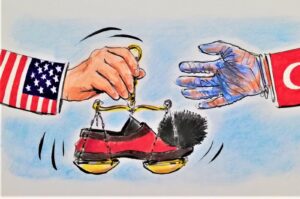
Ελλάδα και Τουρκία υποχρεώνονται από τη γεωγραφία να γειτονεύουν. Η Ελλάδα δεν προκαλεί καμιά γειτονική χώρα. Λειτουργεί πάντα στο πλαίσιο των Διεθνών Συνθηκών. Η Τουρκία συνήθως τις παραβιάζει, για να εξυπηρετήσει τα εθνικά της συμφέροντα, πολιτικά και οικονομικά. Γι’ αυτό το λόγο η Ελλάδα αναγκάζεται να δαπανά ένα σημαντικό ποσοστό του εθνικού της προϋπολογισμού για την αμυντική της θωράκιση.

Αυτό, όμως, δεν επαρκεί. Θα γίνω σαφής. Η στρατιωτική ισχύς ενισχύεται ιδιαίτερα από την ικανότητα κάθε χώρας να παράγει στρατιωτικό υλικό. Η παραγωγή διαφέρει παρασάγγας από την εισαγωγή. Οι Τούρκοι έχουν στρατηγικά και μακροπρόθεσμα σχεδιάσει την παραγωγική δυναμικότητα της αμυντικής βιομηχανίας τους, επενδύοντας μεγάλα κονδύλια προς ευόδωση αυτού του στόχου. Δεκάδες τουρκικές εταιρείες δραστηριοποιούνται με κερδοφορία στον κλάδο των αμυντικών βιομηχανιών, επιτυγχάνοντας συνέργειες και εξαγωγές των προϊόντων τους. Όταν εκείνοι δημιουργούσαν εγχώριες στρατιωτικές επιχειρήσεις, στα πρότυπα των σύγχρονων πολεμικών εταιρειών (Η.Π.Α., Ρωσίας, Κίνας, Γερμανίας, Γαλλίας κ.ά.), εμείς ασχολούμασταν με τις μίζες των εξοπλιστικών προγραμμάτων και τα σκάνδαλα που αποκαλύφθηκαν…

Αυτή η σύντομη αναδρομή θα μας βοηθήσει να αντιληφθούμε το παρόν. Κατά τη γνώμη μου η τρέχουσα κρίση στην Ανατολική Μεσόγειο και στο Αιγαίο με την Τουρκία είναι η μεγαλύτερη από το 1974, όταν με την εισβολή των τουρκικών δυνάμεων στην Κύπρο, διχοτομήθηκε η Μεγαλόνησος και έκτοτε το Κυπριακό αποτελεί ένα από τα πιο δυσεπίλυτα προβλήματα διεθνώς, πρωτίστως με ευθύνη της Τουρκίας. Η απόφαση των Τούρκων να εισέλθουν στην ελληνική υφαλοκρηπίδα ήταν αναμενόμενη, μετά τη συμφωνία Ελλάδας – Αιγύπτου και λόγω της στρατιωτικής ισχύος που έχει συσσωρεύσει η Τουρκία. Πρόκειται για εφαρμογή της θεωρίας των παιγνίων, για μια “προοδευτική, πολυμέτωπη επίθεση” που ακολουθεί απαρέγκλιτα η Τουρκία, με βάση το δόγμα Νταβούτογλου και την θεωρία της «Γαλάζιας Πατρίδας», που ουσιαστικά βασίζεται σε αυτό (τεράστια σημασία στην επικράτηση στις θαλάσσιες διόδους). Η Τουρκία έχει στρατηγικό στόχο να δημιουργήσει τετελεσμένα, όπως αντίστοιχα έγινε στα Ίμια το 1996, με τη θεωρία των γκρίζων ζωνών. Σε αυτήν τη θεωρία έχει θεμελιώσει τις διεκδικήσεις της στο Αιγαίο και στην Ανατολική Μεσόγειο. Δεν διαγράφει, δεν απεμπολεί αλλά επανέρχεται συστηματικά στις απαιτήσεις της, θέτοντας νέα ζητήματα, ζυγίζοντας προσεκτικά τα δεδομένα.

Με την παρουσία του Ορούτς Ρέις και των τουρκικών πολεμικών πλοίων εντός της ελληνικής υφαλοκρηπίδας δημιουργούνται τετελεσμένα, ακόμη και αν δεν γίνουν τελικά καθόλου σεισμικές έρευνες από το τουρκικό σκάφος. Η Τουρκία θα “επενδύσει” για ακόμη μια φορά πολιτικά, οικονομικά και ενεργειακά στα τετελεσμένα. Δεν θα αναδιπλωθεί, δεν θα υποχωρήσει, εκτός αν της δοθούν ικανοποιητικά ανταλλάγματα. Φαινομενικά και βραχυχρόνια μόνο θα αναδιπλωθεί ή θα υποχωρήσει. Τονίζω, όμως, ότι θα επανέλθει. Δεν ξεχνάει, “χτίζει” σταδιακά.

            Οι πιθανότητες να βρισκόμαστε σε ένα ακόμη εξαιρετικά κρίσιμο σημείο καμπής των σχέσεών μας με την Τουρκία θεωρούνται αυξημένες. Τα διαβήματα του ελληνικού Υπουργείου των Εξωτερικών προς την Τουρκία δεν έχουν αποτέλεσμα. Δεν είχαν ποτέ, για να είμαστε ειλικρινείς. Η Τουρκία αντιλαμβάνεται μόνο το δίκαιο της ισχύος. Οι Διεθνείς Οργανισμοί και οι μεγάλες δυνάμεις (ΝΑΤΟ, Ευρωπαϊκή Ένωση, Η.Π.Α., Ρωσία κ.ά.), πέραν των εσωτερικών προβλημάτων που έχουν, επιδίδονται σε  ανακοινώσεις για τερματισμό των εντάσεων, χωρίς να επιβάλλουν σοβαρές κυρώσεις, «χαϊδεύοντας» τη γειτονική χώρα. Γιατί; Έχουν υπογράψει πληθώρα διμερών ή πολυμερών εμπορικών συμφωνιών με την Τουρκία (μεγάλη, δυναμική αγορά 85 εκατομμυρίων καταναλωτών), διαθέτουν σημαντικές επενδύσεις και επιχειρηματικές δραστηριότητες σε διάφορους κλάδους στην γειτονική χώρα. Τα επιχειρηματικά, βιομηχανικά, κατασκευαστικά και ενεργειακά έργα που δρομολογούνται στην Τουρκία ολοκληρώνονται, παρά τις οικονομικές αντιξοότητες (ραγδαία υποτίμηση τουρκικής λίρας, ελλειμματικά ισοζύγια εξωτερικών και τρεχουσών συναλλαγών, δαπάνες στρατιωτικών επιχειρήσεων σε Συρία, Λιβύη, Ιράκ κ.ά.). Οι διπλωματικές οδοί στενεύουν. Η ίδια η Τουρκία επιδιώκει να σύρει την Ελλάδα σε διαπραγματεύσεις, για να διαμοιραστεί στα δύο κράτη ένα μέρος της θαλάσσιας και υποθαλάσσιας κυριαρχίας και του φυσικού πλούτου του ενός, της Ελλάδας! Με άλλα λόγια συνεκμετάλλευση των φυσικών πόρων του Αιγαίου…

Ίσως να πλησιάζει η ώρα μηδέν. Η πολιτική ηγεσία επιβάλλεται να συνεργαστεί με τη στρατιωτική ηγεσία και να την αφουγκραστεί ενδελεχώς, ώστε να ληφθούν οι σωστότερες αποφάσεις, με γνώμονα το εθνικό μας συμφέρον, δίχως  υποχωρητικότητα και φοβικά σύνδρομα. Η πολιτική του κατευνασμού της Τουρκίας  που εφαρμόστηκε τα προηγούμενα χρόνια αποδείχθηκε ατελέσφορη και επιζήμια. Η Τουρκία ολοένα και αποθρασύνεται. Μην επαναληφθούν γεγονότα τύπου Ιμίων, διότι πλέον θα απωλέσουμε όση εθνική αξιοπρέπεια μας έχει απομείνει.

Μερικά ερωτήματα που εύλογα ανακύπτουν:

  1. Θα δεχθούμε επιπρόσθετες παράνομες ενέργειες και τετελεσμένα στην εθνική μας κυριαρχία;
  2. Πόσο αντέχει, πολιτικά και οικονομικά, να προκαλεί η Τουρκία και ποιος θα την περιορίσει, ώστε να αποκλιμακωθεί η κατάσταση;
  3. Πότε θα ανακηρύξουμε Αποκλειστική Οικονομική Ζώνη (Α.Ο.Ζ.) με την Κύπρο;

Μετά από τα μνημόνια και εν μέσω της υγειονομικής και οικονομικής κρίσης του κορωνοϊού, η Ελλάδα καλείται, παράλληλα, να αντιμετωπίσει και μια μείζονα εθνική κρίση υψίστης σημασίας. Δεν πρέπει να υπάρξουν ημίμετρα και επιπολαιότητες ή προχειρότητες. Οφείλουμε να δράσουμε ενωμένοι, με ομοψυχία και αποφασιστικότητα, επειδή διακυβεύονται πολλά για το μέλλον μας.

  • Ο Γιώργος Κωνσταντινίδης είναι οικονομολόγος, διδάκτωρ Παντείου Πανεπιστημίου, συγγραφέας του βιβλίου «Συσσώρευση Κεφαλαίου και Παγκοσμιοποίηση στην Τουρκία Διαχρονικά», εκδόσεις Παπαζήση.

Greek-American provocation in East Mediterranean

0

dailysabah.com

US involvement for global interests and Greece’s regional lust pose a great risk to the East Mediterranean region

After the erosion of the global power structure in the wake of the Iron Curtain’s fall in 1989, the world began to reshape itself. Thus, the bipolar international system changed and is still changing into a multipolar one, while the superpower United States threatens to further erode the situation. New actors like China, India, Brazil, Russia (as a non-communist state) and regional actors like Turkey, Iran and others are taking their place on the stage of global (or regional) political events.

The U.S. has lost its influence in large parts of the Far East, primarily due to the sharp, initially inconspicuous peaceful rise of China, the main threat to its status as a global superpower.

In Europe, the U.S. has mostly lost the influence it once had built up through the Marshall Plan and the military establishment in and around Germany after the collapse of the Nazi Reich. Hence, in the Iraqi and Syrian war, as well as in Libya, the U.S. has received little support from Europe. Because of this, France has always tried to turn the European Union into a counter-player to the U.S. (not only economically but also politically and militarily) in order to minimize its influence in Europe and impose a test of strength.

The Permanent Structured Organization (PESCO), which officially launched in 2018 to set the EU’s collective security and defense policy, is the first step in that direction. In the upcoming years, PESCO will not only provide strategic cooperation in security and defense matters but will also help to establish a single European army to maintain the integrity and security of the EU as well as its neighbor states and to act as a deterrent against other major powers (in the sense of force measurement). So, with a European army, the U.S.’ significant military influence, which exists above all in security and thus political matters through NATO, can be removed entirely.

US attempts to save power

This derivation leads to the real issue: in order to secure its influence worldwide and above all in Europe, the U.S. is trying to ally itself with countries, or at least give substantial financial support to those countries which have been neglected by the EU for many years – like almost the entire Balkan region, or those who at least feel neglected, like Greece and the Greek Cypriot administration.

The Greek Cypriot administration could have been admitted to the EU in 2004 and could get more support from the EU regarding its crisis with Turkey over a variety of long-standing disputes, including rights in the Eastern Mediterranean. However, due to both its financial weakness and pressure from Greece, it has failed to conclude negotiation talks to resolve the crisis with Turkey.

For example, at the Berlin conference on the Libyan conflict in January, the Greek Cypriot administration was not even invited, which has a plausible reason.

The EU, Germany and Italy know that a solution without Turkey is unrealistic in Libya, so Turkey was invited to the conference and played a decisive role in finding a solution. Today, it is supporting the U.N.-backed government in Tripoli with military and financial aid and has celebrated great successes to date. However, Greece and the Greek Cypriot administration, together with France, which has a different strategy than Germany and Italy in the Eastern Mediterranean (EastMed) as a former colonial ruler, are trying to restrict Turkey’s rights in the Mediterranean and the island of Cyprus (For details, please consult my article of April 1, 2020).

Thus, the Turkey-Libya agreement, Turkish maneuvers in the EastMed, natural gas exploration activities in Turkish Cypriot territories and the Cyprus conflict are under continuous criticism. However, the criticisms are not baseless, as the division of the island and the Turkish research activities around Cyprus are also in conformity with international (maritime) law (see also my previous articles in which applicable paragraphs are disclosed).

Nevertheless, this is where the U.S. comes in. Although France is continuously supporting Greece as well as Greek Cyprus, it is calling for more stringent action and higher sanctions against Turkey and is sending warships to the island of Cyprus. However, the situation is different concerning the U.S.

The U.S. welcomes the Greek Cypriot calls for help in the Eastern Mediterranean and the Aegean Sea, which will enable it to strengthen its influence in the region and at the same time, legitimize it. Above all, this is also important because it enables them to increase their influence close to Russia and Turkey. It is important to note here that Turkey has increasingly distanced itself geopolitically from the U.S. in recent years and is pursuing a different strategy in the region with Russia, Qatar, Iran and increasingly, Pakistan.

The differences in northern Syria regarding the PKK/YPG terrorist group are not the only reason for the deterioration of U.S.-Turkey relations. The issue of Russian S-400 missiles, the U.S.’ temporary but wide-ranging economic sanctions and Turkey’s exclusion from F-35 jet production are the major crises.

Besides them, there are also some reasons such as the presumption of closing U.S. bases in Turkey and the lifting of the U.S. arms embargo against Southern Cyprus, as well as the establishment of a U.S. military base in the south of Cyprus.

The islands issue

However, that is not all. Now the situation in the Aegean and Western Thrace is also coming to the forefront.

The U.S. condemns the Mediterranean navigational telex (NAVTEX) of the Turkish Navy around Kastellorizo (Meis)– one of the smallest Greek islands in the Aegean Sea and only 2 kilometers away from the Turkish coast. It also condemns Cyprus for the crisis. Meanwhile, the U.S. demands that Turkey end its natural gas research activities in Turkish territories in the Eastern Mediterranean and the Aegean Sea. The reasoning behind the U.S. demand, according to Washington, is that those Turkish seas belong to Greece.

Washington’s take is that even the smallest Greek islands would have territories, but this is not the case under international maritime law.

In recent months, the U.S., under the veil of NATO military exercises, has transferred weapons and personnel to the Greek province of Alexandroupolis (Dedeağaç). It is important to note that this region, namely Western Thrace, has a high number of Turkish minorities who enjoy protection in Greece under the Treaty of Lausanne (1923). However, their rights have not yet been respected by Greece, which describes the Turks living in Western Thrace (who already lived there in the Ottoman Empire and were not forcibly resettled in Turkey as a result of a population exchange) as a Greek Muslim minority.

Thus, Athens plans to weaken their emotional ties to Turkey and reduce Ankara’s influence domestically. However, through the Treaty of Lausanne and the Zurich and London Treaties (1959/1960) for the Cypriot Turks, Turkey also has the status of guarantor power for the Western Thrace Turks, so that all political developments related to them are of particular interest to Turkey. At this point, however, the U.S. acts as an auxiliary rescuer and provocateur to emotionally and physically remove the Turks from their home country.

Since the U.S. plans to create a permanent military base in Alexandroupolis (in Western Thrace), they want to acquire the port located there by privatization and thus convert it into a military base. So, on the one hand, the U.S. wants to create a buffer zone 30 kilometers from the Turkish border, as was also intended in northern Syria at the time, to deter Turkey from using its rights in the region with a military presence, so that U.S. influence on Turkey can be (re)established, which it did not succeed in doing in northern Syria. On the other hand, a military port in the region would give the U.S. a geostrategic advantage in the Black Sea and, thus, over Russia.

Buffer zone

Furthermore, the intended artificial buffer zone would also help to physically distance the Western Thrace Turks, who are mostly living in Kavala, Komotini (Gümülcine) and Xanthi (İskeçe), from Turkey and thus eliminate Turkish influence in Greece (as was also attempted in Cyprus in 1974), which has been successively addressed for 100 years now.

However, what speaks against the implementation of a permanent U.S. naval base in Alexandroupolis (even if unofficially, since it is only to be acquired through private-state acquisition) is that Article 1 of the III Convention Respecting the Thracian Frontier (Treaty of Lausanne, 1923) stipulates that a 30-kilometer strip of land on each side of the border between Turkey and Greece must be demilitarized.

Since Alexandroupolis lies within this sphere of action, implementation would, at the very least, be contrary to the treaty and could thus continue to cause a significantly increased potential for conflict in the region.

It is also striking that the area around Alexandroupolis is considered to be particularly rich in natural resources, and the indigenous Turks, as in the example of natural gas around Cyprus, are not allowed to participate in its wealth.

Dangerous move

As a consequence, it is clear from the comments that Greece continues to play with fire by giving the U.S. a wide-ranging influence in the region, which it may also later regret for geostrategic reasons. The militarization of Western Thrace and Cyprus (which has already taken place) will not counterbalance the Turkish presence on the ground but will only drastically increase the potential for conflict.

There is one thing Greece does not understand: Turkey is not acting against international law but rather, is making use of its natural rights under treaties and international (maritime) law. On the other hand, Greece is acting in violation of treaties or law through its disproportionate actions in the Eastern Mediterranean, the Aegean Sea (also by militarizing islands near the Turkish coast which was not mentioned above and is forbidden due to the Treaty of Lausanne as well) and in Western Thrace, thus becoming itself an “illegal actor” in the region, which it attributes to Turkey.

Furthermore, if one considers that Greece has put the flags at half-mast due to the reopening of Hagia Sophia for Muslim worship and that some opinion leaders have burned the Turkish flag due to the Turkish presence in the EastMed, the extent of the ridiculousness becomes particularly evident.

*Master of Arts candidate at Friedrich Alexander University in Erlangen, Germany

ABOUT THE AUTHOR
*Doing master’s thesis on the geopolitical and economic facets of the EastMed Pipeline project at the Friedrich Alexander University, Erlangen

Atlantico.fr: Ποιες απειλές για την Ευρώπη προκαλεί η Τουρκία;

0

Συνέντευξη με τον Γαλλοπέρση αναλυτή Ardavan Amir-Aslani
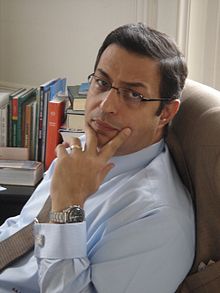
Ardavan Amir-Aslani: Η Τουρκία στο ΝΑΤΟ είναι ένας όλο και πιο «ενοχλητικός» σύμμαχος για τους Ευρωπαίους. Λόγω των πολιτικών δυσκολιών – το AKP γνώρισε την πρώτη του μεγάλη εκλογική αποτυχία στις δημοτικές εκλογές του 2019, χάνοντας κυρίως την Κωνσταντινούπολη, την Άγκυρα και την Αττάλεια – και ιδιαίτερα μιας οικονομικής κρίσης που επιδεινώθηκε από την πανδημία Covid-19, η αύρα που είχε ο Ρετζέπ Ταγίπ Ερντογάν μέχρι στιγμής έχει αμαυρωθεί σημαντικά. Για να το αντιμετωπίσει, ο Τούρκος πρόεδρος – ο οποίος παραμένει πολιτικό ζώο ικανό στην πρόκληση και τις εντυπώσεις – έχει κάνει τη διπλωματική σκηνή το κύριο πεδίο μάχης του για να ελκύσει την κοινή γνώμη και να επανακινητοποιήσει την εκλογική του βάση.

Ο Ερντογάν εμπνέεται χρόνια τώρα από ένα εθνικιστικό σχέδιο που μερικές φορές ονομάζεται “νεο-Οθωμανισμός”, το οποίο στοχεύει στο παλαιό μεγαλείο της Τουρκίας, αν και αρκετά εξιδανικευμένο ή ακόμη και φανταστικό στην επίσημη επικοινωνία. Μεταξύ των προτύπων του, ο Ερντογάν επικαλείται τον Μωάμεθ τον Κατακτητή περισσότερο από τον Ατατούρκ, του οποίου η κοσμική κληρονομιά σβήνει σταδιακά. Πολύ ευσεβής, ο Τούρκος πρόεδρος επαναφέρει σταδιακά τη θρησκεία στη δημόσια σφαίρα. Οι εμπλοκές της Τουρκίας στις συριακές συγκρούσεις στη συνέχεια στη Λιβύη, οι ασκήσεις στη θαλάσσια ζώνη της Ελλάδας και πιο πρόσφατα η «επανάκτηση» της Αγίας Σοφίας- του μουσείου από το 1934 με τη βούληση του Ατατούρκ που σήμερα μετατράπηκε σε τζαμί – εκφράζουν αυτήν την επεκτατική επιθυμία και αυτό το όνειρο να κάνει την Τουρκία ηγέτη του μουσουλμανικού κόσμου στη θέση της Σαουδικής Αραβίας ή της Αιγύπτου. Αυτή η επιθετική εξωτερική πολιτική κρυσταλλώνεται φυσικά στη Μεσόγειο, το παραδοσιακό σύνορο μεταξύ Ανατολής και Δύσης, του Χριστιανισμού και του Ισλάμ, που ήταν η πρώην ζώνη επιρροής της Οθωμανικής Αυτοκρατορίας. Μέσω των ενεργειακών της στόχων στην Ανατολική Μεσόγειο και μέσω της συμμετοχής της στη Λιβύη, στρατηγικού κλειδιού των μεταναστευτικών ροών από την υποσαχάρια Αφρική, η Τουρκία απειλεί άμεσα τη σταθερότητα της νότιας Ευρώπης και κυρίως ένα από τα μέλη και συμμάχους της εντός του ΝΑΤΟ, την Ελλάδα. Από το 2014, χρησιμοποιεί και κάνει κατάχρηση του εκβιασμού για τη μοίρα των έξι εκατομμυρίων προσφύγων που απειλεί να “αμολήσει” στην Ευρώπη, εάν αυτή αμφισβητήσει υπερβολικά τον επεκτατισμό της.

Με αυτόν τον τρόπο, αμφισβητεί σοβαρά την αξιοπιστία του ΝΑΤΟ, το οποίο δεν ανταποκρίνεται στο ύψος αυτών των προκλήσεων. Ωστόσο, η Ατλαντική Συμμαχία γνωρίζει πολύ καλά την αναξιοπιστία της Τουρκίας, η οποία δεν διστάζει να εφοδιάζεται με ρωσικό εξοπλισμό ή να κατευθύνει τα όπλα της εναντίον γαλλικών φρεγατών ανοιχτά της Κρήτης, ενώ είναι σύμμαχος! Για αρκετούς μήνες, η Τουρκία μπλόκαρε τις διαπραγματεύσεις για ένα αμυντικό σχέδιο για την Πολωνία και τις χώρες της Βαλτικής, που συνορεύουν με τη Ρωσία, τη σύμμαχό της. Αντιτίθεται στις εταιρικές σχέσεις με χώρες όπως το Ισραήλ, την Αρμενία ή την Αίγυπτο για προφανείς πολιτικούς ή ιστορικούς λόγους, και φτάνει μέχρι να απαιτεί από την Ατλαντική Συμμαχία – μέχρι τώρα μάταια – την εγγραφή ορισμένων ανεξάρτητων κουρδικών ομάδων στον κατάλογο των τρομοκρατικών οργανώσεων, ενώ είναι πολύτιμοι σύμμαχοι των Ηνωμένων Πολιτειών και των Ευρωπαίων στον αγώνα κατά της Daesh και της Αλ Κάιντα στη Συρία και το Ιράκ. Ωστόσο, το ΝΑΤΟ παραμένει παράλυτο, μεταξύ άλλων, από την εσωτερική του λειτουργία που βασίζεται σε συναίνεση, και ως εκ τούτου δεν μπορεί να καταλήξει σε μια σαφή στρατηγική έναντι της Τουρκίας.

Πώς εξηγείται η έλλειψη αντίδρασης της ΕΕ απέναντι σε αυτές τις απειλές;

Νομίζω ότι υπάρχουν αρκετές εξηγήσεις, και ιδίως οι τύψεις συνείδησης των Ευρωπαίων ότι άφησαν τις διαπραγματεύσεις ένταξης της Τουρκίας στην ΕΕ να λιμνάζουν. Σε αντίδραση, η απομάκρυνση του Ερντογάν από τη Δύση, σταδιακή τα τελευταία χρόνια, ριζοσπαστική μετά το αποτυχημένο πραξικόπημα του 2016 και τη μετατροπή της Αγίας Σοφίας σε τζαμί, φαίνεται να σφραγίζει αυτό το διαζύγιο με τις ευρωπαϊκές αξίες.

Αν όμως η Ευρωπαϊκή Ένωση παραμένει παράλυτη απέναντι στην Τουρκία, πιστεύω, αυτό οφείλεται κυρίως στη διαφορά νοοτροπίας. Σήμερα, ο πιο ισχυρός αντίπαλος δεν είναι αυτός που έχει τον καλύτερο στρατό ή την καλύτερη διπλωματία, είναι αυτός που είναι έτοιμος να αναλάβει το οικονομικό και πάνω απ ‘όλα το ανθρώπινο κόστος μιας σύγκρουσης. Ωστόσο, οι Ευρωπαίοι έχουν διαφορετική νοοτροπία η οποία, κατά τη γνώμη μου, τους αποδυναμώνει και η οποία μπορεί να παρατηρηθεί στη συνολική πολιτική στρατηγική τους στη Μέση Ανατολή. Αυτό εκδηλώθηκε κατάφωρα τον περασμένο Ιούνιο μετά την τουρκική επίθεση εναντίον της γαλλικής φρεγάτας Κουρμπέ, η οποία ωστόσο ηγούνταν μιας αποστολής ναυτικής ασφάλειας του ΝΑΤΟ, του οποίου η Τουρκία υποτίθεται ότι είναι μέλος! Αντί για αντίποινα, η Γαλλία αποφάσισε να αναστείλει τη συμμετοχή της στην Επιχείρηση Sea Guardian. Πρόκειται για φοβερή παραδοχή αδυναμίας!

Τα μέλη του ΝΑΤΟ γνωρίζουν απόλυτα την κατάσταση, αλλά δεν τολμούν να αντιδράσουν σε έναν σύμμαχο τέτοιου στρατηγικού βάρους, που βρίσκεται στο σταυροδρόμι μεταξύ Ευρώπης, Ασίας και Μέσης Ανατολής. Αυτή η απροθυμία έγινε ξεκάθαρη όταν ο Εμμανουέλ Μακρόν προσπάθησε, ανεπιτυχώς, να συστήσει ένα μέτωπο εναντίον της Τουρκίας μετά το συμβάν της 10ης Ιουνίου. Μόνο 8 από τις 30 χώρες το υποστήριξαν. Ξεχνάμε επίσης ότι μέσω του ΝΑΤΟ, οι Ηνωμένες Πολιτείες εγγυώνται την ασφάλεια της Ευρώπης, τουλάχιστον αυτό είναι το σημείο εκκίνησης. Όμως, αντιμέτωπη με την παγκόσμια αποδέσμευση των Αμερικανών και την αδιαφορία του Ντόναλντ Τραμπ, προσωπικά, για τις διατλαντικές σχέσεις, αυτή η συμμαχία δεν ισχύει πλέον σήμερα. Οι Ευρωπαίοι πρέπει επομένως να το λάβουν υπόψη και να διασφαλίσουν την ασφάλειά τους με τους δικούς τους πόρους. Το Ευρωπαϊκό Ταμείο Άμυνας δημιουργήθηκε για το σκοπό αυτό, αλλά ενισχύθηκε μόνο με 7 δις κατά την περίοδο 2021-2027, πολύ κάτω από τις αρχικές φιλοδοξίες. Συγκριτικά, ο γαλλικός προϋπολογισμός για την άμυνα ανέρχεται σε 37,5 δις  ευρώ μόνο για το έτος 2020! Αυτό δείχνει την έλλειψη φιλοδοξίας ή ρεαλισμού που οι Ευρωπαίοι εξακολουθούν να επιδεικνύουν σε θέματα άμυνας και αυτονομίας.

Ardavan Amir-Aslani

Μπορεί η ΕΕ να αντιδράσει σήμερα στις ηγεμονικές φιλοδοξίες του Ερντογάν στη Μεσόγειο;

Προφανώς μπορεί, υπό την προϋπόθεση να βγει από αυτή τη «στρατηγική λήθαργο» που κατήγγειλε ο Hubert Védrine. Δεν αποτελεί έκπληξη το γεγονός ότι βλέπουμε την Ελλάδα, την πρώτη ευρωπαϊκή χώρα που απειλείται άμεσα από τον τουρκικό ακτιβισμό, να είναι το κίνητρο αυτής της αφύπνισης και να ζητεί μια ευρωπαϊκή σύνοδο κορυφής για το ζήτημα. Μόλις χθες, η Τουρκία έστειλε και πάλι ένα σεισμικό ερευνητικό σκάφος στη θαλάσσια ζώνη της Ελλάδας, στο κέντρο του Αιγαίου. Η ειρήνη απειλείται σαφώς, αλλά η ΕΕ καθυστερεί ακόμα να αντιδράσει. Τόσο πολύ που η Ελλάδα έχει ήδη στραφεί σε έναν άλλο απροσδόκητο διπλωματικό εταίρο, με τον οποίο επανέλαβε πρόσφατα τις διπλωματικές σχέσεις: τη Συρία. Αυτό ήταν ένα από τα αιτήματα του ελληνικού ακροδεξιού κόμματος Χρυσή Αυγή. Η πρώην Ελληνίδα πρέσβειρα στη Δαμασκό, Τασία Αθανασίου, διορίστηκε ειδική απεσταλμένη για τις συριακές υποθέσεις τον περασμένο Μάιο, αναμφίβολα προϋπόθεση για το άνοιγμα της ίδιας της πρεσβείας.

Πηγή: https://www.atlantico.fr/decryptage/3591704/l-europe-a-t-elle-deja-perdu-face-a-la-turquie–diplomatie-union-europeenne-france-emmanuel-macron-recep-tayiip-erdogan-mediterranee-otan-ardavan-amir-aslani

Αυτή η προσέγγιση γίνεται εύκολα κατανοητή για γεωπολιτικούς και ιστορικούς λόγους. Η Συρία και η Ελλάδα έχουν διατηρήσει, παρά τον εμφύλιο πόλεμο της Συρίας, ουσιαστικούς οικονομικούς δεσμούς για το καθεστώς Άσαντ – ιδίως με το εμπόριο φωσφορικών αλάτων. Από τον 14ο αιώνα, η Αντιόχεια είναι η έδρα του Ορθόδοξου Πατριαρχείου, και ως εκ τούτου πολλοί Έλληνες Ορθόδοξοι Χριστιανοί θεωρούν τον Μπασάρ Ελ-Άσαντ ως προστάτη των Χριστιανών στη Συρία. Το θέμα έχει τη σημασία του μετά τη μετατροπή της Αγίας Σοφίας σε μουσουλμανικό τόπο λατρείας, το οποίο ανησυχεί την ελληνική μειονότητα που ζει στην Τουρκία. Μια ελληνο-συριακή συμμαχία ενάντια σε αυτόν τον κοινό εχθρό που απειλεί τα συμφέροντά τους στην Ανατολική Μεσόγειο φαίνεται προφανής, με κίνδυνο, η  Ελλάδα να απομονωθεί από τις ΗΠΑ και τους ευρωπαίους γείτονές της. Όμως, το να αναζητήσει βοήθεια από ένα δικτατορικό καθεστώς εξακολουθεί να είναι ένα πολύ κακό σημάδι για την ευρωπαϊκή διπλωματία! Ωστόσο, η διαδικασία θα μπορούσε να πυροδοτήσει την πολυαναμενόμενη ανάληψη πρωτοβουλιών από την πλευρά των Ευρωπαίων. Όλοι γνωρίζουν την τουρκική απειλή, οπότε πρέπει να επιδείξουν πραγματισμό και τόλμη για να πετύχουν συναίνεση, και τελικά να απαντήσουν στις τουρκικές επιθέσεις.

Ελληνικές ψευδαισθήσεις.

0

του Ιωάννη Φριτζαλά*

Όποιος στην Ελλάδα εξακολουθεί να έχει την ψευδαίσθηση πως οι Η.Π.Α. θα σπεύσουν να μεσολαβήσουν υπέρ μίας χώρας με de facto κατειλημμένη εθνική κυριαρχία, θα πρέπει να προσγειωθεί στην νέα πραγματικότητα, η οποία διαμορφώνεται στην Ευρασία και κυρίως στον αναχωματικό δακτύλιο (Rimland), ο οποίος περιβάλλει τον κύριο όγκο του ευρασιατικού χώρου που γνωρίζουμε ως Heartland. Η πρόσφατη υψίστης στρατηγικής σημασίας συμφωνία μεταξύ της Ισλαμικής Δημοκρατίας του Ιράν και της Κίνας, αφ’ ενός υποδηλώνει την βούληση της δεύτερης (με την συγκατάθεση και της Ρωσίας) για την αναβάθμιση του περιφερειακού ρόλου της πρώτης (βασική στρατηγική παράμετρος που έχω προβλέψει στο Επίμετρο του βιβλίου μου Κριμαία – Η Ενεργειακή Γέφυρα της Ευρώπης), στην κατεύθυνση της μετατόπισης του διεθνούς επικέντρου από την Δύση στην Ευρασία, αφ’ ετέρου θα πυροδοτήσει μία σειρά εξελίξεων με κατακλυσμιαίες προεκτάσεις. Θα περιοριστώ στα καθ’ ημάς, καταλήγοντας σε κάποιες ερωτήσεις.

Είτε το αποδεχόμαστε, είτε όχι, ο νεοθωμανικός τουρκοϊσλαμισμός αποτελεί αναπόσπαστο κομμάτι της ευρωατλαντικής αρχιτεκτονικής. Το βαθύ κράτος των Η.Π.Α., το οποίο γνωρίζει πως πνέει τα λοίσθια, όχι μόνο δεν θα ασκήσει πιέσεις στην Τουρκία προς όφελος της Ελλάδος, αλλά θα ενθαρρύνει την αναβάθμισή της ως στρατηγικό ανάχωμα στην προς δυσμάς επέκταση του BRI, ιδίως δε όταν αυτή η επέκταση επίκειται να προκύψει με την αξιοποίηση του σιιτικού διαδρόμου (Ιράν – Ιράκ – Συρίας – Λιβάνου).
Η γεωοικονομική στρατηγική της Κίνας έρχεται σε πλήρη αντίθεση με την ευρασιατική ατζέντα του Ερντογάν, παρ’ ότι ο ίδιος βαθιά μέσα του γνωρίζει πως η «εξυγίανση» της τουρκικής οικονομίας μπορεί να επιτευχθεί με την ένταξη της Τουρκίας στην «Ευρασιατική Οικονομική Ένωση» και στον «Οργανισμό Συνεργασίας της Σαγκάης» και την συμμετοχή της στο εκκολαπτόμενο εναλλακτικό χρηματοοικονομικό, τραπεζικό και (κρυπτο)νομισματικό σύστημα που προωθούν η Κίνα με την Ρωσία (για το οποίο, φυσικά, δεν γίνεται η παραμικρή νύξη στην Ελλάδα).

Η νεοθωμανική μεγαλομανία, όμως, υπερτερεί και είναι αυτή που (στην παρούσα φάση τουλάχιστον) παρέχει στον Τούρκο Πρόεδρο τεράστια διπλωματική ευελιξία στις διεκδικήσεις του έναντι των Η.Π.Α. Ο στρατηγικός στόχος του Ερντογάν να δημιουργήσει μία «αντι-Κίνα» – όπως πολύ εύστοχα μού την περιέγραψε προσφάτως ο πλέον ειδικός στα κινεζικά θέματα Έλληνας καθηγητής – εξυπηρετεί στρατηγικές προτεραιότητες της αμερικανικής διπλωματίας, καθώς και βαθύτερες επιδιώξεις της «ανίερης συμπαιγνίας», η οποία κατέχει τα ινία του αμερικανικού πολιτικού συστήματος. Υπό αυτή την έννοια, όχι μόνο δεν θα πρέπει να αναμένουμε κάποια ουσιαστική συνδρομή από τις ΗΠΑ στην επίλυση της ελληνοτουρκικής κρίσης, αλλά αντιθέτως να αντιμετωπίζουμε με μεγάλη δυσπιστία και επιφυλακτικότητα τις πρωτοβουλίες της αμερικανικής διπλωματίας, οι οποίες αποσκοπούν αποκλειστικώς και μόνον στην μέγιστη δυνατή διασφάλιση της εμπλοκής των ExxonMobil και Chevron στο ενεργειακό γίγνεσθαι της Αν. Μεσογείου. Αν οι αμερικανικοί ενεργειακοί κολοσσοί καταλήξουν σε μία αμοιβαία επωφελή συμφωνία με την Τουρκία, αυτή η συμφωνία θα θεμελιωθεί επί των ερειπίων της Ελλάδος και της Κύπρου. Κι εδώ προκύπτει ακόμα ένα ζήτημα. Ποιός είναι ο βασικός περιφερειακός παίκτης, τα συμφέροντα του οποίου θίγονται από την όποια περιφερειακή αναβάθμιση του Ιράν; Προφανώς, το «σύμμαχο κράτος» που ακούει στο όνομα Ισραήλ. Έχουμε σταθμίσει τις συνέπειες που θα επιφέρει στην πατρίδα μας μία πιθανή τακτική επαναπροσέγγιση Τουρκίας και Ισραήλ, με σκοπό την ανάσχεση της ιρανικής επιρροής; Μήπως η – κατ’ εμέ – ασύμμετρη τρομοκρατική ενέργεια που έπληξε προσφάτως την Βηρυτό ήταν μία πρώτη εκδήλωση αυτής της τακτικής επαναπροσέγγισης; Αυτά είναι μερικά από τα ερωτήματα που θα έπρεπε να απασχολούν τις ελληνικές δεξαμενές σκέψης και τους αρμοδίους κυβερνητικούς συμβούλους. Σύντομα, θα ακολουθήσει περαιτέρω ανάπτυξη της παρούσας ανάλυσης και σε θέματα με ευρύτερο διεθνή και περιφερειακό ενδιαφέρον.

*Απο τη σελίδα του κ. Ιωάννη Φριτζαλά στο fb. Ο κ. Φριτζαλάς είναι γεωπολιτικός αναλυτής.