TURKEY’S TRANSNATIONAL REPRESSION
October 2021
Table of contents
ABOUT STOCKHOLM CENTER FOR FREEDOM……………………………………………………. 4
- INTRODUCTION………………………………………………………………………………………………….. 5
- FORCIBLE RETURN OF TURKISH NATIONALS…………………………………………………. 8
- SAFEGUARDS AGAINST ABDUCTION AND RENDITION UNDER
INTERNATIONAL LAW………………………………………………………………………………………. 30
organizations………………………………………………………………………………………….. 31
3.3. WGAD: United Nations Human Rights Council Working Group on Arbitrary Detention 33
- CONCLUSION…………………………………………………………………………………………………… 39
www.stockholmcf.org
Stockholm center for freedom

ABOUT STOCKHOLM Stockholm Center for Freedom (SCF) CENTER FOR FREEDOM is a non-profit advocacy organization that promotes the rule of law, democracy and human rights with a special focus on Turkey.
SCF was set up by a group ofjournalists who have been forced to live in selfexile in Sweden against the backdrop of a massive crackdown on press freedom in Turkey.
SCF is committed to serving as a reference source by providing a broader picture of rights violations in Turkey, monitoring daily developments, documenting individual cases of the infringement of fundamental rights and publishing comprehensive reports on human rights issues.
SCF is a member of the Alliance Against Genocide, an international coalition dedicated to creating the international institutions and the political will to prevent genocide.
- INTRODUCTION
Turkey has been experiencing a deepening human rights crisis over the past eight years.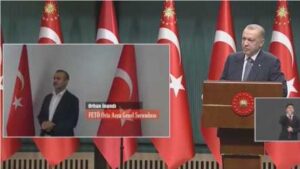 With the aim of consolidating his one-man rule, President Recep Tayyip Erdogan has been systematically destroying the rule of law and the fundamental pillars of Turkey’s already imperfect democracy.
Turkish courts systematically accept bogus indictments, detain and convict without compelling evidence of criminal activity individuals and groups the Erdogan government regards as political opponents. Among these are journalists, opposition politicians, activists and human rights defenders. The country is no longer safe for those blacklisted as dissidents.
President Erdogan’s long arm has also reached tens of thousands of Turkish citizens abroad with spying through diplomatic missions and progovernment diaspora organizations to denial of consular services and outright intimidation and illegal renditions. Turkey’s campaign has mostly relied on renditions, in which the government and its intelligence agency (MiT) persuade the targeted states to hand over individuals without due process.[1] In some countries, Erdogan critics were abducted and forcibly returned by MiT with the help of locals.
In fact, Turkey has become number one among countries that have conducted renditions from host states.[2] According to a Freedom House report on global transnational repression, Ankara’s campaign primarily targets people affiliated with the GQlen movement, a faith-based group inspired by Turkish cleric Fethullah GQlen, but the efforts of the Turkish government have recently expanded to include Kurds and leftists.
According to official statements by its interior ministry, Turkey has sent 800 extradition requests to 105 countries in the last four years, and more than 110 alleged members of the GQlen movement have been brought back to Turkey as part of the government’s global campaign.[3]
President Erdogan has been targeting followers of the Gulen movement since the corruption investigations of December 17-25, 2013, which implicated then-Prime Minister Erdogan, his family members and his inner circle.
Dismissing the investigations as a GQlenist coup and conspiracy against his government, Erdogan designated the movement as a terrorist organization and began to target its members. He locked up thousands including many prosecutors, judges and police officers involved in the investigations as well as journalists who reported on them.
Erdogan intensified the crackdown on the movement following the coup attempt that he accused GQlen of masterminding. The crackdown also targeted political opponents of the government, Kurdish activists and human rights defenders, among others. GQlen and the movement strongly deny involvement in the abortive putsch or any terrorist activity.
The forcible transfer of Turkish nationals first became a concern with the case of Fethullah GQlen, who has lived in self-imposed exile in the U.S. since 1999. According to an alleged plan devised in September 2016 between then-U.S. President Trump’s national security advisor Michael Flynn, Turkish Foreign Minister Mevlut ^avu§oglu and Berat Albayrak, Erdogan’s son-in-law and former energy minister.[4] GQlen would be sent to Turkey in return for millions of dollars. This plot was being investigated by then-Special Counsel Robert Mueller.[5]
The Turkish government did not hesitate to use extrajudicial and illegal methods as part of its propaganda, with Erdogan referring to the forcible return of Turkish nationals in his speeches as part of the country’s counterterrorism success.
Most recently, Orhan inandi, the founder and president of the Turkish- Kyrgyz Sapat school network operating in Kyrgyzstan, went missing on May 31 and was feared to have been abducted by MiT due to his alleged links to the movement. inandi’s whereabouts were only revealed after President Erdogan acknowledged in a statement following a Cabinet meeting on July 5 that he was rendered to Turkey by MiT, lauding the Turkish spies’ efforts in the operation.
“No country or region in the world will be a safe haven for FETO[6] and its militants,” said President Erdogan on September 19, 2016.[7] Since then the witch hunt has spread beyond Turkish borders and put supporters of the GQlen movement abroad at risk. Even though the Turkish government sent requests to some countries for the extradition of Turkish nationals affiliated with the movement, due to the absence of criminality and a lack of evidence as well as the political motivation behind such requests, they have all failed.
For example, the Turkish government made an extradition request to the U.K. for Turkish citizens Hamdi Akin ipek, Ali C^elik and Talip Buyuk, who were alleged to be linked to the GQlen movement. However, the request was rejected in November 2018 by the Westminster Magistrates’ Court on the grounds, among others, that it was “politically motivated.” The judge ruled that he had “serious reservations about the current state of the rule of law in Turkey.”[8]
On December 18, 2018 the Court of Bosnia and Herzegovina also rejected Turkey’s request for the extradition of Turkish national Ozer Ozsaray on the grounds that Bosnia and Herzegovina did not recognize the movement as a terrorist organization. Upon a request for review on May 22, 2019, a Bosnian Court of Appeal decided that the dismissal of the extradition request was final and could not be appealed.[9]
U pon the failure of the official extradition requests, the Turkish government has begun to employ several methods with a view to securing the return of individuals allegedly linked to the Gulen movement.
To this end MiT established a separate unit in 2017 that was tasked with performing and abetting operations abroad. Moreover, the Turkish government has signed bilateral secu rity cooperation ag reements with multiple states allegedly containing broad and vague references to combatting terrorism and transnational crime to “allow for expulsion or abduction of anyone deemed to be a ‘security risk’ from third countries party to the agreements.” [10]
These acts took place particularly in states that maintain strong relations with Turkey. Turkish Presidency Spokesperson ibrahim Kalin and Foreign Minister MevlQt Cavu^oglu confirmed in statements in August 2017 and July 2018, respectively, that MiT has pursued members of the Gulen movement abroad to capture and forcibly return them to Turkey.
According to Freedom House, 58 people have been rendered from 17 countries. Since the release of the Freedom House report in February, Kyrgyzstan and Kenya have also been added to the list of countries.[11]
By means of Turkish nationals’ forcible return, the Erdogan government violated international treaties[12] and the laws of the respective countries. Moreover, the countries cooperating with the Turkish government have also breached their obligations under international law.[13]
Those cases have also become the su bject of i nternationa l proceedings a nd the judgments of international courts, such as the United Nations Human Rights Committee and the European Court of Human Rights (ECtHR) as well as decisions of UN organs including the Working Group on Enforced or Involuntary Disappearances and the Human Rights Council Working Group on Arbitrary Detention (WGAD).
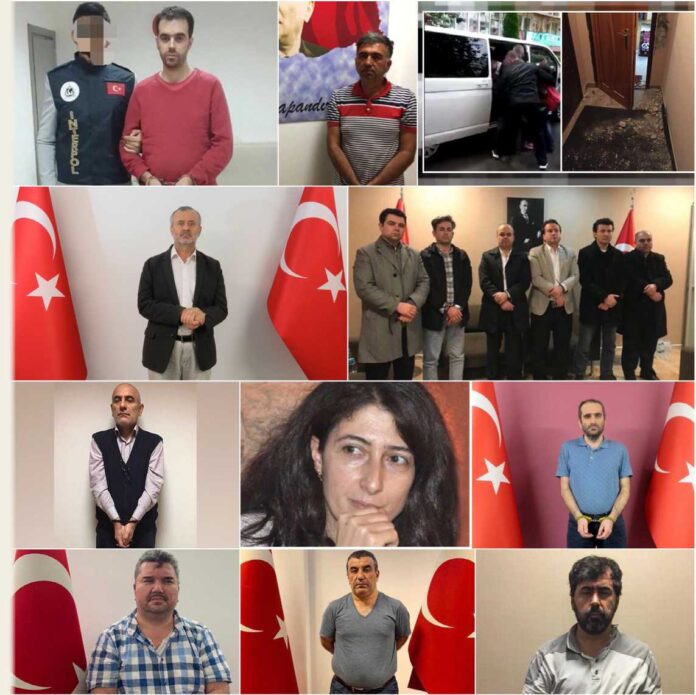
This report focuses on an important pillar of President Erdogan’s methods of transnational repression and the global net cast for his foes since the coup attempt, using both legal and illegal means. It firstly discusses the attempts and cases of abduction, rendition and forcible return in chronological order since the coup attempt. To this end, it relies on the available data and cases reported by civil society organizations, international organizations and news outlets.
The second section of the report explores the international legal instruments providing protection against extraordinary renditions and enforced disappearances. The judgments of international courts and the decisions of some international organizations are examined with a view to providing an international normative framework.
The concluding section provides a legal analysis of the Turkish government’s practices under international law and some recommendations with a view to preventing the occurrence of such practices in the future.
- FORCIBLE RETURN OF TURKISH NATIONALS
Alettin Duman and Tamer Tibik, who had been working for a GQlen movement-affiliated organization in Malaysia, were reported missing by their families on October 13, 2016. A day later Turkish Foreign Minister ^avu§oglu announced that Malaysian authorities had handed over the Gulen-linked “terrorists” upon Turkey’s request.[14] Following his rendition to Turkey, Tibik wrote in a letter to his wife that they had been kidnapped, handcuffed and taken to an unknown location in Malaysia by unidentified officers and subjected to torture and abuse.[15]
Two months later, Turkish national and academic ismet Ozpelik became another subject of the Turkish government’s transnational repression in Malaysia. On December 13, 2016 four gunmen who appeared to be linked to the Malaysian security services raided his daughter-in-law’s house without showing any documentation regarding his detention. He was detained by the police the same day and arrested by a court the next. He was released on bail on January 31, 2017 but had to continue residing in Malaysia since he was unable to travel abroad due to the seizure of his passport. Ozgelik, 58, was detained again by the police on May 4, 2017 while he was awaiting resettlement by the UN High Commissioner for Refugees (UNHCR).[16]
It is clear from a statement by the Turkish foreign minister that the rendition of the Turkish nationals was planned by the Turkish and Malaysian authorities. Minister £avu§oglu said in his statement of October 14, 2016 that he had met with Malaysian Prime Minister Najib Razak at the Asia Cooperation Dialogue Leaders’ Summit held in Bangkok October 8-10, 2016 and that Razak told him they would turn the three men over to Turkey.[17] £avu§oglu added that the three people were turned over as a result of their mutual action.[18] Therefore, the Malaysian government was complicit in handing over the Turkish nationals without going through the regular extradition process in violation of national and international law.
In addition to Ozgelik, Malaysian police detained ihsan Aslan and Turgay Karaman on May 4, 2017 for offenses related to national security. The then-Malaysian deputy prime minister announced to the media that they were suspected of links to the Islamic State in Iraq and Syria (ISIS), although police chief Khalid Abu Bakar later confirmed the operation was over alleged ties to the GQlen movement. Abu Bakar said due to the cancellation of their passports by Turkey, they had become illegal immigrants in Malaysia.[19]
This case caused public outrage, attracting the attention of credible NGOs such as Amnesty International (Amnesty or AI) and Human Rights Watch (HRW). Amnesty launched an “Urgent Action” on May 5, 2017 for them and warned that the three Turkish men were at risk of torture if they were extradited from Malaysia.
Phil Robertson, HRW deputy Asia director, said Malaysian authorities used the false allegation of ISIS links to detain the suspects without trial. He added that Malaysia sent them to face the possible risk of torture and arbitrary, prolonged, pre-trial detention without notifying their families.[20]
The Turkish government’s witch-hunt to persecute individuals allegedly linked to the GQlen movement in Malaysia is an alarming example of abuse of authority by local officials and of the problems of the Malaysian justice system. Without following due process of law regarding extradition, the reason the Turkish government resorted to the extraordinary rendition is that they did not have sufficient (or any) evidence of the Turkish nationals’ criminality to return them to Turkey by means of a legal extradition process.
The cases of May 2017 were also the subject of a decision by the UN Human Rights Committee.[21] The committee said the Turkish men were arbitrarily detained and deprived of their right to a fair trial after they were transferred to Turkey.
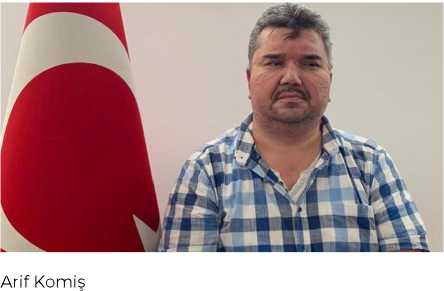
Arif Komi§, the director of the Hibiscus International School, which is affiliated with the GQlen movement, was the last victim of Turkey’s transnational repression in Malaysia. Despite the fact that Komi§ had been under the protection of the UNHCR, he and his family were detained on August 28, 2019 by officials from the Malaysian Immigration Bureau and were kept overnight at the immigration office in Kuala Lumpur.[22] The family was then transferred to Turkey by MiT on August 29, 2019.[23] [24]
The Asia Pacific Refugee Rights Network (APRRN), 400 civil society organizations and individuals from 28 countries committed to advancing the rights of refugees in the Asia Pacific region, released a statement 24regarding that case on September
2, 2019. The APRRN condemned the Malaysian government for the forcible return of Komi§ and his family to Turkey and expressed concern that Malaysia had returned a UNHCR- recognized refugee to Turkey despite serious protection concerns.
The UN Working Group on Arbitrary Detention, at its 88th session, August 24-28, 2020, adopted a 17-page opinion[25] concerning Arif Komi§, his wife OlkQ Komi§ and their four minor children. After emphasizing that the entire Komi§ family were holders of UNHCR-issued documents, the working group found that the government of Malaysia was responsible for its own actions in the arrest, detention and transfer of the Komi§ family as well as the subsequent violations of their rights in Turkey.[26]
The Working Group found that the Turkish authorities are also responsible for their detention in Turkey and that the deprivation of liberty of Arif Komi§, Olku Komi§ and the four minor children was arbitrary.[27]
Muhammet Furkan Sokmen, a teacher at an international school affiliated with the Gulen movement in Myanmar, was detained on May 24, 2017 at
Yangon Airport in Myanmar along with his wife Ay§e and their 2-year- old daughter Sibel. The detention took place after authorities in Turkey’s INTERPOL section notified Myanmar authorities that his passport had been invalidated. He was travelling with his family from Myanmar to Thailand on a valid passport and required a visa.[28]
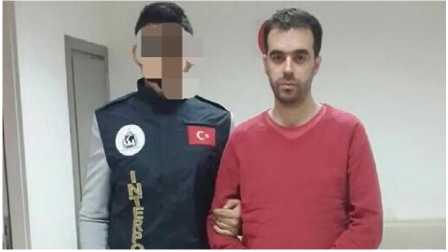 Furkan Sokmen |
After holding Sokmen and his family at the airport for approximately 24 hours, the authorities deported him to Thailand. The spokesman for the Myanmar police told the media that an official from the Turkish Embassy had given him a certificate of identification. In Thailand he was picked up by Turkish police from the INTERPOL National Central Bureau (NCB) for Turkey. He was held at an immigration detention center at the international airport in Bangkok for about another 24 hours before being deported to Turkey on May 26, 2017. Following his deportation to Turkey, Sokmen was arrested by a Turkish court.[29]
The regional representative of the UN Human Rights Office for SouthEast Asia, the HRW Asia director and Amnesty International expressed grave concern over his deportation by Burmese and Thai authorities. The UN “strongly urged authorities not to deport those deemed at risk upon their return to Turkey.”[30]
Brad Adams, HRW Asia director, said, “Burma and Thailand flagrantly violated Furkan Sokmen’s human rights by caving into pressure from Ankara and deporting him despite his claim for asylum and the real risk of ill-treatment and an unfair trial in Turkey.”[31]
His deportation moved forward even after the Office of the United Nations High Commissioner for Human Rights (OHCHR) and other UN agencies had informed key Burmese and Thai government agencies that there were substantial grounds to believe that he would face an imminent risk of human rights abuse upon his return to Turkey.[32]
Sokmen’s deportation is an example of the violation of the principle of “nonrefoulement” by the Myanmar and Thai governments. Non-refoulement is a fundamental principle of international human rights law prohibiting states from forcibly sending individuals, regardless of their status, to a country where they would be at risk of torture, ill-treatment or other serious human rights violations upon return.[33]
Non-refoulement is also included in the Convention against Torture and Other Cruel, Inhuman or Degrading Treatment or Punishment, to which Thailand is a party. Thus, by deporting Sokmen to Turkey, the principle of non-refoulement was violated because there were grounds to believe he would face ill-treatment or torture upon his return to Turkey.
The GQlen movement-affiliated Pak-Turk international schools and colleges were closed at the request of the Turkish government in November 2016, and the Pakistani government ordered the Turkish teachers to leave the country.[34] The teachers, however, remained in Pakistan under temporary court orders and UN protection.
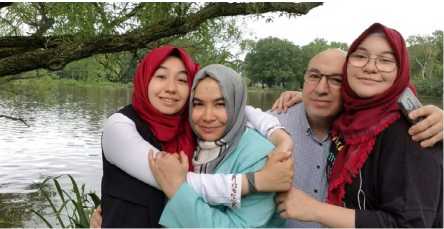 The Kagmaz family |
The four members of the Kagmaz family, who were under the protection of UNHCR, were abducted on September 27, 2017 by 20 armed individuals. Mesut Kagmaz was a former principal for the Pak-Turk Schools, and his wife was a teacher at the same schools.[35] The perpetrators blindfolded and put hoods over the heads of Mr. and Mrs. Kagmaz as well as their two teenage daughters. After about a 30-minute ride, they arrived a place believed to be a military cantonment, where they were allegedly in custody for 17 days.[36]
On September 28, 2017 lawyers for the Kagmaz family applied to the Lahore High Court and requested that they be released and not deported to Turkey. However, the family was forcibly deported by the Pakistani government to Turkey on October 14, 2017, just two days before their scheduled appearance in court. They were boarded on an unmarked plane in Islamabad by Pakistani staff and flown to Istanbul, but there were only Turkish agents on board the aircraft. It was alleged that Mesut Kagmaz was ill-treated throughout the flight.[37] Following their arrival in Istanbul, Mr. and Mrs. Kagmaz were reportedly transferred to Ankara by the police for interrogation, while their children stayed with a relative in Istanbul.[38] [39]
During a hearing on October 16, 2017 at the Lahore High Court, the deputy attorney-general of Pakistan told the court the family had not been deported by any agency under the Interior Ministry. The deputy attorney- general also presented letters from the interior and foreign ministries that contained similar information. 39However, several pro-Turkish- government media outlets reported that the Kagmaz family had been deported by the Pakistani government to Turkey. According to the GQnep daily, Kapmaz and his wife were handed over to Turkish authorities.[40] These reports contradicted the claims of the Pakistani authorities and indicated the role and complicity of the Pakistani government in the abduction in Lahore and forcible return to Turkey.
Human rights organizations and activists expressed concern for the Kapmaz family’s safety in view of the scandal of their abduction in Pakistan and deportation to Turkey. The Human Rights Commission of Pakistan (HRCP) had urged the Pakistani government to immediately release them. The HRCP also asked the government not to deport them as the family held asylum seeker certificates issued by UNHCR.[41]
Pakistani human rights lawyer Asma Jilani Jahangir, the co-founder and chairperson of the HRCP and a lawyer for the Kapmaz family, accused the Pakistani government of disobeying the court order that banned the deportation of the Kapmaz family. Following the deportation, she said during a press conference: “Is this a country or a forest? Is it an unowned realm? Because no one is [mindful] of the court here, they deliver the people they want to world dictators, as they have done before.”[42]
On May 25, 2018 WGAD released 16-page opinion[43] concerning the Kapmaz family. The Working Group called on the Turkish government to immediately release Mesut and Meral Kapmaz, saying: “The Working Group requests the Government of Pakistan and the Government of Turkey to take the steps necessary to remedy the situations of Mesut Kapmaz, Meral Kapmaz and the two minors without delay and bring them into conformity with the relevant international norms, including those set out in the Universal Declaration of Human Rights and the Covenant.”[44] In that case, the Pakistani government disobeyed a court order that prohibited the Kapmaz family’s deportation. Pakistan also violated its obligations under international law that secure the protection of asylum seekers by sending the Kapmaz family back to Turkey, where they faced the risk of ill-treatment and potential torture.
Turkish businessman Memduh Qkmaz was arrested by Sudan’s National Intelligence and Security Service (NISS) in Khartoum on September 6, 2017. According to the Anadolu news agency, MiT had pointed out ^ikmaz’s location to the Sudanese authorities two months before the operation.[45]
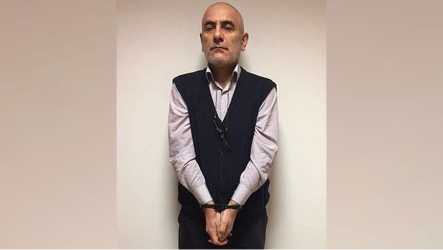 Memduh Qkmaz |
A Turkish court had issued an arrest warrant for gikmaz in 2016 on charges of managing an “armed terrorist organization,”[46] and Turkey submitted a translation of a 500-page indictment to the Sudanese government seeking Qikmaz’s deportation.
After his detention in Sudan, he wanted to meet with his family and lawyer, but his request was denied by the Sudanese authorities. gikmaz’s family urged Sudanese officials not to deport him to Turkey since he might face persecution there.[47] A special team from MIT brought Qkmaz back to Turkey on November 27, 2017. Following his arrival in Istanbul, he was arrested by a Turkish court.
The gikmaz case reveals the illegal nature of his return since legal deportation procedures were not followed. He did not have access to his lawyers while under custody in Sudan. Although there was a potential threat to his life and freedom upon his return to Turkey, the Sudanese authorities did not abide by the principle of nonrefoulement, which prevents them from sending an individual back to a country where he may face the risk of human rights violations. Therefore, the Sudanese authorities also violated the rules of international human rights law in that regard.
In September 2017 Enver Kilip and Zabit Kipi, allegedly linked to the movement, were not allowed to board a plane flying from Kazakhstan to Kyrgyzstan at the Almaty airport. They were then detained by Kazakh authorities at the airport and confined to a room.
A MIT team forcibly removed Zabit Kipi from the terminal and put him on a plane he described as painted with a camouflage pattern. A minivan picked him up after landing at the airport in Ankara, and he was driven to what he described as a freight container where he was subjected to torture and abuse for more than three months.
Testifying at the Kocaeli 5th High Criminal Court on April 3, 2018, Ki§i told the judges how he was beaten on the plane during the three-hour flight from Almaty to Ankara. According to his account, the agents started hitting him in the head and genitals while he was blindfolded and handcuffed from behind. He passed out from the blows to the head, but the abuse continued after an agent checked to make sure he still had a pulse.[48]
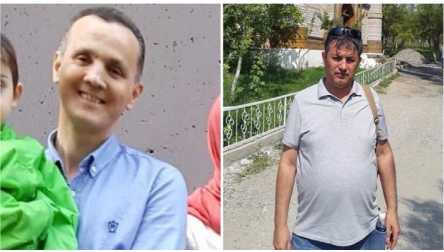 Enver Kilig and Zabit Ki§i |
In a letter sent to the court on July 12, 2018 from his prison cell, Ki§i revealed how he had been subjected to torture and other human rights violations for 108 days. Ki§i said he had been tortured from the moment he was handed over to persons who introduced themselves as MiT officials in Kazakhstan. He provided details of the systematic, physical and psychological torture inflicted on him while in the custody of MiT. However, allegations of torture and ill-treatment stated in Kiwi’s letter were not investigated by the judicial authorities. He was sentenced to 13 years, six months’ imprisonment on June 21, 2019.
Teachers Cihan Ozkan, Kahraman Demirez, Hasan HQseyin GQnakan, Mustafa Erdem and Yusuf Karabina, who had been working at GQlen movement-affiliated schools in Kosovo, and cardiology professor Osman Karakaya were arbitrarily arrested at Turkey’s request over alleged links to Gulen movement and forcibly returned to Turkey on March 29, 2018.[49]
According to WGAD[50] the arrest, detention and forced transfer to Turkey of the six Turkish nationals by Kosovar and Turkish state agents in Kosovo was arbitrary and in violation of international human rights norms and standards.
The entire operation was planned and carried out by the Kosovo Intelligence Agency, which had assumed police authority and taken control of police offices, contrary to domestic and international legal procedure standards, according to the UN body.
WGAD held that the Kosovar and Turkish authorities’ deprivation of liberty of the six individuals was in contravention of the right to equality and non-discrimination, the right to life, liberty and security, the right to an effective remedy, the right to freedom from arbitrary arrest and detention, the right to a fair trial and the right to freedom of opinion and expression. The Working Group also found that since Turkey did not follow normal extradition procedures for the six Turkish nationals, the Turkish authorities are also responsible for their arbitrary detention and arrest in Kosovo.[51]
Following the incident, the Kosovar Parliamentary Investigation Commission launched an investigation. A commission report concluded that the deportation was illegal and that the constitution was violated 31 times during the arrests. Kosovo’s opposition has accused President Hashim Thaci of ordering the deportations because of his close relations with Turkish President Recep Tayyip Erdogan. Thaci has denied any wrongdoing. Days after the six men were expelled, Kosovo’s prime minister, Ramush Haradinaj, dismissed the country’s interior minister and secret service chief because he was not told the six would be deported to Turkey.[52] Haradinaj said in an interview that “one cannot just snatch people from Kosovo. This was a sort of a theft of people from Kosovo.”[53]
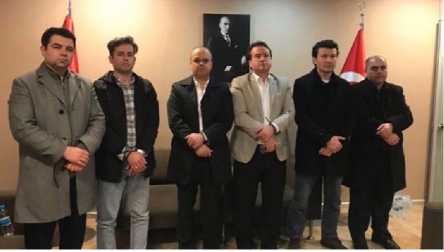 A photo of Turkish nationals taken in Turkish Embassy in Pristina. |
In March 2021 a court in Pristina accepted the indictment of three officials involved in the forcible deportation. Under indictment are Driton Gashi, former head of the Kosovo Intelligence Agency; Valon Krasniqi, director of the Department of Citizenship and Migration at the Interior Ministry; and Rrahman Sylejmani, head of the Directorate of Migration and Foreigners in the Kosovo Border Police. The indictment accused both Gashi and Krasniqi of “abuse of official position or authority,” while Sylejmani was accused of both “abuse of official position or authority” and “illegal deprivation of liberty.”[54]
The case of the Turkish nationals in Kosovo sparked reactions from international institutions and rights organizations. Then-spokesperson of the European Union, Maja Kocijancic, said the incident raised questions about respect for the due process of law. She also emphasized that the arbitrary procedures were against the rule of law and the principles of human rights and fundamental freedoms.[55]
Veysel Akpay the general director of schools affiliated with the Gulen movement in Mongolia, was the victim of an attempted abduction in front of his house in the Mongolian capital of Ulaanbaatar on July 27, 2018.[56] A group of people wearing masks forced him into a van according to eyewitnesses.[57] A private plane was reportedly waiting at Ulaanbaatar’s airport to transport Akpay to Turkey.
Akpay, who had worked at educational institutions in Mongolia for 24 years, is reportedly one of only a few Turkish nationals awarded the Mongolian Friendship Medal bestowed by the Mongolian state.[58] Thanks to resistance from the relevant authorities, the public and the media, he was released several hours later.[59]
Following the incident, the Mongolian Ministry of Foreign Affairs released a statement condemning the attempt. “Any seizure of Mr. Akpay would constitute an unacceptable act of violation of Mongolia’s sovereignty and independence and Mongolia will strongly object,” the ministry said. The Mongolian Foreign Ministry statement indicated that Deputy Foreign Minister Batmunkh Battsetseg had met with a Turkish diplomat to discuss the case.
“The Turkish diplomat reaffirmed that the Republic of Turkey respects the independence and sovereignty of Mongolia, and any illegal activities, including the abduction of persons, have not been conducted on the territory of Mongolia, and conveyed the Turkish Foreign Minister [MevlQt ^avupoglu’s] request to have a phone call with Foreign Minister [Damdin] Tsogtbaatar on this matter,” the statement said. “The Ministry of Foreign Affairs has requested the relevant authorities to hold a Turkish charter flight aircraft, currently landed at the Chinggis Khaan International Airport, until the matter is resolved.” [60]
Mongolian member of Parliament Baasankhuu Oktaybri said: “We are an independent nation. Do you think anyone can do abductions in our country?”[61]
The Mongolian response demonstrated that if other countries had reacted to the illegal actions of the Turkish intelligence agency in their territories in the same manner as Mongolia, the Turkish government would not have dared to attempt such operations.
In May 2017, on a visit to Chisinau, then-Turkish Prime Minister Binali Yildirim urged Moldova to close down the Orizont schools due to their alleged links to the GQlen movement. Moldovan Prime Minister Pavel Filip did not agree to, or reject, the request at the time.[62]
Six months later, the Security and Intelligence Service (SIS) arbitrarily detained Orizont schools teachers Yasin Ozdil, Mujdat ^elebi, Riza Dogan, Huseyin Bayraktar, Hasan Karacaoglu, Ahmet Bilgi and Mehmet Feridun TQfekpi, on September 6, 2018.[63] Their request for asylum was rejected by Moldovan authorities. A statement by the SIS suggested that the detainees were “suspected of ties with an Islamist group, a group about which there are indications that they are acting illegally in several countries” and that they “have been declared undesirable by competent authorities and expelled from the territory of the Republic of Moldova.”[64]
EU officials, members of the European Parliament (MEP) and human rights organizations called on the Moldovan government to respect the rule of law and stop the deportation of the Turkish nationals. Johannes Hahn, the then-EU commissioner for neighborhood policy and enlargement negotiations, tweeted, “Orizont teachers in #Moldova: I expect the #Moldovan government and all authorities to respect rule of law and all established judicial procedures.” A group of MEPs also released a joint statement and asked the Moldovan government “to stop immediately this abusive extradition.”[65] Amnesty International condemned the detention and illegal deportation of the Turkish nationals who had been seeking asylum. Amnesty emphasized that the Moldovan authorities had ignored its human rights obligations.[66] HRW said the Moldovan security service cooperated with Turkish agents to transfer the Turkish nationals to Turkey without due process, where they were detained and prosecuted.[67]
 Moldovan intelligence arbitrarily detained Orizont schools’ teachers. One of the teachers was taken after the door of his house was broke down. |
Despite demands from rights groups and local and international organizations, Moldovan authorities handed the Turkish nationals over to Turkey just before President Erdogan’s official visit to the country in October 2018. During his visit, Erdogan attended the opening ceremony of the Moldovan presidential palace, which was repaired by Turkish contractors under a 10 million euro contract paid for by TiKA, the Turkish Cooperation and Coordination Agency.
Five of the Turkish teachers applied to the ECtHR. On June 11, 2019 the court imposed a fine on Moldova over the expulsion of the teachers at the request of the Turkish government. The ECtHR said the applicants were expelled in disregard of their asylum applications in Moldova in which they clearly stated their fear of imprisonment. The court found several violations of the European Convention on Human Rights (ECHR), specifically the provisions of Article 5 regarding the right to liberty and security and Article 8 regarding the right to respect for private and family life. The Moldovan government was ordered to pay 25,000 euros to each applicant.[68]
It also said the applicants were expelled by a joint intelligence operation using a special aircraft in what seemed like a premeditated plan that lacked legal grounds.
Vasile Botnari, the former head of the Moldovan secret service, received a suspended sentence and a substantial fine over the rendition of the seven Turkish teachers. The court also ordered Botnari to pay 125,000 euros, the amount Moldova lost in the cases of five of the teachers that had come before the ECtHR.[69]
Turkish citizens Ayhan Seferoglu and Erdogan Taylan, who were detained by the Azeri police over their alleged links to the movement, were released by an Azeri court on February 19, 2018. But they were abducted by unidentified persons while leaving the courthouse.[70]
Freedom House in its Special 2021 Report[71] highlighted the following about their case: “A few of the renditions, including one involving a group from Azerbaijan, appear to be classic abductions—people were bundled into cars on the street and then reappeared in Turkey with no procedures.”
According to the US State Department’s 2018 Country Reports on Human Rights Practices: Azerbaijan,[72] Seferoglu and Taylan were transferred to Turkey without any due process. The report underlined that Azerbaijani officials had facilitated the detention and transfer of these individuals to Turkey despite the court’s ruling in their favor. Thus, they not only ignored the local court decision but also violated the principle of non-refoulement.
In another case, Mustafa Ceyhan was arrested at the Qirmizi KorpQ (Red Bridge) border crossing point between Georgia and Azerbaijan, by the Azerbaijani border police on April 20, 2017. The Azerbaijani authorities charged Ceyhan with crossing the border illegally because of the cancellation of his passport by Turkish authorities. He was sentenced by the Gazakh District Court in Azerbaijan to one year’s imprisonment in the absence of any wrongdoing, according to the opinion of WGAD.[73]
While serving his sentence in Azerbaijan, the Turkish government lodged a request for Ceyhan’s extradition to Turkey on charges of alleged membership in a terrorist organization. After serving his one- year sentence, he was brought before a judge on April 26, 2018 to decide on his extradition. The judge decided not to extradite Ceyhan to Turkey and ordered his immediate release. When he and his lawyer were leaving the courthouse, he was abducted in front of the building by a group of eight men believed to be from the Azerbaijani intelligence services and the State Migration Service of Azerbaijan.[74] Upon his arrival in Turkey on April 27, 2018, Ceyhan was arrested on two outstanding arrest warrants.[75]
The UN Working Group found that the Azerbaijani government violated Ceyhan’s rights to protection from arbitrary arrest and detention and also breached its obligations under the Convention against Torture and Other Cruel, Inhuman or Degrading Treatment or Punishment. The group underlined that the Turkish government had known about the transfer of Ceyhan to Turkey before the illegal rendition. The Working Group further said that “there are strong grounds to conclude that the Government of Turkey is collaborating with other States, in some cases outside the protection of the law, to forcibly return Turkish citizens in connection with terrorism charges.”[76]
Another Turkish national, isa Ozdemir, who had been living in Azerbaijan since 1993 and had asylum protection status granted by the UN, was rendered to Turkey in July 2018.[77] After his detention at the request of the Turkish government for alleged membership in a terrorist organization, he was brought before the Baku Grave Crimes Court. The court released him, denying the request for his extradition. However, following his release, nothing was heard of him until the state-run Anadolu news agency reported that Ozdemir had been brought to Istanbul on July 12, 2018 by MiT agents.[78]
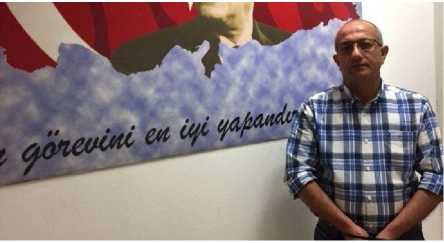 isa Ozdemir |
Mehmet Gelen was the fifth Turkish national in Azerbaijan targeted by Turkey’s campaign of transnational repression. Gelen had worked as a teacher at a school affiliated with the GQlen movement before the school was shut down by the Azerbaijani authorities. After he appeared before a prosecutor on allegations of terrorism leveled by Turkey, he was abducted from the courthouse by unidentified persons and was taken to Turkey within hours.[79]
In four cases, the Turkish nationals were similarly abducted in front of the courthouses just after their release by the courts. As confirmed by proTurkish government media, they were abducted and then forcibly transferred to Turkey by Turkish agents
In the case of isa Ozdemir v. Azerbaijan and 4 other applications pending before the ECtHR, the rights court sent questions to the parties on April 14, 2019.[80]
Turkish entrepreneur Salih Zeki Yigit was apprehended by Ukrainian Security Service (SBU) agents in broad daylight on a busy street in Odessa on July 11,2018. According to local reports, the SBU transferred Yigit to the neighboring Kherson region, where he was put on a private plane and flown overnight to Istanbul with a sack over his head.[81] After the operation the Turkish president’s spokesperson, ibrahim Kalin, thanked the SBU for helping with Yigit’s detention.[82] On July 12, 2018 another Turkish national, Yusuf inan, a journalist and a legal resident of Ukraine, was detained by the Ukrainian police at his residence in southern Ukraine and immediately deported to Turkey.[83] Both Yigit and inan were arrested by Turkish courts.
Upon inan’s transfer to Turkey, the Organisation for Security and Co-operation in Europe (OSCE) condemned the Ukrainian authorities for handing over the Turkish journalist.[84]
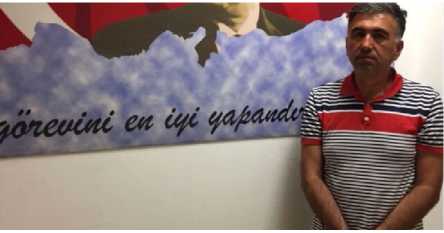 Salih Zeki Yigit |
Salih Fidan and Samet GQre, who previously worked as teachers at schools affiliated with the GQlen movement in Iraq, were detained in the Ukrainian city of Rava-Ruska and deported to Turkey by Ukrainian authorities on January 5, 2021.[85]
In fact, the Turkish teachers had traveled to Kyiv to make their way to Europe to seek asylum since their passports were about to expire, and they feared the Turkish authorities would not renew them. They then travelled to the city of Rava-Ruska near Lviv, close to the Polish border, where they were detained by Ukrainian police on December 31, 2020.[86] They were taken to Kyiv Boryspil International Airport, where they were kept until January 5, 2021. They were accused of entering Ukraine illegally despite the fact that they had legal travel documents.[87]
Fidan and GQre requested asylum through United Nations officials to avoid their deportation and were interviewed for almost an hour. However, they were forcibly sent to Turkey before the asylum process was complete after officials at the Turkish Embassy in Kyiv reportedly took action to facilitate their return to Turkey.[88] Following their arrival in Turkey, they were arrested by a Turkish court.[89]
Turkish teachers Osman Ozpinar, ibrahim Akbaj and Adnan Demironal, who had been working at the Ecole la Lumiere school affiliated with the GQlen movement in Libreville, were detained by the Gabon police on March 23, 2018 and were taken to the police station.
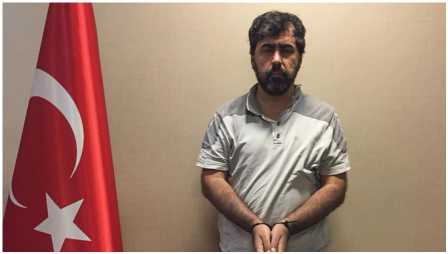 ibrahim Akbaj |
French human rights lawyer Richard Sedillot went to Gabon to investigate the detentions. He reported that he saw a Turkish Embassy vehicle in front of the police station and that two embassy officials were inside the station.[90] The teachers were handed over to the Turkish officials and taken to istanbul on April 8, 2018. A Turkish court arrested the teachers, accusing them of “being a member and an executive of an armed terrorist organization” and “international espionage.”[91]
Speaking to lawmakers from his ruling Justice and Development Party (AKP), President Erdogan said: “Gabon has returned three important Gulenists to our country. No matter where they run or how much they run, we will go after them.”[92]
Following the application, the UNHRC Working Group on Arbitrary Detention transmitted a communication to the Turkish government and requested the release of the teachers. While Demironal was freed by a court in September 2020, the other two are still in prison.[93]
Turkish national Harun Celik, who had been a teacher at a school affiliated with the movement in Albania, was detained at the Tirana airport on the grounds of counterfeiting a Canadian visa in July 2019.[94] Pursuant to the Law on Foreigners, the High Court sentenced him to eight months in prison. After serving five months, a court released him and rejected Turkey’s request for his extradition.
Despite the court’s order, he was abducted and his location remained unknown for several hours.[95]
It was reported that the Albanian police transported him to the airport. Despite the court order, he was illegally deported to Turkey on January 1,2020.[96] According to his lawyer, even though C^elik had claimed political asylum, it was rejected by the prison police authorities.[97]
Albanian authorities denied the involvement of Turkish intelligence agency MiT in the rendition of Celik to Turkey;[98] however, a pro-Turkish- government media outlet reported that he was handed over to a special team deployed to Tirana by MiT.[99] This case raises suspicions about Albania’s complicity in Celik’s illegal transfer to Turkey as stated in a joint U.N. letter.[100]
The OHCHR launched an investigation into the extradition of ^elik[101] and sent a letter[102] dated March 20, 2020 to both Albania and Turkey to obtain information about the case.
Even though ^elik had sought political asylum during his incarceration, the Albanian authorities rejected his asylum claim. By declining ^elik’s application without assessing it, Albania violated the principle of nonrefoulement since it did not consider that ^elik would face possible human rights violations upon his return to Turkey.
On March 8, 2018 Ayten OztQrk was taken into custody by Lebanese authorities at the Beirut airport and was brought to Turkey on a private aircraft five days later while handcuffed and blindfolded. She was jailed in Turkey for five months without access to a lawyer, during which time she alleges she was tortured. She was handcuffed and often subjected to electric shocks, waterboarding and hanging upside down. It is alleged that they placed her inside an inflated tire in an attempt to rape her.[103] One day she was given back her clothes and told that she would be “delivered to justice.” She was left in an abandoned field where she was “officially” detained and taken to Ankara police headquarters. After she had been taken to prison, she filed an official complaint, but the prosecutor issued a decision not to prosecute and no probe was launched into her allegations of torture.[104]
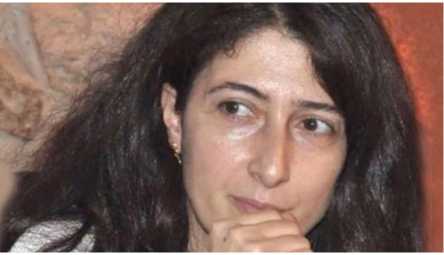 Ayten OztQrk |
OztQrk is accused of links to the outlawed the Revolutionary People’s Liberation Party-Front (DHKP-C), a militant Marxist group, based on witness testimony. The group is listed as a terrorist organization by Turkey, the United States and the European Union.
On June 13, 2019, during her hearing before the istanbul 3rd High Criminal Court, OztQrk submitted to the court a 12-page petition about her conditions of detention, torture and ill-treatment.[105] OztQrk said she was both physically and emotionally traumatized by the torture and had dropped to 40 kilos. “I counted a total of 898 wounds on my body [as a result of torture],” she said. “They tortured me as if it was a routine thing.”
According to Ozturk her claims were not even investigated. “Counterterrorism police would talk to the doctor before he or she examined me. The doctor wouldn’t even look at me during the medical,” she said.[106]
| 2.14. Cambodia
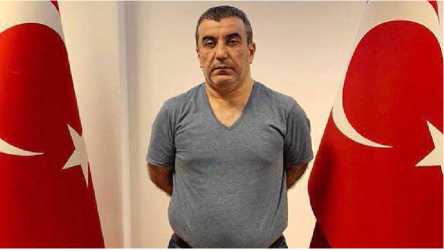 Osman Karaca
|
Osman Karaca, a Turkish-Mexican former director of a school affiliated with the GQlen movement, was arrested by eight Cambodian policemen while he was at a bank on October 14, 2020 in the capital city of Phnom Penh.
According to the UN joint letter, the Turkish diplomatic mission in Phnom Penh reported to the Cambodian police that Karaca was holding a fraudulent Mexican passport, after which the authorities arrested him. The Turkish Embassy then demanded his deportation to Turkey due to the “lack of an international travel document.” It is also alleged that the Turkish authorities bribed local officials to secure their cooperation in illegal actions to arbitrarily arrest him.[107] Karaca was deported to Turkey after he had been subjected to an enforced disappearance for several days.
During its 88th session, on November 26, 2020, WGAD concluded that the arrest, detention and forcible transfer of Karaca in Cambodia was arbitrary and in violation of international human rights norms and standards. The working group found serious human rights violations perpetrated by agents acting on behalf of the governments of Cambodia and Turkey. The working group requested that “the Governments of Cambodia and Turkey … take the steps necessary to remedy the situation of Mr. Karaca without delay and bring it into conformity with the relevant international norms, including those set out in the Universal Declaration of Human Rights and the International Covenant on Civil and Political Rights.”[108]
2.15. Kenya
President Erdogan revealed in televised remarks on May 19, 2021 that they had recently apprehended an important member of the GQlen movement, adding that he would soon announce that person’s identity. Hours after Erdogan’s revelation, Seriyye GQlen released a video on YouTube in which she said her husband, Selahattin GQlen, a teacher, went missing on May 3 in Kenya, where he had been living for the past seven months.[109]
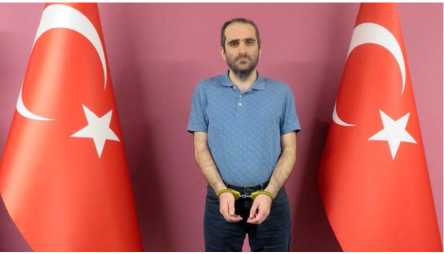 Selahattin GQlen |
Seriyye GQlen claimed that that her husband was kidnapped solely due to being a relative of Fethullah Gulen, calling on authorities to find Selahattin GQlen and release him immediately.
On May 6, 2021 a Kiambu court ruled that he should not be arrested, extradited or deported,[110] and the Kenyan interior cabinet secretary and inspector general of police were ordered to appear before a Kiambu court to explain the whereabouts of Selahaddin GQlen.[111]
The pro-Turkish-government media on May 31, 2021 confirmed the operation and his forcible transfer to Turkey.[112] The Anadolu news agency reported that Selahattin Gulen was brought back to Turkey by MiT agents, quoting unnamed security sources. The agency published a photograph of the detainee in handcuffs with a Turkish flag on either side but did not say whether the MiT operation took place with the coordination of the host country.
Orhan inandi is the latest victim in a series of cases in which Turkey’s intelligence service has been involved in unlawfully transferring people to Turkey from countries around the world. inandi, who was the founder and director of the prestigious Sapat school network operating in Kyrgyzstan, went missing on May 31 and was feared to have been abducted by MiT due to his alleged links to the GQlen movement.[113]
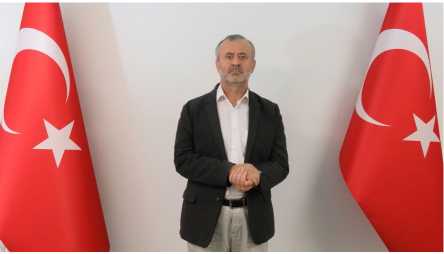 Orhan inandi |
Kyrgyz lawmakers, citizens, prominent rights groups and activists around the globe urged the Kyrgyz government to locate inandi.
However, President Erdogan had acknowledged in a statement following a Cabinet meeting on July 5 that inandi was actually rendered to Turkey by MiT, lauding the Turkish spies’ efforts in the rendition. Photos of inandi in handcuffs with Turkish flags prompted allegations of torture due to inandi’s visible weight loss and swollen right hand. An Ankara court on July 12 ruled to arrest inandi on charges of serving as an executive of a terrorist organization.
In his first public comments on inandi’s disappearance on May 31, lawyer Halil ibrahim Yilmaz said his client told him that three men who spoke fluent Kyrgyz and were possibly officers of the Kyrgyz police, security services or another state entity kidnapped him.[114]
His wife Reyhan inandi said in a tweet that her husband was tortured and his right arm broken in three places by Turkish security officers. According to his wife, Orhan inandi has not received timely medical treatment and as a result is unable to use his right arm.[115]
Human Rights Watch released a statement[116] on July 7 following Erdogan’s announcement about inandi, saying that the abduction, forcible disappearance and extrajudicial transfer of educator inandi to Turkey by Turkish and Kyrgyz authorities amount to egregious violations of international and domestic law.
Civil society groups and others have also expressed shock at inandi’s forcible transfer to Turkey amid concerns that the Kyrgyz government failed to thoroughly investigate his disappearance.
There have been questions over the impartiality of Kyrgyz law enforcement in this case, specifically the State Committee on National Security, following allegations by the Turkish media that Kyrgyz authorities were complicit in inandi’s enforced disappearance.
- SAFEGUARDS AGAINST
ABDUCTION AND RENDITION UNDER INTERNATIONAL LAW
- International legal framework
Article 3 of the United Nations Universal Declaration of Human Rights[117] expressly recognizes the right to life, liberty and security of person. Article 9 of the declaration reads: “No one shall be subjected to arbitrary arrest, detention or exile.” The European Convention on Human
Rights (ECHR)[118] also recognizes the right to life (Article 2), freedom from torture and ill-treatment (Article 3) and the right to liberty and security of person (Article 5). Article 17 of the ECHR further reads: “Nothing in this Convention may be interpreted as implying for any state, group or person any right to engage in any activity or perform any act aimed at the destruction of any of the rights and freedoms set forth herein or at their limitation to a greater extent than is provided for in the Convention.”
Article 6 of the International Covenant on Civil and Political Rights (ICCPR)[119] recognizes the right to life of every person, and Article 9/1 of the convention specifies: “Everyone has the right to liberty and security of person. No one shall be subjected to arbitrary arrest or detention. …” Moreover, Article 14/1 of the covenant reads: “… everyone shall be entitled to a fair and public hearing by a competent, independent and impartial tribunal established by law.” Paragraph (3-g) of this article protects an individual from being compelled to testify against himself or to confess guilt.
Article 3/1 of the UN Convention against Torture and Other Cruel, Inhuman or Degrading Treatment or Punishment[120] (‘Convention against Torture’) requires the state parties not to expel, return or extradite a person to another state where there are substantial grounds for believing that he would be in danger of being subjected to torture. Case law on Article 3 of the ECHR has the same implications as Article 3 of the Convention against Torture. In the case of Saadi v. Italy,[121] the ECtHR considered that substantial grounds had been shown for believing that there was a real risk that the applicant would be subjected to treatment contrary to Article 3 of the convention if he were to be deported to Tunisia.
The International Convention for the Protection of All Persons from Enforced Disappearance (ICPPED) 122also requires that signatories prevent enforced disappearances and combat impunity for the crime of enforced disappearance. In this convention, enforced disappearance is considered to be the arrest, detention, abduction or any other form of deprivation of liberty by agents of the state or by persons or groups of persons acting with the authorization, support or acquiescence of the state.
 European Court of Human Rights building in Strasbourg |
As outlined above, the international framework recognizes and protects the right to life, freedom from torture and ill-treatment and the security of person. It further introduces obligations for the signatory states to prevent arbitrary detention, abduction, rendition and exile. In particular, the Convention against Torture and the ECHR emphasize the protection of individuals against return or extradition to another state where torture and ill-treatment are widespread.
There are several examples proving the torture and ill-treatment of Turkish nationals who have been forcibly returned to Turkey in recent years. Zabit Ki§i, Ayten Ozturk, Orhan inandi and many others were subjected to torture following their forcible return to Turkey. Countries that are signatory to these conventions did not hesitate to collaborate with Turkey for the forcible return of Turkish nationals despite these cases.
- Decisions of international courts and international organizations
Since the coup attempt, several cases have been brought before international courts and international organizations or they have been examined ex-officio.[122] [123] The UN Human Rights Committee, the ECtHR, the UN Human Rights Council Working Group on Arbitrary Detention, the Universal Periodic Review Working Group and the UN Working Group on Enforced or Involuntary Disappearances, the Special Rapporteur on the human rights of migrants, the Special Rapporteur on the promotion and protection of human rights and fundamental freedoms while countering terrorism and the Special Rapporteur on torture and other cruel, inhuman or degrading treatment or punishment have examined such cases and delivered opinions.
3.2.1. United Nations Human Rights Committee
The Human Rights Committee, a U.N. body of experts who examine individual allegations of human rights violations, delivered its opinion at its 125th session (March 4-29, 2019) on the Malaysia case involving three Turkish nationals who were unlawfully transferred to Turkey without due process in May 2017.
The committee, in its decision, concluded that the victims were detained arbitrarily and their rights to fair trial were violated in Turkey.[124] It urged Turkey to release the applicants and provide them with adequate compensation for the violations suffered.
The applicants, ismet Ozgelik, Turgay Karaman and ihsan Aslan, claimed that they were transferred from Malaysia to Turkey by people acting under the control or instructions of the Turkish authorities without any judicial procedure for extradition.
The committee found Turkey responsible because, after the applicants’ return to Turkey, Turkish authorities had not established that the applicants were promptly informed of the charges against them and of the reason for their arrest, nor had it substantiated that their detention met the criteria of reasonableness and necessity.
- European Court of Human Rights (ECtHR)
The ECtHR imposed a fine on Moldova over the transfer of teachers to Turkey. The ruling was made upon applications lodged by five of the seven Turkish nationals: Yasin Ozdil, MQjdat ^elebi, Riza Dogan, Hasan Karacaoglu and Mehmet Feridun TQfekgi.[125]
The court found several violations of the European Convention on Human Rights (ECHR), specifically the provisions of Article 5 regarding the right to liberty and security and Article 8 regarding the right to respect for private and family life. The Moldovan government was ordered to pay €25,000 to each applicant.[126]
“Depriving the applicants of their liberty in this way amounted to an extra-legal transfer of persons from the territory of the respondent State to Turkey which circumvented all guarantees offered to them by domestic and international law,” the court said.[127]
The ECtHR underlined that the applicants were expelled in disregard of their asylum applications in Moldova in which they clearly stated their fear of imprisonment.
The court determined that the Turkish nationals were transferred to Turkey on a specially chartered airplane. Moreover, the joint operation of the Turkish and Moldovan intelligence services had been prepared well in advance and the aim of the operation was to take the victims by surprise so that they would not have the time or possibility to defend themselves. [128]
In the pending case of isa Ozdemir, Ayhan Seferoglu and Erdogan Taylan v. Azerbaijan (Application no.8098/18) before the ECtHR, the rights court sent questions to the parties on April 14, 2019.
- WGAD: United Nations Human Rights Council Working Group on Arbitrary Detention
The United Nations Human Rights Council Working Group on Arbitrary Detention, an independent body investigating cases of deprivation of liberty imposed arbitrarily or otherwise inconsistently with the relevant international standards, delivered opinions on Turkish nationals who were forcibly returned from Pakistan,
Azerbaijan, Malaysia and Kosovo.
3.3.1. Kapmaz Family case (Pakistan)
The Working Group released its opinion (No. 11/2018)[129] on May 25, 2018 about the arbitrary detention, arrest and forcible deportation of the Kapmaz family and found Pakistan and Turkey responsible for these actions.
In its response the Pakistani government claimed that its authorities had not been involved in the Turkish nationals’ return to Turkey from Pakistan. However, the Working Group clarified that the Government of Pakistan had been involved in all the actions taken against the Kapmaz family.[130] It clearly stated that “the arrest, detention and deportation of the Kapmaz family was carried out by the Government of Pakistan through agents (either State agents or otherwise) acting on its behalf and with its support, and at the request of the Turkish authorities.”[131]
The Working Group said the Lahore High Court had restrained the Pakistani government from deporting the Kapmaz family before the next hearing on October 16, 2017. However, they were forcibly deported on October 14, 2017, two days before the scheduled hearing. The Working Group called this action “an egregious defiance of a judicial order.”[132]
The Working Group also stated that individuals should not be expelled to another country where they would be in danger of being subjected to ill-treatment, torture and other human rights violations. The Working Group referred to some of the UN bodies’ reports concerning the rights violations, such as extrajudicial killings, arbitrary detention, the use of torture and ill-treatment and mass dismissals of people accused of being associated with the Gulen movement in Turkey since the coup attempt. The Pakistani government did not consider the prevailing situation in Turkey and violated the principle of non-refoulement.[133] The UN body also found the Pakistani government responsible for violating the Kagmaz family’s right to protection from arbitrary detention and arrest, to be brought before the court and to challenge the lawfulness of their detention before a court, and their rights to a fair trial, as well as the subsequent violations of their rights in Turkey.[134] Due to the ill-treatment during their arrest and their flight to Istanbul, the Working Group also referred the case of the Kagmaz family to the Special Rapporteur on Torture and Other Cruel, Inhuman or Degrading Treatment or Punishment for further consideration.[135]
Regarding Turkey’s responsibility in this case, the Working Group found the Turkish government responsible for the arrest, detention and deportation of the Kagmaz family to Turkey without any legal basis as well as the deprivation of liberty of the two minors upon their arrival in Turkey. The UN body also concluded that Turkey is collaborating with other countries, in some cases outside the protection of the law, to forcibly return Turkish citizens in connection with terrorism charges.[136] After the release of the Working Group’s opinion, Mesut Kagmaz and his wife Meral were conditionally released, on July 3, 2018.[137]
- Mustafa Ceyhan case (Azerbaijan)
In its opinion (No. 10/2019),[138] the Working Group stated that there was no legal basis established for the arrest, detention and deportation of Mustafa Ceyhan and that the Azerbaijani government had committed serious violations of his rights to a fair trial, to be tried in a court and to be protected from arbitrary arrest and detention.[139]
According to the UN body, despite an Azerbaijani court order concerning Ceyhan’s release and rejection of Turkey’s request for his extradition, he was abducted outside the courthouse on April 26, 2018 by Azerbaijani agents without any legitimate legal procedure having been followed, and then deported to Turkey without due process and in plain disregard of the court order.
With reference to reports by other UN bodies,[140] the Working Group emphasized that individuals should not be expelled to another country where their life or freedom would be at risk, or they would be in danger of being subjected to ill-treatment, torture and other human rights violations. Disregarding the prevailing situation in Turkey, the Azerbaijani government violated the principle of non-refoulement and its obligations under the Convention against Torture, it said.[141]
The Working Group also considered that Turkish nationals with alleged links to the Gulen movement were being exclusively targeted for their political opinion despite the lack of a legal basis for terrorism charges. It found that the Azerbaijani government detained Ceyhan, at the request of Turkey, “on the basis of a prohibited ground of discrimination.”[142]
According to the UN body the Turkish government is jointly responsible with Azerbaijan for the abduction and illegal transfer of Ceyhan since his detention and deportation took place at the request of Turkey and a representative of the Turkish Embassy attended the extradition hearing at which the extradition request was rejected.[143]
The Working Group further emphasized that Turkish authorities had not provided any information regarding Ceyhan’s alleged crimes and urged the Turkish government to release Ceyhan immediately.
- Komi§ Family case (Malaysia)
The Working Group adopted its opinion (No. 51/2020)[144] on the detention, arrest and forcible transfer of the Komi§ family at its 88th session on August 24-28, 2020 and found Malaysia and Turkey accountable for their actions. On August 28, 2019 Arif Komi§, OlkQ Komi§ and their four children were arrested by the Malaysian police and were then deported to Turkey. UNHCR was denied access by the Malaysian authorities to the Komi§ family while they were in custody.
The Komi§ family were the holders of UNHCR-issued documents valid until June 9, 2020 protecting them from forcible return to a country where they may face rights violations. However, the Malaysian authorities did not take this into consideration and violated the principle of non-refoulement.[145] The Working Group found that the detention, arrest, and deportation of the Komi§ family were arbitrary because the Malaysian authorities did not follow due extradition process. Since their four children were also subject to arbitrary actions, Malaysia also breached the Convention on the Rights of the Child considering the best interests of children.[146] The Working Group also considered that the government of Malaysia is responsible for its own actions in the arrest, detention and deportation of the Komi§ family as well as the subsequent violations of their rights in Turkey. [147]Regarding the responsibility of Turkey, the UN body concluded, since Arif Komi§ was not presented before a judicial authority upon his transfer to Turkey, his detention was not justifiable and was based on a prohibited ground of discrimination because of his political or other opinion.[148] It also noted that although the detention of Olku Komi§ and their children was short and they were released upon arrival in Turkey, the detention was nevertheless arbitrary and the Turkish authorities failed to invoke any legal basis to justify it.[149]
Finally, the UN body requested that both governments start independent investigations and take appropriate measures against those responsible for the violation of the Komi§ family’s rights and urged Turkish authorities to ensure the immediate release of Arif Komi§.
In its opinion (Opinion No. 47/2020)[150] on the detention and arrest of Turkish nationals Kahraman Demirez, Mustafa Erdem, Hasan Huseyin Gunakan, Yusuf Karabina, Osman Karakaya and Cihan Ozkan in Kosovo and their forcible removal to Turkey, the Working Group stressed that the individuals were detained by Kosovo intelligence and handed over to the Turkish authorities for removal. According to the opinion Turkish agents could not have operated in the territory of Kosovo without the consent of Kosovan authorities.[151] The opinion noted that Gunakan was detained due to mistaken identity but that the Kosovo Intelligence Agency officers decided to deport him anyway, even though there was no order for his removal.[152]
The Working Group found that the arrests of Turkish nationals in Kosovo were arbitrary and that Kosovan authorities are responsible for their actions in the arrest, detention and deportation of the six individuals as well as for the subsequent violations of their rights in Turkey. An investigation launched by the Ombudsperson Institution of Kosovo into the incident has met with obstacles, the U N body said.
With references to cases that have come before it, the Working Group said the detention of individuals with alleged links to the movement is arbitrary. According to the Working Group, Turkey had the opportunity to afford them due process rights by extraditing them from Kosovo in accordance with proper procedures, but it chose not to do so and is therefore responsible for their arbitrary detention in Kosovo.[153] It requested that the Turkish government release the six individuals immediately and urged both countries to accord them an enforceable right to compensation and other reparations, in accordance with international law.[154]
UN rapporteurs Luciano Hazan, chair-rapporteur of the Working Group on Enforced or Involuntary Disappearances; Felipe Gonzalez Morales, Special Rapporteur on the human rights of migrants; Fionnuala Ni Aolain, Special Rapporteur on the promotion and protection of human rights and fundamental freedoms while countering terrorism; and Nils Melzer, Special Rapporteur on torture and other cruel, inhuman or degrading treatment or punishment sent a joint letter dated May 5, 2020 to the Tu rkish government to express their concern about the “systematic practice of state-sponsored extraterritorial abductions and forcible return of Turkish nationals from multiple States to Turkey.”[155]
In the letter they conveyed their concerns about the personal safety and integrity of the deported individuals as well as those at imminent risk of deportation from third countries.
The UN rapporteurs asked the Turkish government to provide further information about its operations in coordination with authorities in Afghanistan, Albania, Azerbaijan, Afghanistan, Cambodia, Gabon, Kosovo, Kazakhstan, Lebanon and Pakistan for the abduction, arbitrary arrest, detention, enforced d isappea rance or tortu re of at least 100 individuals suspected of involvement with the GQlen movement.
The joint letter underlined that the targeted Turkish nationals remained forcibly disappeared for up to several weeks in secret or incommunicado detention, that they were subjected to coercion, torture and degrading treatment and did not have access to legal representation or medical care. These acts also constituted threats to the lives and security of their families. “The Government of Turkey, in coordination with other States, is reported to have forcibly transferred over 100 Turkish nationals to Turkey, of which 40 individuals have been subjected to enforced disappearance, mostly abducted off the streets or from their homes all over the world, and in multiple instances along with their children,” the letter said.
In their letter the UN rapporteurs underlined that the Turkish government allegedly signed bilateral security cooperation agreements with multiple states for the expulsion or abduction of Turkish nationals and asked Turkey how those agreements are compatible with the country’s international human rights obligations.[156] “Turkey appears to have concluded a series of secret security co-operation agreements with other States, with the aim of facilitating expedited capture and arrest of Turkish nationals suspected of affiliation with the Hizmet/Gulen movement. Invoking the principle of legality, we stress that any inter-State agreements or arrangements the execution of which may result in substantial interference with human rights, must be publicly accessible so as to allow individuals to take cognizance of the terms of such agreements and regulate their conduct accordingly,” the letter said.
The joint letter also revealed the fraudulent use of diplomatic facilities by Turkish diplomats and their tactics in plotting the deportation of people, saying, “Parallel to these agreements it appears that with the aim of facilitating expeditious arrests abroad, Turkish authorities have reportedly revoked citizenships or annulled passports of targeted individuals.” The content of Turkey’s security agreements has changed in parallel to the transformation of national legislation, and the new documents contain ambiguous copy-paste phrases designed to suppress government opponents outside the country. The Turkish government considered international security mechanisms a convenient tool for political persecution abroad.[157]
Since 2013 agreements have included the same content indicating “In the fight against terrorism, the Parties shall prevent the activities of visual media and writings of the terrorist organizations and their representative institutions operating in their territory against one of the Parties. The parties will consider them as illegal organizations, to which they shall take appropriate measures in accordance with their national legislation.”
“The parties shall develop and apply effective measures in relation to individuals and institutions that provide financial or other support, including shelter, accommodation, training and treatment and logistical support to terrorist organizations in their territories,” the agreements also state.[158]
- CONCLUSION
Since the coup attempt in 2016, hundreds of thousands of individuals have been detained, arrested and investigated on terrorism charges due to alleged links to the GQlen movement. The Turkish government has used illegal means and methods to eliminate its critics living abroad. There have also been several instances of the enforced disappearance of Gulenists that have taken place within Turkey.
After failing to secure the extradition of Turkish nationals with alleged links to the movement, the Turkish government resorted to extrajudicial attempts and actions including the abduction, rendition and forcible return of Turkish nationals. Individuals targeted by Turkey have faced a number of human rights violations such as arbitrary arrests, house raids and torture and ill-treatment during these operations. They had no access to their lawyers or families while in custody. Additionally, in order to facilitate their detention and unlawful deportation, their passports were arbitrarily cancelled by the Turkish government. Their families were also heavily impacted by the events.
The Turkish government has carried out its operations abroad by means of its intelligence agency and diplomatic missions. To this end, MiT has established a separate unit and concluded secret security cooperation agreements with the secret services of host states that facilitate the abduction and rendition of Turkish nationals living abroad. According to reports, some embassies have also provided logistics and planning for the forcible returns.
The government institutions of some of the host states (including law enforcement and intelligence agencies) have also been complicit in the extrajudicial operations. In some cases, host country agencies have even carried out illegal operations without informing their governments. In only one case, Mongolia, did public resistance and media disclosure prevent the illegal rendition of a Turkish national who had been abducted but could not be transferred to Turkey due to the public outcry.
Such extrajudicial and illegal actions of the Turkish government have violated the detainees’ rights to life, liberty, security of person, fair trial and respect for private and family life, which are protected by several international conventions. In their complicity in the forcible returns, the host states have also violated the principle of non-refoulement by putting the Turkish nationals’ life and liberty at risk and ignoring their asylum claims.
Countries should comply with their international obligations regarding the protection of individuals from unlawful transfer to countries where they could face torture, ill-treatment and other human rights violations. As in the case of Mongolia, public opinion in those countries can show strong resistance to Ankara’s illegal attempts and protect not only national sovereignty but also the fundamental freedoms of individuals.
International organizations, particularly the United Nations and the Council of Europe, ought to urge the Turkish government to comply with its international commitment to implement sufficient safeguards to prevent the occurrence of similar extrajudicial and unlawful acts in the future. Turkey should be forced to account for its operations, to carry out effective investigations into all allegations and to make a statement about the results of such investigations. Judicial and quasijudicial international mechanisms should continue to exert pressure on Turkey as was done by the relevant UN working groups and bodies.
With Turkey’s transnational repression continuing to grow as in the most recent cases of Kenya and Kyrgyzstan, a stronger and more persistent reaction from these international mechanisms has become all the more indispensable for preventing new extrajudicial and illegal operations carried out by the Turkish government.
Moreover, if left unanswered, reckless disregard of international law by Erdogan’s Turkey has the potential to inspire other authoritarian regimes to resort to similar methods. The world’s democracies should stand united and display transnational solidarity in the face of transnational repression.
[1] Freedom House, Turkey: Transnational Repression Case Study, Special Report 2021, at https://freedomhouse.ora/report/transnational-repression/turkev
[2] Stockholm Center for Freedom, Turkey has done illegal renditions from more countries in past 6 years than any other country, says Freedom House official, January 15, 2021, https://stockholmcf.orq/turkey-has-done-illeqal-ren- di^ons-from-more-countries-in-past-S-years-than-any-other-country-says-freedom-house-official/
[3] Freedom House, ibid.
[4] The Wall Street Journal, Ex-CIA Director: Mike Flynn and Turkish Officials Discussed Removal of Erdogan Foe From U.S., March 24, 2017, at https://www.wsi.com/articles/ex-cia-director-mike-flvnn-and-turkish-officials-dis- cussed-removal-of-erdoaan-foe-from-u-s-1490380426
[5] The Wall Street Journal, Mueller Probes Flynn’s Role in Alleged Plan to Deliver Cleric to Turkey, November 10, 2017, at https://www.wsi.com/articles/mueller-probes-flvnns-role-in-alleαed-plan-to-deliver-cleric-to-turkev-1510309982
[6] FETO is an acronym for the ‘Fethullahist Terrorist Organization’ and is used in indictments and other legal documents in Turkey. There is, however, no recognition of such a terrorist organization internationally.
[7] TRT Haber, Higbir Qlke FETO igin gOvenli siginak degildir, September 19, 2016, at https://www.trthaber.com/haber/ αundem/hicbir-ulke-feto-icin-αuvenli-siαinak-deαildir-272161.html
[8] Financial Times, Turkey fails in bid to overturn UK decision blocking Ipek extradition, April 9, 2019, at https://www. ft.com/content/c64d6d9e-5ac7-lle9-939a-341f5ada9d40: Reuters, UK court rejects ‘politically motivated’ Turkish extradition request, November 29, 2018, at https://www.reuters.com/article/us-britain-turkey-ipek/uk-court-re- iects-politicallv-motivated-turkish-extradition-request-idUSKCN1NX1O0
[9] Nordic Monitor, Bosnian authorities reject Turkey’s request to extradite journalist due to lack of legal grounds, July 30, 2019, at https://www.nordicmonitor.com/2019/07/bosnian-authorities-reiect-turkevs-reαuest-to-extra- dite-journalist-as-lacking-legal-ground/
[10] Joint U.N. letter, page 3, at https://spcommreports.ohchr.org/TMResultsBase/DownLoadPublicCommunication- File?gId=25209
[11] Freedom House, Out of Sight, Not Out of Reach: The Global Scale and Scope of Transnational Repression, February 2021, at https://freedomhouse.org/sites/default/files/2021-02/Complete FH TransnationalRepressionRe- port2021 rev020221.pdf
[12] For example, Article 3 of the Vienna Convention on Diplomatic Relations of April 18, 1961.
[13] Article 3 of the UN Convention against Torture and other Cruel, Inhuman or Degrading Treatment or Punishment 1984 (UNCAT).
[14] Politico, Long arm of Turkey’s anti-GQlenist purge, August 21,2017, at https://www.politico.eu/article/lonq-arm- of-turkeys-anti-gulenist-purge/
[15] Stockholm Center for Freedom (SCF), Erdogan’s Long Arm; The Case of Malaysia, May 2017, at https://stock- holmcf.orq/wp-content/uploads/2017/05/Erdoqans-Lonq-Arms-The-Case-Of-Malavsia.pdf
[16] Stockholm Center for Freedom (SCF), Fifth Turkish national detained in Malaysia as Najib Razak ramps up persecution of Erdogan critics, May 2017, at https://stockholmcf.orq/fifth-turkish-national-detained-in-malavsia-as-naiib- razak-ramps-up-persecution-of-erdogan-critics/
[17] Aljazeera Turk, Cavujoglu: Malezya 3 FETO mensubunu teslim etti, October 14, 2016, at http://www.aliazeera. com.tr/haber/cavusoqlu-malezva-3-feto-mensubunu-teslim-etti: Anadolu Agency, Malaysia hands over ‘3 FETO members’ to Turkey, October 14, 2016, at https://www.aa.com.tr/en/politics/malaysia-hands-over-3-feto-members- to-turkey/665013
[18] Stockholm Center for Freedom (SCF), ibid.
[19] For the details see Independent, Turkish men ‘face torture’ after being extradited from Malaysia as post-coup crackdown continues, May 12, 2017, at https://www.independent.co.uk/news/world/asia/turkey-coup-attempt-er- doga.n-Gijlen-hizmet-movement-crackdown-malaysia-arrests-extradited-karaman-a7733276.html
[20] Independent, ibid.
[21] For the text of the decision dated May 28, 2017 and numbered CCPR/C/125/D/2980/2017, see the United Nations Human Rights Committee, Views adopted by the Committee under the Optional Protocol, concerning communication No. 2980/2017, at https://tbinternet.ohchr.orq/Treaties/CCPR/Shared%20Documents/TUR/
CCPR C 125 D 2980 2017 28518 E.docx.
[22] Bold Media, Malaysia has disregarded UN protection: Arif Komi§ has been sent to Turkey, September 12, 2019, at https://boldmedva.com/en/2019/09/12/malavsia-has-disregarded-un-protection-arif-komis-has-been-sent-to-tur- key/
[23] Anadolu Agency, Turkish intelligences captures FETO member in Malaysia, August 20, 2019, at https://www. aa.com.tr/en/asia-pacific/turkish-intelliqences-captures-feto-member-in-malavsia-/1569092
[24] APRRN press release, Malaysia Returns UNHCR-recognised Refugee to Turkey Despite Serious Protection Concerns, September 2, 2019, at http://aprrn.info/press-release-malavsia-returns-unhcr-recoqnised-refuqee-to-tur- key-despite-serious-protection-concerns/
[25] Human Rights Council Working Group on Arbitrary Detention, Opinion No. 51/2020, at https://www.ohchr.org/ Documents/Issues/Detention/Opinions/Session88/A HRC WGAD 2020 51 Advance Edited Version.pdf
[26] For the Working Group’s view, see paragraph 72 of Working Group decision, ibid.
[27] For the Working Group’s view, see paragraphs 87 and 104 of Working Group decision, ibid.
[28] Stockholm Center for Freedom, Abuse of the Interpol System by Turkey, September 20. 2017, at https://stock- holmcf.ora/wp-content/uploads/2017/09/Abuse-Of-The-Interpol-Svstem-Bv-Turkev September-20-2017.pdf
[29] Stockholm Center for Freedom, Teacher Sokmen sent to jail in Turkey after forced return from Myanmar, June 6, 2017, at https://stockholmcf.orq/teacher-sokmen-sent-to-iail-in-turkev-after-forced-return-from-mvanmar/
[30] Reuters, ibid.
[31] For Brad Adams’ further explanation, see Human Rights Watch, Burma/Thailand: Deported Turkish Man at Risk, June 1, 2017, at https://www.hrw.org/news/2017/06/01/burma/thailand-deported-turkish-man-risk
[32] HRW, ibid.
[33] For the definition and scope of the principle of non-refoulement, see the Office of the High Commissioner for Human Rights (UN Human Rights), the principle of non-refoulement under international human rights, 2018, at httPs://www.ohchr.orq/Documents/Issues/Miqration/GlobalCompactMiqration/ThePrincipleNon-Refoulemen- tUnderInternationalHumanRightsLaw.pdf
[34] Reuters, Turkish family of Pak-Turk Schools director abducted in Pakistan: rights group, September 28, 2017, at https://www.reuters.com/article/us-pakistan-turkev/turkish-familv-of-pakturk-schools-director-abducted-in-paki- stan-riahts-aroup-idUSKCNlC31CX
[35] Human Rights Council Working Group on Arbitrary Detention, Opinion No. 11/2018 concerning Mesut Kagmaz, Meral Kagmaz and two minors (adopted at its 81st session, 17-26 April 2018), [Working Group’s view] paragraph 5, at ittps://www.ohchr.org/Documents/Issues/Detention/Opinions/Session81/A HRC WGAD 2018 11.pdf
[36] For Working Group’s view, see paragraph 7 and 8 of Working Group decision, ibid.
[37] For Working Group’s view, see paragraph 13 of Working Group decision, ibid.
[38] Stockholm Center for Freedom, Illegal deportation of Kagmaz Family to Turkey protested in front of Pakistani embassies, October 20, 2017, at https://stockholmcf.orα/illeαal-deportation-of-kacmaz-familv-to-turkev-protest- ed-in-front-of-pakistani-embassies/
[39] Aljazeera, Missing Turkish teacher ‘deported from Pakistan,’ October 16, 2017, at https://www.aliazeera.com/ news/2017/10/missing-turkish-teacher-deported-pakistan-T71016103226988.html
[40] Aljazeera, ibid.
[41] Rabwah Times, Uproar over assault & abduction of Turkish family by Pakistani security forces, September 28, 217, at https://www.rabwah.net/uproar-assault-abduction-turkish-couple-pakistani-securitv-forces/
[42] For Jahangir’s statement, see Turkish Minute, Lawyer on Kapmaz family abduction: Does Pakistani gov’t hand people over to world dictators? October 19. 2017, at https://www.turkishminute.com/20T7/10/19/lawyer-on-kacmaz- family-abduction-does-pakistani-govt-hand-people-over-to-world-dictators/
[43] For Working Group’s view, see Working Group decision, ibid.
[44] For Working Group’s view, see paragraph 84 of Working Group decision, ibid.
[45] Anadolu Agency, Suspected FETO bankroller returned to Turkey from Sudan, November 27, 2017, at https:// www.aa.com.tr/en/africa/suspected-feto-bankroller-returned-to-turkey-from-sudan/980800#
[46] Middle East Eye, Turkish intelligence nabs Gulen ‘financier’ in Sudan sting, November 27, 2017, at https://www. middleeasteve.net/fr/news/turkish-intelliqence-nabs-qulen-financier-sudan-stinq-765638643
[47] Turkish Minute, Sudan arrests GQlen-linked businessman at Turkey’s request, September 9. 2017, at https://www. turkishminute■com/2017/09/09/sudan-arrests-qulen-linked-businessman-at-turkevs-request/
[48] Stockholm Center for Freedom, Abducted teacher says prosecutor is protecting his torturers, January 19, 2021 at https://stockholmcf.orq/abducted-teacher-savs-prosecutor-is-protectinq-his-torturers/
[49] Stockholm Center for Freedom, Turkey, Kosovo violated fundamental rights of expelled teachers: UN working group, November 19, 2020, at https://stockholmcf.orq/turkev-kosovo-violated-fundamental-riqhts-of-ex- pelled-teachers-un-working-group/
[50] See the WGAD Opinion at ittps://www.ohchr.org/Documents/Issues/Detention/Opinions/Session88/A HRC WGAD 2020 47 Advance Edited Version.pdf
[51] For the Working Group’s view, see paragraph 90 of Working Group decision, ibid.
[52] Balkan Insight, Kosovo Minister and Spy Chief Sacked Over Turkish Arrests, March 30, 2018, at https://balk- aninsiqht.com/2018/03/30/kosovo-intelliqence-director-and-internal-minister-dismissed-over-turkish-arrest- ed-men-03-30-2018/#.Wr6BBM586Ss.twitter
[53] For the interview, see Voice of America, Kosovo PM Slams Turkish ‘Theft of People’ From Pristina, April 3, 2018, at https://www.voanews.com/a/kosovo-prime-minister-slams-turkish-theft-of-people-from-pristina/4331019.html
[54] Stockholm Center for Freedom, Officials involved in illegal deportation of Turkish teachers indicted by Kosovar court, May 24, 2021, at https://stockholmcf.org/off icials-involved-in-illegal-deportation-of-turkish-teachers-indict- ed-by-kosovar-court/
[55] Turkish Minute, EU says deportation of 6 Turkish nationals from Kosovo against bloc’s key principles, April 4, 2018, at https://www.turkishminute.com/2018/04/04/eu-savs-deportation-of-6-turkish-nationals-from-kosovo- aaainst-blocs-kev-principles/
[56] For details, see Wral.com, Turkish School Leader Abducted, and Released, in Mongolia, July 28, 2018, at https:// www.wral.com/turkish-school-leader-abducted-and-released-in-mongolia/17731168/?version=amp
[57] The New York Times, Turkish School Leader Abducted, and Released, in Mongolia, July 28, 2018, at https://www. nvtimes.com/2018/07/28/world/europe/turkish-school-leader-abducted-and-released-in-monαolia.html
[58] Stockholm Center for Freedom, Turkey’s MiT abducts Veysel Akpay, general director of schools affiliated with GQlen movement, in Mongolia, July 27, 2018, at httPs://stockholmcf.orα/mit-abducts-vevsel-akcav-αeneral-direc- tor-of-schools-affiliated-with-αulen-movement-in-monαolia/
[59] The New York Times, ibid.
[60] Stockholm Center for Freedom, ibid.
[61] Ahval News, Mongolia grounds Turkish jet, foils abduction attempt, July 27, 2018, at https://ahvalnews.com/mon- aolia-turkev/monaolia-arounds-turkish-iet-foils-abduction-attempt
[62] Stockholm Center for Freedom, Report: Moldova to grill secret service chiefs over expulsion of Turkish educators, September 7, 2018, at httPs://stockholmcf.orα/report-moldova-to-αrill-secret-service-chiefs-over-eχpul- sion-of-turkish-educators/
[63] Euro News, Failed coup crackdown? Moldova raid sees teachers expelled to Turkey, May 9, 2019, at https://www. euronews.com/2018/09/07/failed-coup-crackdown-moldova-raid-sees-teachers-expelled-to-turkey
[64] Stockholm Center for Freedom, ibid.
[65] Stockholm Center for Freedom, EU, EP, NGOs call on Moldova to respect rule of law, stop illegal deportation of 7 Turkish nationals, September 6, 2018, at httPs://stockholmcf.orα/eu-ep-nαos-call-on-moldova-to-respect-rule-of- law-stop-illegal-deportation-of-7-turkish-nationals/
[66] Amnesty International (AI), Moldova: Seven people deported to Turkey despite major human rights concerns, September 6, 2018, at https://amnestv.md/en/media/apel-uraent-amnestv-international-moldova-condamna-ra- pirile-ilicite-de-oameni-efectuate-astazi-de-catre-serviciile-de-securitate-cu-incalcarea-normelor-de-perchezi- tie-si-retinere/
[67] Human Rights Watch (HRW), Turkey events of 2018, at https://www.hrw.orq/world-report/2019/country-chap- ters/turkey
[68] Case of Ozdil and Others v. The Republic of Moldova (Application no. 42305/18), paragraph 54, European Court of Human Rights, 11 June 2019, https://hudoc.echr.coe.int/eng#l%22itemid%22:f%22001-193614%2211
[69] Balkan Insight, Moldovan Ex-Secret Services Director Sentenced for Turkey Renditions, September 9, 2020, at https://balkaninsiαht.com/2020/09/09/moldovan-ex-secret-services-director-sentenced-for-turkev-renditions/
[70] Turan News Agency, Turkish citizens kidnapped in Baku and sent home, February 22, 2018, at http://turan.az/ ext/news/2018/2/free/Social/en/69364.htm
[71] Freedom House, Turkey: Transnational Repression Case Study, Special Report 2021, at https://freedomhouse.ora/report/transnational-repression/turkev
[72] U.S. Department of State, 2018 Country Reports on Human Rights Practices: Azerbaijan, at https://www.state. αov/reports/2018-countrv-reports-on-human-riαhts-practices/azerbaiian/
[73] Opinion by the UNHRC Working Group on Arbitrary Detention, Opinion No. 10/2019, at https://www.ohchr.org/ Documents/Issues/Detention/Opinions/Session84/A HRC WGAD 2019 10.pdf
[74] For UN Working Group’s view, see para. 15, ibid.
[75] For UN Working Group’s view, see para. 36, ibid.
[76] For Working Group’s view, see para. 83, ibid.
[77] Meydan.tv, Turkey requests citizen’s extradition from Azerbaijan, June 21, 2018, at https://www.meydan.tv/en/ article/turkev-reauests-citizens-extradition-from-azerbaiian/
[78] Anadolu Agency, 2 key FETO suspects brought back to Turkey, July 12, 2018, at https://www.aa.com.tr/en/todays- headlines/2-key-feto-suspects-brouqht-back-to-turkey/1202217
[79] Turkish Minute, GQlen schoolteacher abducted in Azerbaijan after questioning by prosecutor: report, December 30, 2018, at https://www.turkishminute.com/2018/12/30/qulen-schoolteacher-abducted-in-azerbaiian-after-αues- tioning-by-prosecutor-report/
[80] LawEuro, at https://laweuro.com/?p=927
[81] Radio Free Europe Radio Liberty, Erdogan’s Wrath Stretches To Ukraine, Leaving Turks In Fear Of Kyiv-Assisted ‘Kidnapping,’ January 17, 2019, at https://www.rferl.ora/a/turkev-ukraine-erdoaan-wrath-ukraine-live-in-fear-of-kv- iv-kidnappina-/29715899.html
[82] Kyiv Post, Turkish security forces allegedly abduct two Erdogan critics from Ukraine, July 16, 2018, at https:// www.kvivpost.com/ukraine-politics/turkish-securitv-forces-alleαedlv-abduct-two-erdoαan-critics-from-ukraine. html
[83] For the full story see Hromadske International, Turkish Journalist Extradited from Ukraine in Covert Operation, July 21,2018, at https://en.hromadske.ua/posts/turkish-iournalist-extradited-from-ukraine-in-covert-operation
[84] Hromadske International, ibid.
[85] Fidan was a biology teacher at an international school in Baghdad and GQre was a physics teacher at an international school in Erbil, Iraq (Broken Chalk, press release: Ukraine extradited two teachers to Turkey, January 7, 2021 at httPs://brokenchalk.orα/press-release-ukraine-extradited-two-teachers-to-turkev/
[86] Turkish Minute, 2 teachers working at GQlen schools deported to Turkey from Ukraine, at https://www.turkish- minute.com/2021/01/06/teachers-workina-at-aulen-schools-deported-to-turkev-from-ukraine/
[87] Ukraynahaber, two Turkish teachers are on the verge of being forcibly deported to Turkey, https://en.ukrayna- haber.com/2021/01/05/two-turkish-teachers-are-on-the-verαe-of-beinα-forciblv-deported-to-turkev/
[88] Turkish Minute, ibid.
[89] Sabah, FETO’nun Irak sorumlulari tutuklandi, January 11,2021, at https://www.sabah.com.tr/gundem/2021/01/ll/ fetonun-irak-sorumlulari-tutuklandi
[90] Stockholm Center for Freedom, Turkey tries to snatch GQlen supporters in Gabon, April 3, 2018, at https://stock- holmcf.orq/turkey-tries-to-snatch-qulen-supporters-in-qabon/
[91] Anadolu News Agency, Gabon’dan getirilen FETO saniklari hakim karjisina gikti, June 12, 2019 at https://www. aa.com.tr/tr/turkive/αabondan-αetirilen-feto-saniklari-hakim-karsisina-cikti/1502226
[92] Reuters, Gabon returns three suspects to Turkey over Gulen links, Erdogan says, April 10, 2018, at https://www. reuters.com/article/uk-turkev-aabon-securitv/aabon-returns-three-suspects-to-turkev-over-aulen-links-erdo- gan-says-idUKKBN1HH1CL?edition-redirect=uk
[93] Kronos, BM gagri yapmgti: MiT’in Gabon’dan kagirdigi Demironal tahliye edildi, September 7, 2020, at https:// kronos34.news/tr/mitin-αabondan-turkiveve-αetirdiαi-oαretmen-adnan-demironala-bm-karari-ile-tahlive/
[94] Balkan Insight, Turkey Hails ‘Gulenist’ Deportation from Albania as MIT ‘Success’, January 3, 2020, at https://balk- aninsiαht.com/2020/01/03/turkev-hails-αulenist-deportation-from-albania-as-mit-success/
[95] For the UN letter, see OHCHR, page 4, May 5, 2020, at https://spcommreports.ohchr.org/TMResultsBase/Down- LoadPublicCommunicationFile?gId=25209
[96] For the details, see Exit News, Albanian Authorities Deport Turkish Teacher Suspected of Being A “Gulenist,” January 2, 2020, at https://exit.al/en/2020/01/02/albanian-authorities-deport-turkish-teacher-suspected-of-be- ing-a-gulenist/
[97] Tiranatimes, Another Turkish citizen caught fleeing Albania faces court, January 14, 2020, at https://www.tirana- times.com/?p=143915
[98] For the details, see Balkan Insight, ibid.
[99] For details of the report on the pro-Turkish-government media outlet, see HQrriyet Daily News, FETO suspect detained in Albania brought to Turkey, January 2, 2020, at https://www.hurrivetdailvnews.com/feto-suspect-de- tained-in-albania-brouqht-to-turkey-150528
[100] For the UN letter, see OHCHR, March 20, 2020, at https://spcommreports.ohchr.org/TMResultsBase/Down- LoadPublicCommunicationFile?gId=25127
[101] For the details, see Exit News, UN Human Rights Office Investigating Albanian Government’s Extradition of Alleged Gulenist, May 26, 2020, at https://exit.al/en/2020/05/26/un-human-riqhts-commissioner-investiqatinq-qu- lenists-extradited-from-albania-to-turkey/
[102] For the letter, see at https://exit.al/wp-content/uploads/2020/05/OKB.pdf
[103] OHCHR, May 5, 2020, at https://spcommreports.ohchr.org/TMResultsBase/DownLoadPublicCommunication- File?gId=25209
[104] OHCHR, ibid; Freedom House, Out of Sight, Not Out of Reach: The Global Scale and Scope of Transnational Repression, February 2021, at ittps://freedomhouse.org/sites/default/files/2021-02/Complete FH TransnationalRe- pressionReport2021 rev020221.pdf
[105] OHCHR, ibid.
[106] Stockholm Center for Freedom, Victim of extraordinary rendition gives account of torture in court, March 3, 2021, at https://stockholmcf.ora/victim-of-extraordinarv-rendition-aives-account-of-torture-in-court/
[107] OHCHR, ibid.
[108] Stockholm Center for Freedom, Turkey, Cambodia called on to implement UN body decision on expelled educator, March 17, 2021, at httPs://stockholmcf.orα/turkev-cambodia-called-on-to-implement-un-bodv-deci- sion-on-expelled-educator/
[109] Stockholm Center for Freedom, Turkish gov’t abducted teacher in Kenya over relationship to GQlen, wife claims, May 20, 2021, at https://stockholmcf.orq/turkish-qovt-abducted-teacher-in-kenva-over-relationship-to-qu- len-wife-claims/
[110] Star, Free my husband! Wife of abducted Turk seeks help from Kenyan government, May 20, 2021, at https:// www.the-star.co.ke/news/2021-05-20-free-mv-husband-wife-of-abducted-turk-seeks-help-from-kenvan-qovern- ment/
[111] Kenyans, Matiang’i Summoned to Explain Whereabouts of Missing Billionaire, May 8, 2021, at https://www.ken- vans.co.ke/news/65020-matianqi-summoned-eχplain-whereabouts-missinq-billionaire
[112] Anadolu New Agency, Turkish intelligence nabs FETO terror group member abroad, brings back home, May 31,2021, at https://www.aa.com.tr/en/turkev/turkish-intelliqence-nabs-feto-terror-qroup-member-abroad-brinqs- back-home/2259183
[113] Stockholm Center for Freedom, Educator Orhan inandi feared to have been kidnapped in Kyrgyzstan, June 1, 2021, at https://stockholmcf.ora/educator-orhan-inandi-feared-to-have-been-kidnapped-in-kvravzstan/
[114] Radio Free Europe, Kyrgyz-Turkish Educator In Custody Says He Was Abducted By Kyrgyz Men, July 14, 2021, at https://www.rferl.orα/a/orhan-inandi-abduction-turkev/31357902.html
[115] See tweet at https://twitter.com/Reyhaninandi/status/1423879540175220739
[116] Human Rights Watch, Turkey/Kyrgyzstan: Rendition of Turkish-Kyrgyz Educator, July 7, 2021, at https://www.hi rw. orα/news/2021/07/07/turkev/kvrαvzstan-rendition-turkish-kvrαvz-educator
[117] For the whole text of the declaration, see Universal Declaration of Human Rights at https://www.un.org/en/ about-us/universal-declaration-of-human-riahts
[118] For the text of the ECHR, see European Convention on Human Rights at https://www.echr.coe.int/documents/ convention eng.pdf
[119] For the text of the ICCPR, see International Covenant on Civil and Political Rights at https://www.ohchr.org/en/ professionalinterest/pages/ccpr.aspx
[120] For the text of the Convention against Torture, see Convention against Torture and Other Cruel, Inhuman or Degrading Treatment or Punishment at https://www.ohchr.org/en/professionalinterest/paqes/cat.aspx
[121] ECtHR, Saadi v. Italy, Nos. 37201/06, 28 February 2008, para. 122, [ECtHR’s decision] at https://hudoc.echr.coe.int/ fre#{%22itemid%22:[%22001-85276%22]}
[122] For the text of the ICPPED, see International Convention for the Protection of All Persons from Enforced Disappearance at ittps://treaties.un.orq/paqes/ViewDetails.aspx?src=IND&mtdsq no=IV-16&chapter=4&clang= en
[123] Joint U.N. letter dated 5 May 2020 of the UN Working Group on Enforced or Involuntary Disappearances and Three Special Rapporteurs, at
httPs://spcommreports.ohchr.orq/TMResultsBase/DownLoadPublicCommunicationFile?qId=25209
[124] Opinion of the Human Rights Committee, views adopted by the committee under the Optional Protocol, concerning communication No. 2980/2017, May 28, 2019 at https://tbinternet.ohchr.org/ lavouts/15/treatvbodvexternal/ Download.aspx?svmbolno=CCPR/C/125/D/2980/2017&Lana=en (click English version)
[125] Case of Ozdil and Others v. The Republic of Moldova (Application no. 42305/18), European Court of Human Rights, 11 June 2019, https://hudoc.echr.coe.int/eng#f%22itemid%22:i%22001-193614%221l·
[126] Stockholm Center for Freedom, European rights court fines Moldova for expelling Turkish teachers, June 11, 2019, at httPs://stockholmcf.orα/european-riαhts-court-fines-moldova-for-eχpellinα-turkish-teachers/
[127] [For ECtHR’s decision], paragraph 57
[128] [For ECtHR’s decision], paragraph 55
[129] See the Working Group’s Opinion at https://www.ohchr.ora/Documents/Issues/Detention/Qpinions/Ses· sion81/A HRC WGAD 2018 ll.pdf
[130] [For the Working Group’s view], paragraph 45
[131] [For the Working Group’s view], paragraph 45
[132] [For the Working Group’s view], paragraph 48
[133] [For the Working Group’s view], paragraphs 54-56
[134] [For the Working Group’s view], paragraphs 46-54 and 58
[135] [For the Working Group’s view], paragraphs 62 and 80
[136] [For the Working Group’s view], paragraphs 68 and 69
[137] Kronos Haber, MiT’in Pakistan’dan kagirdigi Kagmaz ailesi: Pigmanlik yagamiyoruz, March 3, 2020, at https://kro- nos34.news/tr/pakistanli-vetkililer-sucunuz-vok-bilivoruz-ama-erdoaan-cok-baski-vapivor-dedi/
[138] See Working Group Opinion at https://arrestedlawvers.files.wordpress.com/2018/12/a hrc wgad 2019 10.pdf
[139] [For the Working Group’s Vvew], paragraphs 64, 65, 66 and 68
[140] See, OHCHR “Report on the impact of the state of emergency on human rights in Turkey, including an update on the South-East” (March 2018), at https://www.ohchr.ora/Documents/Countries/TR/2018-03-19 Second OHCHR Turkey Report.pdf
[141] [For the Working Group’s view], paragraphs 73-75
[142] [For the Working Group’s view], paragraphs 79
[143] [For the Working Group’s view], paragraphs 83 and 84
[144] See Working Group Opinion at https://www.ohchr.org/Documents/Issues/Detention/Opinions/Session88/A HRC WGAD 2020 51 Advance Edited Version.pdf
[145] [For the Working Group’s view], paragraph 71
[146] [For the Working Group’s view], paragraphs 71 and 72
[147] [For the Working Group’s view], paragraph 72
[148] [For the Working Group’s view], paragraphs 100 and 101
[149] [For the Working Group’s view], paragraph 79
[150] See Working Group Opinion at https://www.ohchr.ora/Documents/Issues/Detention/Qpinions/Session88/A HRC WGAD 2020 47 Advance Edited Version.pdf
[151] [For the Working Group’s view], paragraph 75
[152] [For the Working Group’s view], paragraph 25
[153] [For the Working Group’s view], paragraph 99
[154] [For the Working Group’s view], paragraph 105
[155] Joint U.N. letter, pages 1, 7 and 8, May 5, 2020, [Joint U.N. letter] at https://spcommreports.ohchr.ora/TMResults· Base/DownLoadPublicCommunicationFile?gId=25209
[156] Nordic Monitor, Turkey signed secret agreements with several states to conduct state-sponsored extraterritorial abductions, UN letter underlines, July 3, 2020, at https://nordicmonitor.com/2020/07/turkev-sianed-se- cret-agreements-with-several-states-to-conduct-state-sponsored-extraterritorial-abductions-a-joint-un-letter-un- derlines/
[157] Nordic Monitor, Turkey abuses security agreements to go after critics, journalists, October 28, 2019, at https:// nrdc.wpenαine.com/2019/10/turkev-abuses-securitv-aαreements-to-αo-after-critics-iournalists/
[158] Nordic Monitor, ibid.