Ο Ρώσος φιλόσοφος μίλησε για όλα στον Αμερικανό δημοσιογράφο
Συνέντευξη στον Αμερικανό δημοσιογράφο Τάκερ Καρλσον έδωσε ο Ρώσος φιλόσοφος και στοχαστής Αλεξάντρ Ντούγκιν, που τα δυτικά ΜΜΕ τον αναφέρουν ως το “μυαλό του Πούτιν”.
Ο Τάκερ ξεκίνησε την συνέντευξη του λέγοντας πως οι ουκρανικές μυστικές υπηρεσίες δολοφόνησαν την κόρη του Ντούγκιν τον Αύγουστο του 2022, παρά το γεγονός ότι ο Ντούγκιν, δεν είναι ούτε πολιτικός, ούτε σύμβουλος του Πούτιν ούτε φυσικά και στρατιωτικός.
Ωστόσο οι Ουκρανοί τον θεώρησαν ως στόχο προς εξολόθρευση.
Παράλληλα ο Κάρλσον αναφέρθηκε στο γεγονός της απαγόρευσης πώλησης των βιβλίων του στις ΗΠΑ, απο την αμερικανική κυβέρνηση καθώς τα βιβλία του χαρακτηρίζονται ως “ακροδεξιά”.
Παρ΄όλα αυτά η πώληση του βιβλίου του Α.Χίτλερ Mein Kampf είναι απόλυτα νόμιμη στις ΗΠΑ και προστατεύεται από την πρώτη διάταξη ( First Amendment) του αμερικανικού Συντάγματος όπως και όλα τα βιβλία.
Πλήν του Ντούγκιν βέβαια, καθώς για την αμερικανική κυβέρνηση προφανώς τα βιβλία του είναι πιο επικίνδυνα από το “Ο Αγών μου” του Χίτλερ.
Μάλιστα ο Ντούγκιν, σε ένα σημείο της συνέντευξή του ανέφερε ότι ο φιλελευθερισμός και ο νεοφιλελευθερισμός που πρεσβεύεται από τους γνωστούς κύκλους του WEF
δεν έχει να κάνει πλέον με τη γνώμη της πλειοψηφίας αλλά με αυτή της μειοψηφίας.
Όπως είπε αυτή είναι η βασική ιδεολογία της Δύσης πλέον μαζί με τον ατομικισμό.
Και εδώ φυσικά ερχόμαστε στον πρωθυπουργό Κ.Μητσοτάκη ο οποίος μιλά ανοικτά για την «τυραννία της πλειοψηφίας» εκφράζοντας με τον καλύτερο τρόπο τις ιδέες του Σβαμπ και του Χαράρι.
Δείτε την συνέντευξη του Ρώσου ακαδημαϊκού στον Τ.Κάρλσον.
Iraq is one of Türkiye’s most significant partners, sharing vibrant Kurdish nationalism on both sides of the border and being the world’s top market for Turkish commodities.
While economy and security have been the two dominant areas between the two countries throughout history, new areas such as military training and cooperation reflect Türkiye’s ambition to become a center of arms industry in the region.
Türkiye is focusing on Iraq and hoping to benefit from the country as a corridor to reach the Arabian Gulf region through the Development Road and new oil pipeline.
Iran might give the green light to the Development Road project as it might become a way to integrate Iran into the region through Iraq.
While the KDP has been increasingly drawn toward Türkiye, the latter is worried about the KDP’s declining influence in Iraq and Kurdistan.
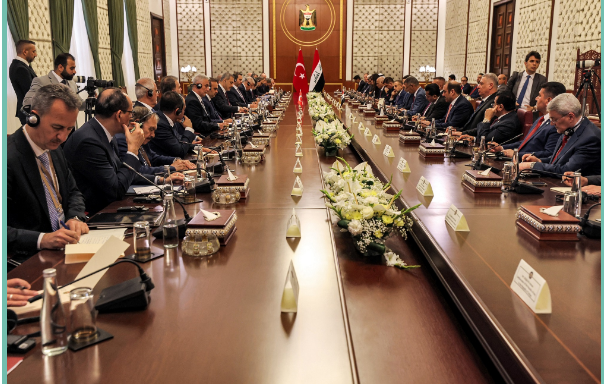
Turkish President Recep Tayyip Erdogan visited Baghdad and Erbil on April 22. In the buildup to the visit, Türkiye and Iraq exchanged delegations and signed several memoranda of agreement. Their joint statement revealed that Türkiye and Iraq are attempting to build institutions to facilitate regular liaison mechanisms.
These bodies – agreements or committees – aim to bring the authorities in both countries together to work in a coordinated manner, at regular intervals, and with an approach directed toward the intended results. Together, these are leaping forward in a relationship that historically suffered from the inability to elevate to completeness. Despite the cooperation on political, trade, oil and water, and socio-cultural matters, the reality between the two countries has remained contentious. They have remained non-cooperative in many areas. Will both the countries manage to make a new start?
This paper focuses on the potential Turkish military incursion to fight the PKK in a circumstance laden with tension and opportunities.
Background
Iraq is one of Türkiye’s most significant partners, sharing vibrant Kurdish nationalism on both sides of the border and being the world’s top market for Turkish commodities. This cross-border ethnic link combines and divides the two countries differently than others without such commonality. One obvious consequence of this cross-border relationship is Türkiye’s attempt to establish a security zone up to 40 kilometers deep into Iraqi territory to create a buffer zone between the two sides.
This policy is quite a shift from the previous mode of operation. Before 2019, Turkish military operations were temporary offensives in which Türkiye’s air force raided supposed PKK camps in mountainous terrain. Occasionally, air raids were supported by ground troops as well. Türkiye had only a couple of permanent bases in the region, taking advantage of the Kurdish civil war in the 1990s.
By 2019, Türkiye had changed its strategy and started seeking area control through Claw, Claw-Tiger, and Claw-Eagle operations. Since then, Ankara has maintained a permanent military presence in Iraqi Kurdistan that is sustained by a much larger chain of military bases and smaller forward-operation posts along the Iraqi-Turkish border.
Throughout the conflict’s history, two main paradigms dominated the Turkish-Kurdish relationship: one is traditional Kemalist security-oriented and eventually securitization of the Kurdish issue; the other started with Özal, who challenged Kemalist views on the Kurds and reached the Kurds both within and outside Türkiye. During the 2000s, the EU reform process between 2001-2005 and Türkiye’s foreign policy toward the Kurdistan Regional Government (KRG) in Iraq after 2007 contributed to the de-securitization of the Kurdish issue in Türkiye.
Since the Syrian war, the relationship has been re-securitized. The current policy of relying on drones, creating a security zone, pushing out democratically-elected representatives, and appointing trustees are all methods to securitize the Kurdish issue and deal with it through coercion rather than negotiation.
Erdogan in Baghdad and Erbil
Speaking at a joint press conference with Iraqi PM Sudani, Turkish President Erdogan stated, “I believe that my visit and the agreements that were just signed will mark a new turning point in relations between the two countries.” Erdogan’s belief shows Türkiye’s desire to build a new relationship with Iraq and beyond. The 26 strategic agreements and MoUs clearly show the big ambitions of both sides. The agreements and MoUs are mostly economy-focused, followed by security/military and other soft areas such as culture, science, and health, aiming at 360-degree relations.
While economy and security have been the two dominant areas between the two countries throughout history, new areas such as military training and cooperation reflect Türkiye’s ambition to become a center of arms industry in the region. The MoU regarding the development road included other regional countries, namely the United Arab Emirates and Qatar. The participation of these countries makes the realization of the project more real, as not only might they be able to fund the project but also expand the project and link Türkiye to the Gulf countries, especially in energy, food, and household goods.
The weakest link in the new mode of the relationship is security. While the two countries agreed to a strategic framework agreement overseeing security, Iraq still faces political, geopolitical, and logistical barriers to implementing the deal. Most of the theater of operations is beyond Iraqi military control. Therefore, Iraq is only capable of cooperating in Sinjar and Makhmur camps, according to General Babikir Zebari, former Chief of Staff of the Iraqi army.
Mount Gara Operation: Combining Security and Economy
Aiming to lock down Türkiye’s border, the coming Turkish operation will focus on the Gara mountain. The Turkish focus is on security and preparing the area for a new trade route. Controlling Gara will provide Türkiye with enough access to limit PKK’s movement and establish relative security, especially as the KDP cooperates.
The Gara Mountain is situated in the center of the KDP zone. This might provide the KDP with a sense of comfort when Barzanis is under pressure from Iran, directly and indirectly through Iraq. Furthermore, seizing control of the mountain may be a step toward securing the intended trade route that connects Türkiye and Iraq.
However, many challenges lie ahead. As local journalist Hiwa Khoshnaw said, the Gara mountain cannot be conquered in one operation, no matter how massive. The Turkish military will thus face several challenges in carrying out its missions. First of all, despite the continuous bombardment, there are still people living in the area, and they oppose and reject the operation. Second, the KDP has limited authority over a tiny fraction of the vast territory.
Third, the combination of internal changes after the election and Iran and Iraq’s lack of collaboration will limit Türkiye’s choices for action in the region. Fourth, and perhaps most crucially, having lived in the area for decades, the PKK is ready to fight for the land. Especially as it is noticeable lately, the Turkish military switched from exclusively using drones to using fighter jets in their war against the PKK, as the latter acquired DIY-AA- weapons to strike down Turkish drones. This is far more expensive and less effective.
Iraq’s ability to support Turkish operations is limited as:
The theater of conflict is outside the control of the Iraqi army.
The terrain is rough, and the Iraqi army lacks the experience and equipment to fight in the high mountains.
The reluctance of the Iraqi government to brand the PKK as a terrorist group shows that Iraq is also reluctant to fight the group.
Besides Gara, Sinjar is another strategic spot that combines security and economy. Sinjar has gained a particular place within the Kurdish, Iraqi, Iranian, and Turkish policies. It combines religious characteristics, genocide, guilt, and responsibility for all and is currently a highly secure complex. The Turkish army’s ability to control Sinjar is unforeseeable and would be difficult for Iraq to swallow.
Currently, the area is the home of the PKK, KDP, PMF, and the Iraqi army. A strategic rivalry between the PKK and KDP makes the PMF and PKK a tactical alliance. Despite being an Iraqi government institution under the National Security Agency (NSA), most of its armed groups operate independently of that chain of command; they are under the authority of their political parties and leadership, such as the Badr Organization, Asaeb ahl al-Haq, or Kataib Hezbollah.
The Iraqi government’s inability to implement the 2020 Sinjar Agreement shows that the PMF intervention has proven independent and more influential than the central government. The events and challenges since 2014 show that the Iraqi government has little or no power over Sinjar. The region is controlled by various groups with strategic, ideological, tactical, and economic alliances and rivalries. Against this background, it is challenging for any new actor to intervene in the region.
Besides the threat of the impending US exit, the Kurdistan Democratic Party is currently feeling pressure from several sources, including Baghdad, Iran, and the PUK. Due to this situation, the Party (as it is known locally) has become increasingly aligned with Türkiye, which has further strained ties with the PKK. According to Mohammed Ameen Penjweni, a close friend and confidante of Abdullah Ocalan, the PKK views the KDP as one of the major political parties within the Kurdish polity. However, despite several attempts, it has not forged a political connection with it.
This situation has limited Barzani’s influence among Kurds in Türkiye. Furthermore, the pro-PKK Kurds in Türkiye believe that the Barzani movement is tribal-based and does business with Ankara. Against this background, the armed conflict between the Turkish government and the Kurdistan Workers’ Party (PKK), which is largely fought in Iraqi Kurdistan, automatically makes both the KDP and PUK part of the equation, both for their interests and fear and their regional affiliations.
The PKK accuses the KDP of not only helping Türkiye but also assisting in putting further pressure from the Turkish side on the Iraqi government by taking advantage of its bureaucracy and institutions within the Iraqi state to oppose the PKK, as the PKK statement highlights. The statement also highlights that the KDP advises the Turkish state that the fight against the PKK will not be effective without the PUK’s participation, thus encouraging the Turkish state to put pressure on the PUK.
According to observers, the KDP might enable Turkish influence in the region to balance the current pressure. This has been implemented through the Iraqi foreign ministry and its Turkish counterpart, focusing on “counter-terrorism, security, and military cooperation.” Consequently, the KDP will support the operation, offer its complete collaboration, and regard it as crucial to its strategic continued existence. Nevertheless, according to Jabar Yawar, the former general-secretary of the Ministry of Peshmerga, the KDP’s collaboration with the Turkish army would continue to be restricted despite the current circumstances.
However, Türkiye, in its current policy, is focusing on Iraq and hoping to benefit from the country as a corridor to reach the Arabian Gulf region through the Development Road and new oil pipeline. Currently, Iraq and Türkiye are rebuilding the Iraq-Türkiye Pipeline. This raises the possibility of restarting crude exports from northern Iraq [Kirkuk] with an alternate route that could bypass political disputes between Baghdad and Erbil. Similarly, the Development Road is planned to bypass Iraqi Kurdistan. Both projects are passing through KDP-controlled territory for about 18 km.
In summary, Türkiye seeks to establish direct connections with Iraq and other regions, which eventually lessens the KDP’s relevance for Türkiye, even as the KDP pushed for a greater reliance on Türkiye in response to US withdrawal and Iranian pressure. Mehmet Alaca, a writer and commentator based in Ankara, claims that Turkey “has recently adopted a policy of making Erbil and Baghdad complement each other.”
PUK and Turkish Military Operation
The bad blood between the PUK and Türkiye is not new, according to Turkish political observer Rebwar Karim Wali. Türkiye opposed Jalal Talabani, the former PUK president, becoming Iraqi president in 2005. When Türkiye demanded PKK handover in 2007, Talabani said his government could not combat the PKK and angered Turks when he said, “We will not hand any Kurd over to Türkiye, not even a Kurdish cat.” Not surprisingly, Sulaymaniyah, the PUK party stronghold, is at the top of Türkiye’s threat perceptions. Türkiye attacked military and civilian places in the vicinity of the city recently.
The PUK leaders came directly under pressure from the Turkish government, accusing the PUK counter-terrorism forces of training with the PKK. PUK has yet to yield to the pressure. The PUK leader, Bafel Talabani, stated in the past that his party’s problems with Türkiye are hard to resolve and that he refuses to visit the country. In addition to military attacks, Türkiye has also closed its airspace to flights to and from Sulaymaniyah airport.
When PUK president Bafel visited Moscow in March, he outlined the PUK’s strategy. He stressed the importance of nurturing political relations to uphold security and stability, highlighting the need to safeguard the sovereignty of Iraq and the Kurdistan Region and preventing the country from becoming the ground for settling scores. In response, Russian Foreign Minister Sergei Lavrov reaffirmed Russia’s dedication to ensuring enduring peace in the region by adhering to a policy of non-interference in Iraq’s internal affairs and sovereignty. Local media regarded this interaction as the PUK president pleading with Russia to step in and stop Türkiye’s expansion. Insiders say that wasn’t the case.
Türkiye is not pleased with the PUK’s strengthening in Iraqi Kurdistan. According to Mehmet Alaca, an Ankara-based Turkish journalist and analyst, a strong PUK will weaken Ankara’s hand in Erbil and Baghdad and adversely impact its regional rivalry with Iran and Iraq. As Bafil Talabni reiterated to the media, there is nothing new regarding the closure of Sulaymaniyah airport and Turkish military incursion. The PUK-Türkiye relationship is expected to remain stubborn against any change soon.
Türkiye and Iraq: The Two Opposite Approaches
Following Iraqi Prime Minister Sudan’s return from the White House, Turkish President Erdogan is anticipated to visit Baghdad. Türkiye’s invasion and the Iraqi government’s collaboration are two issues on the agenda. Due to the previous failure to negotiate a settlement, the visit has been postponed, and Erdogan does not want to go to the region empty-handed. Unlike past operations, Türkiye anticipates the support of Baghdad and Erbil’s governments this time, particularly in intelligence sharing.
However, there are a few critical differences between this incursion and the ones that came before it. Initially, the Turkish military will advance far into Iraqi territory. The Gara Mountains divide Erbil and Duhok, providing the Turkish army with a tactical advantage to increase its regional influence. This is more difficult now because Iraq has greater clout in Kurdistan, which means it has more responsibilities, and – more importantly – the Baghdad-PUK relationship is at its finest. Second, local media reports that an armed militia from Syria will accompany the Turkish army. This will further complicate the situation for Iraq, especially in terms of maintaining sovereignty, a sensitive topic in Iraq currently.
Third, the invasions take place at a time when Iran is cautious about any more NATO member incursions near its borders because of the Iran-Israel conflict, particularly considering that the Iranian mentality includes the idea of being under siege. Fourth, the US has lost interest in Iraq and the wider region. Any potential US withdrawal will leave a vacuum; neither Iraq nor Iran would like to be filled by Türkiye or potential pro-Türkiye groups, especially in Kirkuk, Salah ad Din, and Mosul, as some Turkish political parties claim parts of these provinces.
Development Road: Will Trade Solve the Situation?
On the eve of Eid al-Fitr, Turkish President Recep Tayyip Erdoğan spoke by phone with Iraqi President Abdul Latif Rashid. According to the Turkish side, the call addressed Turkish-Iraq relations, the fight against terror, the Development Road project, and regional issues. While the Turkish side highlighted the issues discussed, the Iraqi side remained opaque, highlighting only general issues like improving regional peace and stability and coordination and consultation on matters of shared interest.
The messages might show the mode of communication of each administration. However, they show what Türkiye’s priorities are regarding Iraq. Highlighting security (fight against terror) and economics (the Development Road) shows the importance of the economic aspect, as Türkiye cannot omit security issues in Iraq, as the PKK has been in Iraqi Kurdistan Mountain since the 1990s.
Therefore, the Development Road dominates the current Iraqi-Turkish relationship more than any other issue. The messages may uncover the communication style of each government, but they also reveal Türkiye’s objectives for Iraq. The fact that Türkiye has brought up security concerns about Iraq – the PKK has been in the Iraqi Kurdistan Mountains since the 1990s – while also highlighting economics, the Development Road demonstrates the latter’s significance. Thus, more than any other topic, the development path dominates the Iraqi-Turkish relationship today.
First, Türkiye is looking for markets, and currently, Iraq is at the top of the list of countries consuming Turkish goods. Second, Türkiye fears the development of the India-Middle East-Europe Economic Corridor (IMEC), which excludes Türkiye. In response, Ankara was determined to strengthen routes that placed Türkiye in an integral position. According to Türkiye’s Transportation and Infrastructure Minister Abdulkadir Uraloglu, the Iraq Development Road is a “serious alternative” to IMEC.
Thirdly, Türkiye aims to reach the Gulf countries for finance, energy, and geopolitics. This is best done through Iraq. Fourthly, as Turkish commentators increasingly claim, Türkiye is also seeking to move forward with the Development Road project with Iraq to achieve a direct territorial connection with Iraq. The dominance of trade and security and Iraq’s desperate need for water leaves the relationship lacking any real and long-term solution.
Iraq has to know that there are more than just soldiers and merchants between Iraq and Türkiye. Recently, there have been two Iraqi ways to connect to Türkiye: cooperation and pushing Türkiye to withdraw. For cooperation, the two countries are establishing more and more committees in various areas, including water, security, and a joint operations center.
The government, including the foreign ministry and security sectors, is currently leading this cooperation and building of institutions. This cooperation approach is driven by the framework in which both countries share interests. “We have geographical, historical, and economic commonalities, and the issues of water and border security—all this invites us to trade, economic, security, and social ties, as the Iraqi National Security Adviser Qassem al-Araji put it.
Qais al-Khazali, Secretary-General of the Asa’ib Ahl al-Haq, has led another way of approaching Türkiye. In recent years, he has constantly called for expelling the Turkish bases in Iraq and Kurdistan. Assessing the two diametric views shows Iraq’s need for a good relationship with Türkiye and, simultaneously, the sensitivity of the Turkish military’s campaigns and bases in the country. The latter touches on Iraq’s sovereignty, becoming a dominant topic. The persistence of the two views shows that, while there might be improvement in the relationship, it is haunted by others who might jeopardize it at any time. This approach has been dominant in the last few decades and has not led to any solutions.
Iran: Decoding the Silence
While the Iraqi PM is signing deals after deals with the US and Türkiye, Iran has remained silent so far. Is the silence a sign of agreement, as the proverb says, or is Iran currently having other priorities, including dealing with the pressure from Israel and the US? While the silence might have many indications, sources hint that Iran has shown understanding and some sort of agreement to limit the PKK.
Iran might give the green light to the Development Road project as it might become a way to integrate Iran into the region through Iraq. Still, Türkiye’s military expansion into Iraq remains a challenge for Iran. It might not wish to challenge Türkiye directly, but Tehran has done that through its proxy earlier. Moreover, Iran’s relationship with the PKK is more than tactical, as the latter is a leftist group challenging the current world hegemonic system, according to Qudrat Ahmadian, a lecturer at Razi University, Iran.
The United States: No Role
In mid-April 2024, Iraqi Prime Minister Mohammed Shia’a al-Sudani visited the White House and met with United States President Joe Biden. The Sudani team aimed to minimize the security aspect of the US-Iraq relationship and attempted to start a new chapter in the strategic partnership beyond security. As part of its broader strategy, the US aims to agree on a transition from the mission of the anti-ISIS coalition to bilateral security relations. The move reduces US financial costs and responsibilities.
This move aims to shift away from viewing Iraq through the lens of Iran policy and toward a “360-degree” policy architecture that institutionalizes non-military aspects such as commerce, education, energy, and climate. As the US aims to reduce security-focused relations, it might be happy for other US allies to enter the fray, namely Türkiye. The US does not object to the Development Road, which might move Iraq toward Western-allied countries and reduce Turkish dependence on Russia.
Conclusions
Iraq and the wider region expect a Turkish military attack on the PKK in Iraqi Kurdistan. While nothing is new, neither in rhetoric nor in practice, there are signs that the relationship between Iraq and Türkiye might have the potential to commence a new beginning. The number of agreements signed between the two sides during Erdogan’s last trip to Iraq is ambitious. Both Sudani and Erdogan need them, albeit for different reasons.
Despite that, several issues are to be considered, including security and Turkish military intervention. At a time when Türkiye is pushing for more and more economic ties and even trying to benefit from water and the military from a financial perspective, is it rational to jeopardize military and security issues that have been tried for more than four decades without concluding? Some observers argue that “without greater Turkish willingness to move ahead on agenda items that matter to Iraq, the current dialogue risks running into the habitual sands of Iraqi factionalism and Turkish overbearingness.”
While one might see the Erdogan visit as a preparation for the attack, the officials and non-official information indicate that the priority of Erdogan was economics and restoring ties with the Arab world, in addition to the urgency to enter the fray of competition over developing roads and connections in the wider region.
There are signs of appeasement; however, the priorities between the two sides diverge. The rhetoric from the Turkish side is strong, while Iraq, while ambitious, is still quite cautious. Erdogan also visited Erbil and reassured the Kurdish side that he would remain supportive, as he had been during the difficult days. However, all signs show that Türkiye is not supporting Erbil to balance Baghdad, as it was in the past; instead, the current policy is to embrace both sides, as Ankara aims at developing the relationship with Baghdad.
Meanwhile, while the KDP has been increasingly drawn toward Türkiye, the latter is worried about the KDP’s declining influence in Iraq and Kurdistan. While in Erbil, Erdogan did not embrace the PUK request to lift the air embargo on the Sulaymaniyah airport. While Iraq and Türkiye pursue ambitious plans, the specter of Iran is always present. The latter is under pressure, so it might not want to show hostility toward Türkiye and the Gulf countries. Will this translate into a situation where Iran tolerates the growing Ankara-Baghdad relationship? Besides, there may be new possibilities and problems associated with the US exit for Türkiye in the region, as the US might tolerate further Turkish influence.
While the agreements might spark processes, the processes require the right circumstances, good-willed actors, and stable domestic politics. What is happening could be successful if both sides agreed to continue meetings and contacts on these issues within relevant frameworks. As the fate of the IMEC project showed, fulfilling grand ambitions often stumbles in the face of harsh geopolitical realities.
Στεκόμαστε αλληλέγγυοι με τη Γερμανία μετά την κακόβουλη εκστρατεία στον κυβερνοχώρο εναντίον ενός πολιτικού κόμματος, στην προκειμένη περίπτωση του Σοσιαλδημοκρατικού Κόμματος της Γερμανίας, και με την Τσεχία που υφίσταται τις κακόβουλες διαδικτυακές δραστηριότητες εναντίον των θεσμών του.
Οι Σύμμαχοι αναγνωρίζουν ότι η Γερμανία και η Τσεχία έχουν αποδώσει την ευθύνη των κακόβουλων δραστηριοτήτων στον κυβερνοχώρο στις αντίστοιχες χώρες τους στον παράγοντα απειλών APT28 που χορηγείται από τη Ρωσική Ομοσπονδία, συγκεκριμένα τη Ρωσική Γενική Διεύθυνση Πληροφοριών (GRU). Οι Σύμμαχοι σημειώνουν επίσης με ανησυχία ότι ο ίδιος παράγοντας απειλής στόχευε άλλες εθνικές κυβερνητικές οντότητες, φορείς εκμετάλλευσης υποδομών ζωτικής σημασίας και άλλες οντότητες σε ολόκληρη τη Συμμαχία, συμπεριλαμβανομένης της Λιθουανίας, της Πολωνίας, της Σλοβακίας και της Σουηδίας.
Καταδικάζουμε σθεναρά τις κακόβουλες δραστηριότητες στον κυβερνοχώρο που έχουν σκοπό να υπονομεύσουν τους δημοκρατικούς θεσμούς, την εθνική ασφάλεια και την ελεύθερη κοινωνία μας.
Οι κακόβουλες δραστηριότητες στον κυβερνοχώρο που στοχεύουν τη Γερμανία και την Τσεχία υπογραμμίζουν ότι ο κυβερνοχώρος αμφισβητείται ανά πάσα στιγμή. Οι φορείς της κυβερνοαπειλής επιδιώκουν επίμονα να αποσταθεροποιήσουν τη Συμμαχία.
Παραμένουμε προσηλωμένοι στην αντιμετώπιση της ουσιαστικής, συνεχούς και αυξανόμενης απειλής στον κυβερνοχώρο, συμπεριλαμβανομένων των δημοκρατικών συστημάτων μας και των κρίσιμων υποδομών μας. Είμαστε αποφασισμένοι να χρησιμοποιήσουμε τις απαραίτητες δυνατότητες για να αποτρέψουμε, να υπερασπιστούμε και να αντιμετωπίσουμε όλο το φάσμα των απειλών στον κυβερνοχώρο για να υποστηρίζουμε ο ένας τον άλλον, συμπεριλαμβανομένης της εξέτασης συντονισμένων απαντήσεων.
Προωθούμε έναν ελεύθερο, ανοιχτό, ειρηνικό και ασφαλή κυβερνοχώρο. Καλούμε όλα τα κράτη, συμπεριλαμβανομένης της Ρωσίας, να σεβαστούν τις διεθνείς υποχρεώσεις και δεσμεύσεις τους να τηρούν το διεθνές δίκαιο και να ενεργούν στο πλαίσιο της υπεύθυνης κρατικής συμπεριφοράς στον κυβερνοχώρο, όπως επιβεβαιώνεται από όλα τα μέλη των Ηνωμένων Εθνών.
Η καθηγήτρια Ιστορίας και πρώην πρύτανης του Πανεπιστημίου της Νέας Υόρκης Κάθριν Φλέμινγκ μιλάει στο iefimerida
ΑΘΑΝΑΣΙΑ ΑΓΓΕΛΟΠΟΥΛΟΥ
03/05/2024 15:00
Την εικόνα της αναταραχής που επικρατεί τις τελευταίες ημέρες στα Πανεπιστήμια των ΗΠΑ με τις μαζικές διαδηλώσεις φοιτητών για τον πόλεμο του Ισραήλ στη Γάζα αναλύει στο iefimerida η Κάθριν Φλέμιγκ, καθηγήτρια Ιστορίας στο Πανεπιστήμιο της Νέας Υόρκης που κατέχει την έδρα Ελληνικού Πολιτισμού Αλέξανδρος Ωνάσης, πρώην πρύτανης του NYU και πλέον Πρόεδρος και CEO Getty trust.
«Η κατάσταση σε πολλά πανεπιστήμια των Η.Π.Α. είναι αυτές τις ημέρες πολύ διαταραγμένη. Η χρονιά για πολλά σχολεία λήγει στα μέσα Μαΐου, και το συνηθισμένο άγχος και ενθουσιασμός στο τέλος του έτους επισκιάζεται απόλυτα από μεγάλες διαδηλώσεις και σε ορισμένες περιπτώσεις καταυλισμούς με σκηνές υπέρ της Γάζας και πιο συγκεκριμένα κατά του Ισραήλ», λέει η κ. Φλέμιγκ .
Το κίνημα BDS
Σύμφωνα με τη διεθνώς αναγνωρισμένη Ακαδημαϊκό, η σημερινή κατάσταση έχει βάσεις και σε κινήματα που αναπτύχθηκαν κατά το παρελθόν.
«Τα τελευταία χρόνια προέκυψαν συζητήσεις γύρω από το Ισραήλ και κριτική από ορισμένους καθηγητές και φοιτητές για δεσμούς μεταξύ Πανεπιστημίων των ΗΠΑ και του Ισραήλ. Το κίνημα «BDS» (Boycott, Divest, Sanction), για παράδειγμα, που ιδρύθηκε το 2005, πίεσε από καιρό τα Πανεπιστήμια και άλλες οντότητες να διακόψουν τους δεσμούς με το Ισραήλ. Τα πανεπιστήμια των ΗΠΑ απέρριπταν εδώ και καιρό αυτήν την ιδέα, λόγω της ακαδημαϊκής ελευθερίας, μεταξύ άλλων. Με το ξέσπασμα του πολέμου στη Γάζα, ένα μακροχρόνιο αντι-ισραηλινό αίσθημα βράζει σε πολλά ιδρύματα» τονίζει η κ. Φλέμινγκ.
«Γινόμαστε μάρτυρες μιας ριζικής αλλαγής»
Παράλληλα εκφράζει την πεποίθηση ότι έχει έρθει η εποχή για να αλλάξουν ριζικά οι σχέσεις ανάμεσα στις Ηνωμένες Πολιτείες και το Ισραήλ.
«Η τρέχουσα στιγμή δείχνει , όπως και πολλές τέτοιες στιγμές αναταραχής στις πανεπιστημιουπόλεις, (το 1968 ή το 1985 ) το τεράστιο χάσμα γενεών μεταξύ των πρωτοετών του πανεπιστημίου (φοιτητές στην εφηβεία και στα είκοσί τους) και εκείνων που διοικούν , άνθρωποι που μπορεί οι ίδιοι πριν από δεκαετίες, να ήταν στα οδοφράγματα διαμαρτυρόμενοι. (Υπάρχει το ίδιο χάσμα μεταξύ της ηγεσίας του δημοκρατικού κόμματος και των νεαρών μελών του, παρεμπιπτόντως – κάτι που μπορεί κάλλιστα να γίνει αιτία να χάσει ο Μπάιντεν στις επόμενες εκλογές.) Αλλά σε αυτήν την περίπτωση, ο βαθμός στον οποίο οι αμερικανική μεσήλικη ελίτ παρερμηνεύει τα αισθήματα των νέων για στην Παλαιστίνη είναι πραγματικά τεράστιος. Γινόμαστε μάρτυρες μιας ριζικής αλλαγής στην αμερικανική στάση απέναντι στο Ισραήλ. Το παλιό «mainstream» είναι εμβρόντητο , μπερδεμένο και δεν μπορεί να καταλάβει. Αλλά αυτή είναι σαφώς μια νέα εποχή, και το παλιό mainstream δεν θα είναι mainstream για πολλά ακόμη χρόνια.»
Διχασμένοι οι Αμερικανοί
Η επέμβαση της αστυνομίας στα πανεπιστημιακά ιδρύματα διχάζει τους Αμερικανούς όπως εξηγεί η κ. Φλέμινγκ.
«Δεν είναι σοκαριστικό μόνο για το ελληνικό κοινό να βλέπει να καλείται η αστυνομία αν και φυσικά η νομική ιστορία της Ελλάδας σχετικά με το καθεστώς των Πανεπιστημίων το κάνει πιο έντονο. Σοκαρισμένοι είναι και οι Αμερικανοί. Αλλά στις ΗΠΑ, η κοινή γνώμη είναι διχασμένη μεταξύ εκείνων που πιστεύουν ότι είναι φρικτό να καλείται η αστυνομία και εκείνων που πιστεύουν ότι η αστυνομία έπρεπε να κληθεί νωρίτερα. Κάποιοι υποστηρίζουν ότι η αστυνομία είναι μεν απαραίτητη για προστασία, άλλοι η ίδια η αστυνομία είναι η μεγαλύτερη πηγή κινδύνου και βίας. Αυτές οι σκηνές έχουν σπάνια επαναληφθεί σε στιγμές αναταραχής. Αλλά τώρα έχουμε πίσω μας τις έντονες εμπειρίες του COVID και της δολοφονίας του Τζορτζ Φλόιντ, μεταξύ άλλων που έφεραν επίσης χιλιάδες Αμερικανούς στους δρόμους, ιδιαίτερα στη Νέα Υόρκη, που είναι στο επίκεντρο της τωρινής αναταραχής . Και αυτό που συμβαίνει τώρα τροφοδοτείται επίσης από τουλάχιστον μια δεκαετία κοινωνικο-πολιτιστικών τάσεων στις ΗΠΑ που τείνουν να κατηγοριοποιούν αυστηρά τους ανθρώπους είτε ως καταπιεστές είτε ως θύματα, ως προνομιούχους ή μη, ως μέρος του «συστήματος» ή ως μέρος της «λύσης». Αυτές οι τάσεις προς την κατεύθυνση των διαφορετικών τρόπων σκέψης έχουν φέρει στο επίκεντρο ορισμένα σημαντικά κοινωνικά ζητήματα, αλλά έχουν επίσης περιορίσει πραγματικά την ικανότητά μας να κάνουμε γόνιμες συζητήσεις ή να εκφράζουμε ένα ευρύ και περίπλοκο σύνολο απόψεων» καταλήγει η Κάθριν Φλέμινγκ.
Τα πανεπιστήμια βράζουν τις τελευταίες ημέρες από την Ανατολική έως της Δυτική ακτή των Ηνωμένων Πολιτειών. Η αστυνομία επενέβη αρχικά στο Κολούμπια και στο κοντινό City University με χρήση χημικών και αθρόες συλλήψεις , ενώ ακολούθησε επέμβαση στο Πανεπιστήμιο Φόρνταμ της Νέας Υόρκης. Στο Πανεπιστήμιο του Ουισκόνσιν ακτιβιστές συγκρούστηκαν με αστυνομικούς που ξήλωσαν τα αντίσκηνά τους ενώ και στο Πανεπιστήμιο της Καλιφόρνια UCLA η αστυνομία διέλυσε των καταυλισμό των φιλοπαλαιστίνιων διαδηλωτών προχωρώντας σε δεκάδες συλλήψεις.
EnquêteAlors que la future gouvernance de l’enclave palestinienne est débattue au sein du gouvernement israélien, les forces armées ont systématiquement détruit, sur 1 kilomètre de large au moins, le bâti le long de la frontière et aménagent un corridor militarisé qui isole la ville de Gaza.
En près de sept mois de guerre, l’armée israélienne a remodelé Gaza selon ses besoins. Elle rase le bâti sur une « zone de sécurité » de 1 kilomètre environ de profondeur à sa frontière, menaçant de priver durablement l’étroite bande côtière de 16 % de son territoire, notamment de terres agricoles, selon des données satellitaires analysées par Le Monde. Elle a contraint des centaines de milliers de Gazaouis à quitter le nord de l’enclave et consolide une route militarisée qui empêche leur retour, tout en limitant le passage de l’aide humanitaire.
L’armée mène des raids depuis deux bases avancées aménagées sur ce corridor. Elle bâtit aussi de nouvelles structures sur la côte, censées sécuriser l’acheminement d’aide par la mer, promise par l’allié américain pour le début du mois de mai. « Israël présente ces structures comme temporaires, mais elles représentent des faits accomplis qui peuvent perdurer longtemps », craint un diplomate occidental.
La droite israélienne ambitionne de faire de la métropole de Gaza, en ruine, une zone tampon dépeuplée, dans le Nord, ou de la recoloniser. Les ministres israéliens issus du centre, minoritaires, font, pour leur part, du retour des Gazaouis vers le nord un levier dans les négociations toujours en cours avec le Hamas, afin de le contraindre à libérer ses otages. Une proposition en ce sens a été avancée au Caire, en Egypte, fin avril, selon le quotidien libanais Al-Akhbar et la radio de l’armée israélienne. Elle pourrait amener les forces israéliennes à se retirer, au moins temporairement, de la route coupant l’enclave par le milieu.
Cependant, toutes les composantes de la coalition au pouvoir en Israël revendiquent une « liberté d’action » de l’armée à long terme dans Gaza . Elles s’accordent sur le fait qu’une phase de « stabilisation » devra se poursuivre durant de longues années après-guerre, nécessitant des raids réguliers contre le Hamas et les brigades armées de Gaza.
L’aménagement du territoire par les forces israéliennes
<!–
Ce que les images satellites montrent
–>
<!–Aménagement militaire créé par les forces israéliennes
–>
Une « zone tampon » à la frontière
Israël a systématiquement détruit le bâti sur une bande de terre large de 1 kilomètre le long des frontières de Gaza, par des bombardements, dès octobre 2023, puis en déployant des équipes de sapeurs à partir de novembre. Cette « zone de sécurité » s’étend en grande partie sur les terres agricoles de l’enclave, qui produisait, avant-guerre, environ 20 % de ses besoins en nourriture. Elle prolonge le no man’s land – jusqu’alors large de 100 mètres – bordant le mur que les commandos du Hamas ont franchi le 7 octobre 2023, pour tuer 1 200 civils et militaires en Israël. Elle recouvre aussi l’ancien chemin de ronde et les postes d’observation militaires établis par le mouvement islamiste devant le mur.
En plusieurs points, cette zone excède 1 kilomètre, comme dans le quartier de Chadjaya, dont des pans entiers ont été rasés à la lisière de la métropole de Gaza, et comme dans le village détruit de Khouzaa (Sud). Des responsables politiques israéliens de droite ont évoqué, dès le début du conflit, la nécessité de « punir » Gaza en amputant une partie de son territoire. Eli Cohen, ministre des affaires étrangères à l’époque, avait affirmé que « le territoire de Gaza sera[it] aussi réduit ». L’Etat hébreu a mentionné ce projet pour la première fois en décembre 2023 auprès d’Etats arabes.
Mais ce n’est qu’en février que le premier ministre, Benyamin Nétanyahou, en a officialisé l’existence, en dévoilant un plan pour l’après-guerre à Gaza. « La zone de sécurité établie dans la bande de Gaza, dans le périmètre de la frontière d’Israël, existera aussi longtemps qu’un besoin de sécurité l’impose », affirmait-il alors. Ces destructions massives de propriétés civiles pourraient constituer un crime de guerre et, à long terme, un accaparement de territoire.
Le haut-commissaire des Nations unies aux droits de l’homme, Volker Türk, a estimé, en février, qu’« Israël n’a pas fourni de raisons claires pour une si vaste destruction d’infrastructures civiles ». Cet officiel a rappelé « aux autorités que le transfert forcé de civils constitue un crime de guerre ». Les Etats-Unis, pour leur part, ont reconnu l’impératif de sécurité avancé par leur allié, tout en affirmant qu’il devait demeurer temporaire. L’Etat hébreu y voit une nécessité pour rassurer les habitants du pourtour de l’enclave et repeupler ses cités désertées.
Le nord de la bande de Gaza dépeuplé
La principale décision stratégique de l’armée israélienne dans cette guerre demeure le déplacement forcé des habitants du nord de la bande de Gaza, afin d’y démanteler les bataillons du Hamas et de détruire une partie de ses infrastructures. Depuis le retrait de l’armée de la métropole, en janvier, quelque 300 000 Palestiniens y restent isolés et menacés de famine, selon l’ONU. Sous pression internationale, l’armée autorise des « partenaires privés » à acheminer de l’aide, dont les effets commencent à se faire sentir.
Elle a tenté de mobiliser en ce sens de grandes familles, des clans, tâchant d’orchestrer « une compétition locale avec le Hamas, au risque de susciter le chaos », résumait, fin mars, l’ancien coordinateur des Nations unies pour l’aide humanitaire, James Eugene McGoldrick. Plusieurs assassinats de figures locales par le Hamas, en mars, ont refroidi les ambitions israéliennes. L’Etat hébreu a aussi permis à l’ONU d’ouvrir deux centres de distribution de nourriture dans le Nord. « Ces gens ont du pain, mais on ne peut se nourrir seulement ainsi. Cela n’empêchera pas la famine », relève Andrea De Domenico, le chef du Bureau de la coordination des affaires humanitaires des Nations unies (BCAH) à Jérusalem.
Israël a aussi annoncé, le 1er mai, une réouverture de l’ancien poste-frontière d’Erez pour laisser passer de l’aide alimentaire de son territoire. Mais l’armée israélienne craint que des activistes de l’extrême droite religieuse, partisans d’un nettoyage ethnique à Gaza, n’y bloquent l’arrivée de l’aide et que la police ne facilite leurs actions, sous l’autorité d’un ministre issu de leur mouvance. Selon l’ONU, elle envisage d’établir un autre point de passage près du kibboutz Zikim, au nord de l’enclave, ou à la frontière nord, près de la mer.
Benyamin Nétanyahou exclut de prendre langue avec le Fatah, au pouvoir en Cisjordanie, pour évoquer la future gouvernance du Nord. Il cherche ainsi à préserver la division des territoires palestiniens et l’isolement de Gaza. Des voix s’élèvent dans le même temps en Israël en faveur d’un gouvernement militaire dans le nord de l’enclave. Le nouveau secrétaire militaire du premier ministre, le général Roman Gofman, a fait circuler, en avril, un document défendant cette option. L’armée et le gouvernement ont fait savoir qu’il s’agissait d’une opinion personnelle.
Les ministres centristes du cabinet de guerre militent, de leur côté, pour l’établissement d’une « entité locale palestinienne » chargée des affaires civiles – sans mentionner explicitement le Fatah ou l’Autorité palestinienne de Mahmoud Abbas. Ils ambitionnent de convaincre l’Egypte et la Jordanie de superviser avec Israël cette autorité locale et de déployer des troupes à Gaza. Les grands voisins arabes y demeurent opposés, craignant notamment de se retrouver sous le feu du Hamas et d’Israël.
Ces ministres israéliens entendent en tout cas préserver une « liberté d’action » maximale de l’armée dans la bande de Gaza, afin qu’elle puisse mener, durant de longues années, des raids permettant la « démilitarisation » de l’enclave, seule ou en coopérant avec une autorité civile palestinienne.
Un corridor qui coupe gaza en deux
Le « corridor de Netzarim » est une route militarisée aménagée par l’armée à partir de mi-février, qui coupe l’enclave de Gaza en son milieu. Elle reprend en partie le tracé d’une ancienne route réservée aux colons juifs de l’implantation de Netzarim, jusqu’au retrait israélien en 2005. Longue de 7 kilomètres, elle isole la métropole de Gaza au nord. L’armée interdit aux habitants de revenir vers la cité largement dépeuplée, et impose une pénurie de nourriture aux quelque 300 000 personnes qui y demeurent.
<!–➔ Déplacez la glissière de gauche à droite puis de droite à gauche pour visualiser les conséquences des bombardements
–>
03 Avril 2024
Des nouvelles installations militaires
Les images satellitaires montrent la construction en cours de bases avancées et de points de contrôle sur les routes côtières et sur Salah Al-Din, au centre de l’enclave. L’armée mène depuis ces bases des raids dans le nord et le centre de la bande de Gaza, notamment contre l’hôpital Al-Shifa en mars. Ayant acquis une « liberté d’action » presque totale à Gaza, elle entend poursuivre de telles opérations après-guerre, dans une phase de « stabilisation » qui pourrait durer plusieurs années.
<!–➔ Déplacez la glissière de gauche à droite puis de droite à gauche pour visualiser les conséquences des bombardements
–>
18 avril 2024
Une nouvelle jetée
Les images satellitaires, au début du mois de mars, font apparaître la nouvelle jetée construite à partir de décombres par l’ONG World Central Kitchen (WCK). Fin avril, au large des côtes et à 6 milles nautiques (11,4 km) de distance, des navires militaires américains sont en train de construire un « ponton temporaire » flottant, qui doit être opérationnel de mai à septembre. Israël aménage une zone militaire sur la côte, afin de sécuriser le déchargement de l’aide humanitaire internationale acheminée par la mer. L’Etat hébreu limite dans le même temps le passage de l’aide par ses frontières, dans le but couper tout lien entre l’enclave et son territoire.
<!–➔ Déplacez la glissière de gauche à droite puis de droite à gauche pour visualiser les conséquences des bombardements
–>
18 Avril 2024
Une zone tampon d’un kilomètre de large
Des bombardements puis des équipes de sapeurs israéliennes ont rasé l’essentiel du bâti sur une « zone de sécurité » frontalière qu’Israël aménage sur environ 1 kilomètre de large dans Gaza. En février, le premier ministre, Benyamin Nétanyahou, a annoncé que cette zone « existera[it] aussi longtemps qu’un besoin sécuritaire l’imposera[it] ». Ces destructions massives de propriétés civiles pourraient constituer un crime de guerre et, à long terme, un accaparement de territoire, amputant l’enclave de près d’un sixième (16 %) de sa surface et d’une large part de ses terres agricoles.
<!–➔ Déplacez la glissière de gauche à droite puis de droite à gauche pour visualiser les conséquences des bombardements
–>
18 Avril 2024
<!–
Une zone tampon d’un kilomètre de large
–> <!–➔ Déplacez la glissière de gauche à droite puis de droite à gauche pour visualiser les conséquences des bombardements
–>
18 avril 2024
27 mars 2024
Extension de la zone humanitaire d’al-Mawasi
Cette bande sablonneuse de 6,5 km2, où étaient installées les colonies juives du Goush Katif avant le retrait israélien de 2005, accueille aujourd’hui des centaines de milliers de déplacés. Israël a défini cet endroit « zone sûre » début décembre 2023 et a annoncé son élargissement le 28 avril.
Les déplacés dans le Sud
Plus d’un million de déplacés s’entassent dans des tentes autour de la ville de Rafah, dans le Sud. Israël annonce une offensive terrestre d’envergure pour reprendre le contrôle du « corridor de Philadelphie », une zone tampon large de 100 mètres sur 14 kilomètres à la frontière avec l’Egypte. L’objectif est de lutter contre la contrebande d’armes par les tunnels entre ce pays et la bande de Gaza, et de poursuivre les brigades et l’administration civile du Hamas, encore en partie indemnes à Rafah.
Des images satellitaires analysées par Le Monde montrent qu’Israël a commencé, dès la mi-février, à aménager le corridor militarisé, long de 6,6 kilomètres, qui isole la métropole de Gaza du reste de l’enclave, à sa lisière sud. Cette installation reprend en partie le tracé d’une ancienne route réservée aux colons juifs de l’implantation de Netzarim, dont la position contribuait à la division sécuritaire de Gaza en tronçons, jusqu’au retrait israélien en 2005.
Deux brigades – les dernières présentes dans Gaza – y stationnent dans deux postes avancés, équipés d’antennes téléphoniques, de radars et de capacités d’observation, dont les lumières portent loin, la nuit, dans l’enclave largement privée d’électricité. Le renforcement de ces structures laisse craindre que l’armée ne « se prépare à rester plus longtemps » dans la zone, juge Scott Anderson, vice-directeur pour les opérations de l’UNRWA, la principale agence des Nations unies à Gaza.
Ces installations solidifient les points de contrôle que l’armée a établis dès la fin de 2023 sur la route côtière et la route Salah Al-Din, seuls points de passage vers le sud, où des habitants continuent de fuir, pressés par la faim. Ses troupes mènent des raids contre les forces du Hamas, qui se reconstituent dans le Nord, comme l’opération qui a mené à la destruction de l’hôpital Al-Shifa en mars, ainsi que dans la région de Nousseirat et d’Al-Boureij au centre de la bande de Gaza.
Selon le quotidien libanais Al-Akhbar, proche du Hezbollah, Israël a proposé, fin avril, de quitter au moins temporairement ce corridor, dans la quatrième semaine d’un éventuel cessez-le-feu, lorsque le Hamas aurait libéré une vingtaine d’otages. « Mais ce corridor est le seul moyen dont l’armée dispose pour contrôler de manière sûre la bande de Gaza et pour sécuriser l’acheminement par la mer de l’aide promise par les Etats-Unis. Sans corridor, ces livraisons ne sont pas possibles. L’armée devra le contrôler tant qu’Israël ne décide pas de collaborer avec le Fatah, afin qu’il reprenne le contrôle de Gaza, et tant que nous ne cherchons pas une solution politique de long terme », estime le général Israel Ziv, l’ancien responsable de l’armée dans Gaza, durant la seconde Intifada, au début des années 2000, qui demeure proche des positions de l’état-major.
L’Etat hébreu menace, dans le même temps, de lancer l’assaut sur Rafah (Sud), où se massent 1,4 million de déplacés, afin de couper les tunnels de contrebande d’armes du Hamas à la frontière égyptienne. L’armée envisage en ce cas d’ouvrir des « zones sécurisées » pour les déplacés jusqu’à proximité du corridor central, à Nousseirat et à Al-Boureij. L’Etat hébreu a acheté 40 000 tentes destinées à héberger ces déplacés. Les images satellitaires montrent l’installation ces derniers jours de nouveaux alignements de tentes carrées. L’extrême droite presse pour mener cette opération sur Rafah. Lundi, Bezalel Smotrich, le ministre des finances, issu de cette mouvance, a appelé à « l’annihilation totale » des villes de « Rafah, Deir Al-Balah, Nousseirat ».
Des pontons sur la côte
Au bout de la route de Netzarim, l’armée aménage une zone militaire afin de sécuriser le déchargement d’aide humanitaire internationale acheminée par la mer, censée réduire la pénurie de nourriture orchestrée par Israël, qui maintient ses frontières terrestres partiellement fermées.
Les images satellitaires, au début du mois de mars, font apparaître la nouvelle jetée construite à partir de décombre par l’ONG World Central Kitchen. Au large des côtes et à 6 milles nautiques (11,4 kilomètres) de distance, des navires militaires américains achèvent la construction d’un « ponton temporaire » flottant, qui doit être opérationnel dans les prochains jours. Il pourrait être maintenu jusqu’en septembre, tant que les conditions en mer le permettent.
La société de sécurité privée américaine Fogbow lève, par ailleurs, des fonds auprès d’Etats, afin d’aménager un autre ponton flottant tout près de cette zone et d’y acheminer de l’aide des Nations unies à partir de Chypre. Les autorités françaises demeurent cependant rétives à ces projets d’aide par la mer, estimant qu’ils ne peuvent compenser la non-réouverture des frontières terrestres. Le projet Fogbow s’inscrit aussi dans une logique plus longue, avec l’ambition de contribuer à acheminer des matériaux lourds pour la reconstruction de l’enclave après-guerre.
Un tir de mortier a frappé cette zone sécurisée israélienne, le 24 avril, alors que les travaux américains commençaient en mer. Le lendemain, le vice-président du bureau politique du Hamas, Khalil Al-Hayya, a laissé entendre que le mouvement attaquerait toute présence non palestinienne « en mer ou à terre ».
Israël continue, par ailleurs, de limiter l’acheminement d’aide par voie terrestre, depuis l’Egypte et la Jordanie. Le nombre de convois jordaniens autorisés à passer par les territoires palestiniens occupés de Cisjordanie et par Israël reste symbolique. Israël a certes permis au royaume hachémite de parachuter de la nourriture par les airs. Mais cela représente, là encore, des quantités minimes. « Il y a une volonté stratégique israélienne d’emmurer Gaza », constate une autre source diplomatique occidentale. Les efforts de la Jordanie, qui milite pour un retour de l’Autorité palestinienne à Gaza, sont, à ce titre, perçus comme un obstacle à l’isolement de l’enclave.
Le projet d’une partie de la droite israélienne
Le projet d’une partie de la droite israélienne
Le projet d’une partie de la droite israélienne
Le projet d’une partie de la droite israélienne
Le projet d’une partie de la droite israélienne
Le projet d’une partie de la droite israélienne
Le projet d’une partie de la droite israélienne
Le projet d’une partie de la droite israélienne
<!–
7 octobre
–> <!–
Attaque du Hamas en Israël
–>Le 16 janvier, trois députés appartenant au Likoud, ainsi qu’Amichai Chikli, ministre des affaires de la diaspora, ont présenté à la Knesset un plan pour la gestion du territoire de Gaza. Dans cette proposition, qui n’a pas été officiellement endossée par le gouvernement ni le cabinet de guerre, la bande de Gaza se trouve découpée en zones, pour permettre à l’armée de maintenir une emprise sur tout le territoire.
Un espace tampon frontalier, qui doit faire office de périmètre de sécurité sur toute la longueur de la frontière de la bande de Gaza.
Pour déconnecter complètement la population de la bande de Gaza du territoire israélien, le passage d’Erez doit être condamné, et le passage de Rafah placé sous contrôle israélien
Ce plan ne traduit que les objectifs d’une partie de la droite israélienne ; il n’a pas été repris dans le projet que le gouvernement de Benyamin Nétanyahou a présenté dans la nuit du jeudi 22 au vendredi 23 février.
Recherches et cartographie : Francesca Fattori ; Delphine Papin ; Riccardo Pravettoni et Victor Simonnet
Développement : Victor Simonnet
Sources : analyse réalisée à partir d’images Sentinel-2/Agence spatiale européenne et SkySat/Planet Labs PBC ; OCHA ; OpenStreetMap ; armée israélienne ; AFP, Le Monde
Οι αλβανικές αστυνομικές αρχές φαίνεται ότι καταβάλουν κάθε δυνατή προσπάθεια προκειμένου να υψώσουν ασπίδα προστασίας στους πεζούς.
Διακοσμητικές είναι οι διαβάσεις πεζών στο οδικό δίκτου της χώρας μας, με τους οδηγούς που ακινητοποιούν τα οχήματά τους προκειμένου να περάσουν με ασφάλεια τον δρόμο οι πεζοί να είναι πραγματικά ελάχιστοι.
Φυσικά, οδηγοί που αδιαφορούν για τους ευάλωτους χρήστες του οδικού δικτύου υπάρχουν σε πολλές χώρες, αν και οι περισσότερες καταβάλουν σημαντικές προσπάθειες προκειμένου να καταστήσουν την καθημερινότητα των πεζών ασφαλέστερη.
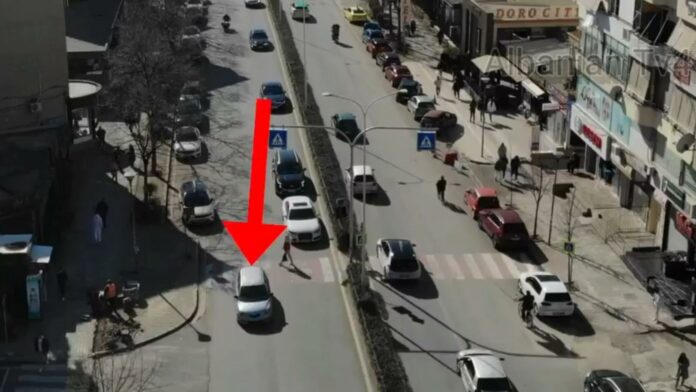
Χαρακτηριστικό παράδειγμα η Αλβανία, που όπως φαίνεται σε βίντεο των αλβανικών αστυνομικών αρχών, είναι αποφασισμένη να μην αφήνει ατιμώρητους όσους δεν σταματούν στις διαβάσεις πεζών.
Όπως βλέπουμε στο βίντεο, οι δυνάμεις της αλβανικής Τροχαίας έχει επιστρατεύσει κάμερες που επιτηρούν τις μη σηματοδοτούμενες (δηλ. δίχως φανάρια) διαβάσεις πεζών.
Σε περίπτωση, λοιπόν, που τελεστεί κάποια παράβαση, το βιντεοληπτικό υλικό μεταδίδεται σε αστυνομικό που παραμονεύει λίγα μέτρα μακριά από τη διάβαση, ο οποίος ζητάει από τον παραβάτη να ακινητοποίησει το όχημα, θέτοντας προ των ευθυνών του.
Αξίζει να σημειωθεί ότι οι αλβανικές αστυνομικές αρχές έχουν επιδοθεί στη μάχη του περιορισμού και άλλων παραβάσεων που μπορεί να αποτελέσουν αιτία πρόκλησης σοβαρού τροχαίου ατυχήματος.
Όπως φαίνεται στο παραπάνω βίντεο, έχουν επιστρατεύσει drones που -μεταξύ άλλων- πιάνουν στην «τσιμπίδα» τους όσους δεν σέβονται τις πινακίδες οδικής σήμανσης και συνδράμουν στην άμεση τιμωρία των παραβατών.
Με μεγάλη θλίψη η δημοσιογραφική οικογένεια της Μακεδονίας-Θράκης αποχαιρετά τη Ναυσικά Γκράτσιου, που έχασε στα 60 χρόνια της τη γενναία μάχη που έδωσε με τον καρκίνο.
Γεννημένη στη Θεσσαλονίκη το 1964, σπούδασε Νομική και έκανε μεταπτυχιακό στη Δημοσιογραφία. Συνεργάστηκε με αρκετά Μέσα, αλλά το ραδιόφωνο ήταν αυτό που σφράγισε τη δημοσιογραφική διαδρομή της, αρχικά από τις συχνότητες του Πανόραμα 98,4, του ΑΝΤ1 και του 102 FM, και κατόπιν, για πάνω από δύο δεκαετίες, από το Δημοτικό Ραδιόφωνο Θεσσαλονίκης FM100.
Η πρόωρη απώλειά της στερεί το ραδιοφωνικό τοπίο από μια από τις πιο χαρακτηριστικές φωνές του και τη δημοσιογραφία από μια επαγγελματία με μεγάλη καλλιέργεια και ευαισθησία.
Η κηδεία της Ναυσικάς Γκράτσιου θα γίνει αύριο, Μ. Σάββατο, 4 Μαΐου 2024, από τον Ιερό Ναό Αγίου Γρηγορίου του Παλαμά (Μητρόπολη Θεσσαλονίκης), στις 11.00.
Colombia severed diplomatic relations with Israel on Thursday, becoming the third Latin American country to do so since the Israel-Hamas war began on Oct. 7, 2023. “If Palestine dies, humanity dies,” Colombian President Gustavo Petro said during a May Day rally on Wednesday, in which he called Israel’s military campaign in Gaza “genocidal.”
Israel issued a sharp rebuke in response. Foreign Minister Israel Katz called Petro “antisemitic and hateful” and accused him of siding with Hamas.
Colombia once had a close relationship with Israel. In the late 1980s, Bogotá purchased Israeli Kfir fighter jets to use against remote guerrilla camps, ultimately helping the nation to debilitate the militant Revolutionary Armed Forces of Colombia, or FARC. For decades after, Colombia regularly engaged with Israel’s military, including buying Israeli-built warplanes and machine guns to tackle drug cartels and rebel groups. Both countries also signed a free trade agreement in 2020.
However, since coming to office in 2022, Petro—the country’s first leftist president—has shifted away from the position held by his conservative and centrist predecessors. After Israeli Defense Minister Yoav Gallant compared Hamas fighters to “animals” in October 2023 and vowed to deny food, fuel, and electricity to Gaza, Petro compared Israel’s military operations to those of Nazi Germany. The United States and Israel quickly condemned his comments, and Israel pledged to stop all security exports to Colombia.
Later that month, Petro and Chilean President Gabriel Boric, a fellow leftist, recalled their countries’ respective ambassadors from Israel. In January, Petro endorsed South Africa’s case at the International Court of Justice accusing Israel of committing genocide in Gaza, and Colombia filed a declaration of intervention to join the case in April, following Nicaragua’s similar motion. Colombia also suspended weapons purchases from Israel in February in response to Israeli troops opening fire near a group of Palestinians collecting food from an aid convoy in Gaza City, sparking a stampede that killed more than 100 people and injured 760 others.
Colombia’s decision to sever relations marks the latest Latin American shift away from Israel in a region with historic ties to Palestinian movements. Last October, Bolivia—which also has a left-wing government—broke ties with Israel, citing its “aggressive and disproportionate” offensive in Gaza. Days later, Honduras recalled its own ambassador, and in mid-November, Belize suspended diplomatic ties.
Numerous Latin American countries, including Colombia, have called for an immediate cease-fire in Gaza. But discussions to secure a cease-fire agreement remain ongoing. Israel’s war cabinet convened on Thursday to debate the proposed truce, which would include two phases to release hostages, a 40-day cease-fire, and increased aid deliveries to Gaza. Senior ministers also discussed Israel’s potential offensive on the southern Gaza city of Rafah. Hamas officials said on Thursday that they are still discussing the truce’s terms and will send a delegation to Egypt “as soon as possible” to finalize talks.
Colombian President Gustavo Petro gives a speech as part of the 2024 International Workers’ Day in Bogotá, Colombia, on May 1.Diego Cuevas/Getty Images
A Chance to Turn the Tables on Hamas and Iran—and Advance Normalization With Saudi Arabia
Until last month, the war between Iran and Israel was largely fought in the shadows. The Iranians decided to take it out of the shadows, openly attacking Israeli territory directly, from Iranian soil, for the first time in the Islamic Republic’s history. Some observers have argued that Iran’s April 13 drone and missile assault on Israel was a symbolic gesture. Yet given the quantity of drones and missiles fired at Israel and their payloads, Iran clearly meant to inflict serious damage.
Israel’s defenses were nearly flawless, but it did not repel Iran’s attack entirely on its own. Just as Iran’s assault was unprecedented, so was the direct military intervention of the United States and a number of its allies, including some Arab states. U.S. Central Command, with the participation of the United Kingdom and Jordan, intercepted at least a third of the drones and cruise missiles that Iran fired at Israel; Saudi Arabia and the United Arab Emirates also shared intelligence that helped Israel defend itself. Their readiness to play this role was remarkable, given how unpopular Israel’s war with Hamas in Gaza is among Arab publics.
Five days later, when Israel responded to Iran’s attack, it took Washington’s calls for restraint into account, firing three missiles at a radar facility that guides the S-300 missile defense battery in Isfahan, the site of Iran’s uranium conversion plant. This was a very limited response, one crafted to avoid casualties while showing Israel can penetrate Iran’s defenses and strike any target it seeks to hit.
Israel seemingly recognized that the best way to deal with the threat Iran and its proxies pose is to work with a coalition. This, too, is without precedent. The idea that Americans, Europeans, and Arabs would come together to help intercept drones and cruise missiles Iran launched against Israel would, in the recent past, have seemed like a fantasy—and, to Israel, undesirable. Israel’s ethos on defense has always been: “We defend ourselves by ourselves.” This has been both a source of pride and a principle—that no one besides Israelis would have to pick up weapons on Israel’s behalf.
But now that Israel faces not only Iran but multiple Iranian proxy groups, the cost of taking on all these fronts by itself is simply becoming too high. This development, as well as the willingness that Arab states showed in April to join Israel to confront the threat Iran and its proxies pose, suggests that a window has opened for the creation of a regional coalition pursuing a common strategy to counter Iran and its proxies.
To take advantage of this opening, however, Israel, the United States, and Arab countries—particularly Saudi Arabia—need to recognize the unique nature of the moment and seize it. A U.S.-brokered breakthrough in a normalization deal between Israel and Saudi Arabia would do a great deal to cement this emerging coalition. If the Saudis, whose king is the custodian of Islam’s two holiest sites, made peace with Israel, that would likely transform Israel’s relationship with other Sunni-majority states within and outside the Middle East following suit. U.S. President Joe Biden’s administration, as well as Israeli and Saudi leaders, indicate that they would still like to see such a deal happen soon. But the Biden administration believes that the fighting in Gaza must be paused before negotiations about normalization can proceed.
A unilateral cease-fire of four to six weeks would offer Israel many strategic benefits.
There is some hope that negotiations in Egypt on a hostage deal between Israel and Hamas will finally be achieved and produce a cease-fire of at least six weeks. But the Biden administration must not put all its eggs in that basket. Again and again, Hamas has raised hopes that a deal is imminent only to dash them. Should no deal emerge in Egypt, the Biden administration should turn to the only realistic alternative: encouraging Israel to announce a unilateral cease-fire in Gaza of four to six weeks.
Such an Israeli decision may be the only way to create the conditions for an Israeli-Saudi normalization deal to advance. Of course, a unilateral cease-fire would be controversial in Israel, both because it de-links pausing the fighting in Gaza from the release of hostages and because it may seem to concede something to Hamas for nothing in return. But a unilateral cease-fire of four to six weeks would, in fact, offer Israel many strategic benefits with few material drawbacks. And in truth, if their negotiations with Hamas fail once again, Israeli leaders will need to adopt a different approach if they hope to get hostages released while some are still alive.
The fact that Israel listened to the Biden administration when crafting its response to Iran’s attack shows that it is open to U.S. persuasion. Indeed, a new reality may be taking shape in Israel, one that could change how it approaches defense, deterrence, and the region.
A PRECEDENT FOR RESTRAINT
When it comes to defense strategy, Israel has long been committed to doing its own fighting. All it asked of the United States was to help ensure that it had the means to do so. The help that Israel received to defend itself against the Iranian attack, however, might have been not only welcome but also necessary.
But such help also creates an obligation on Israel’s part. When others participate in Israel’s defense, they gain the right to ask Israel to take their interests and concerns into account. After Iran’s attack, Biden made it clear to Israeli leaders that they did not need to retaliate because their successful defense itself constituted a great success—and, by implication, an embarrassing failure for Iran. For Israel, not to hit back at all would have contradicted the country’s basic concept of deterrence: if you attack us, you will pay, and no one can pressure us not to respond to threats. But Israeli Prime Minister Benjamin Netanyahu could not easily dismiss the American position.
Israel’s concept of deterrence has always shaped its responses to direct threats—with one exception that is worth recalling today. During the 1991 Gulf War, the night after U.S. forces attacked Iraq, Iraqi President Saddam Hussein hit Israel with Scud missiles. The Israeli defense minister, Moshe Arens, and other senior military officials wanted to retaliate. But U.S. President George H. W. Bush’s administration, particularly Secretary of State James Baker, persuaded Israeli Prime Minister Yitzhak Shamir not to do so. Baker reassured Shamir that Israel could give the United States specific targets it wanted hit, and the United States would hit them. But he also stressed that the world stood against Saddam, and that if Israel retaliated directly, it risked disrupting the coalition fighting Iraq. Saddam was trying to transform the conflict into an Arab-Israeli war, and it was not in Israel’s interest to play into his hands.
In 1991, Israel’s prime minister accepted the counsel of the American president.
There is, of course, one big difference between 1991 and today: back then, the U.S. military was attacking Iraq, not simply trying to intercept its missile launches. The United States is not about to attack Iran today. That said, in 1991, Israel was not already in the midst of another war, as it is today in Gaza. And unlike today, Israel was not also juggling a tense northern front with Hezbollah that could easily escalate into an all-out conflict.
In 1991, Israel’s prime minister accepted the counsel of the American president and secretary of state because he could see that it was in Israel’s interest for the coalition against Saddam to remain intact. Shamir also believed that by responding favorably to the United States, he could repair his relationship with Bush, which had become strained over disagreements about Israel’s settlements policy.
Bush appreciated Shamir’s decision, but the two leaders continued to clash over the United States’ provision of $10 billion in loan guarantees, which Israel needed to manage a surge in immigrants from the Soviet Union. Bush wanted to condition those guarantees on Israel’s freezing settlement building in the West Bank. Shamir would not agree, and the Bush administration did not provide the guarantees until it reached an agreement with Shamir’s successor, Yitzhak Rabin, on reducing the value of the guarantees by the amount the United States estimated that Israel was spending annually on settlements.
MAKE A VIRTUE OF NECESSITY
The nature of Israel’s response to the Iranian attack shows that Netanyahu, too, is willing to take American concerns into account—not going as far as Shamir did to placate Washington but clearly limiting Israel’s response. Today, Netanyahu is also under pressure to repair rifts in his relationship with America’s president, ones that have opened not over Israel’s fundamental war aims in Gaza—ensuring that Hamas can never again threaten Israel—but over Israel’s approach to its military campaign and to humanitarian assistance entering Gaza.
As was the case in 1991, Israel’s restraint in its response to an outside attack will not, by itself, reset its relationship with the United States. With Israel’s assault on Rafah looming, the ties between Biden and Netanyahu could become even more strained. But a U.S.-brokered normalization deal between Israel and Saudi Arabia is the most important thing that could change the trajectory of the relationship. Biden understands that because the Saudis require a credible political advance for the Palestinians in order to finalize a normalization deal, Netanyahu will have to take on the part of his political base that most staunchly opposes Palestinian statehood. And the negotiations cannot make serious progress unless the humanitarian crisis in Gaza is eased—something that cannot easily be done without a cease-fire.
No doubt such a move will be politically difficult for Netanyahu to undertake. He is likely to argue that a pause would take the military pressure off Hamas. Having already greatly reduced its military presence in Gaza since November, however, Israel is not putting the kind of military pressure on Hamas that it was when a hostage deal was brokered that month. No hostages have been released since, a reality that suggests that Hamas’s leader in Gaza, Yahya Sinwar, does not feel any serious pressure to seek a reprieve. Israel’s threat to invade Rafah may increase the pressure on Sinwar, but a Rafah operation cannot take place until Netanyahu fulfills his pledge to Biden that no invasion will happen before Israel evacuates the 1.4 million Palestinians crammed into the area. Because evacuation involves not only moving people but also ensuring they have a place to go that has adequate shelter, food, water, and medicine, an evacuation will itself take four to six weeks, probably longer.
Netanyahu will have to choose between Biden and Ben-Gvir.
In light of these realities, Israel should make a virtue of necessity. If it cannot go into Rafah for some weeks, the cease-fire means that it is giving up little but gaining a number of advantages. A four-to-six-week cease-fire would allow international organizations to ease conditions in Gaza and address the world’s concerns about famine there. They could put better mechanisms in place to ensure that sufficient humanitarian assistance not only enters Gaza but is also actually distributed to those most in need. A cease-fire would refocus the world’s attention onto Hamas’s intransigence and the plight of the Israeli hostages. And it would help alter the skeptical narrative that has taken hold about Israel internationally and reduce the pressure on it to end the war unconditionally.
To be sure, the far-right Israeli ministers Bezalel Smotrich and Itamar Ben-Gvir will oppose any unilateral cease-fire, no matter its duration. But their war aims are not the same as Netanyahu’s or the Israeli public’s. They want to reoccupy Gaza, and they will undoubtedly oppose any breakthrough with Saudi Arabia that requires concessions to Palestinians’ national aspirations. At some point or another, Netanyahu will have to choose between Biden and Ben-Gvir.
Put simply, a unilateral Israeli cease-fire for four to six weeks would create a strategic opportunity—particularly if it creates an opening to normalize relations with Saudi Arabia and transform the tacit regional alignment that emerged after Iran’s attack on Israel into a more material reality. For the Biden administration, the role that Arab states played in helping defend Israel against Iran’s attack is a tangible new development that needs quick follow-up. The U.S. political calendar, too, makes achieving progress on Israeli-Saudi normalization urgent. Getting the Senate’s approval for the United States’ direct contributions to the deal—which include a U.S.-Saudi bilateral defense treaty and a civil-nuclear partnership between the two countries—is certain to become more difficult as the U.S. presidential election approaches.
The new behavior that the Iran-Israel crisis in April provoked in numerous states shows that long-standing realities in the Middle East can change. Iran is now in a weak position, and Israel has a window of opportunity in an otherwise very difficult year. Rarely has Israel so urgently needed to seize a potential strategic opportunity. But this is equally true for the United States. Biden has a strong interest in showing that he was able to take the Israel-Hamas war and the chaos created by Iran’s proxies and forge a more stable and hopeful Middle East. There is a moment to do that now. But there is no telling how long it will last.
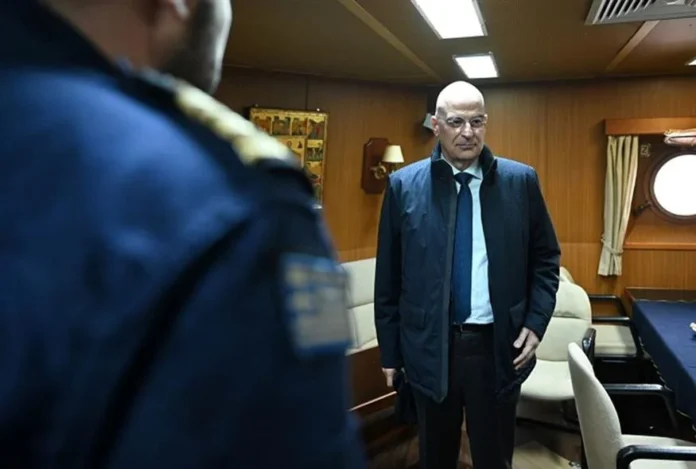
Η επίσκεψη του Νίκου Δένδια στα Δωδεκάνησα ‘τάραξε’ ξανά τον φιλο-κυβερνητικό τουρκικό τύπο, που τη διαβάζει ως προσπάθεια επιδείνωσης των ελληνο-τουρκικών σχέσεων από τον Έλληνα υπουργό Άμυνας, την ώρα που ο πρωθυπουργός Κυριάκος Μητσοτάκης στέλνει άλλα μηνύματα.
Ο φιλοκυβερνητικός τηλεοπτικός σταθμός A Haber αντιμετωπίζει την επίσκεψη Δένδια ως μια ακόμα προκλητική κίνηση ενάντια στην Τουρκία. Παρόλο που η Αθήνα δίνει θετικά μηνύματα για βελτίωση των σχέσεών της με την Τουρκία, οι πράξεις του υπουργού Εθνικής Άμυνας φαίνεται να ακολουθούν διαφορετική προσέγγιση. Το γεγονός ότι ο Δένδιας επισκέφθηκε νησιά που είναι γνωστά για τις αμυντικές τους θέσεις, σε συνδυασμό με τις προκλητικές δηλώσεις που έχει κάνει πρόσφατα, προκαλεί ανησυχία για τις εξελίξεις στην περιοχή, σημειώνει στο ρεπορτάζ του το Α Χαμπέρ.
«Από τη μία πλευρά, βήματα εξομάλυνσης και από την άλλη προκλήσεις στα νησιά. Ο Έλληνας ΥΕΘΑ Νίκος Δένδιας εξακολουθεί να κάνει βήματα που επισκιάζουν τη θετική διαδικασία μεταξύ Άγκυρας και Αθήνας. Ο Έλληνας ΥΕΘΑ, ο οποίος την πρώτη μέρα του νέου έτους είχε επισκεφθεί το νησί της Λήμνου, που έχει αποστρατικοποιημένο καθεστώς, αυτή τη φορά εμφανίστηκε στο Αγαθονήσι που αποτελεί νησί των Δωδεκανήσων. Προσθέτοντας μια ακόμα νέα κίνηση στις προκλητικές του ενέργειες απέναντι στην Τουρκία, ο Δένδιας επισκέφθηκε το νησί μαζί με τους διοικητές του.
Ο Δένδιας συνοδευόταν από τον Α/ΓΕΕΘΑ στρατηγό Δημήτριο Χούπη και από τον Α/ΓΕΣ αντιστράτηγο Γεώργιο Κωστίδη. Ο Έλληνας ΥΕΘΑ επισκέφθηκε τις θέσεις του νησιού, όπου ο εξοπλισμός είναι παράνομος. Η επόμενη στάση του Δένδια ήταν η Κως και η Πάτμος. Αναφορικά με τις προκλητικές επισκέψεις δεν δόθηκε καμία εξήγηση. Ο Έλληνας Π/Θ Μητσοτάκης ενόψει της συνάντησής του με τον Τούρκο πρόεδρο Ερντογάν αυτόν τον μήνα είχε στείλει θερμά μηνύματα προς την Τουρκία. Είχε πει ότι θέλουμε να βελτιώνονται οι σχέσεις μας βήμα προς βήμα σε κάθε συνάντηση. Ωστόσο, οι δηλώσεις και οι ενέργειες του Έλληνα ΥΕΘΑ Δένδια είναι σε πλήρη αντίθεση με τα μηνύματα της Αθήνας. Ο Έλληνας ΥΕΘΑ σε δηλώσεις που έκανε πριν από λίγες ημέρες στη Θεσσαλονίκη, αναφερόμενος στην Τουρκία, είπε ότι δεν είμαστε Λουξεμβούργο και ότι δεν είναι όλοι οι γείτονές μας φίλοι», αναφέρει το ρεπορτάζ του φιλο-κυβερνητικού δικτύου.
Από τη Μέση Ανατολή μέχρι την Αυστραλία, όλο και περισσότεροι φοιτητές σε όλο τον κόσμο διαμαρτύρονται για τον πόλεμο στη Γάζα.
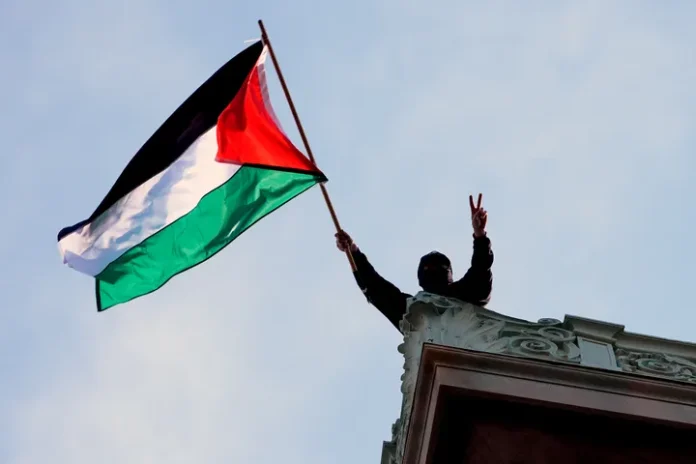
Ένας διαδηλωτής φοιτητής ανεμίζει την παλαιστινιακή σημαία πάνω από το Hamilton Hall στην πανεπιστημιούπολη του Πανεπιστημίου Columbia, Τρίτη 30 Απριλίου 2024
VIA ASSOCIATED PRESS
Φοιτητές έχουν στήσει κατασκηνώσεις ή έχουν οργανώσει συγκεντρώσεις σε δεκάδες πανεπιστήμια στις ΗΠΑ τις τελευταίες εβδομάδες για να υποστηρίξουν τους Παλαιστίνιους στη Γάζα και να απαιτήσουν από τις σχολές τους να απεξαρτηθούν οικονομικά από εταιρείες που συνδέονται με το Ισραήλ.
Το υπουργείο Υγείας στη Γάζα ανακοίνωσε την Πέμπτη ότι τουλάχιστον 34.596 άνθρωποι έχουν σκοτωθεί στο παλαιστινιακό έδαφος από τις ισραηλινές δυνάμεις κατά τη διάρκεια σχεδόν επτά μηνών πολέμου, ενώ οι διαμαρτυρίες των φοιτητών σε όλες τις ΗΠΑ εντάθηκαν τις τελευταίες ημέρες με κεντρικό αίτημα τον τερματισμό της αιματοχυσίας.
Υπήρξαν απειλές για προσωρινή αναστολή της χρηματοδότησης του Ινστιτούτου, καθώς η Βαλερί Πεκρές η δεξιά Πρόεδρος του Περιφερειακού Συμβουλίου της Ιλ ντε Φρανς, κατηγόρησε τους διαδηλωτές ότι αποτελούνταν από «μια μειοψηφία ριζοσπαστικοποιημένων ανθρώπων που καλούν σε αντισημιτικό μίσος».
Ωστόσο, η Γαλλίδα υπουργός Ανώτατης Εκπαίδευσης Σιλβί Ρεταγιώ δήλωσε αργότερα ότι η γαλλική κυβέρνηση δεν σχεδιάζει να αναστείλει τη χρηματοδότηση του Sciences Po, προσθέτοντας ότι δεν υπήρξαν ”αντισημιτικά σχόλια” και ότι δεν διαπράχθηκε βία κατά τη διάρκεια των διαδηλώσεων.
Το διάσημο γαλλικό πανεπιστήμιο έχει προγραμματίσει να φιλοξενήσει μια συζήτηση στο δημαρχείο την Πέμπτη σε μια προσπάθεια να μειώσει τις εντάσεις, μετά από διαπραγματεύσεις μεταξύ των αξιωματούχων του πανεπιστημίου και των φοιτητών.
Διαδηλωτές οργισμένοι για τον πόλεμο στη Γάζα κατέβηκαν επίσης στο Πανεπιστήμιο της Σορβόννης στο Παρίσι, με αποτέλεσμα το πανεπιστήμιο να κλείσει το κτίριο για όλη την ημέρα.
Ένας φοιτητής προσαρμόζει μια πινακίδα σε έναν καταυλισμό στους χώρους του Πανεπιστημίου του Νιούκαστλ, διαμαρτυρόμενος για τον πόλεμο στη Γάζα. Φοιτητές στο Ηνωμένο Βασίλειο, συμπεριλαμβανομένου του Λιντς, του Νιούκαστλ και του Μπρίστολ, έχουν στήσει σκηνές έξω από τα πανεπιστημιακά κτίρια, επαναλαμβάνοντας τις πανεθνικές διαδηλώσεις στην πανεπιστημιούπολη που ξεκίνησαν στις ΗΠΑ τον περασμένο μήνα. Ημερομηνία φωτογραφίας: Πέμπτη 2 Μαΐου 2024.
OWEN HUMPHREYS – PA IMAGES VIA GETTY IMAGES
Hνωμένο Βασίλειο
Ακτιβιστές – φοιτητές υπέρ της Παλαιστίνης διαδήλωσαν σε πανεπιστήμια σε διάφορες πόλεις του Ηνωμένου Βασιλείου, αντιδρώντας στον πόλεμο κατά της Γάζας.
Η εφημερίδα The New Arab ανέφερε την Τετάρτη ότι φοιτητές που φοιτούν σε πέντε από τα πιο διάσημα πανεπιστήμια του Ηνωμένου Βασιλείου, μεταξύ των οποίων το Σέφιλντ, το Λιντς, το Μάντσεστερ και το Νιούκαστλ, δημιούργησαν καταυλισμούς σε ένδειξη αλληλεγγύης προς την Παλαιστίνη.
Αναμένεται να ακολουθήσουν και άλλα πανεπιστήμια, καθώς οι φοιτητές που διαμαρτύρονται απαιτούν από τα ιδρύματα να απαοεπενδύσουν ή να διακόψουν τους δεσμούς τους με το Ισραήλ.
Οι φοιτητές του πανεπιστημίου Goldsmiths με έδρα το Λονδίνο είχαν καταλάβει κτίρια της πανεπιστημιούπολης εδώ και εβδομάδες, ενώ στο University College London (UCL) διαμαρτύρονται συνεχώς για τον πόλεμο στη Γάζα, συμπεριλαμβανομένης μιας 34ήμερης κατάληψης μιας πανεπιστημιακής αίθουσας.
Αυστραλία
Σε επτά πανεπιστήμια της Αυστραλίας – μεταξύ των οποίων το Σίδνεϊ, η Μελβούρνη, η Αδελαΐδα και το Περθ – δημιουργήθηκε ένα μείγμα διαδηλώσεων και καταυλισμών υπέρ της Παλαιστίνης.
Το Πανεπιστήμιο του Κουίνσλαντ ανέφερε σε ανακοίνωσή του ότι «δεσμεύεται για την ελευθερία του λόγου και επαναλαμβάνει τις προσδοκίες του ότι, ενώ εκφράζουν ελεύθερα τις απόψεις τους, οι άνθρωποι αντιμετωπίζουν ο ένας τον άλλον με αξιοπρέπεια και σεβασμό, ώστε να διασφαλιστεί ότι η κοινότητά μας μπορεί να συνεχίσει τις σπουδές, την έρευνα, την εργασία ή άλλες δραστηριότητές της».
Λίβανος
Εκατοντάδες φοιτητές στο διάσημο Αμερικανικό Πανεπιστήμιο της Βηρυτού (AUB) πραγματοποίησαν διαδηλώσεις υπέρ της Γάζας.
Το AFP μετέδωσε ότι άλλοι φοιτητές εθεάθησαν επίσης να κρατούν πανό που δήλωναν αλληλεγγύη με τον νότιο Λίβανο, όπου το Ισραήλ και η λιβανέζικη οργάνωση Χεζμπολάχ ανταλλάσσουν σχεδόν καθημερινά διασυνοριακά πυρά από τον Οκτώβριο.
Στο Λίβανο, τουλάχιστον 385 άνθρωποι έχουν σκοτωθεί σε μήνες διασυνοριακής βίας, κυρίως ένοπλοι, αλλά και 73 άμαχοι.
Ιορδανία
Η Ιορδανία αύξησε επίσης τις συγκεντρώσεις αλληλεγγύης προς τους Παλαιστίνιους σε διάφορα πανεπιστήμια, όπως το Τεχνικό Πανεπιστήμιο Al-Hussain, αν και ορισμένοι φοιτητές συνελήφθησαν με «κατασκευασμένες κατηγορίες».
Η εφημερίδα New Arab ανέφερε ότι στα ιορδανικά πανεπιστήμια συμμετείχαν επίσης καθηγητές και προσωπικό -συμπεριλαμβανομένων δεκάδων ακαδημαϊκών.
Ιορδανοί ακαδημαϊκοί εξέδωσαν επίσης μια δήλωση σε ένδειξη αλληλεγγύης προς τους φοιτητές και τους ακαδημαϊκούς στα πανεπιστήμια των ΗΠΑ, την οποία υπέγραψαν πάνω από 100 καθηγητές.
Άλλα πανεπιστήμια σε όλο τον κόσμο που πραγματοποίησαν/πραγματοποιούν διαμαρτυρίες και κατασκηνώσεις υπέρ της Παλαιστίνης:
Αμερικανικό Πανεπιστήμιο στο Κάιρο
Πανεπιστήμιο Al-Nahrain (Ιράκ)
Αραβικό Πανεπιστήμιο της Βηρυτού (Λίβανος)
Πανεπιστήμιο Concordia (Καναδάς)
IPSI – Institut de Presse et des Sciences de l’Information (Τυνησία)
İTÜ | İstanbul Teknik Üniversitesi (Τουρκία)
Πανεπιστήμιο Jawaharlal Nehru (Ινδία)
Πανεπιστήμιο του Κουβέιτ (Κουβέιτ)
Πανεπιστήμιο McGill (Καναδάς)
NYU Βερολίνου (Γερμανία)
NYU Bueno Aires (Αργεντινή)
Πανεπιστήμιο Selçuk (Τουρκία)
Πανεπιστήμιο της Αλμπέρτα (Αυστραλία)
Πανεπιστήμιο της Βρετανικής Κολομβίας (Καναδάς)
UQAM | Πανεπιστήμιο του Κεμπέκ στο Μόντρεαλ (Καναδάς)
Αδιανόητη δήλωση από βουλευτή του κυβερνώντος κόμματος
Η βουλευτής του γερμανικού κυβερνώντος κόμματος SPD Zάντα Μάρτενς, προχώρησε σε μία αδιανόητη δήλωση από το βήμα του γερμανικού κοινοβουλίου.
Συγκεκριμένα είπε ότι ο παππούς της ήταν Ναζί και ότι τον σκότωσαν Ρώσοι παρτιζάνοι και γι’ αυτό μισεί την Ρωσία.
Από την ημέρα που ξεκίνησε ο πόλεμος στην Ουκρανία παρατηρείται σε όλη την Ευρώπη μία τάση ξεπλύματος του Ναζισμού, ακριβώς επειδή το συγκεκριμένο «ρεύμα» διακατέχει την ουκρανική κοινωνία.