Αρχική Blog Σελίδα 1194

Washington Summit Declaration issued by the Heads of State and Government participating in the meeting of the North Atlantic Council in Washington, D.C. 10 July 2024

0
  1. We, the Heads of State and Government of the North Atlantic Alliance, have gathered in Washington to celebrate the 75th anniversary of our Alliance.  Forged to preserve peace, NATO remains the strongest Alliance in history.  We stand in unity and solidarity in the face of a brutal war of aggression on the European continent and at a critical time for our security.  We reaffirm the enduring transatlantic bond between our nations.  NATO remains the unique, essential, and indispensable transatlantic forum to consult, coordinate, and act on all matters related to our individual and collective security.  NATO is a defensive Alliance.  Our commitment to defend one another and every inch of Allied territory at all times, as enshrined in Article 5 of the Washington Treaty, is iron-clad.  We will continue to ensure our collective defence against all threats and from all directions, based on a 360-degree approach, to fulfil NATO’s three core tasks of deterrence and defence, crisis prevention and management, and cooperative security.  We are bound together by shared values: individual liberty, human rights, democracy, and the rule of law.  We adhere to international law and to the purposes and principles of the Charter of the United Nations and are committed to upholding the rules-based international order.
  2. We warmly welcome our thirty second and newest Ally, Sweden.  The historic accession of Finland and Sweden makes them safer and our Alliance stronger, including in the High North and the Baltic Sea.  Every nation has the right to choose its own security arrangements.  We reaffirm our commitment to NATO’s Open Door Policy, in line with Article 10 of the Washington Treaty.
  3. Russia’s full-scale invasion of Ukraine has shattered peace and stability in the Euro-Atlantic area and gravely undermined global security.  Russia remains the most significant and direct threat to Allies’ security.  Terrorism, in all its forms and manifestations, is the most direct asymmetric threat to the security of our citizens and to international peace and prosperity.  The threats we face are global and interconnected.
  4. Strategic competition, pervasive instability, and recurrent shocks define our broader security environment.  Conflict, fragility and instability in Africa and the Middle East directly affect our security and the security of our partners.  Where present, these trends, among others, contribute to forced displacement, fuelling human trafficking and irregular migration.    Iran’s destabilising actions are affecting Euro-Atlantic security.  The People’s Republic of China’s (PRC) stated ambitions and coercive policies continue to challenge our interests, security and values.  The deepening strategic partnership between Russia and the PRC and their mutually reinforcing attempts to undercut and reshape the rules-based international order, are a cause for profound concern.  We are confronted by hybrid, cyber, space, and other threats and malicious activities from state and non-state actors.
  5. At this 75th anniversary Summit, we are taking further steps to strengthen our deterrence and defence, bolster our long-term support to Ukraine so it can prevail in its fight for freedom, and deepen NATO’s partnerships. We warmly welcome President Zelenskyy of Ukraine and the leaders of Australia, Japan, New Zealand, the Republic of Korea, and the European Union.
  6. We welcome that more than two-thirds of Allies have fulfilled their commitment of at least 2% of GDP annual defence spending and commend those Allies who have exceeded it.  Allies are stepping up: defence expenditure by European Allies and Canada has grown by 18% in 2024, the biggest increase in decades.  They are also investing more in modern capabilities, and increasing their contributions to NATO operations, missions, and activities.  We reaffirm our enduring commitment to fully implement the Defence Investment Pledge as agreed in Vilnius, and recognise that more is needed urgently to sustainably meet our commitments as NATO Allies.  We reaffirm that, in many cases, expenditure beyond 2% of GDP will be needed in order to remedy existing shortfalls and meet the requirements across all domains arising from a more contested security order.
  7. We have undertaken the biggest reinforcement of our collective defence in a generation.  We are delivering on the Madrid and Vilnius Summit decisions to modernise NATO for a new era of collective defence.  We cannot discount the possibility of an attack against Allies’ sovereignty and territorial integrity.  We have strengthened our deterrence and defence posture to deny any potential adversary any possible opportunities for aggression.  We continue to enhance NATO’s deterrence and defence against all threats and challenges, in all domains, and in multiple strategic directions across the Euro-Atlantic area. We have deployed in-place combat-ready forces on NATO’s Eastern Flank, strengthened forward defences, and enhanced the Alliance’s ability to rapidly reinforce any Ally that comes under threat.  We have a new generation of NATO defence plans in place that make the Alliance stronger and more able to deter and, if necessary, defend against any potential adversary, including at short or no notice.  We are committed to delivering the required high readiness forces across all domains, including for a robust and agile Allied Reaction Force.  We are further accelerating the modernisation of our collective defence and are:
    • Providing the necessary forces, capabilities, resources, and infrastructure for our new defence plans, to be prepared for high-intensity and multi-domain collective defence.  In this regard, we will build on the progress made to ensure that increased national defence expenditures and NATO common funding will be commensurate with the challenges of a more contested security order.
    • Conducting more frequent and large-scale training and exercises of our plans to demonstrate our ability to defend and rapidly reinforce any Ally that comes under threat, including through Steadfast Defender 24, NATO’s largest military exercise in a generation.
    • Taking urgent action to increase capabilities in accordance with the NATO Defence Planning Process (NDPP), including in the short-term, with our initial focus to include battle decisive munitions and air and missile defence.  We welcome collective and joint procurement initiatives based on our requirements, informed by the NDPP.  We are accelerating transformation and the integration of new technologies and innovation, including through a plan to improve technology adoption. We are also modernising our air surveillance capability.
    • Strengthening our NATO command and control and assigning key leadership roles to nationally provided headquarters.
    • Strengthening our ability to move, reinforce, supply, and sustain our forces to respond to threats across the Alliance, including through effective and resilient logistics and the development of mobility corridors.
    • Training, exercising, and integrating NATO’s Forward Land Forces into the new plans, including by continuing to strengthen our forward defences on NATO’s Eastern Flank.
    • Taking full advantage of the accession of Finland and Sweden, and the capabilities they bring to the Alliance by fully integrating them into our plans, forces, and command structures, including by developing a NATO presence in Finland.
    • Accelerating the integration of space into our planning, exercises, and multi-domain operations, in particular by strengthening the capacity of NATO’s Space Operations Centre.
    • Establishing the NATO Integrated Cyber Defence Centre to enhance network protection, situational awareness, and the implementation of cyberspace as an operational domain throughout peacetime, crisis and conflict; and developing a policy to augment the security of NATO’s networks.
    • Strengthening the protection of critical undersea infrastructure (CUI), and enhancing our ability to deter, detect and respond to threats, including through continued development of NATO’s Centre for Security of CUI.
    • Investing in our Chemical, Biological, Radiological and Nuclear defence capabilities required to effectively operate in all environments.
    • Accelerating implementation of NATO standards and agreeing the necessary measures to increase and strengthen our interoperability.
  8. We are resolved to deter and defend against all air and missile threats by enhancing our Integrated Air and Missile Defence (IAMD), based on a 360-degree approach.  We have updated NATO’s IAMD Policy and will continue to increase our readiness, responsiveness, and integration through various initiatives, such as the implementation of the IAMD Rotational Model across the Euro-Atlantic area with an initial focus on the Eastern Flank.  Allies remain committed to enhancing the effectiveness of IAMD and taking all steps to respond to the security environment.  We are pleased to declare NATO Ballistic Missile Defence (BMD) Enhanced Operational Capability.  The delivery of the Aegis Ashore site Redzikowo, Poland, complements existing assets in Romania, Spain, and Türkiye.  Allies remain committed to the full development of NATO BMD, to pursue the Alliance’s collective defence and to provide full coverage and protection for all NATO European populations, territory, and forces against the increasing threat posed by the proliferation of ballistic missiles.  Missile defence can complement the role of nuclear weapons in deterrence; it cannot substitute them.
  9. Nuclear deterrence is the cornerstone of Alliance security.  The fundamental purpose of NATO’s nuclear capability is to preserve peace, prevent coercion and deter aggression.  As long as nuclear weapons exist, NATO will remain a nuclear alliance.  NATO reaffirms its commitment to all the decisions, principles, and commitments with regard to NATO’s nuclear deterrence, arms control policy and non-proliferation and disarmament objectives as stated in the 2022 Strategic Concept and 2023 Vilnius Communiqué.  Arms control, disarmament, and non-proliferation have made and should continue to make an essential contribution to achieving the Alliance’s security objectives and to ensuring strategic stability and our collective security.  NATO remains committed to taking all necessary steps to ensure the credibility, effectiveness, safety, and security of the Alliance’s nuclear deterrence mission, including by modernising its nuclear capabilities, strengthening its nuclear planning capability, and adapting as necessary.
  10.  NATO’s deterrence and defence posture is based on an appropriate mix of nuclear, conventional, and missile defence capabilities, complemented by space and cyber capabilities.  We will employ military and non-military tools in a proportionate, coherent and integrated way to deter all threats to our security and respond in the manner, timing, and in the domain of our choosing.
  11. Transatlantic defence industrial cooperation is a critical part of NATO’s deterrence and defence.  Strengthened defence industry across Europe and North America and enhanced defence industrial cooperation among Allies makes us more capable and better able to deliver against the requirements of NATO’s defence plans in a timely manner.  It underpins Allies’ immediate and enduring support to Ukraine.  We will continue to reduce and eliminate, as appropriate, obstacles to defence trade and investment among Allies.  Building on the Defence Production Action Plan agreed at the Vilnius Summit in 2023, we commit to doing more together as Allies, including to strengthen defence industry across the Alliance, act urgently to deliver the most critical capabilities, and reinforce our commitment to NATO standards.  To that end, we have today agreed the NATO Industrial Capacity Expansion Pledge.
  12. National and collective resilience are an essential basis for credible deterrence and defence and the effective fulfillment of the Alliance’s core tasks in a 360-degree approach.  Resilience is a national responsibility and a collective commitment, rooted in Article 3 of the Washington Treaty.  Strengthening national and Alliance-wide preparedness for deterrence and defence requires a whole of government approach, public-private cooperation, and societal resilience considerations.  We pledge to build on our ongoing efforts to strengthen national resilience by integrating civilian planning into national and collective defence planning in peace, crisis and conflict.  We will continue to boost our resilience by increasing the Alliance’s collective awareness, preparedness and capacity across all hazards and in all domains, to address growing strategic threats, including against our democratic systems, critical infrastructure, and supply chains.  We will employ the necessary capabilities to detect, defend against, and respond to the full spectrum of malicious activities.  We will also take concrete steps to deepen our cooperation with our partners engaged in similar efforts, in particular the European Union.
  13. State and non-state actors are using increasingly aggressive hybrid actions against Allies.  We will continue to prepare for, deter, defend against, and counter hybrid threats and challenges.  We reiterate that hybrid operations against Allies could reach the level of an armed attack and could lead the North Atlantic Council to invoke Article 5 of the Washington Treaty.
  14. We will continue to develop our individual and collective capacity to analyse and counter hostile disinformation and misinformation operations. NATO is closely coordinating with Allies and partners.  We have increased our alert and sharing mechanisms and strengthened our joint responses, in particular in strategic communication.
  15. We look forward to meeting with President Zelenskyy in the NATO-Ukraine Council.  We reaffirm our unwavering solidarity with the people of Ukraine in the heroic defence of their nation, their land, and our shared values.  A strong, independent, and democratic Ukraine is vital for the security and stability of the Euro-Atlantic area.  Ukraine’s fight for its independence, sovereignty, and territorial integrity within its internationally recognised borders directly contributes to Euro-Atlantic security.  We welcome announcements by Allies to provide Ukraine with critical additional air defence systems as well as other military capabilities.  To help Ukraine defend itself today, and deter Russian aggression in the future, we have:
    • Decided to establish the NATO Security Assistance and Training for Ukraine (NSATU) to coordinate the provision of military equipment and training for Ukraine by Allies and partners.  Its aim is to place security assistance to Ukraine on an enduring footing, ensuring enhanced, predictable, and coherent support.  NSATU, which will operate in Allied states, will support Ukraine’s self-defence in line with the UN Charter.  NSATU will not, under international law, make NATO a party to the conflict.  It will support the transformation of Ukraine’s defence and security forces, enabling its further integration with NATO.
    • Announced a Pledge of Long-Term Security Assistance for Ukraine for the provision of military equipment, assistance, and training to support Ukraine in building a force capable of defeating Russian aggression.  Through proportional contributions, Allies intend to provide a minimum baseline funding of €40 billion within the next year, and to provide sustainable levels of security assistance for Ukraine to prevail.
    • Taken forward the establishment of the NATO-Ukraine Joint Analysis, Training, and Education Centre (JATEC), an important pillar of practical cooperation, to identify and apply lessons from Russia’s war against Ukraine and increase Ukraine’s interoperability with NATO.
    • Welcomed the Secretary General’s decision to appoint a NATO Senior Representative in Ukraine.
  16. We fully support Ukraine’s right to choose its own security arrangements and decide its own future, free from outside interference.  Ukraine’s future is in NATO.  Ukraine has become increasingly interoperable and politically integrated with the Alliance.  We welcome the concrete progress Ukraine has made since the Vilnius Summit on its required democratic, economic, and security reforms.  As Ukraine continues this vital work, we will continue to support it on its irreversible path to full Euro-Atlantic integration, including NATO membership.  We reaffirm that we will be in a position to extend an invitation to Ukraine to join the Alliance when Allies agree and conditions are met.  The Summit decisions by NATO and the NATO-Ukraine Council, combined with Allies’ ongoing work, constitute a bridge to Ukraine’s membership in NATO.  Allies will continue to support Ukraine’s progress on interoperability as well as additional democratic and security sector reforms, which NATO Foreign Ministers will continue to assess through the adapted Annual National Programme.
  17. Russia bears sole responsibility for its war of aggression against Ukraine, a blatant violation of international law, including the UN Charter.  There can be no impunity for Russian forces’ and officials’ abuses and violations of human rights, war crimes, and other violations of international law.  Russia is responsible for the deaths of thousands of civilians and has caused extensive damage to civilian infrastructure.  We condemn in the strongest possible terms Russia’s horrific attacks on the Ukrainian people, including on hospitals, on 8 July. Russia must immediately stop this war and completely and unconditionally withdraw all of its forces from Ukraine in line with UN General Assembly resolutions.  We will never recognise Russia’s illegal annexations of Ukrainian territory, including Crimea.  We also call on Russia to withdraw all of its forces from the Republic of Moldova and Georgia, stationed there without their consent.
  18. Russia seeks to fundamentally reconfigure the Euro-Atlantic security architecture.  The all-domain threat Russia poses to NATO will persist into the long term.  Russia is rebuilding and expanding its military capabilities, and continues its airspace violations and provocative activities.  We stand in solidarity with all Allies affected by these actions.  NATO does not seek confrontation, and poses no threat to Russia.  We remain willing to maintain channels of communication with Moscow to mitigate risk and prevent escalation.
  19. We condemn Russia’s irresponsible nuclear rhetoric and coercive nuclear signalling, including its announced stationing of nuclear weapons in Belarus, which demonstrate a posture of strategic intimidation.  Russia has increased its reliance on nuclear weapon systems and continued to diversify its nuclear forces, including by developing novel nuclear systems and deploying short and intermediate range dual-capable strike capabilities, all of which poses a growing threat to the Alliance.  Russia has violated, selectively implemented, and walked away from longstanding arms control obligations and commitments, thereby undermining the global arms control, disarmament, and non-proliferation architecture.  We oppose any placement of nuclear weapons in orbit around Earth, which would violate Article IV of the Outer Space Treaty, and would gravely threaten global security.  We are profoundly concerned by the reported use of chemical weapons by Russia against Ukrainian forces.
  20. Russia has also intensified its aggressive hybrid actions against Allies, including through proxies, in a campaign across the Euro-Atlantic area.  These include sabotage, acts of violence, provocations at Allied borders, instrumentalisation of irregular migration, malicious cyber activities, electronic interference, disinformation campaigns and malign political influence, as well as economic coercion.  These actions constitute a threat to Allied security.  We have decided on further measures to counter Russian hybrid threats or actions individually and collectively, and will continue to coordinate closely.  Russia’s behaviour will not deter Allies’ resolve and support to Ukraine.  We will also continue to support our partners most exposed to Russian destabilisation, as they strengthen their resilience in the face of hybrid challenges that are also present in our neighbourhood.
  21. We are determined to constrain and contest Russia’s aggressive actions and to counter its ability to conduct destabilising activities towards NATO and Allies.  For our next Summit, we will develop recommendations on NATO’s strategic approach to Russia, taking into account the changing security environment.
  22. Countering terrorism remains essential to our collective defence.  NATO’s role in the fight against terrorism contributes to all three core tasks of the Alliance and is integral to the Alliance’s 360-degree approach to deterrence and defence.  We will continue to counter, deter, defend, and respond to threats and challenges posed by terrorists and terrorist organisations based on a combination of prevention, protection, and denial measures with determination, resolve and in solidarity.  In order to further strengthen NATO’s role in counter-terrorism we endorsed today NATO’s Updated Policy Guidelines on Counter-Terrorism and our Updated Action Plan on Enhancing NATO’s Role in the International Community’s Fight Against Terrorism.  These documents will guide the Alliance’s work on counter-terrorism and identify key areas for our long-term efforts.  We welcome the role played in this respect by the Secretary General’s Special Coordinator for Counter-Terrorism.
  23. We urge all countries not to provide any kind of assistance to Russia’s aggression.  We condemn all those who are facilitating and thereby prolonging Russia’s war in Ukraine.
  24. Belarus continues to enable this war by making available its territory and infrastructure.  Russia’s deepening political and military integration of Belarus, including the deployment of advanced Russian military capabilities and personnel, has negative implications for regional stability and the defence of the Alliance.
  25.  The Democratic People’s Republic of Korea (DPRK) and Iran are fuelling Russia’s war of aggression against Ukraine by providing direct military support to Russia, such as munitions and uncrewed aerial vehicles (UAVs), which seriously impacts Euro-Atlantic security and undermines the global non-proliferation regime.  We strongly condemn the DPRK’s exports of artillery shells and ballistic missiles, which are in violation of numerous United Nations Security Council resolutions, and note with great concern the deepening ties between the DPRK and Russia.  Any transfer of ballistic missiles and related technology by Iran to Russia would represent a substantial escalation.
  26. The PRC has become a decisive enabler of Russia’s war against Ukraine through its so-called “no limits” partnership and its large-scale support for Russia’s defence industrial base.  This increases the threat Russia poses to its neighbours and to Euro-Atlantic security.  We call on the PRC, as a permanent member of the United Nations Security Council with a particular responsibility to uphold the purposes and principles of the UN Charter, to cease all material and political support to Russia’s war effort.  This includes the transfer of dual-use materials, such as weapons components, equipment, and raw materials that serve as inputs for Russia’s defence sector.  The PRC cannot enable the largest war in Europe in recent history without this negatively impacting its interests and reputation.
  27. The PRC continues to pose systemic challenges to Euro-Atlantic security.  We have seen sustained malicious cyber and hybrid activities, including disinformation, stemming from the PRC.  We call on the PRC to uphold its commitment to act responsibly in cyberspace.  We are concerned by developments in the PRC’s space capabilities and activities.  We call on the PRC to support international efforts to promote responsible space behaviour. The PRC continues to rapidly expand and diversify its nuclear arsenal with more warheads and a larger number of sophisticated delivery systems.  We urge the PRC to engage in strategic risk reduction discussions and promote stability through transparency.  We remain open to constructive engagement with the PRC, including to build reciprocal transparency with the view of safeguarding the Alliance’s security interests.  At the same time, we are boosting our shared awareness, enhancing our resilience and preparedness, and protecting against the PRC’s coercive tactics and efforts to divide the Alliance.
  28. NATO’s partnerships remain key to enhancing stability, positively influencing the global security environment, and upholding international law.  They play an important role in supporting NATO’s three core tasks and our 360-degree security approach.  We will continue to strengthen political dialogue and practical cooperation with partners, based on mutual respect, benefit, and interest of both Allies and partners.  We are gathering at this anniversary Summit with our partners, including to mark thirty years of the Partnership for Peace (PfP) and the Mediterranean Dialogue (MD), and twenty years of the Istanbul Cooperation Initiative (ICI).  We are grateful to our partners for their significant contributions to NATO operations and missions.  We welcome Moldova’s efforts to continue democratic reforms as it advances, as does Bosnia and Herzegovina, with its European integration, and we are committed to supporting their security and defence capabilities, and to enhance their capacity to counter hybrid threats.  We are also strengthening our engagements with existing and potential new interlocutors beyond the Euro-Atlantic area, when doing so could bolster our mutual security.
  29. The European Union remains a unique and essential partner for NATO.  NATO-EU cooperation has reached unprecedented levels.  Practical cooperation has been strengthened and expanded on space, cyber, climate and defence, as well as emerging and disruptive technologies.  In the context of Ukraine, NATO-EU cooperation has become more significant.  NATO recognises the value of a stronger and more capable European defence that contributes positively to transatlantic and global security and is complementary to, and interoperable with NATO.  The development of coherent, complementary and interoperable defence capabilities, avoiding unnecessary duplication, is key in our joint efforts to make the Euro-Atlantic area safer.  For the strategic partnership between NATO and the EU, non-EU Allies’ fullest involvement in EU defence efforts is essential.  We will continue to further strengthen our strategic partnership in a spirit of full mutual openness, transparency, complementarity, and respect for the organisations’ different mandates, decision-making autonomy and institutional integrity, and as agreed by the two organisations.  We look forward to working closely with the EU’s new leadership, on the basis of our longstanding cooperation.
  30. We will meet with the leadership of Australia, Japan, New Zealand, and the Republic of Korea, and the European Union to discuss common security challenges and areas of cooperation.  The Indo-Pacific is important for NATO, given that developments in that region directly affect Euro-Atlantic security.  We welcome the continued contributions of our Asia-Pacific partners to Euro-Atlantic security.  We are strengthening dialogue to tackle cross-regional challenges and are enhancing our practical cooperation, including through flagship projects in the areas of supporting Ukraine, cyber defence, countering disinformation, and technology.  These projects will enhance our ability to work together on shared security interests.
  31. The Western Balkans and the Black Sea regions are of strategic importance for the Alliance.  We remain strongly committed to their security and stability.  We will continue to enhance our political dialogue and practical cooperation with the Western Balkans in order to support reforms, regional peace and security, and counter malign influence, including disinformation, hybrid, and cyber threats, posed by both state and non-state actors.  Democratic values, the rule of law, domestic reforms, and good neighbourly relations are vital for regional cooperation and Euro-Atlantic integration, and we look to continued progress in this regard.  We remain committed to NATO’s continued engagement in the Western Balkans, including through the NATO-led Kosovo Force (KFOR).  We reaffirm our continued support to Allied regional efforts aimed at upholding security, safety, stability and freedom of navigation in the Black Sea region including, as appropriate, through the 1936 Montreux Convention.  We welcome the activation by the three littoral Allies of the Black Sea Mine Countermeasures Task Group.  We will further monitor and assess developments in the region and enhance our situational awareness, with a particular focus on the threats to our security and potential opportunities for closer cooperation with our partners in the region, as appropriate.  NATO supports the Euro-Atlantic aspirations of interested countries in this region.
  32. NATO’s southern neighbourhood provides opportunities for cooperation on issues of mutual interest.  Through our partnerships we aim to foster greater security and stability in the Middle East and Africa, contributing to peace and prosperity in the region.  In Vilnius, we launched a comprehensive reflection on threats, challenges, and opportunities in the South.  Today we have adopted an action plan for a stronger, more strategic and result-oriented approach toward our southern neighbourhood, which will be regularly updated.  We have invited the Secretary General to designate a Special Representative for the southern neighbourhood who will serve as NATO’s focal point for the region and will coordinate NATO’s efforts.  We will reinforce our dialogue, outreach, visibility, and our existing instruments for cooperation, such as the Defence Capacity Building Initiative, the Hub for the South and the NATO-ICI Regional Centre in Kuwait.  Together with the Hashemite Kingdom of Jordan we have agreed to open a NATO Liaison Office in Amman.  Building on the success of NATO Mission Iraq (NMI) and based on the request of the Iraqi authorities, we have broadened the scope of our support to the Iraqi Security Institutions and will continue our engagement through NMI.
  33. We have accelerated NATO’s transformation to meet current and future threats and to maintain our technological edge, including through experimentation and more rapid adoption of emerging technologies, and through digital transformation.  To this end, we will implement our revised Artificial Intelligence Strategy and new Quantum and Biotechnology Strategies, and further promote principles of responsible use which underpin our work.  We will also build on the success of the Defence Innovation Accelerator for the North Atlantic (DIANA) and the NATO Innovation Fund (NIF) to further invest in our innovation ecosystems.  We are closely monitoring technological advancements on the battlefield in Ukraine, and are launching new innovation initiatives with our Ukrainian partners.
  34. We will continue integrating climate change considerations into all core tasks and will enhance our energy security efforts.  Climate change is a defining challenge with a profound impact on our security.  NATO remains committed to becoming the leading international organisation for understanding and adapting to the impacts of climate change and extreme weather on security.  Energy is a critical capability enabler to NATO’s core tasks and military operations.  We are committed to ensuring secure, resilient, and sustainable energy supplies, including fuel, to our military forces.  NATO and Allies are adapting to energy transition in a coherent and coordinated manner.  As we adapt our Alliance to the ongoing energy transition, we will ensure military capability, effectiveness, and interoperability.
  35. We are committed to integrating NATO’s ambitious Women, Peace and Security (WPS) and Human Security agendas across all core tasks.  Today we have endorsed an updated WPS Policy, which will enhance the integration of gender perspectives across all of NATO’s activities and structures, and advance gender equality within the Alliance, enabling NATO to respond better to broader security challenges.  We will also continue to strengthen our human security approach related to the protection of civilians and cultural property.  At a time when international law and fundamental norms are challenged, we remain fully committed to international humanitarian law.
  36. We pay tribute to all those who work tirelessly for our collective security and honour all those who have paid the ultimate price or have been wounded to keep us safe, and their families.
  37. Seventy-five years ago, NATO was founded to preserve peace and promote stability within the Euro-Atlantic area.  We remain steadfast in our resolve to protect our one billion citizens, defend our territory, and safeguard our freedom and democracy.  Our Alliance has stood the test of time.  The decisions we have taken will ensure that NATO remains the bedrock of our shared security.  We wish to thank Secretary General Jens Stoltenberg for his extraordinary leadership over a decade at the helm of our Alliance, during testing times.  We pledge our full support to his successor, Mark Rutte.
  38. We express our appreciation for the generous hospitality extended to us by the United States of America.  We look forward to meeting again at our next Summit in The Hague, the Netherlands, in June 2025, followed by a meeting in Türkiye.

Pledge of Long-Term Security Assistance for Ukraine

  1. Today, we affirm our unwavering commitment to Ukraine as a sovereign, democratic, independent state.  To deliver that, Ukraine requires our long-term support.  Since the start of Russia’s war of aggression against Ukraine, Allies have provided unprecedented political, economic, military, financial, and humanitarian support, including military assistance amounting to roughly €40 billion annually.  Allies have also made their defence industrial capacity available to support Ukraine’s needs.  All of this is having a substantial effect, enabling the Ukrainians to defend effectively and inflict real and severe costs on Russia.
  2. We affirm our determination to support Ukraine in building a force capable of defeating Russian aggression today and deterring it in the future.  To that end, we intend to provide a minimum baseline funding of €40 billion within the next year, and to provide sustainable levels of security assistance for Ukraine to prevail, taking into account Ukraine’s needs, our respective national budget procedures, and the bilateral security agreements which Allies have concluded with Ukraine.  Heads of State and Government will re-evaluate Allied contributions at future NATO Summits, starting at the 2025 NATO Summit in The Hague.
  3. Our commitment extends to costs related to the provision of military equipment, assistance, and training for Ukraine, including:
    • Purchase of military equipment for Ukraine;
    • In-kind support donated to Ukraine;
    • Costs related to maintenance, logistics and transportation of military equipment for Ukraine;
    • Costs for military training for Ukraine;Operational costs associated with provision of military support to Ukraine;
    • Investments in and support for Ukraine’s defence infrastructure and defence industry;
    • All contributions to NATO Trust Funds for Ukraine, including non-lethal aid.
  4. All Allied support for Ukraine according to the above criteria would count, whether delivered through NATO, bilateral, multilateral, or by any other means.  To support fair burden-sharing, Allies will aim to meet this pledge through proportional contributions, including by taking into account their share of Alliance GDP.
  5. Allies will report to NATO on support delivered in relation to this pledge twice per year, with the first report to include contributions delivered after 1 January 2024.  Based on this, the Secretary General will provide an overview of all notified contributions to Allies.
  6. In addition to military support covered by this pledge, Allies intend to continue providing political, economic, financial, and humanitarian support to Ukraine.

U.S. Considers Nuclear Cooperation With Turkey as Congress Tees Up Sanctions

0

The United States and Turkey are reportedly in talks for American companies to build nuclear reactors in Turkey — an effort Washington claims will help Ankara shift away from Russian nuclear supply. The talks come as the U.S. House of Representatives weighs legislation to sanction Russia’s state-owned nuclear monopoly, the Rosatom Corporation, triggering requirements for the Biden administration to impose sanctions on Turkish entities currently pursuing nuclear cooperation with Moscow.

The talks between Washington and Ankara center on prospective U.S. exports of large nuclear power reactors and small modular nuclear reactors to Turkey, according to a Turkish energy official. The U.S. ambassador to Turkey, Jeff Flake, also confirmed to Reuters, “We’re working with [Turkey] to try to lessen their dependency [on Russia] in whatever ways that we can.”

Meanwhile, Congress is preparing sticks to brandish alongside the carrot of nuclear cooperation.

On May 16, the House Foreign Affairs Committee passed Europe Subcommittee Chairman Thomas Kean’s (R-NJ) Rosatom Sanctions Enforcement Act (H.R. 8046), which aims to “effect a permanent decoupling from the Russian nuclear industry.” In essence, the legislation would force a U.S. and global wind-down of business with Rosatom, which remains a key Kremlin revenue generator amid Russia’s illegal war against Ukraine. The legislation would require the Biden administration to sanction Rosatom and “its affiliates and subsidiaries…[and] authorize secondary sanctions on any foreign person engaged in significant transactions with Rosatom.”

If passed, the legislation could affect a multi-billion dollar Turkish-Russian nuclear project.

In 2010, the government of Turkey and Rosatom signed a joint agreement establishing the Russian-run Akkuyu Project Company to design, build, and operate four nuclear power plants in Turkey’s Mersin province. The Akkuyu site and nuclear plants are completely financed and owned by Rosatom. Once they are operational in 2026, the Russian parent company will have operating and maintenance rights over the facility for 60 years (including the supply of fuel), before transferring ownership to the state-run Turkish Atomic Energy Authority (TAEK). The plants will generate approximately 10 percent of Turkey’s entire electricity demand.

The Rosatom Sanctions Enforcement Act authorizes the Biden administration to waive sanctions until 2032 for countries that are actively working to eliminate business with Rosatom, as Washington hopes Ankara will do. U.S.-Turkish nuclear cooperation would likely necessitate waivers since Washington could not legally pursue nuclear cooperation with Turkish entities sanctioned for doing business with Rosatom.

It remains unclear how Washington plans to avoid sanctions on Turkey’s cooperation with Russia after 2032 since the Akkuyu plants will remain in Russian hands and subject to Rosatom servicing well past this date.

According to Rosatom’s CEO, Alexei Likhachev, “Americans” recently seized $25 billion earmarked for the Akkuyu project, meaning U.S. financial sanctions against Russia had resulted in seized or frozen funds. While the administration is taking quiet steps to curb Russia’s funding of the project, it can do better.

Before providing any nuclear assistance, the Biden administration should urge Turkey to use all available legal avenues to disentangle Russian financing and ownership of the Akkuyu facility. In parallel, the administration should more effectively wield the threat of potential U.S. sanctions against Turkish-Russian nuclear ties as it attempts to assist Ankara in moving away from Moscow.

https://www.fdd.org/analysis/2024/07/10/u-s-considers-nuclear-cooperation-with-turkey-as-congress-tees-up-sanctions/

Kurdish oil smuggling to Iran flourishes

0
ERBIL, Iraq, July 11 (Reuters) – Heading for Turkey to the north and Iran to the east, hundreds of oil tankers snake each day from near Kurdistan’s capital Erbil, clogging the Iraqi region’s often winding and mountainous highways.
The tankers are the most visible aspect of a massive operation to truck oil from the semi-autonomous region of Iraq to Iran and Turkey in murky, off-the-books transactions that have boomed since an official export pipeline closed last year.
Advertisement · Scroll to continue
Reuters pieced together the details of this flourishing trade through conversations with over 20 people including Iraqi and Kurdish oil engineers, traders and government officials, politicians, diplomats and oil industry sources.
They painted a picture of a booming business in which more than 1,000 tankers carry at least 200,000 barrels of cut-price oil every day to Iran and, to a lesser extent, Turkey – bringing in about $200 million a month.
The scale of the unofficial exports, which has not previously been reported, is one reason Iraq has been unable to stick to output cuts agreed with the OPEC oil cartel this year, Iraqi officials said.
Iranian and Turkish officials did not respond to requests for comment.
Iraqi oil ministry spokesperson Assim Jihad said the Kurdistan trade was not approved by the Iraqi government and state oil marketer SOMO was the only official entity allowed to sell Iraqi crude.
He said the government did not have accurate figures for how much oil was being smuggled into Iran and Turkey.
“OPEC now has less patience for smuggling and has even been known to slap punitive measures on offending members. I doubt we’ll see any retribution against Baghdad because it’s well known that the Kurdish region lies outside central control,” said Jim Krane at Rice University’s Baker Institute in Houston.
The business could also put Kurdistan on a collision course with close ally Washington, as it assesses whether the trade breaches any U.S. economic sanctions on Iran, according to a U.S. official.
Until last year, Kurdistan exported most of its crude via the official Iraq-Turkey Pipeline (ITP) running from the Iraqi oil city of Kirkuk to the Turkish port of Ceyhan.
But those exports of about 450,000 barrels per day (bpd) halted in March 2023 when an international tribunal ruled in favour of the Iraqi federal government’s call for the shipments to stop – leaving the pipeline in legal and financial limbo.
The federal administration in Baghdad, which has long held that it is the only party authorised to sell Iraqi oil, successfully argued that Turkey arranged the exports with the Kurdistan regional government without its consent, in breach of a 1973 treaty.

‘NO TRACE’

Tankers soon started taking Kurdish oil to neighbouring countries instead and the business accelerated this year after talks to reopen the pipeline stalled, industry sources, oil officials and diplomats said.
Local officials said none of the proceeds are accounted for, or registered, in the coffers of the Kurdistan Regional Government (KRG), which has been struggling to pay thousands of public employees.
“There is no trace of the oil revenues,” said regional lawmaker Ali Huma Saleh, who was chair of the oil committee in Kurdistan’s parliament until it was dissolved in 2023. He put the trade at over 300,000 bpd, higher than most other estimates.
Hiwa Mohammed, a senior official in the Patriotic Union of Kurdistan (PUK), one of Kurdistan’s two ruling parties, said the oil was going through border crossings with the knowledge of the regional and federal governments.
KRG Treasury officials did not respond to requests for comment. The KRG Ministry of Natural Resources, which oversees oil trading in Kurdistan, does not have a spokesperson.
A U.S. official said Washington was looking at the oil trade to assess compliance with sanctions on Iran.
The U.S. Treasury Department declined to comment.
A State Department official said: “U.S. sanctions on Iran remain in place, and we regularly engage with partners on sanctions enforcement issues, but we do not detail those conversations.”
A senior official at Kurdistan’s natural resources ministry said oil production in the region was running at 375,000 bpd, of which 200,000 was trucked to Iran and Turkey, and the rest refined locally.
“Nobody knows what happens to the revenues from the 200,000 smuggled abroad, or the oil derivatives sold to refineries in the region,” said the official, who declined to be named because the sensitivity of the matter.

CUT-PRICE CRUDE

The crude is sold by oil companies in Kurdistan to local buyers at cut-price rates of $30 to $40 a barrel, or about half the global rate , which equates to at least $200 million a month in revenue, industry and political sources said.
Kurdistan’s oil production is majority controlled by eight international oil firms: DNO ASA (DNO.OL), opens new tab, Genel Energy (GENL.L), opens new tab, Gulf Keystone Petroleum (GKP.L), opens new tab, ShaMaran Petroleum (SNM.V), opens new tab, HKN Energy, WesternZagros, MOL’s (MOLB.BU), opens new tab Kalegran and Hunt Oil Company.
Hunt Oil, based in the United States, declined to comment. The other seven companies did not respond to requests for comment, nor did local company KAR Group, a major player in Kurdistan.
While most oil production halted when the pipeline closed, some companies including DNO, Keystone and ShaMaran have said in statements they have since started producing crude for sale to buyers within Kurdistan.
ShaMaran said the average price of oil it sold in the first three months of 2024 was $36.49 per barrel while Keystone said in June that sales of crude from the Shaikan Field this year were bringing in about $28 a barrel.
The industry sources said approved local buyers take the crude from oil companies and sell it on through middlemen for export, without the knowledge of the producers.
The vast majority of the trucked oil goes to Iran, most of the industry and political sources said, via official Iraqi border crossings including Haji Omaran, or via Penjwen further south.
From there, it is loaded onto ships at Iranian ports in the Gulf at Bandar Imam Khomeini and Bandar Abbas – a trade route used in the past for Kurdish oil exports – or transferred by road to Afghanistan and Pakistan, industry, political and diplomatic sources said.
Reuters could not determine what Iran, which faces difficulties selling its own oil products because of sanctions, gets out of the trade, nor who is receiving the oil in Iran.
The PUK’s Mohammed said it was sent to Iran to be refined into gasoline.
Pakistan’s petroleum ministry declined to comment. Afghan officials did not respond to requests for comment.

BLACK-MARKET LABYRINTH

The trade is the latest iteration of a long-standing Iraqi black-market oil business widely seen as benefiting political elites who are closely linked to business interests.
Twelve people said officials in Kurdistan’s two ruling parties, the Kurdistan Democratic Party (KDP) of the Barzani clan and the PUK of the Talabani clan, were the beneficiaries.
“There is a labyrinth of black-market salespeople getting paid, and people approving those sales. It’s not that they are just looking the other way. They’re taking their share,” an industry source working in the Kurdish oil trade said.
A senior diplomat in Baghdad said political interests were so vested in the trade that resuming official exports via the pipeline, once seen as a priority, had dropped down the diplomatic agenda.
“I’m not going to be advocating for this while they’re all having a party,” the person said.
KDP officials did not respond to requests for comment about the black-market trade. Mohammed, the PUK official, did not comment on who might be behind it.
Kurdish officials say the region was forced into the trade by the pipeline closure, which they see as part of a broader effort by Iran-backed Shi’ite parties in Baghdad to curb the relative autonomy they have enjoyed since the end of the first Gulf war in 1991.
A senior Iraqi parliamentary official familiar with oil matters said Baghdad was aware of the details of the business but was avoiding public criticism as officials seek to resolve outstanding disputes with Erbil.
Putting pressure on Erbil to stop oil smuggling would corner the region and deprive it of all sources of funding, which could result in its collapse, said the person, who declined to be named due to the sensitivity of the issue.
The trade has been cited privately by Iraqi officials as being behind Baghdad’s inability to stick to its OPEC production quotas, a bone of contention with OPEC’s de facto leader Saudi Arabia.
Jihad, the oil ministry spokesman, said Iraq, which has pledged to scale back output this year to make up for the overproduction, was committed to voluntary production cuts.
For now, the sheer volume of tankers snarling up highways, and getting involved in accidents, is angering residents along major thoroughfares.
“It’s very painful,” said Rashid Dalak, visiting the grave of his brother Rouzkar, who was killed in a crash with a tanker in May on the highway between Erbil and Sulaimaniya that leads to the Iranian border.
“Despite passing through and damaging our roads and killing our loved ones … no-one here has seen a dollar.”

Reporting by Timour Azhari in Erbil and Baghdad; Additional reporting by Aref Mohammed in Basra, Ahmed Rasheed in Baghdad and Daphne Psaledakis in Washington; Writing by Timour Azhari; Editing by David Clarke

https://www.reuters.com/world/middle-east/kurdish-oil-smuggling-iran-flourishes-2024-07-11

Ανάλυση CT: Το «φάντασμα» του Τατάρ σε κάθε σελίδα της έκθεσης Ολγκίν

1
11/07/2024, 06:28

Παραδόθηκε η έκθεση Ολγκίν, σύντομα η απόφαση Γκουτέρες – Χωρίς κοινό έδαφος, εδραιώνεται το χάσμα – Δύσκολο τοπίο λόγω Τατάρ – Τα κατεχόμενα εμποδίζουν την προσπάθεια και αφήνουν τα χέρια του ΓΓ «δεμένα»

Εδώ και μερικές ώρες ο Αντόνιο Γκουτέρες έχει στο γραφείο του την έκθεση της Μαρία Άνχελα Ολγκίν για το Κυπριακό. Η προσωπική απεσταλμένη επέδωσε αργά ψες (ώρα Κύπρου) στον Γενικό Γραμματέα το κείμενο που συνέταξε με τα γεγονότα και τα αποτελέσματα της εξάμηνης απασχόλησης της. Δυστυχώς, όμως, τα επόμενα βήματα δεν εξαρτώνται από το περιεχόμενο της έκθεσης, αλλά από τη στάση της τουρκοκυπριακής πλευράς. 

Αντίθετα, η στάση του Ερσίν Τατάρ εδραίωσε το χάσμα που εδώ και χρόνια υπάρχει στο Κυπριακό. Ο Τουρκοκύπριος ηγέτης επιμένει στη θέση πως δεν υπάρχει κανένα περιθώριο επιστροφής στο τραπέζι των συνομιλιών για ομοσπονδιακή λύση. Ο μοναδικός δρόμος που θα μπορούσε να οδηγήσει σε εξελίξεις στο Κυπριακό υποστηρίζει πως είναι αυτός που περνάει μέσα από την προϋπόθεση της αναγνώρισης κυριαρχικής ισότητας και ισότιμου διεθνούς καθεστώτος.

Η ελληνοκυπριακή πλευρά βάζει απαγορευτικό για αυτή τη δίοδο, ξεκαθαρίζοντας πως δεν θα παρασυρθεί στις αξιώσεις των κατεχομένων που κινούνται εκτός του συμφωνημένου πλαισίου και των αποφάσεων του Συμβουλίου Ασφαλείας για το Κυπριακό.

Οποιοδήποτε επόμενο βήμα θα πρέπει να στηρίζεται στα κεκτημένα των συνομιλιών και η επανέναρξη της διαδικασίας θα πρέπει να γίνει από το σημείο όπου διακόπηκε στο Κραν Μοντανά, με στόχευση σε λύση Διζωνικής Δικοινοτικής Ομοσπονδίας με πολιτική ισότητα.

Στη μέση βρίσκεται ο ΟΗΕ, ο οποίος αν και αναγνωρίζει την υπαναχώρηση της πλευράς των κατεχόμενων δεν μπορεί να πράξει κάτι προς την κατεύθυνση της συμμόρφωσης. Με άλλα λόγια ο Διεθνής Οργανισμός παραμένει εγκλωβισμένος στα πείσματα της τουρκοκυπριακής πλευράς, η οποία δείχνει να μην θέλει να προχωρήσει η διαδικασία. Βολεύεται με την παρούσα κατάσταση πραγμάτων, θεωρώντας πως η στασιμότητα την φέρνει πιο κοντά στο στόχο της αναγνώρισης του ψευδοκράτους.

Αυτός είναι ο βασικός λόγος για τον οποίο ο Τατάρ δεν δίνει τη συγκατάθεση του για συνέχιση της προσπάθειας της Μαρία Άνχελα Ολγκίν για τουλάχιστον άλλους τρεις μήνες. Εξού και η απαίτηση για αποστολή περιορισμένου χρόνου. Έξι μήνες, κατά τους οποίους ο Τουρκοκύπριος ηγέτης όχι μόνο δεν έκανε βήμα για επανέναρξη, αλλά φρόντισε με τη στάση του να απομακρύνει ακόμη περισσότερο το στόχο.

Παρόλα αυτά, στην έκθεσή της η προσωπική απεσταλμένη δεν επιρρίπτει ευθύνες και περιορίζεται στην καταγραφή των γεγονότων. Τις θέσεις όλων των εμπλεκόμενων μερών και -σύμφωνα με τα λεγόμενα τους- πόσο μπορούν να μετακινηθούν αυτές. Εξού και το συμπέρασμα ότι δεν υπάρχει πρόσφορο έδαφος για να επανεκκινήσουν οι συνομιλίες. Παρά το αρνητικό αποτέλεσμα η Ολγκίν δηλώνει γραπτώς την ετοιμότητα της για συνέχιση της προσπάθειας, σε περίπτωση που ο Γενικός Γραμματέας αποφασίσει κάτι τέτοιο.

Τη δική του προσπάθεια να πείσει την τουρκική πλευρά για αλλαγή στάσης, έκανε χθες βράδυ (ώρα Κύπρου) και ο Έλληνας Πρωθυπουργός. Ο Κυριάκος Μητσοτάκης κάλεσε τον Ερντογάν να λειτουργήσει εποικοδομητικά, προβαίνοντας σε μια ακόμη τοποθέτηση που έριξε επιδεικτικά στο κενό ο Τούρκος Πρόεδρος.

Σύνοδος του ΝΑΤΟ: Βασικά σημεία από τη διακήρυξη της Ουάσιγκτον

0

Reuters

 and 

11 Ιουλίου 2024

ΟΥΑΣΙΝΓΚΤΟΝ, 10 Ιουλίου (Reuters) – Οι ηγέτες των χωρών του ΝΑΤΟ τόνισαν τη δέσμευση ένταξης για την Ουκρανία και έλαβαν ισχυρότερη θέση σχετικά με την υποστήριξη της Κίνας προς τη Ρωσία σε δήλωση την Τετάρτη σε μια σύνοδο κορυφής στην Ουάσιγκτον.
Ακολουθούν βασικά μέρη της δήλωσης της συνόδου κορυφής από τη διατλαντική στρατιωτική συμμαχία των 32 κρατών:
ΟΥΚΡΑΝΙΑ
Η δήλωση ανέφερε ότι οι σύμμαχοι σκοπεύουν να παράσχουν στην Ουκρανία ελάχιστη χρηματοδότηση 40 δισεκατομμυρίων ευρώ (43,28 δισεκατομμύρια δολάρια) σε στρατιωτική βοήθεια εντός του επόμενου έτους, αλλά δεν ανταποκρίθηκαν στην πολυετή οικονομική δέσμευση που είχε ζητήσει ο Γενικός Γραμματέας του ΝΑΤΟ Γενς Στόλτενμπεργκ.
Η δήλωση αναφέρει ότι η συμμαχία θα συνεχίσει να υποστηρίζει την Ουκρανία «στον μη αναστρέψιμο δρόμο της προς την πλήρη ευρωατλαντική ολοκλήρωση, συμπεριλαμβανομένης της ένταξης στο ΝΑΤΟ», καθώς το Κίεβο συνεχίζει το «ζωτικό έργο» των δημοκρατικών και οικονομικών μεταρρυθμίσεων καθώς και μεταρρυθμίσεων ασφάλειας.
Επιβεβαιώνει εκ νέου ότι το ΝΑΤΟ «θα είναι σε θέση να απευθύνει πρόσκληση στην Ουκρανία για ένταξη στη συμμαχία όταν συμφωνήσουν οι σύμμαχοι και εκπληρωθούν οι όροι».
Οι σύμμαχοι αποφάσισαν επίσης ότι το ΝΑΤΟ θα αναλάβει το μεγαλύτερο μέρος του συντονισμού στρατιωτικού εξοπλισμού και εκπαίδευσης για την Ουκρανία από έναν ad-hoc συνασπισμό υπό την ηγεσία των ΗΠΑ.
Ορισμένοι διπλωμάτες θεωρούν αυτό ως μια προσπάθεια να διαφυλαχθεί η διαδικασία από μια πιθανή επιστροφή του Ντόναλντ Τραμπ στον Λευκό Οίκο. Αλλά πολλοί αμφιβάλλουν ότι θα μπορούσε να εμποδίσει τον Τραμπ να περιορίσει αυστηρά τη βοήθεια των ΗΠΑ προς το Κίεβο, εάν το επιλέξει.

ΡΩΣΙΑ
Η συμμαχία καταδίκασε επίσης την «ανεύθυνη πυρηνική ρητορική και την καταναγκαστική πυρηνική σηματοδότηση της Ρωσίας, συμπεριλαμβανομένης της εξαγγελθείσας τοποθέτησης πυρηνικών όπλων στη Λευκορωσία», προσθέτοντας ότι το Μινσκ συνεχίζει να επιτρέπει τον πόλεμο της Ρωσίας στην Ουκρανία.
Ωστόσο, οι σύμμαχοι παραμένουν πρόθυμοι να διατηρήσουν τους διαύλους επικοινωνίας με τη Μόσχα για να «μετριάσουν τον κίνδυνο και να αποτρέψουν την κλιμάκωση», ανέφερε η δήλωση.

ΚΙΝΑ

Η δήλωση ενίσχυσε επίσης τη γλώσσα του ΝΑΤΟ για την Κίνα, αποκαλώντας την «αποφασιστικό παράγοντα» του πολέμου της Ρωσίας στην Ουκρανία και λέγοντας ότι το Πεκίνο συνεχίζει να θέτει συστημικές προκλήσεις για την ευρωατλαντική ασφάλεια.
Η δήλωση καλεί την Κίνα να σταματήσει κάθε υλική και πολιτική υποστήριξη στην πολεμική προσπάθεια της Ρωσίας. Κατηγόρησε επίσης το Ιράν και τη Βόρεια Κορέα ότι τροφοδοτούν τον πόλεμο της Ρωσίας στην Ουκρανία παρέχοντας άμεση στρατιωτική υποστήριξη στη Μόσχα.
Η δήλωση εξέφρασε ανησυχία για τις διαστημικές δυνατότητες της Κίνας, αναφέρθηκε στην ταχεία επέκταση του πυρηνικού της οπλοστασίου και προέτρεψε το Πεκίνο να συμμετάσχει σε συζητήσεις στρατηγικής μείωσης του κινδύνου.

ΙΝΔΟ-ΕΙΡΗΝΙΚΟΣ

Η δήλωση συζητά τη σημασία του Ινδο-Ειρηνικού για το ΝΑΤΟ, λέγοντας ότι οι εξελίξεις εκεί επηρεάζουν άμεσα την ευρωατλαντική ασφάλεια.
Η συμμαχία είπε ότι ενισχύει τη συνεργασία με τους εταίρους της Ασίας-Ειρηνικού, μεταξύ άλλων μέσω της υποστήριξης στην Ουκρανία και της άμυνας στον κυβερνοχώρο.
Η συμμαχία θα συναντηθεί την Πέμπτη με ηγέτες από την Αυστραλία, την Ιαπωνία, τη Νέα Ζηλανδία, τη Νότια Κορέα και την Ευρωπαϊκή Ένωση για να συζητήσουν τις προκλήσεις ασφαλείας και τη συνεργασία.

ΕΕ ΚΑΙ ΝΑΤΟ

Η δήλωση ανέφερε ότι η συνεργασία μεταξύ ΝΑΤΟ και ΕΕ έχει γίνει πιο σημαντική στο πλαίσιο της Ουκρανίας, προσθέτοντας ότι η συμμαχία αναγνωρίζει την αξία μιας ισχυρότερης και πιο ικανής ευρωπαϊκής άμυνας.
Ανέφερε ότι η ανάπτυξη συνεκτικών, συμπληρωματικών και διαλειτουργικών αμυντικών δυνατοτήτων και η αποφυγή περιττών επικαλύψεων είναι το κλειδί για να καταστεί ασφαλέστερος ο ευρωατλαντικός χώρος.

ΑΕΡΟΠΡΑΥΡΗΜΑΤΙΚΗ ΑΜΥΝΑ, ΠΥΡΗΝΙΚΗ ΑΠΟΤΡΟΠΗ

Η δήλωση ανέφερε ότι η συμμαχία θα αποτρέψει και θα αμυνθεί έναντι όλων των αεροπορικών και πυραυλικών απειλών ενισχύοντας την Ολοκληρωμένη Αεροπορική και Πυραυλική Άμυνα.
Ανέφερε ότι το ΝΑΤΟ παραμένει προσηλωμένο στη λήψη όλων των απαραίτητων μέτρων για να διασφαλίσει την αξιοπιστία, την αποτελεσματικότητα, την ασφάλεια και την ασφάλεια της αποστολής πυρηνικής αποτροπής.
ΝΑΤΟ: Παρέμβαση Μητσοτάκη για τη Συμφωνία των Πρεσπών – «Οι συμφωνίες πρέπει να τηρούνται»

2

Η παραβίαση ή η επιλεκτική εφαρμογή της Συμφωνίας των Πρεσπών, θα υποβαθμίσει την αξιοπιστία των προσπαθειών για διευθέτηση των λοιπών εκκρεμών ζητημάτων στα Δυτικά Βαλκάνια.

ANADOLU VIA GETTY IMAGES

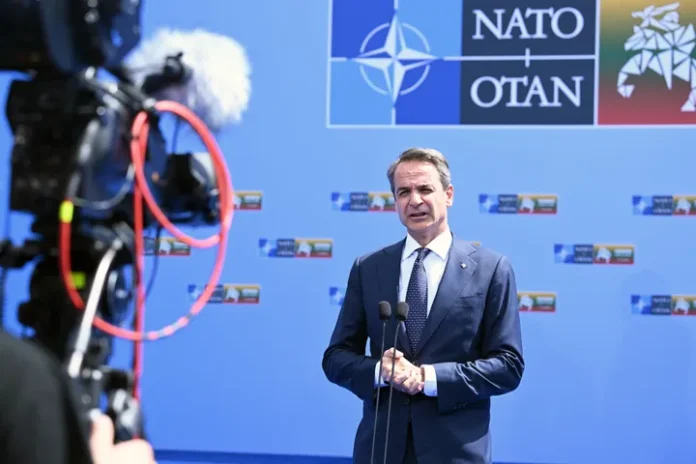
Ως επικίνδυνη χαρακτήρισε ο πρωθυπουργός Κυριάκος Μητσοτάκης την επιλεκτική εφαρμογή της Συμφωνίας των Πρεσπών, σε παρέμβαση του στην Σύνοδο Κορυφής του ΝΑΤΟ, που είναι σε εξέιλιξη.

Στην πρώτη συνεδρία των ηγετών, ο Κυρ. Μητσοτάκης τόνισε μεταξύ άλλων ότι η πρόοδος, η ασφάλεια και ευημερία βασίζονται στο σεβασμό του διεθνούς δικαίου και των διεθνών συμφωνιών. Προηγουμένως ο Πρόεδρος των Ηνωμένων Πολιτειών είχε αναφερθεί στη σημασία των Δυτικών Βαλκανίων για την ασφάλεια της Συμμαχίας, ο Κυριάκος Μητσοτάκης έκανε ειδική αναφορά στη Συμφωνία των Πρεσπών, η οποία, όπως είπε, επέτρεψε τη διεύρυνση της συμμαχίας με την προσχώρηση της Βόρειας Μακεδονίας.

Ο κ. Μητσοτάκης τόνισε ότι η παραβίαση ή η επιλεκτική εφαρμογή της Συμφωνίας των Πρεσπών, θα υποβαθμίσει την αξιοπιστία όλων των προσπαθειών για διευθέτηση των λοιπών εκκρεμών ζητημάτων στα Δυτικά Βαλκάνια και θα θέσει σε κίνδυνο τη σταθερότητα και την ασφάλεια στην περιοχή.

«Πάνω απ όλα, οι συμφωνίες πρέπει να τηρούνται. Αυτό πρέπει να το θυμόμαστε όλοι», τόνισε ο κύριος Μητσοτάκης στην πρώτη παρέμβασή του στη συνεδρία του Συμβουλίου των ηγετών του ΝΑΤΟ.

Νέες προκλητικές δηλώσεις Μίτσοσκι

Ο πρωθυπουργός της Βόρειας Μακεδονίας, Χρίστιαν Μίτσκοσκι, νωρίτερα σε δηλώσεις του κατά την προσέλευσή του στη Σύνοδο Κορυφής του ΝΑΤΟ στην Ουάσιγκτον εξέφρασε την ετοιμότητα της χώρας του να συμβάλει στις σημαντικές αποφάσεις του Οργανισμού, που θα ληφθούν στη διάρκεια της Συνόδου.
Ο Χρίστιαν Μίτσκοσκι απακάλεσε τη χώρα του “Μακεδονία” και την κυβέρνησή του “μακεδονική κυβέρνηση”.

«Ως χώρα είμαστε έτοιμοι να συνεισφέρουμε σε οτιδήποτε αντιπροσωπεύει αξίες. Είμαστε εδώ μαζί με τους συμμάχους μας για να επιβεβαιώσουμε τη δέσμευσή μας, όπως πριν έτσι και στο μέλλον, σχετικά με την προώθηση της ειρήνης, της σταθερότητας και της λειτουργίας του διεθνούς δικαίου» σημείωσε ο Μίτσκοσκι.

«Για εμάς, ως μικρό έθνος, είναι σημαντικό τις ημέρες αυτές να ληφθούν οι σημαντικές εκείνες αποφάσεις που θα διαμορφώσουν το μέλλον της ανθρωπότητας τις επόμενες δεκαετίες, κάτι στο οποίο θα συμβάλουμε και εμείς.

Η Μακεδονία, ως χώρα σκοπεύει να συνεχίσει να λειτουργεί με αυτόν τον τρόπο και να προωθεί τις αξίες. Ως μακεδονική κυβέρνηση θέλουμε να είμαστε δίπλα-δίπλα με τους συμμάχους μας και να επιβεβαιώσουμε το ελευθεριακό πνεύμα του μακεδονικού λαού και των μακεδόνων πολιτών» ανέφερε ακόμη ο Μίτσκοσκι.

Ο Μίτσκοσκι πρόσθεσε πως ως χώρα «παραμένουμε προσηλωμένοι στην εκπλήρωση των υποχρεώσεών μας, δηλαδή τουλάχιστον 2% του ΑΕΠ να επενδυθεί στον εκσυγχρονισμό του Στρατού μας, κάτι που είναι πολύ σημαντικό, γιατί μόνο έτσι θα ακολουθήσουμε τις σύγχρονες τάσεις, στο πλαίσιο της μεγαλύτερης παγκόσμιας αμυντικής συμμαχίας που υπήρξε ποτέ».
75 χρόνια μετά την ίδρυση της Συμμαχίας, οι εταίροι και οι σύμμαχοι βρίσκονται αντιμέτωποι πάλι με μια απειλή σε μια θερμή σύγκρουση στο μέτωπο της Ουκρανίας.

Και έτσι το μήνυμα το οποίο στέλνουν από εδώ και θέλουν να στείλουν, παρά τις όποιες διαφωνίες και διαφοροποιήσεις, είναι ισχυρό μήνυμα στήριξης στην Ουκρανία σε πολιτικό, οικονομικό και στρατιωτικό επίπεδο, είπε για τα F-16 που προαναγγέλθηκε η άφιξή τους στην Ουκρανία.

ΤΕΜΑ: Ευρωπαϊκό Ερευνητικό Πρόγραμμα Έρευνας στην Ανάλυση Μεγάλων Δεδομένων για τη Διαχείριση και Πρόβλεψη Φυσικών Καταστροφών

0

Στις 4 Ιουλίου 2024, έλαβε χώρα με μεγάλη επιτυχία η συνάντηση για την αξιολόγηση της προόδου και των αποτελεσμάτων των πρώτων δεκαοχτώ μηνών του Ευρωπαϊκού Προγράμματος έρευνας και καινοτομίας ΤΕΜΑ (Αξιόπιστη και Εξαιρετικά Ακριβής Χαρτογράφηση και Πρόβλεψη για Διαχείριση Έκτακτων Καταστάσεων). Το Αριστοτέλειο Πανεπιστήμιο Θεσσαλονίκης, ως συντονιστής του έργου, φιλοξένησε τη συνάντηση στο Κέντρο Διάδοσης Ερευνητικών Αποτελεσμάτων (ΚΕΔΕΑ ΑΠΘ). Το έργο ΤΕΜΑ είναι πολύ μεγάλο:

έχει προϋπολογισμό 11 εκ ευρώ και 19 εταίρους απ’ όλη την Ευρώπη.

Λίγα λόγια για το έργο TEMA:

Η Διαχείριση Φυσικών Καταστροφών (NDM, π.χ. για δασικές πυρκαγιές, πλημμύρες, κλπ.) μπορεί να βελτιωθεί σημαντικά μέσω της ανάπτυξης αυτοματοποιημένων μέσων για ακριβή σημασιολογική ανάλυση/χαρτογράφηση και πρόβλεψη της εξέλιξης του φαινομένου σε πραγματικό χρόνο. Το TEMA αναπτύσσει τεχνολογίες αιχμής που διευκολύνουν αυτό το όραμα, στοχεύοντας στην εξαγωγή σχετικών πληροφοριών σε πραγματικό χρόνο από πολλαπλές πηγές ετερογενών δεδομένων με την χρήση αλγορίθμων Τεχνητής Νοημοσύνης (ΤΝ), την πρόβλεψη της εξέλιξης του φαινομένου σε πραγματικό χρόνο και την δημιουργία ενός ενημερωμένου τρισδιάστατου σημασιολογικού χάρτη της πληττόμενης περιοχής. Οι σχετικοί αλγόριθμοι ΤΝ (π.χ., ανίχνευση πυρκαιάς, εύρεση οχημάτων/ατόμων που κινδυνεύουν) κατανέμονται με βέλτιστο τρόπο μεταξύ συσκευών χαμηλής υπολογιστικής ισχύος (π.χ., drones) στο πεδίο της καταστροφής και ισχυρών υπολογιστών που βρίσκονται στο υπολογιστικό νέφος (computing cloud), ίσως και χιλιάδες χιλιόμετρα μακριά. Η ανάλυση των δεδομένων της πυρκαϊάς ή πλημμύρας πραγματοποιείται με βάση Βαθιά Νευρωνικά Δίκτυα (DNNs) ή άλλους αλγορίθμους ΤΝ αιχμής  με αξιόπιστο, διαφανή και εξηγήσιμο τρόπο. Η ανάλυση μεγάλων δεδομένων (π.χ., βίντεο από drones, δορυφορικές εικόνες, εικόνες υπερύθρου, μηνύματα σε κοινωνικά μέσα, μετεωρολογικές μετρήσεις και προβλέψεις) γίνεται με τέτοιον τρόπο ώστε να καλύπτονται οι ανάγκες και του Κέντρου Επιχειρήσεων της Πυροσβεστικής  καθώς και των πυροσβεστικών μονάδων  που επιχειρούν στο πεδίο της καταστροφής. Αυτή η σημασιολογική ανάλυση μεγάλων ετερογενών δεδομένων παρέχει επακριβή και ενημερωμένη αξιολόγηση της εξελισσόμενης κατάστασης και υποβοηθεί τα μέγιστα στην λήψη σωστών και έγκαιρων αποφάσεων για την πρόληψη και διαχείριση της καταστροφής.

Ο παραγόμενος τρισδιάστατος χάρτης της περιοχής της καταστροφής αποτελεί την βάση ενός διαδραστικού περιβάλλοντος που βασίζεται στην Επαυξημένη Πραγματικότητα (XR) και βοηθά και τις πολιτικές αρχές (π.χ., Δήμους, Περιφέρειες) και το  Κέντρο Επιχειρήσεων

να έχουν πλήρη εικόνα του κινδύνου, όταν παίρνουν αποφάσεις διαχείρισης της κρίσης.

Μπορείτε να παρακολουθήσετε το παρακάτω βίντεο https://www.youtube.com/watch?v=CdO0y–AOBDc

που παρουσιάζει τις τεχνολογίες που αναπτύσσονται στο ΤΕΜΑ:


  • αυτόματη ανίχνευση φωτιάς και καπνού
  • μέτρηση της καμμένης έκτασης σε εικόνες drone ή δορυφορικές (π.χ., στην μέγα-πυρκαϊά Έβρου το 2023)
  • μοντελοποίηση και πρόβλεψη της εξέλιξης της δασικής πυρκαϊάς με βάση τα μετεωρολογικά δεδομένα
  • τριδιάστατος χάρτης της περιοχής που περιέχει όλες τις επεξεργασμένες ετερογενείς πληροφορίες

 Οι τεχνολογίες αυτές θα είναι χρήσιμες για τη δράση των αρμόδιων υπηρεσιών διαχείρισης πυρκαγιών.

Επειδή οι τεχνολογίες ΤΝ χρειάζονται πολλά δεδομένα, το έργο ΤΕΜΑ κάνει συλλογή, ανάλυση και δημοσιοποίησή τους για χρήση και από άλλους ερευνητικούς φορείς.

Πέρυσι (2023), συνέλεξε πληροφορίες από τις πυρκαϊές Ρόδου, Έβρου και τις πλημμύρες της Θεσσαλίας. Αν κάποιοι φορείς ή ακόμα και ιδιώτες έχουν

στην κατοχή τους τέτοιο υλικό (φετινό ή παλιότερο) και μπορούν να το διαθέσουν, ευχαρίστως να επικοινωνήσουν με το εργαστήριο Τεχνητής Νοημοσύνης και Ανάλυσης Πληροφοριών ΑΠΘ μέσω email

epatman@csd.auth.gr ή pitas@csd.auth.gr

Περισσότερες πληροφορίες για το ΤΕΜΑ Project μπορείτε να βρείτε εδώ: https://tema–project.eu/

Ιωάννης Πήτας

pitas@csd.auth.gr 6981031009
Συντονιστής έργου ΤΕΜΑ

Καθηγητής του Τμήματος Πληροφορικής Αριστοτελείου Πανεπιστημίου Θεσσαλονίκης
Πρόεδρος της Διεθνούς Ακαδημίας Διδακτορικών Σπουδών Τεχνητής Νοημοσύνης (
AIDA)


Για «κενά στις δικές μας αμυντικές ικανότητες» λόγω Ουκρανίας μίλησε ο Κ. Μητσοτάκης!

4

Τις «αγωνίες» του για την ευρωπαϊκή αμυντική βιομηχανία και τον «κατακερματισμό» της εξέφρασε ο Έλληνας πρωθυπουργός Κυριάκος Μητσοτάκης σε συνέντευξη του…Είναι παράδοξο αν δούμε την εικόνα της κρατικής αμυντικής βιομηχανίας επί των ημερών του.

Στην ίδια συνέντευξη ο κ.Μητσοτάκης παραδέχτηκε ότι η βοήθεια στην Ουκρανία έχει δημιουργήσει κενά «στις δικές μας αμυντικές ικανότητες»! Η παραδοχή έρχεται σε αντίθεση με τις διαβεβαιώσεις που έχει δώσει ο ίδιος και οι υπουργοί του ,όχι μία αλλά πολλές φορές, ακόμη και από το βήμα της Βουλής!

Η συνέντευξη του όπως έχει καταγραφεί από το Αθηναϊκό Πρακτορείο Ειδήσεων:

«Όταν έγινα πρωθυπουργός, το 2019, ουδείς πίστευε ότι θα βρισκόμασταν αντιμέτωποι με έναν πόλεμο στην «καρδιά» της ευρωπαϊκής ηπείρου, όμως αυτό έχουμε να αντιμετωπίσουμε μετά την απρόκλητη εισβολή της Ρωσίας στην Ουκρανία. Πιστεύω ότι η Συμμαχία έχει προσαρμοστεί και έχει αντιμετωπίσει αυτή τη μνημειώδη πρόκληση με τη μεγαλύτερη δυνατή επιτυχία», ανέφερε ο Κυριάκος Μητσοτάκης σε συνέντευξη που παραχώρησε στην Ουάσιγκτον, στο πλαίσιο του NATO Public Forum, στη Nadia Schadlow, μέλος του Hudson Institute και πρώην Αναπληρώτρια Σύμβουλο Εθνικής Ασφάλειας των ΗΠΑ. «Tο 2019 μας απασχολούσε ακόμη το ερώτημα αν αρκετές ευρωπαϊκές χώρες θα τηρούσαν τη δέσμευση του 2%, δηλαδή αμυντικές δαπάνες που ισοδυναμούν με το 2% του ΑΕΠ. Σήμερα οι περισσότερες χώρες έχουν ήδη πετύχει αυτόν τον στόχο και όσες δεν τον έχουν επιτύχει, έχουν δεσμευτεί ξεκάθαρα ότι θα το πράξουν. Η Ελλάδα είναι μία από τις χώρες που ξεπερνούν το επίπεδο του 2% ουσιαστικά από τότε που εντάχθηκαν στη Συμμαχία», σημείωσε ο πρωθυπουργός.

Και πρόσθεσε: «Θα δαπανήσουμε το 3% του ΑΕΠ μας για την άμυνα, εκσυγχρονίζοντας σημαντικά τις Ένοπλες Δυνάμεις μας και κατ’ αυτόν τον τρόπο συμβάλλοντας στις συνολικές δυνατότητες της Συμμαχίας. Οι νέες προκλήσεις, λοιπόν, μάς αναγκάζουν να σκεφτούμε διαφορετικά και ως προς τι σημαίνει αυτό για τη συλλογική ευρωπαϊκή ασφάλεια ως πυλώνα της συνολικής ολοκληρωμένης δομής του ΝΑΤΟ. Πιστεύω ότι αυτή η συζήτηση προχωρά με πολύ γρήγορους ρυθμούς στην Ευρώπη».

Σε ερώτηση για την ευρωπαϊκή ασφάλεια και αν η προσπάθεια της ΕΕ να αυξήσει την άμυνα της είναι συμπληρωματική με το ΝΑΤΟ, ο πρωθυπουργός απάντησε ως εξής: «Κατά την άποψή μου είναι απολύτως συμπληρωματική. Πρέπει να δαπανούμε περισσότερα, αλλά πρέπει επίσης να κινούμαστε πιο έξυπνα όσον αφορά τον τρόπο με τον οποίο κατανέμουμε τις αμυντικές δαπάνες μας. Εξετάζοντας την ευρωπαϊκή αμυντική βιομηχανία, διαπιστώνω μεγάλο κατακερματισμό, δεν βλέπω αρκετή διαλειτουργικότητα. Βλέπω, μερικές φορές, δεν θα έλεγα μη αναγκαίο ανταγωνισμό, αλλά σίγουρα πάρα πολλά οπλικά συστήματα που δεν επικοινωνούν απαραίτητα μεταξύ τους. Πρέπει να δαπανούμε περισσότερα, αλλά πρέπει επίσης να κινούμαστε πιο έξυπνα όσον αφορά τον τρόπο με τον οποίο κατανέμουμε τις δαπάνες μας».

Ο κ. Μητσοτάκης πρόσθεσε: «Πιστεύω ότι σε μια εποχή που η ρωσική εισβολή στην Ουκρανία συνιστά υπαρξιακή απειλή για την Ευρώπη, πρέπει επίσης να είμαστε δημιουργικοί όσον αφορά στην εξεύρεση νέων πηγών χρηματοδότησης προκειμένου να στηρίξουμε τις αμυντικές μας δαπάνες. Δεν αρκεί να βασιζόμαστε μόνο στους εθνικούς προϋπολογισμούς, όπως κάναμε μέχρι σήμερα. Αυτός είναι ο λόγος για τον οποίο υπήρξα ένας από τους ένθερμους υποστηρικτές του ότι χρειαζόμαστε κάποιου είδους ευρωπαϊκό μηχανισμό που θα συμπληρώνει τις αμυντικές δαπάνες που αναλαμβάνουμε σε εθνικό επίπεδο με περισσότερη ευρωπαϊκή χρηματοδότηση. Επομένως, αυτός ο συνδυασμός δημόσιων και ιδιωτικών πρωτοβουλιών, κατά τη γνώμη μου, θα είναι απαραίτητος εάν οικοδομήσουμε έναν ισχυρό ευρωπαϊκό πυλώνα όσον αφορά στις συνολικές αμυντικές δυνατότητες του ΝΑΤΟ».

Ερωτηθείς για αυτό το ευρωπαϊκό ταμείο που προτείνει ο πρωθυπουργός σημείωσε: «Έχουμε υποβάλλει με τον πρωθυπουργό Ντόναλντ Τουσκ πρόταση για ένα εμβληματικό ευρωπαϊκό σχέδιο, ουσιαστικά έναν ευρωπαϊκό «Σιδερένιο Θόλο», ο οποίος θα συμπληρώσει τις υφιστάμενες δυνατότητες αεράμυνας και ο οποίος θα μπορούσε -τονίζω τη διατύπωση «θα μπορούσε», διότι σαφώς δεν έχουμε συμφωνία σε αυτό το στάδιο- να χρηματοδοτηθεί μέσω κοινού ευρωπαϊκού δανεισμού. Όταν αντιμετωπίσαμε την πανδημία, το 2020, λάβαμε την ιδιαίτερα σημαντική απόφαση να συγκεντρώσουμε 750 δισεκατομμύρια ευρώ για να αντιμετωπίσουμε τη κάμψη που προκάλεσε ο COVID στις οικονομίες μας. Τα χρήματα αυτά αξιοποιούνται σήμερα. Πρόκειται για ένα ευρωπαϊκό εργαλείο. Έχω την αίσθηση ότι αν συγκεντρώσαμε 750 δισεκατομμύρια ευρώ για την πράσινη και την ψηφιακή μετάβαση, για να στηρίξουμε την ανταγωνιστικότητά μας και για να προστατεύσουμε θέσεις εργασίας, θα ήταν λογικό να μπορούσαμε να συγκεντρώσουμε ένα σαφώς μικρότερο ποσό, σε ευρωπαϊκό επίπεδο, ώστε να ενισχύσουμε τις ευρωπαϊκές αμυντικές πρωτοβουλίες μας».

Απαντώντας σε επόμενη σχετική ερώτηση ο πρωθυπουργός πρόσθεσε: «Πρόκειται επίσης, ασφαλώς, για τρόπους ενίσχυσης της ευρωπαϊκής αμυντικής βιομηχανίας σε μια εποχή που μιλάμε πολύ για στρατηγική αυτονομία, όταν το θέμα της ανταγωνιστικότητας βρίσκεται στην κορυφή της ατζέντας μας. Ενίσχυση της ευρωπαϊκής άμυνας, της συνεργασίας, της ευρωπαϊκής καινοτομίας. Έχουμε κάνει κάποια πρώτα βήματα σε ευρωπαϊκό επίπεδο προς αυτή την κατεύθυνση αλλά σαφώς πρέπει να κάνουμε περισσότερα».

Ερωτηθείς τι παραπάνω μπορεί να γίνει για τη στήριξη της Ουκρανίας, ο Κυριάκος Μητσοτάκης ανέφερε τα εξής:

«Η Ευρώπη έχει ανταποκριθεί στο καθήκον της και έχει αποδειχθεί αποτελεσματική. Το 2022 πιστεύω ότι πολλοί, συμπεριλαμβανομένων πολλών στη Μόσχα, θα στοιχημάτιζαν στην αδυναμία της Ευρώπης να παραμείνει ενωμένη όσον αφορά την υποστήριξη της Ουκρανίας. Έκαναν λάθος. Η Ευρώπη παραμένει ενωμένη. Παρέχουμε στην Ουκρανία ευρωπαϊκή οικονομική βοήθεια, 50 δισεκατομμύρια ευρώ. Πρόκειται για ένα σημαντικό πακέτο που συμφωνήσαμε πριν από λίγους μήνες. Τα κράτη-μέλη συνεισφέρουν όμως και στις αμυντικές δυνατότητες της Ουκρανίας, στο μέτρο των δυνατοτήτων μας. Θα συνεχίσουμε να το κάνουμε. Και πρωτοβουλίες όπως η πρωτοβουλία της Τσεχίας, για παράδειγμα, έχουν αποδειχθεί πολύ αποτελεσματικές για την παροχή βοήθειας στην Ουκρανία το ταχύτερο δυνατό».

Και πρόσθεσε: «Ταυτόχρονα, όμως, πρέπει να εξετάσουμε τα κενά που έχει δημιουργήσει αυτό στις δικές μας αμυντικές ικανότητες. Όσο κι αν μιλάμε για εξελιγμένα συστήματα, πρέπει επίσης να βεβαιωθούμε ότι διαθέτουμε τα στοιχειώδη. Η Ουκρανία έδειξε πόσο σημαντικά είναι, για παράδειγμα, τα βλήματα 155 χιλιοστών και ότι σε έναν σύγχρονο πόλεμο δεν είναι όλα τόσο τεχνολογικά καθοδηγούμενα, όσο πολλοί πίστευαν. Να διασφαλίσουμε επίσης ότι θα εξορθολογήσουμε την παραγωγή, θα αυξήσουμε τα αποθέματά μας, ενώ ταυτόχρονα θα έχουμε την ικανότητα να στηρίξουμε την Ουκρανία, είναι μια πρόκληση στην οποία πρέπει να αντεπεξέλθουμε».

Ο πρωθυπουργός σημείωσε ότι σημασία έχει η ποσότητα και η ποιότητα ενώ σχετικά με την πρωτοβουλία της Τσεχίας δήλωσε πως έχει αποδειχθεί ότι ήταν αποτελεσματική για τη μεταφορά οπλικών συστημάτων στην Ουκρανία.

«Πολλές χώρες συμμετέχουν. Όπως επισημάνατε, το ζητούμενο πλέον είναι η ταχύτητα και να διασφαλίσουμε ότι οι απαραίτητες συναλλαγές, για παράδειγμα για την πώληση εξοπλισμού, θα πραγματοποιούνται το συντομότερο δυνατό. Μου φαίνεται ότι αυτό θα άξιζε να εξεταστεί περαιτέρω», επισήμανε.

Σε ερώτηση για τις προσδοκίες που έχει για το ΝΑΤΟ από την 75η επετειακή Σύνοδο Κορυφής, ανέφερε: «Καταρχάς, πιστεύω ότι είναι σημαντικό να κάνουμε έναν απολογισμό όσων έχουμε επιτύχει. Το ΝΑΤΟ έχει αποδειχθεί επιτυχημένο επειδή μπόρεσε να προσαρμοστεί και ενίοτε να επανεφεύρει τον εαυτό του. Αυτό ακριβώς πρέπει να κάνουμε και τώρα. Για εμένα, η πιο κρίσιμη πτυχή του ΝΑΤΟ ήταν πάντα η δύναμη της διατλαντικής εταιρικής σχέσης.

Πιστεύω ότι είναι πολύ σημαντικό να παραμείνουμε προσηλωμένοι σε αυτή την αμοιβαία δέσμευση, αλλά και να αναγνωρίσουμε ότι σε μία συμμαχία όλοι πρέπει να κάνουμε αυτό που μας αναλογεί. Δεν υπάρχουν «επιβάτες χωρίς εισιτήριο», και γι’ αυτό η τήρηση της δέσμευσης του 2% είναι τόσο σημαντική, τουλάχιστον για τις χώρες που ήταν πάντα πολύ συνεπείς με αυτόν τον στόχο. Ίσως κάποια στιγμή πρέπει να συζητήσουμε την αύξησή του. Ίσως το 2% δεν είναι αρκετό. Ίσως πρέπει να φτάσουμε στο 2,5% εάν θέλουμε πραγματικά να επιτύχουμε όλα όσα θέλουμε να κάνουμε στο πλαίσιο της Συμμαχίας.

Αλλά το μόνο βέβαιο είναι ότι σε μια εποχή μεγάλης αβεβαιότητας η συμμετοχή σε μια Συμμαχία που είναι ισχυρή, αμυντική και ικανή να μας υπερασπιστεί όλους από εξωτερικές απειλές εξακολουθεί να είναι αμείωτης σημασίας».

https://www.militaire.gr/mitsotakis-oukrania-amyna/
Ο χρήσιμος ηλίθιος

1

Του Απόστολου Διαμαντή

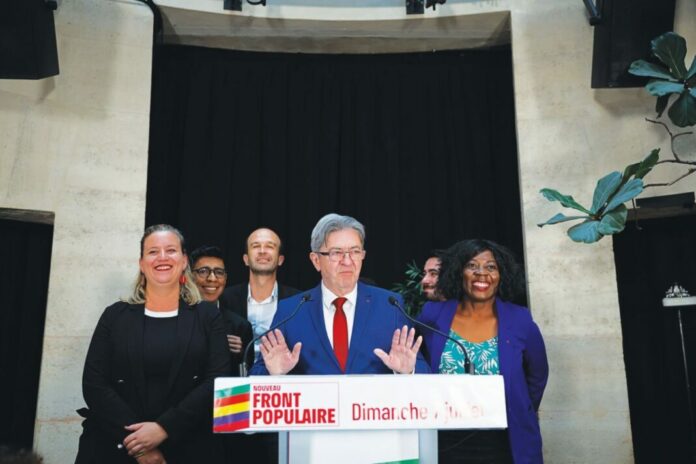
Παρουσιάζεται ως νικητής των εκλογών στη Γαλλία ο Μελανσόν, ενώ ο πραγματικός νικητής είναι φυσικά ο Μακρόν. Ο οποίος, από την τρίτη θέση που βρισκόταν με το κόμμα του Μαζί, με ποσοστό ψήφων 20%, βρέθηκε αιφνιδίως πάνω από το πρώτο κόμμα σε ψήφους, την Εθνική Συσπείρωση, στη δεύτερη θέση δηλαδή και θα ελέγχει πλήρως την επόμενη κυβέρνηση!

Πως έγινε αυτό; Έγινε διότι τον βοήθησε ο Μελανσόν, ο οποίος, ως χρήσιμος ηλίθιος, του προσέφερε πάνω από 100 έδρες, παραιτούμενος από τον πρώτο γύρο και ψηφίζοντας το κόμμα του Μακρόν! Ως αντάλλαγμα πήρε και αυτός άλλες τόσες και παραπάνω από τον Μακρόν που κι αυτός, όπου ήταν τρίτος, έδινε γραμμή για Μελανσόν!

Οι εκλογές όμως τελείωσαν, ο Μακρόν είναι δεύτερος  και ως πρόεδρος θα διορίσει πρωθυπουργό της αρεσκείας του. Όποιον όμως πρωθυπουργό και να διορίσει δεν προβλέπεται ρόλος για τον Μελανσόν, τον χρήσιμο ηλίθιο, που του έδωσε ως δώρο την κυβέρνηση. Διότι, πολύ απλά, ο Μελανσόν δεν ελέγχει το Λαϊκό Μέτωπο. Έχει μόνον 74 βουλευτές. Οι υπόλοιποι του φοβερού Μετώπου είναι σοσιαλιστές, οικολόγοι και άλλοι φιλελεύθεροι αριστεροί της Φον Ντερ Λάιεν.

Οπότε, ο Μακρόν ίσως δώσει εντολή για πρωθυπουργό του Λαϊκού Μετώπου, παραμερίζοντας όμως με μια απλή κίνηση του χεριού του τον Μελανσόν. Θα τους βάλει στη σειρά για να τους διαλέξει έναν-έναν, θα αφήσει τον Μελανσόν που θέλει 150 δισ. το χρόνο για να πληρώνει αυξήσεις και θα διαλέξει κάποιον άλλον. Τον Ολάντ ας πούμε ή την επικεφαλής των οικολόγων. Τέλειο.

Διότι, ο χρήσιμος ηλίθιος δεν έχει πια ρόλο στη νέα κατάσταση στη Γαλλία. Δεν τον θέλει κανένας. Ούτε καν οι συνεργάτες του στο Λαϊκό Μέτωπο. Και έτσι η Γαλλία θα συνεχίσει να κυβερνάται από την ομάδα Μακρόν, με συμπαραστάτες, ποιους άλλους, τους σοσιαλιστές και τους οικολόγους, που είναι, ούτως ή άλλως, τα δεκανίκια της Κομισιόν και των ΗΠΑ.

Όλο αυτό το σκηνικό ο Τσίπρας το παρουσιάζει ως παράδειγμα, ως νίκη του λαού και όλα αυτά τα χαριτωμένα που λένε συνήθως οι αριστεροί πολιτικοί. Ποια νίκη ακριβώς; Πρόκειται να κυβερνήσει ο Μελανσόν; Πώς; Με τις 74 έδρες που έχει; Ή πρόκειται να κυβερνήσει το Λαϊκό Μέτωπο; Πως; Με τις 182 έδρες του; Δεν μπορεί. Πρέπει να συγκυβερνήσει με τον Μακρόν για να έχει πλειοψηφία στην Εθνοσυνέλευση.

Και είναι νίκη της αριστεράς να συνεχίσει να κυβερνάει ο νεοφιλελεύθερος Μακρόν, που αυξάνει τα όρια ηλικίας, που εκπροσωπεί τα συμφέροντα των τραπεζιτών και της ελίτ των Βρυξελλών και των ΗΠΑ; Δεν νομίζω πως αυτό είναι νίκη. Αυτό είναι καθαρή ήττα.

Μια καθαρή ήττα της δήθεν αριστεράς, πρώτα απ΄όλα. Η οποία γελοιοποιείται, κάνοντας συμμαχία με τον Μακρόν, υποτίθεται να φράξει το δρόμο στην ακροδεξιά, στην πραγματικότητα όμως για να αρπάξει όσες περισσότερες έδρες μπορεί, ακόμα και από το χέρι ενός τραπεζίτη.

Μ΄ αυτά και με κείνα, με τις τυχοδιωκτικές πολιτικές συμφωνίες του δευτέρου γύρου, η Γαλλία τινάζεται πολιτικά στον αέρα και θα κυβερνάται από ένα κόμμα του 20%, ενώ ο λαός της θα παρακολουθεί εμβρόντητος, από τη γωνία που θα τον βάλουν και πάλι οι εξελίξεις.

Εάν ο Μελανσόν δεν έδινε σήμα στήριξης στον Μακρόν και άφηνε τους υποψηφίους του να συμμετέχουν στις εκλογές σε όλες τις περιφέρειες, τώρα θα είχε σχηματιστεί πλειοψηφική κυβέρνηση του Εθνικού Συναγερμού με τους γκωλικούς και η Γαλλία θα είχε μια ομοιογενή κυβέρνηση που θα εξέφραζε την πλειοψηφία του εκλογικού σώματος.

Το πολιτικό αποτέλεσμα της αφύσικης συμμαχίας Μακρόν – Μελανσόν θα είναι η γελοιοποίηση της Ανυπότακτης Γαλλίας, ενώ ταυτόχρονα η Λεπέν θα καθίσταται πλέον η μοναδική αντιπολίτευση, εφόσον όλοι οι άλλοι θα συνομιλούν για τον σχηματισμό μιας κυβέρνησης – κουρελού, η οποία δεν θα έχει καν πολιτική νομιμοποίηση, καθώς δεν θα εκφράζει παρά μόνον το 35% (Μακρόν και σοσιαλιστές), ενώ την ίδια στιγμή, ο Μελανσόν, ως χρήσιμος ηλίθιος, θάχει επιστρέψει στη γωνιά του.

https://www.antinews.gr/55866/politiki/o-chrisimos-ilithios/

Πέθανε η Πόπη Κωνσταντοπούλου – Είχε κατασκευάσει το Κωνσταντοπούλειο στην Πάτρα

0

Πέθανε μία από τις σύγχρονες ευεργέτιδες της Πάτρας. Ποια ήταν.

Πέθανε το πρωί της Τρίτης (9/7) στην Κηφισιά η Πόπη Κωνσταντοπούλου, η οποία μαζί με την αδερφή της, Αλίκη Περωτή-Κωνσταντοπούλου, θεωρούνταν μία από τις σύγχρονες ευεργέτιδες της Πάτρας.

Ειδικότερα, σύμφωνα με το pelop.gr, οι δύο αδερφές δημιούργησαν το Κωνσταντοπούλειο Οίκο Ευγηρίας, δαπανώντας για την κατασκευή του 655.000.000 δρχ. (περίπου 2 εκατ. ευρώ).

aderfes_konstantopoulou_5d12d.jpg

*Οι αδερφές Κωνσταντοπούλου

Η Πόπη Κωνσταντοπούλου, νοερά, ήταν καθημερινά παρούσα στο ίδρυμα, παρακολουθώντας τη λειτουργία και τις δράσεις του δημιουργήματός της. Η ίδια, όπως και η αδελφή της Αλίκη, δεν αρκέστηκαν στα χρήματα που κατέβαλαν για την κατασκευή του «Κωνσταντοπουλείου», αλλά τροφοδοτούσαν κιόλας το ίδρυμα κάθε χρόνο με γενναίες δωρεές, συμβάλλοντας καθοριστικά στην εύρυθμη οικονομική λειτουργικότητά του.

Η Πόπη Κωνσταντοπούλου ήταν κόρη του Θόδωρου και της Μαρούλας Κωνσταντοπούλου. Ο πολιτικός μηχανικός πατέρας της μεγαλούργησε επιχειρηματικά μετά τον Β’ Παγκόσμιο Πόλεμο και, κληρονομώντας πλούτο, οι δύο αδελφές δώρισαν μεγάλο μέρος του για θεάρεστα έργα.

Η Πόπη ήταν περισσότερο ταυτισμένη με το «Κωνσταντοπούλειο» Ευγηρείο, ενώ η αδελφή της Αλίκη ήταν εκείνη που ανακαίνισε και ανακατασκεύασε το Νοσοκομείο «Αγία Όλγα» στη Νέα Ιωνία της Αθήνας.

Η κηδεία της θα γίνει αύριο, Πέμπτη (11/7) στο κοιμητήριο της Κηφισιάς.

https://www.ieidiseis.gr/ellada/254343/pethane-i-popi-konstantopoylou-eixe-kataskevasei-to-konstantopoyleio-stin-patra

0

σκίτσο-του-ηλία-μακρή-10-07-24-563119306

Ελληνοτουρκικά: Παράταση στα ήρεμα νερά στο Αιγαίο

1

«Εποικοδομητική» χαρακτηρίζεται η διάρκειας 55 λεπτών χθεσινή συνάντηση του Κυριάκου Μητσοτάκη με τον Ταγίπ Ερντογάν στην Ουάσιγκτον παρουσία των υπουργών Εξωτερικών Γιώργου Γεραπετρίτη και Χακάν Φιντάν.

«Εποικοδομητική» χαρακτηρίζεται η διάρκειας 55 λεπτών χθεσινή συνάντηση του Κυριάκου Μητσοτάκη με τον Ταγίπ Ερντογάν στην Ουάσιγκτον παρουσία των υπουργών Εξωτερικών Γιώργου Γεραπετρίτη και Χακάν Φιντάν και των διπλωματικών συμβούλων των δύο ηγετών, Αννας-Μαρίας Μπούρα και Ακίφ Τσαγατάι Κιλίτς. Το τετ α τετ των δύο ηγετών που ο «καθαρός» του χρόνος ήταν περίπου 30 λεπτά καθώς υπήρχαν και οι μεταφράσεις, επιβεβαίωσε το καλό κλίμα μεταξύ των δύο πλευρών.

Σε θετικό κλίμα η συνάντηση του πρωθυπουργού, που έθεσε και το Κυπριακό, με τον Τούρκο πρόεδρο.

Σύμφωνα με πληροφορίες, κατά τη διάρκεια της συνάντησης συζητήθηκαν θέματα διεθνούς και περιφερειακού ενδιαφέροντος με έμφαση τις τελευταίες εξελίξεις στη Μέση Ανατολή και στην Ουκρανία, ενώ οι δύο ηγέτες προχώρησαν σε σύντομη επισκόπηση των διμερών σχέσεων μετά την τελευταία συνάντηση που είχαν τον περασμένο Μάιο στην Αγκυρα. Ο Ελληνας πρωθυπουργός εξέφρασε την ικανοποίησή του για τη συνεργασία με τις τουρκικές αρχές στην καταπολέμηση της παράτυπης μετανάστευσης, ενώ οι δύο ηγέτες συμφώνησαν στο αμοιβαίο όφελος από τη διατήρηση κλίματος ηρεμίας στις διμερείς σχέσεις. Παράλληλα, συμφώνησαν να εντατικοποιήσουν τη συνεργασία για την επίτευξη του στόχου του διπλασιασιασμού του όγκου των διμερών εμπορικών συναλλαγών, ενώ μίλησαν και για την επόμενη συνάντησή τους που θα πραγματοποιηθεί τον Σεπτέμβριο στη Νέα Υόρκη, στο περιθώριο της Γενικής Συνέλευσης του ΟΗΕ. Αξίζει να σημειωθεί πως ο κ. Μητσοτάκης αναφέρθηκε στο Κυπριακό τονίζοντας ότι 50 χρόνια μετά την τραγωδία του ’74 δεν μπορεί η Κύπρος, κράτος-μέλος της Ε.Ε., να παραμένει διαιρεμένη και επανέλαβε την ανάγκη επανέναρξης των συνομιλιών για την επίλυση του Κυπριακού.

Ελληνοτουρκικά: Παράταση στα ήρεμα νερά στο Αιγαίο-1
 [DIMITRIS PAPAMITSOS/GREEK PRIME MINISTER’S OFFICE/HANDOUT VIA REUTERS]

Κυβερνητικές πηγές έλεγαν μετά τη συνάντηση πως ο Τούρκος πρόεδρος ήταν πιο «ζεστός και άνετος» από κάθε άλλη φορά, αποτυπώνοντας και το κλίμα της συνάντησης. Κυβερνητικές πηγές ήδη πριν από τη συνάντηση, περιέγραφαν το τετ α τετ ως μία ακόμα ευκαιρία επιβεβαίωσης πως οι ελληνοτουρκικές σχέσεις έχουν βελτιωθεί, προσθέτοντας πως σε κάθε περίπτωση «μπορούμε και πρέπει να συζητάμε». Σε ανύποπτο, άλλωστε, χρόνο ο πρωθυπουργός είχε δηλώσει πως θέλει οι συναντήσεις του με τον Τούρκο πρόεδρο «να μην αποτελούν είδηση», καθώς ο διάλογος μεταξύ των δύο πλευρών πρέπει να είναι πάντα ενεργός.

Οι κρίκοι και ο Σεπτέμβριος

Η χθεσινή συνάντηση είχε ουσιαστικά προαναγγελθεί από τον περασμένο Μάιο, όταν ο πρωθυπουργός επισκέφθηκε επίσημα την Αγκυρα. Τότε είχε πει πως η κοινή του παρουσία με τον πρόεδρο Ερντογάν στη Σύνοδο του ΝΑΤΟ «θα είναι μία καλή ευκαιρία για μία σύντομη ανασκόπηση της πορείας των ελληνοτουρκικών σχέσεων», ενόψει μάλιστα και της ήδη προγραμματισμένης συνάντησης που θα έχουν στη Νέα Υόρκη τον ερχόμενο Σεπτέμβριο, η οποία είναι η κρισιμότερη όλων καθώς θα καθορίσει τα επόμενα βήματα του πολιτικού διαλόγου και πού αυτός μπορεί να οδηγηθεί τελικά. Στην ελληνική πλευρά, πάντως, δεν τρέφουν αυταπάτες πως η Τουρκία έχει αλλάξει στάση σε μείζονα ζητήματα, καθώς οι δια-φορές μεταξύ των δύο πλευρών είναι υπαρκτές και διαχρονικές.

Μόλις την επόμενη εβδομάδα και συγκεκριμένα το Σάββατο 20 Ιουλίου, οι κ. Μητσοτάκης και Ερντογάν θα βρεθούν στην Κύπρο για την ίδια επέτειο, με τελείως όμως διαφορετική… οπτική. Ο Ελληνας πρωθυπουργός θα δώσει το «παρών» στις εκδηλώσεις της κυπριακής πλευράς για την εισβολή του Αττίλα, την ώρα που ο Τούρκος πρόεδρος θα είναι στα Κατεχόμενα. Η επίσκεψή του μάλιστα λέγεται πως δεν θα είναι απλά τυπική, αλλά μπορεί να σηματοδοτήσει και κάποιες ανακοινώσεις αναβάθμισης του ψευδοκράτους. Φεύγοντας άλλωστε ο κ. Ερντογάν για την επίσκεψη στην Ουάσιγκτον αναφέρθηκε και στη «Δημοκρατία της Βόρειας Κύπρου», που τη χαρακτήρισε «πλήρες μέλος των τουρκογενών κρατών», τονίζοντας πως «προσπαθούμε για το πώς να φέρουμε τη “Βόρεια Κύπρο” στο σημείο της πλήρους ένταξης». Tόνισε μάλιστα πως ένας στόχος της Τουρκίας είναι να βελτιώσει τις σχέσεις του «προέδρου της Βόρειας Κύπρου» κ. Ersin με τους επικεφαλής αυτών των τουρκογενών κρατών όσο το δυνατόν περισσότερο.

https://www.kathimerini.gr/politics/563120338/ellinotoyrkika-paratasi-sta-irema-nera-sto-aigaio/