
 Yavuz Baydar
Fully aware of the massive changes in global politics that feed deeper turbulence, Turkish president Erdoğan takes the opportunity to cleanse his potential contenders.
20 March
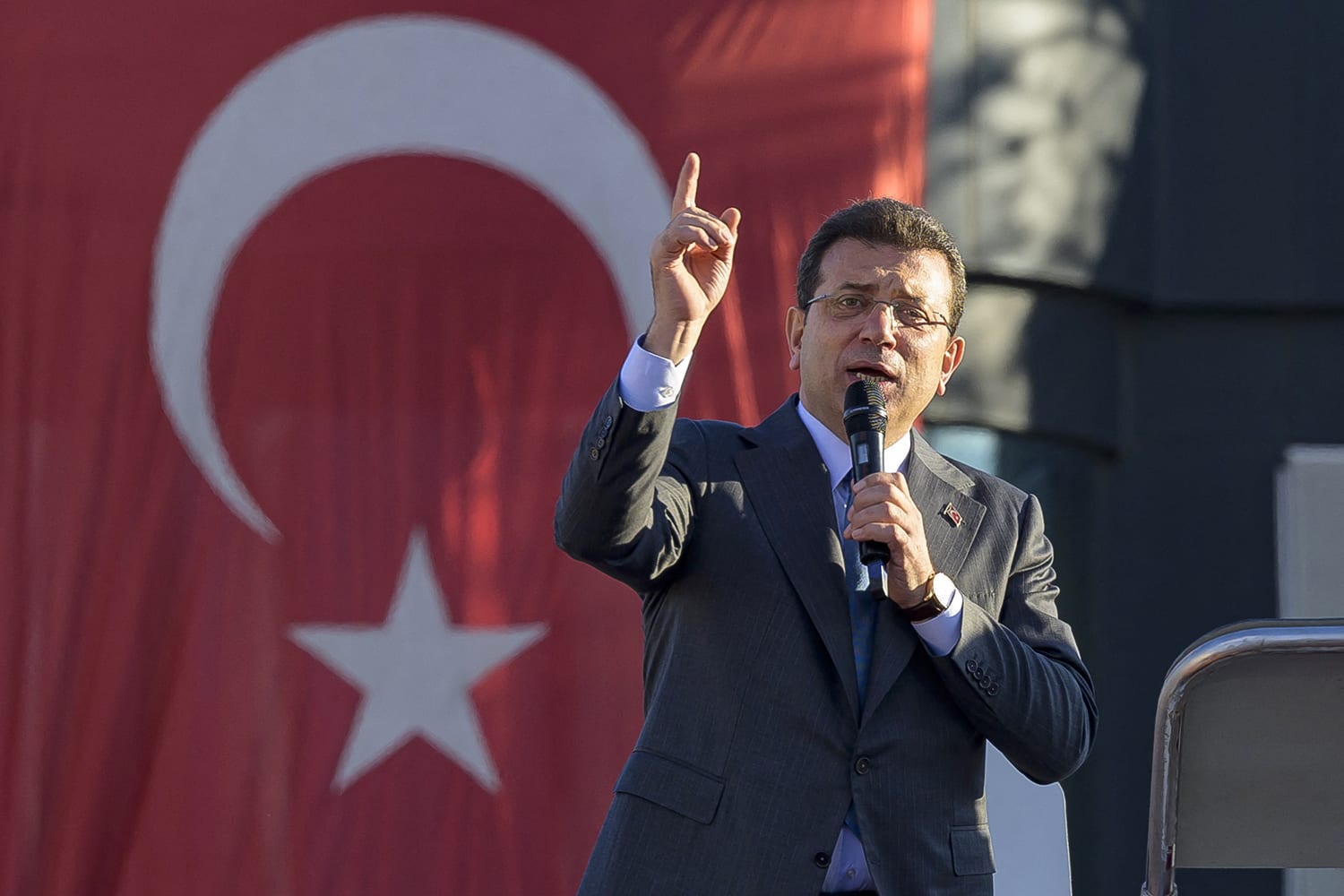
In the early hours of March 19, a massive arrest wave took place in Istanbul. Among more than 85 people, most of them linked with the Municipality of Greater Istanbul, was Ekrem İmamoğlu, a 53-years old popular politician from the secular main-opposition party, the CHP, seen as the most serious challenger to President Recep Tayyip Erdoğan, in the upcoming elections.
The crackdown marks, without a doubt, a new dramatic escalation in crisis-ridden Turkey, where the political battle becomes increasingly assymmetrical, as Erdoğan flexes his muscles for an irreversible power grab. Here is an explainer in what the development signifies and what its consequences are.
- Was the crackdown expected, or has it come as a surprise for the public?
It was, for some time, an “open secret” that the authorities have been busy preparing a comprehensive probe, and even Ekrem Imamoğlu himself lately talked about a move targeting himself. Most recently, financial police (MASAK) raided the offices related to the The Greater Istanbul Municipality and branches, confiscating desktops. The strongest sign of the operation took place yesterday, as the University of Istanbul annulled his diploma, citing alleged irregularities in his 1990 transfer from a private university in northern Cyprus to its faculty of business administration. Having a university degree is a prerequisite for candidacy in presidential elections under Turkish law. So, the crackdown was only a matter of when, rather than if.
- Have Erdoğan’s accusations against Imamoğlu any real basis?
There are two parallel cases, in which Imamoğlu and about 100 people, stand as suspects. One is a large graft probe, which alleges comprehensive fraudulent acts, such as illegally tranferring bribes and under-the-table kickbacks acquired through tenders. Seen from the statement from the office of prosecution, they seem detailed and rather tangible to analyse. Whereas the other file is based on alleged cooperation with what prosecutors call “cooperation with terror networks” such as KCK, a network branch of the PKK, claiming employment of terrorists or sympathisers. This file is purely politically motivated, rather than a judicial one. But, overall, both amount to a move aimed at blocking Imamoğlu from any further political move to challenge Erdoğan in the next presidential elections. In all likelihood, the process has a clear path: it will succesfully lead to, at best, a political ban, if not imprisonment. The subordination of the judiciary under the political executive in Turkey speaks strongly for such outcome.
- Can Imamoğlu beat Erdoğan in the next elections? Is this why Erdoğan is fighting him?
Clearly so. For Erdoğan, as Turkey’s strongman, the objective remains unchanged. That is, to establish, like Aliyev of Azerbaijan, Lukashenko of Belarus or Putin of Russia, a ground for a lifetime presidency. Like all of them, he sees great risks to leave power, anxious of consequences. So, for Erdoğan, it has been a pattern of either integrating potential rivals into his party, or imprison them. One such figure was the popular Kurdish poltician Selahattin Demirtaş, who has been in prison for over 8 years, despite the ruling of the European Court. Next figure is Imamoğlu who, along with the nationalist mayor of Ankara, Mansur Yavaş, seems head-to-head with Erdoğan, according to reliable surveys. But even then, whether or not “the system” — the autocratic structure based on unity of powers — in general would have allowed Imamoğlu to claim victory through ballotbox is another open question.
- What can Imamoğlu do now?
It is certain, he will appeal the “diploma case”, but how the current probes of “organised crime” and “aiding and abetting terror” will develop remains to be seen: they can drag over time. Most likely, given the conjuncture, he will be held in pre-detention. One outcome is that he will be handed a ban on political activity for some years. The more immediate one is that, given the alleged linkage to “terrorist activity”, a government trustee will be appointed in his post as mayor, stripping him of his title. Some argue, optimistically, that he will emerge as a stronger candidate for the race, others have the opposite view. One source — an experienced politician in the centre-right — told me this morning, that Imamoğlu’s greatest mistake was acting hastily. “He is only 53 years old”, the source said. “He has the time vis a vis an aging president, he could have focused on his current work, and waited for his turn.”
- Could we now see another candidate from the opposition?
As it is clear, Erdoğan will do his outmost to run against a weaker, predictable candidates. The most likely figure is, as things develop now, Mansur Yavaş, a low-profile politician in Ankara, with a background from Grey Wolves, of MHP. Other than him, there doesn’t seem to be any other name visible.
- Will this move harm Erdoğan politically and electorally or not necessarily?
There is a high dosage of wishful thinking amongst his critics about “self-harm”, as there is also a quasi-analysis about Erdoğan tangled up in “fear”. These may be misleading to see the objective reality. Having established nearly full control over the state apparatus, judiciary and the media, Erdoğan continues to be confident, especially counting on the international conjuncture as having turned even more to his favour. He had lost some percentages of job approval as of last year, but has regained them mainly thanks to his moves about Syria.
Domestically he has managed to drive a wedge between the two major flanks of the opposition, CHP and pro-Kurdish DEM Party, by offering a “carrot” to the latter, in a series of moves to improve conditions of the jailed PKK leader Öcalan. In reality, his political attacks aim at keeping both parties weakened, and distanced from each other. Nowadays Kurds dream about “peace”, an ambivalent term under current conditions, as the secular Turkish segment is driven more and more into a defensive position. Erdoğan’s strategy in “ruling by chaos” seems so far to be a succesful one.

