


Demetrios Tsailas (ret Admiral)
(He has taught for many years, operational planning, strategy, and security, to senior officers at the Supreme Joint War College. He is a member and researcher of the Institute for National and International Security)
Copyright: @ 2025 Research Institute for European and American Studies (www.rieas.gr) Publication date: 7 December 2025
Note: The article reflects the opinion of the author and not necessarily the views of the Research Institute for European and American Studies
For half a century, the Republic of Turkey has been methodically reshaping its defence establishment, from a dependent importer of Western arms to an increasingly self-sufficient producer and exporter of military technology. Behind this transformation lies not only an industrial strategy, but a calculated political design: to elevate Turkey from a regional middle power into an autonomous pole of influence with the ability to project power across multiple theatres.
The ambition is neither accidental nor improvised. It is the product of accumulated lessons, beginning with the trauma of 1974, when the United States imposed an arms embargo following Turkey’s intervention in Cyprus. That embargo, which lasted until 1978, exposed the fragility of Ankara’s dependence on foreign suppliers. Since then, every Turkish government, and especially the one led by President Erdogan, has sought to ensure that never again would Turkish operations be constrained by the decisions of others.
From Embargo to Empowerment
The response to the 1974 shock took institutional form in the 1980s with the creation of the Undersecretariat for Defence Industries (SSM) and the Armed Forces Foundation (TSKGV). These entities financed and supervised key firms that would later become the backbone of Turkey’s military-industrial complex, ASELSAN for electronics, TUSAS (Turkish Aerospace Industries) for aircraft, ROKETSAN for missiles, and HAVELSAN for software and command systems.
By the early 2000s, under the Justice and Development Party (AKP), this structure matured into a full-fledged national strategy. In 2004 Ankara deliberately shifted away from simple license production, which yielded little technological transfer, toward indigenous design and production of major platforms: the MILGEM corvette, the Altay main battle tank, and the T129 ATAK helicopter, among others.
What began as a project of necessity evolved into a project of prestige? Turkey’s leaders understood that self-reliance in armaments is not merely a question of logistics or economics. It is a statement of sovereignty. The ability to build, maintain and export weapons systems is now presented as evidence that Turkey has regained what Ataturk once described as “complete independence in all matters, political, financial and military.”
The Scale of the Transformation
The figures are impressive. In the early 2000s, Turkey could meet barely 20 per cent of its military needs from domestic production. Today, that figure is said to exceed 75 per cent, with the government publicly aiming for full autonomy by the early 2030s.
Turkey now maintains the second-largest armed force in NATO, numbering roughly 800,000 personnel, and allocates about €20 billion annually to defence, the seventeenth-largest budget globally. Parallel to this, a vast network of over two thousand small and medium-sized enterprises has emerged around the major defence firms, creating a domestic supply chain for aerospace, electronics, munitions and naval construction.
The results are visible. From unmanned systems and guided munitions to naval shipbuilding and space technologies, Turkey is no longer a peripheral participant in the global defence market. In 2024, defence and aerospace exports reportedly reached US $7.2 billion, a 29 per cent increase in one year, making Turkey the world’s eleventh-largest arms exporter and the fourth supplier to sub-Saharan Africa between 2019 and 2023.
The Drone as a Symbol of Transformation
Nothing illustrates this ascent better than the Turkish drone revolution. The Bayraktar TB2 and Akıncı systems have become the emblem of Ankara’s new strategic identity: affordable, combat-proven, and domestically produced.
Deployed in Syria, Libya, Nagorno-Karabakh and Ukraine, these platforms have demonstrated not only technological credibility but political utility. They provide Turkey with influence in conflicts far beyond its borders and offer foreign clients, particularly those unable to afford Western systems, a capable and politically flexible alternative.
In effect, the drone has become a tool of diplomacy. Each export contract deepens bilateral ties, opens markets for other Turkish goods, and symbolically asserts that Turkey has joined the ranks of countries capable of producing decisive military technology.
A State-Anchored Industrial Ecosystem
Contrary to the liberal models of Western economies, Turkey’s defence industry operates through a state-anchored network. Large public or semi-public enterprises act as national champions, supported by government-directed R&D funds and export promotion mechanisms. The Presidency of Defence Industries (successor to the SSM) acts as a central planner, coordinating procurement, financing, and technological development.
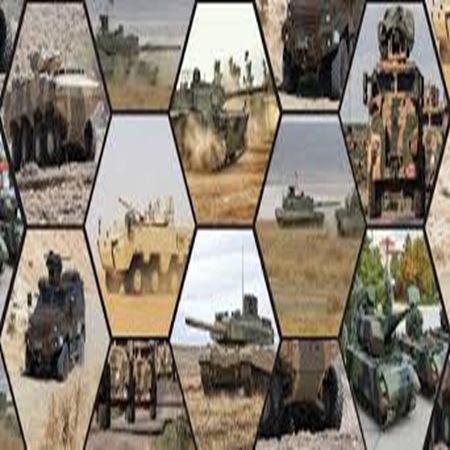
This top-down approach allows Ankara to align industrial projects directly with geopolitical objectives. When the armed forces identify an operational need, the political system mobilizes to create a domestic solution. The Anadolu amphibious assault ship, the Kaan (TF-X) stealth fighter, and a series of new armored vehicles and missile systems all emerge from this fusion of political will and industrial capacity.
At the same time, the system has created a web of SMEs that depend on state contracts, reinforcing political loyalty and ensuring that the defence sector serves as both a strategic and an economic instrument.
Defence Industry as Vector of Power
In our previous analysis, we describe Turkey’s armament policy as a “vector of power.” Indeed, in Ankara’s worldview, industrial autonomy equals geopolitical independence.
Turkey’s expanding export map, from Azerbaijan to Pakistan, from Qatar to several African states, offers tangible dividends: foreign currency, prestige, and influence. By supplying weapons to partners across diverse regions, Turkey gains access to new military bases, training agreements, and diplomatic leverage.
In Africa, Turkish UAVs and armored vehicles are rapidly displacing older European systems. In the Middle East, they provide a counterbalance to Western reluctance to transfer technology. And within NATO, they give Turkey a unique voice: a member that is both consumer and producer, operating within the Alliance but not constrained by it.
Limits and Contradictions
Yet the narrative of total autonomy conceals persistent limitations. Many Turkish systems still rely on imported subsystems, engines, sensors, and high-end components, particularly from Western or East-Asian suppliers. Export restrictions on such parts have occasionally slowed projects, as seen with the Altay tank’s engine procurement.
Moreover, Turkey’s economic volatility poses structural challenges. High inflation, currency depreciation, and constrained foreign investment make long-term financing of advanced R&D more difficult. Maintaining simultaneous production of sophisticated aircraft, naval and land systems may prove unsustainable without external partnerships or technology transfers.
Finally, while defence exports bring prestige, they also create diplomatic exposure. Supplying arms to volatile regions risks entanglement in conflicts and reputational costs, particularly when Turkish systems are used in controversial operations.
Implications for the Eastern Mediterranean and Beyond
For Greece and other regional actors, Turkey’s industrial assertiveness must be read not simply as a commercial phenomenon but as an extension of strategic doctrine. The ability to design and produce weapons independently allows Ankara to act with greater freedom from NATO consensus and to sustain prolonged operations in multiple theatres.
This transformation also has psychological and political dimensions: it reinforces domestic narratives of national resurgence and self-reliance, consolidating public support for an active foreign policy.
In the coming decade, Turkey’s defence industry will likely continue to expand, targeting high-technology domains such as space, cyber, and artificial intelligence. The country’s leadership sees industrial sovereignty as inseparable from strategic sovereignty. For Ankara, the factory is as much a battlefield as the front line itself.
Conclusion
Turkey’s evolution from dependency to self-reliance in defence production represents one of the most significant strategic shifts in the post-Cold War Mediterranean. It is not merely a technological success but a geopolitical statement.
By constructing an integrated defence-industrial base, Turkey has multiplied its options and reduced external constraints. Its leaders now wield industry as an instrument of diplomacy and deterrence, a soft power with hard edges.
Yet ambition always brings risk. The quest for full autonomy can strain resources and provoke strategic overreach. For neighboring states and allies, understanding this dual nature, confidence mixed with constraint, is essential.
The Turkish case reminds us that in the modern era, power is no longer measured solely by the number of divisions or ships, but by the capacity to design, build and sustain them. In that respect, Turkey has indeed displayed its ambitions. The challenge for the rest of us is to interpret them with clarity, prudence, and strategic foresight.

