

 by Roie Yellinek
BESA Center Perspectives Paper No. 699, December 27, 2017
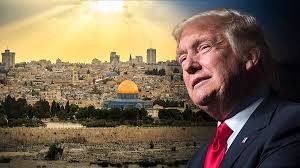
EXECUTIVE SUMMARY: While he was on the campaign trail, Donald
Trump promised to recognize Jerusalem as the Israeli capital and start plans
to move the US embassy from Tel Aviv to Jerusalem. On December 6, 2017,
he made good on that promise. Like media elsewhere around the world,
Chinese newspapers – which express the positions of the central government
in Beijing – had much to say on the matter. The Chinese responses cast light
on two areas: Israeli-Chinese relations and Chinese foreign policy towards
the greater Middle East.
On December 6, 2017, US President Donald Trump signed a declaration that
said, “We finally acknowledge the obvious: that Jerusalem is Israel’s capital.”
In doing so, he overturned the traditional evasion of US presidents of
Congress’s 1995 decision to transfer the US embassy to Jerusalem. Trump went
on to say: “This decision is not intended, in any way, to reflect a departure from
our strong commitment to facilitate a lasting peace agreement…The United
States remains deeply committed to helping facilitate a peace agreement that is
acceptable to both sides.”
Trump is not the first world leader of late to have taken up the status of
Jerusalem. In his speech to the Arab League on January 22, 2016, Chinese
President Xi Jinping said, “China supports the peace process in the Middle East
and the establishment of a Palestinian state with East Jerusalem as its capital.”
Xi reiterated this position during the visit of Palestinian Authority President
Mahmoud Abbas to Beijing in July 2017.
The Russian Foreign Ministry also addressed the matter. In a statement issued
on April 5, 2017, it said: “We reaffirm our commitment to the UN-approved
principles for a Palestinian-Israeli settlement, which include the status of East
Jerusalem as the capital of the future Palestinian state. At the same time, we
must state that in this context we view West Jerusalem as the capital of Israel.”
Why did Trump’s statement draw more attention than either of those two prior
statements? There are several reasons. Trump’s statement, while recognizing the
situation on the ground and leaving East Jerusalem’s future reliant on IsraeliPalestinian
agreement, is innovative in that it refers to Jerusalem as the capital of
Israel and not as a common capital. Also, the two previous statements were more
declarations than action plans. Trump’s statement, by contrast, took the first step
towards physically moving the US embassy from Tel Aviv to Jerusalem.
About Trump’s statement, Israeli PM Benjamin Netanyahu said: “This is a
historic day. It’s rare to be able to speak of new and genuine milestones in the
glorious history of this city. Yet today’s pronouncement by President Trump is
such an occasion.” Other responses were sharply negative. Abbas accused
Trump of “violating international resolutions and bilateral agreements,” and of
“reward[ing] Israel for denying agreements and defying international
legitimacy that encourages it to continue the policy of occupation, settlement,
apartheid and ethnic cleansing.” Saeb Erekat, the PLO/PA chief peace
negotiator said: “The two-state solution is over. Now is the time to transform
the struggle for one state with equal rights for everyone living in historic
Palestine, from the river to the sea.”
Most countries and international organizations opposed the move, while some
remained indifferent. The Chinese media, which generally expresses the position
of the central government in Beijing, devoted many articles to the subject.
The Chinese responses are interesting in two ways. First, they provide some
insight into the extent to which the American declaration will affect IsraeliChinese
relations. Second, they shed light on the possibility of movement in
Chinese foreign policy towards the Middle East.
Chinese reporting on the declaration came in two forms: quotes from foreign
entities and comments by Chinese officials.
The Chinese media turned to many Middle Easterners on the day of and the
days immediately following Trump’s announcement. Those sources almost
uniformly concurred that the declaration would severely damage the peace
process between Israel and the Palestinians, with some even warning of
potential harm to the stability of the global arena (as did Iraqi Minister of
Foreign Affairs Ibrahim Jafari). They called for a boycott on the US and Israel
and an escalation of the Arab struggle against Israel, and even demanded that
the EU recognize the Palestinian state as a response.
In addition to quotes from Arab officials, the Chinese media offered
elaborations on the official status of Jerusalem. Those elaborations were largely
consistent with the Palestinians’ preferred interpretation of reality. For
example, emphasis was placed on Israel’s having taken Jerusalem by force
twice: once in 1948 when the west side was taken, and then in 1967 when the
city was unified. The Chinese media stated repeatedly that the designation of
Jerusalem as the Israeli capital violates international law.
Chinese Foreign Ministry Spokesman Geng Shung said: “The status of Jerusalem
is sensitive and complicated. [China is] urging all parties concerned to exercise
caution for peace and tranquility in the Middle East…all parties concerned
should exercise caution and avoid rocking the basis for the settlement of the
Palestinian issue, which may trigger a new regional confrontation. China firmly
supports the Middle East peace process and the just cause of the Palestinian
people to restore their legitimate rights and interests.”
In another statement, the Chinese Ministry of Foreign Affairs said Beijing
supported the unified struggle, led by the UN, against terrorism, with the
purpose of restoring order and stability to the region.
The China Daily opened one of its articles with these words: “In a welcome move
to some and a controversial move to others, US President Donald Trump is
reportedly expected to recognize Jerusalem as Israel’s capital later this week. Any
such announcement has inflammatory potential in an already volatile region.”
The Global Times, known for its nationalist positions, took the same approach.
In an editorial entitled “Trump kicks the hornet’s nest, again,” it criticized the
declaration. “This latest Trump decision will turn to rubble years of diplomatic
peace efforts between Palestine and Israel. This also means the mediator role
the US government has been playing for years between Palestine-Israel
relations has hit the ground hard.” It went on to state that “Trump’s action offers
zero benefits for his so-called strategy to ‘go all out on economic development'”.
The editorial further stated that Trump believes he and his administration can
do whatever they want and the rest of the world will stand aside. After this, the
paper wondered, what might be Trump’s next move? Will he use American
power against North Korea? Will he use military force to create democratic
reforms in places and countries that refuse to accept the American way?
The South China Morning Post reported that following the Trump declaration, the
Chinese intend to invite Israeli and Palestinian representatives to a joint meeting
to discuss ways to reach a peace agreement. The article quoted Chinese Foreign
Minister Wang Yi, who reiterated Chinese support for the establishment of a
Palestinian state with East Jerusalem as its capital. He added that China would
“continue playing a constructive role towards the resolution of the PalestinianIsraeli
issue.” The article pointed out that in 2013, when the Chinese hosted
Netanyahu and Abbas in the same week, Beijing offered to hold a summit, a
proposal that was not implemented.
The central principles underpinning the Chinese response to the declaration
were opposition to US hegemony, one-sided actions, and interference by one
country in other countries’ affairs; as well as an aspiration to keep the global
system stable. These are hardly a surprise, as they are in line with the tenor of
Chinese foreign policy for the past several decades. Beijing’s primary goal – the
preservation of stability to support economic development – brings it down
firmly against the declaration. The Chinese consider it both needless and capable
of prompting conflict in an area already plagued by disorder.
The Chinese, who usually support the Palestinians in their ongoing dispute
with Israel, are continuing to do so in response to Trump’s declaration. This is
largely a practical matter: the Palestinians are backed by Arab states that are
large exporters of crude oil and natural gas, and China needs those resources.
Moreover, Israel and China have developed a close relationship over the past
two-and-a-half decades that has come at no cost to Beijing’s relations with the
Arab world, so it sees no reason to make any changes. The Chinese approach
to foreign policy is to do business with anyone who is willing to engage with
it, politics notwithstanding. Trump’s declaration is unlikely to change this.
The Chinese position in the Middle East at large is expected to remain the same,
and Trump’s statement should not lead to changes in Beijing’s policy towards
the Israeli-Palestinian issue. For many years, China has had a special envoy to
the region and has occasionally raised the Israeli-Palestinian issue in talks with
official regional representatives. But the envoy never did anything beyond
meet with the parties. The Chinese approach is to allow the opponents to
attempt to resolve their own disputes, with Beijing getting involved only if both
sides express interest in such mediation. Recent statements by Chinese officials
suggest that that approach will continue.
Trump’s recognition of Jerusalem as Israel’s capital will have little impact on
Israeli-Chinese relations. The official Chinese view is that Israel is not, after all, at
fault for what happened – Trump is. In addition, the Chinese president, who
stated during the last conference of the ruling party as well as on other occasions
that China must focus on development and modernization, sees Israel as a
primary source of innovation that could aid his country. The large Chinese
investments in the Israeli high-tech industry indicate that Xi and the rest of the
Chinese leadership will not abandon their relations with Israel so easily.
Roie Yellinek is a doctoral student in the department of Middle East studies at Bar-Ilan
University, a fellow at Kohelet Policy Forum, and a freelance journalist.
BESA Center Perspectives Papers are published through the generosity of the Greg Rosshandler Family
Trump’s Recognition of Jerusalem: The View from Beijing

