

 Justina Uriburu
Justina Uriburu is a Lecturer (Assistant Professor) in International Law at the University of Manchester and Co-Director of the Manchester International Law Centre. She is an Editor of EJIL: Talk!…

Julian Arato
Julian Arato is a Professor of Law at the University of Michigan Law School. He is a Co-Editor of EJIL:Talk! and a member of the EJIL Executive Board.
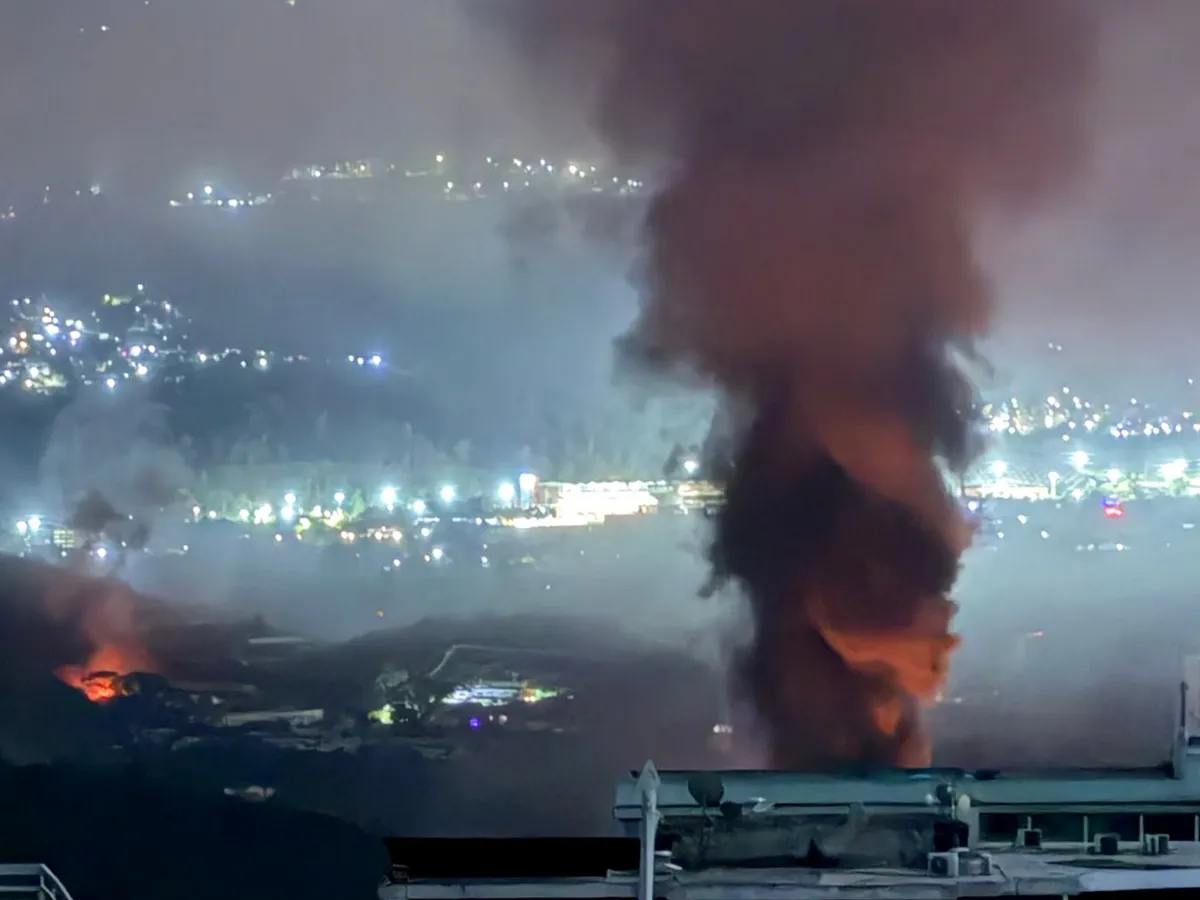
Early on Saturday morning, 3 January, the United States attacked Venezuela. Aerial strikes were carried out in Caracas, Miranda, La Guaira, and Aragua, alongside covert operations conducted by special forces on the ground – actions later described by President Donald Trump as ‘an assault like people have not seen since World War II’. From an operational standpoint, the attack appears to have been a complete success: US forces apprehended and extracted President Nicolás Maduro and his wife, Cilia Flores, without US casualties. Numerous Venezuelans, however, were reported to have been killed in the operation, including scores of civilians. Hours later, the United States unsealed an indictment in the Southern District of New York, charging Maduro and several other individuals, including his wife and son, with drug-related offences as well as the possession of machine guns and destructive devices. Capping the episode in a late-morning press conference at Mar-a-Lago, President Trump announced that the United States would ‘run the country’ until a ‘safe, proper and judicious transition’ could take place.
The fact is that President Trump’s attack on Venezuela was plainly illegal. It amounted to a flagrant and grave violation of the fundamental prohibition on the use of force enshrined in Article 2(4) of the United Nations Charter, and a severe breach of US law. None of this seeks to convey sympathy for, or endorsement of, the Maduro administration, whose authoritarian practices are well documented. But the illegality of the conduct of the United States does not hinge on the character or track record of the government whose leadership it has sought to remove.
Precisely because the attack was manifestly unlawful, legal analysis cannot, on its own, exhaust the explanation of these events, nor can it predict the course they may take. This does not render legal analysis irrelevant. On the contrary, such a task remains essential for understanding how international law is invoked, bent, or disregarded as an instrument of power. At this stage, international law also provides a benchmark against which to assess other States’ reactions as the situation unfolds, including in the context of ongoing criminal proceedings and future engagement of the United States with Venezuela. Crucially, the manner in which States across the world respond to US actions will likely shape international law for years to come – for the better or very much for the worse.
The first part of this post situates the attack on Venezuela within the longer trajectory of US practice in the Americas; it then reconstructs and examines the justifications provisionally advanced in the case of Venezuela. The second part turns to the personal situation of President Maduro and his wife, focusing on the procedural barriers that may bear upon their criminal prosecution in the United States. The third part zooms out again to address perhaps the most arresting element of the Mar-a-Lago press conference: the announcement that the United States will ‘run’ Venezuela and exploit its oil reserves through American companies. We leave important questions concerning the legality of these actions under US law to others; likewise, further analyses of the many and complex international law issues of this episode can be found here and here.
(1) Venezuela – a target of ‘American dominance in the Western Hemisphere’
In an important sense, the attack on Venezuela represents a sharp break in US foreign policy. The United States has largely eschewed the language of international law in characterising its attack on Venezuela, and has made no effort at all to act multilaterally. At the same time, however, the Trump administration’s policy toward Venezuela exhibits significant continuities with past US practice in Latin America and the Caribbean. Even within the era of the UN Charter – with its unequivocal prohibition on the use of force except in self-defence or under the authorisation of the Security Council – the United States has repeatedly intervened in the region, through a combination of military action, the funding of paramilitary groups, and support for coups d’état, including against democratically elected presidents.
One antecedent stands out as a particularly close historical parallel. In 1989, the US military abducted the ruler of Panama, General Manuel Noriega, in the context of an invasion of the country. Prior to the invasion, Noriega had been criminally indicted in the United States for his role in the importation of cocaine into US territory. Following his abduction, Noriega served seventeen years in US custody before being extradited to France and subsequently returned to Panama, where he remained imprisoned until his death. Thirty-six years ago, the United States relied on a combination of arguments: (a) the right to self-defence; (b) the protection of the integrity of the Panama Canal under the Panama Canal treaties; and (c) the promotion of democracy. It also referred to its objective of seizing and arresting Noriega, an indicted drug trafficker.
These grounds were widely regarded as spurious at the time, a view that we share (see, for example, here and here). First, there had been no armed attack against the United States, nor any imminent threat capable of triggering the right of self-defence. Second, the Panama Canal treaties had not been breached – and, in any event, a breach of the instruments would not have authorised unilateral military intervention. Third, and finally, international law does not recognise a unilateral right to use force to promote democracy. Moreover, it could not be said, then or now, that international law permits a State to forcibly enter the territory of another State to extract an individual for the purpose of asserting domestic criminal jurisdiction. The attack on Panama, like this weekend’s attack on Venezuela, was simply illegal. In fact, several of these historical arguments have since become textbook examples of impermissible justifications under the jus ad bellum.
In the context of the current attack on Venezuela, the United States has not yet articulated a final and comprehensive legal justification for its actions. This may change as US officials settle on an explanation in the coming days. For the time being, however, justificatory exercises remain a moving target. Secretary of State Marco Rubio suggested that the operation constituted a lawful effort to take custody of accused criminals (Maduro and his wife), for which a degree of armed force was necessary to ensure the safety of US personnel, echoing justifications used in the apprehension of General Noriega. Meanwhile, during the press conference, President Trump obliquely referred to several additional potential justifications. First, he referred to the claim that drugs originating in Venezuela had killed ‘countless Americans’, an assertion that has been contested in the media (see, for example, here and here). However, as recently discussed on EJIL: The Podcast!, transnational drug trafficking has never been regarded in international law as constituting an armed attack. The causal chain required to characterise such activity as an armed attack against the United States would have to be stretched beyond recognition, resting on multiple factual assumptions that remain unproven. President Trump further invoked the dangers Maduro was said to pose to Venezuela, the region, and to the United States, claiming that he had ‘waged a ceaseless campaign of violence, terror and subversion against the USA’. He also appeared to connect the attack to assertions that Venezuela has sent dangerous individuals into the United States (including prison gangs and persons released from mental institutions), that it had seized American property and oil infrastructure, and that it had acquired weapons capable of threatening US interests and lives. None of these circumstances, taken individually or cumulatively, provides a legal basis for the use of force under international law.
Above all, the response to the threats Venezuela was said to pose to the United States was distinctively couched in a newly launched, overarching foreign policy for the region, one that revives older doctrines of continental power. In Saturday’s press conference, President Trump declared that ‘American dominance in the Western Hemisphere will never be questioned again’. This posture will not surprise those who have read the recently released National Security Strategy, in which the nineteenth-century Monroe Doctrine has been resuscitated through what is now termed the ‘Trump Corollary’. In its original form, the Monroe Doctrine proclaimed that European colonisation and political intervention in the Western Hemisphere would be perceived as a threat to the security of the United States. Its later articulation under President Theodore Roosevelt asserted a corresponding US power to intervene as a regional police force. In the National Security Strategy, this administration has now vowed to ‘restore American preeminence in the Western Hemisphere’, to ‘protect our homeland and our access to key geographies throughout the region’, and to ‘deny non-Hemispheric competitors’ the ability to control strategically vital assets.
Much has been written about the Monroe Doctrine; for the purposes of this post, it suffices to recall that it has long been regarded as incompatible with the principles of self-determination, the prohibition of the use of force, territorial integrity, and the principle of non-intervention. These are bedrock principles of modern international law. Moreover, within the Americas, they have been progressively codified in rejection of the Monroe Doctrine.
(2) Can Maduro and his wife be prosecuted in US territory?
Regardless of the illegality of the use of force against Venezuela, a separate and narrower question arises: can Nicolás Maduro and his wife be criminally prosecuted in US territory? Answering this question has little to do with the serious, systematic, and widely condemned authoritarian practices that have characterised the Maduro administration. It turns, instead, on the rules governing the immunities and inviolability of State officials, as well as on the limits of States’ enforcement jurisdiction.
Immunity
To begin with, it is well established that, as President of Venezuela, Nicolás Maduro would enjoy immunity ratione personae (also known as personal immunity) from the criminal jurisdiction of foreign States, as well as inviolability from measures of physical constraint. Scholarship has long debated whether exceptions exist to this form of immunity, applicable only to the so-called troika (Heads of State, Heads of Government and Ministers for Foreign Affairs). Within the United Nations, however, diplomatic practice appears to have converged on a negative answer. The International Law Commission, which has featured the question of the immunity of State officials from foreign criminal jurisdiction in its programme of work since 2007, does not currently identify any extant exceptions to immunity ratione personae.
The United States could contend that Maduro is not the lawful president of Venezuela, pointing to his illegitimate electoral victory in 2024. Similarly, the United States may argue that, as it does not subjectively recognise Maduro as President of Venezuela, he is not entitled to the immunities attached to that office within the United States. Statements by Secretary of State Marco Rubio suggest that the United States may press these arguments. However, both are fairly shaky. As an objective matter, even as the legitimacy of the most recent presidential elections in Venezuela was widely contested, what matters under international law is which entity exercises effective control over the territory (see, for example, the Great Britain/Costa Rica arbitration and Lauterpacht’s analysis at 87–88). The Maduro administration retained effective control over the territory until his forcible removal; likewise, it continued to represent Venezuela before the United Nations. One might question whether this is the right position, or whether contemporary international law is too protective of dictators and tyrants; nonetheless, under the dominant view of the contemporary law of immunities, Maduro would seem entitled to Head of State immunity before US courts. By contrast, the argument that this immunity can be overcome by unilateral non-recognition cannot be reconciled with the idea of legal immunities at all.
The position of Cilia Flores, Maduro’s wife, calls for a different analysis. Since 2015, she has served as a deputy in the National Assembly of Venezuela. State officials who do not enjoy personal immunity, as is her case, may nevertheless benefit from immunity ratione materiae (also known as functional immunity) in respect of acts performed in an official capacity. The International Law Commission has been engaged in examining possible exceptions to this form of immunity. While this work has yet to be finalised, the draft provisions presently under discussion do not include drug trafficking among the crimes for which immunity ratione materiae would be excluded (see here).
Legal consequences of forcible kidnapping
A further procedural obstacle arises from the manner in which Maduro and his wife were brought to US territory. Under international law, the exercise of enforcement jurisdiction on the territory of another State requires either the consent of the territorial State, which was not given in this case, or a permissive rule of international law, which does not exist here. The unconsented exercise of coercive powers on Venezuelan territory therefore constitutes an internationally wrongful act in its own right. It is also accepted that the abduction of an individual without the consent of the State on whose territory that person was located violates international human rights law, insofar as deprivation of liberty must occur only in accordance with procedures established by law.
US judicial practice may nevertheless be invoked as a means of circumventing this twofold problem. Most international lawyers will recall the case United States v. Alvarez-Machaín, in which the Supreme Court of the United States held that the forcible abduction of a Mexican national from Mexican territory by US Drug Enforcement Administration agents did not preclude his criminal prosecution before the US courts. The manner in which the defendant had been brought before the US courts was deemed irrelevant to their capacity to exercise jurisdiction, a position commonly encapsulated in the maxim male captus, bene detentus.
The existence of legal precedent within the United States does not mean that male captus, bene detentus is generally accepted under international law. The reactions to Alvarez-Machaín are illustrative. For example, the Inter-American Juridical Committee observed that, by upholding the jurisdiction of US courts to try Alvarez-Machaín, the United States had disregarded its obligation to return him to the State from whose jurisdiction he had been removed (see CJI/RES.II-15/92, ‘Legal opinion on the decision of the Supreme Court of the United States of America’). The Committee further warned that, if the reasoning of the judgment were carried to its logical conclusion, the ‘international juridical order would be irreversibly damaged by any state that attributes to itself the power to violate with impunity the territorial sovereignty of another state.’ It also underscored the incompatibility of abduction with the right to due process, a right protected by international law regardless of the gravity of the crimes alleged.
This reaction was not isolated. In the aftermath of the judgment, a coalition of Latin American States, together with Spain, addressed a letter to the United Nations expressing the view that it would be desirable for the International Court of Justice to render an advisory opinion on the conformity with international law of acts involving the extraterritorial exercise of a State’s coercive power and the subsequent exercise of its criminal jurisdiction. The matter was placed on the agenda of the Sixth Committee of the General Assembly. Although it was ultimately never taken up, this episode revealed the absence of widespread agreement with the approach followed in US courts.
(3) A US-run Venezuela?
It remains unclear if the United States actually intends to establish a fully-fledged military occupation of Venezuela; although President Trump asserted that the United States would ‘run the country’, subsequent statements have been more evasive on this point. Should this nevertheless be the case, Article 21 of the Charter of the Organization of American States, by which the United States is bound, would be directly engaged. That provision stipulates that: ‘The territory of a State is inviolable; it may not be the object, even temporarily, of military occupation or of other measures of force taken by another State, directly or indirectly, on any grounds whatever. No territorial acquisitions or special advantages obtained either by force or by other means of coercion shall be recognized.’
The United States would be further subject to a robust set of international legal rules under the Fourth Geneva Convention and customary international law. In particular, it would be barred from profiting from the exploitation of Venezuelan natural resources, including Venezuelan oil. The International Court of Justice has recently clarified the limits imposed by international law on the conduct of occupying powers. In its advisory opinion on the Legal Consequences arising from the Policies and Practices of Israel in the Occupied Palestinian Territory, including East Jerusalem, the Court held that ‘the use by the occupying Power of natural resources must not exceed what is necessary for the purposes of the occupation’ and that such use ‘must be sustainable, and it must avoid environmental harm.’ [¶124] The Court further observed that policies of resource exploitation contrary to the law of occupation ‘could be contrary to the principle of permanent sovereignty over natural resources.’ [¶125]
If, by contrast, the United States were to seek to exercise control over Venezuela’s domestic affairs through coercion, influence, or the manipulation of the standing authorities – that is, without deploying ‘boots on the ground’ – the principle of non-intervention would come into play. That principle, enshrined in customary international law, is also robustly articulated in Articles 19 and 20 of the OAS Charter. Such a mode of engagement would be rather unsurprising in light of recent practice in the region, in which the Trump administration has resorted to the threat of specific harms to induce particular forms of behaviour from other governments (see, for example, here, here, and here).
Conclusion
The attack on Venezuela and the abduction of Nicolás Maduro and his wife to stand trial in the United States represent serious breaches of international law. The United States has barely sought to justify its actions in legal terms, opting instead to lean on the language of raw power, regional dominance, and national interest. International legal norms could not, on their own, stop a determined United States from flouting its solemn commitments, nor can they prevent President Trump from engaging in further attacks on Venezuela or other States, as he has already threatened to do by explicitly mentioning Colombia and Cuba in the Mar-a-Lago press conference. It also seems unlikely that other States will collectively enforce these norms against the United States in defence of Venezuela, particularly not in defence of Maduro. One might reasonably wonder what is left for international law to say or do in this context – or indeed, what is left of international law.
Yet it would be a mistake to abandon international law. Even now, international law can serve important functions: it can keep the conflict in the foreground, and, eventually, provide a benchmark for working out the next steps. In particular, how the world community reacts to the United States’ attack on Venezuela in the coming weeks and months will matter mightily. Unambiguous protests in defence of bedrock international legal norms can still serve a critical agenda-setting role. Even the small step of laying down a marker is vital. The alternative of acquiescence can only serve to validate the transition of the UN Charter’s rigid prohibition on the use of force into a far more permissive system.
So far, the response of the world community has been mixed. A few States have protested the attack on Venezuela as a violation of international law (for example, Colombia, Mexico, Spain, China, and Belarus), while a few have celebrated the deposal of Maduro (for example, Argentina and El Salvador). Most States have been much more hesitant, expressing concern over the attack and loosely insisting on respect for the will of the people of Venezuela going forward (for example, Great Britain, Canada, Germany, and the European Union). However, these lukewarm responses are ultimately untenable, and much will turn on how these positions resolve in the coming days.

