


By Pantelis Savvidis
Source: Thessaloniki Newspaper
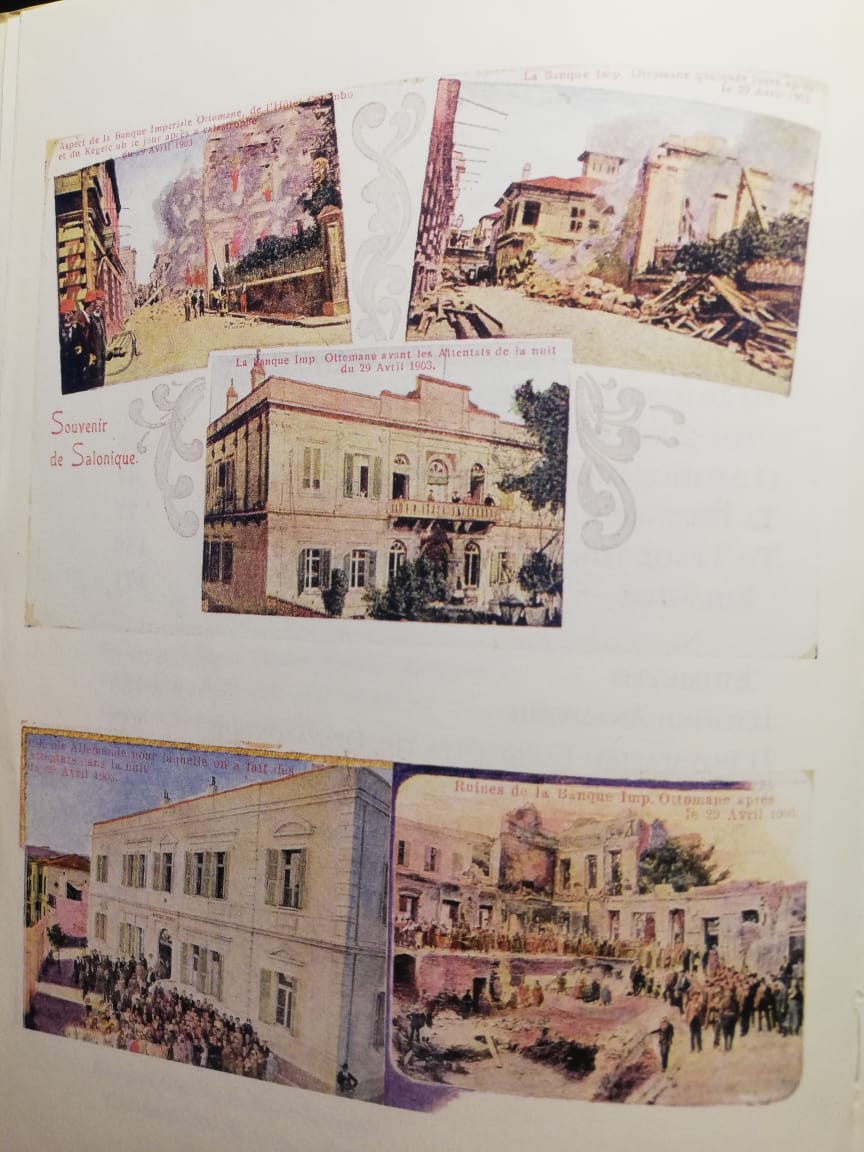
In recent days, I caught a brief news item noting that some “nationalist Macedonians” paid tribute to the heroic sacrifice of the “dynamiters” of Thessaloniki—a reference to the well-known case of the “Boatmen,” who, in late April 1903, blew up the Ottoman Bank in Thessaloniki and planted bombs on the French ship Guadalquivir, at the Gasworks factory, and in railway installations.
At the time, they were considered Bulgarian nationalists. Today, they are claimed by Skopje, whose Prime Minister travels the world declaring that his country has made significant concessions in order to join the EU and should no longer be pressured. Mr. Mitskovski says other things as well—that the “Macedonian issue” is not over, nostalgically invoking the early 20th century. But the Bulgarian president responded firmly, stating that Skopje will not begin accession talks with the EU unless it honors its commitments. No one is pressuring them.
You cannot wish to join the European Union—where outdated nationalisms have long been relegated to the dustbin of history—and, in the same breath, claim that the issue which plunged the region into bloodshed in the early 20th century is still alive.
Historically, the “Boatmen”—so named for their escape to the “free and wild seas of illegality”—were not merely terrorists or nationalists. They were anarchists, expressing a uniquely Balkan nihilism influenced by radical European currents and deeply rooted in the national and social impasses of their era.
Coincidentally, in the same days, I attended a presentation at the ESHEMTH hall by Alexandros Tziolas, showcasing significant photographic and cinematic material from the Manakia brothers—the Greek Vlachs from Avdela who, beginning in 1905, crisscrossed the Balkans and documented with their camera and film the most important events of the first half of the 20th century.
Yannis Manakia, in fact, died in 1954 on the Thessaloniki waterfront while filming.
In the short tribute presented by Mr. Tziolas, we saw Reshid Pasha visiting Thessaloniki and Monastir—the two most important Balkan cities of that era—whose respective successor states, after liberation from Ottoman rule, made it their mission to denigrate and continue to disregard them.
With their characteristic professionalism, the Manakia brothers once called out to the Sultan—whom they served as official photographers—“Stand where you are!” in order to take his picture. This behavior brings to mind our own Yannis Kyriakidis.
The historical and ethnographic work of the Manakia brothers is monumental. Among the first photographs shown was The Gaze of Ulysses—the look of their centenarian mother at the loom—which inspired the title of the eponymous film by Theodoros Angelopoulos.
We are speaking of a time when population movement across the Balkans, within the framework of the Ottoman Empire, brought peoples and ethnicities with diverse characteristics into contact, creating a cultural dynamism that is now absent.
Thessaloniki was a major commercial and cultural hub of the Empire. Throughout all historical periods, the city played a pivotal role in developments. Its abandonment came at the hands of the national center following its liberation—a center from which the city had expected much.
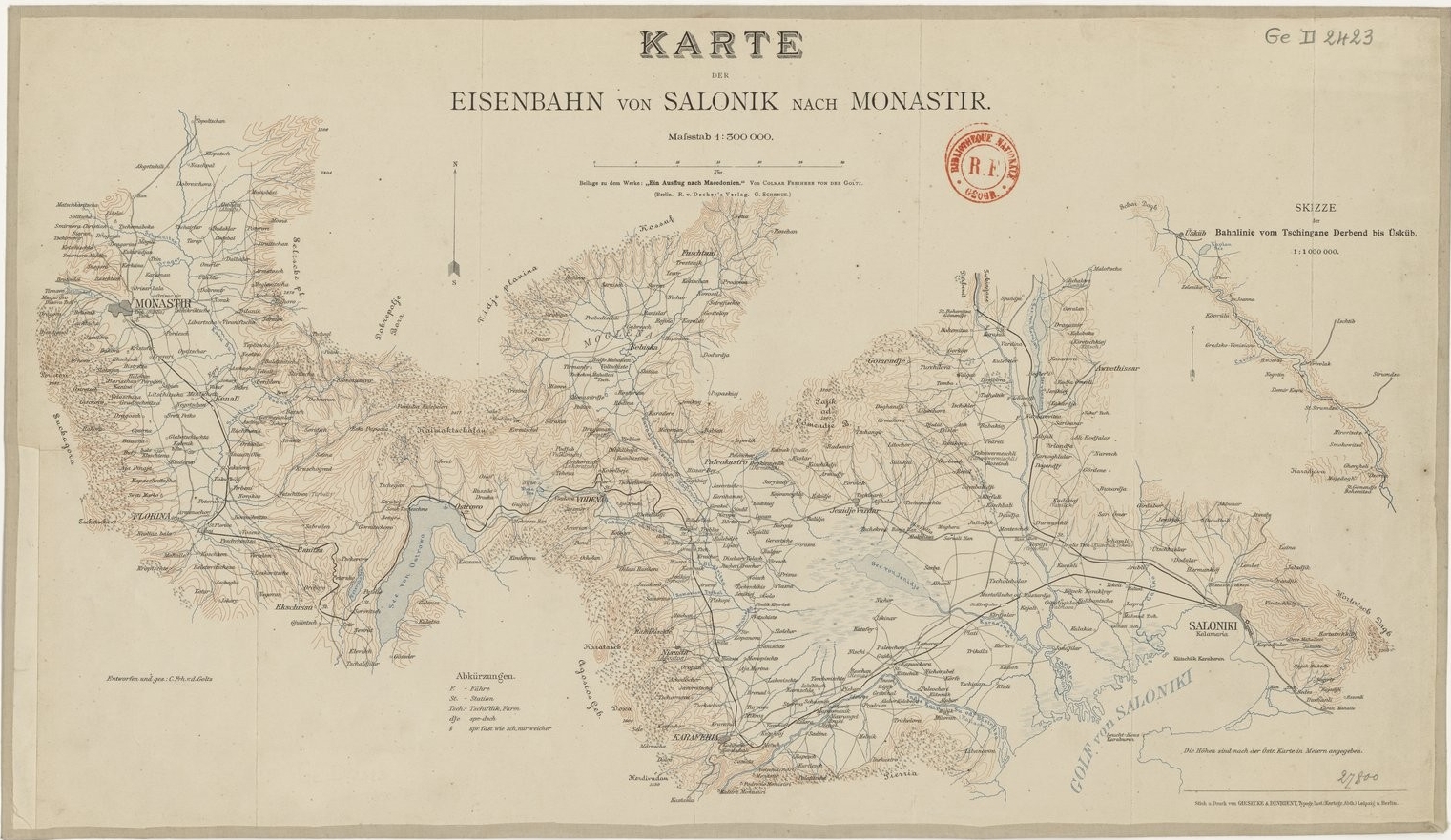
In a map from Alexandros Tziolas’ archive, Lake Giannitsa is depicted—the site of battles during the Macedonian Struggle. Today, it no longer exists.
A brief glance through history reveals that contemporary Greek territory is under a peculiar Athenian occupation—an ancient dream of that city. The nation-state did not help; on the contrary, it stripped the Greek periphery bare.
A characteristic example from our time is the presidential decree concerning land plots in villages with populations under 2,000.
Until April 14, those who owned property within such settlements possessed legally complete and buildable plots. As of April 15, with one law and one article, their property was reclassified as farmland—unless it covers two acres. In plain terms, to build in a village today, one must own at least two acres!
The current government—and all past ones for that matter—for some inexplicable reason, wants to concentrate the country’s population in Attica. Those who cannot or will not settle in the Athenian cesspool are to be relocated to large towns or even cities. Soon it will be the towns’ turn to vanish.
The country’s population groans under the weight of poverty. A large portion lives below the poverty line, suffers from depression, and is ruled by a combination of political figures from across the spectrum, a small group of economic elites, and their obsequious agents in the media—who manage the people with utter disdain and complete lack of empathy for their tragic reality. A detail: many of these mediators once belonged to leftist currents.
Meanwhile, as the Athenian political system gazes at its own navel—or more accurately, wallows in the honey—Turkey is forging a significant arc of influence in the Balkans, stretching from the Adriatic to the Black Sea.
Athens’ ambition is not to play any regional role in its own neighborhood, but merely to be accepted as the best subcontractor of geopolitical management.
History has shown that Thessaloniki—with its heritage, position, and assets—can play the role of an active hub in the Balkans. Sadly, the so-called Athenian state refuses to recognize this role for the city.
Thessaloniki must foster its own leadership, its own strong bourgeoisie, and its own high-reach media in order to claim what everyone—except the Greek state—acknowledges it deserves.
Will it manage?
Instead of wandering like boatmen of hope, perhaps its people should dare to try something.

