

Over a dozen out of 60 invited states have expressed interest at joining the Board of Peace established by Trump. So far comprised of mainly Middle Eastern and Eastern European countries, Western Europe has yet to clearly answer the invitation, balking at the stated initiative to rival the UN
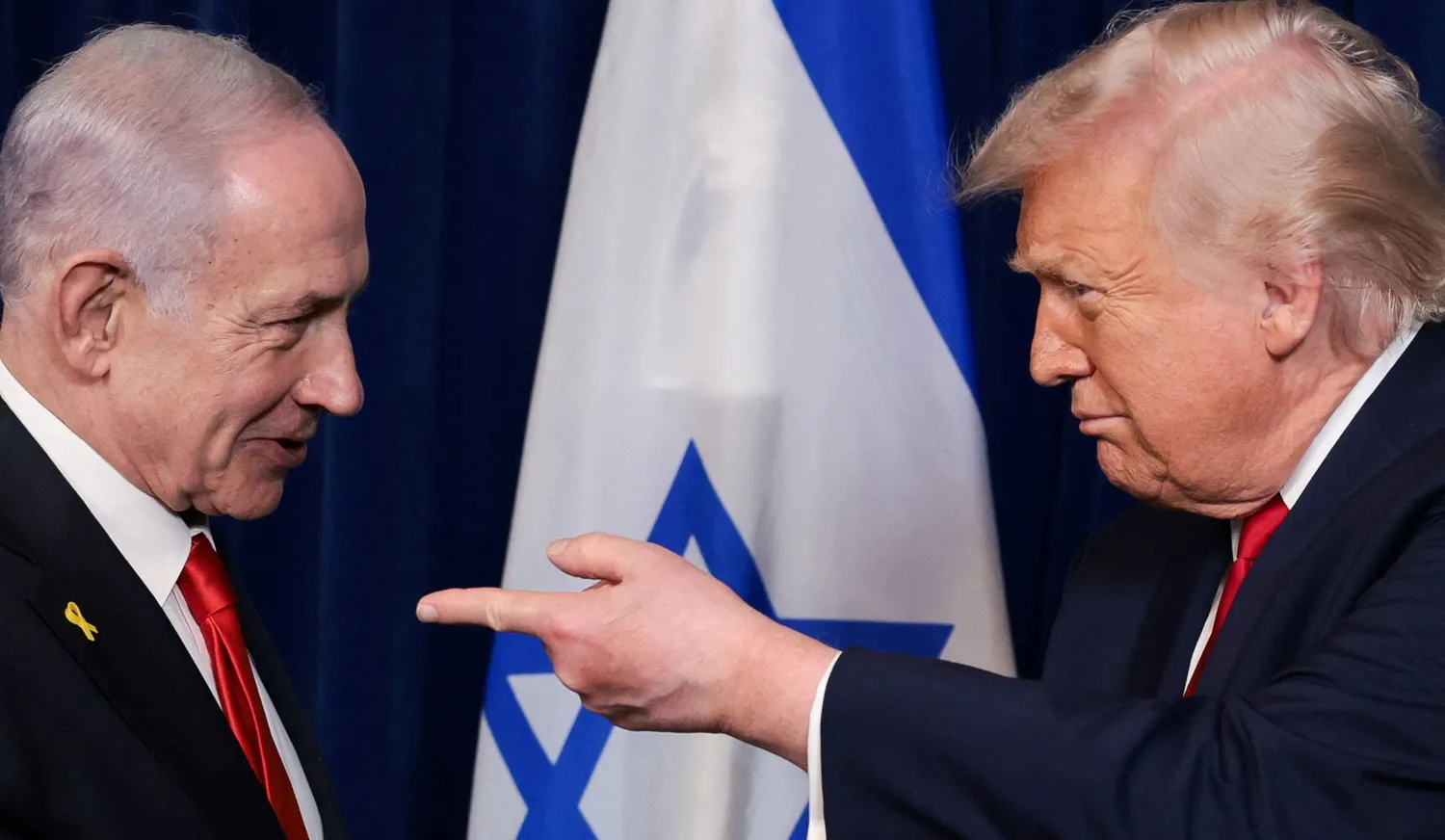
Israel’s Prime Minister Benjamin Netanyahu’s office said on Wednesday that he will join U.S. President Donald Trump’s Board of Peace.
The Board of Peace was announced early Friday last week, and its official inauguration ceremony is set to be held at the World Economic Forum in Davos, Switzerland on Thursday, where member states will sign the board’s charter.
Its charter suggests that Trump has begun to position it as a rival to the United Nations, despite it being initially established with the stated purpose of managing Gaza’s reconstruction. The document does not mention Gaza by name.
According to the charter, the board will work to “restore dependable and lawful governance and secure enduring peace in areas affected or threatened by conflict,” in place of other organizations, and implicitly criticizes the UN.
So far, about sixty countries have been invited by Trump to the Board of Peace, and over a dozen had agreed to join. Among the countries in the Middle East, the United Arab Emirates, Qatar Egypt and Morocco have announced they will join, and a Turkish source indicated that the country’s Foreign Minister Hakan Fidan will represent Turkey on the Board.
Egypt said on Wednesday that it had accepted Trump’s invitation to join the Board of Peace. Azerbaijan also announced it will be joining the Board of Peace on Wednesday, and Armenia’s prime minister confirmed it will join as well on Tuesday.
Most European countries, however, have not given a clear answer regarding the invitation. France and Britain have clearly signaled that they will not join the Board of Peace under its current conditions, and Norway, Sweden and Italy have formally rejected the offer.
France’s President Emmanuel Macron emphasized in his speech on Tuesday in Davos that he believes the world is experiencing a shift away from rules and international law. “It’s … a shift towards a world without rules, where international law is trampled underfoot and where the only law that seems to matter is that of the strongest,” Macron said, adding that what he called “imperial ambitions” were resurfacing.

Italy’s Prime Minister Giorgia Meloni meanwhile, has responded positively to the possibility of joining the Board of Peace, but the matter has not yet been officially decided.
Italian daily Correire della Sera reported Wednesday that Italy won’t take part in the board, citing concern that joining such a group led by a single country’s leader would violate Italy’s constitution.
Meanwhile, Germany emphasized that it is interested in being involved in the future of Gaza within the framework of international law, a response which raises doubts regarding German Chancellor Friedrich Merz’s joining the Board of Peace. The major representative of the Global South, Brazil, is also not expected to join.
Kazakhstan, Uzbekistan, Argentina, Paraguay, Belarus, Hungary and Vietnam have also announced their acceptance of the invitation to join. The partially recognized Republic of Kosovo also said it would join.
If the response from Europe and the West remains reluctant, the Board of Peace will become more of a regional club comprised of states from the Middle East and the Caucasus.
Trump’s Board of Peace

Comprised of heads of state, invited by Trump. Trump chairs the board, and its votes and decisions will be subject to his approval. Terms will be limited to three years and will be renewable with his approval, except for countries that contribute more than $1 billion in the first year.

Will be tasked with setting the agenda for the Board of Peace.
Members include Steve Witkoff, Jared Kushner, Marco Rubio, Tony Blair, businessman Mark Rowan, World Bank President Ajay Banga and U.S. Deputy National Security Advisor Robert Gabriel.
Aryeh Lightstone and Josh Gruenbaum are senior advisers.

The Office of the High Representative will be headed by former UN Special Coordinator for the Middle East Peace Process Nickolay Mladenov. The White House described his role as an “on-the-ground link between the Board of Peace and the National Committee for the Administration of Gaza, or NCAG.”

The Gaza Executive Board will support the Office of the High Representative.
Though the scope of its authority is unclear, its members include Turkish Foreign Minister Hakan Fidan; Qatari diplomat Ali Al-Thawadi; Egypt’s spychief Hassan Rashad; Emirati Minister Ebrahim al-Hashimy; former Middle East envoy for the UN, Sigrid Kaag; Cypriot-Israeli businessman Yakir Gabay; Marc Rowan; Nickolay Mladneov; Tony Blair; Steve Witkoff; and Jared Kushner.

The National Committee for the Administration of Gaza is a technocratic committee made up of Palestinians overseen by the Office of the High Representative. Dr. Nabil Ali Shaath, who previously served as deputy transportation minister in the Palestinian Authority, will lead the committee.
It is unclear whether the new administration will enjoy real freedom of action or broad public legitimacy.
Prime Minister Benjamin Netanyahu said in a Knesset speech on Monday that Israel is at odds with the United States and will not accept the presence of Turkish or Qatari soldiers in the Gaza Strip, despite a source familiar with the matter telling Haaretz on Saturday that the composition of the Gaza Board of Peace had been coordinated with him and that his public objections were for show.
“We have a certain argument with our friends in the United States over the composition of the advisory council that will accompany the processes in Gaza,” Netanyahu said on Monday.
On Saturday, Netanyahu criticized the White House over its choice of officials overseeing Gaza’s reconstruction, adding that he had not been consulted. “The composition of the Gaza executive committee – which is subordinate to the Board of Peace – was not coordinated with Israel, and is contrary to its policy,” Netanyahu’s office wrote in Hebrew on Saturday.
However, a source told Haaretz that the rebuke was made solely for appearances and that the prime minister had been aware of the White House announcement ahead of time.
https://www.haaretz.com/israel-news/2026-01-21/ty-article/.premium/israels-prime-minister-benjamin-netanyahu-to-join-trumps-board-of-peace

