


The Atlantic
“China is prepared to keep the peace on the Korean peninsula—whether the White House likes it or not.”
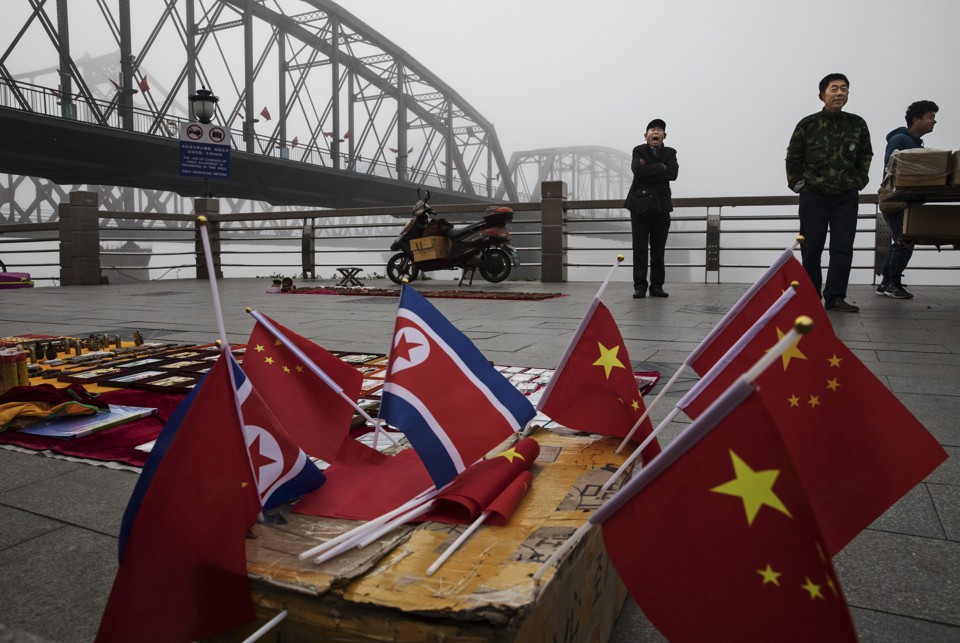
Yet China is not just defending its border; it is also preparing to fight inside North Korean territory. China’s drills in its Northern district involve not only border-defense forces, but also expeditionary forces—including mobile brigades equipped with some of China’s most advanced military equipment, airborne units, and special-operations forces. At periods of heightened tension in August 2015 and April 2017, there were credible rumors that China moved significant concentrations of forces to its border. In April, U.S. military officials told CNN that China alerted its bomber forces. In July and August, China’s navy repeatedly staged live-fire exercises across the Yellow Sea from the Korean peninsula, practicing engaging targets above, on, and beneath the surface of the sea, as well as ones on land. China customarily denies all such alerts and redeployments, making them difficult to confirm, but some are backed by suggestive video evidence from inside the country or confirmed by reputable outlets speaking to U.S. or Chinese defense officials.
But if China were to fight in North Korea, would it be fighting with the regime or against it? A recent editorial in China’s Global Times reiterated the terms of the 1979 China-DPRK alliance commitment: if the United States were to strike North Korea first, China should defend it; but if North Korea strikes against Guam or otherwise precipitates a conflict, China should remain neutral. In other words, if North Korea starts a war, they’re on their own.
The United States and its allies can never depend on China for their defense. As long as North Korea remains a nuclear state, it will be necessary to maintain and even strengthen the U.S. presence on the peninsula, to deter North Korea and to resist China’s attempts to eject American forces from the region. Yet the United States and China share an interest in regional stability—stopping North Korea from starting a war. China’s recent military moves suggest it is willing to threaten force to keep the peace. If U.S. officials explored the issue, they might find Chinese military officers willing to deconflict military operations, to coordinate deterrent threats and military operations with their U.S. counterparts, or even to finally open the crucial dialogue on planning for a North Korean collapse. When Kim Jong Un looks out from Pyongyang in coming years, he may find himself without an ally to hide behind, and think twice about acting aggressively.
Coordinated deterrence is only possible if Beijing sees Washington as dedicated to stability. The Trump administration will have to abandon its quixotic theory that it can create a crisis so intense that North Korea will fall to its knees and volunteer to abandon its nuclear weapons. Instead, the United States must follow the path that Seoul, Tokyo, and now Beijing have laid out: to contain and deter the regime in Pyongyang and preserve a stable Northeast Asia.
Related Video
https://www.theatlantic.com/international/archive/2017/08/china-military-strength-north-korea-crisis/538344/?utm_source=nl-politics-daily-082917&silverid=MzYzNTI0MzE0ODQ3S0

