

Lawmakers from Israel, U.S., Greece, and Cyprus Launch Caucus to Strengthen Ties and Contain Ankara
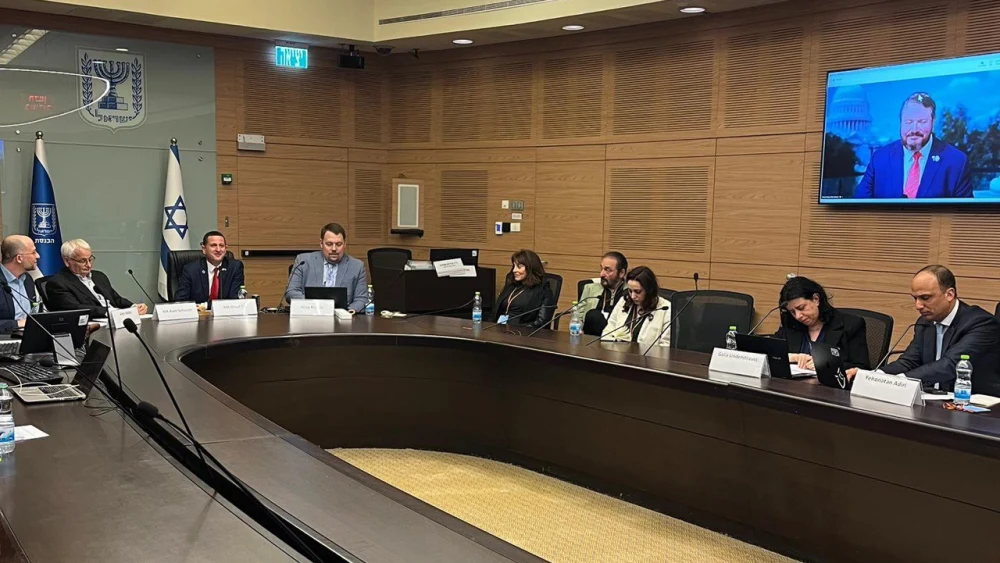
JERUSALEM, February 11, 2026 — For the first time in history, the Israeli Knesset gathered representatives from four legislative bodies to meet as a unified assembly dedicated to a strategic objective: building the Eastern Mediterranean “3+1″ partnership and containing Turkey, the region’s chief geopolitical adversary. Organized by the Middle East Forum (MEF), “The 3+1 Framework: Strengthening Eastern Mediterranean Cooperation” represented a historic first step toward fostering renewed strategic cooperation through a regional alliance built on shared values and mutual national interests.
Participating nations are Israel, Greece, and Cyprus, plus the United States.
Tuesday’s interparliamentary briefing marked the launch of the Eastern Mediterranean Knesset Caucus, a parliamentary association committed to the 3+1 dialogue. The event hosted a virtual briefing featuring members of the Knesset (MKs), Greek and Cypriot parliamentarians, U.S. Congress members, and leading experts in energy, trade, and national defense. Parliamentary leaders convened in-depth discussions on emerging challenges, including Turkey’s expanding influence and the threats it poses to regional stability.
MK Ohad Tal, the caucus co-chair, opened the session by identifying how Turkey is rapidly supplanting Iran as the chief aggressor in the region.
“The partnership with Greece and Cyprus is not only a security alliance—it is an opportunity to build regional civilian resilience in the fields of energy, water, agriculture, and innovation.”
“Since the horrible massacre on October 7th, the entire region has been evolving,” Tal said. “We have witnessed a dramatic weakening of the Iranian Shiite axis and its replacement by a Sunni Muslim Brotherhood axis. This reality presents new challenges and poses a threat to stability, security, energy, and trade in the region.”
MK Alon Schuster, the caucus co-chair, addressed Israel’s future following the conclusion of major combat operations.
“Our goal is to translate our operational strength into a stable political standing,” Schuster stated. “The partnership with Greece and Cyprus is not only a security alliance—it is an opportunity to build regional civilian resilience in the fields of energy, water, agriculture, and innovation.”
U.S. Congressman Randy Fine (R-FL) highlighted acute concerns regarding Ankara’s geopolitical trajectory.
“Over the past few years—whether it’s rhetoric related to Gaza, influence in Syria, or activity in other parts of the world—we have seen that Turkey has gone off the reservation,” Fine said. “That is why I oppose Turkey purchasing F-35 aircraft.”
U.S. Congressman Brad Schneider (D-IL), the lead sponsor of the Eastern Mediterranean Gateway Act, reinforced the necessity of clear-eyed alliances.
“We need to be clear about who our partners are in the Middle East and who our enemies are—who is open to cooperation and who creates obstacles and challenges,” Schneider said. “I am leading the Gateway Act, legislation that will push our country toward cooperation with IMEC [India-Middle East-Europe Economic Corridor] countries, especially Israel, Cyprus, and Greece. I see the 3+1 framework as critical to the success of IMEC, enabling initiative, regional integration, and peace.”
We need to be clear about who our partners are in the Middle East and who our enemies are—who is open to cooperation and who creates obstacles and challenges.
The briefing also featured Member of the Hellenic Parliament Dimitris Kairidis, head of the Greek delegation to NATO, and Member of Parliament Harris Georgiades, Chair of the Foreign Affairs Committee of the Cypriot Parliament. They were joined by senior security and strategy experts, including Brig. Gen. (res.) Yossi Kuperwasser; Lt. Col. (res.) Sarit Zehavi; Dr. Gallia Lindenstrauss; Yehonatan Adiri; Liane Pollak-David; and Endy Zemenides. The briefing was attended by congressional staff, diplomatic missions, and prominent journalists from top global media outlets.
Offering closing remarks, Gregg Roman, executive director of the Middle East Forum, issued a warning to the region’s adversaries.
“The audience that we didn’t identify is watching—those in Tehran, Istanbul, and Moscow—who should realize that there is a new alliance in this theater of the world,” Roman said. “They should be on alert, because we are not going to put up with their influence activities, asymmetrical warfare, or threats to any of our nations’ security.”
This historic assembly underscores the Middle East Forum’s commitment to promoting alliances that enhance regional security and counter destabilizing forces. By uniting these parliamentary voices, the virtual briefing lays the groundwork for future collaborative initiatives in infrastructure, energy, and defense, establishing an operational bulwark against Turkish aggression.
https://www.meforum.org/press-releases/historic-knesset-assembly-unites-3-1-allies-against-turkish-aggression

