


 Spiegel
Across Europe, social democratic parties are in crisis and on Sunday, the German SPD could slide to its worst result since World War II. What has happened to the once-glorious center-left parties on the Continent? And how can they recover? By SPIEGEL Staff
On a recent late summer evening, Austrian Chancellor Christian Kern pulled into Illmitz, in Austria’s Burgenland, in a tour bus not unlike those used by rock stars. He was greeted with cheers and a brass band before making his way through a throng of selfie-hunters at a local trade union festival to reach the stage, in front of which some 200 people were gathered to hear him speak.
His speech focused on the “Austrian Dream,” and he outlined his own journey from a humble background to the very top. He talked about Austria and what people were telling him about their concerns, outlining a plan to turn the country back into a place where everyone “gets the chance to have a successful life.” It was the kind of rhetoric you would normally expect from an American president, not an Austrian Social Democrat.
Yet despite him being a good candidate, despite running a good campaign and despite the country’s solid economy, with unemployment at 5.7 percent and economic growth topping 2 percent, Kern and his party, the Social Democratic Party of Austria (SPÖ), are failing to gain traction. His country’s economy is even better shape than Germany’s, yet the SPÖ has been polling at 22 to 28 percent for months now — far from enough to win the Oct. 15 general election.
Kern, 51, headed the Austrian national railroad before becoming chancellor last year. He was responsible for making sure that special trains were provided during the 2015 refugee crisis. And he forced the hapless former chancellor, Werner Faymann, out of office. Kern’s team is young and motivated, with hardly anyone on his bus older than their late 30s, and he has multimedia experts to manage his social media presence. But absent a miracle, Kern will have to step down after the election.
One reason, of course, is Sebastian Kurz, Kern’s 31-year-old challenger. Kurz has rebranded his party, the Austrian conservatives, and is betting on his youth and staunch anti-Islam stance. In polls comparing the two on an individual basis, Kern and Kurz are basically neck-and-neck — but next to his young challenger, the incumbent chancellor nevertheless looks like the status quo. Despite everything, Austrian voters associate the current chancellor with old, sclerotic social democracy.
In 2000, social democrats or socialists were part of the government in 10 out of the 15 countries that made up the European Union at the time. These days, though, the picture is a drastically different one. There is a real chance that German Social Democrats will no longer be part of Chancellor Angela Merkel’s coalition following Sunday’s vote and the same could happen in Italy after voters there go to the polls next spring. Were that to happen, center-left parties would only be part of six EU governments out of 28 member states, all of them on the European periphery: Malta, Portugal, Romania, Sweden, Slovakia and the Czech Republic. The populist left-wing Syriza alliance heads the government in Greece. Elections are scheduled for October in the Czech Republic, but it seems unlikely that the social democrats will be returned to power.
There is even a new word for the social democratic swoon: Pasokization, as in PASOK, Greece’s long-term governing party, which fell into insignificance in the 2015 election. A similar situation applies in the Netherlands, where the traditional Labor Party captured only 5.7 percent of votes in the last election. French Socialist Party candidate Benoît Hamon came in fifth in the recent French presidential election, with 6.4 percent of the vote, and his party went on to receive a miserable 9.5 percent of the vote in parliamentary elections a short time later. In Poland, the Social Democrats no longer hold any seats in the parliament.
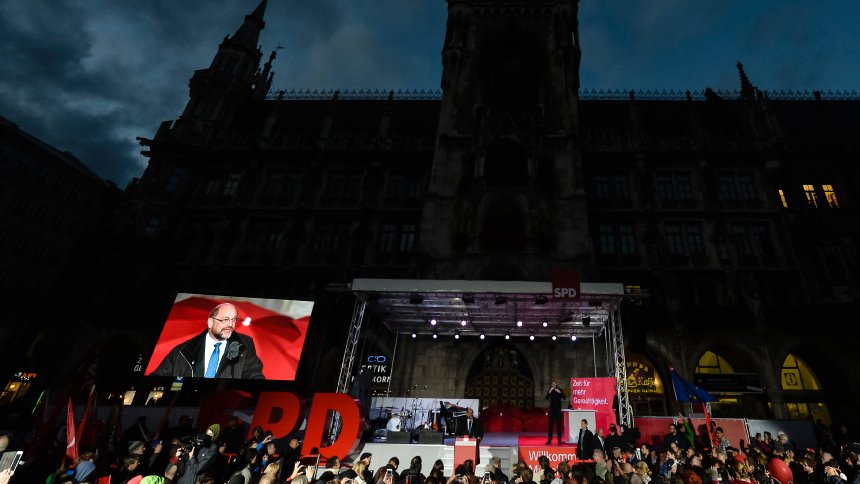
It is a puzzling development given the desire held by many voters for greater social security. Indeed, that desire could help explain the rapid, yet brief, rise of Social Democratic chancellor candidate Martin Schulz in the polls earlier this year. Indeed, the SPD came within a single percentage point of Merkel’s conservatives — only to plunge again. That dive certainly had something to do with the SPD’s uninspiring campaign, and with Schulz’s own apparent inability to win over voters. But there was also a bigger problem: No one knows what exactly social democracy stands for anymore.
This is astonishing. Weren’t people proclaiming a comeback for strong state governance and the end of financial capitalism after the 2008 financial crisis? Isn’t the gap between rich and poor widening almost everywhere in Europe? Don’t voters have several good reasons to vote social democratic?
Social democrats have shaped Western Europe more than any other political movement. Their ideas are now taken for granted among large segments of the middle class: principles like the social welfare state; the notion that the strong bear some responsibility for weaker members of society; and the idea that everyone should have the same opportunity to participate in society. Those are the philosophical underpinnings of social democracy, yet social democratic parties are no longer benefitting from these ideas.
Splintered Electorate
Martin Schulz has made “social justice” the central issue of his campaign, but the working class, once the key constituency of social democracy, has been fragmented into a well-paid core workforce and a periphery of temporary workers who often do the same work for less money. Others are stuck in dead-end service jobs. Are social democratic parties still the parties of workers? Or is this just a distant memory to which educated, upwardly mobile public servants cling to? That, at least, is what the SPD factions in state parliaments and the Bundestag make it look like.
http://www.spiegel.de/international/europe/the-demise-of-social-democracy-in-europe-a-1168670.html
