
Harsh rhetoric, defiant speeches in public squares, the demonization of foreign powers, and labeling domestic opposition as “traitors”—these are patterns we see in nearly all authoritarian regimes. But behind these motifs often lie destruction, isolation, and internal decay. Iran is currently the most vivid and concrete example of this collapse. And if you look closely, the structural rot caused by authoritarianism in Tehran is nearly identical to that in Ankara.
Rhetoric may be powerful, but international indicators reveal the truth in full clarity.
Iran: From Grandstanding to Rubble
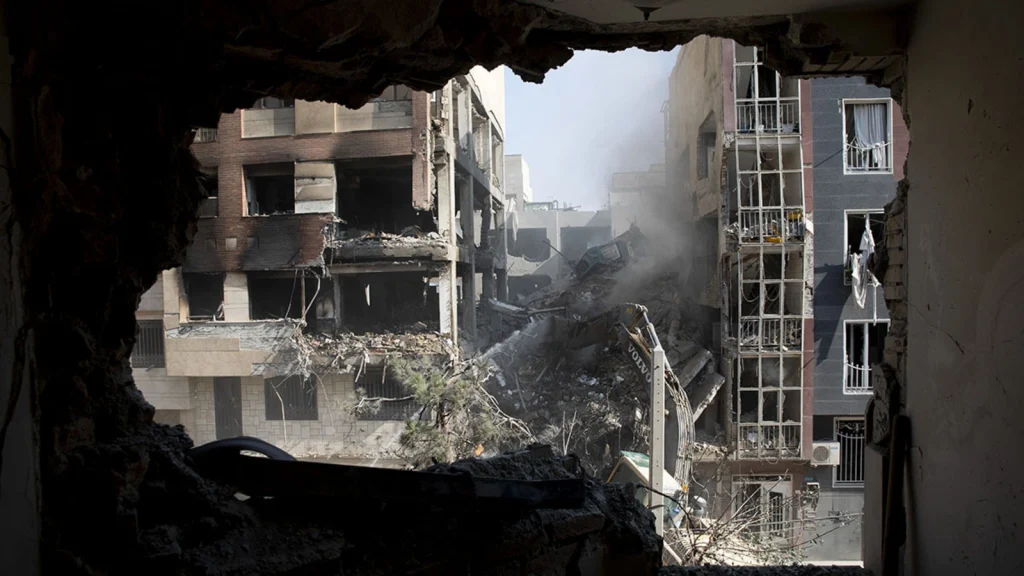
For years, the Iranian regime has tried to project the image of a regional superpower—anti-American posturing, a nuclear program, Hezbollah as a proxy militia, and proxy wars in Yemen, Syria, and Iraq. The regime wants to appear strong from the outside. But the latest Israeli attack shattered that illusion. Not only was Tehran unable to respond to the blow delivered to its heart, but the regime also tried to deceive its own people with propaganda like “We defended successfully!”
In reality, Israel crippled Iran’s military infrastructure and air defense systems in a single night. The billions of dollars Iran invested in its military were revealed to be little more than cardboard towers. The regime attempted to market a major failure as a victory. But this perception management did not light up cities left in darkness or ease the anger of the impoverished Iranian public.
The Chasm Between Perception and Reality
Iran serves as a textbook case of how one-man regimes rot from the inside. State institutions are structured around loyalty instead of merit. Critical voices are silenced, and the media is turned into a propaganda machine. But when a crisis hits, the internal rot becomes impossible to hide. As real data is suppressed, bad decisions multiply. Whether it’s national security, the economy, or the healthcare system—what remains is a hollowed-out structure.
And this isn’t unique to Iran.
A Parallel Path in Turkey
Turkey is on a similar path. The post–July 15 purges, justified by the creation of a domestic “enemy,” destroyed institutional wisdom. From the military to the judiciary, universities to the bureaucracy—loyalty has trumped competence. Just like in Iran, the truth is buried, economic crises are painted as success stories, and diplomatic isolation is sold as “standing tall.”
What Do Global Metrics Say?
To understand where Iran and Turkey stand, we must look beyond emotions to numbers and data. For example, in the World Justice Project Rule of Law Index 2023, Turkey ranked 117th out of 142 countries, while Iran came in at 137th. These numbers point to severe shortcomings in judicial independence, anti-corruption efforts, fundamental rights, and accountability. In both countries, laws are bent for individuals, and justice is beholden to political power.
The same is true for the 2024 World Press Freedom Index (RSF): Turkey ranks 158th out of 180 countries, while Iran ranks 176th. In both places, journalism is considered a threat to the regime. Journalists are jailed, media outlets are shut down or turned into government mouthpieces.
The right to access information is systematically denied.
The Corruption Perceptions Index (Transparency International 2023) paints a similar picture: Turkey ranks 115th out of 180 countries, while Iran ranks 149th. The abuse of public resources, lack of transparency, and absence of accountability are alarming in both nations. Neither parliament nor the judiciary can effectively oversee the executive. Corruption has essentially become institutionalized. When the rule of law collapses, the rise of mafia-style governance becomes inevitable.
According to the Global Organized Crime Index (Global Initiative 2023), Turkey ranks among the highest in Europe for organized crime and 25th globally. Iran ranks 10th worldwide.
These indicators show that authoritarian states not only strip away freedoms—they also endanger public safety. Mafia structures form symbiotic relationships with those in power, while judicial and law enforcement institutions become passive observers of the decay.
Shared Pathologies That Lead to Disaster
For years, the Iranian regime urged its people to be patient under the narrative of “We are under siege!” The myth of foreign enemies was used to cover up domestic problems. Similarly, in Turkey, anti-Western rhetoric has become a cover for internal corruption. In both countries, short-term populism is preferred over long-term development. Massive propaganda budgets are used to shape public perception.
But realities like inflation, corruption, and institutional collapse are tearing down the veil of propaganda.
The recent hijab protests in Iran show how deeply public trust in the regime has eroded. In Turkey, young people are losing hope, and brain drain is at an all-time high. The supposed 50% electoral victories only mask the suppressed fury of the other half of the population.
Truth Will Speak Eventually
For years, the Iranian regime survived on perception management. But now, the cardboard towers are collapsing. If Turkey is to avoid a similar fate, it must confront reality while there’s still time.
Tolerance for criticism, respect for institutions, and transparency—without these three pillars, no defense system will function, no economy will grow, and no society will find peace. Perception management works only up to a point—but truth eventually knocks on the door. And when that day comes, it won’t be just the leaders—it will be the entire society that risks being buried beneath the rubble of a decayed system.

